
Cruises to Japan from Taiwan: Keelung Sailings to Okinawa, Kyushu and Tokyo
Fifteen sailings leave Keelung on itineraries of three to six nights. Japan’s departure tax tripled in July, and ships do not get the transit exemption.
| Length | Three to six days. The shortest sailings call at one port or stay at sea the whole time. |
|---|---|
| Ports | Naha appears on seven sailings, Ishigaki on five, Miyakojima on four. |
| Fares | From US$223 per person for three days, US$413 to US$660 for six. |
| Departure tax | ¥3,000 per exit from 1 July 2026, and the 24-hour transit exemption does not apply to ships. |
| Ishigaki note | Ships dock at the new Shinko berth, not the ferry terminal, which is another ten minutes by road. |
1. Why board in Taiwan instead of flying to Japan
2. Three ships sail this route
3. Itineraries and fares
4. Choosing a cabin: inside, ocean view, balcony
5. What a day on board actually looks like
6. Naha: which berth you get decides how you reach town
7. Ishigaki: the cruise berth is not the ferry terminal
8. Miyakojima: after you step off at Hirara Port
9. Working backwards from the all-aboard time
10. Japan’s departure tax is now ¥3,000, and cruises pay it
11. Six-day sailings reach Kyushu, Shikoku and Kansai
12. One-way sailings that end in Tokyo
13. Getting to Keelung and finding your terminal
14. What the headline fare leaves out
1. Why board in Taiwan instead of flying to Japan
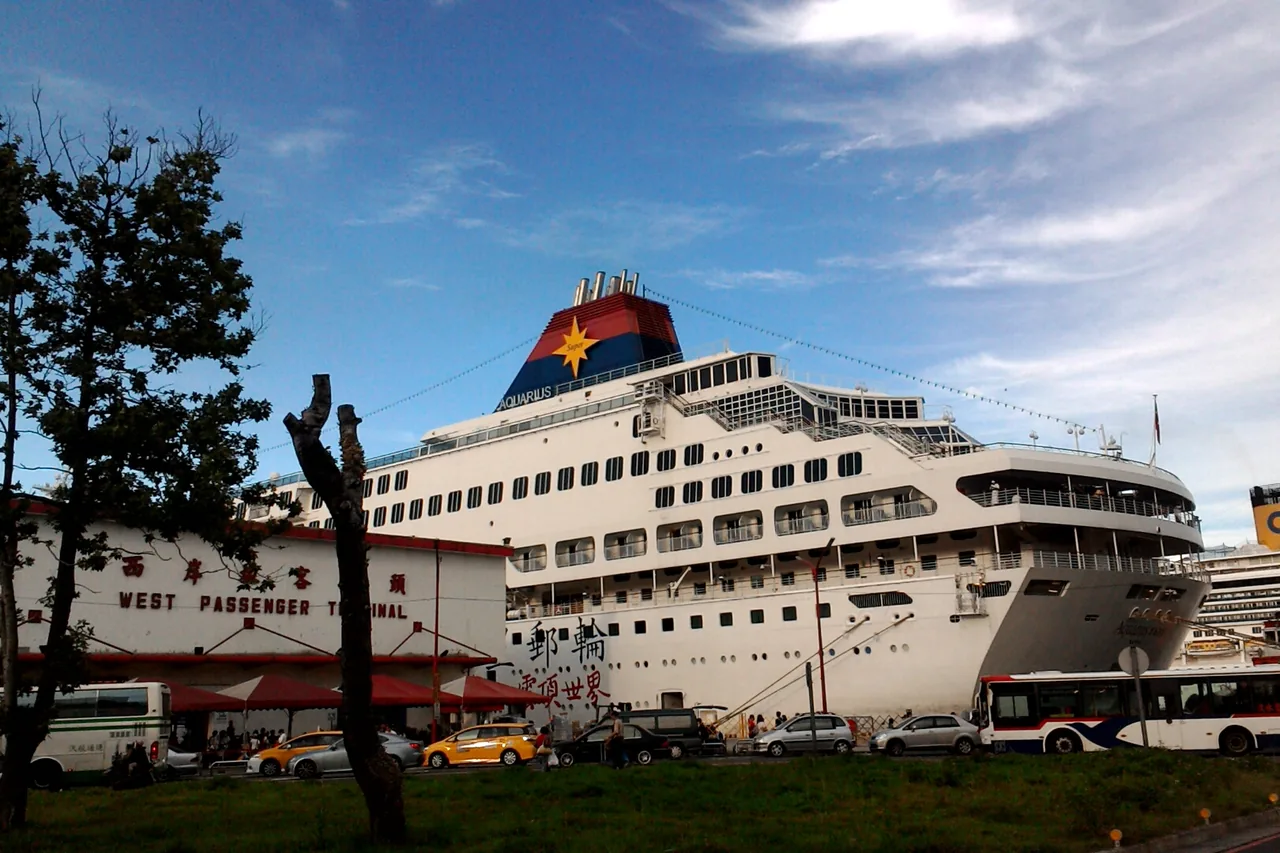
Most people arrive in Japan through Narita, Kansai or Naha. Sailing out of Keelung gets you somewhere else entirely: Ishigaki, Miyakojima, Kochi, Kumamoto. These are places where there is either no direct flight or the connection adds half a day.
The trip also stacks two countries without the usual friction. Spend a few days in Taipei, walk onto the ship an hour north of the city, and your luggage stays in one cabin while the itinerary moves. There is no packing and repacking between cities, and no domestic transfers to book.
The limit is time. A six-day sailing gives you roughly six hours ashore per port, which is a taste rather than a visit. If your goal is to see one place properly, fly. If your goal is to see several places you would otherwise skip, this works.
2. Three ships sail this route
Keelung has three ships running Japan itineraries, and they sit in very different price brackets.
| Ship | Sailings | Length | What you get |
|---|---|---|---|
| Star Navigator | Most of the schedule | 3 to 6 days | Over 70,000 gross tons, up to 1,800 passengers, water slides and a theatre |
| MSC Bellissima | Winter season | 5 to 6 days | A large international line, in Keelung only for the winter |
| Mitsui Ocean Fuji | A handful | 5 to 9 days | Three to five times the fare of the other two, smaller and quieter |
Star Navigator carries most of the calendar, so if you are matching dates to annual leave rather than picking a ship, that is what you will end up on. MSC Bellissima only appears in winter, which suits anyone avoiding the summer typhoon season.
Mitsui Ocean Fuji is a different product entirely: fewer cabins, higher fares, and a passenger profile that does not overlap much with the other two. It is rarely anyone’s first cruise.
3. Itineraries and fares
Fares below are the lowest available per person, twin occupancy, before port charges and gratuities.
| Days | Ports | From |
|---|---|---|
| 3 | At sea, no port call | US$223 |
| 3 | Naha | US$246 |
| 3 | Ishigaki | US$488 |
| 3 | At sea, ends in Busan | US$671 |
| 4 | Naha, Ishigaki | US$255 |
| 5 | Naha, Ishigaki, Miyakojima | US$334 |
| 5 | Miyakojima, Naha, Ishigaki | US$469 |
| 6 | Kagoshima, Kumamoto, Naha | US$413 |
| 6 | Kochi, Osaka | US$413 |
| 6 | Kobe, Kochi | US$413 |
| 6 | Busan, Nagasaki, Naha | US$514 |
| 6 | Jeju, Kagoshima, Naha | US$543 |
Length and price do not track each other. A three-day sailing to Ishigaki lists higher than a four-day sailing that calls at both Naha and Ishigaki, so check the specific date rather than assuming shorter is cheaper.
Days on the itinerary are not days ashore either. Six-day sailings usually include one or two full sea days, which can leave you with only one more port call than a four-day sailing. Counting ports tells you more than counting nights.
Departure dates rotate every season. Use this table to settle on the shape of the trip, how many nights and which ports, then check live dates, cabin grades and current fares on the booking page.
4. Choosing a cabin: inside, ocean view, balcony
Every “from US$223” figure refers to an inside cabin with no window. What each step up costs, and whether it is worth paying, is the question most first-time passengers get stuck on.
| Grade | What changes | Suits |
|---|---|---|
| Inside | No window. Quiet, and the cheapest fare on every sailing | Anyone treating the cabin as somewhere to sleep |
| Ocean view | A window and daylight, but no way outside | People who spend some time in the room but do not want balcony pricing |
| Balcony | Private outdoor space you can sit on | Itineraries with full sea days, or breakfast in the room |
| Suite | Dedicated attendant, priority boarding and disembarkation, private pool and restaurant | Anyone willing to pay to skip queues |
Standard grades usually sleep up to four, and the rooms themselves are close in size. What separates them is the window and the balcony. The useful question is not how big the cabin is but how many hours you will spend in it. On a three-day sailing you are in public areas nearly all day and an inside cabin is fine. On five days or more with a full sea day, the balcony premium is easier to justify.
One difference rarely mentioned in the brochure: disembarkation order. Balcony cabins are called before ocean view and inside, and suites before those. When a port call runs six hours, getting off thirty minutes earlier is a real difference.
These grades reflect how the cruise lines describe their own cabins. Exact floor areas and included perks vary by sailing, so check the specific departure before booking.
5. What a day on board actually looks like
A cruise itinerary contains only three kinds of day. Knowing the shape of each saves you a wasted morning at the start.
Embarkation day
Check-in runs in assigned windows, usually a few hours before departure. Your main luggage arrives at the cabin door later, so keep documents, medication and a change of clothes in a day bag. A safety drill takes place that evening and attendance is compulsory.
Sea days
No port call at all. Pools, shows, restaurants and the activity programme exist for these days, and the slides and decks are busiest. A three-day sailing marked “at sea” is nothing but this.
Port days
Ashore during daylight, back before evening. The all-aboard time is printed in the daily programme delivered to your cabin and on your boarding card. Miss it and you make your own way to the next port.
Ship’s time occasionally differs from local time, and the line announces which one governs. All-aboard is always ship’s time, so confirm it before you step off.
6. Naha: which berth you get decides how you reach town
Naha is the most frequent call on this schedule, with one thing worth knowing first: cruise ships do not always use the same berth.
| Berth | Getting into town | Notes |
|---|---|---|
| Wakasa Berth (Tomari No. 8) | About 20 minutes on foot to Kokusai Street | On call days a shuttle sometimes runs to Kokusai Street at roughly 30-minute intervals |
| Shinko Wharf (Naha Second Cruise Berth) | Further out, so a taxi or the monorail is needed | Surrounded by port infrastructure, not walkable |
From Wakasa you can simply walk in. From Shinko you need to budget for transport. Your ship tells you which berth in the port information delivered the night before.
Once ashore near Naha PortMap, Kokusai Street and Makishi Public Market will fill an afternoon on a first visit. Churaumi Aquarium is over an hour each way, so the round trip plus the visit runs tight. Unless your ship is in port unusually long, it is not worth forcing.
For wider planning see the Okinawa travel guide, with detail on Churaumi Aquarium and the Blue Cave if you want to get in the water.
7. Ishigaki: the cruise berth is not the ferry terminal
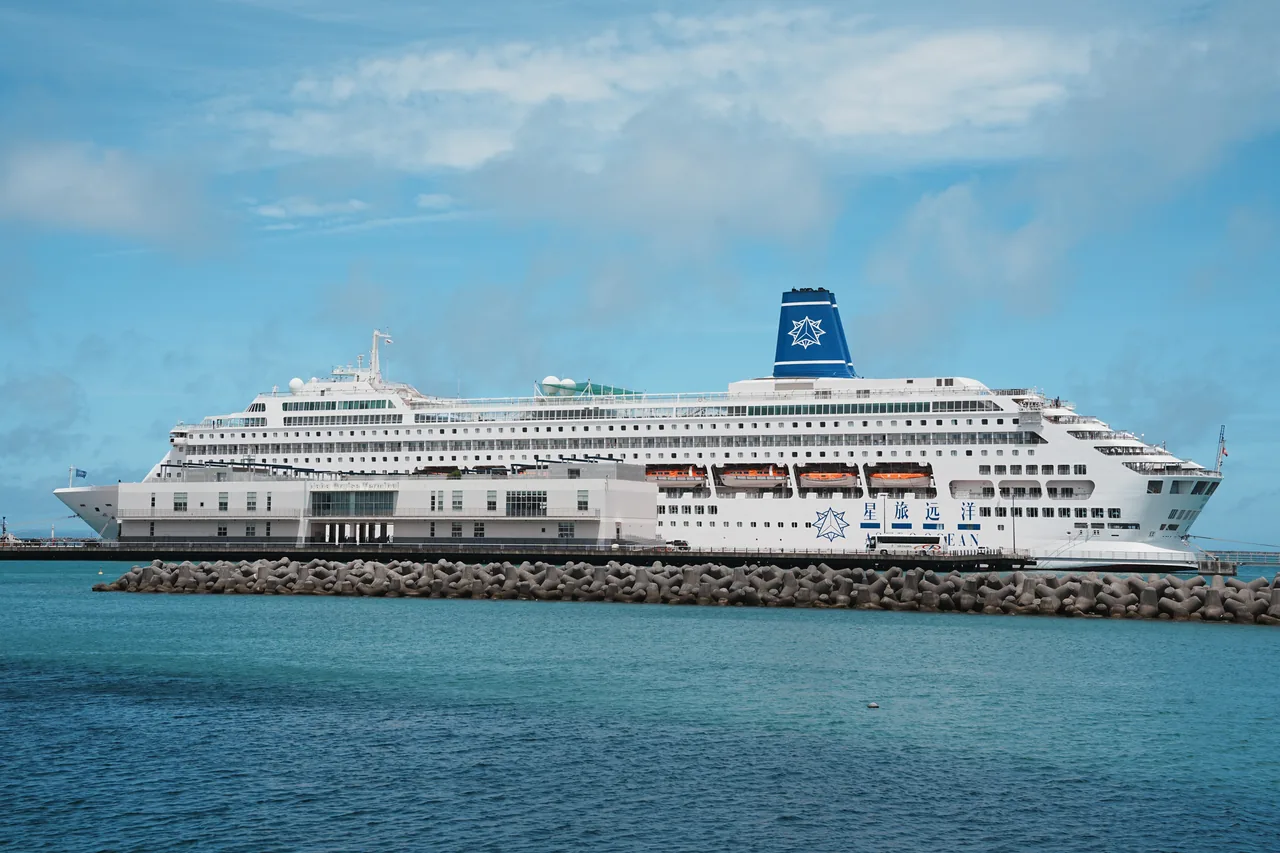
This is the port people get wrong. The short version: cruise ships dock at the Shinko district berth, which is separate from the island ferry terminal.
| From the cruise berth | Time |
|---|---|
| By road to the ferry terminal | About 10 minutes |
| On foot to the ferry terminal | About 40 to 50 minutes |
| Ferry terminal to the public market and Euglena Mall | 3 to 5 minutes on foot |
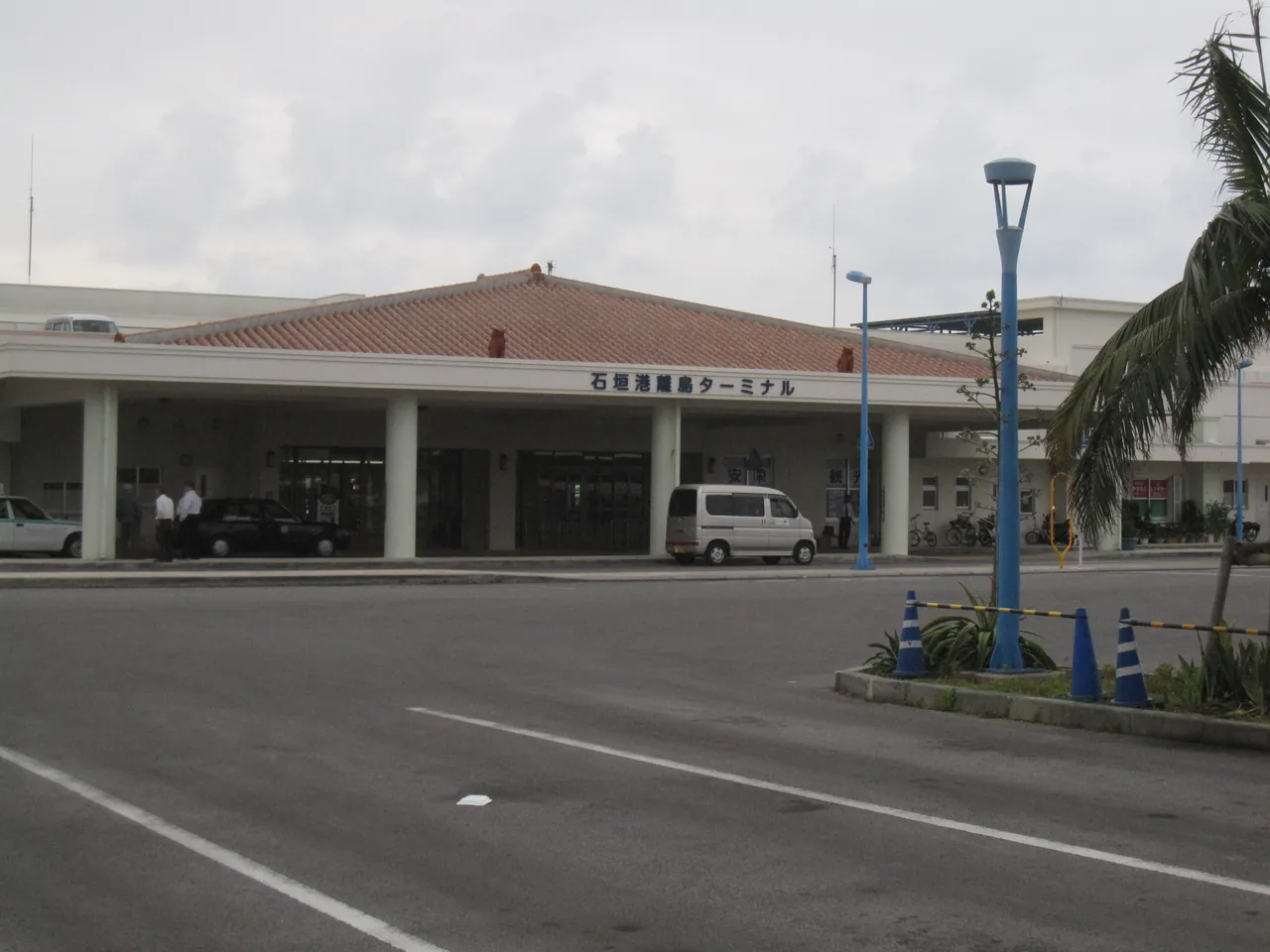
Some sailings lay on a free shuttle between the berth and the Ishigaki Port Ferry TerminalMap, but not all of them do. Confirm with the line or your agent. Without a shuttle, island hopping spends a large share of your shore time simply moving between piers.
The ferry terminal is where boats leave for Taketomi and Iriomote. If you want a second island on a port day, plan it backwards: check the return ferry times first, work out how long that leaves you on the island, and only then decide whether to go. One missed return sailing knocks over everything after it.
The scheduled ferry, and why it is not an option right now
A scheduled passenger ferry between Keelung and Ishigaki started on 28 May 2026, run by Yaima Line with the ship Yaima Maru, sailing overnight twice a week from Keelung at 23:00 for an 08:00 arrival. The operator suspended the route from 1 October 2026 and has not announced a restart date. Its notice gives three reasons: cargo handling never became established, running costs including fuel came in above forecast, and passenger demand was moving into the low season. Cruise calls at Ishigaki are a separate thing and continue.
8. Miyakojima: after you step off at Hirara Port
Hirara PortMap sits centrally on the island and serves as its main gateway. Miyakojima City operates a shuttle service for cruise passengers, though the exact routes and frequency change by sailing, so check the ship’s announcement before disembarking.
Sights here are spread out and public transport is thin, so this call usually means a rental car or a local tour. Irabu Bridge is the classic outing, and the drive across it is most of the experience.
Island detail is in the Miyakojima guide.
9. Working backwards from the all-aboard time
What goes wrong ashore is rarely getting lost. It is leaving too little margin to get back. Subtract these before you plan anything.
- Disembarking takes time. Everyone leaves at once, and lower cabin grades are called later.
- All-aboard is earlier than departure. The published all-aboard time is your real deadline.
- Pier transfers count twice. At a port like Ishigaki, where the berth and the town are apart, that is two journeys.
- Ship-organised excursions cost more than arranging it yourself, and they come with a guarantee that the ship waits.
Going independently, keep your range close to the pier or use transport with a fixed timetable. Island hopping and driving a full loop of an island both fall apart once one leg slips.
10. Japan’s departure tax is now ¥3,000, and cruises pay it
The International Tourist Tax rose from ¥1,000 to ¥3,000 for departures on or after 1 July 2026. It applies to anyone leaving Japan by international ship or aircraft, whatever the purpose of the trip.
The exemption people remember, no tax if you leave within 24 hours of arriving, is written for air transit passengers only. Japan’s National Tax Agency states plainly that passengers transiting Japan by ship are not covered. A cruise that docks for a single afternoon still pays.
The tax is also charged per exit, not per trip. If a sailing leaves Japan from one port, calls somewhere foreign, then returns to a second Japanese port and departs again, that counts as two exits. What matters is whether the ship actually leaves Japanese waters and comes back, not how many Japanese ports appear on the itinerary.
| Item | Detail |
|---|---|
| Rate | ¥3,000 per departure from 1 July 2026 |
| Old rate | ¥1,000 where the contract was signed and the departure date fixed before the increase |
| Exempt | Children under two on the date of departure |
| Collected by | The cruise line, before boarding, then remitted to Japan |
Whether it is bundled into your fare or billed separately varies by line, so read the fare breakdown at checkout. The rate change itself is covered in Japan’s departure tax.
11. Six-day sailings reach Kyushu, Shikoku and Kansai
The longer itineraries leave Okinawa behind and head north. This is where the routing earns its keep, because several of these ports are awkward to reach any other way.
- Kagoshima, Kumamoto, Nagasaki: southern Kyushu, heavy on hot springs and history.
- Kochi: Shikoku, thin on direct flights from almost anywhere.
- Kobe and Osaka: city centres are minutes from the berth, so the whole port day is usable.
Two sailings also call at Busan and Jeju, which turns the trip into a three-country loop. Check entry rules for every country on the itinerary, not only Japan. If Osaka is the part you care about, the Osaka travel guide covers what fits into a day.
12. One-way sailings that end in Tokyo
Two five-day sailings run one way, boarding in Keelung and disembarking in Tokyo, calling at Miyakojima or Kagoshima on the way.
These are the most useful sailings on the schedule if you were heading to Japan anyway. The crossing replaces a flight, the cabin replaces two hotel nights, and you start your Tokyo trip already in Tokyo.
Two things to plan around. The return flight is on you, and prices climb over holiday periods. And leave slack on disembarkation day, because arrival times shift with weather and connecting to a same-day red-eye is risky.
13. Getting to Keelung and finding your terminal
Keelung has two passenger terminals, east and west, and ships are assigned to one or the other. Check your boarding documents before you travel, because correcting the mistake on foot takes a while.
| West terminal | East terminal | |
|---|---|---|
| From Keelung Station | North exit, about 4 minutes on foot | South exit, about 8 minutes on foot |
| Intercity bus | 1550, 1551, 1558, 1573, 1800, 1801, 1804, 1805, 1813, 1880, 200 | 1579, 2088 |
| Phone | 02-2420-6424 | 02-2420-6219 |
From Taipei, take the train to Keelung StationMap and walk. Both terminals are within a few minutes of the exits. Driving is possible, but the West No. 3 car park charges NT$30 an hour with no daily cap, so a six-day sailing turns parking into a real line on the budget.
14. What the headline fare leaves out
A fare quoted as “from US$223” means the cheapest cabin grade at double occupancy. Several things land on top of it.
| Item | How it is charged |
|---|---|
| Port charges and service fees | Usually itemised only at the final booking step |
| Japan departure tax | ¥3,000 per exit, possibly more than once on one sailing |
| Onboard gratuities | A fixed amount per person per night, billed automatically by most lines |
| Shore excursions | Dearer than arranging it yourself, with the guarantee that the ship waits |
| Speciality dining and drinks | Everything outside the included restaurants is separate |
| Internet at sea | Sold by day or by voyage, and slower than anything on land |
Everything on board goes onto your cabin card and settles on the last night, which is why drinks and wifi are the two lines that quietly grow. Ask about package pricing on day one, since it usually beats buying either one piece at a time.
For payment practicalities once ashore, see money and cards in Japan. Cash still matters in the smaller island ports.