Where to Stay in Miyakojima: Hirara, Ueno and Irabu Compared
Only two of Miyakojima’s six areas have anywhere to drink in the evening, and the island runs on rental cars. This guide works through the six areas the tourism association uses, with the flight-linked airport bus times from Shimojishima and the accommodation tax that starts in 2027.
| Hirara town | the most rooms, and the only place you can walk to dinner. |
|---|---|
| Ueno | a resort complex with restaurants and an onsen on site. |
| Irabu | the international airport is here, but there are no bars. |
| Airport bus | one bus per flight, not a scheduled route. |
| Rental cars | in summer they run out before the hotels do. |
| Accommodation tax | 2.0% of the room rate from 1 February 2027. |
1. Miyakojima splits into six areas, and they are not interchangeable
2. Hirara town has the most rooms and the only walkable nightlife
3. Ueno is a resort complex you never have to leave
4. Irabu is the island the international flights land on
5. Shimoji is the Maehama beach side
6. The north is where you rent a whole house
7. Gusukube has the most beaches and the fewest beds
8. Picking the type of place narrows the area for you
9. Getting from the airport to your room
10. Where you will eat dinner decides the area
11. An accommodation tax is coming
12. When to come, and what it does to rooms
13. Check these before you book
1. Miyakojima splits into six areas, and they are not interchangeable
On Miyakojima the first decision is which area you sleep in, not which hotel you book. The Miyakojima Tourism Association divides the island into six areas and files every property under one of them.
Half the listed places sit in Hirara, the only built-up town on the island. The rest are spread across Ueno, Irabu, Shimoji, the northern tip, and Gusukube in the east.
| Area | What it is | Places to stay |
|---|---|---|
| Hirara town | The island’s only town centre | The most by far |
| Ueno | One large resort complex | Second most |
| Irabu | An island across a bridge, with the international airport | Mostly resorts |
| Shimoji | Maehama beach and Kurima island | Few |
| Ikema, Karimata and Shimajiri | The northern tip | Mostly whole-house rentals |
| Gusukube | The east coast, where the beaches are | Fewest |
Dinner works differently in each area
Miyakojima is a rental-car island. On the association’s own transport list, car hire firms outnumber bus operators many times over. If you drink with dinner, your driving is done for the day.
And the places that serve drinks in the evening are in two areas only: Hirara town and Ueno. Irabu, Shimoji, the north and Gusukube have none on the association’s list. All four still have hotels.
The sights are where the hotels are not
Beaches and lookout points cluster in Gusukube, Irabu, Shimoji and the north. Hirara, which has the most rooms, has almost no sights, and neither Hirara nor Ueno has a single listed lookout point.
Wherever you sleep, you will drive somewhere during the day. The island is small enough that end to end takes under an hour.
You can split your nights between areas
On a trip of four nights or more you are not locked into one area. Spend the first nights near a beach and the last night in Hirara, and both the dinner problem and the airport run sort themselves out.
Moving takes very little time. Load the car and drive. Read through the areas below and decide which combination fits your trip.
If you want to walk to dinner, stay in Hirara town. If you would rather not leave the property at night, a resort in Ueno or on Irabu is the better fit.
2. Hirara town has the most rooms and the only walkable nightlife
Hirara is the island’s only real town, and half the properties on the association’s list are here. It is about ten minutes by car from Miyako Airport, and the port, the city hall and the shopping streets all sit inside it.
What separates Hirara from the other five areas is that you can walk. Eating out, having a drink and walking back to your room is something you can only do here.
If you want to keep the cost down, this is the area
Almost every property the association files as a business hotel is in Hirara. The other five areas have one between them. Smile Hotel Miyakojima, Hotel Art Avenue, Miyako Daiichi Hotel, Hotel Oasicity Kyowa, Pine Hills Hotel Miyakojima and Kanko Hotel Sail Inn Miyakojima all fall in that group.
Hotel Rising Sun Miyakojima, Hotel Atoll Emerald Miyakojima, Hotel de l’acqua Miyakojima and Peace Island Miyakojima Shiyakusho-dori sit in the same bracket. Because there are many of them, you can usually still find a room here in high season.
If you are keeping the nightly rate down and spending your days in the car, Hirara is the sensible choice. The less time you spend in the room, the better it works.
The luxury properties are here too
Do not write Hirara off as the cheap option. The association files more resort hotels here than in any other area. Rosewood Miyakojima, Hilton Okinawa Miyako Island Resort and Canopy by Hilton Okinawa Miyakojima Resort all carry Hirara addresses. Map
Rosewood Miyakojima sounds like it should sit inside the resort complex in the south of the island. It does not. The association lists it under Hirara town. You can have a top-tier room and still walk to dinner.
Hotel Locus, Hotel Trefit Miyakojima Resort and Hotel California Miyakojima cover the middle of the market in the same area. The price range inside Hirara alone is wide.
This is where the bars are
Almost every place the association tags as an izakaya is in Hirara, and so are the bars and the night spots. Ryukyu Kappo Faimiru and Super Star are both in town, and you can walk back to your room afterwards.
The Miyako soba shops and the places serving Okinawan home cooking are here as well. Aparagi Hime 63 is one of them. Map Kappo Yakiniku SUI and Yakiniku Horumon Tettotetsubi Miyako Minami grill meat, while Kaisen Goku and Basshirain do lunch.
If eating out in the evening matters to you, Hirara is effectively the only option. From any other area you are driving in.
There are indoor places within walking distance
The Miyakojima City Museum, the city’s tropical botanical garden and the traditional crafts centre are all on this side of the island. Having somewhere to go on a wet day, without getting in the car, is something no other area offers.
Painagama Beach is close to town as well. It is the one beach the association files under Hirara. It is also about the only beach on the island you can reach on foot from your hotel.
Souvenirs are here too. Monte Doll and Miyakojima Gift are both in town.
The airport and the port are close
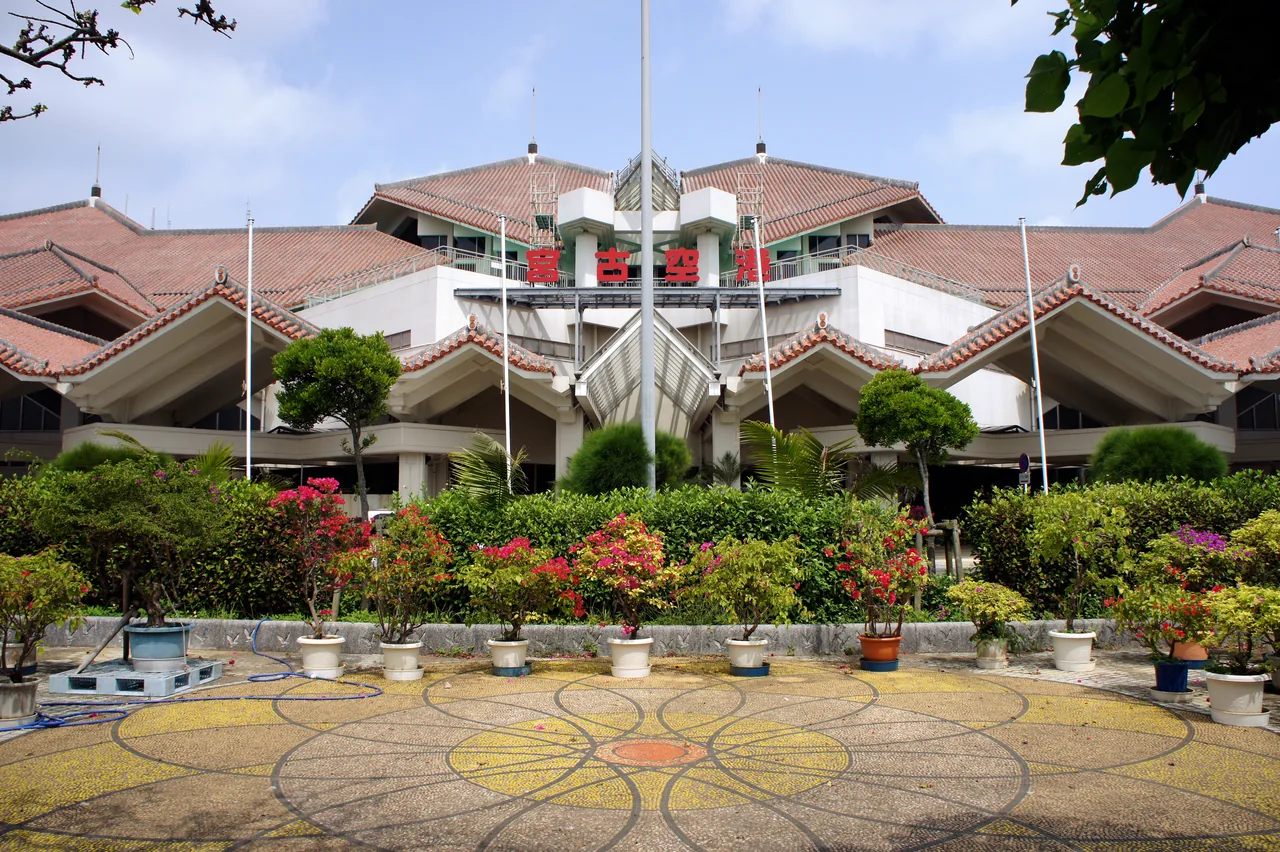
Miyako Airport sits immediately south of the town. Most Hirara properties are within ten minutes of it by car, and some, like Meer Residence Hotel Miyako Airport, are directly in front of it.
Boats to Ogami Island leave from Hirara Port, and the airport bus from Shimojishima stops there too. On a day when you are not picking up a car, that matters a great deal.
If you are travelling alone and watching the budget, the island’s two guesthouses are here as well: Guesthouse ONE Miyakojima and Miyakojima Iyashidokoro Taiyo-no-te Guesthouse.
3. Ueno is a resort complex you never have to leave
Ueno sits on the south coast, and the Shigira resort complex accounts for most of what you can book there. Hotel Shigira Mirage, The Shigira, Shigira Bayside Suite Allamanda and Breeze Bay Marina are all inside one estate.
People choose this area because a whole day can happen without leaving the grounds. The beach, the restaurants and an onsen are all on site.
One estate, several price levels
Shigira is not a single hotel. Hotel Shigira Mirage and The Shigira sit at the top, while Breeze Bay Marina and Hot Cross Point Santa Monica come in lower. Allamanda Splendido and Hotel Seabreeze Coral belong to the same estate.
Being able to pick a price level without changing area is what Ueno offers. It still does not go as low as the business hotels in Hirara.
Felice Villa Suite Miyakojima Ueno and Wellness Villa Brisa have kitchens in the room. If you are travelling with children and plan to cook, those suit better.
Dinner is on site
Ueno has the second-highest number of restaurants after Hirara, but they work differently. In Hirara they are scattered through the town; in Ueno they sit inside the estate. The Shigira Lounge, which the association tags as a bar, is on the grounds.
Yakuzen Hot Pot Xiao Fei Yang, Village Ryukyu no Kaze, Sumibi Yakiniku Ryukyuen, Restaurant Coral Blue and Shinkiro are all on the list for this area. Funky Flamingo is tagged as a night spot.
This is the second of the two areas where you can have a drink with dinner without driving. Expect to pay more than in town.
There is an onsen
Shigira Ogon Onsen is inside the estate. Hot springs are not common in Okinawa, so if soaking matters to you, Ueno is the answer.
Ueno German Culture Village and Utopia Farm Miyakojima are in this area too. With children, you may not need to drive anywhere during the day at all. Shigira Beach is on the grounds, so you can walk into the sea.
Shigira Field House and Shigira Beach House are run by the estate. Which of them you can use depends on which property you book, so check before you pay.
It is a little further from the airport
Ueno is about twenty minutes from Miyako Airport by car. Further than Hirara, but on an island this size that is not a burden. Coming from Shimojishima you cross the bridge and drive the width of the island, which takes longer. Map
The Kyoei bus route to Shimojishima Airport does reach this area. Its terminus is the Miyakojima Tokyu Hotel, and it passes Ueno on the way.
That bus is tied to flight times rather than running to a clock, so it is not something you can rely on at any hour. Book a car alongside a room in Ueno.
4. Irabu is the island the international flights land on
If you fly in from Korea or Taiwan you land at Miyako Shimojishima Airport, which is on Irabu island. No international flights use Miyako Airport.
Yet the association lists only about ten places to stay in the Irabu area. Everything else is on the far side of the Irabu Bridge. If you were planning to book whatever is closest to where you land, the choice is narrow.
Resorts and villas, not much else
Most Irabu properties are resorts or villas. Iraph SUI a Luxury Collection Hotel Okinawa Miyako, Watermark Hotel Okinawa Miyakojima, Santorini Hotel & Villas Miyakojima, Blue Ocean Hotel & Resort Miyakojima and Villabu Resort are all here. Map
ecot Irabu Ohashi Premier, White House Miyakojima and i love 385 are on the list too, mixing whole-house rentals with cottage-style rooms.
There is exactly one business hotel, Hotel Tida no Sato. Keeping the cost down in this area is difficult.
There is nowhere to go out at night
Irabu has no izakaya and no bars on the association’s list. There are only a handful of places to eat at all, and most of them are daytime operations. The Surf Seaside Scene Miyakojima, Yamburger Miyakojima and Kuninaka Shoten are the ones listed.
Irabu Ohashi Umi-no-Eki and the terminal building at Shimojishima Airport also have food. Neither stays open for dinner.
So on Irabu you eat at your hotel or you drive back across the bridge into Hirara. If you want a drink, driving back is not an option.
The sights are right there instead
Toguchi-no-hama and Sawada-no-hama are both on Irabu, as are Toriike, the Makiyama lookout, Funausagi Banata and Nishi Kaigan Park. They are minutes from the hotels, which makes early morning and late afternoon visits easy.
Toriike is a pair of pools connected to the open sea. Sawada-no-hama uncovers rock as the tide drops, so it looks different depending on when you go. Staying here lets you see the same place twice in a day.
The Irabu Bridge is itself on the sights list. It runs 3,540m and is the longest toll-free bridge in Japan.
One night here can solve your arrival
If you land at Shimojishima late, staying on Irabu for the first night and crossing the next morning saves you a drive in the dark. The flight from Busan arrives in the evening, which makes this especially worth considering.
The same works in reverse for an early departure. Spend the last night on Irabu and the airport is a few minutes away.
5. Shimoji is the Maehama beach side
The Shimoji area covers the southwest, including Maehama beach and Kurima island. The association lists five places to stay, so the choice is small.
Miyakojima Kurima Resort Seawood Hotel, Miyakojima Tokyu Hotel & Resorts, Marine Lodge Marea, ZUMI TERRACE Uchinamiya Resort Miyakojima and BLANC MIYAKOJIMA make up the list.
You are on the beach
Maehama is the best known beach on the island, and the Tokyu Hotel stands directly on it. If the plan is to walk out of your room and into the sea, this is the area.
Cross the Kurima Bridge and you are on Kurima island. Map The bridge is 1,690m long and the Ryugujo lookout sits on the island. Nagamahama is over there too. Seawood Hotel is on Kurima itself, so you drive across the bridge to reach it. Map
If most of your trip is beach time, this area cuts your driving more than any other.
The island’s only glamping site
BLANC MIYAKOJIMA is the single property the association files as glamping, and it is here. If you want something other than a hotel room, this is where to look.
Marine Lodge Marea is built around diving. If your days are going to be spent underwater, that kind of place is simpler. ZUMI TERRACE Uchinamiya Resort Miyakojima is a villa.
The five are different enough from each other that people usually pick the property first and end up in the area as a result.
There is almost nowhere to eat
The association lists one restaurant in the Shimoji area. No izakaya, no bars. Dinner means eating at your hotel or driving into Hirara.
Miyako Airport is about fifteen minutes away by car, and Hirara town is similar. If you plan to go out most evenings, budget that drive both ways.
Larger properties like the Tokyu have several restaurants on site, so if you are not planning to leave, it does not arise.
Daytime things are close by
The Ryugujo lookout, the Upukaa mangrove and Maipari Miyakojima Tropical Fruit Garden are all in this area. There is somewhere to go on the hours you are out of the water.
Several activity operators are based here as well: Miyakojima Jinrikisha Enishi, GuruGuruGlass, Marea Miyakojima and Emerald Coast Golf Links.
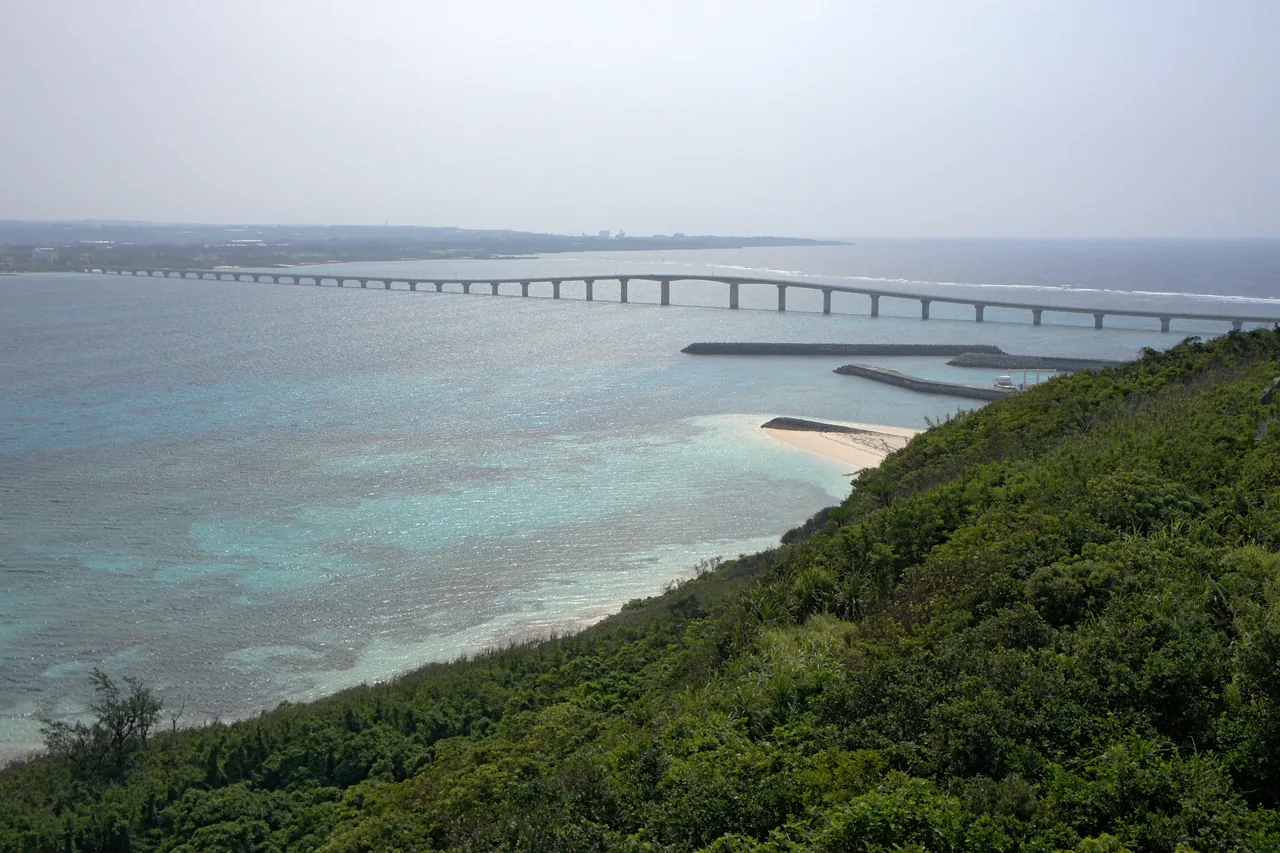
6. The north is where you rent a whole house
The area that groups Ikema, Karimata and Shimajiri has only four listed properties, and they are a different kind of thing. Rather than hotels, these are whole houses and villas.
Island Terrace Neela, villa karimata, LEO Iyashi Resort Sunayama and K’s Villa Miyakojima make up the list. The association files them under whole-house rental and cottage or villa.
Very few people, very few shops
There are no izakaya and no bars here, and exactly one place to eat. Shops are scarce too. If quiet is the point, this works. If you want to go out in the evenings, it does not.
It suits a group or a family taking a whole house. Renting one place can be easier than booking several rooms.
Arriving straight into this area on your first day makes finding dinner hard. Consider a first night in Hirara and a move the following day.
Sunayama beach and the Ikema Bridge
Sunayama beach is in this area. Map A rock arch frames the sea, which is why people come with cameras. Cross the Ikema Bridge and you are on Ikema island; the bridge is 1,425m long. Map
Nishi Henna-zaki and the Shimajiri mangrove are also up here, as are the Yukishio Museum and Miyakojima Marine Park.
A salt works and an underwater park
The Yukishio Museum makes salt from the island’s groundwater and lets you see the plant. It is also a well known place to pick up gifts.
Miyakojima Marine Park lets you look at the reef without getting in the water, which helps if you are travelling with children or do not swim.
Staying here means you see those two first thing and work your way south afterwards.
The longest drive from either airport
The northern tip is about thirty minutes from Miyako Airport. From Shimojishima it is longer. Staying here without a car is not realistic.
Groceries mean a trip into Hirara. If you have a house with a kitchen, shop in town on the way in.
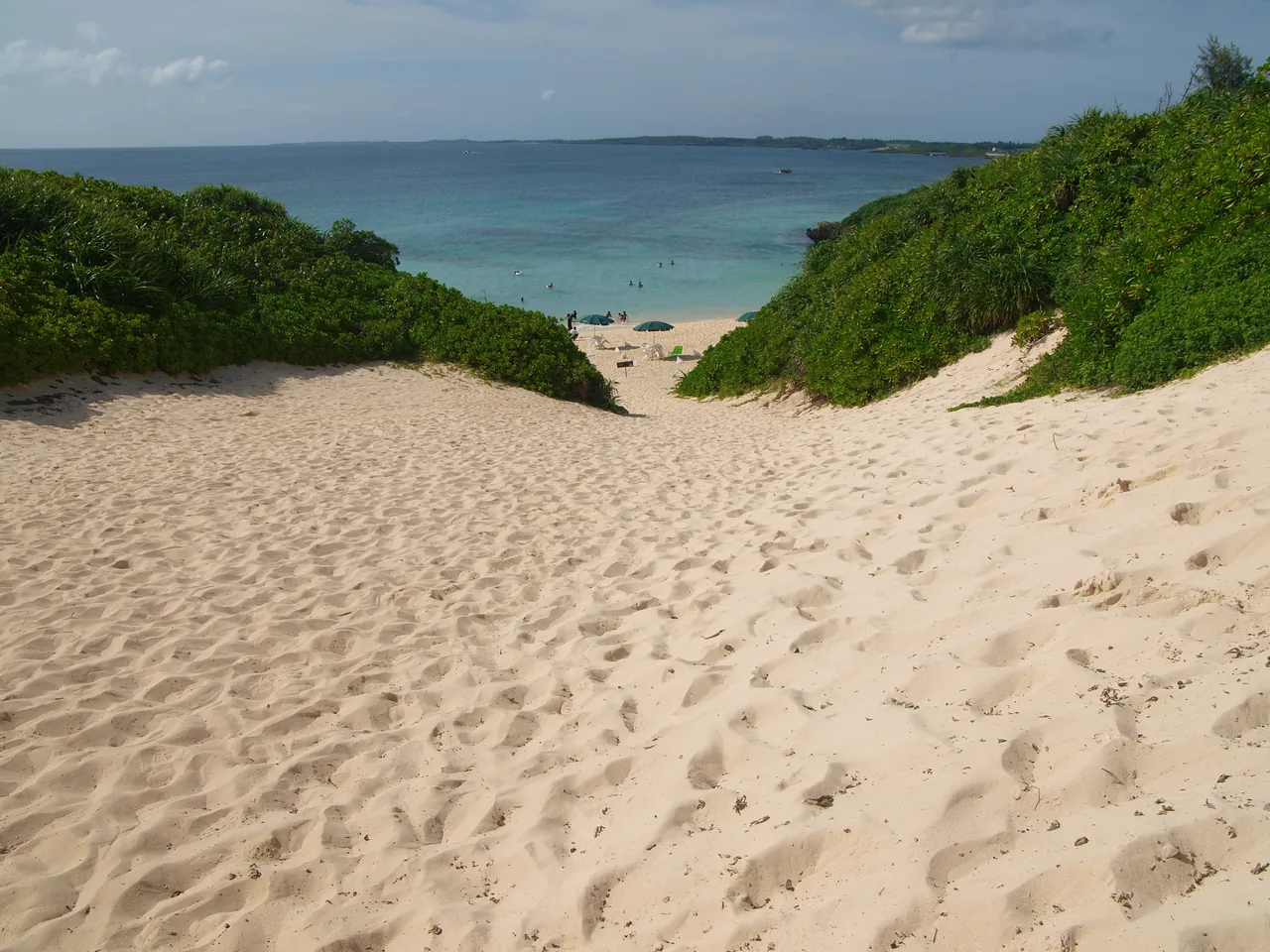
7. Gusukube has the most beaches and the fewest beds
Gusukube, on the east side, carries more sights and beaches than any other area on the association’s list. It also has the fewest places to stay, at three.
Ryukyu Ritei Ingya, Ocean’s Resort Villa Vorla and Miyakojima Sarukanosato are the three. They are a whole-house rental, a villa and a minshuku, so they have little in common with each other.
The beaches are concentrated here
Yoshino Beach, Aragusuku Beach, Boragaa Beach and Imgya Marine Garden are all in Gusukube. If you are coming to snorkel, this is the side of the island you will keep driving to.
Higashi Henna-zaki is here as well, a long cape running east with a lighthouse at the end. Higa Road Park and Nanamata Coast face the same way. Map
Nowhere to eat and nowhere to drink
The association lists two places to eat in Gusukube and no bars at all. Dinner means driving to Hirara or eating where you sleep.
From Miyako Airport to the eastern end is a little over thirty minutes. If your days are beach-heavy, staying here cuts a lot of driving. Just settle the evening question before you book.
Miyakojima Cheese Factory is in this area, so breakfast and snacks are not impossible.
The water activities start here
The Boragaa Pool and Pumpkin Hole tour departs from Gusukube, going by boat and kayak into a cave with stalactites. Miyakojima Kaihokan is in this area as well.
A bungee operator is on the list here, and so is Ocean Links Miyakojima golf course. What you plan to do during the day may well decide this area for you.
Most of these trips leave in the morning. Staying in Gusukube means you are not driving across the island before they start.
Three properties, three different things
Ryukyu Ritei Ingya is a whole house, Ocean’s Resort Villa Vorla is a villa and Miyakojima Sarukanosato is a minshuku.
None of them is a large hotel, so room counts are small. If you have this area in mind for high season, start looking early.
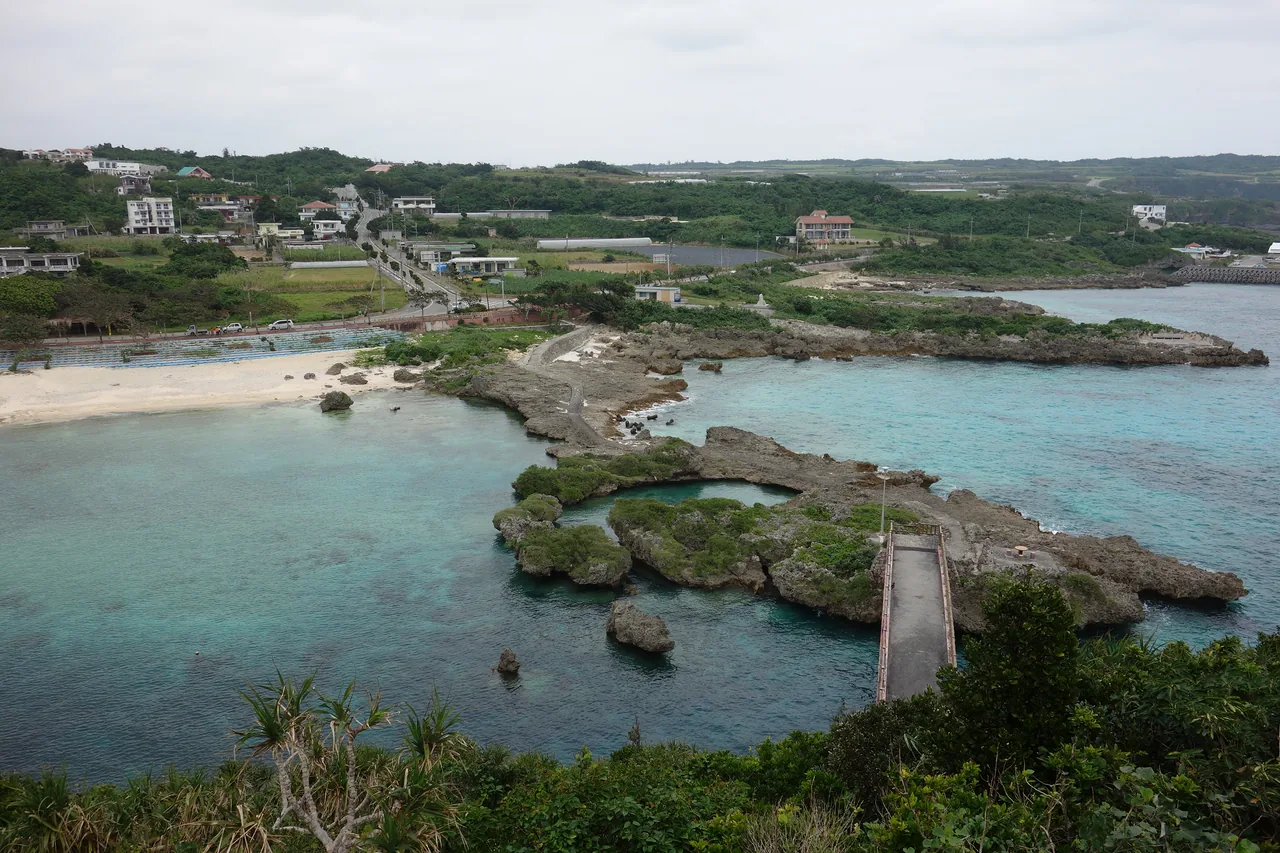
8. Picking the type of place narrows the area for you
Resort hotels are the largest category on Miyakojima, followed by business hotels and cottages or villas. Each type clusters in particular areas, so deciding what kind of place you want does most of the work of deciding where.
| Type | Mostly found in | Suits |
|---|---|---|
| Resort hotel | All six areas | Spending time on the property |
| Business hotel | Almost only Hirara town | Keeping costs down, driving all day |
| Cottage or villa | Irabu, Hirara, the north | Quiet |
| Whole-house rental | The north, Hirara | Groups and families |
| Condominium | Hirara, Ueno | Cooking for yourself |
| Guesthouse | Hirara town only | Travelling alone |
Resort hotels appear in every area
Resort hotels are the biggest group and they appear in Hirara, Ueno, Irabu and Shimoji alike. That is exactly why the type tells you so little on its own, and why the area has to come first.
The same category of hotel means walking to dinner if it is in Hirara and eating on site if it is on Irabu or at Shimoji. The label is identical; the trip is not.
If you are comparing two resorts at a similar price, check which area each one sits in before anything else.
Business hotels are a Hirara-only option
Of the properties filed as business hotels, all but one are in Hirara town. That is the practical floor on what a night costs here, and it exists in one area.
If your budget points at that category, your area is settled. The upside is that Hirara is also the area where you can walk to dinner, so the cheap option is not the inconvenient one.
Guesthouses come down to two addresses
The association lists two guesthouses on the entire island, and both are in Hirara. Guesthouse ONE Miyakojima and Miyakojima Iyashidokoro Taiyo-no-te Guesthouse.
Travelling solo on a budget, your realistic choices are those two and the Hirara business hotels.
Whole-house rentals sit in the north
Renting a house is split between the northern tip and Hirara. For a group of four or more, or a family with children, one house often beats several rooms.
Most of them do not serve meals. Check for a kitchen, and check how far the nearest shop is, before you book.
9. Getting from the airport to your room
Miyakojima has two airports, and which one you land at changes how you reach your hotel. Domestic flights use Miyako Airport; international flights use Miyako Shimojishima Airport on Irabu island.
Miyako Airport is right beside Hirara town, so nothing is far from it. Map Shimojishima sits at the western end of Irabu, and getting into town means crossing the Irabu Bridge. Map
The airport bus is tied to your flight, not to a timetable
The bus at Shimojishima does not run on a clock. One bus is assigned to each arriving flight. Miss the one attached to yours and there is no next one.
| Arriving from | Bus departs | Hirara Port | Miyako Airport |
|---|---|---|---|
| Seoul Incheon (daily) | 12:00 | 12:28 | 12:45 |
| Busan (Thu, Sun) | 18:00 | 18:28 | 18:45 |
| Kobe and Taipei | 14:00 | 14:28 | 14:45 |
| Naha | 16:50 | 17:18 | 17:35 |
This is the Miyako Shimojishima Airport Liner, run by Chuo Kotsu. The adult fare is 800 yen, or 600 yen as far as Hirara Port. No reservation is needed; buy your ticket at the counter inside the terminal.
A second operator covers a different set of flights
Miyako Kyoei Bus runs its own Shimojishima Airport Resort service over the same ground. Its timetable states plainly that it does not run for the Jin Air Seoul flight.
Taken together, the two operators do cover the Korean arrivals; it is simply that a different company handles them. Which bus you want depends on what time you land.
If the flight is cancelled, so is the bus
Because each bus exists to meet a specific flight, a cancellation takes the bus with it. During typhoon season that is worth planning around.
The buses also only run for part of the year. International and domestic services at Shimojishima operate from spring to autumn, and the buses follow the same calendar. Arrive in winter and you come through Miyako Airport instead, where the question does not arise.
Collect a car at the airport if you can
On the association’s transport list, car hire firms vastly outnumber taxi and bus operators combined. That imbalance is the clearest statement of how the island works.
Both airports have rental desks. In high season cars go before rooms do, so book the car when you book the flight. Our guide to renting a car in Okinawa covers the paperwork you need to bring.
If you are not driving at all, stay in Hirara. It is the only area where that decision still leaves you a workable trip.
10. Where you will eat dinner decides the area
Only Hirara town and Ueno have places that serve drinks in the evening. Irabu, Shimoji, the north and Gusukube have none on the association’s list.
Between them those four areas hold more than twenty places to stay. If you pictured walking out to dinner, settle this before you pick an area.
| Area | Places to drink | How dinner works |
|---|---|---|
| Hirara town | The most | Walk out and walk back |
| Ueno | Inside the resort | Stays on the property |
| Irabu | None | On site, or drive to Hirara |
| Shimoji | None | On site, or drive to Hirara |
| Ikema, Karimata, Shimajiri | None | Better to cook |
| Gusukube | None | On site, or drive to Hirara |
Driving and drinking do not combine
Japan enforces drink-driving law strictly, and Miyakojima is an island you get around by car. Public transport will not carry you into town for dinner and back afterwards, and designated-driver services are not something you can count on here.
Taxis exist. There are far fewer of them than rental firms, though, and calling one out to the far end of the island late at night takes time. Factor that in when you choose.
Daytime eating is fine anywhere
Lunch and coffee are a different matter. Irabu has places open in the morning and at midday, the Shimojishima terminal has food, and Gusukube has the Miyakojima Cheese Factory.
It is specifically dinner, and specifically drinking, that narrows to two areas. Think about your evenings before your afternoons and you will make fewer mistakes.
Cooking is a real option
Condominiums and whole-house rentals come with kitchens. Shop in Hirara on the way in and the problem disappears.
In the north, where there is essentially one restaurant, this is the first thing to plan rather than the fallback. Confirm the kitchen when you book.
11. An accommodation tax is coming
Miyakojima City has legislated an accommodation tax, and it starts on 1 February 2027. Stay before that and you will not pay it.
The rate is 2.0% of the room charge, capped at 2,000 yen per person per night. Of that, 1.2% goes to the city and 0.8% to Okinawa Prefecture, split from a single rate so that you are not taxed twice.
| Item | Detail |
|---|---|
| Start date | 1 February 2027 |
| Rate | 2.0% of the room charge |
| Cap | 2,000 yen per person per night |
| Applies to | Hotels, ryokan, simple lodgings and licensed private lodging |
| Exempt | School trips and club activities, sports and cultural competitions |
| Collected by | The property, which remits it to the city |
A percentage, not a flat fee
Most Japanese cities charge a fixed amount per night. Sendai charges 300 yen. Miyakojima applies a percentage, so the more expensive the room, the larger the tax.
With the cap at 2,000 yen, a room charge of 100,000 yen reaches the ceiling and nothing above that adds more. On a resort booking you may well hit it.
The whole prefecture starts on the same day
This is not only a Miyakojima measure. Okinawa Prefecture is introducing one rate across the prefecture, and five municipalities including Miyakojima City begin together. At prefecture level this percentage-based approach is the first of its kind in Japan.
If your trip includes the Okinawa mainland, the same rules apply there. Our guide to the Japanese accommodation tax sets out the position city by city.
It may not be in the price you prepay
Because the property collects the tax and passes it on, it is often charged on arrival rather than included in a prepaid booking.
Once the tax is running, check whether the figure you see on a booking site includes it.
12. When to come, and what it does to rooms
Miyakojima is warm all winter but windy. Even in the coldest month the average is above 18C and the low rarely drops under 16C. A strong northeasterly blows right through the winter, and it makes the sea unpleasant.
Summer is milder than you might expect. The hottest month tops out under 32C, lower than most mainland cities. It is the humidity and the sun that you notice.
| Period | Weather | Rooms |
|---|---|---|
| March to May | The calmest winds of the year | Swimming season begins |
| June to August | Hot, humid, very strong sun | Busiest and most expensive |
| September to October | The wettest months | Typhoons disrupt plans |
| November to February | Mild but windy | Quiet; international flights stop |
The rain peaks in autumn
Rainfall is highest in late summer and early autumn, which coincides with typhoon season. Come then and flights, boats and airport buses can all stop together.
The driest month is in midwinter, but that is also when the wind is strongest and the sea roughest. It does not suit a beach trip. Our guide to typhoon season in Japan explains what to watch for.
International flights pause in winter
Shimojishima’s international and domestic services run from spring to autumn only. In winter you come in through Miyako Airport, which from Korea means connecting through Naha.
The compensation is that rooms are easy. A resort you could not get near in August is often straightforward in January.
In high season, book the car before the room
In summer the cars run out before the hotels do. The island’s layout forces demand onto rental firms, and supply does not stretch.
Once your flights are fixed, reserve a car and a room together. Holding a room with no car makes the area you chose meaningless.
13. Check these before you book
Area, dinner and transport have to be decided together on Miyakojima. Settle one in isolation and the other two will not line up.
| Check | Why |
|---|---|
| Which airport you land at | International flights arrive on Irabu |
| Whether a bus meets your flight | The service is flight-linked, not scheduled |
| Whether you have a car | In summer cars go before rooms |
| Where dinner happens | Four areas have nowhere to drink |
| Whether there is a kitchen | Decisive in areas with no restaurants |
| Whether the tax is included | Often charged on arrival once it starts |
Treat the first and last nights separately
Landing at Shimojishima and sleeping in Hirara or Ueno means a long first transfer. A night on Irabu, crossing the next morning, avoids it.
Departures work the same way. The Incheon flight leaves in the middle of the day and the Busan flight in the evening, so your last day looks quite different depending on which you are on.
Splitting your stay usually works better
Beyond three or four nights, dividing your stay between two areas tends to beat committing to one. Beach-side first, Hirara last, and both the dinner problem and the airport run resolve themselves.
The island is small enough that moving costs almost nothing. Put the bags in the car and drive.
The rest of the island
What to see and do is covered in our Miyakojima travel guide, which goes through the beaches, the bridges, the water activities and how to get there.
If you are combining this with the Okinawa mainland, see the Okinawa guide and where to stay in Okinawa as well.