
Okinawa: The Complete Guide to Japan’s Islands
White sand, the famous ‘Kerama blue’, Ryukyu castles and a food culture all its own — every region of the main island and the outer islands, from someone who keeps coming back.
| What it is | Japan’s subtropical south — 160+ islands strung across the East China Sea, with the old Ryukyu Kingdom’s own culture, food and language. |
|---|---|
| Best time | beach season runs roughly April–October (sea above 25°C May–Oct). April–June and October–November are the sweet spot; typhoons peak Aug–Sep; humpback whales pass Jan–March. |
| Getting around | rent a car on the main island — you’ll need it. Naha has the Yui monorail; outer islands are reached by ferry (Kerama) or short flight (Miyako, Ishigaki). |
| Don’t miss | Churaumi Aquarium, the Blue Cave at Cape Maeda, Shuri Castle (Seiden opens 23 November 2026), and a day on the Kerama Islands. |
| Eat | Okinawa soba, goya champuru, taco rice, Agu pork and rafute, umibudo (sea grapes), sata andagi, all washed down with awamori. |
1. Why Okinawa is a different Japan
2. When to go: weather, sea and typhoons
3. Getting there and getting around
4. Naha and the south: castles, markets and memory
5. Central Okinawa: the Blue Cave and resort coast
6. Northern Okinawa: the aquarium, Kouri and the wild Yanbaru
7. The Kerama Islands: ‘Kerama blue’ off Naha
8. The Miyako Islands: Japan’s most beautiful beaches
9. The Yaeyama Islands: Ishigaki, Taketomi and the jungle
10. Diving, snorkelling and the sea
11. What to eat in Okinawa
12. Where to stay: matching the base to the trip
13. Ryukyu culture: what makes Okinawa Okinawa
14. Sample itineraries
15. Practical tips: money, eSIM and packing
1. Why Okinawa is a different Japan
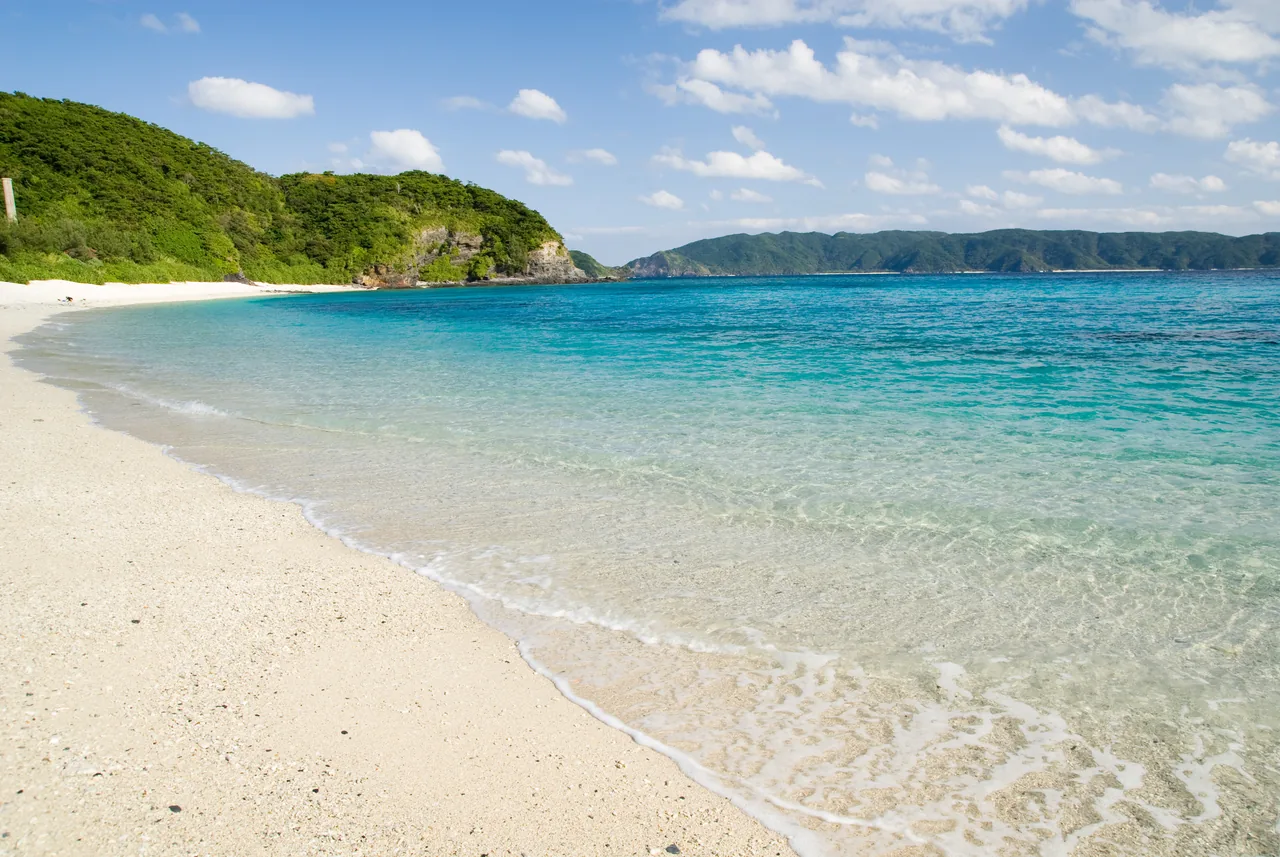
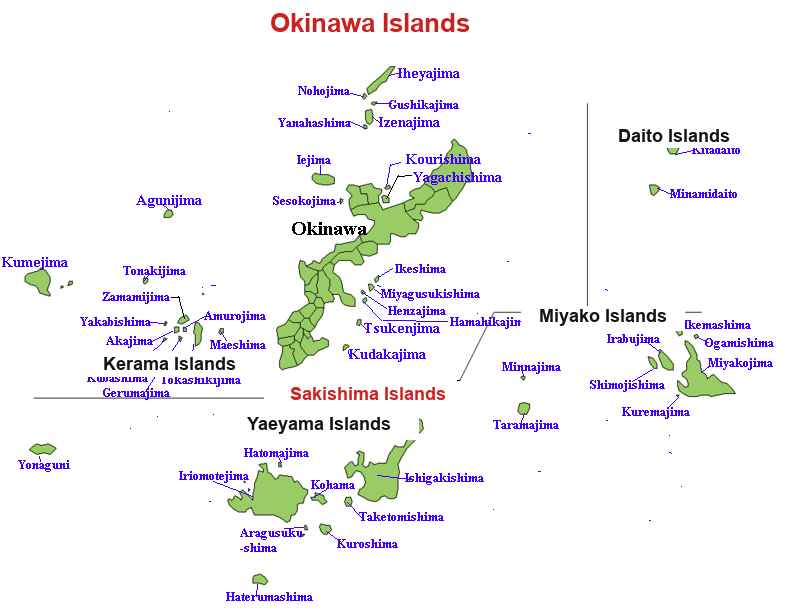
Fly two and a half hours south of Tokyo and Japan changes completely. The temples and bullet trains give way to coral reefs, sugar-cane fields and beaches the colour of a swimming pool. This is Okinawa — a 1,000-kilometre arc of more than 160 subtropical islands, closer to Taipei than to the Japanese mainland, and for most of its history not “Japan” at all but the independent Ryukyu Kingdom.
That history is why Okinawa feels like its own country within a country. It has its own castles (the coral-stone gusuku), its own music (the snakeskin-bodied sanshin), its own guardian lions (shisa on every rooftop), its own spirit (awamori) and a cuisine that owes as much to China and Southeast Asia as to Japan. It’s also one of the world’s original “Blue Zones,” where the village of Ogimi is famous for its remarkable number of centenarians.
This guide walks the whole prefecture: when to come, how to move around, then every region of the main island north to south, the three outer-island groups, the beaches, the diving, what to eat and where, where to sleep, and the bit of Ryukyu culture that makes it all make sense.
2. When to go: weather, sea and typhoons
Okinawa is warm year-round, but the sea is the thing that changes, and it dictates the trip. Here’s the honest month-by-month.
| Season | Months | What you get |
|---|---|---|
| Spring 🌺 | Mar–May | The sweet spot. Beaches open in April, the sea warms to swimmable (~23–25°C), typhoon risk near zero, fewer crowds. Late season cherry blossoms in January–February for winter visitors. |
| Early summer 🌧️ | May–Jun | The short rainy season (tsuyu); showers come and go and the islands turn lush. Still warm, still swimmable, and prices are lower. |
| High summer ☀️ | Jul–Sep | Peak beach weather, sea at a bath-like 28–30°C — and peak typhoon and crowd season. Hot, humid, alive. |
| Autumn 🐠 | Oct–Nov | The connoisseur’s pick: warm sea, the best diving visibility of the year, humidity dropping and the typhoon risk fading. |
| Winter 🐋 | Dec–Feb | Around 17–20°C — too cool to swim (sea ~21°C) but lovely for sightseeing, the lowest prices, and humpback-whale watching off the Keramas. |
3. Getting there and getting around
Almost everyone arrives by air at Naha Airport (OKA) Naha AirportMap, the main island’s gateway — about 2.5–3 hours from Tokyo, with constant flights (including low-cost carriers) from across Japan and direct international routes from Taipei, Hong Kong, Seoul and more.
On the main island: rent a car
This is the single most important piece of Okinawa planning: rent a car. The island’s sights are spread along both coasts and public buses are slow and sparse. A compact rents for roughly ¥7,000–9,000 per 24 hours, and the one rule that trips people up — you need an International Driving Permit (IDP) issued under the 1949 Geneva Convention, obtained in your home country before you fly. (Drivers from Germany, France, Belgium, Switzerland, Taiwan, Monaco and Slovenia use a different official-translation system — check your own country’s rule.)
Naha without a car: the Yui Rail
If you’re staying put in the capital, the Yui Rail monorail runs 19 stations from the airport through central Naha up to Shuri Castle in about 40 minutes — perfect for Kokusai Dori, the markets and the castle without ever driving.
To the outer islands: ferry or fly
| Destination | How | From Naha |
|---|---|---|
| Kerama Islands (Zamami/Tokashiki/Aka) | High-speed ferry from Tomari Port | ~35–60 min |
| Miyako Island | Flight (many LCCs) | ~50 min |
| Ishigaki (Yaeyama gateway) | Flight (many LCCs) | ~60 min |
| Taketomi / Iriomote / Hateruma | Ferry from Ishigaki Port | 10–60 min from Ishigaki |
4. Naha and the south: castles, markets and memory
Most trips begin in Naha, the lively capital on the southern third of the main island, and the south packs in Okinawa’s deepest history.
Shuri Castle: the main hall opens 23 November 2026
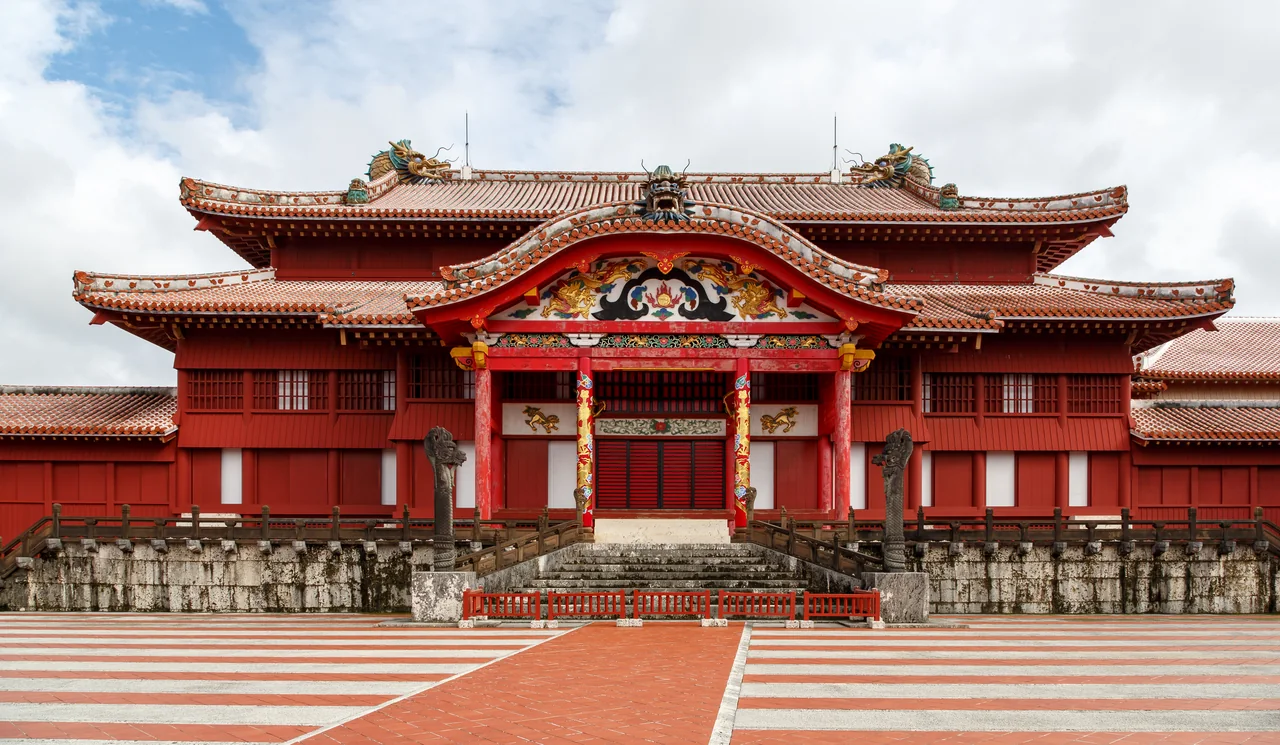
Shuri Castle (Shurijo) Shuri CastleMap was the royal seat of the Ryukyu Kingdom, a vermilion palace unlike any castle on the mainland. A 2019 fire destroyed the main hall, and the reconstruction has been a moving, public, years-long project. The Seiden (main hall) opens to the public on 23 November 2026, the day after the completion ceremony, its bright red roof already back in place. To walk inside it you need a ticket booked for a specific date and time, and that booking costs nothing extra. The paid-area admission is the same either way, so arriving without a booking means paying full price and staying outside. Adult admission goes from ¥400 to ¥1,000 for entry from 23 November. There is more on how to book the main hall and what else to see in Naha in our city guide. Whatever you decide about the Seiden, the hilltop grounds, gates and the stone-paved Kinjocho lane below are well worth the visit.
Kokusai Dori and the markets
Kokusai Dori Kokusai Dori NahaMap (“International Street”) is Naha’s mile-long main drag of shops, izakaya and sanshin music. Duck off it into the Makishi Public Market Makishi Public MarketMap, where you buy fish downstairs and have it cooked upstairs, and the atmospheric Sakaemachi arcade for backstreet izakaya. The covered side-alleys, not the main street, are where the value and the locals are.
The sacred and the sobering south
- Sefa-utaki Sefa-utakiMap — the holiest site of the Ryukyu religion, a UNESCO-listed grove of rock formations where priestesses once prayed. Quiet and powerful.
- Okinawa World Okinawa WorldMap — a culture park built around the vast Gyokusendo Cave (one of Japan’s longest), with a Ryukyu village, eisa drum shows and a snake (habu) museum.
- Himeyuri Peace Museum & Peace Memorial Park Himeyuri Peace MuseumMap — the sober, essential side of Okinawa. The 1945 Battle of Okinawa was one of the war’s bloodiest; these memorials tell it through the people who lived and died here.
- Senagajima Umikaji TerraceMap — a tiny island by the airport with the whitewashed Umikaji Terrace of cafés and shops, and planes roaring low overhead.
5. Central Okinawa: the Blue Cave and resort coast
The waist of the island is its resort coast — the west-side towns of Onna, Yomitan and Chatan, where the big beach hotels cluster and the water turns Caribbean.
The Blue Cave at Cape Maeda
Okinawa’s most popular in-water experience is the Blue Cave (Ao no Dokutsu) at Cape Maeda Cape MaedaMap in Onna. Sunlight refracting through the shallow sea cave lights the whole grotto an electric blue. It’s beginner-friendly — most visitors come on a guided snorkelling tour, though it’s a fine first dive too. Go in the morning before the wind and crowds build.
Cape Manzamo and the western capes
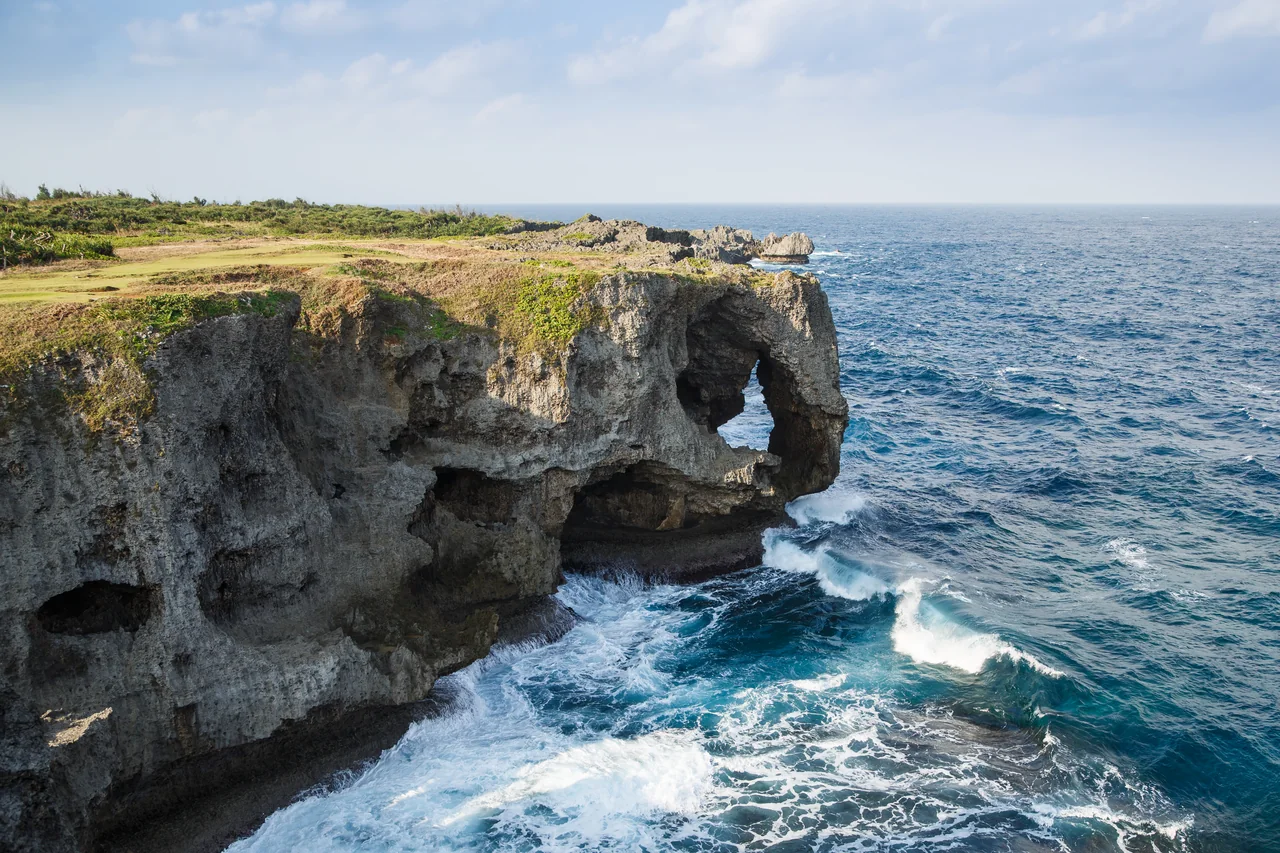
Cape Manzamo Cape ManzamoMap is the postcard: an elephant-trunk-shaped cliff over the sea, best at sunset. Nearby Cape Zanpa Cape ZanpaMap has a white lighthouse and dramatic rocks.
American Village
American Village (Mihama) American Village OkinawaMap in Chatan is a only-in-Okinawa mash-up — a seaside complex of shops, diners and a Ferris wheel born of the island’s long American military presence, with a Sunset Beach for the evening. Loud, kitsch and fun.
The Ryukyu castles of the centre
Three of Okinawa’s UNESCO gusuku ring the central island, and their curving coral-stone walls and hilltop views are extraordinary:
- Nakagusuku Castle Nakagusuku Castle RuinsMap — the best-preserved of all the ruins, with sweeping bay views.
- Katsuren Castle Katsuren Castle RuinsMap — a dramatic clifftop fortress on the east coast; Roman coins were once excavated here.
- Zakimi Castle Zakimi Castle RuinsMap — compact, walkable walls near Cape Zanpa, lovely at golden hour.
6. Northern Okinawa: the aquarium, Kouri and the wild Yanbaru
The north is greener, emptier and home to Okinawa’s single biggest draw.
Churaumi Aquarium
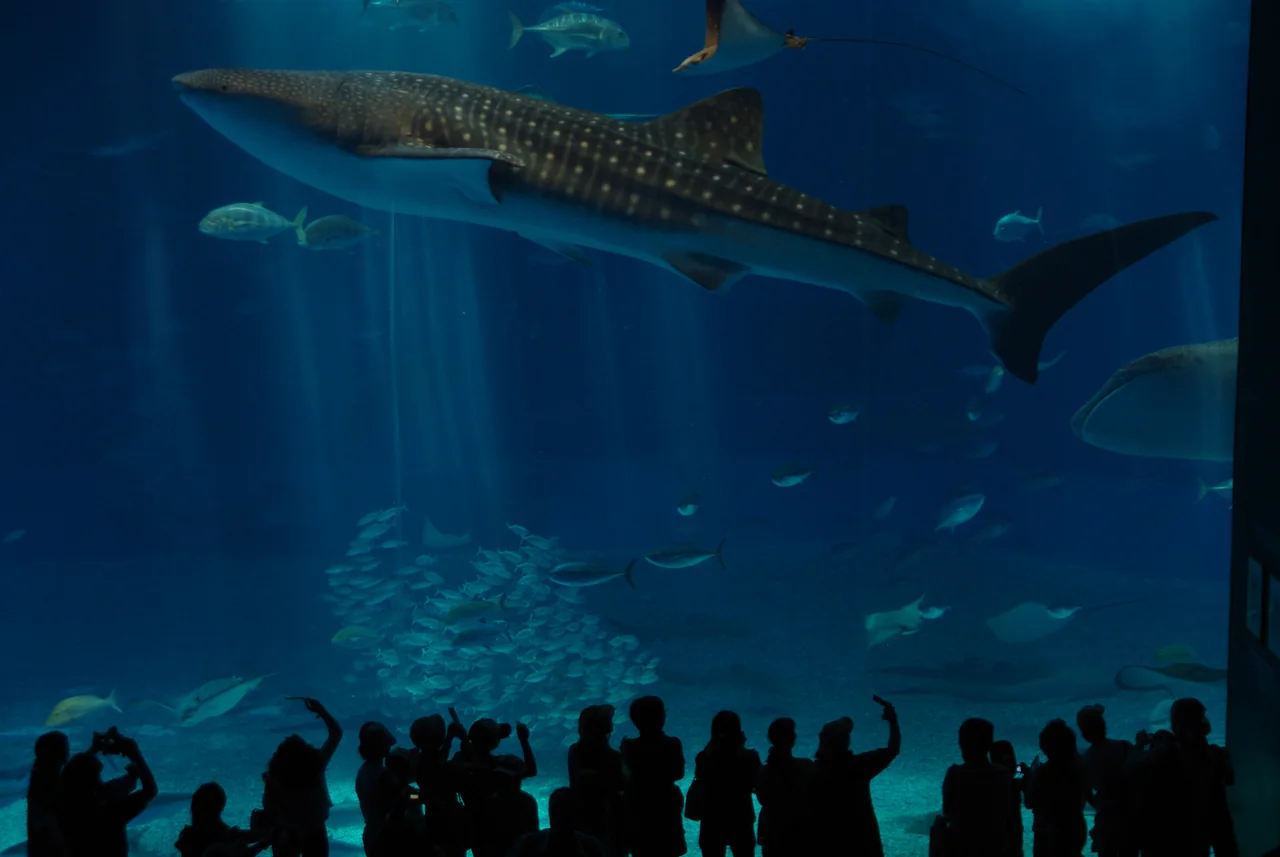
The Okinawa Churaumi Aquarium Churaumi AquariumMap, in the Ocean Expo Park near Motobu, is genuinely world-class — the colossal Kuroshio Tank holds whale sharks and manta rays behind one of the largest acrylic panels on earth. Pair it with the adjacent Emerald Beach and the park’s dolphin shows; it’s an easy half-day and the one northern stop nobody skips.
Kouri Island and Bise
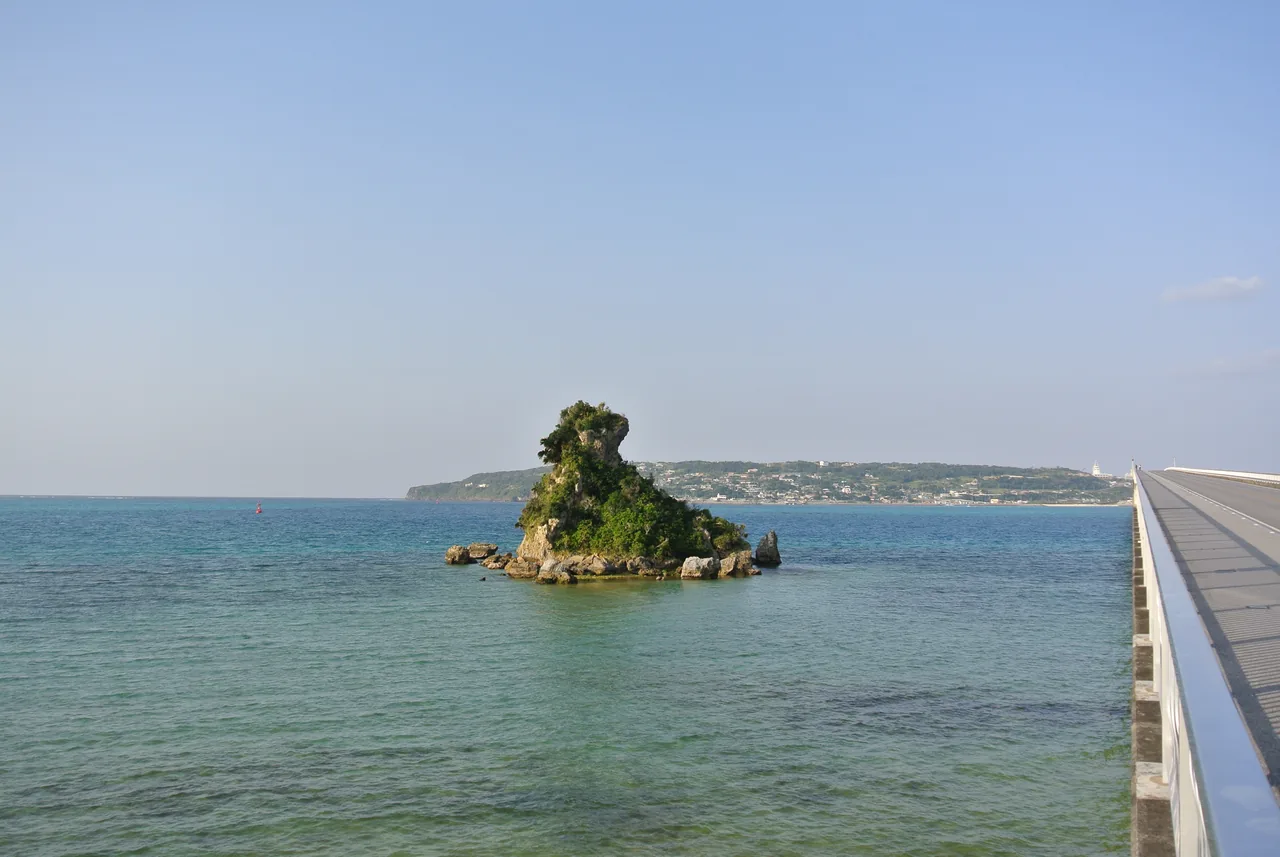
- Kouri Island Kouri IslandMap — reached by the spectacular 2 km Kouri Bridge over impossibly blue water; one of Okinawa’s great short drives, with a heart-shaped rock and seaside cafés.
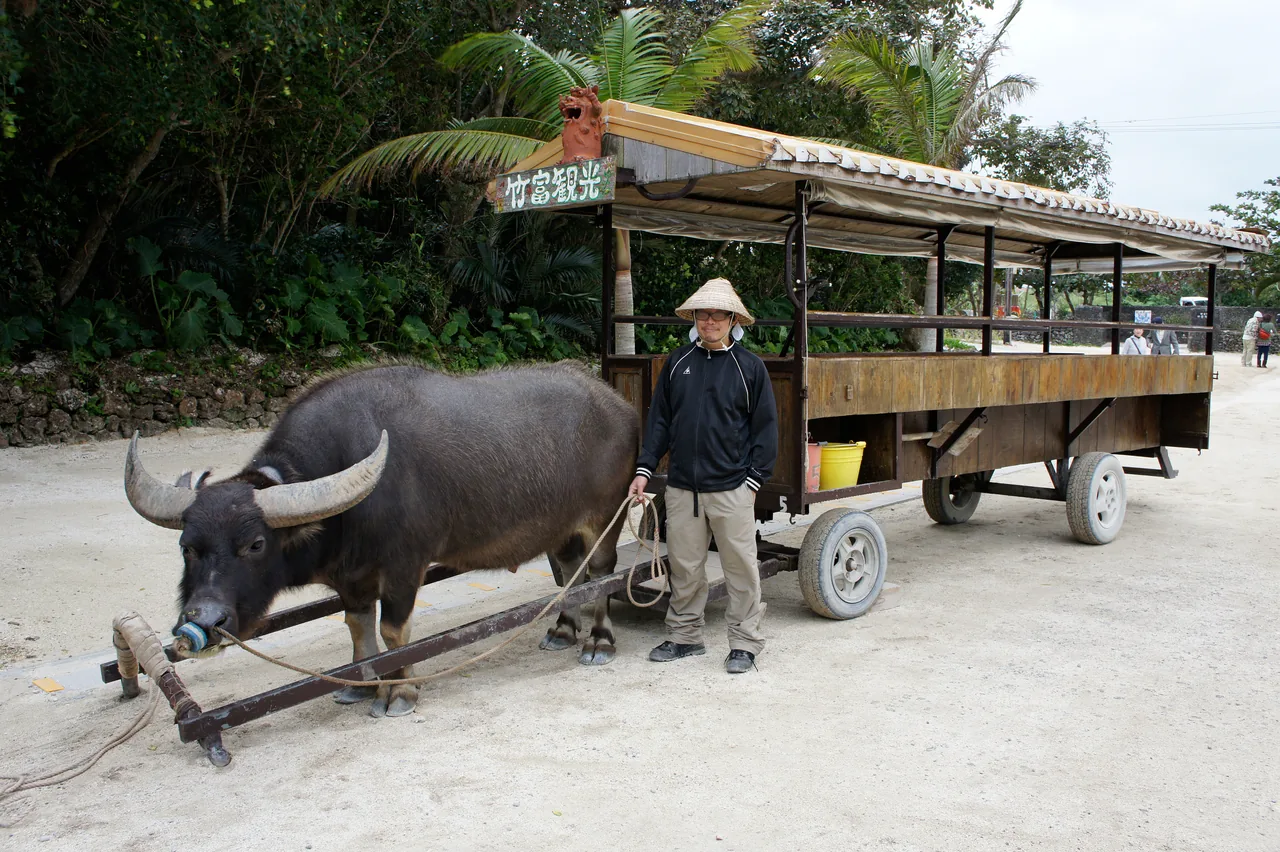
- Bise Fukugi Tree Road Bise Fukugi Tree RoadMap — a 400-year-old village lane shaded by some 20,000 fukugi trees planted as a typhoon windbreak. Walk it or take a water-buffalo cart; pure old Okinawa.
Nakijin Castle and the far north
Nakijin Castle Nakijin Castle RuinsMap, the northernmost UNESCO gusuku, has long curving walls and ocean views (and a famous January cherry-blossom display). Beyond it, the island narrows toward Cape Hedo Cape HedoMap at the northern tip and the dense subtropical rainforest of Yanbaru National Park — home to the endangered Okinawa rail and a UNESCO World Natural Heritage site. This is the wild, slow end of the main island.
7. The Kerama Islands: ‘Kerama blue’ off Naha
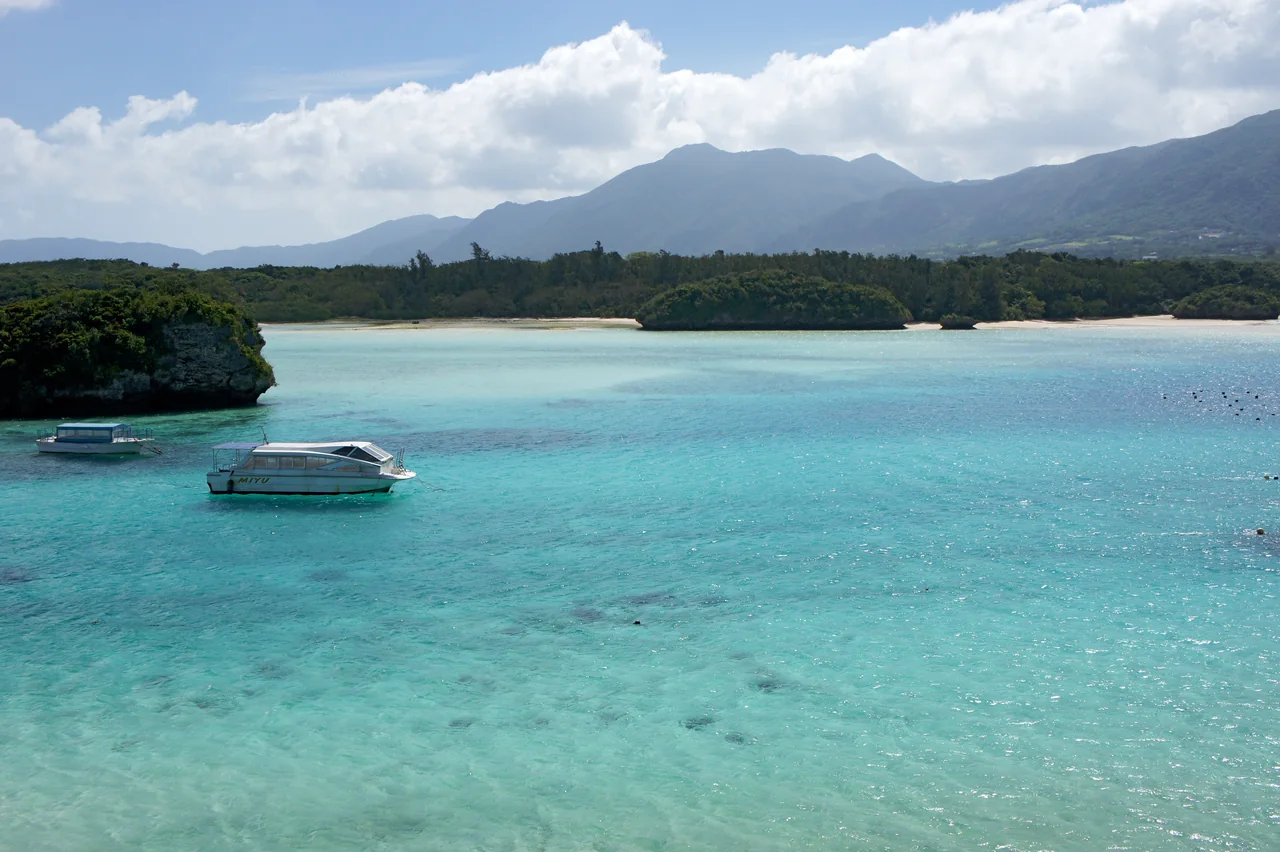
If you only add one island to a main-island trip, make it the Keramas — a cluster just 35–60 minutes by fast ferry from Naha’s Tomari Port, protected as Keramashoto National Park and famous worldwide for a shade of water locals trademarked as “Kerama blue.”
🐢 Tokashiki
The largest and closest. Tokashiku Beach Tokashiku BeachMap (“Turtle Beach”) is one of the best places in Okinawa to snorkel with wild sea turtles; Aharen Beach is the main swimming strand.
🐋 Zamami
The whale-watching hub (Jan–Mar) and home to Furuzamami Beach Furuzamami BeachMap, a fine-sand, coral-rich classic just over the hill from the port.
🤿 Aka
Quietest of the three, linked to Geruma by bridge. Nishibama Beach Nishibama BeachMap is often called the most beautiful in the Keramas.
8. The Miyako Islands: Japan’s most beautiful beaches
An hour’s flight southwest of Naha, the Miyako group is flat, coral-fringed and built for the beach. It’s linked by a set of free bridges so long and so blue that the drives are attractions in themselves.
- Yonaha Maehama Beach Yonaha Maehama BeachMap — a 7 km ribbon of white sand routinely called the most beautiful beach in Japan. Calm, shallow, postcard-perfect.
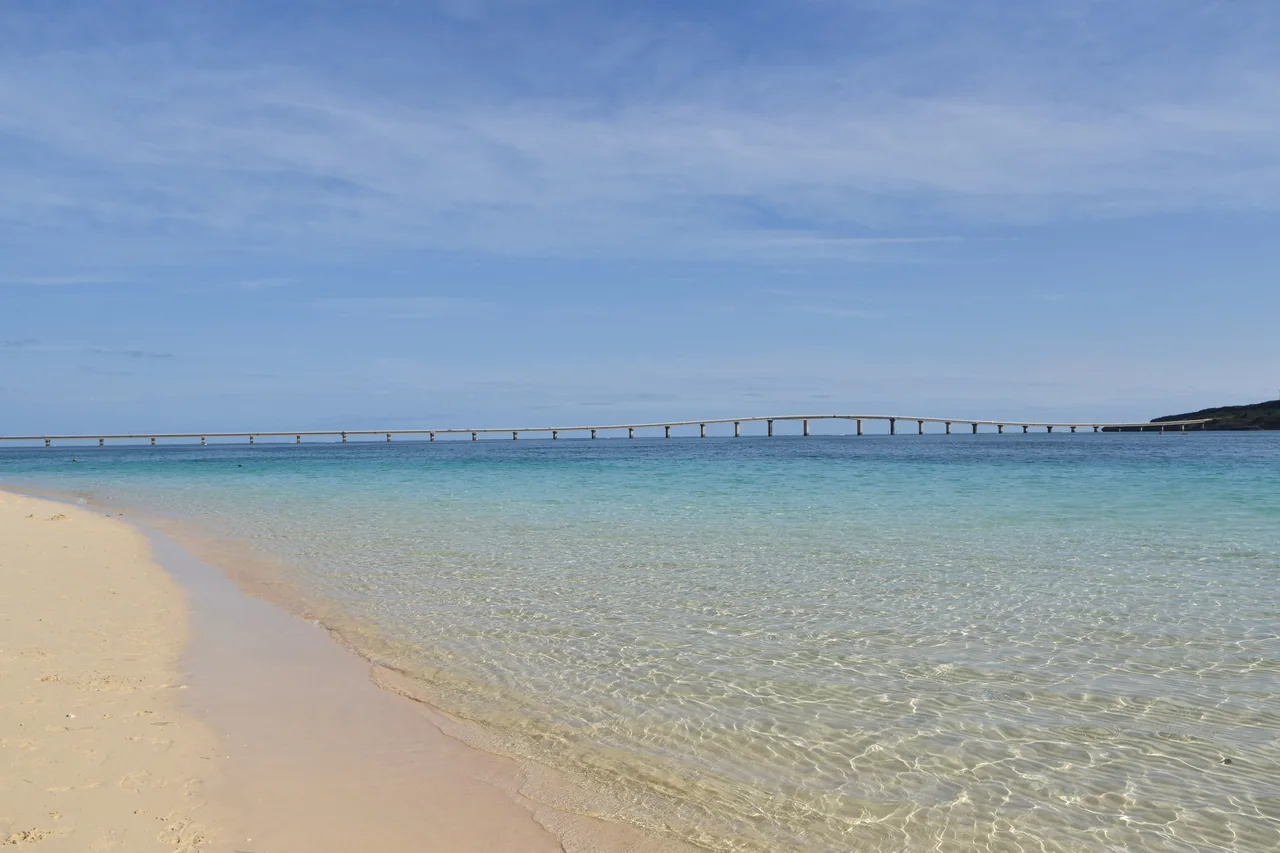
- Irabu Bridge Irabu Ohashi BridgeMap — at 3,540 m, the longest toll-free bridge in Japan, soaring over turquoise water to Irabu and Shimoji islands. An unforgettable drive.
- 17END 17 END MiyakoMap — a runway-end sandbar on Shimoji with water so clear it looks fake; appears at low tide.
- Sunayama Beach Sunayama BeachMap — small but iconic for its natural sandstone arch.
- Kurima & Ikema — more bridge-linked islets with quiet beaches; the Tooriike twin ponds on Shimoji are a renowned (advanced) cave-dive site.
9. The Yaeyama Islands: Ishigaki, Taketomi and the jungle
The Yaeyama group is Japan’s southernmost frontier — closer to Taiwan than to Naha — and the most adventurous corner of Okinawa. Ishigaki is the gateway (about an hour’s flight from Naha), and the smaller islands fan out by ferry from Ishigaki Port.
🏝️ Ishigaki
Beaches, reefs and mountains in one. Kabira Bay Kabira BayMap is the iconic emerald lagoon (no swimming — take a glass-bottom boat); Manta Scramble offshore is a world-famous spot to dive with manta rays; Yonehara Beach is the snorkelling favourite.
🐃 Taketomi
A 10-minute ferry from Ishigaki and a step back in time: a preserved village of red-tiled houses and coral walls, water-buffalo carts, and the famous star-shaped sand of Kaiji Beach.
🌴 Iriomote
Japan’s last jungle — 90% dense rainforest and mangrove. Kayak the rivers to Pinaisara Falls, cruise the mangroves, and watch for the elusive Iriomote wildcat.
Further out, Hateruma Hateruma Nishihama BeachMap is Japan’s southernmost inhabited island, with a dazzling beach and some of the country’s clearest night skies; Yonaguni, the westernmost, draws divers for winter hammerhead schools and its mysterious underwater rock “monument.” The ferry fares, which routes cancel first and how long each island needs are all in our Ishigaki Island guide.
10. Diving, snorkelling and the sea
The whole point of Okinawa is the water, and it’s some of the best in Asia — warm, clear and reefy, with sites for absolute beginners and serious divers alike.
- Blue Cave, Cape Maeda (main island): the easy, iconic snorkel/first-dive — glowing blue light, schools of fish, beginner tours daily.
- Kerama Islands: “Kerama blue” visibility, coral gardens and reliable sea-turtle snorkelling at Tokashiku.
- Manta Scramble, Ishigaki: one of the world’s most dependable spots to dive with manta rays (best summer–autumn).
- Yonaguni: winter hammerhead schools and the underwater monument, for experienced divers.
- Whale watching (Jan–March): humpbacks off the Keramas and Zamami — boat tours run from Naha and the islands.
11. What to eat in Okinawa
Okinawan food is its own cuisine — lighter on raw fish than the mainland, heavy on pork, bitter greens, tofu and a famous longevity reputation. Eat your way through this list and you’ve understood the islands.
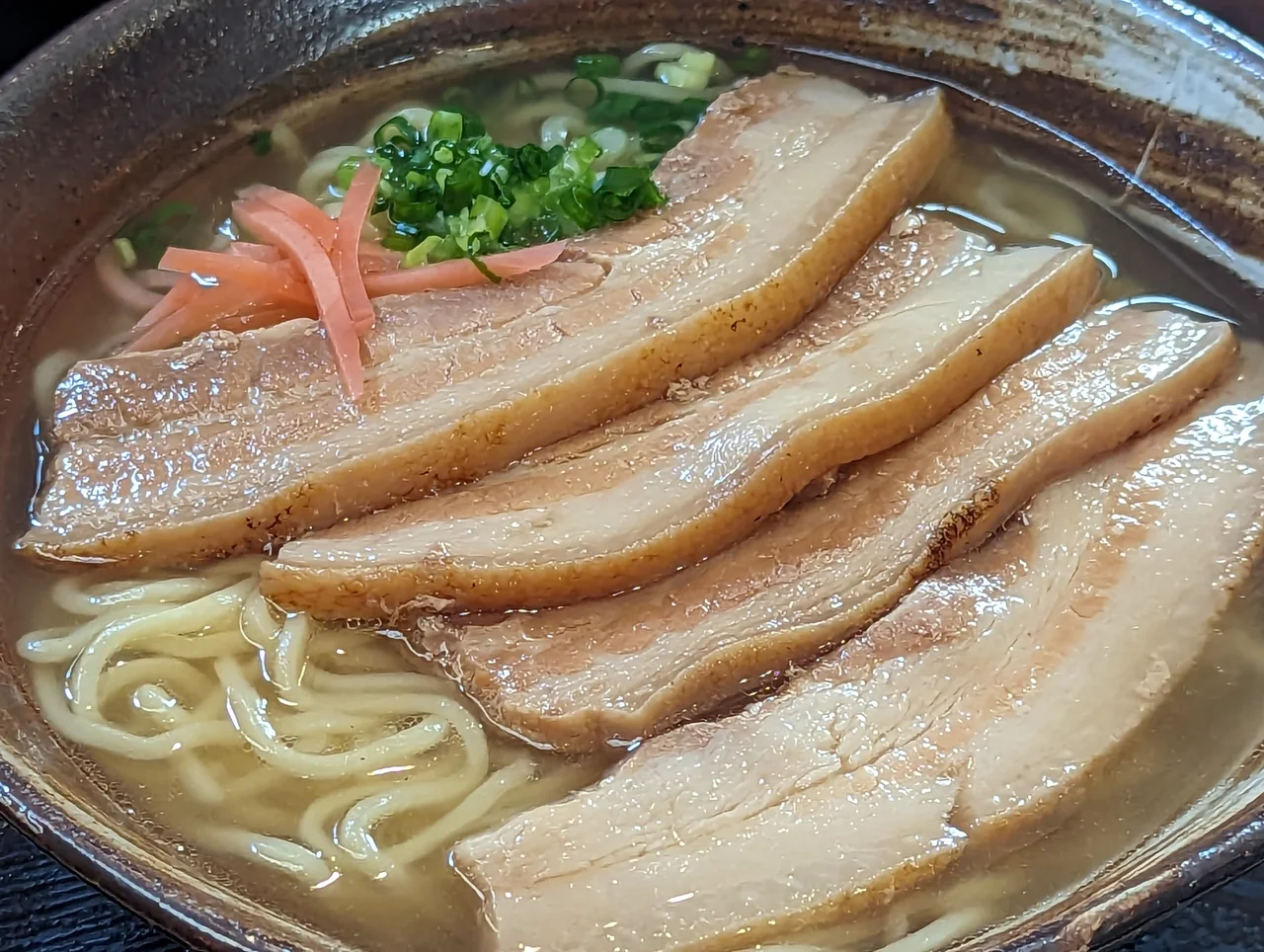
- Okinawa soba — the staple: thick wheat noodles (not buckwheat) in a pork-and-bonito broth. Topped with stewed pork rib it becomes soki soba. Every town has a beloved shop.
- Goya champuru — the iconic stir-fry of bitter melon, tofu, egg and pork (Spam, often). Bitter, savoury, addictive.
- Taco rice — taco filling over rice, invented in the base town of Kin. Okinawan comfort food, pure and simple.
- Agu pork & rafute — sweet, marbled Agu is a heritage black pig; rafute is pork belly braised slow in awamori and brown sugar until it melts.
- Umibudo — “sea grapes,” a local seaweed of tiny green spheres that pop and burst briny on the tongue; the “green caviar” of Okinawa.
- Mimiga — thin-sliced pig ear, crunchy and vinegary, a classic izakaya bite.
- Sata andagi — dense Okinawan doughnut balls, crisp outside, cakey within. Buy them warm at Makishi Market.
- Blue Seal ice cream — the island’s American-born institution; get the beni-imo (purple sweet potato) or shikuwasa-citrus flavour.
- Awamori — Okinawa’s rice spirit, aged into smooth kusu; the island’s drink, neat, on ice or in a cocktail.
12. Where to stay: matching the base to the trip
Where you sleep in Okinawa shapes the whole trip more than in most places, because driving distances are real. Pick by what you came for.
🏙️ Naha (the south)
Best for first-timers, no-car trips, food and culture. Walkable, on the monorail, close to the airport and Kerama ferries. Less about the beach.
🏖️ Onna / west coast (central)
The resort belt — big beachfront hotels, the Blue Cave, Manzamo and the prettiest swimming. Best for a relaxed beach-and-pool holiday; you’ll want a car.
🏝️ Outer islands
Kerama minshuku for turtles and stars; Miyako and Ishigaki resorts for the dream beaches. A trip in their own right.
Book months ahead for July–August, Golden Week and any whale-watching weekend; the best beachfront rooms and Kerama guesthouses go first.
13. Ryukyu culture: what makes Okinawa Okinawa
A little context turns a beach holiday into something richer. Okinawa was the Ryukyu Kingdom (1429–1879), a seafaring trading nation that paid tribute to China and absorbed influences from across Asia before Japan annexed it. That legacy is everywhere:
- Shisa — the lion-dog guardians you’ll see in pairs on every gate and rooftop, one mouth open to ward off evil, one closed to keep in the good.
- Sanshin — the three-stringed, snakeskin-covered lute whose twang is the sound of Okinawa; you’ll hear it live in izakaya.
- Eisa — the powerful drum-and-dance performed at summer festivals and at Okinawa World.
- Gusuku — the coral-limestone castles (Shuri, Nakijin, Katsuren, Nakagusuku, Zakimi) and sacred Sefa-utaki, together a UNESCO World Heritage group.
- Longevity — northern Ogimi village is a Blue Zone, famed for centenarians and a plant-and-pork diet eaten hara hachi bu — to 80% full.
14. Sample itineraries
5 days — the main island, by car
- Day 1 — Naha: Shuri Castle, Kokusai Dori and the Makishi Market; sunset at Senagajima.
- Day 2 — the south: Sefa-utaki, Okinawa World’s cave, and the Peace Memorial museums.
- Day 3 — central coast: morning Blue Cave snorkel at Cape Maeda, Cape Manzamo, an afternoon on the Onna resort coast, dinner at American Village.
- Day 4 — the north: Churaumi Aquarium, Bise Fukugi Tree Road, the Kouri Bridge drive.
- Day 5 — Kerama day trip: early fast ferry to Zamami or Tokashiki, beach and turtles, back to Naha to fly out.
7–10 days — main island + an island group
Do the five days above, then fly on to Miyako (beaches and bridges) or Ishigaki and the Yaeyamas (Kabira Bay, Taketomi’s old village, Iriomote’s jungle) for three to four slow days. Pick one — they’re each worth the full block.
• Japan travel guide — visas, trains, money
• When to visit Japan, season by season
We’ll link island- and city-level Okinawa guides here as they go live.
15. Practical tips: money, eSIM and packing
Okinawa is part of Japan, so the practicalities are familiar — with a tropical twist.
- Money: same yen, same “not fully cashless” reality. Carry ¥20,000–30,000 and a contactless card; rural shops and small soba joints are often cash-only. 7-Eleven ATMs take foreign cards.
- Visa & entry: Okinawa follows Japan’s national rules — 90 days visa-free for most Western passports. See our Japan visa guide.
- Connectivity: a travel eSIM is the easy win — you’ll lean hard on Google Maps for those coastal drives.
- Pack: reef-safe sunscreen, a rash guard (sun and jellyfish), water shoes for coral, a light rain layer, and something warmer Dec–Feb. The sun is stronger this far south than people expect.
- Driving: bring your IDP, drive on the left, and watch for the slower island pace — this is not Tokyo.