
Japan Visa & Entry Guide: Who Gets 90 Days Visa-Free, and How Arrival Actually Works
Most travelers, including US, UK, Canadian, Australian, New Zealand and EU passport holders, do not need a visa for Japan: you get 90 days visa-free on arrival. Here is exactly how entry works right now, from the Visit Japan Web QR code to the new ¥3,000 departure tax and the coming JESTA system.
| Visa needed? | No for 74 nationalities incl. US, UK, EU, Canada, Australia, NZ |
|---|---|
| Stay length | 90 days for most; Thailand 15, UAE and Qatar 30 days |
| Visit Japan Web | Free and optional, but the fast lane; one QR covers immigration + customs |
| JESTA | Not yet; launches by March 2029, and any site selling it today is a scam |
| Departure tax | ¥3,000 from July 1, 2026, collected inside your ticket price |
| Passport rule | Valid for your whole stay; Japan has no 6-month rule |
| Work allowed? | No, any paid work on a Temporary Visitor stay is prohibited |
| Visa required | China mainland, India, Vietnam, Philippines apply via embassy first |
1. Do you need a visa for Japan? The short answer
2. The 90-day rule: what “Temporary Visitor” actually means
3. Visa-free countries: the full list by nationality and days
4. What you can and can’t do on a visa-free stay
5. Passport validity, onward tickets and proof of funds
6. Visit Japan Web step by step: one QR code for everything
7. Arrival walk-through: plane to street in five steps
8. Airport queue reality: when it’s bad and how to beat it
9. Leaving Japan: e-gates and the ¥3,000 departure tax
10. Tax-free shopping is changing on November 1, 2026
11. JESTA: Japan’s ESTA is coming, but not yet
12. Trusted Traveler Program: skip the line if you visit often
13. Preclearance trials: clearing Japanese immigration before boarding
14. Overstays and visa runs: the mistakes that end your Japan travel
15. If you do need a visa: China mainland, India, Vietnam, Philippines and more
16. Staying longer than 90 days: the legitimate routes
17. Lost passport in Japan: the exact recovery steps
1. Do you need a visa for Japan? The short answer
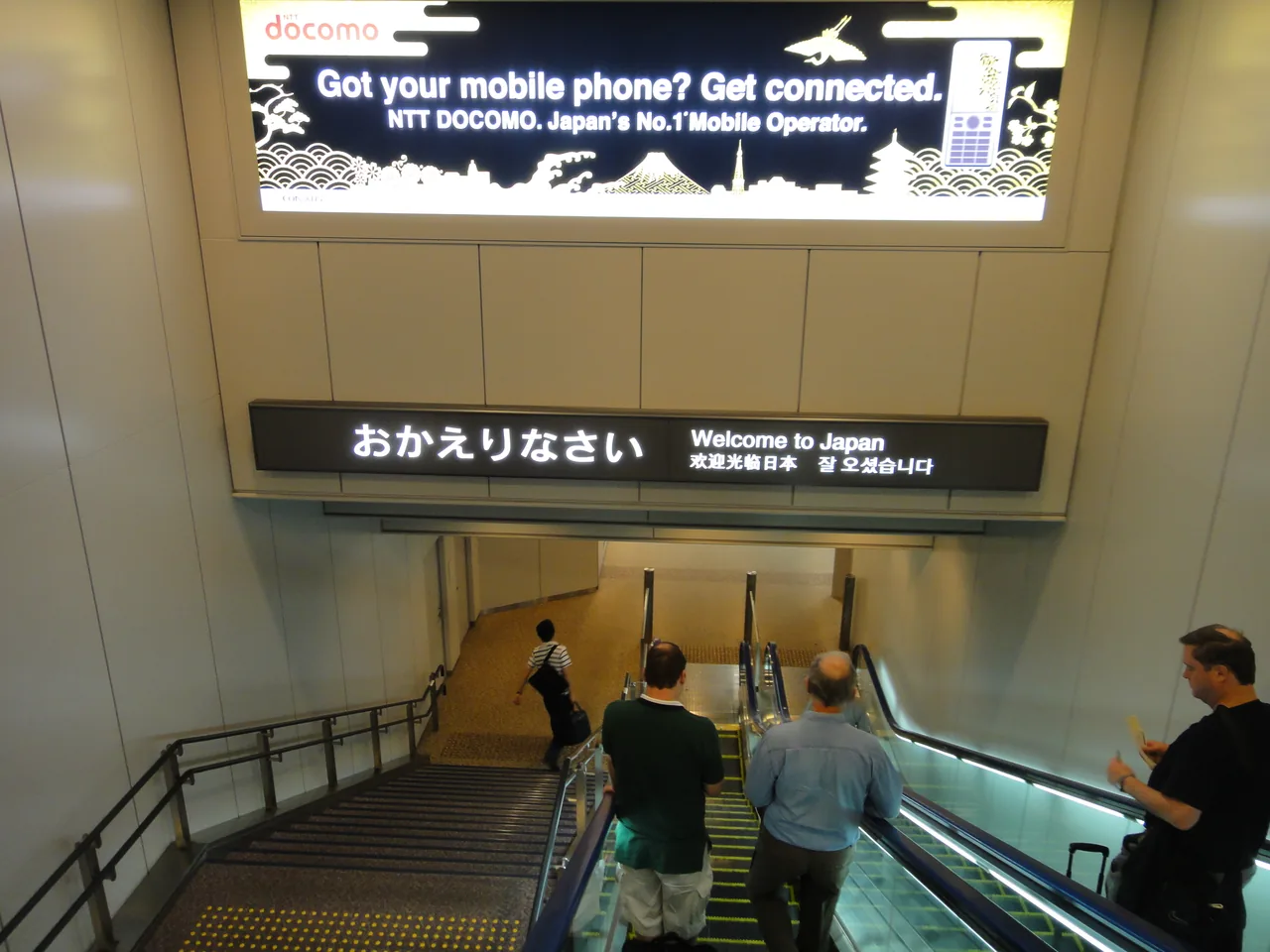
If you hold a passport from the United States, Canada, the United Kingdom, Australia, New Zealand, or almost any EU country, you do not need a visa for Japan. You board your flight with nothing but a valid passport, and at the border you receive 90 days of visa-free entry as a “Temporary Visitor.” No application, no fee, no pre-approval. As of July 2026 there is still no electronic travel authorization either, so ignore any website that tells you otherwise.
Japan currently extends this visa exemption to 74 countries and regions, which covers the overwhelming majority of international arrivals. The catch is in the details: a handful of exempt nationalities get shorter stays, a few get a special six-month track, and a large part of the world, including China mainland, India, Vietnam and the Philippines, still needs a visa arranged before travel. Here is the one-glance version:
| Your passport | Verdict |
|---|---|
| US, Canada, UK, Australia, NZ, most of the EU, Korea, Taiwan, Hong Kong, Singapore | No visa. 90 days on arrival |
| UAE, Qatar, Thailand, Brunei | No visa, but only 14 to 30 days |
| Indonesia | Visa-free 30 days only with an e-passport pre-registered at a Japanese embassy |
| China mainland, India, Vietnam, Philippines, most of Africa and South Asia | Visa required before travel |
One thing to internalize early: visa-free means exemption from the visa, not exemption from inspection. An immigration officer can still refuse you at the counter if your purpose is unclear, you have no onward plans, or you have a past overstay on record. For ordinary tourists this is vanishingly rare, but it is the legal frame everything below hangs on. The rest of this guide walks you through the whole journey, and it pairs naturally with our full Japan travel guide once you’re past the border.
2. The 90-day rule: what “Temporary Visitor” actually means
The 90 days you receive at the border is formally a “Temporary Visitor” landing permission, granted as a sticker in your passport, and it is the legal basis of your entire stay. It permits tourism, visiting relatives and friends, attending meetings, unpaid short business (negotiations, contract signing, market research), conferences and events. It does not permit any form of paid work, full stop.

When the officer or kiosk finishes processing you, look at the sticker. It shows your status (“Temporary Visitor”) and, crucially, the exact date your permission expires. Read that date rather than assuming 90 days from today. Miscounting by even one day makes you an illegal overstayer, and Japan treats that with a severity that surprises people (more on that in the overstay section). If your trip is a normal one-to-three-week holiday you will never come close, but long-stay travelers should photograph the sticker the moment they clear the counter and set a calendar reminder for a week before the date.
A few practical clarifications that trip people up:
- 90 days, not 3 months. The permission is counted in days. Arrive January 15 and your day 90 lands mid-April; count it precisely or trust the date on the sticker.
- The clock starts on arrival day. Landing at 11:55pm still burns day one.
- It is single-stay, not a rolling allowance. Leave Japan and your permission ends. Re-enter and you get a fresh inspection, and a fresh decision, each time.
- Extensions are effectively unavailable for plain tourism. Unless you are from one of the seven six-month-track countries (below) or hit a genuine emergency such as hospitalization, plan to leave by the printed date.
3. Visa-free countries: the full list by nationality and days
Japan’s visa exemption list covers 74 countries and regions, and the standard grant is 90 days, per the Ministry of Foreign Affairs list most recently updated in September 2025. Most readers of this page are on the 90-day standard track, but check your row carefully; the exceptions are exactly where travelers get caught out at check-in.
| Nationality | Visa-free stay | Notes |
|---|---|---|
| United States, Canada | 90 days | Standard Temporary Visitor |
| United Kingdom | 90 days | Also on the 6-month track (see below) |
| Australia, New Zealand | 90 days | Standard Temporary Visitor |
| Most EU states (Germany, France, Italy, Spain, Netherlands…) | 90 days | Germany, Austria, Ireland also on the 6-month track |
| South Korea, Taiwan, Hong Kong SAR (incl. BNO), Macao SAR | 90 days | Standard Temporary Visitor |
| Singapore, Malaysia | 90 days | Standard Temporary Visitor |
| Argentina, Chile, Mexico, Turkey, Israel | 90 days | Mexico also on the 6-month track |
| UAE, Qatar | 30 days | Shorter grant; plan itineraries accordingly |
| Thailand | 15 days | Longer trips need a visa |
| Brunei | 14 days | Shortest on the list |
| Indonesia | 30 days | Only with an e-passport registered in advance at a Japanese embassy or consulate |
Seven nationalities sit on a special six-month track: Austria, Germany, Ireland, Liechtenstein, Mexico, Switzerland and the United Kingdom. Do not misread this as six months at the border. You still receive the normal 90-day sticker on landing; to use the second half you must apply for an Extension of Period of Stay at a Regional Immigration Bureau inside Japan before day 90, paying roughly ¥4,000 in revenue stamps. It is routinely granted for these seven nationalities but it is a deliberate application, not an automatic top-up. If you are seriously planning a multi-month stay, that is also the trip length where a JR Pass and shinkansen strategy starts paying for itself.
Everyone not on the exemption list needs a visa issued before travel; the process is covered in its own section near the end of this guide.
4. What you can and can’t do on a visa-free stay
The rule of thumb is simple: anything touristic or unpaid is fine, anything paid is prohibited. “Temporary Visitor” is a genuine multi-purpose status, and immigration does not care whether you’re here for temples, a wedding, or a week of supplier meetings, as long as no Japanese entity is paying you for labor.
✅ Tourism & sightseeing
Travel anywhere in Japan, in any style, for the full length of your permission. No registration, no itinerary approval.
✅ Friends, family, events
Visiting relatives, attending weddings and funerals, concerts, sports events, fan conventions. All squarely within the status.
✅ Unpaid business
Meetings, negotiations, contract signing, market research, conferences, factory visits. The key word is unpaid: your salary stays with your employer abroad.
❌ Any paid work
Employment, casual gigs, paid performances, freelancing for Japanese clients. Even a day of paid work violates the status and can mean deportation and a re-entry ban.
Gray areas worth naming. Short unpaid study, like a week-long cooking or language course, is fine. Buying property is legal on any status (owning a home grants no immigration rights whatsoever). Volunteering gets murky quickly if food and lodging look like compensation; keep it genuinely casual. And competitive prize money, paid modeling or paid speaking all count as work, which is why touring professionals use dedicated visa categories.
Since your first days will also involve trains, temples and tipping confusion, it’s worth skimming our Japan etiquette and manners guide before you land; immigration officers won’t quiz you on chopstick rules, but the country will.
5. Passport validity, onward tickets and proof of funds
Japan’s passport rule is more relaxed than most travelers expect: your passport only needs to be valid for the length of your stay. There is no 6-month-validity requirement on the Japanese side at all. The practical caveat is that airlines and any country you transit can impose stricter rules of their own, so 6+ months remaining is still the comfortable norm; just don’t panic if you’re at five months and flying nonstop.
Three documents-and-money questions dominate this topic, so here they are straight:
- Onward or return ticket: officers can ask for evidence you’ll leave within your permitted stay. It is not always checked, but “not always” is doing heavy lifting; travelers on one-way tickets get asked far more often. Keep your e-ticket reachable on your phone, not buried in an email you need Wi-Fi to find.
- Proof of funds: rarely requested from ordinary tourists. Nobody is counting your cash. What matters is being able to answer, in one sentence, where you’re staying and what you’re doing. Vague answers invite follow-ups; specific ones end the conversation.
- First-night address: this is the single piece of information you genuinely must have ready, because it goes on your arrival card or Visit Japan Web profile. One address is enough even for a multi-city trip. “Hotel Gracery Shinjuku” beats “traveling around” every time.
On the money side, Japan is still more cash-friendly than its tech image suggests, and how much to carry, which cards work, and where ATMs actually accept foreign cards is its own topic; see our Japan money, cash and cards guide for the full picture before you land.
If you’re on a one-way ticket and want the onward-flight box ticked cheaply, it’s worth pricing a real exit flight before you fly rather than gambling at the check-in desk.
6. Visit Japan Web step by step: one QR code for everything
Visit Japan Web (VJW) is Japan’s free official pre-arrival site, and while it is not legally mandatory, it is the fast lane in practice. Run by the Digital Agency at vjw.digital.go.jp, it replaces the paper arrival card and paper customs declaration with a QR code you show (or scan) on landing. Paper forms still work fine, and there are always stacks of them on the plane, but the paper line moves at handwriting speed.
The 2026 version is meaningfully better than what you may remember from earlier trips: immigration and customs are now covered by a single QR code. The old flow, where you presented one QR at the immigration counter and a second one at customs, has been merged. (A separate tax-free QR still exists for shopping, but that’s for stores, not the border.)
Registration takes 10 to 15 minutes:
- 1. Create an account with an email address at vjw.digital.go.jp.
- 2. Add travelers. Register yourself, then add family members or companions under the same account so one phone can carry everyone’s codes.
- 3. Enter your trip: passport details (or scan the chip with your phone), flight number, and your first-night accommodation address.
- 4. Get your QR and, critically, screenshot it. Arrival halls have Wi-Fi dead zones, and the person frantically re-logging-in at the kiosk is a fixture of every landing bank.
Do this before departure, not on the plane. Airline fast-travel schemes that read VJW data recommend finishing at least 6 hours before arrival, and doing it at home means you can fix a typo calmly instead of at 30,000 feet.
Your QR is useless if your phone has no signal when you land, so sort out connectivity before the trip; an eSIM installed at home activates the moment you touch down, and our Japan eSIM and data guide compares the options in detail.

7. Arrival walk-through: plane to street in five steps
From aircraft door to the arrivals hall, Japanese entry is a five-step sequence: walk, quarantine (usually invisible), immigration, baggage, customs, and at the three biggest airports the last two checkpoints have effectively merged into one machine. Here is the whole flow:
| Step | What happens | Time (typical) |
|---|---|---|
| 1. Walk to immigration | Long corridors; at Narita and Haneda this can be a genuine 10-minute hike | 5–15 min |
| 2. Immigration | Fingerprints (both index fingers) + face photo at counter or kiosk; short questions; landing sticker issued | 10–60+ min |
| 3. Baggage claim | Belts are fast and bags are often already circling; carts are free | 5–20 min |
| 4. Customs | Scan your VJW QR at a machine or hand over the paper declaration | 1–10 min |
| 5. Arrivals hall | SIM counters, rail tickets, cash machines, and the way into the city | — |
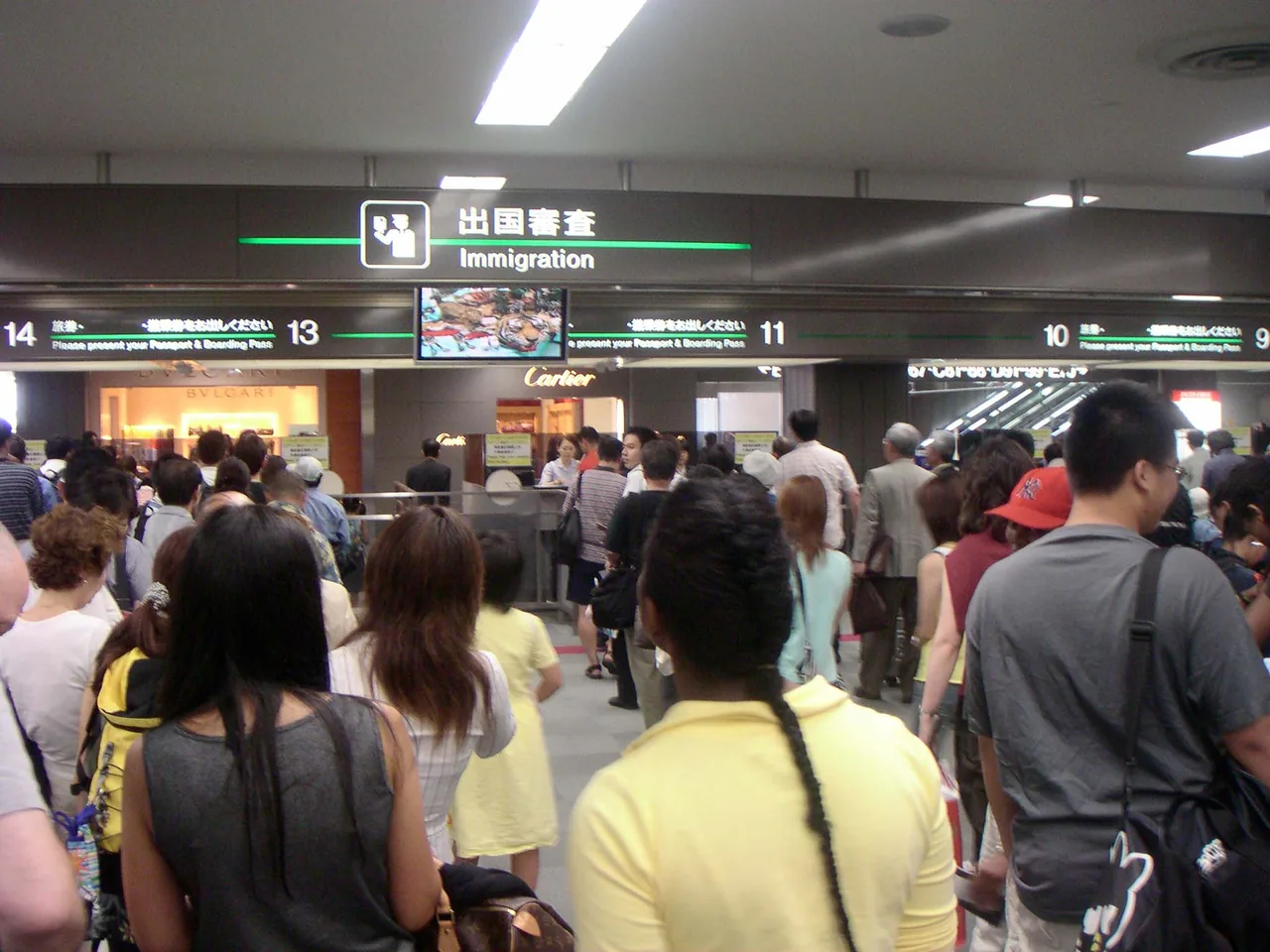
At the immigration counter itself, every foreign visitor gives fingerprints from both index fingers plus a face photo, and answers a question or two: how long are you staying, where are you staying, what’s the purpose. The correct answers are one-liners. “Two weeks, tourism, Hotel Mystays Asakusa.” Officers process hundreds of people per shift; brevity reads as honesty.
The big 2026 upgrade is the Joint Kiosk (共通キオスク), now rolled out at Haneda, Narita and Kansai: you scan your passport and your VJW QR once at a single machine, and it handles both the immigration entry record and the customs declaration in one step. It’s the closest thing to a domestic-arrival experience international travel offers. Smaller international airports, including Chubu, Fukuoka and Naha, still run the older two-step flow (immigration counter, then a separate customs check), so don’t be surprised when the process differs between your inbound and outbound cities.
Once you’re through, the airport-to-city leg is its own decision tree; our Narita and Haneda to Tokyo guide covers every train, bus and taxi option with prices, and grabbing a transit IC card at the airport (see the Suica and ICOCA guide) will save you queueing at every station after.
8. Airport queue reality: when it’s bad and how to beat it
Be honest with your planning: immigration waits at Narita, Haneda and Kansai can exceed an hour when several long-haul arrivals land together, and the early-morning low-cost-carrier banks are notorious. Japan’s tourism boom is real, staffing is finite, and the difference between a 10-minute and a 70-minute wait is mostly about when your wheels touch down.
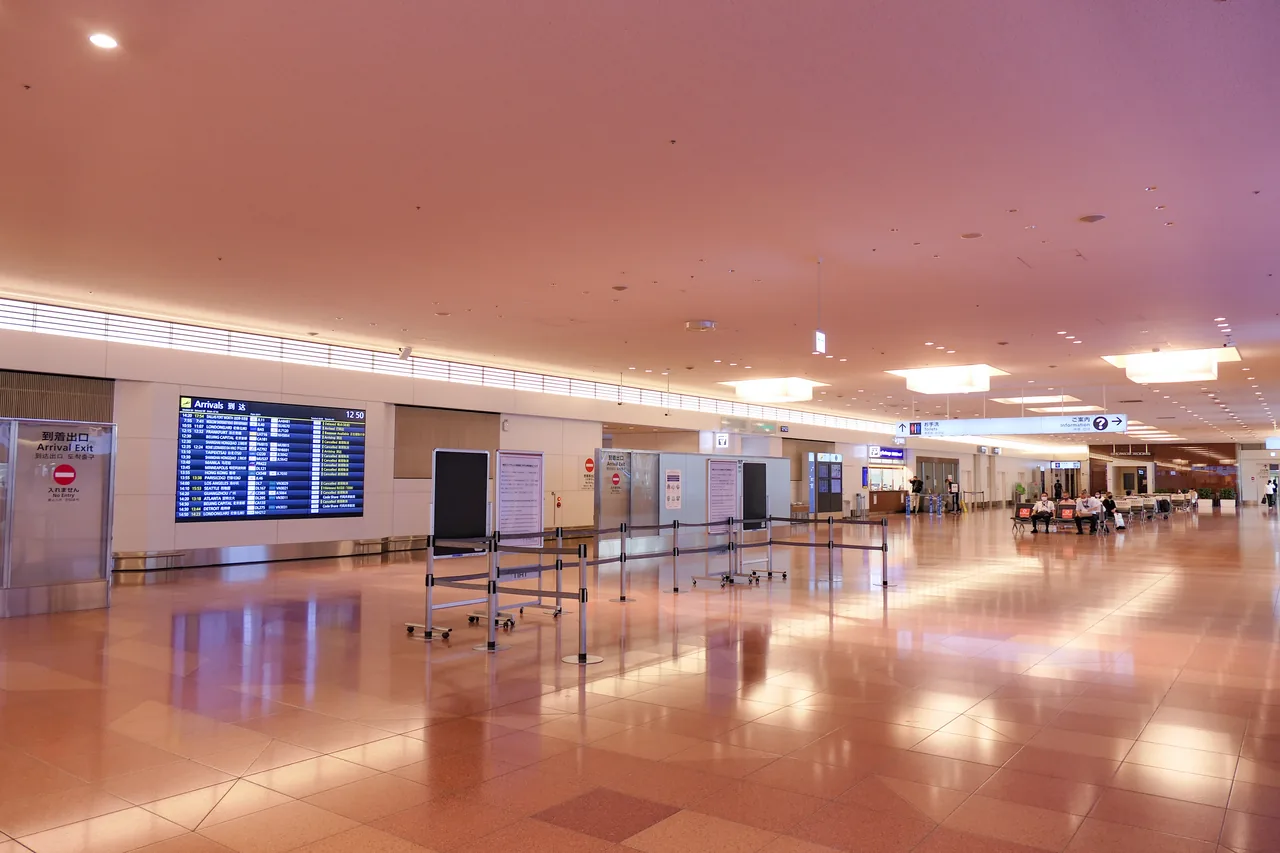
The predictable crunch times:
- Early morning (5:00–8:00am): overnight LCC arrivals from Southeast Asia bunch together, especially at Narita and Kansai. Multiple A330s of tourists hit the same hall within 40 minutes.
- Late afternoon (3:00–6:00pm): North American and European long-haul banks at Haneda and Narita.
- Holiday spikes: cherry blossom season, Golden Week (late April to early May), summer holidays and New Year all compound the above. If you’re choosing dates, our best time to visit Japan guide maps the crowd calendar.
- Weather chaos: when a typhoon cancels a day of flights, the next day’s arrival banks absorb the backlog. During typhoon season (roughly August to October), build slack into your first day.
What actually helps:
- Finish VJW before departure and have the QR screenshot ready. At Joint Kiosk airports this is the single biggest time-saver.
- Sit forward on the plane if seat selection is cheap. Two hundred people deplane ahead of row 52.
- Don’t schedule anything tight within 3 hours of landing: no shinkansen reservations, no timed museum entries, no tour pickups.
- Flying into Kansai for Kyoto? The KIX to Kyoto guide covers the Haruka express and cheaper options once you’re through.
- Repeat visitor? The Trusted Traveler Program (section below) gets you a dedicated automated gate, though the application backlog means it rewards planning a year ahead.
9. Leaving Japan: e-gates and the ¥3,000 departure tax
Departure is dramatically simpler than arrival: foreign nationals can use face-recognition e-gates at major airports with no registration at all, and the “departure tax” everyone asks about is already inside your ticket price, never paid at the airport. You walk up, the gate matches your face to your passport chip, and you’re airside in seconds.
Two details about the e-gates worth knowing. First, they issue no stamp by default; if you want physical evidence of your departure (some travelers need it for tax residency or visa applications elsewhere), step aside and ask an officer for a stamp after passing through. Second, e-gates handle the immigration exit record only; standard security screening and airline document checks still apply before you reach them.
The money question: Japan’s International Tourist Tax, nicknamed the “sayonara tax,” tripled from ¥1,000 to ¥3,000 on July 1, 2026, and it is in effect now. The government frames the increase as funding for overtourism countermeasures, with FY2026 revenue projected around ¥130 billion.
| Departure tax | Detail |
|---|---|
| Amount | ¥3,000 per departure (was ¥1,000) |
| Effective | Tickets issued on or after July 1, 2026 |
| Transitional rule | Tickets issued before July 1, 2026 keep the old ¥1,000, even for later flights |
| How it’s paid | Built into your air or sea ticket price; nothing to do at the airport |
| Exempt | Children under 2; transit passengers departing within 24 hours |
In practice you will never see it as a line item beyond your fare breakdown. For the full history, the transitional edge cases, and how it compares to other countries’ exit levies, see our dedicated Japan departure tax guide.
10. Tax-free shopping is changing on November 1, 2026
If you’re planning serious shopping, know that Japan’s tax-free system flips to a refund model on November 1, 2026: you pay full price including the 10% consumption tax at the store, then claim the refund at the airport before departure, where customs verify your passport and purchase records and may ask to see the goods.
The upside of the reform is real. The much-hated sealed-bag requirement is abolished, so you can actually use what you buy, and the distinction between consumables and general goods disappears, meaning purchases combine freely to reach the ¥5,000 minimum. The trade-off is airport time: budget extra minutes at the refund counter on departure day, and keep your purchases accessible rather than buried in checked luggage until you’ve cleared the process. Goods must still leave Japan within 90 days of purchase.
Until October 31, 2026, the current at-register tax-free system continues as-is. The mechanics, eligible stores, and how the refund actually pays out are covered in depth in our Japan tax-free shopping guide, which we keep updated as the November rules firm up.
11. JESTA: Japan’s ESTA is coming, but not yet
The headline first: JESTA does not exist yet, and you do not need it for any 2026 or 2027 trip. Japan’s parliament passed the enabling law in 2026, and the government’s launch target is Japanese fiscal year 2028, meaning no later than March 2029. Until then, visa-free entry works exactly as described in this guide, with zero pre-authorization.
What JESTA will be, once live: an electronic travel authorization modeled on the US ESTA, required for all 74 visa-exempt nationalities, including US, UK, EU, Korean, Taiwanese and Hong Kong passport holders. You’ll apply online before travel, get screened against watchlists, and receive an authorization tied to your passport. It is an authorization, not a visa: visa-required nationals will still need actual visas, and JESTA changes nothing for them.
| Timeline | Status |
|---|---|
| 2026 | Enabling law passed the Diet; system in development |
| 2026–2027 trips | No JESTA needed; visa-free entry unchanged |
| JFY2028 (by March 2029) | Target launch window for JESTA |
| Fee | Not announced; press speculation suggests ¥2,000–3,000, but treat that as speculation only |
Why it’s happening: the same screening logic as the US, Canadian (eTA), and EU (ETIAS) systems, moving security checks before boarding rather than at the border. For travelers the practical impact should be a few minutes of online form and a small fee once every few years.
12. Trusted Traveler Program: skip the line if you visit often
If you fly to Japan more than once a year, the Trusted Traveler Program (TTP) gives you a dedicated automated gate and lets you skip the regular foreigner queue entirely, fingerprint lines included. Running since 2016 and administered by the Immigration Services Agency at ttp2.moj.go.jp, it is one of Japan’s best-kept frequent-visitor secrets, with one honest caveat we’ll get to (and a fee that went up in 2025, so don’t quote the old number to anyone).
| TTP at a glance | Detail |
|---|---|
| Who qualifies | Visa-exempt nationals with, typically, 2+ visits to Japan in the last 12 months and a clean immigration record |
| Alternative criterion | Demonstrated financial standing (a platinum credit card is one accepted route) |
| Fee | ¥4,000 in revenue stamps (raised from ¥2,200 in April 2025) |
| Card validity | 3 years |
| Where it works | Automated gates at Narita, Haneda, Chubu and Kansai |
| What you skip | The regular foreign-visitor line and the per-trip fingerprint queue |
The honest caveat: the application backlog has become severe, with first screening now taking six months or more. TTP exploded in popularity as arrival queues lengthened, and processing hasn’t kept pace. Treat it as an investment in next year’s trips rather than a fix for this summer’s. Apply well ahead, keep your travel history documentation tidy, and once the card is in hand, those 70-minute Narita queues become someone else’s problem.
One more planning note: the registered-user gates only exist at the four airports above. If you routinely fly into Fukuoka, Naha or Sapporo, the card won’t help there.
13. Preclearance trials: clearing Japanese immigration before boarding
Japan has begun experimenting with preclearance, where Japanese immigration officers check your passport, fingerprints and photo at the departure airport before you board, so that on arrival you face only a quick identity reconfirmation instead of the full inspection.
The testing ground has been Taiwan. Japan ran a first trial at Taoyuan International Airport in January 2024, then a larger second trial from January 22 to February 25, 2026, covering 15 routes on four carriers (China Airlines, EVA Air, Starlux and Tigerair Taiwan), all flying into regional Japanese airports: Hakodate, Asahikawa, Akita, Sendai, Niigata, Okayama, Takamatsu, Kumamoto, Kagoshima, Kobe and Oita. The logic is sound; regional airports have thin immigration staffing, and shifting the check upstream lets a planeload of pre-cleared passengers walk almost straight through.
A full rollout has not been announced, so frame your expectations accordingly: this is a “watch this space” development, not something to plan around. A similar arrangement with South Korea was discussed at government level in 2024, but it was never implemented, and Japan’s energy has visibly shifted to building JESTA instead. If preclearance graduates from trial to permanent fixture, expect it first on high-frequency East Asian routes into regional airports, and expect this guide to be updated when it does.
14. Overstays and visa runs: the mistakes that end your Japan travel
Let’s be unambiguous: overstaying in Japan by even one day is illegal stay, and the consequences are wildly disproportionate to the crime. This is not a country where a sheepish apology at the exit gate smooths things over.
The second trap is the “visa run”: exiting Japan and immediately re-entering to reset the 90-day clock. Officers increasingly refuse these at inspection, and back-to-back stays reliably earn you secondary questioning in a small room. Japan has no fixed rule like the Schengen “90 in 180”; instead, officers judge cumulative patterns, and the working guidance is blunt: don’t try to live in Japan on tourist entries. A traveler who spent 85 days in Japan, flew to Seoul for a weekend, and reappeared at Kansai is presenting a residence pattern, not a tourism pattern, and will be asked to explain it.
What’s generally fine: two or three genuinely separate trips in a year (spring cherry blossoms, an autumn foliage trip), a return visit a few weeks after a short first trip, or a long single stay well inside your allowance. What draws scrutiny: cumulative time approaching half the year, exits measured in days between 90-day stays, and vague answers about why you keep coming back. If Japan has become the place you want to spend most of your time, the honest path is one of the long-stay statuses in the next-but-one section.
Finally, extensions: for the seven six-month-track nationalities, extension is a normal procedure. For everyone else, extension of a tourist stay is effectively not granted except for genuine emergencies like hospitalization or a canceled-flight force majeure. “I’m having a great time” has a 0% approval rate.
15. If you do need a visa: China mainland, India, Vietnam, Philippines and more
If your passport is from China mainland, India, Vietnam, the Philippines, or most of Africa, South Asia and Central Asia, you need a visa issued before you travel; there is no visa on arrival in Japan, and no eVisa that fully replaces the embassy process for most nationalities. Plan this as a weeks-ahead task, not a days-ahead one.
The standard path for tourism is the single-entry Temporary Visitor visa, with a fee of roughly ¥3,000 (paid in local-currency equivalent), applied for through the Japanese embassy or consulate serving your region, or, in many countries, through an accredited travel agency that the embassy requires you to use as an intermediary. China mainland applicants, for example, generally must apply via designated agencies rather than directly at the consulate.
The typical document set looks like this, though requirements vary by nationality and consulate, so always check the specific Japanese embassy page for your country:
- Passport plus a completed application form and photo
- Round-trip flight itinerary (booked, not necessarily paid, depending on the consulate)
- Day-by-day itinerary in Japan (the consulates provide a standard form)
- Accommodation bookings covering the stay
- Proof of funds: recent bank statements, employment certificate, or a Japan-side guarantor’s documents when visiting family or friends
Processing typically runs about 5 working days once the consulate accepts the file, but agency queues, document fixes and peak seasons stretch real-world timelines to 2 to 4 weeks. Apply at least a month out, and don’t book non-refundable everything before the visa is in hand.
Once JESTA launches (by March 2029), nothing changes for visa-required nationalities: JESTA is a pre-screening layer for the visa-exempt 74, not a new route around the visa system.
16. Staying longer than 90 days: the legitimate routes
If 90 days isn’t enough, every legitimate long-stay route runs through an application made before you arrive, usually via the Certificate of Eligibility (COE) process and a visa issued at a Japanese embassy. There is no in-country conversion from tourist status for these; the “fly in first, figure it out later” plan does not work in Japan.
| Route | Who it’s for | Key facts |
|---|---|---|
| Working Holiday | Ages 18–30 (varies) from 30+ partner countries incl. UK, Canada, Australia, NZ, France, Germany | Usually 1 year; work allowed to fund travel; quotas and rules vary by country |
| Student visa | Language schools, universities, vocational colleges | School sponsors your COE; part-time work up to 28 h/week with permission |
| Work visas | Sponsored professionals (engineering, humanities, teaching, skilled labor…) | Employer sponsorship + COE required; category depends on the job |
| Spouse visa | Married to a Japanese national or permanent resident | Documented relationship; broad work rights once granted |
The Working Holiday route deserves a special mention for readers under 31: it is the only status that hands you a year in Japan with permission to work, no employer sponsorship needed, and the application is free or cheap in most partner countries. Quotas exist and popular countries’ allocations can fill early in the application year, so check your country’s Japanese embassy page as soon as the idea takes hold.
Whichever route fits, the paperwork chain (COE application in Japan by your sponsor, then visa issuance at your local embassy) typically takes 1 to 3 months end to end. And for any stay measured in months rather than weeks, medical cover stops being optional; a hospital stay in Japan without insurance is a four-figure-a-day problem.
17. Lost passport in Japan: the exact recovery steps
If your passport disappears in Japan, the recovery sequence is fixed: police report first, then your embassy, then immigration if needed, and knowing the order saves you a wasted day of bouncing between offices.
- Step 1: Police report. Go to the nearest police station or koban (police box) and file a lost-property report (遺失届, ishitsu-todoke). You’ll receive a report number; your embassy will ask for it. If you suspect theft rather than loss, say so, as it’s a different report.
- Step 2: Your embassy or consulate. Embassies in Tokyo (and consulates in Osaka and other major cities for many countries) issue either an emergency travel document, often within 1 to 2 business days, or a full replacement passport, which takes longer. Bring the police report number, photos, ID copies if you have them, and your flight details. Check your embassy’s hours first; many close for both Japanese and home-country holidays.
- Step 3: Immigration, if needed. Your landing permission sticker died with the old passport. If you’re departing on an emergency travel document, the airport can usually verify your status; if you’re staying a while on a full replacement passport, visit a Regional Immigration Bureau to have the landing permission transferred into it.
Losing a passport in Japan is, if anywhere, the good place for it to happen: lost items get handed in at astonishing rates, kobans are everywhere, and if you’re based in the capital our Tokyo travel guide can at least make the extra unplanned days pleasant while the paperwork grinds.