
Osaka Travel Guide: What to Do, Eat, and Know Before You Go
Osaka is Japan’s food capital, comedy capital, and most refreshingly blunt big city — a two-to-three-day base with the best train connections in Kansai to Kyoto, Nara, Kobe, and Himeji.
| Give Osaka 2-3 full days. That’s enough for the castle, Dotonbori, Umeda, and one more district, and it pairs naturally with a Kyoto or Nara side trip since both are under 45 minutes away by train. | |
| This is a food trip first, a sightseeing trip second. Osaka’s whole identity runs on kuidaore — “eat until you drop” — and the takoyaki, okonomiyaki, and kushikatsu here are the real reason most people come. | |
| Osaka Castle’s tower now costs ¥1,200 for adults, double the old ¥600 fee (it changed in April 2025). The park and grounds around it are still completely free — you only pay to go inside the tower/museum. | |
| Universal Studios Japan starts at about ¥8,400 for entry from September 2026, and it moves upward on busy dates from there. There’s no walk-up gate anymore — every ticket is bought in advance, digitally. | |
| Osaka is Kansai’s transit hub, not just another stop. It has the best combination of airport access and Shinkansen service of any Kansai city, which is why so many trips use it as a base for day trips rather than the other way around. | |
| Japan’s departure tax tripled to ¥3,000 as of July 1, 2026 — it’s baked into your airfare, not something you pay separately, but it’s a fresh number worth knowing if you booked before the change. | |
| Bring cash. | Market stalls at Kuromon Ichiba, small kushikatsu counters in Shinsekai, and shrine offering boxes still expect it, even though cards and IC cards cover most everything else. |
|---|---|
| Pick your transit pass by how many paid sights you’re hitting — the Osaka Amazing Pass earns its keep at three or more paid attractions in a day; otherwise a plain Enjoy Eco Card or just tapping an IC card is cheaper. | |
1. Osaka in brief
2. How Osaka fits together — the districts
3. When to go — seasons, weather, and Tenjin Matsuri
4. How many days do you need — sample itineraries
5. Getting to Osaka — airports, Shinkansen, and the HARUKA ticket
6. Getting around Osaka — Metro, IC cards, and which pass to buy
7. Dotonbori & Namba — Osaka’s tourist heart
8. Osaka Castle & the park
9. Umeda / Kita — Osaka’s business and transit core
10. Shinsekai & Tsutenkaku Tower — Osaka’s retro entertainment quarter
11. Tennoji / Abeno — Abeno Harukas and Shitennoji Temple
12. Bay Area — Kaiyukan Aquarium and Universal Studios Japan
13. Kuromon Ichiba Market, Amerikamura & Horie
14. What to eat in Osaka — takoyaki, okonomiyaki, kushikatsu, and the kuidaore culture
15. Best day trips from Osaka — Kyoto, Nara, Kobe, Himeji, Koyasan
16. Where to stay in Osaka
17. Etiquette & responsible travel in Osaka
18. Practical essentials — money, budget, connectivity, and departure tax
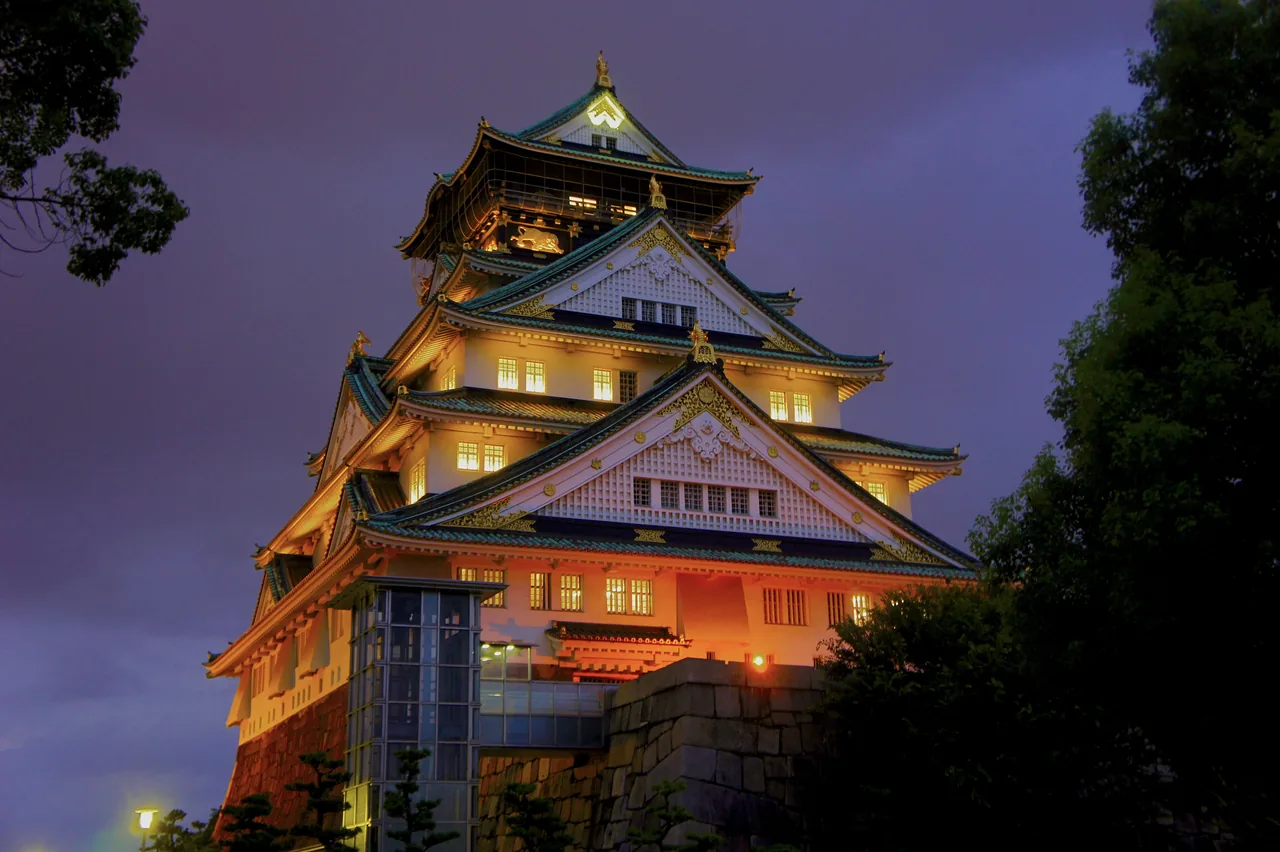
1. Osaka in brief
Osaka is Japan’s food and energy capital — the loud, funny, unpretentious counterpart to Kyoto’s quiet formality, and most visitors are happiest giving it 2 to 3 full days. It’s technically Japan’s third-largest city by population (about 2.7 million in the city proper, roughly 8.8 million across Osaka Prefecture, and around 19 million across the wider Keihanshin metro area that links Osaka, Kobe, and Kyoto — one of the largest urban agglomerations on earth), but everyone treats it as Japan’s second city, and the economic engine of the Kansai region.
For centuries it was called Tenka no Daidokoro — “the nation’s kitchen” — because Edo-period Osaka was where rice and goods from across Japan got traded and priced. That merchant-city DNA is still the whole personality of the place: practical, food-obsessed, and unimpressed by pretense. The local phrase that sums it up is kuidaore (食い倒れ) — roughly “eat until you go broke” — and it’s not a marketing slogan, it’s genuinely how Osakans talk about their own city.
The dialect (Osaka-ben) is warmer and blunter than standard Tokyo Japanese, and Osaka is also the home turf of Japanese comedy — Yoshimoto Kogyo, the country’s biggest comedy talent agency, runs its flagship theater here, and manzai (stand-up double-act comedy) is treated as a genuine regional institution, not a novelty act. If Tokyo is about scale and Kyoto is about tradition, Osaka is about appetite and personality.
Most first-time visitors pair Osaka with Kyoto, and it makes sense: they’re 15 to 29 minutes apart by train depending on which line you take, so there’s no real reason to choose one over the other. See our full Kyoto travel guide for that side of the trip, and our Japan travel guide for the national-level planning picture (visas, rail passes, seasons). This guide focuses on Osaka itself: what to see, what to eat, how to get here and around, and the 2025-2026 price changes that most existing guides still haven’t caught up with.
2. How Osaka fits together — the districts
Osaka splits into about eight walkable districts, and you can cover the essentials in three days by pairing two districts a day. Nothing here requires a full day on its own except the Bay Area if you’re doing Universal Studios Japan — everything else is a half day, so plan geographically rather than jumping across town.
| District | What’s there | Time needed |
|---|---|---|
| Dotonbori & Namba | The tourist heart: the canal, the Glico running-man sign, Shinsaibashi arcade, Hozenji Yokocho alley | Half day (best at night) |
| Umeda / Kita | Business/transit core, Umeda Sky Building observatory, Grand Front Osaka, department store food halls | Half day |
| Osaka Castle Park | Castle tower, Nishinomaru Garden, plum grove, Osakajo Hall | Half day |
| Shinsekai & Tsutenkaku | Retro early-1900s entertainment quarter, Tsutenkaku Tower, Osaka’s densest kushikatsu cluster | Half day |
| Tennoji / Abeno | Abeno Harukas skyscraper and observatory, Shitennoji Temple, Tennoji Park & Zoo | Half day |
| Bay Area | Kaiyukan Aquarium, Universal Studios Japan, Tempozan Ferris Wheel | Half day, full day if doing USJ |
| Kuromon Ichiba Market | Covered food market, ~150 shops, since 1822 | 1-2 hours |
| Amerikamura & Horie | Street fashion (Amerikamura) and upscale boutiques/cafes (Horie) | 1-2 hours |
A practical way to group these: Dotonbori/Namba and Amerikamura/Horie sit right next to each other, so do them together. Shinsekai/Tsutenkaku and Tennoji/Abeno are also a short walk apart. Osaka Castle Park and Umeda are on opposite sides of the city center but both reachable in 10-15 minutes by subway. The Bay Area is its own trip regardless of what else you’re doing that day.
3. When to go — seasons, weather, and Tenjin Matsuri
Spring (March-May) and autumn (October-November) are Osaka’s best weather windows; summer is genuinely rough, and winter is mild and underrated for value. Unlike Kyoto, Osaka doesn’t have the same crushing autumn tourist wave, so shoulder-season crowds here are noticeably more manageable.
| Season | Conditions | What’s happening |
|---|---|---|
| Spring (Mar-May) | Mild, comfortable | Cherry blossoms typically bloom late March, peaking around early April (shifts year to year — treat as a forecast) at Osaka Castle Park, Nishinomaru Garden, and Kema Sakuranomiya Park along the Okawa river, one of the city’s biggest hanami spots |
| Summer (Jun-Aug) | Hot and very humid, commonly 33-35°C | Tsuyu rainy season runs roughly mid-June to mid-July; Tenjin Matsuri (see below) falls late July |
| Autumn (Sep-Nov) | Mild, comfortable | Good foliage, noticeably fewer crowds than Kyoto sees in the same months |
| Winter (Dec-Feb) | Milder than most of Japan | Least crowded season, illumination events around Osaka Castle and Umeda |
Tenjin Matsuri, held every year on July 24-25 at Osaka Tenmangu Shrine, is one of Japan’s three great festivals alongside Kyoto’s Gion Matsuri and Tokyo’s Kanda Matsuri — a land procession on the 24th, then a river boat procession and fireworks on the 25th. If your dates line up, it’s worth building the trip around, but book accommodation well ahead since it’s also peak tsuyu-to-summer heat.
4. How many days do you need — sample itineraries
Two to three full days covers Osaka properly; one day works if you’re only passing through, and a third day is best spent on either a deeper dive (Kuromon Ichiba, Amerikamura) or a day trip to Kyoto, Nara, or Kobe. Group your sightseeing by geography — Osaka’s districts are spread out enough that crisscrossing the city wastes real time.
1 day (highlights)
- Morning: Osaka Castle Park
- Midday: Shitennoji Temple or Kuromon Ichiba Market for lunch
- Afternoon: Dotonbori, Namba, and Shinsaibashi on foot
- Evening: Dotonbori canal at night, then Shinsekai/Tsutenkaku for a kushikatsu dinner
2 days
- Day 1: Osaka Castle in the morning, Umeda Sky Building in the afternoon, Dotonbori/Namba at night
- Day 2: Either the Bay Area (Kaiyukan and/or USJ) as a full day, or Tennoji/Abeno (Harukas + Shitennoji) followed by Shinsekai
3 days
- Add Kuromon Ichiba plus Amerikamura/Horie for shopping, or swap a day out entirely for a Kyoto, Nara, or Kobe day trip
Osaka + Kyoto is the most common combo trip in the region: 2-3 days in each city, connected by a 15-29 minute train ride, and plenty of travelers base themselves in one city and day-trip to the other rather than switching hotels.
5. Getting to Osaka — airports, Shinkansen, and the HARUKA ticket
Most international arrivals land at Kansai Airport (KIX), and the fastest way into the city is the Nankai Rapi:t limited express to Namba in about 34 minutes — but the JR Haruka plus a HARUKA discount ticket is usually the better choice if you’re headed toward Shin-Osaka, Kyoto, or Nara. Note that the old “ICOCA & HARUKA” combo ticket was discontinued back in September 2023 — if an older blog still mentions it, that’s outdated.
| From Kansai Airport (KIX) | Time | Fare |
|---|---|---|
| Nankai “Rapi:t” limited express → Namba | ~34 min | about ¥1,490 (regular seat) |
| Nankai regular/rapid (no reservation) → Namba | ~44 min | about ¥970 |
| JR “Haruka” limited express → Shin-Osaka | ~50 min | ~¥3,070 reserved, regular fare |
| HARUKA One-way Discount Ticket (passport required) → Osaka/Shin-Osaka | ~50 min | ¥1,800 (Tennoji ¥1,300 · Kyoto ¥2,200 · Nara ¥1,800 · Kobe ¥2,000) |
| JR Kansai Airport Rapid Service (local/rapid) → Tennoji | ~50 min | about ¥1,060 — free with any JR Pass |
| Airport limousine bus (KATE) → Osaka Station/Umeda | ~48-50 min | ¥1,800 |
| Taxi → central Osaka | ~45 min | roughly ¥15,000 daytime, ¥18,000 at night |
The HARUKA One-way Discount Ticket is the one to know about: it’s only for foreign passport holders, requires showing your passport at purchase, and is meaningfully cheaper than the regular reserved Haruka fare — ¥1,800 to Osaka/Shin-Osaka versus ~¥3,070 for a standard reserved seat. If you’re headed straight to Kyoto from the airport, the ¥2,200 version saves you a transfer in Osaka entirely.
From Itami Airport (domestic flights only), take the Osaka Monorail connecting to the Midosuji subway line into Umeda — about 48 minutes, roughly ¥700 combined — or the limousine bus, about 30 minutes for ¥650-730. From Kobe Airport, the Bay Shuttle high-speed ferry to Kansai Airport takes about 30 minutes for ¥1,880 (the old discounted foreign-visitor ferry fare appears to have been discontinued as of a March 2026 notice, so budget the standard rate), or take the Port Liner to Sannomiya (~20 min, ¥340) and continue by JR, Hankyu, or Hanshin.
Coming from Tokyo, the Tokaido Shinkansen runs to Shin-Osaka: Nozomi services take about 2 hours 30 minutes, Hikari about 3 hours. The JR Pass covers Hikari but not Nozomi — the same rule that applies on the Kyoto leg, since Shin-Osaka is just one stop past Kyoto Station. For the full national rail-pass breakdown, see our JR Pass and Shinkansen guide.
6. Getting around Osaka — Metro, IC cards, and which pass to buy
Osaka Metro’s Midosuji line is the north-south spine of the city, and for most short stays a rechargeable IC card (ICOCA, or any interoperable Suica/Pasmo you’re already carrying) is all you need — day passes only pay off once you’re covering real distance or hitting several paid attractions. The JR Osaka Loop Line circles the central city, and private railways (Hankyu, Hanshin, Kintetsu, Nankai, Keihan) handle everything heading out to Kyoto, Nara, Kobe, and beyond.
| Pass | Price | Best for |
|---|---|---|
| Osaka Metro “Enjoy Eco Card” (day pass) | ¥820 weekday / ¥620 weekend & holiday adult, ¥310 child | Unlimited Metro + City Bus + New Tram — good if you’re doing lots of subway hopping but few paid sights |
| Osaka Amazing Pass (digital QR) | 1-day ¥3,500 / 2-day ¥5,000 (Itami Airport version ¥3,800 / ¥5,400) | Unlimited subway+bus AND free entry to ~40 attractions (Osaka Castle tower, Tsutenkaku, Tempozan Ferris Wheel, Tombori River Cruise) plus discounts at ~50 more — worth it at 3+ paid attractions in a day |
| WEST QR Kansai Area Pass | 1-day ¥2,700 / 2-day ¥4,700 / 3-day ¥5,500 / 4-day ¥6,700 (child about half) | Covers Haruka plus JR-West Special Rapid/Rapid/Local trains across Osaka, Kyoto, Kobe, Nara, Himeji, Wakayama, and Otsu — good if you’re combining Osaka with several of those cities |
IC cards remain the simplest option day to day — ICOCA, Suica, Pasmo, and the rest are all interoperable nationwide, and have been for years. Physical Suica sales resumed in March 2025 after a chip-shortage pause, and a new deposit-free “Tourist Pasmo” (28-day validity, aimed squarely at inbound visitors) launched around May 2026 if you want to skip the deposit-refund hassle. For the fuller IC card comparison, see our Japan IC card guide.
7. Dotonbori & Namba — Osaka’s tourist heart
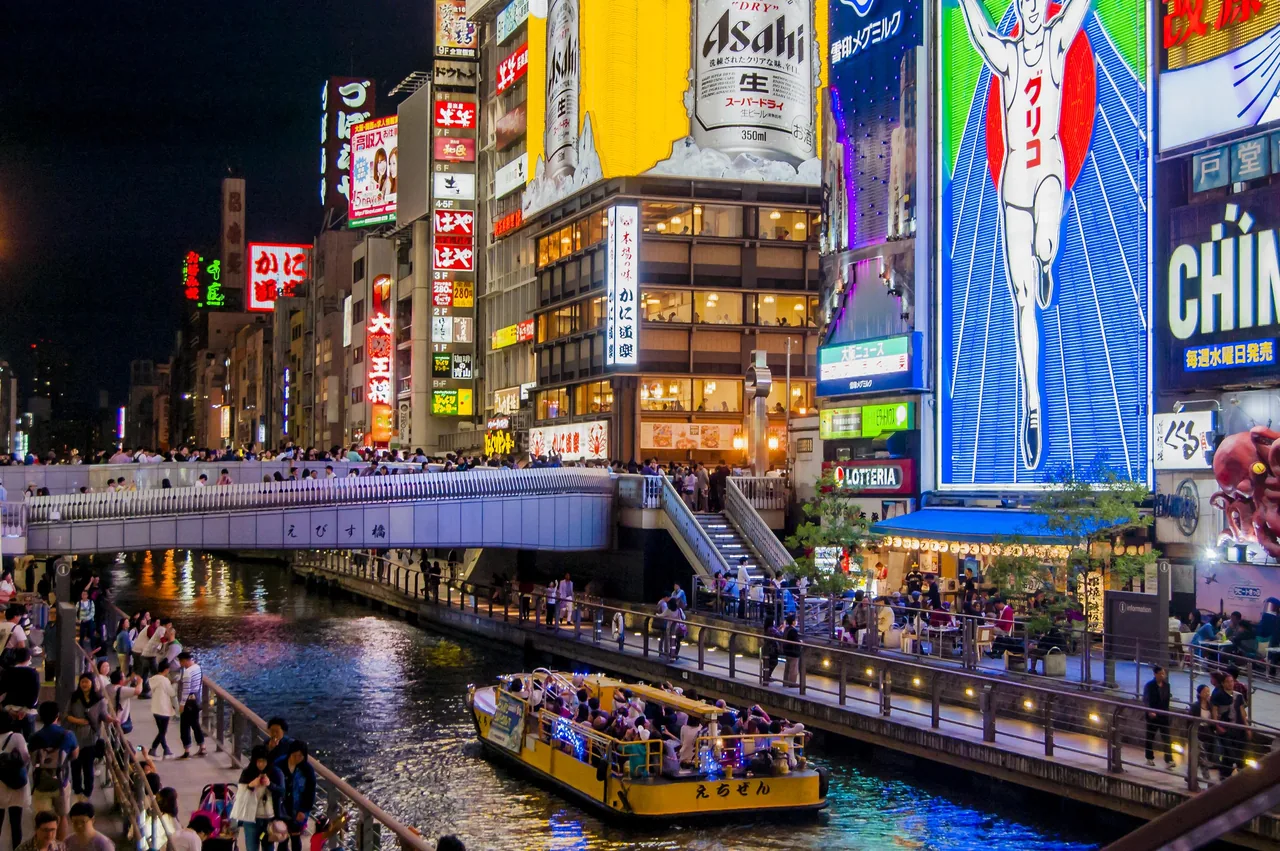
Dotonbori is Osaka’s neon-and-canal centerpiece, and it’s genuinely best experienced after dark, when the signage lights up and the whole strip turns into one long open-air food crawl. Give this district a half day, ideally ending in the evening. 道頓堀Map
The single most photographed thing in Osaka is the Glico “running man” sign on Ebisubashi bridge — it’s been running since 1935, though the current version of the sign dates to 2014. Nearby, keep an eye out for Kani Doraku’s giant mechanical crab sign, its legs slowly waving over the storefront, a Dotonbori landmark in its own right.
One block over, Shinsaibashi-suji is a roughly 600-meter covered shopping arcade with Edo-period origins — now lined with mainstream fashion and department stores, and a good rainy-day option since it’s fully covered. For something quieter, duck into Hozenji Yokocho, a narrow stone-paved alley home to a moss-covered statue of Fudo Myoo — visitors ladle water over it as a devotional gesture, which is exactly how it got so mossy in the first place. 法善寺横丁Map
Don’t skip Namba Yasaka Shrine, a short walk south — its main draw is a stage built into the mouth of a giant lion-head structure roughly 12 meters tall, 11 meters wide, and 10 meters deep. It’s free to visit and one of the more surreal photo stops in the city. 難波八阪神社Map
Dotonbori River Cruise
If you’d rather see the canal from the water than from the bridges, the Tombori River Cruise runs a roughly 20-minute loop for ¥2,000, departing every 30 minutes between 11:00 and 21:00 from Tazaemonbashi Pier, right next to the Don Quijote store. It doesn’t run on July 13, 24, or 25 each year, when a local festival takes over the canal, so plan around those dates if you’re set on riding it. Book through the “Cloud Pass” online system, introduced in November 2025. とんぼりリバークルーズMap
This is also simply the best place in Osaka to graze — takoyaki stalls, okonomiyaki counters, and kushikatsu shops line every side street (full food breakdown further down this guide). If you only have one evening in Osaka, spend it here.
8. Osaka Castle & the park
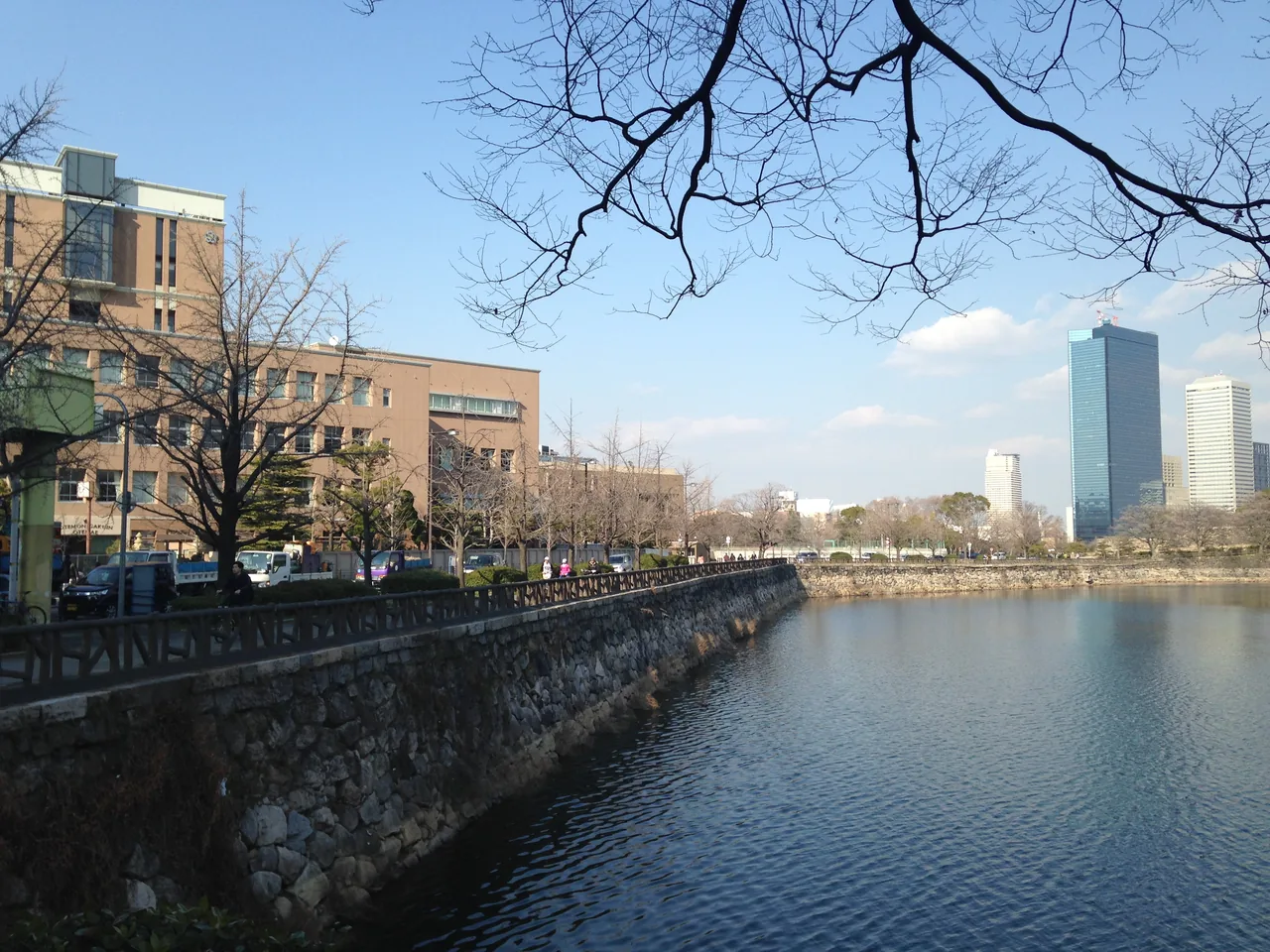
Osaka Castle’s tower now costs ¥1,200 for adults — double the old ¥600 fee, a change that took effect in April 2025 — but the park and grounds around it remain completely free to walk. You only pay when you actually step inside the tower/museum. 大阪城Map
| Item | Price |
|---|---|
| Main tower, adult | ¥1,200 |
| Main tower, high school/university | ¥600 |
| Main tower, junior high and under | Free |
| Nishinomaru Garden add-on | +¥200 |
| Park and grounds | Free, always |
Hours run roughly 9:00-17:00 with last entry 30 minutes before close, and the tower closes for the year-end stretch, December 28 through January 1. A genuinely new reason to pay the entry fee in 2025-2026: the Toyotomi Stone Wall Museum, a new exhibit showing original Toyotomi-era stone walls that were buried when the Tokugawa shogunate rebuilt the castle — walls that stayed hidden until they were rediscovered in the 1950s. It’s a rare chance to see the literal foundations of the castle’s first, pre-Tokugawa incarnation.
Nishinomaru Garden, the paid add-on, is the best spot in the park for a castle-and-cherry-blossom photo in spring — it faces the tower directly across a moat and lawn. If you’re here in February, look for the park’s plum grove, over 1,000 trees that bloom well before the cherry blossoms arrive. Osakajo Hall, a concert venue inside the park grounds, occasionally has big-name acts if you want to check the schedule ahead of your trip.
9. Umeda / Kita — Osaka’s business and transit core
Umeda is Osaka Station’s surrounding district — less a sightseeing area than the city’s transit and business hub, but it has one genuinely great observation deck and some of the best department store food halls in the country. Give it a half day.
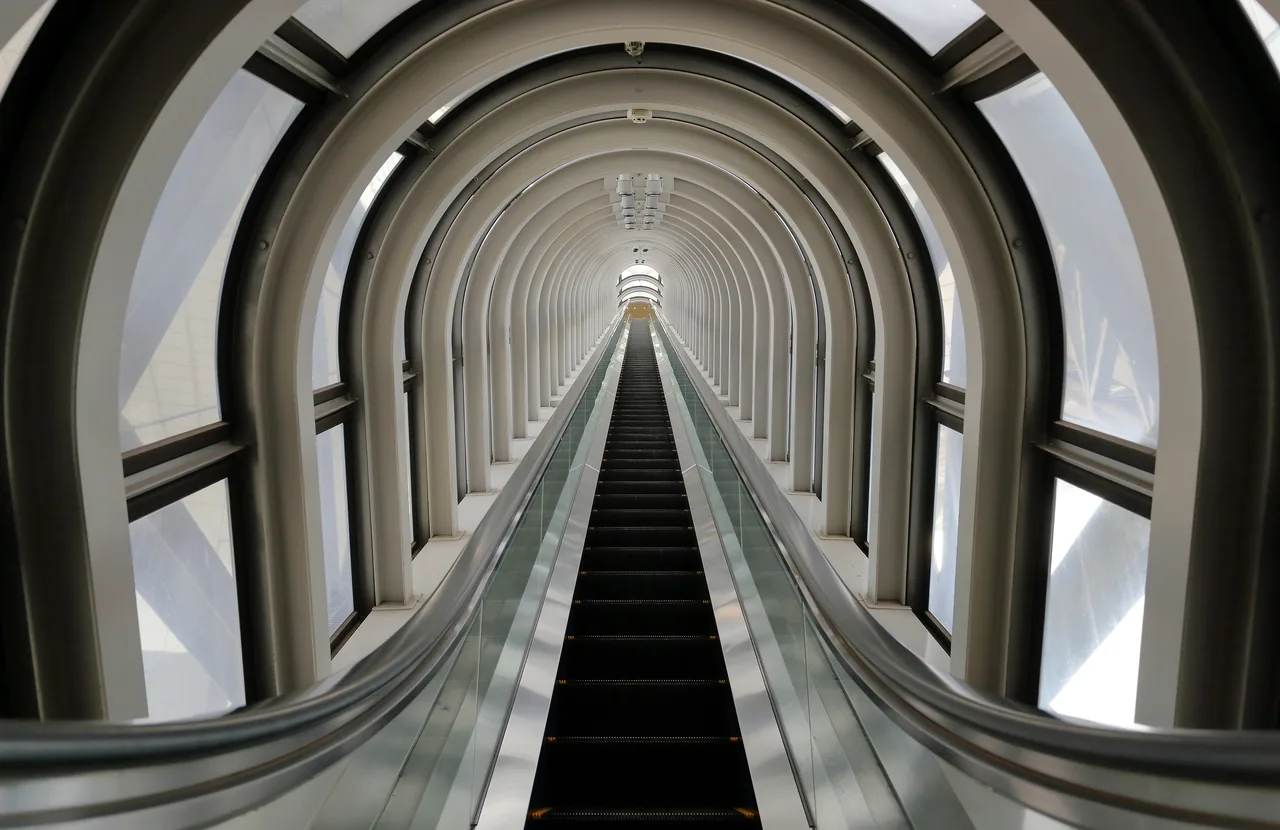
The Umeda Sky Building’s Floating Garden Observatory — twin 173-meter towers joined by a rooftop observation deck, completed in 1993 and designed by architect Hiroshi Hara — is one of the more architecturally distinctive viewpoints in Japan. Admission is ¥2,000, open 9:30-22:30 with last admission at 22:00, which makes it one of the better sunset-into-nightscape viewpoints in the city since most competing observatories close earlier. The ticket covers both the 39th/40th-floor indoor levels and the open-air rooftop platform, so you get the enclosed view and the wind-in-your-hair version in one visit. 梅田スカイビルMap
Around the station itself, Grand Front Osaka (opened 2013) is a large shopping and office complex worth a browse if you need modern retail, and the Hankyu and Hanshin department stores are both here — Hankyu’s basement food hall, or depachika, is one of the most highly regarded in the country, an entire underground floor of bento boxes, pastries, and regional specialty foods that makes for a genuinely great dinner-to-go option.
Umeda is also simply the most convenient base if you’re using Osaka mainly as a jumping-off point for day trips — JR, Hankyu, and Hanshin lines all converge here, so it’s worth factoring into where you stay even if you’re not spending much daytime sightseeing time in the district itself.
10. Shinsekai & Tsutenkaku Tower — Osaka’s retro entertainment quarter
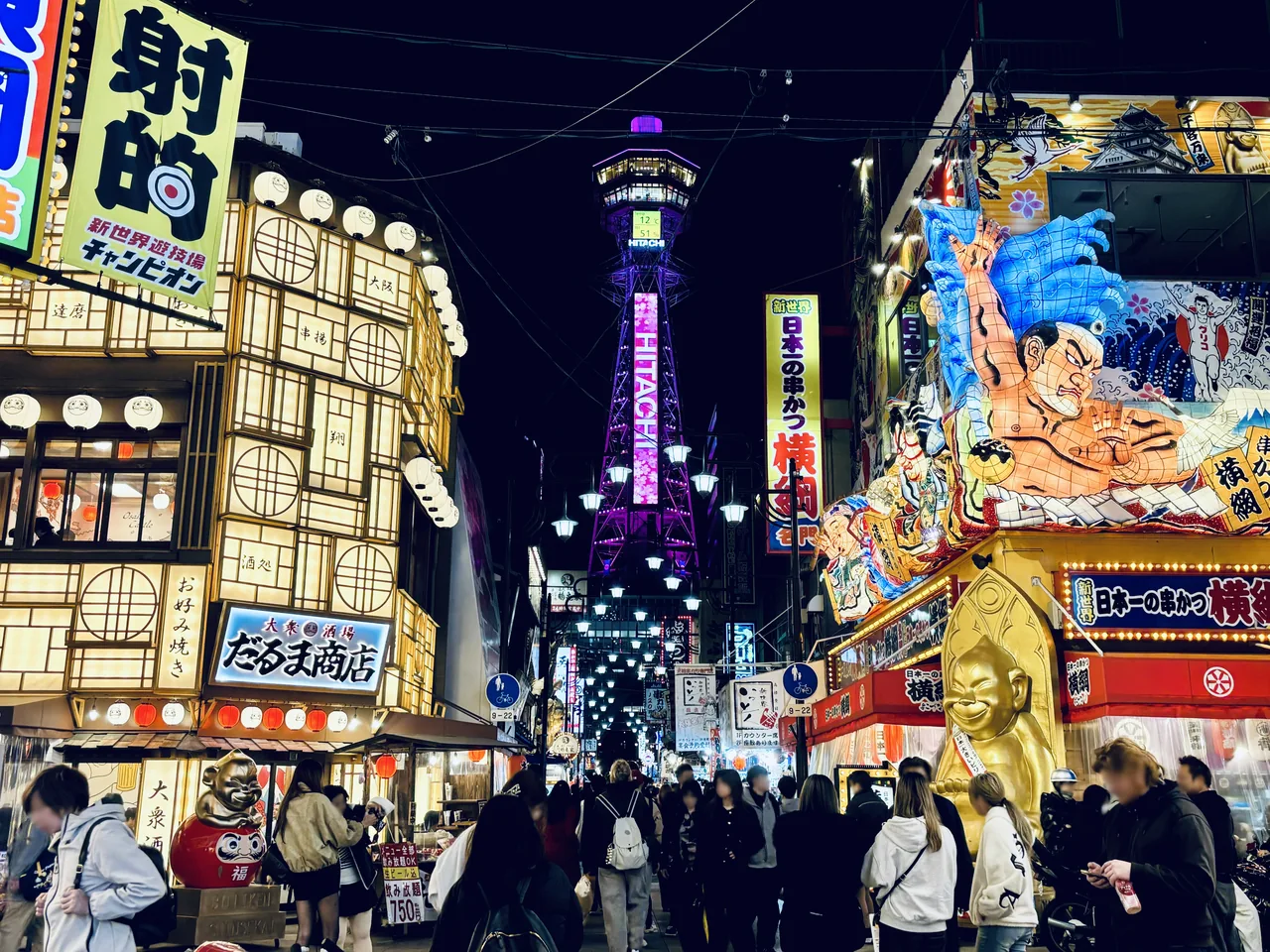
Shinsekai is Osaka’s early-1900s entertainment district, loosely modeled on Paris and New York’s Coney Island when it was built, and today it’s the single best place in the city to eat kushikatsu. Give it a half day, and come hungry.
The current Tsutenkaku Tower — a roughly 103-meter rebuild completed in 1956, replacing an earlier tower lost decades before — is the district’s landmark. Inside is a statue of Billiken, a good-luck figure with a cult following; rubbing his feet is the local ritual. Observation deck admission is ¥1,200 for adults, with optional add-ons: the Tembo Paradise upper platform for +¥300, or the Tower Slider for ¥1,000 if you want a faster way down. Summer hours run roughly 9:10-20:00. 通天閣Map
Just off the main tower, duck into Janjan Yokocho, a narrow covered alley of cheap eats and old-school bars that hasn’t changed much in decades — it’s the most atmospheric single street in the district. Shinsekai as a whole has the densest concentration of kushikatsu restaurants in Osaka, including Daruma, the chain most credited with popularizing the dish since its 1929 founding (full food rules in the “what to eat” section below).
11. Tennoji / Abeno — Abeno Harukas and Shitennoji Temple
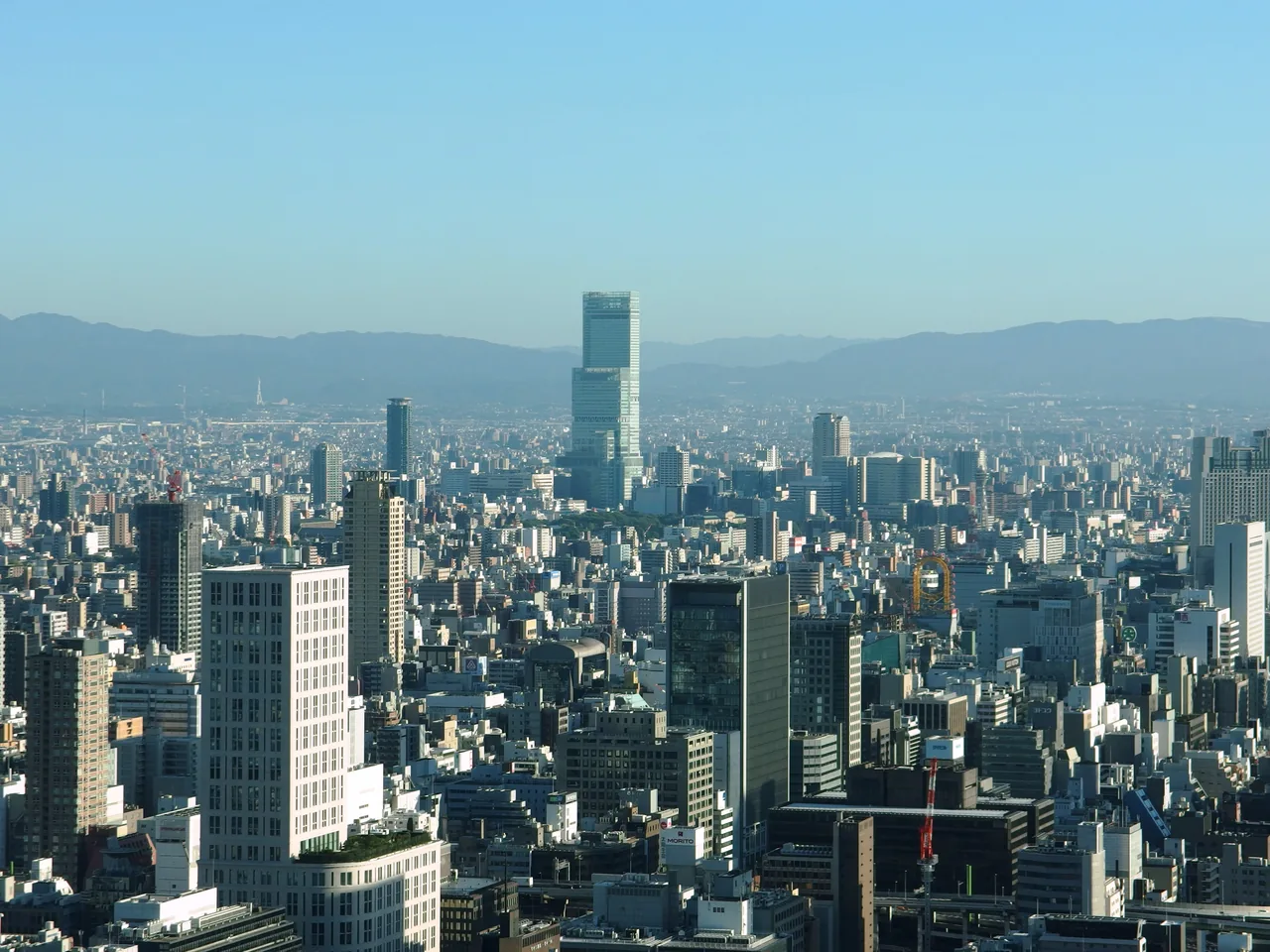
Tennoji/Abeno pairs one of Japan’s most historic temples with its most striking modern skyscraper, and it’s an easy half day. Abeno Harukas, at 300 meters, was Japan’s tallest building from 2014 to 2023 — it’s since been surpassed by Tokyo’s Azabudai Hills Mori JP Tower (about 330 meters, completed November 2023), so it’s now the second-tallest in the country, though still the tallest in Osaka and all of Kansai. If you’ve read older material calling it “Japan’s tallest,” that’s out of date. あべのハルカスMap
The Harukas 300 observatory spans the 58th to 60th floors, with the 60th floor’s glass-walled “Sky Walk” as the highlight — an open, glass-enclosed loop right at the top of the building. Admission is ¥2,000 for adults, ¥1,200 for ages 12-17, ¥700 for ages 6-11, and ¥500 for ages 4-5.
Shitennoji Temple, a short walk away, was founded in 593 CE by Prince Shotoku — making it one of Japan’s oldest state-built temples, older even than most of Kyoto’s famous complexes. The outer grounds are free; the Inner Precinct is ¥300, the Gokuraku-jodo Garden is a separate ¥300, and the Treasure House is ¥500. Hours run 8:30-16:30 April through September and 8:30-16:00 October through March. 四天王寺Map
Nearby, Tennoji Park and its attached zoo (opened 1915, one of Japan’s oldest) round out the district if you have kids in tow or just want a green break between temple and skyscraper.
12. Bay Area — Kaiyukan Aquarium and Universal Studios Japan
The Bay Area is worth a half day for the aquarium alone, or a full day if Universal Studios Japan is on your list — and USJ pricing and ticketing changed enough in 2025-2026 that it’s worth reading before you book.
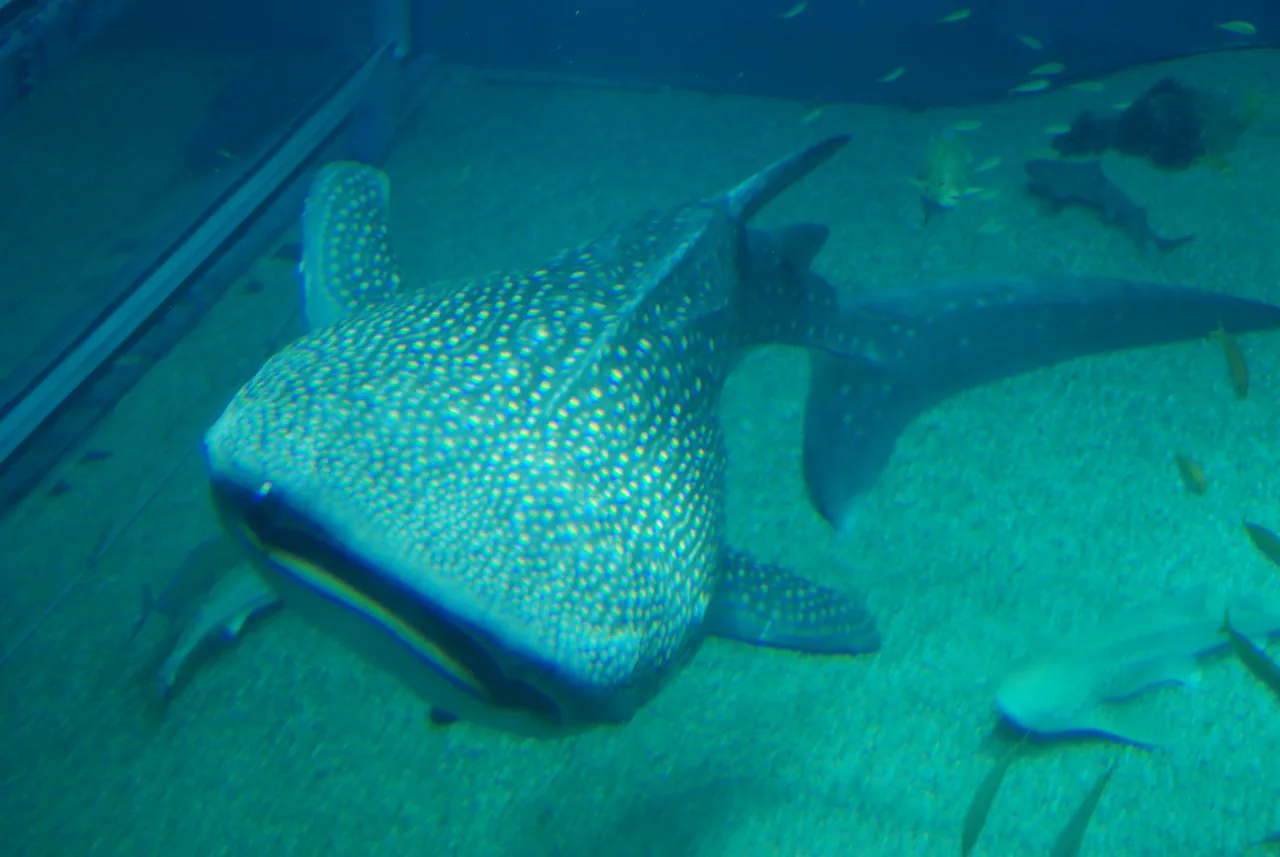
Osaka Aquarium Kaiyukan, open since 1990, centers on a huge “Pacific Ocean” tank whose star attraction is a whale shark — though worth knowing that the specific whale shark on display rotates over time. The individual there since 2019 was returned to Kochi in October 2024 as part of a release and research program, and a new male whale shark (about 4.7 meters, roughly 700kg) went on display October 3, 2024. Pricing is dynamic, running roughly ¥2,700-3,500 for adults; hours run about 10:00-20:00 with last admission at 19:00, and feeding shows typically run 10:20-11:00 and 15:00-15:30. 海遊館Map
Universal Studios Japan is Osaka’s biggest single day-trip commitment, and also the single easiest thing to get wrong on price — it changes constantly with dynamic pricing. As of this year, the 1-Day Studio Pass floor price drops to about ¥8,400 (tax included) for entry from September 1, 2026, with tickets going on sale July 1, 2026 — roughly ¥500 lower than the prior ~¥8,900 floor. Treat that ¥8,400 as a starting point, not a fixed price: it climbs on busier calendar dates.
Inside the park, Super Nintendo World now requires the official USJ app for entry — since January 5, 2026, you need either a timed-entry ticket or a standby ticket through the app, plus there’s a same-day lottery system layered on top. Don’t assume you can just walk into this zone once you’re through the main gate.
The newest expansion, Donkey Kong Country, opened December 11, 2024, and its flagship ride is Mine Cart Madness — minimum height 107cm, with a chaperone required for riders between 107 and 122cm. Express Pass, which lets you skip standby lines at select attractions, is sold in tiers (4/5/7/8-attraction variants) and priced dynamically — roughly ¥12,000 on quiet dates up to ¥38,000+ for the higher tiers on peak dates.
Rounding out the Bay Area: the Tempozan Ferris Wheel (about 112.5 meters in diameter, opened 1997) and the attached Tempozan Marketplace mall, both an easy walk from Kaiyukan if you want a lower-key finish to the day.
13. Kuromon Ichiba Market, Amerikamura & Horie
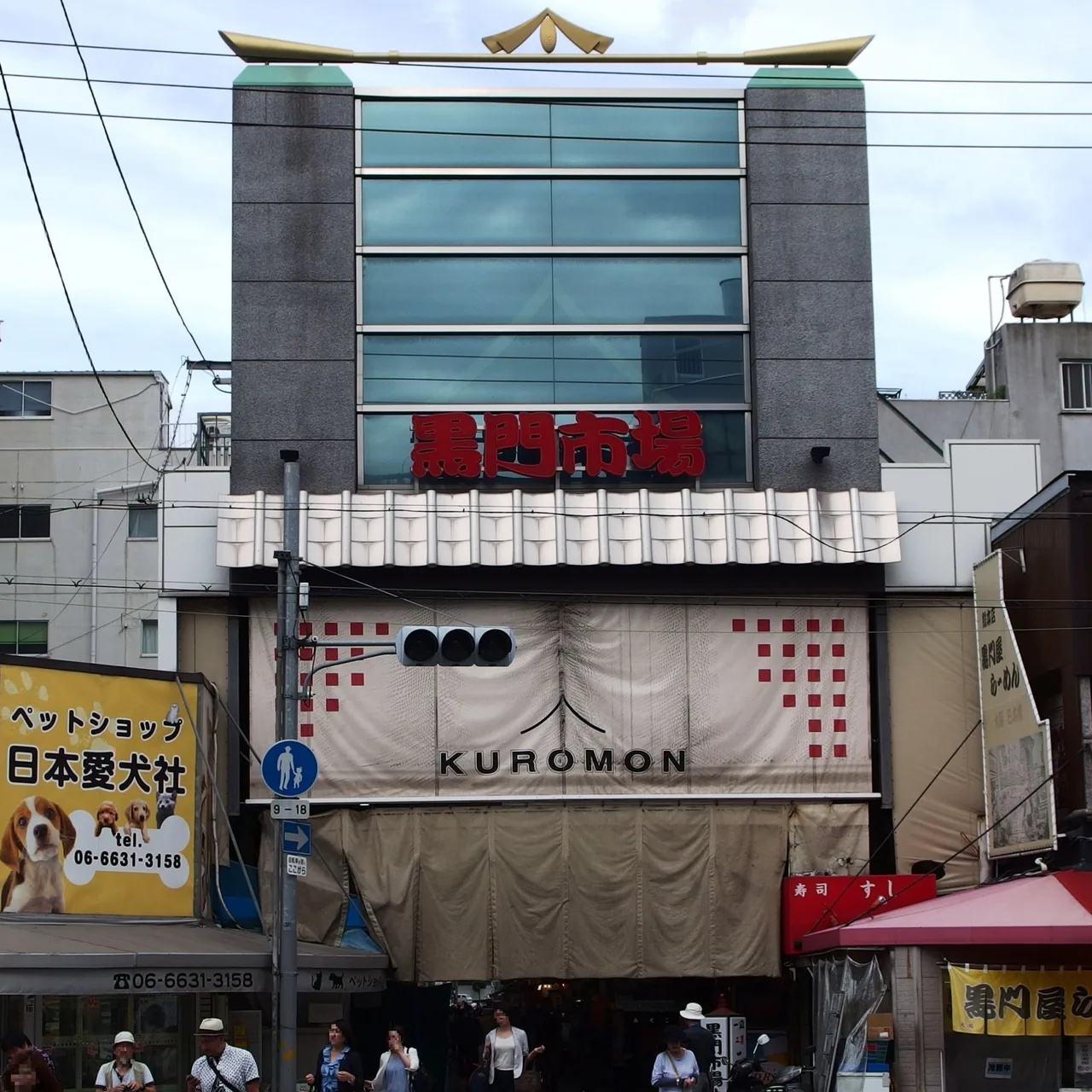
Kuromon Ichiba is Osaka’s most famous food market, dating to 1822, but go in with realistic price expectations — its “Osaka’s Kitchen” reputation now shares space with a less flattering local nickname. It’s roughly 580 meters of covered arcade with around 150 shops, and 1-2 hours is plenty. 黒門市場Map
For a completely different mood, walk over to Amerikamura, Osaka’s youth fashion and street-culture district centered on Sankaku Koen (Triangle Park), which has anchored the area’s identity since the 1970s-80s. Right next door, Horie is the more grown-up, upscale version — boutiques and café culture rather than streetwear racks. Both are best treated as a 1-2 hour browse rather than a must-do checklist item, but they’re a good counterbalance if you want to see an Osaka that isn’t built entirely around food and temples.
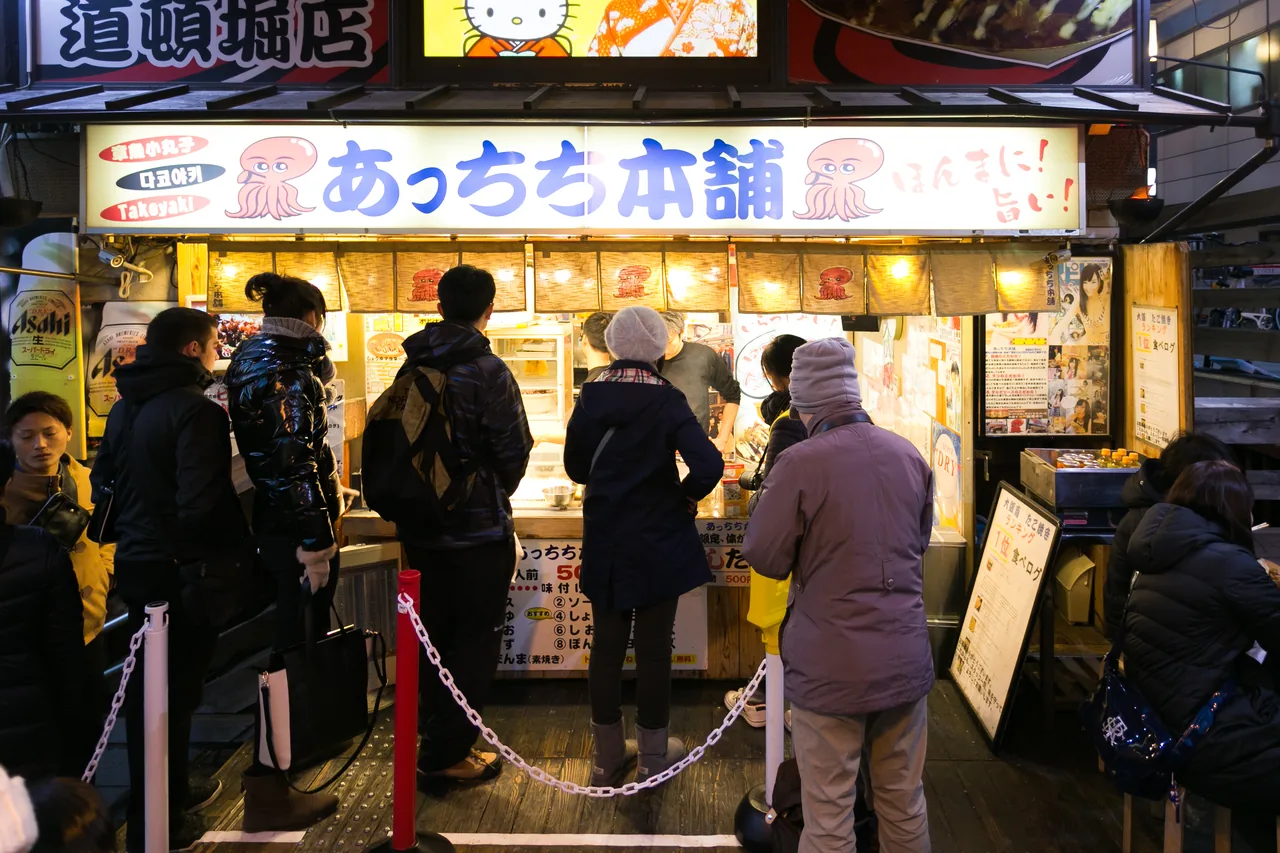
14. What to eat in Osaka — takoyaki, okonomiyaki, kushikatsu, and the kuidaore culture
Osaka’s food identity is built on four dishes — takoyaki, okonomiyaki, kushikatsu, and battera pressed sushi — and the whole culture around eating here runs on the phrase kuidaore, “eat until you go broke.” This is arguably the single best reason to visit the city.
The living mascot of that culture is Kuidaore Taro, a mechanical drumming clown doll that originally stood outside a Dotonbori restaurant called Cui-daore, which closed in 2008. The doll itself was preserved and still stands near its original Dotonbori spot — it’s become a landmark and photo stop in its own right, completely separate from the restaurant it used to advertise.
Takoyaki (たこ焼き)
Octopus-filled batter balls, invented in Osaka and generally credited to Tomekichi Endo in the mid-1930s. Expect to pay about ¥500-600 for a set of 6-8 pieces. The best-known spots are in Dotonbori — chains like Kukuru and Wanaka both have good reputations — and the stalls scattered through Kuromon Ichiba Market.
Okonomiyaki (お好み焼き)
Osaka’s version mixes all the ingredients directly into the batter before griddling, unlike Hiroshima’s layered style. Mizuno, running in Dotonbori since 1945, and Chibo are both long-standing, well-regarded spots if you want a sit-down version rather than a street stall.
Kushikatsu (串カツ)
Shinsekai’s signature dish — skewered, breaded, deep-fried meat and vegetables, dipped in a shared communal sauce pot. There’s one hard rule here: no double-dipping (nidozuke kinshi). Once you’ve bitten a skewer, you can’t re-dip it — use the free shredded cabbage on the table to scoop extra sauce instead. Daruma, founded in 1929, is the emblematic chain. Expect ¥100-250 per skewer.
Battera / hakozushi
Osaka-style pressed box sushi, often made with mackerel, part of Kansai’s broader “oshizushi” pressed-sushi tradition — a real contrast to Tokyo’s hand-formed Edomae nigiri, and worth trying if you’ve only had Tokyo-style sushi before.
Kitsune udon
A noodle dish topped with sweet fried tofu (aburaage), commonly credited to Osaka. The name references the fox deity Inari’s supposed fondness for fried tofu.
Where to eat each: Dotonbori has the widest variety and is the most tourist-friendly overall. Shinsekai is specifically for kushikatsu. Kuromon Ichiba is best for fresh seafood, wagyu, and market-style grazing — just go in with the price caution from the previous section in mind.
15. Best day trips from Osaka — Kyoto, Nara, Kobe, Himeji, Koyasan
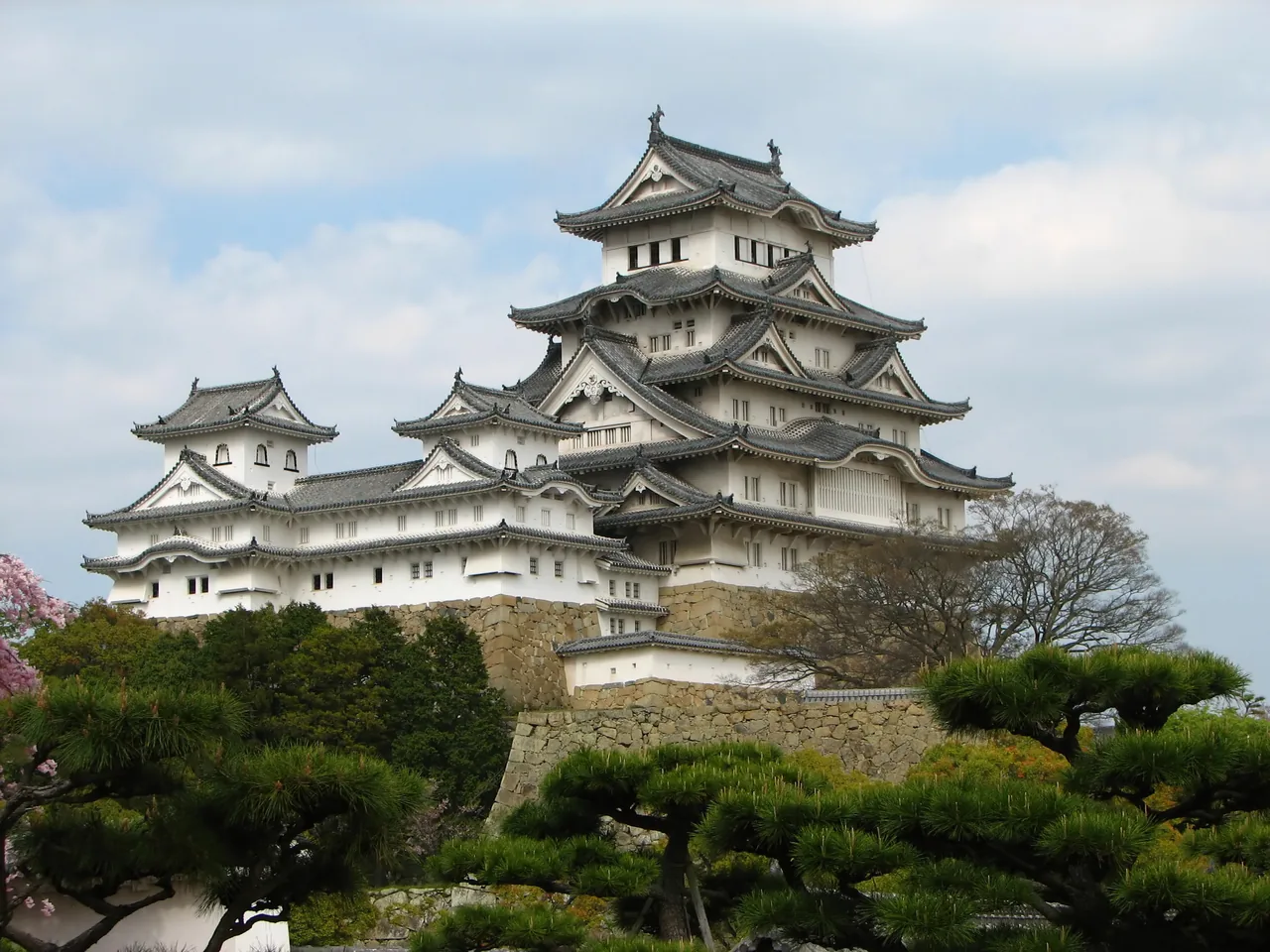
Osaka has the best day-trip connectivity of any Kansai base — Kyoto and Nara are both under 45 minutes away, Kobe is 20-30 minutes, and even Himeji Castle is a same-day round trip. This is the single biggest practical argument for basing yourself in Osaka rather than Kyoto if you’re only picking one city to sleep in.
| Destination | Fastest route | Time | Fare |
|---|---|---|---|
| Kyoto | JR Special Rapid, Osaka Station → Kyoto Station | ~29 min | ¥580 (JR Pass valid) — Hankyu Umeda→Kawaramachi is cheapest at ¥410 (~44 min); Shinkansen Shin-Osaka→Kyoto is fastest at ~15 min for ¥1,450 unreserved, worth it mainly for JR Pass holders or if you’re already at Shin-Osaka |
| Nara | Kintetsu Namba → Nara, Rapid Express | ~39 min | ¥680 (JR Pass NOT valid on Kintetsu) — or JR Yamatoji Line Tennoji→Nara, ~30 min, ¥510 (JR Pass valid) |
| Kobe | JR Special Rapid, Osaka Station → Sannomiya | ~22 min | ¥420 — Hankyu/Hanshin is cheaper at ¥330 (~30-32 min) |
| Himeji Castle | JR Special Rapid, direct from Osaka Station | ~60 min | ¥1,520 (JR Pass valid, no reservation) — Shinkansen Shin-Osaka→Himeji is faster at ~28-35 min for ¥2,980 unreserved (Nozomi/Mizuho not JR Pass covered; Hikari/Sakura/Kodama are) |
| Koyasan (Wakayama) | Nankai Koya Line limited express from Namba, then cable car | ~1h20 + 5 min cable car | ¥1,720 limited express (or express+transfer, ~1h40, ¥930), plus ¥500 cable car Gokurakubashi→Koyasan |
京都駅Map 東大寺Map 三宮駅Map 姫路城Map 高野山Map
Kyoto is the obvious pairing — see our full Kyoto travel guide for what to do once you’re there. Nara is built around its free-roaming, legally protected deer in Nara Park, along with Todaiji’s Great Buddha Hall and Kasuga Taisha shrine — see our full Nara day trip guide for the details. Kobe offers Nankinmachi Chinatown, Kobe Harborland, the Kitano Ijinkan foreign residences district, Mt. Rokko, and of course Kobe beef.
Koyasan is the furthest and most immersive option — Okunoin, Japan’s largest cemetery and the site of Kobo Daishi’s mausoleum, the head temple Kongobuji, and the option of staying overnight in shukubo temple lodging if you want to turn this into an overnight rather than a day trip.
16. Where to stay in Osaka
Namba/Dotonbori is the right call for first-timers who want to walk everywhere; Umeda/Kita is better if you’re prioritizing day-trip transit or want something quieter at night. Shin-Osaka and the Bay Area are more situational picks. For the full area-by-area breakdown with 30 real hotel picks and prices, see our complete Osaka accommodation guide.
| Area | Best for | Note |
|---|---|---|
| Namba / Dotonbori | First-timers, nightlife | Tourist-central, walkable to everything, can be loud at night |
| Umeda / Kita | Business travelers, quiet | Best transit hub for day trips (JR/Hankyu/Hanshin all here), more upscale |
| Shin-Osaka | Shinkansen connections | Functional, less atmosphere, best if you’re day-tripping a lot by bullet train |
| Bay Area (near USJ) | Families doing USJ | Resort-style hotels, easy park access, less central for everything else |
Osaka’s lodging tax was raised effective September 1, 2025, and it’s charged per person, per night, on top of your room rate: under ¥5,000 is exempt, ¥5,000-14,999 is ¥200, ¥15,000-19,999 is ¥400, and ¥20,000 and up is ¥500. If you’ve seen older figures of ¥100/200/300, those are the pre-September-2025 rates and no longer apply.
17. Etiquette & responsible travel in Osaka
The one Osaka-specific rule worth actually remembering: stand on the right on escalators, walk on the left — the reverse of Tokyo’s convention. It’s a small thing, but it’s the fastest way to look like you know what you’re doing (or, if you get it backwards, to visibly not).
Beyond that, Osaka is genuinely more relaxed and informal than Kyoto — there’s less risk of a real etiquette misstep here. The usual Japan-wide basics still apply everywhere: keep it quiet on trains, don’t eat while walking through crowded market lanes, and respect queues. Kuromon Ichiba Market in particular now has many stalls posting explicit no-walk-eating signs, a direct response to overtourism friction — worth actually reading and following rather than skimming past.
For the full national picture — bathing etiquette, tipping (there isn’t any), chopstick manners, temple and shrine behavior — we cover all of that in our Japan etiquette guide rather than repeating it here.
18. Practical essentials — money, budget, connectivity, and departure tax
Cards and IC cards cover most of Osaka, but carry cash for small eateries, temple and shrine offerings, and market stalls — and know that Japan’s departure tax just tripled. Here’s the rest of what actually matters for planning your budget and logistics.
| Budget level | Per day (excluding accommodation) |
|---|---|
| Budget | ¥8,000-12,000 |
| Mid-range | ¥15,000-25,000 |
| Luxury | ¥40,000+ |
For the fuller national breakdown on cash, cards, and where each is expected, see our Japan money and cash guide. Get an eSIM sorted before you land so maps, transit apps, and translation all work the moment you’re off the plane — see our Japan eSIM guide for the setup.
Put together, Osaka rewards a simple approach: 2-3 days, a food-first mindset, cash in your pocket for the market stalls, and either an IC card or the Amazing Pass depending on how many paid sights you’re stacking into a day. For the rest of the country, head back to our Japan travel guide, and pair this trip with our Kyoto travel guide for the natural next stop.