Why Okinawa Is a Different Japan: The Ryukyu Kingdom Story
A 600-year history — from the kingdom that unified in 1429 to the Battle of Okinawa and the American decades — told through the castles, gardens and memorials you can still stand in today.
| An independent kingdom | for 450 years (1429–1879) Okinawa was the Ryukyu Kingdom, not Japan — a seafaring trading nation with its own king, religion, language and culture, ruled from Shuri Castle. |
|---|---|
| Two masters, then annexation | Japan’s Satsuma domain invaded in 1609, and Ryukyu lived a double life — paying tribute to both China and Satsuma — until Japan formally annexed it as Okinawa Prefecture in 1879. |
| 1945 | the Battle of Okinawa (April–June) was one of WWII’s bloodiest, killing some 200,000 people, more than half of them Okinawan civilians. |
| 27 American years | the US governed Okinawa until it reverted to Japan on 15 May 1972; the bases — and a distinct American flavour — remain. |
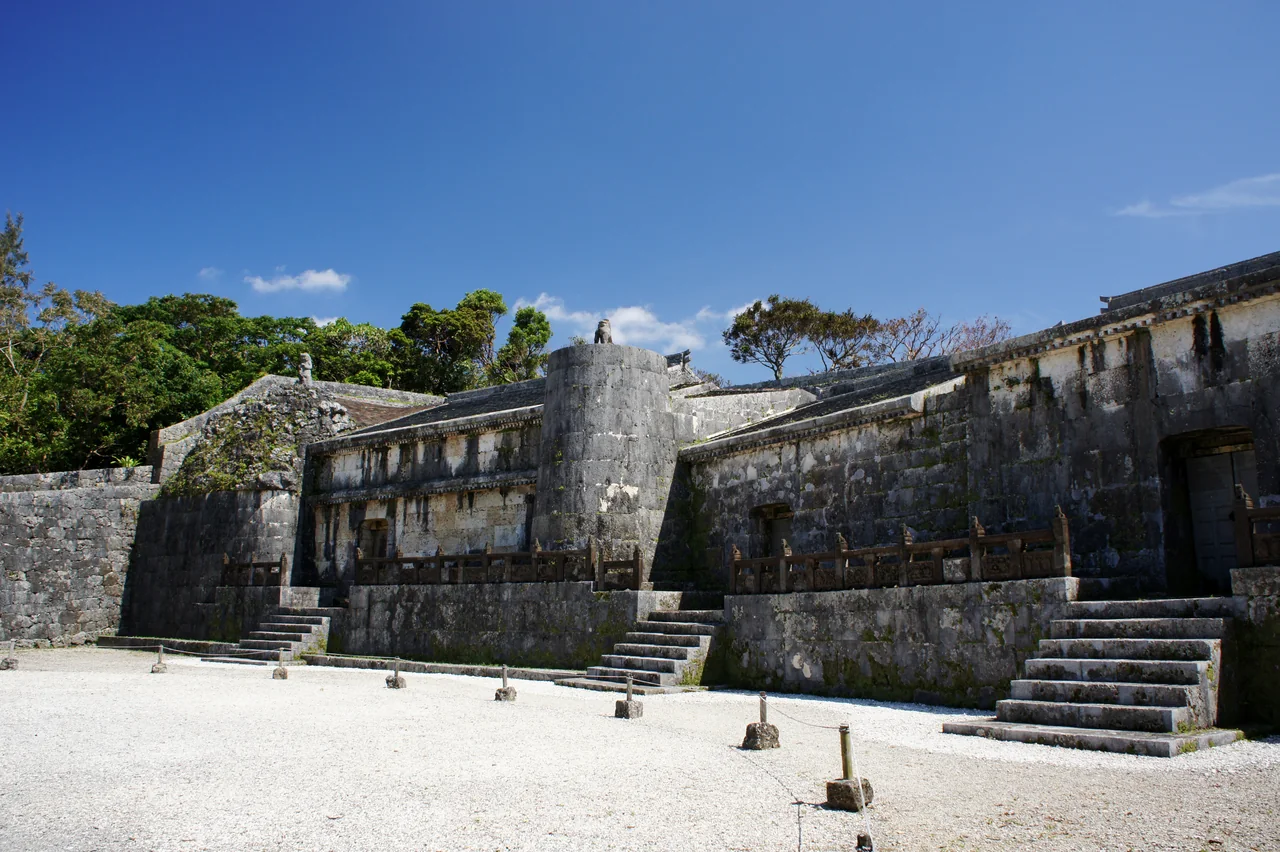
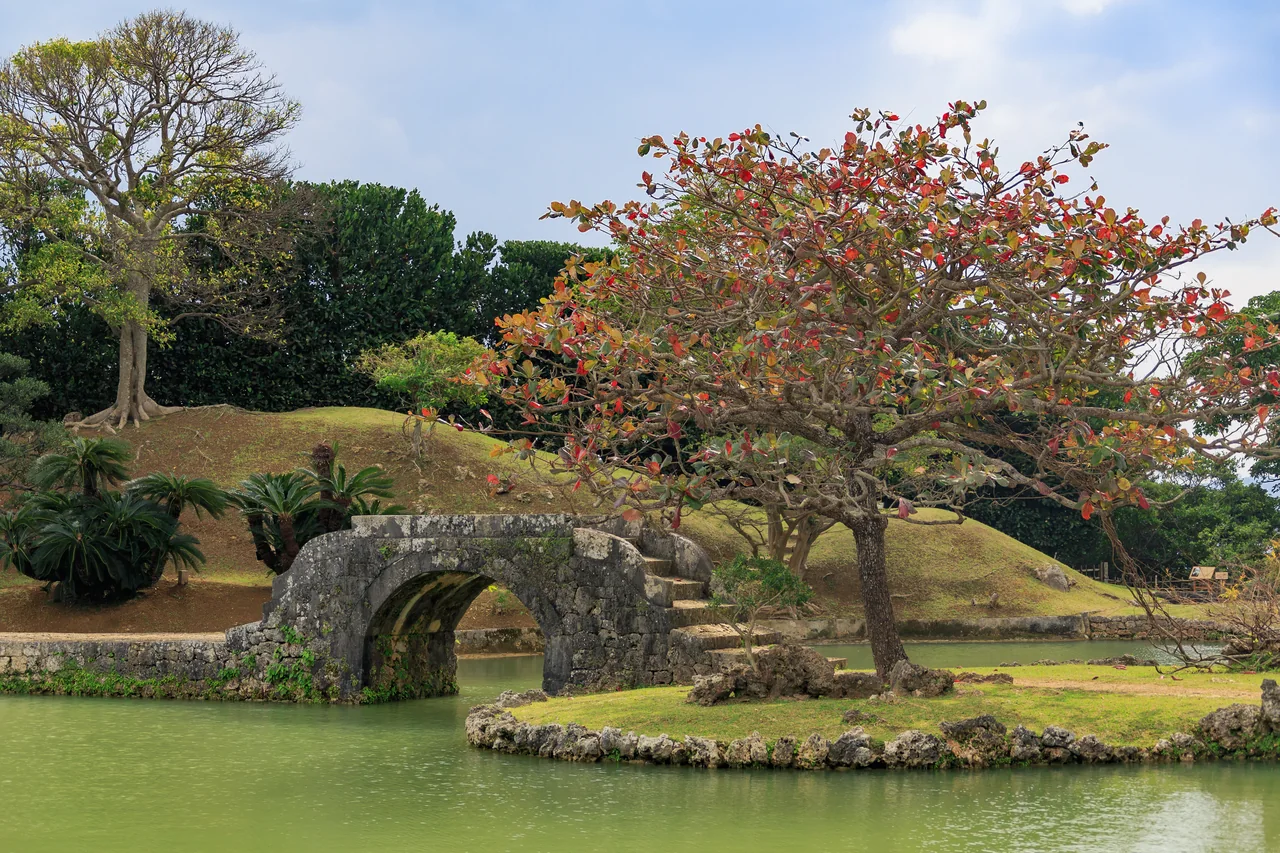
| See it for yourself | the gusuku castles, Tamaudun mausoleum, Shikinaen garden, Sefa-utaki, the Peace Memorial Park and Himeyuri — most are UNESCO-listed and all are open to visit. |
1. Okinawa was its own country — and you can still feel it
2. Before the kingdom: the gusuku and the three chiefdoms
3. 1429: Sho Hashi unites the islands — the kingdom begins
4. The golden age: a tiny kingdom that traded with the world
5. 1609: the Satsuma invasion and a double life
6. What the kingdom created: the culture you can still touch
7. 1879: the kingdom is abolished — the Ryukyu Disposition
8. 1945: the Battle of Okinawa
9. 1945–1972: the American decades
10. Okinawa today: a living Ryukyu identity
11. A self-guided Ryukyu history tour
12. Practical tips for history travellers
1. Okinawa was its own country — and you can still feel it
Spend a day in Okinawa and the difference hits you before you can name it. The castles are vermilion and curved, not grey and angular. The music has a twang you’ve never heard on the mainland. There are lion-dogs on the rooftops, a spirit called awamori in the glass, and a warmth in the welcome that feels more Southeast Asian than Japanese. None of this is an accident. For most of its history, Okinawa simply wasn’t Japan.
It was the Ryukyu Kingdom — an independent, seafaring nation that for 450 years had its own kings, its own religion, its own diplomats and its own writing, and grew rich as the trading crossroads of East Asia. Then, in the space of a single lifetime in the 20th century, it was annexed by Japan, became the battlefield of the Pacific War’s bloodiest land battle, and spent 27 years under American rule. Every layer of that story is still visible if you know where to look.
2. Before the kingdom: the gusuku and the three chiefdoms
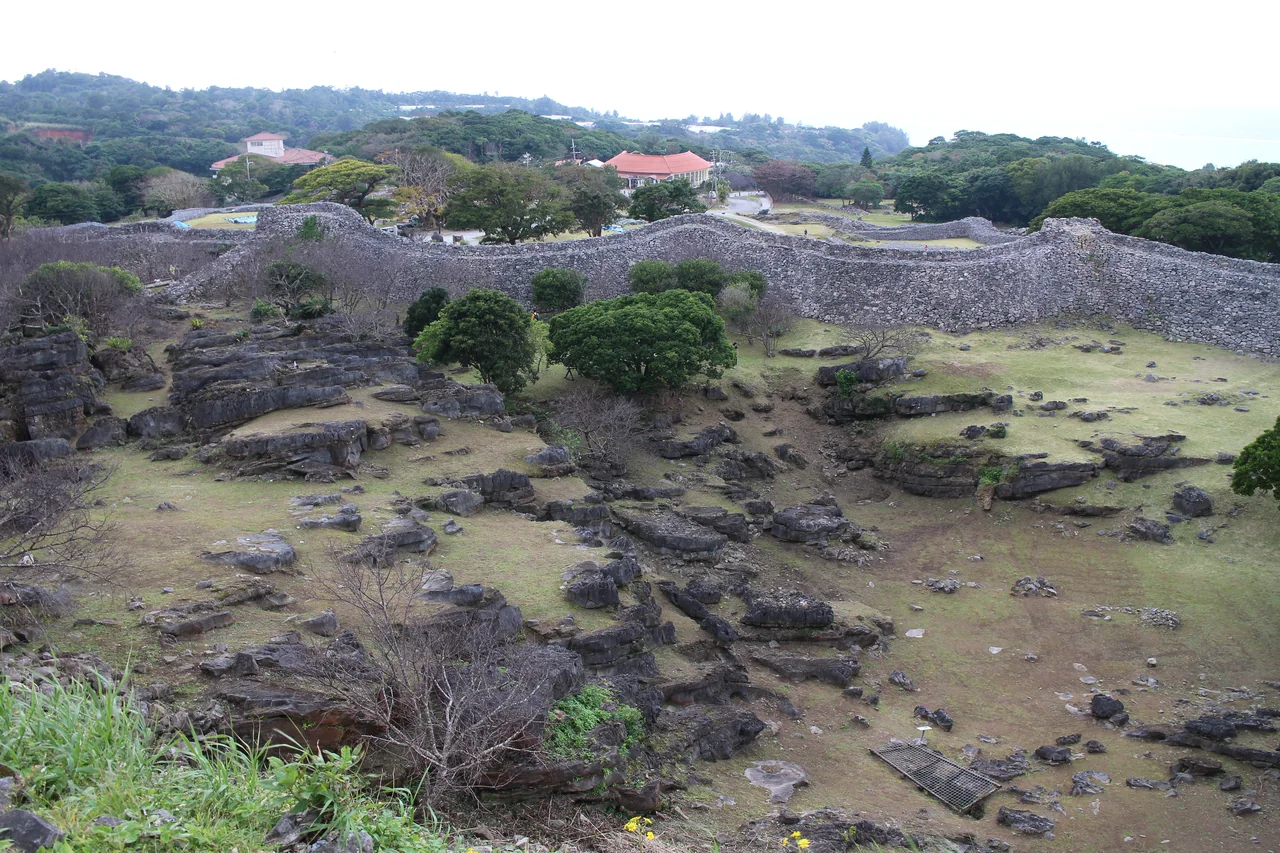
Long before there was a king, Okinawa’s local lords (aji) built fortresses of stacked coral limestone called gusuku. Their flowing, organic walls — nothing like a mainland Japanese castle — are the islands’ oldest monuments, and several still crown their hilltops.
By the 14th century the main island had consolidated into three rival chiefdoms — Hokuzan in the north, Chuzan in the centre, and Nanzan in the south — a roughly century-long era (1322–1429) known as Sanzan, the “Three Kingdoms.” Each sent its own tribute missions to Ming China, competing for the trade and prestige that came with it.
3. 1429: Sho Hashi unites the islands — the kingdom begins
The man who ended the rivalry was Sho Hashi. From the central Chuzan, he conquered the northern kingdom in 1416 and the southern one in 1429, fusing the three into a single Ryukyu Kingdom and founding the First Sho dynasty. He made the hilltop town of Shuri his capital and built it around a palace unlike any in Japan.
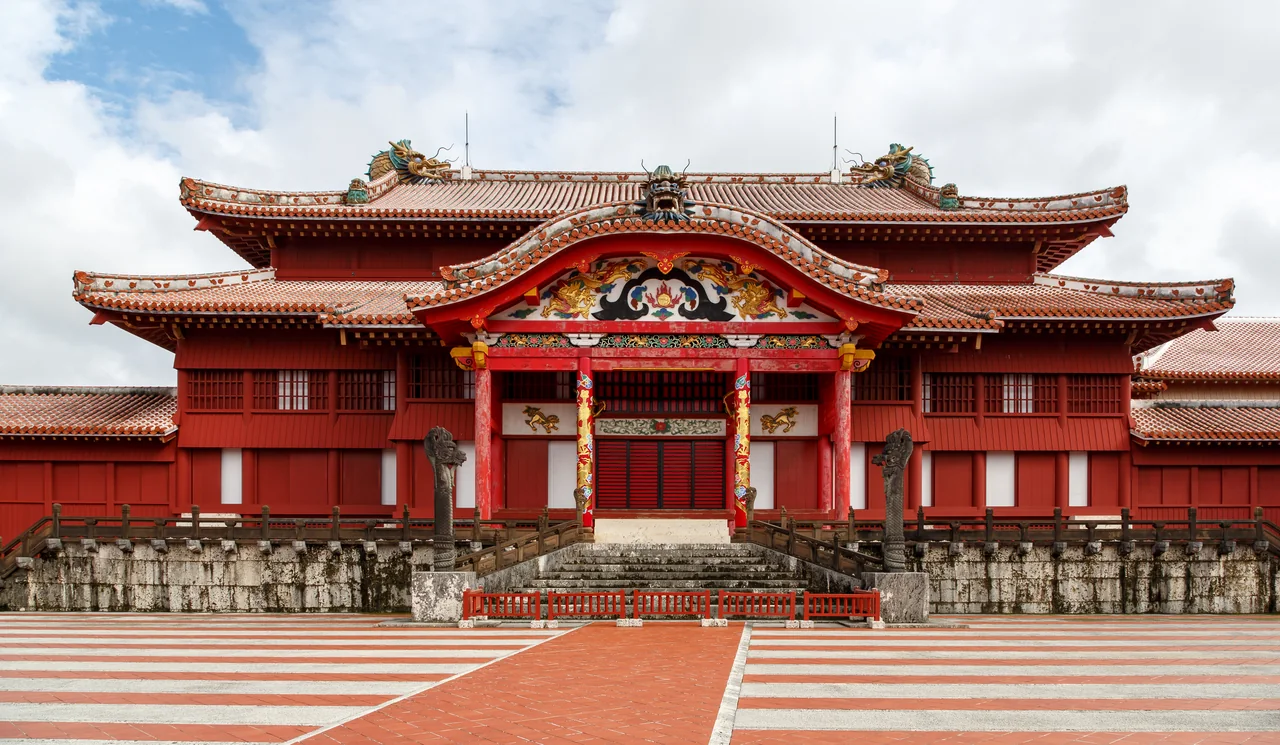
Shuri Castle (Shurijo) Shuri CastleMap became the political, religious and cultural heart of the kingdom, a Chinese-influenced vermilion palace where kings were crowned, Chinese envoys received, and court rituals performed for 450 years. (A 2019 fire destroyed the main hall; its reconstruction, a moving public project, ends with the Seiden opening to the public on 23 November 2026. Going inside needs a ticket booked for a set date and time, which costs nothing extra, and adult admission rises to ¥1,000 for entry from that day.)
4. The golden age: a tiny kingdom that traded with the world
Under the great king Sho Shin (reigned 1477–1526), Ryukyu hit its peak. He pulled the regional lords off their gusuku and into Shuri, ending private armies; he formalised the priestess-led state religion; and he extended the kingdom’s control south to the Miyako and Yaeyama islands. Above all, this was the height of a remarkable maritime trading empire.
Lacking resources of its own, Ryukyu turned its position into its fortune. Its ships carried Japanese silver and swords, Chinese porcelain and silk, and Southeast Asian spices, sappanwood and aromatics between Ming China, Japan, Korea, Siam (Thailand), Malacca, Java and beyond. The kingdom styled itself the “Bridge of Nations” — a phrase cast into a famous 1458 bell that hung in Shuri Castle.
The China tie ran especially deep. Each new king was crowned not by Japan but by imperial envoys from Ming and Qing China, who sailed to Shuri to perform the formal investiture. And as early as 1392, thirty-six families from Fujian settled by Naha’s port as the Kumemura community, serving for generations as the kingdom’s diplomats, scholars and navigators. Much of Okinawa’s deep Chinese flavour — in its food, names and learning — starts right here.
5. 1609: the Satsuma invasion and a double life
Ryukyu’s wealth and its lack of an army made it a target. In 1609 the samurai of the Satsuma domain (today’s Kagoshima), with the shogun’s blessing, invaded from the south. There was little fighting — the king ordered his people not to resist — and within weeks King Sho Nei was captured and taken to Japan.
What followed was one of history’s stranger arrangements. Satsuma did not erase the kingdom; it kept Ryukyu as a vassal that still looked independent. Ryukyu went on paying tribute to China as before, because that trade was lucrative — and Satsuma, forbidden from trading with China directly, quietly skimmed the profits. So the kingdom lived a double life for 270 years: a Chinese tributary in name, a Japanese vassal in fact, ordered to hide its Japanese overlords from visiting Chinese envoys.
6. What the kingdom created: the culture you can still touch
Those centuries of trade and court life produced a culture entirely its own — and unusually, much of it is alive and hands-on for visitors today. This is the most rewarding part of an Okinawa history trip.
- The gusuku, together a UNESCO site: in 2000, Shuri, Nakijin, Zakimi, Katsuren and Nakagusuku castles plus Sefa-utaki, Tamaudun and the Shikinaen-linked sites were inscribed as the “Gusuku Sites and Related Properties of the Kingdom of Ryukyu.”
- Karate was born here. Under weapon restrictions, Okinawans refined an empty-handed martial art — ti — that became karate. Okinawa, not mainland Japan, is its homeland, and you can visit the Okinawa Karate Kaikan to see it.
- Bingata — the kingdom’s dazzling stencil-dyed textile, in coral, indigo and gold — was once worn only by royalty. You can try dyeing your own panel in a Naha workshop.
- Tsuboya pottery (yachimun) — Okinawa’s earthy glazed ceramics, consolidated in Naha’s Tsuboya district Tsuboya Pottery StreetMap in the 1680s; its lane of kilns and shops is a lovely walk.
- Music and dance: the snakeskin sanshin, the courtly kumiodori dance-drama (a UNESCO intangible heritage), and the thunderous eisa drum dance you’ll catch at summer festivals.
- Awamori, glass and lacquer: Japan’s oldest distilled spirit, the bright post-war Ryukyu glass, and royal lacquerware round out the crafts.
7. 1879: the kingdom is abolished — the Ryukyu Disposition
When Japan modernised under the Meiji government, the contradiction of a semi-independent kingdom could not last. In 1872 Tokyo unilaterally downgraded the kingdom to the “Ryukyu Domain,” and in 1879 it abolished it altogether — sending police and soldiers to Shuri, deposing the last king, Sho Tai, and exiling him to Tokyo. The 450-year kingdom became Okinawa Prefecture. This forced annexation is remembered as the Ryukyu Disposition.
What came next was decades of assimilation. The Ryukyuan language was pushed out of schools — children caught speaking it were made to wear a shaming “dialect placard” — and Okinawans were pressed to become “proper” Japanese, often as second-class ones. The kingdom’s distinct identity went underground, but it never disappeared.
8. 1945: the Battle of Okinawa
The kingdom’s old capital met its darkest hour in the spring of 1945. As the Pacific War closed in, Okinawa became the planned last stand before the Japanese mainland, and from 1 April to 22 June it endured one of the most devastating battles in history — the only WWII land battle fought on Japanese home soil among a civilian population.
The scale of loss is staggering: roughly 200,000 people died, including around 12,500 Americans, tens of thousands of Japanese soldiers, and — most heartbreakingly — an estimated 100,000 or more Okinawan civilians, perhaps a quarter of the population. Shuri Castle, used as the Japanese army’s underground headquarters, was shelled to rubble.
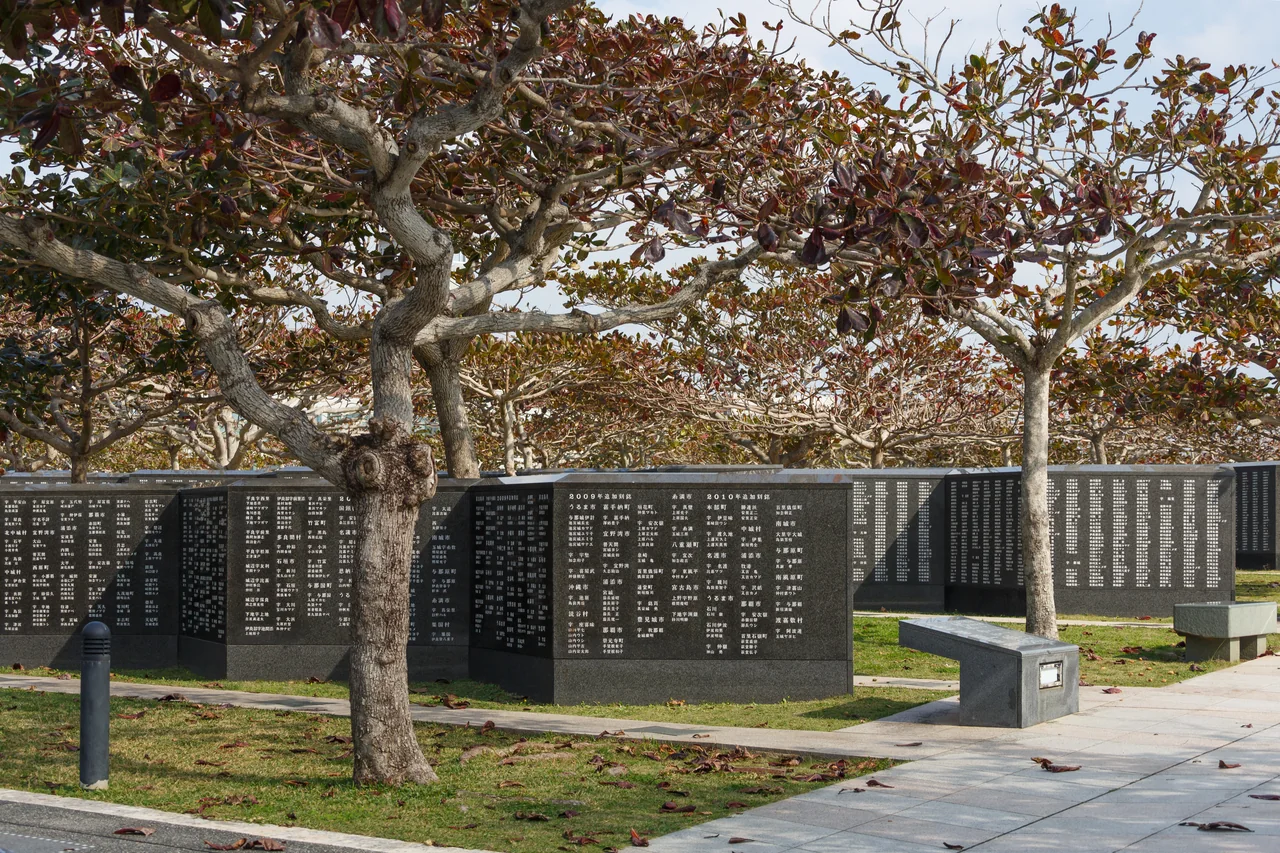
- Okinawa Peace Memorial Park Okinawa Peace Memorial ParkMap at Mabuni Hill, Itoman, where the battle ended. Its Cornerstone of Peace inscribes the names of everyone who died — Okinawan, Japanese, American, British, Korean, Taiwanese — without distinction.
- Himeyuri Peace Museum Himeyuri Peace MuseumMap, for the 200-plus schoolgirls and teachers (“the Himeyuri students”) mobilised as nurses into cave field-hospitals, most of whom died. Quietly shattering.
- Former Japanese Navy Underground Headquarters Former Japanese Navy Underground HeadquartersMap in Tomigusuku — hand-dug tunnels where Rear Admiral Minoru Ota and his men made their last stand in June 1945.
9. 1945–1972: the American decades
When the guns fell silent, Okinawa did not return to Japan with the rest of the country. The United States kept it under direct military government for 27 years, valuing the island as the “Keystone of the Pacific” in the new Cold War. Okinawans drove on the right, spent the US dollar, carried US-issued passports to visit the mainland, and lived alongside a vast build-up of bases.
Reversion to Japan finally came on 15 May 1972. (In a quirk you can still sense, Okinawa switched back from right-side to left-side driving only in 1978, an event nicknamed “730.”) But the bases stayed: today Okinawa is about 0.6% of Japan’s land yet hosts the majority of US military facilities in the country — a live political fault line, and the reason the island feels culturally unlike anywhere else in Japan.
10. Okinawa today: a living Ryukyu identity
Far from being a museum piece, Ryukyu identity is having a revival. Okinawans call themselves Uchinanchu, their language Uchinaaguchi is being taught again after near-extinction, and sanshin music, eisa and the old festivals fill the calendar. A global Worldwide Uchinanchu Festival brings the diaspora — descendants of Okinawans who emigrated to Hawaii, Brazil and Peru — home to Naha every few years.
And there’s the famous longevity: the northern village of Ogimi is a Blue Zone, its centenarians living proof of a Ryukyu diet and unhurried way of life. The kingdom is gone, but its spirit — outward-looking, easygoing, distinct — is very much alive.
11. A self-guided Ryukyu history tour
Want to actually walk the story? Here’s how to string the sites into a coherent trip. All are on the main island and easiest by rental car.
Day 1 — the kingdom (Naha & Shuri)
- Start at the Okinawa Prefectural Museum for the overview, then up to Shuri Castle (Seiden opens 23 November 2026), the royal mausoleum Tamaudun next door, and the stone-paved Kinjocho lane.
- Afternoon: the Shikinaen royal garden, then the Tsuboya pottery district for crafts and a coffee.
Day 2 — war and peace (the south)
- Peace Memorial Park and the Cornerstone of Peace, the Himeyuri museum, and the Navy Underground HQ — a quiet, powerful half-to-full day. Finish with the sacred Sefa-utaki nearby.
Add-on — the gusuku & living culture (centre & north)
- The castle ruins of Nakagusuku, Katsuren and Zakimi in the centre, Nakijin in the north, and a culture stop at Okinawa World or Ryukyu Mura.
• Okinawa travel guide — beaches, islands, food & routes
• Japan travel guide — visas, trains, money
12. Practical tips for history travellers
A few things that make the history side of Okinawa run smoothly.
- Rent a car. The castles, memorials and Sefa-utaki are spread across the south and centre; buses are slow. See driving and logistics in our main Okinawa guide.
- Shuri Castle: the main hall (Seiden) opens to the public on 23 November 2026, and going inside it needs a free ticket booked for a set date and time; the grounds, gates and Tamaudun are open either way and well worth it.
- Start at the museum. An hour at the Okinawa Prefectural Museum first makes every castle and memorial afterward mean far more.
- Tickets & combos: Shuri, Tamaudun and Shikinaen each charge a small entry fee; the war memorials are mostly free. Culture parks and guided walks are often cheaper booked online.
- Be respectful at the war sites and Sefa-utaki — these are places of mourning and worship, not photo backdrops. Keep voices low and follow the posted etiquette.