
Japan in February: Weather by Region, the Sapporo Snow Festival, Plum and Early Cherry Blossom
February is snow season in Hokkaido and the start of plum and early cherry blossom further south. The Sapporo Snow Festival, held from 4 to 11 February in recent years, is one of the busiest and most expensive weeks of the year in Hokkaido, and city hotels are cheaper in the second half of the month. This guide covers the weather, the dates to plan around, food, packing and how February compares with March.
| Weather | Sapporo stays around freezing by day, Tokyo has its driest month of the year, and Naha is mild at around 20°C. |
|---|---|
| Snow Festival | In recent years it has run from 4 to 11 February, and that week is among the most expensive of the year for Hokkaido hotels. |
| Quieter dates | From 12 February city hotels get cheaper, while the snow in Sapporo is at its deepest. |
| Blossom | Okinawa’s cherry peaks in early February, the Mito Plum Festival at Kairakuen starts around 10 February and Kawazu cherry is usually best from mid-February. |
| Public holidays | 11 and 23 February are holidays, and either one makes a long weekend when it falls on a Friday or a Monday, or on a Sunday, because the Monday after then becomes a substitute holiday. |
| Not yet | Tokyo’s cherry blossom does not open until late March, and Okinawa’s beaches open for swimming from early or mid-March at the earliest and mostly in April. |
1. Early, mid or late February: which dates to pick
2. February weather by region
3. Setsubun and the first days of February
4. Sapporo Snow Festival week in early February
5. When Lunar New Year falls in early February
6. 11 February, National Foundation Day
7. Booking Sapporo for festival week
8. Hokkaido after the festival
9. Snow at its deepest in February
10. Drift ice on the Okhotsk coast
11. Kamakura and bonden in Yokote, Akita
12. Plum blossom at Kairakuen in Mito
13. Kawazu cherry blossom on the Izu Peninsula
14. Okinawa’s cherry blossom peaks in early February
15. How cherry blossom forecasts use February temperatures
16. Tokyo in February: dry weather and Mt Fuji views
17. Valentine’s Day chocolate fairs
18. 23 February, the Emperor’s Birthday
19. What to eat in February
20. Hotel and flight prices through February
21. What to pack for February
22. What February cannot offer yet, and who it suits
1. Early, mid or late February: which dates to pick
The first days of February are the coldest part of the year in Sapporo, and Setsubun, the bean-throwing day, falls on the 3rd in most years. In recent years the Sapporo Snow Festival has run from 4 to 11 February, and that week is among the most expensive of the year for Hokkaido hotels. From 12 February to the end of the month the festival crowds have gone, city hotels get cheaper, the plum festival at Kairakuen in Mito is under way and the early cherry blossom at Kawazu on the Izu Peninsula is usually at its best.
| Dates | What happens | Crowds and rooms |
|---|---|---|
| 1 to 3 February | Setsubun on the 3rd (the 2nd in some years). The coldest part of the year in Sapporo. | Normal. Setsubun is not a public holiday. |
| 4 to 11 February | Sapporo Snow Festival (these dates in recent years). National Foundation Day on the 11th. In some years Lunar New Year falls in the same week. | One of the busiest and most expensive weeks of the year in Hokkaido. Prices rise nationwide if the 11th falls on a Friday, Sunday or Monday and makes a long weekend. |
| 12 February to the end of the month | Snow at its deepest in Sapporo. Plum blossom in Mito, Kawazu cherry in Izu. The Emperor’s Birthday on the 23rd. | City hotels cheaper. Busier around the 23rd if it makes a long weekend. |
Who should go when
If the Snow Festival is the reason for your trip, you need to be in Sapporo during festival week, which has been 4 to 11 February in recent years. The next festival’s dates are posted when each festival ends, so you can book a room up to a year ahead. If you want Hokkaido’s snow and winter events without festival prices, go after the 12th, when the snow in Sapporo is even deeper. If your trip is mainly Tokyo and Osaka, any part of February works, and the second half adds plum blossom at Mito and early cherry blossom at Kawazu in Izu. For cherry blossom in Okinawa, go at the start of the month.
Dates that move from year to year
National Foundation Day is always on 11 February and the Emperor’s Birthday is always on 23 February, so only the weekday changes. Other dates move. Setsubun is on the 3rd in most years and the 2nd in some, and Lunar New Year can land anywhere from late January to mid-February. No official rule for the Snow Festival dates has been published. The organisers first post the next year’s dates on the official site when the festival ends, and a fuller outline follows in the summer. The Kawazu cherry and Mito plum festivals change their dates each year with the blossom. Check these for your year before you book flights.
Hotel prices change with these dates. Sapporo costs much more during festival week than a few days later, and any city gets more expensive on a holiday weekend, so if your dates can move, compare a few options before you book.
2. February weather by region
February is still winter in most of Japan. In Sapporo the temperature stays around freezing even in the afternoon and drops well below it at night. Tokyo, Osaka and Fukuoka have cool days and nights a few degrees above freezing. Naha in Okinawa is mild, around 20°C in the daytime.
| City | Average daytime high | Average night-time low |
|---|---|---|
| Sapporo | 0.4°C | -6.2°C |
| Tokyo | 10.9°C | 2.1°C |
| Osaka | 10.5°C | 3.2°C |
| Fukuoka | 11.6°C | 4.4°C |
| Naha | 20.2°C | 15.1°C |
These are the long-term February averages published by the Japan Meteorological Agency (see, for example, its Tokyo figures).
A little milder than January
Compared with January, the afternoons are slightly warmer in every city in the table, while the night-time lows hardly change. In practice February feels much the same as January, and you pack the same clothes for both. Our guide to Japan in January covers the month before.
A wide gap between north and south
The gap in daytime temperatures between Sapporo and Naha is the second widest of the year, after January. On the same day you can be walking on packed snow in Sapporo and wearing a light jacket in Naha. In Sapporo, early February is the coldest part of the whole year, and the Snow Festival opens at that time.
Dry, clear weather in Tokyo
Tokyo has less rain in February than in any other month, and clear days are common all winter. January is Tokyo’s sunniest month and February also gets plenty of sun, which is good for sightseeing and for views of Mt Fuji. Sapporo gets a little more sunshine in February than in January, though snow still falls on most days.
How March is different
By March the snow on the ground in Sapporo is getting thinner. Tokyo’s cherry blossom opens in late March, and the first beaches in Okinawa open for swimming from early or mid-March. The last section of this guide lists what February cannot offer yet.
3. Setsubun and the first days of February
Setsubun is the day before Risshun, the first day of spring in the old calendar. It falls on 3 February in most years and on 2 February in some. It is not a public holiday, so shops and offices stay open and trains run to the normal timetable.
Bean-throwing at the big temples
On Setsubun, temples hold mamemaki, a bean-throwing ceremony. In Tokyo, Senso-jiMap in Asakusa holds its Setsubun-e at the main hall, and ZojojiMap holds its Tsuina-shiki on 3 February. At Naritasan ShinshojiMap in Narita, sumo wrestlers and actors throw the beans.
Times change from year to year, so look at the temple’s own page before you go. Senso-ji lists Setsubun among its annual events. Naritasan is in the same city as Narita Airport, so it is an easy stop if you fly in or out around Setsubun.
Ehomaki, the Setsubun sushi roll
The food of the day is ehomaki, a thick sushi roll that is eaten whole without being cut. Convenience stores and supermarkets sell them for Setsubun, take orders in advance and put up banners like the one below.
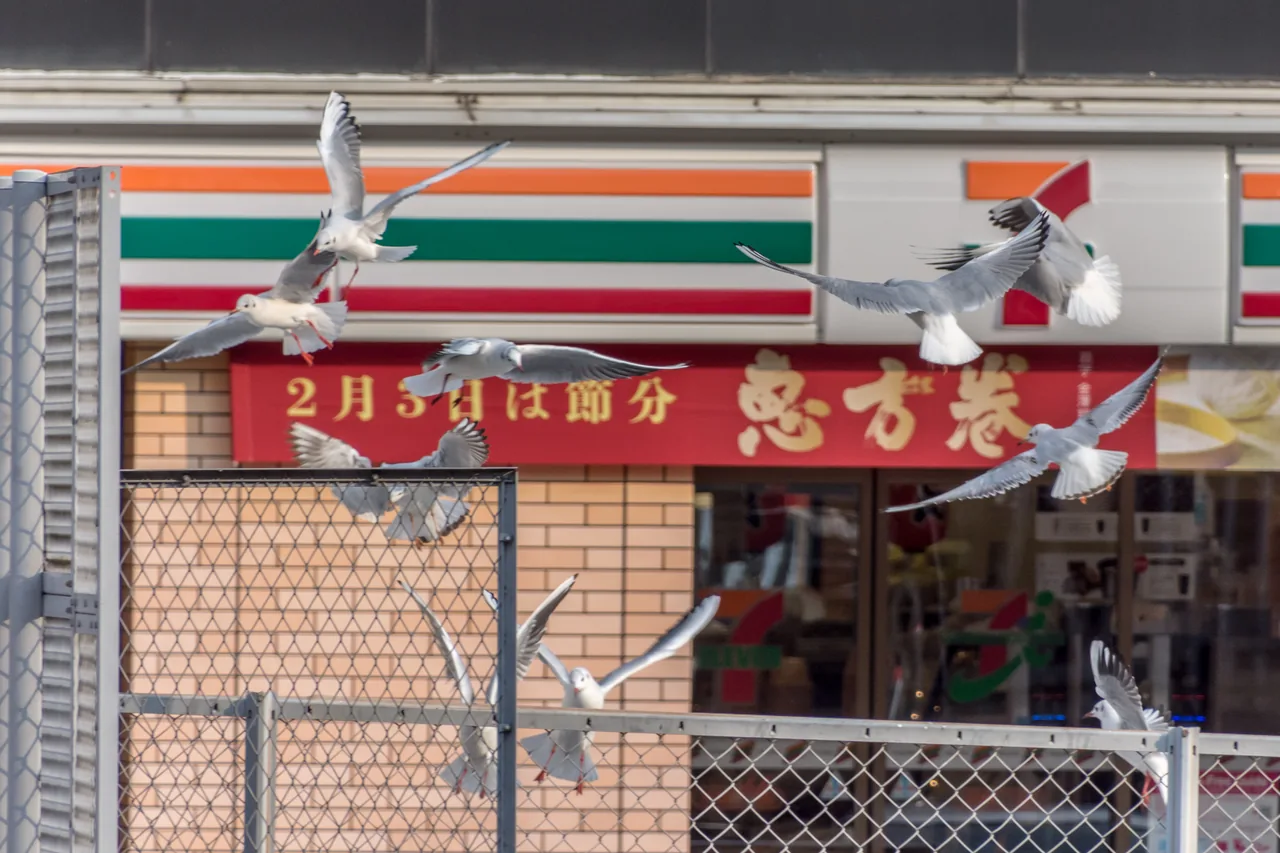
For a visitor, Setsubun needs no planning and does not change any opening hours. If you are in Tokyo on the day, it is easy to add to a sightseeing day: a visit to one of the temples and an ehomaki from a convenience store.
4. Sapporo Snow Festival week in early February
In recent years the Sapporo Snow Festival has been held from 4 to 11 February, ending on National Foundation Day. No official rule for these dates has been published. The dates of the next festival are first posted on the official site when the festival ends, and a fuller outline follows in the summer, so you can book a room up to a year ahead. Entry is free.
Odori, Susukino and Tsudome
The main site is Odori ParkMap in central Sapporo, where the large snow sculptures stand. The Susukino site is in the streets around Susukino StationMap, and TsudomeMap is a daytime site with play activities. In recent years every site has used the same dates. The skating rink and some of the activities at Tsudome are the only things you pay for.
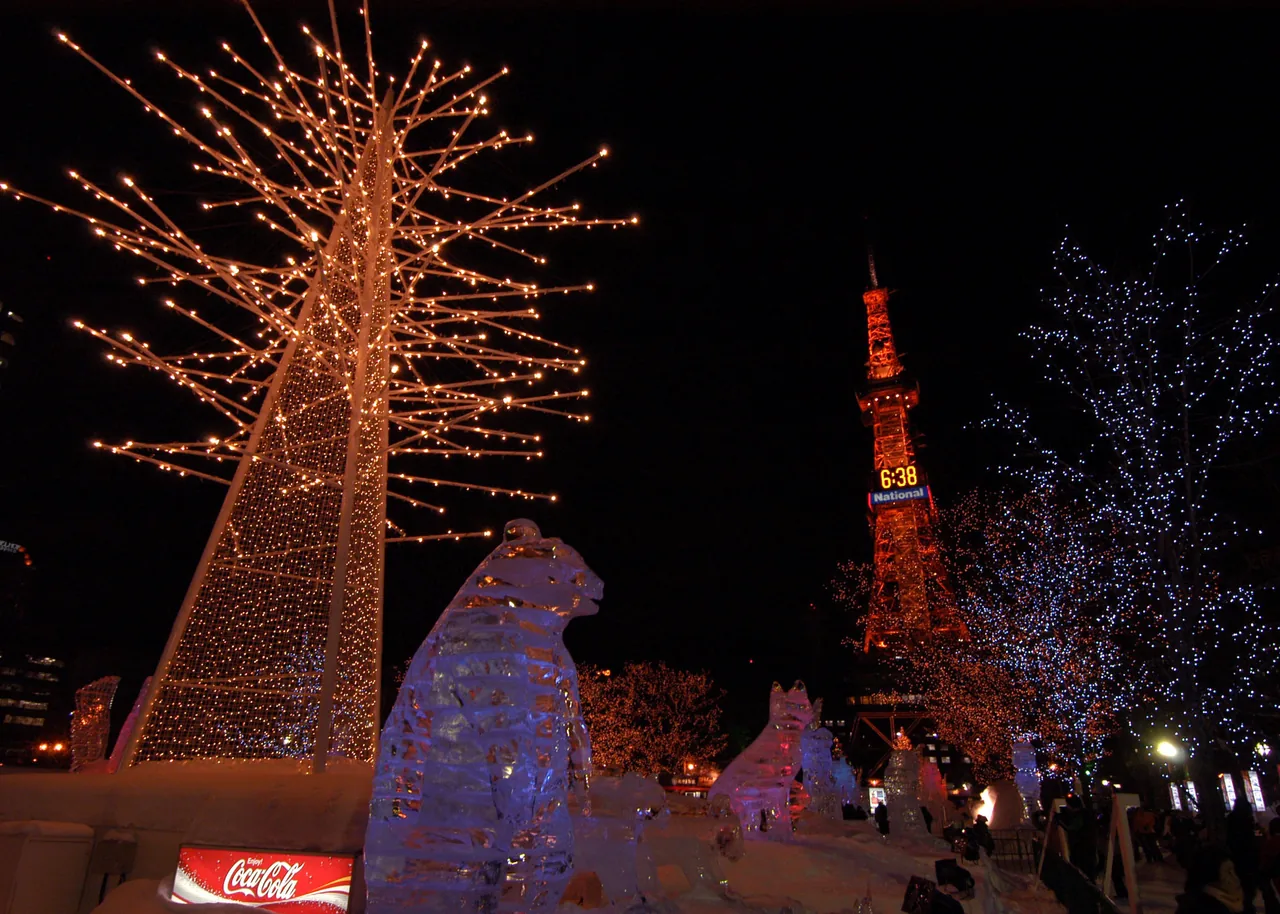
Lighting hours
At Odori the sculptures are lit until 10pm, and at Susukino until 11pm, or 10pm on the last night. Tsudome is open only in the daytime, from 10am to 4pm, with no lighting in the evening. For night photographs, go to Odori and Susukino.
The sculptures come down the morning after
To prevent collapses, the sculptures are knocked down with heavy machinery on the morning after the festival ends. If you arrive the day after the last day, there is nothing left to see.
The themes of the large sculptures are usually announced in mid-December. Site maps and more detail are in our Sapporo Snow Festival guide, and the organisers post each year’s dates on the official festival site.
In some years a linked event, the Snow Sports Park, has been held at the Premist Dome, the former Sapporo Dome, sometimes running for a few days right after the festival ends. Its dates change from year to year, so check the festival site if you will arrive just after the festival.
Because the sculptures are lit until late, you can spend the day on a tour out of Sapporo, to Otaru for example, and still see Odori and Susukino in the evening.
5. When Lunar New Year falls in early February
Lunar New Year moves every year and can fall anywhere from late January to mid-February. In years when it lands in early February, the New Year holidays in Taiwan, Hong Kong, mainland China and Korea fall in the same week as the Sapporo Snow Festival.
How long the holidays last
Taiwan’s holiday lasts 7 to 9 days, starting the day before Lunar New Year’s Eve, with extra days off added when the holiday falls on a weekend. Hong Kong has public holidays on the first, second and third days of the new year, with the fourth day off instead when one of them is a Sunday. Korea’s Seollal holiday covers the day before, the day itself and the day after, with a substitute day off when one of those days falls on a Sunday or another public holiday. A Saturday does not bring an extra day.
What it means for Hokkaido
When these holidays line up with the Snow Festival and with Japan’s own holiday on 11 February, flights into New Chitose Airport and hotel rooms in Sapporo fill up faster than in other years.
Checking your year
Before you fix dates for Hokkaido, look up when Lunar New Year falls in your travel year. If it lands in the first part of February, book Sapporo as early as you can. If it falls in late January, the holidays are mostly over before the festival starts. In years when it falls in mid-February, it overlaps the quieter days after the festival instead, so check prices for both halves of the month.
6. 11 February, National Foundation Day
National Foundation Day is a public holiday on 11 February. The date never changes, so the day of the week moves from year to year. When the 11th falls on a Friday or a Monday, Japan gets a 3-day weekend. When it falls on a Sunday, the Monday after becomes a substitute holiday, so that makes a 3-day weekend too, but a Saturday brings no extra day off. Hotel prices rise across the country on these long weekends.
Shops and sights stay open
Shops, department stores and tourist sights open as usual on the holiday. There are none of the closures you find over New Year, so sightseeing plans can stay as they are.
Booking the Shinkansen for a long weekend
Reserved seats on the Shinkansen go on sale at 10am, 1 month before the day of travel. If the 11th makes a long weekend and you need to travel on it, that is the moment to book.
Some services now take bookings even earlier. On JR East’s Eki-net you can apply for Shinkansen e-tickets from 2pm 3 months before travel, and the seat is confirmed 1 month before (discount fares are not included). For the Tokaido and Sanyo Shinkansen, the EX reservation service accepts some ticket types from 1 year ahead. Whether a rail pass is worth it for your route is covered in our JR Pass guide.
Other events around the 11th
In recent years both the Asahikawa Winter Festival and the Sapporo Snow Festival have ended on the 11th. The Hirosaki Castle Snow Lantern Festival is held over a few days around the 11th. In many years the Mito plum festival opens on the 11th as well, but that is not a rule, because its start date is set to match the blossom.
7. Booking Sapporo for festival week
Festival week is among the most expensive weeks of the year for hotels in Hokkaido, and rooms within walking distance of Odori Park are the first to go. Book the room before the flights and tours, and choose the area with the evening lighting in mind.
Within walking distance of Odori
The Odori site is an easy walk from Sapporo StationMap and from Susukino. Hotels around Sapporo Station, along Odori and in Susukino let you walk back after the lights go off, which is why they fill up first.
One or two subway stops out
Further out, you will need the subway to get back, which works as long as you are on a train before the last one leaves. The last trains from the central stations (Odori, Sapporo and Susukino) leave at around 12:10am, after the lighting ends at 10pm at Odori and 11pm at Susukino. One or two stops out, rooms are easier to find.
Last trains differ slightly by line and direction. Look up the time for your own station on the city’s subway timetable page.
From New Chitose Airport
The JR Rapid Airport train from New Chitose AirportMap reaches Sapporo Station in about 40 minutes, with the Special Rapid trains a little faster, and runs roughly every 10 minutes. Staying near Sapporo Station keeps arrival and departure days simple, especially with a suitcase on snowy pavements.
The different areas of the city are compared in our guide to where to stay in Sapporo, and getting around is covered in our Sapporo travel guide.
8. Hokkaido after the festival
From 12 February the festival crowds leave and hotel prices in Sapporo come down from their festival-week levels. The snow stays, and in Sapporo it keeps getting deeper until around 20 February. Several winter events also carry on after the Snow Festival ends.
Otaru Snow Light Path
In recent years the Snow Light Path in Otaru has run from a Saturday in early or mid-February to the following Saturday, from 5pm to 9pm, with lights along the Otaru CanalMap and the former Temiya railway line. It overlaps the Snow Festival by a few days, and in recent years it has carried on for a few days after the 11th. The Otaru tourism association lists the dates on its winter events page, and the town itself is covered in our Otaru guide.
Lake Shikotsu Ice Festival
The Lake Shikotsu Ice Festival in Chitose runs from late January to 23 February, the Emperor’s Birthday. It is open from 10am to 8pm, and the ice structures are lit from 4:30pm. In some years weekend and holiday tickets cost more than weekday tickets. Lake ShikotsuMap is close to New Chitose Airport, so it fits well on the first or last day of a trip. The Chitose tourism site has the details for the current year.
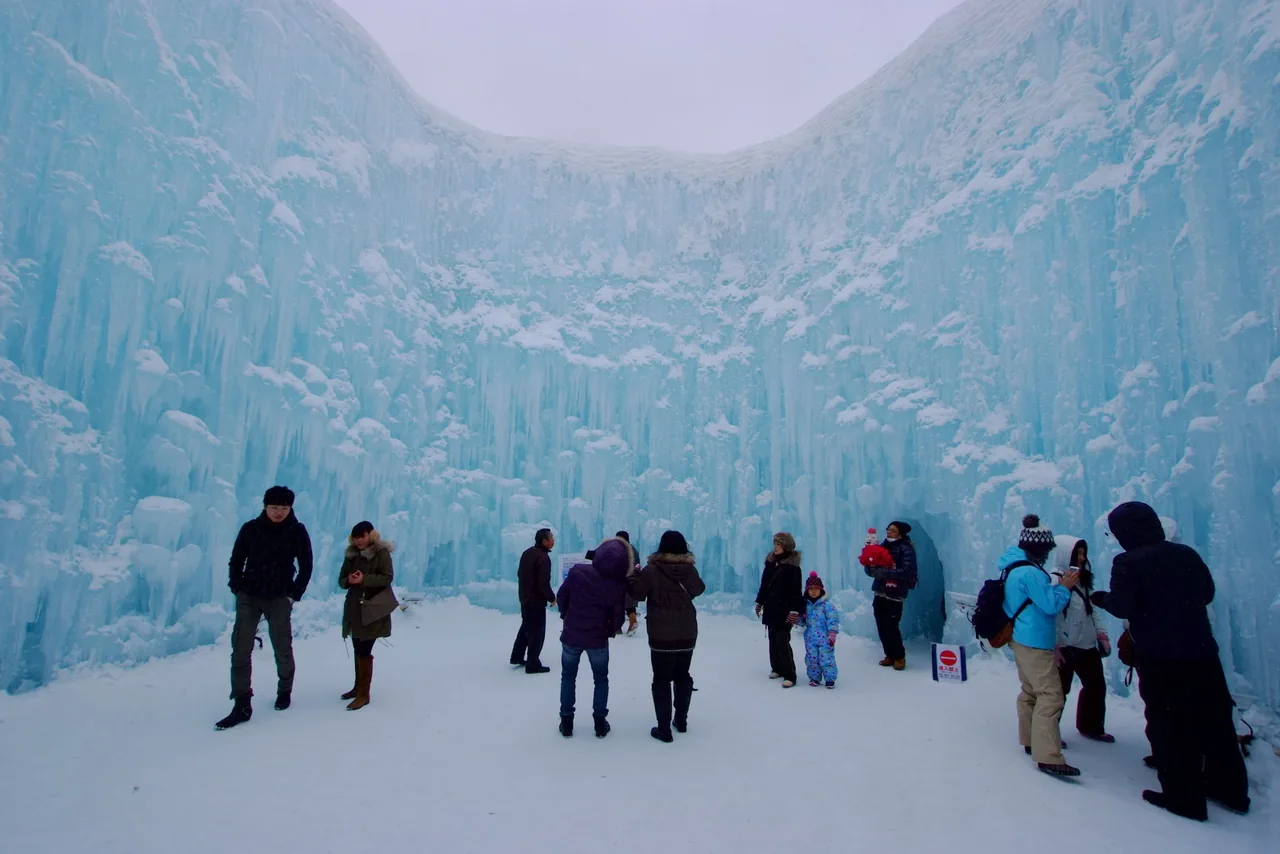
Sounkyo and Asahikawa
At Sounkyo OnsenMap, the Ice Waterfall Festival runs for about 6 weeks from late January to early March, with lighting in the evening. The Asahikawa Winter Festival in AsahikawaMap runs for 6 days and in recent years has finished on 11 February, so it belongs to festival week.
| Event | When | Hours | Still on after the 11th? |
|---|---|---|---|
| Sapporo Snow Festival | 4 to 11 February in recent years | Lit until 10pm at Odori, 11pm at Susukino | No |
| Otaru Snow Light Path | Saturday to Saturday, early to mid-February | 5pm to 9pm | In recent years, for a few days |
| Asahikawa Winter Festival | 6 days ending on 11 February in recent years | See the official site | No |
| Lake Shikotsu Ice Festival | Late January to 23 February | 10am to 8pm, lit from 4:30pm | Yes |
| Sounkyo Ice Waterfall Festival | Late January to early March | Lit in the evening | Yes |
If you want Hokkaido’s winter events without festival-week prices, Lake Shikotsu and Sounkyo are both still running in the second half of February.
9. Snow at its deepest in February
In Sapporo, February is the month with the deepest snow on the ground, deeper than in January. More fresh snow falls in January, with February next, and the snow on the ground keeps getting deeper until around 20 February. It only starts to get thinner at the end of the month. Snow falls on most February days.
Narrow, icy pavements
Snow cleared from the roads is piled along the edges, so pavements become narrow and uneven, and pulling a suitcase is hard work. Where snow has been packed down by people walking, it turns to ice, especially at crossings and station entrances.
Take short steps, keep your hands out of your pockets and allow extra time to walk anywhere, even short distances.
Boots and grips
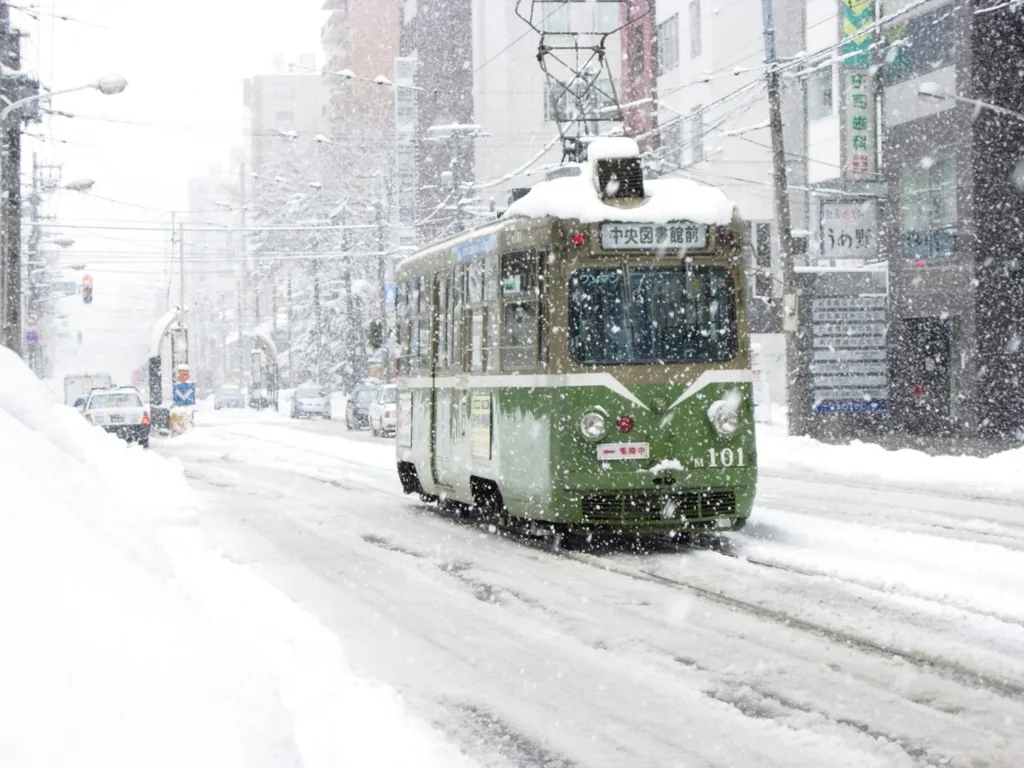
Wear boots with deep tread, and leave smooth-soled shoes at home. Slip-on grips that fit over your shoes give you far more hold on ice, and they are worth packing or buying when you arrive. The photo below shows the kind of snowfall Sapporo gets on many February days.
Skiing
Ski resorts such as NisekoMap in Hokkaido and HakubaMap in Nagano stay in peak season for all of February. Their prices do not fall after the Snow Festival the way Sapporo’s city hotels do, so book early. Resorts, lift passes and access are compared in our Japan ski guide, and for a hot spring after a day on the slopes, see our onsen and ryokan guide.
10. Drift ice on the Okhotsk coast
In winter, drift ice from the Sea of Okhotsk reaches the coast of north-east Hokkaido, and sightseeing icebreakers sail from Abashiri and Monbetsu. The boats run from January to March, and February is the main month to go.
Abashiri and the Aurora
The Aurora icebreaker sails from the Ryuhyo Kaido roadside station in AbashiriMap from 20 January to 31 March, on cruises of about an hour. The operator says the best chance of seeing ice is from mid-February to early March. In an hour the ship can only reach ice within about 10 km of port, and when there is none in range, the trip runs as a sea cruise without ice. The official Aurora site posts each day’s sailing status.
Monbetsu and the Garinko
In Monbetsu, the Garinko icebreaker sails every day from mid-January to 31 March, leaving from Garinko StationMap. Its first sailing date changes from year to year. The operator says ice usually first reaches this coast in late January and is at its peak from early February to early March, and it makes no promise that you will see it. Sailing times and booking are on the Garinko page.
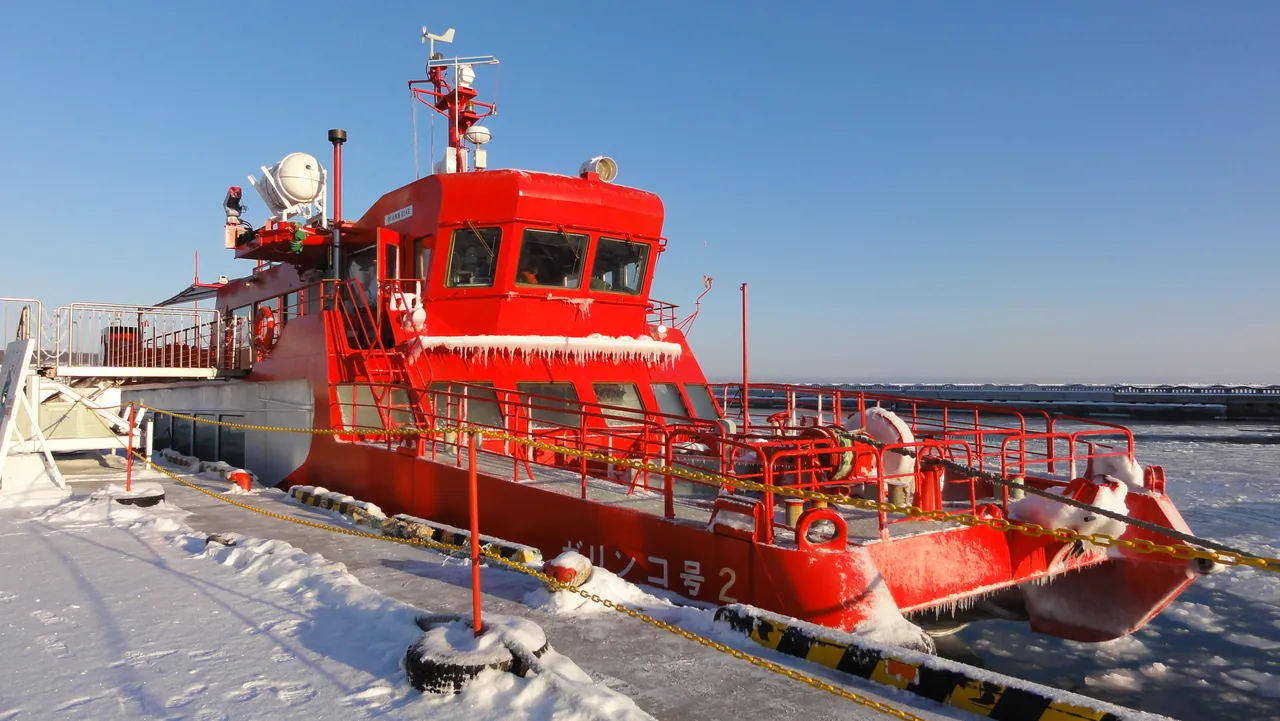
The Aurora sails even when the ice has not come in. In poor years it reaches ice on only about a third of its trips, so even in February you may see none.
| Boat | Aurora (Abashiri) | Garinko (Monbetsu) |
|---|---|---|
| Season | 20 January to 31 March | Mid-January to 31 March, daily |
| Cruise | About 1 hour | See the operator’s site |
| Best chance of seeing ice | Mid-February to early March | Early February to early March |
| With no ice nearby | Runs as a sea cruise | No guarantee of ice |
Getting there
From Sapporo, the JR Limited Express Okhotsk takes about 5 hours 30 minutes to Abashiri StationMap. It runs direct only twice a day, and other journeys involve a change at Asahikawa. The nearest airport to Abashiri is Memanbetsu AirportMap. Either way, plan to stay at least one night in the area.
Cold on deck
Out on the water the wind comes straight off the sea, and the deck is far colder than the streets in town. Wear your warmest layers, a hat and gloves, even if you were comfortable walking around Sapporo.
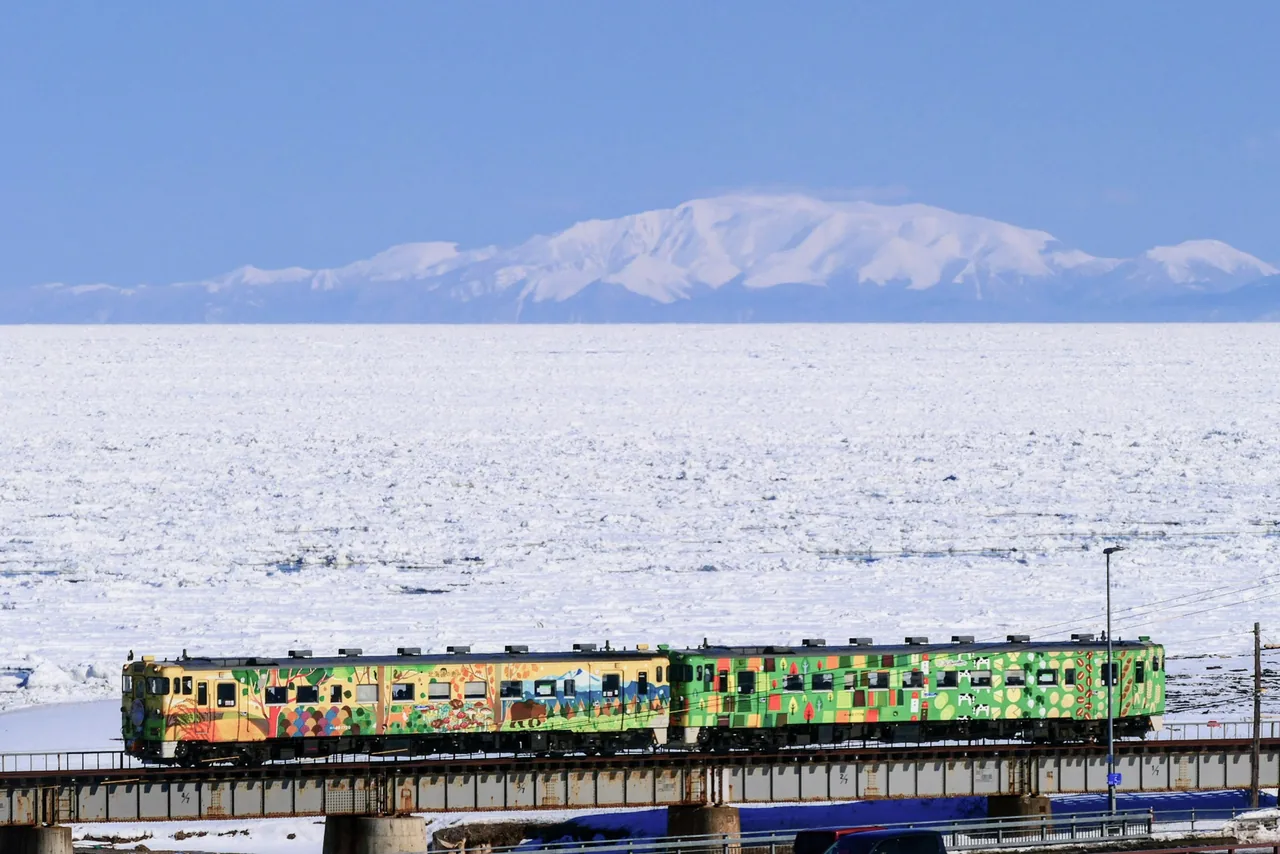
The photo above shows the sea covered in drift ice beside a railway line on the Okhotsk coast.
11. Kamakura and bonden in Yokote, Akita
Yokote in Akita Prefecture holds its Kamakura snow festival on the Friday and Saturday just before its bonden events on 16 and 17 February, which during the trial period means the second Friday and Saturday of February. For many years it was held on fixed dates in mid-February, and the move to a Friday and Saturday is on a trial basis, so check the Yokote city page for the current dates.
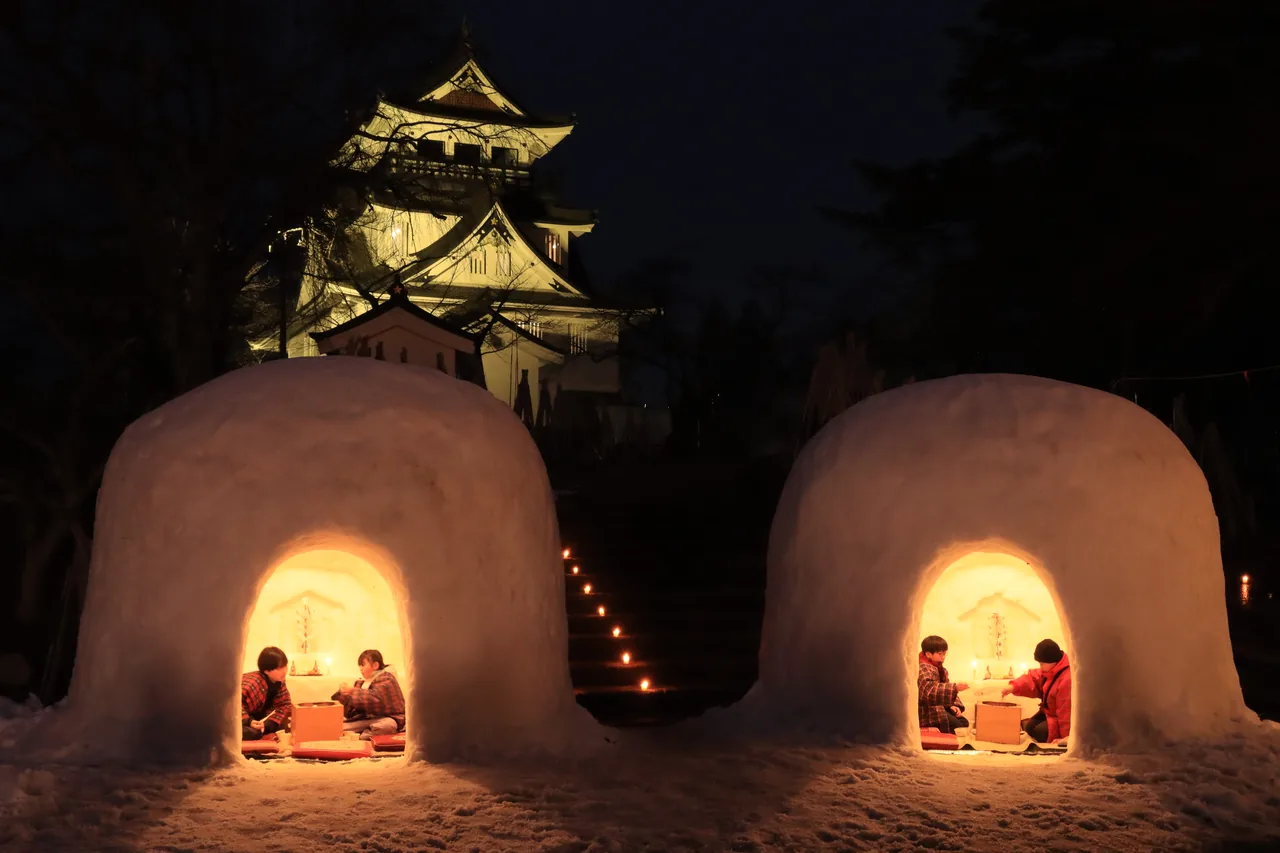
Inside the snow huts
Kamakura are small huts made of snow. Children sit inside and offer rice cakes and amazake, a sweet rice drink, to people who stop by, and the huts are lit up in the evening. In the photo below, lit huts stand in front of Yokote Castle, which is in Yokote ParkMap.
Bonden on 16 and 17 February
Bonden are tall poles covered in colourful decorations and carried in procession. On 16 February there is a bonden contest in front of Yokote City Hall, and on 17 February the bonden are carried to Asahiokayama ShrineMap as an offering. These dates are the same every year.
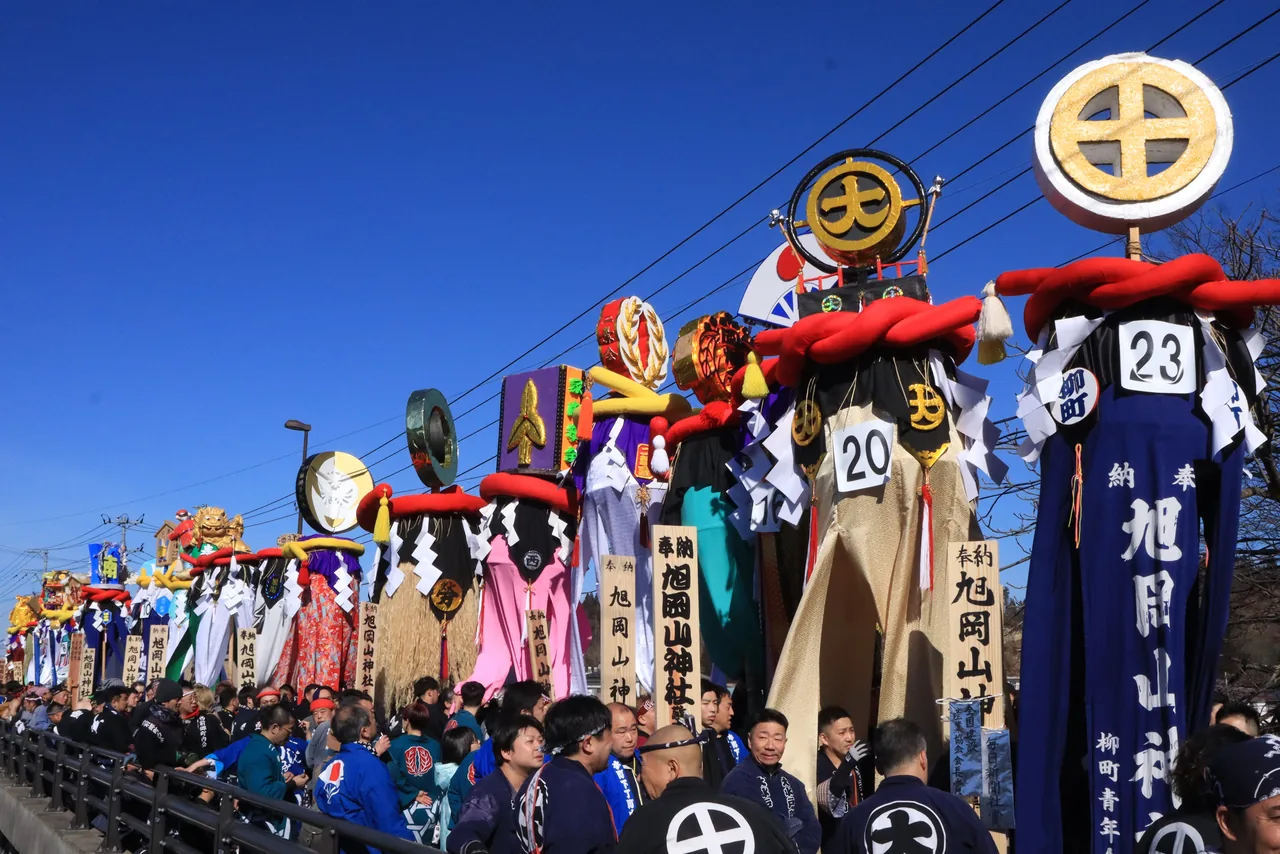
Because the kamakura now take place on the second Friday and Saturday, there are always a few days between them and the bonden. Check both sets of dates for your year before you plan to see them on the same trip.
Getting to Yokote from Tokyo
The Akita Shinkansen does not stop at Yokote. Take the Komachi to Omagari and change to the JR Ou Line, about 3 hours 40 minutes from Tokyo in all. You can also take the Tohoku Shinkansen to Kitakami and change to the JR Kitakami Line, about 4 hours in all.
| Route from Tokyo | Change at | Time in all |
|---|---|---|
| Akita Shinkansen Komachi, then JR Ou Line | Omagari | About 3 hours 40 minutes |
| Tohoku Shinkansen, then JR Kitakami Line | Kitakami | About 4 hours |
Hirosaki Castle Snow Lantern Festival
Further north, in Aomori Prefecture, the Hirosaki Castle Snow Lantern Festival is held in Hirosaki ParkMap for 4 to 6 days around 11 February. No official rule for the dates has been published, so check them each year.
12. Plum blossom at Kairakuen in Mito
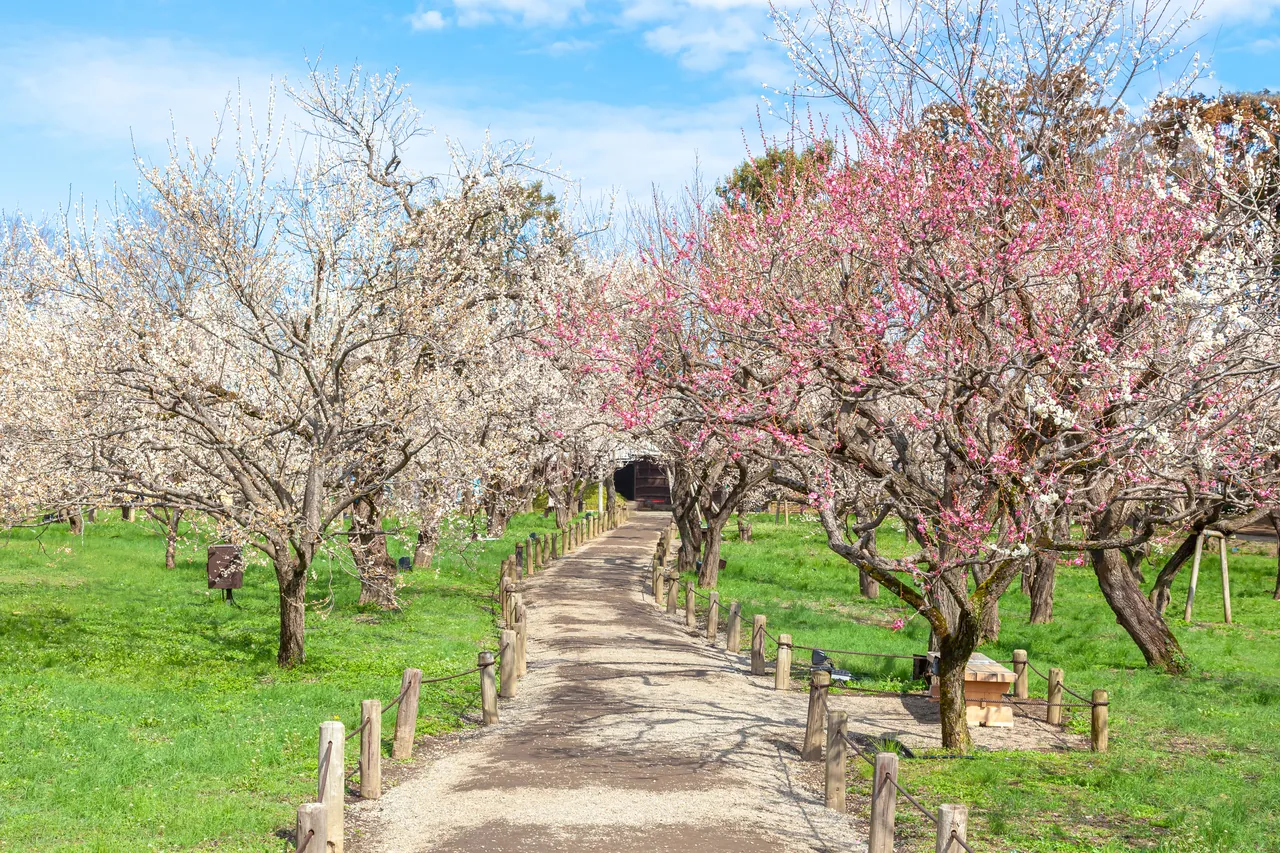
The Mito Plum Festival at Kairakuen, a garden in Mito in Ibaraki Prefecture, starts around 10 February and runs into mid or late March. The dates are set each year to match the blossom. It often opens on 11 February, but that is not a fixed rule.
Why plum lasts longer than cherry
Different plum varieties flower at different times, so some trees are in bloom at every point of the festival. Cherry blossom is over in about a week, which makes it much harder to time. With plum, any day of the festival should give you flowers.
Getting there from Tokyo
JR Joban Line limited expresses run from Shinagawa, Tokyo and Ueno to Mito StationMap in 1 hour to 1 hour 20 minutes. The Mito-go highway bus from Tokyo Station takes about 2 hours. On Saturdays, Sundays and holidays during the festival (and on weekdays too in some years), a temporary Kairakuen Station opens beside the garden, and only trains heading away from Tokyo stop there.
The temporary station has no stop for trains towards Tokyo. For the return journey, go back to Mito Station.
Admission
Entry to KairakuenMap costs 500 yen for adults and 250 yen for elementary and junior high school students during the plum festival, and 320 yen and 160 yen the rest of the year. During the festival, Ibaraki residents pay too, and the usual free entry before 9am does not apply. The Kobuntei building inside the garden charges separately. Part of the festival is also held at KodokanMap. Opening hours and the festival-period prices are on the Kairakuen official site (in Japanese; the English page may show only the regular price).
Mito works well as a day trip from Tokyo, leaving in the morning and coming back in the evening.
13. Kawazu cherry blossom on the Izu Peninsula
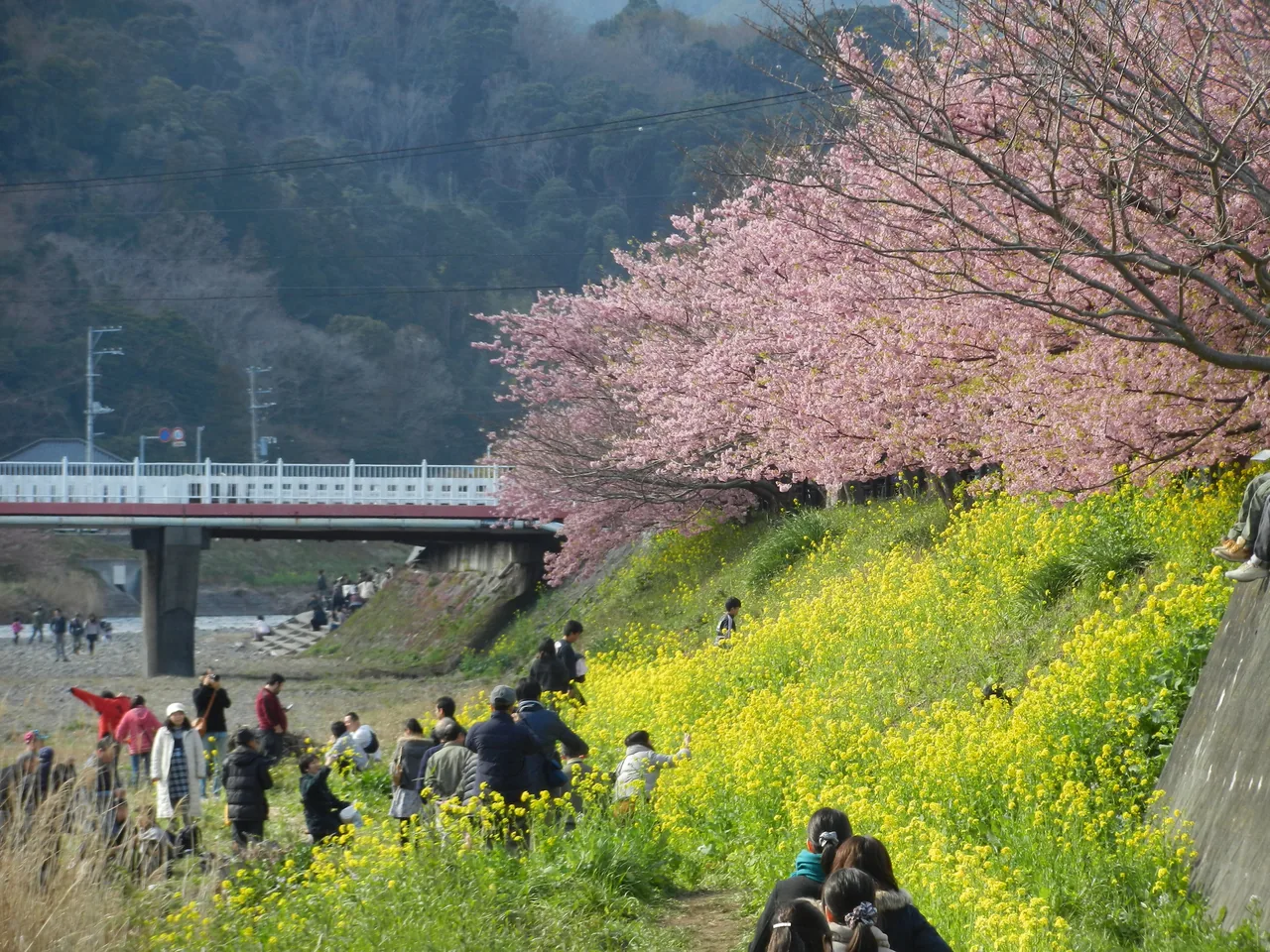
Kawazu, on the Izu Peninsula in Shizuoka Prefecture, is known for Kawazu-zakura, an early cherry that flowers more than a month before Tokyo’s Somei-yoshino. The Kawazu Cherry Blossom Festival starts in early February, in recent years around the first Saturday, and runs for about a month to early March. The dates change each year and the festival is extended when the blossom is late, so check that year’s dates on the Kawazu tourism association site.
When it is at its best
The trees are usually at their best from mid-February to early March, although this shifts by a week or two from year to year. The flowers are a deep pink, darker than the Somei-yoshino that Tokyo sees in late March.
Walking along the Kawazu River
From Kawazu StationMap on the Izukyu line, the river is a short walk away, and cherry trees line its banks for a long stretch. The original Kawazu-zakura treeMap, the first one planted, stands 1.2 km from the station towards the mountains.
Night lighting
During the festival the trees are lit from 6pm to 9pm, including the stretch downstream of the bridge in front of the station.
Getting there from Tokyo
The Odoriko limited express runs direct from Tokyo Station to Kawazu in about 2 hours 40 minutes. By Shinkansen, ride to Atami and change to the Izukyu train for Shimoda. For blossom across the rest of Japan, see our cherry blossom guide, and for the rest of the prefecture, our Shizuoka travel guide.
14. Okinawa’s cherry blossom peaks in early February
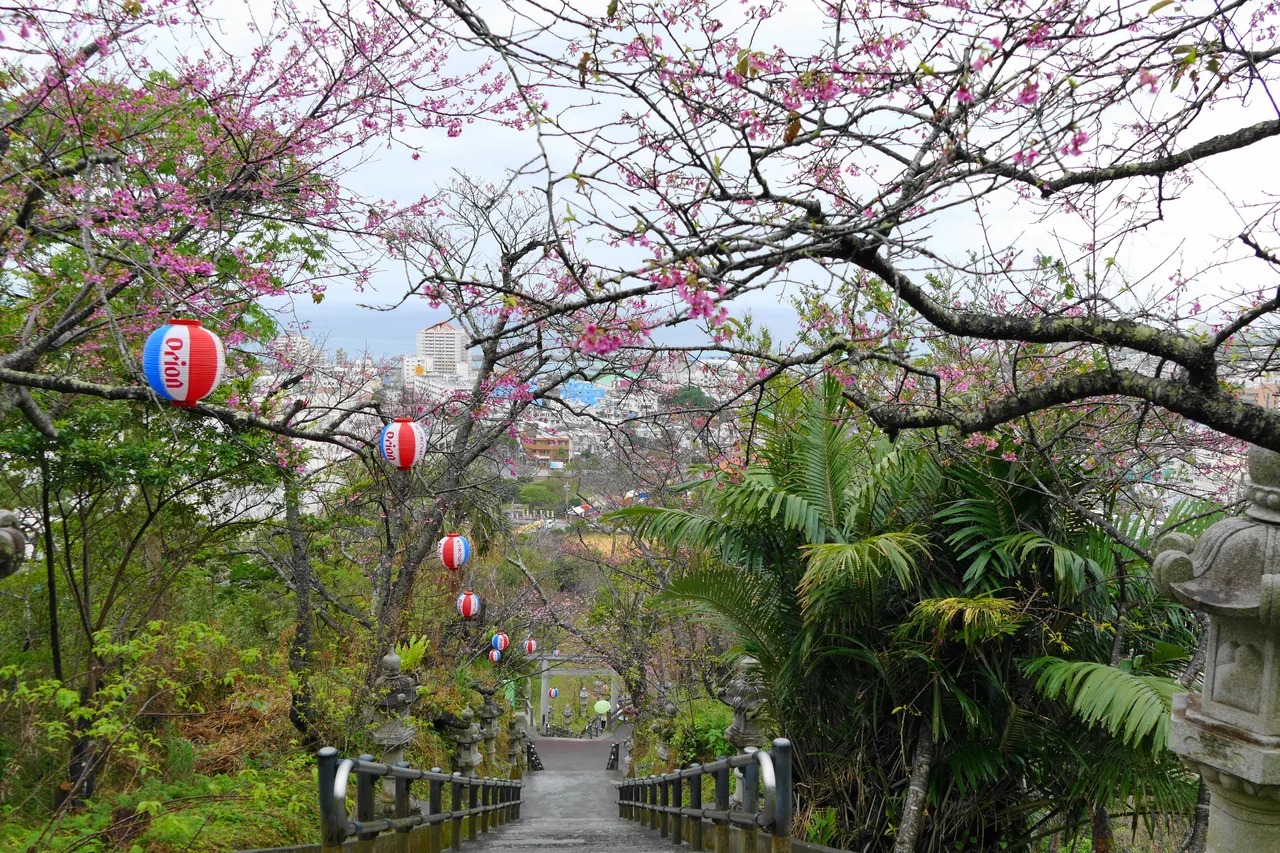
Okinawa’s cherry is hikanzakura, a deep-pink variety. In Naha the trees first flower around 16 January on average and reach full bloom around 4 February, according to the Japan Meteorological Agency, so early February is the peak.
From north to south
On the mainland, cherry blossom moves from south to north as the weather warms. In Okinawa it goes the other way, starting in the north of the main island and moving south.
Cherry festivals in the north
Festival dates change each year. The Motobu Yaedake Cherry Festival on Mt YaedakeMap starts around the third Saturday of January and runs for about 2 weeks, and is extended when the blossom is late. The Nago Cherry Festival takes place over the last weekend of January around Nago Castle ParkMap. The Nakijin Gusuku Cherry Festival at Nakijin CastleMap runs from late January into early February and opens in the evening as well.
Too early for the beach
Almost all beaches are closed for swimming in February. The first ones open from early or mid-March, at beaches on the main island such as Onna, Motobu and Itoman and in the Yaeyama and Miyako islands, and many others open in April, including Naminoue BeachMap in Naha. February in Okinawa is for walking, sightseeing and the blossom, in mild weather.
Getting around
The cherry spots are in the north of the island, and a car is the easiest way to reach them. Renting a car is explained in our Okinawa car rental guide, and the island as a whole in our Okinawa travel guide and Naha guide.
15. How cherry blossom forecasts use February temperatures
For Tokyo, a rule of thumb explained by the weather company Weathernews is that the cherry trees open when the daily average temperatures from 1 February add up to 400°C, or the daily highs add up to 600°C. A warm February brings the blossom forward, and a cold one delays it.
Forecasts are already out in February
The Japan Meteorological Agency does not publish cherry blossom forecasts. Private weather companies do, and their first forecasts appear in January, with some as early as December. By February every company has published its first forecast, and updated versions start to appear in late February.
Book before the forecast settles
Hotels for the cherry blossom season fill up before the forecasts settle. If you want to see the blossom in Tokyo in late March, book your room on the early forecasts, with free cancellation where you can, and adjust later if the dates move.
If you cannot wait for March, the cherry is already out in February at Kawazu and in Okinawa, as described above. Where to go in late March and how to plan around the forecasts is in our cherry blossom guide.
16. Tokyo in February: dry weather and Mt Fuji views
February is Tokyo’s driest month, followed by December and then January. Clear, dry days are common all winter, which makes it a good time for walking around the city and for views from high places.
How often Mt Fuji can be seen
The Tokyo Metropolitan Government checks every morning whether Mt Fuji is visible from its building in Shinjuku. It is seen most often in January, and in February on close to half the days of the month. In summer it is hardly ever visible.
Free views from the Metropolitan Government Building
The observation rooms on the 45th floor of the Tokyo Metropolitan Government BuildingMap are free, and the west side looks towards Mt Fuji. You can enter the South Observatory from 9:30am to 9:30pm, and it is closed on the first and third Tuesday of each month. Other closing days are on the official observatory page.
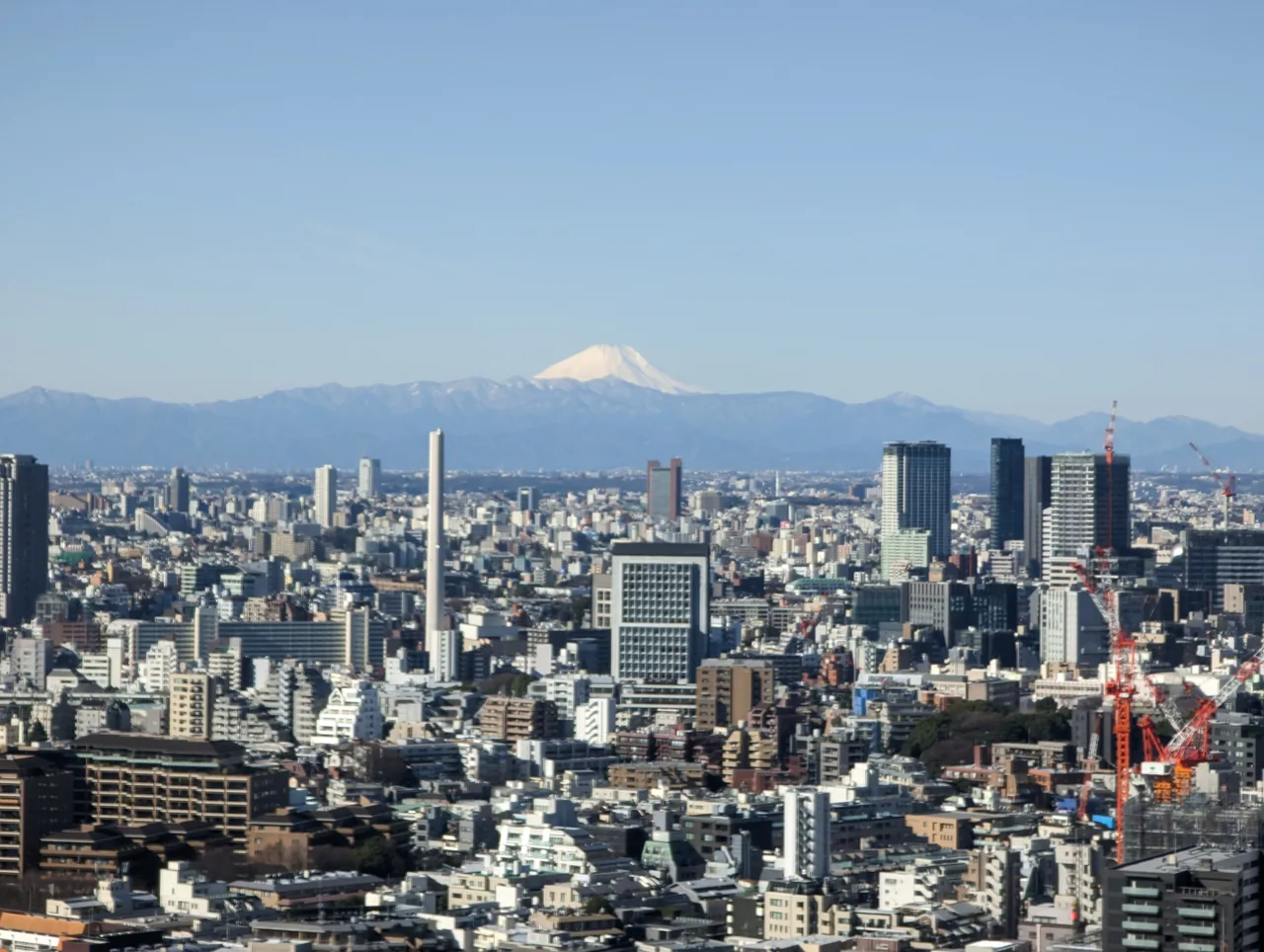
The photo above was taken from Tokyo City View at Roppongi HillsMap, looking past Shibuya. Other decks are compared in our guide to Tokyo observation decks, and if you want to get closer to the mountain, see our Mt Fuji day trip guide.
When it snows
Snow is unusual in Tokyo, and a few centimetres is enough to delay trains and make pavements slippery. If snow is forecast, move outdoor plans to another day. Indoor options are in our Tokyo travel guide.
Check train status on snowy mornings and leave earlier than usual for the airport.
17. Valentine’s Day chocolate fairs
In Japan, 14 February is a day for giving chocolate, and return gifts follow a month later on White Day, 14 March. From mid-January until around 14 February, department stores hold large chocolate fairs.
Isetan Shinjuku and Hankyu Umeda
At Isetan ShinjukuMap, the Salon du Chocolat fills the event hall on the 6th floor of the main building, in several parts from mid-January to mid-February. For about the first hour after opening, entry is limited to holders of the store’s own card who booked a slot by lottery in advance. In Osaka, the Valentine Chocolate Expo at Hankyu Umeda Main StoreMap runs from late January to 14 February, mostly on the 9th floor.
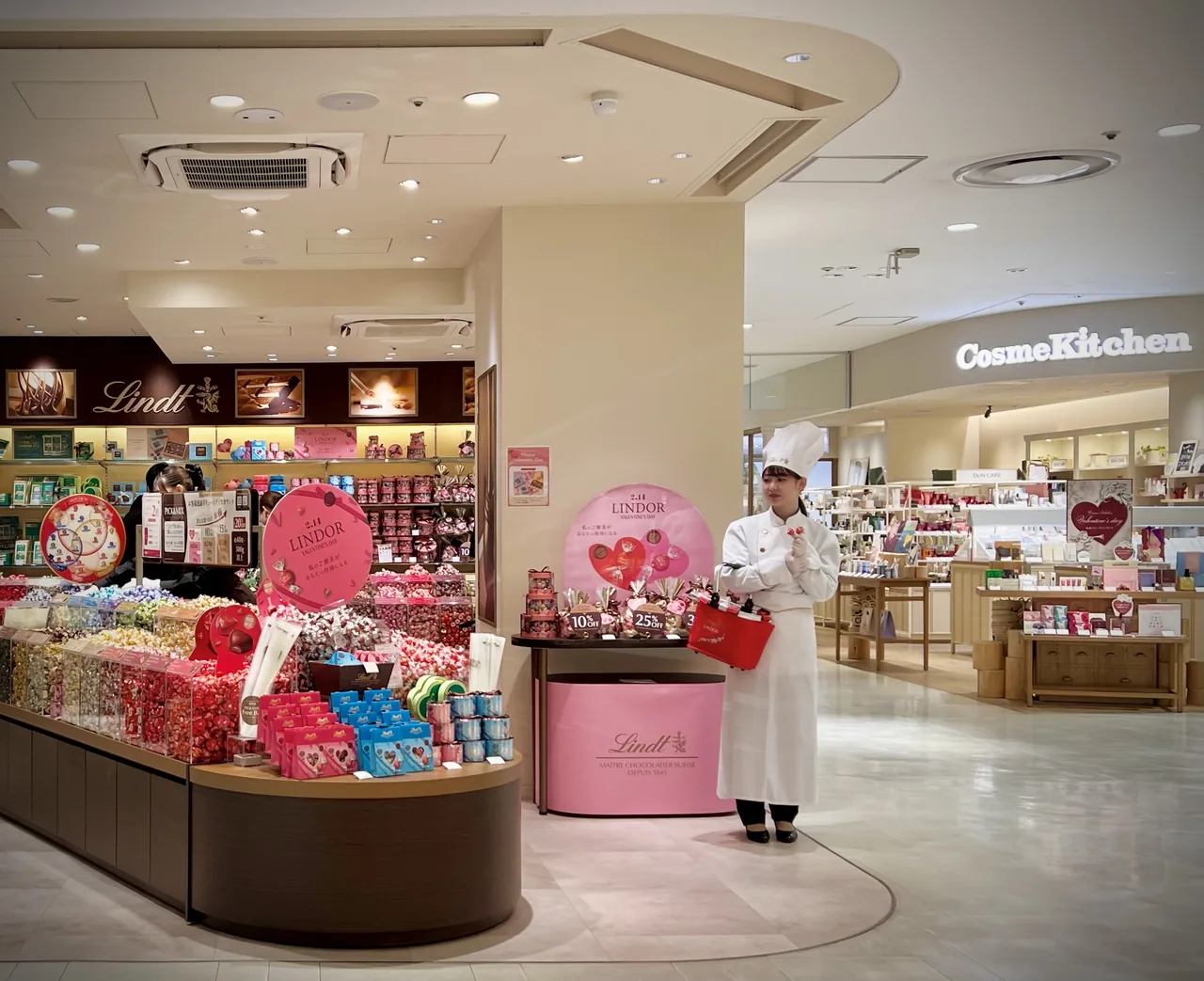
Buying chocolate as gifts
Overseas brands that are not normally sold in Japan appear at these fairs, so it is a good time to buy chocolate to take home. Weekends are crowded, and weekdays are easier.
The fair dates change each year, so check the store’s website before you go. If you are buying a lot, the rules for shopping without consumption tax are in our tax-free shopping guide.
18. 23 February, the Emperor’s Birthday
The Emperor’s Birthday is a public holiday on 23 February. Like National Foundation Day, the date is fixed and the weekday changes. When it falls on a Friday or a Monday, or on a Sunday with the Monday after as a substitute holiday, it makes a 3-day weekend with higher hotel prices across the country. Shops and sights open as usual.
The birthday greeting at the Imperial Palace
On the morning of the 23rd, the public can enter the Imperial PalaceMap grounds for the birthday greeting. In recent years no advance application has been needed, and you simply go on the day. Visitors enter through the Main Gate at Nijubashi, and the Emperor greets the crowd from the palace balcony at around 10:20am, 11am and 11:40am.
Signing the register in the afternoon
From 12:30pm to 3:30pm you can sign the birthday register, entering through Sakashita Gate. When the morning crowd is very large, visitors may be directed to the afternoon signing instead. The greeting can be called off for snow or bad weather.
The Imperial Household Agency asks visitors not to queue the night before or in the early hours of the morning.
The agency announces the arrangements each year, so check its English page before you go. In Hokkaido, the 23rd is also the last day of the Lake Shikotsu Ice Festival.
19. What to eat in February
Male snow crab is in season from 6 November to 20 March, so February sits in the middle of it. In Tottori the crab is sold as Matsuba-gani and in Fukui as Echizen-gani. There is a catch limit, and in years when it fills quickly, fishing can be cut back or end early.
| Food | Season | Where |
|---|---|---|
| Snow crab, male | 6 November to 20 March | Tottori (Matsuba-gani), Fukui (Echizen-gani) |
| Waka-matsuba-gani | Early to mid-February only | Tottori |
| Snow crab, female | Ends in late December | Not sold in February |
| Oysters | October to May, best from December to February | Hiroshima |
| Oyster huts | About October to April in Itoshima, mid-October to early May in Ujina | Fukuoka, Hiroshima |
| Strawberry picking | December to May | Kuno in Shizuoka and elsewhere |
Snow crab in Tottori and Fukui
Crab is landed at harbours such as Tottori PortMap and Echizen fishing portMap. Female snow crab is not sold in February, because the fishing industry ends its season at the end of December. In Tottori, look for waka-matsuba-gani, male crab caught just after it has shed its shell, which is landed only in early to mid-February. Its exact period is decided each October.
Oysters in Hiroshima and Fukuoka
Hiroshima Prefecture produces oysters from October to May and says they are plumpest and tastiest from December to February. Oyster huts (kaki-goya) serving grilled oysters open in ItoshimaMap near Fukuoka from about October to April, with each hut setting its own dates, and at Ujina in Hiroshima from mid-October to early May.
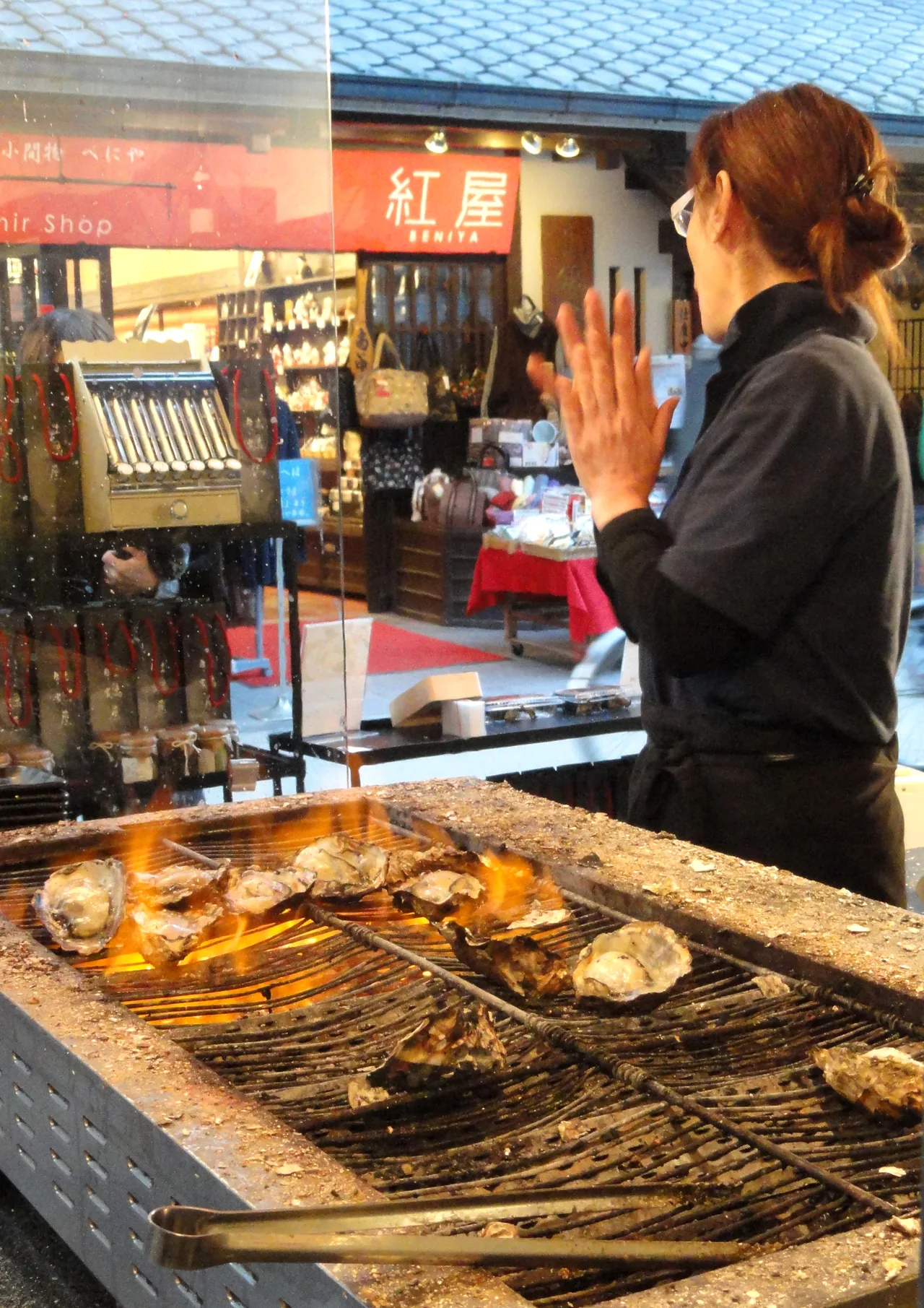
More on eating in those cities is in our Hiroshima guide and our Fukuoka food guide.
Strawberry picking
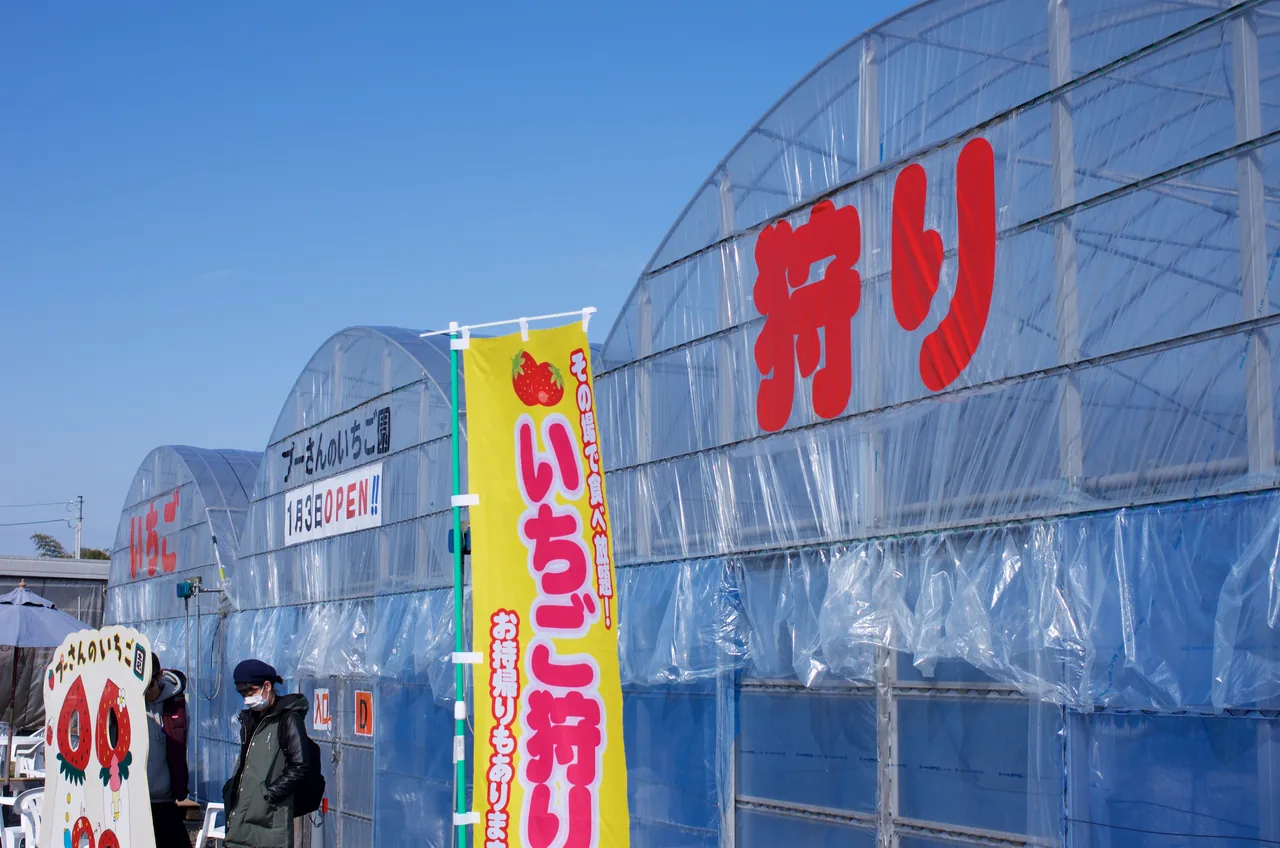
Farms where you pick your own strawberries, such as the Ishigaki strawberry farms at Kuno in ShizuokaMap, generally open from December to May. February is well inside the season, and the largest volume of strawberries reaches the markets in March.
20. Hotel and flight prices through February
During Snow Festival week, which has been 4 to 11 February in recent years, Hokkaido hotel prices are among the highest of the year, and the ones within walking distance of Odori fill first. Flights to Hokkaido also fill quickly that week, more so in years when Lunar New Year lands in the same days.
| When | Hotels |
|---|---|
| Snow Festival week (4 to 11 February in recent years) | Among the most expensive weeks of the year in Hokkaido, central Sapporo fills first |
| Around 11 February | Higher nationwide when the 11th makes a long weekend |
| 12 February to the end of the month | City hotels on the cheaper side |
| Around 23 February | Higher nationwide when the 23rd makes a long weekend |
| All month | Niseko, Hakuba and other ski resorts at high-season prices |
| Late March | Cherry blossom season, prices climb steeply |
Holiday weekends
When 11 or 23 February falls on a Friday or a Monday, or on a Sunday with the Monday after as a substitute holiday, the long weekend pushes up hotel prices across the country, not only in Hokkaido.
From the 12th to the end of the month
After the festival, city hotels are on the cheaper side for the rest of February, apart from a holiday weekend around the 23rd. Prices then rise steeply for the cherry blossom season in late March, so the second half of February is a good time for a city trip at lower cost.
Ski resorts and accommodation tax
Ski resorts such as Niseko and Hakuba stay at high-season prices all month, whatever happens in Sapporo. Many cities and prefectures also add an accommodation tax per night on top of the room rate, and each sets its own. In Sapporo, where most festival visitors stay, the Hokkaido tax and the city tax are charged together: 300 yen per person per night for rooms under 20,000 yen, 400 yen from 20,000 to under 50,000 yen, and 1,000 yen from 50,000 yen. Our accommodation tax guide explains how it works.
21. What to pack for February
What you pack depends on where you go. Tokyo, Osaka, Fukuoka and other big cities need ordinary winter clothes. Hokkaido and Tohoku need proper cold-weather clothing and boots for snow and ice. Okinawa needs long sleeves and a light jacket.
| Where | What to wear | Also bring |
|---|---|---|
| Tokyo, Osaka, Fukuoka and other big cities | A warm coat, with layers you can take off indoors | Lip balm and hand cream for the dry air |
| Hokkaido and Tohoku | A down coat, hat, gloves, scarf, thermal layers and waterproof boots with deep tread | Slip-on shoe grips, warm socks, heat packs |
| Okinawa | Long sleeves and a light jacket | A warmer layer for windy days and evenings |
Hot indoors, cold outdoors
Trains, shops, restaurants and hotels are well heated, and you go in and out all day. Thin layers that you can take off and carry are easier than one thick sweater under a heavy coat.
Dry air
With little rain in Tokyo and strong heating indoors, the air gets very dry. Lip balm, hand cream and a water bottle help, and any drugstore sells lip balm and hand cream.
Standing still in the cold
Watching the Snow Festival lights in the evening or standing on an icebreaker deck is much colder than walking around. For Hokkaido, bring a hat that covers your ears, gloves you can keep on, warm socks and heat packs.
22. What February cannot offer yet, and who it suits
Apart from early varieties such as Kawazu-zakura, cherry blossom in Tokyo does not open until late March. Okinawa’s beaches open for swimming from early or mid-March at the earliest, and in April in many places.
Mountain routes and Mt Fuji
The Tateyama Kurobe Alpine Route is closed from December to mid-April and runs from 15 April to 30 November (see the official site). The climbing season on Mt Fuji runs from early July to 10 September, with the Yoshida and Subashiri trails opening on 1 July and the Fujinomiya and Gotemba trails on 10 July, and climbers pay a 4,000 yen fee (see the official climbing site).
| Not in February | When it starts |
|---|---|
| Cherry blossom in Tokyo | Late March |
| Swimming at Okinawa’s beaches | Early or mid-March at the earliest, April in many places |
| Tateyama Kurobe Alpine Route | 15 April (open until 30 November) |
| Climbing Mt Fuji | Early July (season ends 10 September) |
Who February suits
| February suits you if… | March is better if… |
|---|---|
| You want the Sapporo Snow Festival, drift ice or the Yokote kamakura | You want the main cherry blossom season in Tokyo, from late March |
| You want deep snow for skiing and winter scenery | You would rather visit Sapporo when the snow is getting thinner |
| You like clear, dry days in Tokyo with a good chance of seeing Mt Fuji | You want to swim in Okinawa, from early or mid-March at the earliest |
| You want plum blossom in Mito or early cherry in Kawazu and Okinawa | You are happy to see the Kairakuen plum in March, as its festival runs into mid or late March |
Put the Snow Festival week, the 11th and the 23rd on your calendar before anything else, then fit the rest of the trip around them.
Who should wait
If the main cherry blossom season in Tokyo is the reason for your trip, wait for late March and book early. For Okinawa beaches, April is the safer choice. February is the month for snow, winter festivals, plum blossom and early cherry blossom in Izu and Okinawa, and for quieter, cheaper cities after the 12th.
To compare every month of the year, see our guide to the best time to visit Japan. The month before is covered in Japan in January, and for planning the whole trip, start with our Japan travel guide.
🎡Things to Do7
🏨Where to Stay2
🚇Getting Around4
🧭Travel Tips15
Japan in February: common questions
It depends on where you are. Sapporo stays around freezing even in the daytime and is well below freezing at night, while Tokyo, Osaka and Fukuoka have cool days and nights a few degrees above freezing. Naha in Okinawa is mild, around 20°C by day. Early February is the coldest part of the year in Sapporo.
Yes, if you want snow, winter festivals, plum blossom or quiet cities. Snow Festival week, which has been 4 to 11 February in recent years, is among the most expensive weeks of the year in Hokkaido, and weekends get busier when 11 or 23 February falls on a Friday, Sunday or Monday and makes a long weekend. From 12 February city hotels are cheaper, and Tokyo is in its driest month of the year.
In recent years it has run from 4 to 11 February, ending on National Foundation Day, but no official rule for these dates has been published. The next festival’s dates are first posted on the official site when each festival ends, and a fuller outline follows in the summer. The sculptures are knocked down on the morning after the last day, so arriving on the 12th is too late.
Book as early as you can. Rooms within walking distance of Odori Park, around Sapporo Station, Odori and Susukino, go first. One or two subway stops further out is easier, and the last trains from the central stations leave at around 12:10am, after the evening lighting ends.
Yes, in a few places. In Okinawa the hikanzakura reaches full bloom around 4 February in Naha on average, and at Kawazu on the Izu Peninsula the early Kawazu-zakura is usually at its best from mid-February to early March. The main cherry blossom season in Tokyo starts in late March.
A well-known place is Kairakuen in Mito, Ibaraki Prefecture. Its plum festival starts around 10 February and runs into mid or late March, and Mito is 1 hour to 1 hour 20 minutes from Tokyo by limited express.
National Foundation Day on 11 February and the Emperor’s Birthday on 23 February. Both dates are fixed, so the weekday changes each year. When either falls on a Friday or a Monday it makes a 3-day weekend with higher prices. On a Sunday, the Monday after becomes a substitute holiday, so that is a 3-day weekend too, but a Saturday brings no extra day off. Setsubun, usually on 3 February, is not a holiday.
February is the main month for it, and it is never guaranteed. The Aurora in Abashiri sails from 20 January to 31 March and has the best chance of meeting ice from mid-February to early March. The Garinko in Monbetsu sails daily from mid-January. When there is no ice nearby, the Aurora runs as a sea cruise, so check the day’s sailing report.
Yes. In Sapporo the snow is deepest in February, and resorts such as Niseko and Hakuba stay in peak season all month, so book lodging early. Prices at ski resorts do not drop after the Snow Festival the way city hotels do.
In some years. Lunar New Year moves between late January and mid-February. When it falls in early February, the New Year holidays in Taiwan, Hong Kong, mainland China and Korea land in the same week as the Sapporo Snow Festival, and Hokkaido flights and hotels fill faster.
In recent years, no. You go on the morning of 23 February and enter the Imperial Palace through the Main Gate at Nijubashi. The Imperial Household Agency announces the arrangements each year and asks people not to queue overnight.
Almost all beaches are closed for swimming in February. The first ones open from early or mid-March, at beaches on the main island such as Onna, Motobu and Itoman and in the Yaeyama and Miyako islands, and many others, including Naminoue Beach in Naha, open in April.
For Tokyo, Osaka and Fukuoka, a warm coat and layers you can take off indoors. For Hokkaido and Tohoku, a down coat, hat, gloves, thermal layers and boots with good grip on ice. For Okinawa, long sleeves and a light jacket.