Japan Onsen and Ryokan: Tattoo Rules, Costs, Etiquette Tips
Communal nude bathing, tattoo policy and what a night at a ryokan actually costs, set out for a first visit. Most of the rules you need are posted on the changing room wall.
| Tattoos | No law bans them, but 56% of the 581 facilities that answered a 2015 government survey said they refuse entry. |
|---|---|
| Rate unit | Ryokan prices are per person with two meals, so two of you pay roughly double the figure advertised. |
| Bathing tax | Collected at the property rather than through your booking, and set locally from 50 yen for a day visit to 500 yen a night at the top of Beppu’s scale. |
| Day visit | You can bathe without staying the night for one entry fee, under 1,000 yen at most facilities. |
| Wall notice | Four posted items cover dilution, heating, recirculation and disinfection, and a kakenagashi sign is not one of them. |
1. What a communal bath actually involves
2. Tattoos are a venue decision, not a legal one
3. A bath for the afternoon, or a night in an inn
4. What counts as an onsen, and the notice on the wall
5. The ten water types, and what you can notice
6. Six kinds of place, and what each one is for
7. What a one-night two-meal rate really covers
8. How a night at a ryokan is shaped
9. Private baths and rooms with their own water
10. Bath-hopping, and the passes that make it cheap
11. Kinosaki has six public baths, not seven
12. Choosing a town from Tokyo or Osaka
13. Kyushu, Tohoku and Hokkaido
14. The same water, four different seasons
15. What to bring, and what is already in the room
16. Families, children and a few notes for women
17. The mistakes that cost first-timers the most
1. What a communal bath actually involves
You bathe naked, with other people of the same sex, and swimwear is not allowed in the water. That single fact is the whole barrier for most visitors. Everything else about an onsen is easier than it is usually made to sound.
Baths are separated by sex. A short curtain hangs over each doorway, and the character on it is the only reliable marker. 男 is men and 女 is women. Colour is a hint and nothing more, and many inns switch the two baths between evening and morning, so read the curtain every time.
Inside is the changing room, 脱衣所 (datsuijo), with open baskets or coin lockers. You take everything off there. You carry in one small towel and nothing else.
The small towel does two jobs. It covers you on the walk across the room, and it is what you wash with. It never goes into the water. Most bathers fold it and rest it on their head or on the stone edge of the bath.
Before you get into the water you sit on a low stool at a tap and wash. Soap, shampoo, rinse, all of it sitting down, all of it finished before you move. The bath is not for cleaning. Everyone in it has already washed, which is why the water stays clear.
Then you get in slowly and sit still. The water is hotter than a bath at home and there is no target time. Get out when you have had enough, cool off at the side, go back in if you want to.
As for being looked at, you will not be. Communal bathing is an ordinary domestic routine here, and the one behaviour that draws attention is looking at anybody else. Keep your eyes to yourself and you are invisible.
These are the words you will see on the signs.
| Sign | Reading | What it means |
|---|---|---|
| 男湯 / 女湯 | otoko-yu / onna-yu | Men’s bath / women’s bath |
| 脱衣所 | datsuijo | Changing room |
| 大浴場 | daiyokujo | The main indoor communal bath |
| 内湯 | uchiyu | Indoor bath, inside the building |
| 露天風呂 | rotenburo | Outdoor bath |
| 貸切風呂 | kashikiri-buro | Private bath booked for your party alone |
| 外湯 | sotoyu | Public bath shared by a whole town |
Towel handling, hair, how much noise is acceptable and what to do with the stool when you finish are all worth reading once before you go. They sit in the piece on the etiquette that applies inside the bath room.
2. Tattoos are a venue decision, not a legal one
No Japanese law prohibits bathing with a tattoo. Venues that refuse are exercising their own discretion, which is why the answer changes from door to door. In March 2016 the Japan Tourism Agency wrote to four hotel and ryokan associations saying refusal on the sole ground of a tattoo is not appropriate, and the health ministry passed that on to the prefectures two days later. Both were requests without force.
What the counter actually applies is not a size limit but a sticker. If two of the covering stickers the venue sells hide the tattoo completely, most places admit you; if they do not, staff point you at a private bath. One Tokyo bathhouse publishes the specification: 11cm by 20cm, ¥310 each, two per guest.
| Size | Where to go |
|---|---|
| Two stickers cover it | Any venue that sells them will usually work |
| They do not | A town whose baths admit tattoos, or a private bath |
All six public baths at Kinosaki Onsen accept tattoos with nothing covered, because Toyooka City runs them. Beppu’s official city tourism site keeps a tag for tattoo-friendly baths.
Swimsuit zones are the fifth route and there are not many of them. The best known sits in Hakone, and it is covered in the piece on a day trip to Hakone from Tokyo.
3. A bath for the afternoon, or a night in an inn
A single bath costs under 1,000 yen at most places. A night at a ryokan starts around 10,000 yen per person and buys something else entirely. Decide which you want before you start looking at properties, because they are not two versions of the same trip.
The day visit is 日帰り温泉 (higaeri onsen), literally a bath you return from the same day. You pay at a machine or a counter, you bathe, you leave. No booking, no schedule, nothing to arrange.
The overnight version is the ryokan, and the water is only part of what you pay for. Dinner, breakfast, a tatami room, a yukata and the run of the baths from mid-afternoon until checkout all sit inside one per-person figure.
| Day visit | One night at a ryokan | |
|---|---|---|
| Price | 800 to 1,000 yen at most facilities | Around 10,000 yen per person at the low end, 15,000 to 25,000 in the middle |
| Meals | None included. Restaurants are separate | Dinner and breakfast are in the price |
| Booking | Walk in | Book ahead and give an arrival time |
| Time needed | An hour or two | Mid-afternoon to 10:00 the next morning |
| Baths per visit | One | The inn’s baths, plus the town’s if it has public ones |
| Suits | Testing whether communal bathing works for you | The reason people go to an onsen town at all |
If you have never bathed communally, do the day visit first and do it early in the trip. It costs less than lunch, it settles the question in twenty minutes, and if the answer turns out to be no you have not lost a night’s accommodation over it.
There is a middle option that few visitors know about. 素泊まり (sudomari) is a room with no meals, and it usually runs 3,000 to 5,000 yen per person below the same room with dinner and breakfast attached. It suits people who want the tatami and the baths but would rather eat in the town.
A day visit is also the right call when the itinerary is tight. If you have five days and three cities, an onsen night costs you an evening, a morning and a long transfer, while an afternoon bath costs you three hours. The night is better. The afternoon is often the one that actually fits.
Both of the easy onsen day trips out of Tokyo are covered separately, including the run up to Nikko and Yumoto.
4. What counts as an onsen, and the notice on the wall
Onsen is a legal category, not a marketing word. The Onsen Act of 1948 sets two ways for water to qualify, and a bath only has to meet one of them.
| Route | Requirement |
|---|---|
| Temperature | 25°C or more where it comes out of the ground |
| Composition | At least one of the 19 substances listed in article 2 of the act, present above the stated level |
That second route is why a spring at 18°C can still be a legal onsen. The water qualifies on what is dissolved in it, and the facility heats it before it reaches the bath. Heating is not a dodge, it is the only way to use that water at all.
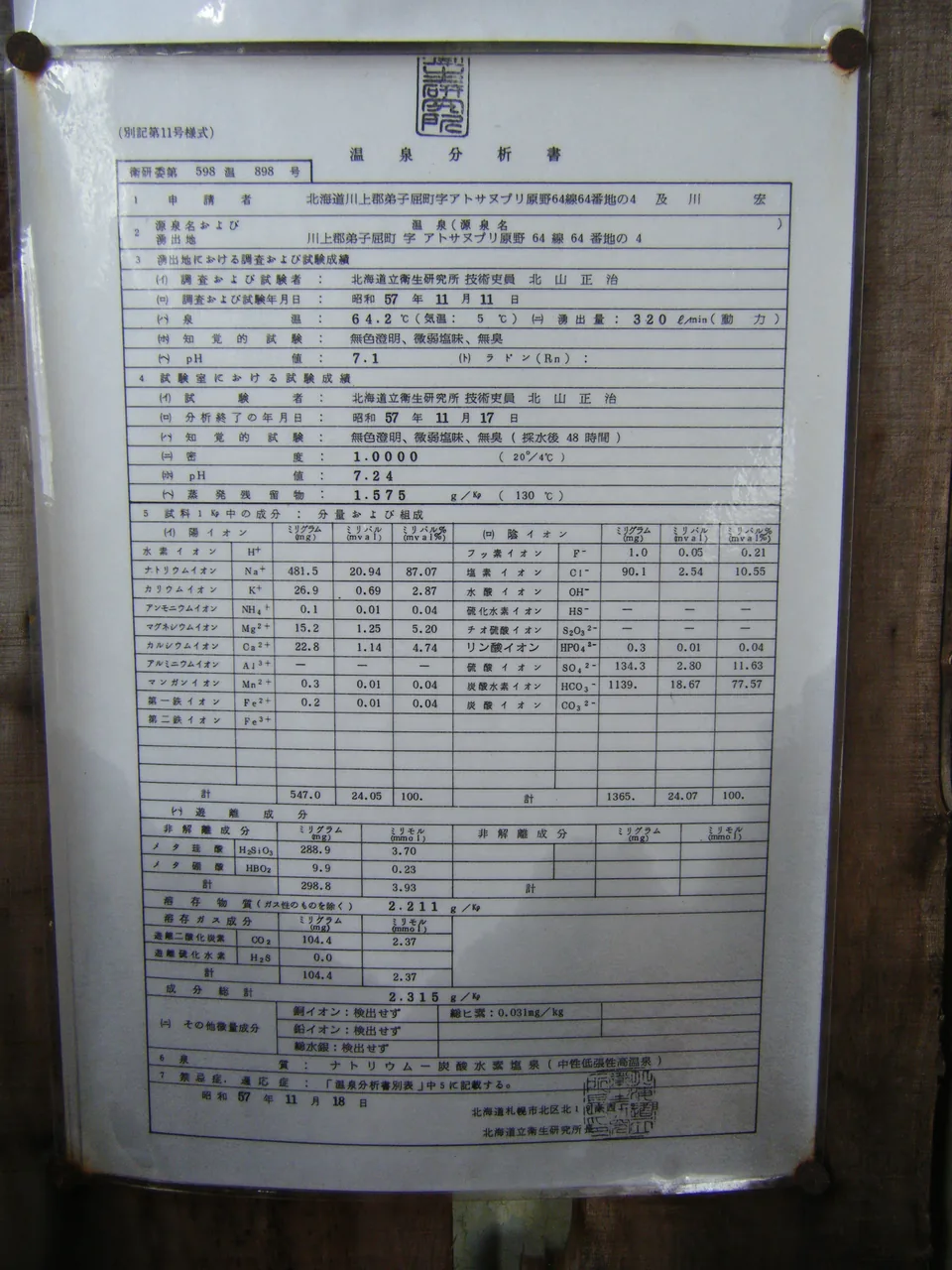
What the water has been through is posted where you undress. The analysis certificate, 温泉分析書, has been required for a long time. A revision to the enforcement rules in February 2005 added four more items, and those four are the ones worth ten seconds of your attention.
| Posted item | Japanese | What it tells you |
|---|---|---|
| Water added | 加水 | The source is too hot or yields too little, so plain water was mixed in |
| Heated | 加温 | The source arrives below bathing temperature |
| Recirculated and filtered | 循環装置 | The same water is cleaned and used again rather than run to waste |
| Additive or disinfectant | 入浴剤・消毒 | Something has been put in the water, chlorine being the usual one |
The notice hangs on the changing room wall or at the entrance to the bath. Each of the four is marked as done or not done. Once you know where to look it is a five second read, and it is the only honest description of the water you will get.
Now the part that catches people out. かけ流し (kakenagashi) describes water that passes through the bath once and drains away, and a 源泉かけ流し sign claims it does that straight from the source with nothing done to it.
Kakenagashi is not one of the four posted items and it is not defined in the act. The Japan Spa Association reserves the term for water used with no dilution, no heating, no recirculation and no filtration. Because nothing compels a facility to use the phrase that way, the sign at the entrance and the notice on the wall can tell you two different things.
None of this makes recirculated water bad. A bath heating a 20°C source is doing the only thing that can be done with it, and a bath diluting a scalding source is doing you a favour. Reading the notice is about knowing what you are sitting in, not about awarding marks.
The same certificate names the water type, which is the next thing worth being able to read.
5. The ten water types, and what you can notice
Japan posts ten water types. The list ran to eleven until a revision of the mineral spring analysis guidelines in July 2014. Aluminium springs and copper-iron springs came out of the classification on 1 July that year, which is why older sources still count eleven.
Most of what separates them is chemistry you cannot detect while sitting in it. Some of it you can, and knowing which is which turns the wall notice from a wall of characters into something useful.
| Type | Japanese | What a bather can notice |
|---|---|---|
| Simple spring | 単純温泉 | Under 1,000 mg/kg of dissolved matter and 25°C or more. Mild on the skin, and the most common type in the country |
| Chloride spring | 塩化物泉 | Tastes salty. Leaves a film on the skin after you dry off |
| Bicarbonate spring | 炭酸水素塩泉 | The water feels slippery and the skin feels smooth |
| Sulphate spring | 硫酸塩泉 | No obvious tell. The wall notice is how you know |
| Carbon dioxide spring | 二酸化炭素泉 | Fine bubbles collect on your skin as you sit still. Rare |
| Iron spring | 含鉄泉 | Turns brown to red-brown as it oxidises in the air. Rare |
| Acidic spring | 酸性泉 | Sharp on the skin. Germicidal |
| Iodine spring | 含よう素泉 | No obvious tell |
| Sulphur spring | 硫黄泉 | Smells of boiled eggs, often cloudy white, and it tarnishes silver |
| Radioactive spring | 放射能泉 | Radon water. Nothing to see or smell. Rare |
Three of the ten are grouped together as the rare ones: carbon dioxide, iron and radon springs. If you want to bathe in one of those, it decides which town you go to rather than which inn you book, because there are not many of them.
Arima, an hour from Osaka, is the easiest place to see two waters side by side in a single visit. It runs two separate systems. Kinsen is an iron and chloride water that comes out of the ground clear and turns brown once it meets the air, and ginsen is a carbonated and radon water that stays colourless.
The analysis certificate also lists 適応症, the conditions the water is registered against. That is a posting standard set under national criteria. It records what the water has been classified for. It is not a medical statement and it is not evidence that a bath will treat anything.
Only two of the ten carry a posted caution. Acidic springs and sulphur springs both name people with sensitive skin, and older bathers with dry skin, as the groups to be careful of. Those are the two waters where a shorter first soak is the sensible approach.
For everything else, the water type is a reason to travel rather than a warning. A brown iron bath, a white sulphur bath and a clear simple spring are three different experiences of the same activity, and a town with more than one of them gives you more to do than a town with a single source.
6. Six kinds of place, and what each one is for
The word onsen describes the water. It says nothing about the building. Six formats exist, they cost different amounts and they run on different rules, and picking the wrong format is the most common way an onsen night goes wrong.
| Type | Meals | Bath | Priced by | Suits |
|---|---|---|---|---|
| 旅館 Ryokan | Dinner and breakfast as standard | Large communal bath, private bath often bookable | Per person | The full version, one or two nights |
| Onsen hotel | Buffet or a choice of set menus | Large communal bath | Per person or per room | Families, groups, a later dinner |
| 民宿 Minshuku | Home cooking | Small | Per person | Cheaper nights in small towns |
| 外湯 Sotoyu, the town public bath | None | Shared by the whole town | Per entry | Bath-hopping, and tattooed bathers in Kinosaki |
| 日帰り温泉 Day-use facility | Restaurant on site, paid separately | Large communal bath | Per entry | A bath with no booking |
| Business hotel with a large bath | Breakfast only | Large bath, not always onsen water | Per person | City nights when you still want a soak |
The ryokan is the one that behaves unlike a hotel, and the differences are not cosmetic. The rate is per person, the meals are inside it, dinner happens at an assigned hour and checkout is early. That structure gets its own section further down because it changes how you plan the day.
An onsen hotel is the practical answer when ryokan timing does not fit. A buffet does not need you seated at 17:30, rooms are often priced per room rather than per head, and larger family rooms are far easier to find.
Minshuku are family-run and cheaper, with home cooking rather than a plated kaiseki. The bath is small, which in a small building usually means one party at a time or a switch between men and women through the evening.
Sotoyu are the town’s own baths, open to anybody who pays at the door, and they are the reason a place like Kinosaki works. Guests come out of their inns in yukata and use the town as the bathhouse.
The last row is the trap. Plenty of business hotels in Japanese cities advertise a 大浴場, and a good number of those are heated tap water rather than a legal onsen. Look for the analysis certificate on the changing room wall. If there is not one, it is a large bath and nothing more.
City nights and onsen nights rarely sit in the same building, so it is worth planning them separately. Where to base yourself in Tokyo handles the city half of the trip.
7. What a one-night two-meal rate really covers
Ryokan prices are quoted per person, not per room. Two people at an inn advertising 20,000 yen pay 40,000 yen. This catches out nearly every first-time booker, and it is the most useful single thing to know before you compare anything.
The standard package is 1泊2食, one night and two meals. Dinner, breakfast, the room, the yukata and unlimited use of the baths are all inside the figure you see.
| Band | Per person, one night, dinner and breakfast |
|---|---|
| Budget | Around 10,000 yen, and plans below that exist |
| Mid-range | 15,000 to 25,000 yen |
| High end | 50,000 yen and upwards |
| Room only | 3,000 to 5,000 yen less per person than the same room with two meals |
That last row is 素泊まり (sudomari) on a booking page. It is the cheapest way into a tatami room, and it makes sense in a town with restaurants worth walking to.
Prices move a long way with the calendar. Golden Week, the Obon period and the New Year are the three peaks, and the same inn on an off-season weekday can put you in a better class of room for the same money.
Then there is a charge that will not be on your booking confirmation.
入湯税, the bathing tax, is a municipal tax levied under the Local Tax Act. The standard rate written into the act is 150 yen per person per day, and most towns sit on it. What you are actually charged is set by each municipality’s own ordinance, and it varies more than the standard rate suggests.
| Municipality | Overnight | Day visit | Note |
|---|---|---|---|
| Hakone | 150 yen | 50 yen | |
| Izu City | 150 yen when the room and meals come to 5,000 yen or more, 100 yen from 1,000 to 4,999 yen | The same brackets | Scaled to what you pay |
| Noboribetsu | 300 yen | 50 yen | Raised from 150 yen on 1 April 2020 |
| Niseko | 150 yen | 100 yen | 70 yen a day from the seventh night |
| Kutchan | 150 yen | 70 yen | 70 yen from the seventh night |
| Kusatsu | 150 yen | ||
| Beppu | Bracketed, below | 50 yen at the lowest bracket |
Three patterns run through that table. A day visit is taxed less than a night, a long stay is taxed less per day than a short one, and several towns scale the charge to what you paid for the room.
Beppu takes the scaling furthest. The bracket is set on the room and meal charge excluding consumption tax, and every figure halves once you pass six nights.
| Room and meals, per person | Tax | From the seventh night |
|---|---|---|
| 1,500 to 2,000 yen | 50 yen | 25 yen |
| 2,001 to 4,500 yen | 100 yen | 50 yen |
| 4,501 to 6,000 yen | 150 yen | 75 yen |
| 6,001 to 50,000 yen | 250 yen | 125 yen |
| 50,001 yen and above | 500 yen | 250 yen |
A mid-range ryokan night in Beppu therefore carries 250 yen rather than the 150 yen you might have assumed, and a cheap minshuku bed carries 50 yen. Neither figure will change your budget, but neither will be on the confirmation you printed.
There are exemptions, and one of them matters to families. Across Hakone, Noboribetsu and Beppu the confirmed list covers children under 12, anyone using a bathhouse that operates under the Public Bath House Law, school groups on a compulsory-education trip, and long-term convalescents in some municipalities.
The tax is normally excluded from the quoted rate and collected at the property. The revenue is earmarked for environmental sanitation, protection and management of the spring sources, tourist facilities, fire services and tourism promotion, which is why a town with a lot of bathers can afford to maintain them.
Carry cash for it, and carry coins. Sums of 50 or 250 yen handed over at a front desk are among the last places in Japan where a card is awkward, and it is worth reading how cash and cards actually work in Japan before you travel.
One thing you never pay is a tip. There is no tipping in Japan, at a ryokan or anywhere else, and money left in a room will be brought back to you before you reach the car park.
8. How a night at a ryokan is shaped
A ryokan runs to a timetable, and the timetable is not open to negotiation. The whole structure follows from one fact: your dinner is already paid for and already planned.
| Time | What happens |
|---|---|
| 15:00 to 16:00 | Check-in usually opens. Arriving earlier means a room you cannot get into yet |
| Late afternoon | The first bath, before everyone changes for dinner |
| An assigned hour | Dinner. Two seatings are common, for example 17:30 and 19:30 |
| After dinner | The second bath, and the one most people remember |
| An assigned window | Breakfast, also at a set time rather than whenever you appear |
| 10:00 | Checkout, one to two hours earlier than a city hotel |
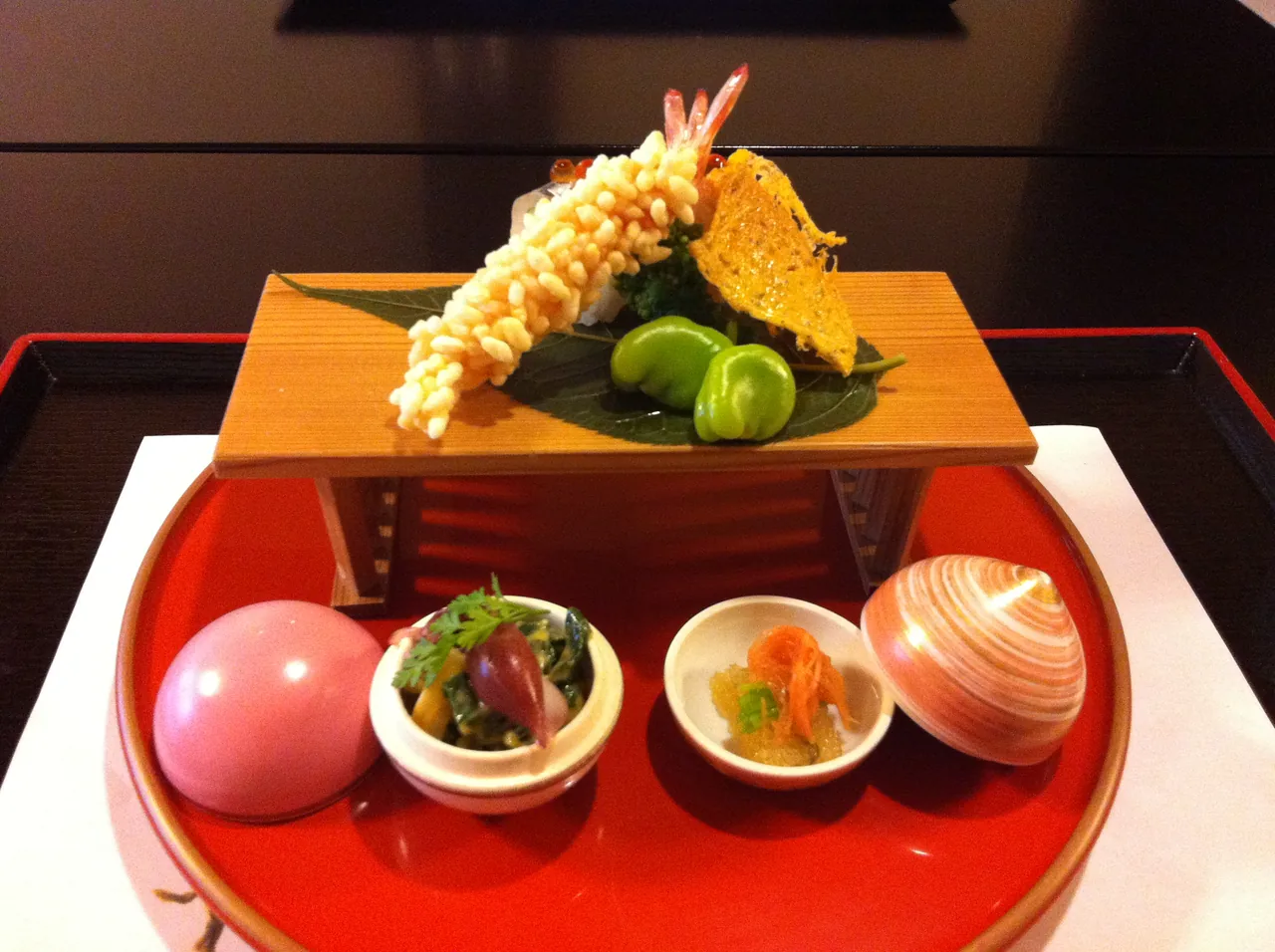
Dinner is early and fixed for reasons that are entirely practical. The rate includes the meal, a kaiseki dinner is plated and delivered course by course, the 仲居 (nakai) assigned to your room is working a shift, and a small kitchen cannot serve every guest at once.
The consequence is the part travellers get wrong. Arrive after the last seating and some inns cannot feed you at all, and the meal you missed is inside a price you have already paid.
Checkout at 10:00 is the other adjustment. Against the 11:00 or noon of a city hotel you lose the slow morning, so put the last bath before breakfast rather than after it. Trains out of onsen towns are also thinner than trains out of cities, which compounds a late start.
The practical version of all this is short. A ryokan is a destination, not a bed between two sightseeing days. Arrive by mid-afternoon, treat the evening as the point of the trip, and do not book anything for the next morning before 11:00.
9. Private baths and rooms with their own water
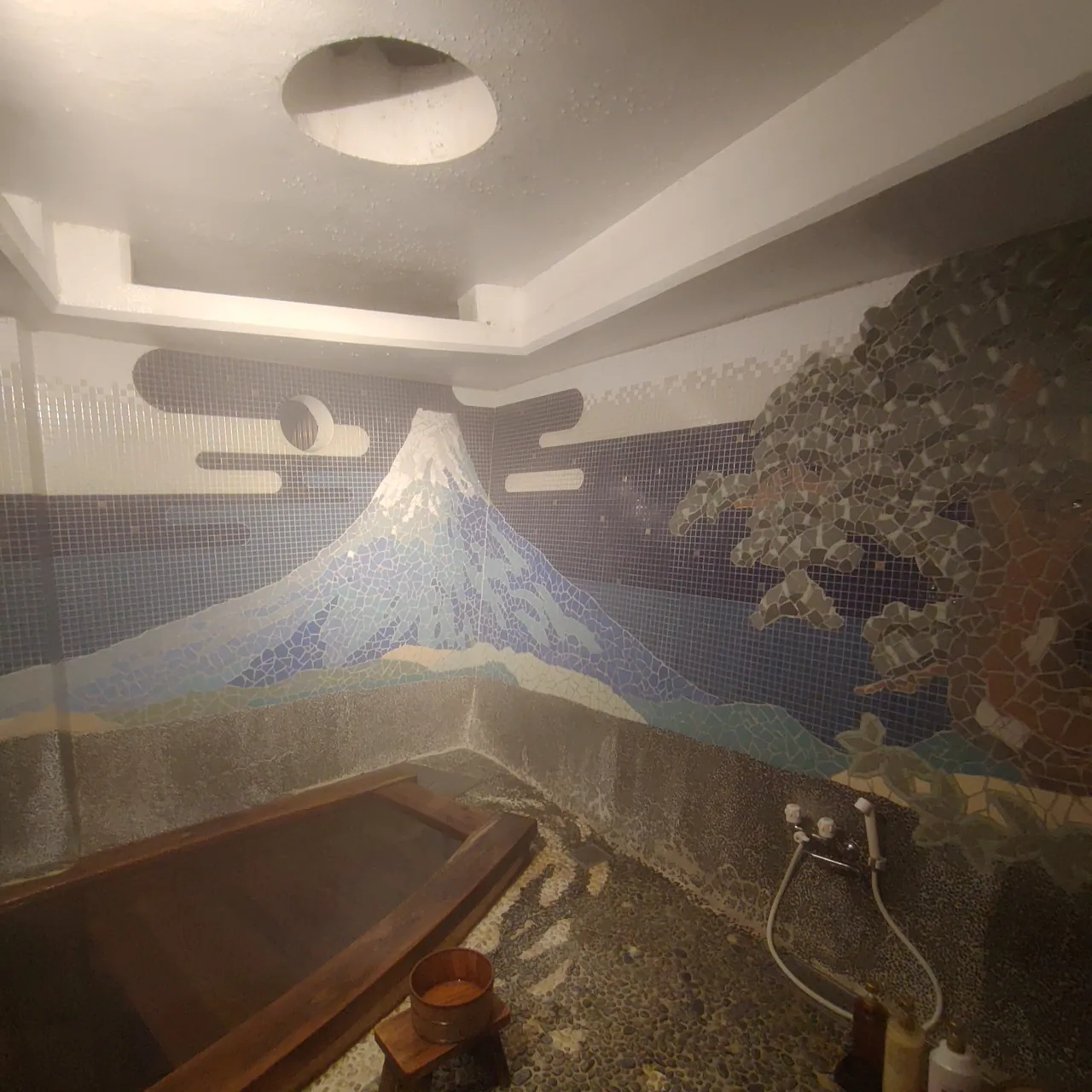
A 貸切風呂 (kashikiri-buro) is a bath you book by the clock and use with nobody else in it. It covers tattoos, nerves, mixed couples and small children in one booking, and it is the most useful few thousand yen in Japanese travel.
The slot is short and the price is for the block, not per head. The figures below are prices charged at individual facilities, which is how this is sold. There is no national rate.
| Block | Where | Price |
|---|---|---|
| 45 minutes | A facility in Chiba | 2,000 to 4,620 yen |
| 45 minutes | A facility in Nagano | 2,200 yen |
| 45 minutes | A facility in Shizuoka | 3,850 yen |
| 50 minutes | A facility in Kanto | 2,200 to 3,300 yen |
| 45 minutes | A facility in Gotemba | 2,800 yen, raised to 3,300 yen on 1 May 2026 |
| Extension, 30 minutes | Varies | Half the hourly rate at some places |
At many facilities that block is charged on top of the ordinary bathing fee, which runs 800 to 1,000 yen for an adult. Read the price page line by line, because the two charges are usually listed separately and the total is not the number in the headline.
Whether you can reserve ahead depends entirely on the property. Some take the booking when you reserve the room, others allocate slots at check-in on the day and the good ones go in the first hour. If the private bath is the reason you chose the place, raise it while you are booking rather than when you arrive.
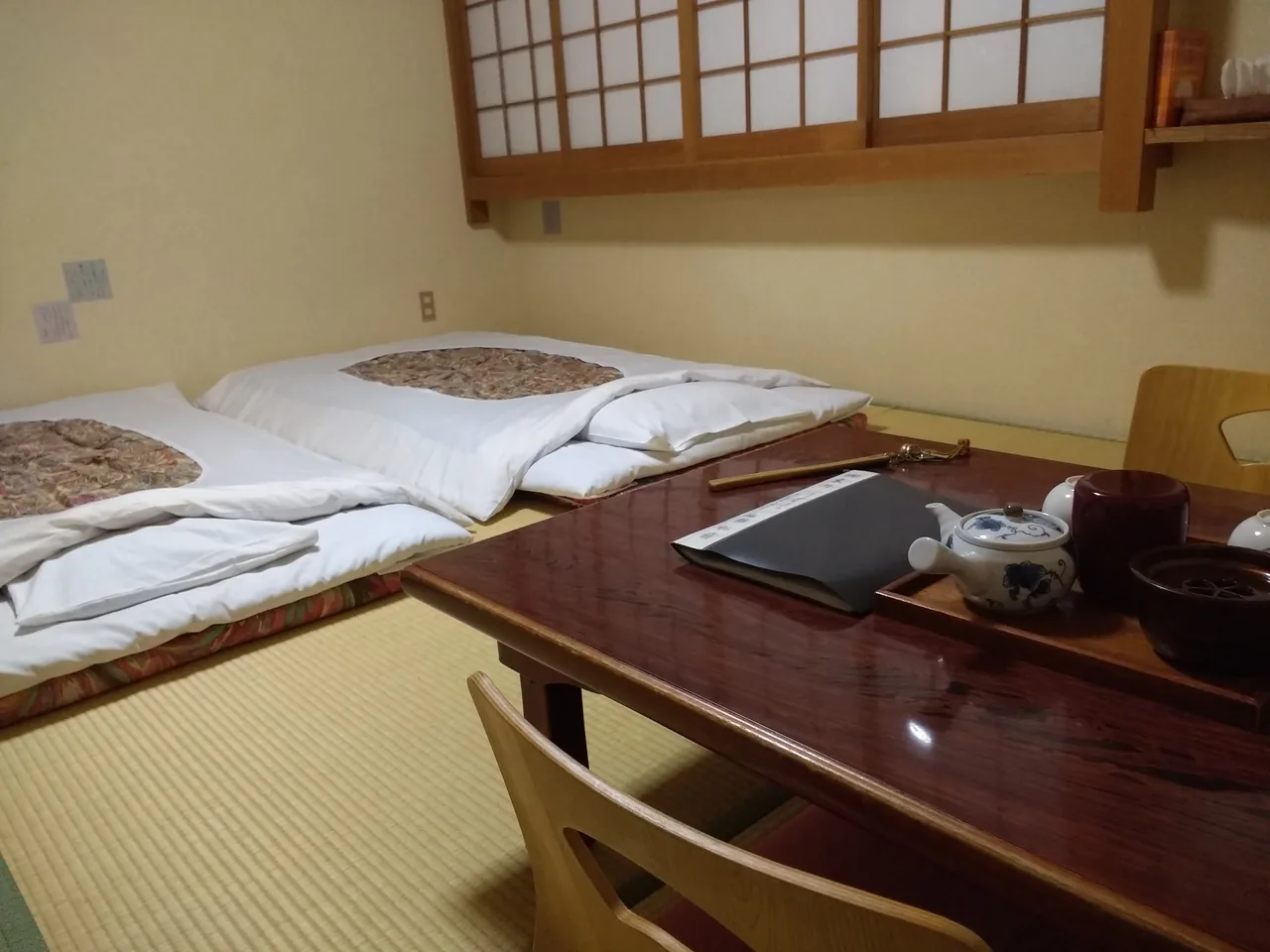
The other route is a room with its own outdoor bath, a 露天風呂付き客室. You pay for it in the room rate rather than by the block, and you can use it at two in the morning if that is when you want it.
| Room with its own outdoor bath | Per person, one night, two meals |
|---|---|
| Cheapest plans | Under 15,000 yen |
| Common band | 17,600 to 18,700 yen |
| Entry point | A lot of properties start in the 10,000s |
The arithmetic is worth doing rather than assuming. A mid-range room at 15,000 to 25,000 yen plus two private bath sessions lands in much the same place as a room with a bath attached, and the room with the bath has no clock running on it.
One caveat on rooms with their own bath. A private outdoor bath is smaller than a communal one and it will not give you the scale of a large stone rotenburo under an open sky. Plenty of people book both, using the room bath late at night and the big bath in the early morning when it is empty.
10. Bath-hopping, and the passes that make it cheap
湯めぐり (yumeguri) means working through several baths in one town instead of sitting in one all evening. Three towns have built systems around it and each system works differently.
| Town | System | How it works |
|---|---|---|
| Kinosaki | ゆめぱ, a one-day pass | Unlimited entry to the town’s public baths. Adult 1,500 yen, child 750 yen |
| Beppu | Beppu Hatto Onsen-do | A stamp book called the Spaport. Around 150 baths take part, and 88 stamps earns recognition as an onsen-do meijin |
| Kusatsu | Choina santo meguri tegata | Bathe at three designated baths and you receive a completion certificate |
Kinosaki’s numbers make the decision for you. One public bath is 800 yen for an adult, so a 1,500 yen pass has paid for itself the moment you walk into the second one. If you are staying the night you will use more than two.
Beppu’s system is not a pass and saves you nothing. It is a collecting game across a city with more sources than anywhere else in Japan, and 88 stamps out of roughly 150 participating baths is a project rather than a weekend activity. People move to Beppu and take years over it.
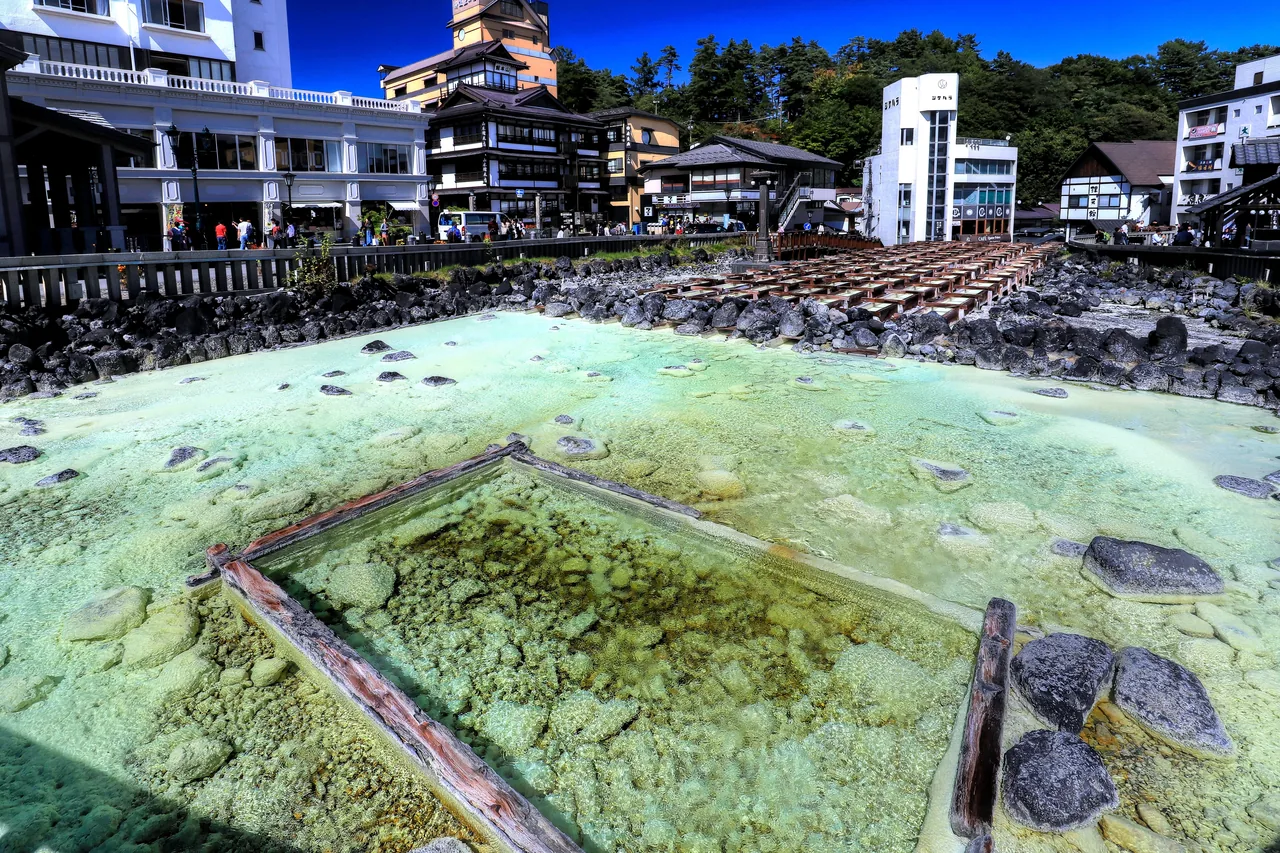
Kusatsu’s tegata covers three specified baths and ends with a certificate. Kusatsu is also where the water is at its most extreme. The source at the Yubatake measures pH 2.1, and the town has the largest naturally welling output in the country at more than 32,300 litres a minute.
Bath-hopping is the argument for staying in a town built around public baths rather than in one large inn on a hillside. In a sotoyu town the street is part of the evening. Guests walk between baths in the yukata their inn handed them, the shops stay open late because of it, and a single night covers three or four different buildings.
The catch is closing days. Public baths close on fixed weekdays and towns stagger them so that something is always open, which is fine until you arrive on the one day your shortlist is shut. Check the day of the week against the individual baths before you build a route.
Opening hours matter as much. Some public baths do not open until mid-afternoon, so a plan built around bathing before breakfast has fewer options than the same plan built around bathing after dinner.
11. Kinosaki has six public baths, not seven
Almost every listing still says seven. There are six. さとの湯 (Sato no Yu) closed at the end of March 2024 and has not reopened since.
The building had aged past the point where repair made sense, and it stopped operating on 31 March 2024. It stands directly in front of JR Kinosaki Onsen station, which is why arriving visitors keep walking up to a closed door on their way into town.
The reopening has already slipped about a year from the original plan and is now expected around March 2030, after asbestos was found during demolition. Toyooka City runs the baths, and the other six are open as normal.
Kinosaki OnsenMap| Bath | Hours | Closed | Adult | Child |
|---|---|---|---|---|
| 鴻の湯 Konoyu | 7:00 to 23:00 | Tuesday | 800 yen | 400 yen |
| まんだら湯 Mandara-yu | 15:00 to 23:00 | Wednesday | 800 yen | 400 yen |
| 御所の湯 Gosho-no-yu | 7:00 to 23:00 | Thursday | 800 yen | 400 yen |
| 一の湯 Ichi-no-yu | 7:00 to 23:00 | Wednesday | 800 yen | 400 yen |
| 柳湯 Yanagi-yu | 15:00 to 23:00 | Thursday | 800 yen | 400 yen |
| 地蔵湯 Jizo-yu | 7:00 to 23:00 | Monday | 800 yen | 400 yen |
Two useful things fall out of that table. Mandara-yu and Yanagi-yu do not open until 15:00, so a morning circuit has four baths available rather than six. And on a Wednesday or a Thursday two of the six are closed.
Friday, Saturday and Sunday are the only days when all six run, which is also when the town is at its busiest. Monday costs you Jizo-yu and Tuesday costs you Konoyu, and either is a fair trade for a quieter street and easier rooms.
All six admit tattooed bathers, with no sticker and no conversation at the counter. They are city-run public facilities and that is the whole reason. It makes Kinosaki the most straightforward onsen town in Japan for anyone with visible ink, and the reason it appears repeatedly in this article.
The prices are flat across all six. An adult pays 800 yen and a child 400 yen at every one of them, so the choice between baths is about the building and the water rather than the cost.
12. Choosing a town from Tokyo or Osaka
Japan has 2,839 onsen areas and 27,899 individual sources. You are not looking for the best one. You are looking for one that fits a trip you have already half planned.
The national picture comes from the Environment Ministry’s annual count. It records 27,899 sources, down 21 on the year, spread across 2,839 onsen areas, with the number of lodging facilities back in the 13,000s and 125,414,300 overnight stays logged in a single year.
Popularity is measured every year by Jalan, whose 2026 survey was the twentieth and drew 12,595 responses. It asks three different questions, and the three answers are not the same places.
| Category | First | Second | Third |
|---|---|---|---|
| Would go back to | Kusatsu, Gunma, 2,462 votes | Beppu, Oita, 2,243 votes, up from fifth | Hakone, Kanagawa, 2,131 votes |
| Would most like to visit | Yufuin, Oita | Ginzan, Yamagata | Kusatsu, Gunma |
| Under the radar | Nyuto Onsenkyo, Akita, recommended by 30.2% | Nukabira Gensenkyo, Hokkaido, 27.4% | Shimofuro and Yagen, Aomori, 25.9% |
From Tokyo the two realistic choices are Hakone and Kusatsu, and they are different kinds of trip. Hakone is close enough to do and return in a day, and it has its own article. Kusatsu is four hours out by bus and only makes sense as a night.
Hakone OnsenMap Kusatsu OnsenMap| From | To | How | Time |
|---|---|---|---|
| Shinjuku | Kusatsu Onsen bus terminal | Joshu Yumeguri-go highway bus | About 4 hours |
| Tokyo Station | Kusatsu Onsen | Highway bus | About 4 hours 40 minutes |
| Osaka | Kinosaki Onsen | Konotori limited express | About 2 hours 40 minutes |
| Shin-Osaka | Kinosaki Onsen | Konotori limited express | About 2 hours 45 to 50 minutes |
| Osaka Station | Arima Onsen | Train | About 1 hour |
| Osaka | Arima Onsen | Highway bus | About 1 hour |
Kusatsu earns its first place on the water rather than on the buildings. The largest naturally welling output in Japan at more than 32,300 litres a minute, and a source at the Yubatake that measures pH 2.1, which is as strong as bathing water gets in this country.
From Osaka the geography is kinder. Arima is about an hour by train or by highway bus, close enough for an afternoon and back, and it is the place with the two contrasting waters. Kinosaki is 2 hours 40 minutes on the Konotori limited express at 6,140 yen, and it is the most walkable public-bath town in the country. Dogo Onsen in Matsuyama, on Shikoku, is further: about 3 hours 40 minutes from Shin-Osaka by train with a change at Okayama, or about 50 minutes by air from Itami. Its wooden main building is a national Important Cultural Property that is still open as a public bath, and how its bathing courses differ is in our Matsuyama travel guide.
Arima OnsenMapWhere the onsen night bolts onto a city trip, settle the city first. Choosing a base in Osaka covers that end, and whether a rail pass pays for itself decides whether that 6,140 yen fare is already covered by something in your pocket.
13. Kyushu, Tohoku and Hokkaido
Sources are not spread evenly across Japan. Five prefectures hold a disproportionate share of the national total, and three of the top five sit in Kyushu.
| Prefecture | Sources |
|---|---|
| Oita | 5,094 |
| Kagoshima | 2,735 |
| Hokkaido | 2,249 |
| Shizuoka | 2,185 |
| Kumamoto | 1,339 |
Beppu alone accounts for 2,217 sources and a total output of 83,058 litres a minute, both the highest of any town in Japan. It also posts seven of the ten water types, which is why an afternoon of bath-hopping there is a different experience from an afternoon of bath-hopping anywhere else.
Beppu OnsenMapBeppu is also the easiest large town in the country to bathe in with a tattoo, because the city promotes acceptance rather than tolerating it quietly. Yufuin sits half an hour inland and took first place in Jalan’s list of places people most want to visit. Both are covered in Beppu and Yufuin in detail.
Yufuin OnsenMapReaching Kyushu means Fukuoka in almost every case, whether by air, by shinkansen or by ferry. Fukuoka, the usual way in sets out the base, and Beppu is a straightforward run across the island from there.
Tohoku is where Jalan’s under-the-radar list lives. Nyuto Onsenkyo in Akita took first place there, recommended by 30.2% of the people who had been. It is a cluster of separate inns rather than a town, deep in the mountains, and it is nobody’s first trip to Japan.
Nyuto OnsenkyoMapGinzan in Yamagata came second on the list of places people most want to visit, on the strength of a single snowbound street of wooden inns. Shimofuro and Yagen in Aomori took third in the under-the-radar category at 25.9%.
Hokkaido holds 2,249 sources, third among all prefectures, and Nukabira Gensenkyo was the second most recommended under-the-radar destination at 27.4%. Hokkaido’s onsen towns are further apart than anywhere on Honshu, which makes a car more useful there than it is anywhere else in this article.
Nukabira GensenkyoMapThe trade-off with all of these is time. Every one of them is a long journey from Tokyo or Osaka, and each is worth it on a second trip, or on a first trip built around one region instead of a national circuit. Kagoshima and Kumamoto both hold more sources than most whole countries, and neither appears on a standard two-week itinerary.
If you have one onsen night in a Kyushu trip, Beppu gives you the most water and the fewest questions about tattoos. If you have two, add Yufuin for the contrast, because the two towns are half an hour apart and nothing like each other.
14. The same water, four different seasons
The water is the same temperature all year. What changes is the air above it. That is the entire seasonal argument, and it points in one direction.
Winter is what the outdoor bath was built for. A rotenburo in falling snow works because the gap between the air and the water is at its widest, and it is the image that sells every onsen town in the country.
| Season | What it is like | Watch for |
|---|---|---|
| Winter | The best case for an outdoor bath. Snow towns look the way the photographs promise | The New Year period is one of the three price peaks |
| Spring | Comfortable outdoor soaking at any hour of the day | Golden Week, from late April into early May |
| Summer | The outdoor bath is best after dark. The indoor bath does the daytime work | Obon, the third peak, and the hottest weeks of the year |
| Autumn | Cool air and warm water return. Foliage towns fill up at weekends | Weekends sell out well ahead of weekdays |
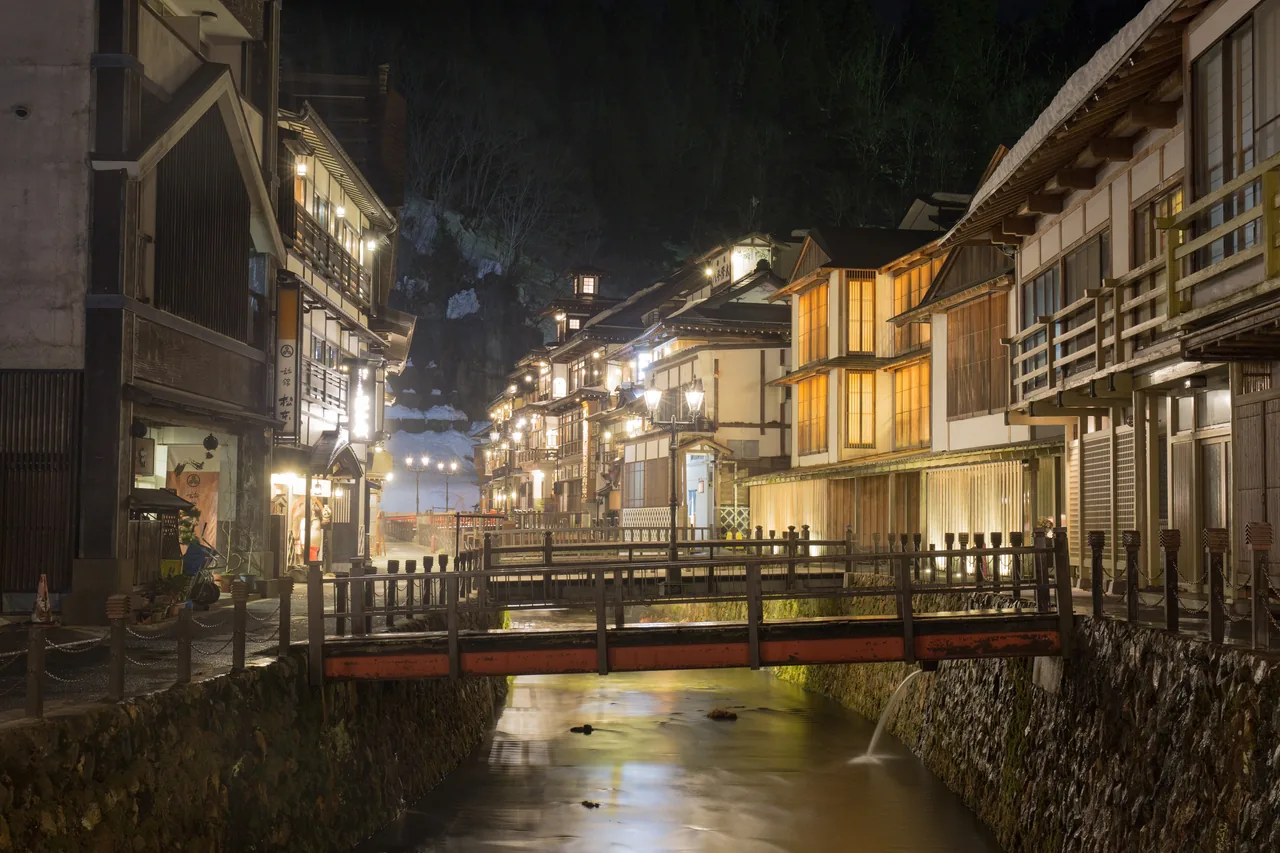
Ginzan in Yamagata is the winter case in a single place. It came second in Jalan’s aspirational ranking almost entirely on how the street looks under snow, and the inns there book out months in advance for exactly that reason.
Ginzan OnsenMapThe three peaks are Golden Week, Obon and the New Year. Rates rise across the board, the good rooms go first, and rooms with their own outdoor bath are the first category to disappear entirely. If your dates fall in one of the three, book months out or accept what is left.
Autumn is the underrated season and the busiest weekends of the year outside the three peaks. Cool evenings make a long soak comfortable in a way that August does not, and foliage towns in the mountains draw domestic weekend traffic that has nothing to do with foreign visitors.
Summer is not written off. Onsen towns in the mountains sit well above the cities in altitude and drop several degrees at night, and an outdoor bath after dark in August is a different proposition from the same bath at two in the afternoon.
What December actually looks like and the wider question of when to come both work through the trade-offs month by month.
One practical note that holds all year. The indoor bath, the uchiyu, is not the consolation prize. In a summer heatwave and in a snowstorm it is the one you will use most, and an inn with nothing but an outdoor bath is worth spotting before you book rather than after.
15. What to bring, and what is already in the room
A ryokan gives you almost everything. A town public bath gives you almost nothing. The gap between those two is the entire packing list.
| Item | At a ryokan | At a public bath or day-use facility |
|---|---|---|
| Yukata | In the room, with a sash | Not provided |
| Large towel | Provided | Usually rented or sold at the counter |
| Small towel for the bath | Provided | Usually rented or sold |
| Soap and shampoo | At the washing stations | Often there, not guaranteed |
| Hair dryer | In the changing room | Usually in the changing room |
| Cash | For the bathing tax at checkout | For entry, and for a coin locker |
The yukata is worn around the inn, to dinner and, in towns built around public baths, out in the street. Left panel over right, sash tied at the waist. If the one in your room does not fit, ask at the desk rather than making do, because they stock sizes.
What is worth carrying in your own bag is short.
- Cash, and coins in particular. The bathing tax is collected at the property rather than through your booking, and coin lockers in changing rooms do not take cards.
- A hair tie if your hair reaches past your shoulders. Hair does not go in the water.
- Cover stickers if you have a tattoo you intend to hide. Drugstores stock them in small and medium sizes.
- A plastic bag for a wet towel if you are moving between baths in one evening.
- Shoes you can take off without sitting down. You will be doing it at the inn, at the room and at every bath.
What to leave behind is shorter still. Silver jewellery comes off before a sulphur bath, anything you would mind getting damp stays in the room, and the phone stays in the locker. Photography is not acceptable in a changing room or a bathing area, and that applies to an empty one as much as a full one.
Valuables need a small amount of thought. Many changing rooms use open baskets rather than lockers, and where there are lockers they usually take a returnable 100 yen coin. Take what matters into the bath area in your hand or leave it in the inn’s room safe.
Day-use facilities sell almost everything you might have forgotten, including towel sets, at a markup that is annoying rather than painful. Public baths in small towns often sell nothing at all beyond a rented towel, so the small bag is worth assembling before you leave the inn.
16. Families, children and a few notes for women
Children bathe at half price in most public baths, and the private bath answers everything else. Kinosaki charges 400 yen for a child against 800 for an adult, and 750 yen against 1,500 for the day pass, which is the usual shape across the country.
Because ryokan rates are per person, the way a child is counted varies from inn to inn and is worth asking about while you book. Plans commonly price children by age band, or by whether the child takes a meal and a futon, and the difference between two ways of counting the same family can be substantial.
Taking a small child into the opposite-sex bath is the question every family asks. There is no single national age limit. The rule is set locally and by the facility, and the answer that counts is the one at the door of the bath you are standing in front of. If your child is anywhere near the line, book a private bath and the question disappears.
The kashikiri bath is the family answer generally. Forty-five minutes, your party alone, nobody watching a toddler’s first reaction to hot water, and no negotiating over which parent takes which child. A room with its own bath does the same job for a whole night rather than for one block.
Children also lose patience with hot water considerably faster than adults do. A two minute soak is a complete visit for a four year old, and nobody in the room will think anything of it.
For women, four things are worth knowing before a first visit.
- 女 marks the women’s bath and 男 marks the men’s. Curtain colour is a convention, not a rule, and many inns swap the two baths between evening and morning, so read the character each time rather than remembering which door you used last night.
- Long hair is tied up and kept clear of the water. A tie is not always provided, so bring one.
- Sulphur water tarnishes silver in a single soak. Rings, chains and earrings stay in the room.
- If you would rather not use the communal bath on a particular day, book the private bath or take a room with its own. Nobody at the desk expects an explanation, and the booking is routine.
Changing rooms are ordinary shared space with families in them. A grandmother helping a small child, a woman drying her hair, somebody’s mother sitting down for a minute. It is a domestic room rather than a spa, and the atmosphere is closer to a swimming pool changing room than to anything more loaded.
Groups travelling together sometimes want to bathe together and cannot, since the general baths are separated by sex. Booking two consecutive private slots, or one longer one, is how mixed groups handle it, and it is worth arranging before arrival on a busy weekend.
17. The mistakes that cost first-timers the most
Nearly every problem on a first onsen trip comes from one assumption, that a ryokan is a hotel with better water. It is not. It is a fixed-price evening with a room attached, and the mistakes follow from there.
| Mistake | What happens | The fix |
|---|---|---|
| Reading the rate as a room price | Two people pay double the figure you compared | Multiply before you shortlist anything |
| Arriving at the inn in the evening | The dinner you already paid for was served without you | Check in by mid-afternoon and give an arrival time when you book |
| Assuming an 11:00 checkout | You are packing at 09:30 with no last bath | Checkout is usually 10:00. Bathe before breakfast |
| Trusting the 源泉かけ流し banner | The wall notice says water added, heated and filtered | Read the four posted items instead of the sign |
| Going to Kinosaki for seven public baths | There are six, and on a Wednesday four are open | Check the closing days against your date |
| Getting into the water first | You have washed in the bath everybody else is sitting in | Sit at a tap, wash completely, rinse, then get in |
| Booking with a visible tattoo and asking at check-in | Turned away at the bath door with nowhere else to go | Ask at the booking stage, or take a room with its own bath |
| Wearing silver into a sulphur bath | It darkens in one soak | Jewellery stays in the room |
| Assuming a business hotel’s large bath is an onsen | Heated tap water | Look for the analysis certificate on the wall |
| Arriving with no cash | The bathing tax and the coin lockers both want it | Carry small notes and a few 100 yen coins |
| Leaving a tip | It is returned, and somebody has to chase you to do it | There is no tipping in Japan |
| Treating the inn as a bed | You paid for an evening and spent it on a train | Build the day around the arrival, not around the departure |
Two of those are worth repeating because they cost real money rather than dignity. The per-person rate turns a comfortable budget into an uncomfortable one at the moment of payment, and a late arrival can write off a dinner worth 5,000 yen of the price you paid.
The tattoo one costs the most of all, in the sense that it can remove the reason you went. Nothing about a town’s reputation protects you from an individual inn’s house rule, and the only reliable time to settle it is before money changes hands.
Everything else on the list is recoverable in the moment. Wash before you get in, keep the towel out of the water, keep your eyes to yourself, and the room will treat you exactly as it treats everybody else in it.
An onsen night usually sits inside a larger itinerary and works best when it is placed rather than squeezed. Planning the rest of the trip covers how the pieces fit around it.