Onsen With Tattoos in Japan: Cover Patch Rules, Prices and Tattoo-Friendly Towns
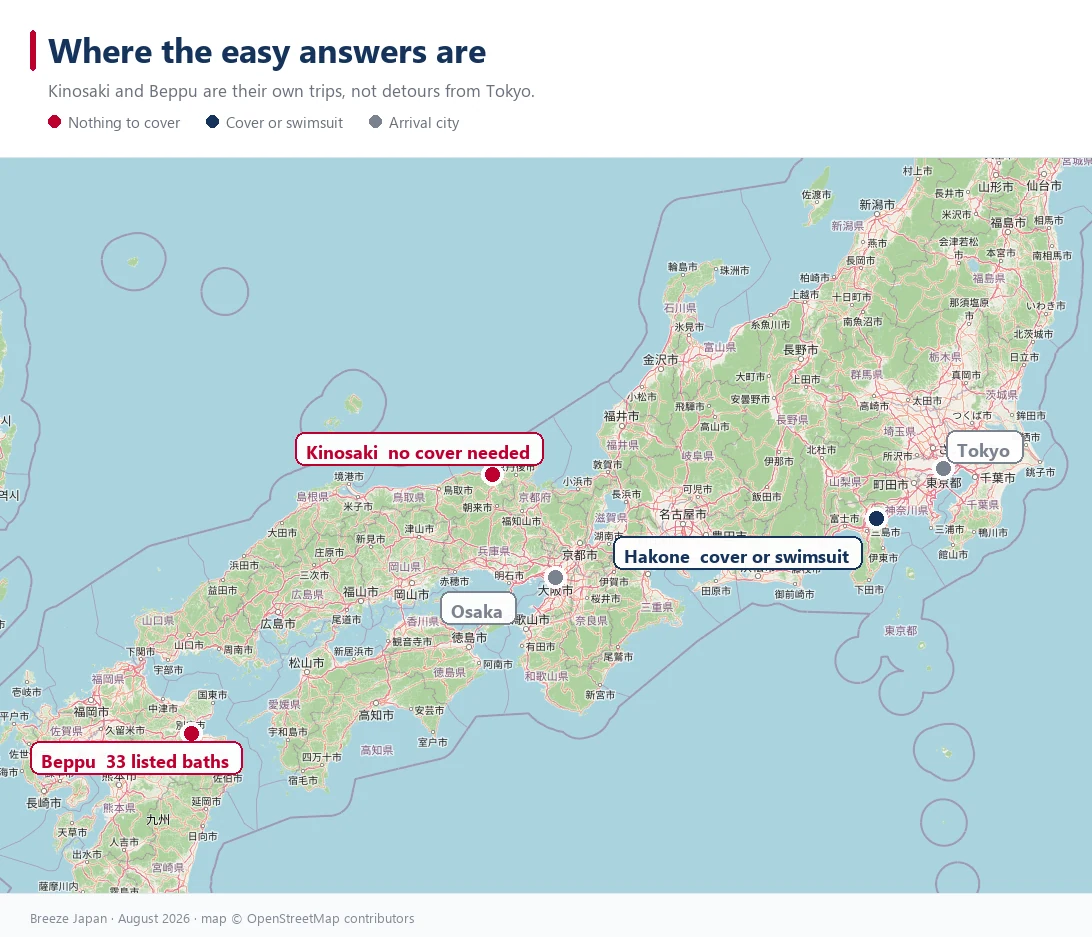
What the front desk measures is not your tattoo but whether two of the covering stickers they sell will hide it. Above that size, the fast move is changing where you go rather than arguing at the counter. One town lets every public bath in, and one city keeps an official list.
| The real test | two facility stickers covering the tattoo completely. |
|---|---|
| Sticker size | 11cm by 20cm, ¥310 each, two maximum at a Tokyo bathhouse. |
| No questions asked | all six public baths at Kinosaki accept tattoos. |
| Official list | Beppu’s city tourism site tags 33 tattoo-friendly baths. |
| Too big to cover | book a private bath or a room with its own. |
1. The counter asks about stickers, not size
2. Eleven by twenty centimetres, ¥310 each
3. Kinosaki: six public baths, all of them fine
4. Beppu publishes a list, and the city maintains it
5. Yunessun runs two rules under one roof
6. If Tokyo is the whole trip
7. Nothing in Japanese law bans it
8. When no sticker will do it
9. Doing several in a day changes the sums
10. Filter the booking page and the question disappears
11. What to ask before you pay
1. The counter asks about stickers, not size
The conversation you will actually have at a Japanese bathhouse is about covering, not about how large your tattoo is. If two of the stickers the facility sells hide it completely, most places let you through. If they do not, you get pointed at a private bath instead.
| Your situation | What happens |
|---|---|
| Two stickers cover it | You bathe normally in most places |
| They do not cover it | Staff direct you to a private bath |
| The venue has a swimsuit zone | A rash guard is enough |
| The town runs its own baths | Nothing to cover, nothing to ask |
So there are two ways to prepare, and which one applies is decided by a measurement you can take at home. Anything a hand can cover is a patch problem. A full back or sleeve is a destination problem.
Measure it before you fly
This is not a decision to make at a counter in Japan. Take a tape to the tattoo and see whether it sits inside 22cm by 20cm, which is the figure the next section explains.
The two patches sit side by side, so a tall narrow piece is easier to cover than one that spreads sideways. Anything running from a shoulder down an arm, or across a back, does not need measuring at all: go straight to the later options.
Several small pieces in different places are the awkward case. Each one may be small while the total exceeds two patches, and that is a judgement the desk has to make on sight rather than one you can settle in advance.
2. Eleven by twenty centimetres, ¥310 each
Only one number in this whole subject is published, and it is the sticker. Maenohara Onsen Saya-no-yudokoro in Itabashi, Tokyo, prints the specification on its own notice page.
| Item | Detail |
|---|---|
| Size | 11cm by 20cm |
| Price | ¥310 per sticker |
| Limit | Two per guest |
| Condition | Entry allowed if the two cover the tattoo completely |
Two of them is roughly 22cm by 20cm. That takes in a shoulder piece or a calf, and it does not take in a back or a full sleeve. Yunessun in Hakone uses the same structure for its nude bath: two designated stickers, full coverage, otherwise a private bath.
Drugstores sell covering patches too, but some venues insist on their own, so ask at the desk even if you brought your own.
Where to stick it, and what the water does
Apply the patch in the changing room. It will not take on wet skin, so put it on before you wash, or dry the area completely if you have already washed.
Press the edges once after applying. Onsen water is hot enough to soften the adhesive and sulphur springs loosen it faster, and a patch that has come away is not something you will notice while you are in the water.
If the venue has a sauna, that is where it will fail first. Buy a spare if a sauna is part of your plan.
3. Kinosaki: six public baths, all of them fine
Kinosaki Onsen in Hyogo is the one town where the question does not come up. The tourism association states publicly that every one of the town’s public baths is tattoo-friendly. The reason is ownership: the baths are run by Toyooka City, and a municipal facility opens its doors on public-service grounds.
| Bath | Hours | Closed |
|---|---|---|
| Kono-no-yu | 07:00 to 23:00 | Tuesday |
| Gosho-no-yu | 07:00 to 23:00 | Thursday |
| Ichi-no-yu | 07:00 to 23:00 | Wednesday |
| Jizo-yu | 07:00 to 23:00 | Monday |
| Mandara-yu | 15:00 to 23:00 | Wednesday |
| Yanagi-yu | 15:00 to 23:00 | Thursday |
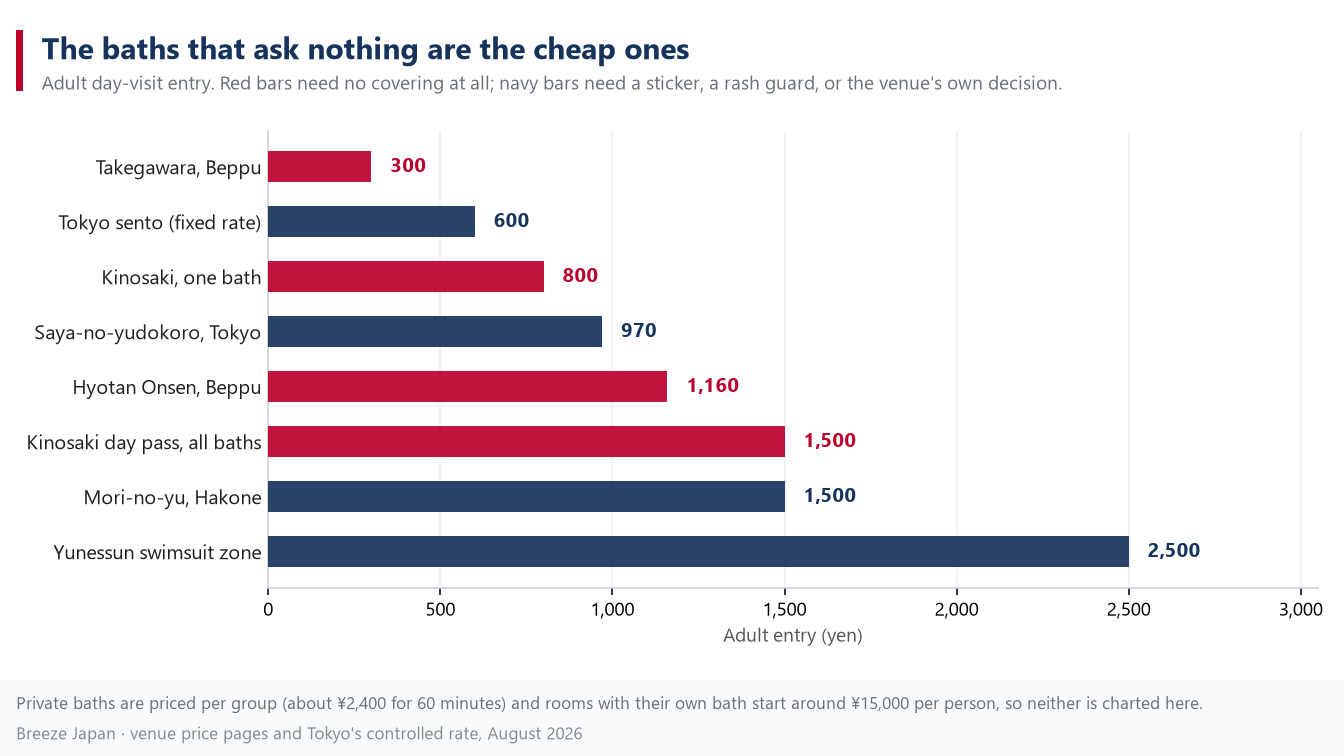
Adult entry is ¥800 at all six and last admission is 30 minutes before closing. If you plan on more than two in a day, the Yumepa day pass is ¥1,500 for adults and ¥750 for children and covers all of them without limit.
Mandara-yu and Yanagi-yu only open at 15:00, which sets the order of a day here: the four morning baths first, those two after. Because the closing days are spread across different weekdays, at least four are open whichever day you arrive.
Stay the night and the baths are included
Check into a Kinosaki ryokan and you are handed a Yumepa, the pass that opens the public baths. You hold it against the reader at each entrance, and it works as often as you like until you check out.
That changes the arithmetic against a day trip. Arriving for the day, the full round costs ¥1,500; staying, it is inside the room rate, and you can split it, two baths in the evening and two more before breakfast.
Many inns lend yukata at no charge, which is how the town is usually walked: yukata, geta, and the sound of them on the street between baths. It also means nothing about you is on display before you are through the door.
What to bring, and what is already there
These are municipal baths, not spa resorts, so the stock is thinner than you might expect. Toyooka City’s own visitor guidance sets it out.
| Item | At the bath |
|---|---|
| Shampoo and conditioner | Provided at most |
| Cleanser and face wash | Not provided. Bring it |
| Towel | Borrowed from your inn, or bought at the counter |
| Skincare | Not provided |
| Hair tie | Not always available |
| Small change | For lockers and machines |
Add cover patches to that list even here. You will not need them in Kinosaki, but the same trip usually includes somewhere that does, and buying them in a small town is not straightforward.
Fifteen stamps around the town
There are stamps at fifteen points. Two of them earn one bathhouse sticker; the full fifteen earn a sheet of seven. You redeem at the tourist centre by the station.
With only six baths, the other nine come from walking, which is the point of it. The town is small enough that this costs no time you were not already spending.
4. Beppu publishes a list, and the city maintains it
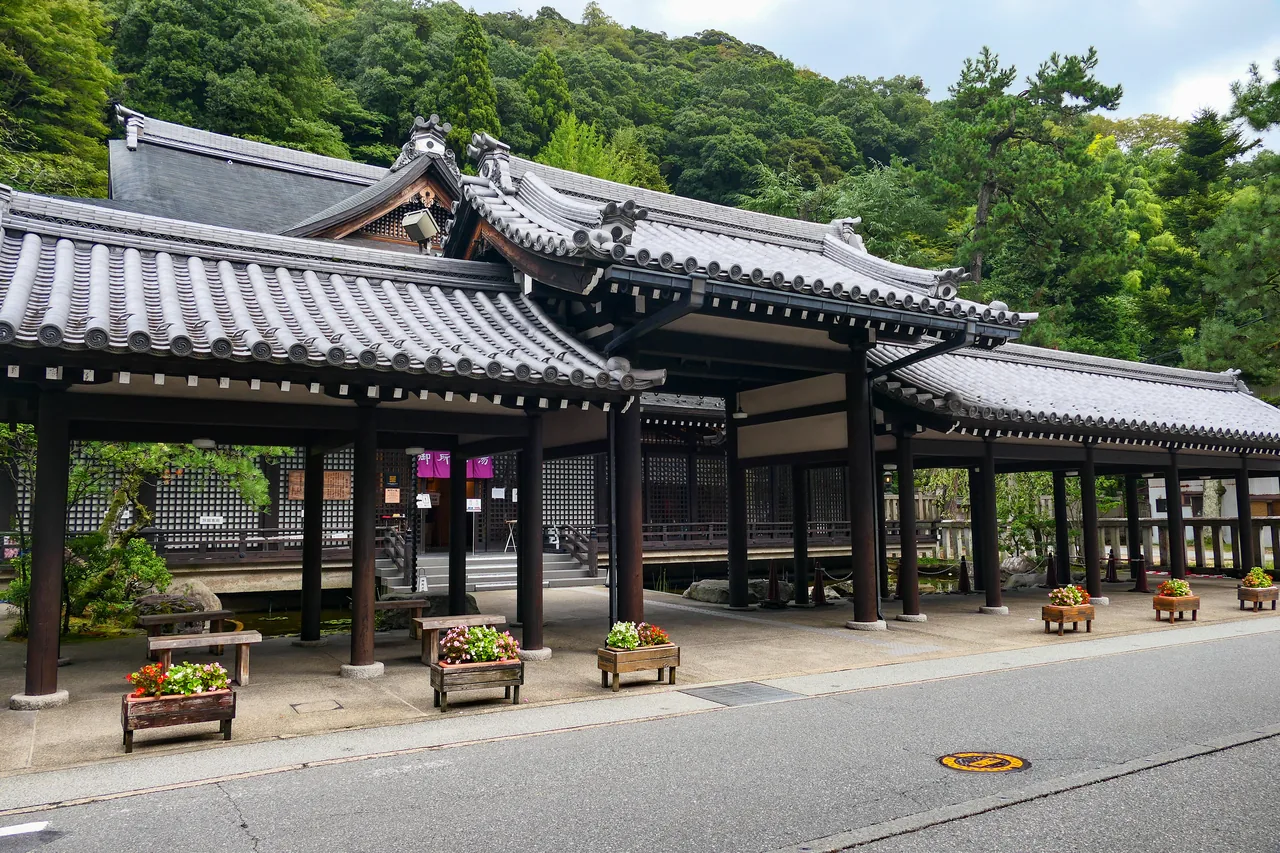
Beppu’s official city tourism site tags tattoo-friendly baths, and there are 33 of them at the moment. That is a municipal list rather than a blogger’s list, which is why the conversation at the door tends to be short.
It started in 2019, when the city published a map of a hundred baths that admit tattooed guests ahead of the Rugby World Cup: fifty with full public baths, forty offering private baths only, and ten foot and hand baths.
| Bath | Adult entry | Note |
|---|---|---|
| Takegawara Onsen | ¥300 | Municipal. Sand bath is ¥1,500 on top |
| Hyotan Onsen | ¥1,160 | Private bath from ¥2,400 for 60 minutes |
| Kannawa Mushi-yu | See the venue | Steam rather than immersion |
| Kaimonji, Furosen, Horita | Municipal rates | Neighbourhood baths |
Takegawara opened in 1879 and is still run by the city. The ordinary bath is ¥300 for adults and ¥100 for children, open 06:30 to 22:30. The sand bath, where you lie down and get buried, is a separate ¥1,500, is open to ages six and up, and takes its last booking at 21:30. It closes on the third Wednesday of the month.
The cheap end of that list is municipal. Taking only the city-run baths that carry the tag:
| Municipal bath | Note |
|---|---|
| Takegawara | The one with the sand bath |
| Kaimonji, Furosen, Horita | Closer to the centre |
| Shibaseki, Hamada, Nageshi | Neighbourhood scale |
| Tanoyu, Hamawaki, Kiyosen | The same again |
| Yuto Pier Hamawaki | Larger building |
Municipal baths run in the low hundreds of yen and several sell neither soap nor towels, so check the city site for the current list and rates before you set out.
Hyotan Onsen is the larger option: ¥1,160 for ages 13 and over, ¥400 for 7 to 12, ¥280 for 4 to 6, free under 4, open from 09:00 until 01:00 and closed no day of the year. Its private baths run ¥2,400 for 60 minutes, ¥3,000 for 75 and ¥3,600 for 90, priced for up to three adults, which removes the size question entirely.
Municipal baths are neighbourhood baths
Beppu’s city baths exist for residents, not visitors, which is why they cost a few hundred yen and why several sell neither soap nor towels. Bring both.
Most have a single pool and run it hot, because nobody has adjusted the temperature for tourists. Test it with a foot before committing, and do not add cold water without asking the room.
The same character explains why tattoos are easy here. The bath is on the city’s list and the people in it are locals on their way home, so nobody makes an occasion of it.
The hells are for looking at, not getting into
Beppu’s best-known attraction is the circuit of jigoku, and it is sightseeing rather than bathing: you walk between vividly coloured springs with your clothes on, so tattoos never enter into it.
That shapes a day here into two halves. The hells during daylight, a municipal bath or Hyotan in the evening, which leaves exactly one moment in the day where the question comes up at all.
The ten foot and hand baths on the city’s list belong to the same category. Nothing comes off, and most of them are free.
Two options that do not involve getting in
Kannawa Mushi-yu heats you with steam instead of water. You lie in a room floored with herbs, wearing a garment they provide, and nobody is submerged in anything.
The sand bath at Takegawara works the same way. You put on a yukata, lie down, and get covered in hot sand, so the window in which anything is visible is short. It is ¥1,500 on top of the ordinary bath and open to ages six and up.
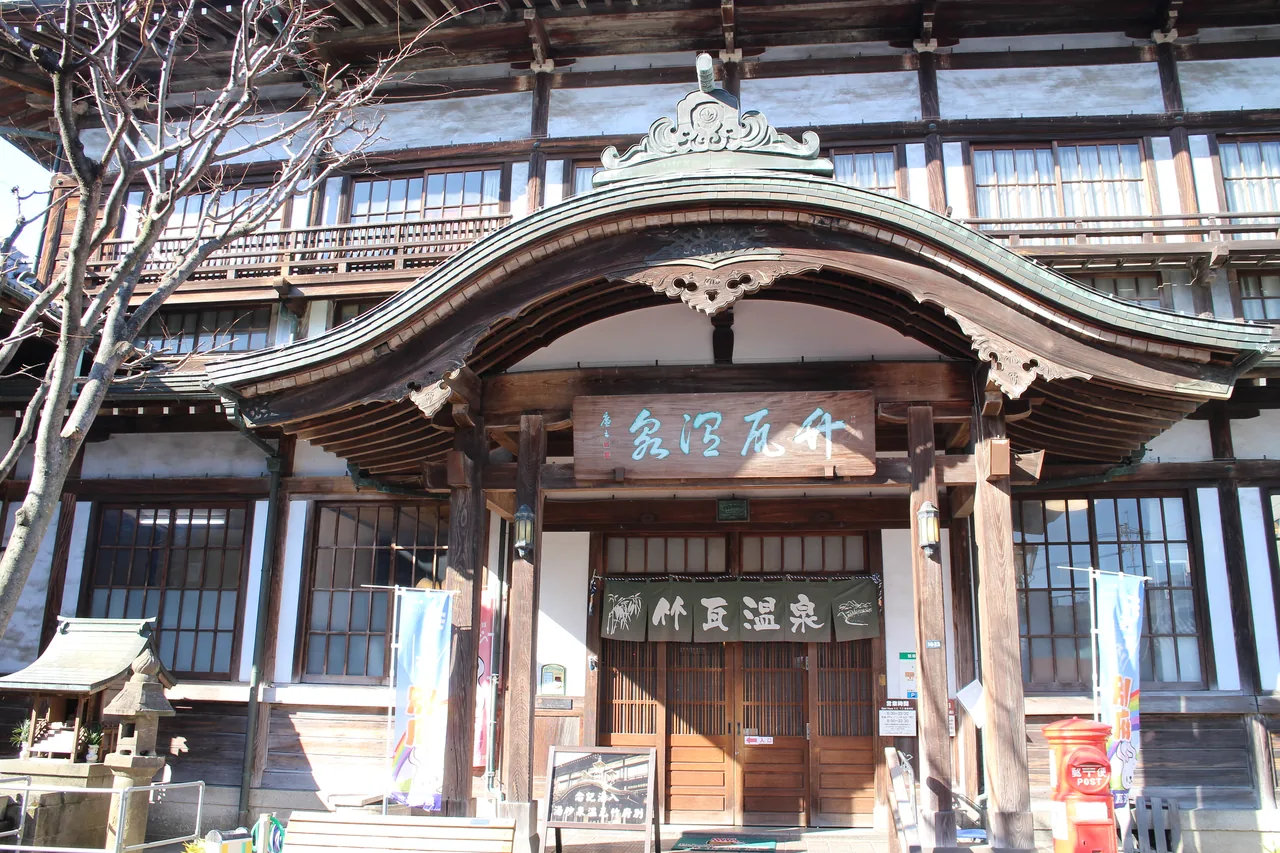
5. Yunessun runs two rules under one roof
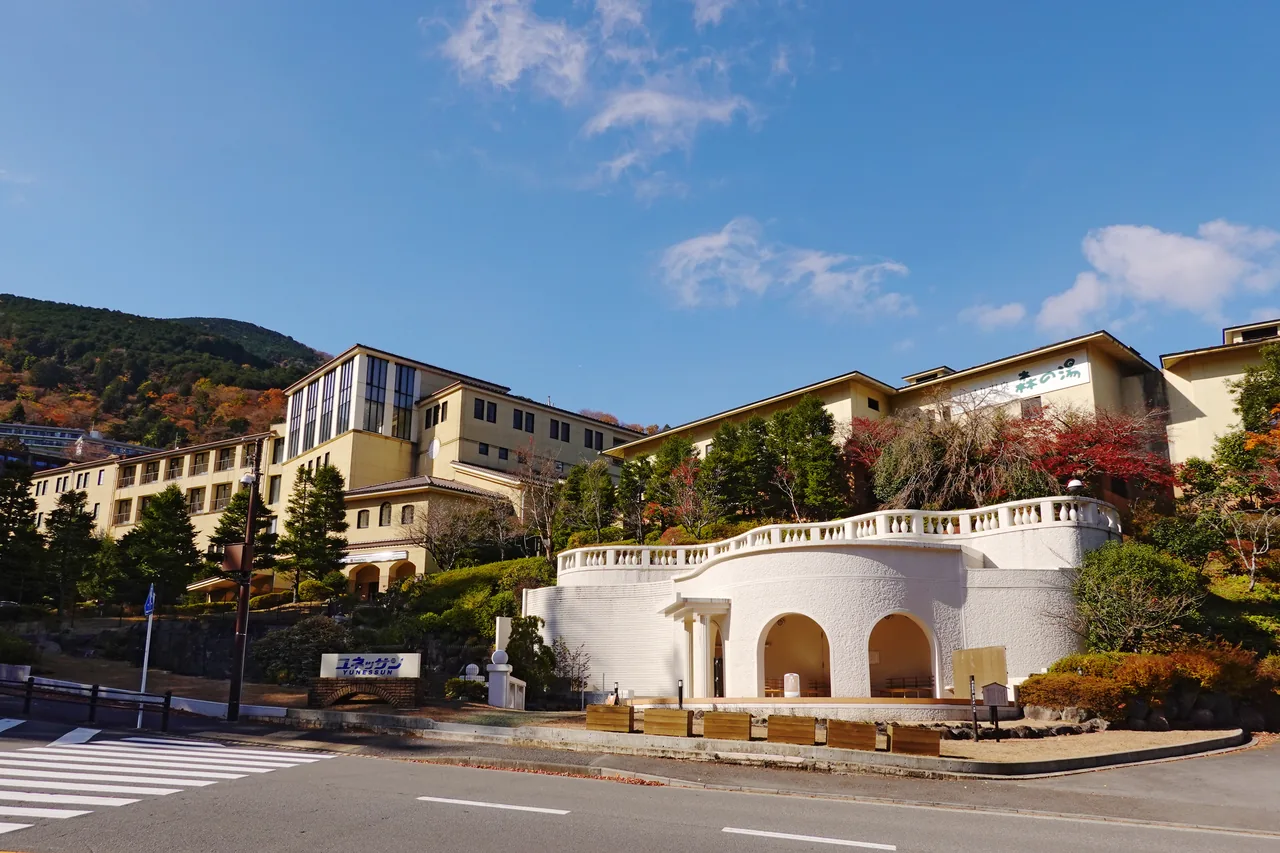
At Hakone Kowakien Yunessun the swimsuit side and the nude side follow different rules, and the notice states both. The headline sentence says tattoos are refused as a rule. The exceptions are underneath it, which is where most people stop reading.
| Area | Tattoo rule |
|---|---|
| Yunessun, swimsuits worn | Allowed if covered by a rash guard. Rentals available |
| Mori-no-yu, nude bathing | Only if two designated stickers cover it completely |
| If coverage fails | Staff direct you to a private bath |
The practical consequence is worth stating plainly: a back piece that no sticker will hide is still fine on the swimsuit side, because a rash guard settles it. Pricing moves across three date bands.
| Ticket | A | B | C |
|---|---|---|---|
| Yunessun, adult | ¥2,500 | ¥2,800 | ¥3,000 |
| Mori-no-yu, adult | ¥1,500 | ¥1,700 | ¥1,800 |
| Both, adult passport | ¥3,500 | ¥3,700 | ¥4,000 |
There is no reason to buy the passport if the swimsuit side is the part you can use. Swimwear rents for ¥700 to ¥1,200, bath towels are ¥250 and face towels ¥150.
Rent the rash guard or bring your own
Rental exists, so you can turn up with nothing. What you cannot control is the size and stock on the day, and a loose one rides up in the water.
Sleeve length decides it for most people. A short-sleeved rash guard does nothing for an arm piece, and for a back you want one long enough to stay tucked. If the tattoo is large, your own is the safer bet.
6. If Tokyo is the whole trip
Inside Tokyo the reliable approach is to pick a bathhouse that sells the stickers. Maenohara Onsen Saya-no-yudokoro, quoted earlier for its specification, is exactly that.
| Item | Detail |
|---|---|
| Entry | ¥970 weekdays, ¥1,300 weekends and holidays |
| Children | ¥600 weekdays, ¥900 weekends and holidays |
| Hours | 09:00 to 24:00, last entry 23:00 |
| Area | Maenocho, Itabashi |
The sento route
Ordinary neighbourhood bathhouses are the other route. Their price is not theirs to set: the metropolitan government fixes it at ¥600 for ages 12 and over, ¥200 for 6 to 11 and ¥100 under 6, the same at every sento in Tokyo. Tattoo policy is not fixed that way, so it varies house by house, and places such as Kairyou-yu in Shibuya are known for accepting them.
7. Nothing in Japanese law bans it
No statute prohibits bathing with a tattoo. The decision sits with each venue, which is exactly why the answer changes from door to door.
In March 2016 the Japan Tourism Agency wrote to four hotel and ryokan associations saying that refusal on the sole ground of a tattoo is not appropriate, and two days later the health ministry passed that document to the prefectures. Both were requests rather than rules, and neither carries force, so venues that refuse are not breaking anything.
The survey figures and the full paper trail are set out in the tattoo section of our onsen guide.
8. When no sticker will do it
A back piece or a full sleeve does not mean giving up the water. It means renting the water instead of sharing it. Japanese inns have offered this for as long as they have offered baths.
| Option | How it works | Rough cost |
|---|---|---|
| Private bath by the hour | Booked slot, your group only | From about ¥2,400 for 60 minutes |
| Room with its own bath | Nothing to ask anyone | From about ¥15,000 per person |
| Town with municipal baths | Nothing to cover | Entry fee only |
| Swimsuit venue | Rash guard settles it | Admission only |
The clothed options
Immersion is not the only form this takes. A footbath is used fully dressed, so there is no point at which a tattoo is visible, and onsen towns tend to have them standing free on the street.
The steam room and the sand bath above are the same category: you wear what they give you, and the rules are not the rules of the main bath. Building a day around those, with a single visit to a shared bath in it, cuts the problem down to one moment.
A room with its own bath costs more and buys silence: the booking filter does the work and the subject never comes up. A private bath by the hour is cheaper, and some places, Hyotan Onsen among them, rent one to day visitors without a room.
When to book the private bath
There are rarely more than two or three at an inn, and they run in 45 or 60 minute blocks, so the evening slots go in check-in order. Where a booking is possible, take it when you book the room.
Some are open to people not staying the night. Hyotan Onsen in Beppu, above, rents by the hour to day visitors, which is the cheaper answer if you only need one afternoon solved.
Ordering by budget, a full day of bathing is cheapest in a town that accepts tattoos outright, an overnight with the question settled quietly points at an inn with private baths, and never thinking about it again points at a room with its own.
9. Doing several in a day changes the sums
One bath and four baths are different purchases. Once tattoos have narrowed the field, a day tends to mean several visits in the same town, so the multi-entry pricing is worth checking before the first ticket.
| Pass or book | Price | Pays off at |
|---|---|---|
| Kinosaki day pass | ¥1,500 adult | Two baths, since one is ¥800 |
| Takegawara ten-visit book | ¥2,700 | Nine visits, since one is ¥300 |
| Hyotan ten-visit book | ¥5,600 | Five visits, since one is ¥1,160 |
| Yunessun combined passport | From ¥3,500 | Only if you use both zones |
Ten-visit books are not built for visitors
Nine visits to break even at Takegawara is another way of saying no traveller will. At ¥300 a time there is nothing to optimise; pay at the door.
Hyotan is closer to plausible at five. If Beppu is your base for several days and you intend to keep going back to the same place, that one can work.
Kinosaki is the one clear case
One bath is ¥800 and the day pass is ¥1,500, so two visits already save ¥100 and three save ¥900. The town is walkable enough that three before dinner is unremarkable.
Staying overnight removes the question entirely, because the Yumepa comes with the room. The day pass is a day-tripper’s purchase.
10. Filter the booking page and the question disappears
Filtering beats emailing. Japanese booking sites list bath arrangements as searchable attributes, so restricting the results to properties that have the right one removes the conversation before it starts.
| Japanese label | What it is | Why it matters here |
|---|---|---|
| 貸切風呂 | Private bath booked by the hour | Your group only, so nothing to ask |
| 露天風呂付客室 | Room with its own open-air bath | You never leave the room |
| 家族風呂 | Family bath | The Kyushu term for the same thing |
| 大浴場 | Shared main bath | The one that is a venue decision |
Ryokan rates are per person, not per room
A city hotel prices the room; an onsen ryokan prices each guest with two meals, so two people is twice the figure on screen rather than the same figure shared.
That is why rooms with their own bath look steep. From about ¥15,000 per person means ¥30,000 for two, while a standard room at an inn with a private bath, plus ¥2,400 for an hour in it, lands far lower.
A photograph does not prove it is onsen water
Not every tub attached to a room is fed from the spring; some are heated tap water. The listing has to say so, and if it does not, assume it is not.
Private baths also split between reservable and first-come. Where it is first-come, an early check-in decides it; where it is reservable, book the slot when you book the room.
11. What to ask before you pay
Asking before you book beats asking at the door. Give the size and the placement, then ask three things at once so one reply answers everything.
| Ask | Why |
|---|---|
| Whether the main bath is open to you | The town’s policy does not bind the inn |
| Whether covering works, and if they sell stickers | Decides whether you bring your own |
| Whether there is a private bath and how it is booked | Leaves you an option if the answer is no |
| What a room with its own bath adds | Changes the total more than anything else |
If it has to happen in person, say it at the desk before you undress. Being told in the changing room is worse for everyone than being told at the counter.
Sentences you can use as they are
At a counter, three short ones cover it. Tattoo ga arimasu ga, nyuuyoku dekimasu ka asks whether you may bathe. Shiiru de kakuseba daijoubu desu ka asks whether covering it is enough. Kashikiri-buro wa arimasu ka asks whether there is a private bath.
By email before booking, write a little more and you get one reply instead of three. Give the size and the placement first, then list what you are asking.
| Japanese | Meaning |
|---|---|
| 肩に約10cmのタトゥーがあります | I have a tattoo of about 10cm on my shoulder |
| 大浴場は利用できますか | May I use the main bath? |
| カバーシールで隠せば利用できますか | May I use it if I cover it with a patch? |
| 貸切風呂の予約は可能ですか | Can a private bath be reserved? |
Reading the reply
The answers come back in a small number of set phrases. Go-riyou itadakemasu is yes. Go-enryo itadaite orimasu is a refusal, phrased as a request that you refrain.
Anything opening with shiiru de kakushite itadakereba is a conditional yes, and the follow-up question is whether they sell the patches. Kashikiri-buro wo go-riyou kudasai means the main bath is out and the private one is the offer, so ask for its price and booking method in the same message.
If you are turned away
Leave it there. The tourism agency papers carry no force, so a counter decision does not get reversed, and the queue behind you waits while you try. Two questions are worth asking on the spot instead: whether they have a private bath, and whether another bath in town will take you.
Both work well in Beppu and Kinosaki. Beppu’s city hall keeps the list, so staff can point you somewhere else; at Kinosaki every public bath admits tattoos anyway.