
Where to Stay in Shizuoka: Station, Mochimune, Shimizu and Umegashima Onsen
Shizuoka City runs from the sea to the Southern Alps, and the kind of room you can book changes completely along the way. We went through the city lodging register to see where the beds actually are, then worked through the areas one by one. Includes the fishing village where you rent a whole house and the mountain onsen served by two buses a day.
| Station | the largest cluster of hotels, with dinner on foot. |
|---|---|
| Same name, two sides | Toyoko Inn and Prezio each run a north and a south branch. |
| Mochimune | a few minutes by JR, and you rent the whole house. |
| Onsen | guests at Mochimune get the harbour bathhouse free. |
| Umegashima | two buses a day up to the mountain hot springs. |
| Lodging tax | Shizuoka City does not charge one. |
1. Most Shizuoka hotels sit within walking distance of the station
2. At the station, the same hotel brand appears on both sides
3. Some rooms here are floors inside an office building
4. Mochimune: a fishing village where you rent the whole house
5. Staying in Mochimune gets you into the harbour onsen for free
6. Shimizu: sleep by the port and spend the morning at the fish market
7. Miho: the stop closest to the pine grove only runs at weekends
8. Okitsu and Yui: old post towns on the Tokaido road
9. Nihondaira: the hotel shuttle is free and needs no reservation
10. Umegashima onsen: two buses a day, and that is the whole service
11. Ikawa and the mountain lodges are for hikers
12. Late arrivals and early departures push you back to the station
13. The two day tickets are sold in different places
14. Shizuoka City does not charge a lodging tax
15. Some places listed as hotels are not aimed at travellers
16. Groups of three or more should price a whole house
17. One night points to the station, two or more lets you split
1. Most Shizuoka hotels sit within walking distance of the station
Choosing where to sleep in Shizuoka comes down to one question: do you want to be at the station, or somewhere else in the city entirely? The centre holds the largest cluster of rooms by a wide margin, and everything beyond it is a fishing harbour, a port, a hillside or a hot spring village up in the mountains.
Shizuoka City stretches a long way from the coast up into the Southern Alps, so two addresses that share a city name can amount to different trips. If your plan is to walk around the centre, eat oden and take day trips, the station wins. If you came for the sea, a private house or an onsen, it is worth looking further out.
| Area | What it is | Getting there |
|---|---|---|
| Shizuoka station | The biggest cluster of hotels, with dinner within walking distance | On foot from the station |
| Mochimune | A working fishing harbour with whole houses to rent | A few minutes on the JR line |
| Shimizu | Port side, quiet in the evening | Around ten minutes on the JR line |
| Miho | Pine grove and beach, with Mount Fuji across the bay | Bus from Shimizu station |
| Nihondaira | A hilltop with views over the bay | Free hotel shuttle from the station |
| Umegashima | A hot spring village in the mountains | A long bus ride from the station |
The station is where every bus starts
Shizuoka station is where the shinkansen stops and where the city bus network begins. Even on the days you head out to Shimizu, Miho or the hilltop, you will usually start from here. For one or two nights spent seeing the city, staying near the station removes most of the friction.
Rates are gentle too. The same class of room costs noticeably less than in Tokyo or Kyoto, and Shizuoka City does not levy a lodging tax. Which cities do charge one, and how much, is set out in the Japan lodging tax guide.
Further out, check the return trip before you book
The further you go from the station, the more distinctive the accommodation becomes. The fishing harbour has renovated houses you rent whole. The hilltop hotel sells the view. The mountain village has old inns with hot spring baths and meals included.
What thins out just as fast is the transport. The mountain bus in particular runs only a couple of times a day, so the timetable decides your itinerary rather than the other way round. The sections below go area by area.
Walking the city centre points to the station. A day spent by the sea or in an onsen points to Mochimune, Shimizu or Umegashima.
2. At the station, the same hotel brand appears on both sides
Before you book anything near Shizuoka station, check whether the address says north exit or south exit. Several chains run one property on each side, so the name alone will not tell you where you are sleeping.
Toyoko Inn has a north exit branch and a south exit branch. Shizutetsu Hotel Prezio does the same, one north of the tracks and one south. The booking pages label them kita and minami, and the two are a proper walk apart once you add the underpass. Map
The rest of the cluster spreads through the arcade streets: Kuretake Inn Premium Shizuoka Ekimae, Sanco Inn Shizuoka Kitaguchi, Garden Hotel Shizuoka, Hotel Citio Shizuoka, Smile Hotel Shizuoka, KOKO Hotel Shizuoka and Hotel Grandhills Shizuoka among them. None of them is far from the platforms.
The north side is where dinner is
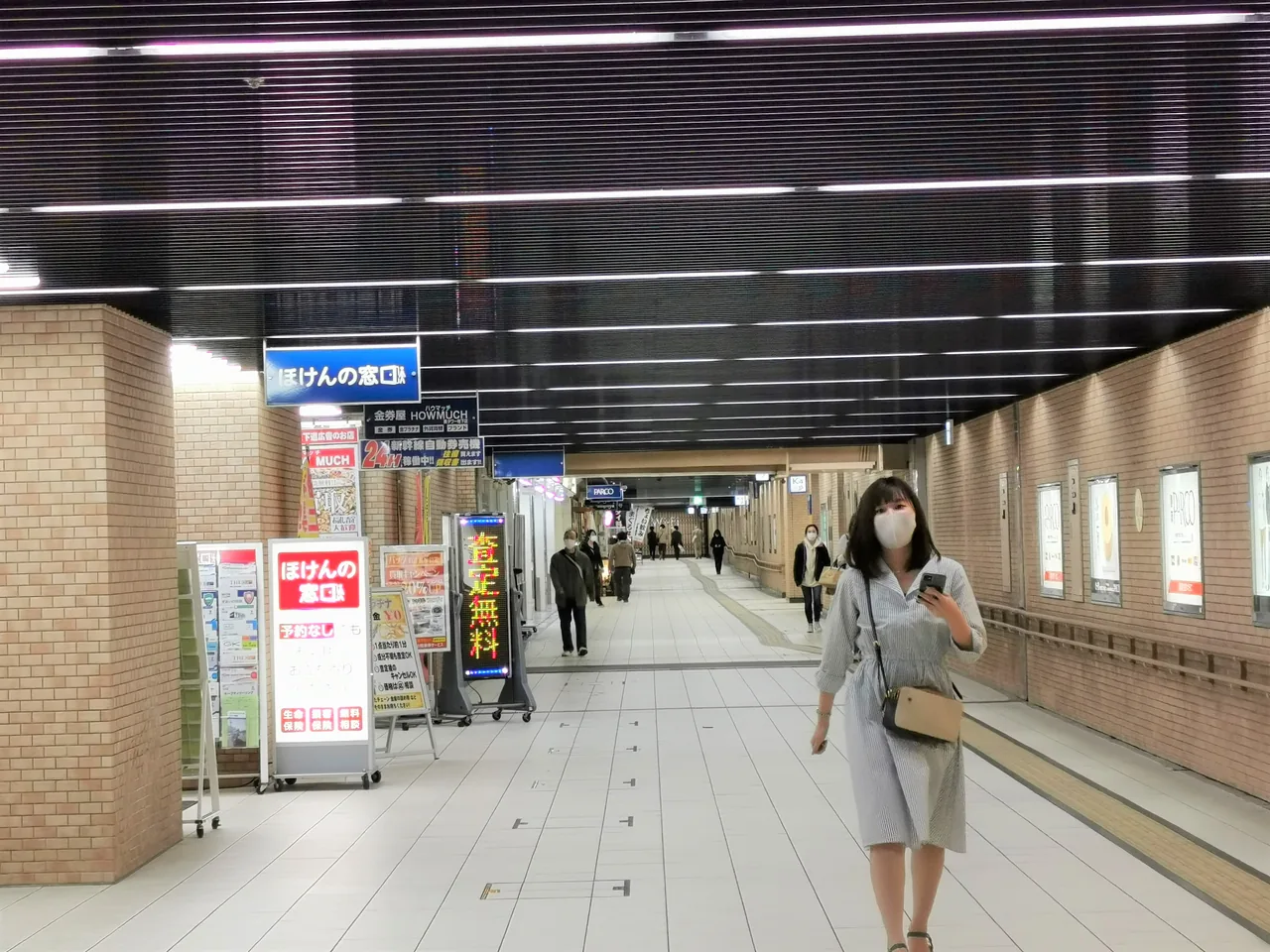
Walk out of the north exit and you are in the shopping arcades. Restaurants, the oden alleys and the covered streets are all on this side, which matters if you plan to be out after dark. Where to find Shizuoka oden is in the Shizuoka travel guide.
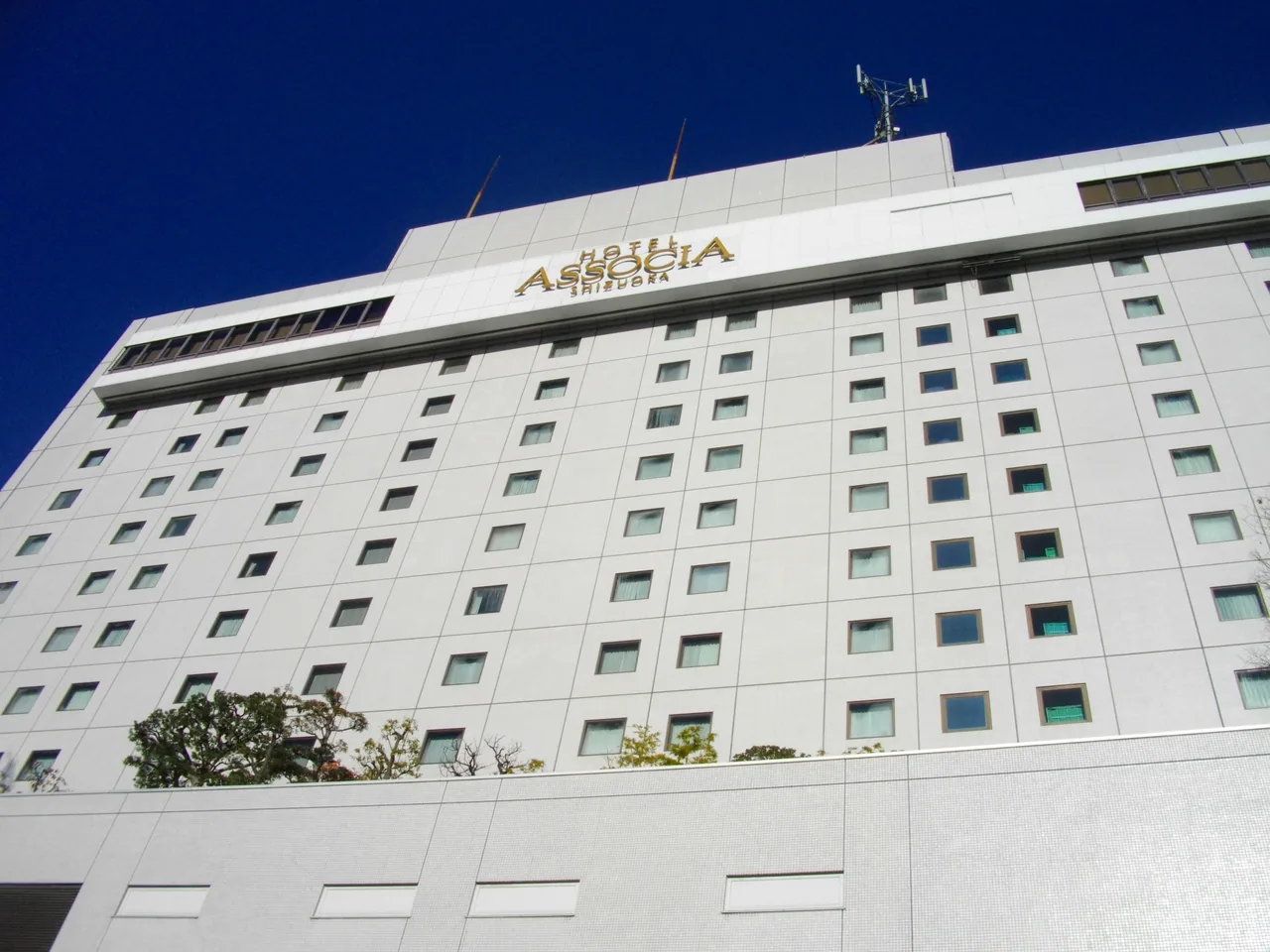
The one hotel physically attached to the station building is on the north side as well. Hotel Associa Shizuoka connects straight into the concourse, which earns its price when you arrive late in the rain or leave on an early train.
The south side is quieter and usually cheaper
The south exit is offices and housing. Fewer people about after dinner, and for the same class of room the price often comes in lower.
Dinner does mean crossing back under the tracks. The underpass makes this easy enough, but if you expect to go out and come back more than once, the north side saves you the walk.
Early shinkansen mornings favour the closest bed
Nozomi trains, the fastest service on the Tokaido line, do not stop at Shizuoka. You will be boarding a Hikari or a Kodama, and Hikari services are roughly hourly, so the timetable is worth checking the night before. How the passes compare is in our JR Pass and shinkansen guide.
If you are catching an early Hikari, pick something within a few minutes on foot. Taxis at the rank are not guaranteed at that hour.
3. Some rooms here are floors inside an office building
A handful of places near the station are not hotels in the usual sense but a few floors of an office building fitted out as guest rooms. The city licence register lists them with the building name and the floor number in the address.
They are scattered through Konyacho and Gofukucho, the blocks you would want to be in anyway. The street entrance is shared with businesses, and in most cases nobody is waiting at a desk when you arrive. Map
Read the check-in instructions before you land
Entry is usually a code sent after booking. That is fine in daylight and less fine at eleven at night in the rain, so save the map pin and a photo of the building to your phone before you travel.
Luggage is the other difference. With no staffed desk there is often nowhere to leave bags before check-in, which leaves either a station coin locker or timing your arrival to the check-in hour.
What you get in return is space
Rooms tend to be larger than a business hotel room at the same price, and some come with a kitchen and a washing machine. Over three or four nights that changes how the trip feels.
For a group of three or four the maths is better still, since everyone fits in one unit. For a single night on your own, a conventional hotel is simpler.
4. Mochimune: a fishing village where you rent the whole house
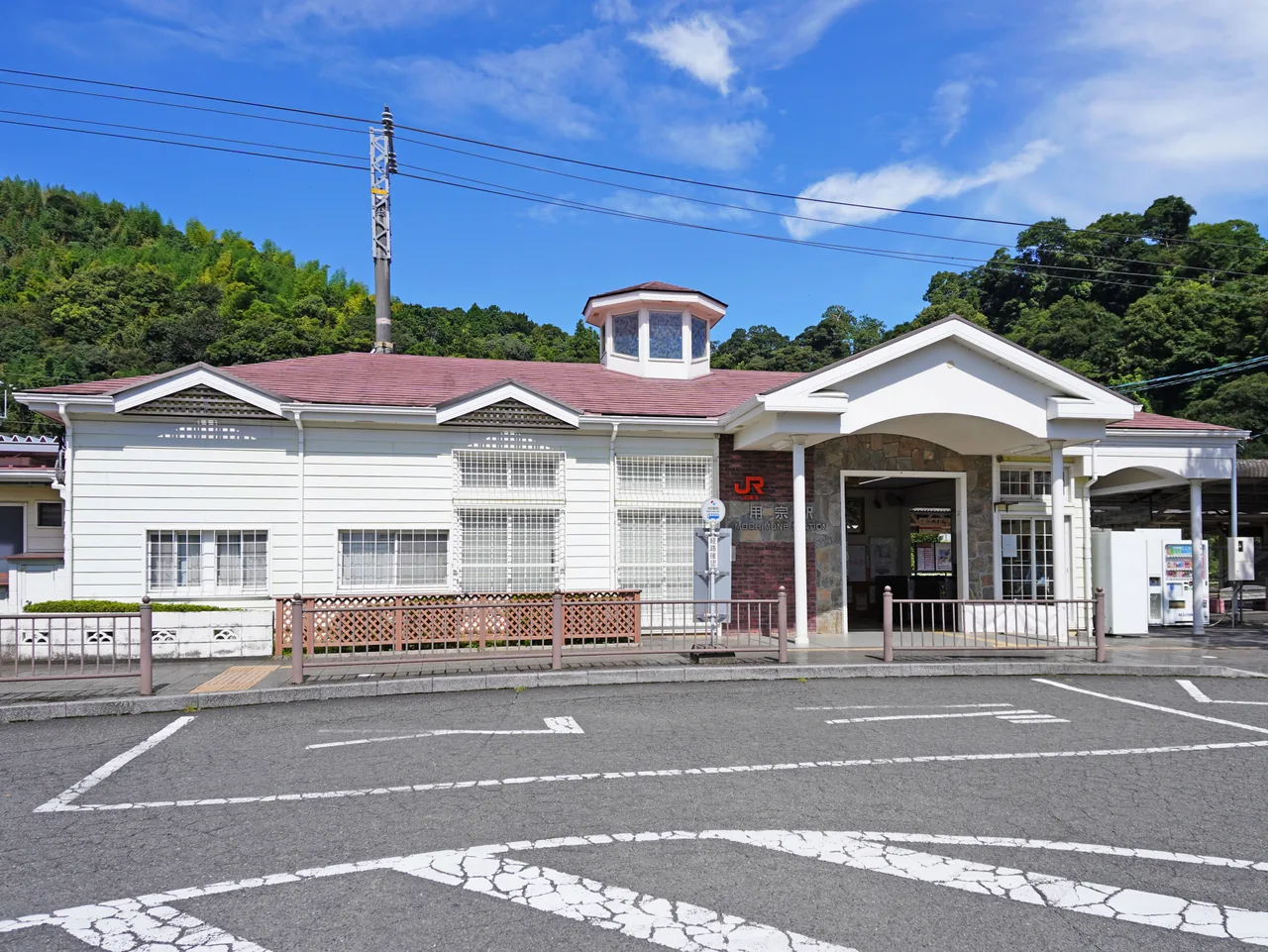
A few minutes down the JR line from Shizuoka station is Mochimune, a working fishing harbour with more than ten rental houses run under a single name. One local company has been buying up empty houses in the village and renovating them one at a time.
Getting there is simple. Take the local train to Mochimune station and walk. The walk from the station to the houses, and from the houses to the harbour bathhouse, is a matter of minutes either way. Map
Pick the house that matches your group
Each house is a different size and layout, sleeping anywhere from two people to eight. You choose by the number of people in your party rather than by room type.
For families or a group of friends this beats booking two or three hotel rooms. You get a living room to sit in together, a kitchen, and no neighbours through the wall to worry about when there are children in the party.
| Detail | What to expect |
|---|---|
| Check-in | 15:00 |
| Check-out | 11:00 |
| Capacity | Two to eight people depending on the house |
| Hot spring | A short walk away, and guests receive a free bath pass |
Meals follow the fishing boats
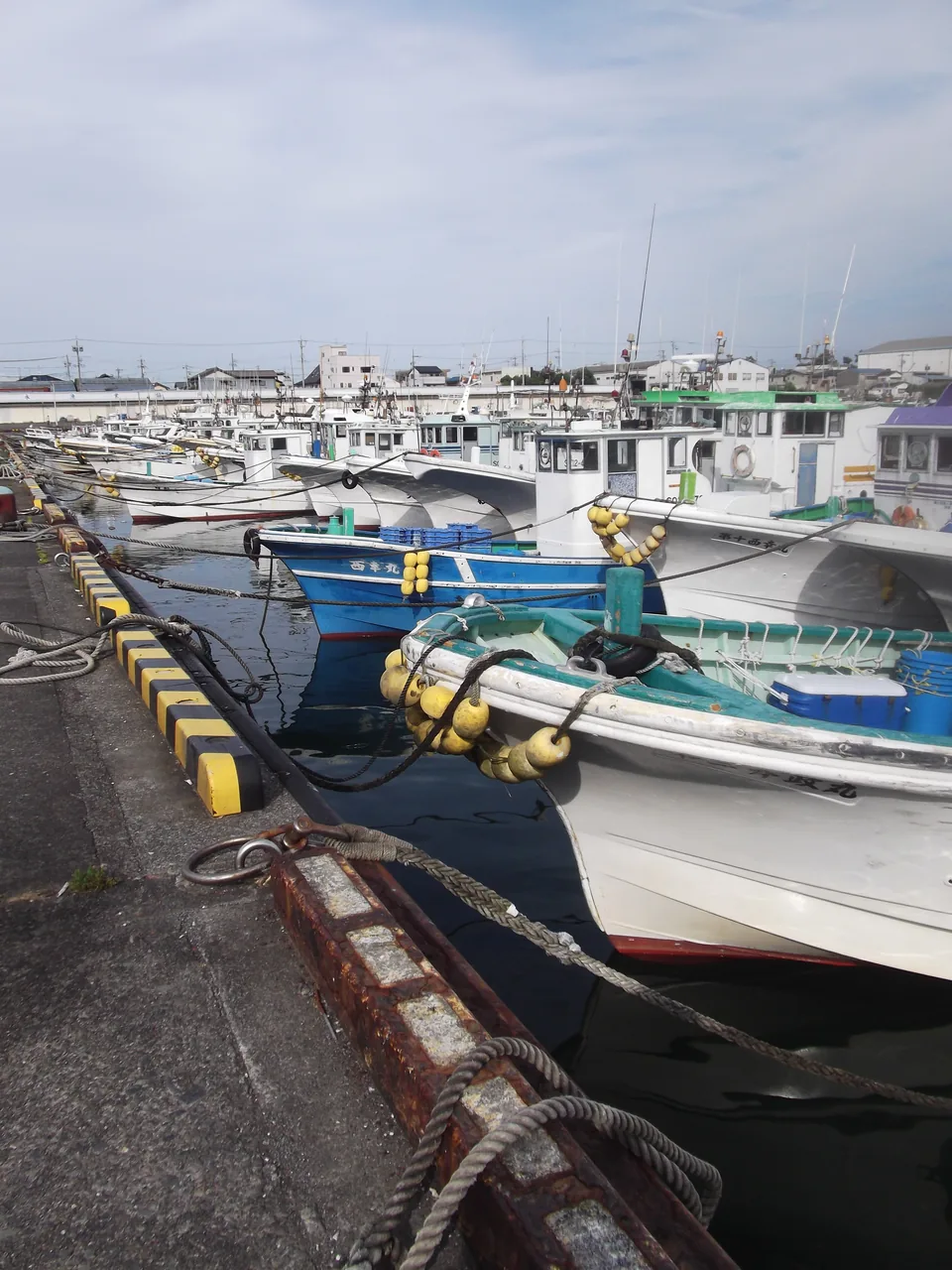
This is not a village built for visitors. The fishing co-operative runs a rice bowl counter that opens in the middle of the day and closes when the weather keeps the boats in port. Evening options are limited, so check what is open before you arrive or bring something with you.
Mornings make up for it. You can walk out to the breakwater, watch the boats come in and be back before breakfast would have finished at a city hotel.
5. Staying in Mochimune gets you into the harbour onsen for free
The harbour has its own hot spring bathhouse, and guests at the village rental houses are handed a bath pass at no charge. You do not have to travel up into the mountains to soak.
The bathhouse stays open late, so it works either as the last thing before bed or as a way to warm up after a day out in the city. The walk from the houses takes a few minutes, which means you can leave your luggage behind and carry nothing but a towel. Map
| Item | Weekday | Weekend and holidays |
|---|---|---|
| Adult | 1,000 yen | 1,200 yen |
| Up to elementary school age | 350 yen | 350 yen |
| Under three | Free | Free |
| Opens | 10:00 | 9:00 |
| Closes | 24:00, last entry 23:00 | |
You can visit without staying
If you are based at the station, the bathhouse still makes an easy afternoon. The train takes a few minutes and towels can be rented or bought on site. Weekday afternoons are the quietest stretch.
Weekends open earlier and cost a little more. Nothing about the place requires booking ahead.
If you want an inn with its own bath
A ryokan where the bath is inside the building and dinner arrives at your table is a different proposition, and the city centre has almost none of them. Those are up in the mountain village. What to expect from a Japanese inn is set out in our onsen and ryokan guide.
Mochimune sits between the two. The lodging is a converted family house and the hot spring is a short walk down the street. It suits travellers who want a soak without giving up a day to the bus ride.
6. Shimizu: sleep by the port and spend the morning at the fish market
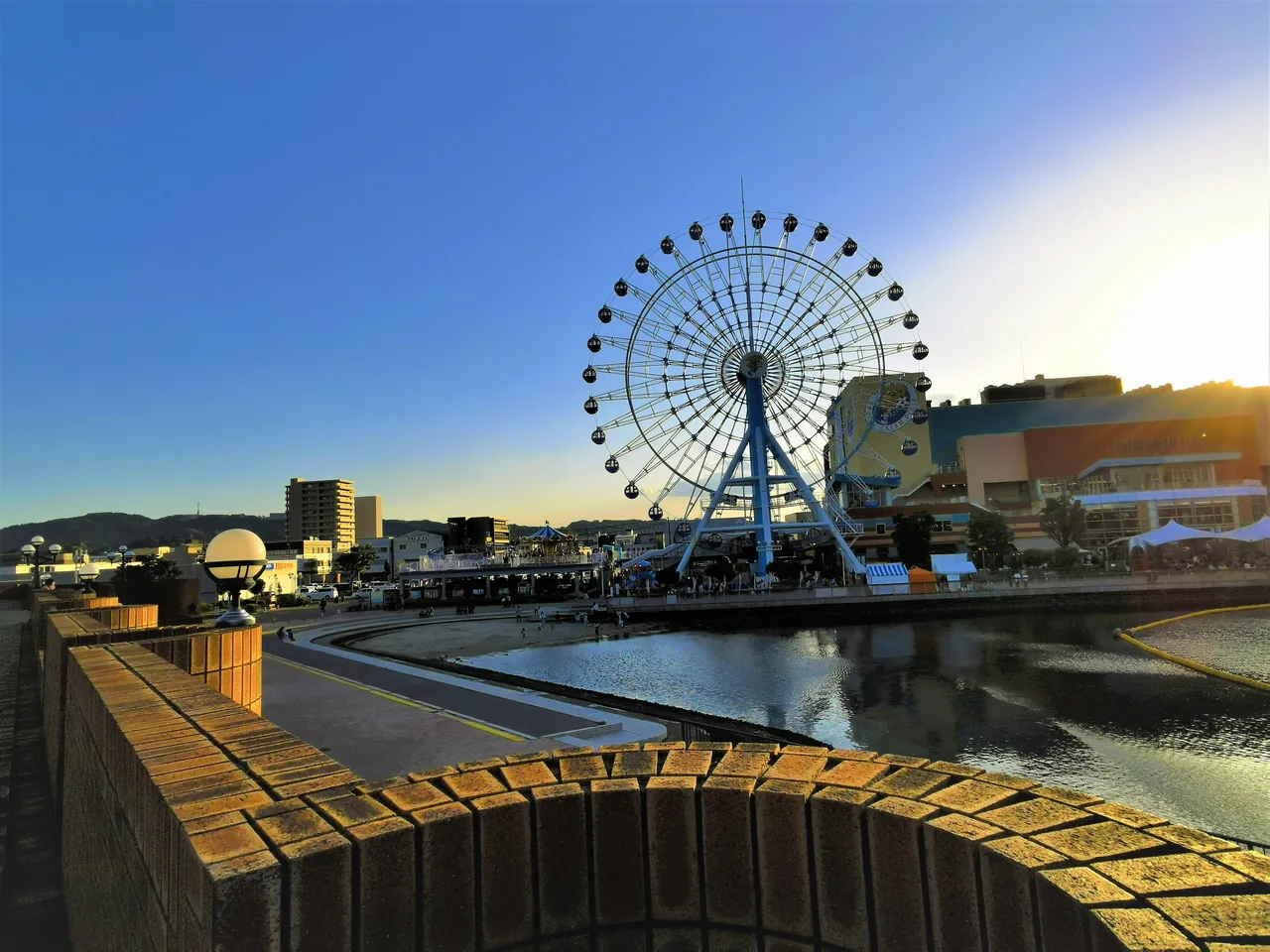
Ten minutes up the JR line from Shizuoka station is Shimizu, where a small cluster of hotels sits between the station and the waterfront. It suits travellers who want a quieter night and an early start by the water.
The hotels are concentrated in Masagocho, the blocks between Shimizu station and the harbour. The waterfront complex and the ferris wheel are both within walking distance of the rooms. Map
Sea Grande Shimizu Station Hotel stands two minutes from the west exit. Hotel MyStays Shimizu keeps its front desk staffed around the clock, with check-in at 15:00 and check-out at 11:00, which helps on a late arrival. Hotel Quest Shimizu and Shimizu City Hotel fill out the same few streets.
Evenings finish early here
The waterfront shops and restaurants close well before the city centre does. If a long dinner matters to you, stay near Shizuoka station instead. If you would rather turn in early and be out at first light, Shimizu is the better base.
Mornings are the payoff. Tuna is the local speciality and there are places serving it from breakfast onwards. The ferry across Suruga Bay to the Izu peninsula leaves from here too, so an early crossing is far easier from a port-side room.
Getting into the centre means one train
Two railways connect Shimizu with central Shizuoka: the JR Tokaido line and the private Shizutetsu line. Both run frequently and both take around ten minutes, so neither is a problem in itself.
What is a problem is dragging luggage back and forth several times a day. If you want to see both the centre and the port, keep one base and split the days rather than changing hotels. How to pay for trains and buses with a stored-value card is covered in our IC card guide.
7. Miho: the stop closest to the pine grove only runs at weekends
If you are thinking of staying out at Miho, look at the bus timetable before anything else. The stop nearest the entrance to the pine grove has no weekday service at all.
Buses from Shimizu station towards Miho run often enough on weekdays. It is the final approach that changes: the service that pulls in right by the grove operates on Saturdays, Sundays and public holidays only. On a weekday you get off one stop earlier and walk in. Map
| Bus stop | Weekday | Weekend and holidays |
|---|---|---|
| Mihonomatsubara Iriguchi | Frequent | Frequent |
| World Heritage Mihonomatsubara | No service | Service runs |
The lodgings are spread along the shore
Miho has guesthouses and small inns rather than large hotels. Some face the water directly, others sit within walking distance of the grove. Hagoromo Hotel is the long-established name here, with smaller places dotted along the beach road.
Few restaurants open in the evening, so either book a room with dinner included or pick something up in Shimizu on the way. This is not a place to arrive hungry at eight at night.
Mount Fuji depends entirely on the weather
The view of Fuji rising beyond the bay and the pines is the reason most people come. On a humid or overcast day you will see none of it. Clear, dry air gives you the best odds, and early morning is the most reliable window.
If the mountain is the point of the trip, give yourself more than one night. Planning a run at Fuji itself is covered in our Mount Fuji day trip guide.
8. Okitsu and Yui: old post towns on the Tokaido road
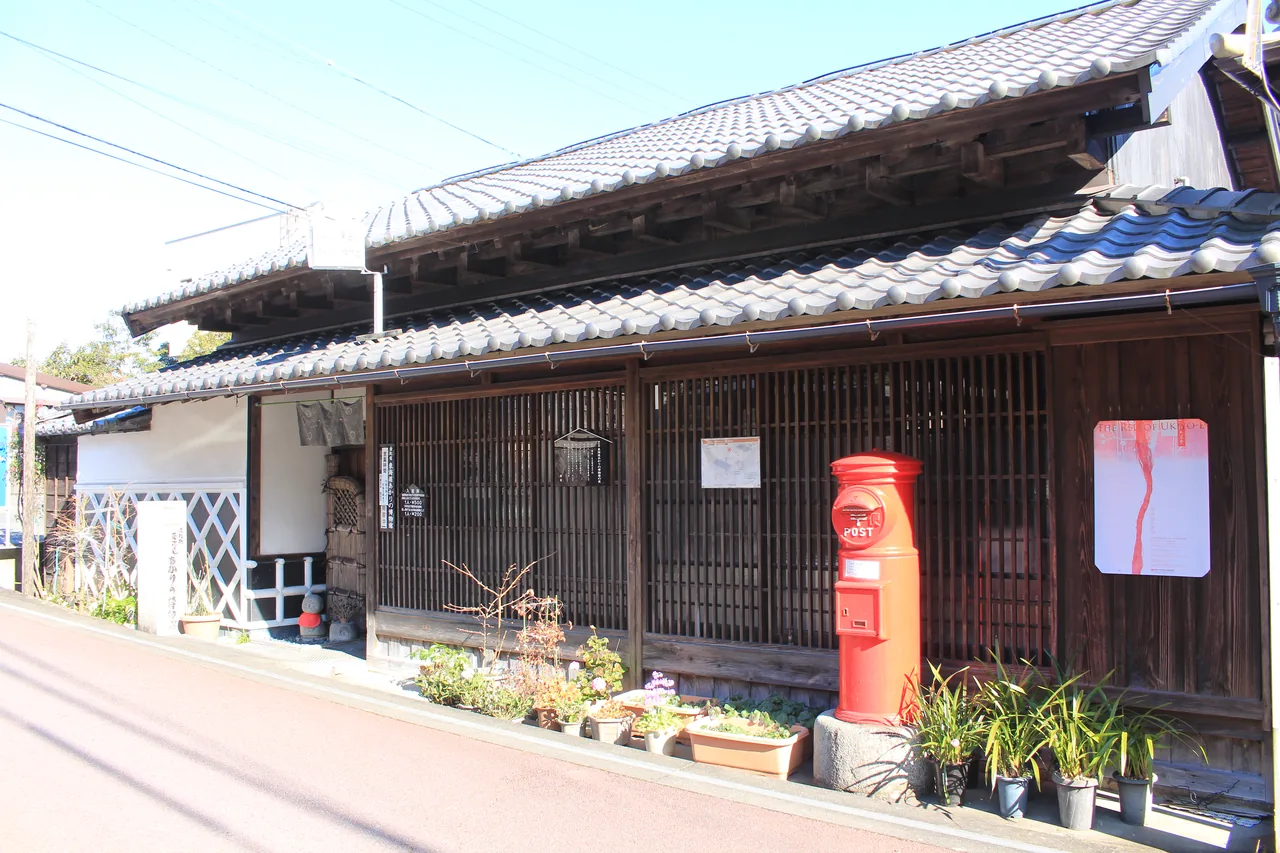
One stop beyond Shimizu is Okitsu, and past that Yui. Both were staging posts on the old Tokaido highway, and both still have a handful of small inns taking guests.
Okitsu has lodging drawing on a hot spring. Yui has old ryokan and a kappo inn built around the fish that comes in at the harbour. Neither place gets tour buses, which is much of the appeal. Map
Sakura shrimp and the Satta pass are close by
Yui is the harbour where sakura shrimp are landed. They are caught in specific seasons, and when the boats are running you can eat them freshly boiled a short walk from where they came ashore.
The Satta pass, where Mount Fuji, the bay and the railway line stack up in a single frame, is in the same stretch of coast. Walking up at first light is much easier from a bed in Yui or Okitsu than from the city. What sits where is laid out in the Shizuoka travel guide.
There are few rooms, so book early
No large hotels operate along this coast. Most places have a handful of rooms, and weekends in shrimp season fill quickly.
Check whether dinner is included when you book. There is not much open late nearby, and the inns expect to feed you.
9. Nihondaira: the hotel shuttle is free and needs no reservation
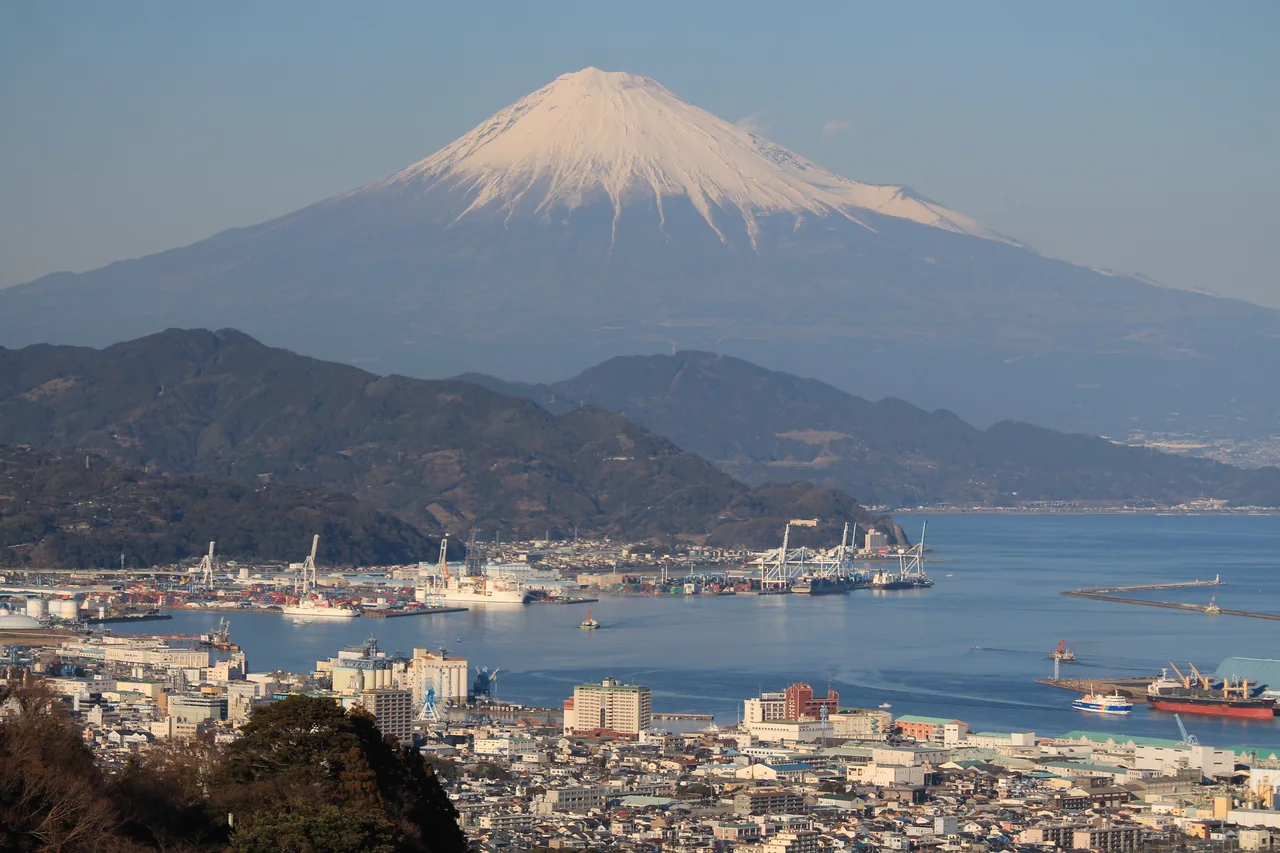
For a room on a hilltop with Mount Fuji on one side and Suruga Bay on the other, Nihondaira is the address. The hotel there runs a shuttle bus from both Shizuoka station and Higashi-Shizuoka station, free of charge and with no booking required.
This is not a hill you walk up. You take the shuttle, a taxi or a local bus. The hotel gives the rough timings from each station, and they are worth checking against your arrival. Map
| From | Taxi | Local bus |
|---|---|---|
| JR Shizuoka station | About 25 minutes | About 35 minutes |
| JR Higashi-Shizuoka station | About 15 minutes | About 25 minutes |
| JR Shimizu station | About 20 minutes | – |
Which way the room faces decides what you see
Ask about the orientation when you book. Rooms on the far side of the same building do not see the mountain at all, and nobody upgrades you for asking at the desk.
Weather still has the final say. Low cloud hides Fuji from a hilltop just as thoroughly as from sea level. The bay and the lights of the port hold up better on a grey evening.
Dinner happens in the hotel
There is no restaurant street up here. Eating out means going back down the hill, and at night that means calling a taxi rather than catching a bus.
Nihondaira works best as a night where the hotel is the plan. It fits a last evening better than a day packed with sightseeing.
10. Umegashima onsen: two buses a day, and that is the whole service
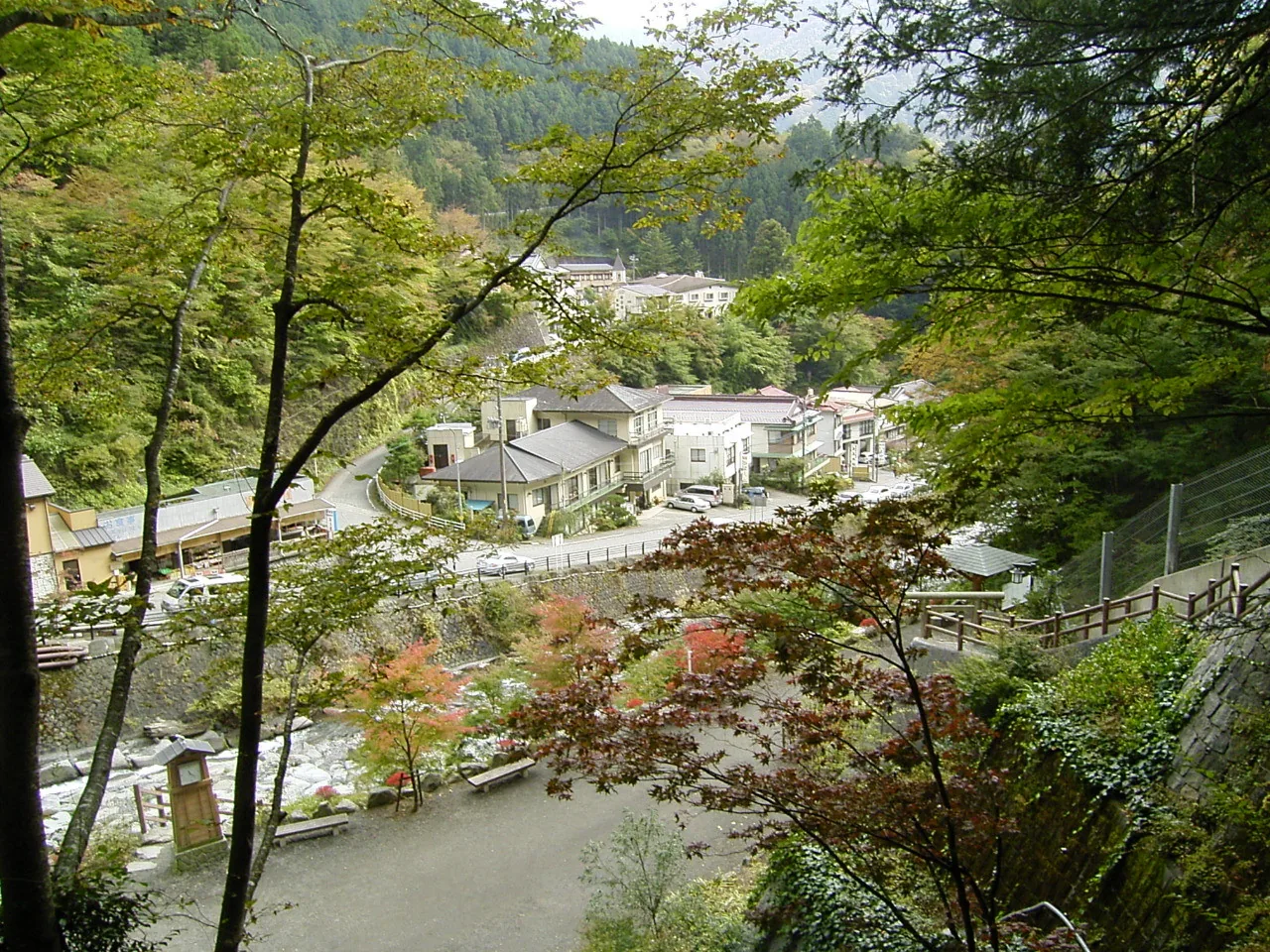
At the northern edge of the city, deep in the mountains, is a hot spring village with a cluster of old inns. Two buses a day go up there, and the ride takes close to two hours each way.
It is the same city on paper and a different world in practice. Take the midday departure and the last bus back leaves barely an hour after you arrive. The service is built around people who are staying the night. Map
| Day | Up, from Shizuoka Ekimae | Down, from Umegashima Onsen |
|---|---|---|
| Weekday | 08:15 and 12:42 | 10:41 and 15:40 |
| Weekend and holidays | 08:33 and 12:53 | 11:30 and 15:31 |
The inns run on their own hot spring and serve dinner
Most of these inns draw their own spring water and include dinner and breakfast in the rate. Yunoshimakan, Seiko Ryokan, Izumiya Ryokan and Onokiso have been operating here for years. They are small, so rooms go early in the busy seasons.
There is nowhere to eat out once you are up there. Booking a meal-inclusive plan is not a preference but a practicality.
The morning bus gives you a full day
Catch the early departure and you arrive mid-morning with the whole afternoon ahead. Soak, walk the gorge, and ride back down before dinner.
Take the midday bus and you should plan on staying. Unpack, eat what the inn brings out, sleep, and come down on the morning service.
The city day passes do not reach this far
Neither of the day tickets sold in the city covers the mountain stretch of this route, so the fare is a separate cost in both directions.
With only two departures each way, line up your check-out time with the bus before you arrive. The inns will tell you, but it is easier to know when you book.
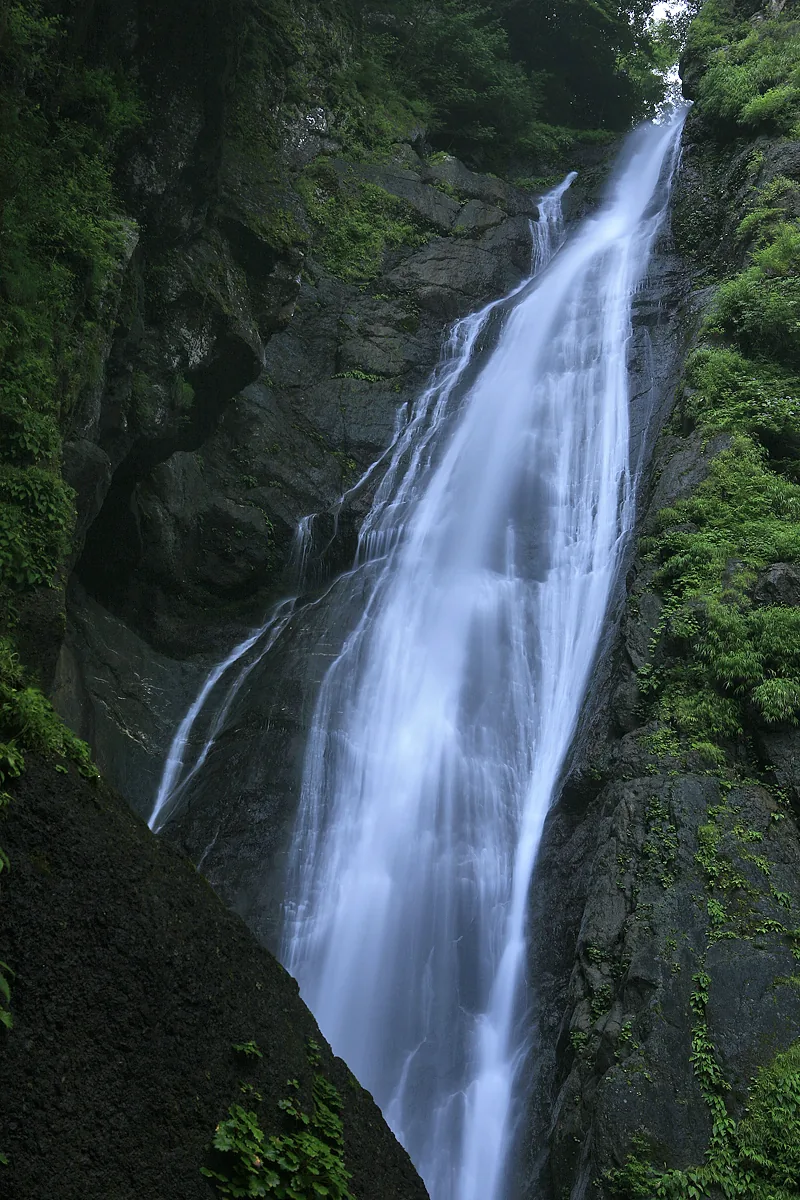
11. Ikawa and the mountain lodges are for hikers
There are more licensed lodgings in the far north of the city, and almost all of them are small guesthouses serving hikers and anglers. They are not really an option for a sightseeing trip.
Ikawa, Tashiro and Kuchisakamoto fall into this group. This is the approach to the Southern Alps, hours up the valley by bus from the centre.
The mountain routes sit outside the day passes
The bus line that runs up towards the Alps is excluded from the city day tickets, and it operates on a seasonal calendar with stretches of the year when it does not run at all.
Unless you are here to climb, leave these lodgings off the list. Sleeping in the city and travelling up in the morning saves moving your luggage twice.
Mariko is the gentler version
If you want somewhere outside the centre without going into the mountains, Mariko is the middle ground. It was a post town on the old Tokaido, and a shop there still serves the grated yam set it was serving centuries ago.
There are only a few places to stay, and they are quiet. The bus from Shizuoka station takes around half an hour, and Mariko pairs naturally with Nihondaira or Mochimune in a day. Map
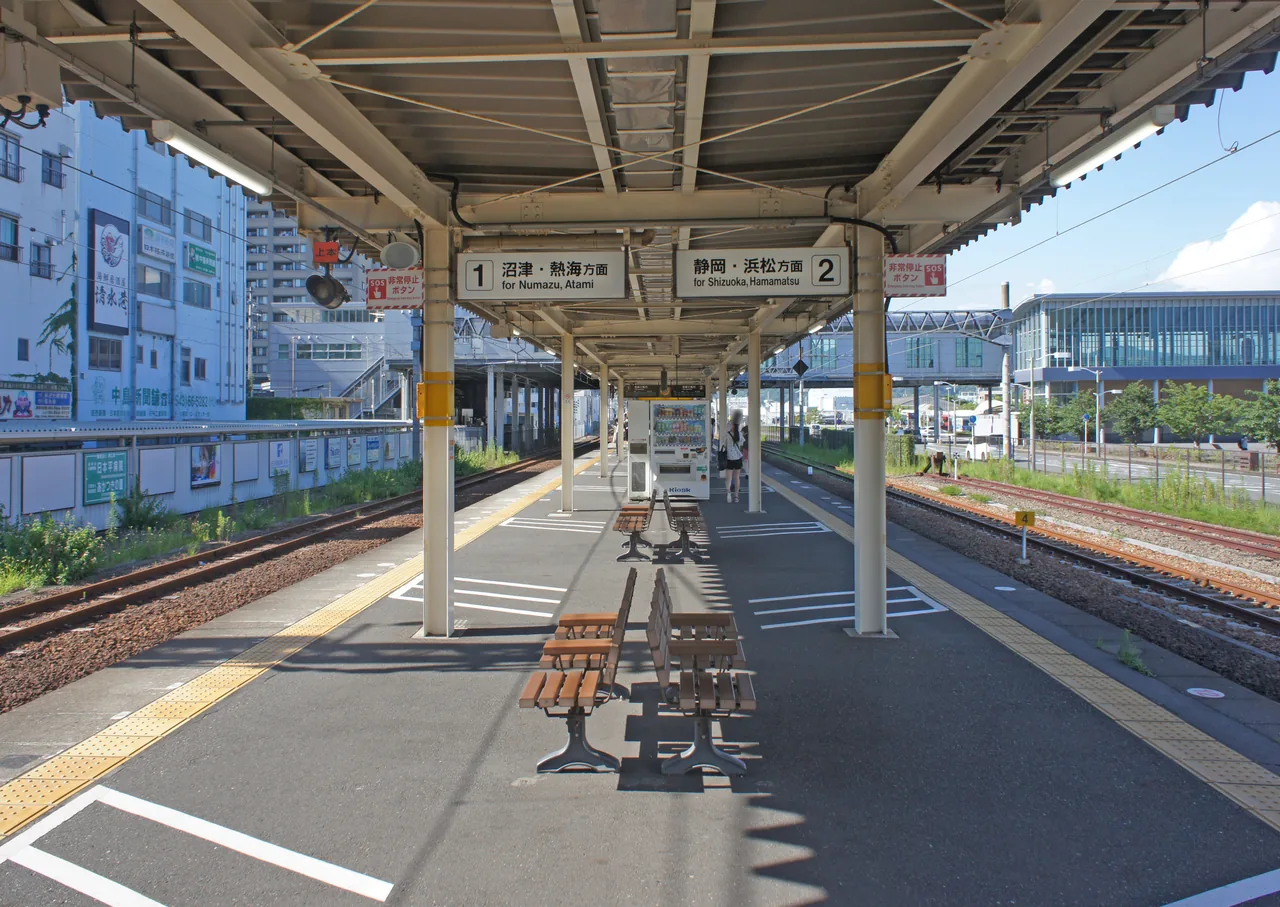
12. Late arrivals and early departures push you back to the station
If you are flying into Mount Fuji Shizuoka Airport or catching an early shinkansen out, keep your search near the station. The airport bus runs a short schedule and stops in the evening, and the fastest trains do not call at Shizuoka at all.
Nine buses a day connect the airport with the city. The first leaves mid-morning and the last goes in the evening. The bus waits for delayed flights, but once the final departure has gone the alternative is a taxi across a long stretch of tea fields. Map
| Item | Detail |
|---|---|
| Airport to the city | About 50 minutes |
| Adult fare | 1,200 yen |
| Departures | Nine a day |
| First bus | 10:00 |
| Last bus | 20:40 |
The airport bus is not covered by the day passes
Neither city day ticket includes the airport route, so treat the arrival and departure legs as separate costs when you budget.
Stored-value cards do work. Getting and topping up a card is explained in our IC card guide.
For an early train, check the Hikari times first
Nozomi services run straight through Shizuoka without stopping. What you can board is a Hikari or a Kodama, and Hikari comes around once an hour, so the first useful train may be later than you assume.
From Mochimune or Shimizu you have to add a local train back into the centre, and early morning local services are thinner. Moving to a station hotel for the final night is a reasonable way to handle it.
13. The two day tickets are sold in different places
If you plan to use city buses, start with the two day tickets. One is a paper ticket covering both trains and buses, the other is a digital bus-only ticket, and they are not sold in the same way.
The paper version is bought over the counter at bus information desks and private railway stations. The digital one exists only inside an app and an online store, and asking for it at a window will get you nowhere.
| Ticket | Train and bus day pass | Shizuoka 1-Day Pass |
|---|---|---|
| Adult | 1,600 yen | 1,400 yen |
| Child | 800 yen | 700 yen |
| Private railway | Whole line | Not included |
| Where to buy | Counters at stations and bus offices | App and online only |
Where the passes stop working
Both tickets are valid on routes radiating from Shizuoka, Higashi-Shizuoka, Kusanagi and Shimizu stations, out to a set single-fare limit. Miho falls inside that limit. The mountain hot spring village does not.
Airport buses, highway coaches, sightseeing services and the Southern Alps climbing route are excluded from both. So is the JR line, which is what you would use for Mochimune and Shimizu.
For three days or more there is a regional pass
Travellers pushing on to Izu or Fuji have a three-day regional pass to consider, at 6,500 yen for an adult. It includes the Suruga Bay ferry from Shimizu across to the Izu peninsula.
It does not include the shinkansen. For a stay inside the city the day ticket is the better buy; for a night across the bay, the regional pass earns its price.
When a day ticket does not pay
Three or four bus rides in a day and the ticket wins. A day of walking the centre, or a day on the JR line out to Mochimune, and it does not.
The clearest case for buying one is a day combining the hilltop and Miho, or several bus hops around Shimizu. How the city moves around is set out in the Shizuoka travel guide.
14. Shizuoka City does not charge a lodging tax
No lodging tax is added to your bill in Shizuoka City. What the booking page quotes, plus consumption tax, is what you pay at the desk.
That is not true everywhere in the prefecture. Atami collects a flat per-person, per-night tax, with children of elementary school age and younger and school trip groups exempt.
| City | Lodging tax |
|---|---|
| Shizuoka City | None |
| Atami | 200 yen per person per night |
If your route crosses into Izu
Take the ferry or the train across and spend a night in Atami and the tax applies to that night. The amount is small, but some properties collect it in cash at check-in.
City-by-city amounts are gathered in our Japan lodging tax guide. Tokyo, Kyoto and Osaka each use a different structure.
This may change
The prefecture is weighing a lodging tax as a tourism funding source, and several municipalities are running their own studies. Treat the current position as true at the time you book rather than permanently.
Properties announce it on the booking page when it happens. Glancing at the tax line on the final payment screen is enough.
15. Some places listed as hotels are not aimed at travellers
A sizeable share of the licensed lodgings in Shizuoka City are drive-in properties rented by the hour. On a map app the word hotel appears in the name and nothing distinguishes them from a business hotel.
The licence register separates them by category, which is how they can be counted at all. They cluster along the arterial roads and the outer neighbourhoods rather than in the centre.
Near the station there are almost none
Because guests arrive by car, these properties line the through roads. Within walking distance of Shizuoka station there are hardly any, while the Mariko and Negoya areas have several.
The risk comes up when you are driving and searching the map for the nearest room. The name and the way rates are displayed usually give it away.
Booking sites filter them out
Search on a booking platform and the list you see is already filtered. Rates quoted by the hour, galleries showing the car park instead of the rooms, and a reception described as being round the back are the usual signs.
These are legal, licensed businesses and some are perfectly clean. They simply are not set up for someone arriving with suitcases who wants breakfast and a staffed desk.
16. Groups of three or more should price a whole house
Japanese business hotel rooms are small, and three people rarely fit in one. In Shizuoka the alternative to booking two rooms is renting an entire house.
The rental houses at Mochimune are that option. Capacity runs from two up to eight depending on the building, and each comes with a living room and a kitchen. For families, or for anyone travelling with parents, that changes the evening completely.
Laundry and luggage tip the balance
Stay several nights and the washing piles up. A house gives you a machine and floor space to spread out. Two hotel rooms split your luggage across two floors and start every morning with a corridor negotiation.
The reverse is true for a single night before an early train. Mochimune is a few minutes away by JR, but early local services are sparse, and a station hotel is the simpler answer.
Settle the meals question first
Rental houses do not have a restaurant. Dinner means eating in the village or bringing something back, and breakfast is whatever you make.
If you want breakfast served, look at the station hotels or the mountain inns instead. The inns include both dinner and breakfast as a matter of course.
17. One night points to the station, two or more lets you split
For a single night in Shizuoka, book near the station and stop thinking about it. With two nights or more, splitting between the centre and the coast or the mountains is worth the packing.
Moving takes an hour and some handling of bags. What you get is a city that reads differently: an evening in the oden alleys and a morning listening to boats is the same municipality twice over.
| Length of stay | Where to base | Why |
|---|---|---|
| One night | Shizuoka station | Short transfers and dinner on foot |
| Two nights | Station plus Mochimune | Adds the harbour and the bathhouse |
| Three or more | Station plus Shimizu or Umegashima | Gives the coast or the mountains a full day |
Leave the bags at the station on moving day
Coin lockers at Shizuoka station make a changeover painless, and the same trick covers an early arrival before check-in opens.
Mochimune and Shimizu are both on the same JR line, so moving between them is light work. Only the mountain village demands that you plan around the bus.
Fitting Shizuoka into a longer trip
Shizuoka sits between Tokyo and Nagoya, which makes it an easy night to insert on the way through. Rooms at the Nagoya end are covered in our Nagoya accommodation guide, and the Tokyo end in our Tokyo accommodation guide.
For where the city fits in a wider route, see the Japan travel guide, which breaks the country down region by region.