
Where to Stay in Sapporo: 5 Areas from Odori to Jozankei Onsen
Three of the five areas are connected to each other by an underground walkway. The other two are not, which is the main practical difference between them from December to March.
| Underground route | Sapporo Station, Odori and Susukino are connected by an indoor walkway; Nakajima Park, Maruyama and Jozankei are not. |
|---|---|
| Most subway lines | Odori, the only station where all three lines stop. |
| Lodging tax | A city and a prefectural tax apply for stays from 1 April 2026, charged per person per night at the property. |
| Snow Festival 2027 | 4 to 11 February, at the Odori, Susukino and Tsudome sites. |
| Airport transfer | New Chitose to Sapporo Station takes 33 to 37 minutes by JR, for 1,230 yen. |
1. Sapporo’s subway lines and where the five zones sit
2. The five zones compared
3. The underground walkway between Sapporo Station, Odori and Susukino
4. How often it snows in Sapporo, month by month
5. Sapporo Station area, including the construction work
6. Odori: three subway lines, the park and the arcades
7. Susukino: restaurants, transport and the largest number of listings
8. Nakajima Park: quieter, with no underground connection
9. Jozankei Onsen: inside the city limits, reached by bus
10. Maruyama, the New Chitose Airport area and Otaru
11. The lodging tax from 1 April 2026
12. Getting from New Chitose Airport to central Sapporo
13. Subway fares, day passes and the tram
14. The 2027 Snow Festival dates and sites
15. Which zone to pick for different trips
16. What to check before booking
17. Summary of the zone recommendations, and a note on skiing
1. Sapporo’s subway lines and where the five zones sit
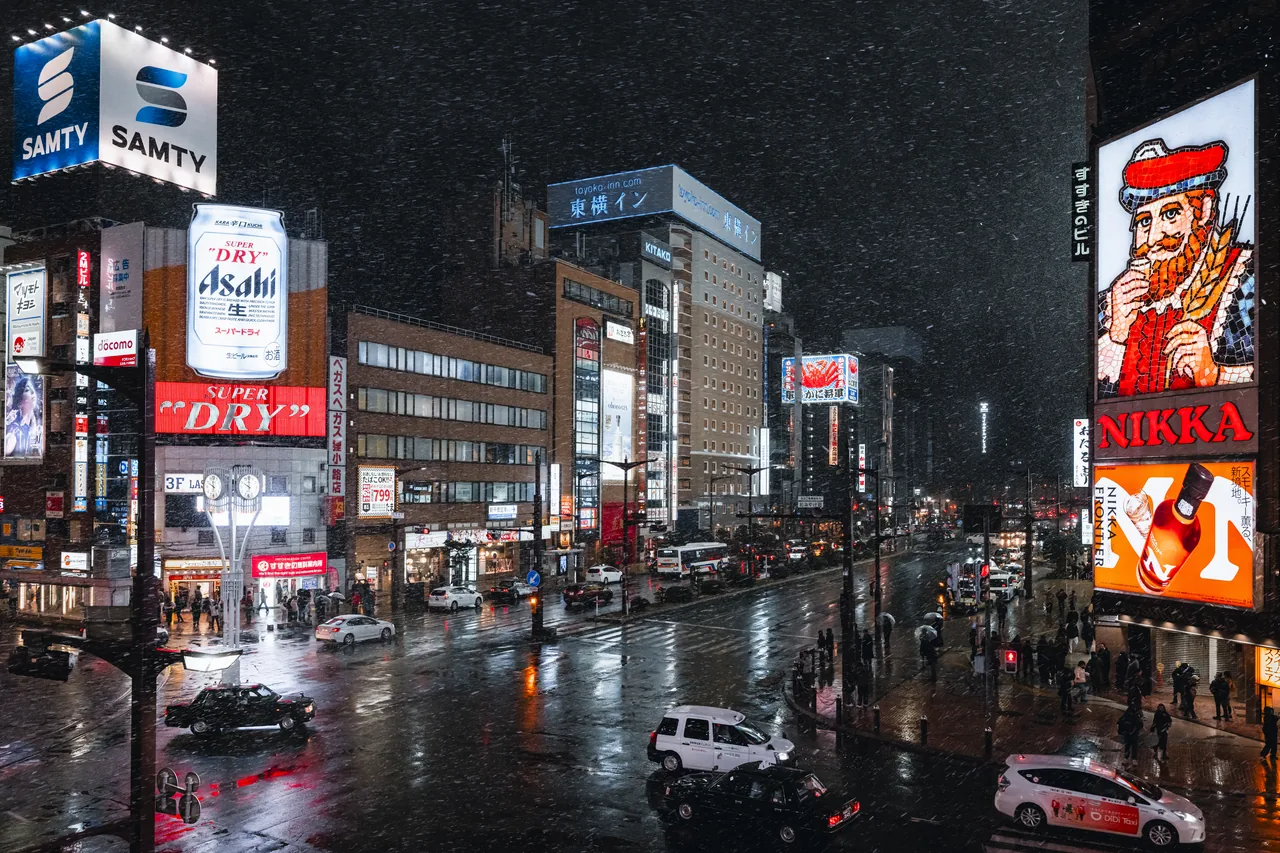
Four of Sapporo’s five accommodation zones sit on one subway line. The Namboku line runs through Sapporo Station, Odori, Susukino and Nakajima Park as four consecutive stops. The fifth zone, Jozankei Onsen, has no station and is reached by bus.
Central Sapporo uses a numbered grid for addresses. Odori ParkMap runs from West 1 to West 12. The Snow Festival site in Susukino runs from South 4 to South 6. Block numbers give you the distance between two points without a map.
| Line | Stations used in this guide | Note |
|---|---|---|
| Namboku (south-north) | Sapporo, Odori, Susukino, Nakajima Park | Four consecutive stops. All four central zones are on it. |
| Tozai (east-west) | Odori, Maruyama Koen | Runs west into the residential districts. |
| Toho | Sapporo, Odori, Hosui-Susukino | A second route along the same corridor. |
| Tram | Loop through Chuo ward | Serves Susukino, the west side of Nakajima Park and the approach to the Mount Moiwa ropeway. |
All three subway lines stop at Odori. It is the only interchange between them. Sapporo Station has two of the three, Namboku and Toho. Susukino has Namboku at Susukino station and Toho at Hosui-Susukino station, plus the tram.
Nakajima Park is one stop south of Susukino on the Namboku line. Susukino is one stop south of Odori. Odori is one stop south of Sapporo Station. The four zones are therefore within three subway stops of each other.
Jozankei Onsen is in Minami ward and is part of Sapporo. The bus from Sapporo Station takes about 60 minutes. Section 9 covers it in full.
Our main Japan travel guide covers the country-level planning that sits above any single city.
2. The five zones compared
Five zones hold most of Sapporo’s visitor accommodation. The table below lists what each one has. The sections that follow give the detail.
| Zone | Nearest station | Underground link | What is in the zone | Price level |
|---|---|---|---|---|
| Sapporo Station | Sapporo (JR, Namboku, Toho) | Yes, north end of the walkway | The station complex and department stores | Mid-range to high-end |
| Odori | Odori (all three subway lines) | Yes, south end of the walkway and both underground malls | Odori Park, the TV Tower, the arcades | Mid-range to high-end |
| Susukino | Susukino (Namboku), Hosui-Susukino (Toho), tram | Yes, through the Pole Town mall | Restaurants and bars at high density | Budget to mid-range, widest range |
| Nakajima Park | Nakajima Koen (Namboku), tram | No | A park, a concert hall, residential streets | Budget to mid-range |
| Jozankei Onsen | None, bus only | No | Hot spring lodgings in a river gorge | Higher than a central business hotel |
The zones are not stocked equally. The figures below are listing counts from one booking site on 8 August 2026, with no dates entered.
| Zone | Listings shown |
|---|---|
| Susukino | 214 |
| Odori | 96 |
| Nakajima Park | 82 |
| Jozankei Onsen | 36 |
In short: Susukino has the most listings, Odori has the most subway lines, Sapporo Station has the airport train, Nakajima Park has residential streets, and Jozankei has hot spring lodgings an hour outside the centre.
3. The underground walkway between Sapporo Station, Odori and Susukino
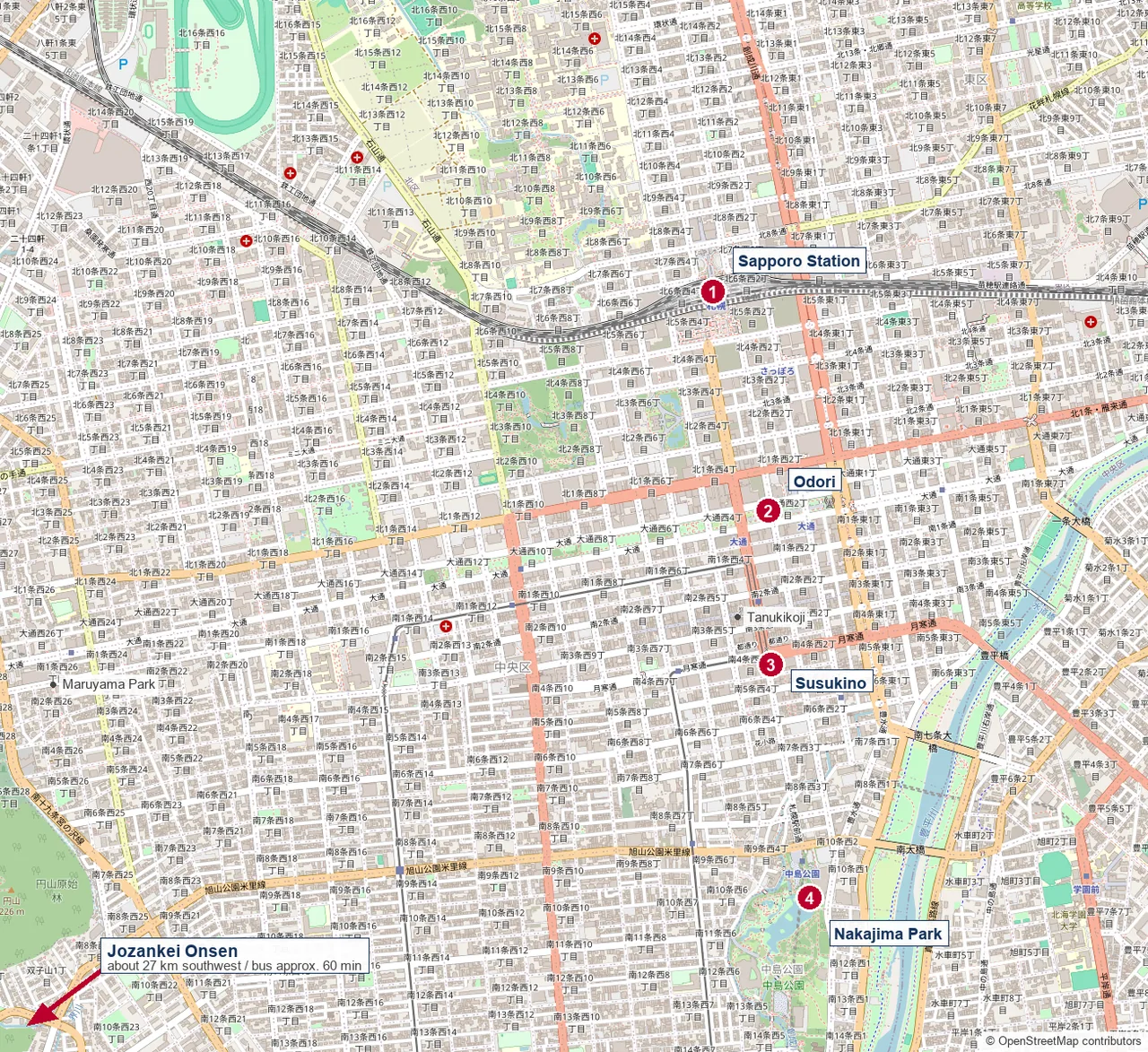
Three of the five zones are linked by a continuous indoor route. It is made up of a purpose-built walkway and two underground shopping malls.
| Section | What it is | Detail |
|---|---|---|
| Chi-Ka-Ho underground pedestrian space | Walkway beneath Ekimae-dori | Links subway Sapporo station to Odori station. 520 m long. Opened 12 March 2011. |
| Aurora Town and Pole Town | Underground shopping arcades meeting at Odori | Pole Town runs south to the Tanukikoji arcade and Susukino station. |
Joined together, these put Sapporo Station, Odori and Susukino on one indoor route. You can walk between the three zones without going outside. Tanukikoji shopping streetMap is itself covered, which extends the sheltered route sideways.
Three areas are not connected to it. Nakajima Park is one Namboku stop past Susukino, and the walkway does not reach it. Maruyama is on the Tozai line and is not connected. Jozankei is an hour away by bus.
This matters between December and March. Snow falls on 24 to 29 days a month in those four months, so an outdoor walk to the subway is repeated most days of a winter trip. Section 4 gives the monthly figures.
In August the walkway makes little difference. The mean temperature that month is 22.3 C and there is no snow. For a summer trip, pick the zone on what is in it rather than on the indoor route.
4. How often it snows in Sapporo, month by month
Snow falls on 29.1 days in an average January. The table gives the 1991 to 2020 climate normals for the Sapporo observation site, with August included for comparison.
| Month | Mean temp | Mean daily low | Snowfall total | Deepest snow depth | Days with snow |
|---|---|---|---|---|---|
| December | -0.9 C | -4.0 C | 113 cm | 47 cm | 27.9 |
| January | -3.2 C | -6.4 C | 137 cm | 76 cm | 29.1 |
| February | -2.7 C | -6.2 C | 116 cm | 95 cm | 25.3 |
| March | 1.1 C | -2.4 C | 74 cm | 82 cm | 24.5 |
| August | 22.3 C | 19.1 C | n/a | n/a | 0 |
January has the highest monthly snowfall total at 137 cm. February has the deepest recorded snow depth at 95 cm, which is the annual maximum. The deepest-depth column measures accumulated snow on the ground, not a single fall.
December and January both record snow on close to every day of the month. February and March are lower at 25.3 and 24.5 days. March has a mean temperature above freezing at 1.1 C, and a snowfall total of 74 cm, which is the lowest of the four winter months.
Mean daily lows stay between -2.4 C and -6.4 C from December to March. Outdoor walking distance between a hotel, a subway entrance and a restaurant is therefore a practical factor in those months. It is not a factor in August.
Our guide to when to visit Japan compares Hokkaido with the rest of the country. The December guide covers the first of the four winter months in more detail.
5. Sapporo Station area, including the construction work
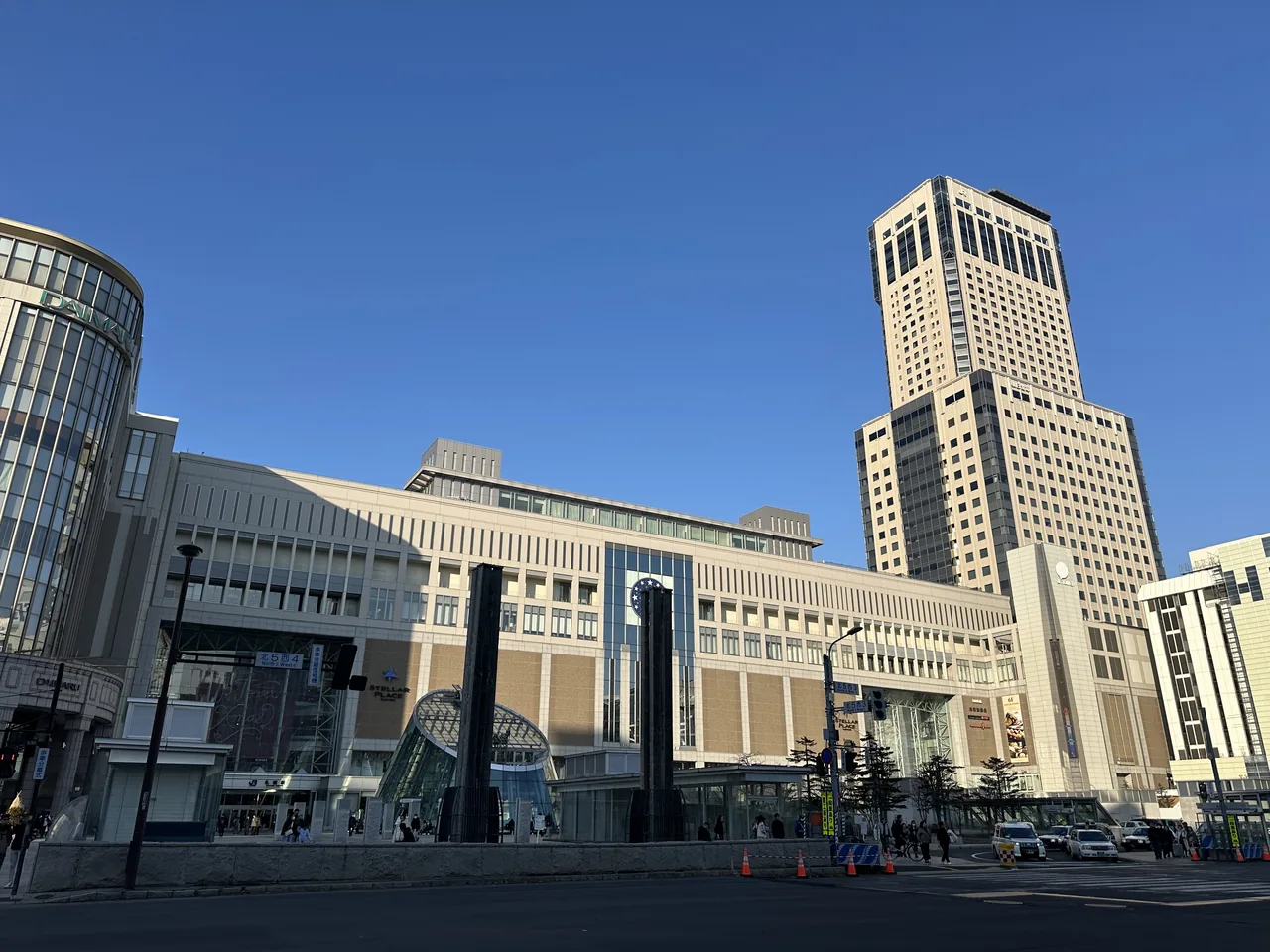
The airport train terminates at Sapporo StationMap. The Namboku and Toho subway lines start here. The underground walkway starts here. For a short trip, or a trip ending with an early flight, this is the shortest transfer of the five zones.
The zone is commercial. Daimaru and Stellar Place are in the station complex. The former Esta building has been demolished. Evening activity is lower than in Susukino, because most people in the area are travelling or shopping rather than eating out.
The south side of the station is a construction site and has been since 2023.
| Item | Status |
|---|---|
| Sapporo Station bus terminal | Closed on 30 September 2023. From 1 October 2023 services use temporary on-street stops on the south side. The closure is scheduled to last through fiscal 2028. |
| Scheduled sightseeing buses | Moved on 1 September 2023. The ticket counter is in the west concourse of JR Sapporo Station. Boarding is on the north side. |
| Kita 5 Nishi 1 and Nishi 2 redevelopment | On the Esta demolition site. The Nishi 2-chome portion is targeted for a fiscal 2027 construction start and fiscal 2030 completion, announced by JR Hokkaido on 21 March 2025 as advance works. The Nishi 1-chome plan is under review. |
| New bus terminal | Planned within the redevelopment, scheduled for fiscal 2028. |
| Hokkaido Shinkansen to Sapporo | Scheduled to open in 2038. |
For most visitors this affects arrival rather than the stay. If your itinerary includes a highway bus or a chartered sightseeing coach, confirm the stop with the operator on the day. The stops are on the street and have moved from the former terminal.
6. Odori: three subway lines, the park and the arcades
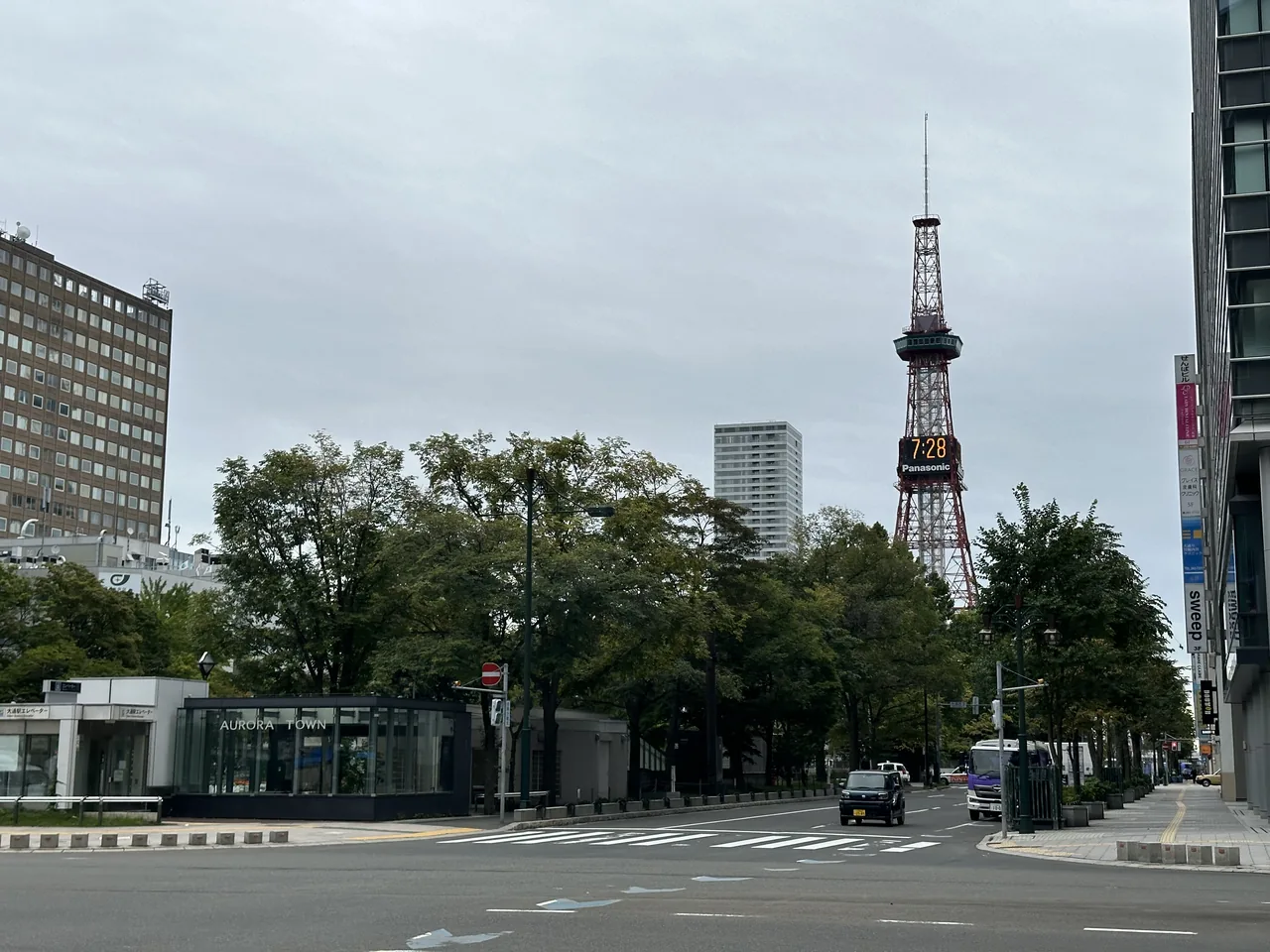
Odori is the only station where all three subway lines stop. It is one stop from Sapporo Station and one stop from Susukino on the Namboku line. It holds the south end of the underground walkway and the junction of the Aurora Town and Pole Town malls.
Odori Park runs through the zone from West 1 to West 12. Sapporo TV TowerMap stands at its east end. The Tanukikoji arcade runs parallel two blocks south, and connects to Susukino through Pole Town.
| Advantages | Disadvantages |
|---|---|
| All three subway lines stop here. | Fewer budget listings than Susukino. |
| Both underground malls meet at the station. | No direct train to the airport. Change at Sapporo Station. |
| The Snow Festival main site is in Odori Park. | During the Snow Festival the main site is directly outside. |
| Shopping arcades run above and below ground. | Street activity is higher than in Nakajima Park. |
The third row applies only in February. The Odori festival site occupies the park from West 1 to West 11. A hotel in this zone is inside the site rather than near it. Some visitors want that. Others prefer a hotel one subway stop away.
Odori suits a trip that moves in several directions each day, because every subway line is available without a transfer. It also suits travellers who want short indoor walks between the station, the malls and the arcade.
The department stores at the station end, the Tanukikoji arcade to the south and the two underground malls between them make this the main shopping area. The tax-free shopping rules set out what qualifies and what documents you need.
7. Susukino: restaurants, transport and the largest number of listings
Susukino has the highest concentration of restaurants and bars in Sapporo, and the most accommodation listings. It showed 214 listings on the count described in section 2, against 96 for Odori.
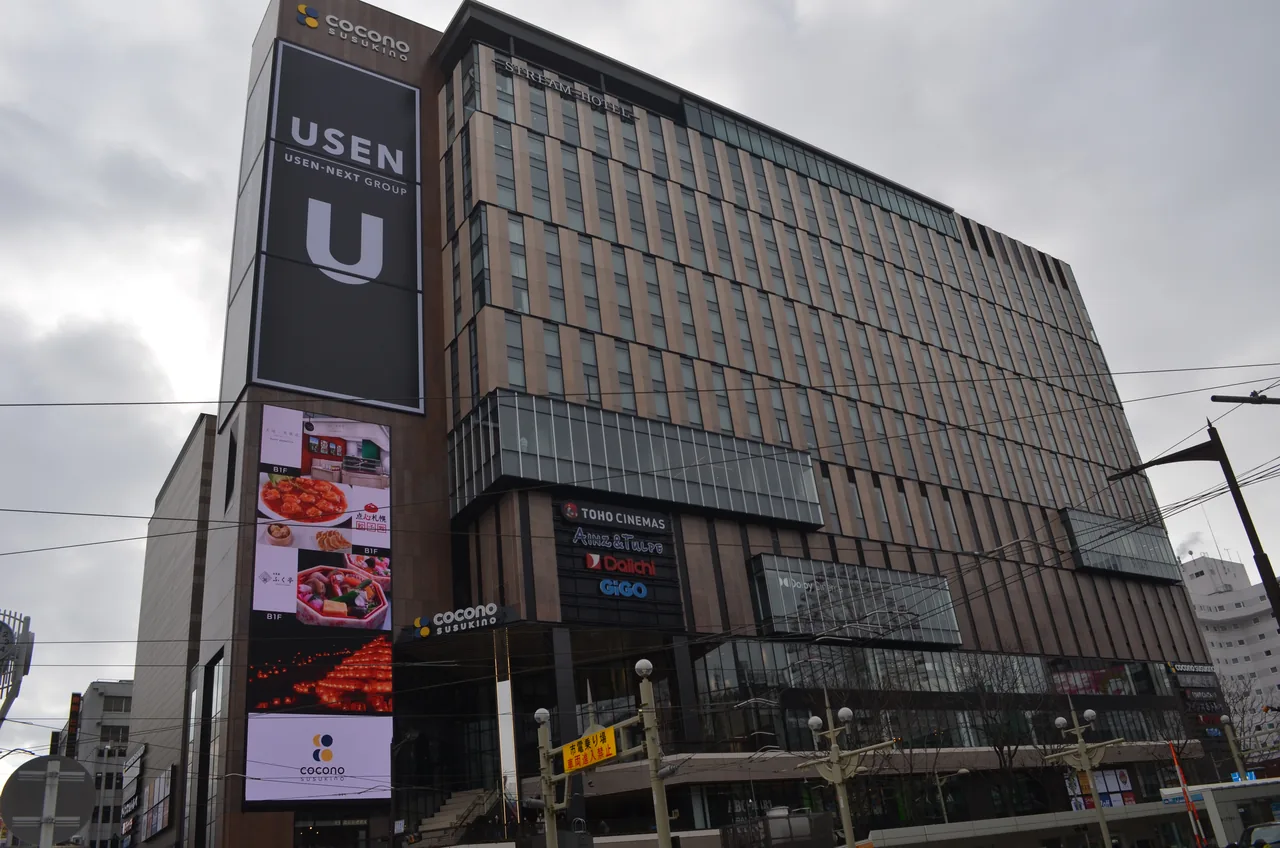
SusukinoMap has three transport options. Susukino station is on the Namboku line. Hosui-Susukino station is on the Toho line. The tram runs through the district. Pole Town connects it to Odori underground.
| Feature | What it is | Detail |
|---|---|---|
| COCONO SUSUKINO | Retail and leisure complex on the former Susukino Rafila site | First phase opened 30 November 2023 with 57 tenants. Second phase opened 31 January 2024. About 85 tenants in total, including a cinema. Developed by Tokyu Land. |
| SAPPORO STREAM HOTEL | Hotel in the same building | Opened 16 January 2024. |
| Ramen Yokocho | A lane of small ramen counters | A long-standing feature of the district. |
COCONO SUSUKINO added daytime facilities to the zone. A complex with about 85 tenants and a cinema gives the district daytime use, which it had less of before 2023.
The number of listings has one practical effect. When your dates are fixed, Susukino is the zone most likely to still have availability. This applies in February, when demand across the city is concentrated into the Snow Festival week.
Our guide to eSIMs and data in Japan covers the connectivity options. A working data connection is useful for navigating a grid of numbered blocks and covered arcades.
8. Nakajima Park: quieter, with no underground connection
Nakajima Park is one Namboku line stop south of Susukino and two from Odori. It is not connected to the underground walkway. The streets are residential rather than commercial.
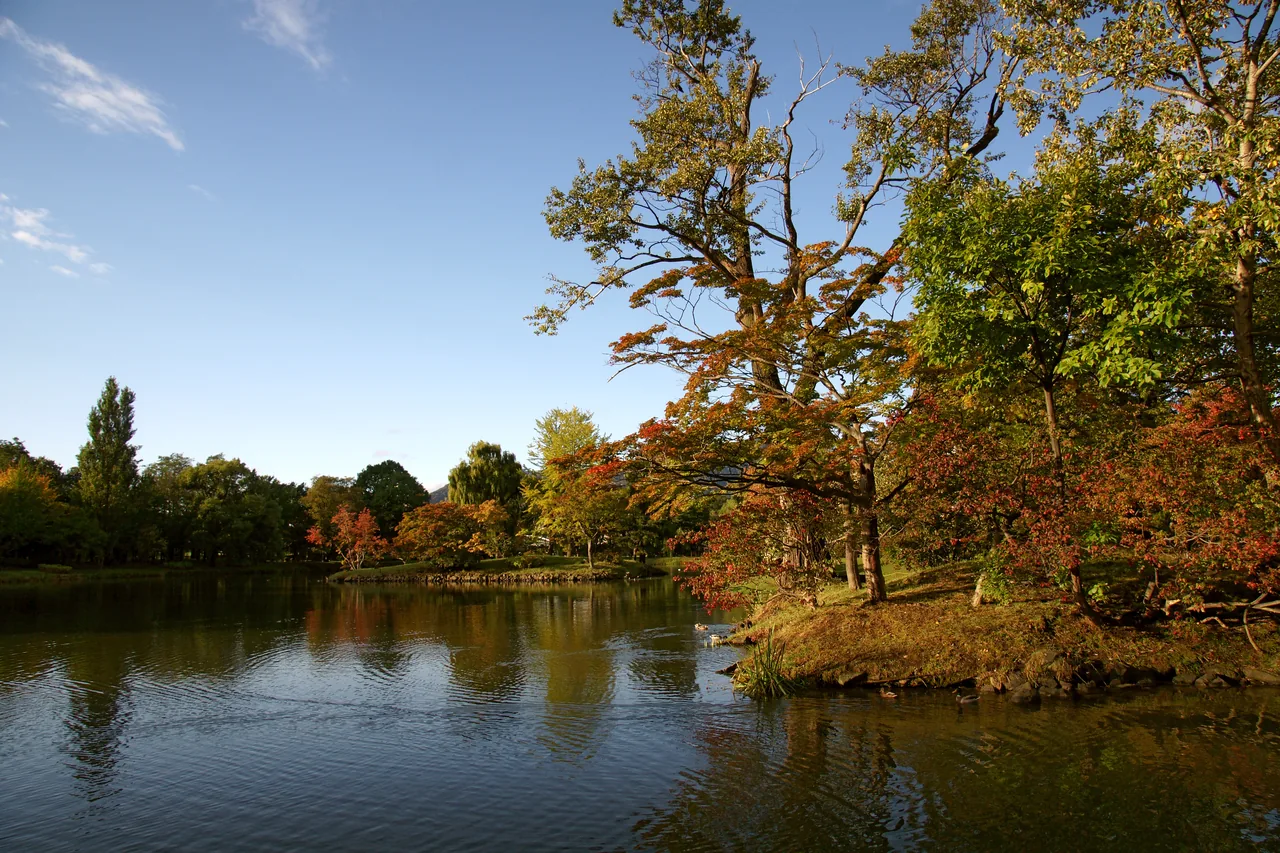
The zone is built around Nakajima ParkMap, a large park with a pond. Hoheikan stands inside the park. The Sapporo Concert Hall Kitara is at its southern end. The tram runs along the western side, which gives a second route out of the zone.
| Factor | Nakajima Park | Susukino |
|---|---|---|
| Underground link | None | Connected through Pole Town |
| Evening street activity | Residential | Entertainment district |
| Stops to Odori | Two | One |
| Listings shown | 82 | 214 |
| Price level | Budget to mid-range | Budget to mid-range, wider range |
The missing underground connection is the main practical difference in winter. Every trip out of a hotel here starts outdoors, whether you are walking to the subway entrance or the tram stop. Snow falls on 24 to 29 days a month from December to March.
The zone suits longer stays, because the streets are residential and the park is large. It suits travellers with small children for the same reason. It also suits anyone attending a concert at Kitara.
It is less suitable for a two-night winter trip where outdoor walking time is a factor, and for a trip built around eating in Susukino late in the evening. In both cases a zone on the underground route is closer to what you will be doing.
9. Jozankei Onsen: inside the city limits, reached by bus
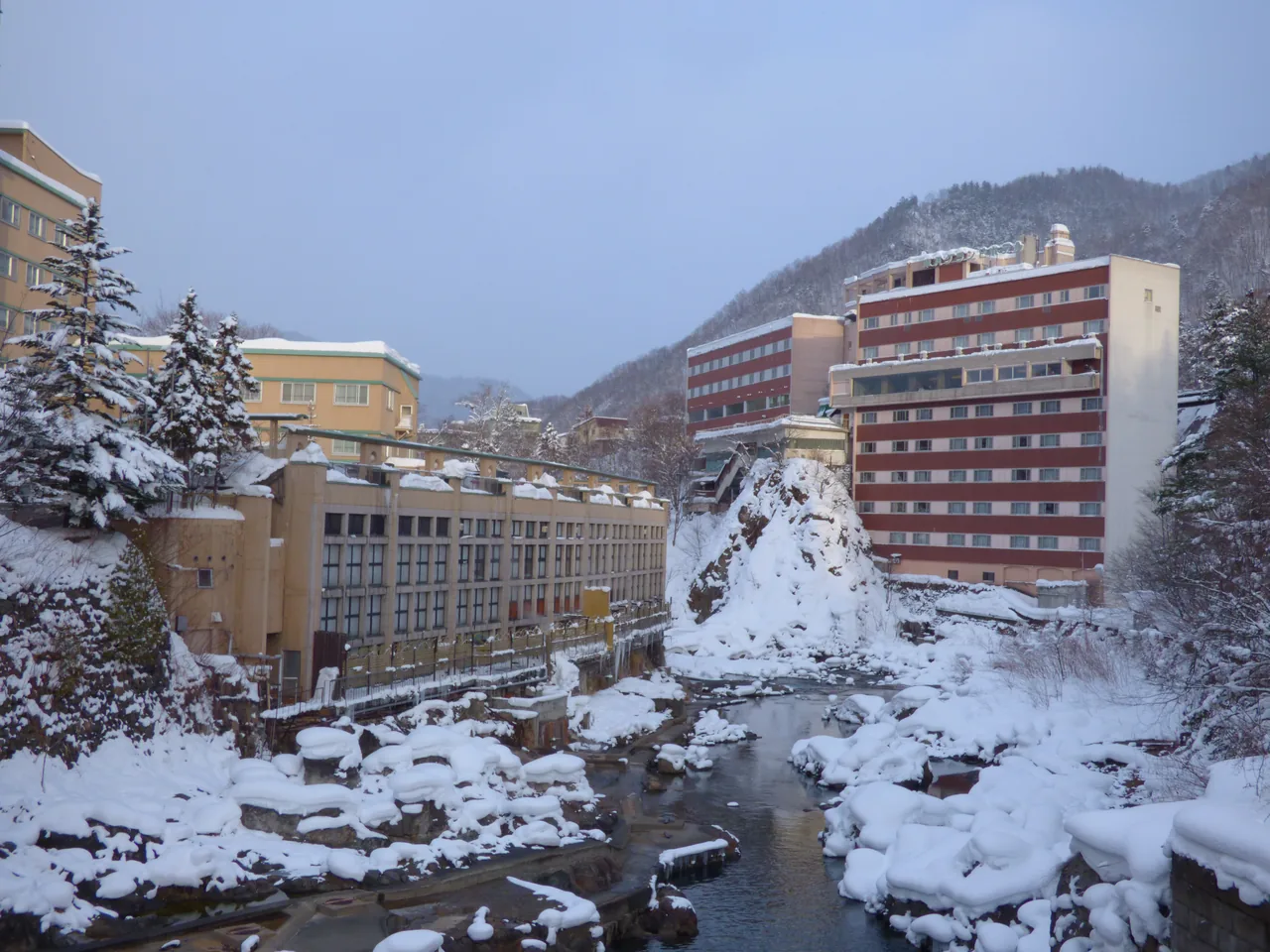
Jozankei Onsen is part of Sapporo, in Minami ward. No train reaches it. It is a hot spring area in the gorge of the Toyohira River, with lodgings grouped along the valley. The journey from Sapporo Station takes about 60 minutes by express bus.
| Route from Sapporo Station | Journey time | Fare | Notes |
|---|---|---|---|
| Kappa Liner (Jotetsu) | About 60 minutes | 1,700 yen, or 1,460 yen booked online | A reservation is required for every service. Seating is unreserved. Six year-round services plus two seasonal ones. |
| Regular route bus | Longer than the Kappa Liner | Not listed here | Makes more stops. |
A reservation is required for every Kappa Liner service, but seating is not allocated. Reservations open one month before travel and close at 17:00 on the previous day. If a service still has space, you can board on the day. That depends on availability and is not reliable in February.
The price level is above a central business hotel. Hot spring lodgings in Japan often include dinner and breakfast in the rate, so check what is included before comparing a Jozankei rate with a city rate. Our national onsen and ryokan guide explains how those rates are built. The etiquette guide covers bathing procedure.
Jozankei showed 36 listings on the count in section 2, the lowest of the four zones measured. A small number of properties means availability on a given date disappears in larger steps than in Susukino.
10. Maruyama, the New Chitose Airport area and Otaru
Three more areas come up in Sapporo accommodation searches. None of them suits most visitors as a base. Each is covered here so you can rule it in or out.
| Area | Position | Assessment |
|---|---|---|
| Maruyama and Enjin | Maruyama Koen station on the Tozai line. A residential district. | Few listings. Consider only for a specific property. |
| New Chitose Airport area | Chitose City, not Sapporo. | The airport is 33 to 37 minutes from Sapporo Station by JR. |
| Otaru | About 32 minutes from Sapporo by JR. | A day trip rather than a base. |
Maruyama is residential. Maruyama ParkMap and Hokkaido JinguMap are next to each other at the end of the Tozai line, with Okurayama beyond. The accommodation stock in the district is thin, so most searches return few results.
The airport area is in Chitose City and is outside Sapporo. Because the JR service reaches Sapporo Station in 33 minutes on the special rapid and 37 minutes on the rapid, an airport hotel saves a small amount of time on a departure morning. It puts you outside the city for the rest of the trip.
Otaru is about 32 minutes from Sapporo by JR. That is short enough for a day trip. Staying overnight means moving luggage twice. The main reason to consider it is a specific property or a late event in Otaru itself. What there is to see, and what a night there adds, is in our Otaru travel guide.
All three are workable if a particular property is the reason for the trip. For a general stay, the five zones in section 2 have more listings, shorter transfers and more restaurants within walking distance.
11. The lodging tax from 1 April 2026
Two lodging taxes apply to a night in Sapporo, one city and one prefectural. Both took effect for stays from 1 April 2026. Both are charged per person, per night. Neither is included in the booking total. They are collected at the property.
| Nightly accommodation charge | Sapporo City | Hokkaido | Total per person, per night |
|---|---|---|---|
| Under 20,000 yen | 200 yen | 100 yen | 300 yen |
| 20,000 yen up to 50,000 yen | 200 yen | 200 yen | 400 yen |
| 50,000 yen and above | 500 yen | 500 yen | 1,000 yen |
The tax is per person. A group of four pays four times the rate in the table, for each night. Material written before April 2026 describes a different situation, because the prefectural tax did not apply then.
The city defines the accommodation charge that sets the band. It is the amount payable for the stay. Where meals or banquet charges are included in that amount, the portion corresponding to those charges is deducted. Cleaning fees, bedding fees, bathing fees and sleepwear fees are included in the accommodation charge, together with any service or gratuity charge attached to them, where those items are billed regardless of what the guest chooses.
The exemptions are narrow. They cover participants and supervising staff on school excursions and school events run by institutions defined under Article 1 of the School Education Act, with universities excluded. They also cover children aged three and over, and their supervisors, on events organised by certified centres for early childhood education and care. Ordinary leisure travel is not exempt.
The tax is paid at the property, so carry a means of payment for it. Our guide to cash and cards in Japan covers where card payment is accepted.
One Hokkaido municipality uses a different method. Kutchan charges a percentage of the accommodation rate rather than a flat band. Sapporo uses the flat bands in the table above.
12. Getting from New Chitose Airport to central Sapporo
JR runs direct from New Chitose Airport to Sapporo Station. The fastest special rapid service takes 33 minutes. The fastest rapid service takes 37 minutes. Both cost 1,230 yen.
| Service | Fastest journey | Fare |
|---|---|---|
| JR Special Rapid Airport | 33 minutes | 1,230 yen |
| JR Rapid Airport | 37 minutes | 1,230 yen |
| u-Seat reserved seating | n/a | Add 1,000 yen, or 800 yen for a ticketless seat reservation |
The reserved seat supplement is optional. It guarantees a seat on the airport leg. With large luggage or on an evening arrival, that is the leg where a seat is most useful.
From Sapporo Station the onward journey is short. Odori is one stop on either the Namboku or the Toho line. Susukino is two stops on the Namboku line. Nakajima Park is three. Jozankei is reached by bus from the Sapporo Station area rather than from the airport.
The transfer for a Jozankei arrival day uses the temporary bus stops described in section 5. The former station bus terminal is closed.
On a departure morning, the airport train leaves from Sapporo Station. From the Sapporo Station zone that is one walk and one train. From Nakajima Park it is a subway journey with luggage first, then the train. This is the main practical argument for the station zone on a short trip.
13. Subway fares, day passes and the tram
The minimum subway fare is 210 yen and covers 1 to 3 km. Most journeys between the four central zones fall within that band.
| Ticket | Price | Conditions |
|---|---|---|
| Single subway ride, 1 to 3 km | 210 yen | Minimum fare band |
| Donichika Kippu | 520 yen | Subway only, one day. Saturdays, Sundays, public holidays and 29 December to 3 January. |
| Subway one-day pass including weekdays | 830 yen | Subway only |
The Donichika costs less than three minimum-fare rides. It is limited to weekends, public holidays and 29 December to 3 January. The weekday pass costs 830 yen and has no day restriction.
| Staying in | Stops to Odori | Stops to Sapporo Station |
|---|---|---|
| Sapporo Station | One, or an indoor walk | n/a |
| Odori | n/a | One, or an indoor walk |
| Susukino | One | Two |
| Nakajima Park | Two | Three |
| Jozankei Onsen | Bus, about 60 minutes to Sapporo Station | About 60 minutes by bus |
The tram runs a loop through Chuo ward. It serves Susukino, the western side of Nakajima Park and the approach to the Mount Moiwa ropeway. It is a second route out of the Nakajima Park zone.
A stored-value card removes the need to buy a ticket for each journey. Our IC card guide covers which cards work in which regions of Japan and what else they can be used for.
14. The 2027 Snow Festival dates and sites
The 77th Sapporo Snow Festival runs from Thursday 4 February to Thursday 11 February 2027. It lasts eight days and uses three sites.
| Site | Location | Nearest zone |
|---|---|---|
| Odori | Odori Park, West 1 to West 11 | Odori. A hotel in the zone is inside the site. |
| Susukino | Ekimae-dori, South 4 to South 6 | Susukino. Within the district. |
| Tsudome | TsudomeMap, the city sports exchange facility | None. Reached by transport from any of the five zones. |
A related event follows immediately. The Sapporo Snow Sports Park 2027 runs from Friday 12 February to Sunday 14 February at the Daiwa House Premist Dome. Dates just after the festival are therefore not necessarily quiet.
Some articles state that Sapporo hotels sell out a specific number of months before the festival. Those figures have no traceable source and are not repeated here. What is documented is the overlap above and the listing counts in section 2, where Jozankei has the fewest listings of the four zones measured.
For the festival week, the zone choice follows the site. Odori puts you inside the main site. Susukino puts you inside the Susukino site. A hotel one Namboku stop from either lets you visit at a time you choose. The Tsudome site requires transport from all five zones.
15. Which zone to pick for different trips
The five zones rank differently depending on the length of the trip, the season and the group. The table gives a starting point for each case.
| Trip | Zone | Reason |
|---|---|---|
| First visit, three or four nights, winter | Odori | All three subway lines. Both ends of the underground route. Central position. |
| Two nights, early flight out | Sapporo Station | The airport train leaves from the station. No luggage transfer. |
| Trip built around restaurants | Susukino | Highest restaurant density. Two subway lines and the tram. |
| Family with young children | Nakajima Park | Residential streets. A large park. One stop from Susukino. |
| Hot spring stay | Jozankei plus city nights | Split the stay. The bus takes about 60 minutes each way. |
| Seven nights or more | Nakajima Park or Odori | Residential streets or central position, depending on preference. |
| Snow Festival week, February 2027 | Odori or Susukino | Each hosts one of the three sites. |
| Summer trip | Any of the five | No snow in August. The underground route is less relevant. |
Splitting a stay between two zones is common in Sapporo because of Jozankei. Two nights at the hot spring and three in the centre is one arrangement. Five nights at the hot spring with daily journeys into the city adds about two hours of travel to each of those days.
For a first winter visit, Odori covers the most cases. For a two-night trip, the Sapporo Station zone removes one luggage transfer. For a food-led trip, Susukino has the most restaurants and three ways back to a hotel.
Our other city hubs cover the same questions elsewhere: where to stay in Tokyo, where to stay in Osaka and where to stay in Fukuoka.
16. What to check before booking
Seven checks cover the details that vary between properties and zones in Sapporo. Each one is verifiable before you confirm a booking.
| Check | Reason |
|---|---|
| The property’s own walking directions | The underground route serves the subway stations and the buildings connected to it. The zone name does not confirm an indoor route to a specific address. |
| Distance to the nearest subway entrance | Snow falls on 24 to 29 days a month from December to March. |
| That the lodging tax is paid on arrival | It is not in the booking total. It is charged per person, per night, and two taxes apply. |
| Whether the rate includes meals | Hot spring rates at Jozankei often include dinner and breakfast. City rates often do not. |
| Kappa Liner reservations for Jozankei | Every service requires a reservation. Booking closes at 17:00 the previous day. |
| Bus stop locations at Sapporo Station | The terminal closed in 2023. Services use temporary on-street stops. |
| Your dates against 4 to 11 February 2027 | The Snow Festival runs in that week, and a regional holiday overlaps it. |
Property descriptions are the most reliable source on immediate surroundings, particularly in Susukino, where the character of the street changes within a hundred metres. Read what the property states about its own block.
Decide whether a Jozankei night is in the plan before booking anything. That decision changes how many city nights you need and which zone they should be in.
17. Summary of the zone recommendations, and a note on skiing
Odori covers the most cases. All three subway lines stop there, it holds both ends of the underground route, and Odori Park, the TV Tower and the arcades are within walking distance.
| Situation | Zone | Reason |
|---|---|---|
| General first choice | Odori | Three subway lines. Central position. Short indoor walks. |
| Short trips | Sapporo Station | The airport train terminates there. Construction work is on the south side. |
| Most listings and most restaurants | Susukino | 214 listings on the count in section 2. Two subway lines and the tram. |
| Quieter streets | Nakajima Park | Residential area, one stop from Susukino. No underground connection. |
| Hot spring stay | Jozankei Onsen | One or two nights. About 60 minutes by bus each way. |
On skiing: if lifts are the purpose of the trip, the accommodation question is a different one. The resort areas are separate villages with their own internal districts. Their accommodation includes a high proportion of self-catering units, where kitchens, laundry, cleaning frequency and towel provision vary between properties. At least one resort municipality charges its lodging tax as a percentage of the rate rather than as a flat band. Our skiing and snowboarding guide covers that.
Most visitors to Hokkaido are not skiing. For them, Sapporo has an underground pedestrian route through the centre, three subway lines meeting at one station, a tram loop, a direct airport train and a hot spring area inside the city boundary.
Pick the zone first, using the table above and the snowfall figures in section 4. Then pick the property within that zone, using the checks in section 16.