
Hakone Day Trip from Tokyo vs an Overnight Stay: Is One Day Enough?
Yes, you can do Hakone in a day from Tokyo — it is about 80 to 90 minutes from Shinjuku, and the famous loop ties together a mountain train, a cable car, a ropeway over a volcano, a pirate ship and a red gate in a lake. The catch is that it is tight, Owakudani can close without warning, and the onsen-ryokan soul of Hakone really wants an overnight. Here is how to do it well anyway.
| A Hakone day trip from Tokyo is realistic but tight. The fastest way there is the Odakyu Romancecar limited express from Shinjuku, about 80 to 85 minutes direct. Plan on roughly seven to eight hours on the ground with an early start — enough for the full loop plus one attraction, not the loop plus several museums. | |
| The Hakone Free Pass is the default smart buy for a full loop. The 2-day pass from Shinjuku is ¥7,100 and covers eight transport modes unlimited. Paying per leg for the whole loop tops ¥8,000, so the pass usually wins — but the Romancecar surcharge is extra, even with the pass. | |
| The ropeway is the binding constraint on your whole day. It closes earliest of the loop links (around 16:45, earlier in winter) and can suspend for high wind or volcanic gas. Clear it by mid-afternoon, and check its live status the morning you travel. | |
| Check Owakudani is open before you commit. The volcanic valley sits at Alert Level 1 and is open as of 2026, but it has closed for months before (a small 2015 eruption). Its status the morning of your trip is the single biggest day-of risk. | |
| Decide day trip versus overnight onsen first. A day trip gets you the Big Three — pirate ship, Owakudani, Peace Torii — but it is rushed, and the in-room rotenburo and kaiseki dinner that make Hakone special need a night. Pick one deliberately before you book. |
1. Can you really do a Hakone day trip from Tokyo?
2. Day trip or an overnight onsen stay? (read this first)
3. How do you get to Hakone from Tokyo?
4. The Hakone Free Pass: is it worth it?
5. The Hakone Loop: the eight-transport circuit
6. Owakudani: the volcanic valley and black eggs
7. Lake Ashi, the pirate ship and the Peace Torii
8. Can you actually see Mt Fuji from Hakone?
9. Can a day-tripper soak in a Hakone onsen?
10. The museums: Open-Air, Pola, Glass Forest and Okada
11. Old Hakone: the checkpoint, cedar avenue, gardens and Gora
12. Hakone-Yumoto: the gateway town and what to eat
13. When is the best time to visit Hakone?
14. Hakone vs Nikko vs Kamakura vs Kawaguchiko
15. DIY or a guided tour from Tokyo?
16. A realistic one-day Hakone plan (hour by hour) and tips
17. What to read next
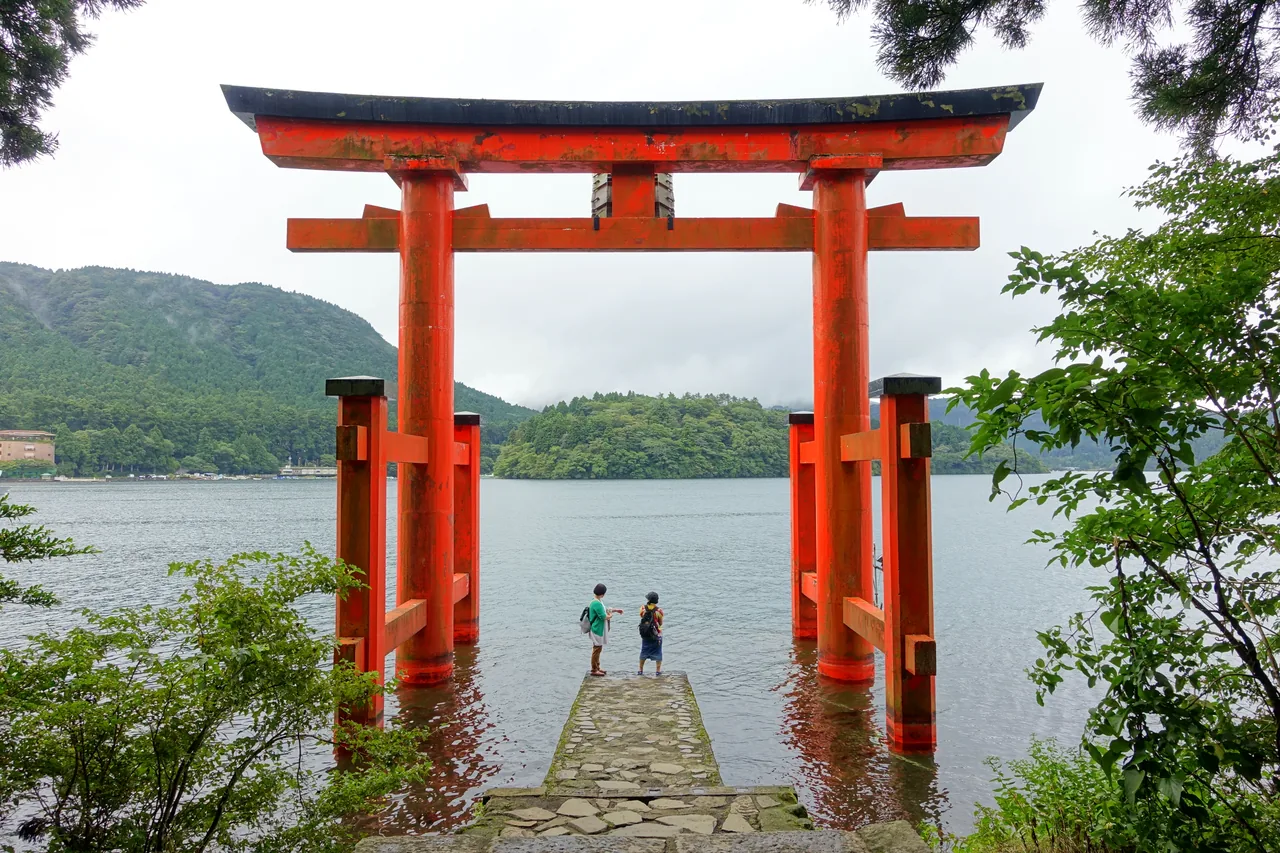
1. Can you really do a Hakone day trip from Tokyo?
Yes — a Hakone day trip from Tokyo is genuinely doable, and at about 80 to 90 minutes from Shinjuku it is one of the easier big day trips out of the city. With an early start you can ride the full “Hakone Loop” and add one headline attraction, all on a single ticket and back in Tokyo for dinner.
The real framing, though, is that the day is tight. You will spend around three hours total on transport, which leaves roughly seven to eight hours to actually do things. That is enough for the loop — the mountain train, cable car, ropeway over OwakudaniMap, the pirate-ship cruise on Lake AshiMap, and the bus back — plus one stop such as the open-air museum or the lakeside shrine. It is not enough for the loop plus two museums plus a leisurely onsen plus the old checkpoint. Try to cram all of that and you will spend the day watching timetables instead of scenery.
So the first decision is what you actually want from Hakone. If you want the greatest-hits circuit and a taste of the place, a day works. If you want the soak-in-an-onsen-ryokan-and-eat-kaiseki version that Hakone is genuinely famous for, that wants an overnight — and the next section tackles that trade-off head-on. Either way, pick your focus before you book, because Hakone rewards doing one thing well over rushing five things.
2. Day trip or an overnight onsen stay? (read this first)
Do Hakone as a day trip if you mainly want the loop and the famous sights; stay overnight only if you will commit to an onsen ryokan with a kaiseki dinner and a private hot-spring bath. This is the real fork in the road, and it is worth being honest with yourself before you spend money.
What the day trip gives you — and what it misses
A day trip absolutely delivers the postcards: the pirate ship across Lake AshiMap, the steam vents and black eggs of Owakudani, and the vermillion Peace Torii standing in the water. You will see the “Big Three” and feel like you have been to Hakone. What it misses is the thing Hakone is most loved for — the slow evening in a ryokan, the multi-course kaiseki dinner, the long quiet soak in an outdoor bath after the day-trippers have all gone home. On a day trip you are gone by late afternoon, which is exactly when Hakone gets peaceful.
When the overnight is worth it
An overnight is worth it only if you actually book a proper ryokan experience — one with an in-room or private rotenburo (open-air bath) and a kaiseki dinner. A night in a generic business hotel near the station, without the food and the bath, gives you very little the day trip does not. If you are going to stay, stay properly. The payoff is real: it turns Hakone from a sightseeing circuit into a restful experience, and it gives you a second morning to catch Mt Fuji if day one clouds over.
If you are leaning day trip, read on. If you are leaning overnight, everything below still applies to your daytime hours.
3. How do you get to Hakone from Tokyo?
There are three sensible ways from Tokyo to Hakone: the direct Odakyu Romancecar, the cheaper Odakyu express with a transfer, or the JR shinkansen via Odawara for rail-pass holders. The Romancecar is the comfortable default; the express saves money if you do not mind standing; the shinkansen suits anyone already holding a JR Pass.
| Mode | Time (each way) | Fare | Reserve? | Notes |
|---|---|---|---|---|
| Odakyu Romancecar (limited express, Shinjuku → Hakone-Yumoto) | ~80–85 min, direct | ¥2,470 (¥1,270 base + ¥1,200 limited-express surcharge; ¥2,420 with a digital ticket) | Yes — all seats reserved | Comfortable, no transfer. Book from 10:00 JST one month ahead via the EMot / e-Romancecar app. Popular slots sell out. |
| Odakyu regular Express (急行) + transfer at Odawara | ~2 hrs, 1 transfer | ¥1,270 (base fare only) | No | Saves the ¥1,200 surcharge but slower and often standing-room. The budget option. |
| JR Tokaido Shinkansen (Kodama) → Odawara → Hakone Tozan line | ~30–35 min to Odawara + ~15 min | ~¥3,500 to Odawara, then ~¥360 Odawara→Yumoto (NOT on JR Pass) | Shinkansen seat optional | For JR Pass holders. Only Kodama and stopping Hikari trains halt at Odawara, not Nozomi. |
| Odakyu Hakone Highway Bus (Shinjuku → Lake Ashi) | ~2 hrs+ | ~¥2,200 | Yes | Covered by the Free Pass on designated sections. Useful if a lakeside spot is your first stop. |
Realistic door-to-door times land around an hour and a half on the Romancecar and two hours-plus by express or bus. The Romancecar is the one to beat: it is direct, comfortable, and drops you right at Hakone-Yumoto StationMap, the gateway where the loop begins.
If you are weighing whether a rail pass fits your wider trip, our rail pass and shinkansen explainer walks through the reservation process.
4. The Hakone Free Pass: is it worth it?
For a full loop day, yes — the Hakone Free Pass almost always pays for itself, because paying per leg for the whole circuit tops ¥8,000 while the 2-day pass from Shinjuku is ¥7,100. The exception is a stripped-down trip where you only go up to the lake and back; then pay per leg instead.
What it costs
- 2-day from Shinjuku: ¥7,100 adult / ¥1,600 child. From Odawara: ¥6,000 / ¥1,500.
- 3-day from Shinjuku: ¥7,500 adult / ¥1,850 child. From Odawara: ¥6,400 / ¥1,750.
What it covers
The “from Shinjuku” pass includes the round-trip Odakyu base fare between Tokyo and Hakone, plus unlimited rides on eight transport modes inside the area: ① the Hakone Tozan Railway, ② the Tozan Cable Car, ③ the Hakone Ropeway, ④ the Lake Ashi sightseeing cruise (the pirate ships), ⑤ the Hakone Tozan Bus, ⑥ the Odakyu Hakone Highway Bus, ⑦ the Tokai Bus, and ⑧ the sightseeing attraction bus. On top of that you get discounts at around 70 facilities — museums, gardens, some onsen.
When it is — and is not — worth it
The pass wins on a normal full-loop day, because a la carte the loop legs add up fast (the cable car, ropeway, cruise and buses each cost real money) and you also unlock the attraction discounts. It does not pay off if you are only doing Hakone-Yumoto StationMap up to Lake AshiMap and straight back — that is roughly ¥5,000 all-in, so paying per ride is cheaper. Buying online before you go saves queuing at the station.
Pair the pass with a tap-and-go Suica or ICOCA IC card for the things the pass does not cover — vending machines, conbini, and any non-Odakyu top-up.
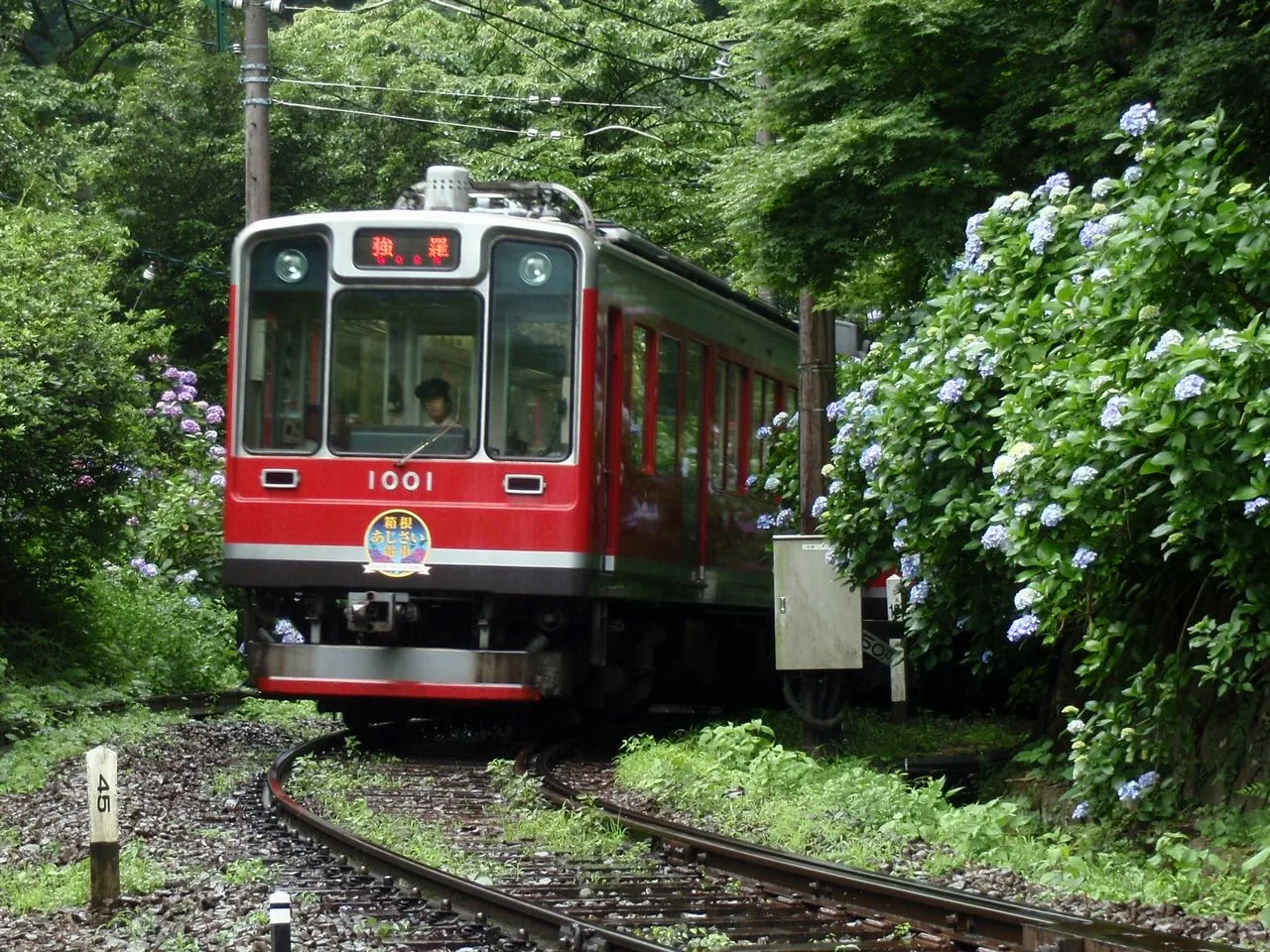
5. The Hakone Loop: the eight-transport circuit
The “Hakone Loop” is a one-way circuit that strings together eight different modes of transport — a switchback mountain train, a funicular, a ropeway over a volcano, a pirate ship, and buses — and it is the single best thing about a Hakone day. The standard counter-clockwise sequence takes four to five hours brisk, six to eight relaxed, before you add meals or attractions.
| Leg | Mode | Time | Notes |
|---|---|---|---|
| 1. Hakone-Yumoto → Gora | Hakone Tozan Railway (mountain train) | ~40 min | Three switchback zig-zags up the mountain; departs every 7–15 min. A highlight in itself, especially in hydrangea season. |
| 2. Gora → Sounzan | Tozan Cable Car (funicular) | ~10 min | Climbs 209 m; about every 15 min. Covered by the Free Pass. |
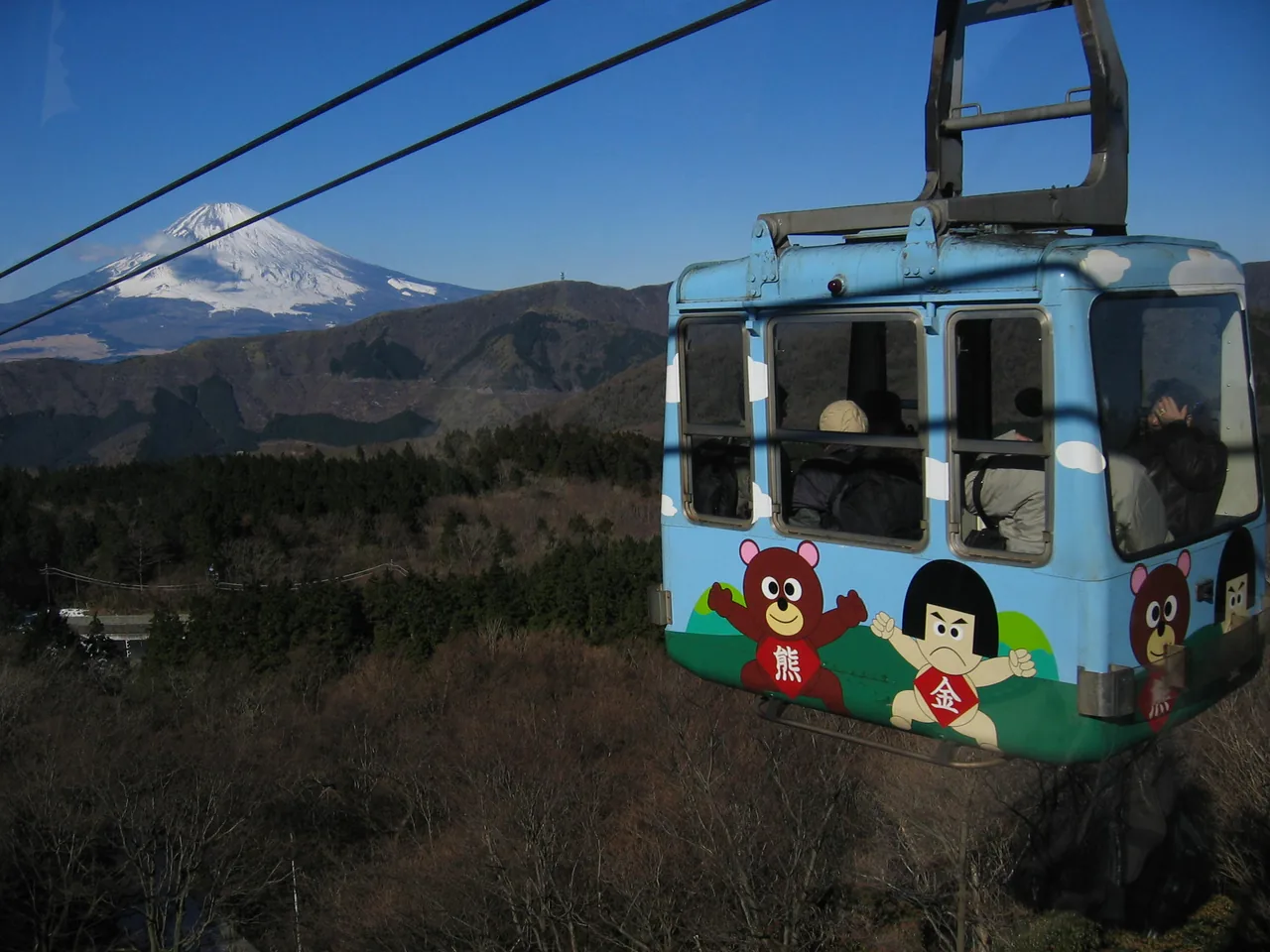
| 3. Sounzan → Owakudani → Togendai | Hakone Ropeway | ~30 min full length | Gondola roughly every minute. The best Mt Fuji moment comes as you crest toward Owakudani. |
| 4. Owakudani stop | (on foot) | 20–30 min | Volcanic valley, black eggs. Cap your time here to stay on schedule. |
| 5. Togendai → Moto-Hakone / Hakone-machi | Lake Ashi sightseeing cruise (pirate ship) | ~25–40 min | Fuji and the red torii from the water on a clear day. |
| 6. Moto-Hakone → Hakone-Yumoto | Hakone Tozan Bus | ~35–40 min | Frequent; closes the loop back at the gateway town. |
The one rule that governs your whole day
Which direction?
Counter-clockwise (the table above) is the default and flows naturally from Hakone-Yumoto. Going clockwise — bus out to the lake first, scenic train downhill at the end — can dodge crowds on a busy day, since you hit the popular ropeway before the tour groups. Both work; pick based on crowds and your start time.
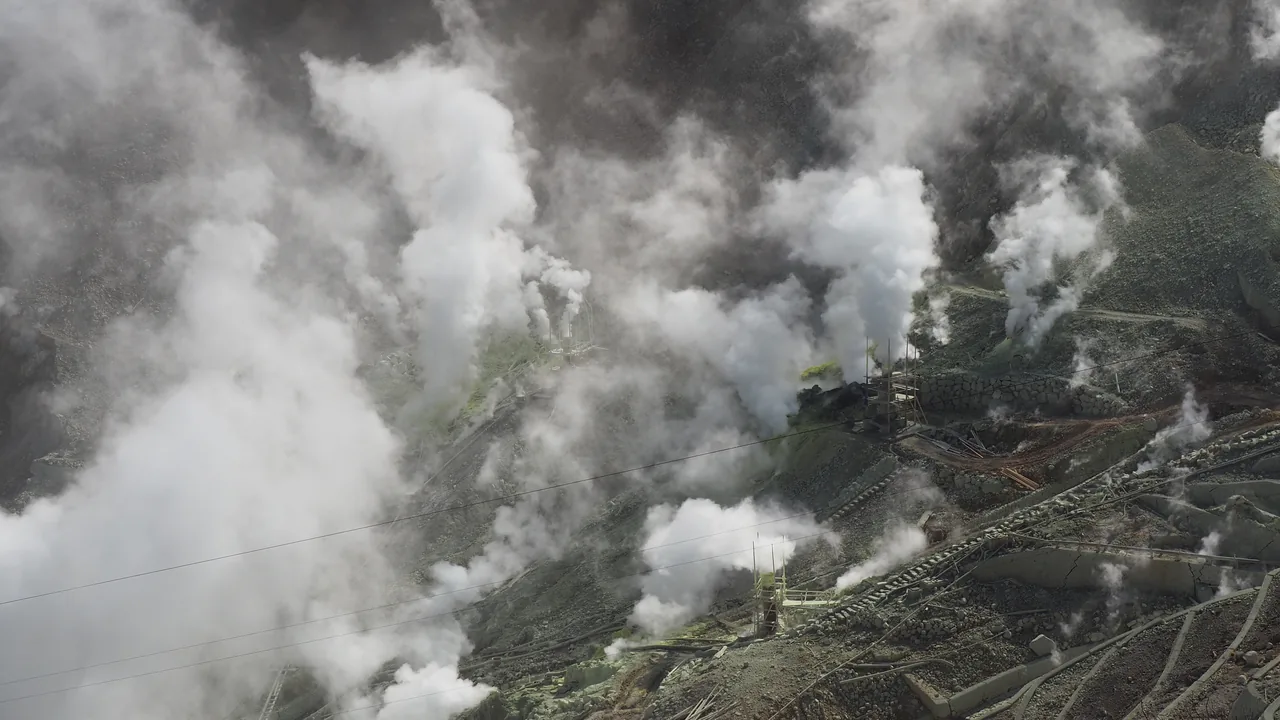
6. Owakudani: the volcanic valley and black eggs
OwakudaniMap is a live volcanic valley of hissing sulfur vents and bubbling pools, reached only by the ropeway, and its signature snack is the kuro-tamago — a black egg boiled in the sulfur springs that legend says adds seven years to your life. It is the most dramatic stop on the loop, but it is also the one most likely to ruin your day if you do not check its status first.
The valley was carved by the eruptions of Mt Hakone roughly 3,000 years ago, and it is still venting today. As the ropeway crests the ridge from Sounzan, the whole basin opens up below you — steam pouring from the hillside, the smell of sulfur, the pools that turn the eggs black. The eggs are sold at the station shop area; the shell goes black from the iron and sulfur, the inside is just a normal hard-boiled egg. The station itself was renovated with a new glass observation deck and reopened in April 2025, so the main viewing experience is in good shape.
The eruption history
On 30 June 2015 a small phreatic (steam-driven) eruption raised the alert to Level 3 and closed the area for months. At Level 2 or above, the trails, the ropeway, and the whole valley can shut. So while it is open now, treat an open Owakudani as a bonus you confirm the morning of, not a guarantee.
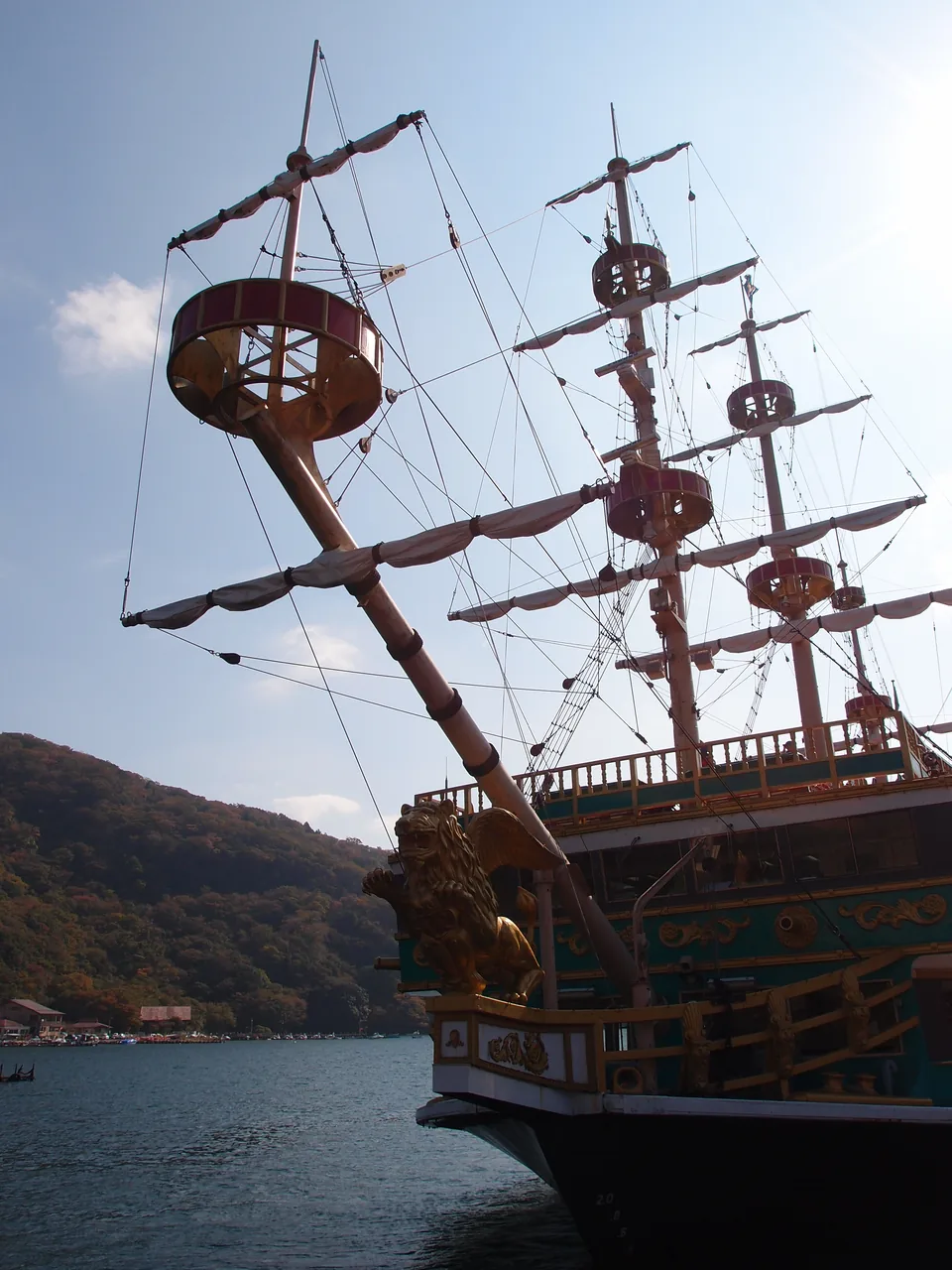
7. Lake Ashi, the pirate ship and the Peace Torii
Lake AshiMap is the caldera lake at the heart of Hakone, and crossing it on a galleon-styled “pirate ship” toward the red Peace Torii is the trip’s signature image — touristy, a little cheesy, and genuinely worth it on a clear day. The cruise is included in the Free Pass, and the payoff is Mt Fuji and the floating torii framed from the water.
The pirate ship, honestly
Let us be straight: the sightseeing cruise boats — the Royal II, the Victory, the Queen Ashinoko — are dressed up as European galleons with gold trim and figureheads, and the theming has nothing to do with Hakone’s actual history. It is unapologetically a tourist gimmick. That said, the boats are a comfortable, free-with-the-pass way to cross the lake, the open decks give you the best angle on Fuji-behind-the-torii, and kids love them. Take it for what it is: a pleasant 25-to-40-minute ride with a great view, not a cultural experience.
Hakone Shrine and the Peace Torii
The real draw at the south end of the lake is Heiwa no ToriiMap, the vermillion “Peace Torii” gate that stands in the water just offshore. Built in 1952, it is Hakone’s most photographed sight, especially with Fuji behind it. It belongs to Hakone ShrineMap, whose main hall sits up a cedar-lined flight of steps in the forest a short walk inland. The shrine grounds are free, and the torii is a 5-to-10-minute walk from the Moto-Hakone pier.
8. Can you actually see Mt Fuji from Hakone?
You can see Mt Fuji from Hakone on a clear day — from Lake Ashi, Owakudani, the ropeway and a couple of lakeside viewpoints — but the mountain is hidden by cloud more than half the year, so treat it as a bonus, not the main event. If a huge, looming Fuji is the whole point of your trip, Hakone is not the best choice.
Where and when Fuji appears
On a clear day, the best Hakone Fuji moments are from the cruise and the Moto-Hakone shore (Fuji rising behind the Peace Torii), from Owakudani, from the ropeway as you crest the ridge toward the valley, and from the lakeside viewpoint at the Onshi-Hakone ParkMap (the old imperial detached palace garden). The reliability problem is the same as everywhere around the mountain: Fuji makes its own weather. It is clearest from October through April, with the best odds in December and January when the cold, dry air gives more than a fifty-fifty chance of a clear view and the peak is snow-capped. Early morning is best. In summer and the June rainy season you will often see nothing but haze.
Hakone or Kawaguchiko for Fuji?
This is the key distinction. From Hakone, Fuji is distant — a beautiful backdrop across the lake, but small on the horizon. At Lake Kawaguchi the mountain looms at the base, filling the frame. So if Fuji itself is your goal, go to Kawaguchiko; if you want a varied mountain-and-onsen day with Fuji as a bonus, Hakone is your trip. We compare the two in detail in our Mt Fuji and Kawaguchiko day-trip guide.
For the wider seasonal picture across Japan, see our best time to visit breakdown.
9. Can a day-tripper soak in a Hakone onsen?
Yes — you do not need an overnight to soak in a Hakone onsen, because several hot springs offer day-use (higaeri) bathing, and a couple of them solve the tattoo problem too. Hakone is one of Japan’s premier onsen districts, and even on a tight day you can fit in a bath before your train back.
The day-use options
- Hakone Kowakien Yunessun — a spa resort and onsen water-park near Kowakidani, with both a swimsuit zone (the novelty wine, coffee and green-tea baths) and a traditional nude “Mori no Yu” zone. The day pass runs roughly ¥2,800–3,500 depending on season. Crucially, tattoos are fine in the swimsuit water-park zone, which makes it the easiest choice for tattooed visitors and for families who want a relaxed, clothed soak.
- Tenzan Onsen (Tenzan Tojikyo) near Yumoto — a traditional, atmospheric nude bathhouse with outdoor rock pools, about ¥1,450. Tattoos are tolerated in the baths but with a one-tattooed-person-per-group rule, and you should cover up in the café and shop areas.
- Hakone Yuryo near Yumoto (free shuttle from the station) — a modern complex with private rentable baths. Its general tattoo policy is inconsistent, but renting a private bath sidesteps the issue entirely.
The tattoo reality
Most traditional nude onsen in Hakone still refuse guests with visible tattoos. If you have ink, your reliable routes are the Yunessun swimsuit zone, Tenzan (solo, or with a tattoo cover patch), or renting a private bath (kashikiri-buro) anywhere that offers one. A small waterproof cover-up patch over a tiny tattoo is also widely accepted.
Whichever you choose, the basic etiquette is the same: wash thoroughly at the seated showers before getting in, no swimwear in the nude baths, no towels in the water, tie up long hair. Our Japan etiquette primer covers the bathing rules in full.
10. The museums: Open-Air, Pola, Glass Forest and Okada
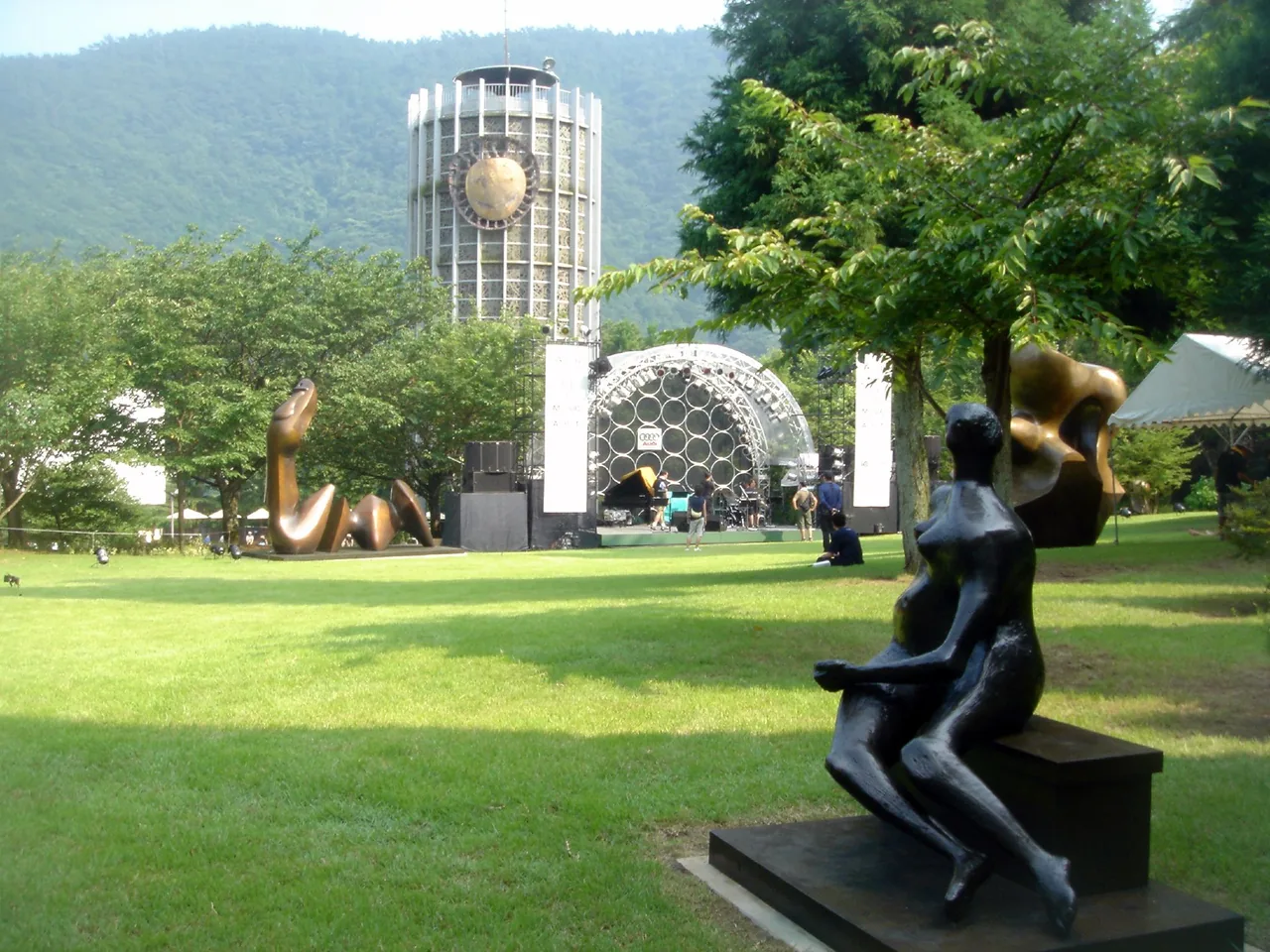
Hakone has a remarkable density of world-class art museums, and they are the main reason to slow down or stay over — the most day-trip-friendly is the Hakone Open-Air Museum, which sits right on the loop. You realistically fit one museum into a day trip; more than that, and you are better off with an overnight.
The Hakone Open-Air Museum
The Hakone Open-Air MuseumMap (Chokoku-no-Mori) opened in 1969 as Japan’s first open-air sculpture park, with Henry Moore bronzes scattered across mountain lawns and an indoor Picasso Pavilion holding hundreds of works. It is open 365 days a year, 09:00–17:00 (last entry 16:30), and admission is ¥2,000 for adults (¥1,600 high-school and university students, ¥800 elementary and junior-high). Best of all, it is a two-minute walk from Chokoku-no-Mori Station on the Tozan line, so it slots straight into the loop without a detour. This is the museum to pick if you only do one.
The others, if you stay longer
- Pola Museum of Art — Pola Museum of ArtMap holds an excellent Impressionist and modern collection (Monet, Renoir, Picasso) in a glass building sunk into the forest. 09:00–17:00, adult ¥1,800.
- Hakone Venetian Glass Museum (Garasu-no-Mori) — Hakone Venetian Glass MuseumMap pairs Venetian glass with a sparkling crystal archway that is a photo magnet. 10:00–17:30, adult ¥1,800.
- Okada Museum of Art — a large East-Asian art collection, adult ¥2,800. Note: temporarily closed April 1 to May 30, 2026 — confirm it has reopened before you plan around it.
11. Old Hakone: the checkpoint, cedar avenue, gardens and Gora
Beyond the loop’s transport theatre, Hakone has a quieter historical side — an Edo-era checkpoint, a centuries-old cedar avenue, and free lakeside gardens with the best Fuji viewpoints in the area. These are the substance stops for travellers who want more than a greatest-hits circuit.
The Hakone Checkpoint and the cedar avenue
Hakone CheckpointMap (Hakone Sekisho) is a faithful reconstruction of the Edo-period barrier that once controlled travel along the old Tokaido highway between Kyoto and Edo. It is open 09:00–17:00 (to 16:30 in winter), admission ¥500, and it does a good job of explaining how strictly the shogunate policed movement — especially of women and weapons. Right beside it runs the Old Tokaido Cedar Avenue, a free, atmospheric lakeside walk under towering cedars planted four centuries ago, linking Moto-Hakone and Hakone-machi.
The free viewpoints and gardens
- Onshi-Hakone Park — Onshi-Hakone ParkMap, the grounds of a former imperial detached palace, is free and has the area’s most famous viewpoint of Mt Fuji over Lake Ashi. On a clear morning it is the best Fuji shot in Hakone, and it costs nothing.
- Gora Park — a French-style hillside garden near Gora Station with a tropical greenhouse and rose terraces, 09:00–17:00, ¥650 — and free with the Hakone Free Pass.
- Sengokuhara — SengokuharaMap is a highland plateau famous for its golden silver-grass (susuki) meadow, which peaks in late October and early November; in season it is one of Hakone’s most photogenic spots.
None of these fit alongside the full loop in a single day, which is the recurring Hakone lesson: there is more here than one day holds, so choose deliberately.
12. Hakone-Yumoto: the gateway town and what to eat
Hakone-Yumoto StationMap is where almost every Hakone trip begins and ends, and its hot-spring shopping street is the natural place to grab lunch or souvenirs at the start or close of your loop. It is free to wander and worth budgeting 30 to 60 minutes for, especially on the way back when you have time to spare before the Romancecar.
The main street climbs gently from the station along the river, lined with shops selling steamed manju buns, freshly fried fish cakes (kamaboko, a Hakone specialty), pickles, and hot-spring sweets you can eat as you stroll. There are soba and tempura restaurants for a sit-down lunch, free public foot baths (ashiyu) where you can rest your feet in hot-spring water, and plenty of souvenir shops. It is touristy but genuinely pleasant, and it makes a far better lunch stop than trying to eat up on the cold, crowded ropeway.
If you want a hot-spring soak before heading home, several of the day-use onsen covered earlier — including Tenzan and Hakone Yuryo — are a short walk or free shuttle from Yumoto, making the gateway town a tidy place to end the day on.
13. When is the best time to visit Hakone?
Hakone is good year-round, but the standouts are June for hydrangeas along the mountain railway, November for autumn foliage, late autumn for the silver-grass meadow, and winter for the clearest Mt Fuji. Each season has a genuine highlight and a genuine trade-off, so match the timing to what you most want to see.
| Season | Highlight | The trade-off |
|---|---|---|
| Early summer (mid-June – late July) | Hydrangeas — the “Ajisai Train.” Some 7,000–10,000 plants line the Tozan Railway, blooming lower-to-higher up the mountain. | Rainy season can mean grey skies and hidden Fuji. The night hydrangea train is reserved-only and sells out. |
| Autumn (late Oct – early Dec) | Foliage (kōyō), staggered by elevation — upper mountain and ropeway late Oct to mid-Nov, Gora mid-to-late Nov, the valley floor at Yumoto late Nov to early Dec. Peak generally early-to-mid November. | The most crowded and most expensive season; book the Romancecar early. |
| Late autumn (late Oct – early Nov) | Susuki silver grass at Sengokuhara — a golden meadow at its peak. | A specific, short window that does not always line up with peak foliage. |
| Winter (Dec – Feb) | Clearest Fuji odds of the year (best Dec–Jan), cold and dry with a snow-capped peak. | The ropeway runs annual maintenance somewhere in Dec–Feb (substitute buses fill the gap); cold at altitude. |
The hydrangea train is the quintessential June experience: the mountain railway’s switchbacks climb through walls of blue and purple blooms, and the 2026 Night Hydrangea Train (illuminated, reserved seat ¥500) ran roughly June 13–30 — note those are single-year dates, so check the current schedule. For autumn, our take on early-autumn travel in Japan and the broader best time to visit guide help you read the foliage timing.
14. Hakone vs Nikko vs Kamakura vs Kawaguchiko
Choose Hakone for variety and onsen, Kamakura for an easy short temple day, Nikko for the most spectacular shrines (but a long haul), and Kawaguchiko if a huge Mt Fuji is the whole point. All four are classic Tokyo day trips, and the right one depends entirely on what you want from the day.
| Day trip | Time each way | Best for | The catch |
|---|---|---|---|
| Hakone | ~80–90 min | Variety — the eight-mode loop, onsen, volcano, lake, art, with Fuji as a bonus. | Feels rushed in one day; Owakudani can close; Fuji is distant. |
| Kamakura | ~56 min (JR, ~¥940) | The easiest, shortest trip — temples, the Great Buddha, a beach, a laid-back pace. Great with kids or older relatives. | Less dramatic scenery; no mountains or onsen circuit. |
| Nikko | ~2 hrs | The most rewarding architecture — the ornate Toshogu shrine complex and mountain scenery. | A long haul each way; barely fits in a day; better as an overnight. |
| Kawaguchiko | ~2 hrs | Mt Fuji front-and-centre — Chureito Pagoda, Oishi Park, the mountain looming at the base. | The lakes are spread out and bus-dependent; it is mostly about one mountain. |
The clearest fork is Hakone versus Kawaguchiko, and it comes down to Fuji. If you want the mountain itself — big, close, filling the frame — go to Kawaguchiko; our Mt Fuji and Kawaguchiko day-trip guide covers it in full. If you want a richer, more varied day with hot springs, a volcano, a lake cruise and art, and you are happy for Fuji to be a distant bonus, Hakone is the better trip. Kamakura wins on ease, Nikko on grandeur if you have the stamina.
15. DIY or a guided tour from Tokyo?
Do Hakone DIY if you want to save money and set your own pace; take a guided tour if you want zero logistics, no timetables to read, and a guaranteed return seat. The loop is well signposted in English and entirely doable independently, so a tour is about convenience, not necessity.
What a typical tour covers
A standard Hakone bus day tour from Tokyo usually bundles the headline stops — the Lake Ashi pirate-ship cruise, the Owakudani ropeway (when open), and often a Mt Fuji viewpoint or Gotemba Premium Outlets — into a 9-to-11-hour day with central Tokyo pickup. The transport, the cruise and the ropeway are handled for you, and you never touch a timetable. The trade-off is the usual one: a fixed itinerary, less time at the stops you care about most, and sometimes filler like outlet shopping you did not ask for.
Who each suits
- Take the tour if: you have one shot at Hakone, you are travelling on a busy weekend, you would rather not juggle the loop’s transfers and the ropeway’s closing time, and a guaranteed return to Tokyo matters more than the price.
- Go DIY if: you want the Free Pass flexibility to linger where you like, you are happy to read the ropeway and cruise timetables, and you would rather skip any outlet-shopping detour.
If a guided day suits your dates, this is the easiest way to lock one in:
Either way, sort your phone before you go — a working data plan is what makes live ropeway-status checks and bus-time lookups possible on the ground.
16. A realistic one-day Hakone plan (hour by hour) and tips
Here is a focused, realistic one-day Hakone plan built around an early start and clearing the ropeway before it closes — the constraint that shapes everything. Adjust it to your one chosen attraction rather than trying to fit them all.
The plan (counter-clockwise loop)
- Before you leave Tokyo: check the Hakone Ropeway live status and the JMA volcano map. If the ropeway is suspended or Owakudani is closed, you will at least know before you commit.
- ~7:30–8:00: board your reserved Romancecar from Shinjuku. Arrive Hakone-Yumoto StationMap around 9:00.
- ~9:15: drop luggage in a station coin locker and start the loop — Tozan Railway up to Gora.
- ~10:30: cable car to Sounzan, then the ropeway over Owakudani. Crest toward the valley for the best Fuji moment.
- ~11:00: Owakudani stop — black eggs, the steam vents, the glass deck. Cap it at 20–30 minutes.
- ~12:00: pirate-ship cruise across Lake Ashi to Moto-Hakone. Lunch near the pier.
- ~13:30: your one attraction — the Peace Torii and Hakone Shrine, or the free Fuji viewpoint at Onshi-Hakone Park, or back up to the Open-Air Museum.
- ~15:30: Tozan Bus back to Hakone-Yumoto. Stroll the shopping street, soak your feet in a free foot bath, buy souvenirs.
- ~17:00: catch your booked Romancecar back to Tokyo.
Practical tips
- Go on a weekday if you can. Weekends mean longer torii photo queues, packed pirate ships, and a slower loop.
- Travel light. No big lockers on the loop — leave bags at Yumoto or Odawara and carry a day bag only.
- Pre-book the essentials: the Romancecar (both directions) and, if you want it, the Free Pass online to skip the station queue.
- Carry a topped-up IC card for vending machines, conbini and anything the pass does not cover.
- Have a working data connection for live ropeway status, maps and timetables.
Yokohama is the shorter option out of Tokyo, at 30 minutes with no change of train from Shibuya. The Yokohama travel guide lays out a one-day route through the waterfront districts.
17. What to read next
Plan the rest of your Japan trip around your Hakone day with these.
The other Fuji day trip
If a huge, close-up Mt Fuji is your goal, compare with our Mt Fuji and Kawaguchiko day-trip guide.
Base yourself in Tokyo
Where to stay, how to move, and what to see in our Tokyo trip planner.
Plan the whole trip
Routes, budgets and seasons nationwide in our complete Japan travel handbook.
Rainy forecast?
If the weather turns, our rainy-day Tokyo courses keep the day going indoors.
Sort the rails
Reservations and pass maths in our rail pass explainer.
Be a good guest
Onsen and shrine manners in our Japan etiquette basics.