
Fukuoka Travel Guide: What to Do, Eat, and Know Before You Go
Fukuoka is Kyushu’s biggest city and Japan’s easiest big-city arrival — the airport sits two subway stops from downtown — and it rewards two or three days of eating, wandering, and short day trips.
| How long | Two to three days is the sweet spot: one for the city, one or two for day trips. A single day still works for a layover. |
|---|---|
| Airport | Fukuoka Airport’s subway station is 5 minutes and ¥260 from Hakata Station — one of the shortest airport-to-downtown hops of any major city in Asia. |
| What to eat | Tonkotsu ramen, motsunabe (an offal hotpot), mizutaki (a chicken hotpot), mentaiko (spicy cod roe), and the Nakasu riverside yatai food stalls. |
| Where to stay | Almost everyone picks Hakata (best for trains and the airport) or Tenjin (best for shopping and nightlife). Nakasu suits night owls. |
| Day trips | Dazaifu, Kitakyushu, Itoshima, Yanagawa, Nanzoin’s giant reclining Buddha, and the flower island of Nokonoshima are all within about an hour. |
| When to go | Spring and autumn are the most comfortable; summer is hot, humid, and festival season, with Hakata Gion Yamakasa running July 1–15. |
| By ferry | If you’re coming from Busan by ferry, we cover that in a separate arrival guide — this one starts once you’re on the ground. |
1. Fukuoka in brief
2. What kind of city Fukuoka is — and who it suits
3. Getting to Fukuoka — the airport, city transit, and IC cards
4. How many days you need — sample itineraries
5. Where to stay in Fukuoka — Hakata, Tenjin, or Nakasu
6. What to eat in Fukuoka — ramen, motsunabe, and the yatai
7. What to see in the city — shopping, sea, shrines, and neighborhoods
8. Day trips from Fukuoka — Dazaifu, Kitakyushu, Itoshima, and more
9. When to go — seasons and festivals
10. Beyond Fukuoka — using the city as a Kyushu base
11. Practical essentials — connectivity, cash, and budget
1. Fukuoka in brief
Fukuoka is the largest city on Kyushu, Japan’s southern main island, and it’s the most low-effort big city to visit in the whole country — the airport is practically downtown, the food is some of Japan’s best, and two to three days covers it comfortably. It’s a city of around 1.6 million people, but it wears its size lightly: compact, walkable, and built around eating and the sea rather than around blockbuster monuments.
What sets Fukuoka apart from Tokyo, Kyoto, or Osaka is that it isn’t really a sightseeing city in the tick-the-boxes sense. There’s no single must-see temple or castle that defines a trip here. Instead the appeal is atmospheric — a genuinely livable city that happens to be a wonderful place to travel, with a dense cluster of food, shopping, beaches, and countryside day trips all packed into a short radius.
It’s also close. Fukuoka is one of the nearest Japanese cities to Korea and Taiwan — roughly an hour to ninety minutes by air from Seoul, Busan, or Taipei, and a ferry ride from Busan — which makes it a natural first taste of Japan or an easy repeat weekend for anyone in the region. This guide covers the whole city: how to get in and around, how many days to give it, where to stay, what to eat, what to see, and where to go for a day trip. For the bigger national picture — visas, rail passes, seasons — see our Japan travel guide.
| Quick orientation | Detail |
|---|---|
| What kind of city | Kyushu’s largest, and its main gateway; compact, food-focused, coastal |
| How many days | 2–3 for most first visits; 1 for a layover; 5 to use it as a Kyushu base |
| Getting in | Fukuoka Airport (5 min to Hakata by subway), Shinkansen, or ferry from Busan |
| Two main hubs | Hakata (博多, trains and business) and Tenjin (天神, shopping and nightlife) |
| Signature food | Tonkotsu ramen, motsunabe, mentaiko, and Nakasu’s yatai stalls |
2. What kind of city Fukuoka is — and who it suits
Fukuoka is best understood as a city you travel rather than a monument you visit — the pleasure is in the eating, the strolling, and the easy day trips, not in a checklist of famous sights. If you arrive expecting Kyoto’s temples or Tokyo’s scale, you’ll be looking for the wrong thing. If you arrive hungry and curious, it delivers.
The city grew from two historic halves that merged in 1889: Hakata, the old merchant-and-port town on the east side of the Naka River, and Fukuoka, the former castle town of the ruling samurai class on the west. The river still marks the divide, and the names still matter — the main station and the Shinkansen are called Hakata, while the city and the airport are called Fukuoka. It confuses first-timers constantly, so it’s worth fixing early: Hakata is a district and the station; Fukuoka is the city.
That merchant-port past is why food and hospitality run so deep here. Fukuoka has one of the highest concentrations of restaurants per person in Japan, and it’s the birthplace of tonkotsu ramen and a national capital of casual eating and drinking.
| Fukuoka is a great fit if you want… | Look elsewhere if you want… |
|---|---|
| A relaxed, food-first city break | Big-ticket temples and palaces stacked back to back |
| An easy, low-stress first trip to Japan | A dense museum-and-monument itinerary |
| A base for exploring wider Kyushu | Nightlife and crowds on a Tokyo scale |
| Beaches and countryside a short ride away | Winter snow sports or alpine scenery |
It suits first-time visitors from Korea, Taiwan, and Hong Kong especially well because of the short flights and the gentle learning curve, but it’s just as rewarding for anyone building a longer Kyushu trip who wants a comfortable, well-connected place to start.
3. Getting to Fukuoka — the airport, city transit, and IC cards
Fukuoka’s headline feature is its airport: the domestic terminal’s subway station is two stops and about five minutes from Hakata Station, for ¥260 — one of the shortest, cheapest airport-to-downtown connections of any major city in Asia. There’s no long express train to buy, no hour-long bus, no expensive taxi required. You land, ride two stops, and you’re downtown.
| Route | Time | Fare |
|---|---|---|
| Fukuoka Airport (domestic) → Hakata Station, Kuko subway line | ~5 min (2 stops) | ¥260 |
| Fukuoka Airport (domestic) → Tenjin, Kuko subway line | ~12 min | ¥260 |
| International terminal → domestic terminal, free shuttle bus | ~10–15 min | Free |
| International terminal → Hakata Station, Nishitetsu bus | ~15 min | ¥310 |
Around the city, three subway lines do most of the work: the Kuko (Airport) Line that links the airport, Hakata, Tenjin, and Meinohama; the Nanakuma Line; and the short Hakozaki Line. Above ground, the private Nishitetsu network runs both city buses and the trains out to Dazaifu and Yanagawa. Between the subway for the core and Nishitetsu for day trips, you rarely need a taxi.
For payment, a rechargeable IC card is the simplest option. Fukuoka’s local cards are SUGOCA, nimoca, and Hayakaken, and all of them work interchangeably with the national cards (Suica, ICOCA, Pasmo, and the rest), so anything you already carry from elsewhere in Japan works here too. Cards carry a refundable ¥500 deposit. For the full comparison, see our Japan IC card guide.
Coming from elsewhere in Japan, Hakata is the western terminus of the Sanyo Shinkansen and the northern end of the Kyushu Shinkansen, so it’s directly linked to Hiroshima, Osaka, Nagoya, and Tokyo by bullet train, and south to Kumamoto and Kagoshima. If you’re combining Fukuoka with other cities by rail, check whether a pass pays off in our JR Pass and Shinkansen guide.
| Getting around | What it covers |
|---|---|
| Subway (3 lines) | Airport, Hakata, Tenjin, Ohori Park, Meinohama — the tourist core |
| Nishitetsu buses | Dense city coverage, including the Bay Area and Momochi |
| Nishitetsu trains | Out to Dazaifu and Yanagawa from Nishitetsu Fukuoka (Tenjin) station |
| JR lines | Shinkansen and local trains from Hakata, including Kitakyushu and Nanzoin |
4. How many days you need — sample itineraries
Two to three days is the standard for a first visit, and because the city is so compact, you cover a lot without long transit legs — one day of city, then one or two of day trips. A single day works if you’re only passing through, and five days lets you treat Fukuoka as a base for wider Kyushu.
| Length | Suggested shape |
|---|---|
| 1 day | Hakata, Tenjin, and a Nakasu yatai dinner. Ideal for a layover or a short stopover. |
| 2 days | Day 1 the city (Hakata, Tenjin, Ohori Park, Momochi beach); Day 2 Dazaifu or one nearby day trip. |
| 3 days | The above, plus Kitakyushu (Kokura and Mojiko), Itoshima, or Yanagawa. |
| 5 days | Use Fukuoka as a Kyushu base and add Beppu, Yufuin, Nagasaki, or Kumamoto. |
The reason the numbers work out so tidily is geography. The city’s two hubs, Hakata and Tenjin, are one subway stop apart, and the beach-and-tower Bay Area is a short bus ride from either. Most day trips are 30 to 60 minutes each way, so you can leave after breakfast and be back for a yatai dinner without feeling rushed.
Travelers with five days or more often stop asking “what else is in Fukuoka?” and start asking “what else is in Kyushu?” — which is the right instinct. The city’s rail and bus links make it a comfortable launchpad for the hot-spring towns of Beppu and Yufuin, the history of Nagasaki, and the castle city of Kumamoto. We cover that reach in the “Beyond Fukuoka” section further down.
5. Where to stay in Fukuoka — Hakata, Tenjin, or Nakasu
Almost every visitor should stay in either Hakata or Tenjin — Hakata for train and airport access and easy day trips, Tenjin for shopping, restaurants, and nightlife — with Nakasu as a night-owl alternative between the two. The city is small enough that neither choice is wrong; it’s more about what you want on your doorstep.
| Area | Best for | Trade-off |
|---|---|---|
| Hakata (博多) | Train and airport access; day trips across Kyushu leave from here | More functional than fun after dark; a short ride from the nightlife |
| Tenjin (天神) | Shopping, dining, and nightlife right outside the door | Busier and pricier; slightly further from the Shinkansen |
| Nakasu / riverside | Being close to the yatai stalls and the night scene | Fukuoka’s entertainment quarter — livelier and noisier at night |
The practical rule of thumb: if your trip is built around day trips and Shinkansen connections, sleep in Hakata, because everything departs from the station. If your trip is built around eating, shopping, and staying out late, sleep in Tenjin, because you’ll walk home. And because the two are a single subway stop apart, you’re never truly far from the other one whichever you pick.
We’ll cover the finer detail — specific properties, price bands, and Fukuoka’s lodging tax — in a dedicated where-to-stay guide. For this master, the decision that actually matters is the neighborhood, and for most first-timers that comes down to Hakata versus Tenjin.
6. What to eat in Fukuoka — ramen, motsunabe, and the yatai
Fukuoka is one of Japan’s great food cities, and eating is the single best reason to come — this is the birthplace of tonkotsu ramen and the home of motsunabe, mizutaki, mentaiko, and the famous Nakasu yatai stalls. If you plan your days around meals here, you’ll have planned them well.
| Dish | What it is | Good to know |
|---|---|---|
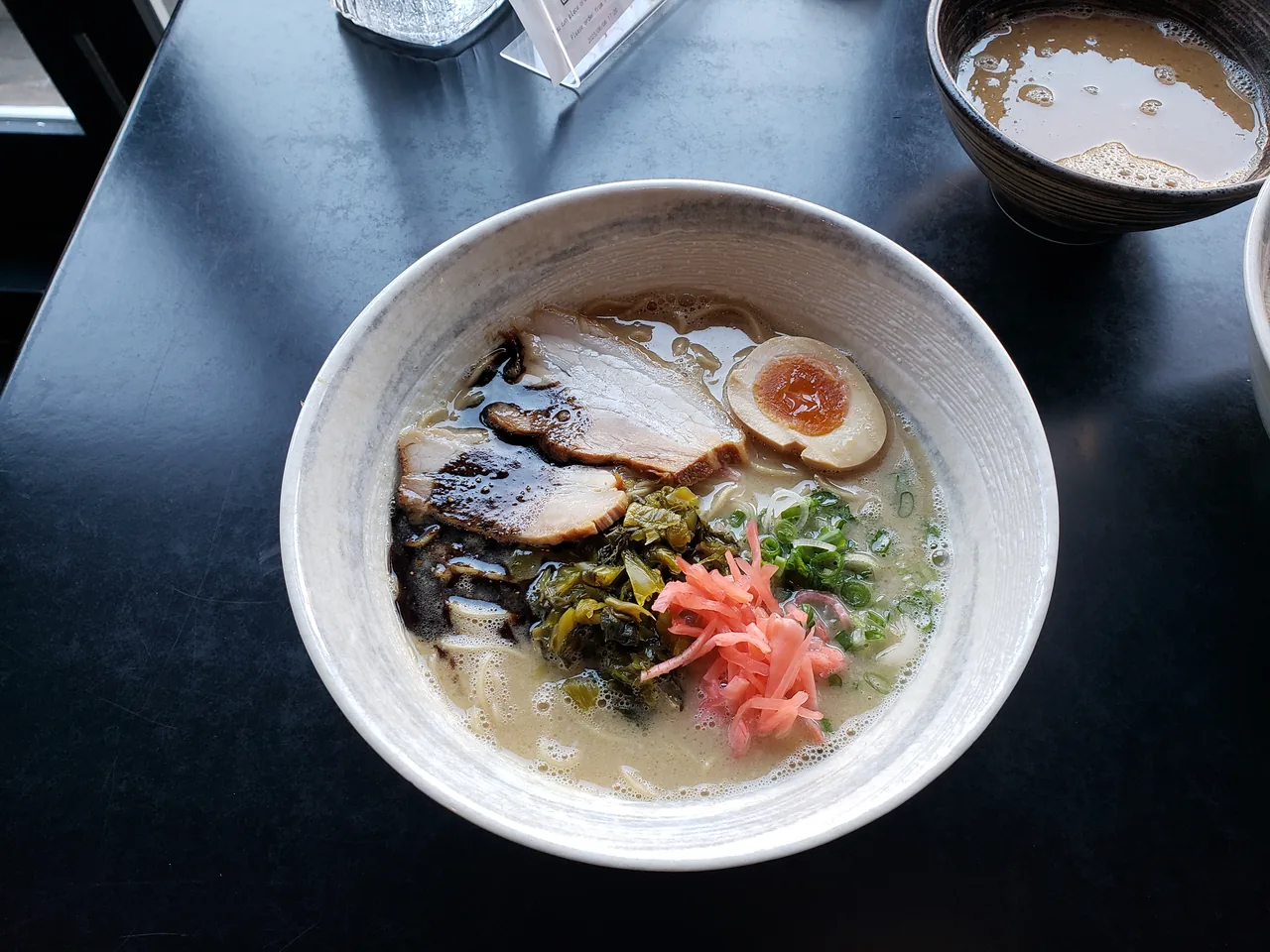
| Hakata ramen | Tonkotsu (pork-bone) broth, milky white, with thin straight noodles | Order a kaedama (a noodle refill) when your noodles run low; you can also pick the firmness (barikata is very firm) |
| Motsunabe | An offal hotpot of beef tripe with cabbage, garlic chives, and garlic, in a soy or miso broth | Simmered at your table; finish the pot with champon noodles or rice porridge |
| Mizutaki | A clear chicken hotpot, the chicken simmered until the broth turns rich | Sip the broth first, then eat the chicken and vegetables with ponzu citrus sauce |
| Mentaiko | Spicy marinated cod roe, Hakata’s signature specialty | Eaten with rice, in ochazuke, or on pasta; a classic edible souvenir |
| Hakata udon & gyoza | Soft, gentle udon noodles and bite-sized one-mouthful gyoza | Hakata’s udon is deliberately soft, not chewy — a local point of pride |
| Yatai | Open-air food stalls that set up along the streets after dark | Cash only, no toilets, and best treated as one drink and one dish per stop |
Tonkotsu ramen is the dish Fukuoka gave the world. The broth is boiled from pork bones until it turns opaque and creamy, and it’s paired with unusually thin, straight noodles that cook in seconds — which is exactly why the kaedama system exists. You eat the noodles fast while they’re firm, then order a fresh portion to drop into your remaining broth. Ordering your first bowl barikata (extra firm) and then a kaedama is the classic Hakata move.
Motsunabe and mizutaki are the two hotpots that define a colder-weather visit. Motsunabe is the punchier of the two — beef offal, mounded cabbage and garlic chives, and enough garlic to keep you warm for a week — while mizutaki is gentler, a milky chicken broth you drink almost like soup before the ponzu even comes out. Both are sit-down, shared-table affairs, and both are at their best from autumn into winter.
For something lighter, mentaiko (spicy cod roe) turns up on everything from plain rice to pasta, and it’s the edible souvenir most people carry home. And if you want a piece of history with your noodles, Jotenji, a temple in Hakata, is traditionally regarded as the place where udon, soba, and manju were first introduced to Japan by the monk Enni in 1241 — a plausible claim to be the cradle of Japanese noodle culture. Nakasu yatai stalls MapMap
7. What to see in the city — shopping, sea, shrines, and neighborhoods
Fukuoka’s in-city sights split cleanly into four moods: shopping, sea-and-parks, history-and-temples, and simply wandering the neighborhoods — and none of them demands a full day, so you can mix several in an afternoon. This is a city you graze rather than march through.
| Theme | Highlights |
|---|---|
| Shopping | Tenjin’s department stores and a 590m underground mall with around 150 shops; Canal City Hakata’s canal and fountain shows |
| Sea & parks | Ohori Park’s great pond beside the old castle grounds; Momochi beach; the 234m Fukuoka Tower; Uminonakamichi |
| History & temples | Kushida Shrine, home of the Yamakasa festival; Tochoji and its 10.8m wooden Great Buddha; Jotenji |
| Neighborhoods | Old-town Hakata; downtown Tenjin; the hip cafes and boutiques of Daimyo |
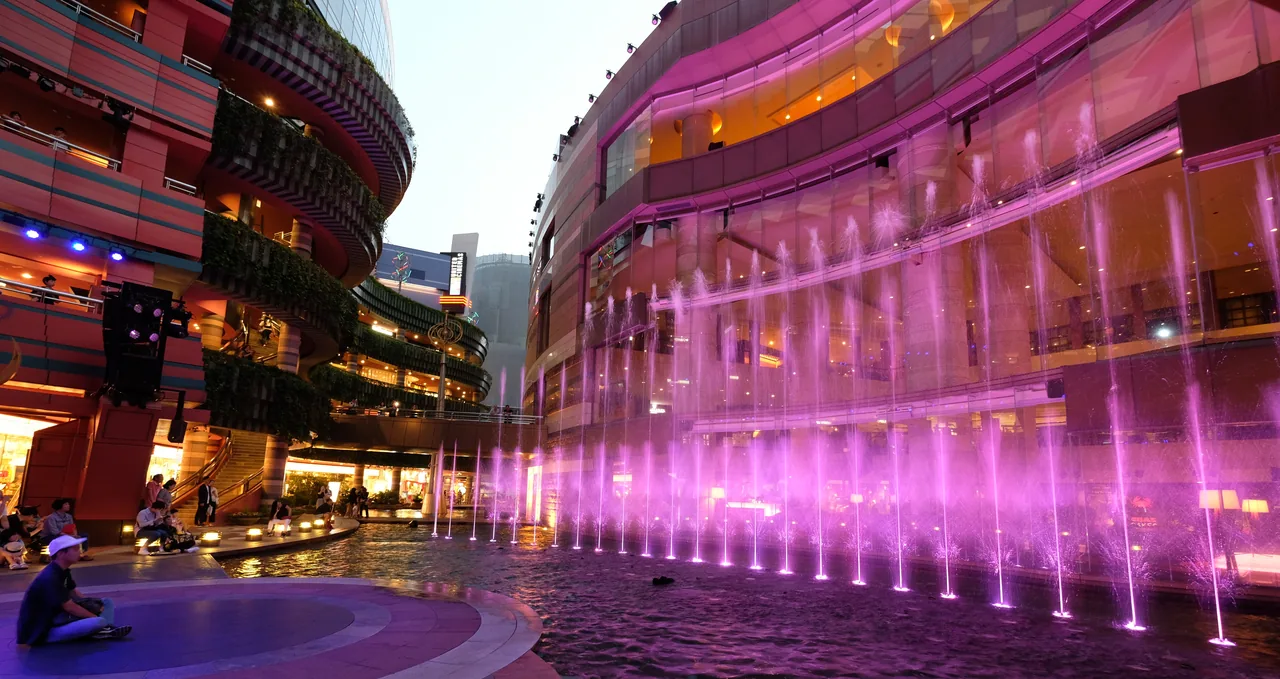
For shopping, Tenjin is the heart of the city. Above ground it’s a dense run of department stores and boutiques; below ground the Tenjin Chikagai underground shopping arcade stretches about 590 meters with roughly 150 shops, and it’s a genuine lifesaver on a rainy or brutally humid day. Over in Hakata, Canal City Hakata is a huge shopping-and-entertainment complex built around a curving artificial canal, with fountain shows on the hour. Tenjin Chikagai underground mall MapMap
Canal City Hakata MapMap
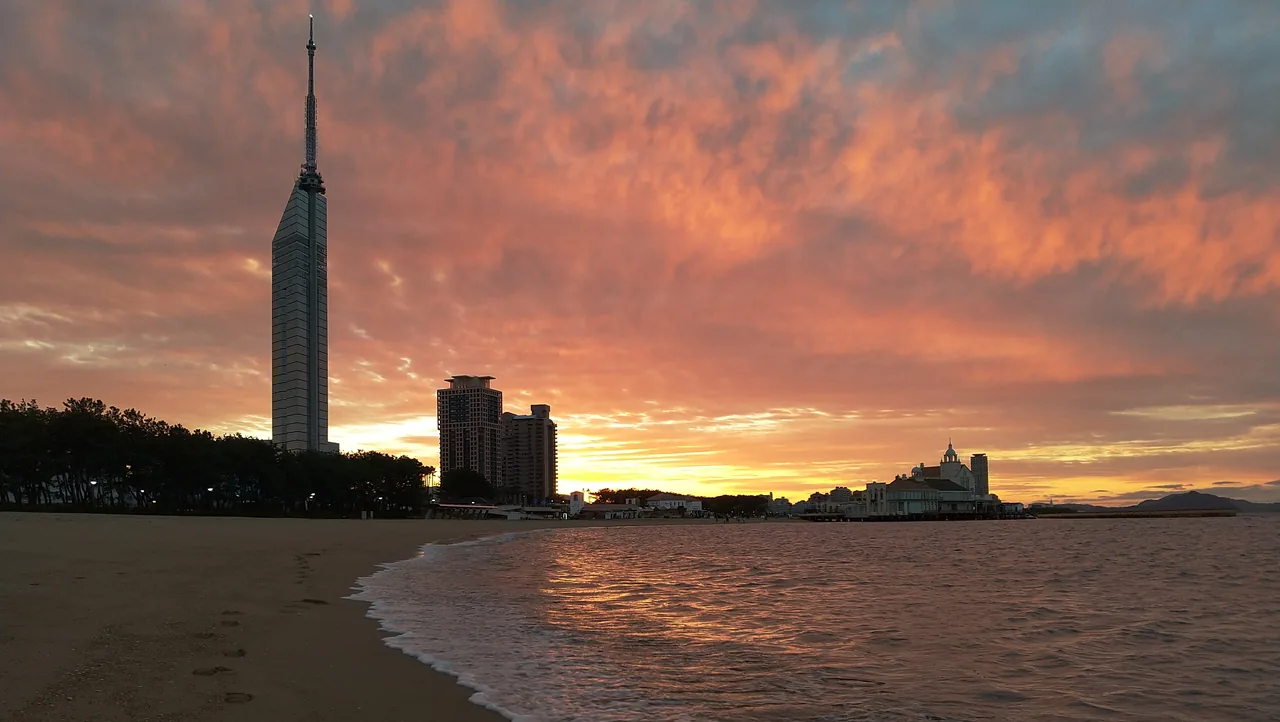
For the sea and green space, Ohori Park wraps a large pond next to the ruins of Fukuoka Castle — a lovely, low-key stroll with a Japanese garden attached, and the spring cherry blossoms in the neighboring Maizuru Park are among the city’s best. West along the coast, Momochi Seaside Park pairs a man-made beach with the 234-meter Fukuoka Tower, the tallest seaside tower in Japan and a fine sunset viewpoint. Further out, Uminonakamichi is a long sandbar park with seasonal flowers and a view back across the bay. Ohori Park MapMap
Fukuoka Tower MapMap Momochi Seaside Park MapMap
For history, Kushida Shrine in old Hakata is the spiritual home of the Hakata Gion Yamakasa festival, and one of its towering decorative floats is usually on display year-round. A short walk away, Tochoji houses the Fukuoka Great Buddha, a seated wooden figure about 10.8 meters tall — one of the largest wooden Buddha statues in Japan — and you can walk through a symbolic depiction of the Buddhist hells beneath it. Kushida Shrine MapMap
Tochoji Temple MapMap
For just wandering, the neighborhoods are the point. Hakata keeps the feel of an old merchant town in its lattice of narrow streets and temples. Tenjin is the modern downtown. And Daimyo, tucked just behind Tenjin, is the fashionable back-street district — independent cafes, vintage stores, and small design shops — and the best place in the city for an unhurried afternoon coffee. Daimyo district MapMap
8. Day trips from Fukuoka — Dazaifu, Kitakyushu, Itoshima, and more
Day trips are one of Fukuoka’s strongest cards — six genuinely different excursions all sit within about an hour of the city, from a scholar’s shrine to a giant reclining Buddha to a flower island. On a two- or three-day trip, giving one full day to a day trip is often the most memorable part of the whole visit.
| Destination | Getting there | What you’ll find |
|---|---|---|
| Dazaifu | Nishitetsu from Tenjin, ~30–40 min (change at Futsukaichi) | Tenmangu shrine of the god of learning, the Kyushu National Museum, a temple approach lined with cafes |
| Kitakyushu | JR Shinkansen Hakata → Kokura, ~15–20 min | Kokura Castle, Tanga Market, and the retro port district of Mojiko |
| Itoshima | ~45 min from the city | White-sand beaches, seaside cafes, the “married rocks,” and a scenic coast drive |
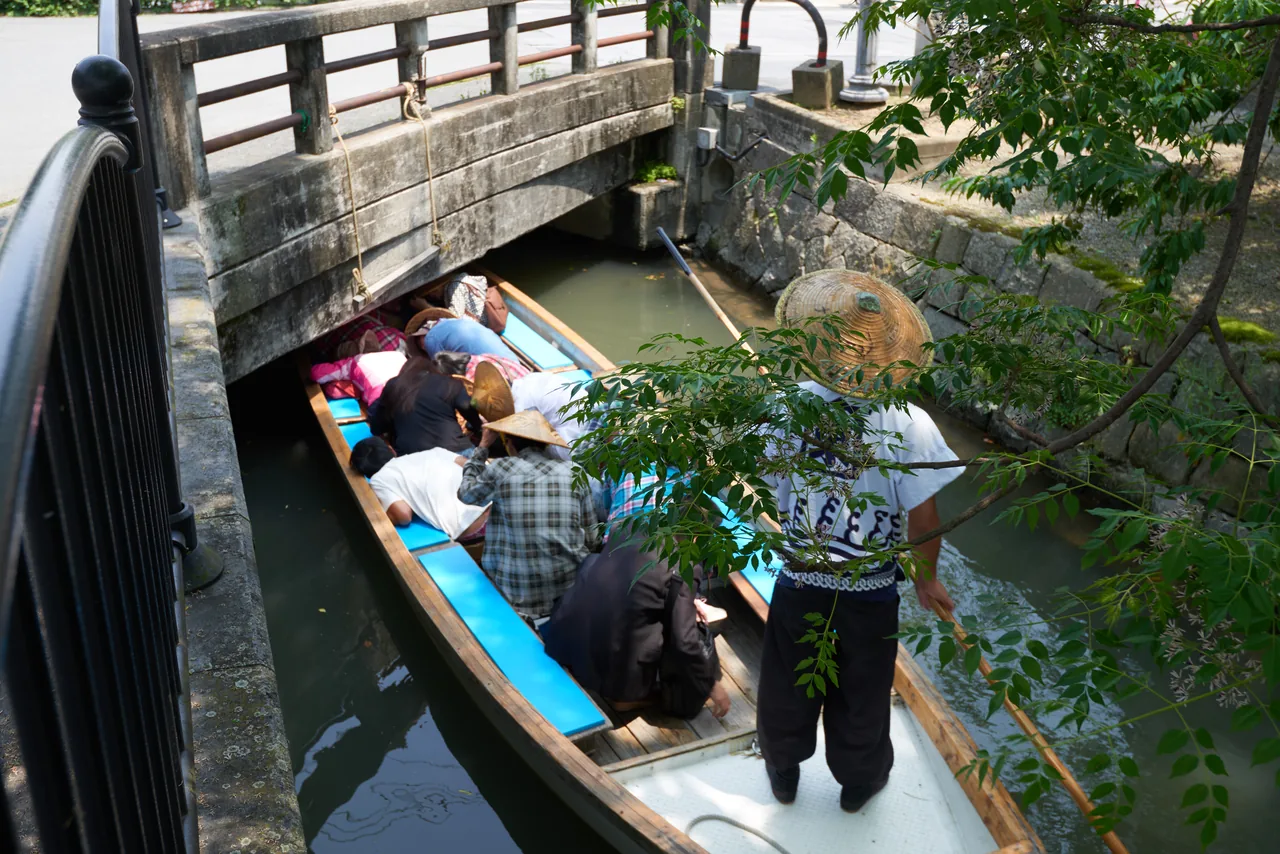
| Yanagawa | Nishitetsu, ~50 min–1 hr | A canal town explored by flat-bottomed boat, famous for grilled eel |
| Nanzoin | JR Sasaguri Line, ~25 min | One of the world’s largest bronze reclining Buddhas — 41m long, 11m tall |
| Nokonoshima | ~10 min by ferry | A flower island with seasonal blooms and views back over the bay |
Dazaifu is the classic half-day trip. Dazaifu Tenmangu enshrines Sugawara no Michizane, revered as the god of learning, so students come to pray before exams; the approach is a lovely old street of tea houses and souvenir stalls, and the Kyushu National Museum sits just behind. It’s easy, atmospheric, and reachable in well under an hour on the Nishitetsu train from Tenjin. Dazaifu Tenmangu MapMap
Kyushu National Museum MapMap
Kitakyushu is the industrial city at the northern tip of Kyushu, and it’s a surprisingly rewarding day out. Kokura Castle anchors the center, the covered Tanga Market is a great lunch stop, and the Mojiko Retro district by the water is a cluster of preserved early-20th-century buildings looking across the strait toward Honshu. Kokura is barely 15 minutes from Hakata by Shinkansen, so it’s closer than it sounds. Kokura Castle MapMap
Mojiko Retro MapMap
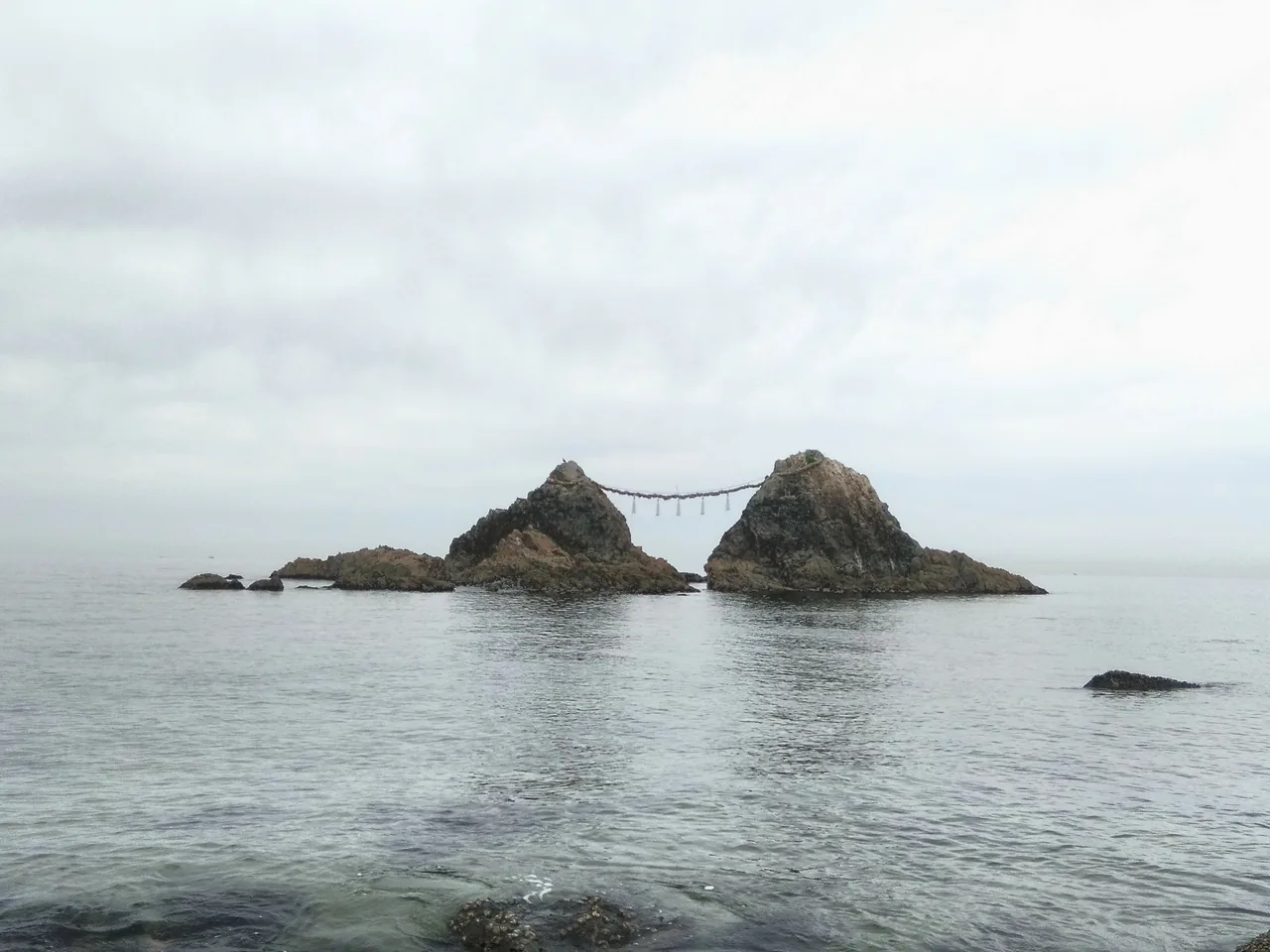
Itoshima is the coastal escape — a peninsula of white beaches, stylish cafes, and the photogenic Sakurai Futamigaura “married rocks” joined by a sacred rope, with a torii gate standing in the sea. It’s best with a car, and it’s become the city’s favorite spot for a relaxed, camera-in-hand beach day. Yanagawa, further south, is the “city of water,” where you drift the old moats in a donkobune punt poled by a boatman and eat the local seiro-mushi (steamed eel over rice) at the end. Itoshima MapMap
Yanagawa MapMap
Nanzoin, in the hills at Sasaguri about 25 minutes out on the JR Sasaguri Line, is home to one of the largest bronze reclining Buddha statues in the world — the Nehanzo, roughly 41 meters long and 11 meters tall, depicting the Buddha entering nirvana. It’s a genuinely startling thing to stand next to, and the temple grounds along the pilgrimage trail are peaceful. Finally, Nokonoshima, a 10-minute ferry hop from the city, is a small island park carpeted with seasonal flowers — cosmos, poppies, and rapeseed depending on the month — with the bay spread out below. Nanzoin Temple MapMap
Nokonoshima Island Park MapMap
9. When to go — seasons and festivals
Spring and autumn are the most comfortable times to visit, summer is hot, humid, and the peak of festival season, and winter is cold but low on snow and prime hotpot weather. Fukuoka’s climate is milder than much of Japan, which widens the good-weather window at both ends of the year.
| Season | Weather | What’s on |
|---|---|---|
| Spring (Mar–May) | Mild and pleasant | Cherry blossoms at Maizuru Park and Nishi Park; Golden Week’s Hakata Dontaku |
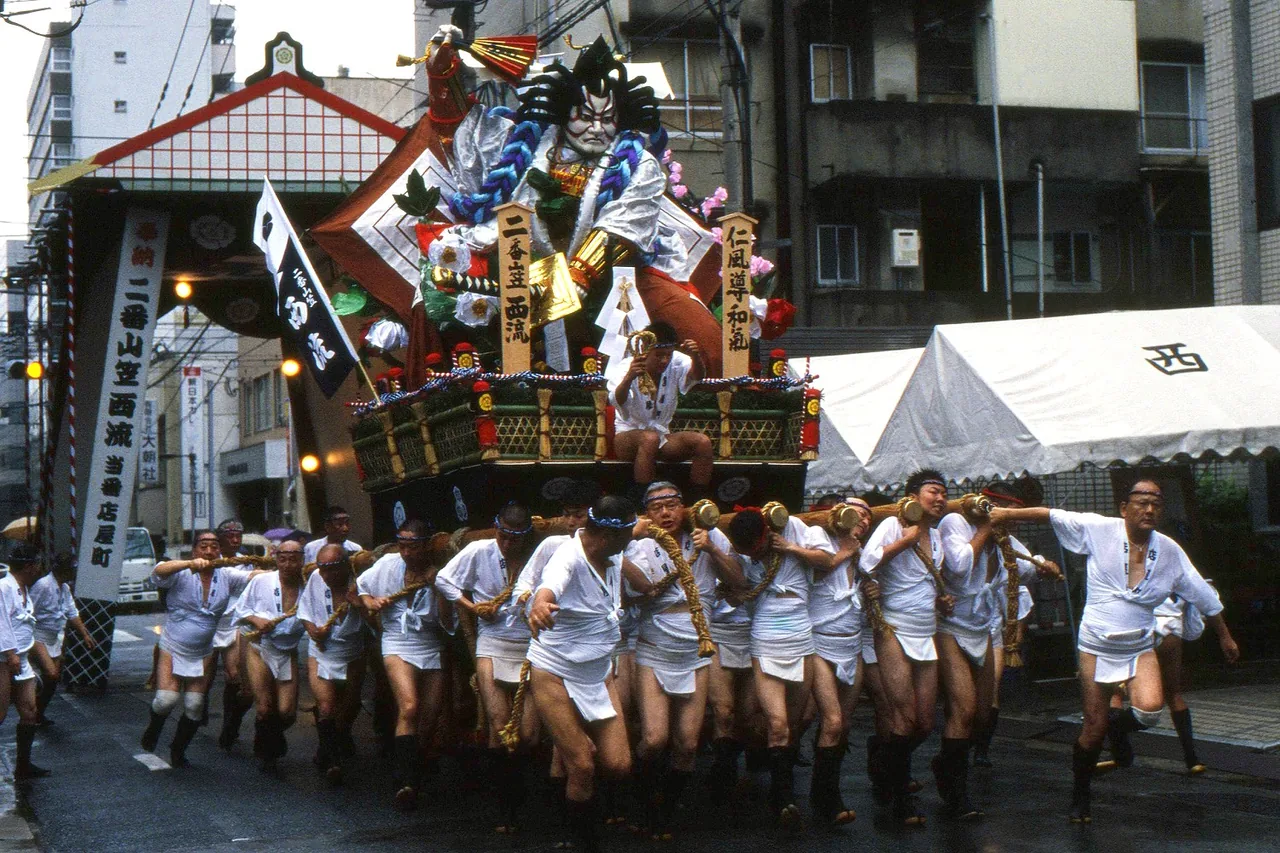
| Summer (Jun–Aug) | Hot and very humid | Hakata Gion Yamakasa (July 1–15), climaxing before dawn on the 15th |
| Autumn (Sep–Nov) | Cool and clear | The most comfortable travel weather of the year |
| Winter (Dec–Feb) | Cold, but little snow | Peak season for motsunabe and mizutaki hotpots |
The city’s two great festivals bracket the warm months. Hakata Dontaku, held on May 3–4 during Golden Week, is one of Japan’s largest festivals by attendance, drawing well over two million spectators for its parades and open-air stages across the city. Two months later, Hakata Gion Yamakasa takes over the first half of July, running July 1–15 and recognized as a UNESCO Intangible Cultural Heritage. Its climax, the Oiyama, begins at 4:59 a.m. on July 15, when teams race one-ton decorated floats through the streets of Hakata at full sprint.
For the broader national picture on cherry blossom timing, autumn color, humidity, and typhoon risk, see our best time to visit Japan guide. As a quick rule for Fukuoka specifically: come in spring or autumn for the weather, come in early July for Yamakasa if festivals are your thing, and come in winter if you’re here mainly to eat hotpot.
10. Beyond Fukuoka — using the city as a Kyushu base
With five days or a rail pass, Fukuoka turns from a destination into a launchpad — the hot springs of Beppu and Yufuin, the history of Nagasaki, and the castle city of Kumamoto are all comfortable trips from Hakata. This is where a longer stay pays off, and where the city’s excellent rail links really earn their keep.
| Onward destination | Rough travel from Hakata | Why go |
|---|---|---|
| Beppu & Yufuin | ~2 hr by limited express | Kyushu’s most famous hot-spring towns — steaming “hells” in Beppu, boutique ryokan in Yufuin |
| Nagasaki | ~1.5 hr with the Nishi Kyushu Shinkansen link | Harbor history, a distinctive East-meets-West cityscape, and moving peace memorials |
| Kumamoto | ~40 min by Kyushu Shinkansen | One of Japan’s most impressive castles and a gateway to the Mount Aso caldera |
Beppu and Yufuin are the natural first extension — two contrasting hot-spring towns on the far east coast of Kyushu, one dramatic and steamy, the other small and stylish. They pair beautifully into an overnight or a long day, and we cover them in depth in our Beppu and Yufuin guide. Nagasaki and Kumamoto round out the classic Kyushu circuit, both reachable by fast train from Hakata.
Fukuoka also fits into the biggest-picture Japan itineraries as the western anchor. If you’re threading together the country’s headline cities, our Golden Route itinerary shows how Tokyo, Kyoto, and Osaka connect — and Fukuoka slots on naturally at the far western end of that line by Shinkansen. For the full national planning frame, the Japan travel guide ties it all together.
11. Practical essentials — connectivity, cash, and budget
Sort out data before you land, carry some cash for the yatai and small shops, and budget for a city that’s noticeably cheaper than Tokyo. None of this is complicated, but getting it right before arrival makes the first day frictionless.
Get an eSIM activated before you fly so maps, translation, and transit apps all work the moment you step off the plane — which matters most in exactly the first hour, when you’re finding the subway. Our Japan eSIM guide walks through the setup and which plans make sense for a short Kyushu trip.
On money, Fukuoka is more card-friendly every year — subways, department stores, convenience stores, and most restaurants take cards or IC cards without a second thought. But the yatai stalls are cash only, some small ramen counters still prefer cash, and shrine offering boxes always want coins, so carry a modest amount of yen for the parts of the trip that are the most fun. For the fuller picture on cash versus cards and where each is expected, see our Japan money and cash guide.
| Budget level | Per day, excluding accommodation |
|---|---|
| Budget | ¥6,000–10,000 |
| Mid-range | ¥12,000–20,000 |
| Comfortable | ¥25,000+ |
Because the airport is so close, transfers cost almost nothing — the ¥260 subway ride replaces the pricey airport express you’d pay for in most cities — and the food that Fukuoka is famous for is cheap by design: a bowl of tonkotsu ramen or a couple of yatai plates rarely breaks the bank. Where the money goes is the sit-down hotpots and the day-trip train fares, both of which are easy to plan around.
Pull it all together and Fukuoka rewards a simple approach: two or three days, a food-first mindset, an eSIM and an IC card sorted on day one, and a full day set aside for whichever day trip appeals most. For everything beyond the city, head back to our Japan travel guide, and if you’re extending into the hot springs, our Beppu and Yufuin guide is the natural next read.