
Beppu and Yufuin: The Complete Guide to Kyushu’s Onsen Twin Towns
Beppu and Yufuin are Oita Prefecture’s onsen twin towns: Beppu’s seven scalding Hells and unusual sand/mud/steam baths, Yufuin’s quiet ryokan valley around a misting lake. Here’s what most guides get wrong, and whether a Fukuoka day trip is actually enough.
| Hells | 7 today, not 8 — the common ticket to all 7 is ¥2,400 adult (¥1,200 child), the price since February 2025. |
|---|---|
| Bathing | Sand burial at the beach, a real mud bath at Hoyoland (not Hyotan Onsen), and two different “steam baths” easy to mix up. |
| Tattoos | Beppu is a genuine outlier — even the historic 1879 Takegawara Onsen welcomes visible tattoos. |
| Floral Village | Cotswolds-themed, not Kyoto — and there’s no Yufuin Teddy Bear Museum. |
| Booking trap | Yufuin no Mori seats open exactly 1 month ahead at 10:00 JST and can sell out in minutes. |
| Day trip or stay? Doable in a rushed day, but Oita’s own tourism board recommends two. | |
1. Beppu and Yufuin in brief: two very different onsen towns, an hour apart
2. Getting there from Fukuoka/Hakata
3. The Yufuin no Mori booking trap
4. Day trip or overnight? Be honest with yourself about the math
5. Beppu’s 7 Hells (Jigoku Meguri) — the full walkthrough
6. Beppu’s sand bath: buried at the beach, or indoors year-round
7. Beppu’s mud bath: a genuine rarity, and not where most guides say it is
8. Beppu’s steam baths: two very different things with similar names
9. Tattoo policy and bathhouse etiquette in Beppu
10. Getting between Beppu and Yufuin
11. Yufuin: Kinrin Lake and Yunotsubo Kaido
12. Yufuin’s kitschier side: Floral Village and the small museums
13. Day-use onsen (higaeri) in Yufuin if you’re not staying at a ryokan
14. Where to stay: Beppu vs. Yufuin
15. When to go: seasons, foliage, and Kyushu’s own timing
16. What to eat in Beppu and Yufuin
17. Practical essentials, and sample itineraries
1. Beppu and Yufuin in brief: two very different onsen towns, an hour apart
Beppu and Yufuin are both onsen towns in Oita Prefecture, Kyushu, about 60-70 minutes apart by bus — but they’re built around almost opposite ideas of a hot-spring trip. Beppu is Oita’s second-largest city, a sprawling bathing-culture hub: get buried in hot sand, sit in an actual mud bath, steam yourself in a stone chamber, or tour seven scalding “Hells” you view rather than bathe in.
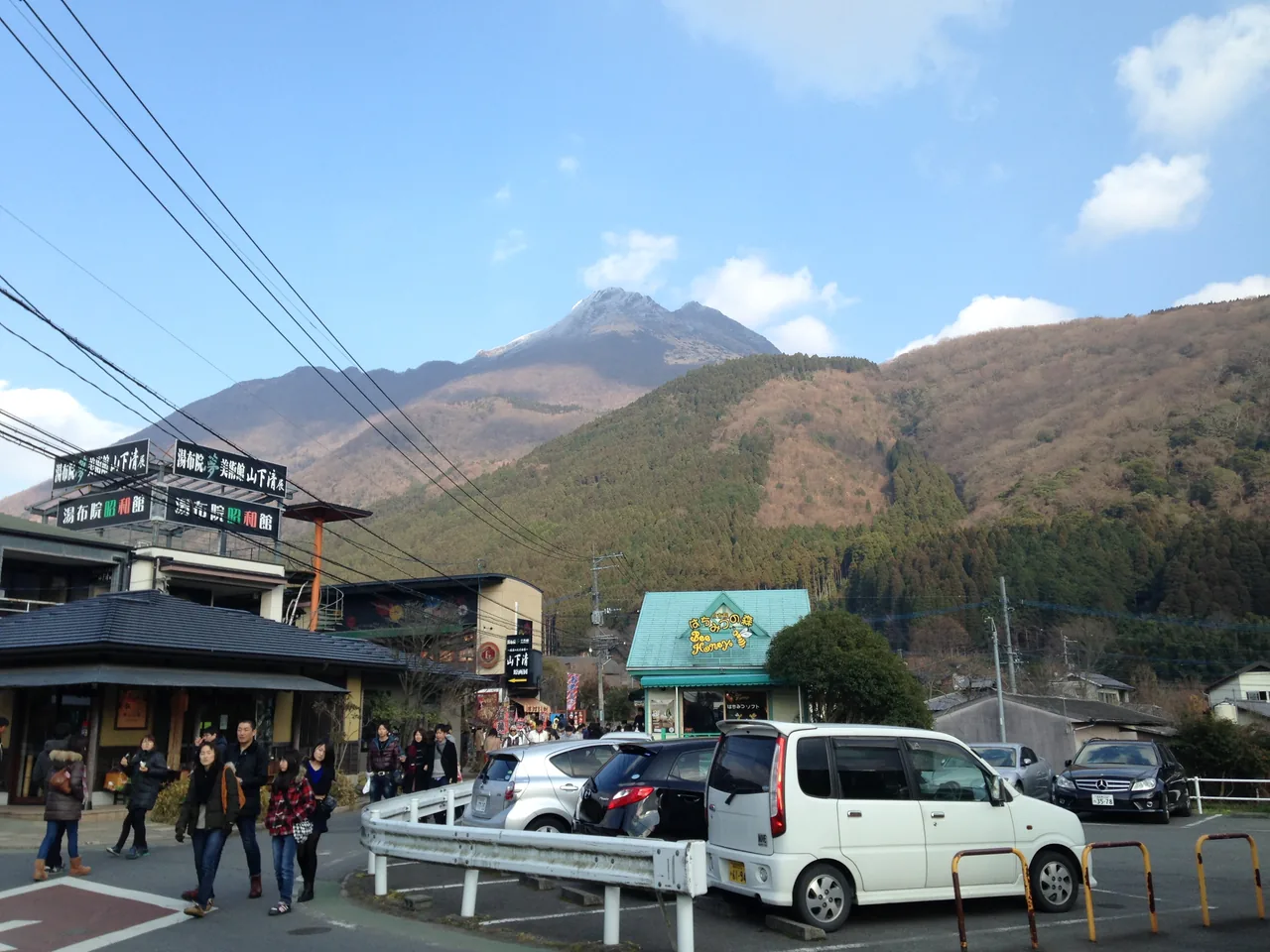
Yufuin is the opposite: a small, quiet mountain-valley town with no high-rises, built around private ryokan baths facing Mt. Yufu and a misting lake. It suits couples and anyone wanting the classic, romantic version of a Japan onsen trip.
| Beppu | Yufuin | |
|---|---|---|
| Scale | Oita’s 2nd-largest city | Small mountain-valley town, no high-rises |
| Built around | Public Hells, sand/mud/steam baths | Private ryokan onsen, a misting lake |
| Best for | Loud, strange, unmissable public bathing culture | Quiet, romantic ryokan culture |
Both towns are reached from Fukuoka/Hakata in about two to two-and-a-half hours. Planning the wider trip? Start with our complete Japan travel guide.
2. Getting there from Fukuoka/Hakata
JR Sonic is the fastest way to Beppu (about 2 hours 5 minutes, roughly ¥6,910 reserved), while Yufuin is best reached on the scenic JR Yufuin no Mori (about 2 hours 14 minutes, roughly ¥6,130) — but that train requires a reservation for every seat and runs only 3 times a day. A cheaper highway bus and a non-scenic backup train (the Yufu) round out the realistic options.
| Option | Time | Fare (one-way, adult) | Notes |
|---|---|---|---|
| JR Sonic (limited express) | ~2h05m to Beppu | about ¥6,910 reserved / ¥6,380 non-reserved | Direct Hakata→Beppu, roughly every 30 minutes — the most frequent, most flexible option if Beppu is your first stop |
| JR Yufuin no Mori (scenic limited express) | ~2h14m to Yufuin | about ¥6,130 | 3 round trips a day; every seat requires a reservation, even for Rail Pass holders. See the booking trap below before you plan around this train. |
| JR Yufuin no Mori, extended run | ~3h13-16m to Beppu | — | Only 1 of the 3 daily round trips (train 3 outbound / train 4 return) continues on to Beppu |
| JR Yufu (non-scenic alternate) | similar route, more stops | about ¥5,100 non-reserved / ¥5,630 reserved | Ordinary non-reserved seats exist — the fallback if Yufuin no Mori is sold out, and somewhat cheaper |
| Highway bus (Nishitetsu, from Hakata/Tenjin/airport) | ~2.5h to either town | about ¥3,250 (Yufuin round-trip ~¥5,760) | Roughly hourly departures, the cheapest option if you’re not in a hurry |
For most travelers, the practical choice comes down to which town you’re seeing first. If Beppu is first, Sonic’s frequency (every 30 minutes, no booking pressure) makes the morning easy. If Yufuin is first, you’re working around the Yufuin no Mori’s limited schedule and booking window — or falling back to the Yufu, which runs more flexibly even if it’s a slightly less scenic ride.
Is the JR Kyushu Rail Pass worth it?
The JR Kyushu Rail Pass (Northern Kyushu Area) costs about ¥14,000 online / ¥15,000 at a ticket counter for 3 days, or about ¥16,000 online / ¥17,000 at a counter for 5 days, and covers Sonic, Yufuin no Mori, and Yufu. A round-trip Hakata↔Yufuin alone on Yufuin no Mori runs about ¥12,260, which already exceeds the 3-day pass price — add the Beppu leg and the pass is generally worth it, especially if you’re also using it for any other day trip within the validity window. One important catch: the pass does not help you secure a Yufuin no Mori seat — that’s gated separately by the booking window below, regardless of how you’re paying.
3. The Yufuin no Mori booking trap
There are no non-reserved cars on this train at all — not even standing room — and Japan Rail Pass holders have to reserve a seat too, they just don’t pay the fare on top. If you miss the window or the train is already sold out for your date, your fallback is the JR Yufu (same corridor, more stops, has ordinary non-reserved seats, and is noticeably cheaper anyway) or the highway bus.
Practical fix: set a calendar reminder for exactly one month before your travel date, be ready to book right at 10:00 JST, and don’t build an itinerary that depends entirely on catching this specific train — have the Yufu or bus as your backup from the start.
4. Day trip or overnight? Be honest with yourself about the math
A same-day Fukuoka→Beppu→Yufuin→Fukuoka round trip is technically possible but genuinely rushed — the Hells alone can eat half to three-quarters of a day, and Oita Prefecture’s own tourism board recommends splitting the two towns across two days instead. Neither approach is wrong, but they deliver very different trips.
The rushed one-day version
An early Sonic from Hakata gets you into Beppu by 10-11am. Spend late morning into early afternoon on the Hells (realistically the walkable Kannawa cluster of 5, skipping the Shibaseki pair unless you’re moving fast) plus one bath experience. Catch the Kamenoi Bus to Yufuin (about an hour), giving you roughly 1-2 hours there — enough for Kinrin Lake and a walk down Yunotsubo Kaido, not much more. Catch a Yufuin no Mori or Yufu train back to Hakata by early evening. The order is commonly reversed too (Yufuin first, Beppu second) — there’s no single correct direction, just a tight one-day loop either way.
The relaxed two-day version (Oita Prefecture’s own recommendation)
Day 1: travel to Beppu, arriving late morning, and spend the rest of the day and evening on the Hells and Beppu’s bathing culture, staying overnight in a Beppu ryokan or hotel. Day 2: bus to Yufuin (about an hour, arriving late morning), spend the day at an unhurried pace — Kinrin Lake, Yunotsubo Kaido, maybe Floral Village — and either return to Fukuoka that evening or add a second overnight in a Yufuin ryokan before heading back.
5. Beppu’s 7 Hells (Jigoku Meguri) — the full walkthrough
Beppu’s “Hells” are seven naturally occurring, brilliantly colored geothermal pools you view rather than bathe in — and despite what a lot of older travel writing says, there are 7 of them today, not 8. The historical eighth, Yama Jigoku, was never part of the official Jigoku Association’s combo ticket and appears to have since closed — don’t go looking for it.
| Hell (romaji) | Japanese | English name | Cluster |
|---|---|---|---|
| Umi Jigoku | 海地獄 | Sea Hell | Kannawa |
| Oniishibozu Jigoku | 鬼石坊主地獄 | Demon Stone/Monk’s Head Hell | Kannawa |
| Kamado Jigoku | かまど地獄 | Cooking Pot Hell | Kannawa |
| Oniyama Jigoku | 鬼山地獄 | Demon Mountain (Crocodile) Hell | Kannawa |
| Shiraike Jigoku | 白池地獄 | White Pond Hell | Kannawa |
| Chinoike Jigoku | 血の池地獄 | Blood Pond Hell | Shibaseki |
| Tatsumaki Jigoku | 龍巻地獄 | Spout (Geyser) Hell | Shibaseki |
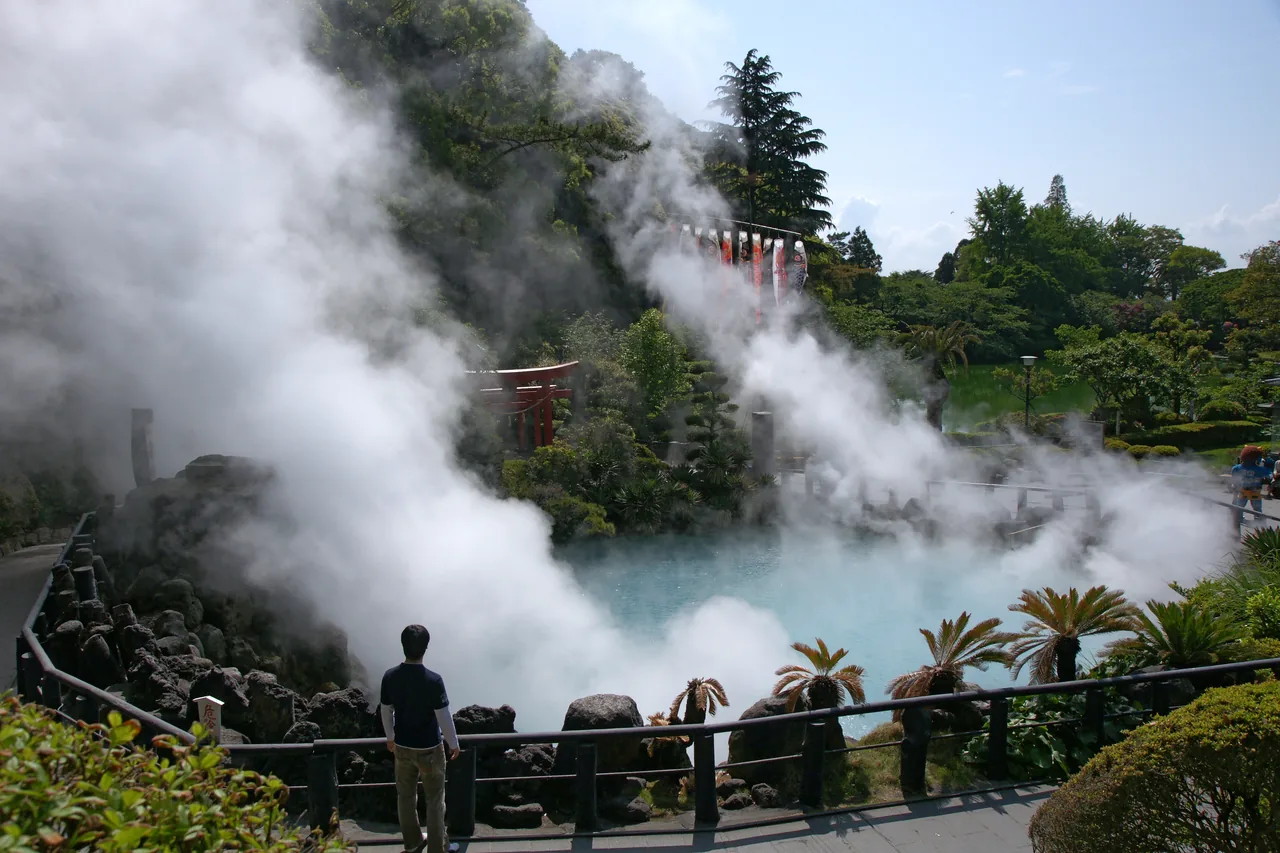
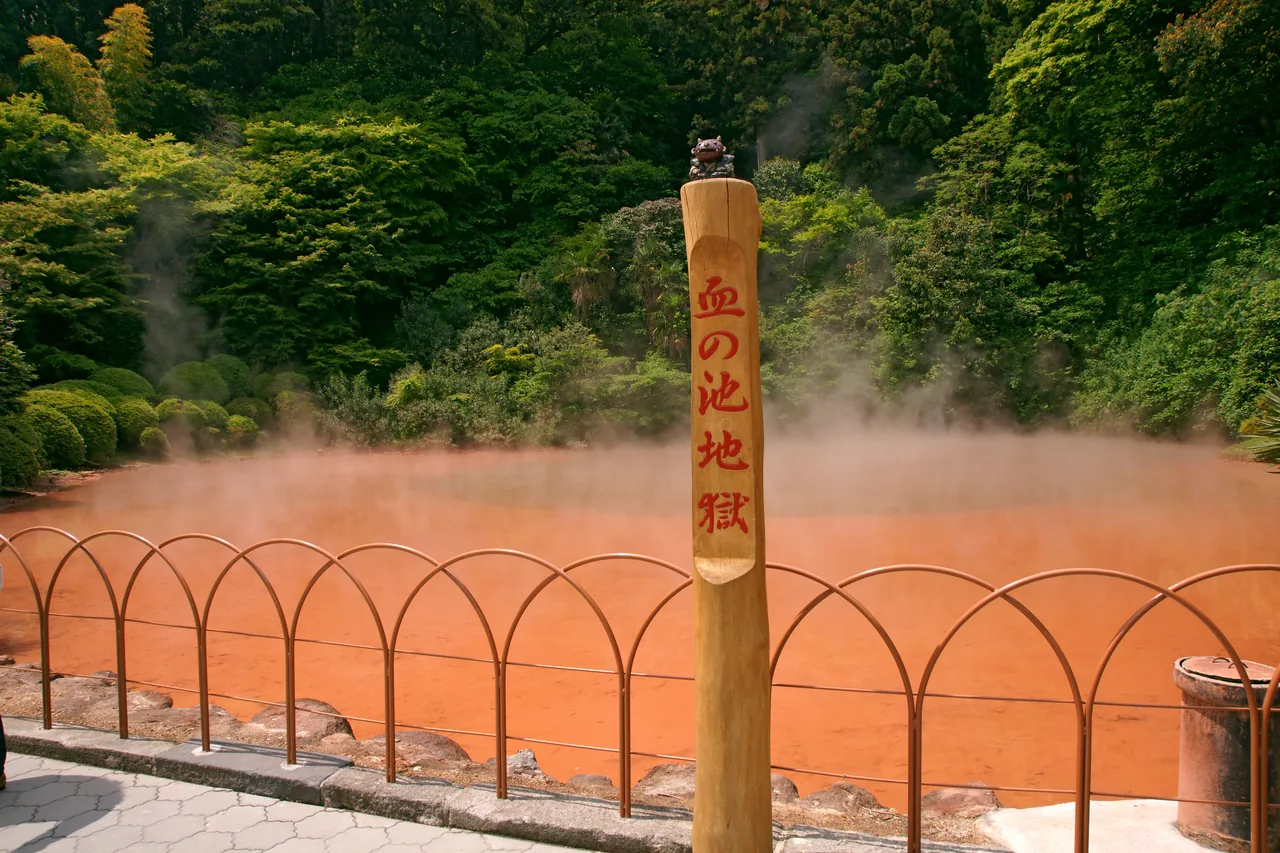
Umi JigokuMap, the “Sea Hell,” is the most photographed of the seven — a startlingly cobalt-blue pool heated to around 98°C, the color coming from dissolved iron sulfate. Chinoike JigokuMap, the “Blood Pond Hell,” is the other essential stop: a genuinely blood-red pool colored by iron oxide and clay, and Japan’s oldest natural hell, referenced in records going back over a thousand years. The other five range from a boiling mud pool (Kamado) to one with actual crocodiles kept warm by the geothermal heat (Oniyama) to a geyser that erupts every 30-40 minutes, each eruption lasting 6-10 minutes (Tatsumaki, worth timing your visit around).
Individual admission is ¥500 adult / ¥250 child per hell. The common ticket covering all 7 costs ¥2,400 adult / ¥1,200 child, valid across your purchase date plus the following day — this price took effect February 1, 2025, up from roughly ¥2,000-2,200 previously, so don’t be surprised if it’s higher than a figure you’ve seen quoted elsewhere. Group tickets (20+) run ¥2,000/¥1,000. All seven are open 8:00am-5:00pm daily, year-round, with no closed days.
Five hells (Umi, Oniishibozu, Kamado, Oniyama, Shiraike) cluster within easy walking distance of each other in Kannawa. The other two (Chinoike, Tatsumaki) sit about 3km away in Shibaseki, reached by Kamenoi Bus route 16 (about 5-7 minutes, roughly ¥140) or a short taxi ride (about ¥1,000-2,000). Budget roughly 3-4 hours to see all seven properly, including transit between clusters and any wait at Tatsumaki for its geyser to erupt. If you’d rather not manage the bus timing yourself, a guided Kamenoi bus tour bundles all seven admissions with transport for about ¥4,500/adult, taking roughly 3 hours.
6. Beppu’s sand bath: buried at the beach, or indoors year-round
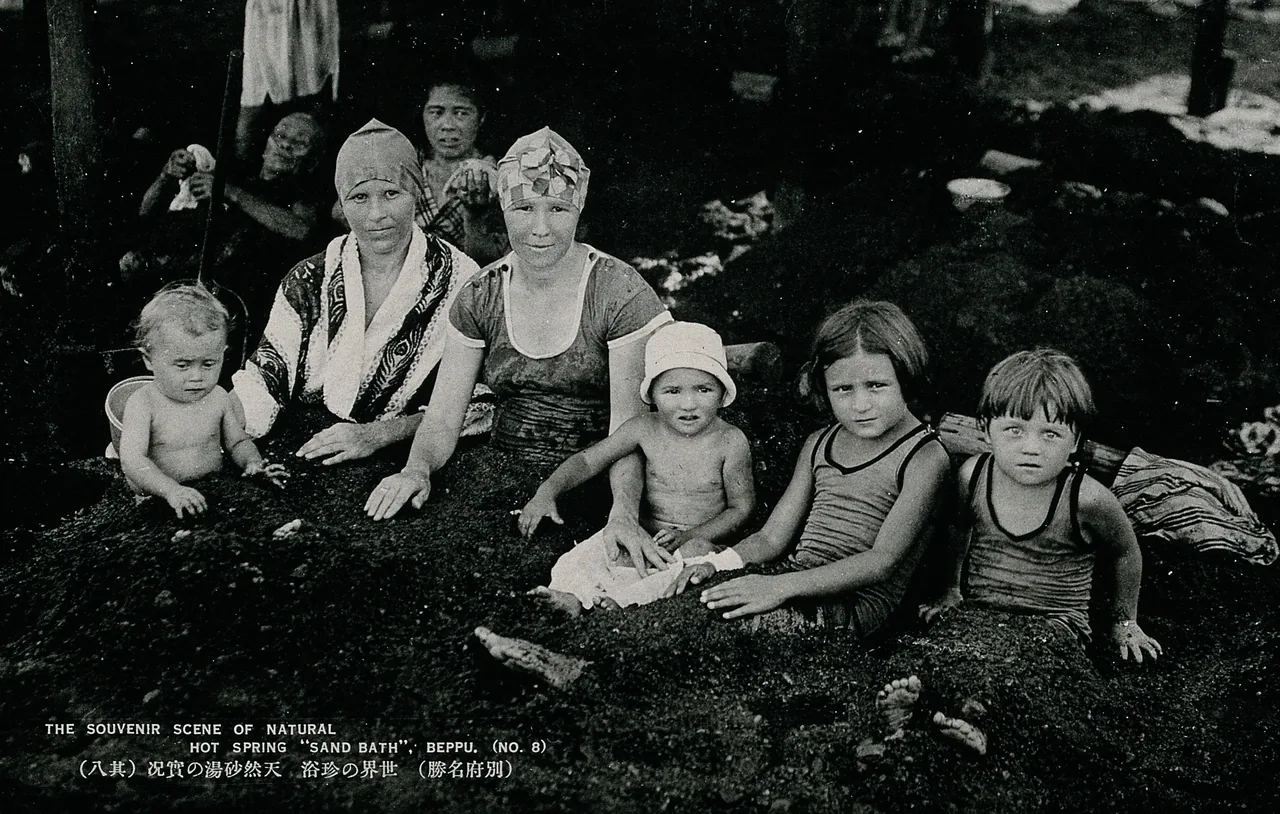
A Beppu sand bath means being buried up to your neck in geothermally-heated sand for roughly 10-20 minutes while wearing only a provided yukata — one of the more genuinely strange, memorable things you can do in a Japanese hot-spring town, and something most visitors have never tried anywhere else.
Beppu Kaihin SunayuMap (“Beach Sand Bath”), on the beach in Kamegawa about 15 minutes by bus from Beppu Station’s East Exit, is the classic version: about ¥1,500 per person (age 5+), yukata included, with towel rental (+¥350) and a locker (¥100) if you need them. There’s no reservation system — you take a numbered walk-in ticket, so arriving before 9-10am is the standard advice to avoid a wait. The process: change into the yukata (no underwear underneath), lie down in a shallow trench, and staff shovel warm sand over you, leaving your head free. After your time in the sand, you shower off and can usually follow it with a soak in a regular bath. Hours run 8:30am-6:00pm (last registration 5:00pm) March-November, and 9:00am-5:00pm (last reception 4:00pm) December-February; closed the 4th Wednesday of each month.
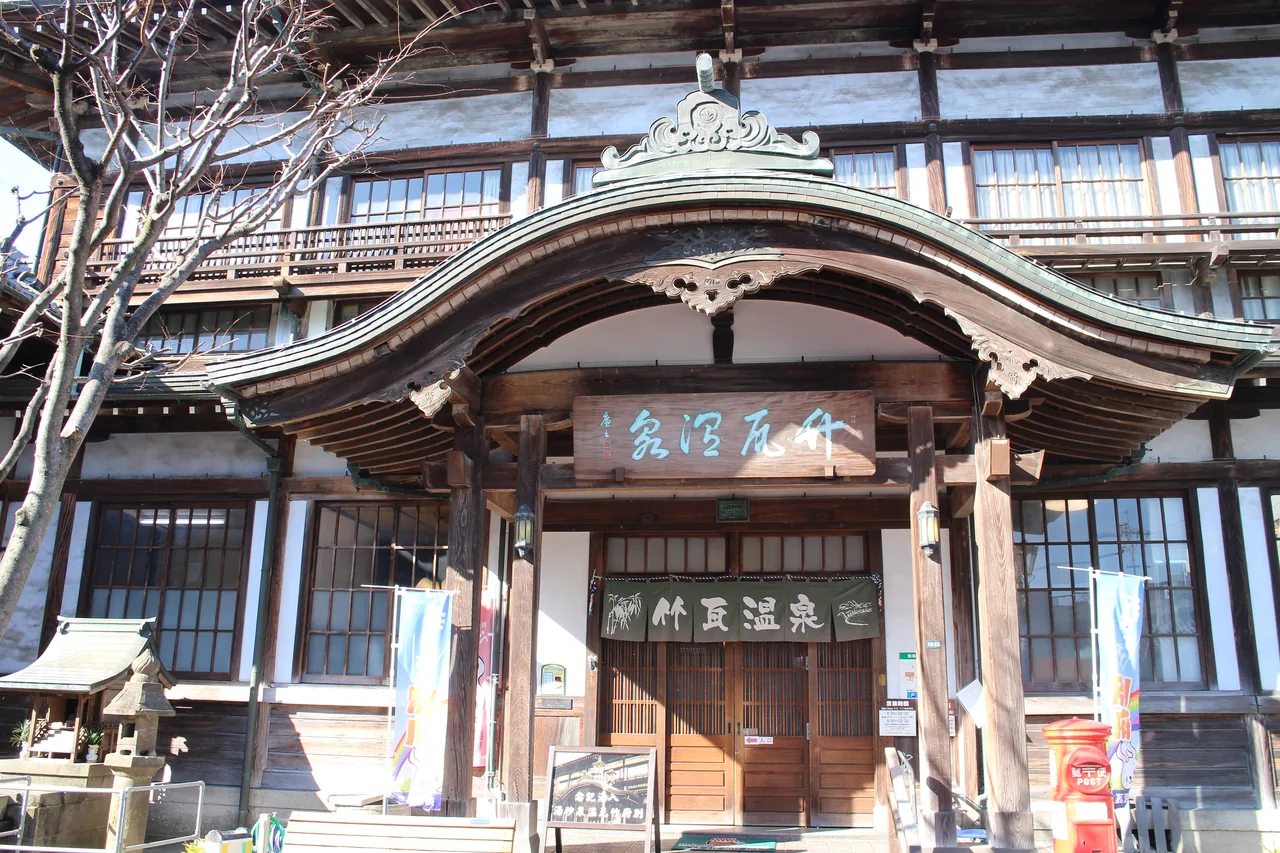
If the weather’s bad or you’d rather stay central, Takegawara OnsenMap — a genuinely historic bathhouse dating to 1879, right in central Beppu — has an indoor sand bath as its bad-weather alternative: ¥1,500 including yukata and a regular bath afterward, though only 8 people are taken per sand-change cycle, so the full visit (including about 15 minutes buried) runs 40-50 minutes total. Hours are notably long, 8:00am-10:30pm (last entry 9:30pm), closed the 3rd Wednesday of the month. If you just want the regular bath without the sand, that’s a separate ¥300 admission.
7. Beppu’s mud bath: a genuine rarity, and not where most guides say it is
Beppu’s mud bath is at Beppu Onsen Hoyoland in Myoban Onsen — not at Hyotan Onsen, which a surprising number of online guides incorrectly credit with it. Hyotan Onsen has its own sand bath, steam bath, and regular baths, but no mud.
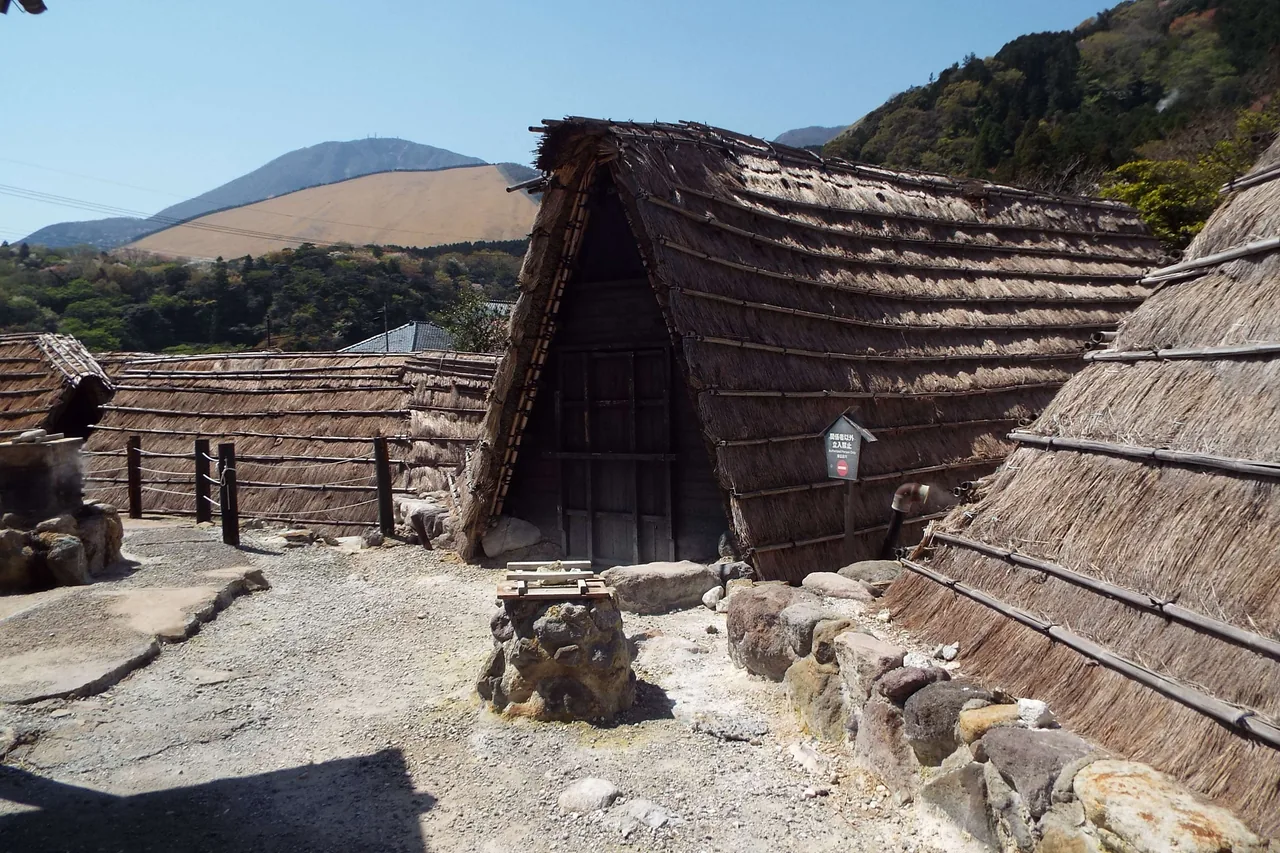
Beppu Onsen HoyolandMap sits in Myoban, a hillside onsen district a short drive above central Beppu known for its distinctive thatched-roof yunohana huts (used to harvest bath-salt crystals from the steam, a local specialty souvenir). Hoyoland’s baths are fed by the nearby Konya Jigoku spring and include indoor gender-separated mud baths, an outdoor mixed-gender mud bath (divided by a bamboo partition), a milky-white regular onsen pool, and a steam bath. Admission is about ¥1,500 adult, ¥1,100 junior-high age, ¥600 elementary age, and ¥350 for under-6s; hours run roughly 9:00am-8:00pm, and overnight guests get round-the-clock access to the colloid bath. No soap or shampoo is allowed anywhere on the property, and children still in diapers aren’t permitted in the mud baths.
True mud baths are genuinely rare in Japan — this is one of only a handful nationwide — which makes Hoyoland worth the short trip up from central Beppu even though it’s less central than the Hells or the sand bath. A few recent visitor reports describe the facility as a little worn or the mud supply as occasionally thin, which is worth knowing going in, but the core experience (an actual mud soak, indoors or out) is still a genuinely rare thing to do in this country.
8. Beppu’s steam baths: two very different things with similar names
Beppu has two attractions people often lump together as “the steam bath,” and they’re not the same thing at all: one is a place to cook food with volcanic steam, the other is a place to steam your body. Knowing the difference before you go saves a confused trip.
Jigoku Mushi Kobo Kannawa — cooking, not bathing
This is a self-cook facility where you rent a steam basket and cook your own food — eggs, vegetables, seafood, even custards — using geothermal steam that reaches around 98°C, the same Edo-period cooking method (jigoku mushi, “hell-steamed”) still used across Beppu’s restaurants today. Basket rental runs about ¥500 for 30 minutes plus the cost of ingredients, or you can buy preset sets from about ¥1,800-2,400 (a premium set includes Bungo-gyu wagyu beef), with a kids’ basket around ¥1,200. Hours run roughly 9:00am-9:00pm, last cook around 8:00pm, closed the 3rd Wednesday of the month.
Kannawa MushiyuMap — the actual bathing steam bath
This city-run bathhouse is the real steam bath: a stone chamber floor-heated by hot spring water and lined with medicinal sekisho herb, where you lie directly on the heated, herb-covered floor and steam rather than soak. Admission is ¥700 (middle-school age and up), yukata rental ¥220, hours 6:30am-8:00pm (last entry 7:30pm), closed the 4th Thursday of the month. It’s confirmed tattoo-friendly, and genuinely one of the more distinctive, low-tourist-traffic bathing experiences in Beppu if you want something beyond the Hells and sand.
9. Tattoo policy and bathhouse etiquette in Beppu
Beppu markets itself nationally as one of Japan’s most tattoo-permissive onsen towns — officially promoted as having around 100 tattoo-friendly hot springs — and unlike a lot of destinations, this isn’t just true at touristy spots. Even the historic, city-run Takegawara Onsen (opened 1879) and Kannawa Mushiyu welcome visible tattoos, alongside the more overtly tourist-facing Hyotan Onsen. Treat Beppu as a genuine outlier against the rest of Japan, where tattoo bans at public baths remain common, rather than assuming there’s an internal split between “old” and “new” bathhouses here — that split doesn’t clearly hold in Beppu the way it might elsewhere.
Basic bathhouse etiquette is otherwise the same as everywhere in Japan: wash and rinse thoroughly at the shower stations before getting into any shared tub, no swimsuits, keep your small modesty towel out of the bathwater (most people rest it on their head or the tub’s edge), tie up long hair, and leave phones and cameras out of the bathing areas entirely. Voices stay low — these are still working, communal spaces, not photo ops.
10. Getting between Beppu and Yufuin
The Kamenoi Bus (“Yufurin” route, numbers 36/37) is the standard way to move between the two towns — roughly hourly, about 60-70 minutes, a flat fare of ¥1,100 — running a scenic mountain road that most visitors find more convenient than the train option.
A local JR train on the Kyudai Main Line also connects the two, but only 4 times a day, taking about 62 minutes — workable if the timing lines up with your plans, but the bus’s better frequency makes it the default recommendation for most itineraries, especially if you’re trying to fit both towns into a single day.
11. Yufuin: Kinrin Lake and Yunotsubo Kaido
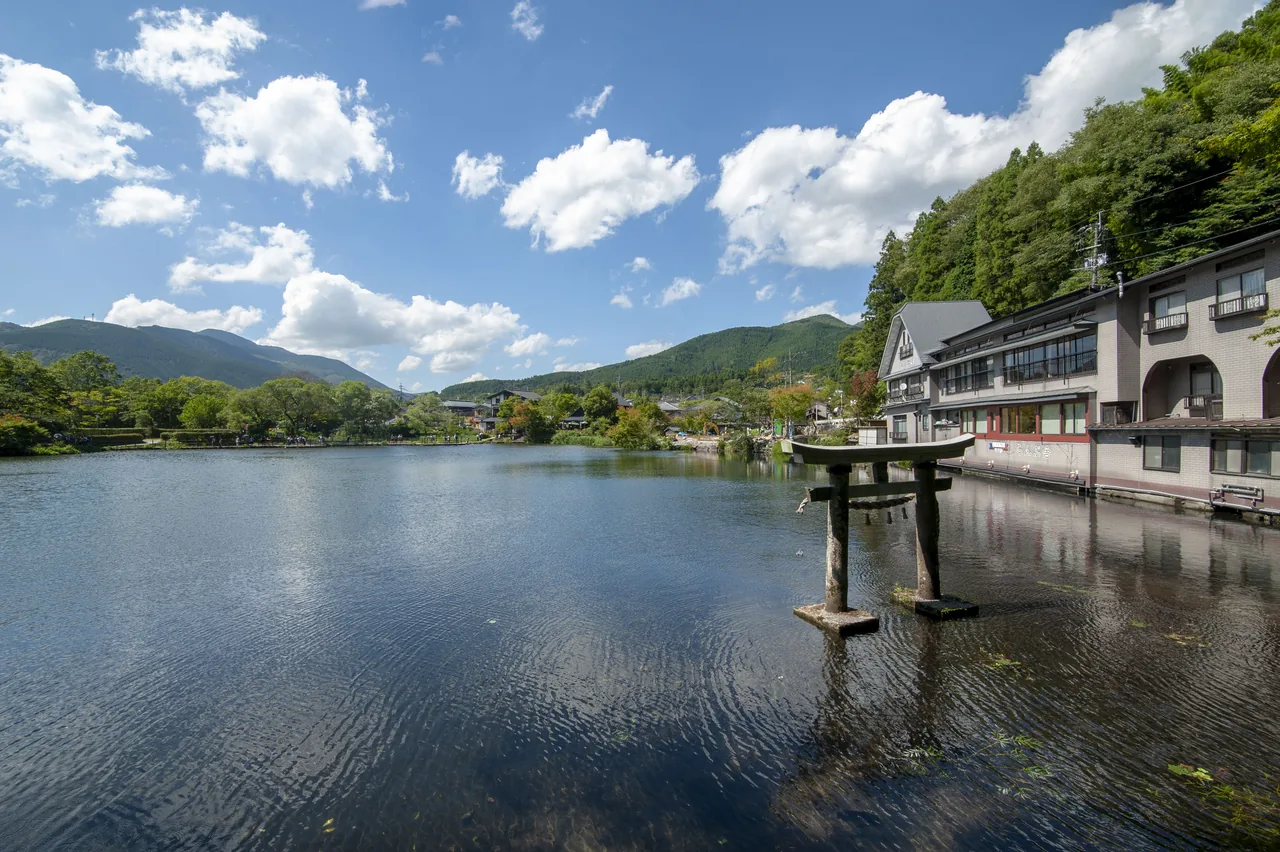
Kinrin LakeMap (Kinrinko) is Yufuin’s centerpiece — a small lake fed by both a cold mountain stream and hot spring water, where the temperature difference causes mist to rise off the surface, most reliably on cold mornings from late autumn through winter (December-February), and best photographed at sunrise (around 5-8am) from the east shore near Tenso Shrine’s reflected torii gate. It’s free to visit, and the full walking loop takes about 20 minutes.
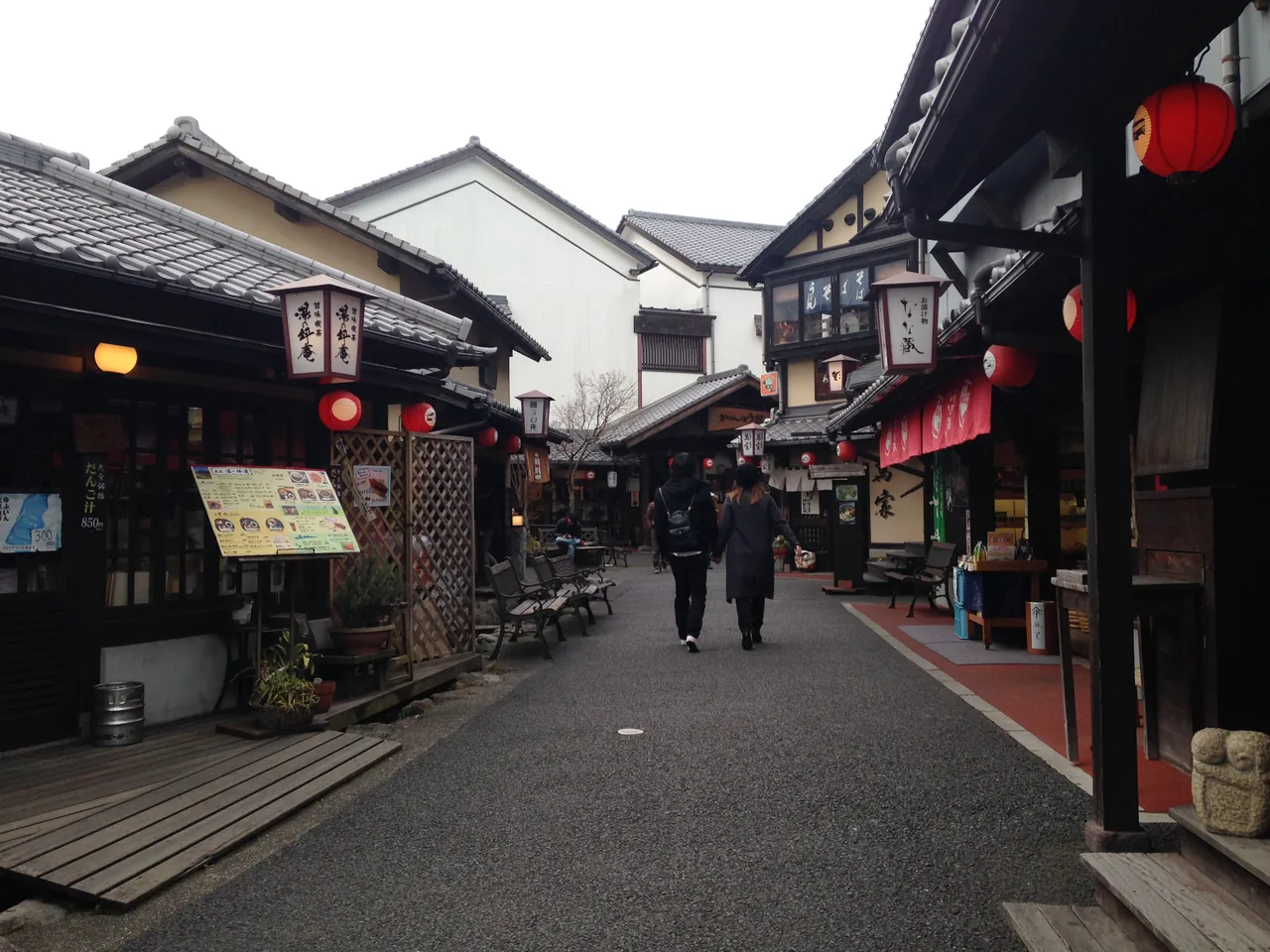
Yunotsubo KaidoMap is the main pedestrian street connecting the station area to the lake, about 1.5km of croquette stands (the Kinsho Croquettes shop is the well-known one), Yufuin-milk soft serve, pudding and cheesecake shops, small galleries, and souvenir stores. It gets genuinely crowded — visitors describe shoulder-to-shoulder conditions roughly 10am-2pm once Fukuoka day-tripper buses arrive — so arriving before 10am does double duty: you beat the crowds on Yunotsubo Kaido and you’re more likely to catch Kinrin Lake’s morning mist if the season’s right.
12. Yufuin’s kitschier side: Floral Village and the small museums
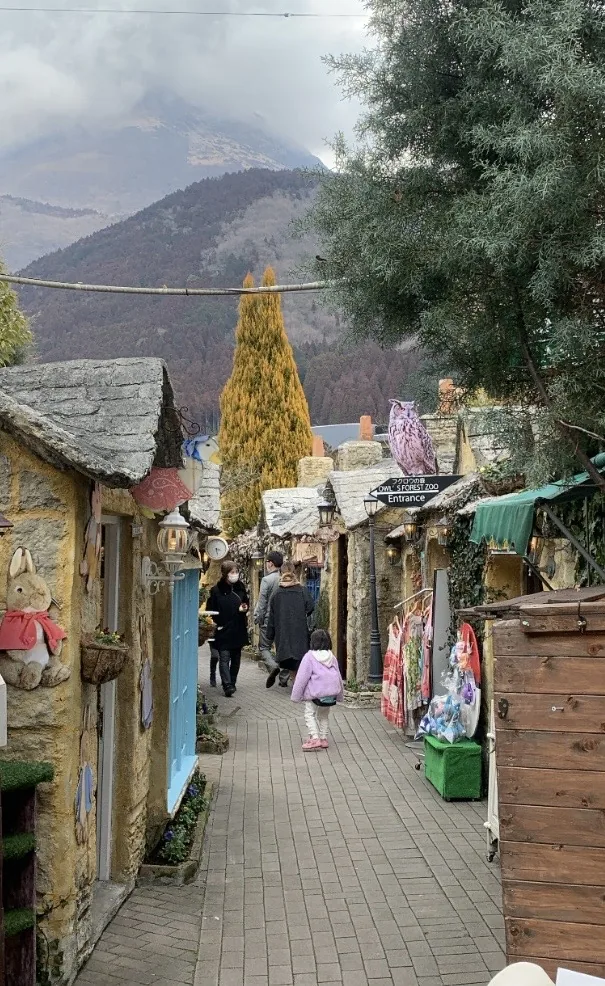
Yufuin Floral Village is themed after England’s Cotswolds, not Kyoto or Florence as it’s sometimes described — a cluster of honey-colored stone cottages leaning into the area’s minor fame as a Harry Potter filming location (there’s a Hogwarts-style building and a vintage British Mini on display), alongside Peter Rabbit, Studio Ghibli, and Alice in Wonderland character shops. Yufuin Floral VillageMap‘s grounds are free to enter; Owl’s Forest, an owl-petting attraction inside, is ¥700 adult / ¥500 child. A full loop takes 20-30 minutes, longer if you stop for the animal encounters.
Contrary to what you might read elsewhere, there is no Yufuin Teddy Bear Museum — Japan’s actual teddy bear museums are in Izu, Nasu, and Tateshina, none of them in Oita. What Yufuin does have is the Yufuin Music Box Museum (Orgel no Mori) — free entry, with music-box-making experiences from about ¥3,000 — plus a handful of other small novelty museums (a Retro Motor Museum, the Comico Art Museum Yufuin, Showakan). Worth being honest about all of these: they’re small-scale, theme-park-lite photo-op attractions rather than deep cultural sites, and that’s fine — treat them as a pleasant hour between Kinrin Lake and dinner, not as the main event.
13. Day-use onsen (higaeri) in Yufuin if you’re not staying at a ryokan
You don’t need to book an overnight ryokan stay to experience a Yufuin onsen — several bathhouses and hotels sell day-use access, generally ¥500-1,000 for a bath-only plan (up to about ¥2,000 at higher-end spots), typically for around an hour’s soak. Fuller day-use packages that include a private room and a meal run considerably more, roughly ¥5,000-18,000 per person.
| Place | What it offers | Price | Notes |
|---|---|---|---|
| Shitanyu | Rustic public bathhouse right on Kinrin Lake’s shore | ¥800 | Hours 9:30am-6:30pm (last entry 6:00pm), closed Tue/Wed |
| Musouen (Yamano Hotel) | Large open-air rotemburo with Mt. Yufu views | small day-visitor fee | One of the more scenic day-use options |
| Tsukanoma | Hillside ryokan, notable cobalt-blue spring water | day-use available | Check the current rate directly before you go |
If your schedule genuinely only allows a day trip, a day-use soak at one of these is a reasonable way to get a taste of Yufuin’s ryokan-onsen culture without an overnight stay — just don’t expect it to fully replace the private-bath, kaiseki-dinner version that an actual ryokan night delivers.
14. Where to stay: Beppu vs. Yufuin
Yufuin is the quieter, more romantic choice built around private ryokan baths with Mt. Yufu views; Beppu is the bigger, more urban option with a wider range of accommodation types and prices, built around its public Hells and unusual bathing culture rather than in-room baths.
| Yufuin | Beppu | |
|---|---|---|
| Feel | Small, quiet mountain-valley resort town, no high-rises | Oita’s 2nd-largest city, urban, spread out, too big to fully walk |
| Best for | Couples, honeymoons, a slow ryokan-focused night | Families, budget travelers, anyone prioritizing the Hells/baths over ryokan luxury |
| Typical accommodation | Private ryokan with in-room or semi-private baths, mid-tier runs roughly ¥22,000-60,000/person | Wider range — from simple guesthouses to full-service onsen hotels |
Ryokan pricing generally scales with privacy and meal quality: budget no-frills stays start around ¥5,000+ per person per night, mid-range stays with a proper kaiseki dinner and breakfast run ¥15,000-30,000, adding a private in-room bath pushes that to ¥25,000-40,000, and top-tier luxury ryokan run ¥50,000 and up. If you’re only doing one overnight on this trip, Yufuin is the stronger pick for the classic ryokan experience; if you’d rather stay central to the Hells and have more budget flexibility, Beppu makes more practical sense. Still mapping out the rest of your trip? Our complete Japan travel guide covers the national picture.
15. When to go: seasons, foliage, and Kyushu’s own timing
Oita’s own tourism board recommends early April through late June for the most comfortable weather and lighter crowds, but the region has two other strong windows worth knowing about: an earlier cherry blossom season than Tokyo, and a distinct autumn foliage peak in the Yufuin/Beppu mountains.
| Season | Timing | Notes |
|---|---|---|
| Cherry blossoms | First bloom ~3rd week of March, full bloom late March-early April | Kyushu blooms about a week earlier than Tokyo; Yufuin/Beppu’s inland elevation can push the peak to the first week of April, slightly later than coastal Fukuoka (treat as approximate) |
| Autumn foliage | Late October-mid November | Yufuin/Mt. Yufu peaks late Oct-mid Nov (Kinrin Lake itself early-mid Nov); Beppu’s Mt. Tsurumi peaks mid-Oct-mid-Nov. Book Yufuin ryokans 8-10 weeks ahead for this season. |
| Typhoon season | Roughly July-October, peaking Aug-Sept | Kyushu is typically among the first regions hit as storms approach from the Pacific/East China Sea — a real differentiator from Tokyo timing |
| Recommended window | Early April-late June | Oita Prefecture’s own pick: past peak sakura crowds, into comfortable hiking-season weather |
Climate overall runs hot and humid in summer (average around 27°C, highs often 35-37°C+, with June the wettest month at roughly 298mm of rain) and mild in winter (average around 6°C, with occasional cold-snap lows to -7°C). One genuinely useful, concrete seasonal detail: Beppu runs up to 5°C warmer than Yufuin in winter. Beppu is coastal with palm-lined streets where any snow melts within hours; Yufuin sits inland in an elevated mountain basin with deciduous trees, and snow there can linger — worth factoring into what you pack if you’re visiting both towns on the same trip in winter. For the national picture across all four seasons, see our guide to the best time to visit Japan.
16. What to eat in Beppu and Yufuin
Oita Prefecture’s food identity centers on toriten (chicken tempura), dango-jiru (a chewy hand-stretched noodle soup), and kabosu citrus — plus, uniquely to Beppu, food actually cooked with volcanic steam.
| Dish | What it is |
|---|---|
| Toriten (鶏天) | Oita’s signature dish — marinated, tempura-battered chicken, served hot with a ponzu-and-karashi-mustard dip, often kabosu-based. Originated at Toyoken restaurant in Beppu, founded 1926. |
| Dango-jiru (だんご汁) | A miso-based soup with hand-stretched flat, chewy wheat noodles — despite the name, not round dumplings — plus root vegetables and iriko (dried sardine) dashi. A genuine Oita home-style staple. |
| Kabosu (かぼす) | A citrus fruit Oita produces about 97% of nationally. Squeezed over sashimi and grilled fish, used as a ponzu base, and worked into soups, noodles, drinks, and desserts. |
| Jigoku mushi (地獄蒸し) | Edo-period steam-cooking method using roughly 98°C geothermal steam — eggs, vegetables, seafood, even custards, seasoned naturally by the steam’s mineral salt. Try it yourself at Jigoku Mushi Kobo Kannawa (see the steam bath section above). |
| Bungo beef (豊後牛) | A registered Oita wagyu brand (name registered in 1918), prized for tenderness and rich marbling, with national wagyu competition wins — a tier comparable to Matsusaka or Kobe beef, if less internationally known. |
| Seki-aji / Seki-saba (関あじ・関さば) | Premium, trademarked horse mackerel and mackerel from the Bungo Channel near Saganoseki — Japan’s first-ever trademarked fishery product, registered in 1996. A common, high-quality sashimi order in Beppu izakaya. |
17. Practical essentials, and sample itineraries
Luggage
Beppu Station has coin lockers at both exits (generally in the ¥300-600 range depending on size) plus a Yamato Transport counter for storage or same-day hands-free delivery to your accommodation. Yufuin Station has lockers at about ¥500 (small) or ¥600 (large), plus a baggage counter charging roughly ¥500-800 by size — but that counter only operates 9:00am-5:00pm, worth knowing if you’re arriving early or leaving late. The ecbo cloak app also covers locations in Oita Prefecture generally, running about ¥400/day for a bag or ¥700/day for a suitcase.
Budget
A day-trip visit covering transport, Hells admission, one bath experience, and food typically runs roughly ¥6,000-13,000 per person, or about ¥8,500-12,000 per person if you book a bundled guided tour instead of managing it yourself. Add an overnight ryokan and the total naturally rises with whichever accommodation tier you pick (see the Where to Stay section above).
Connectivity
A working data connection makes both towns noticeably easier — checking current Hells hours, confirming the next Kamenoi bus, or watching for a last-minute Yufuin no Mori seat opening up. Sort a Japan eSIM before you land rather than relying on station Wi-Fi.
Sample itineraries
1-day rushed (from Fukuoka): Early Sonic to Beppu → Kannawa Hells cluster + one bath experience → Kamenoi Bus to Yufuin (~1h) → Kinrin Lake + Yunotsubo Kaido → Yufuin no Mori or Yufu back to Hakata by evening.
2-day relaxed: Day 1 — Beppu (Hells, a bath, overnight ryokan or hotel). Day 2 — bus to Yufuin (~1h), Kinrin Lake in the morning if the season fits, Yunotsubo Kaido, optionally Floral Village, then back to Fukuoka in the evening, or a second night in a Yufuin ryokan before returning.
For the wider rail strategy, see our JR Pass guide, and for cash-vs-card logistics, our Japan money guide.