
Where to Stay in Fukuoka: Best Areas, Hotels, Prices, Tips
Hakata Station, Tenjin, Nakasu, Gion and Ohori compared on access, noise and how far you are from the food stalls. It also covers the city lodging tax, the price bands, when to book and where to base yourself if you arrive by ferry or leave by shinkansen.
| Best default | Hakata Station suits most first visits, with the airport five minutes away by subway. |
|---|---|
| Airport rule | An airport hotel buys nothing when the terminal is five subway minutes from the centre. |
| Yatai on foot | Only Nakasu and Tenjin put the food stalls within a short walk after 18:00. |
| Lodging tax | Fukuoka City charges it per person per night at the desk, not inside your booking total. |
| Book ahead | Two to three months for cherry blossom, Golden Week and the July festival dates. |
1. Fukuoka begins five minutes from its own airport
2. One subway line strings the whole shortlist together
3. The five areas, side by side
4. Hakata Station, the default that is usually right
5. Tenjin, the shopping centre and the compromise
6. Nakasu, the river, the stalls and the late hours
7. Gion and Kushida, old Hakata on foot
8. Ohori and Akasaka, the quiet end of the line
9. Momochi Seaside and the airport fringe, and when they make sense
10. What the Tenjin rebuild is changing right now
11. Which areas put the food stalls on your doorstep
12. Price bands, and what moves them
13. The lodging tax you pay at the front desk
14. When to book, and the dates that fill first
15. Arriving by sea, leaving by rail
16. Luggage, check-in hours and the gap in the middle
17. The mistakes first-timers make
1. Fukuoka begins five minutes from its own airport
Fukuoka Airport is on the subway. The ride from the domestic terminal to Hakata Station takes five minutes and costs 260 yen, and the same platform reaches Tenjin, the commercial centre, in eleven minutes for the same fare.
In most cities that number decides your hotel. Here it decides nothing. Every area worth sleeping in is already inside a quarter of an hour of the arrivals hall, so you are free to choose on other grounds.
The transfer inside Fukuoka AirportMap is the part worth planning. International flights land at a separate terminal and you ride a free shuttle bus to the domestic building, where the subway station is. Treat the five minute figure as the last leg, not the whole journey from the aircraft door.
The short hop helps on the way out too. From any of the five areas below you can reach the airport without leaving the night before, and you do not need a room by the runway to protect a morning flight.
This article is about where to sleep and what you can walk to. It compares the five central areas, tells you which of them put the food stalls within reach, and covers the lodging tax, the price bands and the booking calendar. For what to do once you are out of the room, see what there is to see in Fukuoka, and for the wider trip, planning the rest of a Japan trip.
One boundary first. Kokura and Kitakyushu are separate cities to the northeast with their own stations, their own hotels and a different lodging tax. Nothing here applies to them.
2. One subway line strings the whole shortlist together
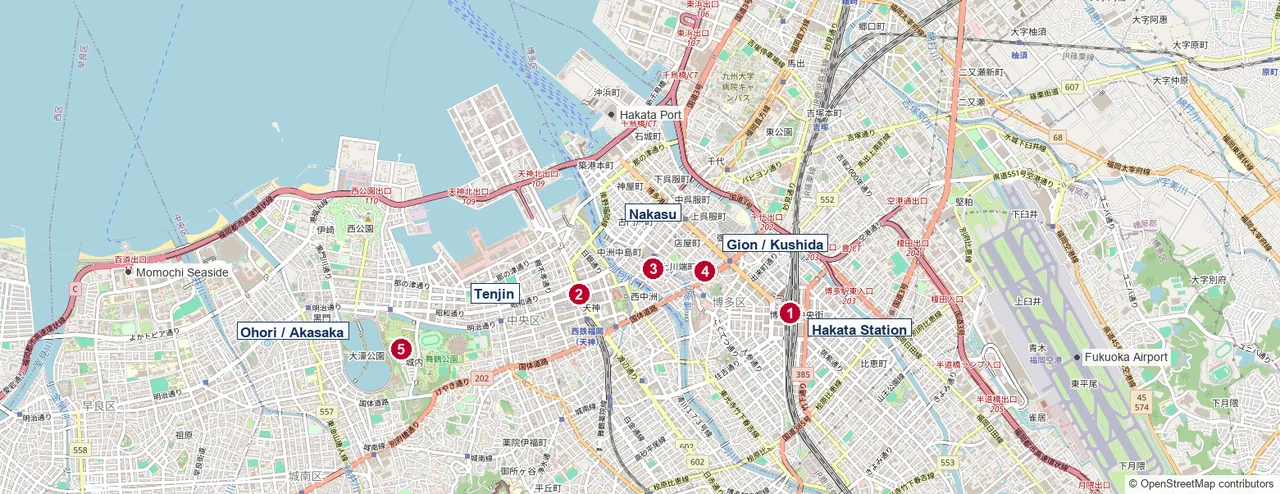
Fukuoka has three subway lines and you will mostly use one. The Kuko Line, written in English as the Airport Line, starts at Fukuoka Airport and runs through Hakata, Gion, Nakasu-Kawabata, Tenjin, Akasaka and Ohori-koen before continuing west to Meinohama.
Read that list again and you have the shortlist for this article. Every area covered here sits on that one line, in order. Moving between them is a single ride with no change and no thinking.
| Station | Area it serves | What is on top of it |
|---|---|---|
| Fukuoka Airport | Airport | Domestic terminal, free shuttle to the international building |
| Hakata | Hakata Station | Shinkansen, JR local lines, highway bus terminal |
| Gion | Gion and Kushida | Old Hakata temples and Kushida Shrine |
| Nakasu-Kawabata | Nakasu | Riverside, food stalls, nightlife |
| Tenjin | Tenjin | Department stores, Nishitetsu trains, city buses |
| Akasaka | Akasaka | Offices, quieter side streets |
| Ohori-koen | Ohori | Ohori Park and the castle ruins |
The other two lines matter less to a visitor. The Hakozaki Line branches off at Nakasu-Kawabata and heads northeast. The Nanakuma Line links Tenjin-Minami to Hakata, a connection it only gained with a 2023 extension.
That extension is worth knowing if your hotel ends up in the southern half of Tenjin, where Tenjin-Minami rather than Tenjin is your nearest entrance. The two are close on a map but they are different stations with different exits.
Buses cover what the subway does not, mainly the seafront at Momochi and the international ferry terminal. They work well, but they are a second system with their own stops and their own logic, and every extra system is one more thing to get wrong on day one.
Maps and live departures make the difference between one line and no line, so sort your connectivity before you land. Mobile data and eSIM options are worth arranging in advance rather than at the airport counter.
3. The five areas, side by side
Five areas hold almost all of the visitor accommodation in central Fukuoka. They are close together, they are all on the same subway line, and the practical difference between them is not travel time. It is what stands outside the door at nine in the evening.
Use the table to narrow to two, then read the section for each. The columns that decide most bookings are the last two.
| Area | What it is | Suits | From the airport | Yatai on foot | Evenings |
|---|---|---|---|---|---|
| Hakata Station | Transport hub with a department store built into it | First visits, rail travellers, two night stays | 5 minutes, 260 yen | No | Thins out once the shops close |
| Tenjin | Retail and office centre, partly a building site | Shopping, day trips by Nishitetsu, walking to dinner | 11 minutes, 260 yen | Yes | Busy and lit until late |
| Nakasu | Sandbank between two rivers, nightlife district | Late nights, stalls at the door | Through Tenjin or Hakata on the same line | Yes | The loudest and latest in the city |
| Gion and Kushida | Old Hakata, shrines and temples | Walkers who want the station without the forecourt | One stop past Hakata | No | Calm, few late kitchens |
| Ohori and Akasaka | Park, castle ruins, residential streets | Longer stays, families, anyone who runs | Two stops past Tenjin | No | Residential quiet |
Two patterns run through that table. The areas that are strong on transport are weak on evenings, and the areas that are strong on evenings are weak on sleep.
Hakata Station wins on logistics and loses on atmosphere. Nakasu wins on atmosphere and loses on quiet. Tenjin is the compromise, which is why it is the most contested and often the most expensive of the three. Gion and Ohori sit outside that argument entirely, trading nightlife for a street you would not mind walking down at midnight.
None of these choices strands you. The worst case across the five is a ride of a few stops and a fare of a few hundred yen, which is why the decision should be made on what you want underfoot rather than on distance.
If you are comparing Fukuoka with other stops on the same trip, the trade offs look different in bigger cities, where a bad area choice can cost you an hour a day. Here it costs you ten minutes.
4. Hakata Station, the default that is usually right
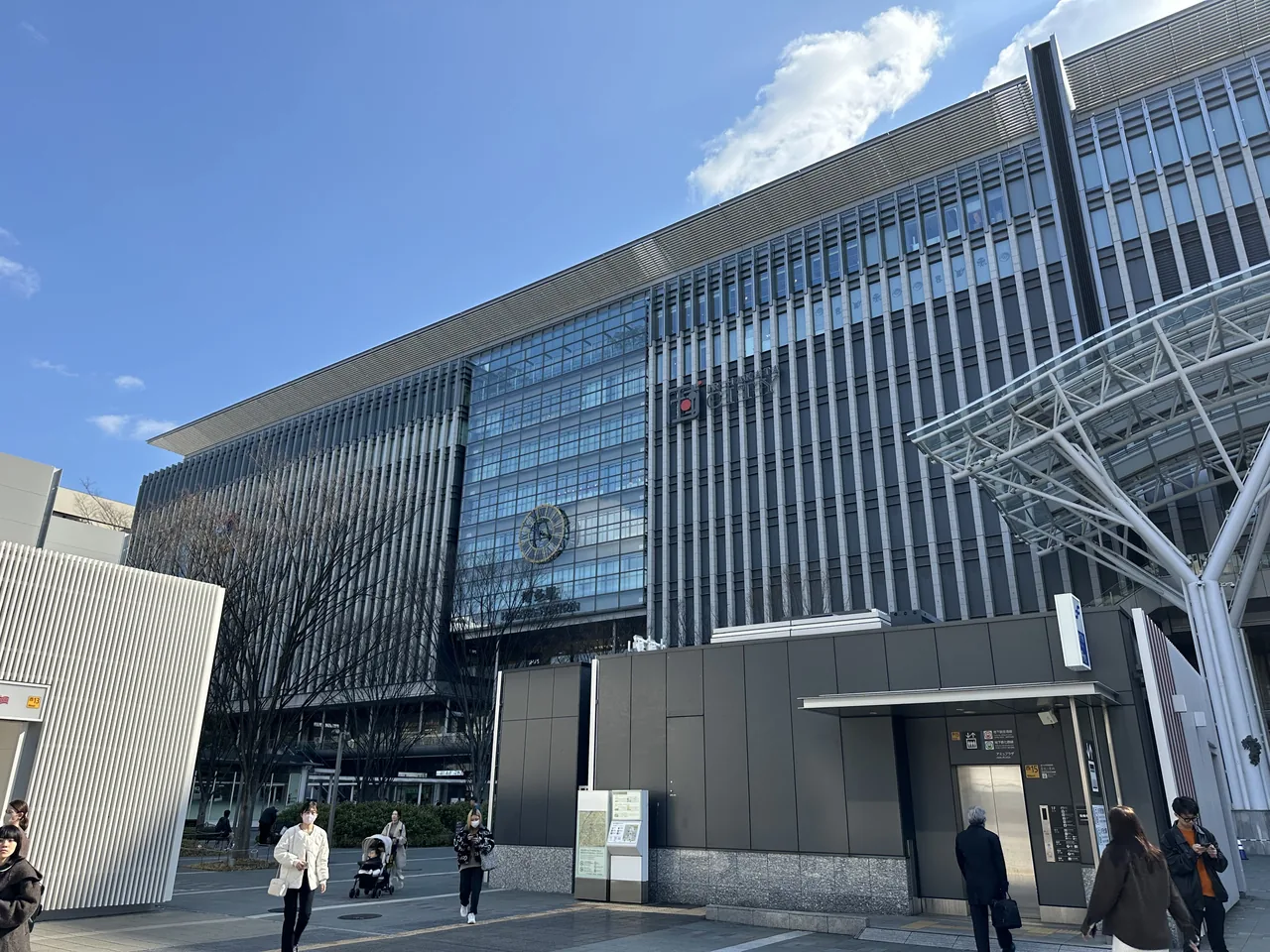
Hakata StationMap is not really a station. It is a building with a station in the basement, a department store above it, restaurant floors under the roof and a highway bus terminal attached, and the whole thing sits five subway minutes from the airport.
Four transport systems meet here. The shinkansen terminates at Hakata and runs east toward Hiroshima and Osaka. JR local and limited express services fan out across Kyushu from the same concourse. The airport subway runs from the same basement, and long distance buses leave from the terminal next door.
That concentration is the whole argument for the area. If your Fukuoka stay is short, if you are arriving or leaving by rail, or if you are using the city as a base for day trips into Kyushu, staying here removes a transfer from every single morning.
Who it suits
- First time visitors who want the simplest possible arrival
- Anyone starting or ending a rail pass at Hakata
- Business travellers and short stays of one or two nights
- Travellers with heavy luggage, since the station absorbs the walk
Rooms here skew toward business hotels. Expect a compact room, a small bathroom unit and a room only rate with breakfast sold separately. The upside is density of supply, which means that even on a busy weekend something is usually available, though not always at a price you like.
On foot from the station you have the department store and the restaurant floors inside the building, the old Hakata quarter around Gion a short walk northwest, and the temples that go with it. What you do not have is food stalls. The three stall zones are all further west, and reaching the nearest of them means two stops on the subway or a walk of twenty minutes or so.
The rail connection is the reason many visitors end up here, and it pays to have the ticketing sorted before you arrive. Rail passes and shinkansen fares explains what a JR Kyushu pass covers and where it stops being worth it. If Fukuoka is the first stop before the shinkansen east, where to stay in Osaka covers the other end of that line.
5. Tenjin, the shopping centre and the compromise
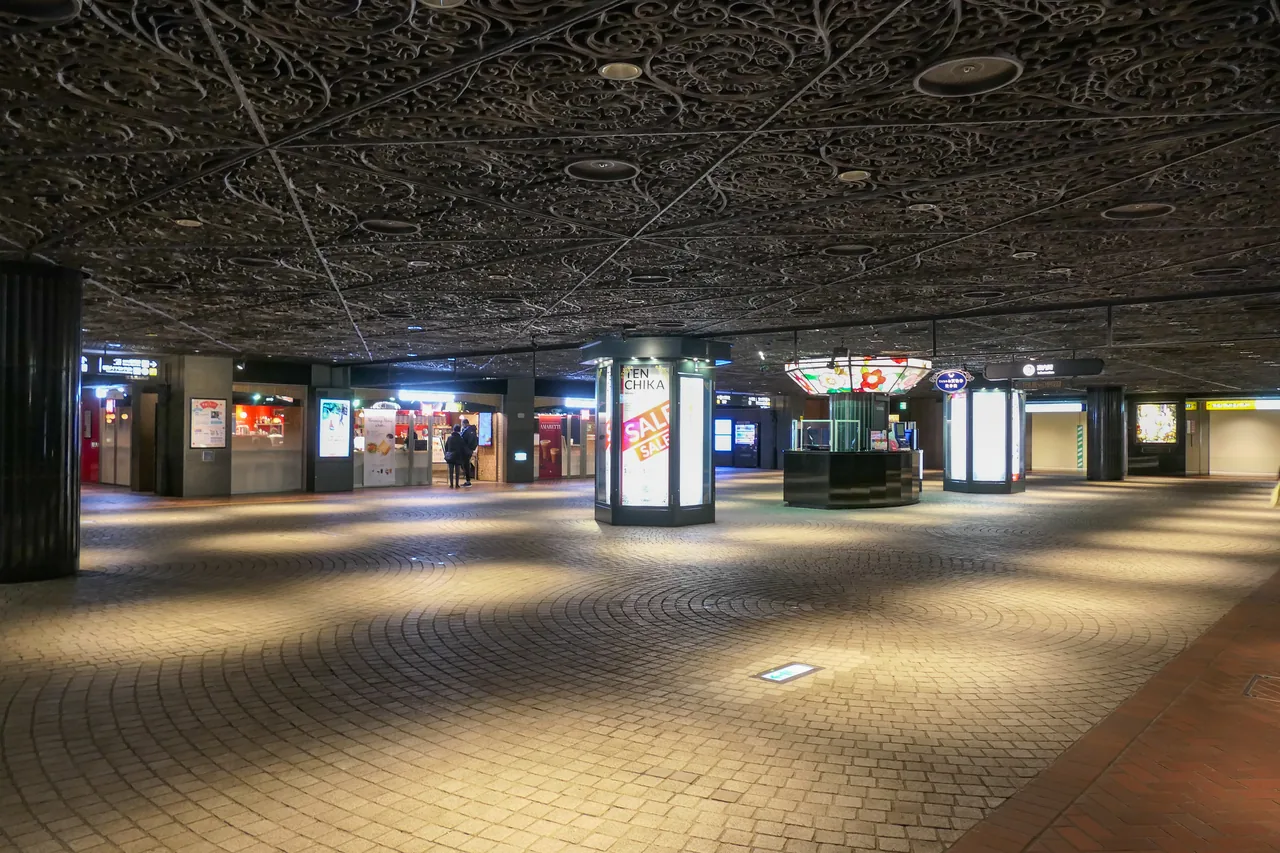
TenjinMap is where Fukuoka does its shopping. Department stores sit above ground, an underground arcade runs beneath the main street, and the whole district is dense enough that you can spend an evening without crossing a road.
It is also a transport centre in its own right, though a different one from Hakata. The Nishitetsu network starts here rather than at the JR station, which is how you reach Dazaifu and Yanagawa. The city bus network converges on Tenjin as well, including the route in from the international ferry terminal.
From the airport it is eleven minutes and 260 yen, the same fare as Hakata. From Hakata Station it is about five minutes and 210 yen on the subway. In practice you are never more than a few minutes from either.
Who it suits
- Shoppers, since almost everything retail is within a few blocks
- Anyone planning day trips on the Nishitetsu line
- Travellers who want to walk to dinner rather than ride to it
- Ferry arrivals, because the bus from the port comes here
Tenjin is one of the three areas with food stalls of its own, which changes the shape of an evening. You can eat at a stall and be back in the room in ten minutes, without a last train to worry about.
The catch is that a large part of central Tenjin is a building site and will be for a while yet. Whole blocks have come down and gone back up under a redevelopment programme, and more is scheduled. Hoardings, diversions and construction noise are part of the deal in some streets, and the next section covers exactly what is changing.
Shopping here means dealing with tax free counters, and payment habits vary from shop to shop and stall to stall. Cash and cards in Japan covers where you still need notes. If you are comparing city bases across the trip, where to stay in Tokyo shows how much wider the same decision gets in a larger city.
6. Nakasu, the river, the stalls and the late hours
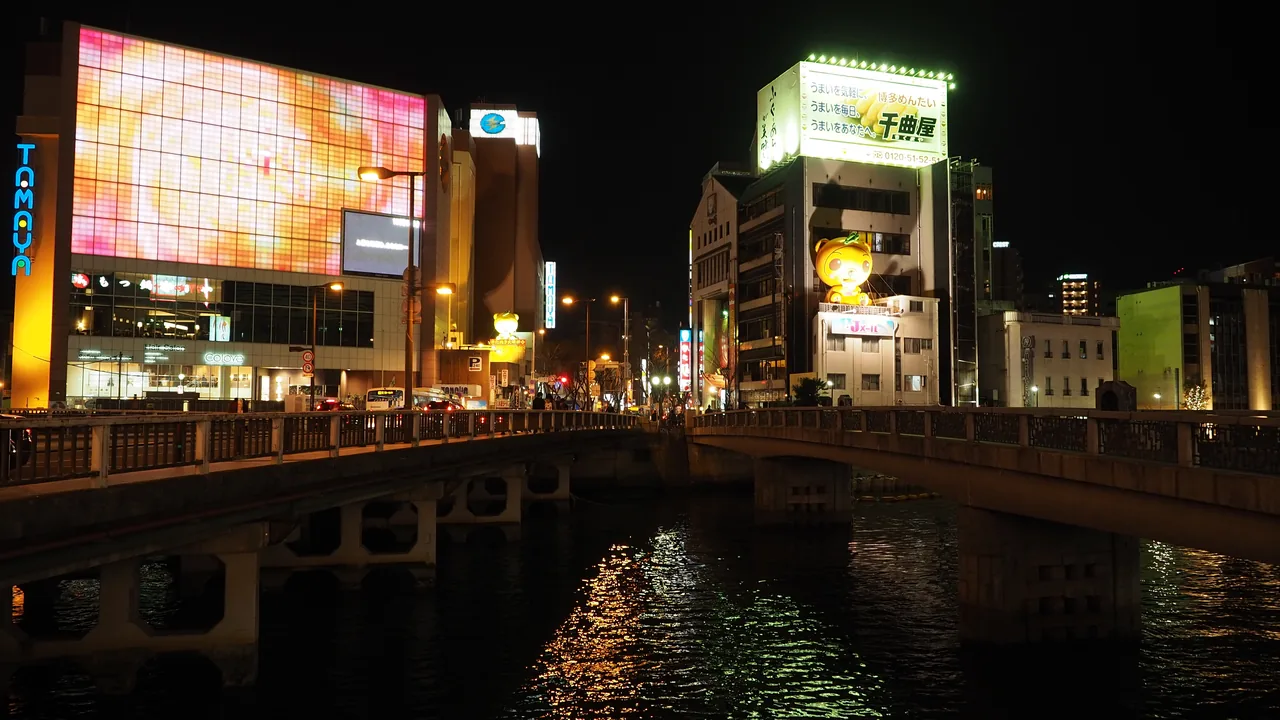
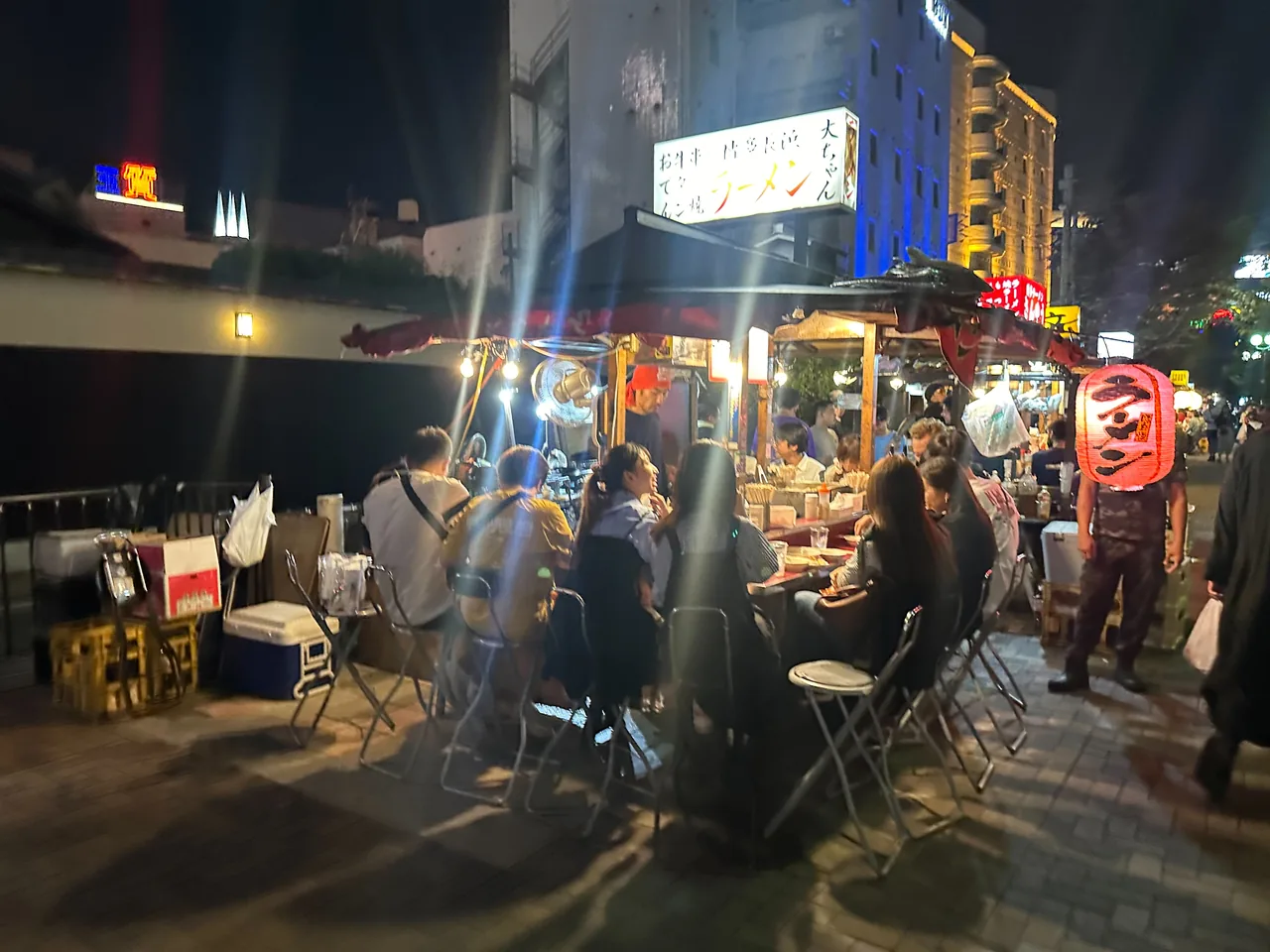
NakasuMap is a sandbank. The Naka River runs down one side and the Hakata River down the other, and the strip of land between them holds one of the densest concentrations of bars, restaurants and yatai food stalls in western Japan.
The station is Nakasu-Kawabata, which sits between Gion and Tenjin on the Airport Line and is also where the Hakozaki Line branches off. You are two stops from Hakata Station and one from Tenjin, so nothing in the city is far.
What makes Nakasu different from the other four areas is the hour at which it comes alive. The stalls along the riverside mostly open after six in the evening and run late, and the surrounding streets keep going well past the point where the rest of the city has closed.
Who it suits
- Travellers whose main plan for Fukuoka is eating and drinking
- Anyone who wants to walk home from a stall rather than catch a last train
- Short stays where the evening matters more than the morning
The same quality is the reason to avoid it. This is an entertainment district, with everything that implies about noise, touting and foot traffic at two in the morning. Rooms facing the main streets can be loud, and families with small children usually find it easier one stop away.
Stall etiquette is worth a moment before your first one. Counters are small, seats are shared, and Fukuoka has a city ordinance covering food stalls that sets out duties not only for the city and the operators but for customers as well. In practice that means keeping your bags out of the walkway, not lingering over an empty glass when people are waiting, and paying attention to how the stall handles queuing.
What to order is a separate question with a long answer. What to eat in Fukuoka covers the stalls, the ramen and the local dishes. The wider conventions, from shoes to chopsticks, are in manners at the table and at shrines.
7. Gion and Kushida, old Hakata on foot
One subway stop west of Hakata Station, or a walk of about fifteen minutes, the grid changes. Office blocks give way to a lower, older street pattern, and the temples that gave Hakata its name as a merchant town are still standing in it.
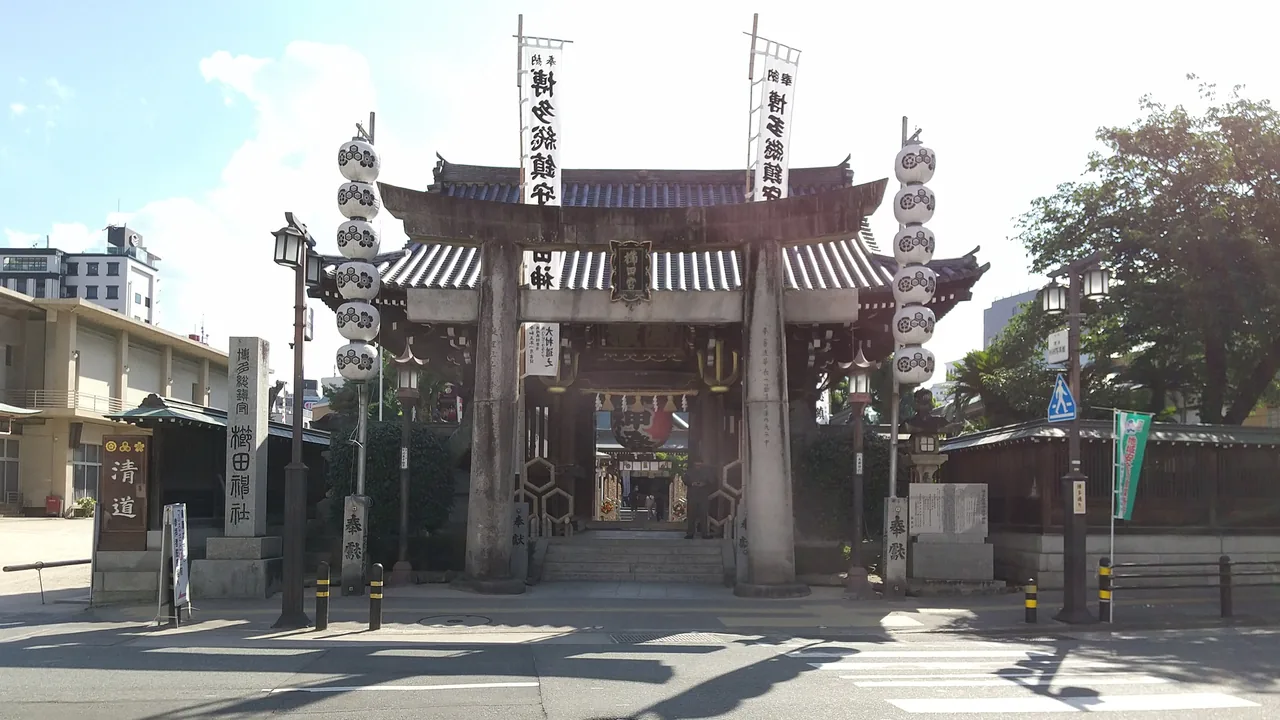
Kushida ShrineMap is the anchor. It is the shrine associated with the Hakata Gion Yamakasa festival held every July, when the neighbourhood fills with the float teams and the surrounding streets close. For the rest of the year it is a quiet compound in the middle of a working district.
TochojiMap and Shofukuji sit nearby, within a few minutes of each other, which makes this the one part of central Fukuoka you can see properly without transport. That is unusual in a city otherwise organised around stations.
Who it suits
- Walkers who want Hakata Station close without staying on top of it
- Light sleepers who still want to be central
- Repeat visitors who have already done the shopping streets
- Anyone visiting in July for the festival, though those dates book out early
Access is the quiet strength here. Gion station is on the same line as everything else, one stop from Hakata and one from Nakasu-Kawabata, so the food stalls are a single short ride and the shinkansen is a single short ride the other way.
The trade off is the evening. This is not a restaurant district, and while there are places to eat, the choice narrows sharply after nine. If you want a late second drink you will be walking toward Nakasu or riding to Tenjin.
The area also puts you on the right side of Hakata Station for the temples and on the wrong side for the shinkansen platforms, which is a five minute difference rather than a real one. For a two night stay it is the kind of detail that only matters if you are counting.
8. Ohori and Akasaka, the quiet end of the line
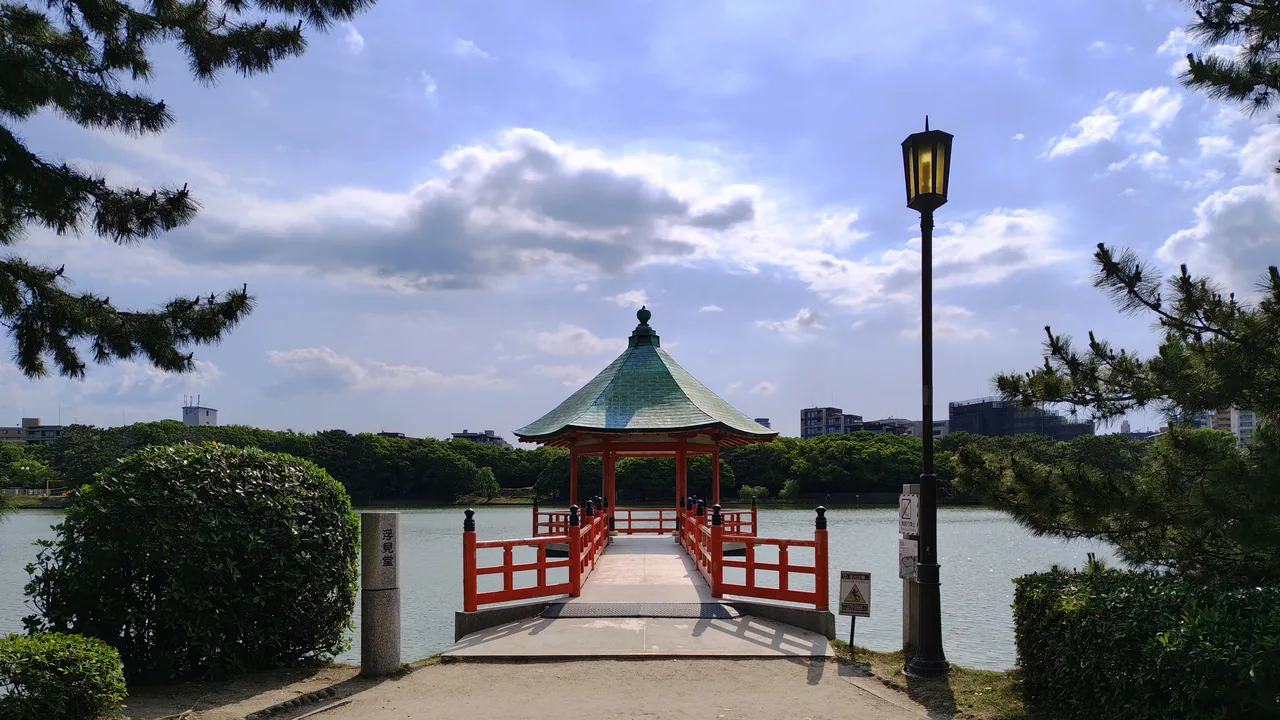
Two stops west of Tenjin the city stops being commercial. Akasaka is offices and side streets, and Ohori-koen sits beside Ohori ParkMap, a large park built around a central pond with a path all the way round it.
The Fukuoka Castle ruins and Maizuru Park adjoin it, so the whole western green belt is continuous. This is the only part of central Fukuoka where the view from a hotel window is likely to be trees rather than a facade.
It is still on the Airport Line, which is the point. From Ohori-koen you are two stops from Tenjin, five from Hakata and a straight run to the airport with no change, all for a few hundred yen.
Who it suits
- Stays of four nights or more, where quiet starts to matter
- Families who want space and a park rather than an arcade
- Runners and walkers, since the pond circuit is a made loop
- Repeat visitors who no longer need to be near the station
Accommodation here leans away from the standard business hotel. There are fewer rooms overall, more apartment style and serviced options, and a higher share of properties that expect a stay of several nights rather than one.
The cost is convenience of the ordinary kind. Convenience stores and restaurants are further apart than in Tenjin, the streets are dark and empty by mid evening, and there are no food stalls within a comfortable walk.
There is one more argument for this side of the city. Because it is residential, rates move less violently on peak dates than they do around the station and in Tenjin, so on a bad weekend it can be the only central area still showing sane numbers.
9. Momochi Seaside and the airport fringe, and when they make sense
Two areas come up in searches that should almost never be your answer. Both have a specific case where they are right and a general case where they are wrong.
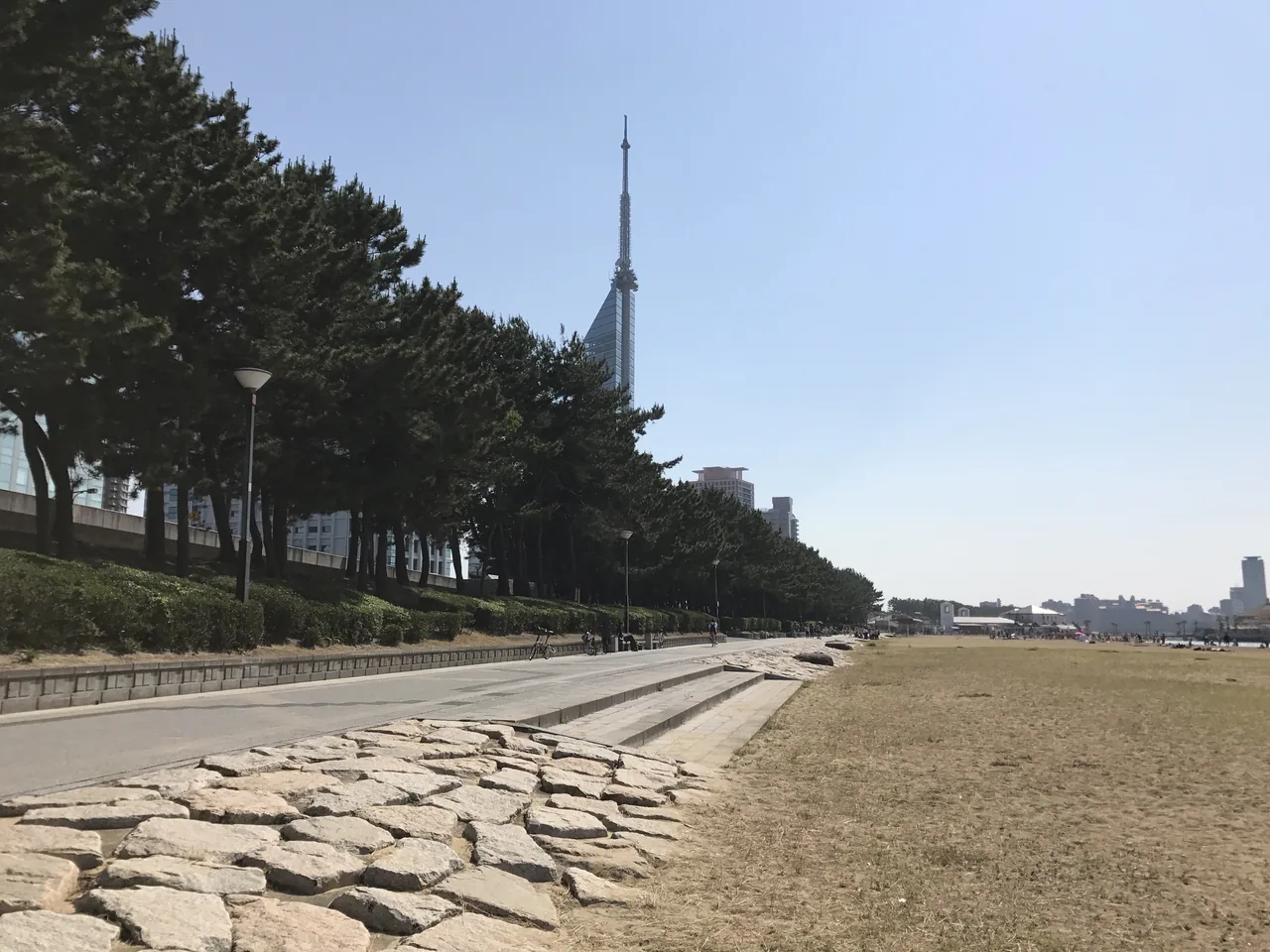
Momochi Seaside is the reclaimed waterfront district west of the centre. Fukuoka Tower stands here, the beach runs along the front, and Mizuho PayPay DomeMap is a short walk inland from it.
The problem is access. Momochi is not on top of a subway station the way the five central areas are, and getting there means a bus or a walk of some length from the nearest station. That is a small penalty once and an annoying one four times a day.
When Momochi is right
- You have tickets to a baseball game or a concert at the dome and want to walk home afterwards
- You are travelling with children and the beach is part of the plan
- You want a sea view and are prepared to pay in travel time for it
Outside those cases, staying in Momochi means you will spend your evenings riding back into the city for dinner and riding out again afterwards. It is a good half day. It is a poor base.
The airport fringe is a simpler case. Hotels near Fukuoka Airport exist and are sometimes cheap, but the reason airport hotels usually make sense does not apply here. When the terminal is five minutes from Hakata Station on a subway you would be riding anyway, proximity to the runway buys you nothing.
There is a version of this mistake that catches people who have flown into other Japanese cities. Narita and Kansai are far enough out that an airport hotel is a legitimate strategy. Fukuoka is not, and applying the habit here costs you every evening of the trip.
10. What the Tenjin rebuild is changing right now
Central Tenjin is being rebuilt block by block under a redevelopment programme known as Tenjin Big Bang. This is not a plan on a board somewhere. Buildings have already come down, gone back up and opened, and more are still under construction.
Two of them are already trading. The One Fukuoka Building was completed in January 2025 and opened on 24 April 2025, on the site formerly occupied by the Fukuoka Building, Tenjin Core and Tenjin Vivre. It is a Nishi-Nippon Railroad project, with retail on the lower floors, offices in the middle and a hotel of 41 rooms at the top. Chanel occupies floors one to three.
Hulic Square Fukuoka Tenjin followed a similar pattern. The structure was completed in December 2024, the retail floors opened on 31 January 2025 and the hotel opened on 24 April 2025. The building runs to nineteen floors above ground and three below, again with shops low, offices in the middle and rooms on top.
| Building | Status | Hotel |
|---|---|---|
| One Fukuoka Building | Opened 24 April 2025 | 41 rooms on the upper floors |
| Hulic Square Fukuoka Tenjin | Hotel opened 24 April 2025 | Upper floors of a nineteen storey building |
| Tenjin 1-7 project | Completion scheduled for December 2026 | Ace Hotel planned, not yet open |
The third one is the one people ask about. The Tenjin 1-7 project is a twenty one storey building scheduled for completion in December 2026, and an Ace Hotel is planned for it. That is a future date. Anyone telling you it is already open is wrong, and no booking site should be selling it for a stay before then.
For a visitor, the practical effect of all this is mixed. New rooms in Tenjin are arriving on high floors of mixed use towers, which is a different product from the business hotels that dominate the district. The 41 room hotel in One Fukuoka is small enough that it is not going to solve anyone’s availability problem.
The other effect is noise and hoarding. Several blocks in the middle of Tenjin are active construction sites, walking routes shift, and a hotel that looked well placed on a map can be behind a fence. If you are booking a street facing room in central Tenjin, look at recent photographs rather than the listing render.
11. Which areas put the food stalls on your doorstep
Fukuoka has more than a hundred open air food stalls, known as yatai. They are the main reason visitors start asking about walking distance instead of travel time. The stalls cluster in three places rather than spreading across the city, and only two of those places sit inside an area most people would book.
The three clusters are Nagahama, Tenjin and Nakasu. Most stalls open after six in the evening and run into the small hours, which means the question is not whether you can get there but whether you can get back.
| Where you stay | Nearest cluster | Walk home after dinner |
|---|---|---|
| Nakasu | Nakasu, on the riverside | Yes, a few minutes |
| Tenjin | Tenjin | Yes, a few minutes |
| Gion and Kushida | Nakasu | Borderline, or one subway stop |
| Hakata Station | Nakasu | No, two stops or a long walk |
| Ohori and Akasaka | Nagahama or Tenjin | No, ride or take a long walk |
NagahamaMap sits north of Tenjin toward the water. It is the cluster furthest from the standard hotel districts, and reaching it usually means a ride rather than a stroll.
This matters more than it sounds. Stalls run late, the subway does not run all night, and the difference between a ten minute walk and a two stop ride is the difference between staying for one more bowl and watching the clock.
There is a legal framework behind the stalls that is worth knowing about, because it explains why they behave consistently. Fukuoka City has a basic ordinance covering food stalls that has been in force since 1 September 2013, and it sets out duties for the city, for the stall operators and for customers.
The customer half of that is the part that touches you. Stalls are small, the seats are shared, and the expectation is that you order, eat and free the seat rather than settling in for the evening. Bags go under the counter or between your feet, not in the walkway.
Which stall and which bowl is a separate question, and the answer changes by cluster. That belongs to the food side of the city rather than the sleeping side.
12. Price bands, and what moves them
Fukuoka is not an expensive city by Japanese standards, but the spread between the cheapest and the dearest room on the same night is wide. It helps to know which band you are shopping in before you start comparing.
Four bands cover most of what a visitor will see. The figures below are the ranges that appear across booking sites, not a quotation for any particular night.
| Band | Typical nightly range | What you get |
|---|---|---|
| Budget | Search filters run below 8,000 yen | Hostels, capsules, the smallest private rooms |
| Business hotel | About 13,900 to 19,180 yen | Compact room, unit bathroom, room only rate |
| Mid range | About 25,000 to 32,780 yen | Larger rooms, better location, breakfast often included |
| Upper end | Around 57,910 yen | Full service hotels, higher floors, city or park views |
Three things move rates here more than anything else. The calendar comes first, and the next section covers it. Events come second, and a full house at the dome or a large convention tightens supply across the centre rather than just nearby. Day of the week comes third, and it does not always run the way you expect, because business demand can make midweek tighter than the weekend.
Area matters less than you would think. The five central districts are close enough that they compete for the same guests, so a bad night is a bad night everywhere. What does change by area is the shape of supply, since Hakata and Tenjin have depth in the business hotel band while Ohori has more of its stock in longer stay formats.
What the rate does not include
- The city lodging tax, which is charged separately at the property
- Breakfast, in most business hotel rates, which are commonly room only
- Any onsen or bathhouse charge where the property has one
One habit saves real money here. Search the same hotel across two or three adjacent dates before you commit, because a single day either side of a peak can move the number by a band, and in a city this compact your itinerary is usually flexible enough to shift.
13. The lodging tax you pay at the front desk
Fukuoka City has charged a lodging tax since 1 April 2020. It is not built into the rate you see when you book, and you settle it at the property, which is why it surprises people at check out.
The amount depends on the nightly lodging charge and there are two steps. Under 20,000 yen the tax is 200 yen. At 20,000 yen and above it is 500 yen.
| Nightly lodging charge | Total tax | City portion | Prefectural portion |
|---|---|---|---|
| Under 20,000 yen | 200 yen | 150 yen | 50 yen |
| 20,000 yen and above | 500 yen | 450 yen | 50 yen |
The unit is one person, one night. That is the detail that catches families, because it multiplies by heads as well as by nights. Four people staying three nights in the lower band owe 2,400 yen on top of the room.
The split between city and prefecture is unusual and worth understanding, because it explains why the number is not simply doubled. Fukuoka Prefecture, Fukuoka City and Kitakyushu City coordinated their rates so that the combined burden on a guest would not stack up, with the city portion carrying most of the weight and a thin prefectural layer on top.
Two things this tax is not. It is not a service charge, so it does not vary with what you spend inside the hotel, and it is not a consumption tax adjustment, so you cannot claim it back at an airport counter.
In practical terms the tax is a rounding error against the room rate, and nobody should choose an area because of it. It matters only in two situations, which are large groups and long stays, where a few hundred yen a head each night quietly turns into a real number by the end of the week.
14. When to book, and the dates that fill first
Fukuoka does not have the extreme peaks of Kyoto, but it does have dates where the centre sells out and the rate bands stop meaning anything. Knowing which ones they are is most of the work.
The calendar peaks are the national ones. Cherry blossom in late March and early April, Golden Week from late April into the first days of May, the Obon period in the middle of August and the New Year week all tighten the city at once.
Fukuoka adds one of its own. The Hakata Gion Yamakasa festival in July draws people into the city and concentrates demand around the old Hakata area in particular, which is exactly where hotel supply is thinnest.
| Period | Pressure | Book by |
|---|---|---|
| Cherry blossom, late March to early April | High across the city | Two to three months ahead |
| Golden Week, late April to early May | Very high, and rates jump bands | Three months ahead |
| July festival week | High near Gion and Hakata | Two to three months ahead |
| Obon, mid August | High, plus heat and humidity | Two months ahead |
| New Year week | High, with limited restaurant opening | Two to three months ahead |
| Ordinary weeks | Loose | Two to four weeks is usually enough |
Outside those windows the city is forgiving. In a normal month you can book a fortnight out and still have a real choice in every area, which is not true of Kyoto or of central Tokyo.
One booking tactic works particularly well in a city this size. Because the five areas are minutes apart, you can search all of them at once and let price decide, rather than fixing an area first and paying whatever that area costs on your date.
Cancellation policy matters more than the rate on peak dates. A refundable booking made early gives you a floor, and you can keep watching for something better without risking having nowhere to sleep in Golden Week.
For the season side of the decision rather than the availability side, the best months to visit Japan covers weather and crowds. If Fukuoka is part of a longer route, where to stay in Kyoto is the useful comparison, because Kyoto is where the same dates hurt most.
15. Arriving by sea, leaving by rail
Two arrival routes pull in opposite directions. Work out which one is yours and the area choice largely makes itself.
The ferry from Busan docks at Hakata Port International TerminalMap, which is north of the centre and not on the subway. The connection people actually use is the bus, either Nishitetsu route 80 or the BRT service, and it runs into Tenjin in about twenty minutes.
That single fact points sea arrivals at Tenjin rather than at Hakata Station. If you step off a ferry with luggage, Tenjin is one vehicle and no transfer, whereas the station district costs you a change or a longer ride. Getting from the terminal to the airport is about twenty five minutes and involves a bus and the subway, so it is not a natural pairing either.
| Your route | Best base | Why |
|---|---|---|
| Ferry in, ferry out | Tenjin | Direct bus to and from the port, about 20 minutes |
| Ferry in, fly out | Tenjin or Nakasu | Bus in, then a straight subway run to the airport |
| Fly in, shinkansen out | Hakata Station | Both on the same building, no transfer with bags |
| Rail pass across Kyushu | Hakata Station | Pass validation and departures in one place |
| Fly in, fly out | Any of the five | All within eleven minutes of the terminal |
The rail case is the mirror image. Hakata is the terminus of the shinkansen and the starting point for JR services across Kyushu, so if your mornings begin with a train, every minute you spend getting to the station is a minute you will spend again tomorrow.
The details of the crossing itself, the terminal procedures and the onward options from the port are a subject of their own. Arriving on the Busan ferry handles that end of the journey.
One onward route deserves a mention because it changes how long you keep the Fukuoka room. The hot spring towns inland are close enough to make a night or two out of the city easy, and Beppu and Yufuin covers what that involves. Plenty of visitors book Fukuoka for the first and last nights and go inland in between, which is a better plan than commuting.
16. Luggage, check-in hours and the gap in the middle
Two gaps open up in almost every Japanese hotel stay. One is between landing and check in, the other between check out and your onward train or flight. In Fukuoka both are easier than usual, because the city is small and the storage options are dense.
Check in is commonly from three in the afternoon and check out is often ten or eleven in the morning, though it varies by property and you should read your own booking. That leaves a stretch in the middle of the day on both ends of the trip when you have your bags and no room.
What to do with the bags
- Leave them at the hotel. Front desks will normally hold luggage before check in and after check out at no charge
- Use the coin lockers at Hakata Station, which has them in quantity, including sizes that take a large suitcase
- Check in early if the room is ready, which is worth asking about rather than assuming
The five minute airport ride pays off here as well. If you land in the morning, you can drop bags at the hotel and be out sightseeing before noon, and if you fly out in the evening you can collect them after check out without losing an hour to the trip.
Room size is the other luggage question, and it is a real one in the business hotel band. Compact rooms are compact, and a large case that is open on the floor can occupy most of the walking space. If you are travelling with two big cases, look at the stated room area rather than the photographs.
There is a version of this problem specific to the ferry. Arriving at the port with heavy bags and taking a bus into Tenjin works, but it is a bus with luggage, so give yourself room in the schedule and do not aim for the tightest connection.
None of this is difficult, but it is the part of a trip that goes wrong when the plan assumes a room is available at eleven in the morning. Build the day around a fifteen hundred check in and the rest falls into place.
17. The mistakes first-timers make
The same handful of errors come up again and again with Fukuoka, and most of them come from applying habits formed in other cities.
Booking near the airport
This is the big one. Airport hotels make sense where the airport is an hour out. Here it is five minutes from Hakata Station on a subway you will use anyway, so the only thing you gain is a duller evening.
Assuming Hakata Station means walking to the food stalls
It does not. The three stall clusters are all further west, and from the station the nearest of them is a couple of subway stops or a long walk. If the stalls are the point of the trip, that changes which area you should book.
Booking Nakasu without reading what it is
Nakasu is an entertainment district first and a hotel district second. It is the right answer for some travellers and the wrong one for anybody who wants to sleep before midnight or is travelling with young children.
Forgetting the lodging tax
It is small, but it is not in the rate you booked and it is charged per person per night. A family arriving at the desk expecting to owe nothing is a family having an awkward conversation.
Treating Kokura as Fukuoka
Kokura and Kitakyushu are separate cities northeast of here, with their own station, their own hotels and a different lodging tax. A cheap room there is cheap for a reason if your plans are in Fukuoka.
Splitting a short stay across two hotels
In a city where the extremes of the shortlist are ten minutes apart, moving hotels mid trip costs you a morning and gains you almost nothing. Pick one base and ride the line.
Assuming everything new in Tenjin is open
Some of it is and some of it is not. The redevelopment has delivered buildings in 2025 and has more scheduled for the end of 2026, so check completion dates before you build a trip around a specific new address.
Overrating the subway distance and underrating the evening
Almost nobody regrets the extra three stops. Plenty of people regret a hotel on a street where everything is shut at nine. Choose for the walk you will take after dinner, not for the ride you will take in the morning.