
Where to Stay in Kobe: Sannomiya, Shin-Kobe, Harborland and Arima Onsen Compared
The six central areas where hotels cluster in Kobe sit within walking distance of one another, so the area you book barely changes how long anything takes. Measured distances for each one, what stays open after dark, what your first move is on the morning you leave, and the lodging tax this city does not charge.
| Distance | the six central areas sit 0.5-1.0 km apart and the two furthest are 3.1 km. |
|---|---|
| Lodging tax | Kobe City and Hyogo Prefecture do not levy one, unlike Osaka and Kyoto. |
| Sannomiya | five railway companies meet here, so every first move is short. |
| Shin-Kobe | shinkansen only, no local lines, and barely any rooms within walking distance. |
| Arima Onsen | inside the city limits, 28 minutes and 720 yen from Sannomiya. |
| Book early | the ten Luminarie nights in late winter and the marathon Sunday in November. |
1. The six central areas are within walking distance of each other
2. Kobe does not levy a lodging tax
3. Sannomiya: five railway companies under one name
4. Shin-Kobe: the shinkansen station and very little else
5. Kitano: uphill, quiet, and it opens at ten
6. Motomachi and Nankinmachi: a hot spring bath in the middle of town
7. Meriken Park and Harborland: the water side
8. Arima Onsen: a hot spring town inside the city limits
9. Staying at Arima, or going for the day
10. There is almost nothing to book beside the airport
11. Suma and Maiko: the western shore
12. Hotel names do not tell you where the hotel is
13. How many nights, and what a rail pass changes
14. Basing in Osaka and coming over instead
15. The nights that fill up
16. Your first move on the morning you leave
17. Which day ticket pays for itself
18. Bags before check-in and after check-out
19. Families, older travellers, solo
20. Before you book
21. How to decide
1. The six central areas are within walking distance of each other
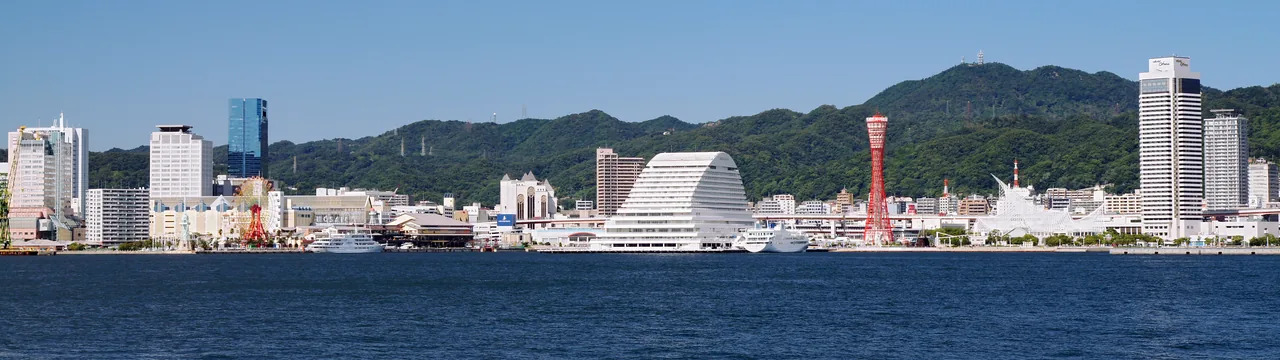
Kobe sits on a strip of flat land two to three kilometres wide, pinned between the Rokko ridge and the sea. Every central area where hotels cluster is on that strip, and neighbouring areas are 0.5 to 1.0 km apart.
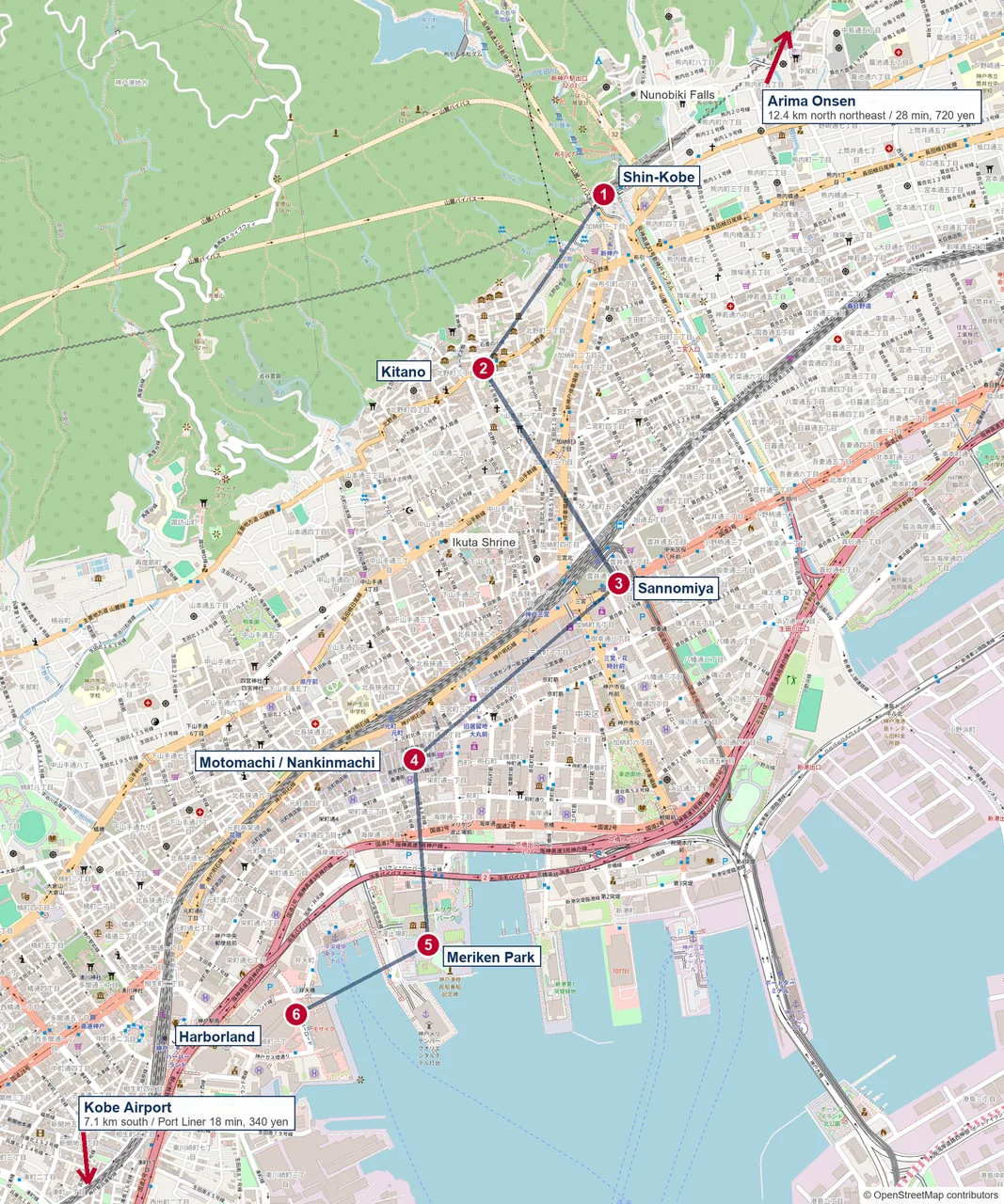
We pulled the latitude and longitude of 55 properties from Kobe listings and attached each one to its nearest reference point. These are the resulting distances, measured rather than described.
| Area | Straight line from Sannomiya | On foot | What it is |
|---|---|---|---|
| Sannomiya | reference | reference | Where five railway companies meet |
| Kitano | 0.90 km | about 14 min | The hillside with the foreign residences |
| Motomachi and Nankinmachi | 0.96 km | about 14 min | Covered shopping street and Chinatown |
| Shin-Kobe | 1.38 km | about 21 min | The shinkansen station |
| Meriken Park | 1.45 km | about 22 min | Port Tower and the waterfront |
| Harborland and Kobe station | 1.91 km | about 29 min | Ferris wheel and shopping complexes |
Neighbouring areas are closer still
Those figures are all measured from Sannomiya, which sits in the middle. Between neighbours the gaps are smaller: Shin-Kobe to Kitano is 0.75 km, Meriken Park to Harborland is 0.53 km, Motomachi to Harborland is 1.00 km.
Laid out on a map the areas form a single line running from the mountain end at Shin-Kobe down to the water at Harborland. The whole line measures 3.11 km end to end.
The two mountain-side areas are uphill
Shin-Kobe and Kitano sit on the slope where the Rokko ridge begins. Walking from Sannomiya to either one means climbing the whole way, and coming back down means descending the whole way.
Fifteen minutes is fifteen minutes either way, but fifteen minutes of it with a wheeled case behind you is a different proposition. If you arrive by shinkansen and plan to see Kitano first, you will be walking downhill, which is the easy direction.
What changes when you pick an area
Because everything connects on foot, your daytime route looks much the same wherever you sleep. The differences are set out below.
| What changes | How |
|---|---|
| How easily you arrive and leave | Shinkansen points to Shin-Kobe, local trains to Sannomiya, flights to the Port Liner line |
| What is open outside the door at night | Sannomiya has the restaurants, Harborland has the lit-up water, Kitano goes quiet |
| Which way you drag your luggage | The mountain-side areas are a climb, the water side is flat |
Work out how you are arriving in Kobe and how you are leaving. That narrows the area almost by itself. What you want to see during the day comes second, because the day is walkable from all of them.
2. Kobe does not levy a lodging tax
Kobe City and Hyogo Prefecture do not collect a lodging tax. Osaka Prefecture and Kyoto City both do. Within the same region, this city is the one that does not.
A Japanese lodging tax is charged per person per night, separately from the room rate. It is often left out of the total you see when booking and settled at the property instead, which is why plenty of travellers meet it for the first time at check-in.
| Room rate per person per night | Osaka Prefecture | Kyoto City | Kobe City |
|---|---|---|---|
| Under 5,000 yen | none | 200 yen | none |
| 5,000 to 15,000 yen | 200 yen | 400 yen | none |
| 15,000 to 20,000 yen | 400 yen | 400 yen | none |
| 20,000 to 50,000 yen | 500 yen | 1,000 yen | none |
| 50,000 to 100,000 yen | 500 yen | 4,000 yen | none |
| 100,000 yen and above | 500 yen | 10,000 yen | none |
Osaka lowered the threshold and raised the rates
Osaka Prefecture used to exempt anything under 7,000 yen and start at 100 yen. The exemption now stops at 5,000 yen and the first band is 200 yen. Room rates that used to fall outside the tax in Osaka now sit inside it.
Kyoto raised the top end sharply
Kyoto City used to cap its lodging tax at 1,000 yen. The top band is now 10,000 yen per person per night for rooms above 100,000 yen, with 4,000 yen from 50,000 yen up. Mid-range rooms pay 400 yen, so the gap only opens up at the expensive end.
How much difference does this really make
Worth looking at the actual arithmetic rather than the headline. Two people, three nights:
| Room rate per person per night | Osaka, 2 people 3 nights | Kyoto, 2 people 3 nights | Kobe |
|---|---|---|---|
| Around 12,000 yen | 1,200 yen | 2,400 yen | 0 |
| Around 25,000 yen | 3,000 yen | 6,000 yen | 0 |
| Around 60,000 yen | 3,000 yen | 24,000 yen | 0 |
At mid-range rates this is the price of a couple of coffees, which is not a reason to move cities. At the top end in Kyoto it becomes real money.
Arima has a bathing tax instead
Kobe City taxes mineral bathhouses rather than beds. Overnight guests pay 150 yen per person per night and day visitors pay 75 yen. Children under seven are exempt.
City hotels are not affected. You meet this only when you stay at Arima Onsen or somewhere else with a hot spring bath. City-by-city figures for the rest of Japan are in our guide to Japanese lodging taxes.
3. Sannomiya: five railway companies under one name
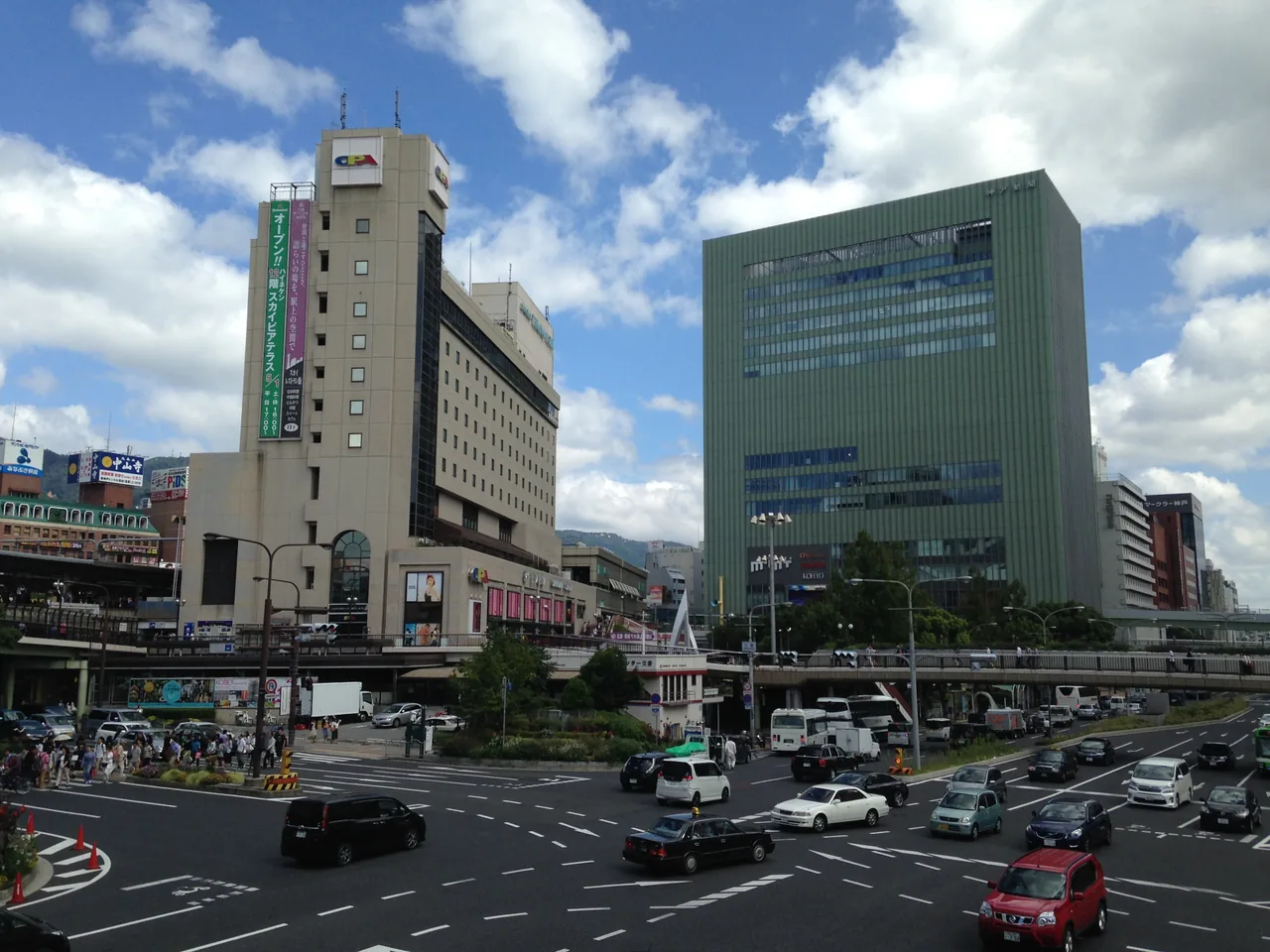
Sannomiya holds more rooms than any other part of Kobe, and five railway companies have stations here within a few minutes of one another. Whatever direction you head in the morning, the first move is short.
Ten of the 55 properties we mapped sit within 600 m of the station. Business hotels dominate and the price tiers run low to middling.
Six stations share nearly the same name
JR calls its station Sannomiya. Hankyu and Hanshin both call theirs Kobe-Sannomiya. Two subway lines and the Port Liner add three more. The names are nearly identical and the entrances are not in the same place.
| Company | Station name | Where it goes |
|---|---|---|
| JR West | Sannomiya | Osaka, Kyoto, Himeji |
| Hankyu | Kobe-Sannomiya | Osaka Umeda |
| Hanshin | Kobe-Sannomiya | Osaka Umeda and Osaka Namba |
| Subway Seishin-Yamate line | Sannomiya | Shin-Kobe and Tanigami, for Arima |
| Subway Kaigan line | Sannomiya-Hanadokeimae | Towards Harborland |
| Port Liner | Sannomiya | Kobe Airport |
When you book, check which of these your hotel actually sits beside. Going by the name alone leaves you crossing the station complex once more with your bags.
What is open after dark
The restaurant density is south of the tracks, around Ikuta Road and Higashimon-gai. This is where the late openings are, and where most of the certified Kobe beef restaurants are too.
Certification matters more than signage here. Restaurants approved to sell Kobe beef display a bronze statue of a cow; the words on a sign carry no such guarantee.
What the certification actually means
Kobe beef is a legally controlled designation rather than a description of where the animal lived. The base animal must be Tajima cattle, bred within Hyogo Prefecture from prefectural bloodlines and raised there by a registered producer.
On top of that, the carcass has to reach marbling grade six or above, yield grade A or B, and weigh 499.9 kg or less. Roughly 7,000 animals a year clear the standard. A restaurant near your hotel either holds the registration or it does not, and the bronze statue is how you tell from the street.
The corollary is noise. A room facing the entertainment streets will hear them.
Who this suits
| If this is you | Why |
|---|---|
| Arriving by train from Osaka or Kyoto | All three companies terminate here |
| First visit to Kobe | Every direction out of the city starts nearby |
| Eating out in the evening | The late-opening places are concentrated here |
| Planning a day at Arima Onsen | The subway towards Tanigami departs from here |
Sannomiya properties
| Property | From the station | Tier |
|---|---|---|
| Kobe Sannomiya Tokyu Rei Hotel 📷 Photos & rates | 0.11 km | mid |
| Sotetsu Fresa Inn Kobe Sannomiya 📷 Photos & rates | 0.23 km | lower mid |
| Remm Plus Kobe Sannomiya 📷 Photos & rates | 0.23 km | mid |
| Comfort Hotel Era Kobe Sannomiya 📷 Photos & rates | 0.25 km | lower mid |
| Toyoko Inn Kobe Sannomiya Eki Shiyakusho Mae 📷 Photos & rates | 0.45 km | budget |
| Kobe Luminous Hotel Sannomiya 📷 Photos & rates | 0.50 km | lower mid |
| the b kobe 📷 Photos & rates | 0.53 km | lower mid |
| Toyoko Inn Kobe Sannomiya-Eki Higashi 📷 Photos & rates | 0.55 km | budget |
| Hotel Monterey Kobe 📷 Photos & rates | 0.56 km | mid |
4. Shin-Kobe: the shinkansen station and very little else
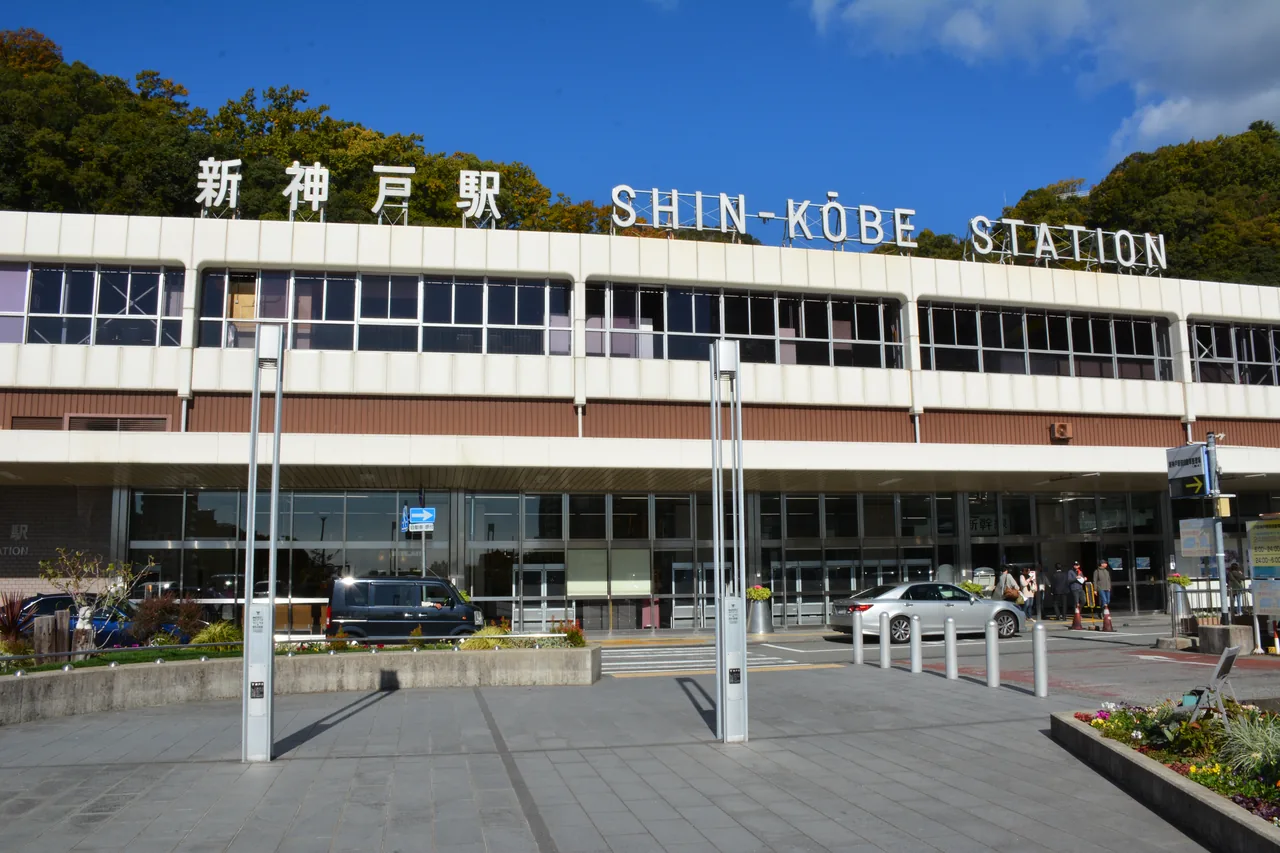
Shin-Kobe serves shinkansen trains only, and the number of rooms within walking distance of it is very small. Of the 55 properties we mapped, one sits within 400 m of the station.
That one is the ANA Crowne Plaza, connected to the station building itself at 0.26 km. Check-in is from 3pm and check-out is by 11am.
No local lines come in
The platforms at Shin-Kobe carry shinkansen services and nothing else. Local trains to Osaka or Himeji leave from Sannomiya instead, one subway stop away for 210 yen.
On foot the two stations are 1.38 km apart, a little over twenty minutes. Going from Sannomiya up to Shin-Kobe is the uphill direction.
Nozomi services stop here
Tokyo to Shin-Kobe on a reserved Nozomi seat runs about two hours forty minutes for 15,490 yen. If you are arriving by shinkansen and leaving the same way, sleeping beside this station removes a luggage transfer at each end.
Rail pass holders should check which services they can board, since Nozomi carries a supplement. We work through it in our JR Pass and shinkansen guide.
Kitano is downhill from here
From Shin-Kobe to the Kitano foreign residences is 0.75 km, about eleven minutes, and the station is the higher of the two. Arriving by shinkansen and walking down through Kitano to Sannomiya turns your first afternoon into a single downhill line.
Out of the back of the station, the Nunobiki waterfall is a seven-minute walk. It is close enough to see after dropping bags and before dinner.
What is beside the station
The ropeway up to the Nunobiki Herb Garden starts behind the station, five minutes on foot from the platforms, at 2,500 yen return. It closes for about three weeks of maintenance in deep winter.
The Takenaka Carpentry Tools Museum is three minutes away, 1,000 yen for adults and free for junior high school age and under. It closes on Mondays and shuts its doors at 4.30pm. On a wet arrival day it is the thing to do without leaving the area.
Where this area falls short
| Issue | Detail |
|---|---|
| Choice | Effectively one hotel is attached to the station |
| Dinner | Few restaurants nearby, so you walk down to Sannomiya |
| Local trains | Osaka and Himeji need a subway hop first |
| Terrain | Coming back up from Sannomiya is a climb |
Shin-Kobe properties
| Property | From Shin-Kobe | Tier |
|---|---|---|
| ANA Crowne Plaza KOBE by IHG 📷 Photos & rates | 0.19 km, connected to the station | upper |
| Four Points Flex by Sheraton Kobe Sannomiya 📷 Photos & rates | about 0.9 km, on the Kitano side | mid |
5. Kitano: uphill, quiet, and it opens at ten
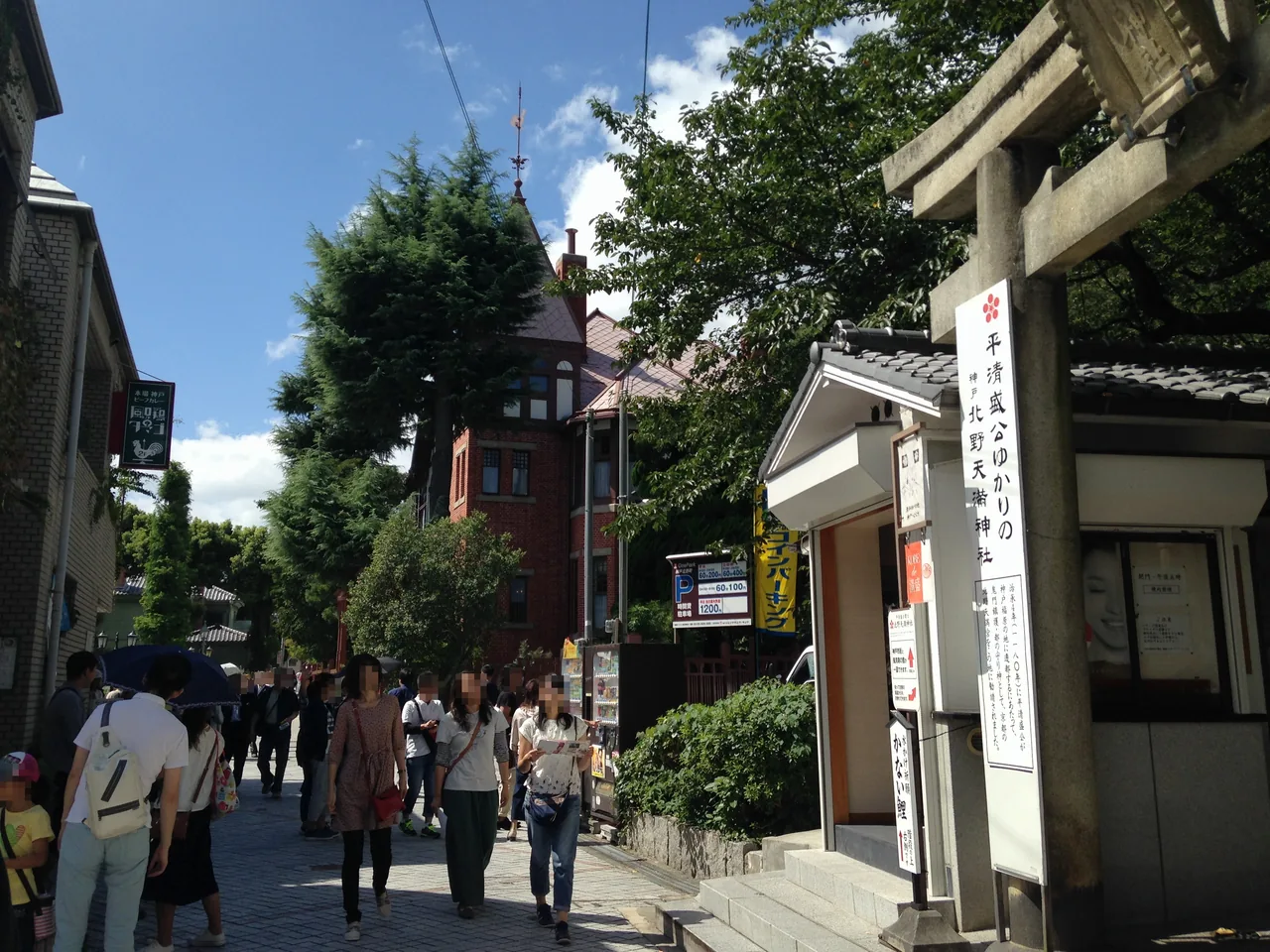
Kitano sits 0.90 km up the slope from Sannomiya and holds very few rooms. This is the district of ijinkan, the Western-style houses built for foreign merchants and consuls when the port opened.
It is residential, so there is little room for large hotels. Three of the properties we mapped attach to this area.
What is outside the door in the morning
The houses open at ten. Before that, Kitano is a quiet residential hillside, and being up the slope means some front gardens look out over the harbour.
The Weathercock House is the one with the metal rooster on the roof, and it stands higher than its neighbours, which is why it ends up in most photographs of the district.
Tickets come in two separate systems
Two of the houses are run by the city and the rest by a private operator, and their tickets do not combine. This trips people up.
| Ticket | Adult | Covers |
|---|---|---|
| City two-house pass | 800 yen | Weathercock House and Moegi House |
| City single house | 500 yen | Either one |
| Private seven-house pass | 3,300 yen | Uroko House and others, 4,730 yen bought separately |
| Private four-house pass | 2,200 yen | Valid the same day only |
The private houses run from 10am to 6pm. Sleeping here means you can be at the doors as they open, which buys an hour or two before the coaches arrive.
Evenings are quiet
Few places serve dinner up here, so the pattern is walking down to Sannomiya to eat and walking back afterwards. Downhill going, uphill returning.
If a quiet night matters more to you than a short walk to dinner, that is an argument for this area rather than against it.
In summer it feels further than it measures
On flat ground 0.90 km is fourteen minutes. All of it is a climb, and in Kobe’s humidity that reads longer. Arriving with luggage, take a taxi up from Sannomiya and walk the hill only once you have dropped your bags.
Kitano properties
| Property | From Sannomiya | Tier |
|---|---|---|
| Green Hill Hotel Urban 📷 Photos & rates | 0.73 km | lower mid |
| Four Points Flex by Sheraton Kobe Sannomiya 📷 Photos & rates | 0.62 km | mid |
| Hotel Liberal, adults only 📷 Photos & rates | 0.67 km | lower mid |
6. Motomachi and Nankinmachi: a hot spring bath in the middle of town
Motomachi lies 0.96 km west of Sannomiya, and one hotel here has a natural hot spring bath on its top floor. Nankinmachi, the Chinatown, is immediately alongside.
A covered arcade runs the whole way from Sannomiya to Motomachi station, so the walk between them stays dry in rain.
You can use an onsen bath without leaving the city
Dormy Inn Kobe Motomachi puts separate men’s and women’s hot spring baths on its fourteenth floor, with an open-air tub, a single-person tub, a hot dry sauna and a cold plunge.
Worth knowing where the water comes from: it is trucked in from the Asahi hot spring in Hyogo ward, not drawn beneath the building. The classification is a simple spring, hypotonic and mildly alkaline. Our onsen and ryokan guide explains how those categories work.
If a hot spring is one item in your day rather than the reason for the trip, a bath like this often covers it, and the return journey to Arima goes back into your schedule.
Nankinmachi is busy by day
Nankinmachi runs about 270 m east to west. It is a street for eating as you walk rather than sitting down, and twenty minutes covers it.
Around Lunar New Year the district is packed for roughly four days. Sleeping beside it means walking through that crowd every time you go in or out.
Mornings start late
The arcade and Chinatown open late in the morning. Motomachi station makes up for that, with JR services running both towards Osaka and towards Himeji without a trip back to Sannomiya first.
Motomachi and Nankinmachi properties
| Property | From Sannomiya | Tier |
|---|---|---|
| HOTEL DORMY INN KOBE MOTOMACHI HOT SPRINGS 📷 Photos & rates | 1.03 km | mid |
| The Royal Park Canvas – Kobe Sannomiya 📷 Photos & rates | 0.57 km | mid |
| HOTEL Meriken Port Kobe Motomachi 📷 Photos & rates | 1.18 km | lower mid |
| Hyogo Kyosai Kaikan 📷 Photos & rates | 1.06 km | budget |
| Apartment Hotel 11 Kobe Motomachi 📷 Photos & rates | 1.55 km | lower mid |
7. Meriken Park and Harborland: the water side
Harborland sits 1.91 km from Sannomiya at the sea end of the strip, with Meriken Park closer in at 1.45 km. The two are 0.53 km apart and connect on foot along the water.
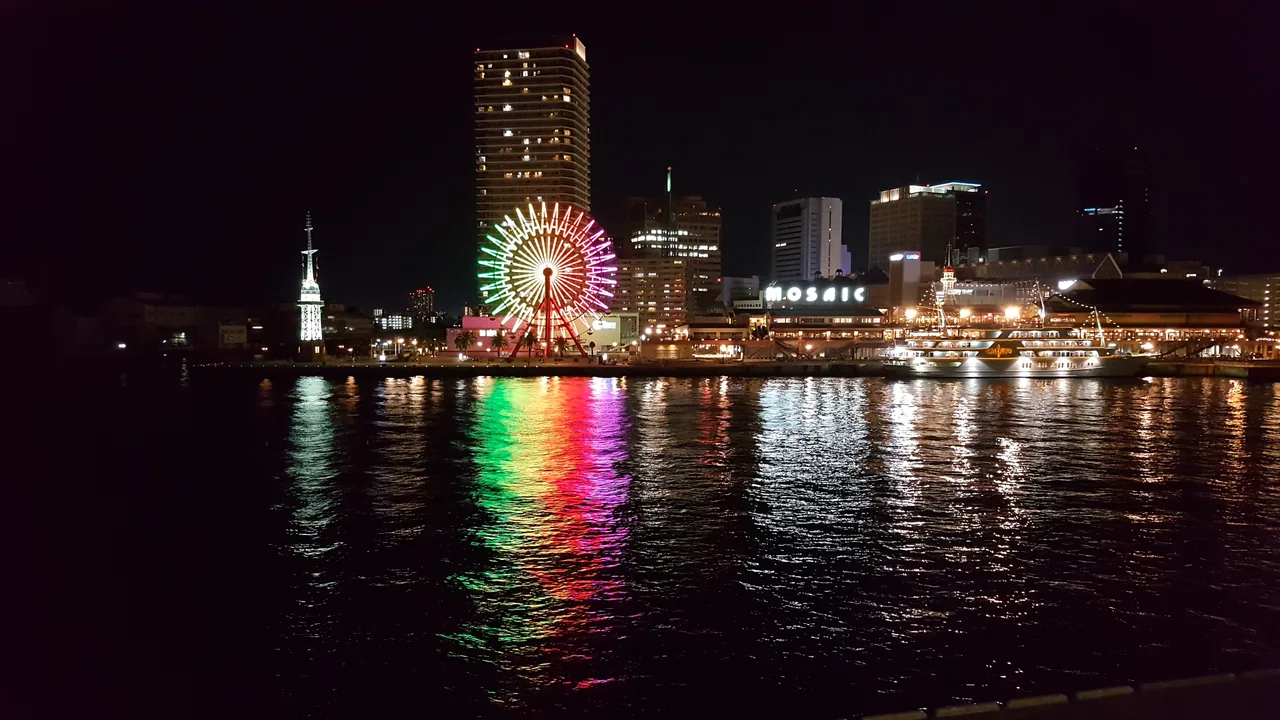
Which way a room faces matters more here than anywhere else in the city. Seaward gives you the Port Tower and the ferris wheel; the other side gives you the city.
This area changes after dark
By day Harborland is a shopping complex like any other. After sunset the building lights, the wheel and the reflections on the water do the work. Sleeping here means walking out into that rather than watching the clock for a train.
Port Tower stays open until 11pm, so dinner first and the tower afterwards fits comfortably.
What is within a few minutes of a waterfront room
| Place | Adult | Note |
|---|---|---|
| Kobe Port Tower | 1,200 yen | 1,000 yen for the observation deck alone, open to 11pm |
| átoa aquarium | 2,600 yen | Indoors, beside Meriken Park |
| Kobe Maritime Museum with Kawasaki World | 900 yen | To 6pm, last entry 5.30pm, closed Mondays |
| Disaster reduction museum | 650 yen | Closed Mondays |
There is no combined ticket for the tower and the maritime museum despite them standing beside one another, so they are bought separately.
Between them these cover a wet evening without leaving the area, which is the practical argument for sleeping on the water side rather than the view.
Mornings are slow
The retail opens late, so early hours are quiet. Good for a walk along the water, less good if you want breakfast before the shutters go up, which means heading back towards Sannomiya.
Kobe station is right here
JR Kobe station adjoins Harborland. You can board for Osaka or Himeji here instead of Sannomiya, though fewer of the fast Special Rapid services call.
The Kaigan subway line also runs through this area to Sannomiya-Hanadokeimae in a few stops.
Avoid the marathon Sunday
The Kobe Marathon finishes at Harborland. On a Sunday in mid-November the road closures start at 9am and cover the whole course. That is not a morning to be wheeling luggage out of this area towards a station.
Meriken Park and Harborland properties
| Property | From Sannomiya | Tier |
|---|---|---|
| Kobe Marriott Hotel 📷 Photos & rates | 2.18 km | upper |
| Hotel Okura Kobe 📷 Photos & rates | 1.30 km, Meriken Park | upper |
| Centurion Hotel Grand Kobe Station 📷 Photos & rates | 2.24 km | mid |
| SK HOTEL KOBE STATION FRONT 📷 Photos & rates | 2.43 km | lower mid |
| Escale Kobe 📷 Photos & rates | 2.10 km | lower mid |
| Toyoko Inn Kobe Minatogawa Koen 📷 Photos & rates | 2.82 km | budget |
| HOTEL LiVEMAX BUDGET Kobe 📷 Photos & rates | 3.11 km | budget |
| Hotel Sunroute Sopra Kobe Annesso 📷 Photos & rates | 3.04 km | lower mid |
8. Arima Onsen: a hot spring town inside the city limits
Arima Onsen is in Kita ward, which is part of Kobe. Administratively it belongs to the same city, which is why it appears when you search for Kobe accommodation. It lies 12.4 km from Sannomiya in a straight line, 28 minutes and 720 yen by train.
Eighteen of the 55 properties we mapped are in this town. Most carry ryokan, koyado or gyoen in their names, and there is one hostel. The form of accommodation here differs from the city.
A ryokan night includes dinner and breakfast
Arima ryokan overwhelmingly work on the one-night, two-meals model. Dinner and breakfast are inside the rate and the baths are yours without a time limit. The price tier sits well above city business hotels.
Since meals are included there is no reason to leave in the evening, which suits the town, because it is small enough to walk in its entirety.
You pay a bathing tax of 150 yen
This is Kobe City’s tax on mineral bathhouses. Overnight guests pay 150 yen per person per night, settled separately from the room rate, and children under seven are exempt.
Since the city levies no lodging tax, this 150 yen is the whole of what you pay in tax for a night at Arima.
Getting there means changing twice
| Leg | Detail |
|---|---|
| Sannomiya to Tanigami | Subway, 280 yen, calling at Shin-Kobe |
| Tanigami to Arimaguchi | Change to the Shintetsu line |
| Arimaguchi to Arima Onsen | Change again to the branch line |
| Total | 28 minutes, 720 yen (280 subway plus 440 Shintetsu) |
The 280 yen leg has a history worth knowing, because old guidance gets it wrong. That stretch used to be a private railway with one of the highest boarding fares in Japan; it was absorbed into the Kobe municipal subway and the fare dropped sharply. Anything quoting the old figure is quoting a company that no longer runs it.
It is not an easy trip with a large case
Two changes, and the town itself is built on a slope. If you are splitting your stay between the city and Arima, leave the large case at your city hotel and take an overnight bag.
Arima Onsen properties
| Property | From the town centre | Tier |
|---|---|---|
| Arima Onsen Tocen Goshobo 📷 Photos & rates | 0.07 km | upper |
| Hotel Hanakoyado 📷 Photos & rates | 0.08 km | upper |
| Arima Onsen Hyoe Koyokaku 📷 Photos & rates | 0.21 km | upper |
| Arima Gyoen 📷 Photos & rates | 0.16 km | upper mid |
| Negiya Ryofukaku 📷 Photos & rates | 0.29 km | upper |
| Arima Onsen Gekkoen Korokan 📷 Photos & rates | 0.33 km | upper mid |
| KAMENOI HOTEL ARIMA 📷 Photos & rates | 0.35 km | mid |
| Arima Onsen Ryokan Yamato 📷 Photos & rates | 0.29 km | mid |
| Koyado Surugatei 📷 Photos & rates | 0.04 km | mid |
| Arimaonsen Musubi-No-Koyado En, hostel 📷 Photos & rates | 0.14 km | budget |
9. Staying at Arima, or going for the day
At 28 minutes from Sannomiya, Arima works perfectly well as a day trip. Laying the two options out in fares makes the decision quicker than describing them.
The two municipal bathhouses
| Bathhouse | Adult | Weekday | Hours | Closed |
|---|---|---|---|---|
| Kin no Yu, the gold bath | 800 yen | 650 yen | 8am to 10pm | 2nd and 4th Tuesday |
| Gin no Yu, the silver bath | 700 yen | 550 yen | 9am to 9pm | 1st and 3rd Tuesday |
| Combined ticket | 1,200 yen | 1,200 yen | each bath’s own hours | follows each bath |
Primary and junior high school children pay 350 and 300 yen, preschoolers are free, and last admission is half an hour before closing.
The combined ticket is not always the cheaper option
On a weekend, both baths bought separately come to 1,500 yen against 1,200 for the combined ticket, so you save 300 yen. On a weekday the separate prices total 650 plus 550, which is exactly 1,200. The combined ticket saves nothing that day.
Weekday pricing also excludes the new year period, Golden Week and Obon. Weekdays inside those runs are charged at the weekend rate.
One of the two is shut every Tuesday
Kin no Yu closes on the second and fourth Tuesday of the month, Gin no Yu on the first and third. Put those together and every Tuesday of the year has one of them closed.
The Maya View Line up to the night-view terrace also suspends service on Tuesdays. A Tuesday is the wrong day to schedule either Arima or the mountain.
The large bath complex is cheaper bundled with transport
| What you buy | Adult |
|---|---|
| Taiko no Yu admission, weekday | 2,750 yen |
| Taiko no Yu admission, weekend and holidays | 2,970 yen |
| Night-time entry from 7.30pm, weekday and weekend | 1,980 / 2,090 yen |
| Shintetsu return from Tanigami plus weekday admission, bought separately | 3,630 yen |
| Shintetsu Taiko no Yu coupon, one-day pass plus admission | 2,600 yen |
Add the 280 yen subway leg from Sannomiya and the coupon route comes to 2,880 yen against 3,630 bought piecemeal, leaving about 750 yen in your pocket.
Because admission exceeds 1,200 yen, Taiko no Yu also charges the 75 yen bathing tax, waived for under-sixes and for primary school children on weekdays. The two municipal baths fall below the threshold and charge no bathing tax at all.
Which way to go
| If this is you | Do this |
|---|---|
| The hot spring is the point of the trip | One night at Arima, ryokan with dinner and breakfast |
| The hot spring is one item in the day | Sleep in the city, go over in the morning |
| You want a long soak on a tight budget | Day trip using the Shintetsu coupon |
| You just want a bath at the end of the day | A city hotel with its own bath |
10. There is almost nothing to book beside the airport
The nearest property to Kobe Airport in our sample was 6.66 km away. Searching by proximity to the airport returns downtown Sannomiya hotels.
The airport occupies an artificial island given over to housing and offices, and no hotel sits against the terminal. Even for a dawn departure, sleeping at the airport is not really an option here.
The Port Liner makes up for it
Sannomiya to the airport takes 18 minutes for 340 yen, twelve stops, arriving directly at the first floor of the terminal building.
Eighteen minutes is short enough that a city hotel does not make the morning difficult. Compare that with the journey between Kansai Airport and central Osaka and the difference is substantial.
International flights have returned
International services now operate from Kobe Airport to Seoul Incheon, Taipei and Taichung. The number of flights is limited and many of them land in the afternoon.
On an afternoon arrival, book the waterfront for the first night. Port Tower runs until 11pm, so the evening still holds something after a late landing.
Port Island hotels are built around the convention centre
There are large hotels on the island itself, put up alongside the exhibition halls. They sit away from the sightseeing route and a few Port Liner stops from Sannomiya, which works for a conference and less well for a short holiday.
Kansai Airport connects by boat from here
A high-speed boat, the Bay Shuttle, runs from the pier next to Kobe Airport across the bay to Kansai Airport in about 30 minutes. A combined ticket covering the Port Liner leg costs 1,880 yen.
That matters when you fly into Kansai and want to base in Kobe, because the sea route avoids central Osaka entirely. Overland from Kansai Airport to Sannomiya takes longer and involves at least one change.
Buy at the Kansai Airport counter if you want to pay by card. The Sannomiya end of the same ticket is cash only, which catches people out on the way back.
Sorting a booking site by distance from Kobe Airport still puts city hotels at the top. Read the actual figure rather than the ranking.
11. Suma and Maiko: the western shore
Suma lies 8.41 km west of Sannomiya and Maiko 16.54 km. Both are inside Kobe city limits and both sit well off the walkable central strip.
These are places to sleep for the beach and the bridge. For city sightseeing they add a commute to every day.
Suma is on the beach
Suma has the beach and the aquarium, under twenty minutes from Sannomiya on JR. Outside the swimming months there is not a strong case for basing here.
Maiko sits at the foot of the Akashi Kaikyo Bridge
Maiko is in Tarumi ward, at the Kobe end of the bridge. Beneath the deck, the Maiko Marine Promenade costs 250 yen on weekdays and 300 yen at weekends and on holidays.
A few properties here put the bridge in the window. If that view is the reason for the trip this is where to be; combined with a city itinerary the return journey eats most of the benefit.
Climbing the tower is a separate booking
Bridge World takes visitors up to the top of the main tower, running from spring through late autumn and again the following spring, at 5,500 yen on weekdays and 6,600 yen at weekends.
Two departures a day, 48 places each, about two hours fifty minutes. Booking is online and first come, first served, and slots go months ahead. For a morning departure a night at Maiko removes the early cross-city journey.
Western shore properties
| Property | From Sannomiya | Tier |
|---|---|---|
| Hotel Setre Kobe Maiko 📷 Photos & rates | 16.24 km | upper mid |
| Kobe Suma Sea World Hotel 📷 Photos & rates | 8.23 km | upper mid |
| Hotel Shasha Resort, adults only 📷 Photos & rates | 8.65 km | mid |
12. Hotel names do not tell you where the hotel is
Sannomiya turns up in a great many Kobe hotel names, and the coordinates do not always agree. These came out of the 55 properties we mapped.
| Place name in the hotel’s own name | Actual straight-line distance to Sannomiya station |
|---|---|
| T and K Hostel Kobe Sannomiya East | 3.79 km |
| Kobe Suma Sea World Hotel | 8.23 km |
| Centurion Hotel Grand Kobe Station | 2.24 km, beside Kobe station |
| Four Points Flex by Sheraton Kobe Sannomiya | 0.62 km, on the Kitano side |
| The Royal Park Canvas – Kobe Sannomiya | 0.57 km, on the Motomachi side |
Why this happens
Hotel names are written to be found in search results, so the most-searched place name goes in whether or not the building is standing in it. Sannomiya is the most-searched name in Kobe.
Kobe station and Sannomiya station being two different stations adds to the confusion. They are a little over 2 km apart.
How to check in thirty seconds
| Check | How |
|---|---|
| Real position | Search the street address on a map, not the hotel name |
| Nearest station | Look at what the map shows, not what the name claims |
| Elevation | Anything on the mountain side involves a climb |
| Walking time | Real walking runs 20 to 30 per cent longer than straight-line distance |
Inside 600 m of Sannomiya station, any direction is easy. Outside that, find out which station is genuinely nearest before you book.
13. How many nights, and what a rail pass changes
The number of nights you are staying changes which area suits you, because the central strip is walkable and the trips out of it are not.
| Length of stay | Area | Reason |
|---|---|---|
| One night | Sannomiya | Shortest first move in and out |
| Two nights | Sannomiya or Motomachi | One day in the city, one day out of it |
| Two nights with a hot spring | One in the city, one at Arima | A ryokan dinner requires sleeping there |
| Three or more | Sannomiya or Harborland | Himeji and Maiko mean frequent JR journeys |
One night belongs beside a station
With a single night the usable hours between check-in and check-out are short, so keep luggage moves short. Inside 600 m of Sannomiya station you can walk to whichever company you need.
Two nights: look at which direction you are heading
Arima on the second day argues for Sannomiya, where the subway starts. Rokko or Maya argues for the Hankyu side, since Hankyu Kobe-Sannomiya to Rokko is eleven minutes and 200 yen.
Himeji on the second day means JR, where the Special Rapid takes 39 minutes for 960 yen.
What a Japan Rail Pass covers here
A rail pass covers the JR journey between Osaka and Sannomiya, and between Sannomiya and Himeji, which is where most of the day-trip spending in this region sits. It does not cover the subway to Shin-Kobe, the Port Liner to the airport, Shintetsu to Arima, or the Hankyu and Hanshin lines.
So a pass makes the JR corridor free and leaves every trip out of it at full fare. If you are travelling on one, staying near a JR station rather than a Hankyu or Hanshin one is worth a little effort. We cost out the regional alternatives in our Kansai transport passes guide.
Three nights means splitting by direction
Past two nights you end up dividing the map: west to Maiko and Himeji, north to Arima, up to Rokko and Maya. Those three directions belong to three different railway companies, so the practical shape is one hotel and a daily return to Sannomiya.
14. Basing in Osaka and coming over instead
Osaka to Sannomiya is 22 minutes and 420 yen on the JR Special Rapid. Which is why so many visitors see Kobe from an Osaka hotel and never book a room here.
That is a defensible choice. A handful of things do not survive it.
| Route | Time | Adult |
|---|---|---|
| JR Osaka to Sannomiya, Special Rapid | 22 min | 420 yen |
| Hankyu Osaka Umeda to Kobe-Sannomiya | 30 to 32 min | 330 yen |
| Hanshin Osaka Umeda to Kobe-Sannomiya | 30 to 32 min | 330 yen |
What sleeping in Kobe opens up
| What | Why a day trip struggles |
|---|---|
| The night view from Mount Maya | Coming down runs into the last trains back to Osaka |
| Port Tower after dark | Open until 11pm, which is late to start the return |
| An early bath at Arima | The baths open at 8am and the quiet hour is the first one |
| Luminarie | Ten nights in late winter, and it only lights after dark |
| Harborland in the evening | The whole point of the area is after sunset |
The Maya cable timetable is the sharpest example
Mount Maya exists to be visited at night, and for much of the year the line up it stops running before dark.
| Period | Monday to Thursday | Friday to Sunday and holidays |
|---|---|---|
| Deep winter | until 5.40pm | until 8pm |
| Spring and autumn | until 5.40pm | until 9pm |
| High summer | until 9pm | until 9pm |
Outside high summer, weekday services finish before sunset. A night view therefore means a Friday to Sunday, never a Tuesday when the line does not run at all, and the combined return fare is 1,560 yen.
The tax difference is not the reason to move
An Osaka bed carries 200 to 500 yen per person per night and a Kobe bed carries nothing. As the arithmetic above showed, at mid-range rates that is small.
The reason to move is the evening, not the tax. Our Osaka guide and Kyoto guide cover those cities in their own right.
When staying put is the better call
Flying in and out of Kansai Airport and giving Kobe half a day? Do not move hotels. The time spent shifting luggage exceeds the evening you gain.
Half a day genuinely covers the central strip on foot, from Kitano down to the water. Our Kobe city guide sets out that walk hour by hour.
15. The nights that fill up
Two periods in the year take Kobe’s rooms off the market. If your dates collide with either, expect a thinner choice and a higher tier for the same room.
The ten Luminarie nights
Kobe Luminarie runs for ten nights in late winter, from the end of January into early February. It is widely remembered as a December event, and it is no longer held then.
The installation is split across three sites. Higashi Yuenchi and the old foreign settlement are free to enter; part of the Meriken Park site is ticketed.
| Ticket | Weekday | Weekend and holidays |
|---|---|---|
| Bought in advance | 500 yen | 750 yen |
| Bought on the day | 1,000 yen | 1,500 yen |
| Groups | 400 yen | 600 yen |
All three sites cluster around Motomachi, Meriken Park and the old settlement, so hotels in those areas go first. Sannomiya and Shin-Kobe hold out slightly longer.
Marathon Sunday
The Kobe Marathon is held on a Sunday in mid-November, starting outside the city hall, turning at the Okura coast in Akashi and finishing at Harborland.
The first wave leaves at 9am and the second at 9.15am, with road closures along the full course. Driving anywhere near it during those hours does not work.
Runners book the Saturday night, which is what actually empties the city. If you are checking out on the Sunday morning for a flight or a train, look up the closures before you plan the journey.
Other busy runs
| When | What happens |
|---|---|
| Lunar New Year, about four days | Nankinmachi fills to capacity |
| Golden Week | Arima’s weekday bath discount does not apply |
| Obon | The same, and ryokan tiers rise |
| New year period | The same again |
16. Your first move on the morning you leave
Picture the last morning before you book, because in Kobe the way out determines which station you want to be near.
| Heading for | Board at | Time and fare |
|---|---|---|
| Kobe Airport | Port Liner, Sannomiya | 18 min, 340 yen |
| Kansai Airport by boat | Port Liner then the Bay Shuttle | about 30 min at sea, 1,880 yen combined |
| Tokyo or Nagoya by shinkansen | Shin-Kobe | one subway stop, 210 yen |
| Osaka | JR, Hankyu or Hanshin at Sannomiya | 22 to 32 min, 330 to 420 yen |
| Kyoto | JR Sannomiya | Special Rapid with a change |
| Himeji | JR Sannomiya | 39 min, 960 yen |
Leaving by shinkansen favours Shin-Kobe
From a Sannomiya hotel a shinkansen departure adds a subway hop with your bags. If the last day ends on a shinkansen, moving to Shin-Kobe for the final night alone is a reasonable trick.
Leaving by air favours Sannomiya
The Port Liner starts at Sannomiya. From Shin-Kobe you would ride the subway down and change. For a Kobe Airport departure, sleeping at Sannomiya is simply shorter.
Taking the boat to Kansai Airport
The Bay Shuttle crosses from the pier beside Kobe Airport to Kansai Airport in about 30 minutes, and a combined ticket including the Port Liner costs 1,880 yen.
The Sannomiya counter takes cash only. To pay by card, buy at the Kansai Airport end instead. Payment habits across the country are covered in our cash and cards guide.
17. Which day ticket pays for itself
Kobe sells two different day tickets for local transport, and which one wins depends on where you sleep.
| Ticket | Price | Covers |
|---|---|---|
| City Loop or Port Loop, single ride | 300 yen | One journey |
| Loop bus one-day | 800 yen | Unlimited, plus discounts at about 30 attractions |
| Loop bus two-day | 1,200 yen | Unlimited over two days |
| Machi-meguri one-day coupon, Kobe area | 1,500 yen | Subway, Kaigan line, Kobe Kosoku and the whole Port Liner, plus an 800 yen attraction voucher |
The loop bus pass needs three rides
At 300 yen a ride you need three journeys to beat 800 yen. With the central areas fifteen minutes apart on foot, three rides is harder to reach than it sounds.
Staying at Sannomiya or Motomachi you will mostly walk, and the pass sits unused. Staying at Harborland or Kitano, where the gradient and distance are real, you will use it.
The one-day coupon includes the airport run
The Machi-meguri coupon covers the whole Port Liner line. A return to Kobe Airport is 340 yen each way, so 680 yen of the 1,500 comes back immediately.
It also carries an 800 yen attraction voucher, usable at one of roughly 50 places, which brings the real transport cost down to 700 yen.
This coupon is now sold only as a digital ticket bought online. Any guidance telling you to buy it from a station machine is out of date.
The deciding question is how much subway you use
Moving between Sannomiya and Shin-Kobe and out to the airport makes the coupon pay. Walking the central strip all day means single fares are cheaper.
18. Bags before check-in and after check-out
Kobe rewards walking, and a wheeled case cancels most of that reward. Which makes the first and last day worth a little planning.
The hotel desk first
Check-in is generally from 3pm. Arriving in the morning, leave the bags and go out; most properties will also hold them into the evening after check-out.
Within 600 m of Sannomiya station you can also swing back to the hotel mid-afternoon without losing much time, which is not true in most Japanese cities.
Station lockers
Because five companies run their own Sannomiya stations, the lockers are scattered across all of them. Note which company’s station you used, since coming back to the wrong one is a genuinely common mistake here.
Shin-Kobe has fewer lockers, being a shinkansen-only station. If you are carrying something large onto a shinkansen, check the size rules first: anything over 160 cm across the three dimensions needs a reserved oversized space. We set it out in the shinkansen luggage guide.
Going up to Arima for a night
Two changes and a sloping town. Leaving the large case at your city hotel and carrying an overnight bag makes the journey far easier, and most city hotels will hold luggage if you are returning to them.
On marathon morning
Roads around Harborland close on that Sunday morning. Move bags the night before, or use the trains rather than a taxi.
19. Families, older travellers, solo
The same area suits different groups differently here, and the deciding factors are gradient and evening noise.
With children
The water side works best. Harborland puts the ferris wheel and the shopping complexes together, so evenings need no travel, and the whole area is flat.
Meriken Park adds the átoa aquarium and the Kobe Maritime Museum, which keeps a wet day indoors and walkable. The maritime museum closes on Mondays.
With older travellers
Close to Sannomiya station is the better call. Walking distances stay short and a taxi is available the moment anyone needs one.
Kitano and Shin-Kobe involve a climb in both directions. To see the ijinkan houses, sleep at Sannomiya, take a taxi up and walk back down.
Arima suits this group well in a different way, since a ryokan puts the bath, dinner and breakfast under one roof and removes the need to go out at all.
Travelling alone
Sannomiya again. Business hotels mean plenty of single rooms and the late-opening restaurants are within a few minutes.
For lower tiers there are hostels behind Harborland and out towards Nada. Some of them carry Sannomiya in the name while sitting more than 3 km from it, so check the distance rather than the name.
| Travelling | Area | Avoid |
|---|---|---|
| With children | Harborland and Meriken Park | The uphill side |
| With older travellers | Sannomiya | Walking up to Kitano or Shin-Kobe |
| A quiet trip for two | Kitano or Arima | The middle of the entertainment district |
| Alone | Sannomiya | Booking on the name without checking distance |
20. Before you book
Once the area is settled, a few practical items remain. Days of the week and payment methods account for most of the trouble.
What closes on which day
| Day | Closed |
|---|---|
| Monday | Maritime Museum and Kawasaki World, Takenaka Carpentry Tools Museum, disaster museum |
| Tuesday | Maya View Line, Kin no Yu on the 2nd and 4th, Gin no Yu on the 1st and 3rd |
| Thursday | Kobe Animal Kingdom |
Putting Arima and Mount Maya into the same Tuesday collides with both. Check the day of the week before the itinerary, not after.
Paying for things
Large attractions and all the transport take cards and IC cards. Small bathhouses and some ticket counters, including the Bay Shuttle desk at Sannomiya, remain cash only.
IC cards work nationwide, so one bought elsewhere in Japan works here. Buying and topping up is covered in our IC card guide.
Getting online
Almost every property provides wifi. If you will be navigating on foot all day, arrange your own data; we compare the options in our Japan eSIM guide.
If you are booking a hotel bath
City hotels with large communal baths often split men’s and women’s hours or limit bathing times. Confirm at check-in rather than assuming.
Tattoo policies differ between properties and between public baths. Our guide to onsen with tattoos sets out what to expect.
21. How to decide
Wherever you sleep in central Kobe, the daytime route looks much the same. Settle how you arrive and how you leave, and the area follows.
| If this is you | Book here |
|---|---|
| Arriving by train from Osaka or Kyoto | Sannomiya |
| In and out by shinkansen | Shin-Kobe |
| Flying in or out of Kobe Airport | Sannomiya |
| You want the harbour after dark | Harborland or Meriken Park |
| You want a quiet night | Kitano |
| You want a hot spring bath without leaving town | Motomachi |
| The hot spring is the trip | Arima Onsen |
| You want the bridge in the window | Maiko |
Worth checking again
| Item | Detail |
|---|---|
| Lodging tax | Kobe City does not levy one |
| Bathing tax | 150 yen per person per night at Arima |
| Dates to avoid | The ten Luminarie nights, marathon Sunday |
| Names | Sannomiya in the title does not mean Sannomiya on the map |
| Day of the week | Tuesday collides with Arima and Mount Maya |
Where to read next
The order to walk the central strip in is set out hour by hour in our Kobe city guide, and the regional ticket arithmetic is in our Kansai transport passes guide.
For the neighbouring cities, we break down areas the same way in where to stay in Osaka and where to stay in Kyoto. Continuing west, there is where to stay in Hiroshima.
Planning the whole trip from scratch is easier starting at our Japan travel guide.
🎡Things to Do9
🏨Where to Stay2
🚇Getting Around2
🗾Japan trip essentials22
Where to stay in Kobe: frequently asked questions
Sannomiya for a first visit. Five railway companies meet there, so any direction out of the city starts with a short walk, and it holds the widest choice of rooms. Because the central areas connect on foot, choosing a different one changes your evenings rather than your days.
No. Kobe City and Hyogo Prefecture do not levy one. Osaka Prefecture charges 200 to 500 yen per person per night and Kyoto City charges 200 to 10,000 yen. Staying at Arima Onsen brings a separate bathing tax of 150 yen per person per night.
Shin-Kobe if you arrive and leave by shinkansen, since it removes a luggage transfer at both ends. Sannomiya otherwise. Shin-Kobe has no local train services and effectively one hotel within walking distance.
One subway stop, 210 yen. On foot it is 1.38 km, a little over twenty minutes, and the direction from Sannomiya up to Shin-Kobe is uphill. Walking down the other way is easy.
Not necessarily. It is 28 minutes and 720 yen from Sannomiya, so a day trip works. The two municipal baths are 800 and 700 yen, dropping to 650 and 550 on weekdays. Stay overnight if the hot spring is the reason for the trip and you want the ryokan dinner.
Yes. One hotel in Motomachi has natural hot spring baths on its top floor with an open-air tub and a sauna. The water is trucked in from another hot spring in Hyogo ward rather than drawn on site.
Effectively none. The nearest property in our sample was 6.66 km away, and searching by airport proximity returns city hotels. The Port Liner covers Sannomiya to the terminal in 18 minutes for 340 yen, which makes a city hotel workable even for an early flight.
The ten Luminarie nights in late January and early February, and the weekend of the Kobe Marathon in mid-November. Luminarie empties Motomachi and Meriken Park first; the marathon fills the whole city on the Saturday night.
For half a day in Kobe, yes. Osaka to Sannomiya is 22 minutes and 420 yen. Sleep in Kobe if you want the Mount Maya night view, an early bath at Arima or Harborland after dark, none of which fit a day trip comfortably.
It covers the JR line from Osaka to Sannomiya and on to Himeji, which is where most day-trip spending goes. It does not cover the subway to Shin-Kobe, the Port Liner to the airport, Shintetsu to Arima, or the Hankyu and Hanshin lines.
Not always. Measuring coordinates, one property with Sannomiya in its name sits 3.79 km from the station. Search the street address on a map before booking.
Mornings. The retail opens late, so early on you walk back towards Sannomiya for breakfast, which is 1.91 km or about half an hour. Evenings are the reason to be there.
Quiet at night, up the hill, with harbour views from some of the higher properties. Few places serve dinner, so you walk down to Sannomiya and back. It is 0.90 km from Sannomiya and the whole way is a climb.
The 800 yen loop bus pass needs three rides at 300 yen each to break even, and the central areas are fifteen minutes apart on foot. If you are using the subway and going to the airport, the 1,500 yen Machi-meguri coupon is the better buy.
The Maya View Line up to the night-view terrace suspends service. At Arima, Kin no Yu closes on the second and fourth Tuesday and Gin no Yu on the first and third, so one of the two bathhouses is shut every Tuesday of the year.