
Kansai Transport Passes: What to Buy After the Thru Pass
The Kansai Thru Pass was retired in April 2026. Its replacement, the KANSAI RAILWAY PASS LITE, no longer covers Kyoto’s municipal subway, the Randen tram, or any bus at all. That single change turns Kansai from a one-pass region into a day-by-day decision.
| Discontinued | The Thru Pass became the RAILWAY PASS LITE and lost Kyoto’s subway and every bus. |
|---|---|
| Consecutive | The LITE runs two or three consecutive days, not any days you like. |
| Kyoto | The city’s own 1,100 yen subway and bus pass covers the express sightseeing bus. |
| Osaka | The Enjoy Eco Card costs 620 yen at weekends and 820 yen on weekdays. |
| Buying | Most private railway passes are app-only and take credit cards only. |
1. The pass every guide names no longer exists
2. What the LITE costs, and the conditions attached
3. Kyoto is where the gap actually hurts
4. Osaka: the Enjoy Eco Card and when it pays
5. Keihan: the line that drops you inside Higashiyama
6. Kintetsu, and the day you add Nara
7. Hankyu and Hanshin: Kobe, Takarazuka and Himeji
8. The JR side: Kansai Area Pass and the Haruka
9. So when does the LITE make sense?
10. Where the airport fits
11. Buying: apps, cards and the paper that survives
12. The days when no pass is the answer
13. Which operator to take from Osaka to Kyoto
14. One pass, plenty of Kyoto beyond the city
15. Worked examples
16. Travelling with children
17. Refunds, and what happens when a typhoon lands
18. Mistakes that cost money
19. Quick answers
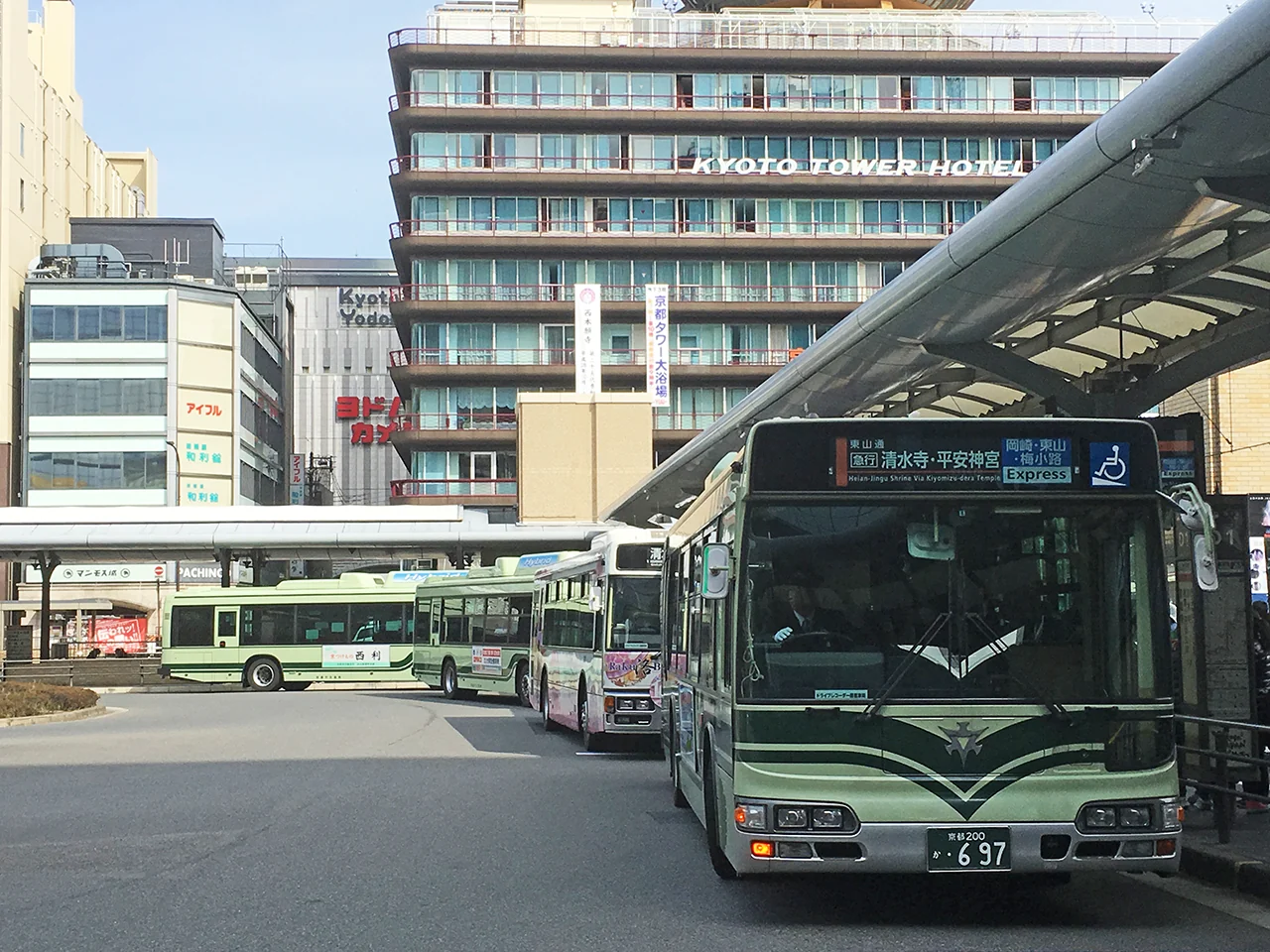
1. The pass every guide names no longer exists
On 1 April 2026 the Kansai Thru Pass stopped being sold under that name. What took its place is called the KANSAI RAILWAY PASS LITE, and the word Lite is doing real work. Kyoto’s municipal subway came out. The Randen tram came out. The Keihan Otsu Line came out. Buses came out entirely.
Most English guidance still describes the old product. If you arrive holding the new pass and the old expectations, the first thing that happens is a gate in Kyoto Station that will not open for you.
| Old Kansai Thru Pass | Current LITE | |
|---|---|---|
| Kyoto municipal subway | Included | Excluded |
| Buses | Included | All excluded |
| Randen tram | Included | Excluded |
| Keihan Otsu Line | Included | Excluded |
| Days | Any days inside the validity window | Two or three consecutive days |
| Format | Physical card | Digital only |
What you can still ride
The LITE covers the Osaka Metro and the private railways that connect Kansai’s cities: Hankyu, Hanshin, the Keihan main line, Kintetsu and Nankai. Osaka to Kobe, Osaka to Nara, Osaka up to Kyoto Kawaramachi all work on one ticket.
The awkwardness starts once you are standing in Kyoto. Kiyomizu-dera, Ginkaku-ji and Arashiyama all need a bus, a subway or the Randen, and those are precisely the three things the pass dropped. Kyoto is not a city you can walk end to end, so the gap has teeth.
Which is why this is now a daily decision
Asking which Kansai pass is best produces no useful answer. A day spent inside Osaka, a day spent inside Kyoto, a day shuttling between the two, and a day that adds Nara each reward a different ticket. Work through them one at a time and the arithmetic settles quickly.
2. What the LITE costs, and the conditions attached
Two days cost 5,200 yen and three days cost 6,500 yen. The official price table lists adult fares only. There is no child column at all, so if you are travelling with children you will be pricing their journeys separately.
| 2-day | 3-day | |
|---|---|---|
| Price | 5,200 yen | 6,500 yen |
| Days | Two consecutive | Three consecutive |
| Sold | 25 March to 30 September | |
| Valid until | 1 October | 2 October |
| After purchase | Three months to activate, and no later than 30 September | |
What the pass covers, seen through the exclusions
The official description is vague on inclusions and precise on exclusions, so read it backwards. Everything private and underground in Kansai is in; JR, the Kyoto subway, the Otsu branch, the Randen and buses are out.
| Rides | Does not ride |
|---|---|
| Osaka Metro and the New Tram | All JR lines |
| Hankyu and Hanshin | Kyoto municipal subway |
| Keihan main line and Uji Line | Keihan Otsu Line |
| Kintetsu and Nankai | Randen (Keifuku) |
| Eizan, Hankai and Mizuma railways | Every bus |
Consecutive days changed the maths
The old Thru Pass let you skip a day in the middle. The LITE does not: the official Korean and English pages both describe two consecutive days and three consecutive days. A trip that used to burn pass days only on the two big travel days now has to count whatever sits between them.
That matters more than it sounds. Arrival days and departure days are eaten by airports and luggage, and they rarely involve four or five train rides. If your heavy travel days are not adjacent, the pass loses most of its value before you start.
A day starts at three in the morning
The digital ticket treats 3:00 a.m. to 2:59 a.m. as one day. Activate it between midnight and 2:59 a.m. and you cannot use it after 3:00 a.m. that same morning. Late-arriving flights walk into this one regularly.
Digital only, and screenshots are refused
It is sold online and nowhere else. There is no counter sale and no paper version. You pass through gates by showing a QR code, and the terms state plainly that screenshots and printed screens cannot be used. Your battery is now part of your ticket.
Where a station has no QR-capable gate, staff check the screen instead. Eizan, Hankai and Mizuma railways sit behind a separate tab in the app and are checked visually when you get off, at Demachiyanagi, Kibuneguchi, Kurama, Tennoji-Ekimae, Kaizuka and Mizuma Kannon.
3. Kyoto is where the gap actually hurts
Kyoto runs on buses, and the LITE rides none of them. This is the single most expensive misunderstanding available in Kansai right now, because Kyoto is also where most visitors spend their sightseeing days.
Buy the city’s own pass instead
The Kyoto subway and bus one-day pass costs 1,100 yen for adults and 550 yen for children. It covers both subway lines, every city bus route, and defined sections of the Kyoto Bus, Keihan Bus and West JR Bus networks.
| Ride | Cash or IC | With the day pass |
|---|---|---|
| Sightseeing express bus EX100 and EX101 | 500 yen | No extra charge |
| City bus, flat-fare zone | 230 yen | No extra charge |
| Subway, Kyoto to Shijo or Gojo | 220 yen | No extra charge |
| Subway, Kyoto to Imadegawa | 260 yen | No extra charge |
| Subway, Kyoto to Kokusaikaikan | 290 yen | No extra charge |
The express bus is the reason to buy it
Kyoto runs a limited-stop sightseeing bus, numbered EX100 and EX101, that skips everything except the places visitors actually want. Kyoto Station to Gojo-zaka for Kiyomizu-dera takes ten minutes, Gion seventeen, Ginkaku-ji-mae thirty. On operating mornings they leave for Kiyomizu-dera every seven or eight minutes.
Paying cash, that bus is 500 yen a ride, more than double an ordinary city bus. Holding the day pass, it costs nothing extra. One express ride plus a subway return already comes to 940 yen of value, and a single ordinary bus on top of that clears the 1,100 yen you paid.
Two tickets people still look for are gone
The bus-only one-day ticket at 700 yen stopped being sold at the end of September 2023 and stopped being valid at the end of March 2024. The two-day version was withdrawn earlier still. The city sells one tourist day pass now, and this is it.
It is a magnetic card rather than an app, sold at subway station windows, the bus and subway information counters, commuter pass offices, on board city buses, and at some convenience stores and hotels. Buy it in advance if you like; the date prints on the back the first time you use it.
4. Osaka: the Enjoy Eco Card and when it pays
Osaka Metro charges by distance band, and its day card costs 820 yen on weekdays or 620 yen at weekends and on public holidays. Children pay 310 yen. It covers the whole subway network, the New Tram and Osaka City Bus.
| Band | Distance | Adult | Child |
|---|---|---|---|
| 1 | Up to 3 km | 190 yen | 100 yen |
| 2 | 3 to 7 km | 240 yen | 120 yen |
| 3 | 7 to 13 km | 290 yen | 150 yen |
| 4 | 13 to 19 km | 340 yen | 170 yen |
| 5 | Over 19 km | 390 yen | 200 yen |
The break-even moves with the day of the week
Most sightseeing hops inside Osaka land in band two at 240 yen. Umeda to Namba, Namba to Shinsekai, that sort of distance. At the weekday price of 820 yen you need four of those rides to come out ahead, because three only reach 720 yen.
At the weekend price of 620 yen, three rides already clear it. The same itinerary flips depending on which day you run it, which is worth knowing when you are deciding what to do on a Saturday and what to leave for Monday.
Two exclusions worth remembering
Yumeshima Station is outside the card. Some buses are too, including the IKEA Tsuruhama service and on-demand routes. Neither is likely to appear in a sightseeing day, but Yumeshima is the one to keep in mind.
Discounts come attached
Showing the card on the day of use gets you reduced admission at around twenty attractions across the city. The individual savings are small, but if the Umeda Sky Building observatory or the Tempozan wheel was already on your list, a few hundred yen comes back.
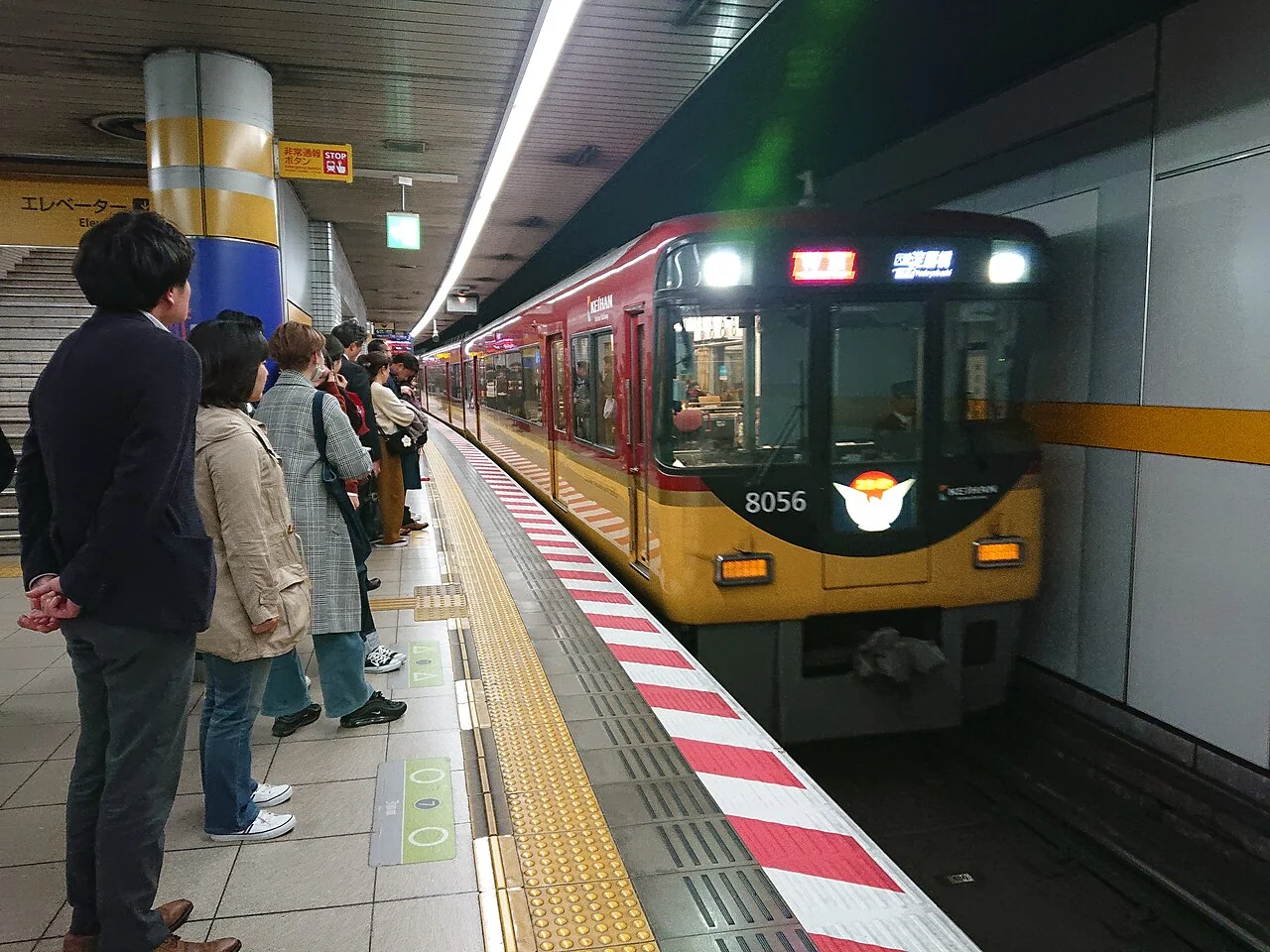
5. Keihan: the line that drops you inside Higashiyama
Yodoyabashi to Gion-Shijo costs 490 yen one way. Keihan runs from central Osaka along the eastern edge of Kyoto, which puts you at the bottom of the Kiyomizu-dera approach rather than at Kyoto Station with a bus ride still to go.
| From Yodoyabashi | Distance | One way |
|---|---|---|
| Hirakatashi | 21.8 km | 400 yen |
| Chushojima | 39.7 km | 460 yen |
| Fushimi Inari | 44.6 km | 480 yen |
| Gion-Shijo | 48.6 km | 490 yen |
| Sanjo | 49.3 km | 490 yen |
| Demachiyanagi | 51.6 km | 550 yen |
Keihan sells a visitor-only range
Keihan splits its tourist tickets into more variants than any other operator here. The Osaka and Kyoto version runs 1,650 yen for a day, and the Kyoto-only version 1,100 yen.
| Pass | Price | Area |
|---|---|---|
| KYOTO-OSAKA SIGHTSEEING PASS 1day | 1,650 yen | Main, Uji and Katano lines, plus the shrine cable car |
| KYOTO-OSAKA 24 hours | 1,850 yen | Same area, 24 hours from activation |
| KYOTO SIGHTSEEING PASS 1day | 1,100 yen | Demachiyanagi to Iwashimizu, Uji Line |
| KYOTO 24 hours | 1,300 yen | Same area, 24 hours |
| KYOTO-OSAKA with Osaka Metro | 2,160 yen | Adds the Osaka subway |
| Kurama and Kibune edition | 2,100 yen | Adds the Eizan Railway |
| OTSU SIGHTSEEING PASS | 800 yen | Keihan Otsu Line only |
A return trip is not enough to justify it
Buy the 1,650 yen version and ride Yodoyabashi to Gion-Shijo and back, and you have used 980 yen of it. Stop at Fushimi Inari on the way and you have used 1,460 yen across three rides, still short. The fourth ride is where it turns positive.
That fourth ride is realistic if your day looks like Inari in the morning, Gion in the afternoon, a run out to Uji, then back to Osaka. If Keihan appears twice in your day, buy singles.
The 24-hour variants are quietly useful
A day pass dies at close of service. The 24-hour pass runs a full day from activation. Arrive in Kyoto after lunch, stay through the evening and continue the following morning, and for 200 yen more the ticket is still live the next morning.
6. Kintetsu, and the day you add Nara
Osaka-Namba to Kintetsu-Nara is 680 yen one way. The one-day Kintetsu Rail Pass is 1,900 yen, so a plain return uses 1,360 yen of it and leaves 540 yen unspent. Nara and straight back does not pay for itself.
| Pass | Adult | Child | Area |
|---|---|---|---|
| 1 day | 1,900 yen | 950 yen | Osaka, Nara, Kyoto |
| 2 day | 3,700 yen | 1,850 yen | Osaka, Nara, Kyoto |
| 5 day | 4,900 yen | 2,450 yen | Adds Mie and Nagoya |
| 5 day plus | 6,700 yen | 3,350 yen | Adds Mie Kotsu and Nara Kotsu buses |
It works when Kyoto joins the same day
Run Osaka to Nara in the morning and continue to Kyoto in the afternoon and the sums change. Kyoto to Kintetsu-Nara is 940 yen on the through service, and Nara back down to Osaka is another 680. Three legs like that and 1,900 yen is comfortably spent.
The same applies if you branch at Yamato-Saidaiji towards Ikoma or Horyu-ji. For a plain Nara day trip, pay the 1,360 yen and keep the difference.
Limited express seats are a separate purchase
The Kintetsu pass is not a limited express ticket. Riding one means buying a limited express supplement, and between Osaka-Namba and Kintetsu-Nara that supplement is a flat 520 yen. The rapid express covers the same route in about forty minutes without it.
The calculation is different on the five-day pass, where the distances to Ise-Shima or Nagoya are long enough that ordinary trains eat a day. Budget for supplements before you decide the five-day version is cheap.
Twelve is the age that costs money
Adult fares start at twelve, child fares run from six to eleven, and under-sixes travel free. A family with two children in that band pays half twice over; a family with a thirteen-year-old does not.
Discounts come with the pass at around forty attractions for the one and two-day versions and around seventy for the five-day versions, which in Nara means temples and museums you were walking to anyway.
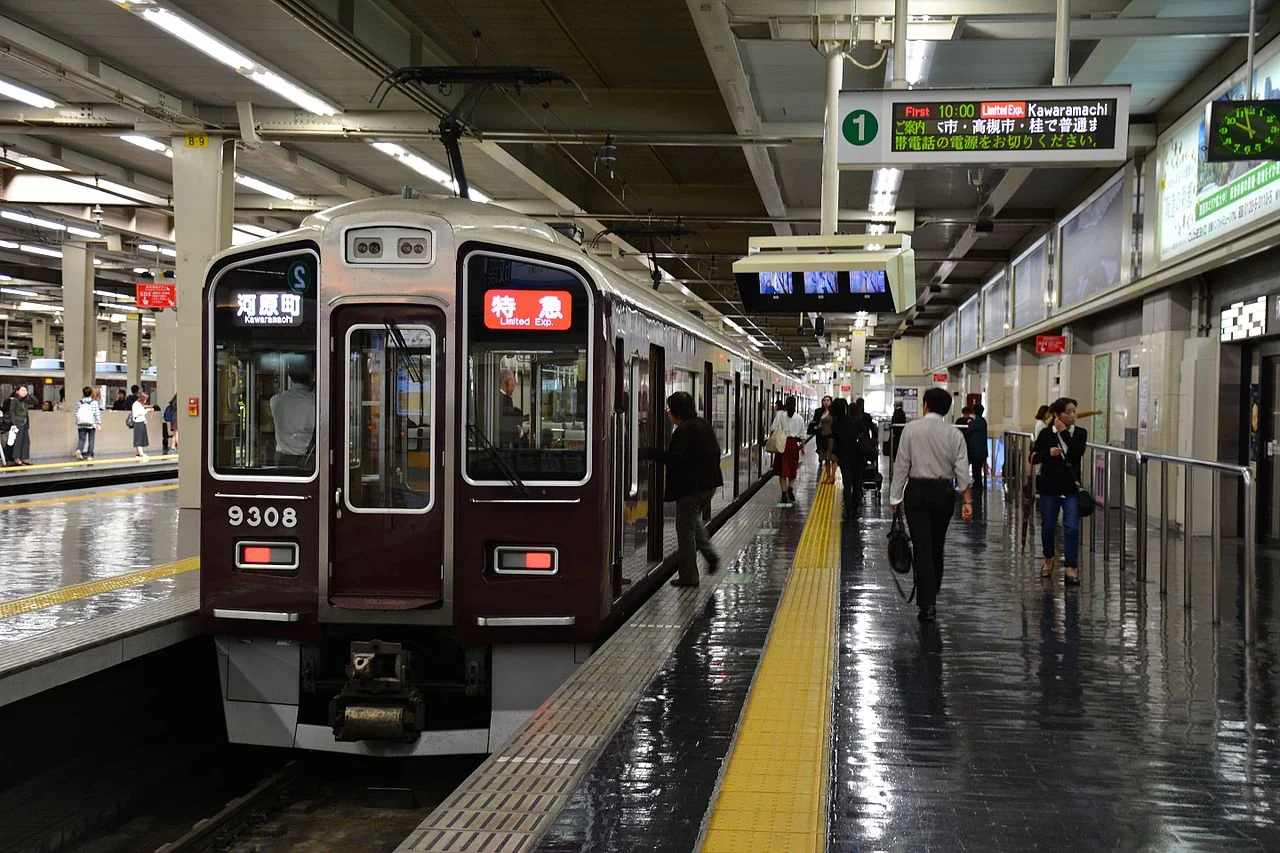
7. Hankyu and Hanshin: Kobe, Takarazuka and Himeji
The Hankyu one-day pass is 1,300 yen and the Hankyu-Hanshin version is 1,600 yen. Both are adults-only products, both are digital, and both take credit cards only. Neither is sold at a station window.
| Pass | Price | Lines |
|---|---|---|
| Hankyu One-Day Pass | 1,300 yen | All Hankyu lines except the Kobe Kosoku Line |
| Hankyu-Hanshin One-Day Pass | 1,600 yen | Hankyu, Hanshin and the Kobe Kosoku Line |
| Hanshin and Sanyo Seaside QR 1day | 2,350 yen | Osaka-Umeda and Osaka-Namba through to Sanyo-Himeji |
| Port Liner and Hanshin 24 hours | 1,500 yen | Kobe Airport monorail plus Hanshin, 24 hours |
Three hundred yen buys the Kobe Kosoku Line
The cheaper Hankyu pass stops short of the Kobe Kosoku Line, which is the stretch that carries you west of Sannomiya towards Harborland and Shinkaichi. The combined pass includes that line and the whole Hanshin network for 300 yen more.
For a Kobe day out of Osaka, take the combined one. For a day that stays on Hankyu territory, Kyoto and Takarazuka, the cheaper pass is enough.
Himeji has its own ticket
Reaching Himeji Castle by private rail rather than JR means the Hanshin and Sanyo Seaside QR pass at 2,350 yen, good from Osaka out to Sanyo-Himeji and back. JR’s special rapid is faster, but if you are not holding a JR product this keeps the day cheaper.
Arriving at Kobe Airport changes the answer
The Port Liner and Hanshin 24-hour pass costs 1,500 yen and runs a full day from activation. It covers the monorail from Kobe Airport into Sannomiya and then Hanshin onwards to Osaka, which is exactly the shape of an arrival day for anyone flying into Kobe.
8. The JR side: Kansai Area Pass and the Haruka
No private railway pass touches JR, and no JR pass touches the private railways. In Kansai these are two separate systems, so the first question is which network your week actually runs on.
| Days | Adult | Child |
|---|---|---|
| 1 | 2,800 yen | 1,400 yen |
| 2 | 4,800 yen | 2,400 yen |
| 3 | 5,800 yen | 2,900 yen |
| 4 | 7,000 yen | 3,500 yen |
Two reserved Haruka rides are built in
The Kansai Area Pass includes reserved seats on the Haruka airport express twice, with unlimited use of its non-reserved cars on top. An airport arrival into Kyoto and a departure back out is exactly two, which is where most of this pass’s value sits.
What it does not include is the Shinkansen. Shin-Osaka to Kyoto in fifteen minutes is not available to you; the special rapid does it in about thirty and is covered.
Passport and status are checked
You need a passport issued by a foreign government and entry under Temporary Visitor status. Japanese nationals cannot buy it. Several private railway passes do not care about nationality at all, but the JR products are explicit.
Days must be consecutive, running from your start date until midnight on the last day.
Kansai WIDE, when the Shinkansen matters
The Kansai WIDE Area Pass is 12,000 yen for adults and 6,000 for children over five consecutive days, and inside its free area it does include the Sanyo Shinkansen. Osaka out to Himeji or Okayama, or limited expresses down to Kinosaki and Shirahama, only work on this one.
It also lets you reserve ordinary-car seats without a limit on how many times, provided you book before boarding. Same eligibility rules, and one pass per person.
9. So when does the LITE make sense?
It fits two or three adjacent days spent hopping between cities on private rail. Read it as an intercity ticket rather than a city ticket and the decision becomes obvious.
Itineraries it suits
Basing yourself in Osaka and running out to Kobe one day and Nara the next. Riding up to Kyoto Kawaramachi and back on Hankyu or Keihan. Heading down the Nankai line towards Koyasan. Four or five private railway rides a day, on two days that touch each other, and 5,200 yen is money well spent.
Itineraries it does not
Two or more days based in Kyoto. What you need there is the subway, the buses and the Randen, none of which it carries, so you end up paying twice. Days spent entirely inside Osaka do not suit it either: that is a 620 or 820 yen problem.
Start by asking whether your days are adjacent
Because of the consecutive rule, the first question is not price but calendar. Arrival and departure days rarely generate enough rides to matter. You need two full days, side by side, both dominated by intercity travel, before the sums work.
| What the day looks like | What to buy |
|---|---|
| Inside Osaka only | Enjoy Eco Card, 820 or 620 yen |
| Inside Kyoto only | Subway and bus day pass, 1,100 yen |
| Osaka to Kyoto’s Higashiyama | Keihan 1day, 1,650 yen |
| Osaka and Nara | Kintetsu 1day at 1,900 yen, or singles |
| Osaka and Kobe | Hankyu-Hanshin 1day, 1,600 yen |
| Two adjacent intercity days | LITE 2-day, 5,200 yen |
| Airport returns plus JR running | JR Kansai Area Pass |
10. Where the airport fits
Most city tickets stop at the city boundary. The LITE will carry you on Nankai, but the Haruka into Kyoto is a JR train and sits outside it. The Osaka Amazing Pass excludes the airport run as well.
Which products include an airport
The JR Kansai Area Pass includes two reserved Haruka rides. The Port Liner and Hanshin 24-hour pass covers Kobe Airport. The Osaka Amazing Pass has a separate Itami Airport edition at 3,800 yen for one day and 5,400 for two.
Everything else, you pay for separately, which is what makes the activation question worth thinking about before you land.
Do not activate on arrival day
Between immigration, baggage and the ride in, arrival day usually produces one journey. Activating a day ticket for that single ride wastes most of it, and activating a consecutive-day pass pulls your whole window forward by a day.
Start the pass on the first morning you actually intend to move around. It is the cheapest decision in this entire guide.
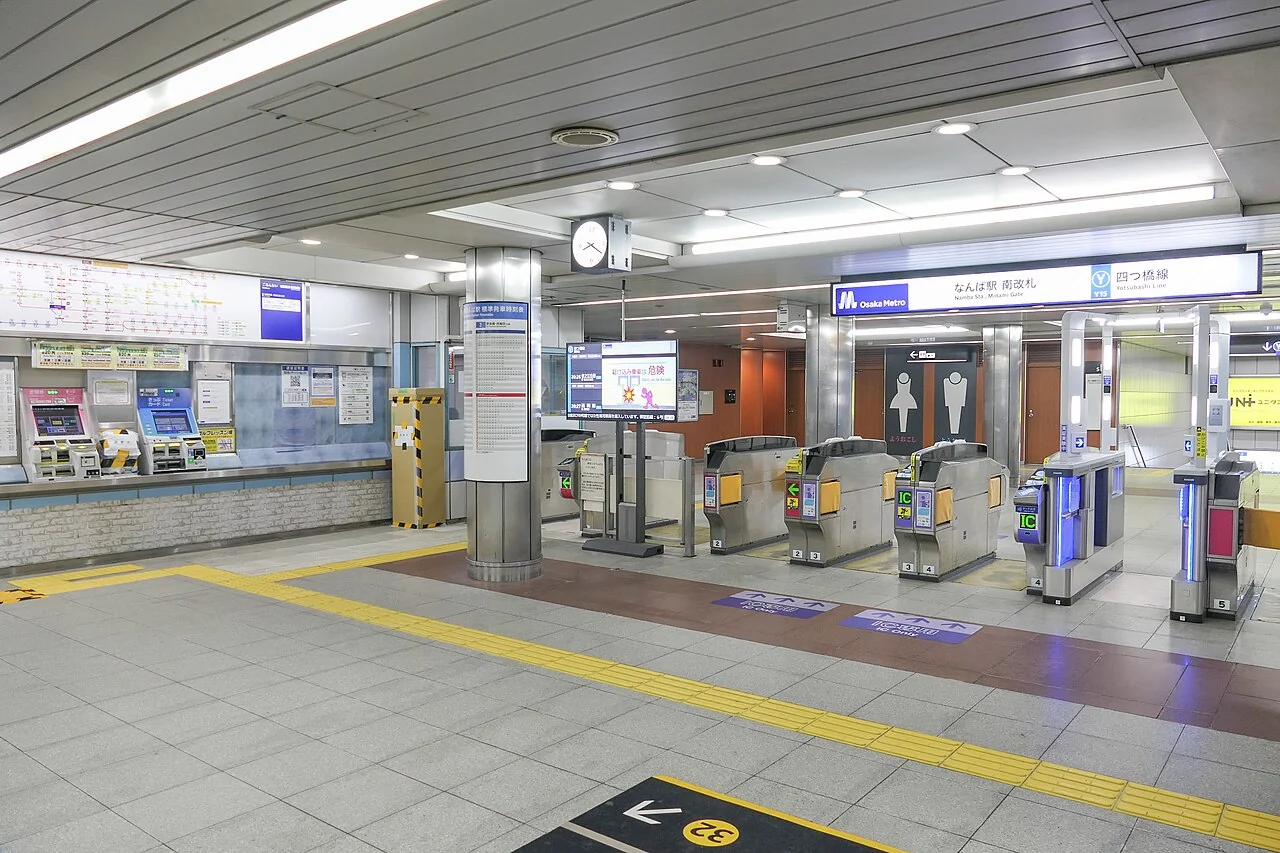
11. Buying: apps, cards and the paper that survives
Most Kansai private railway passes are now sold only online. Walking up to a ticket window and asking for a one-day pass no longer works for several of them, and the payment method catches people out more than the price does.
| Ticket | Where | Format |
|---|---|---|
| KANSAI RAILWAY PASS LITE | Online only | Digital QR |
| Hankyu and Hanshin day passes | Surutto QRtto site or the Hankyu app | Digital QR |
| Keihan visitor passes | Online, some counters | Digital QR |
| Kintetsu Rail Pass | Agents abroad, counters in Japan | Physical or digital |
| Kyoto subway and bus day pass | Station windows, information desks, on board buses | Magnetic card |
| Enjoy Eco Card | Station machines and windows | Physical card |
| JR Kansai Area Pass | Agents abroad, Midori no Madoguchi, online reservation | Physical |
Credit card only means credit card only
Hankyu and Hanshin state that their digital tickets take credit card payment alone, after you register an account. If your card is foreign-issued, test it before you are standing at a gate, and have a fallback.
The physical products are the fallback. The Kyoto day pass and the Enjoy Eco Card are bought with cash at a window, need no phone, and do not care about batteries. If someone in your group is not comfortable with app tickets, route the whole group through those.
Buying early is usually allowed
Most of these run on a three-month window: buy now, use any single day within three months. The Hankyu passes and the Keihan Kyoto ticket both work that way, so you can pay before you fly and activate when you arrive.
The LITE is the exception. The three-month rule applies, but activation also has to happen by 30 September and the whole product expires in early October.
12. The days when no pass is the answer
Two or three rides a day is IC card territory. Tap an ICOCA or a Suica and you pay for what you use. Most of the money wasted on Kansai passes is spent on days that were never going to need one.
What a two-ride day looks like
Out from the hotel to one district, a long walk around it, and back in the evening. In Osaka that is 480 yen in band two, cheaper than any day product. In Kyoto, a morning at Kiyomizu-dera and nothing else has the same shape.
The better your hotel location, the stronger this gets. Stay near Namba or Umeda and a surprising share of the day happens on foot.
An IC card ignores the company boundaries
One card rides JR, the private railways, the subways and the buses, across every company boundary that passes stop at. Not having to remember which operator you are standing in front of has real value on a tiring day.
Reserved limited express seats still cost extra on an IC card, including the Haruka, the Rapi:t and Kintetsu’s limited expresses.
13. Which operator to take from Osaka to Kyoto
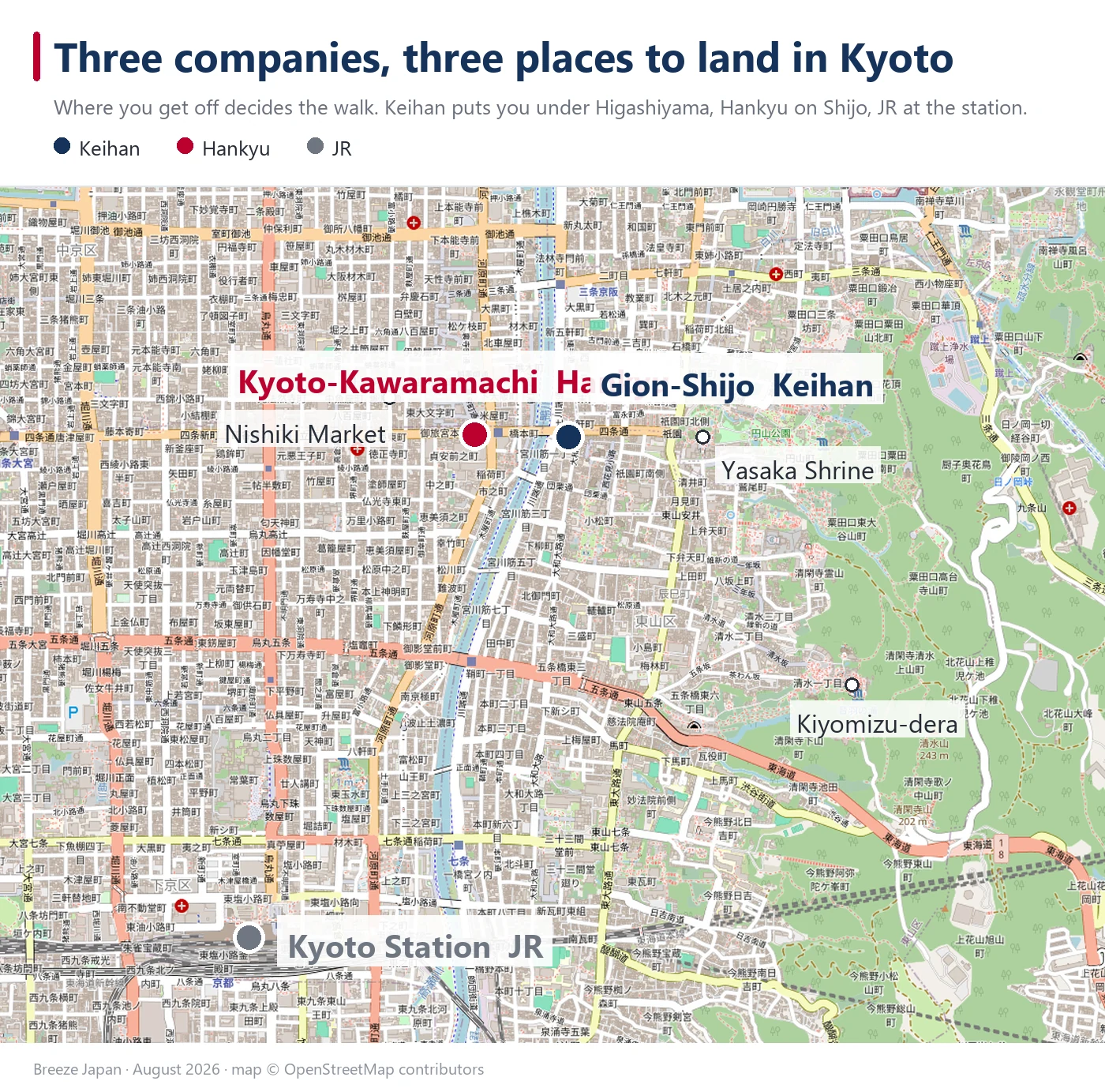
The three companies put you down in three different places. That matters more than the fare gap, because the walk at the far end is where the time goes.
| Operator | Osaka end | Kyoto terminus | Suits a day at |
|---|---|---|---|
| Keihan | Yodoyabashi, Kitahama, Temmabashi | Gion-Shijo, Sanjo, Demachiyanagi | Kiyomizu-dera, Gion, Yasaka, Fushimi Inari |
| Hankyu | Osaka-Umeda | Kyoto-Kawaramachi | Shijo shopping, Nishiki, onward to Arashiyama |
| JR | Osaka, Shin-Osaka | Kyoto Station | Station area, Inari, connections to Nara |
Higashiyama days start on Keihan
Get off at Gion-Shijo and Yasaka Shrine is a walk, with Ninenzaka and Sannenzaka running uphill from there to Kiyomizu-dera. Starting the same day from Kyoto Station means a bus up the hill first.
Fushimi Inari sits on the same line at 480 yen from Yodoyabashi, so an early shrine visit followed by an afternoon in Gion falls into place without backtracking.
Shopping days start on Hankyu
Hankyu’s Kyoto-Kawaramachi exits onto Shijo-dori itself, with Nishiki Market and the Teramachi arcades a few minutes away. If you are staying around Umeda, the walk to the platform at the Osaka end is short too.
Transfer days start on JR
If Kyoto Station is the destination, or if the day continues to Nara or Himeji, JR is the one. It is also where the coin lockers and the Shinkansen platforms are.
First stop in Higashiyama, take Keihan. First stop on Shijo, take Hankyu. Kyoto Station or a connection, take JR. Choose the ticket in that order and it will not be wrong.
14. One pass, plenty of Kyoto beyond the city
The Kyoto day pass reaches further out than its name suggests. Alongside the subway and city buses, defined sections of Kyoto Bus, Keihan Bus and West JR Bus are included, and those sections contain some of the best half-day trips in the region.
| Destination | Operator | What is there |
|---|---|---|
| Ohara | Kyoto Bus | Sanzen-in and Jakko-in, heavy autumn colour |
| Iwakura and Shisendo | Kyoto Bus | Quiet temple gardens |
| Daikaku-ji and Kiyotaki | Kyoto Bus | The far end of Sagano |
| Koke-dera | Kyoto Bus | The moss temple, advance application required |
| Yamashina and Daigo | Keihan Bus | Daigo-ji |
| Toganoo, for Takao | West JR Bus | Jingo-ji and Kozan-ji |
Seasonal routes are carved out
Route 51 up Mount Hiei, route 90 from Hankyu Arashiyama to Nishiyama Takao, and route 95 from Ohara to Kurama are seasonal services and sit outside the pass, as do Keihan’s Hiei and expressway routes.
Ohara and Takao are each forty minutes to an hour from the centre. The return fare alone runs past 1,100 yen, so on those days the pass pays for itself before you have ridden anything else.
They colour earlier than the city
Both Ohara and Takao turn ahead of central Kyoto most years. In the first half of November, when the temples downtown are still green, those two are often the reason to leave the centre at all.
15. Worked examples
Three itineraries that turn up constantly, priced out. All three are based in Osaka, which is where most Kansai trips sleep.
Three days, Osaka and Kyoto
Arrive late on day one and eat near Namba. Spend day two in Kyoto. Spend day three in Osaka and fly out.
| Day | Buy | Cost |
|---|---|---|
| 1 | IC card | Actual fares |
| 2 | Keihan 1day and the Kyoto subway and bus pass | 2,750 yen |
| 3 | Enjoy Eco Card | 820 or 620 yen |
The LITE is wrong here. The Kyoto day is where most of the moving happens, and the LITE cannot help on it.
Four days, adding Nara
Kyoto on day two, Nara on day three, Osaka on day four. Every day wants something different: Keihan plus the Kyoto pass, then Kintetsu 1day, then the Enjoy Eco Card. Around 5,470 yen in total.
Again the LITE struggles, because the Kyoto day in the middle breaks the run of adjacent intercity days it needs.
Five days, adding Kobe
Kobe on day two, Nara on day three, Kyoto on day four, Osaka on day five. Now days two and three are adjacent and both intercity, which is the first time the 5,200 yen two-day LITE earns its place: it covers both returns and everything in between.
Buy the 1,100 yen Kyoto pass separately for day four. Day five is often an IC card day.
16. Travelling with children
Child pricing is inconsistent across these products, and that inconsistency moves the total. Some passes halve, some sell to adults only, and pricing the trip on adult fares alone will leave you short.
| Ticket | Child pricing |
|---|---|
| KANSAI RAILWAY PASS LITE | Official table lists adult fares only |
| Hankyu and Hanshin day passes | Adults only |
| Kintetsu Rail Pass | Half the adult price |
| JR Kansai Area Pass | Half the adult price |
| Kyoto subway and bus day pass | 550 yen |
| Enjoy Eco Card | 310 yen |
Mixing is usually cheapest
Where a pass is adults-only, children ride on singles or an IC card. Osaka Metro charges children between 100 and 200 yen, Kyoto city buses 120 yen, and Kintetsu halves its fares. Adults on passes and children tapping in often beats putting everyone on the same product.
Check the age boundaries
Japanese railways generally treat six to eleven as child, under six as free, and twelve and over as adult. Kyoto adds an exception, counting twelve-year-olds still in elementary school as children.
That single year is worth checking before you buy four of anything.
17. Refunds, and what happens when a typhoon lands
Pressing the activation button changes what a digital ticket is. Before that press some products refund cleanly; after it, almost none do.
| Ticket | Before activation | After |
|---|---|---|
| KANSAI RAILWAY PASS LITE | Per the stated terms | No refund |
| Hankyu Nara and Ikaruga 1day | Refunded without a fee | No refund |
| Kyoto subway and bus day pass | At a window if unused | No refund |
| Enjoy Eco Card | At a window if unused | No refund |
Weather is not a refund reason
The LITE terms are explicit: once use has started, no refund is given if services stop running or attractions close temporarily, and none is given for weather either. A typhoon day inside a two-day pass is simply gone.
Through the typhoon months, keep the activation decision for the morning. Look at the running information over breakfast and start the pass then, rather than the night before.
Group tickets have to come back together
Hankyu’s digital tickets can be bought several at a time and distributed to your group. Refunding them means collecting every distributed ticket back to the purchaser, who then processes the lot. Once one person in the group has activated, that route closes.
18. Mistakes that cost money
The expensive errors in Kansai are repetitive, which makes them easy to avoid.
Expecting the LITE to work in Kyoto
It does not open the subway gates at Kyoto Station, does not ride the Randen at Arashiyama, and does not board the bus up to Kiyomizu-dera. Kyoto needs its own 1,100 yen pass.
Activating at one in the morning
The digital day begins at 3:00 a.m. Activate on a late arrival and the ticket dies at 3:00 a.m. that same night. Wait until the morning you plan to travel.
Screenshotting the QR code
Explicitly refused. Saving a picture in case your battery dies does not work, so carry a power bank instead.
Assuming a pass covers limited expresses
Reserved-seat limited expresses on Kintetsu, Nankai, Keihan and Hankyu all charge supplements, as do Keihan’s Premium Car and Liner services. Finding out on the platform is the expensive version.
Budgeting from old prices
The Hanshin Tourist Pass at 700 yen, the Kyoto bus-only day ticket at 700 yen, and the Kansai Thru Pass itself are all gone. A large share of what search returns still describes the previous decade’s line-up.
Believing a city pass covers the airport
Nearly none of them do. The Haruka rides sit inside the JR Kansai Area Pass, Itami has its own Amazing Pass edition, and everything else is paid separately.
Tokyo works differently. Two operators, two fare tables and two separate 700-yen day passes, set out in the Tokyo transport passes guide.
19. Quick answers
Kansai is a per-day choice now. One ticket used to cover several days; the replacement leaves a hole in the middle of them, so the answer changes with the day.
| Question | Answer |
|---|---|
| Inside Osaka today? | Enjoy Eco Card |
| Inside Kyoto today? | Subway and bus day pass |
| Shuttling Osaka to Kyoto? | Keihan 1day or 24 hours |
| Adding Nara? | Kintetsu 1day, or singles for a plain return |
| Kobe or Himeji? | Hankyu-Hanshin 1day, or the Seaside QR for Himeji |
| Two adjacent intercity days? | LITE 2-day |
| JR running plus airport returns? | JR Kansai Area Pass |
| Two or three rides a day? | IC card |
Settle these before you fly
First, payment: several of these take credit cards only and require an account first. Second, activation: starting on arrival day usually throws away a day. Third, Kyoto: check explicitly whether the product you are buying works inside the city, because that is where the assumptions break.