
Kansai Airport to Kyoto: Every Transfer Option Compared (Haruka, Bus, Taxi)
The fast train, the late bus, door-to-door vans and taxis — laid out so you can pick in about thirty seconds and be on your way to Kyoto.
| Best for most people | the JR Haruka limited express — direct to Kyoto in about 80 minutes, and just ¥2,200 one-way on the foreign-passport ticket (normal fare is around ¥3,060). |
|---|---|
| Fully covered by passes | the Japan Rail Pass, Kansai Area Pass and Kansai Wide Area Pass all include Haruka, so if you hold one, just ride it (non-reserved is free). |
| Lots of luggage or a late landing | the limousine bus is ¥2,800, takes about 90 minutes to Kyoto Station, and runs later than the last train. |
| Door-to-door | the Yasaka shared shuttle drops you at your Kyoto address for about ¥4,300 a person — book ahead. A private taxi or van runs roughly ¥24,000–30,000 for the whole vehicle. |
| Flying Peach into Terminal 2? There’s no train there — take the free shuttle bus to Terminal 1 first (7–9 minutes), then catch Haruka. | |
| Skip the wrong line | the Nankai train from KIX goes to Namba in Osaka, not Kyoto. For Kyoto, you want JR Haruka. |
1. The quick answer: which option for whom
2. JR Haruka: the default fast train
3. How to buy the ¥2,200 Haruka ticket, step by step
4. The limousine bus: ¥2,800, and it runs late
5. Shared shuttle van: door-to-door to your Kyoto address
6. Taxi and private transfer: when it’s worth the money
7. Landing at Terminal 2 (Peach)? There’s no train there
8. Landing late at night: what still runs
9. Travel light: send your luggage ahead
10. IC cards and staying connected
11. Getting back: Kyoto to Kansai Airport
12. So which should you choose?
13. Plan the rest of your Kyoto trip
1. The quick answer: which option for whom
For almost everyone, the answer is the JR Haruka limited express — about 80 minutes, direct, no changes, and only ¥2,200 one-way on the foreign-passport ticket. It’s fast, cheap and drops you right inside Kyoto Station. The other options exist for specific situations: a mountain of luggage, a very late landing, a group splitting a fare, or wanting a door pulled up to your hotel.
Here’s the whole decision on one screen. Skim it, pick your row, and jump to that section for the details.
| Option | Time to Kyoto | Cost | Best for |
|---|---|---|---|
| JR Haruka (limited express) | ~80 min | ¥2,200 foreign-passport ticket (¥3,060 normal; free with JR / Kansai pass) | Most people — fast, cheap, direct |
| Limousine bus (KATE) | ~85–90 min | ¥2,800 | Heavy luggage, hotel near Kyoto Station, late arrival |
| Shared shuttle van (Yasaka) | ~90+ min | ~¥4,300 / person | Door-to-door, families, no train changes (book ahead) |
| Taxi / private transfer | ~75–90 min | ~¥24,000–30,000 / vehicle | Groups, lots of luggage, or a very late arrival |
One thing to get out of the way first: the Nankai line that also leaves Kansai Airport goes to Namba in central Osaka, not Kyoto. If Kyoto is your destination, ignore Nankai and head for the JR platform and the Haruka. Everything below assumes you want Kyoto.
2. JR Haruka: the default fast train
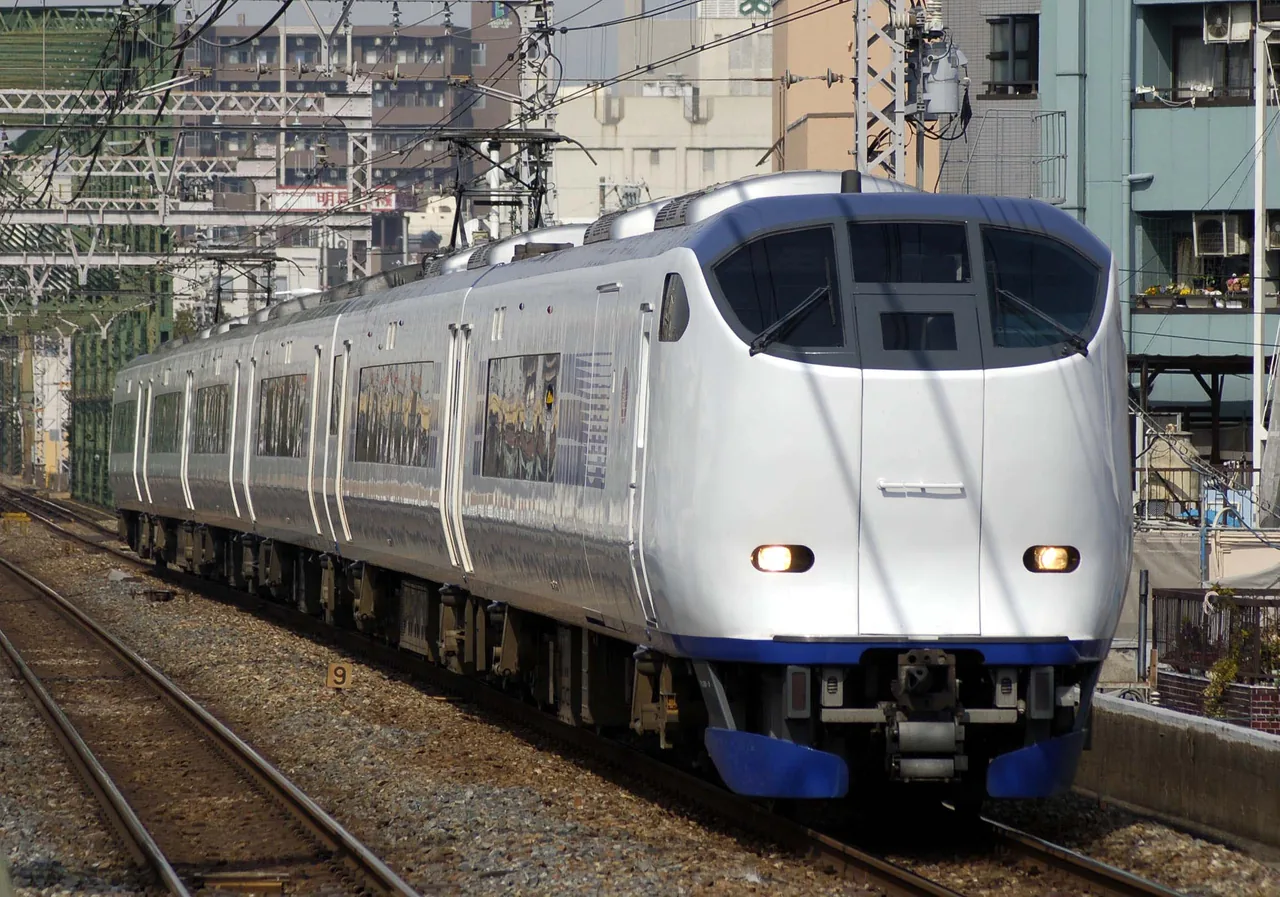
The JR Haruka is the option to beat — a limited-express train straight from the airport to Kyoto in about 80 minutes, with no transfers, for ¥2,200 on the foreign-passport ticket. If you’re not sure what to book, book this.
You’ll spot Haruka easily: it’s the sleek green limited express (a handful even wear the Hello Kitty livery). From KIX it crosses the Sky Gate Bridge off the airport island, then runs Tennoji → Shin-Osaka → Kyoto without you lifting a finger. Roughly 60 trains a day — about 30 round-trips — leave through the day, so one comes by about every half hour.
| From KIX Station | Journey time |
|---|---|
| Tennoji | ~35 min |
| Shin-Osaka | ~50 min |
| Kyoto | ~80 min |
Now the fares, because this is where people overpay. The normal Haruka fare to Kyoto is around ¥3,060 non-reserved. But if you’re visiting on a foreign passport (a “Temporary Visitor” stamp), you can buy a discounted one-way Haruka ticket for just ¥2,200 — same train, same seat, roughly 28% off the walk-up fare. There’s also a “WEST QR HARUKA” QR-code version of the same deal. The next section walks you through buying it step by step.
Speaking of passes: Haruka is fully covered by the nationwide Japan Rail Pass, the Kansai Area Pass and the Kansai Wide Area Pass. If you hold any of them, you ride Haruka’s non-reserved cars for free — no separate ticket, no ¥2,200 to pay. So the logic is simple: pass-holders just use Haruka, and everyone else buys the ¥2,200 ticket. If you’re still deciding whether a pass is worth it for your trip, our JR Pass and Kansai pass guide does the maths.
3. How to buy the ¥2,200 Haruka ticket, step by step
The ¥2,200 ticket isn’t sold blind at a counter — you reserve it online first, then collect it after you land. It sounds fiddly the first time, but it’s a ten-minute job you can do from home before you fly, and it saves you the walk-up ¥3,060 fare.
Here’s the whole process:
| Step | What to do |
|---|---|
| 1 | Go to the JR-WEST Online Train Reservation site and create an account. |
| 2 | Reserve your Haruka seat with a credit card — you can book from up to one month ahead. |
| 3 | After you arrive at KIX, collect the ticket at a green ticket machine (if your passport has an IC chip) or at the JR ticket office (Midori-no-madoguchi) with your passport. |
| 4 | Show your passport, take your ticket, and board Haruka straight to Kyoto. |
A couple of things worth knowing. The ¥2,200 rate is for foreign passports with a “Temporary Visitor” status only; travellers who don’t qualify pay the normal ~¥3,060. The reservation is what unlocks the price — you can’t simply walk up to the counter and ask for the discount ticket without having booked it online first.
4. The limousine bus: ¥2,800, and it runs late
The airport limousine bus is the best non-train option — ¥2,800 to Kyoto Station, about 85–90 minutes, and it keeps running later than the last Haruka. Choose it when you’re weighed down with luggage, your hotel is near Kyoto Station, or you’re landing late enough that the train has stopped.
The bus (run by KATE together with Hankyu and Keihan) leaves from outside the terminal and drops you at the Hachijoguchi (south) side of Kyoto Station. Adults are ¥2,800, children ¥1,400. The big appeal is luggage: you hand your suitcases to the driver, they go under the bus, and you don’t wrestle them up and down platform escalators. You also get a guaranteed seat and a single straight shot — no changes, no gates.
The trade-off is that a bus sits in whatever traffic exists, so the time is a little less predictable than the train. On a smooth run it’s comparable to Haruka; in heavy traffic it’s slower. For airport-to-Kyoto you can just board; note that the reverse direction (Kyoto → airport) is reserved, so book that ahead.
| Limousine bus | |
|---|---|
| Fare (adult / child) | ¥2,800 / ¥1,400 |
| Time to Kyoto Station | ~85–90 min (traffic-dependent) |
| Drop-off | Kyoto Station, Hachijoguchi (south) side |
| Last departure | ~23:07 from T2 / ~23:20 from T1 → Kyoto ~0:45 |
5. Shared shuttle van: door-to-door to your Kyoto address
If you’d rather be driven to your hotel’s front door than to Kyoto Station, a shared shuttle van is the answer — the Yasaka Airport Shuttle runs door-to-door for about ¥4,300 a person. It’s the sweet spot between the bus and a private taxi: cheaper than hiring a whole vehicle, but it still delivers you to your address with your bags, no train changes involved.
The catch is that it’s a shared van, so it picks up and drops other passengers along the way, which makes it a bit slower and less predictable than a direct run — budget 90 minutes or more once you factor in the other stops. And crucially, you must reserve in advance: book by 12:00 (noon) two days before your arrival. This is not a walk-up service.
| Service | Price | Notes |
|---|---|---|
| Yasaka Airport Shuttle | ~¥4,300 / person | Door-to-door to Kyoto city; reserve by 12:00 two days ahead |
| NearMe (shared) | from ~¥5,980 / person | Another shared door-to-door option |
Who’s this for? Families with kids and car seats’ worth of gear, anyone staying somewhere awkward to reach from Kyoto Station, and travellers who simply don’t want to navigate a station on their first night. If that’s you, lock in a booking well before you fly.
6. Taxi and private transfer: when it’s worth the money
A taxi or private van is the priciest way to Kyoto — roughly ¥24,000 to ¥30,000 for the whole vehicle — but for a group or a pile of luggage it can make sense. Split three or four ways, with heavy bags and no interest in stations, it stops looking so extravagant.
MK runs a well-known flat-rate taxi from KIX to Kyoto Station (Hachijo) at about ¥24,000 per vehicle plus tolls, and a private van from around ¥29,800. You get a private car to yourself, door-to-door service, help with your luggage, and a fixed price agreed up front rather than a meter ticking in traffic. The trip itself is about 75–90 minutes depending on conditions.
Be honest with yourself about when this is worth it. For one or two people it’s hard to justify against a ¥2,200 train ticket. But it earns its keep for:
- Groups of three or four splitting the fare, where the per-head cost lands close to the shuttle.
- Heavy or bulky luggage — sports gear, multiple large cases — that you’d hate to haul through a station.
- Very late or very early flights when trains and buses aren’t running.
- Travellers who value zero changes and a guaranteed door over saving money.
7. Landing at Terminal 2 (Peach)? There’s no train there
Terminal 2 has no train station — so if you fly in on Peach or another low-cost carrier, your first move is the free shuttle bus over to Terminal 1. This trips up a lot of first-timers, especially travellers from Taiwan and Hong Kong who fly Peach, so it’s worth flagging clearly.
Practically, this just means padding your timeline. Build in a 20–30 minute buffer to clear T2, ride the shuttle, and reach the Haruka platform in the Aeroplaza beside T1. It’s not difficult — the shuttle is well signed and comes often — but you don’t want to be sprinting for the last train because you assumed you could board at T2.
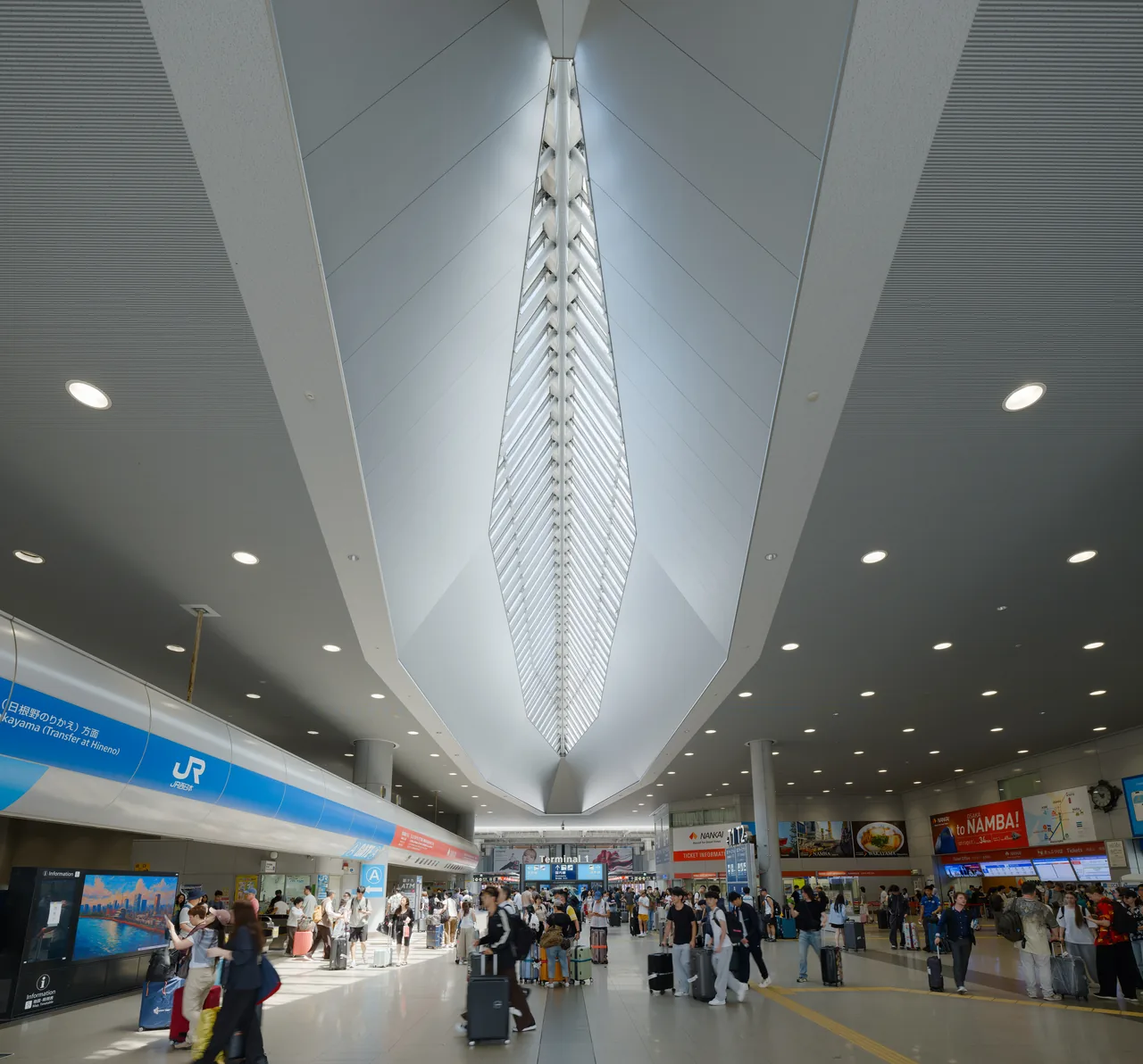
Terminal 1, by contrast, is the main terminal: the JR and Nankai station sits in the adjacent Aeroplaza, a short covered walk from arrivals, so once you’re at T1 everything — trains, buses, luggage service — is right there.
8. Landing late at night: what still runs
If you touch down after the last Haruka (around 22:16), don’t panic — the limousine bus runs later, and it’ll get you into Kyoto around 0:45. After the train stops, the bus is almost always the right call.
Here’s the late-night picture at a glance:
| Time | What’s available |
|---|---|
| Until ~22:16 | Last JR Haruka to Kyoto (verify seasonally) |
| Until ~23:20 (from T1) | Last limousine bus → Kyoto Station ~0:45 |
| After the bus | Private taxi / transfer, or an airport-area hotel until morning |
A few notes. Exact “last train” times shift with the season and the timetable, so check on the day rather than trusting a number from a blog. There’s also the regular JR line (the Kansai-Airport Rapid) via Osaka, but it’s slower and its late-night service is limited, so it’s rarely the best late option. And if you land really late — past the bus — a private transfer or simply booking a hotel near the airport for the night, then travelling to Kyoto fresh in the morning, is the low-stress play.
9. Travel light: send your luggage ahead
You don’t have to drag your suitcases to Kyoto at all — hand them to a luggage-forwarding counter at the airport and they’ll be delivered to your hotel. For anyone who dreads escalators and crowded platforms with big bags, this is a small fee that transforms the journey.
At Terminal 1 you’ll find forwarding counters — KABS, KIX Delivery and Yamato’s TA-Q-BIN — that ship your bags to your Kyoto hotel. Drop them by around 14:00 for same-day-evening or next-day delivery, then travel to Kyoto hands-free on the train. When you arrive, your luggage is waiting (or turns up shortly after). It works in reverse too: your Kyoto hotel can send bags back to KIX before you fly, though you’ll want to allow lead time.
The trade-off is timing: your bags typically arrive that evening or the next day, not the moment you do, so keep an overnight kit — a change of clothes, chargers, medicines, anything you need immediately — in a small day bag you carry with you. For a first-timer nervous about handling luggage on Japanese public transport, this single service does more for your peace of mind than almost anything else.
10. IC cards and staying connected
An IC card (ICOCA or Suica) is handy for local trains, buses and konbini once you’re in Kyoto — just don’t count on it to ride Haruka on its own. And getting online the moment you land makes the whole transfer smoother, so sort your data before you fly.
First the IC card point, because it recurs: tapping ICOCA or Suica through the gates only pays the base fare, and Haruka is a limited express, so you’d still owe the separate limited-express charge. For the airport run, use the ¥2,200 ticket or a pass. Where IC cards shine is after you arrive — Kyoto’s subway, city buses, JR local lines and thousands of shops all take a tap, so having one loaded up is genuinely useful. Our guide to IC cards like ICOCA and Suica covers which to get and how to top up.
Getting connected matters more than people expect on arrival day. You’ll want data to check the last-train time, pull up your Haruka reservation, find your hotel, or message a shuttle driver — and hunting for airport Wi-Fi with luggage in tow is no fun. An eSIM gets you online the second your plane lands, before you’ve even reached the platform.
11. Getting back: Kyoto to Kansai Airport
The return trip mirrors the way in — Haruka or the limousine bus from Kyoto Station — but give yourself more time and book the reserved legs ahead. Heading to an international flight, you don’t want to be cutting it fine.
From Kyoto Station, Haruka runs back to KIX in about 80 minutes, roughly every half hour through the day. The limousine bus goes from the Hachijoguchi side back to the airport in about 85–90 minutes — and unlike the airport-to-Kyoto direction, the Kyoto-to-airport bus is reserved, so book your seat in advance. A shared shuttle or private transfer will collect you from your hotel; reserve those ahead as well (remember Yasaka wants the booking by noon two days out).
Terminal reminder for the flight home: if you’re departing on Peach from Terminal 2, Haruka and the bus land you at Terminal 1, so leave the extra few minutes to catch the free shuttle across to T2 for check-in.
12. So which should you choose?
Nine times out of ten, take the Haruka — it’s the fastest, cheapest, simplest way from Kansai Airport to Kyoto. The other options are answers to specific problems. Match your situation to the table and you’re done.
| Your situation | Take this | Why |
|---|---|---|
| Solo or a couple, normal luggage, daytime | JR Haruka (¥2,200 ticket) | Fast, cheap, direct, no changes |
| You hold a JR Pass or Kansai pass | JR Haruka (free) | The pass already covers it — no reason to pay for anything else |
| Heaps of luggage, hotel near Kyoto Station | Limousine bus (¥2,800) | Bags go under the bus; guaranteed seat; no platforms |
| Landing after the last train | Limousine bus, then taxi | Bus runs to ~0:45; taxi or airport hotel if later still |
| Family, or a hard-to-reach address | Yasaka shuttle (~¥4,300 pp) | Door-to-door, no train navigation (book ahead) |
| Group of 3–4 or heavy gear | Taxi / private van | Split the fare; zero changes; door-to-door |
The honest bottom line: unless you have a reason not to, buy the ¥2,200 Haruka ticket (or ride it free on a pass) and be in Kyoto in under an hour and a half. Save the bus for luggage and late nights, and the van or taxi for groups and door-to-door comfort. None of these are wrong — they’re just tuned to different needs.
13. Plan the rest of your Kyoto trip
Getting into the city is the easy part — the fun is deciding what to do once you’re there. Now that the airport transfer is sorted, point yourself at the good stuff.
Start with our complete Kyoto travel guide for where to stay, the temples and gardens worth your time, how to move around the city, and how many days to give it. If you’re weighing a rail pass for Kyoto plus day trips to Osaka, Nara or beyond, the JR Pass and Kansai pass guide shows when it pays off (and remember it covers your Haruka ride in from the airport). And for the wider picture — regions, seasons and how Kyoto fits into a longer route — our complete Japan travel guide ties it all together.