Tokyo Summer Festivals & Fireworks 2026: The Complete Guide
Tokyo’s summer is one long street party — lantern-lit shrines, water-soaked mikoshi, communal dancing you can join, and the colossal Sumida River fireworks. Here’s every date, price and station you need, plus how to beat the heat and the crowds.
| July–August is Tokyo’s festival peak. Two things to chase: matsuri (shrine street festivals) and hanabi (fireworks) — plus bon odori, the communal circle dance anyone can join. | |
| The headliner is the Sumida River Fireworks on Saturday, July 25, 2026 — around 20,000 shells near Asakusa, watched by close to a million people. | |
| 2026 is a special year. The Fukagawa Hachiman water-throwing festival hits its rare triennial “big” year (full 51-mikoshi procession, Aug 16), and the Sanno Matsuri ran its grand even-year procession in June. | |
| Good fireworks seats are increasingly ticketed and sell out months ahead (~¥7,000–8,000 a chair). Free viewing exists but means going far and arriving 2–3 hours early. | |
| It’s hot — 33–35°C and humid, feeling like 38–42°C. Festival food stalls are cash only, and trains are brutally packed after the finale. Plan for all three. | |
| Rent a yukata in Asakusa (~¥3,300–6,000 with hair set) — a festival is the perfect place to wear one. |
1. Tokyo summer festivals 2026 at a glance
2. Why 2026 is a special Tokyo summer
3. Matsuri, hanabi, bon odori — what’s the difference?
4. Toro Nagashi — floating lanterns on the Sumida
5. Fukagawa Hachiman — the Water-Throwing Festival (2026 big year)
6. Tokyo’s great dance festivals — Awa Odori & Yosakoi
7. Asakusa Samba Carnival
8. Tanabata — the star festival in and near Tokyo
9. Bon Odori — join the dance
10. Early-July charm — markets & old Edo traditions
11. The headliner — Sumida River Fireworks
12. More Tokyo fireworks to plan around
13. Fireworks day trips around Kanto
14. How to actually see the fireworks — free vs paid (the 2026 reality)
15. What to wear — the yukata
16. Festival food — the yatai you have to try
17. Surviving the heat & crowds — the practical core
18. See it from above — decks & cruises
1. Tokyo summer festivals 2026 at a glance
If you’re in Tokyo in July or August, you’ve arrived in festival season — the busiest, most joyful stretch of the city’s year. There are two headline experiences to plan around: matsuri (shrine street festivals, with portable shrines and food stalls) and hanabi (huge riverside fireworks shows). On top of that sits bon odori, the communal summer dancing that visitors are warmly welcome to join. If you’re still mapping out the wider trip, start with our complete Tokyo travel guide and slot a festival or two into it.
Here’s the season at a glance — the dates worth building a day (or an evening) around in 2026.
| Date (2026) | Event | Type | Area / Station | Note |
|---|---|---|---|---|
| Jul 3–5 | Hiratsuka Tanabata | Tanabata | Hiratsuka (Kanagawa) | Japan’s biggest Tanabata; day trip |
| Jul 6–8 | Iriya Morning-Glory Market | Market | Iriya | Edo dawn tradition |
| Jul 9–10 | Hozuki-ichi at Senso-ji | Market | Asakusa | The “46,000-day” merit day |
| Jul 10 | Kamakura Fireworks | Hanabi | Kamakura | Famous underwater fireworks |
| Jul 22–25 | Kagurazaka Matsuri (Awa Odori 24–25) | Matsuri | Kagurazaka | Intimate, lantern-lit slope |
| Jul 25 | Sumida River Fireworks | Hanabi | Asakusa | ~20,000 shells — the headliner |
| Jul 28 | Katsushika Fireworks | Hanabi | Shibamata | Close-range + drone show |
| Jul 29–Aug 1 | Tsukiji Hongwanji Bon Odori | Bon odori | Tsukiji | “Tokyo’s tastiest” dance |
| Aug 1 | Edogawa / Itabashi / Koga Fireworks | Hanabi | Several | The big clash night |
| Aug 7–11 | Asagaya Tanabata | Tanabata | Asagaya | Covered arcade — rain-proof |
| Aug 8 | Jingu Gaien Fireworks | Hanabi | Gaien | Ticket-only |
| Aug 12–16 | Fukagawa Hachiman (51-mikoshi Aug 16) | Matsuri | Monzen-Nakacho | Triennial “big” year |
| Mid-Aug | Asakusa Toro Nagashi | Lantern ceremony | Asakusa | Floating lanterns for Obon |
| Aug 29–30 | Koenji Awa Odori + Asakusa Samba + Super Yosakoi | Matsuri / dance | Several | The triple-header weekend |
Don’t try to do everything. Pick one fireworks night and one matsuri, leave room to wander, and you’ll have a far better time than chasing the whole calendar.
2. Why 2026 is a special Tokyo summer
Two of Edo’s three great festivals hit their major-cycle years in 2026 — that almost never happens in the same summer. If you’re a festival traveller, this is a year to take seriously.
- Fukagawa Hachiman runs its rare triennial “big” year. The full 51-mikoshi united procession (神輿連合渡御) happens only once every three years, and 2026 is that year — on August 16. In the off years you get a much smaller turnout, so this is the one to catch (full details in §5).
- The Sanno Matsuri at Hie Shrine had its grand year too. Its full Shinko-sai grand procession — roughly 500 people in Heian court dress winding ~23 km through central Tokyo over about nine hours — only runs in even-numbered years. The 2026 procession was in mid-June (June 7–17, with the grand parade on the 12th), so for most summer visitors it has just passed; think of it as the season’s grand curtain-raiser.
The upshot: 2026 is an unusually rich Tokyo summer. If your dates reach into mid-August, the Fukagawa water festival is the rare highlight to plan around.
3. Matsuri, hanabi, bon odori — what’s the difference?
Three words unlock a Tokyo summer. Get these straight and the whole season makes sense.
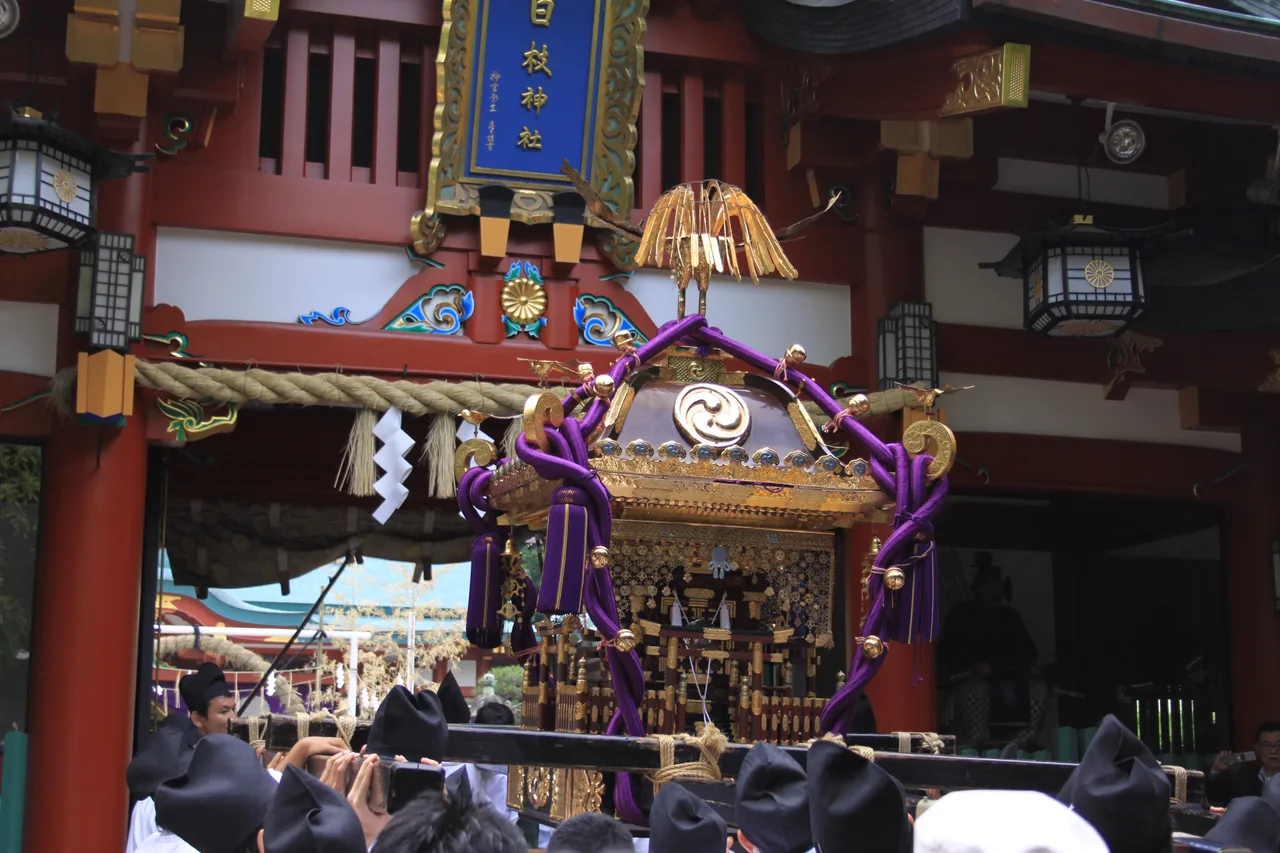
- Matsuri (祭り) — a shrine street festival. Teams shoulder a mikoshi (a portable shrine, often weighing a ton) through the streets, chanting “wasshoi!” as they go. Expect rows of yatai food stalls, day-into-evening energy, and a neighbourhood at full volume.
- Hanabi taikai (花火大会) — a fireworks show. An evening event on a riverbank, drawing enormous crowds. Increasingly the best spots are paid seating, while free viewing means far away and very early.
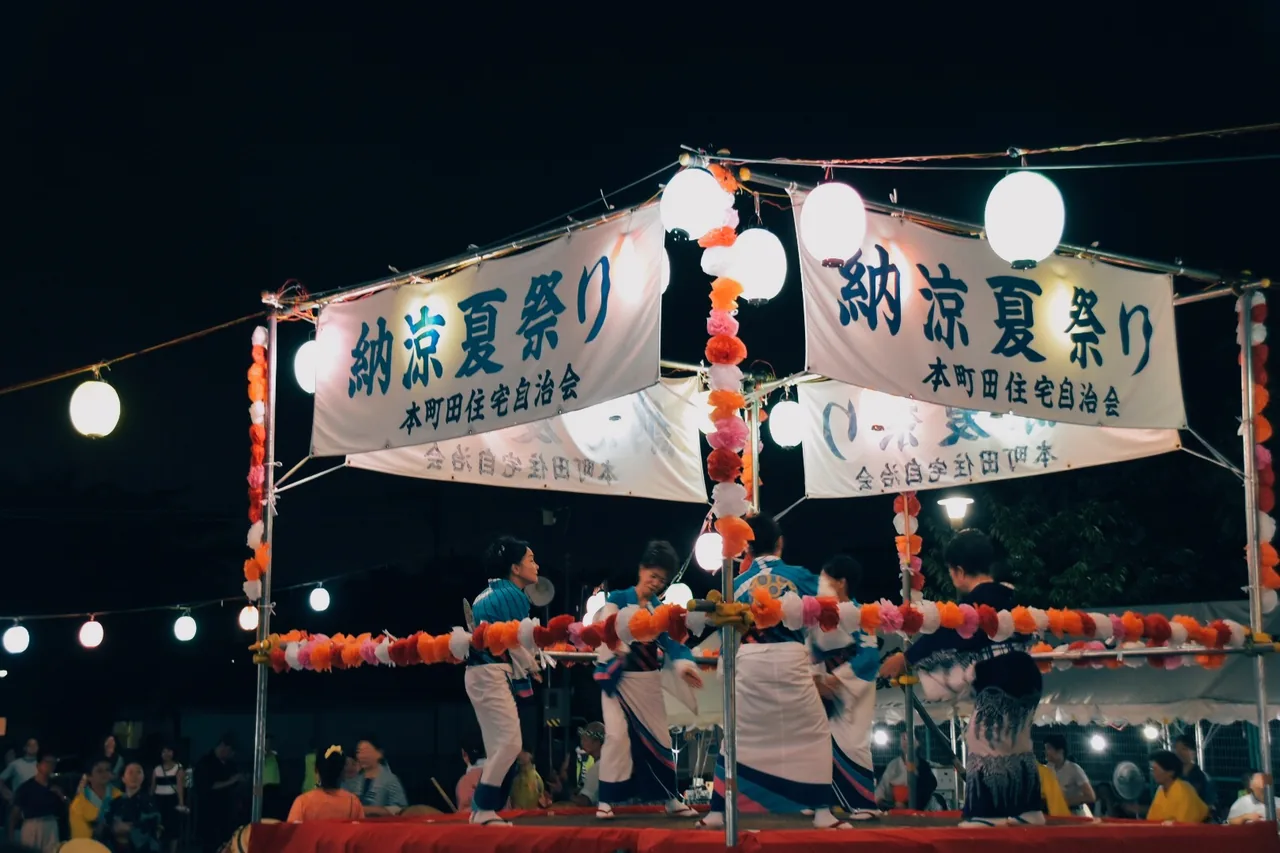
- Bon odori (盆踊り) — communal circle dancing. People dance in a ring around a raised yagura tower to taiko drums during Obon (~August 13–16), the Buddhist period when ancestors’ spirits are said to return. This is the single most participatory thing a visitor can do — no skill, no invitation needed (more in §9).
The roots are old: summer festivals (natsu-matsuri) grew out of Shinto rites to ward off summer epidemics and pests and to pray for a good harvest. A little of that meaning still hums under all the food and noise — a good moment to read up on how to behave respectfully at a Japanese shrine.
4. Toro Nagashi — floating lanterns on the Sumida
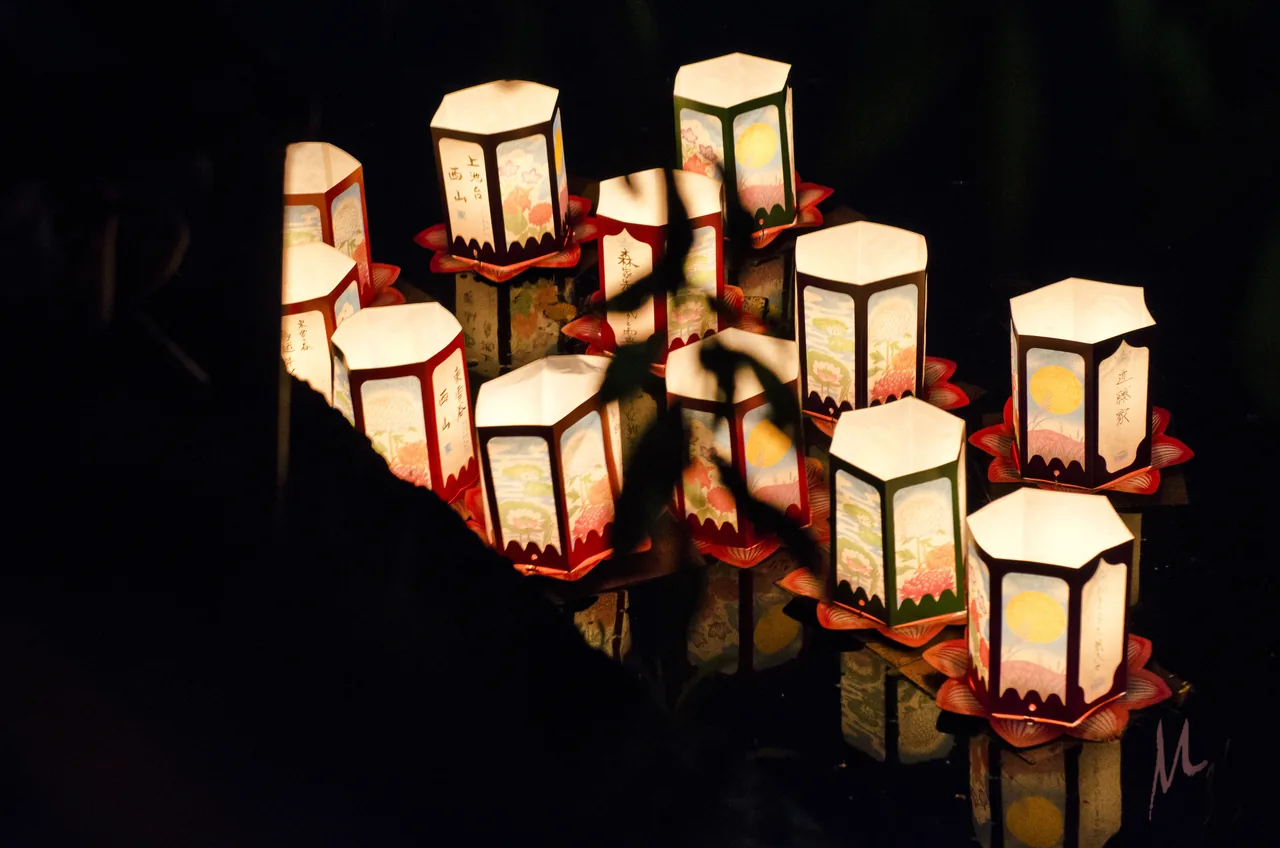
For the most peaceful, quietly beautiful evening of the Tokyo summer, look for a Toro Nagashi — a lantern-floating ceremony — on the Sumida River around Obon in mid-August. Thousands of candle-lit paper lanterns, each carrying a handwritten message, are set adrift on the dark water to guide ancestors’ spirits home. It’s the gentle, reflective flip side of all the drums and crowds.
The best known is the Asakusa Toro Nagashi, held on the east bank of the Sumida between the Azuma-bashi and Kototoi-bashi bridges, beside Senso-ji 浅草寺Map. The ceremony usually begins around 18:30, with roughly 2,500 lanterns released downriver. Watching is free; if you’d like, you can float your own lantern (about ¥1,700 in advance, ¥2,000 on the day). The nearest station is Asakusa.
5. Fukagawa Hachiman — the Water-Throwing Festival (2026 big year)
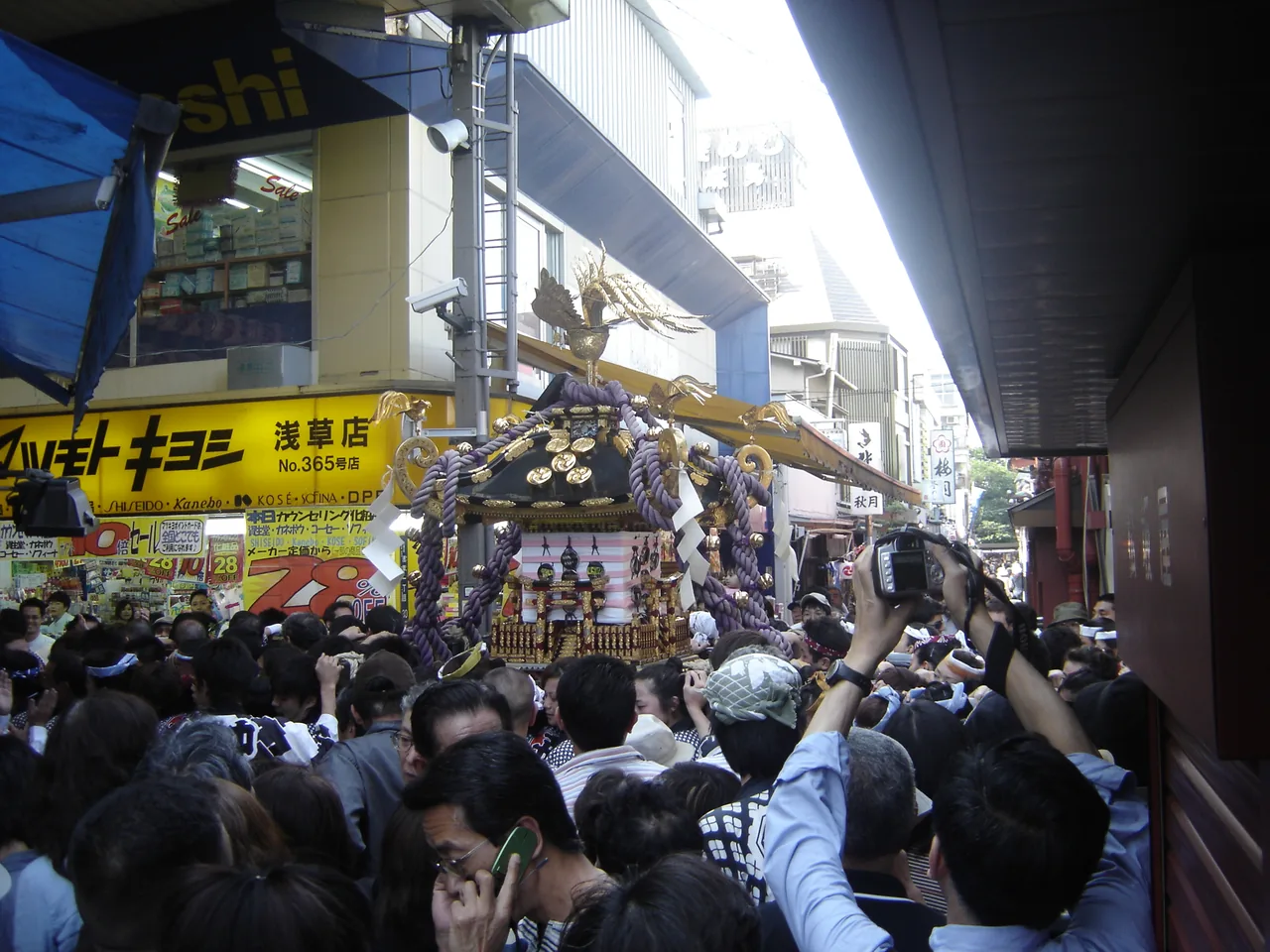
The Fukagawa Hachiman Matsuri, August 12–16, 2026, is the one where the crowd hurls water at the shrine-bearers — and you will get soaked. Spectators line the route with buckets and hoses and throw water over the 50-plus mikoshi and the people carrying them, a tradition of purification (and, frankly, relief from the August heat) that gives it the nickname the “Water-Throwing Festival” (水かけ祭り).
2026 is the rare triennial main year. That means the full 51-mikoshi united procession (神輿連合渡御) — the big one — on August 16, with a start around 7:30 in the morning. The procession centres on Tomioka Hachiman Shrine 富岡八幡宮Map in the old shitamachi district.
The nearest station is Monzen-Nakacho. Get there early on the 16th for a spot along the procession’s path.
6. Tokyo’s great dance festivals — Awa Odori & Yosakoi
Tokyo’s summer dance festivals are loud, electric, and a lot more fun to watch than you’d expect. Three are worth your evening.
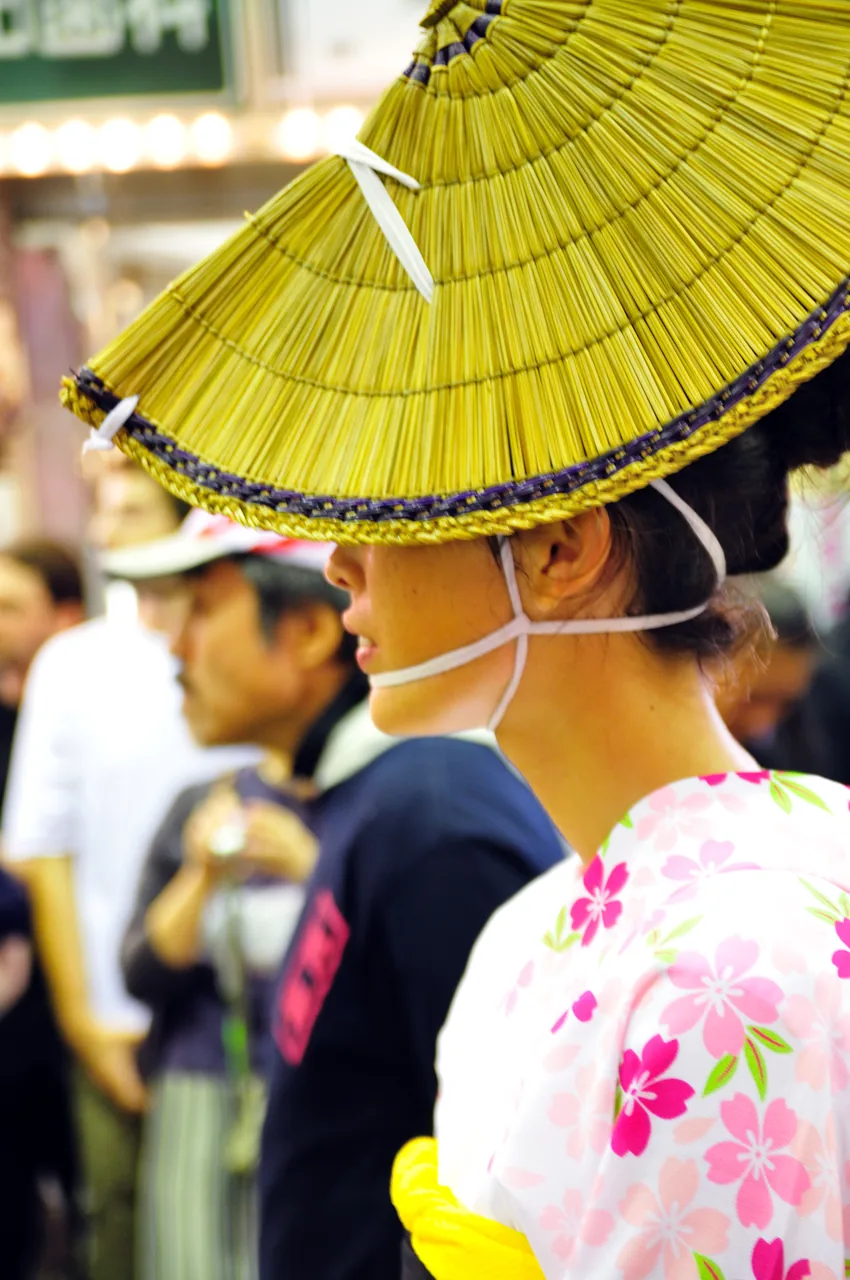
- Koenji Awa Odori (Aug 29–30, ~17:00–20:00) is the giant — about 10,000 dancers in some 150 ren troupes, drawing close to a million spectators over two days, the biggest Awa Odori outside Tokushima. The two-beat “yatta-yatta” chant and shamisen flood the narrow shitamachi streets around the station 高円寺駅Map. There are paid reserved seats for the prime stretches; for free roadside spots, arrive before 17:00.
- Kagurazaka Matsuri Awa Odori (Jul 24–25, 19:00–21:00) is the intimate alternative — dancers come down the cobbled, lantern-lit slope of this old geisha quarter 神楽坂Map. A hozuki (Chinese-lantern plant) market runs July 22–23. It’s free, and far easier to get close to the action.
- Super Yosakoi (Aug 29–30) takes over Harajuku, Omotesando and Yoyogi Park 代々木公園Map with 100-plus yosakoi teams — naruko wooden clappers, bold modern choreography, multiple street stages, all free.
If you only have one free evening, Kagurazaka is the gentle introduction and Koenji is the full spectacle.
7. Asakusa Samba Carnival
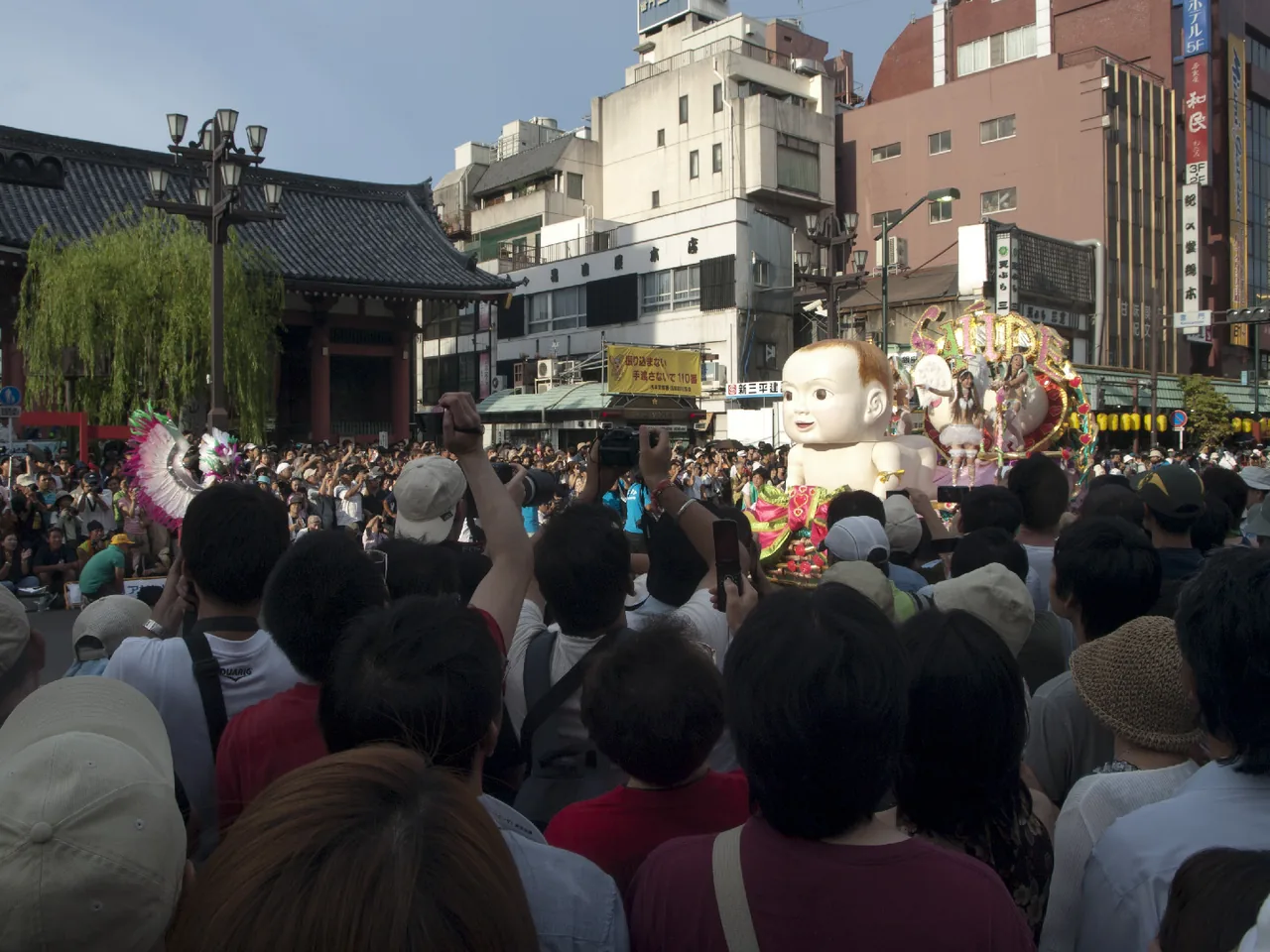
Yes, Tokyo has a Rio-style samba carnival — and it’s a genuine spectacle. Held around August 29 (from roughly 13:00), the Asakusa Samba Carnival is a competitive parade: escola teams in towering feathered costumes dance their way along Umamichi-dori and Kaminarimon-dori, passing the thousand-year-old Kaminarimon gate 雷門Map in front of around half a million spectators.
There’s a paid grandstand for guaranteed views, plus free standing room along the route — for the latter, arrive well before the start, as the good edges fill fast. The nearest station is Asakusa, and it pairs naturally with a daytime wander through the temple district.
8. Tanabata — the star festival in and near Tokyo
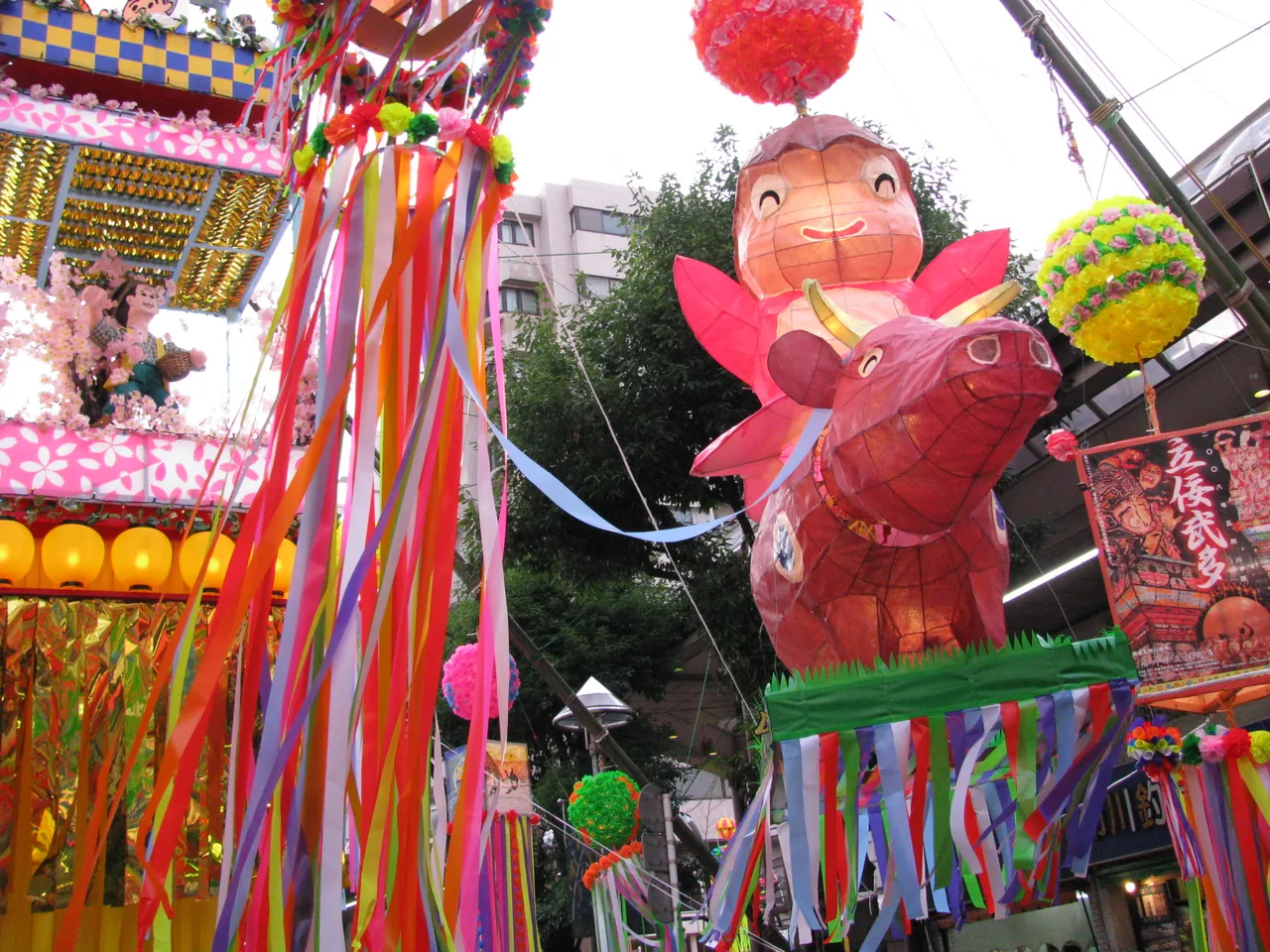
Tanabata is the July 7 “star festival,” and you’ll see its colourful streamers and wish-strips (tanzaku) all over the city. It’s low-key, free and easy to fold into a normal sightseeing day. Three are worth seeking out.
- Shitamachi Tanabata (Kappabashi, Jul 3–7; main days Jul 4–5, 10:00–19:00) drapes streamers over the famous kitchenware street between Ueno and Asakusa — local, relaxed and free. Nearest station: Tawaramachi.
- Asagaya Tanabata (Aug 7–11) is the quirky one: giant papier-mâché haribote figures — anime characters and mascots — hang the length of a covered shopping arcade by the station 阿佐ヶ谷駅Map. Because it’s under a roof, it’s your rain-proof backup if the weather turns.
- Hiratsuka Tanabata (Jul 3–5, 2026) is the big day trip — one of Japan’s three largest Tanabata festivals, with around 300 bamboo decorations, the main displays towering 5 metres or more 湘南ひらつかMap. It’s about an hour from central Tokyo; the venue is roughly two minutes from JR Hiratsuka’s north exit. If you’re plotting day trips out of Tokyo, this is an easy, spectacular one.
9. Bon Odori — join the dance
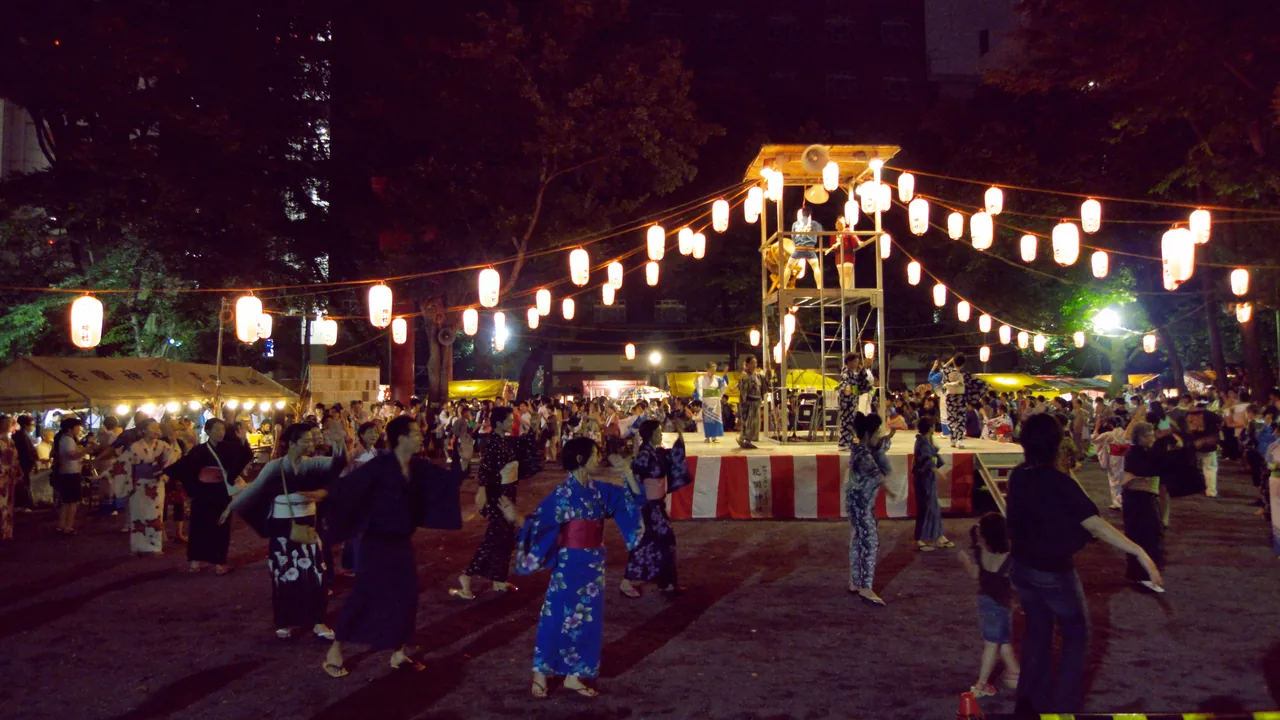
This is the one festival experience you can actually take part in — and you should. At a bon odori, anyone can step into the circle dancing around the yagura tower. There’s no skill required and no audition: watch one round to learn the simple, repeating moves, then fall in behind someone who looks like they know what they’re doing. Nobody minds a beginner; that’s the whole spirit of it.
Two especially beginner-friendly choices in central Tokyo:
- Tsukiji Hongwanji Noryo Bon Odori (Jul 29–Aug 1, 19:00–21:00) is known as “Tokyo’s most delicious bon odori” — the food stalls are run by celebrated Tsukiji restaurants, so the eating is as good as the dancing. You dance in front of the striking, Indian-influenced temple 築地本願寺Map. Take the Hibiya line to Tsukiji; exit 1 leads straight there.
- Roppongi Hills Bon Odori (late August, annual) bills itself as Tokyo’s largest urban bon odori — skyscraper backdrop, upmarket food stalls. It runs every year; check the exact 2026 dates closer to the time.
The context: Obon (~August 13–16) is when ancestors’ spirits are believed to return home, and the dancing — around a tower, to taiko drums — both welcomes and sends them off. Knowing that turns a fun evening into a meaningful one.
10. Early-July charm — markets & old Edo traditions
Before the fireworks ramp up, early July is full of small, atmospheric Edo-era markets — quieter, free, and very local. Three to seek out:
- Hozuki-ichi at Senso-ji (Jul 9–10) — the Shimanrokusennichi, or “46,000-day,” festival. By tradition, a single visit to the temple 浅草寺Map on July 10 earns the merit of 46,000 days of worship — roughly a lifetime. Stalls sell potted hozuki (Chinese-lantern plants) and delicate Edo glass wind chimes (furin). Station: Asakusa.
- Iriya Asagao Ichi (morning-glory market, Jul 6–8) is Japan’s largest morning-glory market — around 30 asagao vendors and some 100 food stalls in a dawn tradition near Kishimojin temple 入谷鬼子母神Map, long venerated for the protection of children. Go early; the flowers are at their best in the cool morning. Station: Iriya.
- Ueno Summer Festival (Jul 10–Aug 11) is a month-long program of events around the lotus-covered Shinobazu Pond in Ueno Park 上野恩賜公園Map — easy to drop into any time.
11. The headliner — Sumida River Fireworks
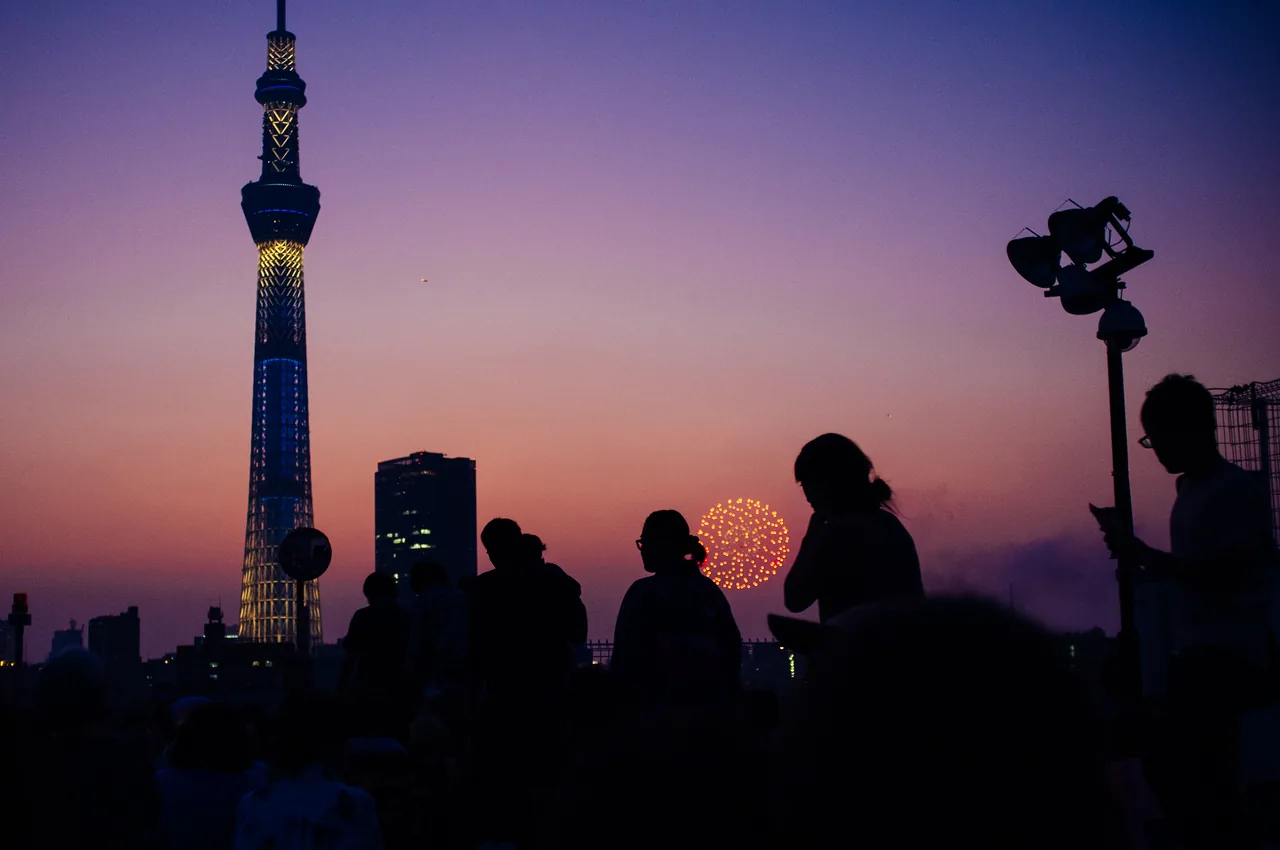
The Sumida River Fireworks on Saturday, July 25, 2026 is Tokyo’s biggest and most prestigious fireworks show — around 20,000 shells over the river near Asakusa, 19:00 to 20:30. It draws crowds north of 900,000, so go in with a plan, not just a hope.
It runs across two venues. The first (Sakurabashi to Kototoibashi, near Asakusa) 隅田公園Map features a competition between Japan’s top pyrotechnicians — the most technically dazzling stretch. The second (Komagatabashi to Umayabashi, toward Kuramae) leans into character-shaped shells, which kids love.
Seats: paid riverside seats (市民協賛席) went on sale May 10 — roughly ¥8,000 for a single, group sheets from about ¥25,000 — and they’re usually long gone by now. Free viewing exists but is jammed and distant. There’s also a limited Tokyo Skytree special-viewing option (just 634 places, by lottery, and it sells out instantly). Stations: Asakusa or Kuramae.
If the riverbank crush isn’t for you, watching from a height is a comfortable alternative — Tokyo Skytree’s deck looks straight down the river.
12. More Tokyo fireworks to plan around
Sumida isn’t the only game in town — several big shows are packed into late July and the first days of August. Here’s how they stack up.
| Date (2026) | Event | Shells / scale | Area / Station | Paid seats? |
|---|---|---|---|---|
| Jul 28 | Katsushika Noryo | ~20,000, close-range, + drone show (60th edition) | Shibamata | Yes — sales from Jun 22 |
| Aug 1 | Edogawa-ku (+ Ichikawa across the river) | ~14,000 combined, ~1.4M crowd; 1,000 shells in the first 5 seconds | Shinozaki | Yes — ¥2,000–26,000 |
| Aug 1 | Itabashi (+ Toda) | Dual-bank show | Itabashi | Yes — former free zones now ~¥2,000 |
| Aug 8 | Jingu Gaien | ~12,000 + live concerts | Gaien | Ticket-only — perimeter viewing banned |
The Jingu Gaien show 神宮外苑Map is the odd one out: there’s no free viewing at all, so you need a ticket to see it properly. A scheduling note for 2026: the Adachi Fireworks moved to late May (already past), and a few others shifted into autumn — so don’t rely on last year’s calendar.
13. Fireworks day trips around Kanto
Some of the most distinctive fireworks aren’t in Tokyo at all — they’re an easy train ride into Kanagawa or Ibaraki.
- Kamakura Fireworks (Fri Jul 10, 19:20–20:10) — about 2,500 shells, including Kamakura’s signature underwater fireworks (水中花火) launched from boats just off Yuigahama and Zaimokuza beaches 由比ヶ浜Map, so they bloom in half-circles over the sea. Be warned: the Enoden trains back are extremely packed.
- Koga Fireworks (Ibaraki, Aug 1) goes big with two giant sanjakudama (three-foot) shells and oversized star-mines — a more rural, less crowded option on the busy Aug 1 night.
- Yokohama “Night Flowers” are short, roughly five-minute bursts on scattered dates (for example Jul 4, Jul 18, Aug 9) over the Minato Mirai bay — free to watch and an easy add-on, though not a destination in themselves.
14. How to actually see the fireworks — free vs paid (the 2026 reality)
The honest truth for 2026: the good spots at the big Tokyo fireworks are increasingly ticketed (有料席), so you need to decide early which way you’re going.
Paid seats. Each show sells them through its own official site, usually three to four months ahead, and they go fast with no refunds. Reckon on roughly ¥7,000–8,000 for a single chair and up to about ¥25,000 for a group sheet. Jingu Gaien is ticket-only — there’s no free alternative there.
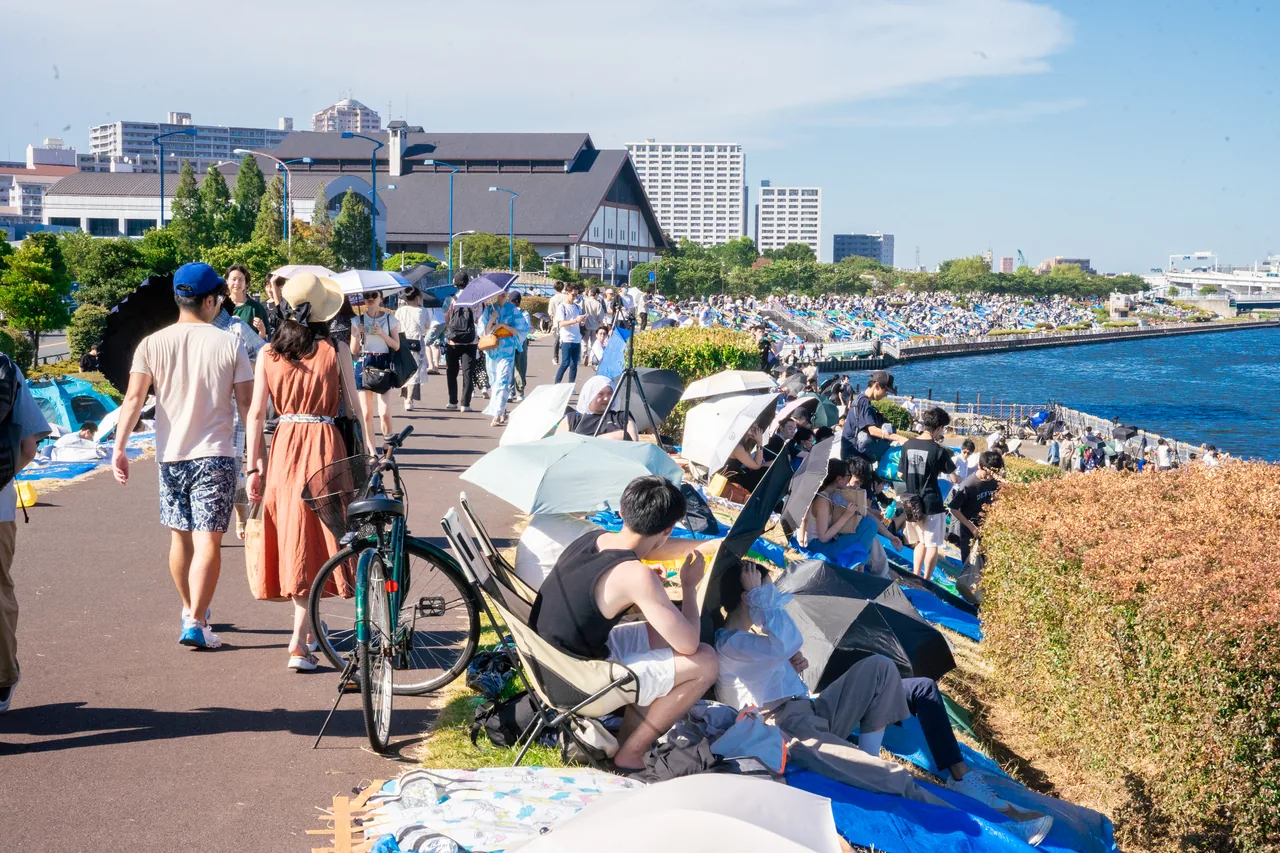
Free viewing. Still possible at Sumida, Katsushika, Edogawa and Itabashi, but it means going far and early — arrive two to three hours ahead (Sumida Park itself fills up around 16:00–16:30). Quieter free spots for Sumida include the Umaya Bridge area on the Kuramae side and riverside parks a little upstream.
15. What to wear — the yukata
A festival or fireworks night is the ideal place to wear a yukata — and visitors are genuinely welcome to, as long as it’s worn respectfully. The yukata is a light cotton summer kimono, the traditional matsuri-and-hanabi garment, and Asakusa is Tokyo’s rental hub, steps from the festival action.
A typical women’s plan runs about ¥3,300–6,000 and includes the dressing service and a hair set, taking roughly 40–60 minutes; it comes with geta sandals, the obi sash, a bag, and often free luggage storage. There are men’s plans and couples’ sets too (around ¥10,000–12,000 per pair).
16. Festival food — the yatai you have to try
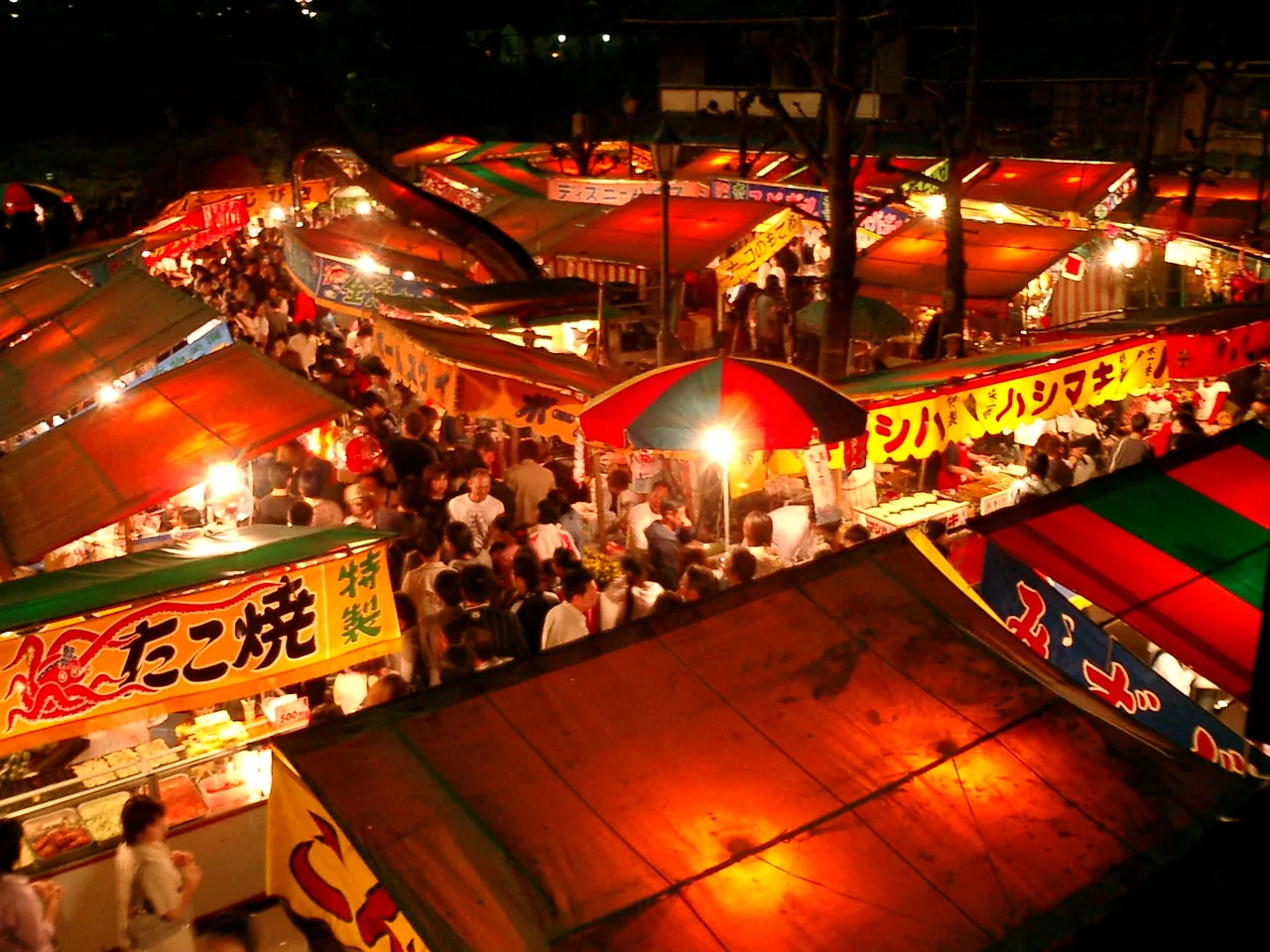
Half the joy of a matsuri is grazing the yatai — the food stalls — and most of it costs only a few hundred yen. Here’s the classic line-up.
| Food | What it is | ~Price (¥) |
|---|---|---|
| Yakisoba | Sauce-fried noodles | 500–700 |
| Takoyaki | Octopus dough balls | 400–600 |
| Okonomiyaki | Savoury cabbage pancake | 400–600 |
| Yakitori | Grilled chicken skewers | 200–400 |
| Ikayaki | Grilled whole squid | 400–500 |
| Kakigori | Syrup-drenched shaved ice | 300–500 |
| Choco-banana | Chocolate-dipped banana | 300–500 |
| Ringo-ame | Candied apple | 300–500 |
| Kingyo-sukui | Goldfish-scooping game | 300–500 |
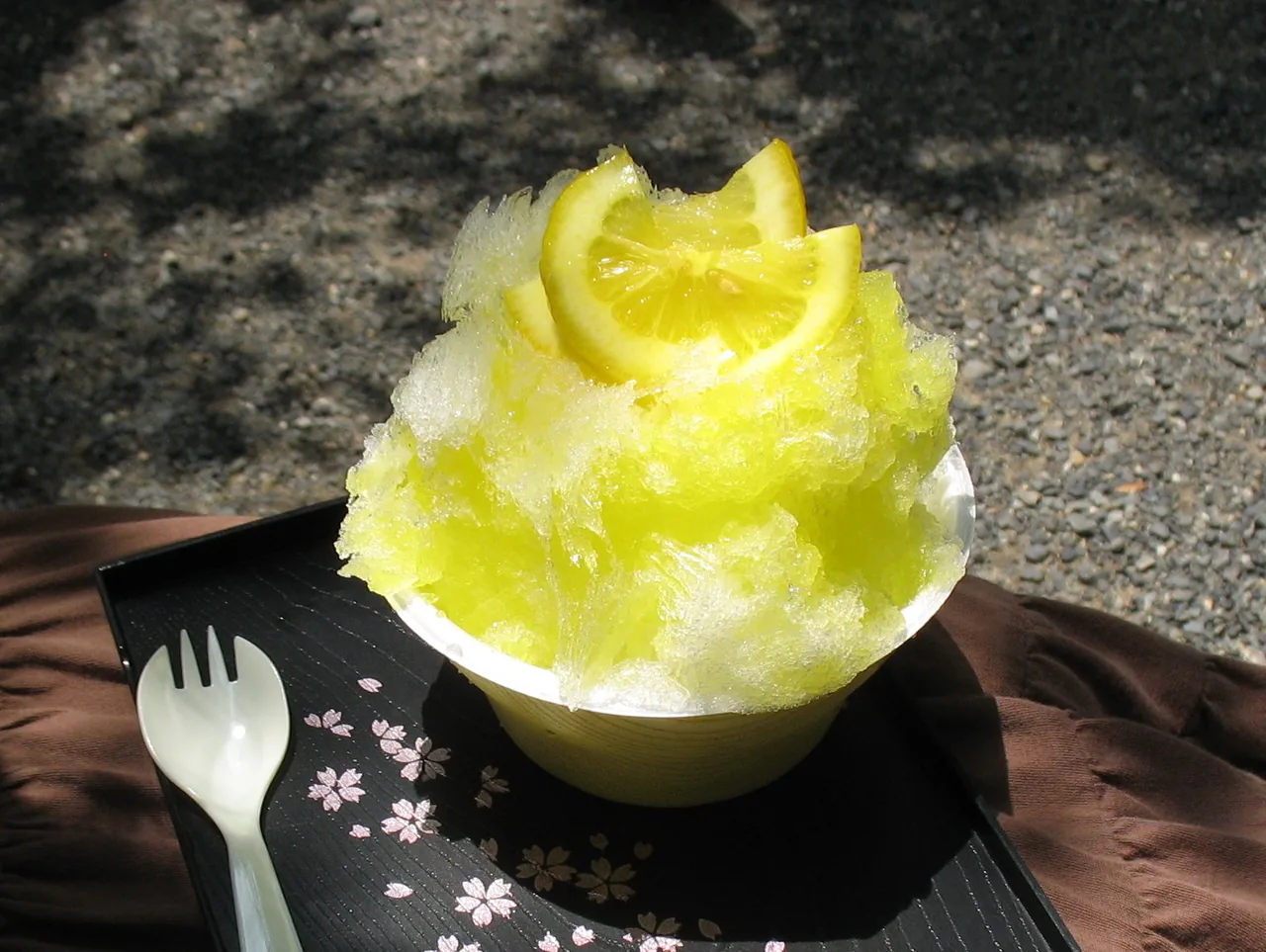
17. Surviving the heat & crowds — the practical core
The festivals are the fun part; the heat and the crowds are the part that catches people out. Plan for both and you’ll actually enjoy yourself.
The heat. Tokyo in July and August sits at 33–35°C and is brutally humid, so it can feel like 38–42°C — and packed crowds make it worse. Heatstroke (nechusho) is a real risk, not a scare story.
- Drink around 500 ml of water per hour, and remember plain water isn’t enough when you’re sweating hard — add OS-1 or salt candy for electrolytes.
- Carry the local kit: a cooling neck patch, body wipes, and an uchiwa or folding fan (or a mini electric fan). Duck into a convenience store to cool down — it’s free, air-conditioned shelter.
- Know the emergency line: dial 119 for an ambulance — the word is “kyukyusha” — and you can say “nechusho” for heatstroke.
For the full month-by-month weather picture, see our guides to Japan in July and Japan in August.
The crowds and trains. After a fireworks finale, stations are crushed and take 45–60 minutes to clear. The fix: walk to a station one stop away (for Sumida, head to Kuramae or Tawaramachi rather than Asakusa), wait 30–60 minutes, and top up your IC card in advance — see our Suica & IC card guide. There are no reserved return trains, and you should not drive.
Etiquette. Take all your trash home — bins are scarce. If you want a free sheet spot, claim it by around 15:00. Don’t block mikoshi routes, follow the police one-way crowd controls, and keep it quiet and respectful at shrines.
18. See it from above — decks & cruises
Don’t fancy the riverbank crush? Watch Tokyo’s skyline — and the fireworks — from a high deck or a boat instead. It costs more, but you trade the heat and the squeeze for a seat, a drink and a clear view.
Observation decks. Tokyo Skytree rises right beside the Sumida and looks straight down the river — its decks are the premium way to take in the show without the ground-level chaos.
Over on the west side, Shibuya Sky‘s open-air rooftop gives you a 360° sweep of the city at golden hour and after dark — a brilliant Tokyo experience in its own right, festival or not.
River and bay cruises. The most atmospheric option of all is a yakatabune — a traditional roofed pleasure boat — gliding along the Sumida or out into Tokyo Bay with a meal and drinks over a relaxed two to two-and-a-half hours. These book up well ahead in summer, so reserve early.
However you watch it, a Tokyo summer night is one to plan properly. For the rest of the trip — where to stay, getting in from Narita or Haneda, and what else to see — lean on our complete Tokyo guide. And if you’re travelling with kids, a cooler day at Tokyo Disneyland or DisneySea pairs nicely with a festival evening.