
The Edo-Tokyo Museum Has Reopened After 4 Years: What’s New at Ryogoku
Tokyo’s most immersive history museum walked you across a full-scale Nihonbashi bridge and into old Edo for thirty years. After a four-year renovation it’s open again from March 2026 — with new exhibits you can step inside. Here’s what changed, what’s still wonderful, and how to make a half-day of it in sumo country.
| What it is & the news | The Edo-Tokyo Museum (“Edohaku”) in Ryogoku tells the 400-year story of the city turning from Edo into Tokyo. It closed in spring 2022 for its first big renovation in 30 years and reopened on March 31, 2026. |
|---|---|
| What’s new | a full-size Hattori clock tower in the Tokyo Zone, a Nakamura-za kabuki facade you can now walk inside under a sky-projection screen, an Edo row-house room you can step into, a redesigned 3rd-floor plaza, and a free 13-language audio guide on your own phone. |
| What’s unchanged (and beloved) | you still enter across a full-scale wooden Nihonbashi bridge into the Edo and Tokyo zones, with the famous hyper-detailed dioramas and hands-on exhibits intact. |
| Admission | ¥800 for a general adult for the permanent exhibition; ¥400 for seniors 65+, ¥300 high-school, junior-high and younger free. Special exhibitions are a separate ticket. |
| Hours & time | open 9:30–17:30 (Saturdays to 19:30), closed Mondays; plan on 2–3 hours. Photos allowed (no tripods), all indoors — great on a hot or rainy day and great for kids. |
| Access & pairing | a 1–3 minute walk from Ryogoku Station, right beside the Ryogoku Kokugikan sumo arena — pair it with sumo, chanko nabe and the Sumida Hokusai Museum for a full shitamachi day. |
1. Reopened after four years: what the Edo-Tokyo Museum is, and why now
2. Quick facts at a glance
3. What’s new after the renovation
4. Crossing Nihonbashi: how the exhibition is laid out
5. The Edo Zone: life under the shogun
6. The Tokyo Zone: Meiji to modern
7. Don’t-miss highlights (and what kids love)
8. Tickets & admission, made simple
9. Special exhibitions in 2026
10. Hours, closed days & how long to spend
11. How to get there
12. Ryogoku is the home of sumo — pair it
13. More to see nearby
14. Where to stay & practical tips
15. Is it worth it? Who’ll love it
1. Reopened after four years: what the Edo-Tokyo Museum is, and why now
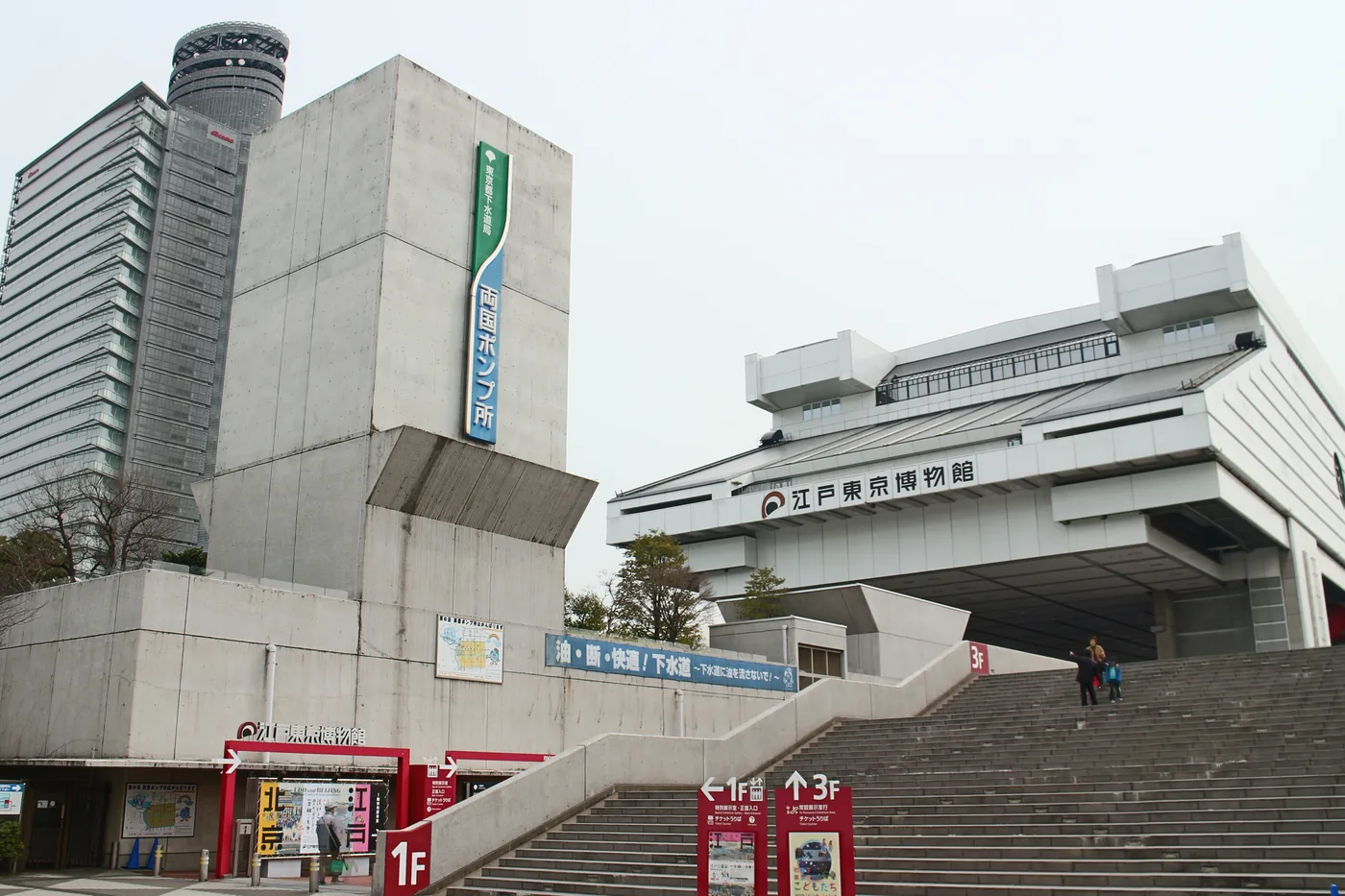
After being dark for about four years, the Edo-Tokyo Museum Map reopened on March 31, 2026. It had closed in spring 2022 for its first major overhaul in roughly three decades, so this spring the city got it back freshly renewed — meaning if you’re in Tokyo right now, the timing is excellent.
Locals call it “Edohaku.” It’s a history museum about one thing done extraordinarily well: how a marshy castle town that Tokugawa Ieyasu founded in 1603 grew, burned, rebuilt and reinvented itself over 400 years into the modern megacity of Tokyo. You don’t read that story off wall panels here so much as walk through it — over a full-scale bridge, past a life-size kabuki theater, around scale models packed with thousands of tiny figures.
The building alone is worth the trip. Opened in 1993 and designed by architect Kiyonori Kikutake, it’s a colossal dark mass hoisted onto four enormous legs, its shape echoing an old raised-floor rice storehouse. At around 62 m it’s said to match the height of the lost Edo Castle keep, and you can spot it from streets away.
Is it worth your time? Honestly, yes — for most visitors this is one of the best-value, most engaging museums in Tokyo, and the renovation only sharpened it. If you like history, architecture, or you simply want context for everything else you’ll see in the city, it’s an easy recommendation. If you have only a few hours and zero interest in the past, it won’t convert you. New to the country? It pairs well with our complete Japan travel guide for the bigger picture.
2. Quick facts at a glance
| Location | Ryogoku, Sumida Ward, eastern Tokyo — beside the Kokugikan sumo arena |
|---|---|
| Nearest station | Ryogoku (JR Sobu Line, west exit ~3 min; Toei Oedo Line ~1 min) |
| Reopened | March 31, 2026, after a ~4-year renovation |
| Admission (permanent) | ¥800 general adult (seniors 65+ ¥400; high school ¥300; junior-high & younger free) |
| Hours | 9:30–17:30 (Saturdays to 19:30); last entry 30 min before closing |
| Closed | Mondays (or the next weekday if Monday is a holiday) and year-end / New Year |
| Time needed | About 2–3 hours (up to 4 if you read everything) |
| Photos | Allowed in the permanent exhibition (no tripods or selfie sticks) |
| Good for | Families with kids, history & architecture lovers, hot or rainy days (all indoors) |
3. What’s new after the renovation
If the renewal has one headline, it’s “more immersive.” The building and facilities were upgraded, the exhibition spaces improved, and several exhibits went from look-at to walk-into. Here’s what actually changed.
| Hattori clock tower | A new full-size reproduction of the Hattori Watch Shop clock tower — the famous symbol of modernizing Ginza (today’s Wako/Seiko building) — added in the Tokyo Zone. |
|---|---|
| Nakamura-za | You can now walk inside the kabuki theater facade, with a new wide screen above projecting the sky of Edo and modern Tokyo. |
| Munewari-nagaya | The common people’s row house was view-only before; now you can step into one of the rooms and stand inside an Edo commoner’s home. |
| 3rd-floor plaza | The entrance plaza was redesigned, with the space design supervised by architect Shohei Shigematsu (a partner at OMA). |
| Audio guide | Free, in 13 languages, delivered by QR code straight to your own smartphone. |
So if you visited years ago and adored it, you’ll recognize the place — just with new things to climb into and a tidier, more interactive presentation.
4. Crossing Nihonbashi: how the exhibition is laid out
You begin on the 6th floor, and the first thing you do is cross a bridge. The museum reproduces the north half of Nihonbashi at full scale — about 14 of the original 28 ken, roughly 25 m of zelkova and cypress timber. In old Edo this was “kilometre zero,” the point every road in the country was measured from, and crossing it here is the deliberate moment you step out of the present and into the past. It’s the museum’s signature first impression, and it earns it.
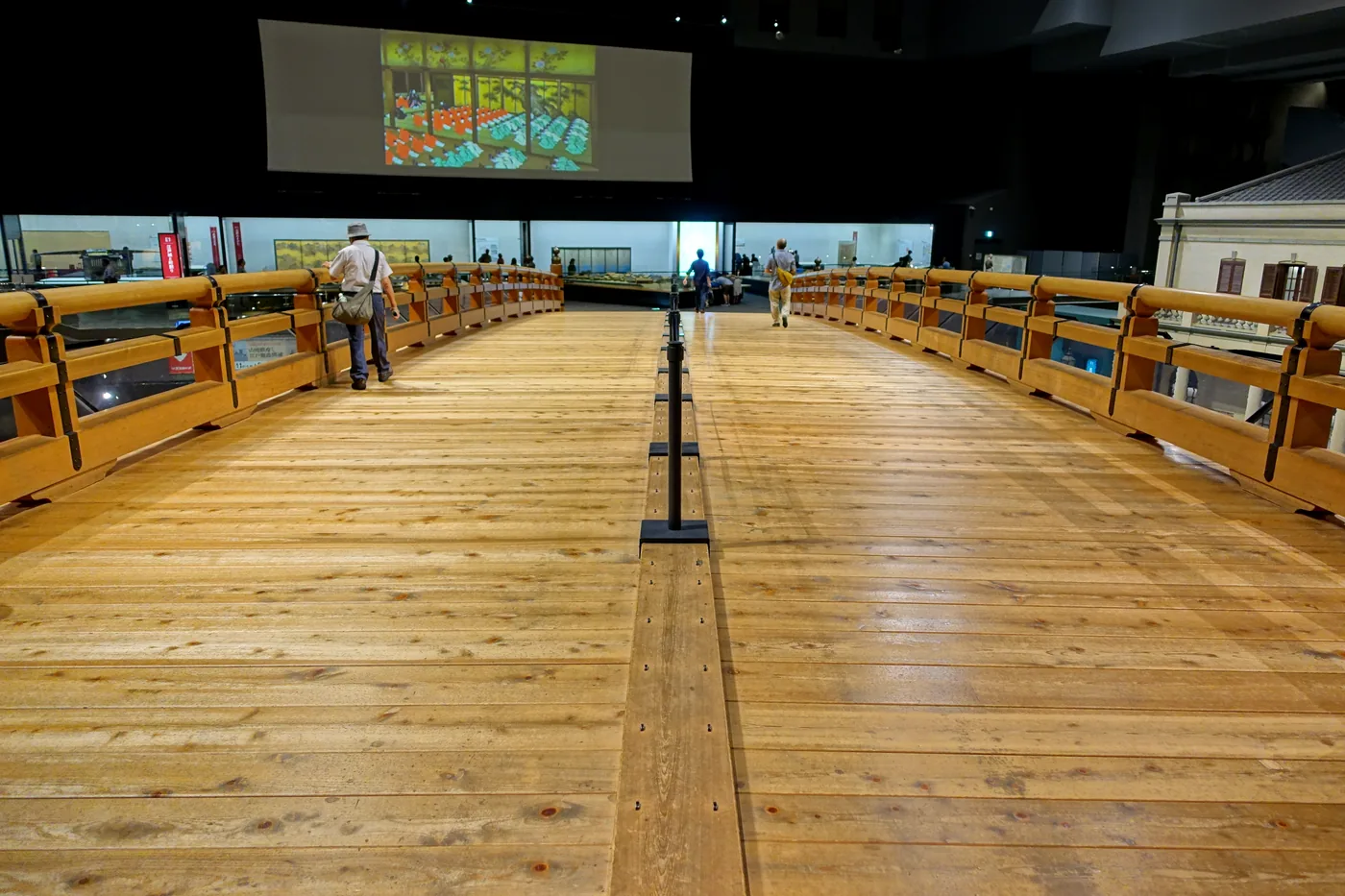
From the far side of the bridge the great hall opens up and splits in two. To one side is the Edo Zone (the Nakamura-za side), to the other the Tokyo Zone (the clock-tower side), and the whole thing spreads across the 5th and 6th floors around a tall open atrium you can look down into. The layout makes the central idea physical: two cities, one place, the bridge between them.
Take the audio guide before you start — it’s free, runs in 13 languages, and works on your own phone via QR code, so you can wander at your own pace without a clunky rented handset.
5. The Edo Zone: life under the shogun
The Edo Zone covers roughly the 1600s to the 1860s — the centuries when this was the shogun’s capital. It’s the more atmospheric half, densely built up with the textures of daily life rather than glass cases.
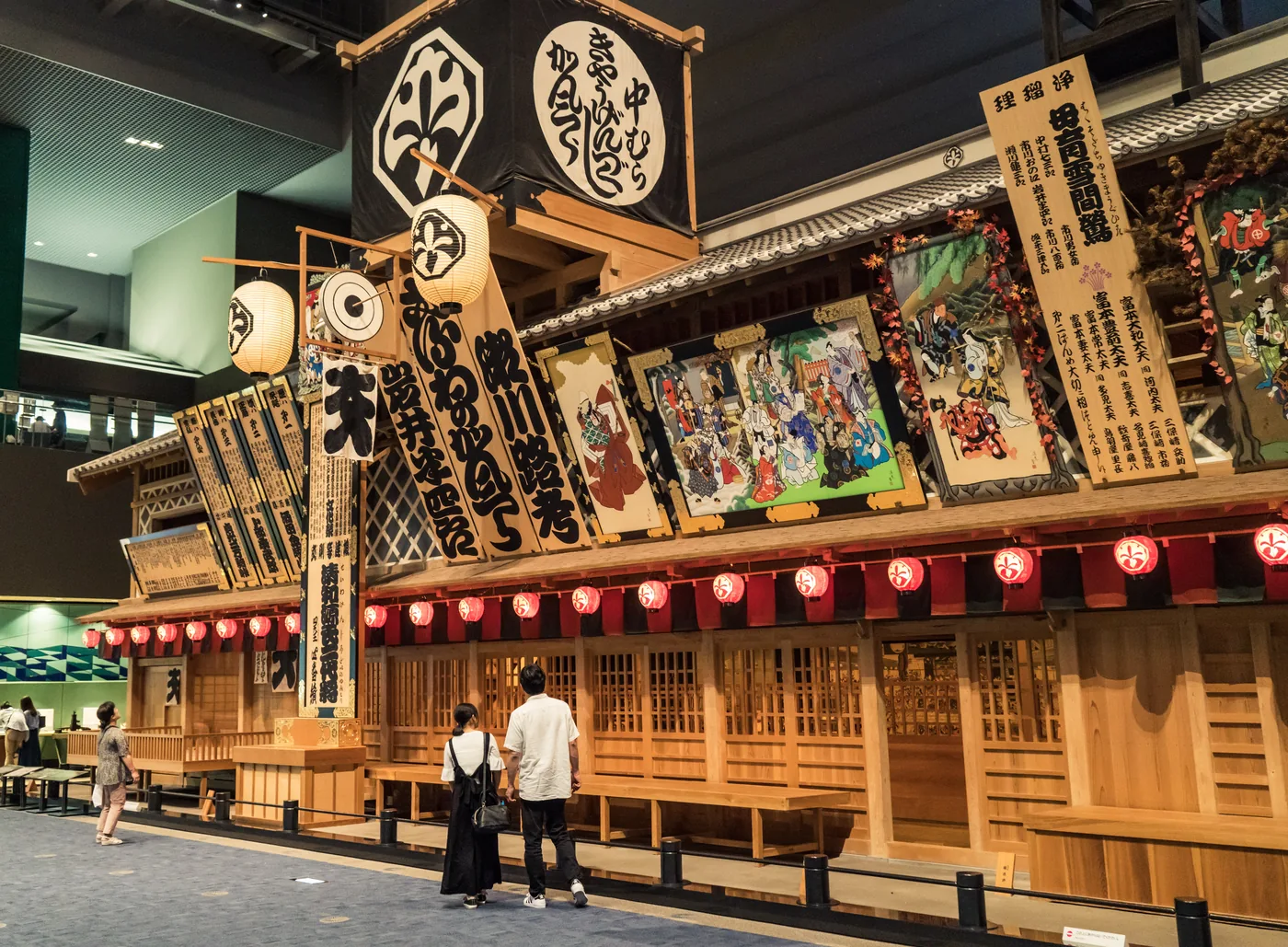
The anchor is the full-size facade of the Nakamura-za, one of Edo’s great kabuki theaters, rebuilt here in all its painted, banner-strung glory. Since the renovation you can walk inside it, with a wide screen overhead projecting the shifting sky of Edo and modern Tokyo. Around it the zone recreates the townspeople’s quarters and the grand residences of the daimyo (the feudal lords), so you move from high society to the street in a few steps.
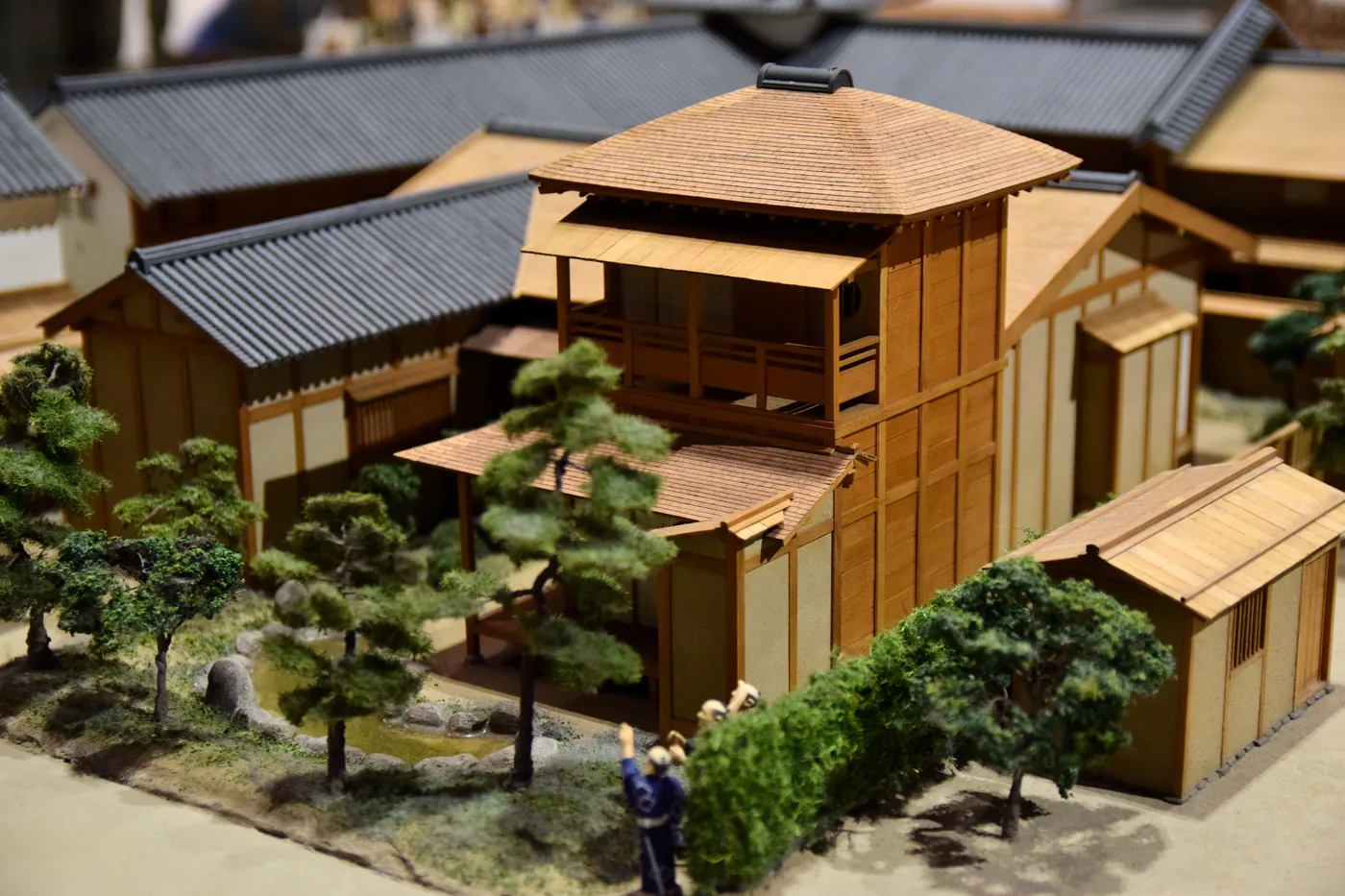
Don’t skip the munewari-nagaya, the cramped row house where ordinary Edoites actually lived. It used to be view-only; now you can step into one of the tiny rooms and feel just how compact a commoner’s home was. And give time to the superb scale models of Edo Castle and the city’s layout — vast, precise, and crawling with thousands of miniature figures going about their day.
6. The Tokyo Zone: Meiji to modern
Cross back over the bridge and the Tokyo Zone picks up the story in 1868, when Edo became Tokyo and Japan threw itself into modernization. This half is the city’s whole turbulent modern arc, told building by building and era by era.
It opens in the Meiji age of “civilization and enlightenment” — the gas-lit, red-brick Ginza, Western-style architecture, the Rokumeikan era of dance halls and foreign etiquette, and the new full-size Hattori clock tower standing in for the moment Tokyo started keeping Western time. From there it rolls into the bustle of Taisho and early-Showa city life: cafes, cinemas, trams, the rise of a modern middle class.
Then the story darkens, honestly and well. The 1923 Great Kanto Earthquake, which flattened much of the city; the firebombing and hardship of the Second World War; and finally the postwar recovery and the high-growth “economic miracle” that rebuilt Tokyo into the metropolis outside the windows. By the time you reach the end you’ve walked the city from castle town to skyline.
7. Don’t-miss highlights (and what kids love)
Two things turn this from a good museum into a memorable one: the dioramas, and the fact that you’re allowed to touch a surprising amount.
The dioramas
Hyper-detailed scale models where tiny hand-painted figures act out Edo life — fish markets, festivals, a fire breaking out, a procession winding through. People lose track of time finding little stories tucked into the crowds.
Hands-on exhibits
Try to lift a replica palanquin (kago), balance a fire-brigade standard (matoi), and handle old tools and toys. Genuinely fun for kids, and quietly addictive for adults too.
The scale models
The big Edo Castle and city models reward slow looking — the precision and the sheer population of figures keep rewarding a second and third glance.
This is the takeaway for families especially: it isn’t a dusty artifact-case museum. It’s an immersive walk through two cities at 1:1 and in miniature, heavy on atmosphere and “wow” reconstructions, with enough to do that restless kids stay engaged.
8. Tickets & admission, made simple
The permanent exhibition is the main event and it’s inexpensive. One important note up top: the correct current adult price is ¥800. You may still see ¥600 quoted online — that was the old pre-2022 price and it’s out of date.
| Ticket (permanent exhibition) | Price |
|---|---|
| General adult | ¥800 |
| University & vocational-school students | ¥480 |
| Seniors 65+ | ¥400 |
| High-school students | ¥300 |
| Junior-high students & younger | Free |
| Groups of 20+ (general) | ¥640 |
Buy at the counter on the day. A card works fine for tickets, but it’s worth carrying a little cash for smaller spots and shops in the area — our notes on paying with cash and cards in Japan cover where you’ll still want coins. And remember the special exhibitions are a separate ticket, covered next.
9. Special exhibitions in 2026
Alongside the permanent exhibition, the museum runs rotating special exhibitions on a separate ticket (sometimes available as a combo). The reopening year is a busy one, with around ten shows scheduled across the fiscal year.
Running right now is “Western-Style Architecture: Meiji’s Dreams and Challenges” (June 23 – Aug 23, 2026) — a fitting companion to the Tokyo Zone’s modernization story. Special-exhibition admission is ¥1,600 general (¥1,400 in advance), ¥1,280 university (¥1,080 advance), ¥800 for 65+ (¥600 advance), and free for high-school students and younger.
| 2026 special exhibition | Dates |
|---|---|
| In Praise of Great Edo (Dai-Edo Raisan) | Apr 25 – May 24 (ended) |
| Western-Style Architecture: Meiji’s Dreams and Challenges | Jun 23 – Aug 23, 2026 (now) |
| Toyotomi Brothers! (NHK taiga-drama tie-in) | Sep 15 – Nov 8, 2026 |
| Maruyama Okyo | Nov 28, 2026 – Jan 24, 2027 |
These rotate, so check what’s on for the month you’re visiting — and decide before you arrive whether the current show is worth the extra ticket on top of the permanent exhibition.
10. Hours, closed days & how long to spend
| Hours | 9:30–17:30; Saturdays 9:30–19:30 (last admission 30 min before closing) |
|---|---|
| Closed | Every Monday (next weekday if Monday is a public holiday); year-end / New Year period |
| Time needed | ~1.5–2 h for a quick pass; up to ~4 h reading everything; plan 2–3 h |
| Photography | Allowed in the permanent exhibition; no tripods or selfie sticks (special exhibitions usually no photos) |
| Audio guide | Free, 13 languages, by QR code on your own phone |
For most people 2–3 hours hits the sweet spot — enough to cross the bridge, do both zones properly, and linger over a few dioramas without museum fatigue. The museum is large and mostly step-free with elevators, so it’s comfortable for strollers and limited mobility.
11. How to get there
It’s genuinely hard to miss, because it sits right next to the giant sumo arena. Two stations serve it, both called Ryogoku.
| JR Sobu Line | Ryogoku Station Map, west exit → about a 3-minute walk |
|---|---|
| Toei Oedo Subway | Ryogoku Station; the exit is literally named “Edo-Tokyo Museum-mae,” exits A3/A4 → about a 1-minute walk |
From the airports, take your usual route into central Tokyo first, then transfer to the JR Sobu Line or the Toei Oedo Line for Ryogoku — our rundown on getting from Narita or Haneda into the city covers the connections. For the local hops, just tap in with an IC card; if you haven’t sorted one yet, here’s how Suica and other IC cards work.
12. Ryogoku is the home of sumo — pair it
This is the move that turns a museum visit into a great half-day: Ryogoku is Tokyo’s sumo town. The Ryogoku Kokugikan Map, Japan’s national Grand Sumo Hall, is about a two-minute walk away, and the whole neighborhood is steeped in the sport — stables (heya), wrestler-run restaurants, sumo touches everywhere.
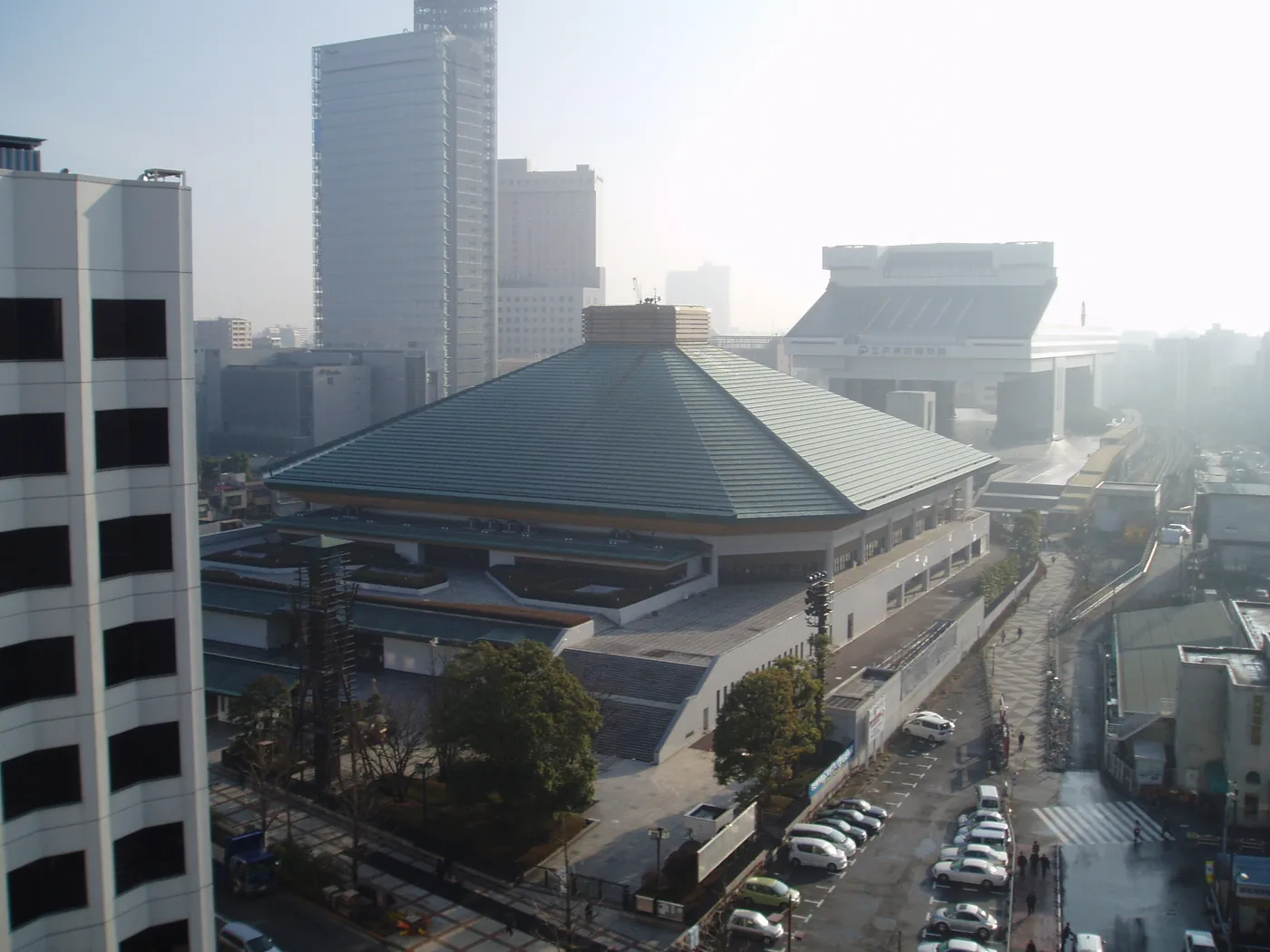
Tokyo hosts three of the six annual Grand Sumo tournaments (basho), each running 15 days, in January, May and September. If your trip overlaps one, watching a day of sumo here is unforgettable — and a quick read of Japanese manners and etiquette will help you fit right in at the arena. Outside tournament season, the Kokugikan’s ground-floor Sumo Museum is free (open on weekdays when no tournament is on). For lunch, hunt down chanko nabe, the hearty hot pot wrestlers eat to bulk up — several local restaurants serve it, some run by retired wrestlers. And a short walk away is Ekoin Temple Map, the birthplace of organized Edo-era sumo and home to the grave of the legendary thief Nezumi Kozo, whose tombstone visitors chip at for luck.
If your dates land during a basho, or you’d like a guided sumo experience such as a morning-practice visit at a stable, it’s worth checking availability early — tournament days sell out fast.
13. More to see nearby
The museum slots neatly into a wider shitamachi (downtown) day. A few easy additions, all close by:
Sumida Hokusai Museum
The Sumida Hokusai Museum Map honors ukiyo-e master Katsushika Hokusai (“The Great Wave”), born and raised in Sumida. The mirror-metal building is a striking Kazuyo Sejima (SANAA) design — about 5 min from the Oedo station, 9 from JR.
Kyu-Yasuda Garden
Kyu-Yasuda Garden Map is a free, quiet traditional garden (originally a tidal one) right by the station — a calm breather between stops.
Edo NOREN
A sumo-themed dining hall inside the old Ryogoku Station building, built around a real-size dohyo (sumo ring) and lined with Edo-style restaurants — handy for a meal.
Skytree & Asakusa
Tokyo Skytree Map and Asakusa are only one or two stops away, easy to fold into the same downtown loop.
14. Where to stay & practical tips
Ryogoku makes a calm, well-connected base for east Tokyo — quiet at night, on the Sobu and Oedo lines, and a short hop from Asakusa, Skytree and central Tokyo. Room prices swing a lot by date (especially around sumo tournaments), so it’s worth checking your dates before you book.
A few practical notes: carry a bit of cash alongside your cards for smaller restaurants and shops in the neighborhood. The whole museum is indoors, which makes it one of the easiest calls in the city on a hot or wet day. And it’s genuinely family-friendly — junior-high and younger get in free, and the hands-on exhibits keep kids busy. If you’re building a Tokyo itinerary around children, two natural companions are Tokyo Disneyland and DisneySea and the new PokéPark in Kanto.
15. Is it worth it? Who’ll love it
For the price and the experience, this is one of Tokyo’s best museums — and the renovation made it better. Where it lands for you depends on who you are.
History & architecture lovers
An absolute yes. Few places make 400 years of a city this tangible, and the Kikutake building is a landmark in its own right.
Families with kids
Hands-on exhibits, things to climb into, free entry for junior-high and younger, and dioramas kids genuinely enjoy. One of the safer bets in town.
A rainy or hot day
Entirely indoors, large, comfortable and step-free. The ideal place to wait out Tokyo weather.
First Tokyo trip wanting context
Understand how Edo became Tokyo and the rest of the city reads differently. A perfect early-trip stop.
Sumo fans
You’re already in the home of sumo — combine it with the Kokugikan and chanko nabe for a themed afternoon.
The bottom line: come with 2–3 hours, take the bridge slowly, and let the dioramas pull you in. For where it fits in the rest of your trip, see our complete Japan travel guide, or line up a kid-friendly day with PokéPark.