
Shinjuku, Tokyo: The Complete Guide to the World’s Busiest Station, Kabukicho, and Golden Gai
Shinjuku is the Tokyo that refuses to pick a personality — a station so vast it holds a Guinness record, a free 202m observation deck, and a neon entertainment district with a real but manageable scam problem. This guide sorts fact from outdated blog copy: the Robot Restaurant closed for good in 2020, the observation deck really is free every day, and Golden Gai and Omoide Yokocho are not the same place wearing two names. It completes our Tokyo neighborhood trio alongside Asakusa and Shibuya.
| The Tokyo Metropolitan Government Building’s twin 202m observation decks are completely free — no ticket, no reservation — with the South deck open until 22:00 for sunset views and the North until 17:30. | |
| The Robot Restaurant closed for good in March 2020 despite what outdated guides still claim, with the smaller, 18+ Samurai Restaurant from the same creators now its nearest equivalent. | |
| Golden Gai’s 200-plus tiny drinking bars and Omoide Yokocho’s roughly twenty yakitori stalls are distinct, easily confused experiences just a few minutes’ walk apart. | |
| Kabukicho’s real scam risk is illegal street touts steering people into ‘bottakuri’ bars with grossly inflated bills — never follow a tout, and the district is ordinary big-city nightlife. | |
| Tokyu Kabukicho Tower, open since April 2023, is the district’s newest major landmark — 48 floors, a live-music venue, a premium cinema, a hotel, and an indoor yokocho-style food hall that pulled in over a million visitors in its opening month. | |
| Shinjuku Gyoen National Garden costs about ¥500 for an adult ticket, with extended hours during the spring cherry blossom window (2026: roughly March 25-April 24) and a chance of timed-entry rules on only the very busiest bloom weekends — check close to your visit date. | |
| Shinjuku splits cleanly into three zones that first-time visitors regularly get turned around between — West (skyscrapers, the TMG Building), East (Kabukicho, Golden Gai, Omoide Yokocho, the main shopping cluster), and South (Takashimaya Times Square, NEWoMan, the walk to Shinjuku Gyoen) — all radiating out from a single station so large it holds a Guinness World Record. |
1. Shinjuku in brief: three neighborhoods wearing one name
2. Is Shinjuku worth visiting?
3. Getting to Shinjuku: the world’s busiest station, honestly
4. The Tokyo Metropolitan Government Building: the best free view in Tokyo
5. Kabukicho: the new tower, the Godzilla Head, and the Robot Restaurant correction
6. Is Kabukicho safe? Touts, bottakuri bars, and the one rule that matters
7. Golden Gai: 200 tiny bars, one at a time
8. Omoide Yokocho: yakitori smoke, not drinking bars
9. Shinjuku Gyoen National Garden: cherry blossoms with an admission fee
10. Shinjuku Ni-chome: a legitimately welcoming nightlife district
11. Shin-Okubo: Tokyo’s Koreatown, one stop away
12. Shopping in Shinjuku: Isetan, Takashimaya Times Square, and NEWoMan
13. Sample Shinjuku itineraries: half-day and full-day plans
14. What to eat in Shinjuku
15. When to go: cherry blossoms, golden hour, and nightlife timing
16. Practical essentials: timing, luggage, and connectivity
17. Shinjuku vs. Asakusa vs. Shibuya: completing the Tokyo neighborhood picture
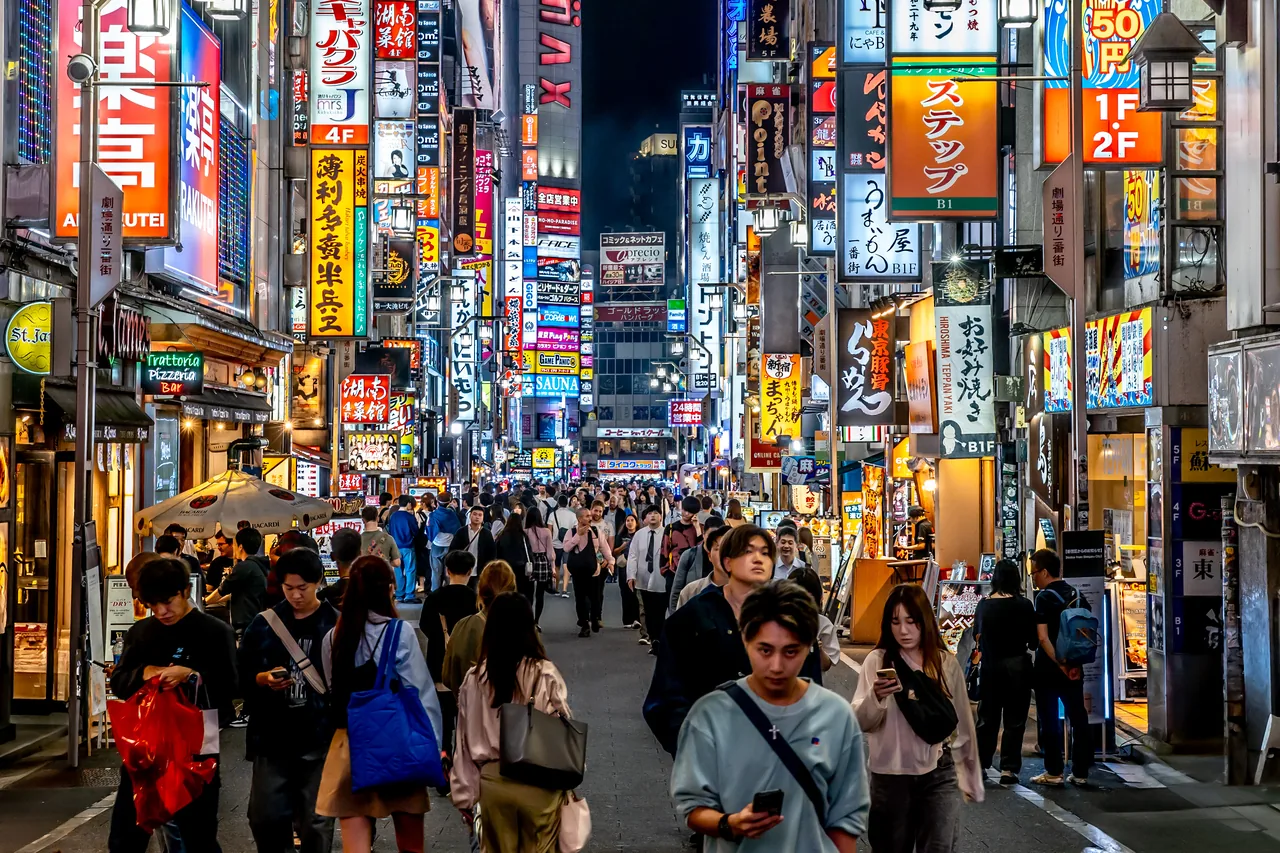
1. Shinjuku in brief: three neighborhoods wearing one name
Shinjuku isn’t really one district — it’s three, stitched together around the busiest train station on the planet, and knowing the split up front saves a lot of confused walking. The West side is corporate Tokyo: skyscrapers, the Tokyo Metropolitan Government Building, major hotel towers. The East side is where the neon starts: Kabukicho’s entertainment sprawl, Golden Gai’s micro-bars, Omoide Yokocho’s yakitori smoke, and the Isetan/Studio Alta shopping cluster. The South side is newer and calmer: Takashimaya Times Square, NEWoMan, and the walking route down to Shinjuku Gyoen. Cross between them without a plan and the station’s own scale will do the disorienting for you.
Where Asakusa preserves a single, coherent slice of old downtown Tokyo and Shibuya concentrates its youth-fashion energy into one walkable core around a scramble crossing, Shinjuku spreads its identity across a much wider footprint and a much wider range of moods. It’s the ward that holds a free skyscraper view, a semi-legal drinking-alley maze, and a manicured national garden all within a twenty-minute walk of each other, without any real attempt to make those pieces feel like one cohesive whole. That’s not a design flaw — it’s more or less what Shinjuku is.
| Zone | Character | What’s there |
|---|---|---|
| West | Corporate, high-rise, business-hotel district | Tokyo Metropolitan Government Building, skyscraper hotels, office towers |
| East | Entertainment, nightlife, shopping | Kabukicho, Golden Gai, Omoide Yokocho, Isetan, Studio Alta, Shinjuku Ni-chome |
| South | Newer development, garden access | Takashimaya Times Square, NEWoMan, the route to Shinjuku Gyoen |
Almost everything in this guide clusters into walkable sub-groups rather than one continuous stretch: the West-side skyscrapers sit 10-15 minutes on foot from the East-side nightlife cluster, which is itself a short stroll from the main shopping streets, while Shinjuku Gyoen sits further south and east as its own dedicated outing rather than a stop you casually pass through. Budget your day around that structure rather than assuming Shinjuku behaves like a single compact neighborhood.
Who Shinjuku suits best: travelers who want a free world-class view without paying for it, anyone curious about Tokyo’s nightlife scene handled directly rather than glossed over, garden lovers who want cherry blossoms without leaving the city center, and first-timers building a fuller Tokyo picture beyond the postcard sights. It’s a less natural fit for a first afternoon in the city — the station alone is enough to overwhelm a traveler who’s still finding their feet, so many visitors get more out of Shinjuku on day two or three of a Tokyo stay, once the basics of navigating the trains have settled in.
2. Is Shinjuku worth visiting?
Yes, and for a specific reason most other Tokyo districts can’t match: Shinjuku is the rare place in the city where the single best view costs nothing, the nightlife district addresses its risks instead of pretending they don’t exist, and a genuine national garden sits within walking distance of all of it. Few neighborhoods in Tokyo pack that much range into one train stop.
The caveat sits right alongside the appeal: Shinjuku Station’s own scale can eat an hour of a first visit before you’ve seen a single sight, and Kabukicho after dark is louder, more commercial, and more persistent about pulling you into a bar than a quieter district like Asakusa ever gets. Neither is a reason to skip Shinjuku — but arrive knowing what you’re stepping into rather than expecting a gentle stroll.
| What you get in Shinjuku | What you’re less likely to find here |
|---|---|
| A free, 202m, 360-degree observation deck with no ticket required | A single simple train station you can navigate on instinct |
| A clear, well-documented look at big-city nightlife risk and how to avoid it | A quiet, contemplative pace during the evening hours |
| Two clearly different alley formats — drinking bars and food stalls — a few minutes apart | Historic temples as the neighborhood’s main draw |
| A full-size national garden with roughly 1,000-1,500 cherry trees, minutes from a train hub | Low-rise, old-downtown character in the Asakusa sense |
Set against Asakusa‘s temple-centered calm or Shibuya‘s concentrated youth-fashion buzz, Shinjuku is less a single postcard image and more a working cross-section of Tokyo life — commuters, hostesses, tourists, gardeners, and skyscraper office workers sharing the same square kilometer without much overlap in their daily routines. That range is exactly why Shinjuku is worth visiting: you won’t get this particular mix of free luxury view, unfiltered nightlife, and manicured green space stacked together anywhere else in the guide series.
One more note for anyone weighing a second visit: Shinjuku holds up well on repeat trips precisely because its pieces don’t blend into one experience. A traveler who did the TMG deck and Golden Gai the first time around still has Omoide Yokocho, Ni-chome, and a proper Gyoen cherry-blossom morning left for round two.
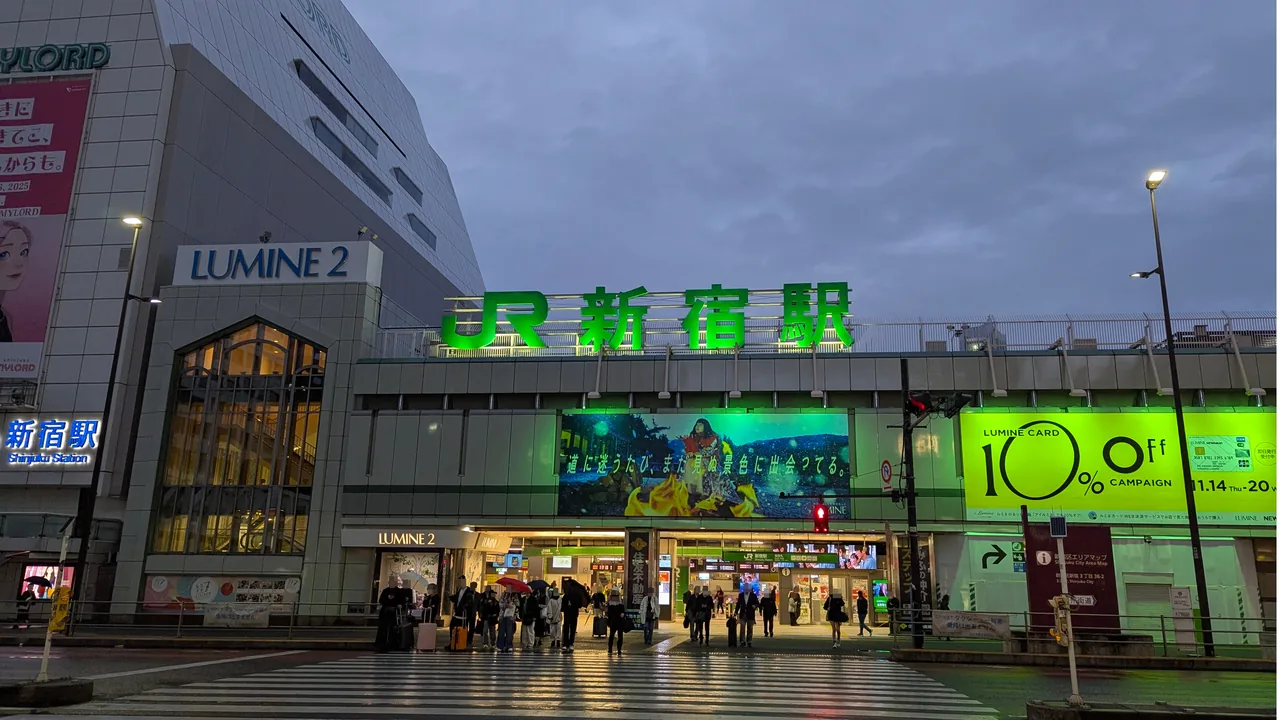
3. Getting to Shinjuku: the world’s busiest station, honestly
Shinjuku StationMap holds the Guinness World Record for the busiest railway station on the planet — more than 200 exits and 36 platforms shared across five separate operators — and no amount of advance reading fully prepares a first-timer for what that actually feels like at street level. Treat it as a landmark in its own right, not just a transfer point.
JR East, Odakyu, Keio, Tokyo Metro, and Toei all run through the same sprawling complex, which is precisely why the exit count runs past 200. Passenger-throughput figures vary considerably depending on which source and which operators get counted — official JR East numbers alone put daily ridership around 2.7 million as of 2022, while broader 2026 estimates combining every operator run considerably higher. Rather than repeating one precise figure that different sources contradict, the safer and more accurate claim is simply this: several million people pass through in an average day, by a wide margin the busiest station anywhere in the world.
| What makes it the busiest | Detail |
|---|---|
| Record status | Guinness World Record holder for busiest railway station on Earth |
| Exits | Over 200 |
| Platforms | 36 |
| Operators | JR East, Odakyu, Keio, Tokyo Metro, Toei — five separate networks sharing the complex |
| Daily passengers | Several million by most estimates; exact combined figures vary by source and year |
The practical fix is the same one that works anywhere in Tokyo: know which exit you need before you start walking, rather than surfacing and hoping to reorient. Decide first whether you’re headed West (skyscraper side), East (Kabukicho side), or South (Gyoen/Takashimaya side), then follow the color-coded signage toward that specific exit rather than the nearest one. Give yourself meaningfully more transfer time here than at an ordinary Tokyo station — what might be a five-minute changeover elsewhere can easily run fifteen inside Shinjuku’s tangle of underground passages.
Coin lockers are available throughout the station for day-trip luggage, though the same scale that makes the station confusing also means finding an open locker bank can take longer than expected — build in a few extra minutes rather than assuming you’ll spot one immediately.
4. The Tokyo Metropolitan Government Building: the best free view in Tokyo
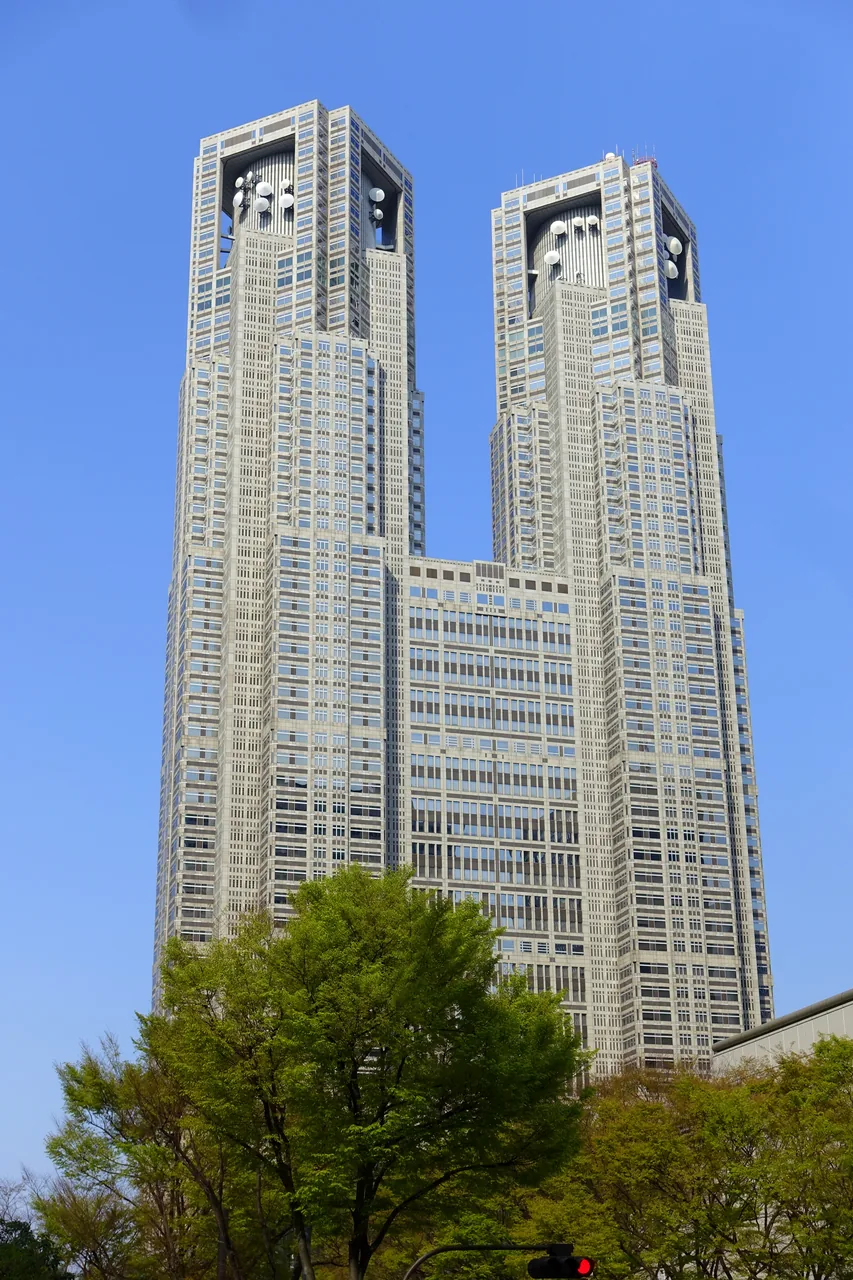
The Tokyo Metropolitan Government BuildingMap‘s twin observation decks sit 202 meters up and cost absolutely nothing to visit — no ticket, no reservation, no drink minimum — which makes them arguably the single best value sight in this entire guide series. A surprising number of visitors skip it simply assuming a view this good must charge admission somewhere.
The building has two separate towers, each with its own deck, and they don’t run on identical schedules. The South Observatory keeps longer hours, roughly 9:30 to 22:00 with last entry at 21:30, making it the better pick for an evening or sunset visit. The North Observatory runs a shorter day, about 9:30 to 17:30 with last entry at 17:00, though it can extend its hours on days the South deck closes for maintenance — worth checking on arrival if you’re set on a specific tower.
| Deck | Hours | Last entry | Best for |
|---|---|---|---|
| South Observatory | About 9:30-22:00 | 21:30 | Sunset and evening skyline views |
| North Observatory | About 9:30-17:30 | 17:00 | Daytime views; may extend hours if South is closed for maintenance |
On a clear day, both decks deliver a genuine payoff: Mt. Fuji on the horizon, the full sweep of Tokyo Skytree and Tokyo Tower, the green canopy of Meiji Shrine’s forest, and Tokyo Dome’s roof picked out among the rooftops. Bag checks are standard security before the elevators, similar to airport screening in miniature, and lines build fastest around sunset — arrive a little before the light starts changing rather than right at the moment you want the photo.
The building itself is worth a glance even before the elevator ride: it was designed by architect Kenzo Tange, whose twin-tower silhouette has become one of the most recognizable pieces of the Shinjuku skyline in its own right, visible from well outside the district on a clear day.
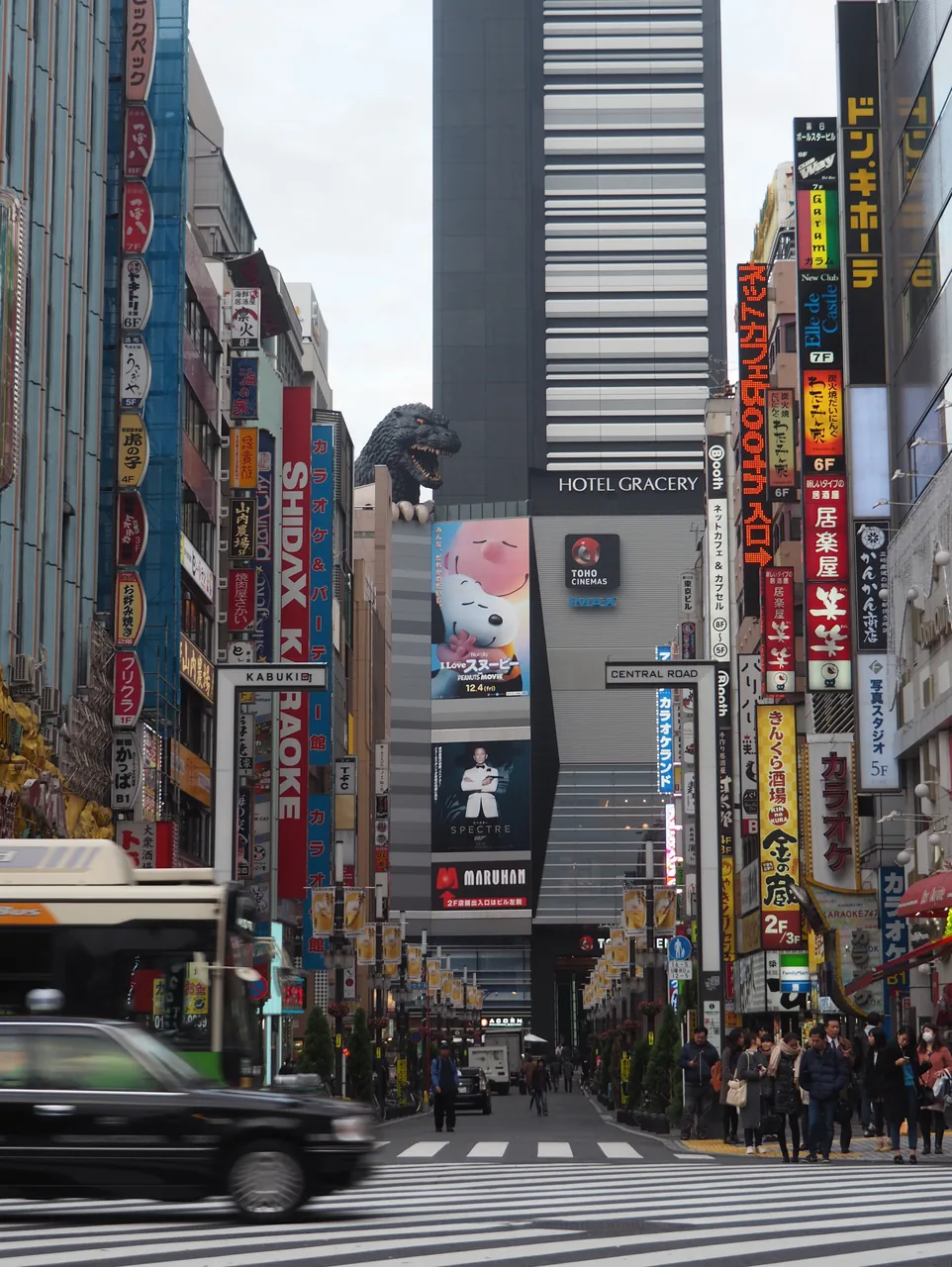
5. Kabukicho: the new tower, the Godzilla Head, and the Robot Restaurant correction
KabukichoMap is Tokyo’s largest entertainment district, and its current headline landmark isn’t the attraction most older guides still lead with — Tokyu Kabukicho Tower, open since April 2023, has become the district’s major current anchor, while the once-famous Robot Restaurant shut its doors for good back in March 2020. Getting this update right matters, since it’s the single most common outdated claim still circulating in Shinjuku content.
Tokyu Kabukicho Tower rises 48 floors and 225 meters, and it packs an unusual mix of tenants into one building: Zepp Shinjuku, a live-music venue holding around 1,500 people standing; 109 Cinemas Premium Shinjuku, an eight-screen premium cinema; Hotel Groove Shinjuku, a Parkroyal property; and Kabuki Yokocho, a curated, indoor food hall styled after the traditional yokocho alley format on the tower’s lower floors. It pulled in over a million visitors in its first month alone and has meaningfully reshaped how the district reads to a first-time visitor — less exclusively seedy neon, more of a mixed, modern entertainment complex sitting right alongside the older strip clubs and hostess bars.
The Godzilla HeadMap above the Shinjuku Toho Building — home to Hotel Gracery Shinjuku — is real, current, and still very much operating: a 12-meter, roughly 80-ton fixture unveiled in 2015 and modeled on Godzilla’s appearance in its 1992 film outing. It roars and lights up on the hour every hour from noon to 8pm, visible for free from the street below on what’s informally nicknamed Godzilla Road, or up close from the hotel’s paid Godzilla Terrace for guests and terrace ticket holders.
Now the correction that matters most: the Robot Restaurant, once Kabukicho’s most Instagrammed must-do, permanently closed in March 2020 and has not reopened since — despite a striking number of blog posts, and even some pages that show a recent “last updated” date, still listing it as an active attraction. Its tonal successor is the Samurai Restaurant, run by the same creative team but noticeably smaller in scale, less robot-focused, and housed inside the GiraGira adult venue. It’s 18+ only and a different show altogether, not a drop-in replacement for the old spectacle — treat any guide still recommending the Robot Restaurant itself as out of date.
| Landmark | Status | Key detail |
|---|---|---|
| Tokyu Kabukicho Tower | Open, current | 48 floors, 225m; Zepp Shinjuku, 109 Cinemas Premium, Hotel Groove Shinjuku, Kabuki Yokocho food hall (opened April 2023) |
| Godzilla Head / Shinjuku Toho Building | Open, current | 12m, ~80 tons, unveiled 2015; roars and lights up hourly noon-8pm; free from the street |
| Robot Restaurant | Permanently closed since March 2020 | Do not recommend as active |
| Samurai Restaurant | Open (its loose successor) | Smaller scale, less robot-themed, 18+, inside the GiraGira venue |
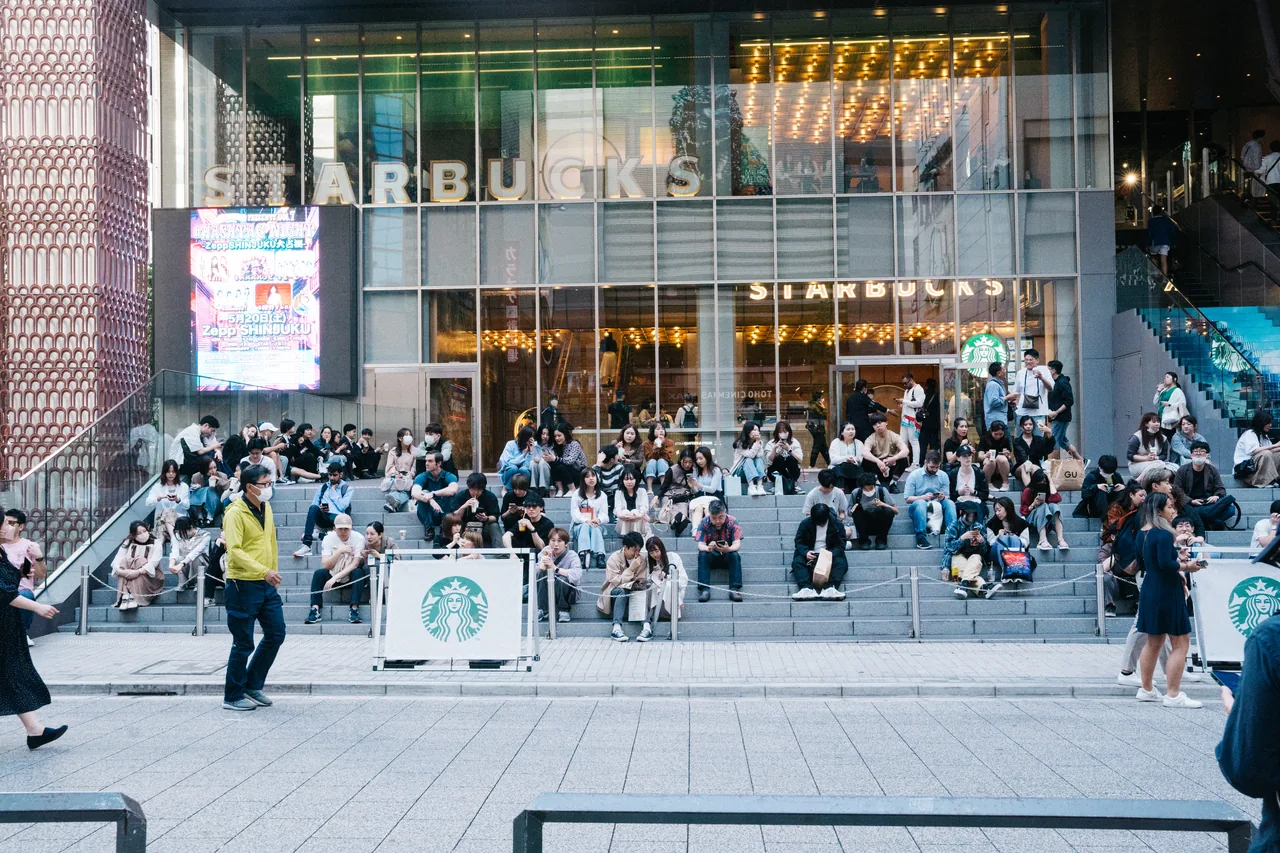
6. Is Kabukicho safe? Touts, bottakuri bars, and the one rule that matters
Kabukicho carries a real, well-documented scam risk — illegal street touts, known as “kyakuhiki,” approach passersby with cheap-drink or dating offers and steer them toward “bottakuri” bars that present a wildly inflated bill once you’re seated — but the risk is entirely manageable with one simple rule: never follow a street tout into any bar or club, no matter what’s offered. Beyond that single point, Kabukicho behaves like ordinary big-city nightlife, no more and no less.
It’s worth naming the schemes plainly rather than vaguely, since specific knowledge is what actually prevents the problem. Common bottakuri setups include a supposedly cheap all-you-can-drink deal that turns into a bill several times higher once the table charge and “extras” appear; touts posing as friendly locals or using dating-app-style approaches to build trust before the pitch; and, in rarer and more serious cases, drink-spiking that leads to theft. Soliciting customers on the street this way is illegal in Japan, which is exactly why it happens on the sidewalk rather than through a shopfront — legitimate venues don’t need to hustle passersby.
| Common tactic | How it works | The fix |
|---|---|---|
| Cheap all-you-can-drink lure | Advertised as a flat, low price; the actual bill arrives inflated with table charges and hidden fees | Walk away from any street offer entirely — check reviews and go to a venue you chose yourself |
| Friendly-local or dating-app-style approach | Builds rapport before steering you toward a specific bar | A polite, firm “no” and keep walking, even mid-conversation |
| Drink-spiking (rarer, more serious) | Occurs in the more predatory version of the bottakuri setup | Never leave a drink unattended; leave immediately if a venue feels wrong |
The practical upshot is refreshingly simple, once you strip away the anxiety some guides pile on top of it: choose your own bar or restaurant in advance, or walk into one you can see is busy with a visible, posted menu, and simply never let a stranger on the street pick the venue for you. That one habit closes off almost every version of the scam. Ordinary big-city caution — watching your drink, keeping valuables secure in a crowd, having a plan for getting home — covers the rest.
None of this should read as a reason to skip Kabukicho. Millions of visitors and residents pass through the district every year without incident, and the risk is concentrated almost entirely on people who accept a stranger’s unsolicited offer. Pick your own venues and it largely stops being a live concern at all.
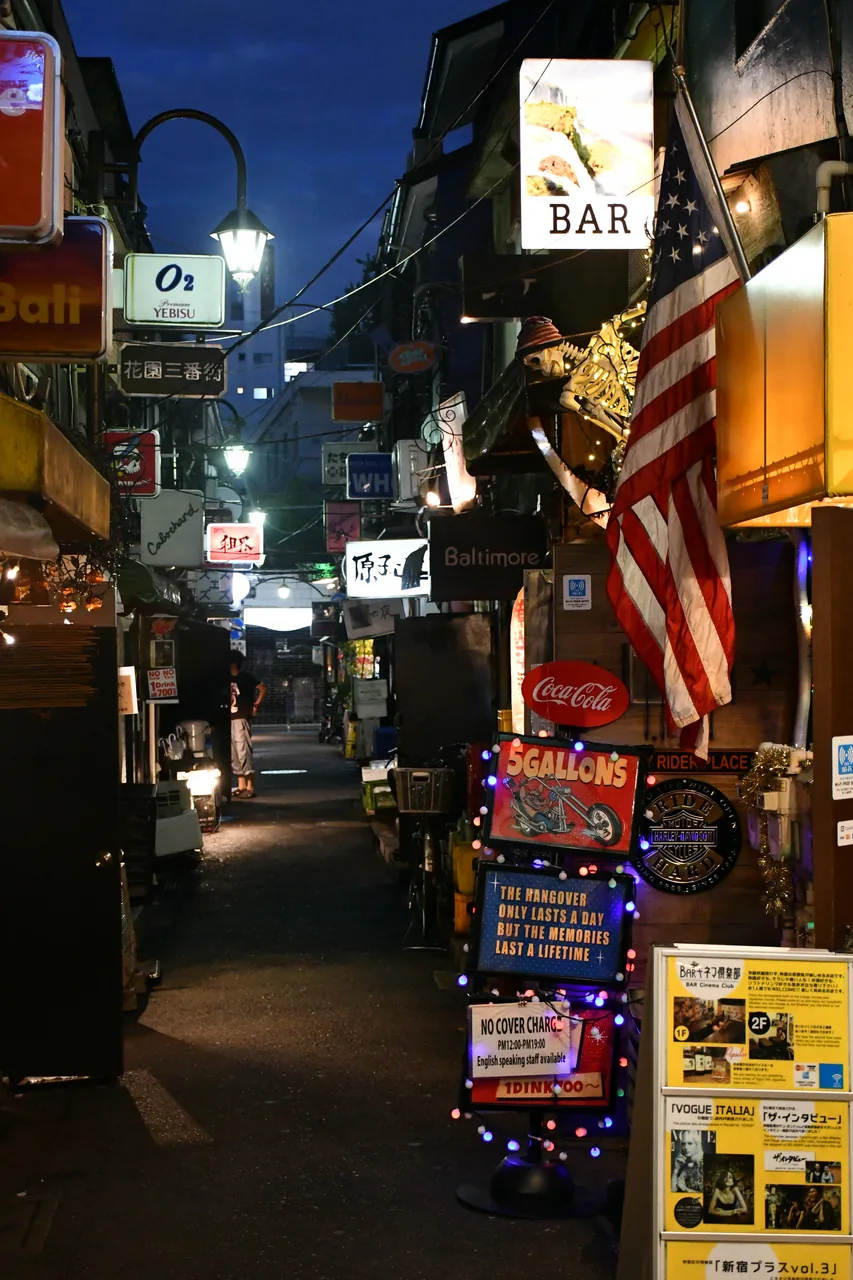
7. Golden Gai: 200 tiny bars, one at a time
Golden GaiMap is a dense maze of more than 200 micro-bars, most seating only five to eight people at once, tucked into a compact grid of narrow lanes near Kabukicho’s edge — a wildly different experience from a normal night out, and one with its own small set of customs worth knowing before you duck into the first door that looks interesting.
Nearly every bar here is a one-owner, one-theme operation — rockabilly records at one, horror-movie posters at the next, a bartender who’s run the same eight stools for thirty years at another — and that individuality is the entire draw. Most run cash-only, and most charge a per-bar table or cover fee on top of drink prices, which should be posted somewhere near the entrance; check it before you sit down rather than after, since it varies noticeably bar to bar. Tipping isn’t customary in Japan generally and Golden Gai is no exception.
| Feature | Detail |
|---|---|
| Bar count | 200+, most independently owned and themed |
| Typical seating | About 5-8 people per bar |
| Payment | Mostly cash-only |
| Cover charge | A per-bar table charge is standard — check it’s posted before sitting |
| Hours | Roughly 8pm-4am |
| Busiest / quietest | Thursday-Saturday busiest; Sunday-Wednesday quieter and better for actually talking to the bartender |
Etiquette here is simple but genuinely matters in a room this small: order fairly promptly once you sit, don’t try to squeeze a group in past a bar’s tiny real capacity, and treat the space with the same courtesy you’d extend to someone’s living room, because in practice that’s close to what it is. Bartenders remember rude behavior in a room with eight seats, and word travels between neighboring bars faster than you’d expect.
Golden Gai survived multiple redevelopment pushes over the decades in large part because its bar owners organized to hold onto the land collectively — a small, stubborn holdout of prewar-scale Tokyo standing a few minutes’ walk from Kabukicho’s newest 48-story tower, which is as good a snapshot of Shinjuku’s split personality as anything in this guide.
Hanazono Shrine: a Sunday antique market minutes from the neon
Hanazono ShrineMap sits right at Kabukicho’s edge, close enough to Golden Gai’s alleys that plenty of visitors never realize a working Shinto shrine is only a few minutes’ walk from the bars — and on Sundays it hosts an antique and flea market that makes for an unexpectedly calm counterpoint to the neon a block away.
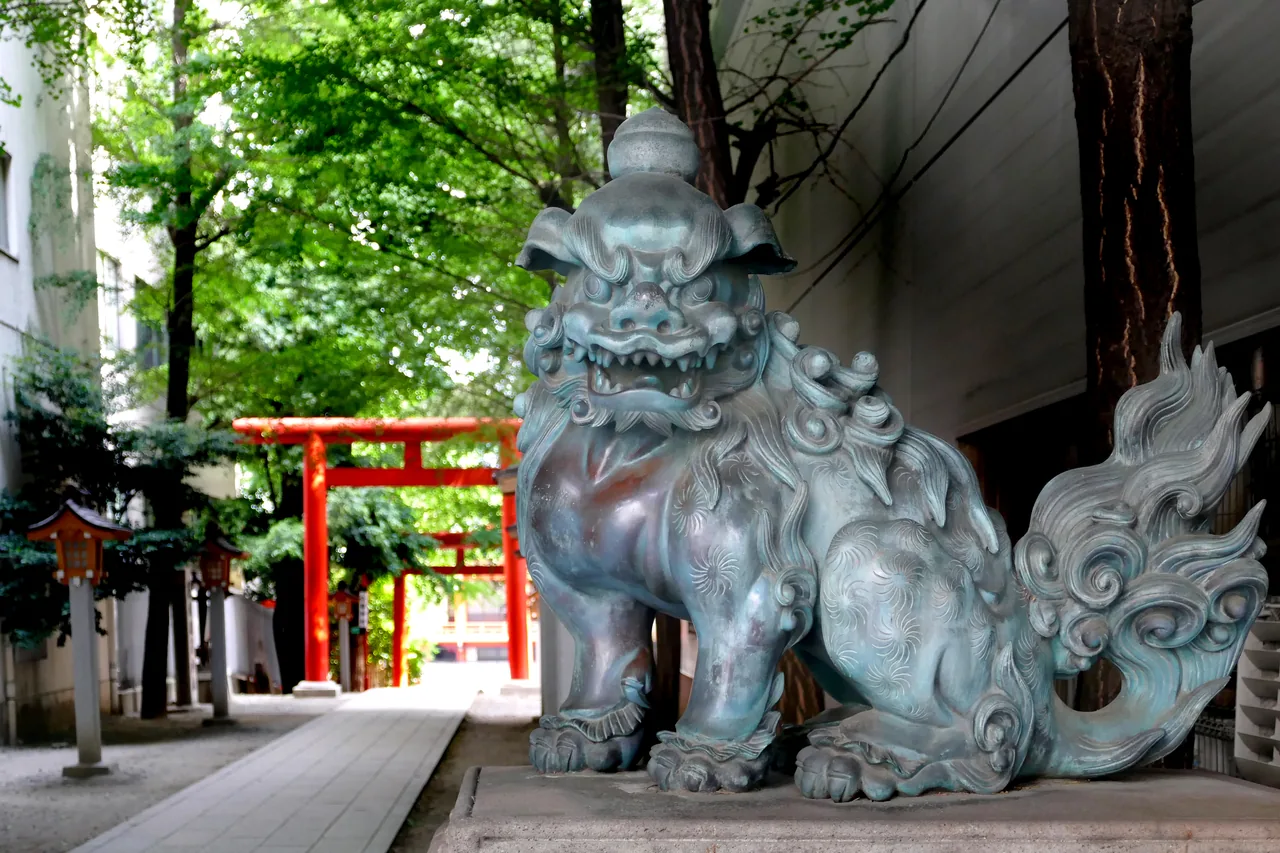
The market runs most Sundays, roughly 6:30am to 3:00pm, with most stalls packing up around mid-afternoon; it pauses during shrine festivals and over the New Year period, roughly December 27 through January 3, so it’s worth checking that a planned Sunday isn’t one of those exceptions. Around 25 to 30 vendors set up selling vintage pottery, old kimono fabric, antique art scrolls, and other small collectibles — a browsing pace closer to a small-town flea market than anything else in this guide.
| Detail | Info |
|---|---|
| When | Most Sundays, roughly 6:30am-3:00pm (closed during shrine festivals and Dec 27-Jan 3) |
| Vendors | About 25-30, selling pottery, kimono fabric, art scrolls, and other antiques |
| From Shinjuku-sanchome Station | About a 3-minute walk |
| From Shinjuku Station’s east exit | About a 7-minute walk |
The pairing works well precisely because of the contrast: an early Sunday morning spent sifting through antique stalls on shrine grounds, followed later by an evening among Golden Gai’s tiny bars a few minutes away on foot, covers two entirely different sides of the same small patch of Shinjuku in a single day.
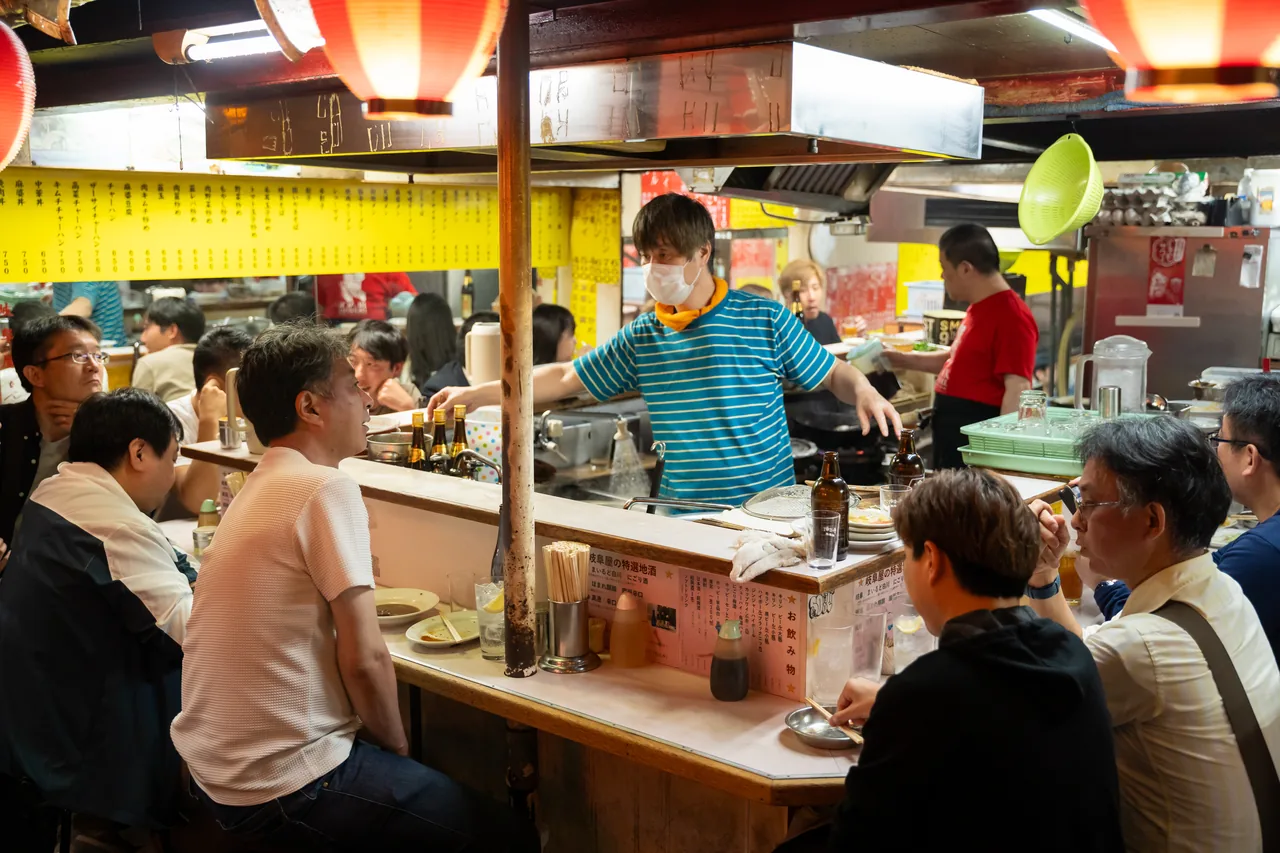
8. Omoide Yokocho: yakitori smoke, not drinking bars
Omoide YokochoMap — “Memory Lane,” historically nicknamed less politely as “Piss Alley” — is a narrow strip of roughly twenty yakitori and small-eatery stalls on the west side of the station’s south exit, and it’s built for eating at a counter over charcoal smoke, not for bar-hopping the way Golden Gai is. Confusing the two is the single most common Shinjuku planning mistake, so it’s worth stating the distinction plainly.
Most of these stalls have been serving grilled skewers since the immediate postwar period, and the format hasn’t changed much since: counter-only seating wedged shoulder to shoulder, charcoal smoke drifting through the alley, a short, focused menu built around yakitori rather than a full drinks list with a cover charge. It’s a food-first destination that happens to serve plenty of beer and highballs alongside the skewers, rather than a bar crawl that happens to have snacks.
| Golden Gai | Omoide Yokocho | |
|---|---|---|
| Format | 200+ tiny drinking bars | ~20 yakitori/food stalls |
| Focus | Drinks, atmosphere, owner personality | Grilled food, counter dining |
| Charges | Drinks plus a per-bar cover charge | À la carte food and drink, generally no cover |
| Best hours | 8pm-4am, busiest Thu-Sat | From about 7pm; most stalls run to midnight or 1am |
| Location | Near Kabukicho’s edge | West side of the station’s south exit |
Best practice is simply to arrive hungry from around 7pm, when the grills are going and most stalls are open, and expect to eat standing or on a narrow stool with your elbow against the next customer’s — the intimacy is the point rather than a drawback. Most stalls stay open until midnight or 1am, so it also works well as a late dinner after an earlier activity elsewhere in the district.
The postwar roots show in more than just the food. Omoide Yokocho grew up as an informal black-market strip in the chaos right after the war, and while the buildings have been rebuilt and modernized since a couple of fires over the decades, the layout and the low-slung, close-quarters feel have stayed close to the original — one of the more direct physical links to 1940s Shinjuku still standing anywhere in the district.
9. Shinjuku Gyoen National Garden: cherry blossoms with an admission fee
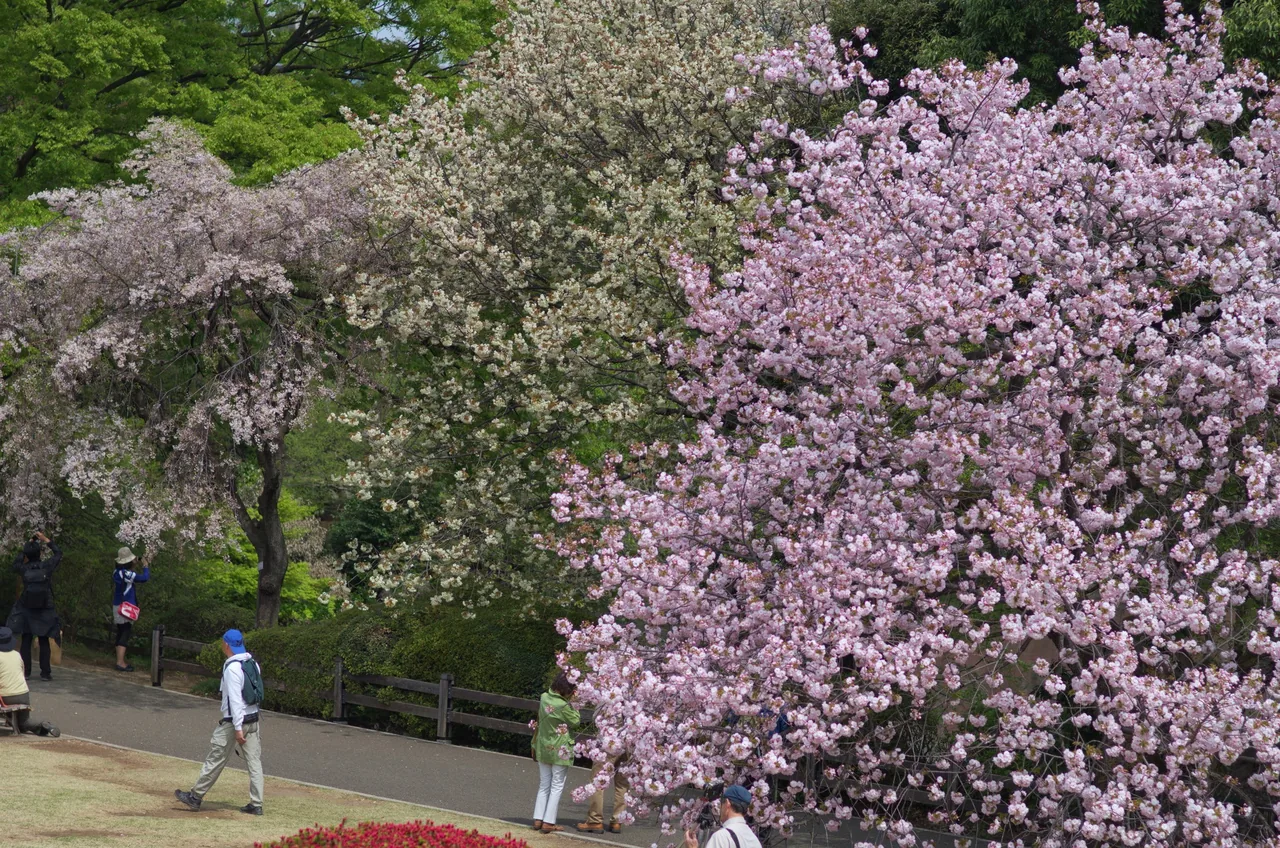
Shinjuku GyoenMap is a genuine national garden costing about ¥500 for an adult ticket, ¥250 for seniors 65-plus or students with ID, and free for anyone under 15 — a modest admission fee that buys one of the most complete escapes from Shinjuku’s noise anywhere in the district. Standard hours run about 9:00 to 16:30 with last entry at 16:00.
During the spring cherry blossom window — in 2026, roughly March 25 through April 24 — hours extend to about 9:00-18:00 with last entry at 17:30, giving visitors a longer window to catch the trees at their best. On the very busiest cherry-blossom weekend dates, the garden has in some recent years required advance timed-entry booking for certain midday hours, typically 10:00-16:00 on those specific dates, while early-morning and late-afternoon entry has stayed available on a walk-in basis. This detail shifts from year to year, so it’s worth confirming close to your actual visit date rather than planning around last year’s rules.
| Ticket type | Price |
|---|---|
| Adult | About ¥500 |
| Senior (65+) or student with ID | About ¥250 |
| Under 15 | Free |
| Period | Hours | Last entry |
|---|---|---|
| Standard season | About 9:00-16:30 | 16:00 |
| Cherry blossom window (2026: roughly Mar 25-Apr 24) | About 9:00-18:00 | 17:30 |
| Very busiest bloom weekends (some recent years) | Timed entry may apply for roughly 10:00-16:00 slots | Confirm close to your visit date; early/late entry typically stays walk-in |
The garden holds roughly 1,000 to 1,500 cherry trees across about 65 varieties, which stretches the season well beyond a single peak week: early-flowering Kanzakura trees start as far back as February, while late-blooming Yaezakura varieties carry the color into late April, long after Tokyo’s headline cherry blossom forecasts have already declared the main season over elsewhere in the city.
Beyond the cherry trees, the garden mixes three distinct landscaping styles across its grounds — a formal French garden, an English landscape garden, and a traditional Japanese garden with ponds and teahouses — making it a worthwhile visit across other seasons too, not purely a spring-only stop. As one of the few genuine escapes from the city covered in this guide, Shinjuku Gyoen is also a place where bringing a blanket and simply sitting for an hour is a completely reasonable way to spend the time.
10. Shinjuku Ni-chome: a legitimately welcoming nightlife district
Shinjuku Ni-chomeMap is widely described as having the highest concentration of LGBTQ bars anywhere in the world, packed into a compact area only about five blocks across, roughly 300 meters to a side — a legitimate, welcoming nightlife district worth including on its own merits, not a novelty detour. Estimates on the exact bar count vary considerably by source, ranging from roughly 300 to more than 400 small venues, so treat any single figure as an approximation rather than a hard count.
The area functions much like Golden Gai in physical scale — tiny, specialized, owner-run bars packed into a dense few blocks — but with its own distinct culture and history built around Tokyo’s LGBTQ community over several decades. Some venues are Japanese-clientele-focused and quieter about outside visitors, while plenty of others actively welcome international travelers; a little research or asking ahead goes a long way toward finding a bar that matches what you’re looking for on a given night.
| Feature | Detail |
|---|---|
| Area size | Roughly five blocks, about 300m per side |
| Bar count | Estimates vary widely, roughly 300 to 400+ venues |
| Character | Small, owner-run bars and clubs, similar physical scale to Golden Gai |
| Reputation | Widely cited as having the highest concentration of LGBTQ bars anywhere in the world |
Ni-chome sits a short walk from both Golden Gai and the main Kabukicho cluster, which makes it easy to fold into an evening that also includes either of those areas, or to treat as a dedicated destination in its own right. Like Golden Gai, many of its bars are tiny, so the same basic courtesy applies: don’t overcrowd a small space, order at a reasonable pace, and expect a more personal, conversational atmosphere than a large club would offer.
Whatever else is on the evening’s itinerary, Ni-chome deserves the same respectful, straightforward framing as any other established nightlife district in this guide — a place people go for a good bar and good company, not a sight to gawk at from the sidewalk.
11. Shin-Okubo: Tokyo’s Koreatown, one stop away
Shin-OkuboMap sits one JR Yamanote Line stop north of Shinjuku Station — or a roughly 20-minute walk — and it’s a completely different vibe: Tokyo’s largest Koreatown, dense with K-pop shops, Korean cafes, and skincare stores rather than the drinking-alley or garden formats covered elsewhere in this guide. It isn’t essential the way the TMG deck or Golden Gai are, but it’s an easy, worthwhile add for anyone with a spare hour or two.
The layout is simple once you know it. Okubo-dori is the main strip running past the station, lined with most of the K-pop retail and food; Syokuan-dori runs roughly parallel a block south, quieter and more residential in feel; and a narrow connecting lane often nicknamed Ikemen-dori links the two, itself worth a wander for smaller, easy-to-miss shops. None of the three streets is especially long, so getting turned around here is a far smaller problem than inside Shinjuku Station itself.
K-pop shopping is the main draw for a lot of visitors: photocards, CDs, posters, lightsticks, and keyrings fill shop after shop along Okubo-dori, mixing official merchandise with unofficial fan-made goods at every price point, from ¥100 keyrings up to serious collector items. A few larger stores anchor the strip — a well-known K-pop specialty chain and one of the bigger multi-floor merchandise shops among them — but the real appeal is browsing several smaller stores rather than any single destination, since stock and exclusives shift from shop to shop and month to month.
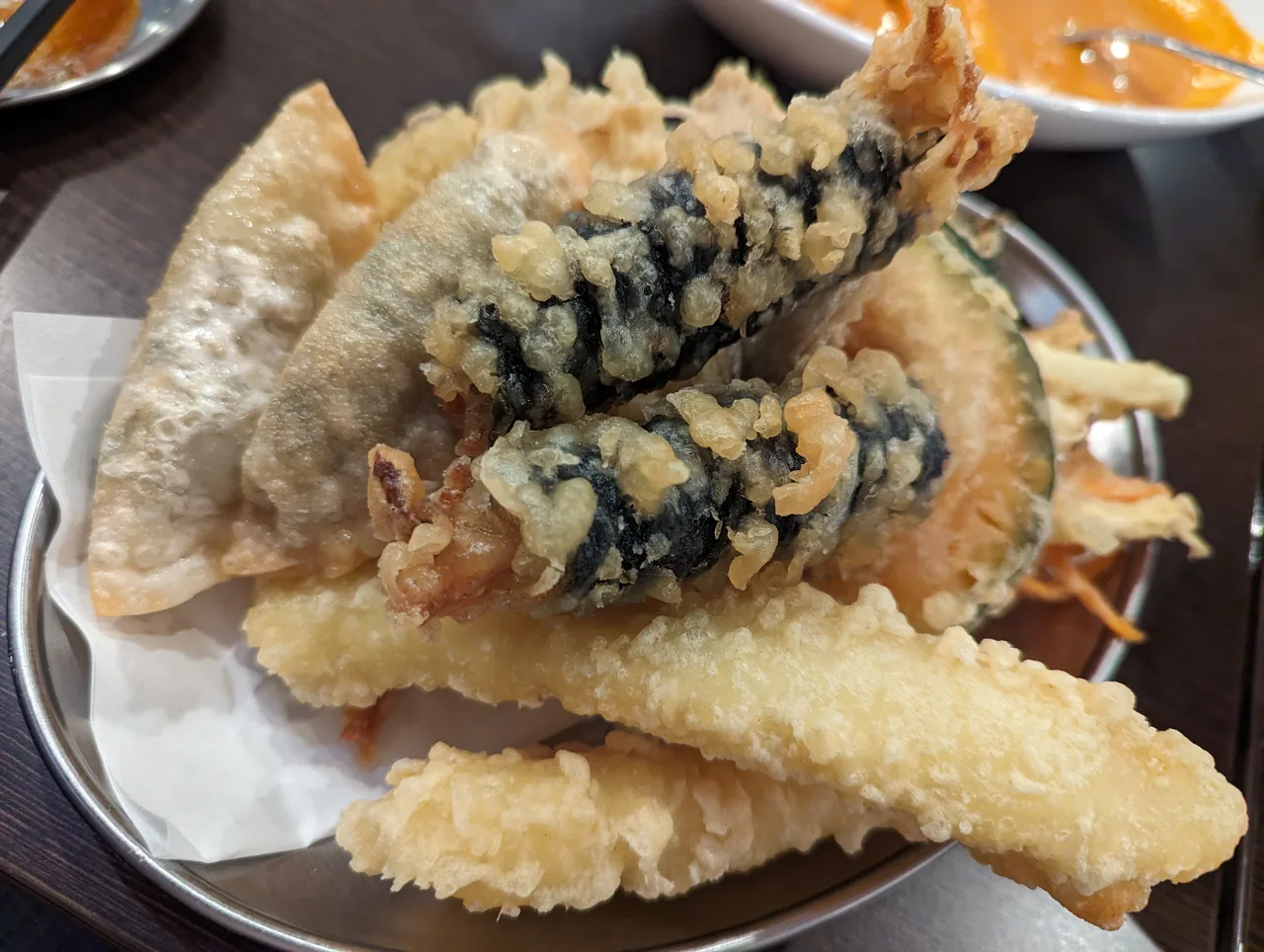
The food scene is just as dense as the shopping. Korean cafes serving elaborate desserts and Korean-style coffee sit alongside sit-down restaurants doing bibimbap, tteokbokki, and Korean barbecue, while street stalls sell hotteok — a stuffed, syrup-filled sweet pancake — and other portable snacks straight off the griddle. Korean fried chicken shops, several offering adjustable spice levels running from mild to seriously punishing, are a popular stop for anyone treating Shin-Okubo as a dinner destination rather than just an afternoon browse.
Beauty and skincare shopping rounds out the district: numerous stores sell Korean cosmetics and skincare lines, many with open testers so browsing doesn’t require committing to a purchase, and prices are often noticeably friendlier than department-store cosmetics counters back in central Shinjuku.
| What | Where | Good for |
|---|---|---|
| K-pop merchandise | Mostly along Okubo-dori | Photocards, CDs, posters, lightsticks — official and unofficial goods |
| Korean cafes and dessert shops | Okubo-dori and side streets | Korean-style coffee, elaborate dessert menus |
| Korean BBQ and sit-down restaurants | Spread across all three main streets | A full Korean meal, not just snacks |
| Street food (hotteok and more) | Okubo-dori stalls | A quick, cheap bite while browsing |
| Korean fried chicken | Several spots district-wide | Adjustable spice level, popular dinner stop |
| Korean skincare and cosmetics | Throughout, dense along Okubo-dori | Testers at most shops, often better prices than department stores |
Best timing runs from early afternoon into the evening, when the cafes and restaurants are in full swing; a handful of shops keep earlier hours and close before the food side winds down. Since it’s only one Yamanote Line stop away, folding Shin-Okubo into a Shinjuku day is straightforward — hop on the train from Shinjuku Station for a couple of minutes’ ride, or walk it if the 20 minutes each way sounds like a plus rather than a chore.
12. Shopping in Shinjuku: Isetan, Takashimaya Times Square, and NEWoMan
Shinjuku’s shopping splits by zone as cleanly as everything else in the district: Isetan and Studio Alta anchor the East side’s traditional department-store cluster, while Takashimaya Times Square and NEWoMan handle the South side’s newer, glossier retail development. Which one suits a given afternoon depends mostly on whether you want classic Japanese department-store depth or a more contemporary mall experience.
Isetan Shinjuku is one of Tokyo’s most respected department stores, known especially for its fashion floors and a basement depachika food hall dense with bento boxes, sweets, and prepared dishes worth a browse even without buying a full meal. Studio Alta, the building with the giant video screen visible from the station’s east side, has long served as an informal Shinjuku meeting point in much the same role Hachiko plays in Shibuya.
| Spot | Zone | What it’s known for |
|---|---|---|
| Isetan Shinjuku | East | Fashion department store, basement depachika food hall |
| Studio Alta | East | Landmark video screen, informal meeting spot |
| Takashimaya Times Square | South | Large department store complex, Tokyu Hands, a broad restaurant floor |
| NEWoMan | South | Newer, fashion-forward mall aimed at a design-conscious shopper |
Takashimaya Times Square, on the South side near the Gyoen approach, bundles a full department store with a Tokyu Hands outpost and a substantial restaurant floor into one complex — a practical stop if a shopping afternoon and a meal both need covering without a separate trip for each. NEWoMan, connected to the station’s South side as well, leans more curated and design-forward, popular with a slightly younger, fashion-conscious shopper than Isetan’s broader department-store clientele.
None of this shopping cluster demands a dedicated half-day the way Kabukicho’s nightlife or Shinjuku Gyoen’s garden might; it slots naturally into a lunch break, a rainy-day backup plan, or the tail end of a South-side visit heading toward or away from the garden.
13. Sample Shinjuku itineraries: half-day and full-day plans
A focused half-day (about 4 hours) covers the TMG Building’s free observation deck, a daytime Kabukicho walk past the Godzilla Head and Tokyu Kabukicho Tower, and an early dinner or drink in Golden Gai or Omoide Yokocho; a full day (6-8 hours) adds a morning at Shinjuku Gyoen and a department-store browse, then closes with both alleys back to back in the evening. Both plans work better when the garden or the free deck comes first, before the day’s heat or crowds build.
Half-day plan (~4 hours)
| Time | What |
|---|---|
| ~10:00-11:30 | Tokyo Metropolitan Government Building — free observation deck, no ticket needed |
| ~11:30-13:00 | Walk east to Kabukicho — Godzilla Head, Tokyu Kabukicho Tower’s Kabuki Yokocho food hall for lunch |
| ~13:00-14:00 | Continue browsing east-side shops, or rest before the evening |
| Evening return | Golden Gai or Omoide Yokocho for an early dinner or drink |
Full-day plan (~6-8 hours)
| Time | What |
|---|---|
| ~9:00-11:00 | Shinjuku Gyoen National Garden — mornings beat both the crowds and, in summer, the heat |
| ~11:00-12:00 | Walk toward Takashimaya Times Square or NEWoMan for shopping and lunch |
| ~13:00-14:30 | Tokyo Metropolitan Government Building — free observation deck |
| ~14:30-16:00 | Kabukicho daytime walk — Godzilla Head, Tokyu Kabukicho Tower |
| ~16:00-17:00 | Isetan and Studio Alta browse, or rest before the evening |
| ~19:00 onward | Omoide Yokocho for yakitori, then Golden Gai for a nightcap |
Passing through with less time to spare? A tight version still works: the free TMG deck plus a daytime Kabukicho walk covers the district’s two most photograph-worthy, no-reservation-needed sights in about two hours, with Golden Gai or Omoide Yokocho added on only if the evening schedule allows.
Travelers pairing Shinjuku with the rest of the Tokyo neighborhood cluster should note the geography works in their favor: Shibuya sits a few minutes away by train, making a same-day pairing entirely realistic if the energy holds up, while Asakusa’s old-downtown contrast is better saved for its own separate day given the distance and the very different pace each district asks for.
14. What to eat in Shinjuku
Shinjuku’s food scene runs on the same zone logic as everything else in the district — yakitori and counter dining concentrated in Omoide Yokocho, department-store depachika halls for a considered grab-and-go meal, and an entire spectrum of izakaya and restaurant options spread across Kabukicho and the shopping streets. Few Tokyo neighborhoods offer this much range within a single train stop.
| Where | What’s on offer |
|---|---|
| Omoide Yokocho | Charcoal-grilled yakitori skewers, counter-only seating, from about 7pm |
| Kabuki Yokocho (inside Tokyu Kabukicho Tower) | A curated, indoor food hall styled after the traditional yokocho format — a comfortable, first-timer-friendly alternative |
| Isetan / Takashimaya depachika | Bento boxes, bakery counters, and prepared dishes ranging from everyday to high-end |
| Kabukicho and the shopping streets generally | An enormous range of izakayas, ramen counters, and casual restaurants at every price point |
Omoide Yokocho remains the district’s most atmospheric option for anyone who wants the classic postwar-alley experience: charcoal smoke, a short yakitori menu, and a seat close enough to the next customer that conversation happens whether you plan it or not. Kabuki Yokocho, inside the new Tokyu Kabukicho Tower, offers a gentler entry point into the same yokocho concept — indoors, air-conditioned, and considerably easier to navigate for a first-timer who isn’t ready for the older alley’s closer quarters.
For a quieter, sit-down meal away from the alley crowds, Isetan and Takashimaya’s basement depachika food halls hold some of the best prepared-food shopping in the city, worth a browse even if the plan is simply to assemble a meal to eat back at the hotel. Beyond these anchor spots, Kabukicho itself and the streets around Studio Alta hold an enormous spread of ramen counters, izakayas, and casual chain restaurants covering essentially every budget and cuisine a traveler might want on a given night.
Shinjuku Gyoen visitors with an appetite for something calmer than either yokocho should note the South-side approach near Takashimaya has its own dense run of cafés and casual restaurants, making it easy to plan a garden morning followed by a relaxed lunch without doubling back toward Kabukicho at all.
15. When to go: cherry blossoms, golden hour, and nightlife timing
Shinjuku rewards visitors who match the district to the time of day rather than trying to see everything at once — the TMG Building at golden hour, Kabukicho and the yokocho alleys from evening onward, and Shinjuku Gyoen in the morning, especially during the cherry blossom window. Timing shapes this district’s experience more than almost anywhere else in the guide series.
| What | Best timing | Why |
|---|---|---|
| TMG Building observation decks | Golden hour / sunset (South deck stays open to 22:00) | Best light on the skyline, plus a lit-up night view without leaving |
| Kabukicho, Golden Gai, Omoide Yokocho | Evening onward | Most venues aren’t really “on” until after dark; daytime Kabukicho is quieter and safe to browse but far less atmospheric |
| Shinjuku Gyoen | Morning, right at opening | Beats both the crowds and, in summer, the heat; cherry blossom season (2026: roughly Mar 25-Apr 24) is the peak draw |
| Ni-chome | From about 10pm on weekends | Matches Golden Gai’s rhythm; earlier is calmer and easier to navigate |
Seasonally, cherry blossom timing at Shinjuku Gyoen is the single biggest variable worth planning around, and it shifts slightly year to year depending on the weather — 2026’s window runs roughly late March into late April once the early and late varieties are factored in, but the exact peak week for the most common cherry varieties can move by several days either direction. Our Japan best time to visit guide covers the wider seasonal picture if the trip’s dates are still flexible.
Beyond cherry blossom season, Shinjuku doesn’t have the same weather sensitivity as an outdoor-heavy destination — the TMG Building’s decks, the yokocho alleys, and most of the shopping are all comfortable regardless of season, aside from ordinary summer heat and humidity making an early Gyoen visit more of a priority than a spring or autumn trip would.
16. Practical essentials: timing, luggage, and connectivity
Shinjuku’s biggest practical hurdle isn’t any single sight — it’s the station itself, so plan around extra transfer time, know your exit before you descend, and sort out a working data connection before you land, since checking directions on the fly is far more useful here than in almost any other Tokyo district.
| Consideration | Detail |
|---|---|
| Station navigation | Identify West/East/South exit before descending; budget extra transfer time versus other stations |
| Best for the free view | TMG Building, golden hour through sunset on the South deck |
| Best for nightlife | Evening onward; know the Kabukicho tout rule before you go |
| Best for the garden | Morning, especially during cherry blossom season |
| Luggage | Coin lockers available throughout the station; allow extra time to find them given the scale |
A working data connection matters more in Shinjuku than in almost any other district in this guide series, simply because the station’s own scale makes offline navigation genuinely impractical — confirming which of the five operators’ platforms you need, checking TMG Building deck hours before you make the trip, or pulling up gmap directions to a specific Golden Gai bar all lean on having signal the moment you surface from underground. Sort a Japan eSIM before arrival rather than hunting for station Wi-Fi while also trying to find the right exit.
A prepaid IC card (Suica or Pasmo) earns its keep here specifically because Shinjuku funnels so many transfers through one hub — tapping straight through rather than buying individual paper tickets at every operator’s gate saves real time across a day that likely involves crossing between JR, Metro, and private-rail platforms more than once. The same card also covers vending machines and convenience stores throughout the district.
If you’re carrying luggage through Shinjuku mid-trip, note that elevators and escalators are spread unevenly across the station’s various levels and exits rather than clustered together, so travelers with mobility needs or heavy bags should build in real extra time to locate step-free routes rather than assuming a quick, obvious path between platforms.
Accessibility and luggage: what the station doesn’t make obvious
Wheelchair users can navigate JR Shinjuku Station via a network of accessible routes and elevators connecting platforms and gates — one useful example is a short elevator link from the Yamanote Line’s inner-track platform through to the West Gate — but given how sprawling the complex is, the more reliable approach is deciding on a target exit before arriving and telling station staff on arrival. JR staff can escort passengers on and off trains and point toward the most direct step-free route, which beats trying to puzzle out the layout alone.
Coin lockers are scattered throughout the station complex and its satellite buildings, generally running from about ¥100 for a small locker up to around ¥800 for a large one, payable by coin or IC card (Suica or Pasmo) depending on the locker. For anything bigger than a locker can hold, or for travelers who’d simply rather not carry bags for the day, a few staffed options exist: a staffed luggage counter inside the station charges roughly ¥1,000 per item (confirm current hours, which run roughly from daytime into the evening) and can arrange delivery to a hotel or to Haneda Airport; separately, a Sagawa-run counter at the Tokyo Tourist Information Center inside the Busta Shinjuku bus terminal stores bags for around ¥800 a day, with the same kind of hotel or airport delivery on offer. A reservable smart-locker system, bookable up to a month ahead for a small reservation fee, is worth considering during any peak travel period, when a guaranteed spot beats hoping a locker bank still has room.
| Option | Rough cost | Notes |
|---|---|---|
| Coin lockers (station-wide) | About ¥100-800 | Size-dependent; coin or IC card — confirm current rates |
| Staffed luggage counter (in-station) | About ¥1,000/item | Can arrange hotel or Haneda Airport delivery; confirm hours |
| Sagawa counter, Busta Shinjuku (Tourist Info Center) | About ¥800/day | Also offers hotel/airport delivery |
| Reservable smart lockers | Small reservation fee plus locker cost | Bookable up to a month ahead — useful for guaranteed space at peak times |
17. Shinjuku vs. Asakusa vs. Shibuya: completing the Tokyo neighborhood picture
Shinjuku is the district that refuses to specialize — corporate skyscrapers, a slightly rougher nightlife scene, and a genuine national garden all inside one train hub — set against Asakusa’s coherent old-downtown calm and Shibuya’s concentrated youth-fashion energy. Together, the three complete a Tokyo picture that no single neighborhood in the city could deliver alone.
| Shinjuku | Asakusa | Shibuya | |
|---|---|---|---|
| Character | Split personality — corporate West, entertainment East, garden South | Low-rise, temple-centered old downtown | High-rise, neon, youth-fashion, constant redevelopment |
| Signature sight | TMG Building’s free observation deck, Golden Gai, Kabukicho | Senso-ji, Kaminarimon, Nakamise-dori | Scramble Crossing, Hachiko Statue, Shibuya Sky |
| Free flagship attraction | TMG Building observation decks (both, always free) | Senso-ji temple grounds | None as directly comparable — Shibuya Sky and the MAGNET rooftop both charge |
| Nightlife closing pattern | Golden Gai/Omoide Yokocho run to 1am-4am; Kabukicho stays lively past midnight | Quiet after dark outside Hoppy Street; an early-to-bed district overall | Dogenzaka clubs and yokocho alleys run past midnight, some to 5am |
| Pace | Busy from morning through late night, unevenly across zones | Busy by day around the temple, quiet after dark | Busy from afternoon well into the night |
| Time needed | Half a day minimum, a full day for the deeper add-ons | Half a day minimum, a full day for the deeper add-ons | Half a day minimum, a full day for the deeper add-ons |
The real comparison isn’t about ranking the three — it’s recognizing what each one actually offers so a Tokyo itinerary doesn’t accidentally repeat the same experience three times under different names. Asakusa is the city’s memory: a 1,400-year-old temple and a shopping street selling souvenirs since the 1600s. Shibuya is its current pulse: a scramble crossing and a skyline that keeps rebuilding itself every few years. Shinjuku sits between those two poles and refuses to resolve into either one — corporate by day on one side of the station, unfiltered by night on the other, with a walled garden a few minutes from both that belongs to neither mood.
Practically, all three sit close enough together to combine within a single multi-day Tokyo stay without much transit overhead — Shibuya is a few minutes from Shinjuku on the Yamanote Line, and Asakusa, while a longer ride, is still a reasonable same-day add if the schedule allows. Our Tokyo travel guide covers how to sequence all three neighborhoods alongside the rest of the city, and our complete Japan travel guide shows how Tokyo fits into a wider national itinerary.
Seeing all three within one trip is one of the more efficient ways to understand what Tokyo actually is: a city that never fully picked one identity and stopped needing to. A morning in Asakusa’s temple quiet, an afternoon in Shinjuku’s free skyscraper view, and an evening under Shibuya’s neon covers more genuine range than most cities offer in a week, let alone a single train line.