
Mt Fuji Day Trip from Tokyo: The Honest Kawaguchiko Guide
Yes, you can see Mt Fuji from Tokyo in a single day — Lake Kawaguchi is about two hours from Shinjuku. The catch is that Fuji hides behind cloud more often than the postcards admit, and the day is tighter than it looks. Here is how to actually pull it off.
| A Mt Fuji day trip from Tokyo is realistic, and Lake Kawaguchi (Kawaguchiko) is the base. The fastest way there is the direct Fuji Excursion limited express from Shinjuku, roughly one hour and 55 minutes. Door to door, plan on about two and a quarter hours each way. | |
| Seeing Fuji is the real gamble, not getting there. The mountain makes its own weather and cloud builds through the morning. Go early on a clear day, check a live cam before you leave, and accept that summer afternoons often show you nothing but haze. | |
| Book your return before you board the outbound. The Fuji Excursion has only about four round trips a day and every seat is reserved — there is no non-reserved car. Buses sell out too. The last train back is the binding constraint on the whole day. | |
| 2026 has real closures, so check before you commit. The Kawaguchiko ropeway is shut for maintenance until around mid-July, the Chureito cherry-blossom festival and the Oishi Park lavender festival are both cancelled, and the Subaru Line 5th Station closes to cars during climbing season. | |
| Pick one focus, not everything. A few lakeside viewpoints OR the 5th Station, not both. Trying to chain Chureito, the 5th Station, Oshino Hakkai and the lakes in one day is how people end up stranded and stressed instead of happy. |
1. Can you really do a Mt Fuji day trip from Tokyo?
2. Will you actually SEE Mt Fuji? (read this first)
3. How do you get to Kawaguchiko from Tokyo?
4. Is the Japan Rail Pass worth it for this trip?
5. How do you get around the Fuji Five Lakes once you arrive?
6. Is one day actually enough?
7. DIY or a guided tour from Tokyo?
8. Chureito Pagoda: the iconic Mt Fuji shot
9. Oishi Park and the reflected Mt Fuji
10. Mt Tenjo by the Panoramic Ropeway
11. Oshino Hakkai: the eight spring ponds
12. Fujiyoshida photo spots and the overtourism question
13. The Subaru Line 5th Station: as close as a day-tripper gets
14. More around the lakes: thrills, museums, and what to eat
15. When is the best time to visit the Fuji Five Lakes?
16. A clear-weather one-day plan and a packing checklist
17. What to read next
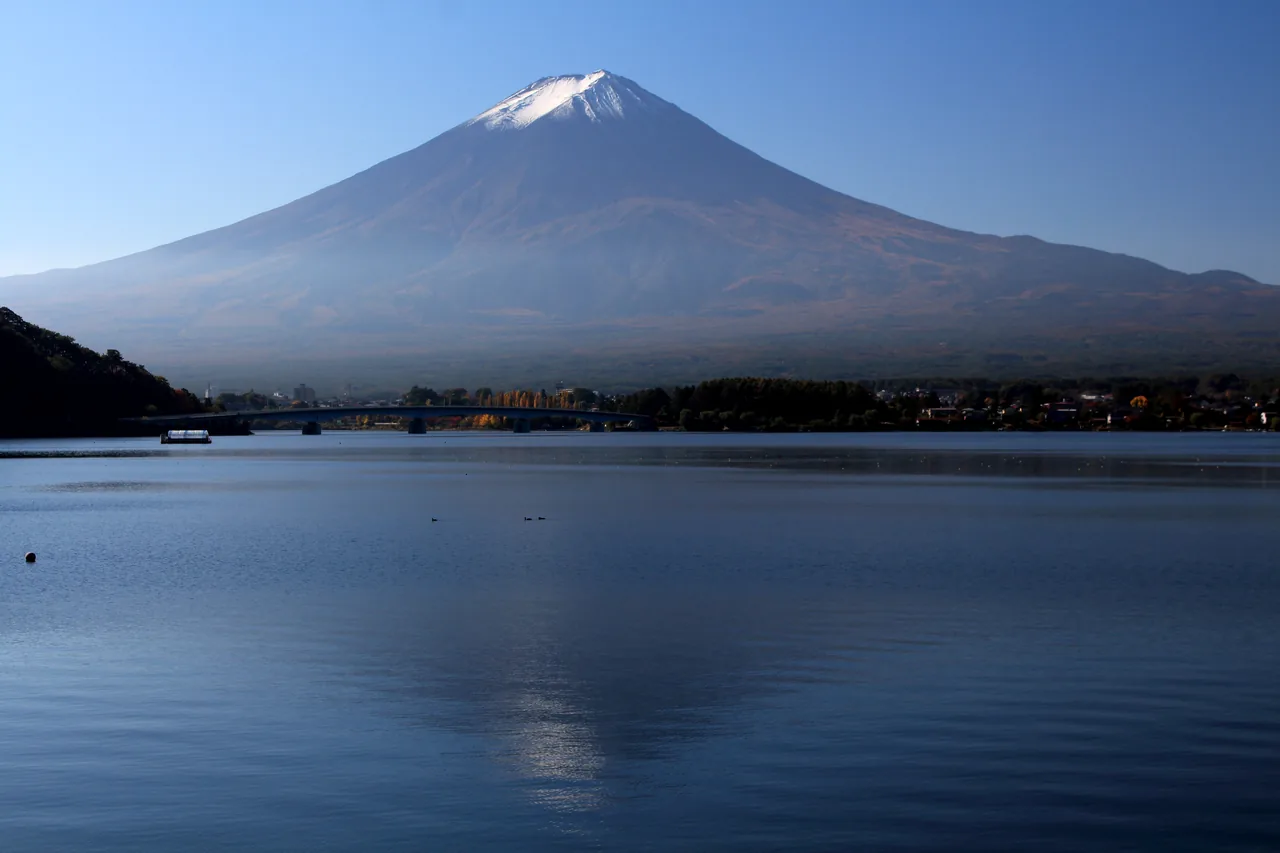
1. Can you really do a Mt Fuji day trip from Tokyo?
Yes — a Mt Fuji day trip from Tokyo is genuinely doable, and the standard base is Lake Kawaguchi (Kawaguchiko), about two hours from Shinjuku. Tens of thousands of visitors do exactly this every year, and with the direct limited express it is one of the easier big day trips out of the city.
But before you get excited, two honest caveats that the glossy photos never mention. First, Mt Fuji is frequently hidden by cloud. The mountain is tall enough to brew its own weather, and cloud tends to build from mid-morning, especially in summer. A clear shot is far from guaranteed, so timing and luck both matter. Second, a day trip is long and tight. You will spend four-plus hours on transport, which leaves roughly six to eight hours on the ground. That is enough for one focus done well, not for “everything.”
One more thing to clear up immediately: a day-tripper does not climb Fuji. Climbing is a separate, permit-only, overnight activity that runs only from July to early September. The closest a day visitor gets to the summit is the Subaru Line 5th Station at 2,300 metres, reached by road. More on that below. If the climb itself is what you are after, see our guide to climbing Mt Fuji.
2. Will you actually SEE Mt Fuji? (read this first)
The single biggest disappointment on this trip is arriving to find Fuji buried in cloud — so manage expectations and stack the odds in your favour. The mountain is visible far less often than the marketing suggests, and the difference between a magic day and a wasted one usually comes down to season, time of day, and one quick check before you leave.
When Fuji is clearest
Fuji shows itself most reliably in the dry winter air, roughly November through February, when it is also snow-capped and at its most iconic. As a rough illustration (treat these as indicative, not official), February sees the mountain fully visible on about 79% of days, December clears on something like 86% of mornings, and November tops 55%. Summer is the worst stretch: humidity, haze, and the rainy season in June routinely smother the view, and the peak is a bare brown cone rather than a white pyramid.
When in the day
Go early. The clearest window is roughly 6:00–8:00 in the morning, before the sun heats the slopes and cloud starts rolling in after around 10:00. An afternoon arrival in summer is the classic recipe for seeing nothing.
The snow-cap calendar
If a snow-capped Fuji is the photo you want, time it right. The first snowfall (hatsukanmuri) usually lands in early October, though it can come far later — 2024 set a record-late first snow on November 6. The cap typically lingers from mid-October through May or even June, then melts off for high summer. So do not promise yourself a white peak in early October, and do not expect one at all in July and August.
For the wider seasonal picture across Japan, see our best time to visit breakdown.
3. How do you get to Kawaguchiko from Tokyo?
There are three sensible ways from Tokyo to Kawaguchiko Station: the direct Fuji Excursion limited express, the highway bus, or the JR Chuo Line with a transfer at Otsuki. The Fuji Excursion is the most comfortable and the most reliable; the bus is the cheapest; the Chuo route is the flexible fallback.
| Mode | Time | One-way fare | Reserve? | Notes |
|---|---|---|---|---|
| Fuji Excursion limited express (direct Shinjuku → Kawaguchiko) | ~1h55 | ¥4,200 (¥2,580 fare + ¥1,620 express fee) | Yes — all seats reserved, no non-reserved car | Only about 4 round trips a day. Book up to a month ahead via Eki-net or JR East ticket offices. Bypasses road traffic entirely. |
| Highway bus (Busta Shinjuku → Kawaguchiko Station) | ~1h45 (no traffic) | ~¥2,200 (~¥2,000 online) | Recommended (seat-based) | Keio/Fujikyu, about 2 per hour. Cheapest direct option, but weekend and holiday road congestion can push it past 3 hours. Busta is 2 minutes from Shinjuku’s New South Exit. |
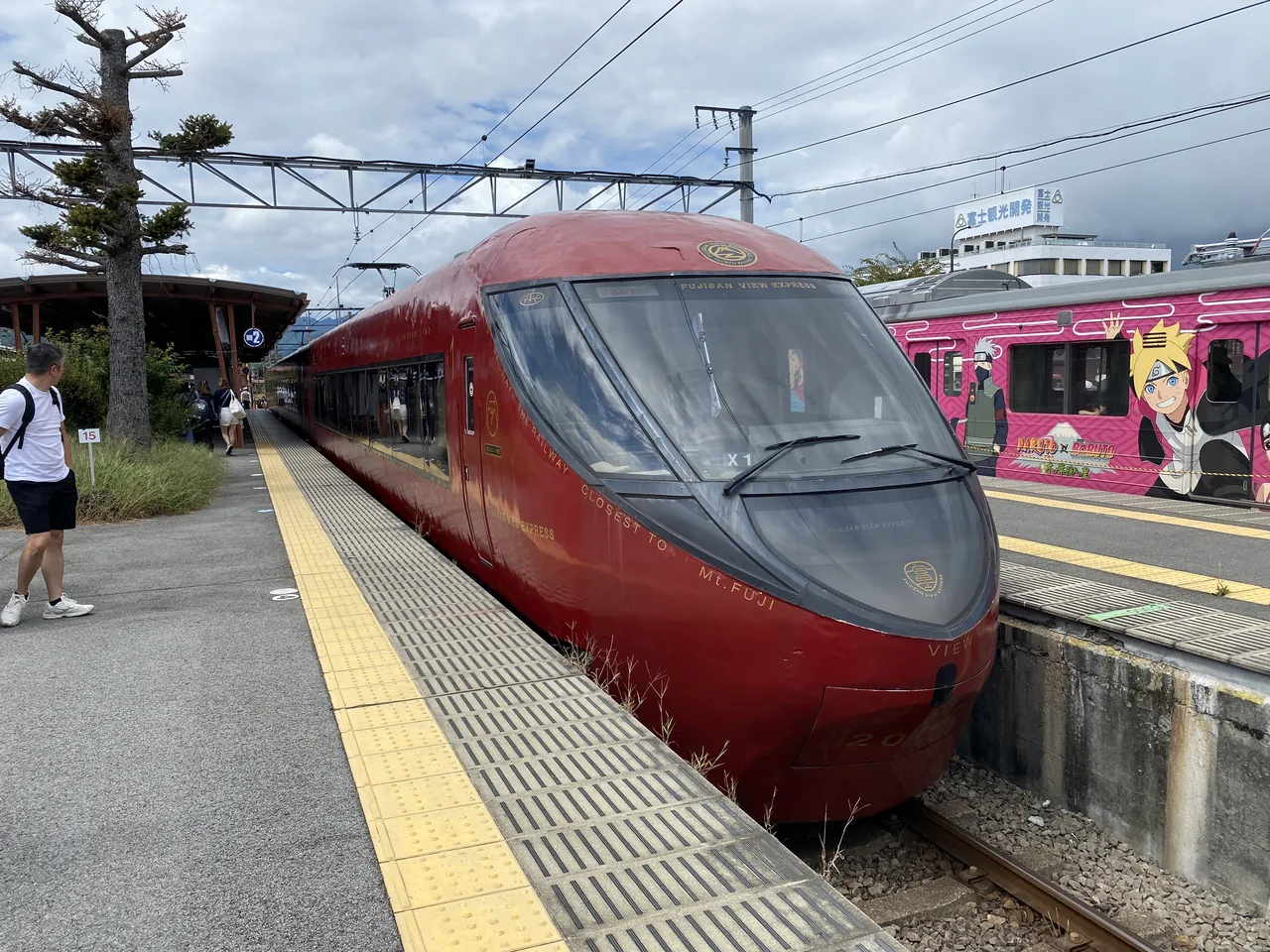
| JR Chuo Line → Otsuki → transfer to Fujikyu Railway → Kawaguchiko | ~2h–2h35 | ~¥2,600–3,600 depending on local vs limited express | Limited-express reservation optional | One transfer at Otsuki. The scenic “Mt. Fuji View Express” runs the Fujikyu leg twice a day (extra reserved-seat fee). |
| Highway bus from Tokyo Station / Shibuya | ~2–2.5h | ~¥2,300 | Yes | Alternative departure points if those are closer to your hotel. |
Realistic door-to-door times: the Fuji Excursion lands around two and a quarter hours; the highway bus is two to three hours-plus once traffic is in the mix.
If you are working out which rail tickets to pre-book, our rail pass and ticket explainer walks through the reservation process.
4. Is the Japan Rail Pass worth it for this trip?
The nationwide Japan Rail Pass only partly covers this route, so for a Fuji day trip the JR Tokyo Wide Pass is usually the smarter buy. The wrinkle is that the final leg into Kawaguchiko runs on a private railway the JR Pass does not touch.
The three passes that matter
- Japan Rail Pass (nationwide): covers only the Shinjuku → Otsuki section (the JR Chuo part). The Otsuki → Kawaguchiko leg is Fujikyu Railway, a private line, so you pay roughly ¥1,770 extra one-way on the Fuji Excursion (¥1,170 fare + ¥600 express fee). Fine if you already hold the pass for a longer trip, but not a reason to buy it for Fuji alone.
- JR Tokyo Wide Pass — the value pick here: ¥16,000 for 3 consecutive days, and it covers the Fuji Excursion in full, both the JR and Fujikyu segments (special panorama seats need a small extra fee). It also covers Nikko, Karuizawa, and other day trips, so it pays off fast if you are doing more than one excursion. It rose from ¥15,000 to ¥16,000 on March 14, 2026 (child ¥8,000), so budget ¥16,000.
- Mt. Fuji Pass (Fujikyu tourist pass): covers Fujikyu buses including the Subaru Line 5th-Station bus, the sightseeing loops, local trains, and some attraction admissions, in 1/2/3-day versions. Worth it only if you plan to hit many local spots in a day; verify the current price before buying.
Pair whichever you pick with a tap-and-go Suica or Pasmo IC card for the local loop buses and convenience stores.
5. How do you get around the Fuji Five Lakes once you arrive?
From Kawaguchiko Station, the colour-coded sightseeing loop buses are your lifeline — the lakes are far apart and the iconic spots are not walkable. Buy the area pass, learn the three lines, and you can hit most of the headline viewpoints without a car.
| Line | Frequency | Covers |
|---|---|---|
| Red Line (Lake Kawaguchi loop) | Every ~15 min | Oishi Park, Music Forest, the ropeway, the north shore — the busiest and most useful line. |
| Green Line (Saiko loop) | Every ~30 min | South shore and Lake Saiko, including the Iyashi-no-Sato thatched village. |
| Blue Line (Shojiko / Motosuko) | Every ~1–2 hrs | Lake Shoji and Lake Motosu (the ¥1,000-banknote view). Sparse service — the main DIY trap. |
| Fujikko bus | ~Hourly | Toward Fujiyoshida, Oshino, and Lake Yamanaka. |
The pass to buy
The Kawaguchiko–Saiko–Motosuko area pass is ¥1,500 for one day or ¥2,000 for two (children half price). Buy it at the Kawaguchiko Station bus booth, online, or on board (card and PayPay accepted). There is a separate Fujiyoshida–Oshino–Yamanakako pass at ¥1,800 for one day or ¥2,200 for two if your plan leans that direction.
The iconic spots like Oishi Park and Chureito genuinely need the bus or train; do not plan to walk between lakes.
6. Is one day actually enough?
One day is enough for a focused visit, but it is tight, and the last return service is the constraint that shapes everything. Be honest with yourself about what fits before you start chaining attractions.
A realistic day looks like this: leave Shinjuku around 7:00–8:00, arrive at Kawaguchiko around 9:00–10:00, and have roughly six to eight hours on the ground before you have to start heading back. That is plenty for, say, Chureito plus the north shore, or the 5th Station plus a lakeside stroll. It is not enough to do all of them well.
When to stay overnight instead
Consider an overnight if you want both the 5th Station and multiple lakes or Chureito, if you are chasing a clear sunrise Fuji (the best light of all), or if you are travelling on a busy weekend when transport and queues eat your margin. A night by the lake also gives you a second roll of the visibility dice if day one clouds over.
7. DIY or a guided tour from Tokyo?
Go DIY if you want to save money and pick your own viewpoints; take a guided bus tour if you want zero logistics and no risk of a sold-out return. Both are valid — it comes down to how much you value flexibility versus a hands-off day.
What a typical tour covers
A standard bus day tour from Tokyo usually bundles the Mt Fuji 5th Station, Oshino Hakkai, and Lake Kawaguchi (ropeway or Oishi Park), often finishing at Gotemba Premium Outlets or Hakone. Expect about 10–12 hours with central Tokyo pickup. Shared coach tours run roughly US$60–120 (budget options from around $52); private tours cost considerably more. Note that in winter, from mid-November to early April, the 5th Station is usually closed and tours swap in Oishi Park instead.
Who each suits
- Take the tour if: you have one shot at Fuji, you are travelling on a weekend, you want far-apart spots chained together without a single bus timetable to read, and a guaranteed return matters more than the price.
- Go DIY if: you want to be cheaper and flexible, you would rather skip the outlet-shopping filler, and you are happy to plan bus times and book your own return seat.
If a guided day works for your dates, this is the easiest way to lock one in:
Either way, get your phone sorted before you go — a working data plan is what makes live-cam checks and bus-time lookups possible on the ground.
8. Chureito Pagoda: the iconic Mt Fuji shot
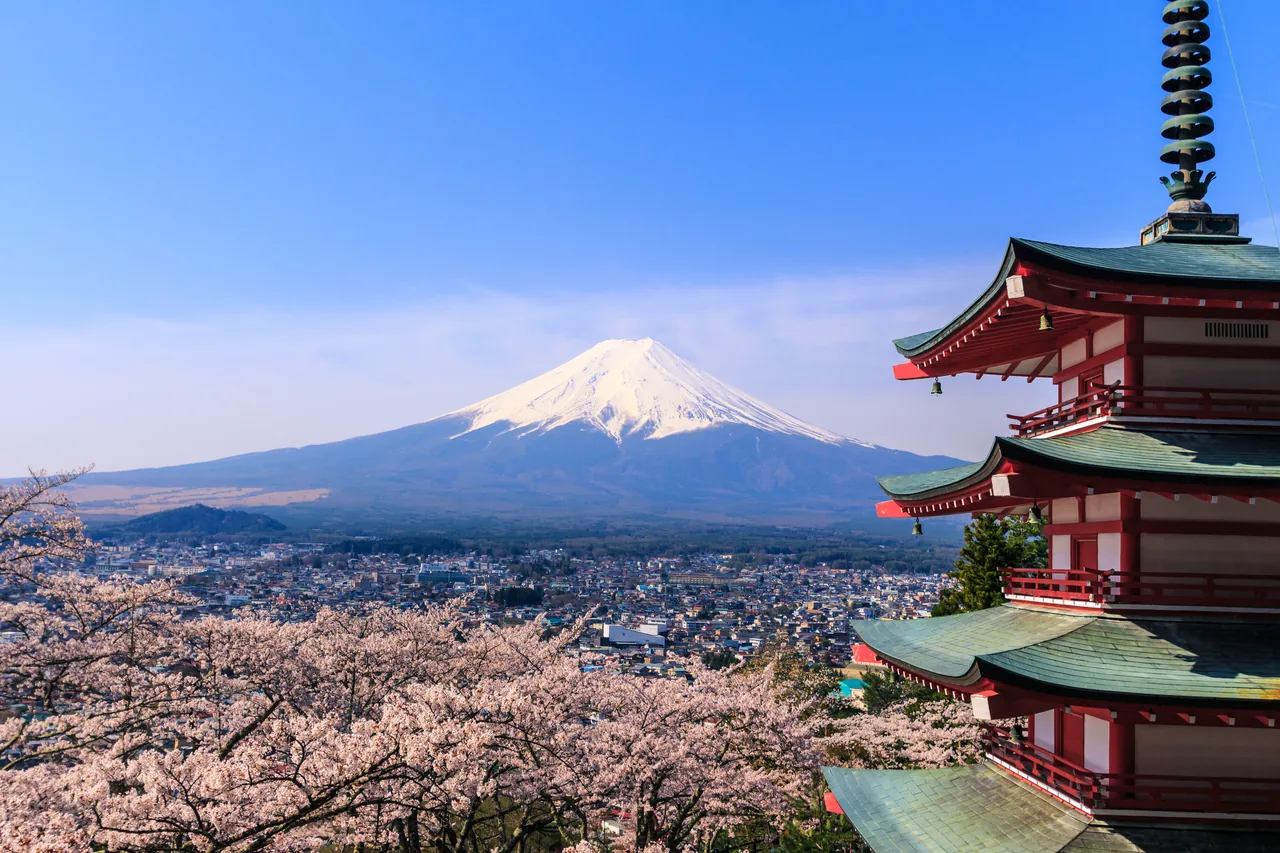
The five-story red Chureito Pagoda framing Mt Fuji is the photo that put Kawaguchiko on the map — and reaching it means climbing 398 steps at Arakurayama Sengen ParkMap. It is the single most recognisable Fuji viewpoint, and on a clear spring day with cherry blossoms it is genuinely spectacular.
The pagoda itself (the Chureito, a peace memorial) sits above the town of Fujiyoshida. From the park entrance it is roughly 398 steps to the upper viewing deck, a 10–20 minute climb; there is a gentler slope path for anyone who cannot manage the stairs. Entry is free (parking runs ¥500–1,500) and the park is open 24 hours, so sunrise and early morning — your best bet for a clear mountain — are on the table.
Getting there and timing the blossoms
Access is about a 20-minute walk from Shimoyoshida Station on the Fujikyu Line. The cherry blossoms peak around mid-April, roughly 7–10 days later than Tokyo because of the elevation, so a Fuji-plus-pagoda-plus-sakura shot needs careful timing.
This spot is also a reminder that you are a guest in a real community — please read our Japan etiquette primer before you go, and keep to the marked paths.
9. Oishi Park and the reflected Mt Fuji
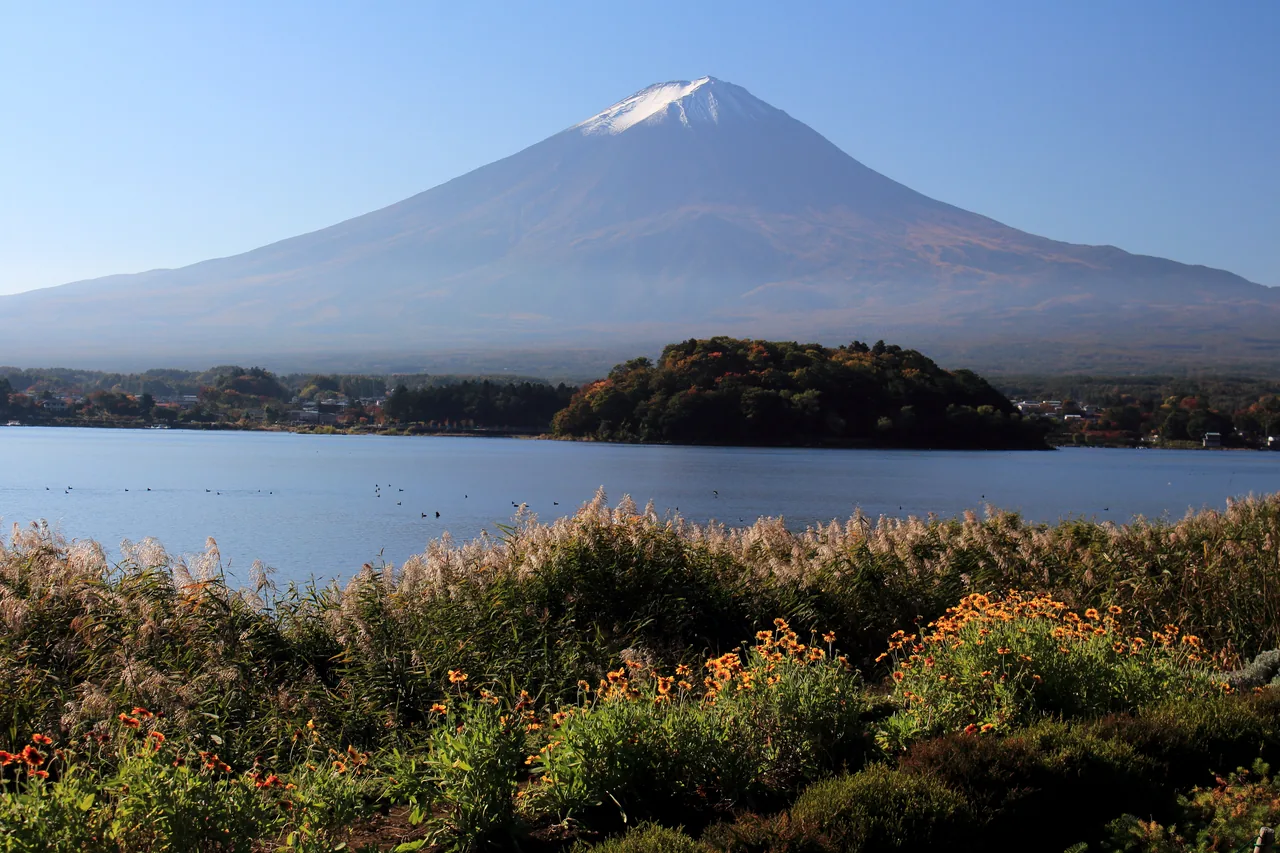
For the classic Fuji-over-the-lake view with seasonal flowers in the foreground, head to Oishi ParkMap on the north shore of Lake Kawaguchi. It is the easiest place to catch Sakasa Fuji, the mirror-image of the mountain reflected on calm water.
The park’s “Flower Road” frames Mt Fuji and the lake with colour through the seasons, and on a still, clear morning the reflection on the water is the easy win that more remote viewpoints make you work for. The on-site Kawaguchiko Natural Living Center is free, open roughly 9:00–17:45, and has a Fuji-view café — the lavender ice cream is a local ritual.
Flowers by season
- Lavender: late June to mid-July.
- Kochia (the red bushes): August to October.
Access: take the Red Line bus to the “Kawaguchiko Natural Living Center” stop. For the reflection, you need calm, windless, clear conditions — another reason to come early before the breeze and cloud pick up.
10. Mt Tenjo by the Panoramic Ropeway
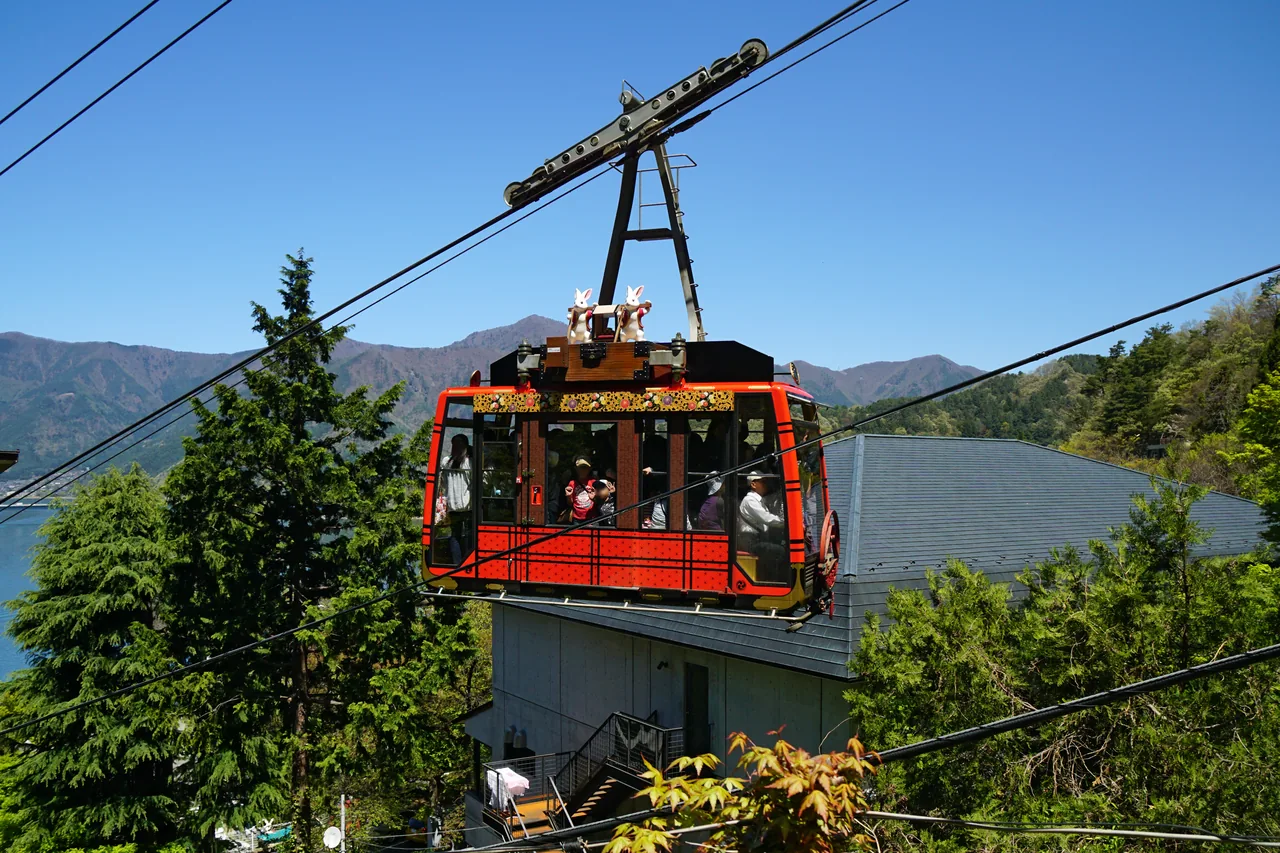
The Mt. Fuji Panoramic RopewayMap hauls you up about 400 metres in three minutes to a deck on Mt Tenjo with a sweeping panorama of the lake and Fuji — but check the dates, because it is closed for much of 2026.
The cable car (formerly the Mt. Kachi Kachi Ropeway) is themed around the “Kachi-Kachi Yama” folktale, a rabbit-versus-tanuki tale you will see playfully signposted at the top. The Tenjozan Park deck gives you a high, easy panorama without a hike, which makes it a popular quick add-on to a north-shore visit.
Price and hours
- Round trip: adult ¥1,000 / child ¥500 (one-way ¥600 / ¥300).
- Hours: 8:30–17:00, later in summer, with cars every 5–10 minutes.
If it is closed when you visit, Oishi Park and Chureito still deliver the headline views from ground level.
11. Oshino Hakkai: the eight spring ponds
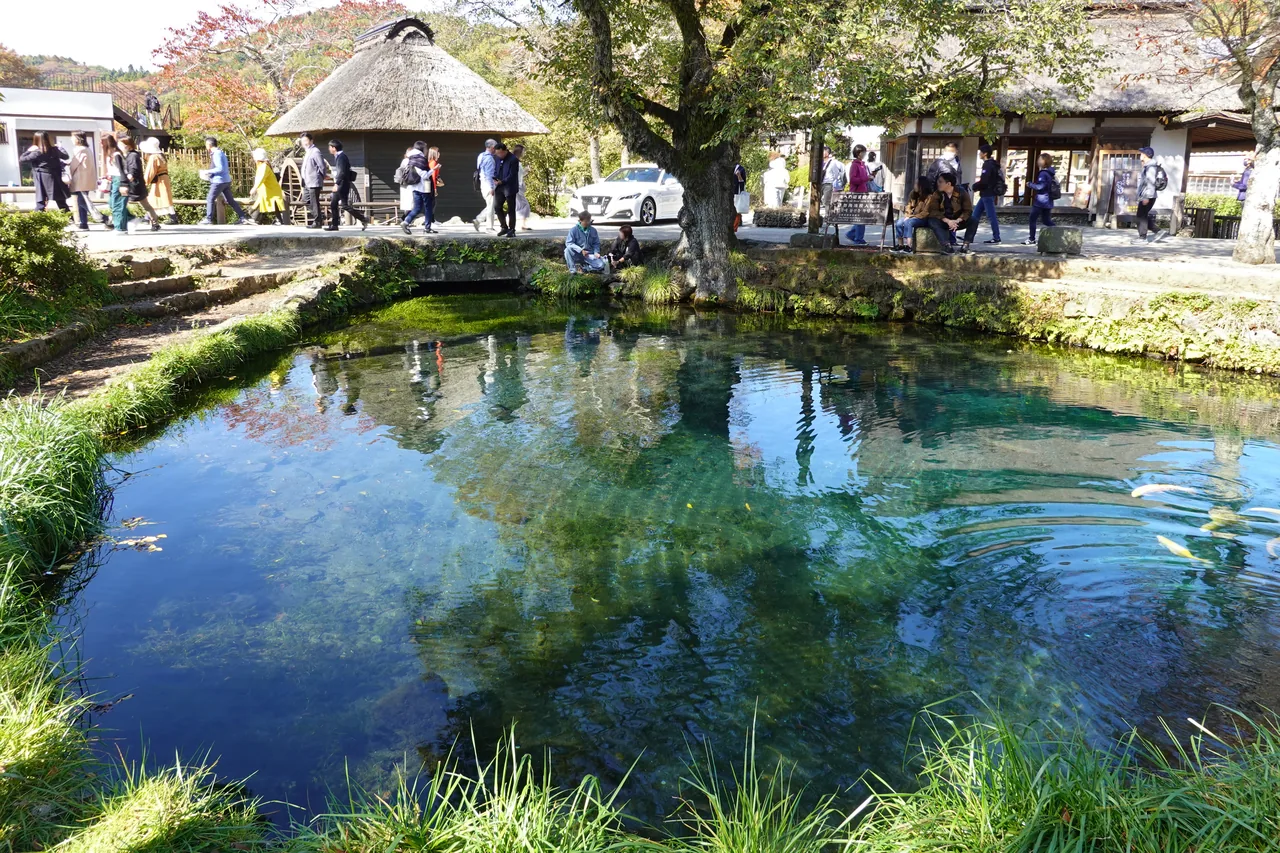
Oshino HakkaiMap is a cluster of eight crystal-clear spring-water ponds in a thatched-roof village with Mt Fuji behind it — and it is best visited early, before the crowds arrive. The water is Fuji snowmelt, filtered through lava over roughly 80 years, and it is startlingly clear.
Waku-ike is the best-known pond and the showpiece, and the village setting of old thatched houses against the mountain is genuinely photogenic. Entry to the ponds is free; there is one paid museum, the Hannoki Bayashi Shiryokan, for ¥300. From Kawaguchiko Station the bus takes about 25 minutes and costs around ¥520.
It pairs naturally with the Fujiyoshida photo spots in the next section, since both sit on the same side of the lakes.
12. Fujiyoshida photo spots and the overtourism question
Fujiyoshida has two of the most photographed Fuji backdrops anywhere — and both have become flashpoints for overtourism, so how you behave there matters. These are teaching moments as much as photo stops.
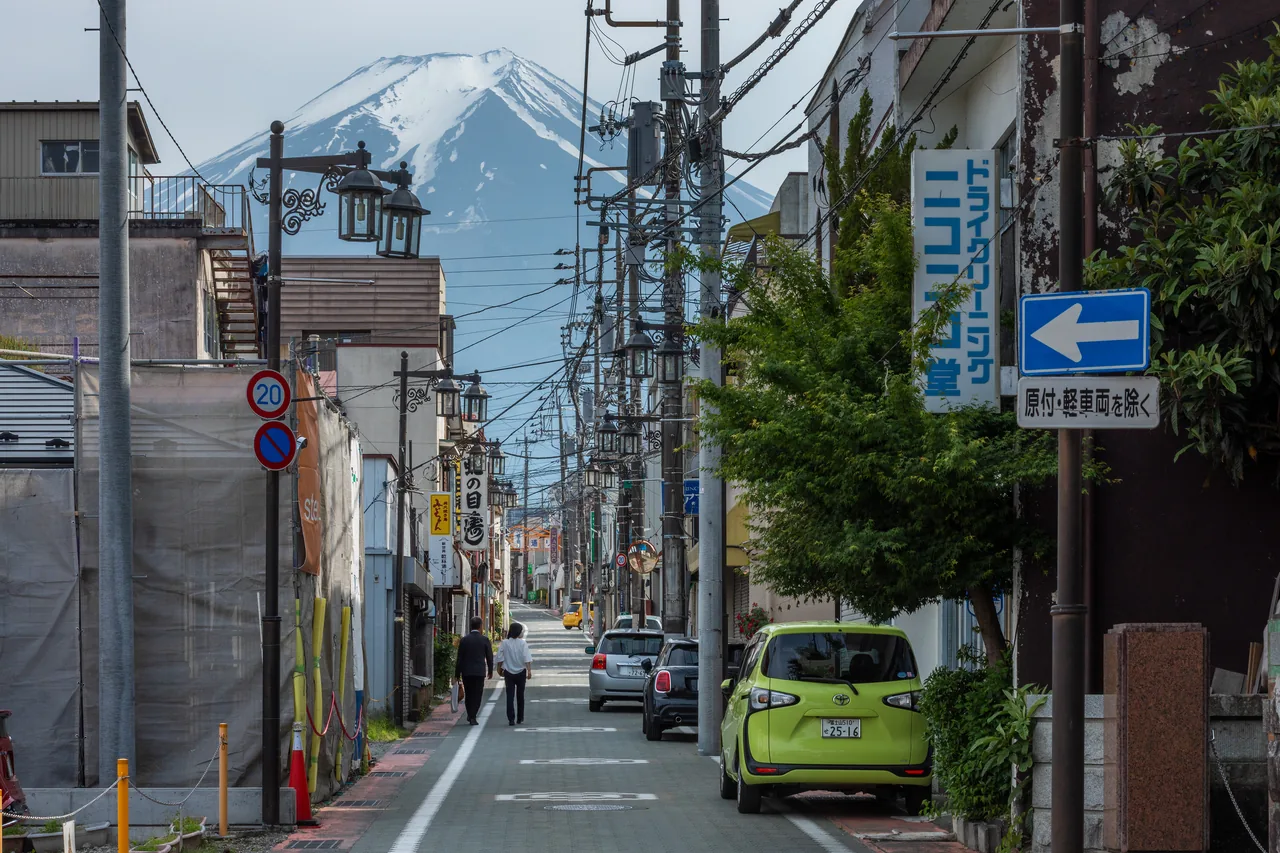
Honcho Street
Honcho Street FujiyoshidaMap is a retro Showa-era shopping street with Mt Fuji sitting dead-centre at the end of the road — the “Fuji over the street” shot. It is about a 5-minute walk from Shimoyoshida Station.
The “Lawson Mt Fuji” spot
Lawson Kawaguchiko EkimaeMap is the convenience store where Fuji appears to perch on the roof. It became a global overtourism saga: a black barrier went up in May 2024, was poked full of holes, came down in August 2024, and a new lower barrier (about 1.4m) returned in August 2025. As of 2026, expect a low barrier; you can still get the shot from beside it. Do not cross the road, and do not block the store or the pavement.
Treat the Lawson spot as an etiquette lesson, not a must-do. The broader point: this is a working town, not a theme park.
13. The Subaru Line 5th Station: as close as a day-tripper gets
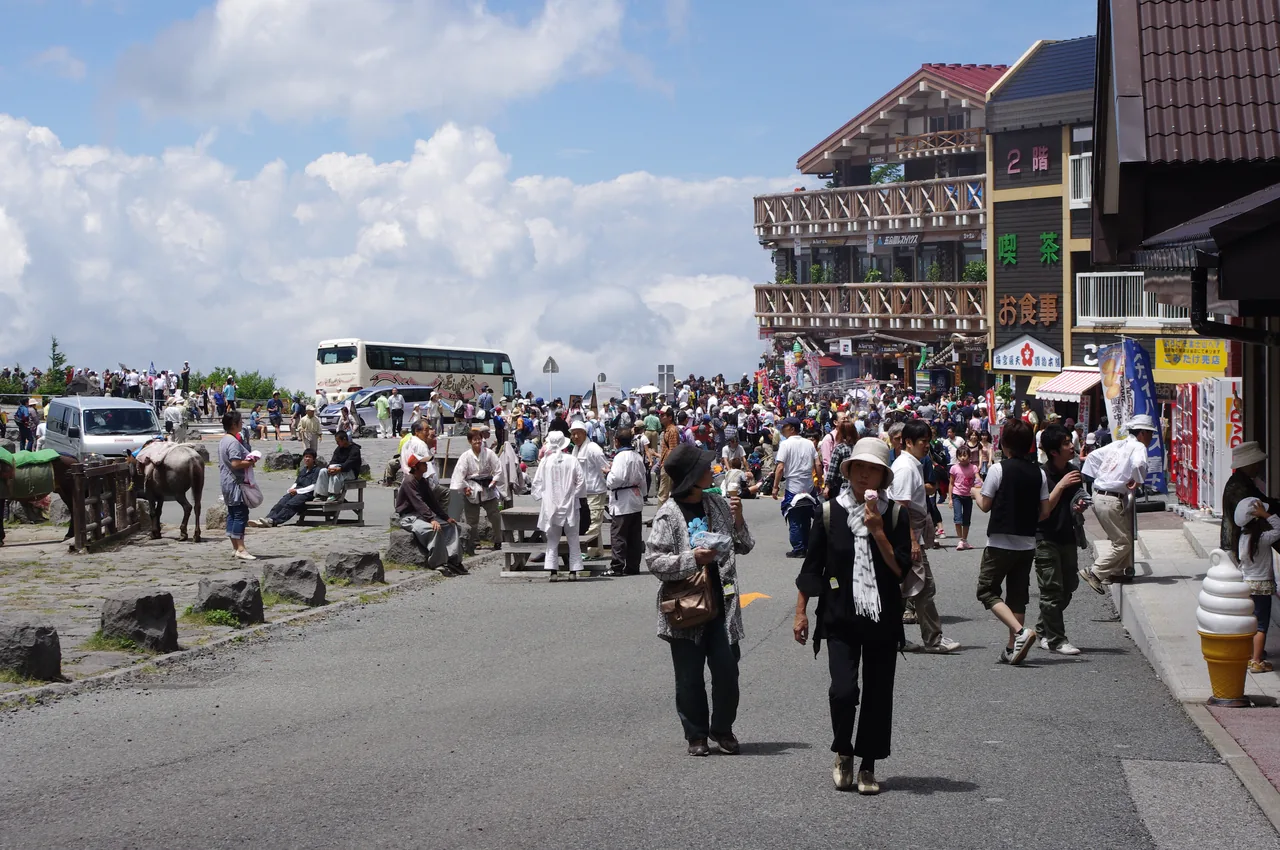
The closest a day visitor gets to the mountain is the Mount Fuji 5th StationMap at 2,300 metres, reached by bus from Kawaguchiko in about 50–55 minutes. It is not the summit, but it is high on Fuji’s flank with shops, food, and a big view — and it is reliably cold.
The bus and the cost
Two fares apply. The regular route bus is ¥1,950 one-way / ¥3,000 round-trip. During the summer climbing season, when private cars are banned, a dedicated climbing-season bus runs at ¥2,000 one-way / ¥3,400 round-trip (children half price; the round-trip is valid for two days). Buy the round-trip online or at the office, not on board. There are 5–7 buses a day off-season and more during climbing season.
What is up there for non-climbers
Shops, restaurants, an observation viewpoint over Fujiyoshida and Lake Yamanaka, the Komitake Shrine, and the start of the level Ochudo trail. It is a satisfying half-day in itself.
Seasonal note: the 5th-Station complex is open from about mid-April to mid-November; in winter it is largely closed and the road can shut on snow days. During climbing season (2026 is roughly July 3 – September 10), the Subaru Line closes to private cars, so it is shuttle or route bus only.
14. More around the lakes: thrills, museums, and what to eat
If you have time or the weather kills the view, the lakes have a strong bench of rainy-day and rest-day options — plus two regional noodle dishes worth planning a meal around.
Fuji-Q Highland
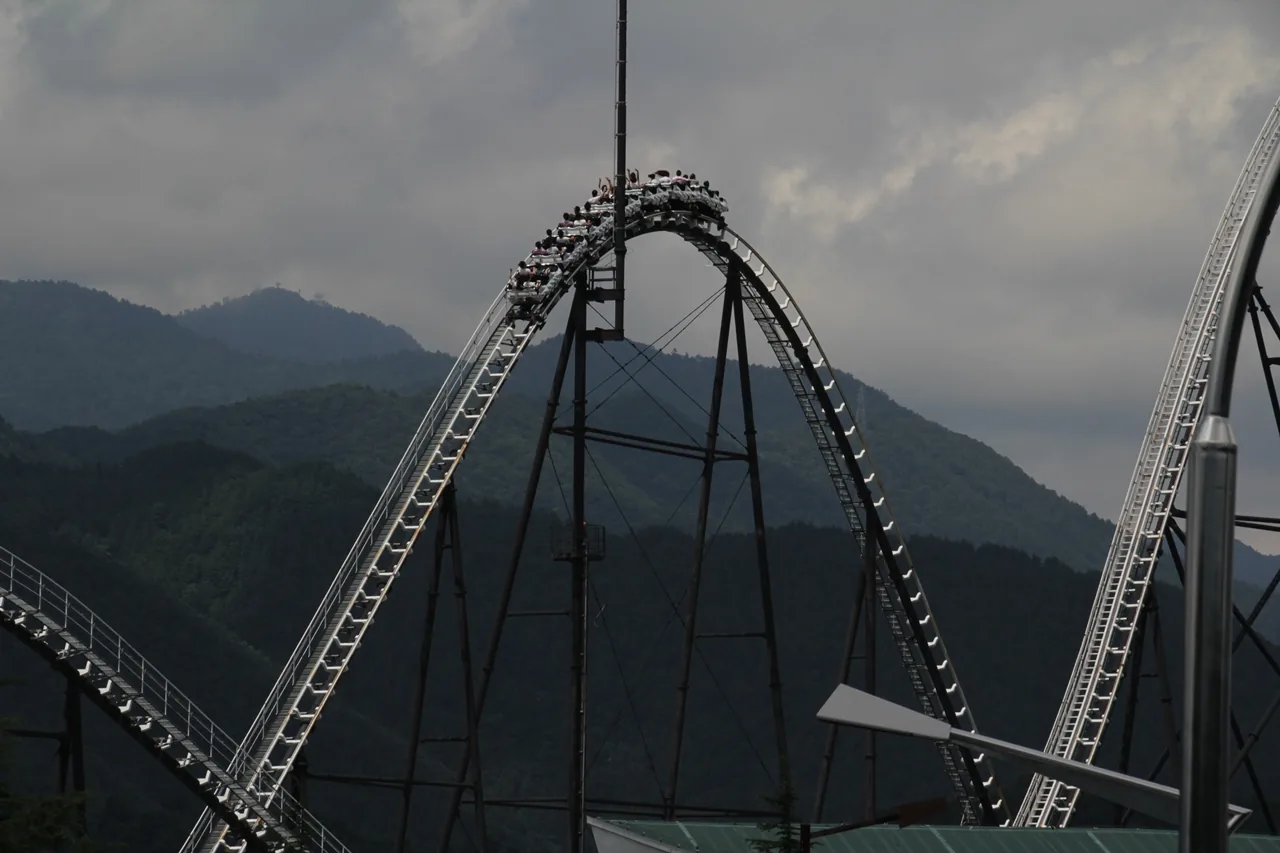
Fuji-Q HighlandMap is a record-setting thrill park — Fujiyama, the 121°-drop Takabisha, the spinning Eejanaika 4D — with family-friendly Thomas Land alongside, right next to Fujikyu-Highland Station. Entry is free; you ride either on a 1-Day Pass (adult ¥6,000–7,900, dynamically priced) or pay-per-ride (big coasters around ¥2,000 each). Budget a half to full day.
Culture
- Kubota Itchiku Art Museum: Kubota Itchiku Art MuseumMap showcases the tsujigahana kimono series “Symphony of Light” in a Gaudí-esque building and garden. ¥1,500, 10:00–17:00 (to 16:30 in winter), closed Tuesdays. About an hour.
- Kawaguchiko Music Forest: Kawaguchiko Music ForestMap is a European-style park of music boxes and automatic instruments with a rose garden and Fuji views. Weekday ¥1,800 / weekend ¥2,100 (up to ¥2,300 at peak), 10:00–17:30 (to 17:00 in winter).
What to eat
- Yoshida no Udon (Fujiyoshida): exceptionally thick, firm, chewy noodles in a miso-soy broth — a local specialty you will not find done the same way elsewhere.
- Houtou (Yamanashi): thick, flat noodles in a rich miso-and-vegetable hotpot with kabocha pumpkin. The best-known spot is Houtou Fudou KawaguchikoMap. The branch opposite Kawaguchiko Station is the easy one to reach; its cloud-like white Higashikoiji branch, a short drive away, is an architectural landmark in its own right.
15. When is the best time to visit the Fuji Five Lakes?
If you want the clearest Fuji and a snow cap, come in late autumn or winter; if you want flowers, come for spring shibazakura or early-summer lavender and accept hazier views. There is no single perfect month — it is a trade-off between views, flowers, and crowds.
| Season | Fuji visibility | What is on | Verdict |
|---|---|---|---|
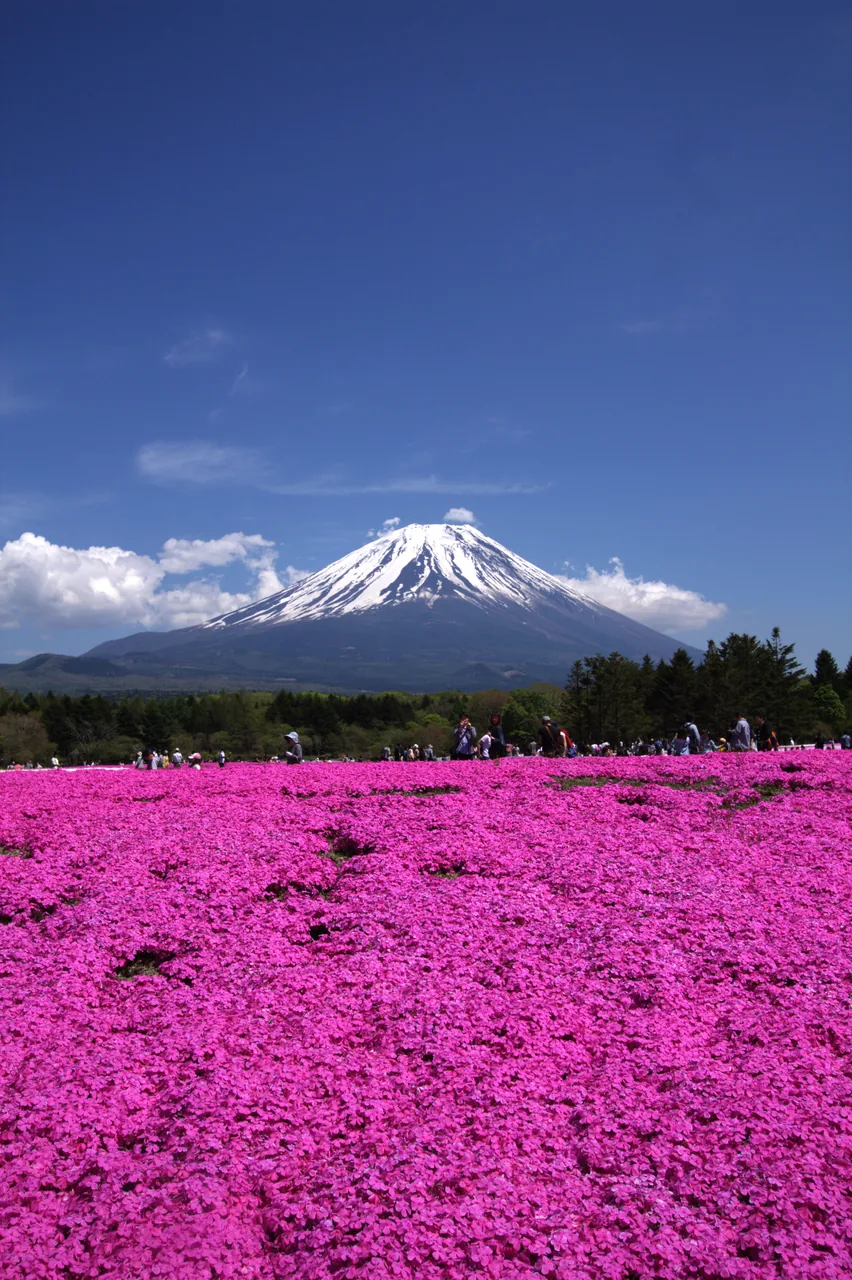
| Spring (Apr–May) | Mixed; improving | Cherry blossoms ~mid-April; Fuji Shibazakura Festival (pink moss phlox) ~Apr 12 – May 25, 2026 near Lake Motosu | Great for flowers and the Chureito sakura shot, but blossom timing is a gamble. |
| Early summer (Jun) | Worst (rainy season) | Lavender at Oishi Park late June (2026 festival cancelled, blooms free) | Lush but the haziest, wettest views of the year. Manage expectations. |
| Summer (Jul–Aug) | Poor (haze) | Climbing season; biggest crowds; bare brown peak | The season to climb, the worst season to photograph. Go early or not at all for views. |
| Autumn (Sep–Nov) | Improving to excellent | Kochia red Aug–Oct; Fuji-Kawaguchiko Momiji (Maple Corridor) Festival ~November with evening illumination | ★ November is arguably the best month: foliage, clearing air, and an early snow cap together. |
| Winter (Dec–Feb) | Clearest of all | Snow-capped Fuji, sharpest Sakasa Fuji reflections, fewest crowds | The cleanest views and the iconic white peak; just dress for the cold and watch for winter closures. |
For the cross-Japan view of seasons, see our best time to visit overview — and if you are locked into high summer, our honest takes on travelling Japan in July and what August is really like will help you set expectations for the haze.
16. A clear-weather one-day plan and a packing checklist
Here is a focused, realistic one-day plan for a clear morning — built around catching Fuji early, before cloud and crowds arrive. Adjust it to your one chosen focus rather than trying to fit everything.
The plan
- Before you leave Tokyo: check a live cam (Fujisan Watcher / isfujivisible.com). If it is clear, go; if it is socked in, consider switching the day.
- ~7:00–8:00: board your reserved Fuji Excursion from Shinjuku. Your return seat is already booked.
- ~9:30: arrive Kawaguchiko, drop bags in a station locker, buy the area bus pass.
- Morning (clearest light): head straight to your headline view — Chureito or Oishi Park — while Fuji is still out.
- Midday: lunch (houtou opposite the station), then one more nearby stop: Oshino Hakkai or the north shore.
- Mid-afternoon: a café, a museum, or the ropeway (if open), then back to the station in good time.
- Late afternoon / early evening: catch your booked return. Do not cut it fine.
Packing and practical checklist
- Return seat booked (the non-negotiable).
- Layers, including a real jacket if you are going to the 5th Station — it is cold even in summer.
- Cash and a stash of ¥100 coins (some lockers at Kawaguchiko Station need eight ¥100 coins for the large size; medium runs ¥500–600).
- A topped-up IC card for the loop buses and conbini.
- A working data connection for live cams, maps, and bus times.
Sort your connectivity before you fly — an eSIM activates the moment you land, no SIM-swapping required.
Flying in just before this trip? Our airport-to-city transfer rundown gets you into Tokyo smoothly the day before.
17. What to read next
Plan the rest of your Japan trip around the Fuji day with these.
Plan the whole trip
Start with our complete Japan travel handbook for routes, budgets, and seasons nationwide.
Base yourself in Tokyo
Where to stay, how to move, and what to see in our Tokyo trip planner.
Cloudy forecast?
If Fuji is a washout, our rainy-day Tokyo courses keep the day going indoors.
Travelling with kids
Pair Fuji-Q with a park day using our Tokyo Disney Resort planner.
Time it right
Festivals and seasonal events across the country in our Japan festival calendar.
Sort the rails
Reservations and pass maths in our rail pass explainer, plus the etiquette basics for being a good guest.