
Kamakura Day Trip from Tokyo (with Enoshima): The Easiest Big Day Trip
A Kamakura day trip from Tokyo is the shortest and easiest of the city’s classic escapes — about 55 to 60 minutes direct by JR, leaving a long day on the ground for the Great Buddha, hillside temples, the seaside Enoden train, the famous Slam Dunk railway crossing, and Enoshima island at sunset. The catch is not distance but crowds: hydrangea weekends in June and two-car local trains mean queues, so the real skill is timing. Here is how to plan it well, what to see, and what to skip.
| A Kamakura day trip from Tokyo is realistic and genuinely easy — the shortest of Tokyo’s big day trips. The JR Yokosuka Line runs direct from Tokyo Station in about 55 to 60 minutes, so round-trip rail is roughly two hours and you are left with a relaxed eight-hour day to actually explore. | |
| Kamakura plus Enoshima in one day is doable but full, so decide your fork first. A half-day (about four hours) covers the Kamakura core — Hachimangu, Komachi-dori, the Great Buddha and Hasedera; the full day adds the Enoden coast and Enoshima for sunset. Cutting Enoshima makes the day calm rather than rushed. | |
| Crowds are the real constraint, not the train ride. June hydrangea weekends, the Slam Dunk crossing pilgrims, and two-car Enoden trains create genuine congestion. The fix is a weekday and an early start, not a faster route — at peak times you can wait two or three departures just to board the Enoden. | |
| For most people the smart combo is the JR Yokosuka Line plus the Enoden one-day “Noriorikun” pass at ¥800. It is the fastest, cheapest sensible setup and pays off after about three Enoden hops, which a typical day easily reaches. JR-pass holders ride the JR free and just add the ¥800 Enoden pass. | |
| Do not promise yourself Mt Fuji, and treat the famous anime crossing with respect. Fuji shows only on clear days, best in winter mornings; the Slam Dunk crossing at Kamakurakoko-mae is a live railway level crossing on a road residents use, now actively managed with guards and a designated photo area — shoot from the marked spot and never step into the road. |
1. Can you really do a Kamakura day trip from Tokyo?
2. Kamakura and Enoshima in one day, or just Kamakura?
3. How do you get to Kamakura from Tokyo?
4. Which pass should you buy? Enoden Noriorikun vs the Freepass
5. The Great Buddha (Kotoku-in)
6. Hasedera: Kannon, the cave, the sea view and the hydrangea path
7. Tsurugaoka Hachimangu and Komachi-dori
8. Kita-Kamakura’s Zen temples: Engaku-ji, Kencho-ji, Meigetsu-in
9. Hokokuji, the bamboo temple, and east Kamakura
10. The Enoden coast and the Slam Dunk crossing
11. Enoshima: the island, the Sea Candle and the sunset
12. Can you actually see Mt Fuji from Kamakura?
13. When is the best time to visit Kamakura?
14. Kamakura vs Nikko vs Hakone vs Kawaguchiko
15. DIY or a guided tour, and where to stay if you stay over
16. A realistic one-day Kamakura plus Enoshima plan (hour by hour) and tips
1. Can you really do a Kamakura day trip from Tokyo?
Yes — a Kamakura day trip from Tokyo is not only doable, it is the easiest of the city’s big day trips, with a direct JR ride of about 55 to 60 minutes each way. That short hop leaves you a long, unhurried day on the ground: temples, the Great Buddha, a seaside train and a beach, all reachable on a single morning train out of Tokyo.
The numbers make the case. Round-trip rail is only about two hours total, which leaves roughly eight hours to actually explore once you allow for a sensible morning start. Compared with Hakone (around 90 minutes each way) or Nikko (two to three hours each way), Kamakura barely costs you any travel time — you are stepping off the train at Kamakura StationMap before you have properly finished your coffee. That is exactly why it suits families, older relatives and anyone who wants a real change of scene without a punishing commute.
What fits in a day? Comfortably: the central shrine and the food street, the Great Buddha and the hillside temple of Hasedera, a ride along the coast on the little Enoden line, and — if you start early — Enoshima island for sunset. What does not fit is all of that plus the quiet Zen temples of Kita-Kamakura plus the bamboo temple in the east plus a long beach afternoon. Kamakura holds more than a single day’s worth, so the trick is choosing a focus rather than sprinting between everything.
2. Kamakura and Enoshima in one day, or just Kamakura?
You can do Kamakura and Enoshima together in one day, but it is a full day — so decide honestly between a relaxed half-day in central Kamakura and a packed full day that ends with sunset on Enoshima. This is the single most important planning choice, and the constraint that decides it is crowds, not distance.
The half-day version (about four hours on the ground)
If you want a calm, civilised day, stick to the Kamakura core: Tsurugaoka HachimanguMap and the Komachi-doriMap food street near the station, then a short Enoden hop to Hase for the Great Buddha and Hasedera. That is a satisfying, well-rounded day — a great shrine, two famous Buddhist statues, a sea-view terrace and street food — and you will not feel rushed. It also leaves you back in Tokyo in good time for dinner.
The full-day version (Kamakura plus the coast plus Enoshima)
The full day adds the scenic Enoden ride down the coast — past the Slam Dunk crossing and the surf beaches — finishing on EnoshimaMap island for the Sea Candle tower and a sunset over Sagami Bay. It is a wonderful arc from temple town to seaside, but it is genuinely full: you are committing to several Enoden hops on a low-capacity, two-car line that queues badly on weekends. Build in slack and start early.
If your real goal is a huge, looming Mt Fuji rather than temples and coast, Kamakura is the wrong trip — see our Fuji and Kawaguchiko day-trip guide. And if you want onsen and a volcano-rim loop instead, compare with the Hakone day-trip guide. Both are siblings to this one in our Tokyo day-trip cluster.
3. How do you get to Kamakura from Tokyo?
The best way to Kamakura from Tokyo for most people is the direct JR Yokosuka Line: about 55 to 60 minutes from Tokyo Station for roughly ¥1,034 on an IC card. From the west side of Tokyo the Shonan-Shinjuku Line is the alternative, while the slower Odakyu route is only worth it bundled with the Enoshima-Kamakura Freepass. The Yokosuka Line is the gold standard: frequent, direct, and it drops you right at Kamakura StationMap. (Fares here reflect the JR East increase of 14 March 2026 — check the exact figure at the gate.)
| Route | From | Time | Fare (one-way) | Direct? | Notes |
|---|---|---|---|---|---|
| JR Yokosuka Line ★ best for most | Tokyo Station (also Shinagawa, Yokohama) | ~55–60 min | ~¥1,034 IC (round trip ~¥2,068) | Yes, direct, every ~10–15 min | The gold standard — frequent and straight through to Kamakura. |
| JR Shonan-Shinjuku Line | Shinjuku / Shibuya / Ikebukuro | ~55–70 min | ~¥1,000+ (varies by origin) | Only some trains run through | Only Zushi- or Kurihama-bound trains (about 2/hour) reach Kamakura directly; others make you transfer at Ofuna. |
| Odakyu → Fujisawa → Enoden | Shinjuku | ~90–110 min | ¥1,640 (= the Freepass) | No (transfers) | Roughly twice the JR time; only worth it bundled into the Enoshima-Kamakura Freepass. |
The Shonan-Shinjuku Line trap
One price note for 2026
JR East raised its fares on 14 March 2026 — its first systemwide hike since 1987, with the base starting fare going from ¥150 to ¥160 and an average rise of about 7.8 percent, plus the abolition of the old Tokyo-area discount zones. The JR legs to Kamakura reflect this, so treat the fares above as “about” figures and check the price at the gate. The Enoden and Odakyu were not part of that revision.
If you are weighing a rail pass for your wider trip, our rail pass and shinkansen explainer covers when it makes sense — though for Kamakura specifically, a pass is rarely the deciding factor.
4. Which pass should you buy? Enoden Noriorikun vs the Freepass
For most people the answer is the Enoden one-day “Noriorikun” pass at ¥800 — buy it once you plan three or more Enoden hops, which a typical Kamakura-plus-coast day easily reaches. The Odakyu Enoshima-Kamakura Freepass only wins if you start from an Odakyu station and ride the Enoden heavily; if you will take the Enoden only once or twice, skip every pass and pay per ride.
| Pass | Price (adult/child) | Covers | When to buy |
|---|---|---|---|
| Enoden 1-Day “Noriorikun” ★ default | ¥800 / ¥400 | Unlimited Enoden (all 15 stations) for a day, plus about 20 facility discounts | Best for most. Pays off at roughly three or more hops; a typical day is four to five hops (about ¥900–1,300 pay-as-you-go). |
| Enoshima-Kamakura Freepass (Odakyu) | ¥1,640 / ¥430 (from Shinjuku) | Odakyu round trip Shinjuku ↔ Fujisawa, unlimited Enoden, attraction discounts | Only if you start on the Odakyu line and ride the Enoden a lot — and accept the slower route. |
| Kamakura Free Kankyo Tegata | ¥900 / ¥450 | Kamakura-section Enoden + local buses + discounts | Worth it only if you also bus to the east-Kamakura temples like Hokokuji. |
| JR Tokyo Wide Pass / Japan Rail Pass | (a rail pass) | JR to Kamakura (Yokosuka / Shonan-Shinjuku). NOT the Enoden. | If you already hold one: ride the JR free, then buy the ¥800 Noriorikun for the Enoden. |
The simple decision
From Tokyo or Yokohama, the cleanest combination is the JR Yokosuka Line plus the ¥800 Noriorikun — fastest, cheapest sensible setup, best for most travellers. If you already hold a JR Pass, do the same: ride the JR free and add the Noriorikun for the Enoden. From Shinjuku, if you want a single ticket, plan to ride the Enoden heavily, and do not mind the slower journey, the ¥1,640 Freepass works. And if you will only touch the Enoden once or twice — say, just Kamakura to Hase and back — forget the passes and tap your IC card per ride.
5. The Great Buddha (Kotoku-in)
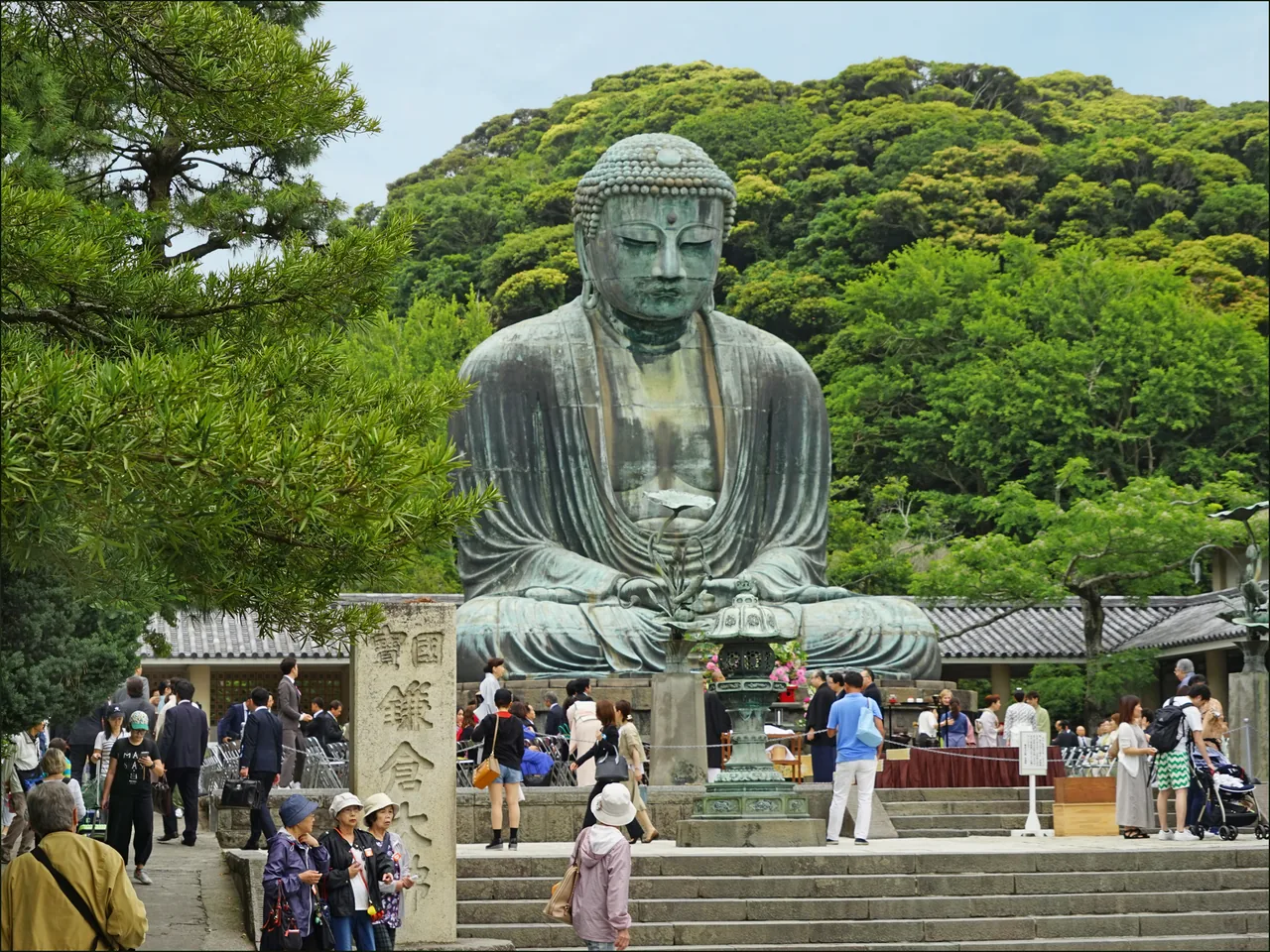
The Great Buddha of Kamakura — the Kamakura Daibutsu at Kotoku-inMap — is the trip’s signature sight: a hollow bronze Amida Buddha about 13.35 metres tall including its pedestal, cast in 1252, sitting open to the sky and, for an extra ¥50, open to walk inside. It is genuinely impressive in the open air, and it pairs perfectly with Hasedera five minutes away.
The statue has not always stood under the sky. It was first housed in a great wooden hall, but the building was destroyed and rebuilt more than once, and since a storm and tsunami in 1498 the Buddha has sat open-air. That is part of why it works so well: weathered green-bronze against the hills and clouds, with none of the gloom of an enclosed hall. Admission is ¥300 for adults and ¥150 for children, with preschoolers free. Hours run 08:00–17:30 from April to September and 08:00–17:00 from October to March, with entry stopping 15 minutes before closing. It is a 7-to-10-minute walk from Hase StationMap on the Enoden.
Going inside, honestly
You can step inside the hollow statue — the so-called tainai — for an extra ¥50, with the interior open until about 16:30. It is a fun, very cheap novelty: you climb into a cramped, dim cavity and see the rough seams and bracing of the 13th-century casting from within. Do it for the curiosity and the bragging rights, but set expectations — it is a quick look at the inside of a metal shell, not a grand interior, and there is often a short queue to enter a small space. The ¥50 is well spent precisely because it asks so little of you.
6. Hasedera: Kannon, the cave, the sea view and the hydrangea path
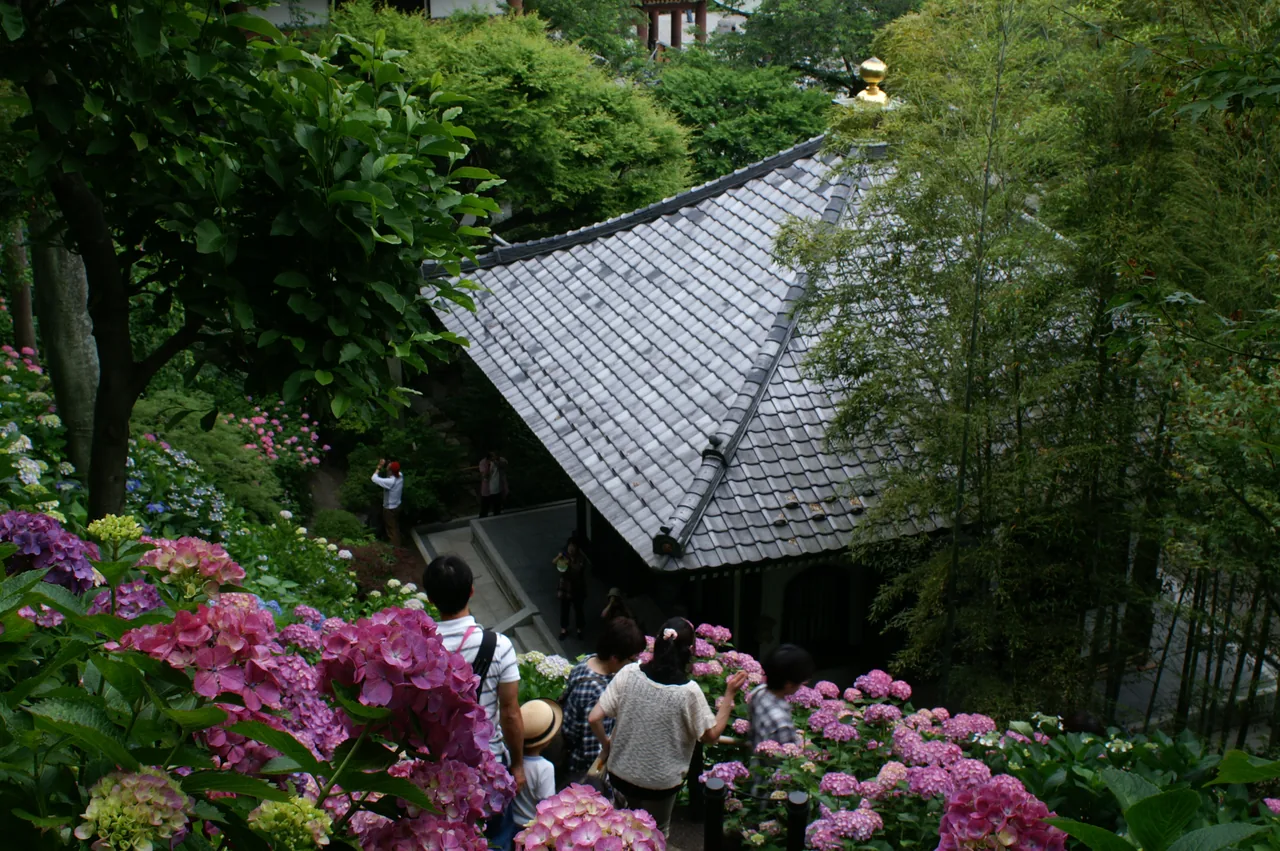
HasederaMap is the best all-rounder in Kamakura — a hillside temple with a giant gilded Kannon, a small cave shrine, a sea-view terrace over Sagami Bay, rows of little Jizo statues, and the famous hydrangea path — and in June it requires a separate ¥500 “ajisai” ticket on top of admission. If you only have time for one temple in the Hase area beyond the Great Buddha, make it this one.
The main hall holds an eleven-headed Kannon of about 9.18 metres in gilded wood, one of the largest wooden statues in Japan. Below and around it you get more variety than any single Kamakura temple: the HasederaMap terrace looks out over the bay and the rooftops of Hase; the Benten-kutsu cave is a low, candle-lit grotto carved with figures; and gentle slopes hold ranks of small Jizo statues. Admission is ¥400 for adults and ¥200 for children, and hours run roughly 08:00–17:00, shortening to about 16:30 in winter and extending toward 17:30 in early summer — verify the day-of times. It is about five minutes’ walk from Hase Station.
The June hydrangea path and its ticket system
The hillside hydrangea path (the ajisai-ji) is Hasedera’s headline draw in June, and it now runs on a managed ticket system. As of 2026 you need a separate ¥500 “ajisai-ken” on top of normal admission to walk the path, available June 6 to 26, with timed 60-minute entry slots from the 08:00–09:00 opening through a last slot around 15:50–16:50.
Outside June, Hasedera is far calmer and still excellent — the statue, cave and sea view stand on their own. June is beautiful but genuinely crowded, so go at opening or come another month if flowers are not your priority.
7. Tsurugaoka Hachimangu and Komachi-dori
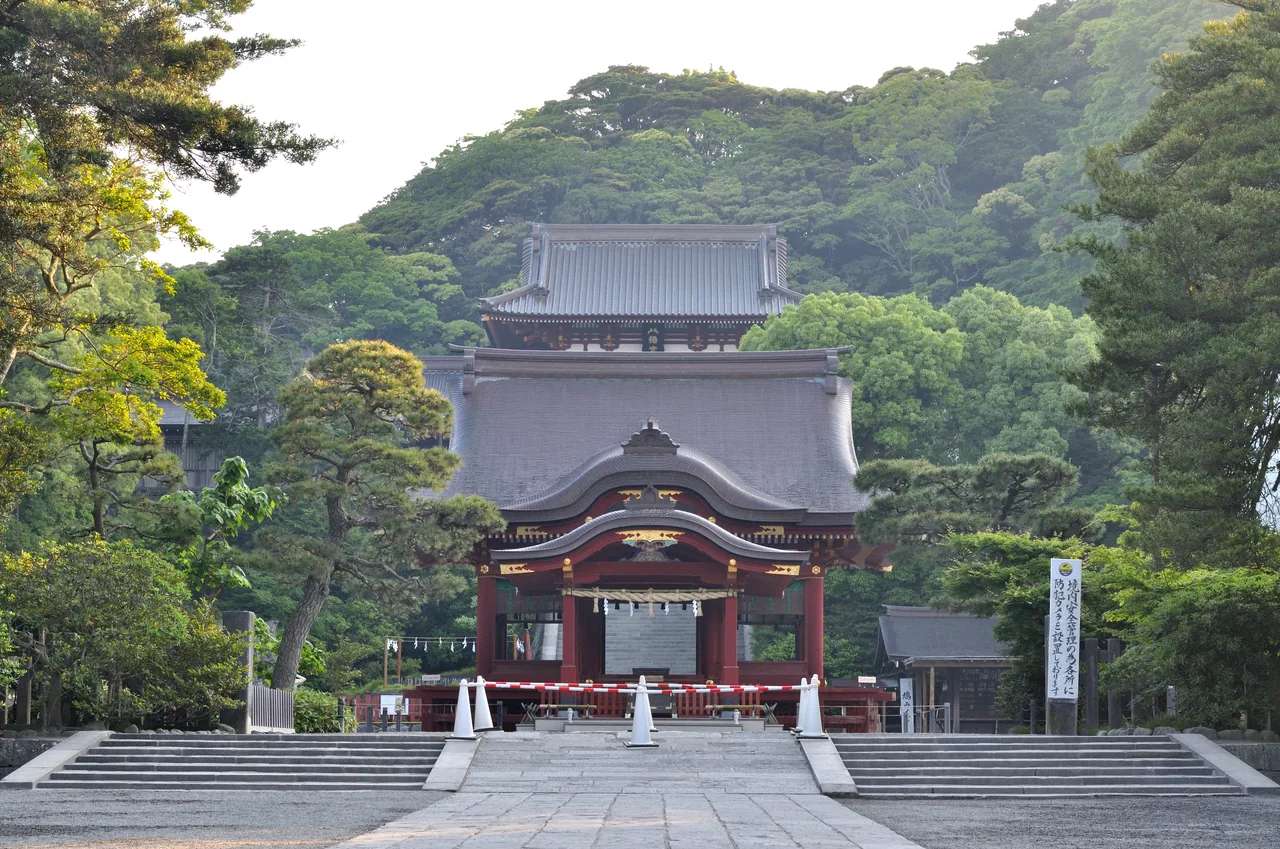
Tsurugaoka HachimanguMap is the spiritual heart of Kamakura — a grand, free-to-enter Shinto shrine reached up a raised, cherry-lined approach — and the parallel Komachi-doriMap is the food-and-shopping street that makes the walk from the station a pleasure. Together they are the natural first stop in central Kamakura and need no Enoden ride at all.
The shrine was relocated to its present spot in 1180 and became the ceremonial centre of the Minamoto clan’s Kamakura. You approach it along the Dankazura, a raised cherry-tree path, with Komachi-dori running parallel one block over. The grounds are free and open roughly 06:00 to 20:00, and it is a 10-to-13-minute walk from Kamakura Station. The current buildings are modern reconstructions, handsome rather than ancient.
The ginkgo legend, honestly
You will read that a giant 1,000-year-old ginkgo by the stone steps hid the assassin who killed the shogun Sanetomo in 1219. Two honest caveats: first, that great ginkgo fell in a storm on 10 March 2010, so what you see today is a stump and a replanted sapling, not the famous tree — manage your expectations. Second, the assassin-behind-the-tree story is an Edo-period embellishment, not contemporary fact, so enjoy it as legend rather than history.
Komachi-dori and what to eat
Komachi-dori is a roughly 350-metre pedestrian street with 250-plus shops running from the station’s east exit toward the shrine. The local specialty to seek out is shirasu (whitebait), the Shonan coast’s signature catch — served raw as nama-shirasu, boiled, or piled on a rice bowl as shirasu-don. Also worth trying: Hato Sabure, the pigeon-shaped butter shortbread that Toshimaya has made since 1894, plus purple-sweet-potato and matcha soft-serve and hot croquettes to eat as you walk.
Kamakura is also a popular place to rent a kimono and wander the old-town lanes and shrine approach, much as visitors do in Kyoto. If dressing up appeals, the shrine-and-Komachi area is where it pays off most for photos.
8. Kita-Kamakura’s Zen temples: Engaku-ji, Kencho-ji, Meigetsu-in
One stop before Kamakura, Kita-Kamakura is the quiet, contemplative side of the day — a cluster of major Zen temples within walking distance of the station, including Japan’s oldest Zen training monastery and the celebrated “Hydrangea Temple.” It is the antidote to the Enoden crowds, and a calm way to begin the day if you arrive early.
Engaku-ji and Kencho-ji
Engaku-jiMap, founded in 1282, is ranked second of Kamakura’s five great Zen temples and holds a National Treasure relic hall and a great bell. It is barely a minute from Kita-Kamakura StationMap, which makes it the obvious, serene first stop straight off the train. Admission is ¥500 for adults and ¥200 for children. A 15-to-20-minute walk further on, Kencho-jiMap is the top-ranked of the five and Japan’s oldest Zen training monastery, founded in 1253 — its Sanmon gate, National Treasure bell and Zen garden are the highlights, and the Tenen hiking trail climbs from behind it with Fuji views on clear days. Admission is also ¥500 for adults and ¥200 for children.
Meigetsu-in, the Hydrangea Temple
Meigetsu-inMap is famous for two things: about 2,500 hydrangea in a soft shade the temple has made its own — “Meigetsu-in Blue” — and the round “Window of Enlightenment” framing the rear garden like a living painting. In June, admission is ¥500 for high-schoolers and up and ¥300 for elementary and junior-high students, open 08:30–17:00, with the rear garden a further ¥500 and open only for about two weeks in June (irises) and again in late November (foliage). Off-season hours are 09:00–16:00.
Practically, Kita-Kamakura is a “choose your appetite” stop. With a full Enoshima day planned you might do just Engaku-ji and move on; on a temple-focused half-day you can string all three together at a gentle pace.
9. Hokokuji, the bamboo temple, and east Kamakura
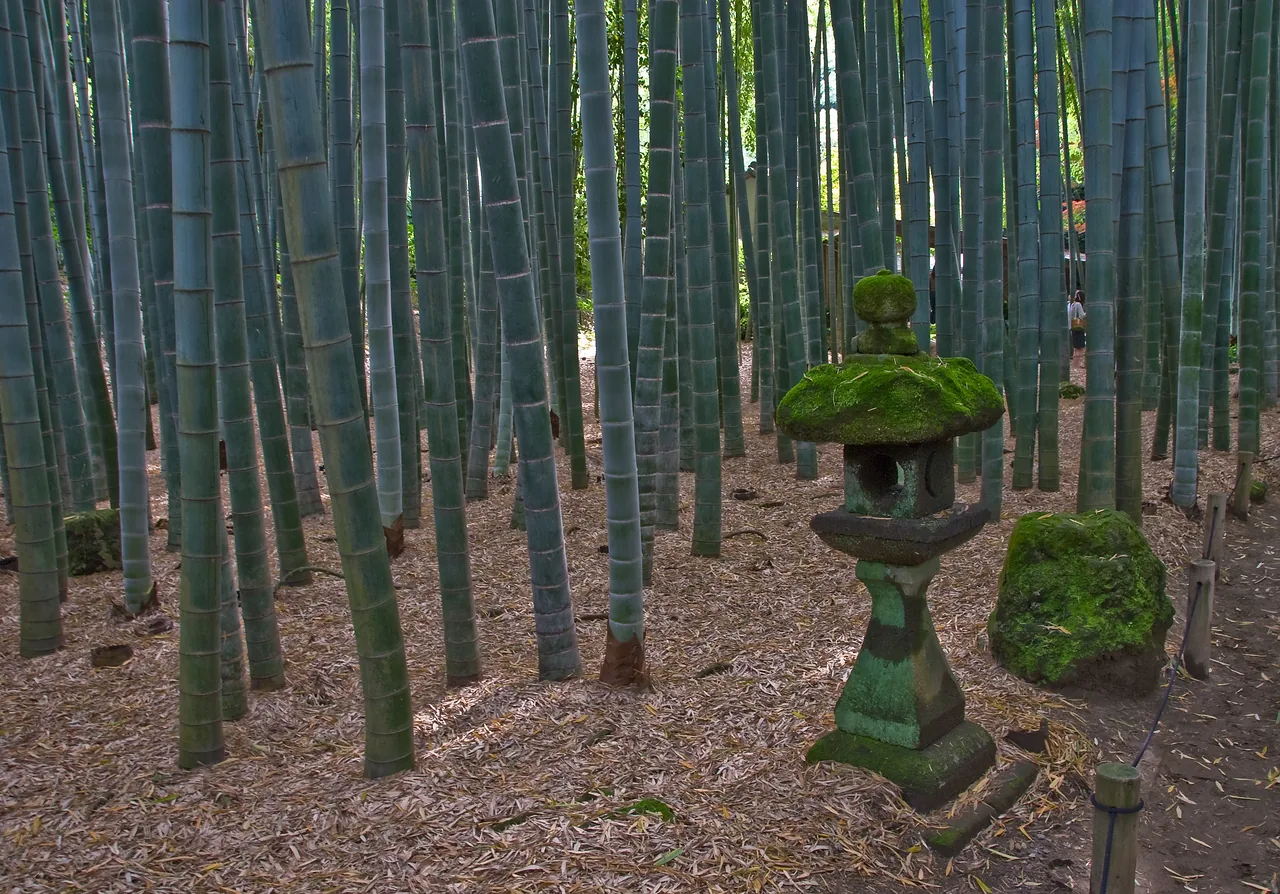
HokokujiMap is the “Bamboo Temple” — a small Zen temple with a grove of about 2,000 moso bamboo stalks and a tea house where you drink matcha facing the green — and its honest appeal is intimacy, not scale. It sits in east Kamakura, off the Enoden spine, so it takes a deliberate detour rather than slotting into the coastal ride.
The temple, a Rinzai Zen foundation from 1334, is compact: the bamboo grove is a contained garden you stroll through in a few minutes rather than a long avenue. The real draw is the Kyukoan tea house at its edge, where for an extra fee you sit with a bowl of matcha and a sweet, looking straight into the stalks. Admission to the garden is ¥400, the matcha is about ¥600 more (roughly ¥1,000 all in), and it is open 09:00–16:00, with the last matcha order around 15:30 and closure December 29 to January 3.
Honest take versus Arashiyama
If you are picturing Kyoto’s Arashiyama bamboo grove, recalibrate. Hokokuji is far smaller — a quiet courtyard of bamboo, not a soaring tunnel of it — so if you come expecting scale you will leave underwhelmed. What it offers instead is calm and a genuine ritual: it is far less crowded than Arashiyama, and the matcha-in-the-grove moment is the point. Come for the tea and the stillness, not the spectacle.
10. The Enoden coast and the Slam Dunk crossing
The Enoden — the single-track Enoshima Electric Railway — is the scenic spine of the day, threading the coast from Kamakura past the surf beaches to Enoshima and Fujisawa, and its most famous stop is the level crossing by Kamakurakokomae StationMap made iconic by Slam Dunk. The ride itself is half the pleasure; the crossing is a genuine pilgrimage spot that now comes with real etiquette obligations.
The ride
The Enoden runs about 10 kilometres with 15 stations, end to end in roughly 34 to 37 minutes, on two-car trains every 14 minutes or so (the interval was lengthened from the old 12-minute service in 2023 to manage delays). It is charming — the line squeezes between houses, then bursts open onto the sea — and it links the sights neatly: Hase Station for the Great Buddha and Hasedera, Kamakurakokomae StationMap for the crossing and the ocean, InamuragasakiMap cape for one of the best Fuji-and-Enoshima frames, and Enoshima Station for the island.
The Slam Dunk crossing, and the etiquette that matters
The Enoden level crossing in front of Kamakurakoko-mae is the model for the famous Slam Dunk opening — a train passing, the sea behind, Enoshima on the horizon, and Mt Fuji on a clear day — and it surged back into fame after the 2022 film. For fans from Taiwan, Hong Kong, mainland China and Korea it is a major pilgrimage. It is also, crucially, a working railway crossing on a public road that local residents and schoolchildren use every day.
For the photograph itself, a clear winter morning gives you Mt Fuji behind the train and thinner crowds; sunset is the most dramatic light but also the most congested. Either way, the camera waits for the train, not the train for the camera — be ready and be quick.
11. Enoshima: the island, the Sea Candle and the sunset
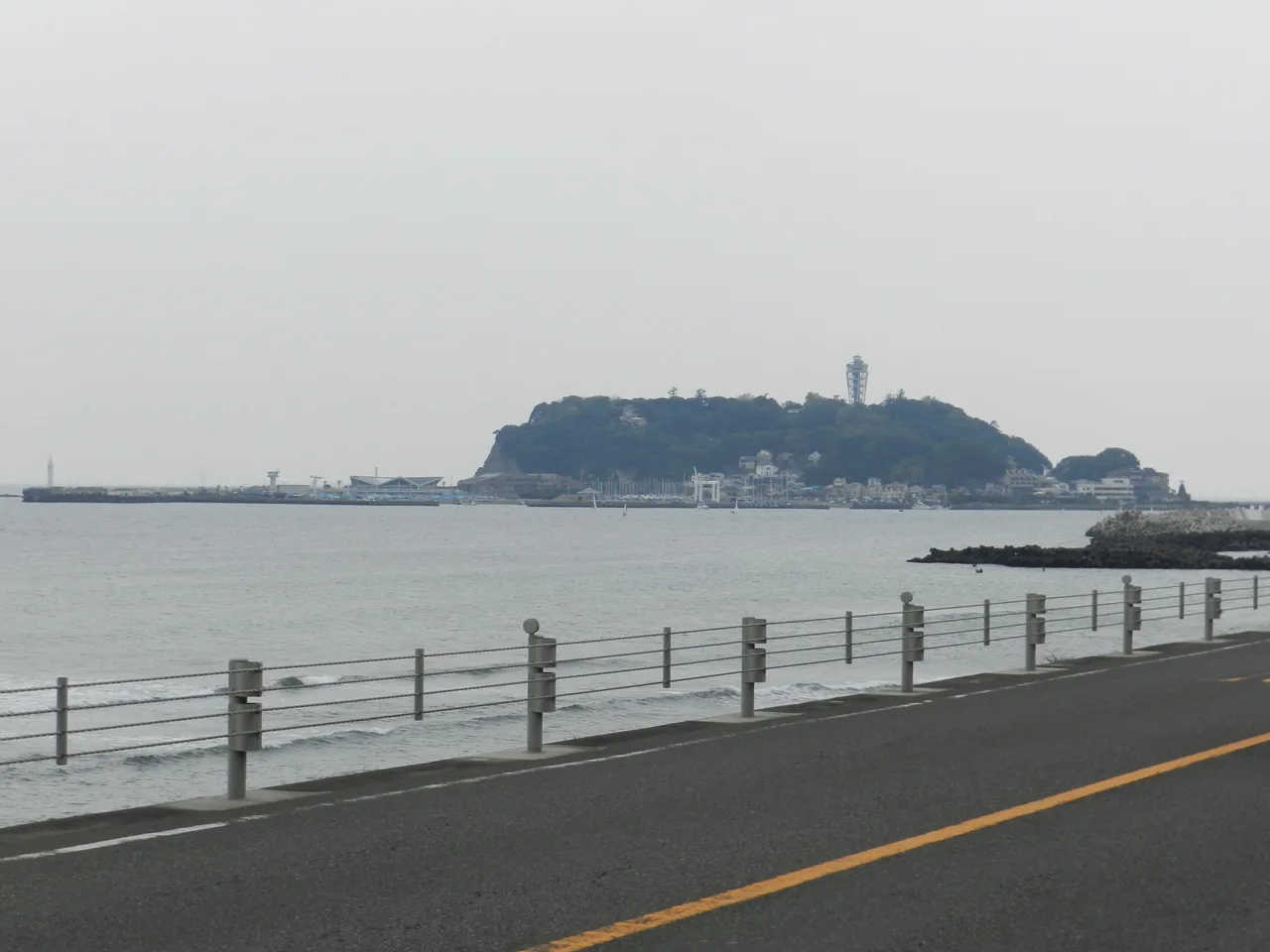
EnoshimaMap is the seaside finale — a small, hilly island reached by a 600-metre bridge, with a three-part shrine, an observation tower, candle-lit sea caves, and a rocky western shore that is the area’s premier sunset-and-Fuji spot. It is a half-day’s worth of sights in itself, so plan it as the end-of-day payoff rather than a quick add-on.
You reach the island across the Benten Bridge — closest from Odakyu’s Katase-Enoshima station (about eight minutes) or 15 to 20 minutes from Enoden’s Enoshima Station. Once across, the island climbs in tiers, and the prices below reflect the changes that took effect in October 2025, so use these rather than older figures:
- Enoshima Shrine — three shrines to the goddess Benzaiten; the grounds are free, with the Hoan-den hall ¥200 / ¥50.
- Enoshima Escar — outdoor escalators that run up only (you walk back down): ¥500 / ¥250. Skippable if you can manage the climb.
- Samuel Cocking Garden — free in the daytime, 09:00–17:00 (¥500 after 17:00 on event nights).
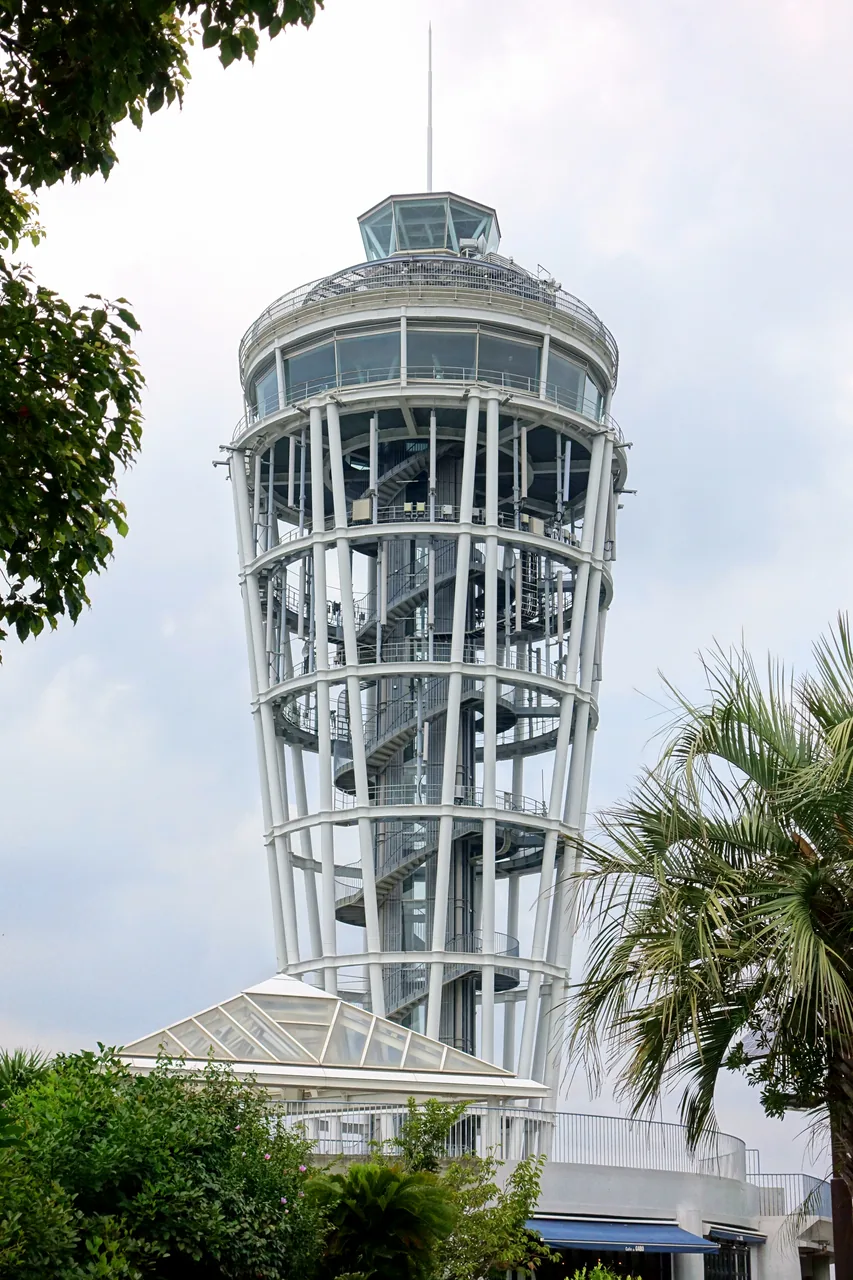
- Enoshima Sea CandleMap — the roughly 60-metre observation tower with a 360-degree deck: ¥800 / ¥400. The set (garden, tower and Escar) is ¥1,100 / ¥550, and an Enoshima 1-Day Pass bundling the Escar, garden, tower and Iwaya caves is ¥1,550 / ¥700 — note the aquarium is a separate facility and not included.
- Iwaya Caves — two candle-lit sea caves at the far tip: ¥500 / ¥200, open roughly 09:00–17:00 (shorter in winter). They close in rough weather and high waves, so check on arrival.
The sunset payoff
ChigogafuchiMap is the free, wave-cut rocky shore on the island’s southwest tip and the area’s premier spot for a sunset with a Mt Fuji silhouette (clearest in winter). Together with the Sea Candle deck, this is the real reason to push all the way out to Enoshima — the light over Sagami Bay at the end of the day is the trip’s quiet climax.
12. Can you actually see Mt Fuji from Kamakura?
You can see Mt Fuji from the Kamakura coast on a clear day — from Inamuragasaki, Shichirigahama, the Slam Dunk crossing, the Enoshima Sea Candle and Chigogafuchi — but it is hidden far more often than not, so do not build your day around it. If a big, close Fuji is the goal, Kawaguchiko is the trip, not Kamakura.
Where and when Fuji appears
The reliable viewpoints are all along the Enoden coast: InamuragasakiMap cape and park give the most dependable frame of Fuji with Enoshima and the sea (and a famous sunset), with Shichirigahama beach, the Kamakurakoko-mae crossing, the 360-degree Sea Candle deck and Chigogafuchi close behind. The visibility rule is the same as everywhere near the mountain: Fuji makes its own weather. It is clearest on cold, dry winter mornings, best from December to February after a cold front clears the air; in the humid summer and the June rainy season you will often see nothing but haze. The “Diamond Fuji” alignment along this coast happens around early April and early September, but it is weather-dependent and uncommon — do not plan a trip around catching it.
Kamakura or Kawaguchiko for Fuji?
This is the key distinction. From Kamakura, Fuji is a distant silhouette across the bay — beautiful, but small on the horizon. At Lake Kawaguchi the mountain looms at the base, filling the view. So if Fuji itself is the point, go to Kawaguchiko; if you want temples, coast and an anime crossing with Fuji as an occasional bonus, Kamakura is your day. Our Mt Fuji and Kawaguchiko day-trip guide covers the Fuji-focused option in full, and our best time to visit breakdown explains the seasonal odds.
13. When is the best time to visit Kamakura?
The headline season is the June hydrangea bloom at Hasedera and Meigetsu-in, but Kamakura also rewards a late-autumn foliage visit, a summer beach day, and clear winter mornings for Mt Fuji and the Enoshima illumination. Each window has a real highlight and a real trade-off, so match the timing to what you most want.
| Season | Highlight | The trade-off |
|---|---|---|
| Hydrangea (early–mid June) | The famous ajisai bloom at Hasedera’s hillside path and Meigetsu-in’s “Meigetsu-in Blue.” The biggest seasonal draw of the year. | Peak crowds and the rainy season; Hasedera’s path needs a timed ¥500 ticket (June 6–26 in 2026), so go at opening. |
| Autumn foliage (late Nov – early/mid Dec) | Kamakura runs late, so its color peaks well after Tokyo — Engaku-ji’s pond and Kencho-ji’s “red tunnel” are the stars. | Busy weekends; the exact peak shifts each year, so verify before you commit a date. |
| Summer beach (Jul 1 – Aug 31) | Yuigahama and Zaimokuza beaches open for swimming (09:00–17:00); the real draw is sunset over the bay. | Gray sand and big summer crowds; humid haze usually hides Fuji. |
| Winter (Dec – Feb) | The clearest Fuji odds of the year and the Enoshima “Shonan no Hoseki” illumination (roughly late Nov to late Feb). | Cold and short days; the raw nama-shirasu specialty is off the menu Jan 1 – Mar 10. |
A few dated extras worth knowing: New Year’s hatsumode at Tsurugaoka Hachimangu draws enormous crowds from January 1 to 3; plum blossom runs late January to mid-March; the Kamakura Matsuri falls in mid-April; and the atmospheric Bonbori Matsuri lantern festival is in early August. For the wider seasonal picture, see our take on early-autumn travel in Japan and the broader best time to visit guide.
14. Kamakura vs Nikko vs Hakone vs Kawaguchiko
Choose Kamakura for the easiest, shortest day with temples and coast, Hakone for onsen and a varied mountain loop, Nikko for the most spectacular shrines (but a long haul), and Kawaguchiko if a huge Mt Fuji is the whole point. All four are classic Tokyo day trips, and the right one depends entirely on what you want from the day.
| Day trip | Time each way | Best for | The catch |
|---|---|---|---|
| Kamakura | ~56 min (JR, ~¥1,034) | The easiest, shortest trip — temples, the Great Buddha, the Enoden coast, a beach and Enoshima, plus the anime crossing. Laid-back and great with kids or older relatives. | Very crowded in season; the two-car Enoden queues badly on weekends. |
| Hakone | ~90 min | Variety — onsen, the eight-mode loop, Owakudani’s steam vents and a lake cruise, with Fuji as a bonus. | Feels rushed in one day; the volcanic valley can close; Fuji is distant. |
| Nikko | ~2–3 hrs | The most rewarding architecture — the ornate Toshogu shrine complex and mountain scenery. | A long haul each way; barely fits in a day; better as an overnight. |
| Kawaguchiko | ~2 hrs | Mt Fuji front-and-center — Chureito Pagoda, Oishi Park, the mountain looming at the base. | The lakes are spread out and bus-dependent; it is mostly about one mountain. |
The closest debate for most visitors is Kamakura versus Nikko, and it comes down to effort. Kamakura is barely an hour away and packs temples, a Buddha, a coast and a beach into a relaxed day; Nikko’s shrines are grander but cost you four to six hours of round-trip travel and really want an overnight. If you have the stamina and crave architecture, Nikko rewards it — otherwise Kamakura is the more sensible single day.
The other clear fork is Fuji. If you want the mountain big and close, go to Kawaguchiko (our Fuji and Kawaguchiko day-trip guide covers it); if you want onsen and a varied loop, the Hakone day-trip guide is your trip. Kamakura wins on ease and the seaside-temple mix.
15. DIY or a guided tour, and where to stay if you stay over
Do Kamakura DIY if you want to save money and set your own pace — it is one of the most independent-traveller-friendly day trips out of Tokyo — and take a guided tour only if you want zero logistics or are short on time; stay overnight near the coast if you want Enoshima sunset and a calm second morning. The route is well signposted and easy to do alone, so a tour is about convenience, not necessity.
When a tour makes sense
A guided Kamakura day tour from Tokyo bundles the transport, the headline temples and usually the coast or Enoshima into a fixed day with central pickup — handy if you have a single shot at Kamakura, are travelling on a packed weekend when the Enoden queues are worst, or simply do not want to read timetables. The trade-off is the usual one: a set itinerary, less lingering at the stops you care about most, and no flexibility to wait out a crowd or chase the light at sunset.
Staying over near the coast
Most people do Kamakura as a day trip, and that is the right call for the majority. But basing a night near the coast — around Kamakura, Hase or Enoshima — turns the rushed full-day arc into something gentler: you can catch the Enoshima sunset without watching the last train, walk the temples at opening before the day-trippers arrive, and get a second clear-morning shot at Fuji from the coast. It suits travellers who want the seaside as much as the sights.
Either way, sort your phone before you go — a working data plan is what lets you check Enoden times, map the temples and read the crossing’s signage on the ground.
The same JR line passes through Yokohama on the way. What to do with a day there is set out in the Yokohama travel guide.
16. A realistic one-day Kamakura plus Enoshima plan (hour by hour) and tips
Here is a focused, realistic full-day plan that flows from the quiet Zen temples down through central Kamakura and the Great Buddha to the Enoden coast and an Enoshima sunset — built around an early start and a weekday to dodge the worst queues. If you would rather a calm half-day, simply stop after Hasedera and head back.
The plan
- ~8:30 — Kita-Kamakura. Ride one stop short to Kita-Kamakura StationMap and start at Engaku-ji right by the platform while it is still empty; add Kencho-ji if you have the appetite.
- ~10:00 — Tsurugaoka Hachimangu and Komachi-dori. Walk down to the central shrine, then graze along Komachi-dori — a shirasu bowl or croquette makes an early lunch.
- ~11:30 — Hase: the Great Buddha and Hasedera. Take the Enoden two stops to Hase (or walk if the queue is bad). See the Great Buddha (go inside for ¥50 if curious) and Hasedera’s Kannon, cave and sea terrace. In June, book Hasedera’s first hydrangea slot.
- ~14:00 — the Enoden coast. Ride down past Inamuragasaki and Shichirigahama; stop at Kamakurakoko-mae for the Slam Dunk crossing, shooting only from the designated park area.
- ~16:00 — Enoshima. Cross to the island, climb to the Sea Candle deck, and walk out to Chigogafuchi.
- ~sunset — the payoff. Watch the sun drop over Sagami Bay (with luck, a Fuji silhouette), grab tako-senbei, then ride back from Enoshima or Katase-Enoshima toward Tokyo.
Practical tips
- Go on a weekday if you can. Weekends and June hydrangea days mean the worst Enoden queues and the most crowded temples — a weekday transforms the day.
- Use coin lockers early. Lockers at Kamakura Station fill by mid-morning on busy days; stow bags as soon as you arrive and ride the coast with a day bag only.
- Pre-book what needs it: in June, Hasedera’s timed ajisai ticket (online opens Tuesdays 10:00 JST); otherwise little needs reserving, which is part of Kamakura’s appeal.
- Carry a topped-up IC card for JR legs, the Enoden if you skip the pass, conbini and vending machines.
- Have a working data connection for live train times, maps and the crossing’s etiquette signage.
What to read next
Plan the rest of your trip around your Kamakura day: if a huge, close Mt Fuji is the goal, compare with our Fuji and Kawaguchiko day-trip guide; for onsen and a mountain loop, see the Hakone day-trip guide; base yourself with our Tokyo trip planner; and zoom out to the whole country in our complete Japan travel handbook.