
Osaka Castle Tickets and Hours, and What You Can See Without Paying
The keep takes no advance booking. Closing time moved an hour later a few years ago and the adult ticket doubled at the same time, which is why so much of what you will read online is wrong. The exhibition that opened alongside that change is not inside the keep at all — it sits in a separate building and you walk down below ground to see it. The park around all of this is free, so the useful question is where the paying actually starts.
| Ticket | ¥1,200 for adults and free for junior high and under. |
|---|---|
| Hours | 9:00 to 18:00 with last entry at 17:30. |
| Booking | there is no advance reservation system for the keep. |
| Garden | Nishinomaru costs ¥300 extra and closes on Mondays. |
| Stone wall museum | covered by your keep ticket, reached underground. |
| Park | every path, gate and wall outside the buildings is free. |
1. Walking around Osaka Castle costs nothing
2. Two rings of moat, and only two ways into the middle
3. The keep closes at six and stops letting people in at half past five
4. Inside the keep you end up climbing stairs either way
5. The Toyotomi stone wall is in a separate building, and underground
6. What you are looking at is the third castle on this site
7. Nishinomaru Garden closes on Mondays
8. The turrets only open on set dates
9. The thirteen protected buildings are out in the open
10. A large part of the park was an army base
11. The tree Hideyoshi supposedly planted was planted in 1898
12. A gold boat runs a circuit of the inner moat
13. Plum blossom arrives about a month before the cherry
14. Which station you use changes the walk considerably
15. Food and souvenirs cluster in two places
16. Half a day, or the whole thing
1. Walking around Osaka Castle costs nothing
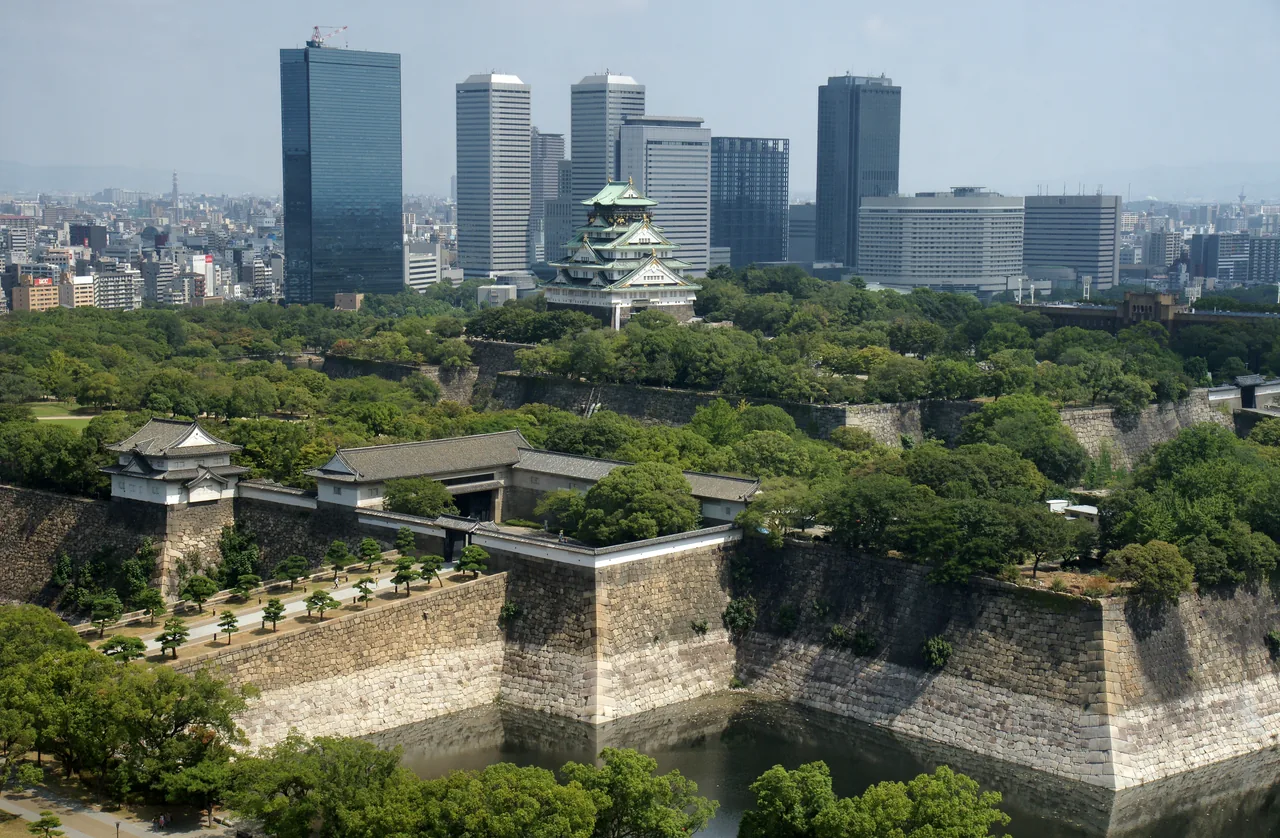
The park is free and it is most of what people come for. You can follow the moats, stand under the stone walls, walk right up to the foot of the keep and photograph the whole thing without paying anything. Money only changes hands when you go inside a building.
There are four of those, and one of them only opens on certain dates. Everything else in the grounds is simply there to look at.
| What you pay for | Adult price | Worth knowing |
|---|---|---|
| Main keepMap | ¥1,200 | Free for junior high and under. No reservations |
| Toyotomi Stone Wall MuseumMap | No separate ticket | Your keep ticket covers it |
| Nishinomaru GardenMap | ¥300 | Closed Mondays |
| Turret openingMap | ¥900 | Includes the garden. Limited dates |
| The park itself | Free | No opening or closing time |
The grounds are larger than people expect
The park covers more than a hundred hectares, and our Osaka travel guide puts it in context with the rest of the city. Several of the stations on its edge leave you a fifteen to twenty minute walk from the keep, and following the outer moat all the way round takes a good part of a morning on its own.
This is why “going to Osaka Castle” means two different trips depending on who is saying it. One version is the climb to the observation floor and back out. The other is a long loop through the grounds photographing walls and gates without ever buying a ticket. The first takes about two hours, the second closer to one.
The ticket queue and the entry queue are separate. On busy days the line to buy is the slow part, not the line to go in. Arriving with a ticket already in hand skips straight to the turnstiles.
2. Two rings of moat, and only two ways into the middle
Osaka Castle has an inner moat and an outer moat, and the bridges across them are in fixed places. That single fact explains most of the walking people do by accident here. The keep is visible from almost everywhere in the park, which makes it very easy to walk towards it along a line you cannot actually follow.
The centre is the honmaru, the inner bailey, where the keep stands. Around that sits the ninomaru, the outer bailey, holding the surviving turrets and gates. Beyond that the outer moat runs, and outside the moat is the wider park with its lawns and woods.
| Area | What is in it |
|---|---|
| Honmaru (inner bailey) | The keep, the stone wall museum, the covered well |
| Ninomaru (outer bailey) | Turrets, gates, the shrine, the garden |
| Inner moat | Water. The gold boat runs a circuit here |
| Outer moat | Water on some sides, dry on others |
| East outer moat | Runs alongside the plum grove |
Sakuramon in the south, Gokurakubashi in the north
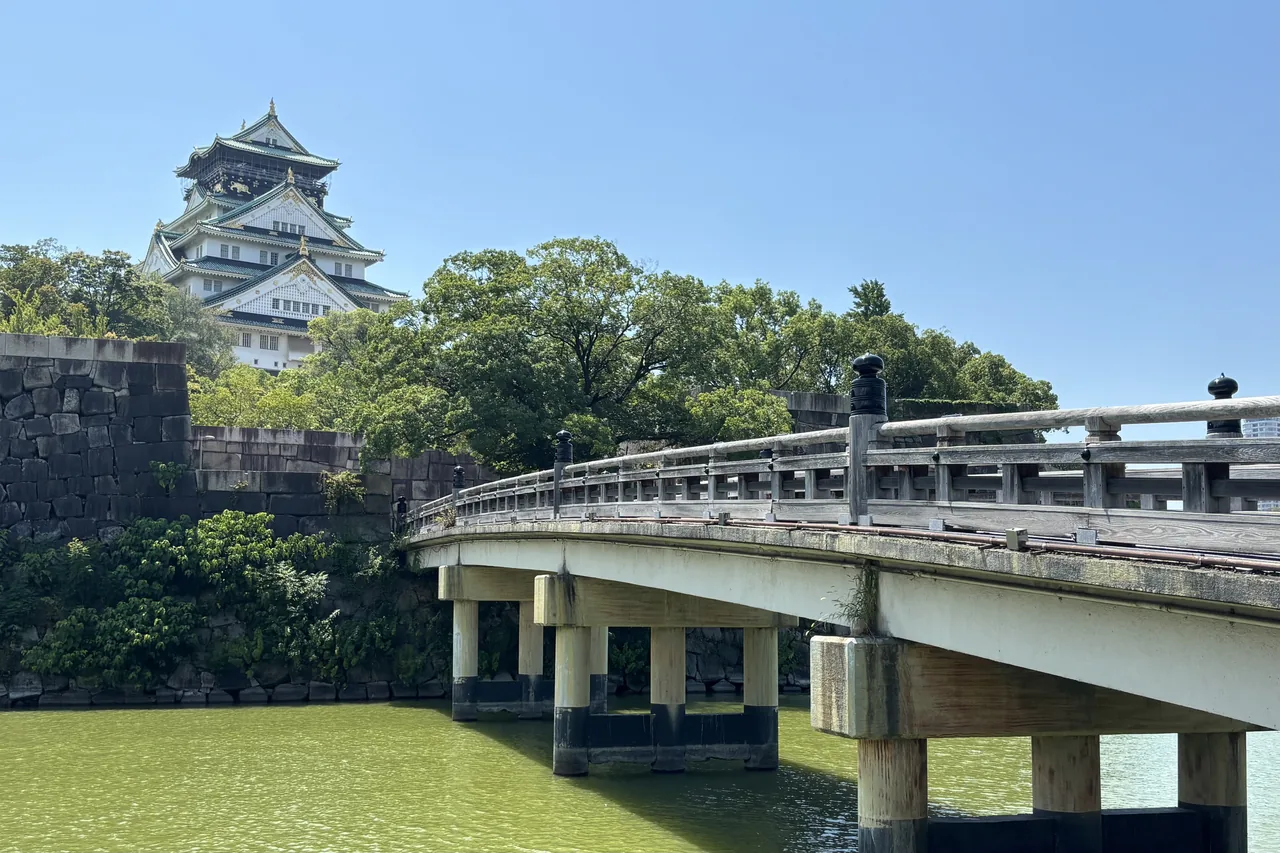
To reach the honmaru you cross either the Sakuramon gate on the south side or the Gokurakubashi bridge on the north. There is no third way in. Stone and water close off everything else, so a route that looks short on a map can turn into a long detour along the moat edge.
Coming from the south means passing the main gate, the turrets and the largest stretch of wall before you reach the keep. Coming from the north is shorter and drops you almost directly at the entrance. If you only care about time, use the north. If you want to see the fortifications, come up from the south.
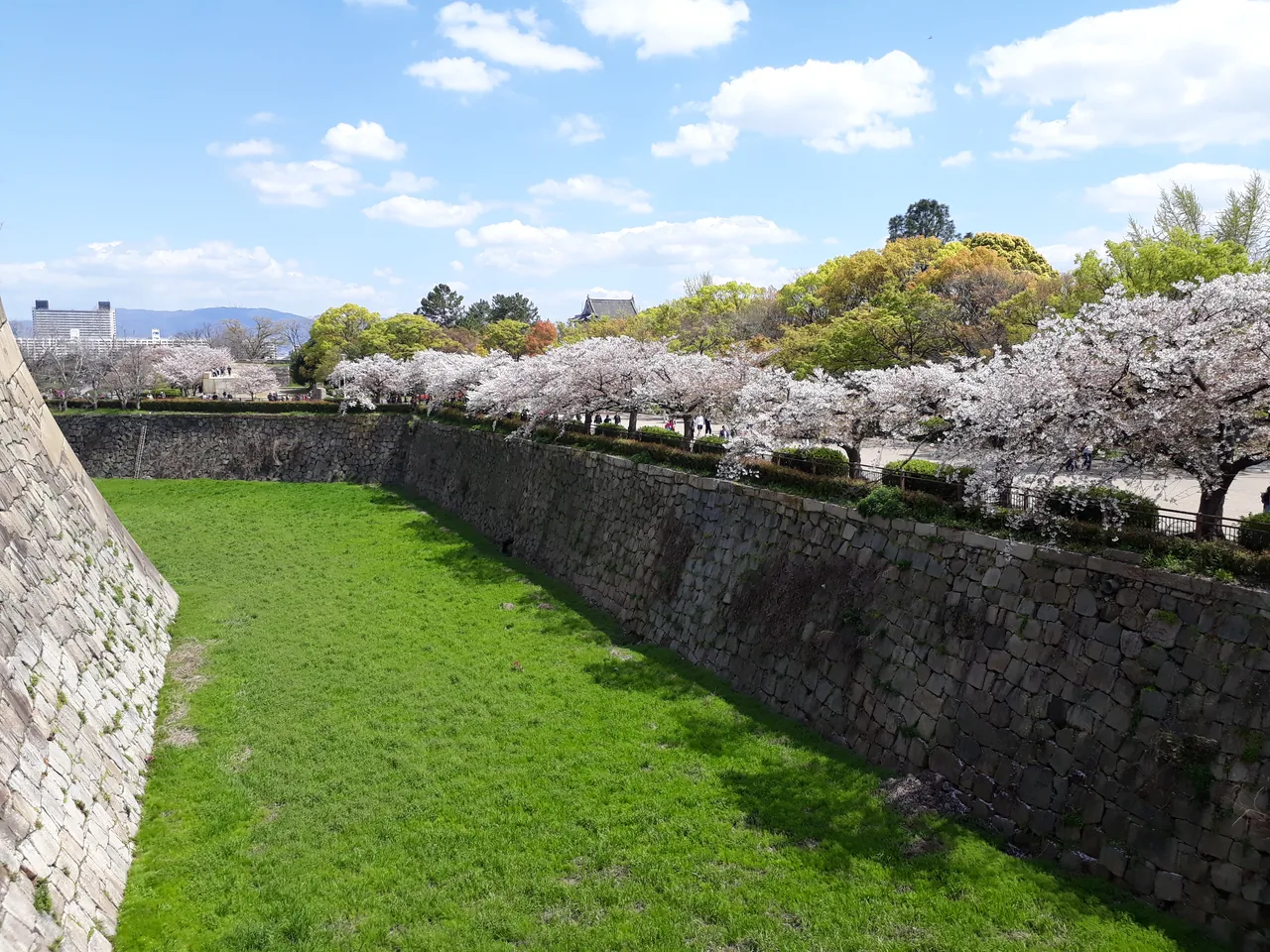
Some of the outer moat is dry
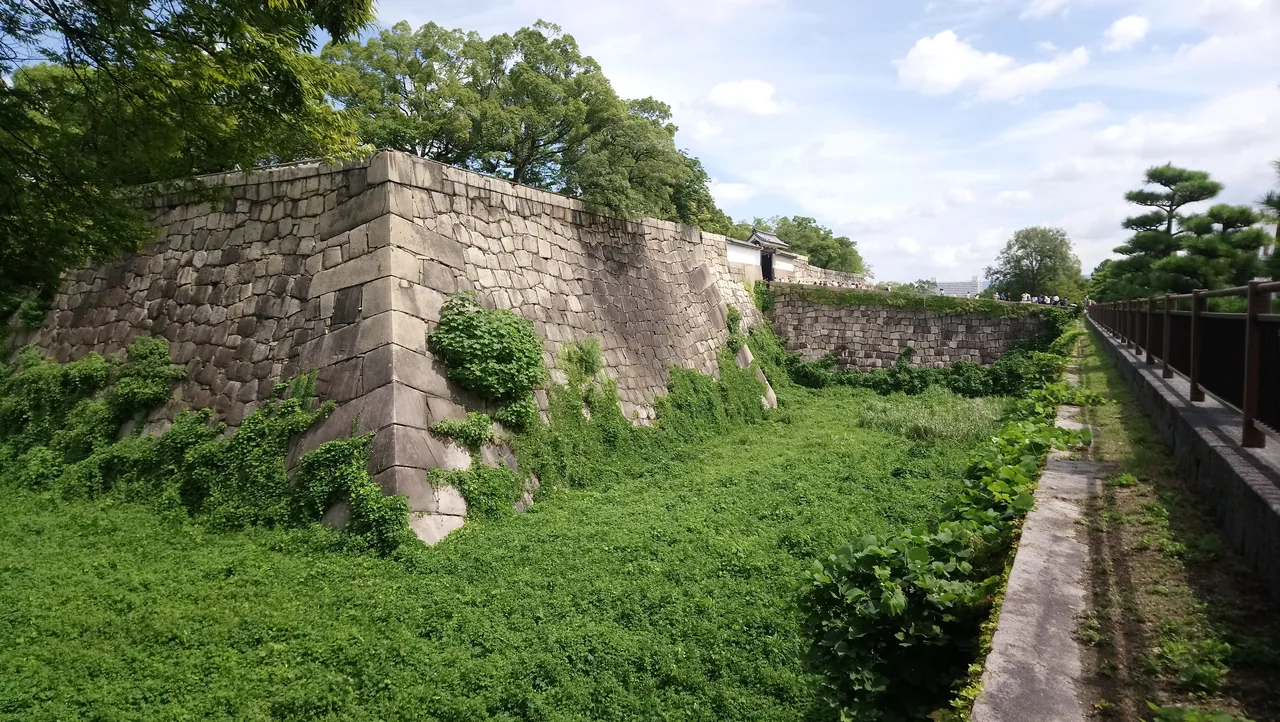
A moat suggests water, but this one varies by side. The south and west stretches are full, while sections on the east are dry ground.
The dry sections are the better ones for looking at masonry. With no water in the way you see the wall from the base to the parapet in one view, and some of the individual blocks are taller than a person. It gives you a much clearer sense of the scale of the rebuilding effort than a photograph of the keep does.
3. The keep closes at six and stops letting people in at half past five
The opening hours changed a few years ago and a lot of published information never caught up. The keep now opens at nine and closes at six in the evening. Last admission is half past five. Guides and blog posts still saying five o’clock are quoting the old schedule.
The admission price changed at the same time, doubling for adults. That increase paid for the new exhibition that opened in the grounds.
| Category | Price | Conditions |
|---|---|---|
| Adult | ¥1,200 | |
| University and high school students | ¥600 | Student ID required |
| Junior high and under | Free | Proof of age required |
| Groups of 15 or more | ¥1,080 | ¥540 for students |
| Closed | 28 December to 1 January | Open every other day |
Without a student card you pay the adult price
This catches visitors out regularly. The half price student rate is real, but the official notice is explicit that it needs to be shown. University and high school students arriving from abroad are asked for an international student card specifically, and without one they are charged as adults.
The free rate for junior high and under works the same way. Something that shows the child’s age is expected, and for visitors aged fifteen and under from outside Japan that usually means a passport.
There is no reservation system
The keep does not take advance bookings for entry. Even the arrangement where large groups phone ahead with numbers and dates is described in the official notice as advance notice rather than a booking, which is an unusually direct way of saying that nobody gets a guaranteed slot.
The practical effect is that busy days produce a long queue at the ticket window. Staff sometimes close that queue before half past five so that everyone already in line can still get inside before last admission. If you are planning a late afternoon visit, build in some slack.
You can pay almost any way you like
Cash works, but so do the major credit cards, Japanese transport IC cards, and a long list of electronic money and QR payment services. Several of the QR options are ones Taiwanese and mainland Chinese visitors already have installed. There is no need to arrive with coins.
Free admission applies to Osaka city residents aged sixty five and over and to holders of Japanese disability certificates, and in the second case one accompanying carer also enters free.
4. Inside the keep you end up climbing stairs either way
The keep is a museum first and a viewpoint second. It was built as a museum in 1931 and that is how it is laid out, so the floors between the entrance and the view are all exhibition space. Visitors who go in expecting a tower and a lift are the ones who come out surprised.
There is a lift, but it only reaches the fifth floor and only travels upwards. From five to the observation floor is stairs, and the entire descent is stairs.
| Floor | What is on it |
|---|---|
| 8 | Observation floor, fifty metres above the ground |
| 7 | The life of Toyotomi Hideyoshi, told with dioramas |
| 6 | A corridor. Closed to visitors |
| 5 | The Summer Siege screens, with models and narrated panels |
| 3 and 4 | Sixteenth century material, rotated about every two months |
| 2 | Background on castles generally, plus full size replicas |
| 1 | Entrance, theatre room, museum shop |
The lift situation, precisely
Any visitor may ride the lift up as far as the fifth floor under staff direction. Wheelchair users and people who have difficulty walking are taken up and down on every floor instead, and the observation floor itself is wheelchair accessible. There is a second lift on the outside of the building used for the same purpose.
The sixth floor appears in the numbering but cannot be entered because it is an external corridor rather than a room. It is not counted as a viewing floor at all, which is why the exhibition sequence appears to skip it.
There are no coin lockers inside
This is worth knowing before you arrive with luggage. The building has no lockers. Instead the ticket window holds bags at a hundred yen per item, with drop-off until half past five and collection required before six.
Pushchairs are not normally taken inside either. The exhibition floors get narrower and more crowded as you climb, so staff ask visitors to leave them at the entrance, where they are held free of charge.
The audio guide is free and includes English
Information counters on the first and fifth floors lend audio guides at no charge, in Japanese, English, Korean and Chinese. Collection closes at five and they need to be back by half past. Numbers are limited, so arriving late in the day sometimes means going without.
The theatre room on the ground floor runs five short programmes about the castle and about Hideyoshi, and the panel displays on the fifth floor carry subtitles in the same four languages. Very little of the building is unreadable if you do not read Japanese.
Trying on a helmet on the second floor
The second floor has a stand where you can put on a reproduction helmet and surcoat and have your photograph taken. It costs five hundred yen a turn, solo visitors are welcome, and there are women’s garments available as well. The helmets are modelled on ones associated with specific sixteenth century commanders.
Two commemorative stamps sit on the first and second floors, both inside the paid zone. If you are only walking the park you cannot reach them.
No eating or drinking inside. It is run as a museum, so food and drink, sitting on the floor and using a phone while walking are all prohibited, and there are camera-free zones on several floors. Photography rules are posted floor by floor rather than applying to the whole building.
5. The Toyotomi stone wall is in a separate building, and underground
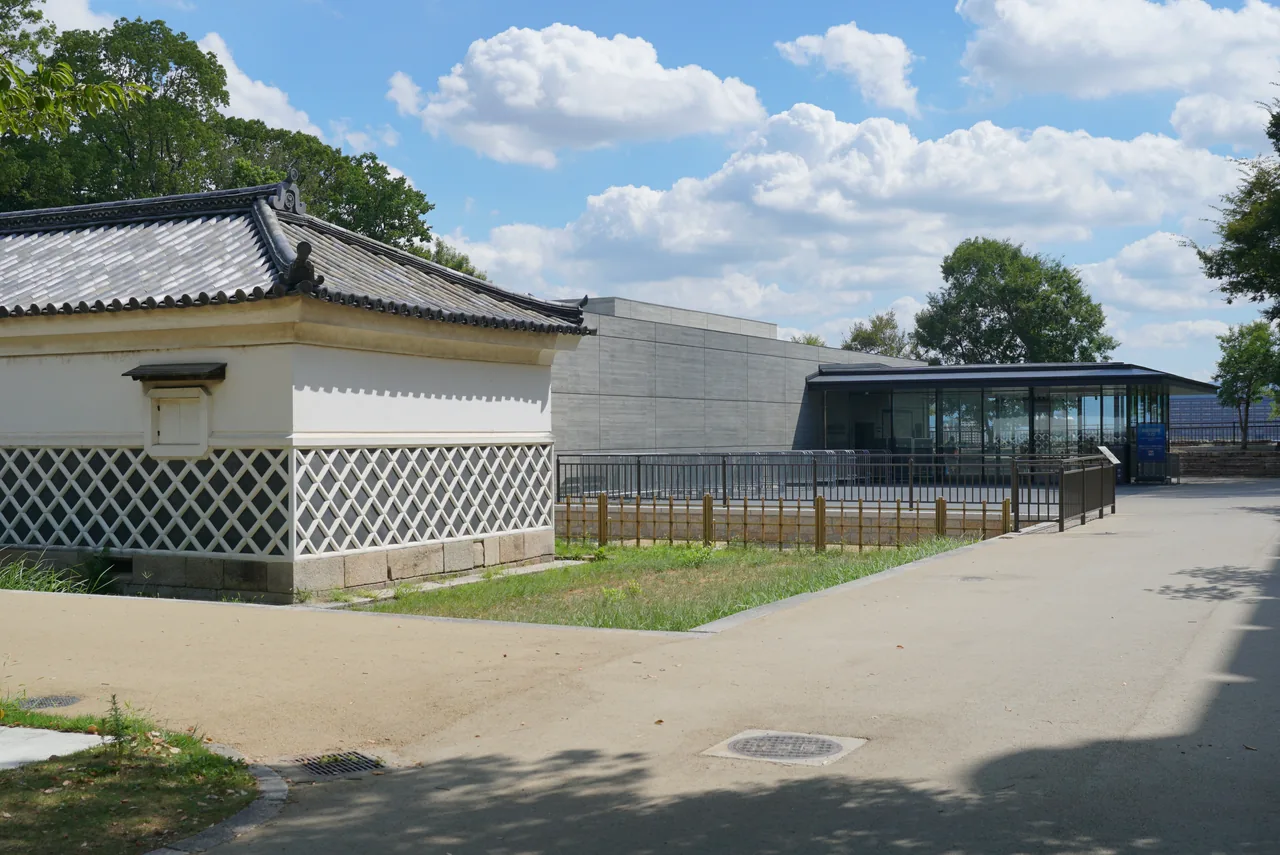
The newest thing to see at Osaka Castle is also the one people most often fail to find. It is not a room inside the keep. It is a building of its own, standing close by, and the display is below ground level.
There is no separate ticket for it. Entry is covered by keep admission, which also means there is no way to see this without paying for the keep.
Why the wall is buried
Everything you see above ground at Osaka Castle today — every stretch of wall, every moat edge — is Tokugawa work. When the shogunate rebuilt the castle in the seventeenth century it did not clear the previous castle away. It buried it, raising the ground level with an enormous volume of fill and building on top.
The Toyotomi-era walls therefore survive, but underneath. A section was uncovered during excavation work in the 1980s, and this museum is built over that excavation so the stonework can be seen where it stands. Walking down, you also get a sense of just how deep the fill above it is.
What is actually on display
The exposed section protected the innermost part of the castle, the quarter where Hideyoshi and his family lived. In the layout of the original castle this was the most protected ground there was.
It looks noticeably different from the Tokugawa masonry outside. The stones are rough and barely dressed, stacked more or less as they came. Scorch marks from the fires of the 1615 siege are visible on the surface. Small packing stones fill the gaps behind the face for drainage, and among the blocks are foundation stones taken from older temple buildings and reused. At the corners you can see an early form of the interlocking technique that later Japanese castle builders used everywhere.
It can close without notice. The official notice states plainly that while the wall is monitored, an unexpected collapse cannot be entirely ruled out, and that public access may be suspended without warning depending on its condition. If this is the reason you are making the trip, check before you go.
One small practical note: there are no toilets inside this building. Deal with that before you go down.
6. What you are looking at is the third castle on this site
Osaka Castle was not built once. Hideyoshi raised one, it fell in a siege, the Tokugawa shogunate rebuilt it, most of that burned in the upheaval of the Meiji Restoration, and finally the citizens of Osaka paid for the keep that stands today. Knowing the order makes the grounds legible, because different parts of the park date from different layers.
| Year | What happened |
|---|---|
| 1583 | Hideyoshi begins building his castle here |
| 1598 | Hideyoshi dies |
| 1615 | The Summer Siege. The castle falls and the Toyotomi line ends |
| 1620 | The Tokugawa shogunate begins rebuilding |
| 1868 | Fire during the Meiji Restoration destroys most of the buildings |
| 1931 | The present keep is built with public donations |
| 1953 | Thirteen surviving structures are designated Important Cultural Properties |
| 2025 | The Toyotomi stone wall museum opens |
The keep is not one of the thirteen
The nationally designated Important Cultural Properties in the park number thirteen, and the keep is not among them. It is a 1931 reconstruction rather than a surviving structure, which excludes it from that category.
It is protected under other designations. It was listed as a Registered Tangible Cultural Property in 1997, and more recently the city of Osaka designated it as a Tangible Cultural Property of its own. After more than ninety years the reconstruction has become a historic building in its own right, which is a slightly odd thing to hold in your head while looking at it.
Hideyoshi, and what the exhibition covers
Because the seventh floor is devoted to Hideyoshi’s life and the third and fourth floors hold material from his era, the interior of the keep functions largely as a museum about him.
Hideyoshi unified Japan in the late sixteenth century and then launched the Japanese invasions of Korea, in 1592 and again in 1597, which ended only after his death. Those campaigns were enormously destructive on the Korean peninsula and are remembered there very differently from how they are presented in Japanese castle museums. The displays here are drawn from Japanese sources and take a Japanese frame. That is worth knowing before you go up, and visitors from Korea in particular sometimes choose to skip the interior and spend the time in the grounds instead. Nothing about that is unreasonable — the walls, the gates and the moats are the more impressive part of the site in any case.
Where Hideyori and Yodo-dono died
A small stone monument stands on the east side of the Yamazatomaru bailey, north of the keep. It marks the place where Toyotomi Hideyori, Hideyoshi’s son, and his mother Yodo-dono are said to have taken their own lives as the castle fell in the siege of 1615.
It sits on the path between the Gokurakubashi bridge and the keep, which makes it easy to walk past without noticing. This is where the Toyotomi line ended, and five years later the Tokugawa shogunate began building the castle that stands here now.
The castle looks bigger from outside. From within, the keep reads as a museum rather than a fortress. The scale only registers from across the moat or standing at the base of the walls, and those are also where the photographs come from.
7. Nishinomaru Garden closes on Mondays
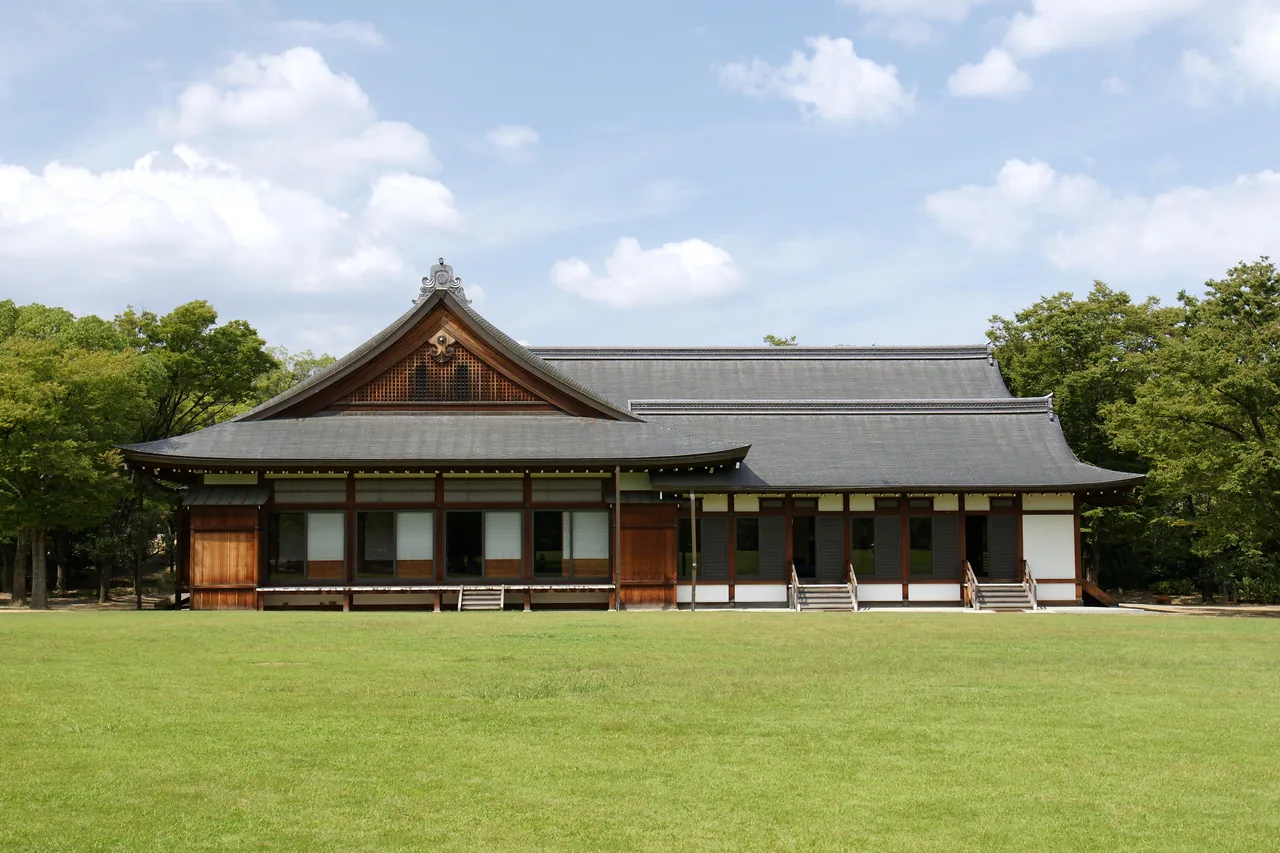
West of the keep there is a separate walled garden with its own ticket. Three hundred yen for adults, free for junior high and under. It is the one place in the grounds where you can sit on grass with the keep directly in front of you.
The most common wasted trip here is the closing day. It shuts on Mondays, or on the following day when a Monday is a public holiday, and it closes for about a week over the new year.
| Item | Detail |
|---|---|
| Admission | ¥300 for adults |
| March to October | 9:00 to 17:00 |
| November to February | 9:00 to 16:30 |
| Last entry | 30 minutes before closing |
| Closed | Mondays and the new year period |
Osaka’s official cherry blossom benchmark tree stands here
The tree Osaka Prefecture uses to declare the start of the cherry blossom season is inside this garden. When the news reports that the blossom has opened in Osaka, this specific tree is what the announcement is based on.
The garden holds close to three hundred cherry trees, mostly the standard Somei Yoshino variety, and there are evening illumination periods during the season. Opening hours and admission both change during the blossom weeks, so that is the one time to check rather than assume.
Three Important Cultural Properties are inside the garden
The ticket buys more than lawn. Two of the designated turrets, Sengan and Inui, stand within the garden walls, along with the stone powder magazine. From outside the garden you only see their roofs.
There is a second garden, and it is free
South of the keep there is a Japanese garden, laid out in 1931 alongside the reconstruction of the keep as an attached garden to the Kishu Palace, a building that stood here at the time. The palace itself later burned down and the garden is what remains.
Stand on the south side of the pond and the keep rises across the water. There is no ticket and few people, which makes it the obvious alternative on a Monday when Nishinomaru Garden is shut.
There is also a tea house in one corner, donated decades ago by the founder of a well known electronics company. It is normally closed, but for a stretch of the autumn it opens on Thursdays and Fridays and serves matcha with a sweet for fifteen hundred yen, cash only, with garden admission charged separately.
8. The turrets only open on set dates
The surviving turrets are normally viewed from outside. For limited runs in spring, summer and autumn, though, the interiors open to visitors. Going inside an Edo period turret is not something most Japanese castles offer at all.
Which buildings open depends on the season. Spring and autumn give you two of them, summer only one.
| Season | Open | Days |
|---|---|---|
| Spring | Tamon and Sengan turrets | Mainly weekends and holidays |
| Summer | Inui turret only | Weekends and holidays |
| Autumn | Tamon and Sengan turrets | Mainly weekends and holidays |
Within the spring and autumn runs there are busy stretches of a couple of weeks when they open on weekdays as well. The exact dates are announced afresh each year, so check the current schedule rather than a previous one.
Turret ticket or combined ticket
The turret ticket costs nine hundred yen for adults and includes admission to Nishinomaru Garden, so there is no need to buy the garden separately. Junior high and under pay three hundred, and preschool children go free.
A combined ticket adds the keep for two thousand yen, which works out cheaper than buying the three separately. There is no child rate on the combined version, which is the one catch for families.
Watch where and when tickets are sold. Turret tickets are sold at the Nishinomaru Garden reception. Only the combined ticket is also available at the keep’s own turnstile window, and that window stops selling it at half past two in the afternoon. The turrets themselves close at half past four with ticket sales ending at half past three.
9. The thirteen protected buildings are out in the open
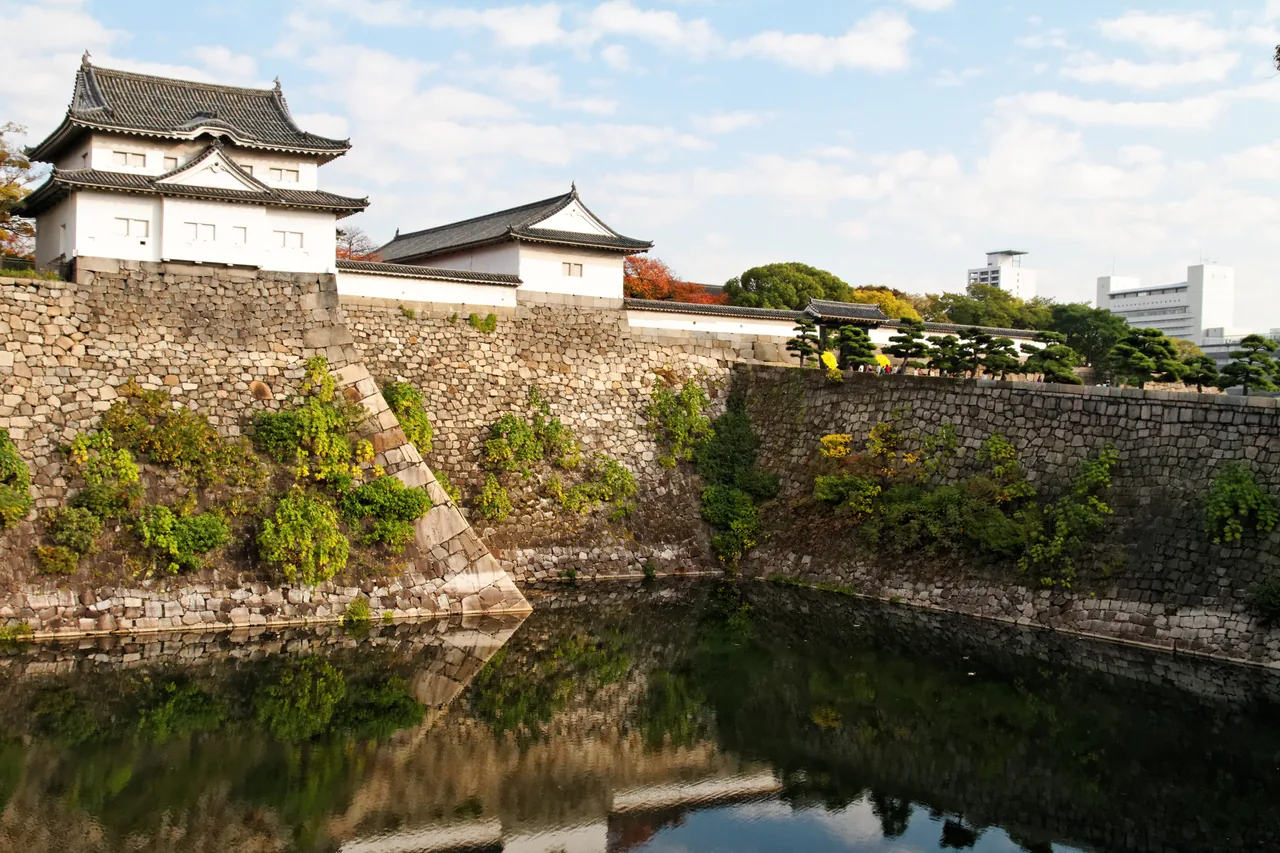
Most of the historic fabric at Osaka Castle is free to look at. Thirteen structures carry national Important Cultural Property designation, and the majority of them stand along paths you will walk anyway. The list includes gates, turrets, storehouses, a stretch of wall and even a well roof.
All of them are Edo period work. They have been repaired and partly rebuilt over the centuries, but they retain enough of their original form to be studied as examples of shogunate castle architecture.
| Structure | What it is |
|---|---|
| OtemonMap | The main gate. Three sections of wall beside it are designated too |
| SakuramonMap | The inner gate leading to the keep |
| Sengan turretMap | Covers the main gate from the flank |
| Inui turretMap | North-west corner. Unusual shape |
| Tamon turretMap | A long turret running above a gate |
| Ensho-guraMap | Gunpowder store built entirely of stone |
| KinzoMap | The shogunate’s treasury |
| Ichiban and Rokuban turrets | Two survivors along the south moat |
| Kimmeisui well roof | Covers the well in front of the keep |
The two oldest buildings are turrets
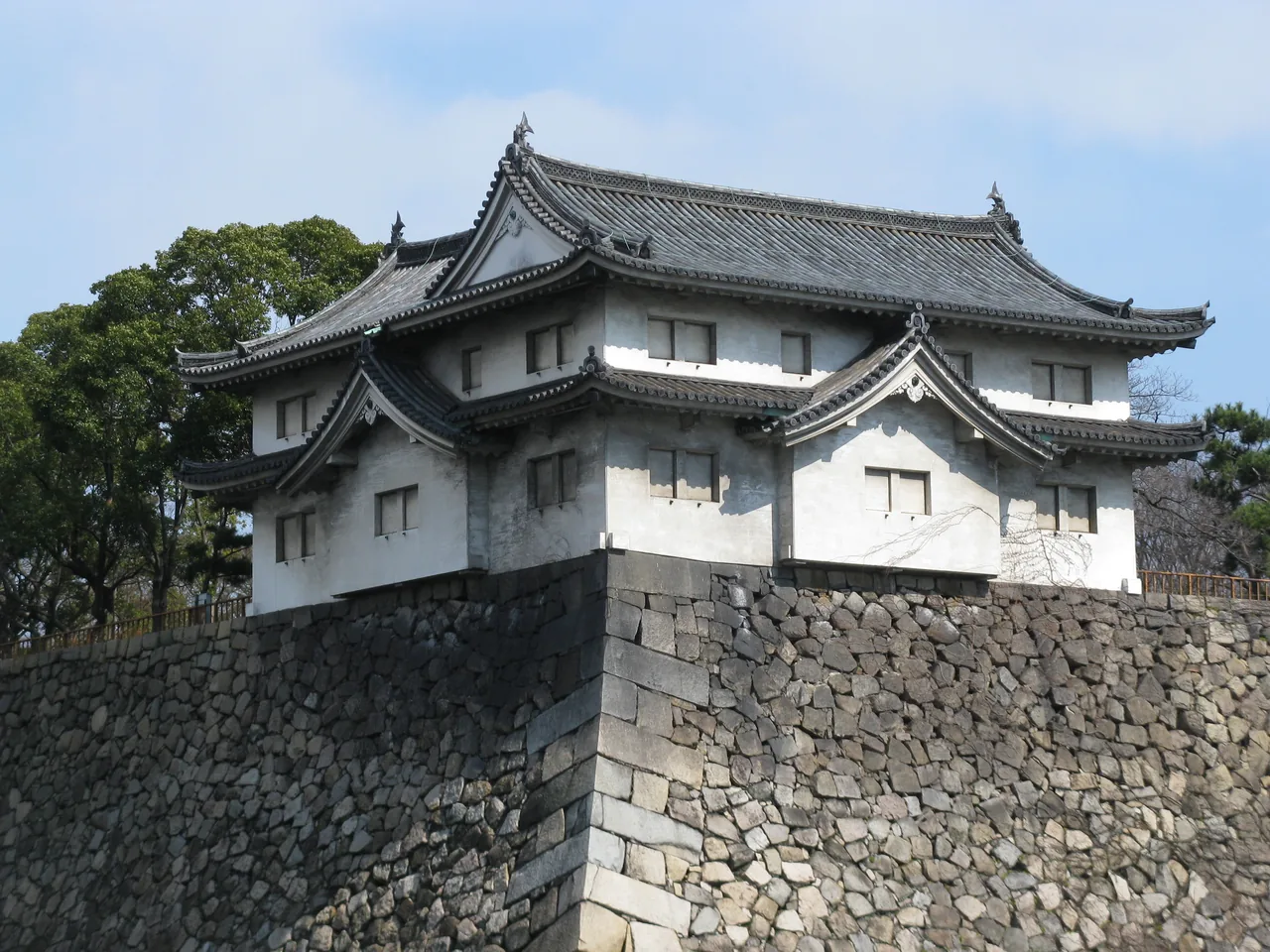
Sengan and Inui both date from 1620, the year the shogunate began rebuilding, making them the oldest structures in the park. Both were put up under a supervisor better remembered today as a tea master than as a builder.
Inui is the more unusual of the two. Seen from above it is L-shaped, and its upper storey is the same size as its lower one, which is rare in Japanese castle architecture. Because it could be seen from the south, west and north across the moat, it was once described as a turret with three front faces.
Sengan takes its name from a story about the siege of the temple fortress that occupied this site before the castle. Attackers were said to have been so troubled by flanking fire from a turret here that they joked it would be worth a thousand kan of coin to capture it.
A gunpowder store made entirely of stone
Ensho-gura looks unremarkable until you know what it is. Floor, walls, ceiling and beams are all granite, and the stone walls are over two metres thick. No other gunpowder magazine built this way survives in Japan.
There was a reason for the expense. An earlier magazine elsewhere in the castle, built with earthen walls, had been struck by lightning and exploded. What replaced it was designed against fire, damp and time all at once, and it is still standing.
The largest stone in the castle sits just inside Sakuramon
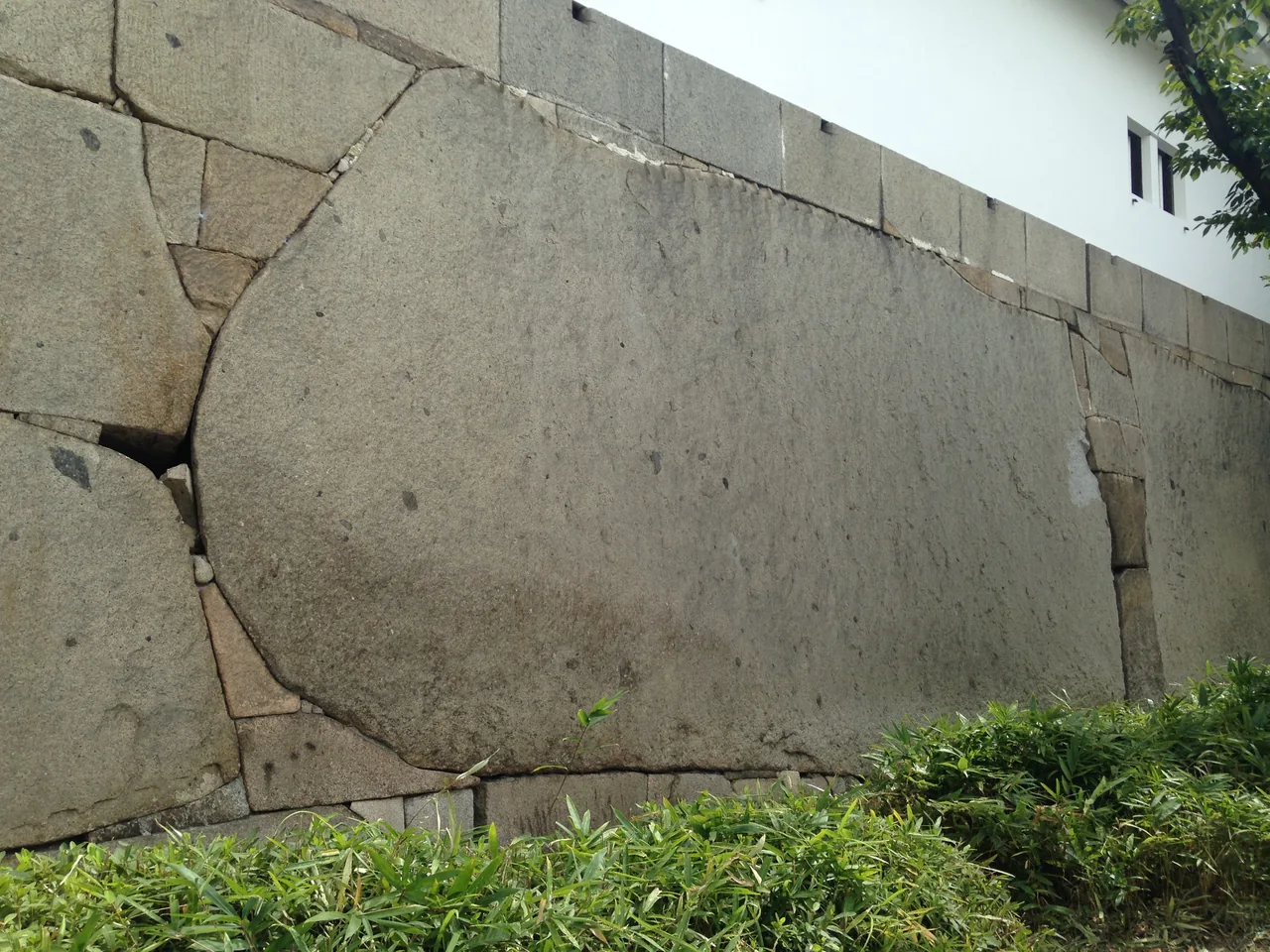
Walk through the Sakuramon gate and an enormous block is set into the wall of the courtyard beyond it. It stands 5.5 metres high and 11.7 metres wide, weighs an estimated 108 tons, and is the largest single stone at Osaka Castle.
It is called Takoishi, the octopus stone, after a pattern on its left edge that is said to look like one. The gate’s own name is thought to come from rows of cherry trees that stood here in Hideyoshi’s time.
The turrets still carry the machinery of a fight
Tamon-yagura stands over the square courtyard inside the main gate, and it retains its yari-otoshi, an opening built for dropping spears onto anyone who had made it through the gate below.
Sengan-yagura has gun loopholes, small square openings through which the muzzle of a matchlock could be pushed out and aimed. From outside they read as decoration unless you know what they are.
The buildings that did not qualify
Several other old-looking structures in the park are not designated. The Aoya gate, the Gokurakubashi bridgeMap and a small gate in the western bailey were all put back up from the 1960s onwards. Because the surviving documentation was not detailed enough for a faithful reconstruction, they were built as approximations, and that is the reason they are excluded. It is the same reasoning that leaves the keep off the list.
10. A large part of the park was an army base
After the Meiji Restoration the castle grounds passed to the Imperial Japanese Army, and stayed military land for the better part of a century. A divisional headquarters, an arsenal, a firing range and a military prison all stood here. A good number of the paths people now stroll along run across those sites.
The park’s own information boards record this history directly rather than glossing over it, so walking the grounds and reading the signs gives you the castle and the modern military story in alternation.
| What is there now | What it used to be |
|---|---|
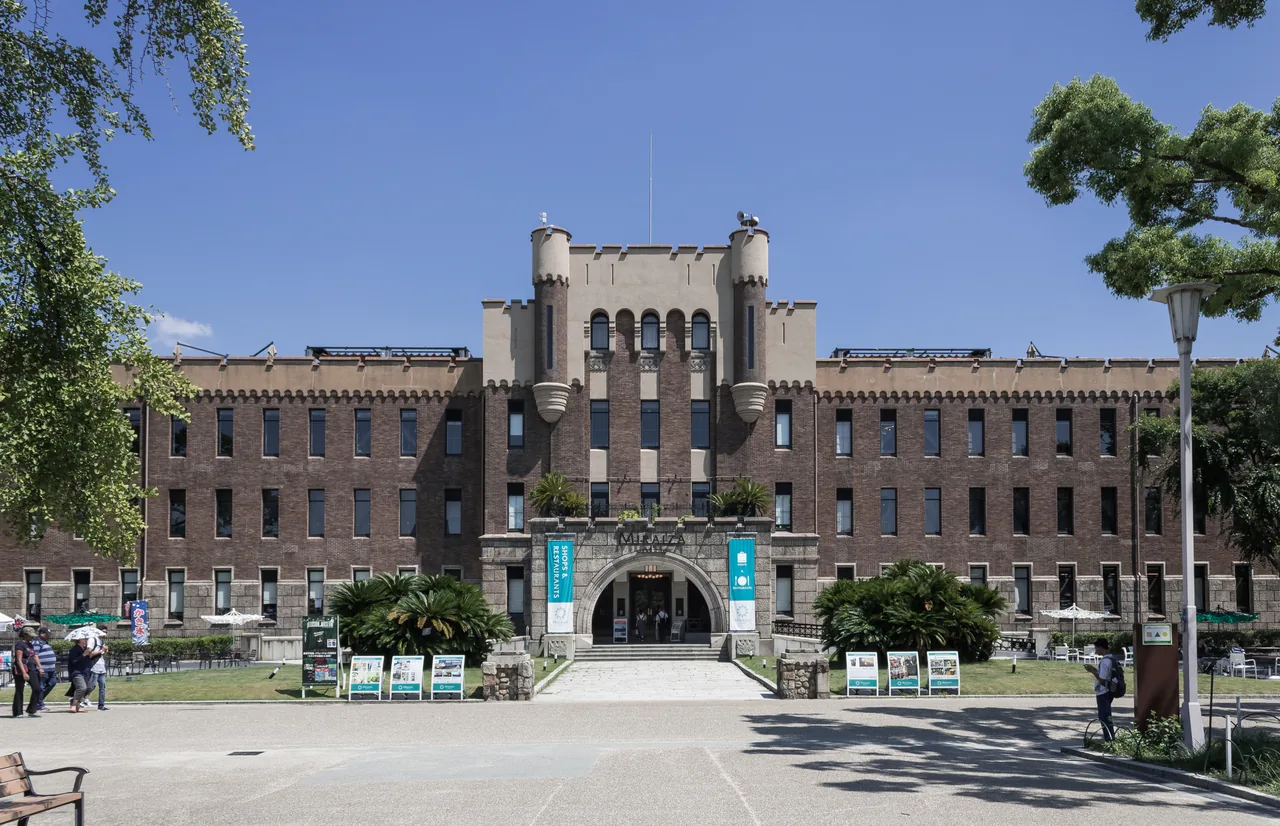
| Miraiza Osaka-joMap | Fourth Division army headquarters building |
| Osaka-jo HallMap | Site of the arsenal’s main building |
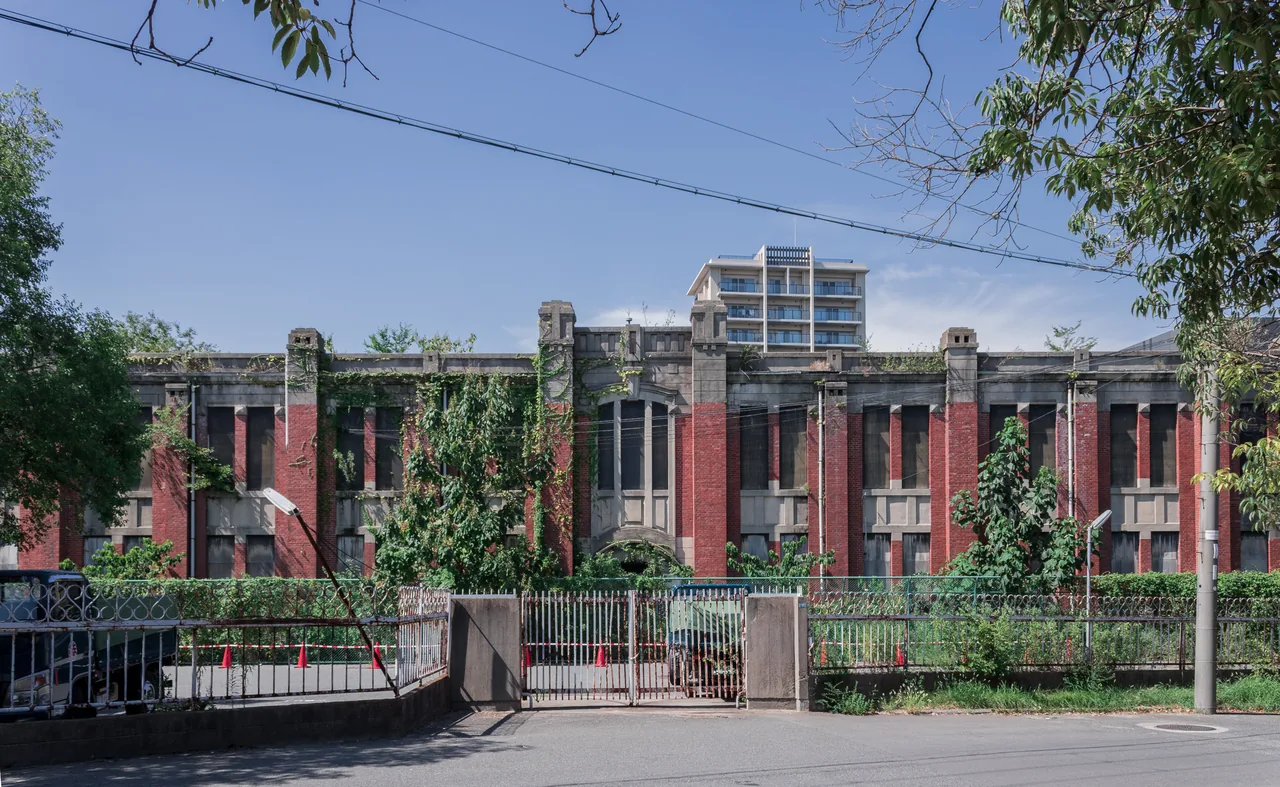
| A red brick buildingMap | The arsenal’s chemical analysis laboratory |
| Displaced stones on the keep’s platform | Bomb damage from 1945 |
| Open ground south of the honmaru | Site of an air defence operations room |
The souvenir shop was a divisional headquarters
The heavy stone building beside the keep, the one that looks vaguely like a European castle, now holds restaurants and shops. It was built in 1931 as the headquarters of the army’s Fourth Division, in the same year as the keep itself.
By August 1945 it housed a regional army command. After the war it was taken over by the Allied forces, then served as police headquarters, then as the city museum for four decades. Its present use dates from a seismic retrofit and restoration completed in 2017.
The concert hall stands on an arsenal
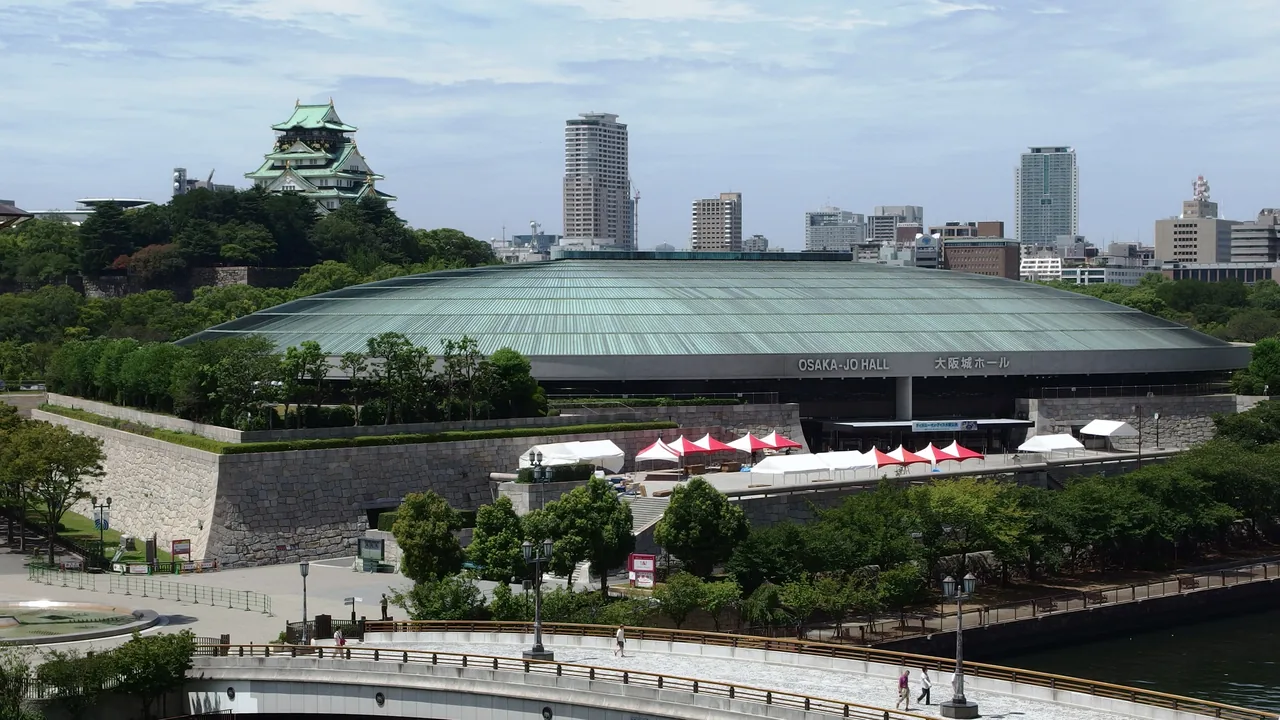
Osaka-jo Hall hosts touring acts and arena shows. It sits on the site of the main building of the Osaka Arsenal, which was among the largest military factories in the country and produced artillery. Its grounds sprawled well beyond the park, across what is now the Osaka Business Park district and out towards Morinomiya.
The works were destroyed by bombing in 1945. The surviving main building was demolished by the city in the early 1980s and the hall was built in its place. One arsenal structure does survive: a red brick laboratory in the eastern part of the park, designed by an army engineer who worked on several buildings here. Beside the path next to it lies a large mass of iron, slag drawn from a furnace, left where it is.
Bomb damage you can still see
Follow the stone platform the keep stands on around from the north side to the east and you will find a section where the blocks are visibly out of line. A bomb fell a few metres north of the keep in 1945 and shifted them. Because the castle held so many military facilities, it was bombed repeatedly that year, with the heaviest raid on 14 August.
The keep itself came through undamaged. Its 1931 structure was designed not to load the old stone platform, so the movement in the masonry did not carry into the building. Work was carried out in the 1960s to stop the distortion progressing further.
The buildings that are gone
South of the honmaru stood an air defence operations room, built around 1943: three storeys above ground and one below, in concrete, with walls over a metre thick. Aircraft were tracked and air raid warnings issued from inside it. It survived the bombing intact and was only removed in 1970 during landscaping work, a job made difficult by how solidly it had been built.
A live firing range and an army prison also occupied parts of the grounds. Nothing of either remains above ground and information boards now mark where they stood.
Most of these are signs, not sights. Of everything in this section only Miraiza and the brick laboratory are still standing. The rest are boards on open ground, better read in passing than made into destinations.
11. The tree Hideyoshi supposedly planted was planted in 1898
A large camphor tree stands near the keep with a monument beside it. The inscription connects it to Hideyoshi, and the story that he planted it himself has attached itself firmly to the spot. The park’s own official description says the story is not true.
The tree was planted in March 1898 by the general then commanding the army division based at the castle. The monument beside it records that an older camphor, said to have been planted by Hideyoshi, had been reduced to a dead stump by the fire of the Meiji Restoration, and that this one was planted in its place.
Why the original story cannot be right
The official explanation turns on ground level. The surface you walk on at Osaka Castle today is not the surface of the sixteenth century castle, because the shogunate raised it with fill when it rebuilt. A tree planted in Hideyoshi’s time could not still be standing at this height.
The description goes further and explains where the story came from: the surge of public campaigns to raise Hideyoshi’s profile that followed the Meiji Restoration. That the replacement tree was planted by an army general fits that period exactly. After the keep was rebuilt in 1931 the tree was adopted as the symbolic central tree of the park.
The shrine belongs to the same period
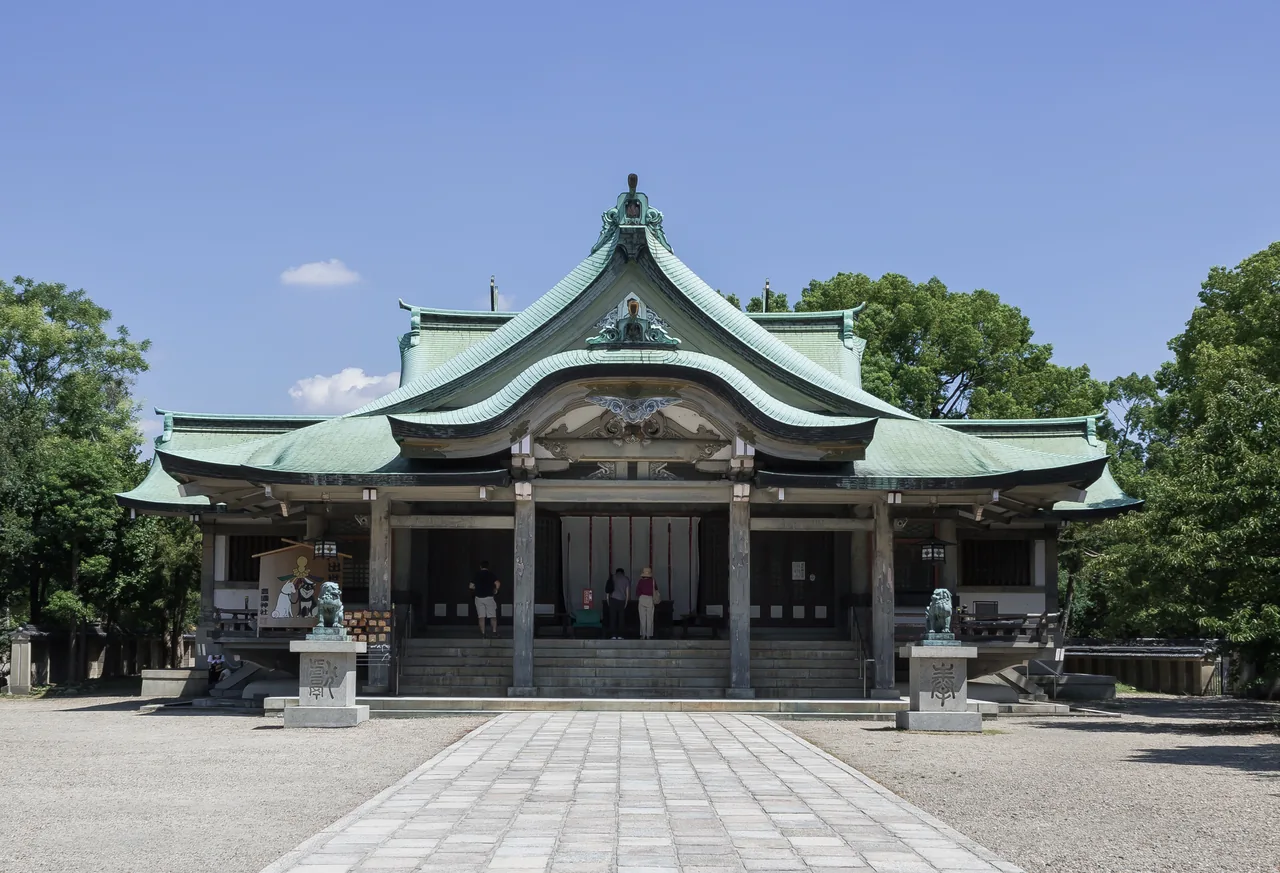
A shrine in the southern part of the grounds has Hideyoshi as its deity, together with his son and his younger brotherMap. He was deified after his death in 1598 and shrines to him were founded in several places, but they disappeared when his house fell.
What revived them was the Meiji Restoration. The Meiji Emperor, visiting Osaka in 1868, ordered the shrine restored, and it was founded in the city proper in 1879. It moved twice before arriving at its present position inside the castle grounds in 1961. It is therefore a modern arrival on the site rather than part of the historic castle, which is easy to miss when you come across it between the turrets.
12. A gold boat runs a circuit of the inner moat
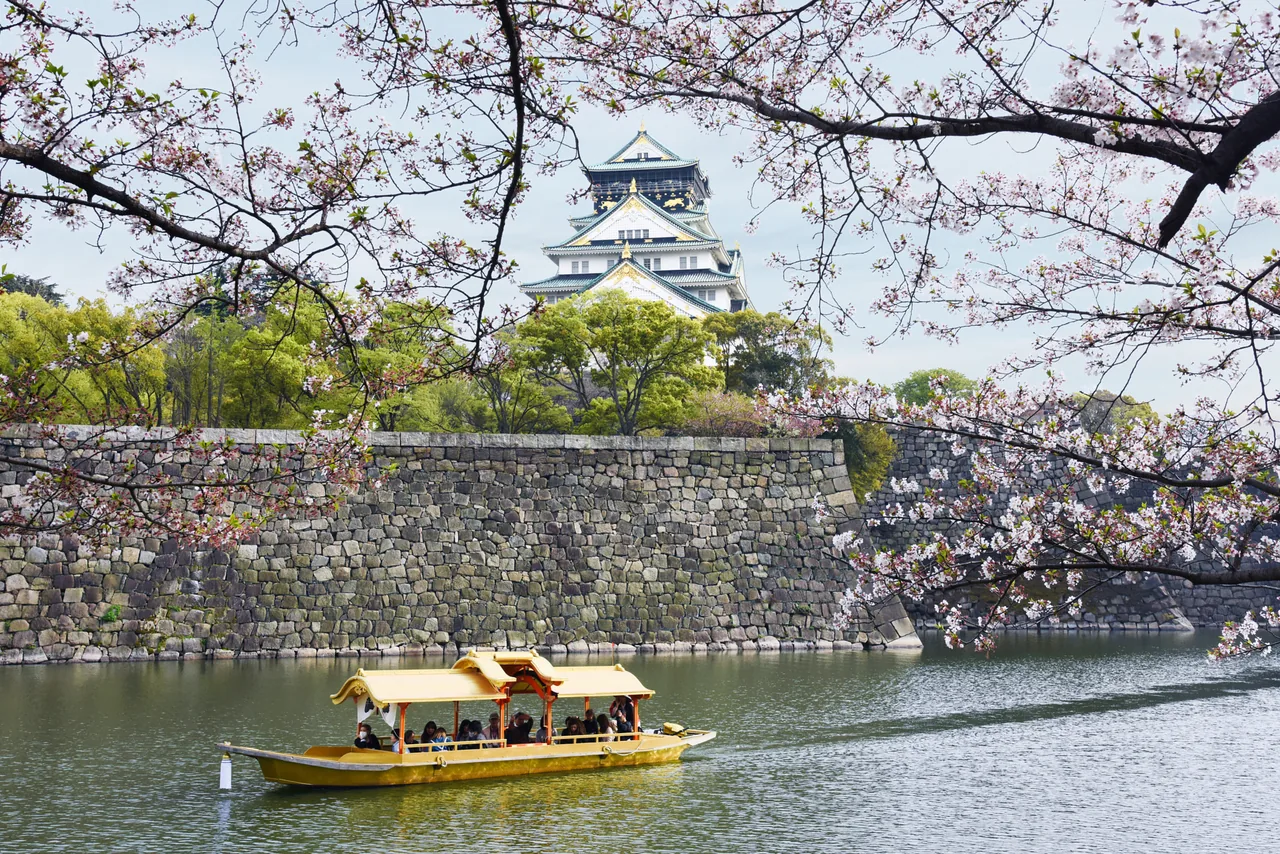
There is a boat on the inner moat, finished in gold leaf, that takes about twenty minutes to go round. Looking up at the walls from the water is a genuinely different view from the one you get walking, and it is the only way to see that face of the stonework at all.
The complication is buying a ticket. There is no phone booking for the scheduled departures. Tickets are sold on the day, at the kiosk, and nowhere else.
| Item | Detail |
|---|---|
| Fare | ¥1,800 |
| Duration | About 20 minutes for the circuit |
| Tickets | From 9:30, same day, in person only |
| Last departure | 16:30 |
| Boarding point | North of the keep, just west of Gokurakubashi |
In peak periods the whole day including the last sailing can sell out by around three in the afternoon, so if you want to do this, buy in the morning and come back for your slot. Children of junior high age and under cannot ride unaccompanied. Strong winds reduce or cancel sailings.
The boat is a reconstruction based on a vessel depicted in a folding screen painting of Hideyoshi’s Osaka, a screen that now lives in a castle in Austria. It has run in its current gilded form since 2015.
There are small vehicles that circulate the grounds
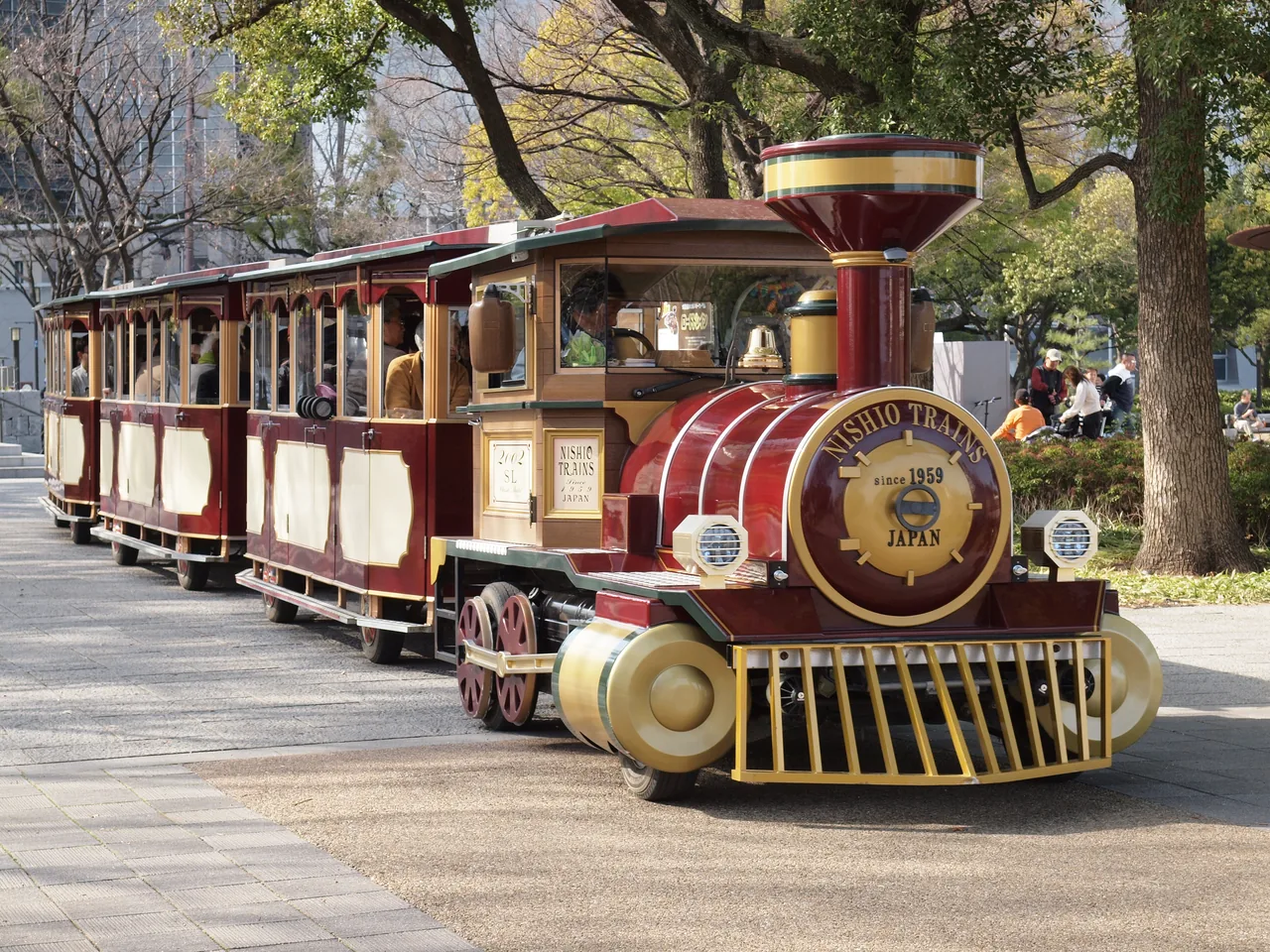
Given the distances, there are two shuttle services inside the park, running different routes.
| Service | Fare | Route |
|---|---|---|
| Road train | ¥400 one way | Morinomiya to Gokurakubashi |
| Electric car | ¥300 | Clockwise loop of the south outer moat |
| One day pass | ¥1,000 | Unlimited on both |
Children and passengers aged sixty five and over pay roughly half, and holders of Japanese disability certificates ride free. Both run from half past nine to half past five and close on the first Thursday of each month. Bad weather suspends them.
Two restrictions catch people out. The final stretch of the road train route is operated by the electric car instead, requires changing vehicles at Gokurakubashi, and is limited to passengers with mobility difficulties. The car park stop is for wheelchair users only. On the electric car, one ticket buys one lap.
13. Plum blossom arrives about a month before the cherry
Osaka Castle Park is known for cherry blossom, but the plums come first. There is a dedicated plum grove on the east side of the inner moat that peaks roughly a month earlier, at the end of winter, with a fraction of the crowds.
The grove exists because of a school reunion. Graduates of an Osaka high school donated plum trees to the city to mark the school’s hundredth anniversary in the 1970s. The original gift was under nine hundred trees; the grove now holds more than twelve hundred across over a hundred varieties.
| What | Where | Roughly when |
|---|---|---|
| PlumMap | East of the inner moat | Late winter into early spring |
| PeachMap | Northern end of the park | Early March into mid April |
| Cherry | Throughout the park and in the garden | Spring |
| Late cherry | Tamatsukuri side | End of the blossom season |
Cherry trees are everywhere, not only in the garden
There are close to three thousand cherry trees in the park. They line the moats as well as filling the paid garden, so you can see a great deal of blossom without buying a ticket. What the garden adds is the particular experience of sitting on grass with the keep framed in front of you, which the moatside paths do not offer.
If you arrive after the main blossom has dropped, there is a fallback. Late-flowering double cherries are planted on the Tamatsukuri side in the south-east, and they carry on after the standard varieties have finished.
The peach grove at the north end
Cross the bridge at the northern edge of the park and there is a grove planted with peach trees, laid out in the late 1990s, with a dozen or so varieties mixed together. Because the varieties flower at different times the display stretches from early March to the middle of April.
Fewer visitors know about it, so it stays comparatively quiet even during the cherry weeks. If you come in from the north side of the park you walk past it on the way to the keep without having to make a detour.
Something to walk through outside blossom season
The park contains several named woods — a citizens’ wood, a memorial tree wood, a fragrant wood, a wood of recollections — along with an avenue of black pines. There is also a hydrangea planting, which fills the gap between the spring blossom and high summer. In July and August the shade is the main reason to use these paths.
14. Which station you use changes the walk considerably
Several stations serve the park, and from every one of them you have a walk ahead. The grounds are large enough that even the closest station leaves you about fifteen minutes from the keep. The route the park itself recommends crosses the whole site, from Tanimachi 4-chome in the west out to Osakajokoen in the north-east, and runs about three kilometres.
So the choice matters less for minutes saved than for which gate you come in by. Different gates put different things on your path, and the southern approach involves more climbing than the northern one.
| Station | Line | Walk to the keep |
|---|---|---|
| OsakajokoenMap | JR Osaka Loop Line | About 15 minutes |
| Osaka Business ParkMap | Metro Nagahori Tsurumi-ryokuchi | About 15 minutes |
| TemmabashiMap | Metro Tanimachi and Keihan | About 20 minutes |
| MorinomiyaMap | JR Loop Line and Metro | About 20 minutes |
| Tanimachi 4-chomeMap | Metro Tanimachi and Chuo | About 20 minutes |
| Osakajo-kitazumeMap | JR Tozai Line | North entrance side |
Pick by where you are staying
From Namba or Umeda the Osaka Loop Line to Osakajokoen is the simplest approach. The station exit puts you next to a shopping complex and you enter the park from the north, which is also the shortest walk to the keep.
From Tennoji or Hommachi the subway gets you to Tanimachi 4-chome or Morinomiya. Tanimachi 4-chome has the better approach of the two, since it brings you in past the main gate and the designated turrets rather than across open lawn. It is also where the park’s own recommended route starts.
Coming down from Kyoto on the Keihan line, Temmabashi lets you walk straight in without changing trains at all.
Check the exit number, not just the station. Different lines at the same station use different exits. Tanimachi 4-chome is exit 1-B for the Tanimachi line and exit 9 for the Chuo line; Morinomiya uses exits 1 and 3-B. Surfacing on the wrong side leaves you walking around the block to get back to the park.
15. Food and souvenirs cluster in two places
Food inside the park clusters by the keep and again by Osakajokoen station. The stone building beside the keep holds one set of options and the complex at the station holds the other. The long walk between them has very little on it.
The park’s official register lists more than forty businesses across those two clusters, mixing restaurants, cafes and shops.
Beside the keep
Miraiza Osaka-jo sits directly next to the keep, which makes it the natural stop on the way out. Restaurants, cafes and souvenir shops fill the floors and there is a rooftop terrace looking back at the castle.
The keep itself has museum shops on the first and eighth floors selling items you cannot buy anywhere else. Both are inside the paid area, so you need a ticket to reach them.
By the station
Jo-Terrace OsakaMap is attached to Osakajokoen station. It has a range of restaurants and a convenience store, which makes it the sensible place to pick up a drink before going in or eat on the way out.
Inside the park itself there is little beyond vending machines. In summer it is worth carrying water in rather than counting on finding it.
Two concert venues share the grounds
The park contains a large indoor arena and a separate open air music hallMap. On event days the station and the northern part of the park get extremely busy.
If your castle visit lands on a concert day, walking gets slower and the station queues get long. Either check the schedule or plan to approach from the south.
Everything else in the grounds
Inside Nishinomaru Garden there is a municipal guest house, used for official functions rather than open to visitors. The eastern part of the park has a theatre complex and there is a wedding venue as well.
For practical help the park centre lends wheelchairs and hands out both a standard park map and a separate barrier-free map, which is genuinely useful here given the distances and the stairs.
One memorial has nothing to do with the war
On the western side stands a tower raised in 1936 in memory of schoolchildren who died inside their schools when a typhoon struck Osaka in 1934, and of the teachers who died trying to save them. In a park with this much military history it is easy to assume otherwise, and the assumption would be wrong.
Nearby there is also a surviving public radio tower, from the years when a neighbourhood would gather to listen to broadcasts together.
16. Half a day, or the whole thing
If you only want the keep, two hours covers it comfortably. Even reading the exhibitions properly, most people are up to the eighth floor and back down inside ninety minutes. Adding the journey in and out makes it a half day.
Doing the grounds as well is a different proposition. Circling the moats, looking at the turrets and going into the garden runs to four or five hours.
| If you do this | Allow |
|---|---|
| The keep only | About two hours |
| Keep, stone wall museum and garden | About three hours |
| A full loop of the grounds | More than half a day |
| Adding the boat | Another thirty minutes |
So is it worth it?
The grounds are worth the trip without qualification. They are the best surviving example of shogunate castle engineering in a major Japanese city, they are free, and the scale of the walls is genuinely hard to convey in photographs.
The keep interior divides people. It is a concrete building from 1931 with a museum inside, not a preserved wooden castle, and visitors who came expecting the latter often say so afterwards. If historic interiors are what you want, the turret openings deliver that far better than the keep does. If you want the view and a compact museum about the castle’s history, the keep is fine and the ticket is not expensive.
Go in the morning
The quietest hour is the one right after opening at nine. Crowds build through the day and the ticket queue with them. Doing the castle early and moving to another district afterwards is the pattern that works.
The castle is about fifteen minutes by train from both Umeda and Namba, so pairing it with Namba and Dotonbori or with Umeda makes for an easy day.
If you are considering the Osaka Amazing Pass
The keep, Nishinomaru Garden, the turret openings and the moat boat are all included on the Osaka Amazing Pass. Doing the castle thoroughly accounts for a large share of the pass price on its own. Whether it pays overall depends on what else you do, and our breakdown of the pass lists the gate prices site by site.
If you are only using trains, IC cards and the Kansai area passes are the comparison to read instead.
Where to stay
There are few hotels immediately around the castle. Most visitors stay in Umeda or Namba and ride out, which takes about a quarter of an hour and costs very little.
Our guide to the Osaka districts covers what each area is like, and the Japanese accommodation tax explainer covers what gets added to the bill. If you are building a longer route through the country, the Japan travel guide is the place to continue.
🎡Things to Do12
🏨Where to Stay3
🚇Getting Around3
🗾Japan trip essentials26
Osaka Castle FAQ
The main keep is ¥1,200 for adults. University and high school students pay ¥600 but must show student ID, and visitors from abroad are asked for an international student card specifically. Junior high school age and under enter free with proof of age. Walking the park, the moats, the gates and the turret exteriors costs nothing. Nishinomaru Garden is a separate ¥300.
It opens at 9:00 and closes at 18:00, with last admission at 17:30. Anything online saying 17:00 is quoting the schedule from before the change. On busy days staff may close the ticket queue earlier than 17:30 so that everyone already in line gets in, so allow extra time for a late afternoon visit. The keep is closed from 28 December to 1 January.
There is no advance reservation system for the keep, so no timed entry slots exist. You can simply turn up, buy a ticket and queue. What a pre-purchased dated ticket does is let you skip the ticket window, which on a busy day is the slow part. Nishinomaru Garden and the turret openings are not reservation-based either.
The grounds are, without reservation. The walls, moats and surviving Edo period gates and turrets are free, extensive, and the best of their kind in any large Japanese city. The keep interior is the part people disagree about: it is a 1931 concrete reconstruction housing a museum, not a preserved wooden castle. If you want a historic interior, the seasonal turret openings deliver that far better.
Yes, but it only goes as far as the fifth floor and only travels upwards. From the fifth floor to the eighth floor observation deck is stairs, and the whole descent is stairs. Wheelchair users and visitors who have difficulty walking are taken up and down on all floors instead, and the observation deck itself is wheelchair accessible.
No. Your keep admission covers it. It is not inside the keep, though — it occupies a separate building nearby, and the display is below ground, where an excavated section of the buried sixteenth century wall stands in place. Hours match the keep. Access can be suspended without notice depending on the condition of the stonework.
About two hours for the keep alone. Three hours if you add the stone wall museum and Nishinomaru Garden. A full circuit of the grounds taking in the gates and turrets runs past half a day, and the moat boat adds another thirty minutes. The quietest time is the first hour after opening at nine.
JR Osakajokoen and Metro Osaka Business Park are the closest, but even from those it is about a fifteen minute walk to the keep. The others are nearer twenty. The park is big enough that your choice of station saves very little time, so pick on the approach instead: Tanimachi 4-chome brings you past the main gate and the designated turrets. From Kyoto on the Keihan line, use Temmabashi.
No. Tickets for the gold boat on the inner moat are sold on the day, at the kiosk, in person only. Sales start at 9:30 and the last departure is at 16:30. In peak periods the entire day can sell out by mid afternoon, so buy in the morning if you want to ride. The fare is ¥1,800 for a circuit of about twenty minutes.
It does. The keep, Nishinomaru Garden, the seasonal turret openings and the inner moat boat are all on the pass, so the castle alone accounts for a substantial share of what the pass costs. Gate prices for every included site are compared in our Osaka Amazing Pass breakdown.