
Where to Stay in Kyoto: 5 Best Areas Compared (Honest Guide)
Kyoto Station, Downtown Kawaramachi, Gion & Higashiyama, Central Nijo & Karasuma, or Arashiyama — which of Kyoto’s five areas actually fits your trip, decided by vibe, sights, transport, budget and the new 2026 lodging tax.
| Best area for most first-timers | Downtown Kawaramachi & Shijo — central, walkable to dinner, on subway/Hankyu/Keihan, and a river’s-width from Gion. It’s the best all-round balance of sights, food and transport. |
|---|---|
| It’s not one ‘right’ area — it’s vibe + sights + transport | Kyoto’s sights spread east-to-west and the subway is only two lines, so pick the zone nearest what you most want to see and how you’ll move between temples. |
| Cheapest and best value | Kyoto Station and Central Nijo & Karasuma give you the most reliable rooms per yen, with easy transport and business/value hotels rather than resort pricing. |
| The splurge | Gion & Higashiyama is the most atmospheric — wooden lanes, ryokan and top luxury, with Kiyomizu-dera and Yasaka Shrine on your doorstep — but it’s the priciest and hilliest. |
| Families and retreats | Central Nijo & Karasuma for apartment-style suites with kitchens near Nijo Castle; Arashiyama for a riverside onsen-ryokan retreat, ideally as a split-stay night rather than your only base. |
| Timely note — the 2026 lodging tax | since 1 March 2026 Kyoto charges an accommodation tax per person, per night on a 5-tier scale (¥200 up to ¥10,000), often collected at check-in and not always shown in the online price — factor it in, especially on luxury rooms. |
1. The short answer: which Kyoto area is right for you?
2. The one decision in Kyoto: sights + transport reality
3. How Kyoto lays out
4. Zone 1 — Kyoto Station
5. Zone 2 — Downtown Kawaramachi & Shijo
6. Zone 3 — Gion & Higashiyama
7. Zone 4 — Central Nijo & Karasuma
8. Zone 5 — Arashiyama & Sagano
9. Getting around Kyoto from your base
10. The 2026 Kyoto lodging tax
11. Ryokan vs machiya vs hotel vs apartment
12. When to book & seasons
13. Getting to your hotel from the airport
14. Decision matrix by traveller type
15. Plan the rest of your Kyoto trip
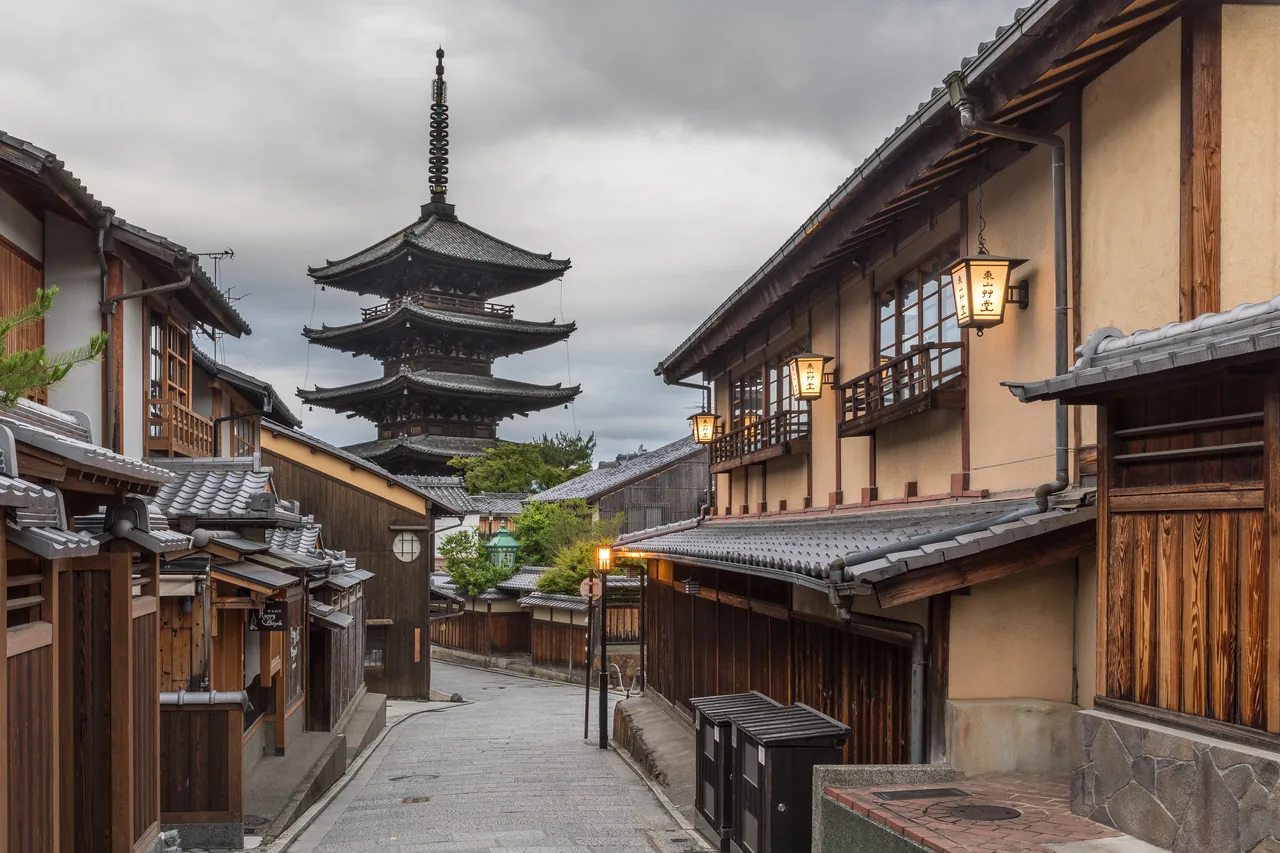
1. The short answer: which Kyoto area is right for you?
For most first-timers the best base is Downtown Kawaramachi & Shijo — it’s the most central, the most walkable to dinner and nightlife, and it sits on the subway, Hankyu and Keihan lines with Gion just across the river. But there is no single “correct” Kyoto area: the city’s temples are strung out east-to-west and the subway is only two lines, so the real decision is which sights you most want and how you plan to move between them.
Kyoto rewards choosing your base deliberately far more than Tokyo does, because the trains do less of the work here and the atmosphere changes sharply from one district to the next. Read the scan table below like a menu — who each area suits, what a typical mid-range room costs, and whether it’s a comfortable first-timer pick — then dive into the zone sections for the honest detail, cons included.
| Area | Vibe in 3 words | Best for | Mid-range/night | Atmosphere | First-timer? |
|---|---|---|---|---|---|
| Kyoto Station | Modern, convenient, hub | Day-trippers, heavy luggage, early departures, JR Pass | ¥15,000–30,000 | Practical, not “old Kyoto” | ★ Great (easy) |
| Downtown Kawaramachi & Shijo | Lively, central, walkable | Foodies, first-timers, nightlife, couples | ¥18,000–35,000 | Buzzy heart of the city | ★ Top pick |
| Gion & Higashiyama | Atmospheric, traditional, splurge | First big splurge, honeymoon, ryokan, temple-walkers | ¥30,000–70,000 | Most atmospheric, priciest | Great (if budget allows) |
| Central Nijo & Karasuma | Quiet, refined, central | Repeat visitors, families, design hotels, value-central | ¥18,000–40,000 | Calm, residential-central | Good |
| Arashiyama & Sagano | Scenic, nature, retreat | Ryokan/onsen retreat, honeymoon, split-stay, nature | ¥25,000–60,000 | Serene riverside retreat | So-so (as sole base) |
The rest of this guide unpacks each zone honestly, then matches a base to your traveller type, your trip and the season. New to the city overall? Start with our complete Kyoto travel guide and come back here for the where-to-sleep decision.
2. The one decision in Kyoto: sights + transport reality
Decide which sights matter most to you and how you’ll get between them, and the area chooses itself — because in Kyoto, unlike Tokyo, the trains don’t stitch everything together. This is the single most important thing to understand before you book.
Kyoto is not Tokyo — there’s no loop
Tokyo hands you a Yamanote loop that makes “any well-connected district” a fine choice. Kyoto doesn’t. The subway is only two lines — the Karasuma line running north–south and the Tozai line running east–west, crossing at Karasuma-Oike — and between them they cover downtown, the central flatland and Nijo well, but they do not directly reach the Kiyomizu-dera/Gion core or Arashiyama. The famous east-side temples are served mostly by buses, which are dense and cheap (a flat ~¥230 in the city core) but slow and packed in peak season. Arashiyama, out west, is reached by the JR Sagano line, the Randen tram or Hankyu.
Because the sights are spread out east-to-west and the rail network is thin, proximity to what you want to see matters much more here. A base near Gion means you walk to the Higashiyama temples; a downtown base means you walk to dinner and cross a bridge to Gion; a Kyoto Station base means fast day trips but a bus ride to the temples.
| How you’ll mostly move | What it reaches well | Lean towards |
|---|---|---|
| Subway (2 lines) | Downtown, Nijo/central, Higashiyama-Sanjo | Downtown or Central Nijo & Karasuma |
| Bus + walking | East temples: Gion, Kiyomizu, Ginkaku-ji | Gion & Higashiyama, or Downtown |
| JR & day trips (Nara/Osaka/Uji) | Regional lines, shinkansen, Haruka | Kyoto Station |
| Randen / JR Sagano | Arashiyama & the west | Arashiyama (retreat) or anywhere central for a day trip |
3. How Kyoto lays out
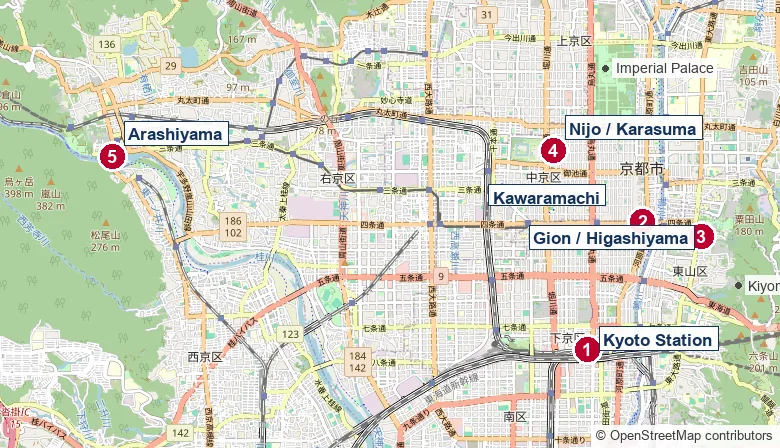
Picture Kyoto as a grid in a bowl of hills: the sights and the five zones spread mainly east-to-west, so once you know roughly where each sits, choosing between them gets much simpler.
Start in the south at Kyoto Station Kyoto StationMap, the modern transport hub where the shinkansen, the Haruka airport express, buses and subway all converge. Head north up the Karasuma subway and you reach the Downtown core around Nishiki Market Nishiki Market, KyotoMap, the lively heart of dining and shopping on the west bank of the Kamogawa river. Cross the river east and you’re in Gion Gion, KyotoMap, the wooden geisha quarter, which climbs into the Higashiyama hills up to Kiyomizu-dera Kiyomizu-dera, KyotoMap — the postcard east side. Swing back west into the central flatland and you find Nijo Castle Nijo Castle, KyotoMap, the quieter refined centre. Keep going west, out past the edge of the city, and you reach Arashiyama and its Bamboo Grove Arashiyama Bamboo Grove, KyotoMap, the scenic riverside retreat.
How to read it
Three mental anchors make the whole city click. The Kamogawa river runs north–south and separates Downtown (west bank) from Gion/Higashiyama (east bank) — a five-to-fifteen-minute walk across a bridge. The Higashiyama hills form the eastern wall, holding most of the famous temples. And Arashiyama sits well to the west, a train ride out from everything else, which is exactly why it feels like a getaway. Kyoto Station is the southern gateway that ties it all together by rail.
The map below plots these landmarks so you can see how the zones relate before you choose.
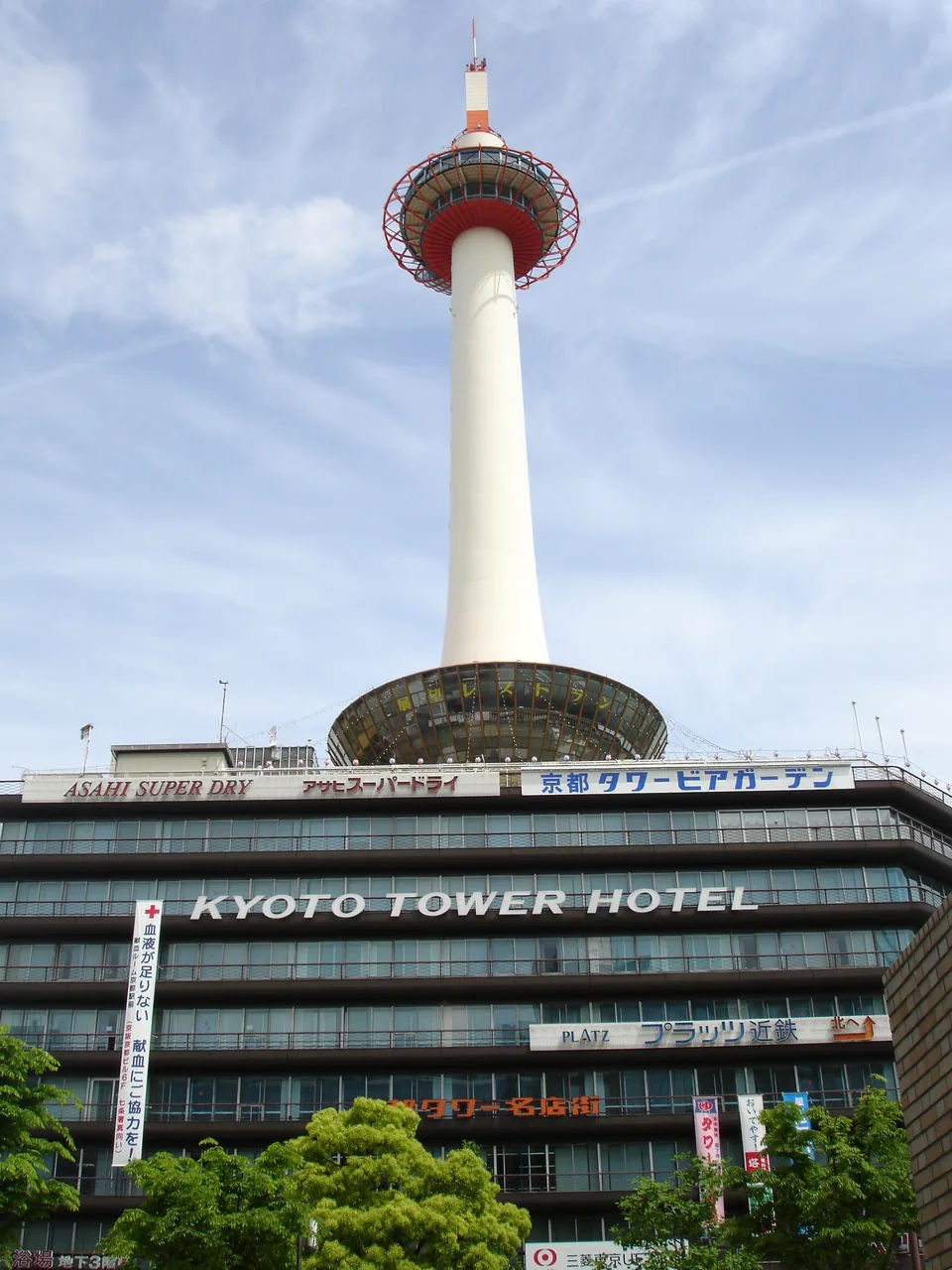
4. Zone 1 — Kyoto Station
At a glance: the most convenient, lowest-friction base in Kyoto — the shinkansen, the airport express, buses and subway all meet here, so it’s ideal for day-trippers, heavy luggage and early departures, even if it’s the least “old Kyoto” in feel.
Stay here if you’re a first-timer who values easy logistics, you’ll day-trip to Osaka, Nara, Uji or Himeji, you’re travelling with heavy luggage, you have an early train out, or you’re a JR Pass user who wants the station on your doorstep. Skip it if you want atmosphere and evening charm — this is a modern transport hub, not a place you’ll linger after dark, and the famous temples are a bus or subway ride away.
The character is efficient and modern: the vast glass station building itself, big full-service and business hotels, department stores and endless dining, all built for movement rather than romance. It splits into two moods. The Karasuma (north) side by the central exit is livelier and closest to downtown; the Hachijoguchi (south) side is the shinkansen side, home to newer big hotels but a touch sterile and office-like. Everything about your trip’s logistics starts here — Karasuma subway north to downtown, buses east to Higashiyama, and JR out to Arashiyama, Fushimi and Osaka.
| Hotel | Style | Price band | Sub-area | Photos & rates |
|---|---|---|---|---|
| Hotel Granvia Kyoto | Luxury | ¥¥¥¥ | Inside the station building | 📷 Photos & rates → |
| The Thousand Kyoto | Luxury/Design | ¥¥¥¥ | Karasuma central exit, 2 min | 📷 Photos & rates → |
| Miyako Hotel Kyoto Hachijo | Full-service | ¥¥ | Hachijo south exit | 📷 Photos & rates → |
| Daiwa Roynet Hotel Kyoto-Ekimae Premier | Business | ¥¥ | Karasuma north, by Yodobashi | 📷 Photos & rates → |
| Sakura Terrace The Gallery | Value/Boutique | ¥¥ | Hachijo south | 📷 Photos & rates → |
| Hotel The M’s Kyoto | Value/Budget | ¥ | Minami Ward, ~5–8 min west | 📷 Photos & rates → |
Who each suits: the Granvia is unbeatable if you want to step off the shinkansen into your lobby, with a pool and a dozen restaurants; the Thousand is the calm design splurge two minutes from the central exit; Miyako Kyoto Hachijo is a large renovated full-service pick steps from the shinkansen; Daiwa Roynet and Sakura Terrace are the reliable, stylish value plays (Sakura Terrace even runs free evening drinks and a public bath); and Hotel The M’s is the simple budget bed a short walk west.
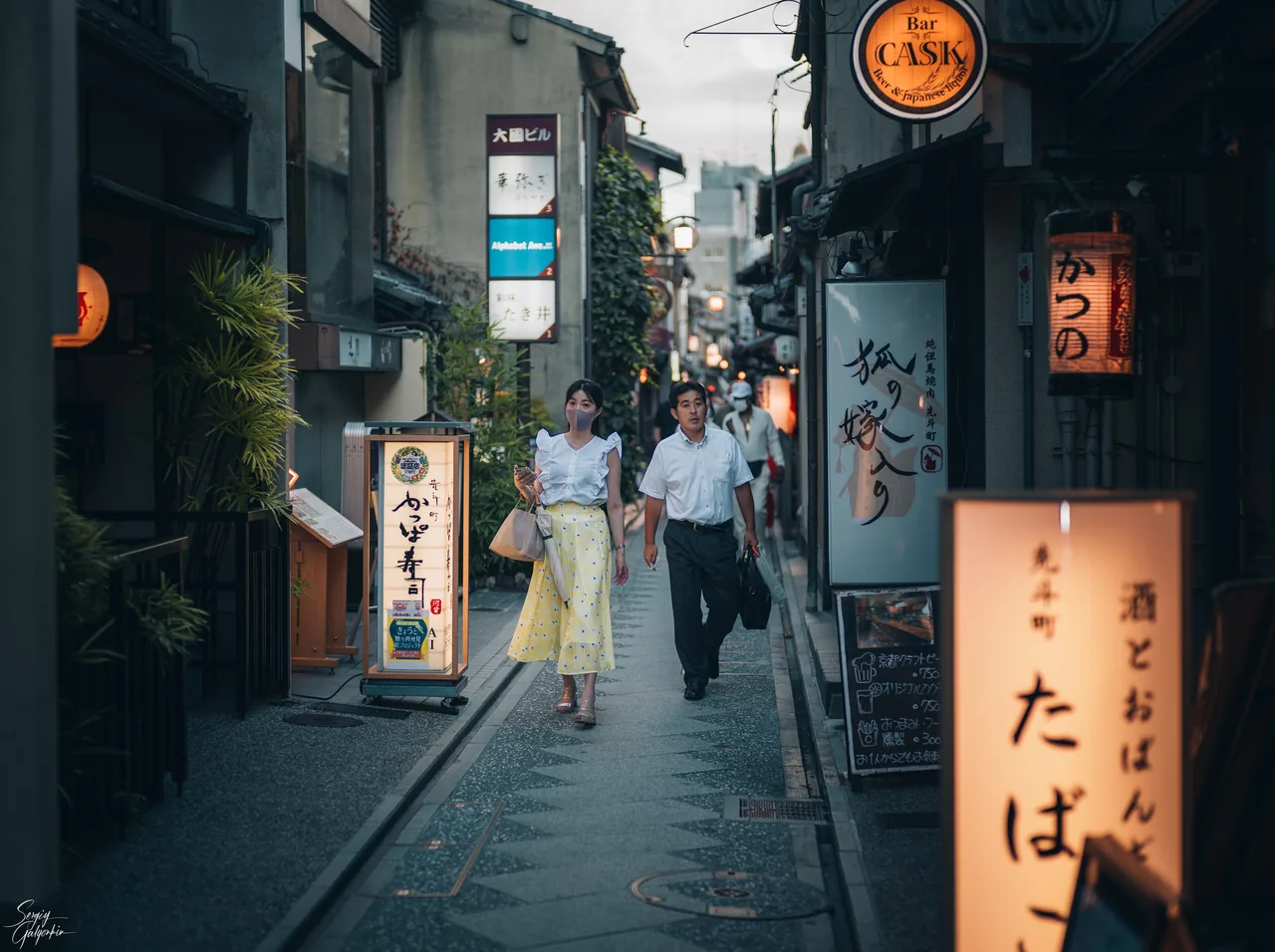
5. Zone 2 — Downtown Kawaramachi & Shijo
At a glance: the best all-round base in Kyoto — central, walkable to dinner and nightlife, on the subway plus the Hankyu and Keihan lines, and a bridge’s-width from Gion. If you want to make one easy decision that works for almost everyone, this is it.
Stay here if you’re a foodie, a first-timer who wants to walk to dinner, a couple, a repeat visitor, or anyone who values central buzz and easy transport in equal measure. Skip it if you want quiet — the core can be busy and noisy on weekends, prime hotels book out early, and you’ll find more mid-range and boutique rooms here than big-resort luxury.
This is Kyoto’s lively heart: Nishiki Market’s food stalls, the Shijo-Kawaramachi shopping crossing, the lantern-lit Pontocho alley of restaurants along the river, the Kamogawa riverbank where locals sit out in warm months, and a dense run of bars and dining. It breaks into moods — Shijo-Kawaramachi is the shopping core, Pontocho/Kiyamachi is the atmospheric dining-and-nightlife strip by the river, Sanjo just north is a touch calmer, and Shijo-Karasuma is the business-central pocket right on the subway. Transport is excellent: Hankyu Kyoto-Kawaramachi runs straight to Osaka-Umeda, Keihan heads to Fushimi and Osaka, the Karasuma subway stops at Shijo, and you can walk across the river into Gion in ten to fifteen minutes.
| Hotel | Style | Price band | Sub-area | Photos & rates |
|---|---|---|---|---|
| The Gate Hotel Kyoto Takasegawa by Hulic | Boutique | ¥¥¥ | Kawaramachi, riverside | 📷 Photos & rates → |
| Solaria Nishitetsu Hotel Kyoto Premier Sanjo Kamogawa | Upscale-business | ¥¥¥ | Sanjo, Kamogawa riverside | 📷 Photos & rates → |
| Nol Kyoto Sanjo | Machiya-boutique | ¥¥¥ | Sanjo | 📷 Photos & rates → |
| Cross Hotel Kyoto | Boutique | ¥¥ | Shijo-Kawaramachi | 📷 Photos & rates → |
| The Royal Park Hotel Kyoto Sanjo | Business | ¥¥ | Sanjo | 📷 Photos & rates → |
| Mitsui Garden Hotel Kyoto Kawaramachi Jokyoji | Value | ¥¥ | Shijo-Kawaramachi | 📷 Photos & rates → |
Who each suits: The Gate and Solaria are the polished riverside picks with rooftop or canal views and public baths; Nol Kyoto Sanjo is the intimate 48-room machiya-boutique with free-flow sake evenings for a design-led couple’s stay; Cross Hotel is stylish and steps from Nishiki with a rooftop bar; The Royal Park is the reliable mid-range by Pontocho; and Mitsui Garden Jokyoji is the quiet value play, set on temple grounds with a small onsen.
6. Zone 3 — Gion & Higashiyama
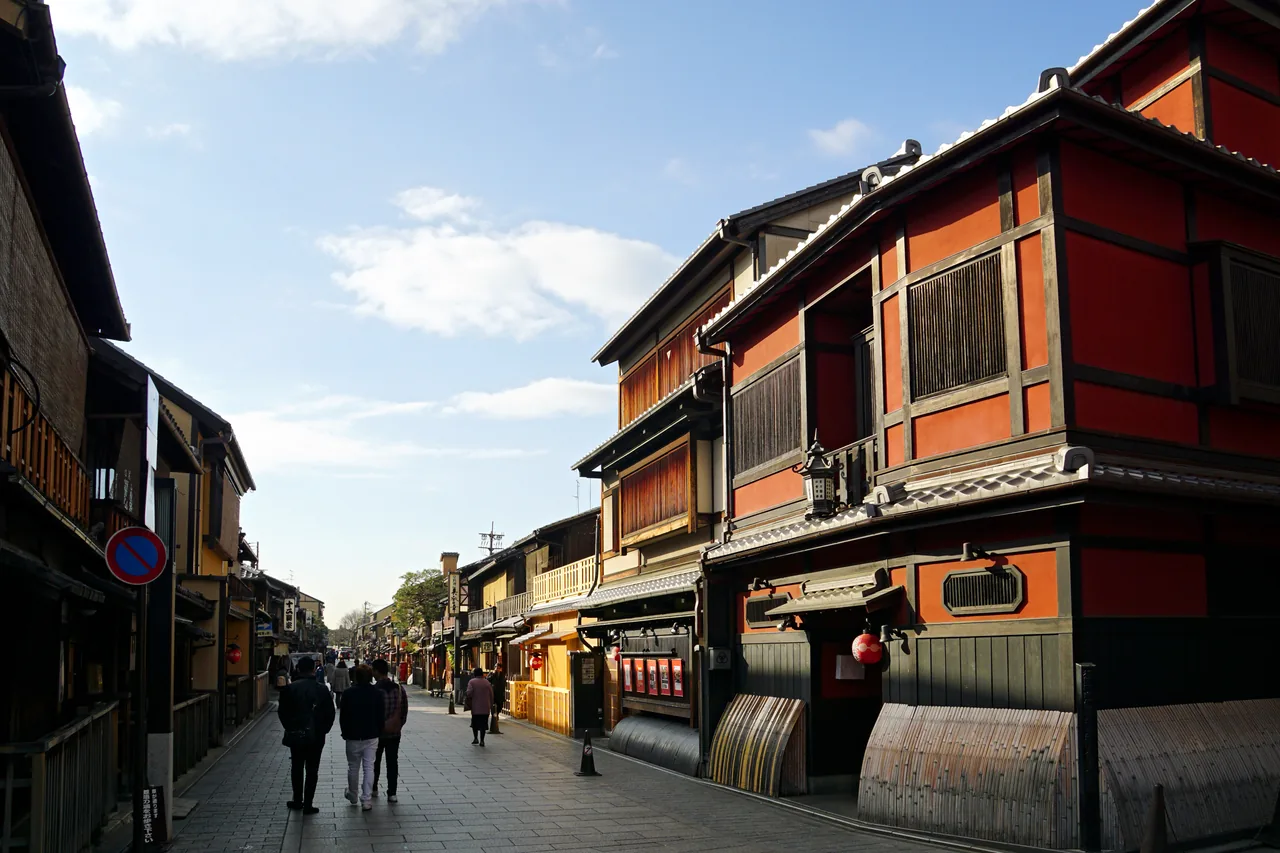
At a glance: the most atmospheric base in Kyoto — wooden machiya lanes, the Gion geisha quarter, and a walk-out-the-door location for Kiyomizu-dera, Yasaka Shrine and Kodai-ji. This is the splurge zone, where ryokan and top international luxury cluster, and the place to stay if “traditional Kyoto outside the door” is the whole point of your trip.
Stay here if you want your first big Kyoto splurge, you’re on a honeymoon, you want a ryokan-and-kaiseki experience, or you plan to walk the east-side temples at dawn before the crowds. Skip it if you’re on a budget or want an easy flat base — it’s the priciest zone, the lanes are steep and hilly, the Kiyomizu area is extremely crowded by day, and there are fewer convenience stores and cheap eats than downtown.
The postcard east side runs from Gion — the Hanamikoji and Shirakawa geisha streets — up through Higashiyama-Sanjo near Shoren-in and Chion-in (handily on the Tozai subway) to the Kiyomizu/Kodai-ji temple hillside. Transport is by Keihan Gion-Shijo and the Tozai subway at Higashiyama, plus buses to Kyoto Station in about 20 minutes for a flat ¥230; but the real appeal is how walkable the east temples are from here. A ryokan stay comes with etiquette — yukata robes, shared-bath rules, kaiseki dinner served in-room or in a dining room — and it’s worth reading up so you can relax into it.
| Hotel | Style | Price band | Sub-area | Photos & rates |
|---|---|---|---|---|
| Four Seasons Hotel Kyoto | Luxury | ¥¥¥¥ | Higashiyama | 📷 Photos & rates → |
| Park Hyatt Kyoto | Luxury | ¥¥¥¥ | Higashiyama, Kodai-ji hillside | 📷 Photos & rates → |
| Gion Hatanaka | Ryokan | ¥¥¥¥ | Gion, by Yasaka Shrine | 📷 Photos & rates → |
| Gion Yoshiima | Ryokan | ¥¥¥ | Gion | 📷 Photos & rates → |
| The Hotel Higashiyama Kyoto Tokyu | Upscale | ¥¥¥ | Higashiyama-Sanjo | 📷 Photos & rates → |
| Kyoto Gion Hotel | Boutique/Value | ¥¥ | Gion, off Hanamikoji | 📷 Photos & rates → |
Who each suits: the Four Seasons is built around an 800-year-old pond garden with a spa near Kiyomizu; the Park Hyatt sits on the Kodai-ji hillside with Yasaka Pagoda views for a refined splurge; Gion Hatanaka is the ryokan for a full kaiseki-plus-maiko evening by Yasaka Shrine, with historic Gion Yoshiima the garden-ryokan alternative minutes from Hanamikoji; The Hotel Higashiyama Kyoto Tokyu offers ryokan-inspired rooms with hotel convenience by Shoren-in; and Kyoto Gion Hotel is the simple, comparatively affordable way to sleep in the heart of Gion.
7. Zone 4 — Central Nijo & Karasuma
At a glance: the quiet, refined, central-value pick — Nijo Castle, the Imperial Palace and the Karasuma-Oike subway crossing sit here, with design hotels, machiya stays and apartment-style suites that make it a favourite for repeat visitors and families. You get genuine central-Kyoto convenience with calmer streets and better value than Gion.
Stay here if you’re a repeat visitor who’s “done” the busy zones, you’re travelling as a family and want an apartment suite with a kitchen, you love design hotels, or you want a quiet central base with the city’s best subway access. Skip it if you want to step out into restaurants and nightlife at night — parts feel residential or office-like after dark, and you’ll walk or take the subway a short way to the big sights.
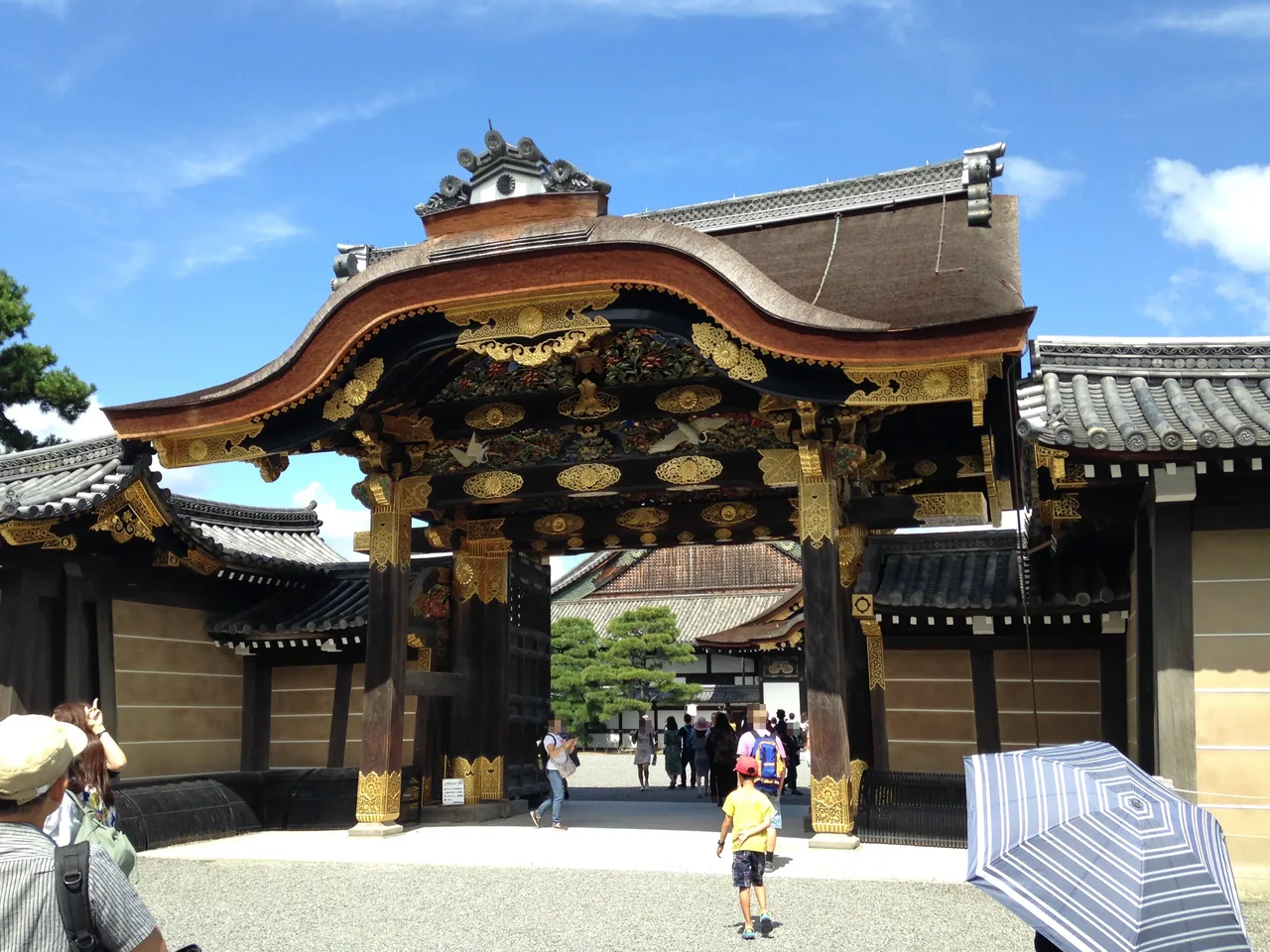
This is Kyoto’s refined central flatland: Nijo Castle to the west-central side, the Karasuma-Oike subway crossing where the two lines meet (business-central and superbly connected), and the machiya lanes of Nakagyo/Shinmachi. The transport advantage is real — the Karasuma and Tozai subways cross here, so you’re one stop from downtown, a quick Tozai ride to Higashiyama, and near JR Nijo for the Sagano line out to Arashiyama. It’s the zone that quietly does everything without the crowds.
| Hotel | Style | Price band | Sub-area | Photos & rates |
|---|---|---|---|---|
| HOTEL THE MITSUI KYOTO | Luxury | ¥¥¥¥ | Beside Nijo Castle | 📷 Photos & rates → |
| The Ritz-Carlton Kyoto | Luxury | ¥¥¥¥ | Nijo-Ohashi / Kamogawa riverside | 📷 Photos & rates → |
| Ace Hotel Kyoto | Design | ¥¥¥ | Karasuma-Oike (Shinpuhkan) | 📷 Photos & rates → |
| Hotel Kanra Kyoto | Machiya-boutique | ¥¥¥ | Karasuma-Gojo / central | 📷 Photos & rates → |
| MIMARU Kyoto Nijo Castle | Apartment | ¥¥¥ | Near Nijo Castle | 📷 Photos & rates → |
| hotel MONday Kyoto Karasuma Nijo | Value | ¥¥ | Karasuma-Nijo | 📷 Photos & rates → |
Who each suits: HOTEL THE MITSUI is the ultra-luxury choice beside Nijo Castle, with a rare on-site onsen and garden; the Ritz-Carlton is the riverside five-star icon with large rooms; Ace Hotel is the Kengo Kuma-designed statement over the Karasuma-Oike subway hub; Hotel Kanra offers modern machiya rooms with cypress baths; MIMARU is the family-ideal apartment suite with a kitchen near Nijo Castle; and hotel MONday is the standout value play — clean, spacious rooms two minutes from the subway.
8. Zone 5 — Arashiyama & Sagano
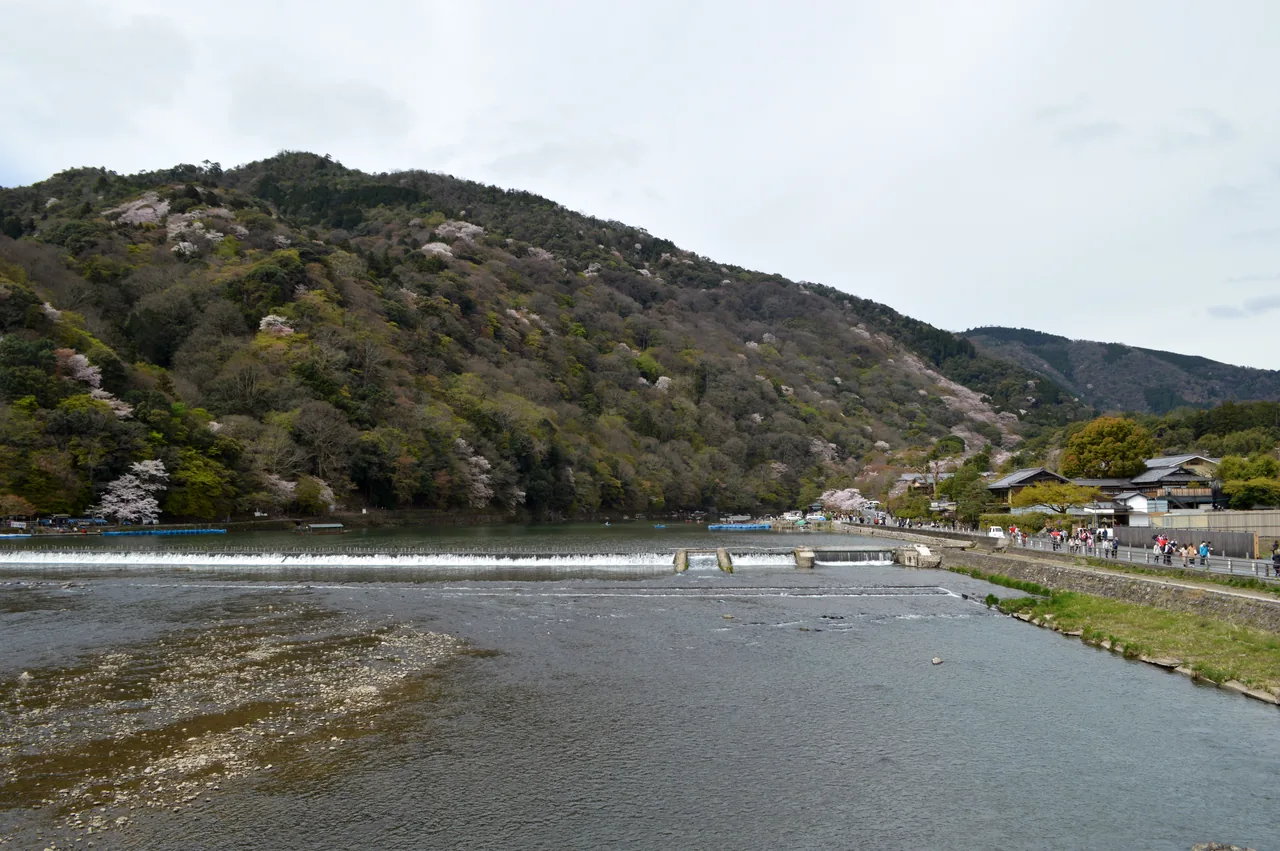
At a glance: the scenic retreat on Kyoto’s western edge — the bamboo grove, the Togetsukyo bridge, the Hozu River and a cluster of riverside ryokan and onsen. It’s serene and magical early and late, once the day-trippers leave, but it’s far from the city sights, so it works best as a split-stay night rather than your only base.
Stay here if you want an onsen-ryokan retreat, a honeymoon hideaway, a nature-first second Kyoto stay, or you specifically want the bamboo grove at dawn or dusk without the crowds. Skip it as your sole base if you want easy access to the central temples — it’s 15+ minutes by train to Kyoto Station and more to Higashiyama, and nightlife and dining thin out sharply after dark.
Arashiyama’s whole appeal is that it empties out. During the day it’s one of Kyoto’s busiest sights; by evening the day-trippers are gone and the riverside, the bamboo and Tenryu-ji belong to the people staying over. It breaks into the Riverside (the Hozu/Oi River, where the ryokan sit), Saga-Arashiyama on the JR station side, and the area around Tenryu-ji and the bamboo grove. Transport is the JR Sagano line from Kyoto Station (about 15–17 minutes), the Randen tram from Shijo-Omiya, or Hankyu Arashiyama via Katsura.
| Hotel | Style | Price band | Sub-area | Photos & rates |
|---|---|---|---|---|
| Suiran, a Luxury Collection Hotel, Kyoto | Luxury | ¥¥¥¥ | Riverside (Hozu) | 📷 Photos & rates → |
| HOSHINOYA Kyoto | Ryokan/Luxury | ¥¥¥¥ | Riverside, boat access only | 📷 Photos & rates → |
| Kyoto Arashiyama Onsen Kadensho | Onsen ryokan | ¥¥¥ | By Hankyu Arashiyama Station | 📷 Photos & rates → |
| Kyoto Arashiyama Ranzan | Value/Traditional | ¥¥ | Near Tenryu-ji / Togetsukyo | 📷 Photos & rates → |
Who each suits: Suiran is the Marriott Luxury Collection riverside stay with a private hot-spring bath; HOSHINOYA is the ultimate secluded splurge, a boat-in riverside ryokan retreat reached only by the hotel’s boat; Kadensho is the accessible onsen-ryokan resort by Hankyu Arashiyama Station, with private baths; and Ranzan is the traditional-style value pick by the Togetsukyo bridge with public baths. What there is to do here once you have a room is set out in our Arashiyama guide.
9. Getting around Kyoto from your base
Here’s how long it takes to reach Kyoto’s key nodes from each base, and which mode does the work — because in Kyoto the right combination of subway, bus and tram matters more than in most cities.
Remember the core truth from earlier: the subway is only two lines (Karasuma north–south, Tozai east–west, crossing at Karasuma-Oike), buses are the workhorse for the east temples, and the Randen tram plus JR Sagano and Hankyu reach Arashiyama. The table below is door-station to door-station and approximate — always check live times for your exact route and the season.
| From ↓ / To → | Downtown Kawaramachi | Gion | Nijo / Karasuma-Oike | Arashiyama |
|---|---|---|---|---|
| Kyoto Station | Subway to Shijo ~4 min + walk, or bus 10–15 min | Bus ~20 min ¥230 (taxi ~10 min ¥970–1,200) | Subway 6–8 min | JR Sagano 15–17 min |
| Downtown | — | 10–15 min walk across the Kamogawa | Subway ~3–5 min | Randen/Hankyu ~25–30 min |
| Gion & Higashiyama | 10–15 min walk across the river | — | Tozai subway ~8 min | ~35–40 min (via subway + JR/Randen) |
| Central (Karasuma-Oike) | Subway ~3–5 min | Tozai subway ~8 min to Higashiyama | — | JR from Nijo ~20 min |
Subway vs bus vs Randen
Subway is fast and reliable but only covers downtown, central/Nijo and Higashiyama-Sanjo. Buses are the only sensible way to reach the Kiyomizu, Ginkaku-ji and Arashiyama-area temples that the subway misses — a flat ~¥230 in the city core, dense but slow and crowded in peak season, so build in buffer time in spring and autumn. The Randen tram is a charming way to trundle out to Arashiyama from Shijo-Omiya.
Passes and IC cards
The Subway & Bus 1-Day Pass (¥1,100) pays off on a temple-heavy day of three or more rides. For everything else, just tap an IC card (ICOCA or Suica) on and off every bus and subway — no fumbling for change, and it works across the region. Our ICOCA or Suica guide explains which to get and how to top up.
10. The 2026 Kyoto lodging tax
Since 1 March 2026, Kyoto City charges an accommodation tax on every stay, levied per person, per night on a new five-tier scale — and it’s often collected separately at check-in rather than shown in your online room price, so factor it in, especially on luxury rooms.
The tax is calculated on the room rate per person, per night, inclusive of service charge but excluding meals and consumption tax. These are the current tiers, in force now:
| Room rate / person / night | Tax / person / night |
|---|---|
| under ¥6,000 | ¥200 |
| ¥6,000 – under ¥20,000 | ¥400 |
| ¥20,000 – under ¥50,000 | ¥1,000 |
| ¥50,000 – under ¥100,000 | ¥4,000 |
| ¥100,000 and over | ¥10,000 |
This is a significant revision. Previously the tax topped out at ¥1,000; the new top tier is up to 10× that at ¥10,000 per person per night, making Kyoto’s accommodation tax the highest in Japan. It’s aimed squarely at high-end spenders and funds overtourism measures. Note that it’s calculated per person on the per-person rate — so a couple sharing a ¥100,000 room (¥50,000 each per night) pays the ¥4,000 tier each, ¥8,000 for the two of them for that night.
11. Ryokan vs machiya vs hotel vs apartment
Kyoto offers more distinct types of stay than most cities, and the type you choose matters as much as the zone — a ryokan is an experience in itself, a machiya is atmosphere, a city hotel is reliability, and an apartment is space. Here’s how they compare and where each one fits best.
| Type | What it is | Best for | Where it clusters |
|---|---|---|---|
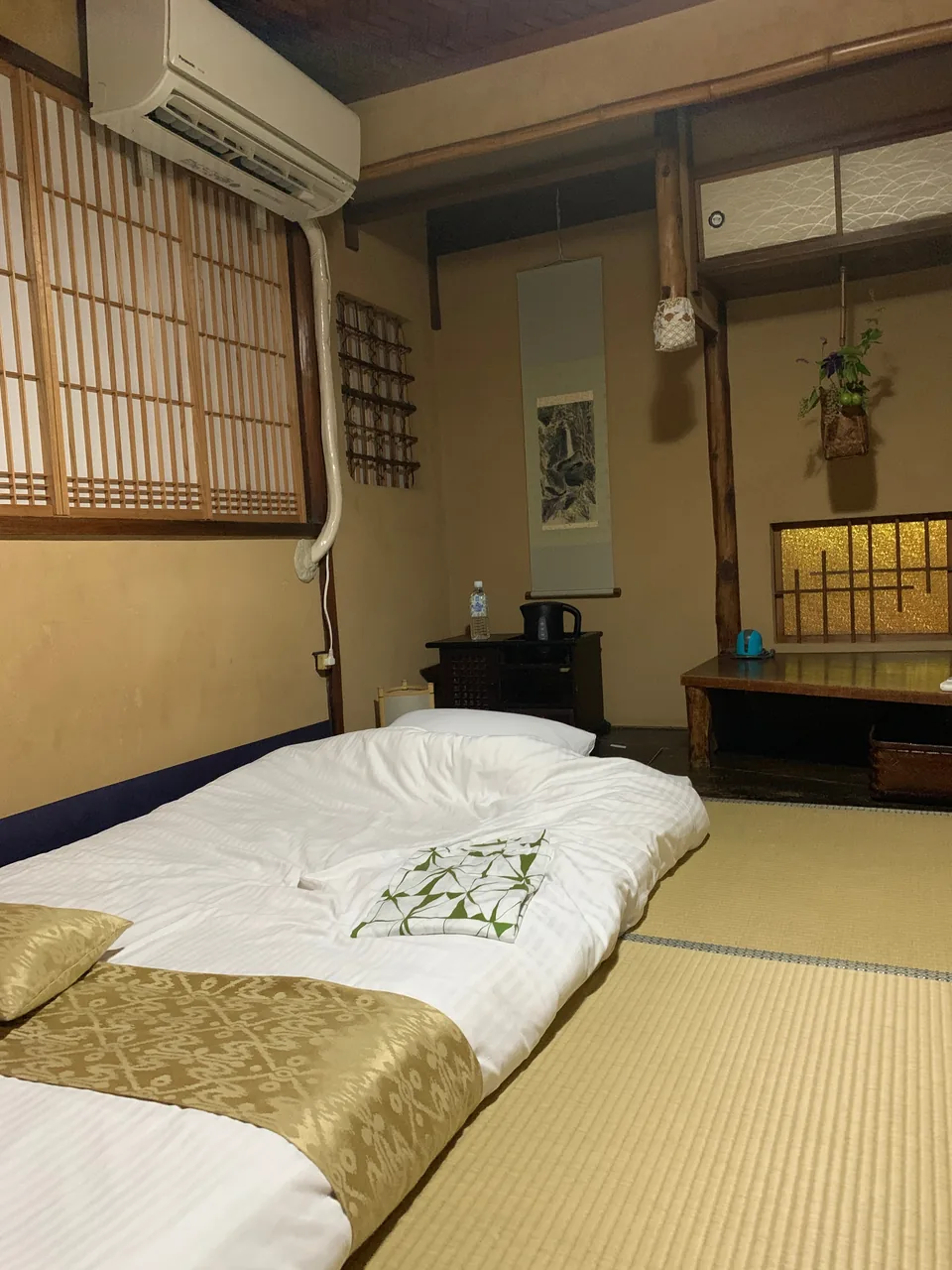
| Ryokan | Traditional inn — tatami and futon, often kaiseki dinner and breakfast, onsen; priced per person including meals; comes with etiquette (yukata, bath rules) | A signature Kyoto experience, honeymoon, onsen retreat | Gion & Higashiyama, Arashiyama |
| Machiya | Restored wooden townhouse — atmospheric, sometimes a whole house with self-check-in | Couples, design lovers, an intimate local feel | Downtown, Central Nijo & Karasuma |
| Business / city hotel | Reliable, compact, good value, everything works | First-timers, day-trippers, value seekers | Kyoto Station, Downtown |
| Luxury international | Four Seasons, Ritz-Carlton, Park Hyatt, HOTEL THE MITSUI and the like — full-service five-star | Splurge, honeymoon, service-first travellers | Gion & Higashiyama, Central Nijo |
| Apartment / serviced | Kitchens, family-sized rooms, laundry (MIMARU and similar) | Families, longer stays, self-catering | Central Nijo & Karasuma |
Which to pick
If you do one special thing in Kyoto, make it a ryokan night — ideally in Arashiyama or Higashiyama — for the kaiseki dinner, the onsen and the tatami calm. For everyday exploring, a city or business hotel downtown or at the station keeps things easy and affordable. Choose a machiya when you want atmosphere and don’t mind self-check-in, and an apartment when you’re a family or staying a week and need a kitchen and space. Many travellers combine two — a central hotel for most nights plus one ryokan splurge.
12. When to book & seasons
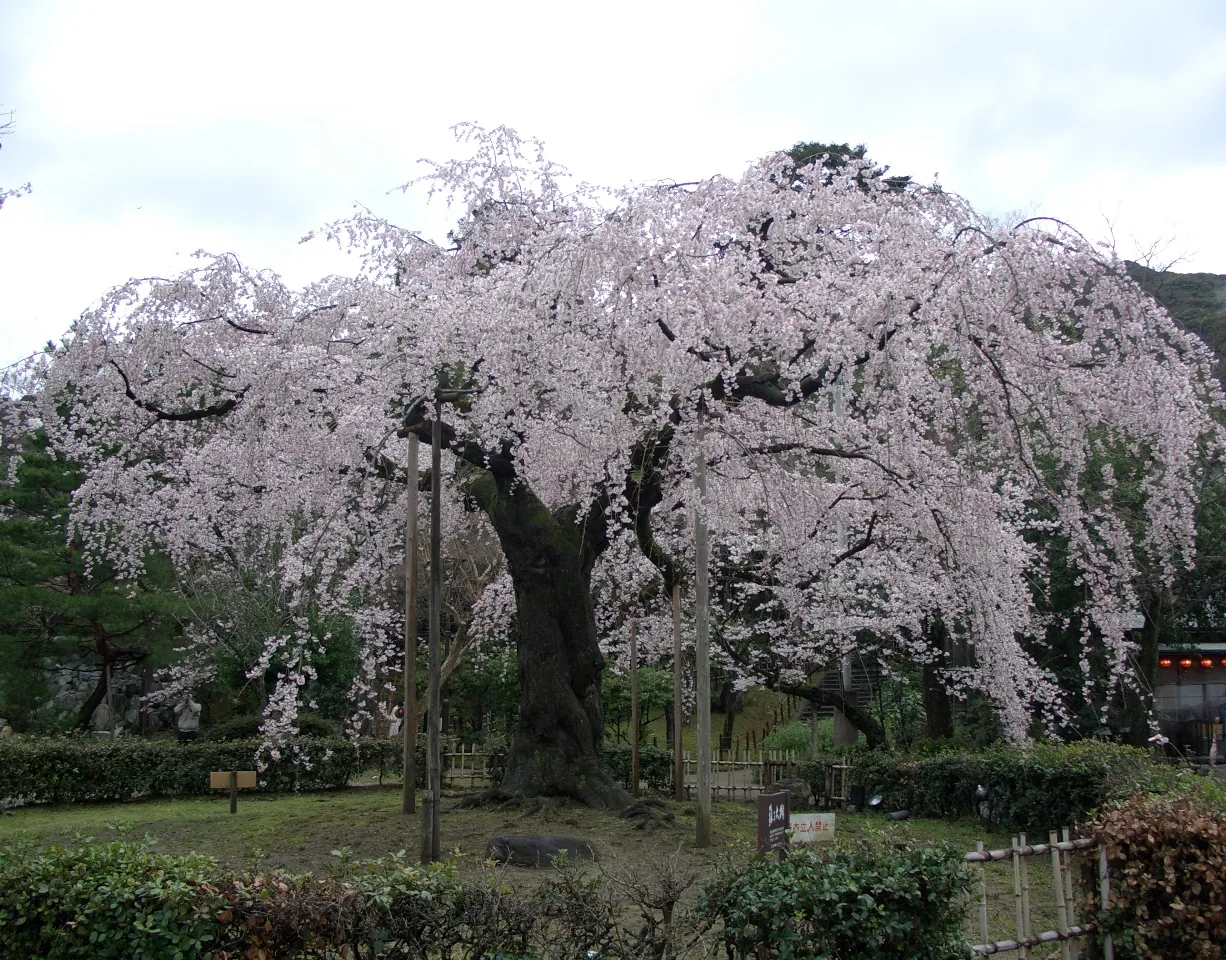
Kyoto’s two peak windows — cherry blossom in late March to early April, and autumn foliage in mid-to-late November — sell out the best hotels three to six-plus months ahead and spike prices, so if you’re travelling then, book early or shift your dates.
Those two seasons are the crunch: prices climb steeply and the top ryokan and luxury hotels in Gion and Arashiyama go first. Festival dates pile on top — Gion Matsuri runs all through July, peaking on the 17th and 24th, and the Aoi and Jidai festivals also lift demand. Summer (June–August) is hot and humid but cheaper outside those festival peaks, and winter (January–February) is the quietest and cheapest, when some ryokan run crab-and-hot-spring deals.
| Season | Demand & price | Book ahead |
|---|---|---|
| Cherry blossom (late Mar–early Apr) | Peak — highest prices, top hotels sell out | 3–6+ months |
| Autumn foliage (mid–late Nov) | Peak — highest prices, top hotels sell out | 3–6+ months |
| Gion Matsuri / July | High around the 17th & 24th | 2–3+ months |
| Summer (Jun–Aug, off-festival) | Cheaper, hot & humid | 1–2 months |
| Winter (Jan–Feb) | Quietest & cheapest, ryokan deals | Weeks ahead |
13. Getting to your hotel from the airport
Most international visitors arrive at Kansai Airport (KIX) and reach Kyoto in about 80 minutes on the JR Haruka express for a ¥2,200 foreign-passport ticket — dropping you right at Kyoto Station, from where your zone is a short subway, bus or taxi hop.
From KIX, the JR Haruka limited express runs directly to Kyoto Station in roughly 80 minutes; foreign passport holders can buy a discounted ticket for around ¥2,200, which is the simplest option for most travellers. There’s also a limousine bus if you prefer to stay seated with luggage. Because Haruka terminates at Kyoto Station, that zone is the easiest arrival base; from the station it’s a quick subway to downtown or central, a ~20-minute bus or short taxi to Gion, or the JR Sagano line to Arashiyama.
If you fly into Itami (ITM), the domestic Osaka airport, the Osaka Airport Limousine bus reaches Kyoto in about 55 minutes.
For the full breakdown of routes, fares, the Haruka ticket and the luggage-friendly bus options, see our dedicated guide on how to get from Kansai Airport to Kyoto.
14. Decision matrix by traveller type
Still deciding? Match your situation to a base below — this is the quick shortcut through everything above.
| Situation | Stay here | Why |
|---|---|---|
| First-timer, one base | Downtown Kawaramachi & Shijo | Most central and walkable, on multiple lines, walk to Gion and to dinner — the best all-round balance |
| Foodie / nightlife | Downtown (Pontocho / Kiyamachi) | Nishiki Market, riverside dining and the lantern alleys are on your doorstep |
| Luxury / honeymoon | Gion & Higashiyama (or Arashiyama) | The most atmospheric zone, where top ryokan and five-star hotels cluster; Arashiyama for a riverside retreat |
| Families | Central Nijo & Karasuma | Apartment suites with kitchens near Nijo Castle, quiet streets, best subway access |
| Budget / value | Kyoto Station or Central Nijo | The most reliable rooms per yen, with easy transport and solid business/value hotels |
| Ryokan retreat | Arashiyama & Sagano | Riverside onsen ryokan, crowd-free bamboo at dawn — ideal as a split-stay night |
| JR-Pass day-tripper | Kyoto Station | Shinkansen, Haruka and regional JR lines all on the doorstep for Osaka/Nara/Uji/Himeji days |
If your trip spans several of these — a foodie couple who also wants one ryokan night, say — the split-stay approach earlier in this guide lets you have both without a daily commute from the edge of the city.
15. Plan the rest of your Kyoto trip
Once your base is booked, the rest of the trip falls into place — here’s where to go next.
Start with our Kyoto travel guide for the full itinerary, the must-see temples and neighbourhood walks that turn a hotel choice into a plan. If you’ll be travelling beyond Kyoto — to Osaka, Nara or further — run the numbers with our JR Pass & Kansai pass guide before you buy, since a Kyoto-plus-day-trips trip often doesn’t need a nationwide pass. For getting into the city on arrival, our Kansai Airport to Kyoto guide covers every route and fare.
And if Kyoto is one stop on a wider journey, our complete Japan travel guide ties the whole country together — regions, seasons, rail and the practical essentials.