
Mt Takao Guide: Cable Car Fares, 10 Trails, Last Ride Times and the Onsen
The cable car stops halfway up, and the summit is another forty minutes on foot from there. That is why the last cable car of the day, which changes with the month, decides your schedule. Here are the ten trails with distances and times, the fares, the closing times on the mountain, and what changed this season.
| Cable car | halfway only, with forty more minutes on foot to the summit. |
|---|---|
| Last ride | 17:15 in midwinter, 18:30 on summer weekends. |
| Trails | ten routes, toilets on only two of them. |
| Fares | ¥490 one way, or ¥1,450 combined from Shinjuku. |
| Onsen | beside the station, and tattoos are refused. |
| Parking | ¥2,000 maximum in May and November, even midweek. |
1. The cable car stops halfway up the mountain
2. This is the most climbed mountain in the world
3. There are ten trails and only two of them have toilets
4. Work out your last ride down before you go up
5. Most things on the mountain close by half past four
6. The cable car has climbed the same gradient for nearly a century
7. Yakuo-in sits in the middle of the walking route
8. The hot spring is at the station, not on the mountain
9. Buy the combined ticket at your Tokyo station
10. Every operator on the mountain draws the child line differently
11. Driving costs more in May and November
12. Around the winter solstice the sun sets into Mt Fuji
13. Some plans do not fit in a day, so people sleep at the foot
14. Half a day looks like this, a full day looks like that
15. What changed on the mountain this season
1. The cable car stops halfway up the mountain
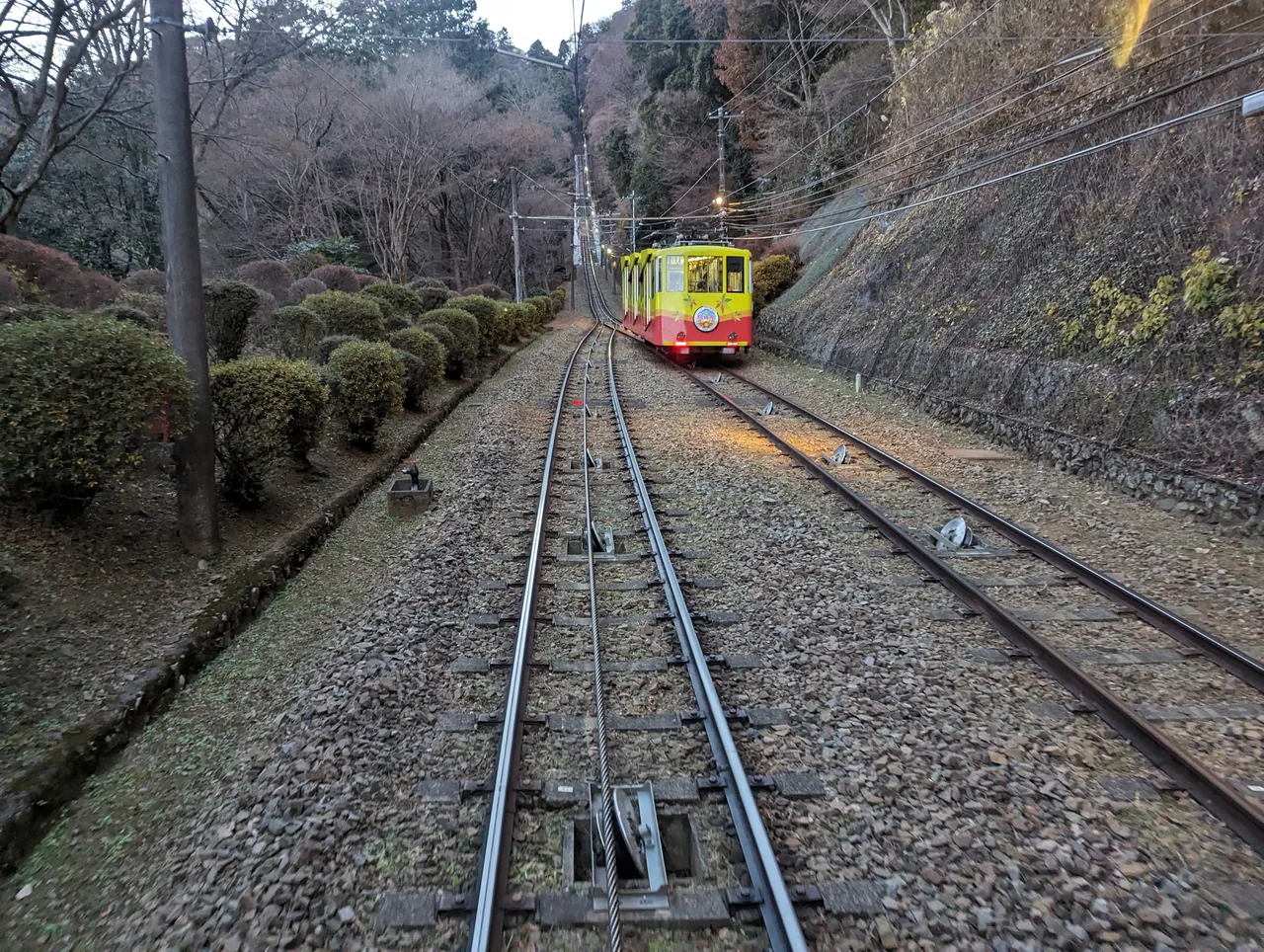
Mt Takao’s cable car does not take you to the summit. It climbs to a station on the shoulder of the mountain, and from there you still have about forty minutes of walking on Trail 1 to reach the top. Plenty of people buy a return ticket, ride up, and only then find out.
There are three ways up: the cable car, the open-air chairlift, or your own legs from the bottom. Whichever you pick, the last stretch to the summit is on foot.
| Way up | Time | Takes you as far as | Adult one way |
|---|---|---|---|
| Cable car | about 6 min | halfway station | ¥490 |
| Chairlift | about 12 min | halfway station | ¥490 |
| Trail 1 on foot | about 110 min | the summit | free |
The cable car gains 271 metres while you sit still
The track runs a kilometre and lifts you 271 metres in the process. Its steepest section is just over 31 degrees, which the operator says is the steepest stretch of cable car track in Japan. One car carries up to 135 people and the service runs every fifteen minutes, with extra departures slotted in when queues build.
Inside the car the floor is stepped, so the gradient is obvious the moment you stand up. The upper station has a lift, and staff will help wheelchair users board.
The chairlift is slower and completely open
The chairlift seats two people side by side, ski-resort style, and covers 872 metres in about twelve minutes. Nothing is above your head, so you ride through the branches rather than past them. It costs the same as the cable car.
One difference matters if you qualify for a disability discount: the reduced fare applies to the cable car only. The chairlift has no discount fare at all.
Walking the whole way takes under two hours
From the bottom, Trail 1 to the summit takes about 110 minutes. If you ride up first and walk from the halfway station, it is 60 minutes. Coming down, the same numbers are 90 and 50 minutes.
None of this is serious mountaineering. The summit sits at 599 metres, and several of the routes are walkable in trainers. The only thing to fix in your head before you set off is that the ride ends partway and the walk starts there.
If the summit is your goal, consider buying the cable car one way rather than return. Walking down is easy, and it saves you standing in the evening queue.
2. This is the most climbed mountain in the world
Mt Takao sits inside Tokyo, in the city of Hachioji, and tops out at 599 metres. It stands where the Kanto plain runs into the hills, which is why a train line reaches the trailhead. Somewhere between 2.6 and 3 million people climb it a year, and the local tourism association calls it the most climbed mountain in the world.
The crowds have a starting point. When the Michelin green guide gave the mountain three stars in 2007, visitor numbers rose, and the association still credits that rating for the change.
A small mountain with a lot packed into it
On paper it is a modest hill. What makes it worth a day is the density: a working temple, a monkey park, a free museum, a beer garden, a hot spring at the foot of the hill, and ten separate walking routes fanning out across the slope.
From the summit nothing blocks the view east, so Tokyo spreads out below you. On a clear day Mt Fuji shows up to the west.
The mountain’s history is the temple’s history
The monk Gyoki is said to have opened the mountain in the eighth century. In the fourteenth, a monk named Shungen arrived and revived the neglected temple, and until the modern era the written record of Mt Takao is essentially the record of Yakuo-in.
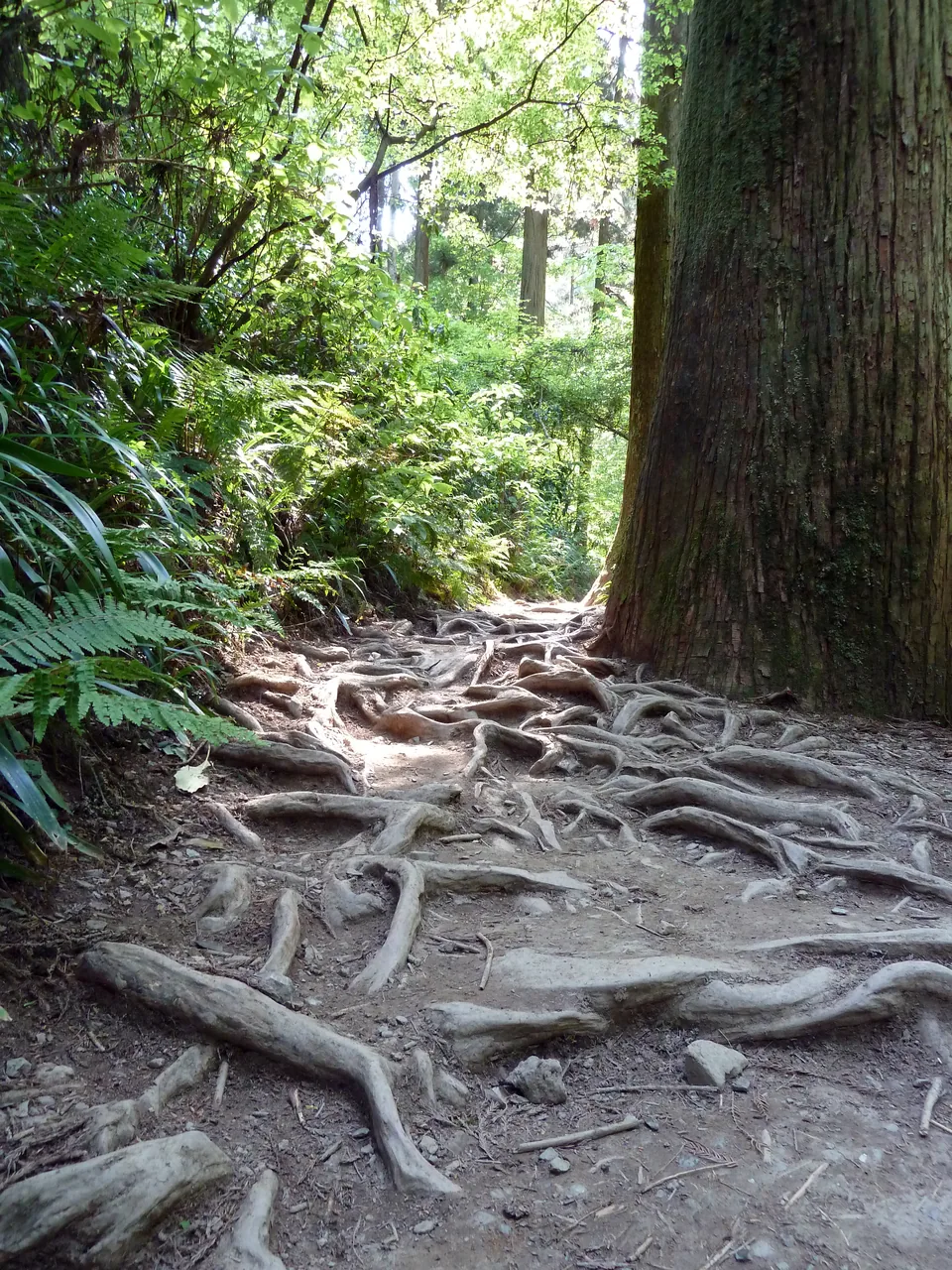
By the Edo period pilgrims were coming from Edo itself, not just the nearby town, and the shogunate protected the forest. The tall cedars lining Trail 1 are what that policy left behind.
The railway turned it into a day trip
The cable car opened in the 1920s. Four decades later the Keio line was extended to the foot of the mountain, and from that point you could leave central Tokyo in the morning and be home for dinner.
That is still how most people do it. Very few mountains this close to a capital city give you a walk that actually feels like a walk in the hills.
3. There are ten trails and only two of them have toilets
Mt Takao has ten named walking routes, and toilets exist on exactly two of them. Trail 1 has five, Trail 6 has two, and the other eight have none. Some routes have no shop either until you reach the ridge.
Distances and times below come from Takao 599 Museum, the city-run facility at the foot of the mountain.
| Route | Distance | Up | Down | Toilets |
|---|---|---|---|---|
| Trail 1 Omotesando | 3.8 km | 60 / 110 min | 50 / 90 min | 5 |
| Trail 2 Kasumidai loop | 0.9 km | 30 min | loop | none |
| Trail 3 Katsura woods | 2.4 km | 60 min | 50 min | none |
| Trail 4 suspension bridge | 1.5 km | 50 min | 40 min | none |
| Trail 5 summit loop | 0.9 km | 30 min | loop | none |
| Trail 6 Biwa waterfall | 3.3 km | 90 min | 60 min | 2 |
| Inariyama ridge | 3.2 km | 90 min | 60 min | none |
| Iroha no Mori | 1.5 km | 70 min | 50 min | none |
| Jataki | 1.5 km | 60 min | 40 min | none |
| Ura-Takao | 4.6 km | 70 min | not listed | none |
The two figures for Trail 1 are with and without the cable car or chairlift. Map
Trail 1 is the paved one
Trail 1 is surfaced as far as the temple, which is why you will see pushchairs on it. Five toilets, several shops and a steady stream of people make it the obvious first choice, and also the busiest path on the mountain.
If you want quiet without adding much distance, drop onto Trail 3 or Trail 4 near the halfway station. Both branch off Trail 1 and rejoin it just below the summit.
Trail 6 follows the stream
Trail 6 climbs past Biwa waterfall on packed earth, crossing water in places. It takes ninety minutes up, half an hour longer than Trail 1, and it gets slippery for a day or two after rain.
Its two toilets are at the very start, by the lower cable car station, and at the summit. There is nothing in between, so use the one at the bottom before you start.
Trail 4 has the only bridge
Miyama Bridge on Trail 4 is the only suspension bridge on the mountain, 36 metres long. The route barely climbs or drops, which makes it the easiest of the unpaved paths, and the tree cover keeps it cool in summer.
At 1.5 kilometres and fifty minutes it suits families. Just remember the toilet situation and sort that out at the halfway station first.
The railway company tells walkers to carry their own. Depending on the route you may not pass a single shop before the ridge, so buy drinks at the bottom. Open fires are banned across the whole mountain, and there are no bins, so rubbish comes back down with you.
4. Work out your last ride down before you go up
The last cable car of the day changes with the month. In midwinter it goes at 17:15; on a summer weekend it runs until 18:30. That single figure decides how long you can stay at the summit.
The first car is at 08:00 all year round. It is only the evening end that moves.
| Month | Last car, weekdays | Last car, weekends and holidays |
|---|---|---|
| January, February | 17:15 | 17:30 |
| March | 17:30 | 18:00 |
| April, May | 18:00 | 18:30 |
| June | 17:45 | 18:00 |
| July, August | 18:00 | 18:30 |
| September to November | 17:45 | 18:00 |
| December | 17:15 | 17:30 |
Subtract forty minutes for the walk down from the top
Getting from the summit back to the cable car station takes about forty minutes. On a winter weekday, with the last car at 17:15, that means leaving the summit by half past four.
People who skip this arithmetic end up walking down, which is perfectly doable but darker than they expect. Under tree cover the light goes early. Either carry a torch or watch the clock.
The chairlift shuts before the cable car does
The chairlift finishes at 16:30 from May to November and at 16:00 from December to April, an hour or more ahead of the cable car.
So if you rode up on the lift, there is a good chance you will be coming down by cable car instead. The two stations are a short walk apart, so decide which one you are heading for before you start down.
In beer garden season the last car is 21:15
While the halfway beer garden is open, the cable car switches to twenty minute intervals from 18:00 and runs until 21:15. That is the only time of year you can come down the mountain after dark.
It is tied to the beer garden’s own hours, though. If bad weather closes the terrace early, the late service goes with it, so check the day’s running times before you commit to an evening up there.
Leave the summit forty minutes before the last cable car. Add fifty more if you plan to walk all the way down instead.
5. Most things on the mountain close by half past four
Mt Takao closes early. The monkey park shuts at 16:00 or 16:30, and the museum at the bottom closes at 16:00 in winter. Arrive late and you can still ride up, but there will be nothing open to go into.
| Place | Opens | Closes | Adult price |
|---|---|---|---|
| Monkey park and wild plant garden | 9:30 | 16:00 winter / 16:30 | ¥600 |
| Takao 599 Museum | 8:00 | 16:00 winter / 17:00 | free |
| Beer garden (seasonal) | 12:00 | 21:00 | ¥5,000 |
| Gokurakuyu hot spring | 8:00 | 22:30 | ¥1,100 weekday |
The monkey park put its prices up this month
Three minutes on foot from the halfway cable car station, the monkey park keeps around ninety Japanese macaques, with a garden of some three hundred mountain plant species attached to it.
Admission is ¥600 for adults and ¥300 for children aged three and up, both a hundred yen higher than they were at the end of August. On top of that, a high season rate of ¥700 and ¥350 applies over the public holiday run in late September. The operator blames the cost of feed.
The museum is free and opens at eight
Takao 599 Museum sits near Takaosanguchi station and costs nothing to enter. The number in its name is the height of the mountain. Inside are specimens of the plants and animals that live on the slope, and staff who can tell you what state the trails are in.
Because it opens at eight, it works as a stop before you start walking rather than after. Closing is 17:00 from April to November and 16:00 from December to March. Map
From late spring the halfway station gets a beer garden
Beer Mount opens beside the upper cable car station at 488 metres, with about 500 seats looking out over Tokyo. The season runs from the end of May to the end of November.
It is all you can eat and drink for two hours: ¥5,000 for adults, ¥1,800 for primary school children, ¥500 for under-sixes with one child free per paying adult. You can walk in without booking.
Hours narrow outside high summer. In May, June and November it opens only 11:00 to 17:00 on Mondays to Thursdays and Sundays, and in November it closes at 20:00 on Fridays and Saturdays. Check the day before you plan dinner up there.
6. The cable car has climbed the same gradient for nearly a century
Mt Takao’s cable car opened in the 1920s. It stopped during the war, restarted a few years later, and although the cars have been replaced several times the track and the gradient are unchanged. The centenary is close enough that the operator has announced a programme to mark it.
| Cable car | Chairlift | |
|---|---|---|
| Length | 1,000 m | 872 m |
| Journey | about 6 min | about 12 min |
| Capacity | 135 per car | 2 per chair |
| Frequency | every 15 min | continuous |
Thirty-one degrees at the steepest point
The sharpest section measures 31 degrees 18 minutes, which the operator states is the steepest cable car track in the country. The car crawls up at a little over three metres a second.
The haulage rope is 42 millimetres thick and built with a safety factor above ten. The company explains that if it ever parted, an automatic brake would grip the rail and stop the car within about two metres.
The chairlift dates from the Tokyo Olympic year
The lift began in October 1964 with single seats. Seven years later it was rebuilt with a belt-fed boarding system and the two-person chairs it still uses.
Thirty-one pylons hold 168 chairs on the line. On the way up you pass through cedar branches at close range, with camellia and mountain cherry in spring and colour in the trees in autumn.
Wheelchair users can ride the cable car
The upper cable car station has a lift, and staff assist at boarding, so tell them at the platform. The chairlift is not usable with a wheelchair.
Showing a disability certificate halves the cable car fare, and one carer travels at the same reduced rate. That fare has to be bought at a window or ticket machine rather than tapped through.
7. Yakuo-in sits in the middle of the walking route
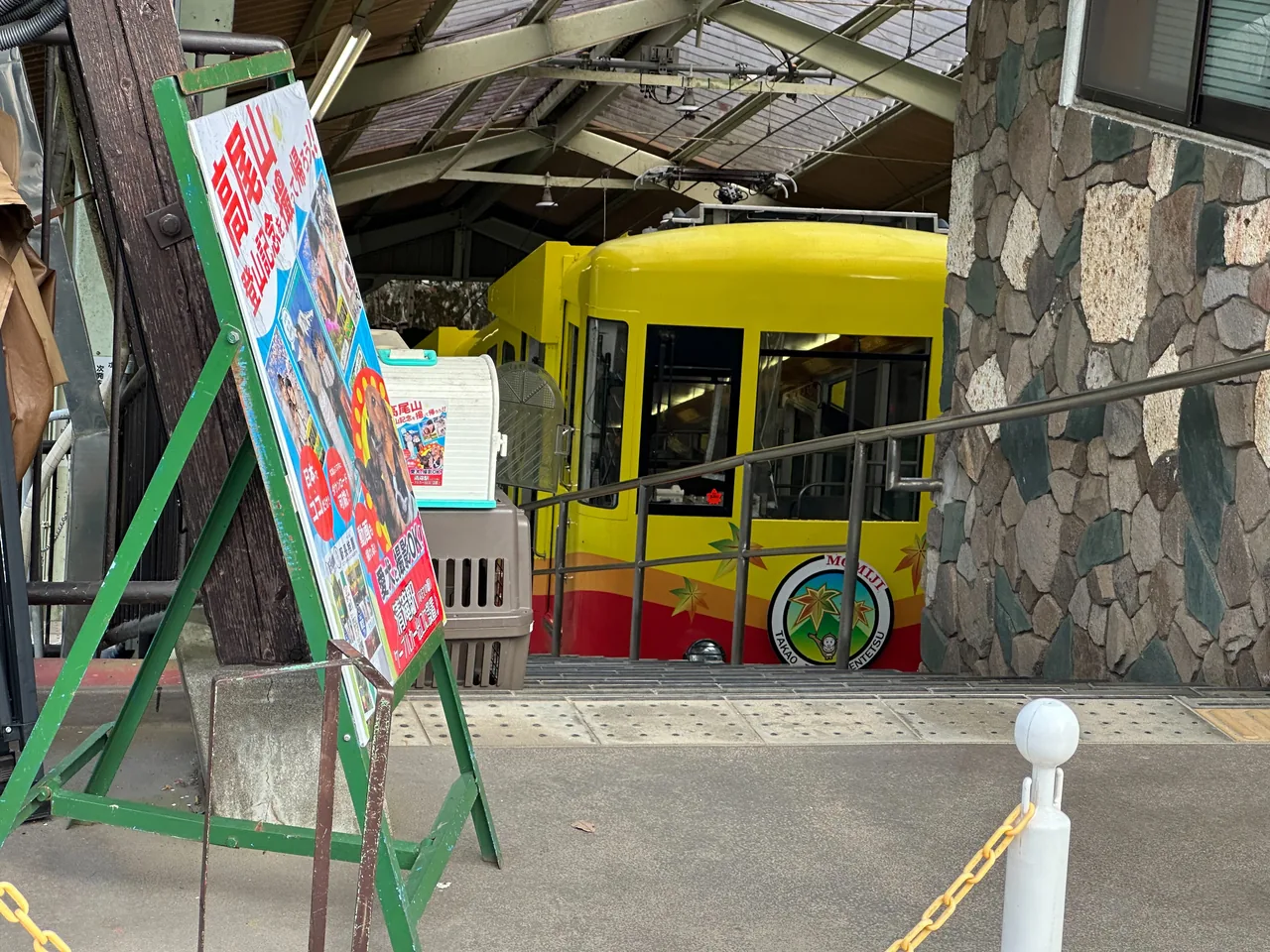
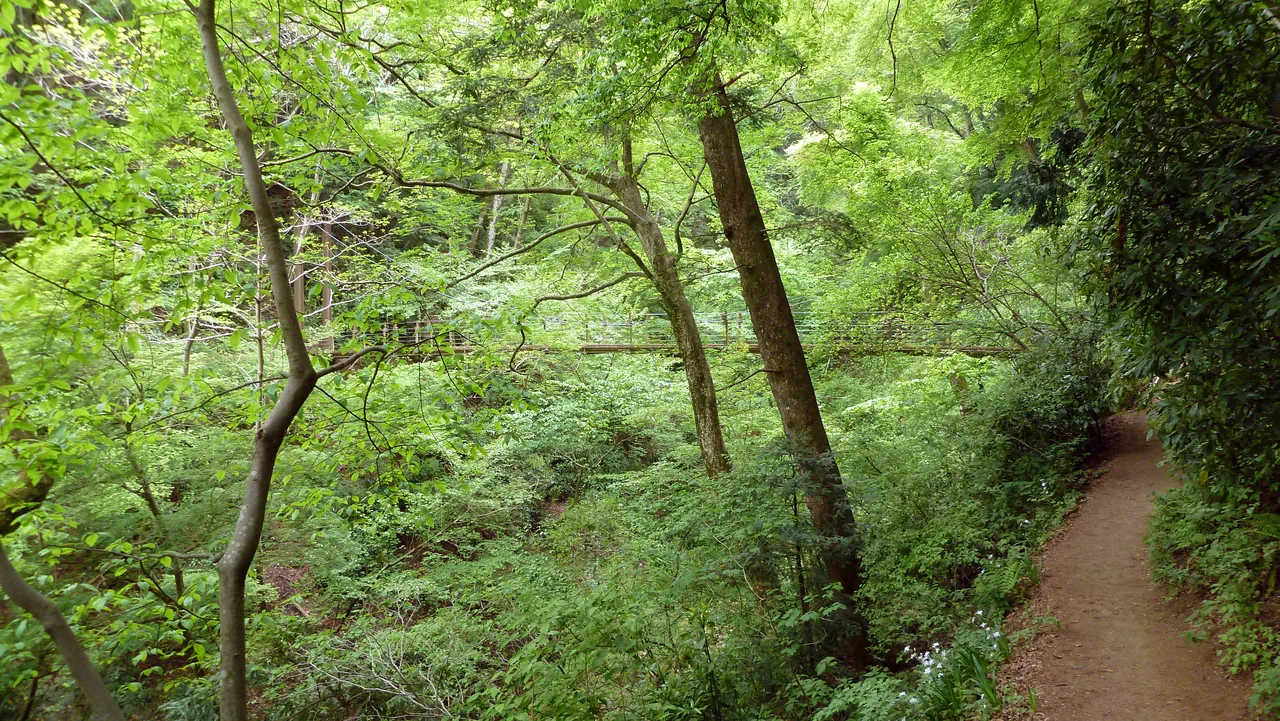
Walk up Trail 1 and you pass through a temple courtyard. Yakuo-in is not off to one side of the path; it is on the path, so anyone heading for the summit goes through it. There is no admission charge.
The temple traces itself back to the eighth century and was revived in the fourteenth. It has been the reason people climbed this mountain for far longer than the cable car has existed.
Fire rituals run six times a day
The main hall holds goma fire rituals every day. Monks chant while a fire burns, and anyone taking part receives a tablet afterwards. You sign up at the reception desk and go in about fifteen minutes before the start.
| Session | Time |
|---|---|
| Early morning | 5:30 (mid-April to October) / 6:00 (November to mid-April) |
| Morning | 9:30 and 11:00 |
| Afternoon | 12:30, 14:00 and 15:30 |
The dawn session is only realistic if you stayed nearby or started walking in the dark. Most day visitors aim for one of the five later slots. Map
Temple lunch has to be booked ahead
Yakuo-in serves shojin ryori, the vegetarian cuisine of Japanese Buddhism, at lunchtime. It is reservation only: ¥4,400 for the Takao set and ¥3,300 for the Tengu set, with dishes changing through the year.
Bookings go through the temple office by phone, which takes calls between 9:00 and 16:00. You cannot turn up and order on the day, so this is one to sort out before you travel.
Twenty-eight festivals a year
The temple publishes a calendar with twenty-eight events on it, so whatever month you visit something is on.
The best known is the fire walking festival in early March, held on the ground at the foot of the mountain, where ordinary visitors queue up to cross the embers barefoot after the monks. Waterfall training opens on the first day of April and closes on the last day of October. On New Year’s morning there is a sunrise service at the summit.
Late in the year there is a winter solstice star festival, and on the last night of December people climb for the turn of the year. Early February brings the bean-throwing Setsubun ceremony.
Fire walking, the spring and autumn festivals and the New Year period all mean long queues for the cable car. If you want a quiet walk, avoid those dates or start early.
8. The hot spring is at the station, not on the mountain
There is no onsen on Mt Takao itself. The bathhouse sits next door to Takaosanguchi station at the bottom, which puts it one minute from the platform and makes it the natural last stop before the train home.
It opens at 8:00 and closes at 22:30, with last entry at 21:45, and it does not shut for holidays.
| Weekdays | Weekends, holidays, peak periods | |
|---|---|---|
| Adult (junior high and up) | ¥1,100 | ¥1,300 |
| Child (4 to primary school) | ¥550 | ¥650 |
| Under 4 | free | |
Peak periods are the new year holidays, Golden Week, Obon and the autumn colour season, when weekday visits are charged at the weekend rate. Map
Tattoos are refused at the door
This bathhouse does not admit anyone with a tattoo, and its rules count stickers and painted designs as well. Covering a small tattoo, which works at some Japanese baths, is not an option here.
Policies differ enormously from one bath to the next in Japan, so it pays to check before you travel. We have gone through which places accept tattoos and how, in onsen for visitors with tattoos.
Bring a towel
Shampoo and body wash are provided; towels are not, and renting one costs extra. A small towel in your day pack covers both the walk and the bath.
Outside food and drink are not allowed in, though there is a restaurant inside. Parking holds about ninety cars and is free for three hours if you use the baths. A book of ten entry tickets costs ¥9,000, which beats paying the weekday rate each time.
The weekday combined ticket includes the bath
Keio sells a ticket that bundles the return train fare, the cable car or chairlift both ways, entry to the hot spring and a meal. From Shinjuku it is ¥3,450. It is sold on weekdays only.
Come at the weekend and you pay for the bath separately. If your dates are flexible, a weekday visit is cheaper on several fronts at once.
9. Buy the combined ticket at your Tokyo station
Keio sells a Takao discount ticket that covers the return train fare and the cable car in one purchase. From Shinjuku it is ¥1,450 for adults, or ¥1,090 if you only want the cable car in one direction. It is valid on the day you buy it.
| From | Adult, cable car return | Adult, cable car one way | Child, return | Child, one way |
|---|---|---|---|---|
| Shinjuku, Shibuya | ¥1,450 | ¥1,090 | ¥740 | ¥560 |
| Shimokitazawa, Meidaimae | ¥1,420 | ¥1,060 | ¥720 | ¥540 |
| Kichijoji | ¥1,450 | ¥1,090 | ¥740 | ¥560 |
| Chofu | ¥1,340 | ¥980 | ¥670 | ¥490 |
| Fuchu | ¥1,280 | ¥920 | ¥640 | ¥460 |
There is a reserved-seat train on busy days
Keio runs a reserved-seat service from Shinjuku to Takaosanguchi, and the fastest run takes 43 minutes. You book a seat, so there is no standing in a packed carriage with a rucksack.
Ordinary trains cover the same route without a change. From Takaosanguchi station the lower cable car station is a five minute walk. Map
From November you can tap in with an IC card
At the moment the cable car and chairlift need a paper ticket from a window or machine. From the first service on 1 November, readers go in at all four gates and you can tap a Suica or Pasmo straight through.
One card per person: a group cannot share one. The reader will not let you through on a short balance and there is no auto-charge, so top up before you leave the city. Discount fares still have to be bought at the window. If IC cards are new to you, start with how Suica and Icoca work.
Mt Takao is on the Keio line, which the Tokyo subway day passes do not cover. If you are pairing it with city sightseeing, compare the options in Tokyo transport passes.
10. Every operator on the mountain draws the child line differently
The age at which a child becomes an adult changes from one place to the next on this mountain. The cable car says twelve. The hot spring, the monkey park and the beer garden all say junior high school. Budget for a family and the numbers will not line up.
| Operator | Adult | Child | Free |
|---|---|---|---|
| Cable car and chairlift | 12 and over | 6 to 11 (primary school) | under 6 |
| Gokurakuyu hot spring | junior high and up | 4 to primary school | 3 and under |
| Monkey park | junior high and up | 3 and over | under 3 |
| Beer garden | junior high and up | primary school | under 3 |
The cable car goes by school year, not birthday
Its rules spell out the edge cases. A six year old who has not started school still counts as an infant, and a twelve year old still in primary school counts as a child. School year comes before age.
Infants ride free, but if one adult brings two of them the second one needs a child ticket, and an infant travelling alone needs one too.
Group bookings shift the line again
Book as a group of twenty-five or more and the child fare starts at age one. Group fares are also cash only, and the operator asks you to apply in advance through a form rather than turning up.
The saving is modest, around ten to fifteen per cent depending on group size, so this matters for school parties rather than families.
The beer garden gives one small child free per adult
Children aged three and over pay ¥500 at Beer Mount, but one child per paying adult is free. Two adults with two toddlers pay nothing extra for them.
Primary school children are ¥1,800, well under half the adult rate. For feeding a family on the mountain in the evening, that is the cheapest thing going.
Only one route works with a pushchair
Trail 1 is the only paved route, so it is the only one you can push a buggy along. The upper cable car station has a lift, so getting the buggy up and down is not the problem.
The final approach to the summit has steps. Either carry the child that far or turn back at the temple, which is a reasonable end point for a walk with small children anyway.
11. Driving costs more in May and November
The city car park at the foot of the mountain holds eighty cars. On weekends and public holidays, and on every weekday in May and November, the twelve hour maximum is ¥2,000. On other weekdays it is ¥800.
It is open around the clock and charged by time: ¥200 per thirty minutes during the day, ¥200 per hour overnight, with the maximum capping a stay of up to twelve hours.
| When | Maximum for up to 12 hours |
|---|---|
| Weekdays outside May and November | ¥800 |
| Weekends and public holidays | ¥2,000 |
| Weekdays in May and November | ¥2,000 |
The machine takes only ¥1,000 notes among cash, though cards and electronic money now work too. Map
The price tells you when the mountain is full
May and November are singled out because those are the two months when the mountain fills up: fresh green in spring, autumn colour in November. The tariff is effectively a crowd forecast printed on a sign.
Both the city and the tourism association tell visitors to come by train in those months. Eighty spaces do not go far when the trail counts run into the tens of thousands.
The temple runs a much larger car park
Yakuo-in operates its own car park at the foot of the mountain with room for 250 cars, over three times the city site. Reception is open 8:00 to 16:00 and it closes for temple events.
The hot spring also has parking, free for three hours if you use the baths. If your plan is to walk and then bathe, that is the arithmetic that works.
Coaches have to book
Large vehicles park under the expressway viaduct at ¥3,500 for up to 24 hours. There are only a handful of spaces and hourly parking has been discontinued, so groups must reserve by phone or fax in advance.
If you are travelling as a group, apply for the cable car separately as well. The group discount starts at twenty-five people, and note that under those terms the child fare begins at age one.
12. Around the winter solstice the sun sets into Mt Fuji
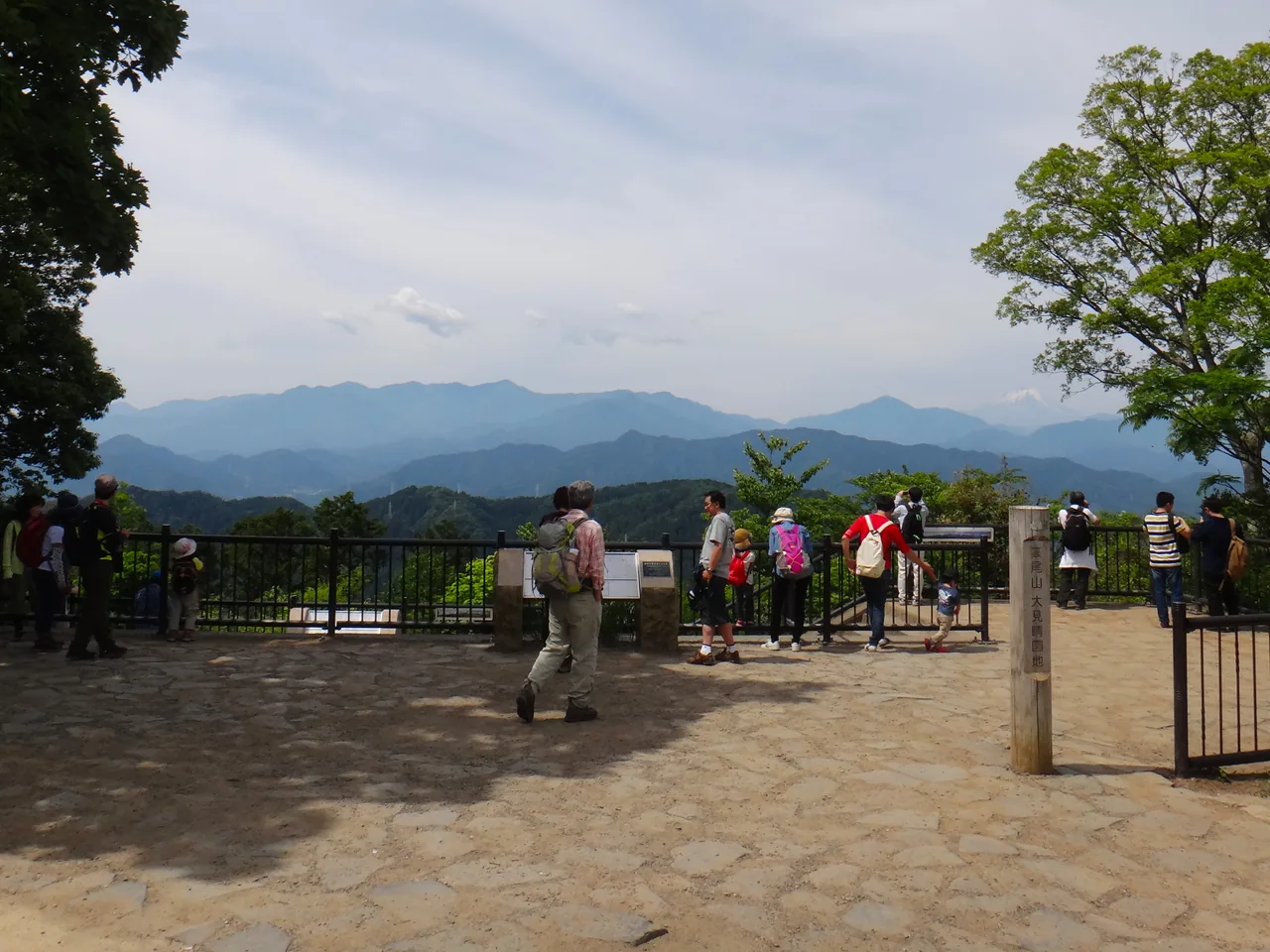
For about ten days in December the sun drops onto the summit of Mt Fuji as seen from the top of Mt Takao. Sunset falls around 16:15, and the cable car runs an extended service until 18:00 for those dates.
The mountain is on the published list of places in the Kanto region with a clear view of Fuji, and the railway points visitors to two spots: the summit itself, and Momijidai, five minutes further on.
It gets dark on the way down
You need a torch. The operator says as much in its own guidance, and it asks people to descend by Trail 1, which is where the cable car station is.
The summit is cold and exposed in December, and you will be standing still while you wait. Warm layers and shoes you can walk down in are the whole kit list.
Bad weather cancels the late service
The extended timetable applies only during those dates and only when the weather holds. If cloud rolls in, the cable car reverts to normal hours, which in December means 17:15 on a weekday.
Fuji is often invisible anyway. If this is the reason for your trip, build it into a wider day rather than staking the whole day on it.
New Year’s morning is the other early start
Yakuo-in holds a sunrise service at the summit on the first morning of the year. First-visit crowds and sunrise crowds arrive together, making it one of the busiest days on the mountain.
There is no all-night train service on this line, so getting up there for dawn means sleeping nearby or waiting for the first departure. Our Japan at New Year guide covers what else is open over those days.
13. Some plans do not fit in a day, so people sleep at the foot
A hotel stands one minute from Takaosanguchi station. If your plan involves being on the mountain before dawn or after dark, staying at the bottom removes the last train from the equation.
It was built as a base for the mountain rather than as a business hotel. Every guest is given a bundle of firewood, there is a fire pit outside, and the rooms have no televisions. The roof deck looks out on the trains and the sky.
Rates swing hard with the season
The gap between quiet and peak dates is wide. On the group tariff the cheapest season starts around ¥6,000 per person for a room only, while the top season runs to about ¥17,000. Autumn colour and holiday weekends sit at the expensive end.
Against central Tokyo hotel rates that is reasonable, but you are an hour from the city, so it only makes sense if the mountain is the point of the trip. For staying in the city instead, see where to stay in Tokyo.
You can also sleep at the temple
Yakuo-in runs an overnight training retreat twice a year, in June and October, with participants sleeping in the temple. It costs ¥25,000, takes forty people, and is open to those aged twenty and over.
The schedule is not gentle. Assembly is at 2:00 in the morning, the group walks up Trail 6 without using the cable car, there is waterfall practice, and morning service is at 5:30. This is a religious programme, not a tourist experience.
There is a children’s version in summer
During the school holidays the temple runs a one-day mountain ascetic experience for primary school children: ¥5,000, fifty places, with waterfall practice, a walk on the nature trails and prayer bead making.
Applications open in early summer and close when the places go. If you are in Tokyo for a long summer stay with children, it is worth watching the dates.
14. Half a day looks like this, a full day looks like that
With half a day, ride up and walk to the summit and back. With a full day, walk up one route and come down another. Both versions end at the same station.
| Time | Half day | Full day |
|---|---|---|
| Morning | train from Shinjuku | trail check at the 599 Museum |
| Late morning | cable car to the halfway station | climb Trail 6 (90 min) |
| Lunch | eat at the halfway station | packed lunch at the summit |
| Afternoon | temple and summit | descend the Inariyama ridge (60 min) |
| Evening | cable car down | hot spring by the station |
You do not have to come down the way you went up
Ten routes means you can pair them. Trail 6 up and Inariyama down gives you a stream on the way up and a ridge on the way back, and both start and finish at the bottom station, so there is no backtracking.
Trail 1 up and Trail 4 down is the gentler pairing: pavement on the climb, forest on the descent, and less pounding on the knees.
If lunch matters, carry it
There are shops at the summit but they close in bad weather and out of season, and the railway warns that some routes have no shop at all before the ridge. A packed lunch removes the question.
Take your rubbish home; there are no bins on the mountain. Fires are banned everywhere on the slope, including the areas that look like picnic spots.
The ridge keeps going if you want it to
A ridge route runs from Mt Takao to Mt Jinba, 15.3 kilometres, which is a full day on its own and needs proper footwear, water and a bail-out plan.
For other day walks out of Tokyo, compare Hakone and Kamakura. Of the three, Takao is the one you can be back from soonest.
15. What changed on the mountain this season
Three practical details are different from last year. The monkey park raised its prices, the cable car is about to accept IC cards, and the halfway station is being rebuilt, which has moved the walkways around it.
| What | Change |
|---|---|
| Monkey park admission | up to ¥600 adult, ¥300 child |
| Cable car boarding | tap an IC card from 1 November |
| Halfway station | walkways rerouted for building work |
Follow the signs at the halfway station
The upper cable car station is being improved, and the routes around it were changed in mid-May. If you have been before, the way out of the station is not where you remember it. On-site signage covers it.
Services are unaffected. The cable car runs normally, and the monkey park and beer garden are open as usual.
The beer garden takes days off
Even in season the terrace closes for maintenance on scattered days, with closures set for late June and again in October. The soba restaurant in the shopping building at the halfway station does the same, though the tengu-yaki stand and the souvenir shop stay open.
If dinner up the mountain is the plan, check the day rather than assuming.
Ask at the museum on the way in
Trail maps and the current state of the paths are both available at Takao 599 Museum, which is free and opens at eight. It also publishes its own maintenance closure days in advance, so you can check whether your date is affected.
For the wider picture of a Tokyo itinerary, see our Tokyo travel guide, and for timing the leaves, Japan autumn foliage.