
Japan Autumn Foliage Trip Planning When Nobody Knows the Peak Dates Yet
Japan’s official foliage forecasts do not appear until around September, yet long-haul seats and Kyoto rooms have to be booked months before that. Elevation is the tool that closes the gap: it lets you fix your dates now and still choose where the colour will be.
| No 2026 forecast yet | Japan’s foliage forecasts only start appearing around September, so every date in this guide is an average-year pattern, never a prediction. |
|---|---|
| The season is long | peak colour exists somewhere in Japan from early September to mid-December, so the question is where, not whether. |
| Elevation is time | a 1,000 m difference in height is worth roughly 3 to 5 weeks of autumn, and 100 m is worth about 2 to 3.5 days. |
| Fixed dates | keep the dates and move the map. Choose your altitude to match the week you already paid for. |
| Fixed place | hold a higher backup and a lower backup within reach of the same bed, which covers you a week either way. |
| The 10-10-10 rule | count mornings below 10°C. About 10 of them brings first colour, 20 brings peak, and 30 marks the height of the season rather than its end. |
| Kyoto is different | its best-known night viewings are shifting to timed, reservation-only entry, one of them runs a lottery, and of the four covered here only Kiyomizu-dera still lets you turn up and pay at the gate. |
1. Book the dates, choose the altitude later
2. Why waiting for the forecast is not an option
3. What has to happen before a leaf turns red
4. Count the cold mornings and you can forecast it yourself
5. Elevation does the job a calendar cannot
6. Tateyama Kurobe, where one ticket holds four weeks of autumn
7. Nikko is not one destination, it is five
8. Hakone runs the same ladder an hour out of Tokyo
9. What is different about 2026, and what is not
10. Fixed dates: the week-by-week decision table
11. Fixed place: how to build a one-week hedge
12. Hokkaido, where the Japanese autumn starts
13. Tohoku, the best value in the whole season
14. Kanto, the region with the widest spread
15. Chubu and Hokuriku, where the ladder is steepest
16. Kansai, the latest and the most crowded
17. Chugoku, Shikoku and Kyushu, the southern tail
18. Kyoto, where the famous temples now need a reservation
19. Booking and cost: when to commit and what it saves
20. Crowds are a road problem, not a gate problem
21. What to do in September when the forecast finally lands
22. If you miss it anyway, which you might
1. Book the dates, choose the altitude later
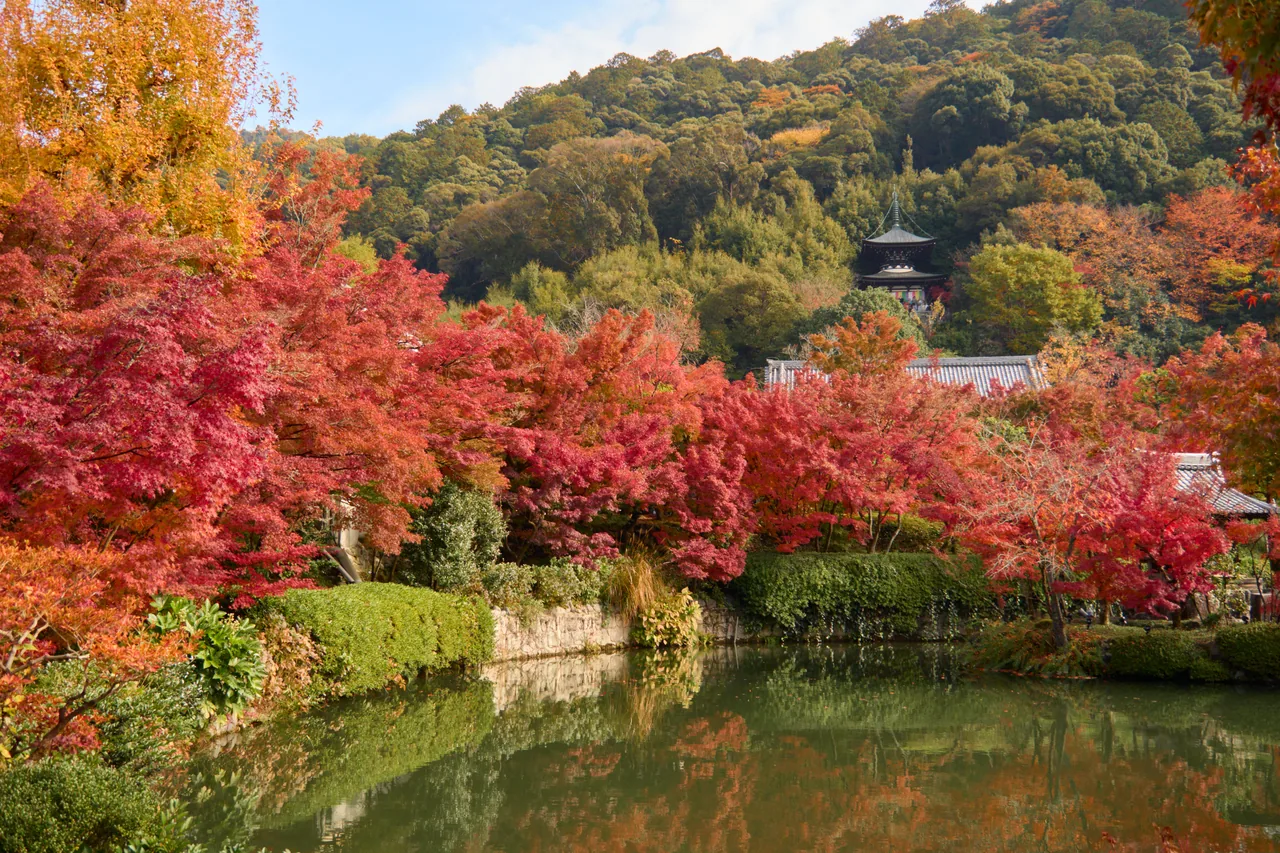
You can lock in your 2026 autumn trip right now, as long as you decide the dates first and the destination second. That order is the whole method. Dates are the expensive, irreversible half of a Japan trip and destination is the half you can still steer in September, yet almost everyone books them the other way round.
What rescues the situation is the sheer length of the Japanese season. Somewhere in the country, leaves are at their peak continuously from early September to the middle of December, which is a little over three months of usable window.
That span is not created by latitude alone. Sapporo’s street trees turn about five weeks before the low country in Kyushu, and a single mountain in central Japan holds four of those weeks between its summit and its car park. Height, not distance, is what gives you room to manoeuvre.
| Your situation | The move this guide teaches |
|---|---|
| Dates already fixed by leave or by cheap fares | Keep the dates. Select destinations by elevation so that something is peaking in the week you bought. |
| Destination already fixed by family, a wedding, a conference | Keep the place. Build a one-week hedge in each direction by holding one higher and one lower option nearby. |
| Both still open | Aim at the widest windows, the places where the season lasts a month or more, and decide the fine detail in September. |
If you have not settled on a season at all, our broader look at when to visit Japan compares autumn against the other three. If autumn is already decided, read on: the rest of this article is about hitting it.
2. Why waiting for the forecast is not an option
The information you need arrives about four months after the decision you have to make. That gap is not a reason to panic, it is a reason to sort your decisions by how reversible they are.
Long-haul travellers typically book flights three to six months out, and popular autumn accommodation in Japan starts moving six months to three months before arrival. Foliage forecasts start appearing around September, are revised weekly, and only become genuinely sharp inside the final fortnight.
| Decision | When you actually make it | What information exists at that moment |
|---|---|---|
| International flights and open-jaw routing | 3 to 6 months out | Average-year timing only |
| Rooms in the famous foliage towns | 6 to 3 months out | Average-year timing only |
| Rail passes and reserved seats | 1 to 2 months out | Long-range seasonal outlook, still no peak dates |
| Which valley you go up on day six | 2 weeks to 2 days out | Live forecasts plus daily colour reports |
The strategy falls out of that table. The decisions forced on you early are all coarse ones, region and half-month, and average-year data answers those perfectly well.
The decisions that genuinely need a forecast are all fine ones, and they are all decisions you can still make on the ground. So book the coarse layer now and keep the fine layer flexible, which in practice means refundable room rates and no pre-committed day-by-day itinerary.
This guide does not cover what to pack, what the weather does month by month, or which festivals fall when. That ground belongs to our month guide to November in Japan, and repeating it here would only crowd out the timing method.
3. What has to happen before a leaf turns red
Colour is triggered by cold mornings, not by the calendar and not by the date the tourist board prints. The Japan Weather Association puts the working threshold at a daily minimum temperature dropping below roughly 8°C, and phrases it as what is generally held to be true rather than as a finding it asserts itself.
From that first trigger, the run to full colour is usually given as about three weeks, carrying the same hedge. Once a place reaches its best, the viewing window published for an individual spot is typically about a fortnight.
Quality is a separate question from timing. The same tree can turn on schedule and still look mediocre, because the depth of the red depends on what the weather did in the weeks around the turn.
| Condition | Effect on colour |
|---|---|
| Large gap between daytime and overnight temperatures | Best single predictor of vivid red. Mountain basins and inland valleys win here. |
| Plenty of clear autumn sunshine | Deepens colour. A run of grey, wet days flattens it. |
| Adequate soil moisture | Needed. Drought browns and curls leaves before they can turn. |
| A warm autumn, whether from late-summer heat or a mild October | Delays the trigger and pushes the whole window later. |
| A typhoon passing close | Salt-laden wind burns and strips leaves. Damage can be local and severe. |
The typhoon risk is the one that catches long-haul travellers out, because it does not scale with how carefully you planned. Our guide to Japan’s typhoon season explains the timing, and the practical response for a foliage trip is simply to keep an inland alternative in your pocket.
That holding period is the most forgiving fact in autumn planning. Your target is a fortnight, not a day, and arriving a few days after the announced peak usually beats arriving a few days before, because the trees behind the front-runners are still coming through.
4. Count the cold mornings and you can forecast it yourself
You can forecast your own peak from nothing but a ten-day minimum-temperature forecast, by counting the mornings below 10°C. The weather commentator Yuji Sugie popularised this as the 10-10-10 rule, and it works by counting cumulative mornings rather than watching the calendar.
The count is cumulative, not consecutive. Start from the first qualifying morning of the season and keep a running total, ignoring the mild days in between.
| Mornings below 10°C, cumulative | What the trees are doing | Typical minimum by then |
|---|---|---|
| About 10 | First colour appears, the turn has started | Around 8°C |
| About 20 | Peak. This is the fortnight you want to be standing there | Around 5 to 6°C |
| About 30 | The height of the season. Not the end of it, and not leaf fall | Around 3 to 5°C |
This dovetails with the three-week figure from the previous section. Ten qualifying mornings to first colour and twenty to peak means ten more in between, and early in the season not every morning qualifies, so those ten are spread across roughly three calendar weeks.
Read the third row carefully, because it is the row people invert. Thirty cumulative mornings is the fullest point of the season in the original formulation, not the moment the leaves come down, so a count somewhere in the twenties is a reason to go rather than a reason to give up.
The practical use is a fortnight before you travel. Pull the ten-day minimum forecast for the exact town you are heading to, count the qualifying mornings, add whatever has already accumulated, and you will know whether you are early, on time or late without waiting for anyone to publish anything.
Two honest limits. The rule performs best in mountains and inland basins with clean radiative cooling, and it is blurrier on the coast, where the sea holds overnight temperatures up. It also says nothing about how good the colour will be, only about when it will arrive.
5. Elevation does the job a calendar cannot
Going up a mountain moves you forward in the autumn, and the exchange rate is about 1,000 metres for 3 to 5 weeks. Climb, and you are looking at next month’s foliage today. Drop back down, and you have bought yourself a fortnight.
The physics is unremarkable. Air cools by roughly 0.6°C for every 100 m of elevation gain, so a slope at 1,000 m reaches the 8°C trigger considerably earlier than the valley floor beneath it.
| Difference in elevation | Difference in timing |
|---|---|
| 100 m | About 2 to 3.5 days |
| 300 m | About 6 to 11 days |
| 500 m | About 10 to 18 days |
| 700 m | About 2 to 3.5 weeks |
| 1,000 m | About 3 to 5 weeks |
| 1,500 m | About 4.5 to 7.5 weeks |
Turn that around and it tells you something else useful. If 100 m of height is worth 0.6°C and also worth 2 to 3.5 days of calendar, then autumn on the ground is cooling at roughly 0.2 to 0.3°C a day, which is why a five-day delay in your arrival is a real change and a five-hour one is not.
The same front is sometimes described as a speed rather than as a ratio. The figure used by Japanese biometeorological services is about 3.5 days per 100 m of descent, roughly 29 m a day, and the front travels south at about 4.8 days per degree of latitude.
Warming shows up in that record as a shift in dates rather than a change in speed. The Japan Meteorological Agency’s own phenological series, which logs the day each sample tree reaches 80 per cent colour, has those dates arriving about three days later per decade.
One boundary condition belongs with that table. This is a forest-zone rule and it holds well below the treeline, while above the treeline the whole progression compresses, because the colour up there is alpine grass and shrub rather than tree canopy and because frost and the first snow arrive early enough to cut the sequence short.
For travellers who know New England or central Europe, this is the genuine difference in Japan. The vertical range on offer is far larger, so a Japanese autumn is not a fortnight you have to hit but a three-month wave you can intercept at whatever height suits your dates.
6. Tateyama Kurobe, where one ticket holds four weeks of autumn
The Tateyama Kurobe Alpine Route is the cleanest elevation ladder in Japan, and it is the proof that the rule above is not theoretical. The route crosses the Northern Alps from Toyama to NaganoTateyama Kurobe Alpine Route, climbing from forested foothills to an alpine plateau, and it is a through-route on cable cars, buses and a ropeway rather than a road you drive.
| Stop | Elevation | Average-year window |
|---|---|---|
| Murodo | 2,450 m | Mid-September to early October |
| Midagahara | 1,600 to 2,000 m across the plateau | Late September to early October |
| Kurobe Dam | 1,470 m | Early to late October |
| Bijodaira | About 1,000 m, the station itself at 977 m | Mid to late October |
| Shomyo Falls | Not published | Late October to early November |
Those are the operator’s own published windows, not a 2026 forecast, and the bottom rung earns its place: with Shomyo Falls included, a single route carries autumn from mid-September to early November.
Check the arithmetic yourself, and notice that it does not quite come out. From Murodo Murodo Tateyama to Bijodaira Bijodaira Tateyama is about 1,450 m of drop, which the rule prices at four to seven weeks, while the observed gap is about four weeks. This ladder runs at the fast edge of the rule and then a little past it.
The reason is the treeline, and it is worth stating rather than hiding. Murodo and Midagahara sit in the alpine zone, where the show is grass and shrub colour rather than tree canopy and where frost and the first snow arrive early, so the top of this ladder compresses in a way a forest-zone rule was never going to describe.
Below the treeline it behaves. Kurobe Dam Kurobe Dam at 1,470 m opens in early October and Bijodaira at about 1,000 m in mid-October, a 470 m gap worth roughly ten days, against the nine to sixteen days the rule predicts for that drop.
Two practical notes. The route closes for the winter at the end of November, so the lower half of the ladder is available for a narrower window than the raw dates suggest, and the whole thing is a linear crossing, which means it works far better as a Toyama-to-Nagano leg than as a return day trip. If you are moving between coasts to make it work, our guide to the JR Pass and the shinkansen network covers how the surrounding legs price up.
7. Nikko is not one destination, it is five
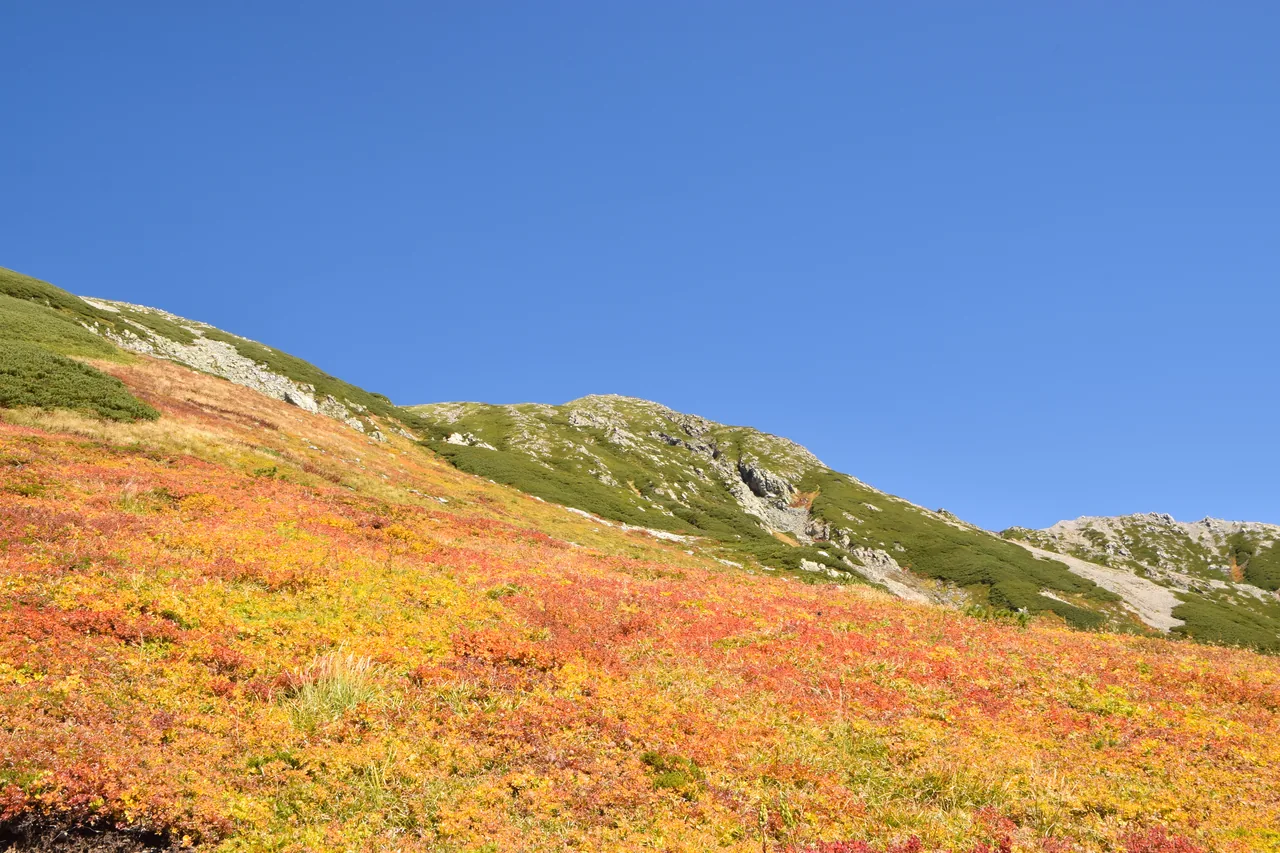
The single most persuasive example in Japan sits within day-trip range of Tokyo, and most visitors never notice it. The name Nikko covers everything from a lake basin at 1,478 m down to a shrine town sitting between 543 and 634 m, and those two ends peak about four weeks apart.
| Place | Elevation | Average-year peak |
|---|---|---|
| Yumoto and Lake Yunoko, Oku-Nikko | 1,478 m | Early to mid-October |
| Senjogahara marsh | 1,400 m | Early to mid-October, with grass colour from late September |
| Ryuzu Falls | 1,350 m | Early to mid-October |
| Lake Chuzenji | 1,269 m | Mid to late October |
| Nikko town and the shrine precinct | 543 m at Tobu-Nikko station, 634 m on the Toshogu approach | Early to mid-November |
The full span is 935 m of drop and about four weeks of delay, and the rule prices 935 m at 2.7 to 4.7 weeks, so this ladder lands inside its own prediction. If you take nothing else from this article, take this: the answer to “when should I go to Nikko” is meaningless until you say which Nikko.
The top three stops behave exactly as the rule says they should. Lake Yunoko Lake Yunoko Nikko, Senjogahara Senjogahara Marshland and Ryuzu Falls Ryuzu Falls Nikko span 128 m, worth three to four days, which is far too little to separate them inside a window described as early to mid-October.
Senjogahara does better than its height alone would earn, and the reason travels to other destinations. On clear, still autumn nights a flat basin radiates its heat straight to the sky and the cold air then pools on the floor of it, so a marsh at 1,400 m runs its overnight minimums down to what a lake at 1,478 m is doing, which is why the two turn together instead of days apart.
One stop misbehaves in an instructive way. Lake Chuzenji Lake Chuzenji sits only about 80 m below Ryuzu Falls, which the rule would price at two or three days, yet it runs about ten days later.
The reason is the lake itself. Eleven square kilometres of deep water release heat through the night and hold the shoreline’s minimum temperatures up, which delays the 8°C trigger, and this is the general lesson that big water runs late while exposed ridges run early.
For the mechanics of getting up there, including which train and bus combination actually works, see our Nikko day trip guide. Read the traffic section further down this page before you commit to a car.
8. Hakone runs the same ladder an hour out of Tokyo
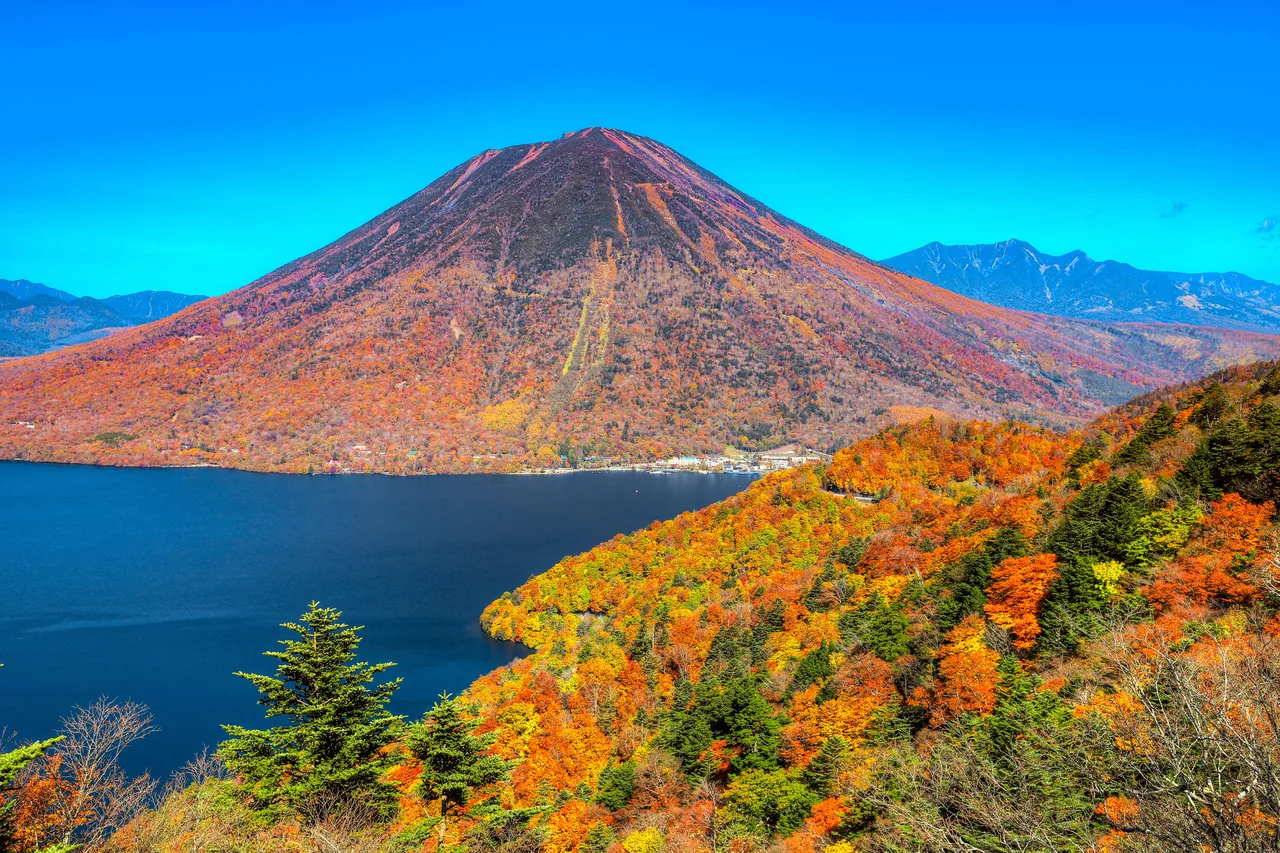
Hakone is the most accessible elevation ladder in Japan, and it holds about six weeks of autumn inside one destination. The caldera stacks its viewpoints from the lake at the top down to the river valley at Yumoto, so the answer to “is Hakone worth it in November” depends entirely on which Hakone you mean.
| Band | Where | Average-year window |
|---|---|---|
| Upper | Lake Ashi Lake Ashi Hakone and the line of the mountain railway above Gora | Late October to mid-November |
| Middle | Gora and Sengokuhara | Mid to late November |
| Lower | Hakone-Yumoto Hakone-Yumoto Station and the Hayakawa valley | Late November to early December |
That is the reason Hakone belongs in this article rather than merely in a list of nice places. It is the closest of these three ladders to Tokyo, reached by a direct train from Shinjuku, it needs no rebooking to move between bands, and the higher-and-lower hedge described later in this guide can be run inside a single day return.
The bands are also the answer to Hakone’s worst reputation problem. Visitors who arrive in the second half of November and find the lake already past its best are looking at the wrong altitude, because by then the show has dropped to Gora, Sengokuhara and eventually the valley floor.
The transport, the passes and the order in which the ropeway, the pirate boat and the mountain railway link up are all covered in our Hakone day trip guide.
9. What is different about 2026, and what is not
There is no 2026 peak-date forecast, but there is a 2026 seasonal outlook, and it leans one direction. The distinction matters: a seasonal outlook tells you about temperature tendency over months, while a foliage forecast gives specific dates for specific places, and only the first of those exists right now.
| Source and date | What it says |
|---|---|
| JMA three-month outlook, issued 21 July 2026 | August: above normal in eastern and western Japan and Okinawa, normal to above in the north. September: normal nationwide, with only Okinawa leaning warm. October: normal to above normal across the country, the outlook’s own phrase being that autumn arrives slowly. |
| Weathernews, released the same day | The lingering late-summer heat is not expected to drag on for long. |
| 2026 foliage forecast | Not published as of 23 July 2026. Expected from around September. |
Read that table carefully, because the obvious inference from it is the wrong one. Nobody is forecasting a late summer that drags on and holds autumn back. September is put at normal, and the 21 July releases said in as many words that the lingering heat will not drag on.
The lean towards a later season sits entirely in October, and October is the month that decides the question anyway. Minimum temperatures across most of Honshu first drop towards 8°C during October, so a warm October delays the trigger in a way a warm August never could.
2025 is the precedent people will reach for, and it does belong here, but for the right reason. That season ran late because of an exceptional late summer, with northern and eastern Japan behind schedule and the final peaks landing in the second half of November, which shows how far a season can slip rather than why this one might.
Weighting the bet has two parts. If your dates sit at the boundary of an average-year window, prefer the later half of that window, and for a given date prefer a slightly lower elevation than the average year would suggest.
There is an asymmetry here that is easy to miss. High ground crosses the 8°C threshold early in almost any autumn, because the lapse rate hands it a several-degree head start, so alpine timing moves less between years than lowland timing does. A warm autumn stretches the season at the bottom far more than it delays it at the top.
If your window falls in October and you want the month’s own character rather than just its foliage timing, our guide to October in Japan handles the weather, the lingering typhoon risk and everything else this article deliberately leaves out.
10. Fixed dates: the week-by-week decision table
If your dates cannot move, this is the table to plan from. It answers one question only, which is where colour is peaking in an average year during each half-month, and it is deliberately organised by time rather than by geography.
Use it as a first filter. Pick your row, then read the regional tables further down for the alternatives inside each region, and treat the suggested bases as starting points rather than prescriptions.
| Your window | Peaking in an average year | Sensible base |
|---|---|---|
| Early to mid-September | Daisetsuzan in Hokkaido, the earliest colour in the country, and effectively nothing else until the middle of the month | Asahikawa |
| Mid to late September | Daisetsuzan, Sounkyo and Shiretoko in Hokkaido; Murodo at the top of the Alpine Route; the marshes of Oze | Sapporo, Asahikawa, Toyama |
| Late September to early October | Midagahara on the Alpine Route; Zao Onsen and Hachimantai in Tohoku; Shinsennuma in Niseko | Toyama, Sendai, Morioka, Sapporo |
| Early to mid-October | Oku-Nikko from Yumoto down to Ryuzu Falls; Hakkoda and Shirakami; Goshikinuma; Hakuba; Jozankei | Tokyo with a night in Nikko, Aomori, Nagano |
| Mid to late October | Kurobe Dam and Bijodaira; Lake Chuzenji; Oirase Gorge and Lake Towada; Karuizawa; Okutadami; the broadleaf stage at Kamikochi; Narukokyo | Tokyo, Matsumoto, Nagano, Toyama, Sendai |
| Late October to early November | The larch at Kamikochi; Shomyo Falls at the foot of the Alpine Route; Hakone’s upper band around Lake Ashi; Chichibu; Mt Koya; Mt Daisen; the Iya valley; the first northern hills above Kyoto | Tokyo, Matsumoto, Osaka, Kyoto, Tottori |
| Early to mid-November | Nikko town itself; Lake Kawaguchiko; Arima Onsen; Takeda Castle; Kikuchi Gorge; Takachiho Gorge; Okutama | Tokyo, Fuji Five Lakes, Kobe, Kumamoto |
| Mid to late November | Mt Takao; Hakone’s middle band at Gora and Sengokuhara; Korankei; Kenrokuen; Gero Onsen; Miyajima; Koto Sanzan; Kyoto at full stretch | Tokyo, Nagoya, Kanazawa, Kyoto, Hiroshima |
| Late November to early December | Hakone-Yumoto and the Hayakawa valley; Kamakura at its true peak; Midosuji and Minoo in Osaka; Metasequoia Avenue in Shiga; Yoro Park; the Adachi Museum; Akizuki and Fukiji in Kyushu; the tail of Kyoto | Tokyo, Osaka, Kyoto, Matsue, Fukuoka |
| Early to mid-December | The tail of Kamakura; the Yoro valley in Chiba; the last Kyoto and Nara gardens | Tokyo, Kyoto |
Two patterns are worth pulling out of that table. Before the middle of October, almost everything on the list is either in Hokkaido and Tohoku or high in the mountains, so an early-autumn trip is structurally a mountain trip whether you wanted one or not.
After the middle of November the opposite holds. Nearly everything left is low, urban or southern, which makes late-season trips far easier to combine with cities, and it is the reason the classic Tokyo to Kyoto run works better in late November than in early October.
If you are threading a foliage plan through a first visit, the standard route already passes several of these, and our Golden Route itinerary shows where the detours slot in without wrecking the rest of the trip.
Some links in this article are affiliate links. If you book through them we may earn a commission at no extra cost to you, and it does not change what we recommend.
11. Fixed place: how to build a one-week hedge
If the place is fixed and the timing is the gamble, the answer is to hold one option above you and one below you. A higher option covers an early autumn, a lower option covers a late one, and between them they buy you roughly a week of tolerance in each direction without changing where you sleep.
The arithmetic comes straight from the elevation rule. Seven days of tolerance is about 200 to 350 m of height, which is a very ordinary difference between two valleys in the same day-trip radius.
| Your base | If autumn is running early, go up | If autumn is running late, go down |
|---|---|---|
| Tokyo | Oku-Nikko, Nasu, Oze, Minakami | Mt Takao, Kamakura, the Yoro valley in Chiba |
| Kyoto and Osaka | Mt Koya, the northern hills above Kyoto | Minoo, the Midosuji ginkgo, the tail end of Nara Park |
| Nagoya | Kamikochi and the Northern Alps, the Yatsugatake foothills | Korankei late in its window, Yoro Park in Gifu |
| Kanazawa and Toyama | Kurobe Dam and Bijodaira on the Alpine Route | Kenrokuen and the castle towns on the plain |
| Sapporo | Sounkyo, Daisetsuzan | Noboribetsu, Onuma, Sapporo’s own avenues |
| Sendai and Aomori | Hachimantai, Hakkoda, Zao | Narukokyo, the lower Oirase reaches |
| Hiroshima | Mt Daisen, Okutsukei | The Adachi Museum, lower Momijidani on Miyajima |
| Fukuoka | Shin-Yabakei, Kirishima | Akizuki castle town, Fukiji |
Tokyo is the easiest base in Japan to hedge from, because it has genuine altitude in three directions. Hakone is a three-band ladder in its own right, running from late October at the lake to early December in the Hayakawa valley, the Fuji Five Lakes follow in early to late November, and Kamakura is one of the last places in the country to turn, peaking around the turn of December and holding into mid-December.
The hedge only works if you actually build it into the booking. That means keeping two or three days of your itinerary unassigned rather than pre-booking a tour for every one of them, and it means checking that your backup is reachable from the bed you already paid for.
12. Hokkaido, where the Japanese autumn starts
Hokkaido carries the earliest colour in Japan, and its high volcanic ground turns while the rest of the country is still in summer. Daisetsuzan can begin in early September, which is roughly three months before the last maples fall in Kamakura, and that gap alone is the whole argument of this article in one line.
The island’s spread is also compressed. Between the highest plateau and Sapporo’s own street trees there is about six weeks, because Hokkaido gets its head start from latitude and only extends it modestly with height.
| Place | What it is | Average-year peak |
|---|---|---|
| Daisetsuzan | High volcanic plateau and national park, the earliest colour in Japan | Early September to early October |
| Shiretoko Five Lakes | Boardwalks through primeval forest under the Shiretoko range | Late September to mid-October |
| Sounkyo | Gorge of columnar cliffs and waterfalls with an onsen town at its foot | Late September to mid-October |
| Shinsennuma | Marsh pond on the Niseko highland, short boardwalk loop | Late September to early October |
| Jozankei | Onsen valley within reach of Sapporo | Early to mid-October |
| Noboribetsu Onsen | Volcanic resort with the steaming Jigokudani valley | Early to late October |
| Onuma Quasi-National Park | Island-strewn lake below Mt Komagatake | Mid to late October |
| Sapporo city | Street avenues, university ginkgo, Nakajima Park | Mid-October to early November |
Daisetsuzan Daisetsuzan National Park deserves a specific warning that has nothing to do with foliage. It is genuine mountain country, the ropeway lifts you straight into the alpine zone, and September snow up there is normal rather than surprising.
The practical shape of a Hokkaido foliage trip is therefore front-loaded. Aim the mountain days at the first half of your stay and hold the lower lakes and the city for later, because the front moves downhill fast here and there is no going back up to find it.
13. Tohoku, the best value in the whole season
Tohoku offers the strongest combination of scale, quality and low crowds of any region on this list. Its peak arrives before the domestic travel rush turns its full attention to Kyoto, and its landscapes are gorges, caldera lakes and beech forest rather than temple gardens.
The region runs about three weeks from its highest plateau to its lowest gorge, so a single week here can be aimed with the same elevation logic used everywhere else in this guide.
| Place | What it is | Average-year peak |
|---|---|---|
| Hachimantai, Iwate and Akita | Volcanic plateau, a high crossing road and marsh ponds | Late September to mid-October |
| Zao Onsen, Yamagata | Ropeway up to crater country above an onsen village | Late September to early October |
| Mt Adatara, Fukushima | Ropeway peak with an unusually long colour spread | Late September to late October |
| Mt Hakkoda, Aomori | Ropeway over mountain birch and beech | Early to late October |
| Shirakami-Sanchi, Aomori | World Heritage virgin beech forest | Early to late October |
| Goshikinuma and Urabandai, Fukushima | The Five Coloured Lakes walking trail | Early to late October |
| Oirase Gorge, Aomori | Stream-side walk past mossy rapids and waterfalls | Mid to late October |
| Lake Towada, Aomori | Caldera lake with cruise boats and shoreline drives | Mid to late October |
| Narukokyo Gorge, Miyagi | Deep gorge beside an onsen town, one bridge view does the work | Mid-October to early November |
Oirase Gorge Oirase Gorge is the region’s signature, and it rewards a specific tactic. The gorge is about 14 km of near-level stream path, so the productive way to do it is to bus up and walk down a section rather than attempting the whole thing.
Mt Adatara stands out in that table for a different reason. Its window runs a full month, which almost always means significant vertical range on one mountain, and that makes it a useful single-destination hedge if your dates are uncertain.
14. Kanto, the region with the widest spread
Kanto holds both ends of the Japanese season, which makes Tokyo the most forgiving base in the country for an autumn trip. Oze begins in mid-September and Kamakura is still going in mid-December, a spread of about three months inside one region.
That spread is almost entirely a story about height. Tochigi and Gunma carry the same kind of ladder as Oku-Nikko, while the coastal fringe around Kamakura and the Boso peninsula barely rises at all and holds its warmth into December.
| Place | What it is | Average-year peak |
|---|---|---|
| Oze, Gunma | High marshland, grass colour arrives before the trees | Mid-September to mid-October |
| Nikko, Tochigi | The full ladder from alpine lakes to the shrine precinct | Late September to mid-November |
| Nasu, Tochigi | Ropeway highland above a string of onsen | Late September to mid-November |
| Minakami Onsen, Gunma | River gorge, ropeway and rafting country | Early October to early November |
| Sarugakyo Onsen, Gunma | Lakeside onsen village | Mid-October to early November |
| Shima Onsen, Gunma | A vivid blue dammed lake above an old hot spring street | Mid-October to mid-November |
| Kinugawa Onsen, Tochigi | River gorge with cruise boats, below Nikko | Late October to mid-November |
| Hakone, Kanagawa | Caldera resort that works as the three-band ladder broken down earlier in this guide | Late October to early December |
| Ikaho Onsen, Gunma | Stone stairway town with a maple bridge above it | Late October to early November |
| Fukiware Falls, Gunma | Waterfall cut into a rock gorge | Late October to early November |
| Fukuroda Falls, Ibaraki | Four-tiered waterfall with viewing decks | Late October to mid-November |
| Chichibu, Saitama | Valleys and gorges with a notably long window | Late October to late November |
| Okutama, Tokyo | Mountain Tokyo, a reservoir lake and a gorge walk | Early to late November |
| Hananuki Gorge, Ibaraki | Suspension bridge over a narrow gorge | Mid to late November |
| Mt Takao, Tokyo | Day-trip mountain about an hour from Shinjuku | Mid-November to early December |
| Kamakura, Kanagawa | Temple gardens, among the very latest in Japan | Mid-November to mid-December |
| Yoro Valley, Chiba | Mild coastal gorge with falls, late and low | Mid-November to early December |
Two entries in that table are wide enough to be worth reading twice. Nikko and Nasu both run from late September to mid-November, and in neither case does that mean any single spot stays good for seven weeks.
What it means is that the region contains several distinct destinations at different heights, exactly as the Oku-Nikko ladder showed. Booking a night in the mountains and a night in the town is not indecision, it is the correct response to that spread.
Mt Takao Mount Takao and Kamakura Kamakura are the two reliable safety nets for anyone whose trip lands late. Both are inside a Tokyo day return, both peak when almost everywhere else has finished, and both are covered in more detail in our Tokyo travel guide.
15. Chubu and Hokuriku, where the ladder is steepest
Central Japan has the greatest vertical range in the country, and therefore the longest usable autumn. The Alpine Route alone spans mid-September to early November, and the region signs off with a low waterfall park in Gifu that holds on into early December.
This is also where the season stops being about maples. Larch, beech and the golden turn of alpine moor dominate the high ground, and the red maple picture most visitors have in mind belongs to the last three or four weeks only.
| Place | What it is | Average-year peak |
|---|---|---|
| Tateyama Kurobe Alpine Route, Toyama and Nagano | The elevation ladder in a single through-ticket | Mid-September to early November |
| Hakuba, Nagano | Ski valley with ropeway access to alpine ponds | Early to late October |
| Karuizawa, Nagano | Highland resort town, larch and maple mixed | Mid-October to early November |
| Naeba and the Dragondola, Niigata | One of Japan’s longest gondolas over a colouring valley | Mid-October to early November |
| Okutadami, Niigata | Reservoir cruise deep in the Echigo mountains | Mid-October to early November |
| Yatsugatake, Nagano and Yamanashi | Volcanic range with highland trails and ropeway | Late October to early November |
| Lake Yamanaka, Yamanashi | The largest of the Fuji Five Lakes | Late October to mid-November |
| Sumatakyo, Shizuoka | Suspension bridge over turquoise water in a remote valley | Late October to early November |
| Lake Kuzuryu, Fukui | Reservoir and mountain road with a long viewpoint drive | Late October to mid-November |
| Yahiko, Niigata | Shrine, ropeway and a maple valley behind it | Late October to mid-November |
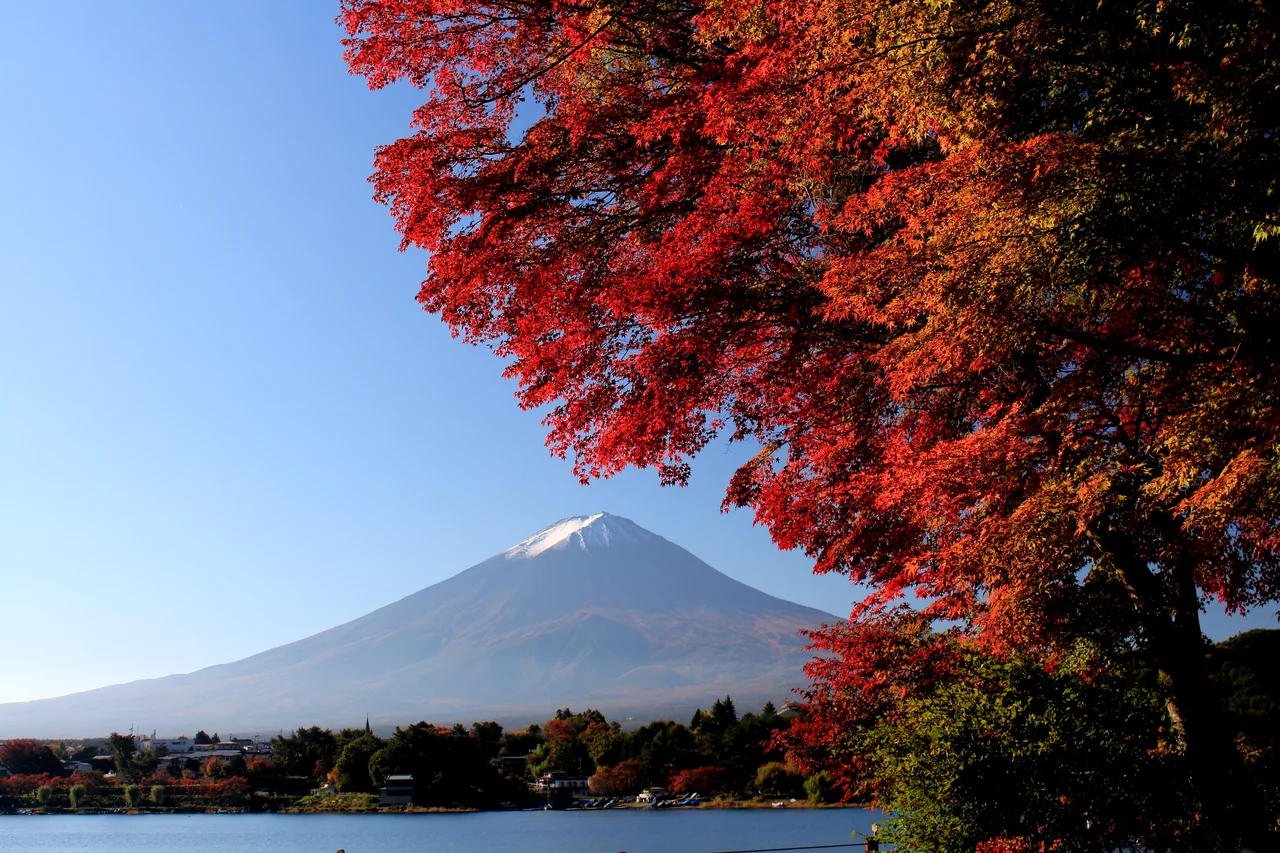
| Lake Kawaguchiko, Yamanashi | Mount Fuji plus a corridor of maples, the postcard combination | Early to late November |
| Korankei, Aichi | Gorge holding roughly 4,000 maples, close to Nagoya | Mid to late November |
| Kenrokuen, Ishikawa | One of the three great gardens of Japan | Mid to late November |
| Gero Onsen, Gifu | Riverside onsen town in the Hida valley | Mid to late November |
| Yoro Park, Gifu | Waterfall park, low, mild and the region’s last | Late November to early December |
Kamikochi does not appear in that list and it should be on your radar anyway. The valley sits at about 1,500 m Kamikochi, and it turns in two stages rather than one, which is the detail that decides whether your visit works.
The broadleaf colour comes first, through the middle and second half of October. The larch gold that Kamikochi is actually famous for, the burnt yellow of karamatsu against the Hotaka wall, runs a week behind that and peaks from the end of October into the first week of November.
Then the valley shuts. Kamikochi closes on 15 November every year and is closed to private cars year round, so it is reached by bus from Hirayu or Sawando, and there is less than a fortnight between the larch peak and the gate closing. Combining it with the Hida valley is the usual approach, and our Nagoya to Takayama guide covers that corridor.
Lake Kawaguchiko Lake Kawaguchiko is the region’s demand peak and behaves accordingly. Its maple corridor is short, the November crowd is enormous, and the same view is available with a fraction of the pressure from Lake Yamanaka or Lake Saiko.
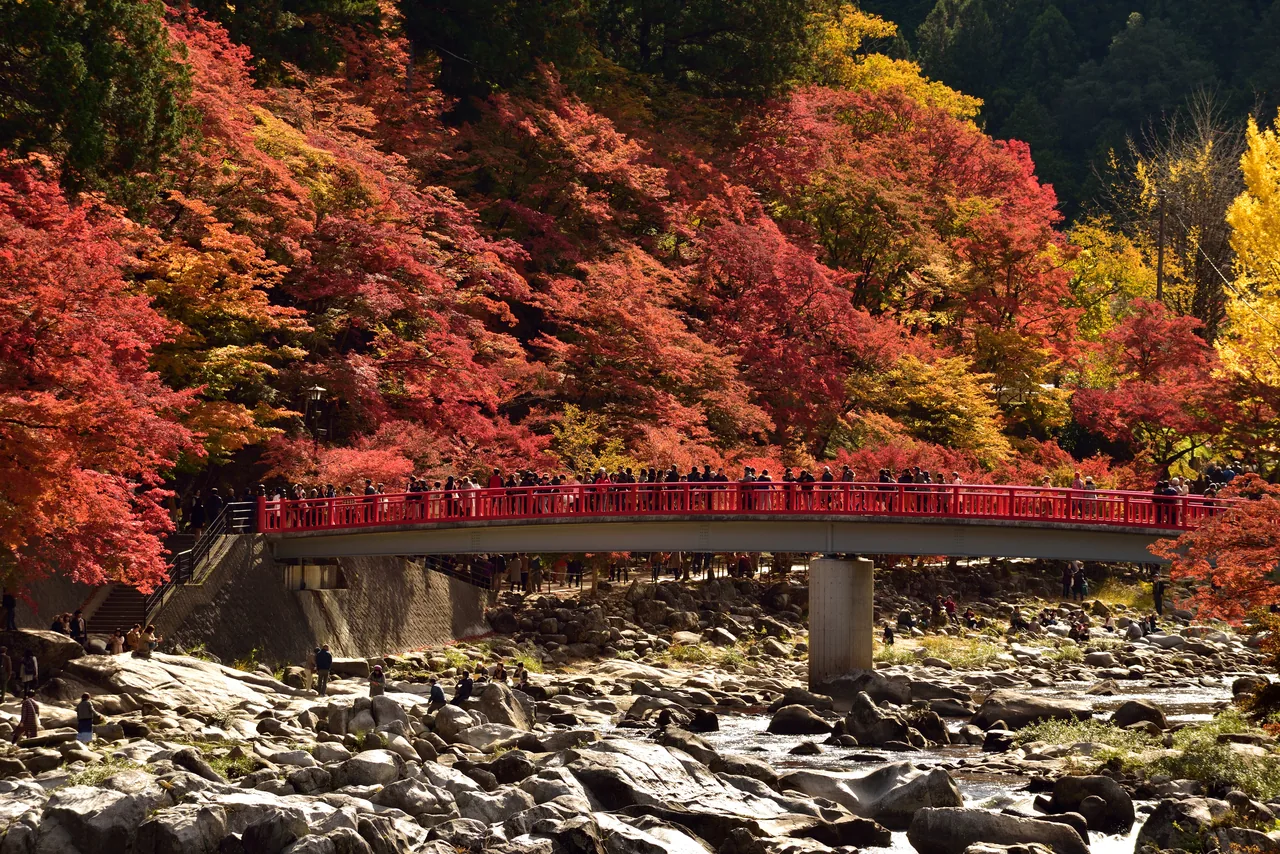
Korankei Korankei is the one to know if you fly into Nagoya. It concentrates thousands of maples into a single short gorge, runs an evening illumination through its season, and is close enough to the city to be an afternoon rather than a day.
16. Kansai, the latest and the most crowded
Kansai is where the season ends, and that is precisely why it is the hardest region to book. Kyoto and Nara both run from late October to early December, and the last week of November is the single most contested week in the Japanese travel calendar.
The region’s spread is created less by mountains than by the difference between hill temples and the city floor. Mt Koya sits on a forested plateau and turns in late October, while the ginkgo of central Osaka do not finish until December.
| Place | What it is | Average-year peak |
|---|---|---|
| Mt Koya, Wakayama | Temple town on a high forested plateau, temple lodgings available | Late October to early November |
| Kyoto | The widest window of any Japanese city, hills first and the basin last | Late October to early December |
| Nara Park | Deer, temples and a long slow tail | Late October to early December |
| Arima Onsen, Hyogo | Old onsen town in the hills behind Kobe | Early to late November |
| Takeda Castle, Hyogo | Ruined hilltop castle that floats above morning cloud | Early to late November |
| Koto Sanzan, Shiga | Three mountain temples east of Lake Biwa | Mid to late November |
| Keisokuji, Shiga | A stone stairway under a tunnel of red maple | Mid to late November |
| Metasequoia Avenue, Shiga | About 2.4 km of dawn redwoods turning copper | Late November to early December |
| Midosuji, Osaka | Ginkgo boulevard straight through the city centre | Late November to early December |
| Minoo, Osaka | Waterfall gorge inside the Osaka commuter network | Late November |
Midosuji Midosuji Osaka is the entry most worth rescuing from obscurity. It is a free, central, four-kilometre avenue of ginkgo that peaks after the maples have gone, which makes it the best insurance policy in Kansai for a trip that lands late.
Minoo is the other one. The gorge climbs gently from a station on the Osaka network to a waterfall, it peaks at the very end of November, and it turns a wasted afternoon into a proper autumn walk. Both sit inside the city network described in our Osaka travel guide.
17. Chugoku, Shikoku and Kyushu, the southern tail
The south is where you go when your trip is late, and it holds usable colour into December. The trade-off is that the truly early options do not exist here, since the region lacks the altitude of central Honshu.
| Place, Chugoku and Shikoku | What it is | Average-year peak |
|---|---|---|
| Mt Daisen, Tottori | The region’s highest peak, beech forest on the approach | Late October to early November |
| Okutsukei, Okayama | River gorge with an onsen village | Late October to mid-November |
| Iya Onsen, Tokushima | Vine bridges and a deep, remote valley | Late October to mid-November |
| Chomonkyo, Yamaguchi | Long riverside gorge walk | Late October to mid-November |
| Kankakei, Kagawa | Ropeway gorge on Shodoshima island | Early to late November |
| Miyajima, Hiroshima | Momijidani park below Mt Misen, with the ropeway above | Mid to late November |
| Adachi Museum of Art, Shimane | A garden composed to be looked at through window frames | Mid-November to early December |
| Place, Kyushu | What it is | Average-year peak |
|---|---|---|
| Shin-Yabakei, Oita | Rock gorge with the Hitome Hakkei viewpoint | Late October to mid-November |
| Sogi-no-taki Park, Kagoshima | Wide waterfall park with a long window | Late October to late November |
| Kikuchi Gorge, Kumamoto | Clear stream running through cedar and maple | Early to mid-November |
| Takachiho Gorge, Miyazaki | Basalt columns and rowing boats below a waterfall | Early to late November |
| Kunenan, Saga | A private garden open to the public only briefly each autumn | Mid to late November |
| Kirishima Onsen, Kagoshima | Volcanic onsen highland | Mid to late November |
| Akizuki Castle Ruins, Fukuoka | Small samurai town with a maple-lined castle approach | Late November to early December |
| Fukiji, Oita | The oldest wooden hall in Kyushu, with ginkgo at its gate | Late November to early December |
Miyajima Miyajima is the region’s headline and it behaves like Kyoto in miniature. Momijidani fills up, the ropeway queue lengthens through the morning, and the first ferries of the day are worth far more than any other tactic.
Kunenan is the outlier worth planning around rather than stumbling into. The garden opens to the public for only a short stretch each autumn, so if your dates coincide it is a genuine reason to route through Saga, and if they do not it is simply unavailable.
The strategic value of the southern tail is timing insurance. If your trip runs from late November into early December and the north has already finished, Kyushu and Shimane are still working, and that is a far better answer than staring at bare branches in Kyoto.
18. Kyoto, where the famous temples now need a reservation
The biggest change in Kyoto’s autumn is not the timing, it is that the best-known night viewings have become ticketed events you have to win in advance. Most visitors still arrive expecting to pay at a gate, and at several of the headline temples that stopped being true.
Two of the four below have already published their 2026 arrangements and two have not, so the table separates them. Where a temple has not announced, the 2025 figures are shown and labelled, because the booking model carries over from year to year even when the dates do not.
| Temple | Season shown | Dates and hours | Price | Booking |
|---|---|---|---|---|
| Kiyomizu-dera | 2026, announced | 21 to 30 November 2026, open until 21:30 with last entry at 21:00 | Not yet stated for 2026. Adult 500 yen, school age 200 yen in 2025 | None at all. Turn up and pay |
| Rurikoin | 2026, announced | 1 October to 13 December 2026 | 2,000 yen, secondary students 1,000 yen | Reservation by ballot for 13 November to 6 December |
| Tofuku-ji | 2025 figures, 2026 not announced | 19 November to 7 December 2025, 17:30 to 19:30, last entry 19:00 | 2,800 yen | Not through the temple. A JR Tokai charter, booked only on JR Tokai’s own site |
| Enkoji | 2025 figures, 2026 not announced | 10 November to 10 December 2025, 8:00 to 17:00 | Adult 1,500 yen, student 800 yen, an autumn rate against 1,000 and 500 the rest of the year | Timed slots, booking opened at 09:00 on 20 October |
The access models matter more than the prices. Kiyomizu-dera Kiyomizu-dera is the only one of the four you can still decide on over lunch on the day, which for a traveller whose foliage timing is not yet settled is worth more than anything the others offer.
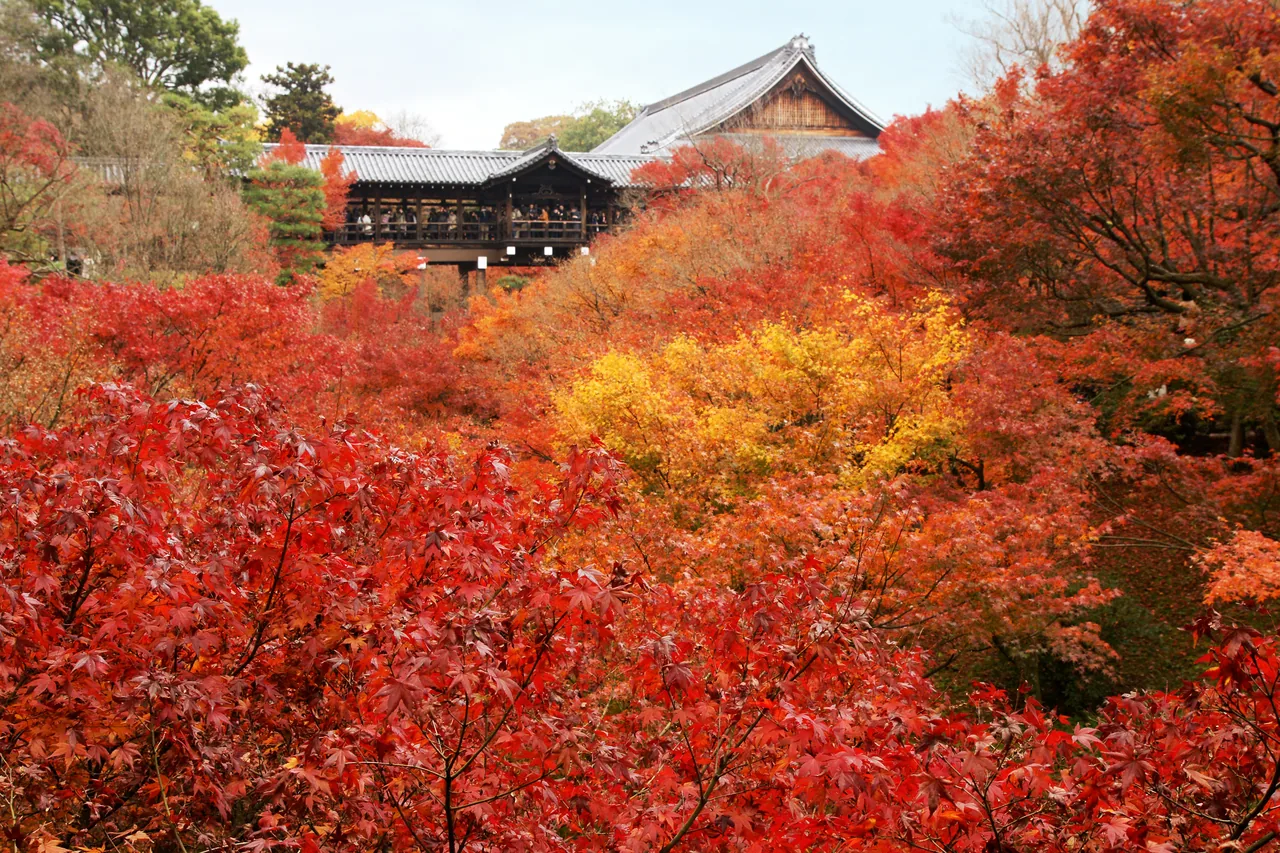
Tofuku-ji Tofuku-ji is the one people get wrong, and getting it wrong means contacting the wrong organisation entirely. The temple does not run a general evening opening. What ran in 2025 at 2,800 yen was a chartered evening operated by JR Tokai’s Kyoto campaign and bookable only through JR Tokai, and the temple states plainly that it takes no bookings for it. The ordinary way in is the daytime autumn viewing of the Tsutenkyo bridge and the Kaisando hall.
Rurikoin Rurikoin Kyoto runs the hardest access model of the four. Its busiest stretch is allocated by ballot rather than first-come booking, so a specific date cannot be guaranteed at any price, and its separate evening viewing at 7,000 yen is less punitive than the number looks, because that ticket includes a one-day Eizan Railway pass and a return trip on the Eizan cable car.
Enkoji Enkoji Kyoto sits in the middle, on timed advance slots released on a published opening date, and it is the useful reminder that “reservation-only” usually means “book on the day the diary opens” rather than “impossible”.
Daytime Kyoto still works on the old rules, and there is plenty of it. Our Kyoto travel guide covers the districts and how to sequence them, and if you are booking now rather than in October, where to stay in Kyoto matters more in this fortnight than in any other week of the year.
19. Booking and cost: when to commit and what it saves
Late November in Kyoto is the most expensive and most crowded week of the Japanese year, and the money is decided six months before you arrive. Rooms in the well-known foliage towns start moving between six and three months out, and the good-value ones go first.
| What you are booking | When to commit | Why |
|---|---|---|
| Late-November Kyoto, Kawaguchiko, Nikko or Hakone | 6 to 3 months out | Supply is genuinely finite. This is not a pricing game, the beds run out. |
| Big-city stays outside the peak fortnight | 1 to 2 months out | Ample supply, and rates soften as the date approaches. |
| A specific ryokan with a specific room type | As early as the property opens the date | Small properties sell out on the day bookings open, not gradually. |
| The gamble option | About a week out | Cancellations release inventory. Real, but not a plan. |
The cancellation window is worth understanding rather than dismissing. Japanese properties routinely see releases around a week before arrival as tentative domestic bookings lapse, so a returning traveller with flexible plans can genuinely play that game.
A first-time long-haul visitor should not. If your flights are non-refundable and your itinerary depends on being in a specific town on a specific night, pay for certainty and use the flexibility elsewhere.
The strongest cost lever is not timing, it is location. Staying in Otsu, a short hop down the Biwako Line from Kyoto Station, or in Ibaraki between Osaka and Kyoto, routinely costs a fraction of central Kyoto in the same week.
| Tactic | What it costs you | What it saves |
|---|---|---|
| Sleep in Otsu or Ibaraki, commute in | 20 to 40 minutes each way | Often the largest single saving available in the peak fortnight |
| Shift your Kyoto nights to the first week of December | Slightly higher risk of being past peak in the city centre | Lower rates and a visibly thinner crowd |
| Book refundable rates now, re-book in September | A higher headline rate | The ability to act on the forecast when it lands |
| Base in Tokyo and treat foliage as day trips | Longer travel days | Deep accommodation supply and far more stable pricing |
That last row deserves emphasis for anyone visiting Japan for the first time. Tokyo’s accommodation market is large enough that autumn barely dents it, and the region’s own foliage spread runs from Oku-Nikko in early October to Kamakura in December, so choosing the right Tokyo base can carry an entire foliage trip on its own.
20. Crowds are a road problem, not a gate problem
At most Japanese foliage sites the bottleneck is the single road up the mountain, not the entrance. Once you see it that way, the tactics that work stop being about arriving early at a temple and start being about clearing a choke point before it fills.
Nikko is the textbook case because the geography is unambiguous. Everything above the town is reached through the Irohazaka switchback road Irohazaka Winding Road, which has a finite number of lanes and no alternative.
| Tactic | What it actually buys |
|---|---|
| Pass Kiyotaki IC before 08:00 on a weekday, and before 06:00 at weekends and on public holidays | The difference between driving up and sitting in a queue for hours |
| Take one of the first two buses out of JR Nikko station on a weekend, the 06:06 or the 06:27 | From the third departure onwards, delays run past three hours on a peak day |
| Reach the Akechidaira viewpoint early | It is quiet at first light and saturated by mid-morning |
| Use public transport instead of a car | Avoids the queue but exposes you to sparse timetables |
| Drive, but with a pre-dawn start and a checked alternative route | Maximum flexibility, only if you actually get up |
What the trial measured is the strongest evidence in this article for its own argument. On the peak day the morning bus run shortened by about two hours, the afternoon then reverted to its usual jam, and the net saving across the whole day was 41 minutes. The prefectural governor conceded a clear morning effect followed by severe afternoon congestion, and the Nikkei’s verdict in February 2026 was that it had not proved a silver bullet.
Two things follow. Closing a car park cannot widen a road, which is the point of this section stated by experiment rather than by assertion, and a benefit that exists only in the morning is the measured case for leaving before dawn rather than merely the cautious one.
The public transport option carries its own trap. Buses avoid the jam but run to a thin timetable, so a missed connection in the mountains can cost you two hours rather than twenty minutes, and the timetable has to be read before you leave rather than at the stop.
Generalise the principle and it travels well. Miyajima’s constraint is the ferry and then the ropeway, Kyoto’s is the two or three bus routes that serve the eastern temples, and Kawaguchiko’s is a single lakeside road, and in every case the fix is the same: be through the choke point before the day’s volume arrives.
21. What to do in September when the forecast finally lands
When the first 2026 foliage forecasts appear, you are not rebuilding the plan, you are nudging it. The coarse decisions are already paid for, so the only question the forecast answers is whether to move up or down the ladder you built.
Work through it in order rather than reacting to the first headline you see.
| Step | What to do | Timing |
|---|---|---|
| 1 | Compare the published forecast against the average-year dates in this article for the specific places on your itinerary. Write down the shift in days, early or late. | When the first forecast appears, around September |
| 2 | Convert the shift into metres. Roughly 100 m per 2 to 3.5 days, so a week late is about 200 to 350 m lower. | Same day |
| 3 | Swap destinations, not dates. Move your mountain day up or down the ladder, and leave flights and hotels alone. | Same week |
| 4 | Only if the shift exceeds about ten days, revisit refundable room bookings and consider moving a night between towns. | Same week |
| 5 | Re-check the forecast, which is revised repeatedly, and expect it to move again. | Weekly from October |
| 6 | Run the 10-10-10 count yourself on the ten-day minimum-temperature forecast for your exact destination. | About two weeks out |
| 7 | Check live colour reports and recent visitor photographs, then fix the running order of your final days. | 2 to 3 days out |
Step three is the one people get wrong. The instinct on reading “peak is a week late this year” is to try to move the trip, which is expensive and usually impossible, when the same result is available by choosing a destination 200 to 350 m lower.
Step seven is where a data connection stops being a convenience. Live colour reports, temple booking pages and revised bus timetables are all things you will want to check from a train, and our guide to getting data in Japan covers the options.
22. If you miss it anyway, which you might
Half the trips that “miss” the foliage miss it in a direction that is easy to fix on the day. Too early and too late are entirely different problems with entirely different answers, and knowing which one you have is most of the solution.
| Symptom | What it means | What to do |
|---|---|---|
| Green canopy, first tips of colour only | You are about a week to ten days early at this elevation | Go up 300 to 500 m, or move north |
| Patchy colour, some trees fully turned | You are within days of peak | Stay put. Two to three more days will do it |
| Deep colour with leaves falling steadily | Peak has just passed here | Drop 300 to 500 m, or move south, or shift to ginkgo |
| Bare branches | You are two weeks late at this elevation | Change region entirely, towards Kansai, Chugoku or Kyushu |
If you are early, the high ground is not just the technical answer, it is often the better day out. Senjogahara’s marsh grasses turn from late September, weeks before the trees around them, and the larch gold of Kamikochi is a genuinely different spectacle from a maple garden rather than a consolation prize.
The Alpine Route works the same way, because at any given moment in October some stage of it is at its best. Being early in central Japan is close to a non-problem as long as you are willing to ride a ropeway.
Being late is the harder case, and it needs a change of tree as much as a change of place. Ginkgo run one to two weeks behind maple in the same location, which is why Midosuji in Osaka, Sapporo’s university avenue and the ginkgo at Fukiji are still working when the maples have gone.
| Late-season fallback | Where | Average-year window |
|---|---|---|
| Kamakura temple gardens | Kanagawa, day trip from Tokyo | Mid-November to mid-December, peaking late November to early December |
| Yoro valley | Chiba, day trip from Tokyo | Mid-November to early December |
| Midosuji ginkgo and Minoo gorge | Osaka | Late November to early December |
| Metasequoia Avenue | Shiga, north of Lake Biwa | Late November to early December |
| Adachi Museum of Art | Shimane | Mid-November to early December |
| Akizuki and Fukiji | Fukuoka and Oita | Late November to early December |
There is also the case where you are simply too late for anything, and it is worth naming honestly. From the middle of December the country moves on, and the right response is to plan around what December actually offers rather than chase a season that has closed, which is the subject of our guide to December in Japan.
One consolation that is not a cliche. A fallen-leaf carpet at a moss temple, or a bare maple over a raked garden, photographs beautifully and empties of people within days of the official peak, so the week after is frequently the more pleasant visit even though it is the less famous one.