
Arashiyama Guide: Bamboo Grove Night Tickets, Sagano Train, Hozugawa Boat
Arashiyama has three separate train stations and they are nowhere near each other. Which one you arrive at decides how your first half hour goes. The scenic train sells out and skips certain Wednesdays, the river boat departs from a town upstream, and from late September the bamboo path charges admission after dark. Everything below comes from operator and city sources.
| Stations | Randen is closest; Hankyu is across the river. |
|---|---|
| Bamboo grove | Free by day, 1,500 yen on autumn evenings. |
| Sagano train | Rests on Wednesdays, but runs every day in November. |
| River boat | Boards at Kameoka upstream, not in Arashiyama. |
| Tenryu-ji | The ceiling dragon opens on its own schedule. |
| Monkey park | Cash only, and a 20 minute climb. |
1. Arashiyama has three train stations, and they are far apart
2. The bamboo grove is free by day and ticketed on autumn evenings
3. Tenryu-ji opens its ceiling dragon on selected days only
4. The Sagano train rests on Wednesdays, but not on every Wednesday
5. Book the scenic train ahead, and check which car you are in
6. The Hozugawa boat departs from Kameoka, not from Arashiyama
7. Linking the train and the boat means one more bus ride
8. The monkey park takes cash only and involves a 20 minute climb
9. Togetsukyo only reaches the island in the middle of the river
10. North of the grove, Sagano is where the quiet temples are
11. Randen Arashiyama station has a foot bath on the platform
12. Work out the transport tickets before you buy anything
13. Check the city’s own crowd forecast before you pick a time
14. What to eat in Arashiyama
15. How far you get in half a day, and in a full one
16. Stay in Arashiyama, or stay downtown
1. Arashiyama has three train stations, and they are far apart
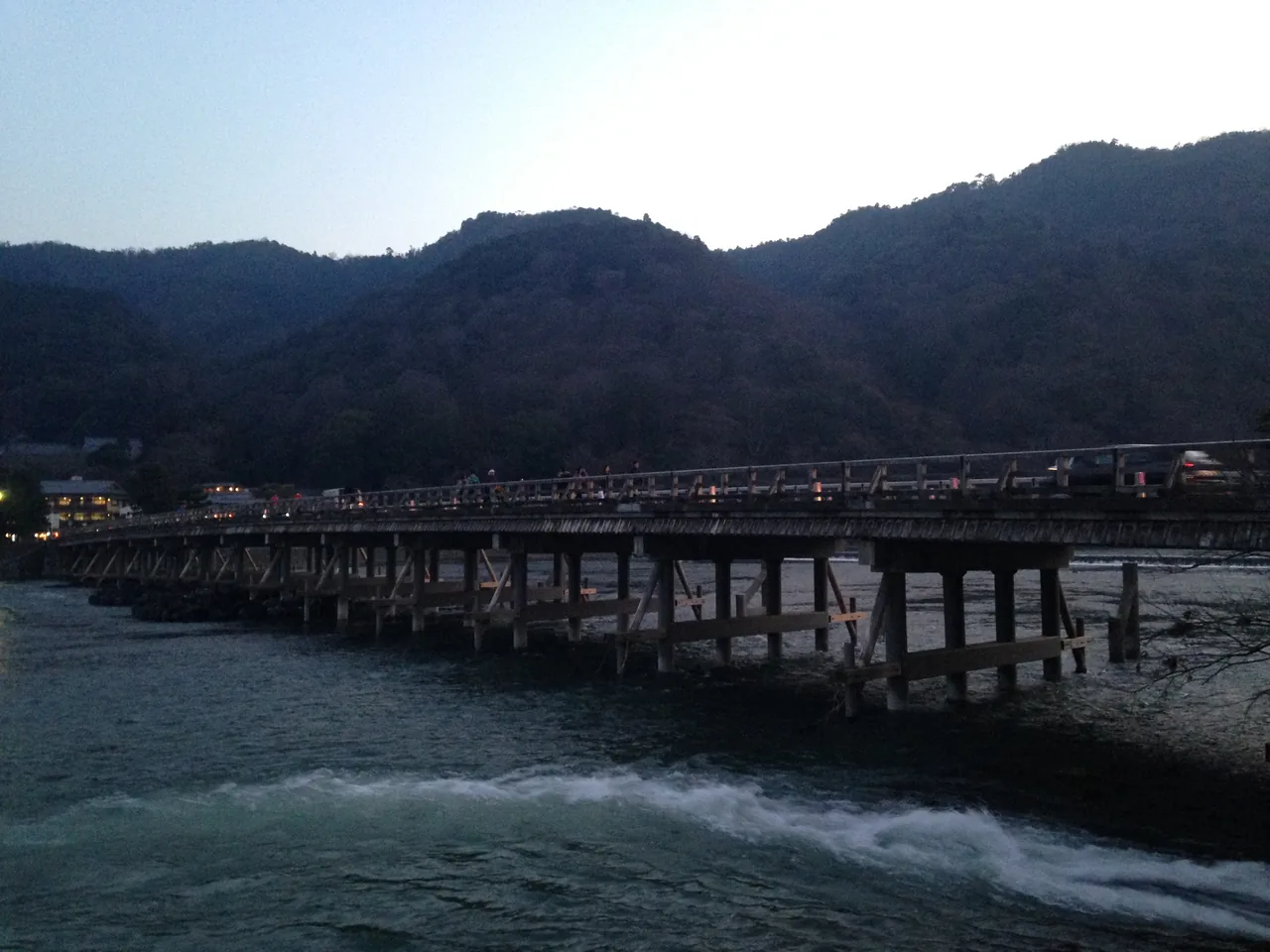
Three different railways serve Arashiyama, and the three stations sit well apart from each other. Measured to the bamboo path, Randen Arashiyama is an 8 minute walk, JR Saga-Arashiyama is 11 minutes, and Hankyu Arashiyama is 20 minutes. The Hankyu station is the odd one out because it sits on the south bank, so you cross Togetsukyo Bridge before you reach the main streets. Map
You do not have to leave from the station you arrived at. All three are within walking distance of each other, so if you end the day up in northern Sagano you can leave by JR, and if you finish near the monkey park you can leave by Hankyu.
| Station | Line | To the bamboo path | Best if you are |
|---|---|---|---|
| Randen Arashiyama | Keifuku Arashiyama Line | 8 min walk | Heading straight for the grove and Tenryu-ji |
| JR Saga-Arashiyama | JR Sagano Line | 11 min walk | Riding the scenic train, or coming from Kyoto Station |
| Hankyu Arashiyama | Hankyu Arashiyama Line | 20 min walk | Starting with the monkey park and the riverbank |
From Kyoto Station the JR Sagano Line is the simplest option. It is a direct ride of about 15 minutes to Saga-Arashiyama, no transfer. If you are staying downtown near Shijo-Kawaramachi, the Randen is easier, running straight through from Shijo-Omiya.
Come by JR if you want the scenic train
Torokko Saga, where the Sagano Scenic Railway starts, sits directly beside JR Saga-Arashiyama. Map If the train is on your list, arriving by JR removes a walk you would otherwise have to make twice.
If you are skipping the train, the JR station is the least convenient of the three. It is 11 minutes to the grove and there is not much to look at on the way.
Hankyu puts you on the other side of the river
Step out of Hankyu Arashiyama and the river and the bridge are right in front of you. Map The monkey park entrance is 7 minutes away, the closest of the three stations, so the natural order becomes riverbank first, then over the bridge to the north side.
It is 1.5 kilometres from there to the bamboo path. With luggage or a tight schedule, pick a different station. Hankyu makes sense mainly if you are coming in from Osaka Umeda by way of Katsura.
2. The bamboo grove is free by day and ticketed on autumn evenings
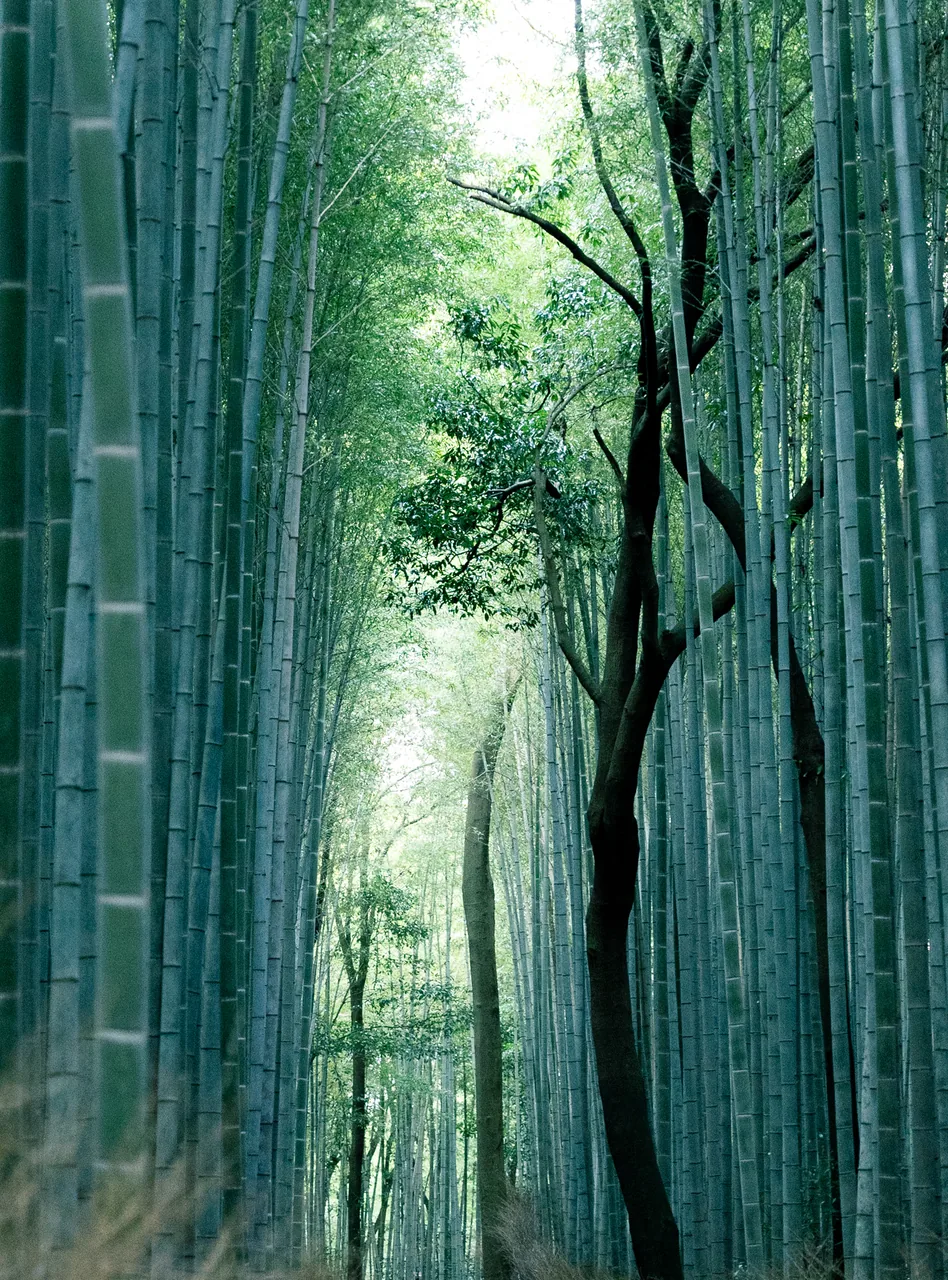
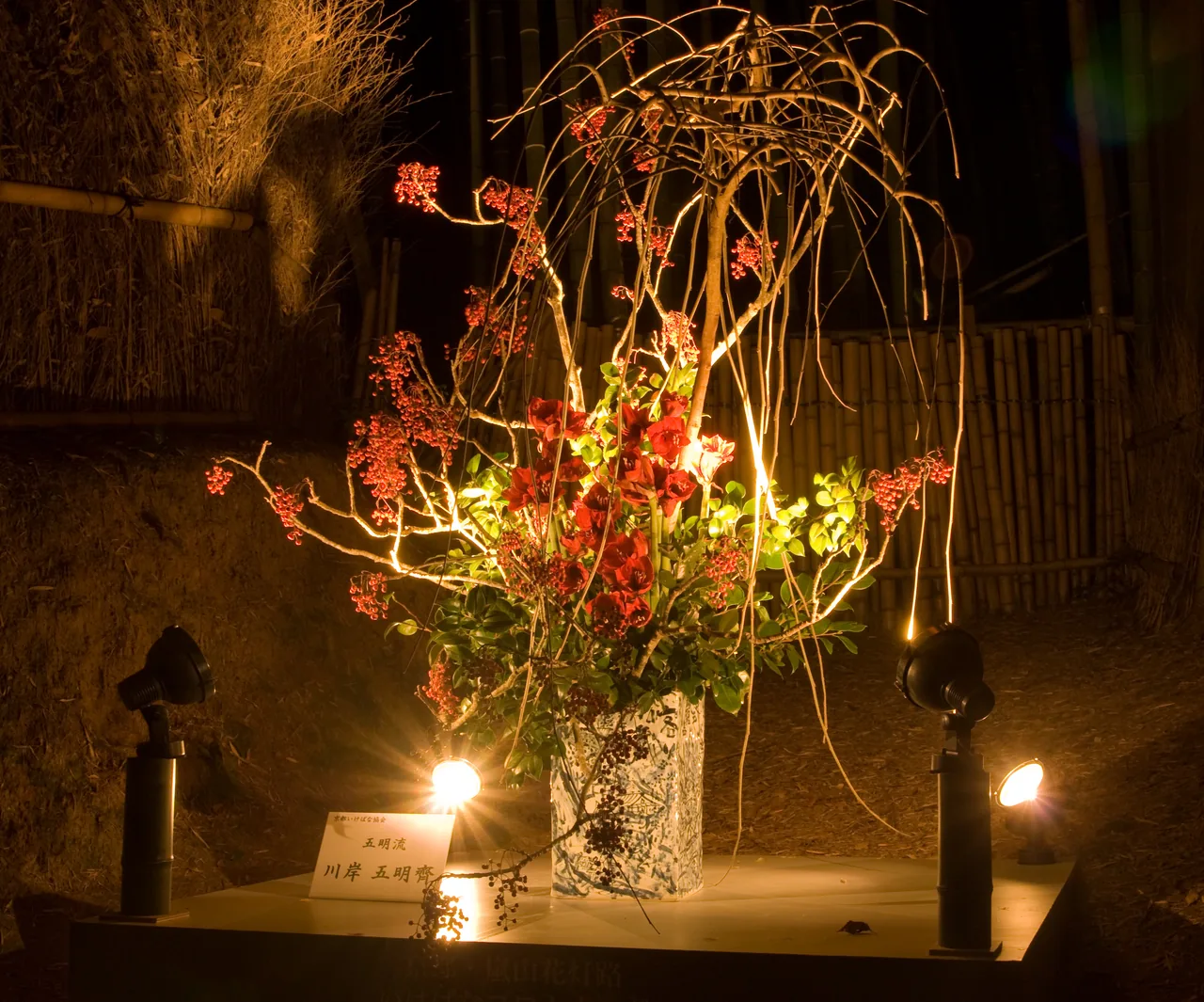
The bamboo path has no gate, no fence and no ticket booth for most of the year. From late September to early November, though, it becomes a paid zone between 6pm and 9pm for a light-up event called Arashiyama Tsukitouro. During those hours you cannot simply walk in. Map
The older Hanatouro event, which ran in December, finished for good several years ago. Plenty of pages still describe it, which is why people turn up in winter expecting lanterns and find an unlit path. The name and the season have both changed.
| Daytime | Autumn evening event | |
|---|---|---|
| Admission | Free | 1,500 yen at the door |
| Hours | No restriction | 18:00 to 21:00, last entry 20:40 |
| Children 12 and under | Free | Free |
| Payment | Not applicable | Cash only |
| Re-entry | Not applicable | Not allowed |
The dates shift a little from year to year. This year the run is from the last day of September to 8 November with no closed days in between. Check the organiser’s page for the current year before you commit an evening to it. Light rain does not stop it, but heavy rain or a weather warning will.
Buying at the gate is the cheaper option
The door price is 1,500 yen and the online advance ticket is 2,000 yen, so advance purchase costs more, not less. What the higher price buys is guaranteed entry, and the only place selling it is a JR Central travel booking service.
The on-site booth sits inside the bamboo path itself and opens at 5:50pm. The organisers say every date sold out last year, so if this evening matters to you, either queue early or take the online ticket. The booth takes cash and nothing else.
One ticket means one entry for that evening. You cannot step out for dinner and come back, so eat before you go in or after you come out.
Tripods and food stay outside
Tripods are not allowed inside the paid area. Neither are drones, live streaming, or costume dress. Eating and drinking inside the zone is also off the list.
Strollers and wheelchairs are allowed as a rule. The organisers do flag that the second venue has stretches of uneven ground, so factor that in.
For a quiet walk, come before 8am
The path fills up badly during the day. Before 8am, ahead of the tour groups, is the only reliably quiet window. The walk itself covers about 400 metres and takes 15 minutes even at a slow pace.
The north gate of Tenryu-ji opens directly onto it. Doing the temple first and slipping out through that gate means you never walk the same stretch twice.
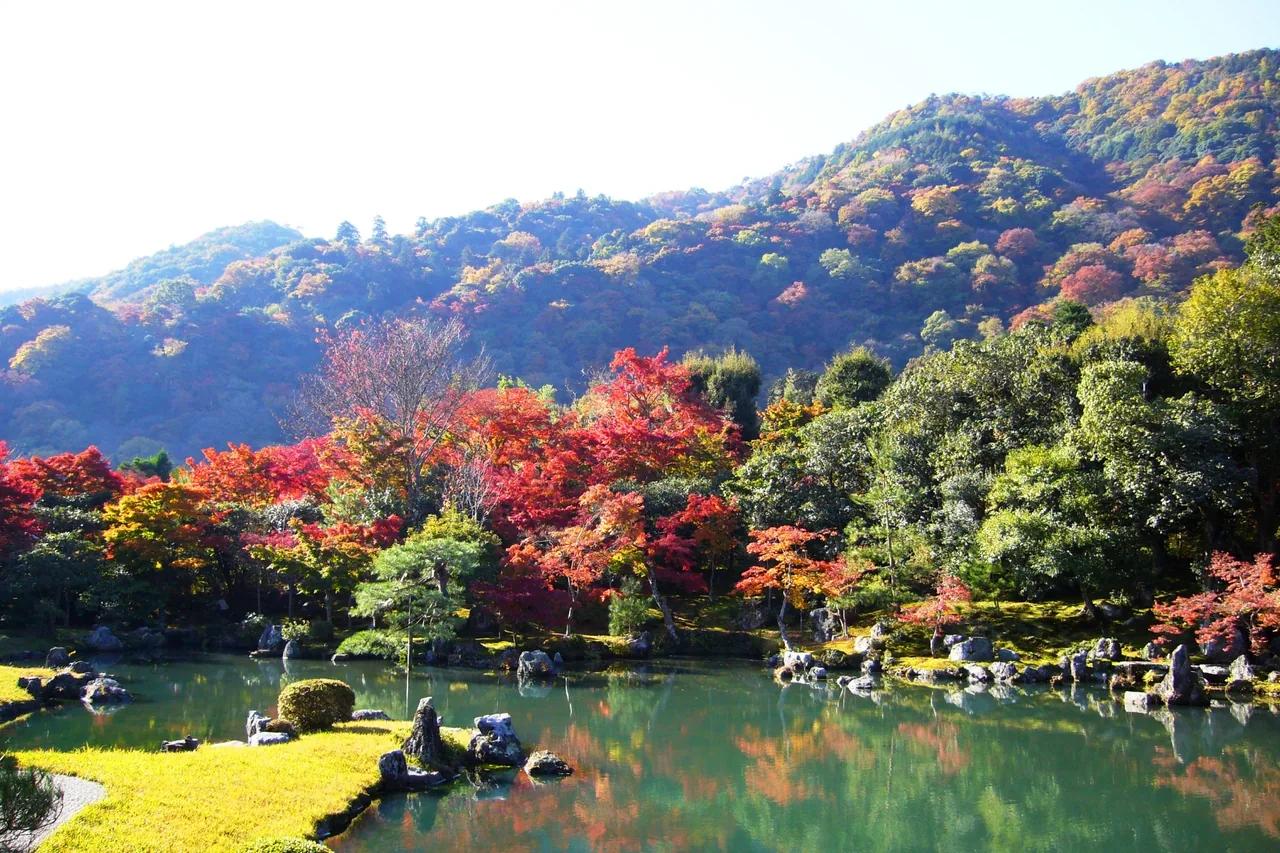
3. Tenryu-ji opens its ceiling dragon on selected days only
The painting of a dragon on the ceiling of the Dharma Hall is what most visitors come to Tenryu-ji to see, and it is open on Saturdays, Sundays and public holidays. Turn up on an ordinary weekday and you get the garden and the buildings but not the dragon. Map
Spring and autumn are the exceptions. From early March to the end of May, and again from the middle of September to early December, it opens daily. In high summer the viewing window shrinks to 9am until 1pm.
| What you see | Hours | Price |
|---|---|---|
| Garden | 8:30 to 17:00, last entry 16:50 | 500 yen, high school and up |
| Temple buildings | 8:30 to 16:45 | 300 yen on top of the garden |
| Dharma Hall dragon | 9:00 to 16:30 | 500 yen, separate |
All three are priced separately. You can do the garden alone, add the buildings, or take all three. On a half day visit the garden by itself is enough.
In peak autumn it opens at 7:30am
From the middle of November to the end of the month, garden admission starts at 7:30am, an hour earlier than usual. If you are in Arashiyama during those weeks, making Tenryu-ji your first stop at opening time is the surest way to get ahead of the crowds.
Only the garden opens early. The buildings and the dragon keep their normal hours, so if you want the dragon too, walk the garden first and wait for 8:30.
The garden borrows the mountain behind it
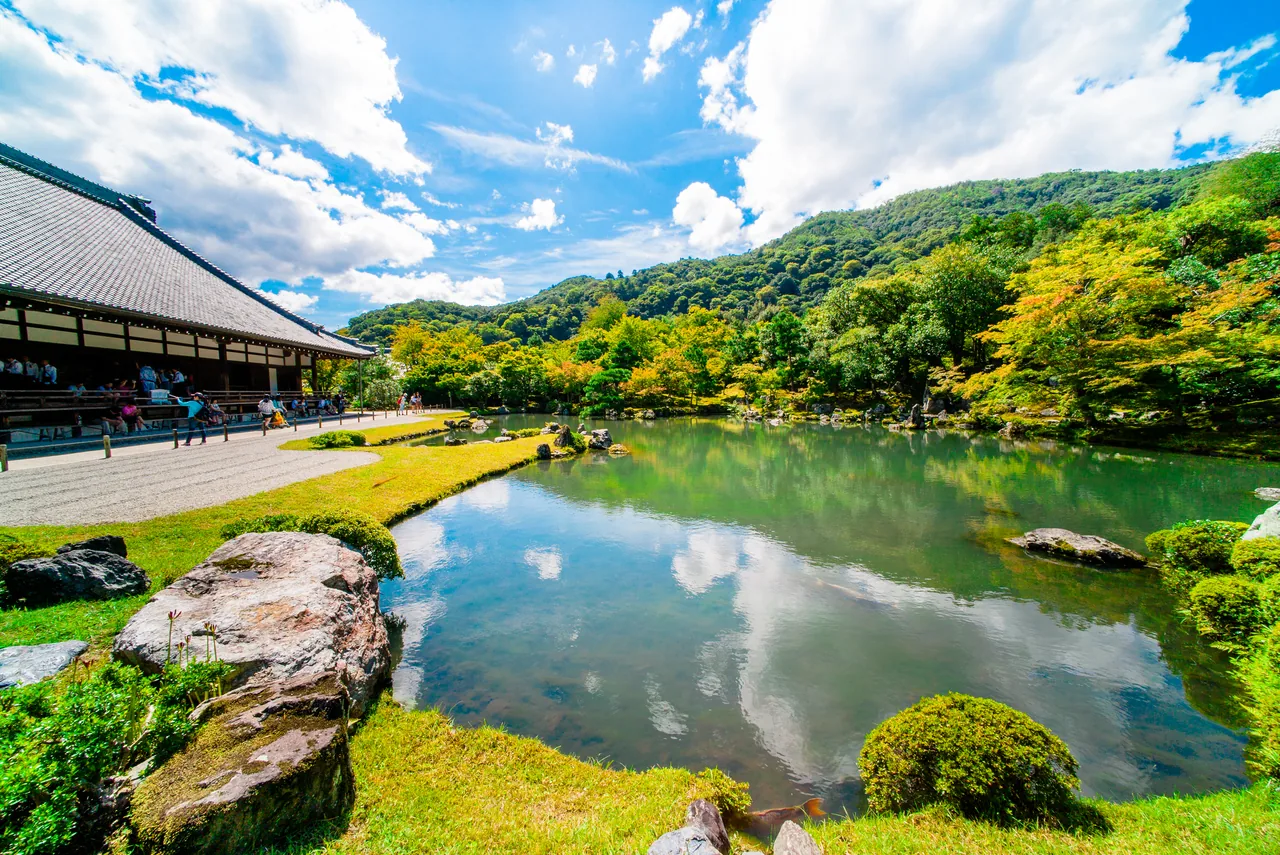
Tenryu-ji’s garden is laid out so the mountain behind the pond reads as part of the view. There is no wall closing it off, which is why the garden looks considerably larger from a seated position than its actual size. It is a UNESCO World Heritage site.
Hogon-in next door is also known for its garden, but it only admits visitors during its special opening periods in spring and autumn. Outside those windows you cannot get in at all, so check before you walk over.
Do Tenryu-ji, leave by the north gate, and the bamboo path starts immediately. Do it the other way round and you walk the same ground twice.
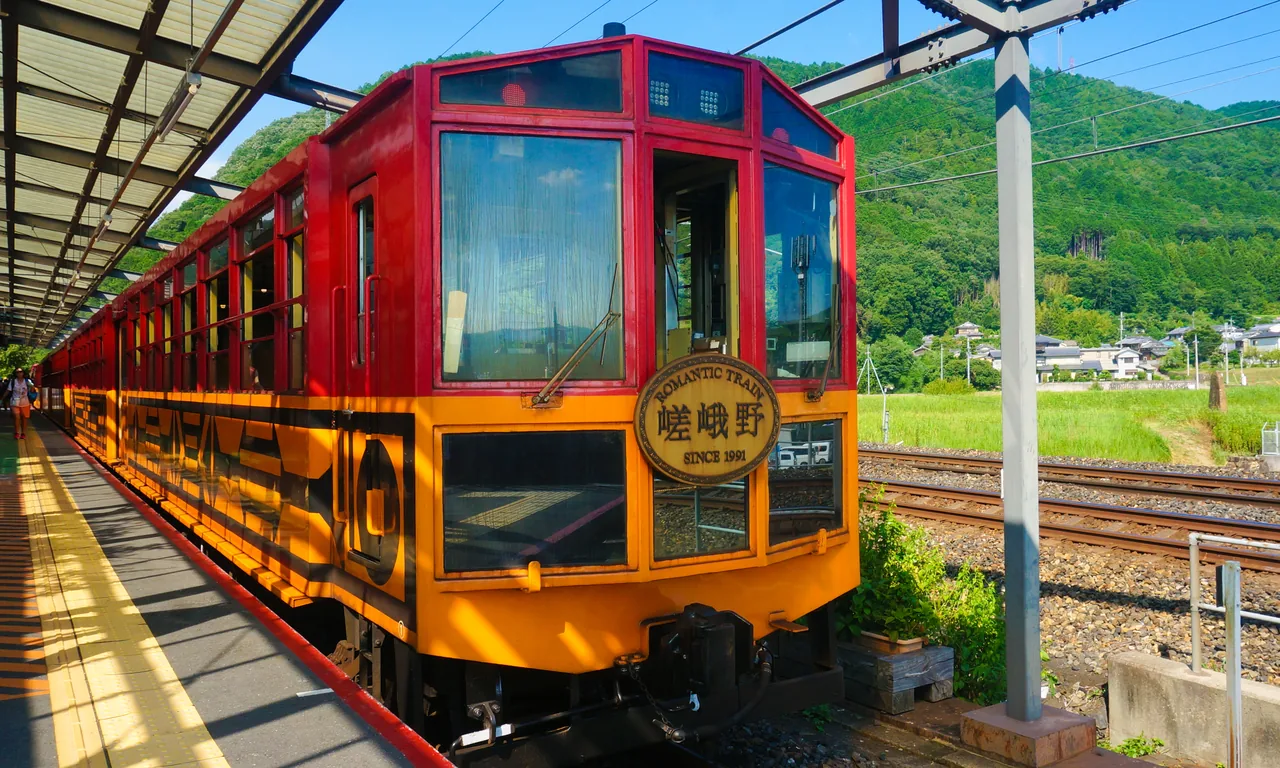
4. The Sagano train rests on Wednesdays, but not on every Wednesday
The Sagano Scenic Railway does close on Wednesdays, though only on some of them. The operator’s published calendar for this year lists 24 closed days, all Wednesdays, against 43 Wednesdays in the operating season. So the train runs on nearly half of them. Map
November is the clearest case: it runs every single day, Wednesdays included. Peak autumn colour means no rest days at all. Early April, the spring holiday week, the summer peak and late October follow the same pattern. Planning around a blanket “closed Wednesdays” rule means giving up good dates for no reason.
| Period | Wednesday service |
|---|---|
| January and February | Closed entirely |
| March to October | Most Wednesdays closed, holidays and peak weeks running |
| November | Runs every day |
| December | One Wednesday closed |
The booking site shows the status of any given date the moment you select it. Do not write off a Wednesday before you check it.
It does not run at all in January or February
The line shuts for two full months. There is no service from 1 January to the end of February, and 30 and 31 December are closed as well. This is the single most common wasted trip for winter visitors to Arashiyama.
The river boat does keep running through that period. If the gorge is what you came for in winter, book the boat instead of the train.
Saga to Kameoka takes 23 minutes
There are 16 scheduled departures a day. Trains heading out from Saga leave at 2 minutes past each hour, and the return trains leave Kameoka at half past. The first departure is 9:02am and the last return is 4:30pm.
The ride from Saga to Kameoka takes 23 minutes, stopping at Arashiyama and Hozukyo along the way. In peak weeks two extra evening services are added, one leaving at 5:10pm and one returning at 5:43pm.
Torokko Kameoka is not JR Kameoka. The nearest JR station is Umahori, a 10 minute walk away. If your plan involves stepping off the scenic train and onto a JR service, remember this one.
5. Book the scenic train ahead, and check which car you are in
A one way ticket costs 880 yen for adults and 440 yen for children. The fare is flat regardless of which stations you use, which is why most people simply ride the full length from Saga to Kameoka.
Reservations go through the operator’s official booking site, up to 8 people at a time, and the ticket arrives as a QR code on your phone. A sold-out screen online is not the end of it, because each station window releases a same-day allocation on a first-come basis. Hozukyo station is the exception and sells nothing.
| Category | Age | One way |
|---|---|---|
| Adult | 12 and over | 880 yen |
| Child | 6 to 11 | 440 yen |
| Infant | 1 to 5 | One free per paying adult |
One infant travels free per adult ticket, but pays the child fare if they occupy a seat of their own. From the second infant onwards, the child fare applies.
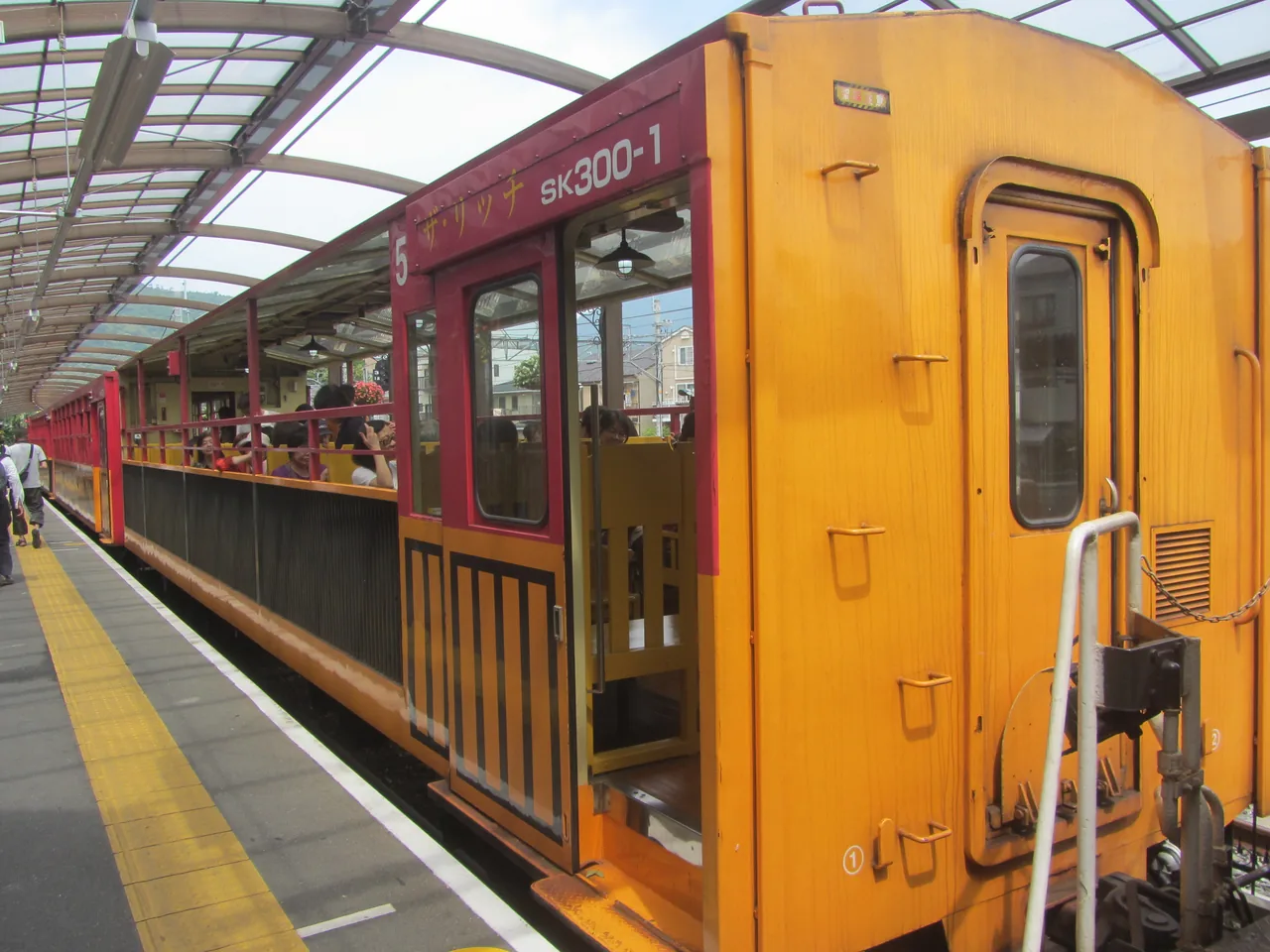
Car 5 has no windows
The train runs five cars. Cars 1 to 4 are ordinary carriages, while car 5 has no window glass at all and a roof made of glass. Wind and sound come straight in, which is exactly why it is the one people ask for.
The problem is rain. The operator states plainly that passengers get wet, and umbrellas cannot be opened on board. If rain is forecast and you are booked into car 5, bring a rain jacket.
Car 5 is never assigned automatically. You have to request it when booking online or at the window.
Buy one way and plan your return separately
Because tickets are one way, a return booking means seeing the same gorge twice. The usual pairing is the train up to Kameoka and the river boat back down. If the boat is not for you, transfer to JR at Umahori and head straight back into Kyoto.
To return by train, take one of the half-past services from Kameoka. The last one leaves at 4:30pm, so do not plan a long stop at the Kameoka end.
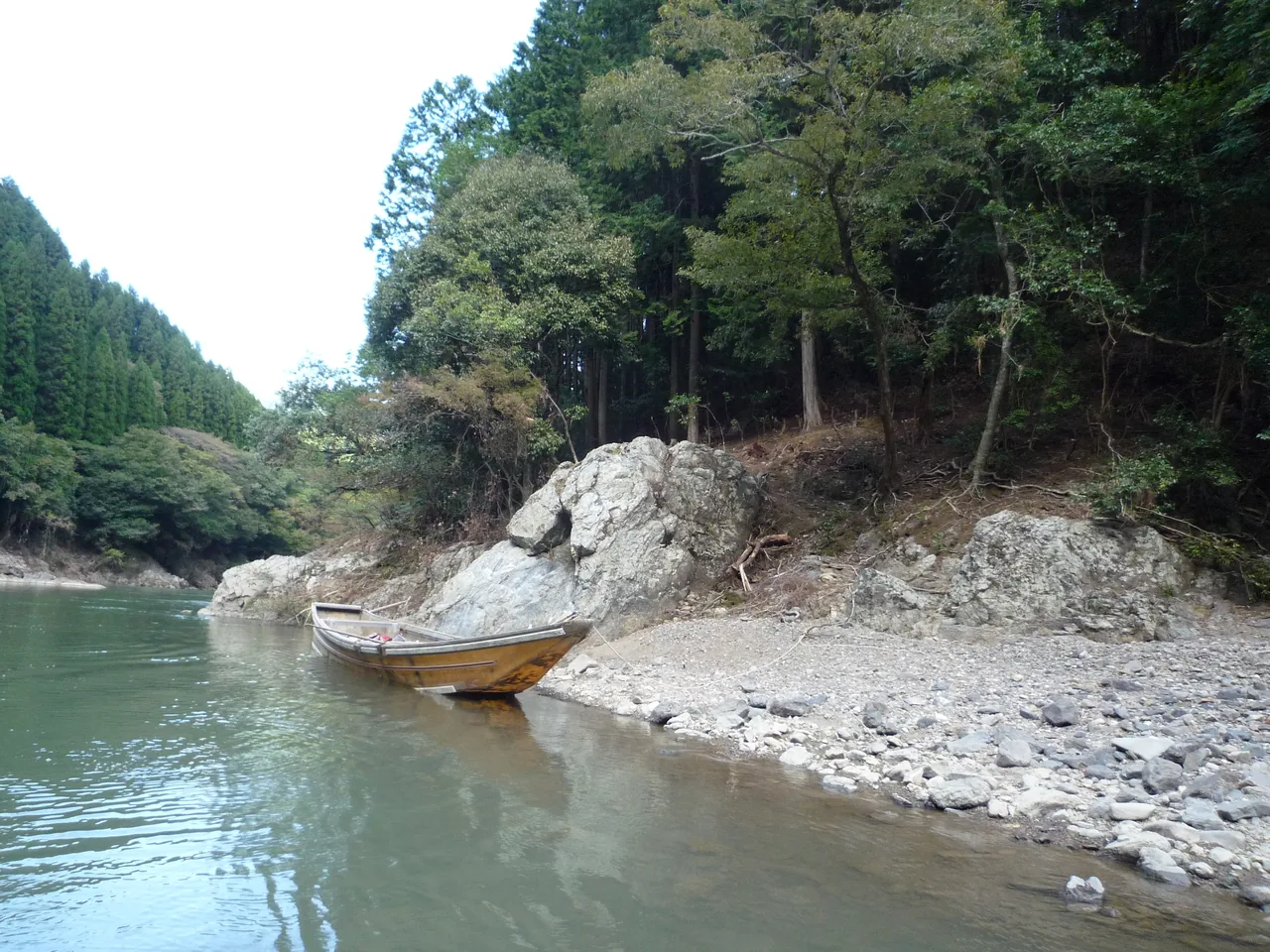
6. The Hozugawa boat departs from Kameoka, not from Arashiyama
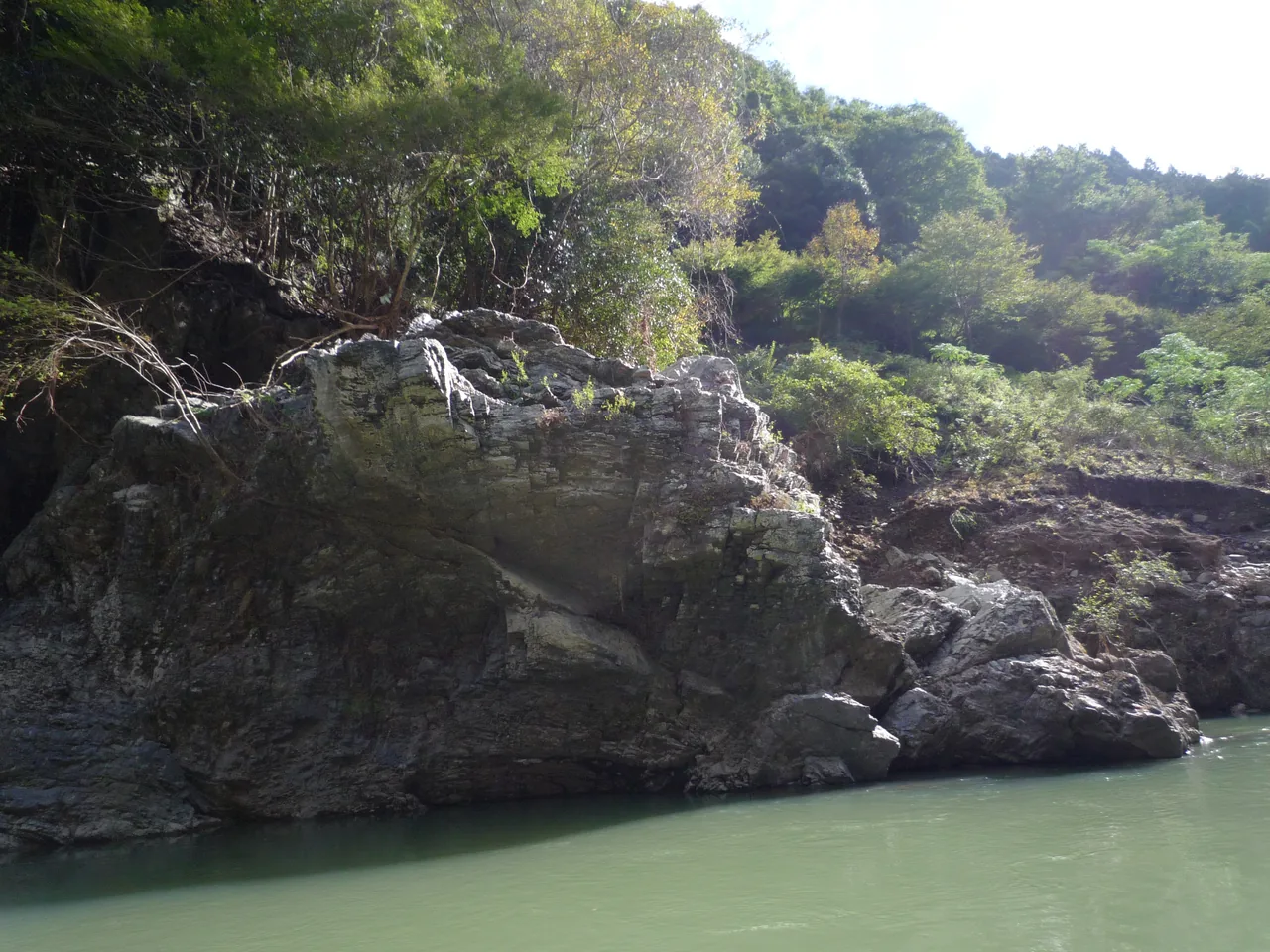
The river boat does not start in Arashiyama. It boards upstream at Kameoka and works its way down the gorge, finishing at the Arashiyama riverbank. Waiting by the bridge for a boat to pick you up is a wasted morning. Map
The run covers about 16 kilometres and takes roughly two hours. Adults pay 6,000 yen and children 4,500 yen, with the child fare covering everyone from toddlers through elementary school.
| Season | Operating hours | Departures |
|---|---|---|
| Spring to early winter | 9:00 to 15:00 | Hourly on weekdays; when full at weekends |
| Winter | 10:00 to 14:30 | Four a day |
Weekdays run to a fixed hourly timetable. On Saturdays, Sundays and public holidays there is no timetable at all: boats leave as soon as they fill. That makes weekend waits hard to predict, so leave slack in the plan.
Winter boats are covered and heated
From December to March the open boat is replaced by a covered, heated one with floor seating. The fare does not change. Since the scenic train is shut for two of those months, the boat is the way to see the gorge in deep winter.
The operator closes for New Year, from 29 December to 4 January, and takes two safety inspection days in February and one in September.
You land just upstream of the bridge
Two hours later the boat pulls in at the Arashiyama riverbank, a short way upstream of Togetsukyo. Both the bridge and the monkey park entrance are close by, so a morning boat leaves the entire afternoon free in Arashiyama.
On the open boats you will get splashed, particularly in the front rows. Ask for a seat further back if staying dry matters.
7. Linking the train and the boat means one more bus ride
Riding the scenic train up to Kameoka and floating back down on the boat is the standard pairing, and the two do not connect directly. A shuttle bus covers the gap between Torokko Kameoka station and the boat pier, and it takes about 10 minutes. Map
The bus leaves at 35 minutes past the hour. Since the returning trains depart Kameoka at half past, the timing works out without much thought once you are on the ground.
The bus operator spells this out: when either the scenic train or the river boat suspends service, every shuttle run is cancelled with it. Worth checking before you build a Wednesday or a winter day around this pairing.
Start in the morning if you want both
Twenty-three minutes on the train, ten on the bus, two hours on the water, plus waiting time at each handover. That is a half day gone. A 9am or 10am train puts you back in Arashiyama around lunchtime with the afternoon free for the temples and the grove.
Start after lunch and you will step off the boat to find the temples closed. Most of them stop admitting visitors between 4:30pm and 5pm.
If the boat is full, ride the train back
Boats have a fixed capacity and peak weekends mean long waits. If you cannot get on, simply take a return train from Kameoka. The rail journey itself follows the gorge, so a round trip is not a consolation prize.
The boat operator also points out that a sold-out train does not stop you boarding the boat. Treat them as two separate bookings and take whichever one you can get.
8. The monkey park takes cash only and involves a 20 minute climb
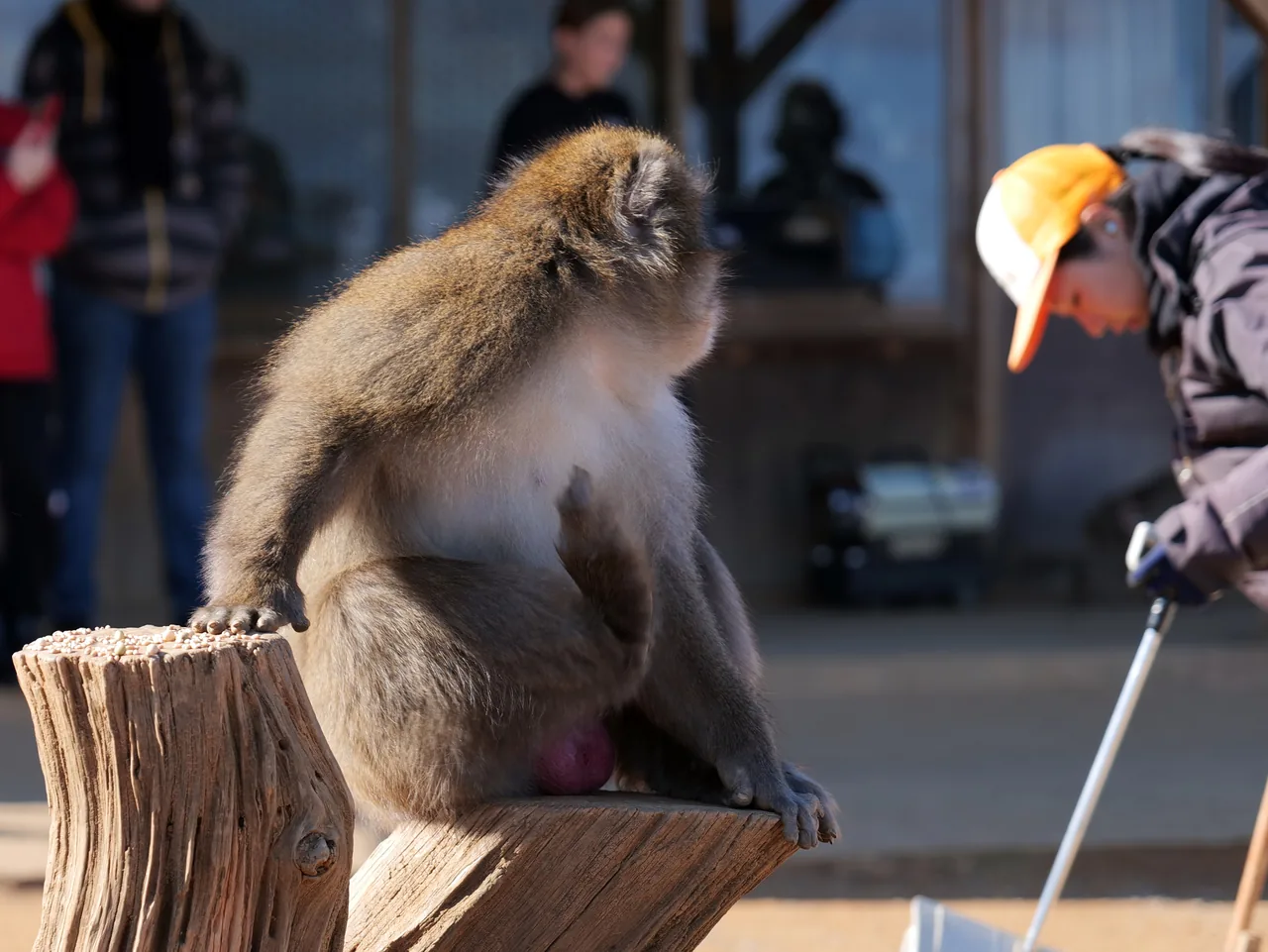
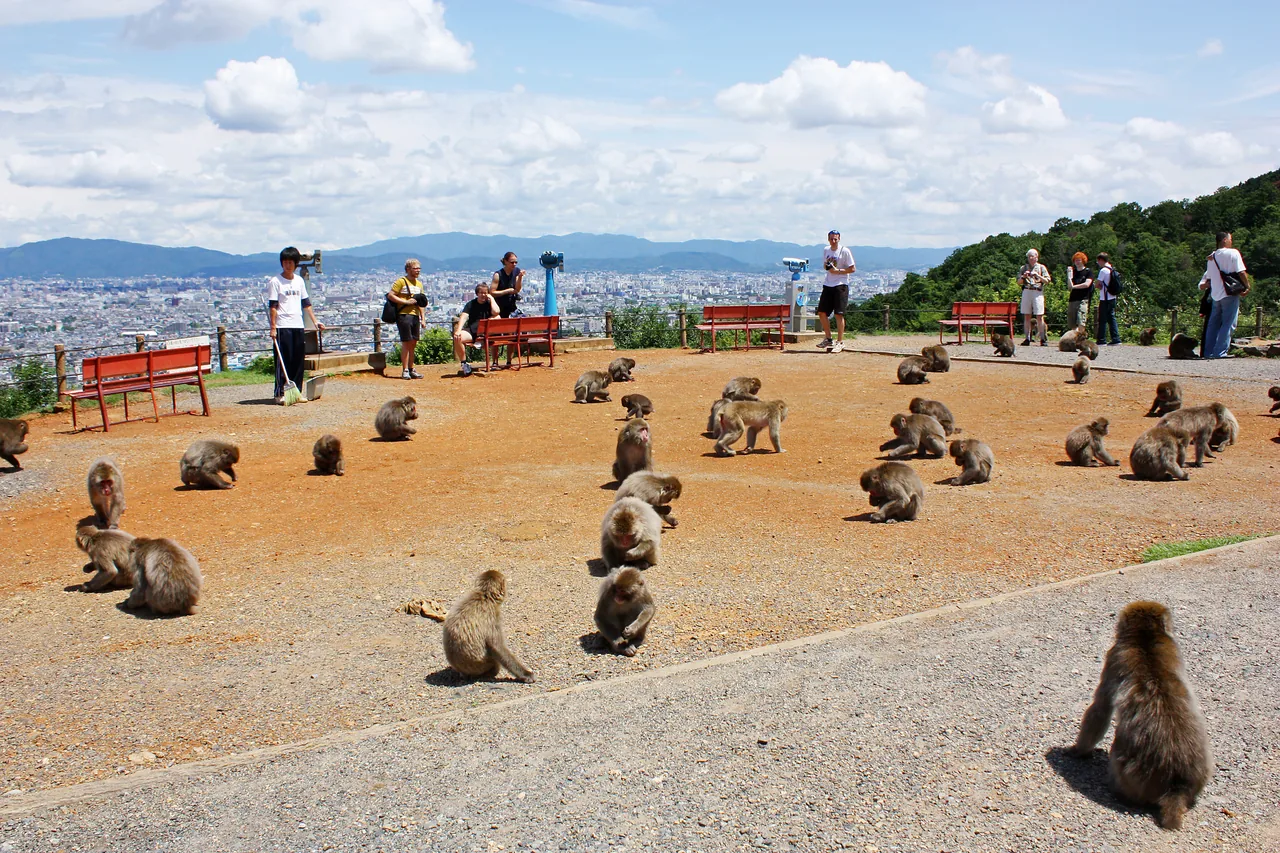
Iwatayama Monkey Park sits on top of a hill, so the ticket booth and the monkeys are about 20 minutes of uphill path apart. It asks more of your legs than most visitors expect from a city attraction. Wear shoes you can walk in. Map
The entrance is easy to miss. From the south end of Togetsukyo, follow the river upstream for roughly 20 metres to Ichitani Munakata Shrine; the ticket window is inside the shrine grounds on the left.
| Category | Age | Price |
|---|---|---|
| Adult | 16 and over | 800 yen |
| Child | 4 to 15 | 400 yen |
| Infant | 3 and under | Free |
Note where the age line falls. Anyone up to 15 pays the child rate here, which is unusual; most Japanese attractions switch to the adult price at 12. For a family of teenagers that difference is worth knowing in advance.
Cards are not accepted
No credit cards, no IC cards, no e-money. Cash only. Cash-only attractions have become rare enough in Japan that people arrive without any and have to walk back down. Check your wallet before you start climbing.
The park also posts its own warning that prices listed anywhere other than its official site may be wrong, and asks visitors to treat its page as the authority. Third party listings genuinely do disagree with each other on this one.
It closes early when the monkeys leave
Opening is 9am and closing is 4pm, with the summit accessible until 4:30pm. The park states that when the monkeys head back up the mountain, it closes earlier than the posted time.
Heavy rain, heavy snow and typhoons also close it, and it does not open on 1 January. Do not build a bad-weather day around this one.
There is nowhere to park
The park has no car park of its own. You use one of the paid lots nearby, and if you choose the one in front of Hankyu Arashiyama station and show the receipt at the entrance, the park refunds 200 yen of the 1,000 yen parking charge.
Other car parks and coin lots do not qualify, and neither does entry on a complimentary ticket. Arashiyama’s streets are narrow and jam badly at weekends, so the train is the better call regardless.
9. Togetsukyo only reaches the island in the middle of the river
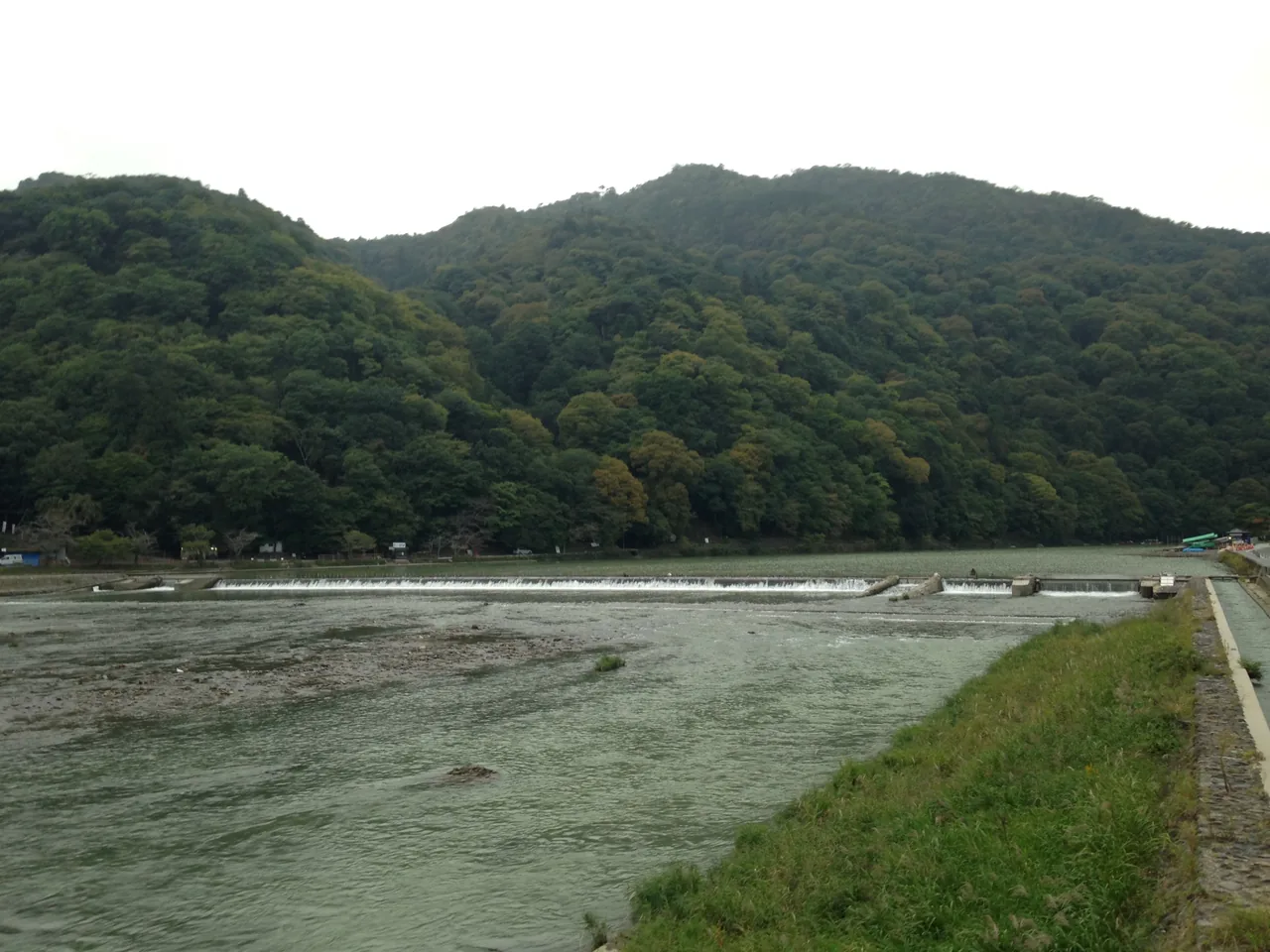
Crossing Togetsukyo does not put you on the far bank. The bridge runs from the north shore to Nakanoshima, an island in the middle of the river, and a second smaller bridge carries you the rest of the way south. That is why arrivals from the Hankyu side cross water twice. Map
It is 155 metres long and carries two lanes of traffic, with raised stone pavements on both sides. Walking it is pleasant enough, though at busy hours the pavements are shoulder to shoulder. The current structure dates from the 1930s and the railings that look like timber are actually concrete.
The bridge photographs better from the bank
Standing on the bridge, you cannot see the bridge. For the classic shot with the mountain behind it, drop down to the riverbank on the north side or walk out into Nakanoshima park.
From the top of the monkey park hill on the other side you get the bridge and the town together in one frame. You have to climb for 20 minutes to get it, and plenty of people think the view alone is worth the ticket.
Walking the bank is a legitimate plan
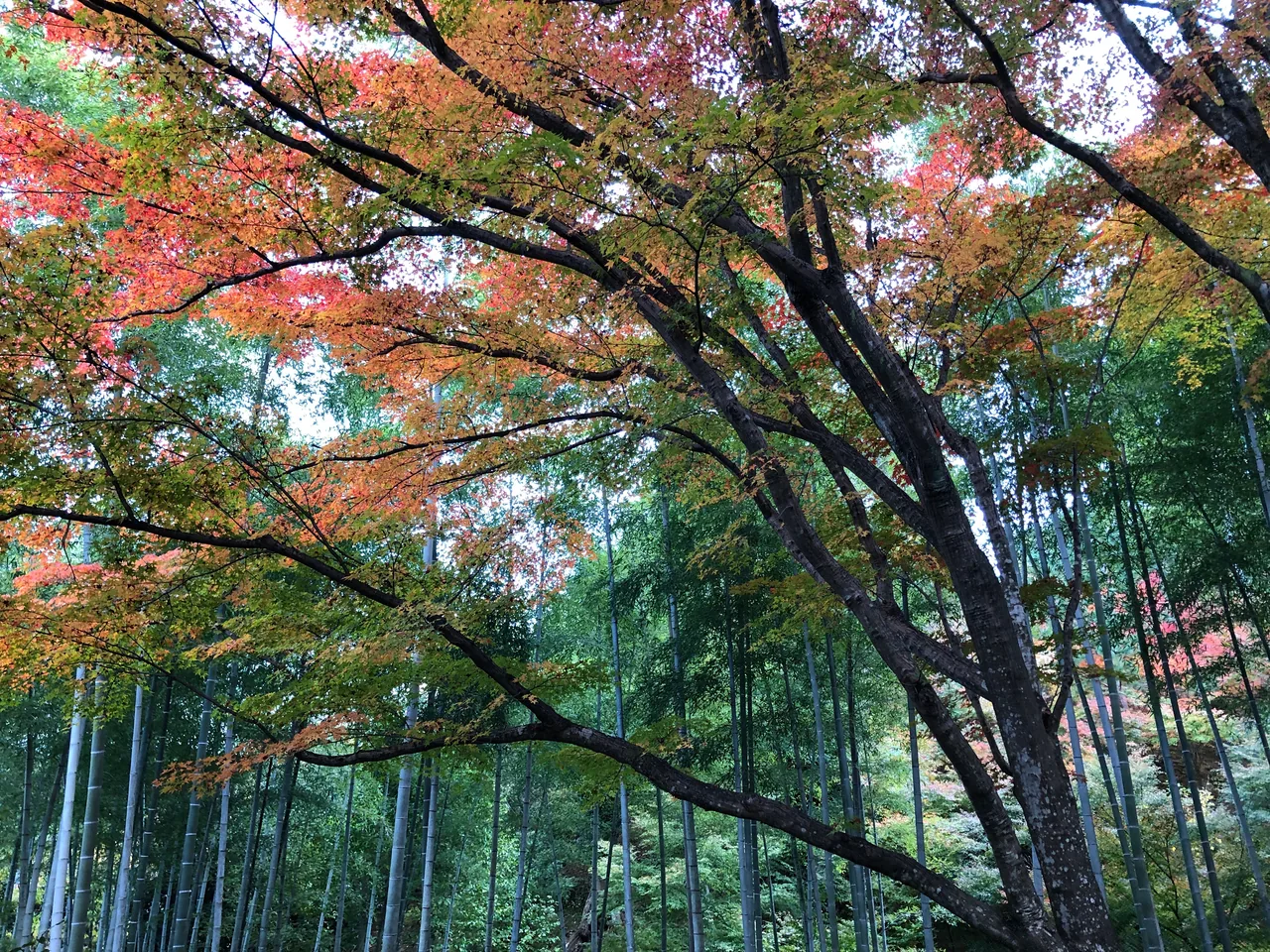
Head upstream along the north bank and you pass the boat landing, after which the crowds thin out sharply. Half an hour of walking with no admission fees anywhere is a perfectly good way to experience Arashiyama.
Spring and autumn are the obvious windows. Our guides to Japan’s cherry blossom season and autumn colour timing track the dates each year.
10. North of the grove, Sagano is where the quiet temples are
Most people stop walking where the bamboo path ends. Carry on north for another 15 minutes and you reach Sagano, where the crowds drop away noticeably. If you want a quiet hour in Arashiyama, this is the direction. Map
Several temples sit within walking distance of each other here, and they are not variations on the same thing.
| Temple | What it is | Hours |
|---|---|---|
| Okochi Sanso | A hillside villa garden built over 30 years by a film actor; matcha and a sweet included | 9:00 to 17:00 |
| Jojakko-ji | A climb through maples, best known for autumn colour | 9:00 to 17:00 |
| Gio-ji | Small, quiet, and carpeted in moss | 9:00 to 16:30 |
| Daikaku-ji | A former imperial villa with a large pond | 9:00 to 17:00 |
Okochi Sanso at 1,000 yen is the priciest here, and the fee includes a bowl of matcha and a sweet, which makes it a place to sit rather than pass through. Gio-ji is 500 yen with a 100 yen rate for school-age children, and Jojakko-ji is 600 yen. Map
Gio-ji and Daikaku-ji sell a combined adult ticket at 1,000 yen. It does not cover Daikaku-ji’s pond area, which is charged separately, so the combination only pays off if you genuinely intend to see both.
Okochi Sanso sits right at the end of the grove
It picks up where the bamboo path finishes, so you walk into it rather than going looking for it. No detour involved.
The garden is large and climbs and falls enough that a full circuit takes around 40 minutes, with a point near the top where the city opens out below you. Map
Further up is Saga Toriimoto
At the northern edge of Sagano there is a preserved street with thatched roofs and only a handful of shops. On foot it is a good half hour beyond the bamboo path.
If you intend to get this far, finish the grove in the morning and work north. Coming back, drop down towards JR Saga-Arashiyama rather than retracing the whole walk.
11. Randen Arashiyama station has a foot bath on the platform
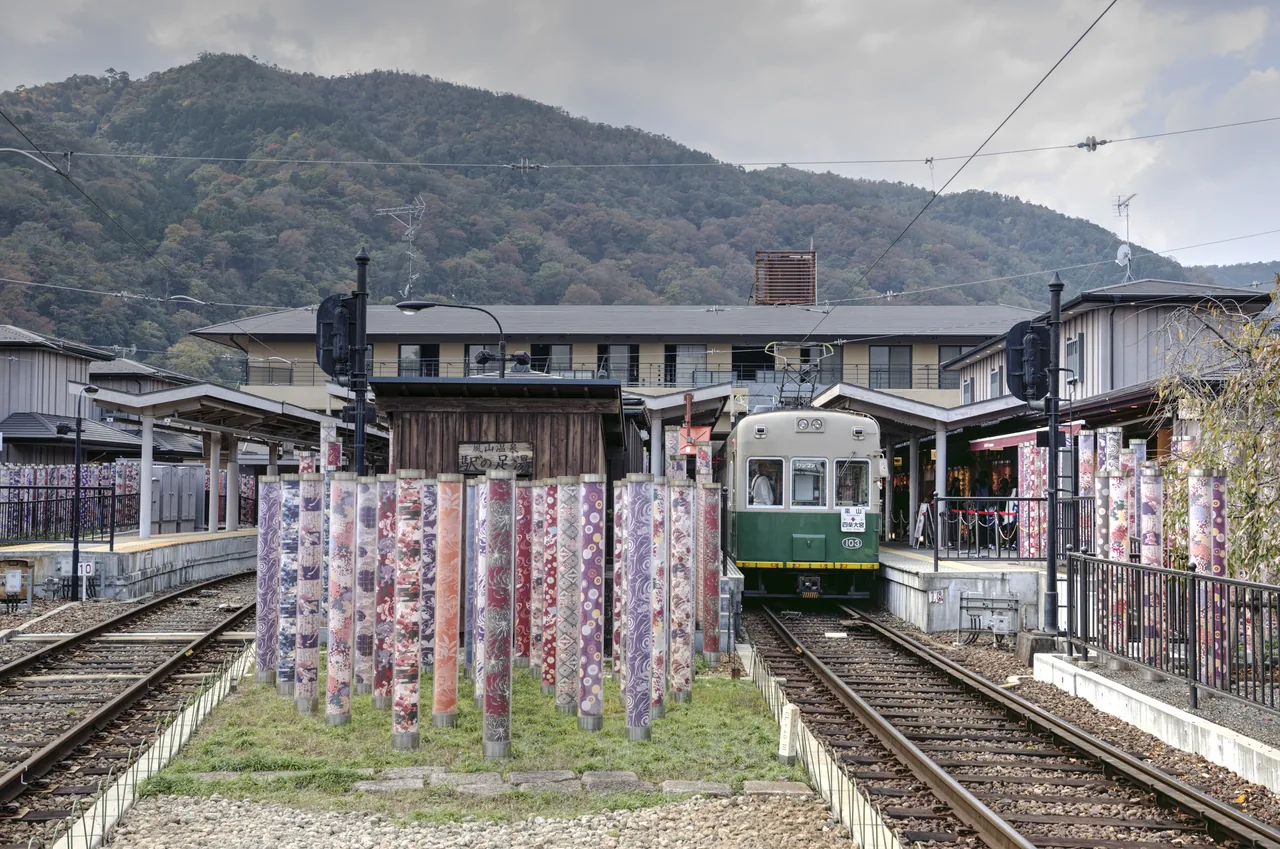
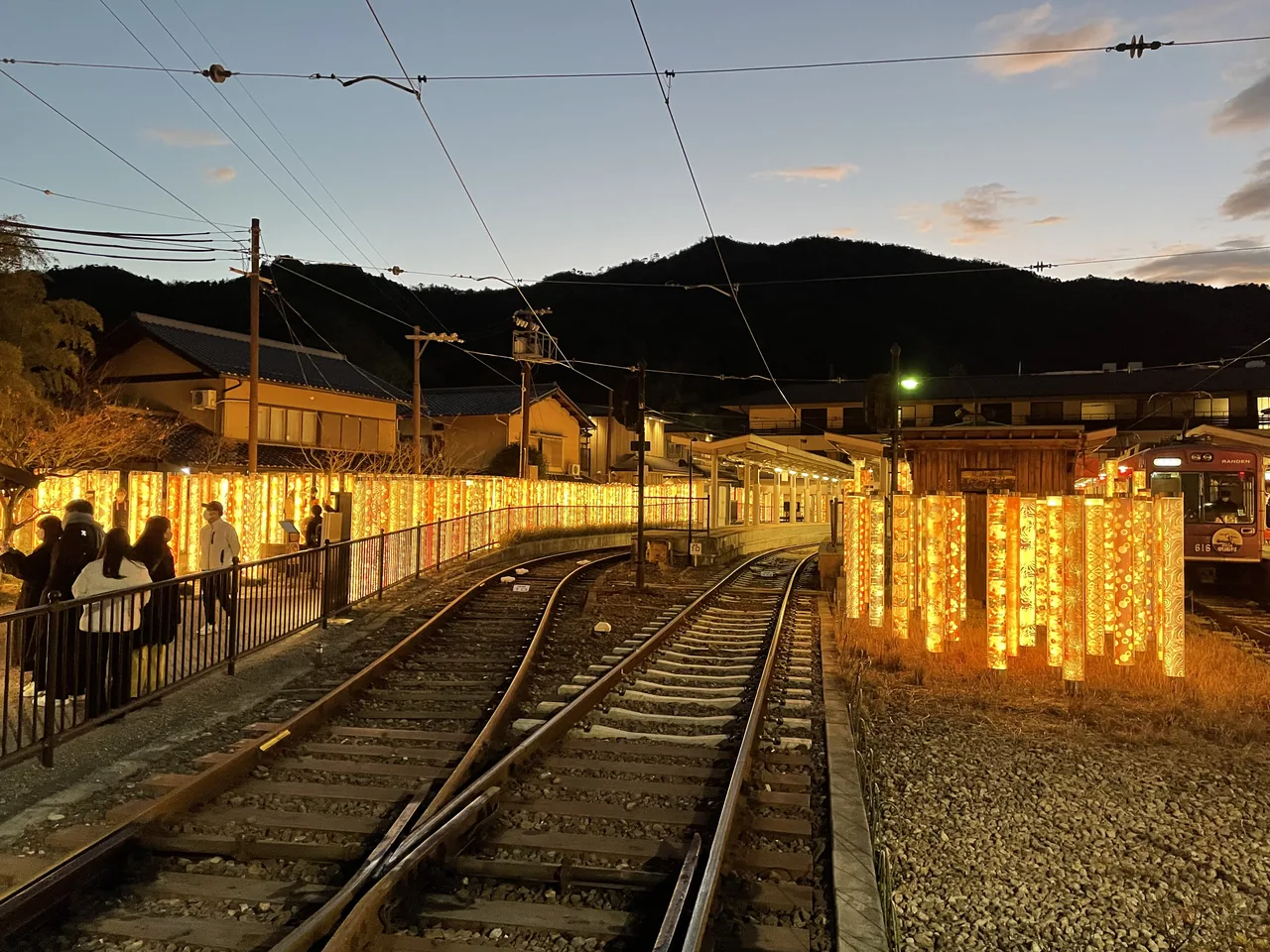
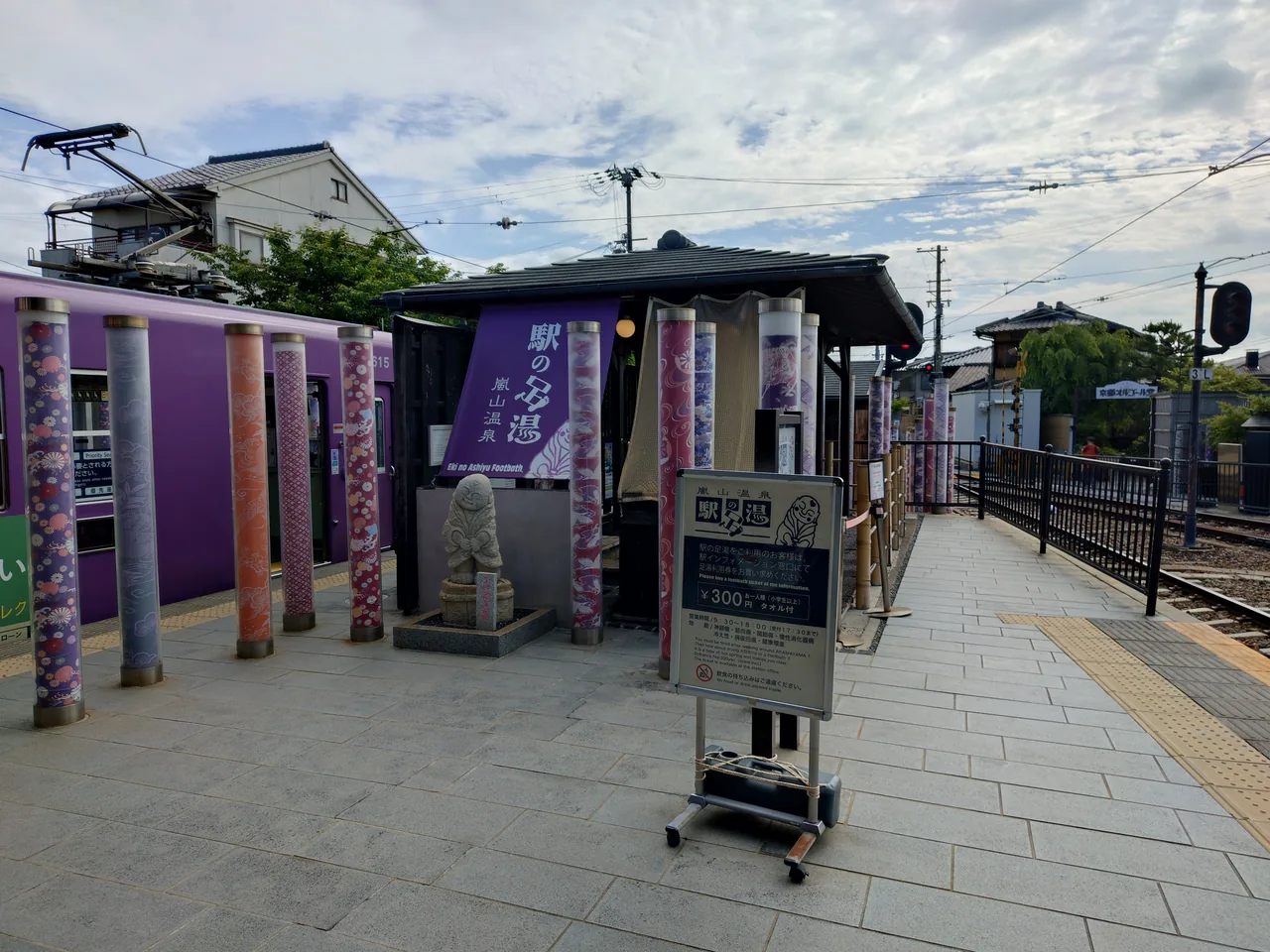
Randen Arashiyama is worth stopping in rather than passing through. Six hundred fabric-wrapped pillars stand around the platform and light up in the evening, and the station concourse is packed with cut bamboo. You do not need a ticket to walk in and look.
On the same platform there is a foot bath. Map It costs 250 yen and comes with a towel, and you pick up the voucher at the station information desk. The water is drawn from the local Arashiyama hot spring.
| What | Price | Notes |
|---|---|---|
| Pillar light-up | Free | Lit in the evening |
| Foot bath | 250 yen | Towel included, desk closes at 5:30pm |
| Bicycle hire | From 600 yen for 2 hours | Comes with a foot bath voucher |
Hiring a bicycle includes the foot bath voucher. A full day is 1,100 yen and an electric bike is 1,600 yen. If northern Sagano is on your list, the bicycle is a much better proposition than walking it.
This light-up is not the bamboo grove one
The station pillars are lit every evening and have nothing to do with the autumn event. The bamboo grove light-up runs for a few weeks and needs a ticket; the station is free and always on.
If you are still in Arashiyama after dark, this makes a sensible last stop. You board a train from the same platform and head straight back into the city.
12. Work out the transport tickets before you buy anything
The Randen charges a flat 250 yen wherever you get on and off. Children pay 120 yen. Distance makes no difference, so the maths is simple: the 700 yen day pass pays for itself on the third ride.
One thing to watch. Kyoto’s widely sold 1,100 yen subway and bus day pass does not cover some of the lines out here. If Arashiyama is the centre of your day, look at a different ticket.
| Ticket | Price | Covers |
|---|---|---|
| Randen single | 250 yen | Any distance, same price |
| Randen day pass | 700 yen | The whole Randen network |
| Subway and Randen day pass | 1,300 yen | All Kyoto subway lines plus the Randen |
The day pass is sold at four station windows only: Shijo-Omiya, Katabiranotsuji, Arashiyama and Kitano-Hakubaicho. No other station stocks it, so buy it when you arrive at Arashiyama or pick it up at your departure station.
On the Randen you pay when you get off
Board through either door and do not tap your IC card on the way in. You pay on the way out: at a ticket gate if you leave from one of those four stations, and into a farebox beside the driver everywhere else.
Cash works, and so do the nationwide IC cards. Our guide to Japanese IC cards covers which one to get and where it works.
From Kyoto Station, JR is the simple answer
Kyoto Station to Saga-Arashiyama takes a little over 15 minutes and costs around 240 yen, with no transfer. If you are covering the wider region, our Kansai transport pass comparison works through which pass actually pays off.
Buses also go, but they take 40 to 55 minutes and longer in traffic. If time is the constraint, take the train.
13. Check the city’s own crowd forecast before you pick a time
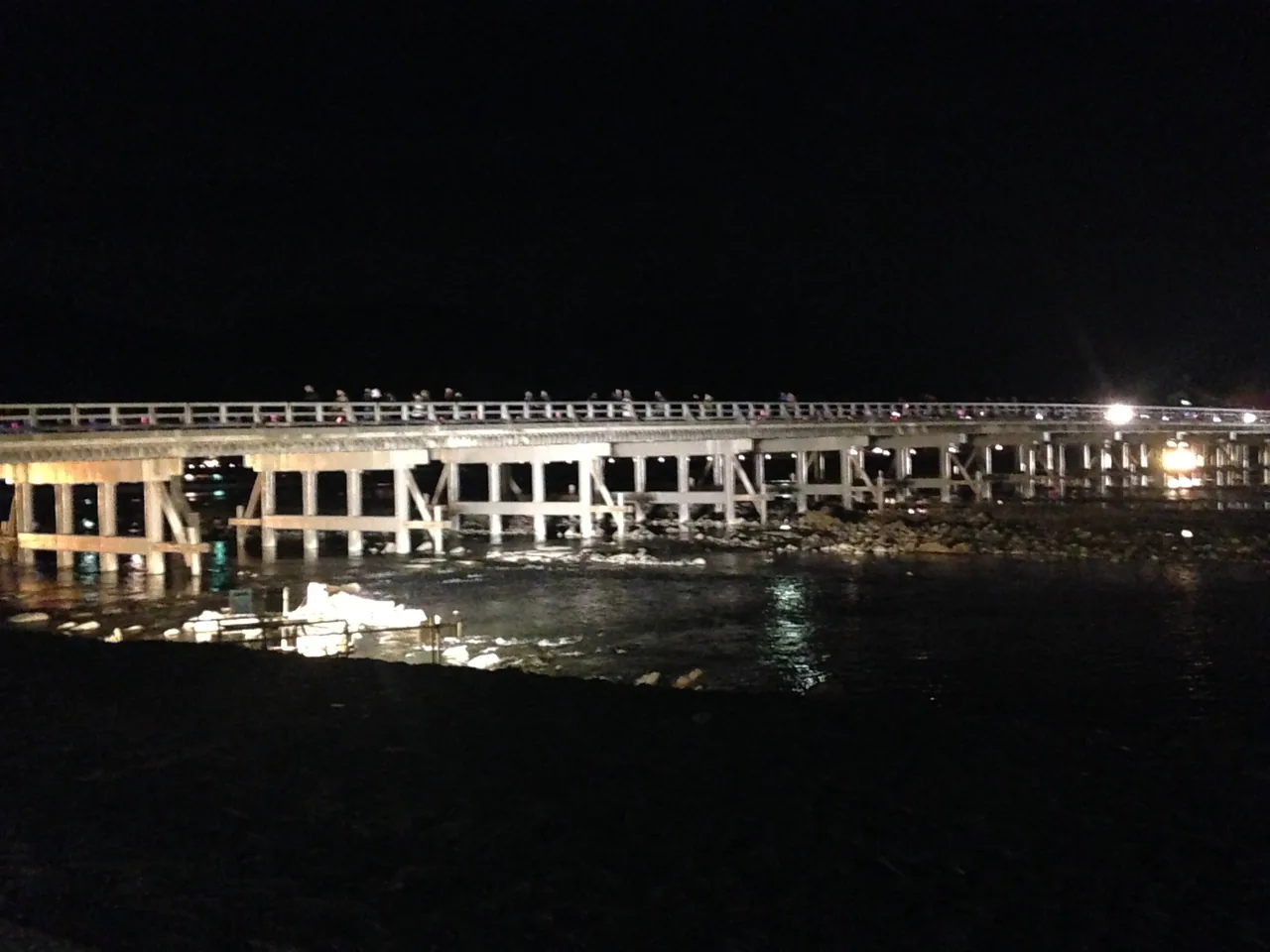
Kyoto City publishes a crowding forecast for Arashiyama. It predicts how busy each area will be hour by hour on a five-level scale, and it runs live cameras alongside it. There are cameras at the north end of Togetsukyo and on the bamboo path, so you can see the actual crowd before you leave. Map
You can switch the forecast between clear, rainy and heavy rain conditions, and the accuracy improves as your date approaches. Looking at that screen beats following generic advice about arriving before 8am.
The worst hours are predictable
Daytime during cherry blossom season and through November is the peak of it. Between 10am and 3pm on a weekend the bamboo path becomes genuinely difficult to walk. In those weeks, before 8am or after 4pm is the only real answer.
Summer and winter weekdays are far more comfortable, with room to take photographs on the path. The one thing to confirm for winter is whether the scenic train is running.
Count the time it takes to get out again
On autumn evenings, queues form at both Randen Arashiyama and JR Saga-Arashiyama as everyone leaves the last temple at once.
Hankyu Arashiyama is often the calmer exit, simply because it is across the river and fewer people walk over. If you are heading towards Osaka anyway, plan to leave that way.
14. What to eat in Arashiyama
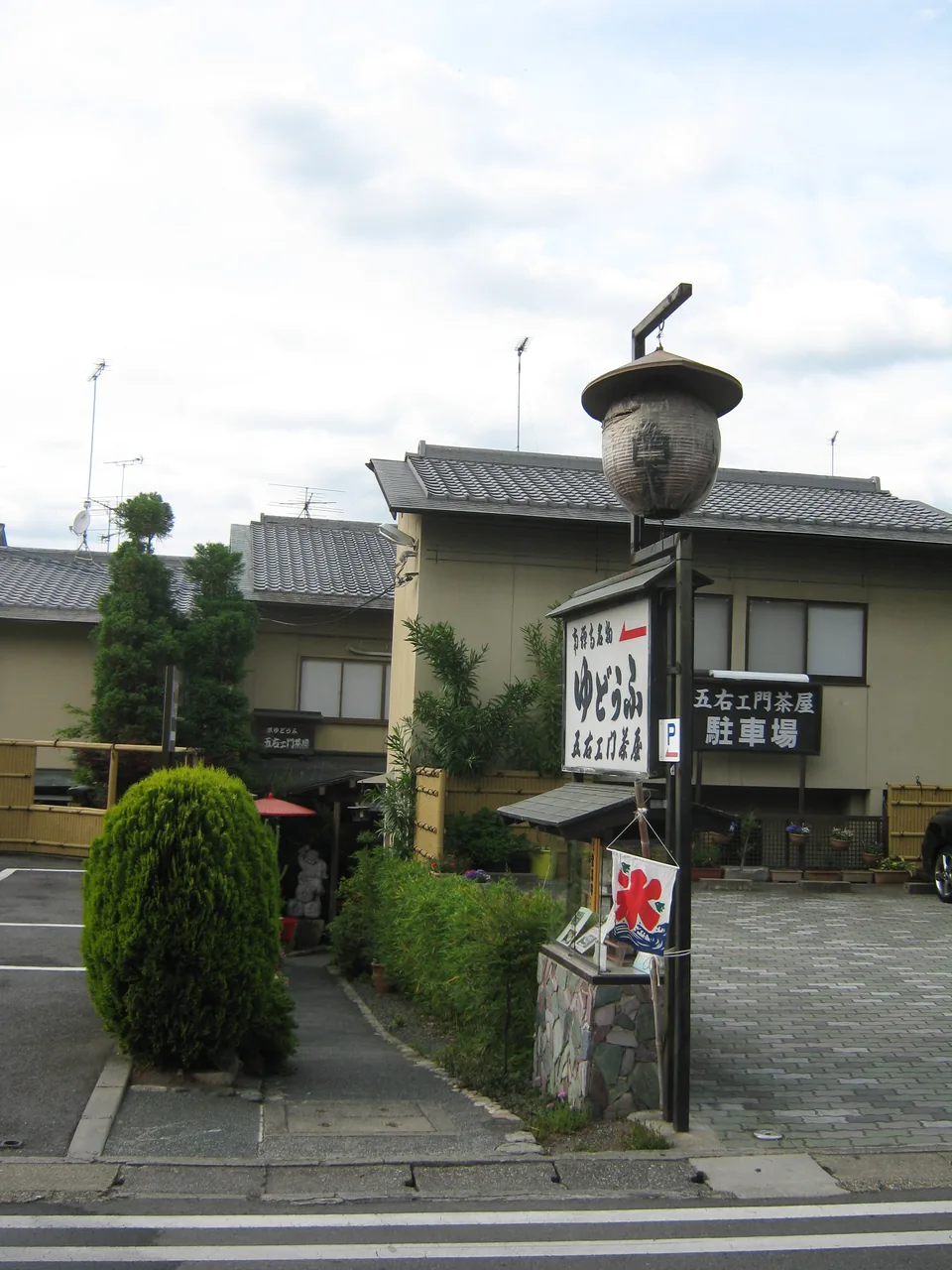
Tofu is the thing here. Tofu makers and tofu restaurants cluster in this part of the city, and the dish to look for is yudofu, blocks simmered in a light kelp broth. A hot bowl after a morning of temples is the long-standing way to do it.
Saga Tofu Morika is the oldest maker in the area. It is a shop rather than a restaurant, and several local restaurants cook with its tofu. The shop itself closes on Wednesdays, opening 9am to 5pm, and moves its closing day to Thursday when a Wednesday falls on a public holiday. Map
It sits in northern Sagano, about 15 minutes on foot from the bamboo path. Unless you are buying tofu to take away, there is no need to walk up: the street in front of the grove and the area near the bridge both have yudofu restaurants.
There is a coffee shop on the riverbank
Arabica sits right beside Togetsukyo with the river and the mountain in front of it, and the queue reflects that. Map There is almost no seating, so nearly everyone takes a cup out to the riverbank.
Plenty of people walk theirs over the bridge towards the monkey park. Arriving at opening time is the way to cut the wait.
Street food is concentrated on one street
The run from Randen Arashiyama up to the Tenryu-ji gate is where the shops are: croquettes, dango, matcha soft serve. It is good walking food, though the frontages are narrow, so step aside when it is busy.
For a proper sit-down meal, avoid the middle of the day. Restaurants here are fullest between noon and 1:30pm. Our Kyoto travel guide covers the city’s food more broadly.
15. How far you get in half a day, and in a full one
The core of Arashiyama is a half day. The bamboo path, Tenryu-ji and Togetsukyo are all within walking distance of one another and three hours covers them comfortably. Add the scenic train or the boat and it becomes a full day.
| Time | What fits | Notes |
|---|---|---|
| Half day | Bamboo path, Tenryu-ji, Togetsukyo | Finish by lunch and head back into the city |
| Full day | The above plus the monkey park and the Sagano temples | A lot of walking |
| Full day | The above plus the scenic train and river boat | Has to start in the morning |
Trying to do both versions in one day does not work. The train and boat swallow the morning; walking up through Sagano swallows the afternoon. Pick one.
A half day route
Start at Randen Arashiyama. Do Tenryu-ji first, leave through the north gate onto the bamboo path, stop at Okochi Sanso at the far end, then come back down to Togetsukyo. Rest on the riverbank and take the Randen back into town.
Done in that order, the only stretch you walk twice is the bamboo path. Reversed, you end up leaving Tenryu-ji and going back in.
A full day with the train and boat
Arrive early at JR Saga-Arashiyama and take the scenic train. Cross to the pier by bus at Kameoka, then spend two hours coming back down the river. You land around lunchtime, which leaves Tenryu-ji and the grove for the afternoon.
Temples stop admitting between 4:30pm and 5pm. Landing late means giving them up, so take the first or second train of the day.
Where it fits in a Kyoto itinerary
Arashiyama is the western edge of the city. Pairing it with Kinkaku-ji or Ryoan-ji in the north-west keeps the travel short. Fushimi Inari and Kiyomizu-dera are at the opposite end, so putting them on the same day means more than an hour in transit.
Our Kyoto travel guide splits the city into workable days, and the Japan travel guide covers how Kyoto fits with Osaka and Nara.
16. Stay in Arashiyama, or stay downtown
Stay in Arashiyama and you get the bamboo path at dawn and after dark with almost nobody in it. That is the whole argument for it. There are ryokan with hot spring baths and rooms facing the river.
The cost is distance. Getting to Shijo-Kawaramachi or Gion for dinner takes around 30 minutes by train and services thin out late. On a first visit to Kyoto, staying downtown and coming out here in the morning is the easier arrangement.
Who it suits
It suits repeat visitors, anyone who wants quiet, and anyone specifically after a hot spring inn. It does not suit a schedule that packs several districts into each day.
Our Kyoto neighbourhood comparison breaks the city into five areas and sets out what each one trades away. Arashiyama is the quietest of them.
Budget for the lodging tax
Kyoto levies a lodging tax per person per night, banded by room rate. It is frequently missing from the price you see when booking online and is collected at check-in.
Our guide to Japan’s lodging taxes sets out the bands by city. For cherry blossom and autumn dates, rooms here go months ahead, so book as soon as the dates are fixed.