
Yokohama Travel Guide: Getting There, Day Passes, Minato Mirai, Chinatown, Yamate, Prices and Closing Days
96 of Yokohama’s 162 official sights sit within 2 km of Sakuragicho Station. Which stretches you can walk, where a ticket actually pays for itself, and which day of the week closes what.
| Getting around | 62% of the sights fall inside a 2 km radius, so most of the day is walking. |
|---|---|
| Observation deck | Landmark Tower’s Sky Garden is closed for building work until 2028 or later. |
| Free night view | The Osanbashi rooftop is open 24 hours and charges nothing. |
| Day passes | There are four, and the 460 yen one covers enough on most days. |
| Closing days | Cup Noodles shuts Tuesday, the art museum Thursday, the Yamate houses on Wednesdays. |
| Lodging tax | Yokohama levies none, so there is nothing extra to pay at check-in. |
1. 96 of the 162 official sights sit within 2 km of Sakuragicho Station
2. From Narita the round-trip ticket saves 3,760 yen on this route
3. The shinkansen stops at Shin-Yokohama, more than 6 km from the sightseeing area
4. There are four day passes and they cover different networks
5. Coming from Tokyu, the pass pays off on the second Minatomirai Line ride
6. The Akai Kutsu loop bus takes 78 minutes to complete a circuit
7. The Air Cabin charges 1,000 yen one way to cross 630 m
8. Landmark Tower’s observation deck is closed until 2028 or later
9. The Osanbashi rooftop is open 24 hours and free of charge
10. Marine Tower charges different prices on weekdays and weekends
11. The Red Brick Warehouse charges no admission and has no regular closing day
12. Cup Noodles Museum charges admission and workshop fees separately
13. Cosmo World charges no entry fee and sells no unlimited pass
14. The art museum closes on Thursdays and prices vary by exhibition
15. Chinatown has ten gates and each direction has its own colour
16. Kanteibyo opens at 09:00 and never closes for the year
17. The Hikawa Maru at Yamashita Park costs 300 yen
18. All seven Yamate Western houses are free to enter
19. The Yamate houses split between the second and fourth Wednesday
20. Sankeien closes for only six days a year
21. Company museums are the second largest category on the official list
22. The Kirin brewery tour fee has doubled
23. At the Ramen Museum the annual pass costs 50 yen more than one entry
24. Hakkeijima Sea Paradise sells five different tickets
25. The Keikyu combination ticket to Hakkeijima saves 1,680 yen
26. Zoorasia lets high school students and younger in free on Saturdays
27. Kannai and Bashamichi hold 22 sights, the second highest count
28. Noge has only seven listed sights and fills up after dark
29. Motomachi and Harbour View Park sit on the way up to Yamate
30. Closing days are scattered, so fix the date before the itinerary
31. One day covers the centre, two days if you add the south or north
32. A day of free sights costs only the fare
33. August is the hottest month and the wettest are September and October
34. 2 June is the port opening anniversary and city schools close
35. Yokohama levies no lodging tax
36. Hotels cluster around Yokohama Station, Minato Mirai and Chinatown
37. Wet days can be moved indoors
38. With children, the day of the week changes the total
39. Practical notes
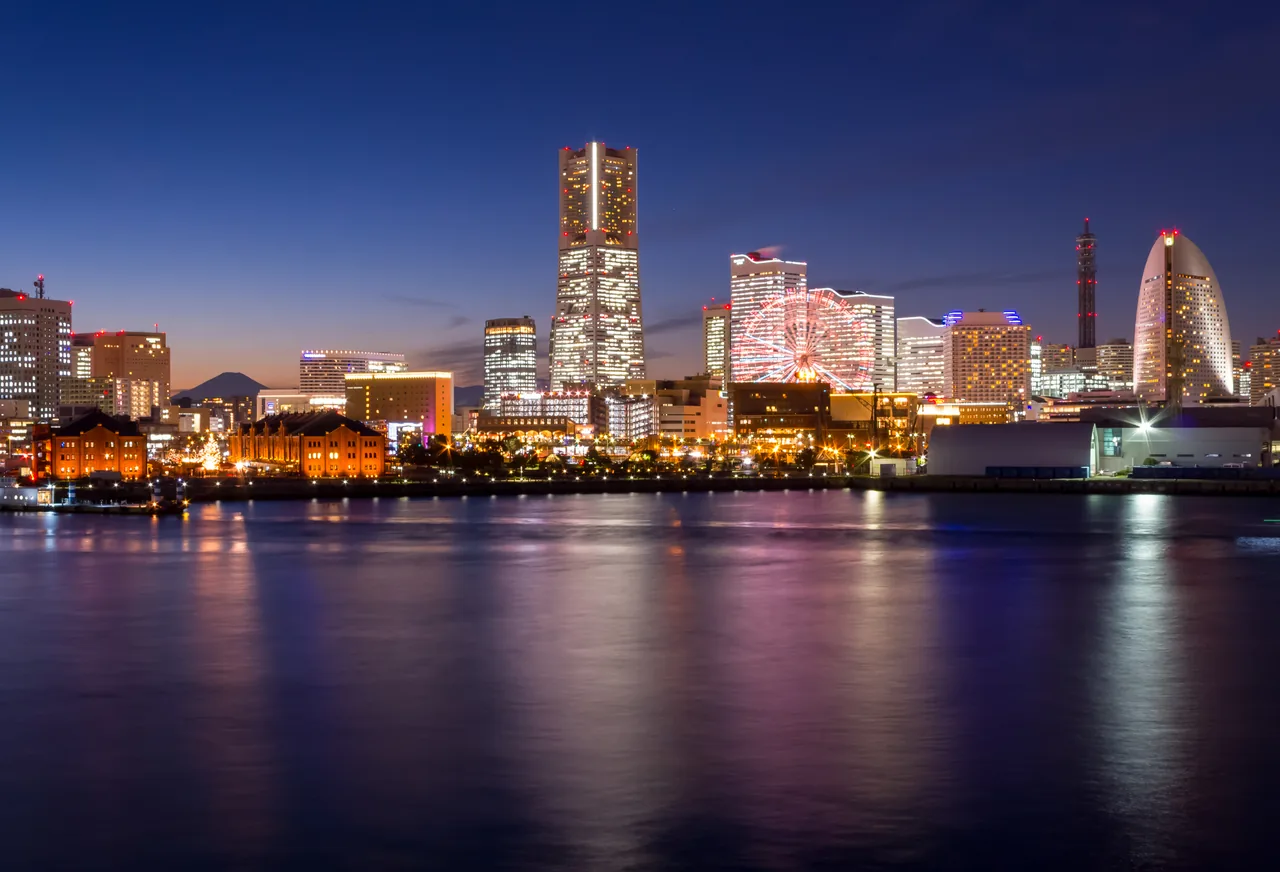
1. 96 of the 162 official sights sit within 2 km of Sakuragicho Station
Yokohama’s city tourism board lists 162 sights. 96 of them fall inside a 2 km radius of Sakuragicho Station. That is 62% of the total. Widen the circle to 2.5 km and it reaches 114.
Most first-time visitors want to know how many days Yokohama needs. Those numbers answer it. The main stretches connect on foot, transport costs stay low, and the central loop fits into one day.
| Radius from Sakuragicho Station | Sights | Share |
|---|---|---|
| 1.0 km | 41 | 26% |
| 1.5 km | 76 | 49% |
| 2.0 km | 96 | 62% |
| 2.5 km | 114 | 73% |
The districts sit about a kilometre apart
Yokohama’s tourism board splits the city into twelve districts. The five along the waterfront sit close together. Minato Mirai 21 to Sakuragicho and Noge is 1.18 km in a straight line, and Chinatown and Yamashita Park to Motomachi and Yamate is 0.88 km.
Sakuragicho Station to Motomachi-Chukagai Station, the far end of the Minatomirai Line, measures 1.96 km. Minato Mirai, the Red Brick Warehouse, Chinatown, Yamashita Park and the Yamate houses all fall inside that span.
Minato Mirai 21 holds 38 sights on its own
The distribution is lopsided. Minato Mirai 21 accounts for 38 sights, or 23% of the list. Kannai, Bashamichi and Isezakicho follow with 22, then Chinatown and Yamashita Park with 20.
Five of the twelve districts hold single digits. The northern district has four sights, the western district three. There is no reason to spread a visit evenly across the map.
| District | Sights | Main draws |
|---|---|---|
| Minato Mirai 21 | 38 | Landmark Tower, Red Brick Warehouse, Cup Noodles Museum |
| Kannai, Bashamichi, Isezakicho | 22 | Yokohama Stadium, Kanagawa Prefectural Museum of Cultural History |
| Chinatown and Yamashita Park | 20 | Chinatown, Hikawa Maru, Marine Tower |
| Around Yokohama Station | 18 | Department stores, underground arcades |
| Motomachi and Yamate | 15 | Seven Western houses, Motomachi shopping street |
| Southern district | 14 | Hakkeijima Sea Paradise |
| Six remaining districts | 35 combined | Sankeien, Ramen Museum, Zoorasia |
2. From Narita the round-trip ticket saves 3,760 yen on this route
The Narita Express reaches Yokohama in about 90 minutes. The standard fare is 8,960 yen, while the round-trip ticket sold to foreign passport holders costs 5,200 yen regardless of destination. On this route the gap comes to 3,760 yen.
The gap is wider here than on shorter runs, because the flat-rate ticket prices every destination the same while the standard fare climbs with distance. To Tokyo Station the standard round trip is 6,280 yen, so the saving there is 1,080 yen.
| From | Mode | Time | Adult fare |
|---|---|---|---|
| Narita Airport | Narita Express | about 90 min | 8,960 yen standard, 5,200 yen round-trip ticket |
| Narita Airport | Limousine bus | about 100 min | check the booking page |
| Haneda Airport Terminal 3 | Keikyu Line | 27 to 28 min | 370 yen |
| Haneda Airport Terminals 1 and 2 | Keikyu Line | about 30 min | 400 yen |
| Haneda Airport | Limousine bus | about 30 min | check the booking page |
From Haneda, Yokohama is closer than central Tokyo
Haneda to Yokohama Station takes 27 to 28 minutes on the Keikyu Line. From the same airport, Ueno is 40 minutes, Shibuya 45 and Shinjuku 50.
If you land at Haneda in the afternoon, spending the first night in Yokohama and moving into Tokyo the next day roughly halves that first transfer with luggage. For arrivals after the last train, see late-night arrivals at Haneda.
From central Tokyo, Shibuya is the simplest starting point
The Tokyu Toyoko Line runs through onto the Minatomirai Line, so there is no change of train between Shibuya and Motomachi-Chukagai. Tokyu fares are distance-based and Shibuya to Yokohama falls in the 21 to 25 km band, which is 310 yen.
From Tokyo Station the options are the JR Tokaido, Yokosuka and Keihin-Tohoku lines. From Shinjuku the Shonan-Shinjuku Line passes through Yokohama. For the Tokyo side of the trip, see our Tokyo travel guide.
3. The shinkansen stops at Shin-Yokohama, more than 6 km from the sightseeing area
Shinkansen trains do not call at Yokohama Station. They stop at Shin-Yokohama, which is 6.48 km from Sakuragicho Station and 4.70 km from Yokohama Station in a straight line. The names are similar and the stations are not.
Arriving from Osaka or Kyoto by shinkansen puts you at Shin-Yokohama. Reaching the waterfront from there means changing to the JR Yokohama Line or the Yokohama Municipal Subway Blue Line.
| Between | Straight-line distance |
|---|---|
| Shin-Yokohama and Yokohama Station | 4.70 km |
| Shin-Yokohama and Sakuragicho Station | 6.48 km |
| Shin-Yokohama and Motomachi-Chukagai Station | 7.82 km |
| Yokohama Station and Sakuragicho Station | 1.87 km |
| Yokohama Station and Motomachi-Chukagai Station | 3.63 km |
There are sights around Shin-Yokohama too
The Shin-Yokohama and Kohoku district holds six official sights. The Shin-Yokohama Ramen Museum is one of them, and Nissan Stadium sits in the same area.
With an hour or two between trains, the Ramen Museum is within walking distance of the station. Going into the city centre and back is not realistic in that window.
Yokohama Station and Sakuragicho Station do different jobs
Yokohama Station is where several railway companies meet, wrapped in department stores and underground shopping arcades. The tourism board counts 18 sights around it.
Sakuragicho Station is the sightseeing starting point. The Akai Kutsu loop bus departs from there, the Air Cabin ropeway boards there, and Minato Mirai is a short walk away.
4. There are four day passes and they cover different networks
Yokohama sells day passes at 460, 600, 680, 700 and 750 yen. The price order is not the coverage order. The cheapest covers one short railway line, the 600 yen one covers buses only.
Start with the Minatomirai Line day pass at 460 yen for adults. Yokohama Station to the terminus at Motomachi-Chukagai is 230 yen one way, so a single return trip already matches the pass price.
| Pass | Adult | Child | Covers |
|---|---|---|---|
| Minatomirai Line day pass | 460 yen | 230 yen | The six Minatomirai Line stations |
| Bus day pass | 600 yen | 300 yen | Yokohama municipal buses |
| Seaside Line day pass | 680 yen | 340 yen | The 14 Seaside Line stations |
| Minato Burari Ticket | 700 yen | 350 yen | Waterfront municipal buses, subway, Kanagawa Chuo buses |
| Minato Burari Ticket Wide | 750 yen | 380 yen | The above over a wider area |
The Minatomirai Line has six stations in total
The line runs Yokohama, Shin-Takashima, Minatomirai, Bashamichi, Nihon-odori and Motomachi-Chukagai. From Yokohama the first four cost 200 yen and only the terminus costs 230 yen.
Because the line is short, the pass earns its price quickly but has a low ceiling. Getting off at Minato Mirai, moving to Chinatown and coming back is three rides, or 660 yen, so the pass wins.
The Minato Burari Ticket matters only if you use buses
At 700 yen it covers the Akai Kutsu loop bus, municipal buses and the subway. A single Akai Kutsu ride is 220 yen, so it takes four rides to break even.
As the first section showed, the main stretches connect on foot. Unless you are travelling with children or older relatives, four bus rides rarely happen.
Decide first whether you plan to walk. If you do, no pass is needed. For a few train rides take the 460 yen pass, and for repeated bus use take the 700 yen one.
5. Coming from Tokyu, the pass pays off on the second Minatomirai Line ride
The Tokyu Minatomirai Pass costs 920 yen for adults from Shibuya. It covers a return trip from your Tokyu station to Yokohama plus unlimited Minatomirai Line travel for the day. Children pay 470 yen.
The arithmetic is short. Shibuya to Yokohama on Tokyu is 310 yen each way, so a return is 620 yen. The pass costs 920 yen, which leaves 300 yen of Minatomirai Line travel to recover.
| Minatomirai Line rides | Buying separately | Pass | Result |
|---|---|---|---|
| None | 620 yen | 920 yen | Pass costs 300 yen more |
| One | 820 to 850 yen | 920 yen | Pass costs 70 to 100 yen more |
| Two | 1,020 to 1,080 yen | 920 yen | Pass saves 100 to 160 yen |
| Three | 1,220 to 1,310 yen | 920 yen | Pass saves 300 to 390 yen |
The price depends on which Tokyu station you start from
| Starting station | Adult | Child |
|---|---|---|
| Shibuya, Naka-meguro, Daikan-yama | 920 yen | 470 yen |
| Jiyugaoka, Den-en-chofu | 910 yen | 460 yen |
| Musashi-kosugi, Motosumiyoshi | 860 yen | 440 yen |
| Hiyoshi, Tsunashima | 830 yen | 420 yen |
| Kikuna, Okurayama | 750 yen | 380 yen |
| Hakuraku, Tammachi | 650 yen | 330 yen |
| Chuo-rinkan, Tsukimino | 1,210 yen | 610 yen |
Three conditions apply
The pass is valid only on the day it is bought. You cannot break the journey partway along the Tokyu section. If you return to the Tokyu line after starting to use the free-travel section, that free-travel section stops working.
Ticket machines at Tokyu stations sell it until 22:30. Passes for travel inside Tokyo are covered in Tokyo transport passes.
6. The Akai Kutsu loop bus takes 78 minutes to complete a circuit
Akai Kutsu is the sightseeing loop bus that starts at Sakuragicho Station. It calls at 18 stops and takes about 78 minutes to return to the start. A single ride is 220 yen for adults and 110 yen for children, the same in cash or with an IC card.
Its route overlaps closely with the central area. It stops at Bashamichi Station, the Red Brick Warehouse, Chinatown, Harbour View Park, Marine Tower, Yamashita Park and the Osanbashi passenger terminal.
| Days | First departure | Last departure | Frequency |
|---|---|---|---|
| Weekdays | 10:02 from Sakuragicho Station | 18:02 | every 20 min |
| Weekends and holidays | 10:02 from Sakuragicho Station | 18:32 | every 15 min |
Nothing runs before 10:00
The first bus leaves at 10:02, so it is no help for an early start. Sankeien opens at 09:00 and the Yamate houses at 09:30, which means walking or another line if you want to be there when they open.
The last departure is 18:02 on weekdays and 18:32 at weekends. It cannot carry you back from a night view.
Single rides against the day pass
At 220 yen a ride, three rides cost 660 yen and stay under the 700 yen Minato Burari Ticket. The pass wins from the fourth ride.
The stops sit close together, so most visitors ride once or twice. A common pattern is riding uphill towards Yamate and walking back down.
7. The Air Cabin charges 1,000 yen one way to cross 630 m
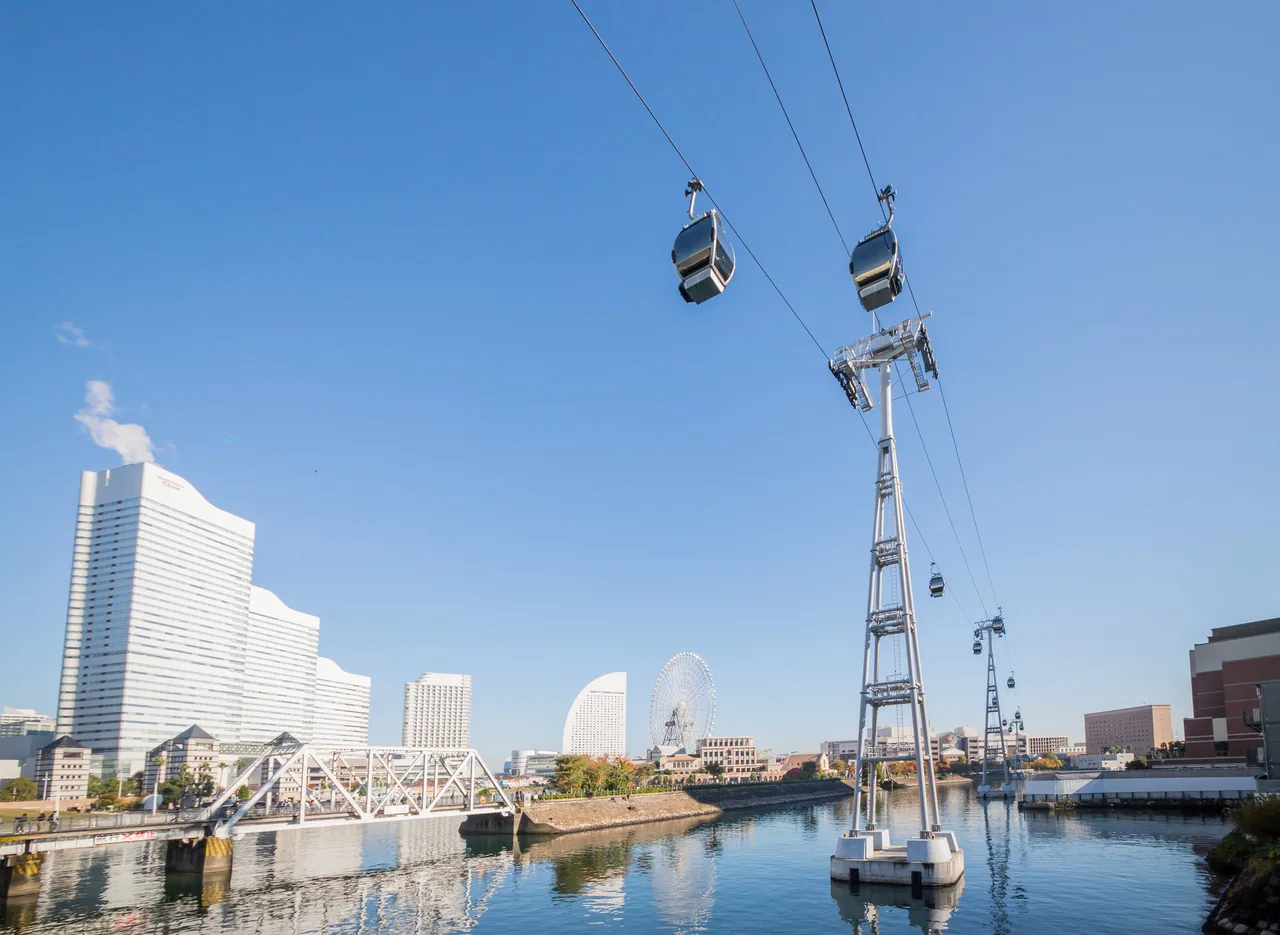
The Yokohama Air Cabin is an urban ropeway between Sakuragicho Station and Unga Park Station. The span is 630 m one way and an adult single costs 1,000 yen. A return is 1,800 yen, and children pay 500 yen single or 900 yen return.
That 630 m is an eight to ten minute walk. The ropeway is worth taking for the view from above rather than as a way to cover ground, which is worth knowing before you buy.
| Ticket | Adult (junior high and up) | Child (3 to elementary) |
|---|---|---|
| One way | 1,000 yen | 500 yen |
| Return | 1,800 yen | 900 yen |
| One way plus Cosmo Clock 21 | 1,700 yen | 1,300 yen |
| Return plus Cosmo Clock 21 | 2,500 yen | 1,600 yen |
The ferris wheel combination takes off 300 yen
A ride on the Cosmo Clock 21 ferris wheel costs 1,000 yen. Bought separately with a one-way Air Cabin ticket that is 2,000 yen, while the combination is 1,700 yen. The return combination drops from 2,800 yen to 2,500 yen by the same amount.
The two are a five-minute walk apart, so the combination makes sense if you intend to do both.
The specification
Total cable length is about 1,260 m, with 630 m in each direction. There are 36 cabins carrying eight people each, giving a capacity of 288. The highest point is about 40 m above ground.
Operating hours run from 10:00 to 22:00. Ticketing closes earlier when it is busy.
8. Landmark Tower’s observation deck is closed until 2028 or later
Sky Garden, the observation floor on the 69th floor of the Yokohama Landmark Tower, has suspended operations. The building is undergoing major refurbishment and the operator states that reopening is planned for 2028 or later. No exact date has been published.
Because it appears in almost every article about Yokohama, it is worth knowing in advance. The Yokohama Royal Park Hotel, in the same building, has also suspended operations.
| Item | Detail |
|---|---|
| Building height | 296 m, 70 floors above ground |
| Opened | 1993 |
| Sky Garden | 69th floor, 273 m |
| Current status | Operations suspended |
| Planned reopening | 2028 or later |
| Same building | Yokohama Royal Park Hotel also suspended |
The rest of the building is still open
What has closed is the observation floor and the hotel. Landmark Plaza, the shopping mall on the lower floors, continues to trade with around 160 shops and restaurants.
Dockyard Garden, next to the tower, preserves a stone dry dock built for ship repair. It remains accessible.
What the deck offers when it returns
According to the published specification, the lift covers the distance from the second-floor lobby to the 69th floor in about 40 seconds at 750 m per minute. The view is 360 degrees and reaches about 80 km on a clear day.
Since reopening is given only as 2028 or later, anyone visiting before then should use the alternatives in the next section.
9. The Osanbashi rooftop is open 24 hours and free of charge
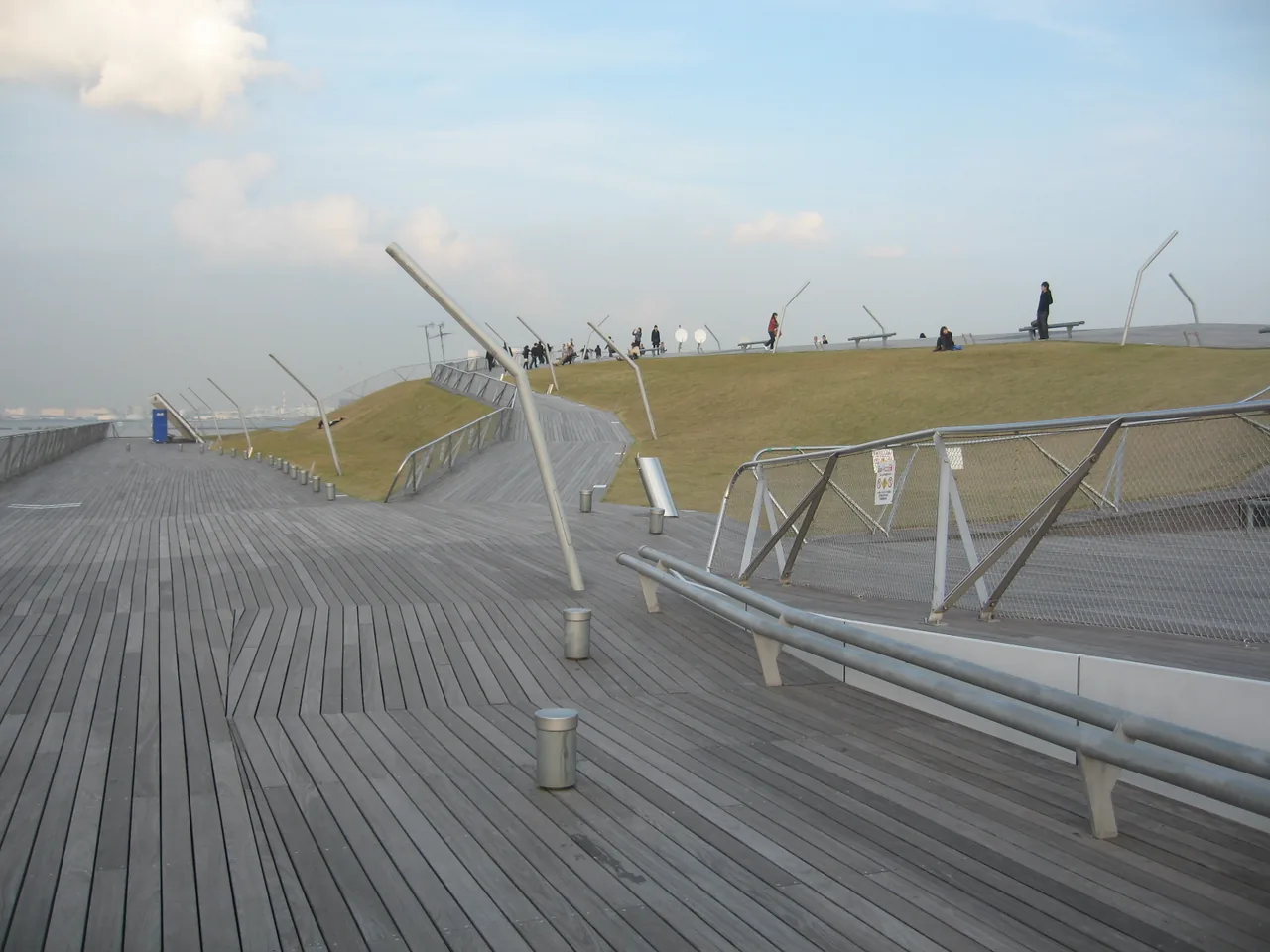
The rooftop of Osanbashi International Passenger Terminal is a public deck open 24 hours a day. There is no admission charge and no closing time. The night view of Minato Mirai from here was ranked first in a Nihon Keizai Shimbun list of ten free panoramic night views.
The highest point on the roof is 15 m above ground. The terminal was deliberately kept low so that visiting ships remain the tallest structures on the pier. What it gives up in elevation it gains by projecting out into the harbour.
| Viewpoint | Adult price | Hours |
|---|---|---|
| Osanbashi rooftop | Free | 24 hours |
| Yokohama Marine Tower, day ticket | 1,000 yen weekday, 1,200 yen weekend | 10:00 to 17:55 |
| Yokohama Marine Tower, night ticket | 1,200 yen weekday, 1,400 yen weekend | 18:00 to 22:00 |
| Cosmo Clock 21 ferris wheel | 1,000 yen | During park hours |
| Yokohama Air Cabin | 1,000 yen one way | 10:00 to 22:00 |
The deck is wooden and the lighting is low
The rooftop is finished in Brazilian ipe timber, chosen by the operator for durability and resistance to insects and rot.
The space is wide and the lighting is dim, which is why photographers set up tripods there. Because it never closes, it is also available before dawn.
This is one of three places to see all three towers
Yokohama has three towers nicknamed King, Queen and Jack. Foreign sailors arriving in the port are said to have started the names, after playing cards.
Three places let you see all three at once: the front of the Kanagawa Prefectural Government building, the Red Brick Warehouse, and Osanbashi. Local lore holds that visiting all three grants a wish.
10. Marine Tower charges different prices on weekdays and weekends
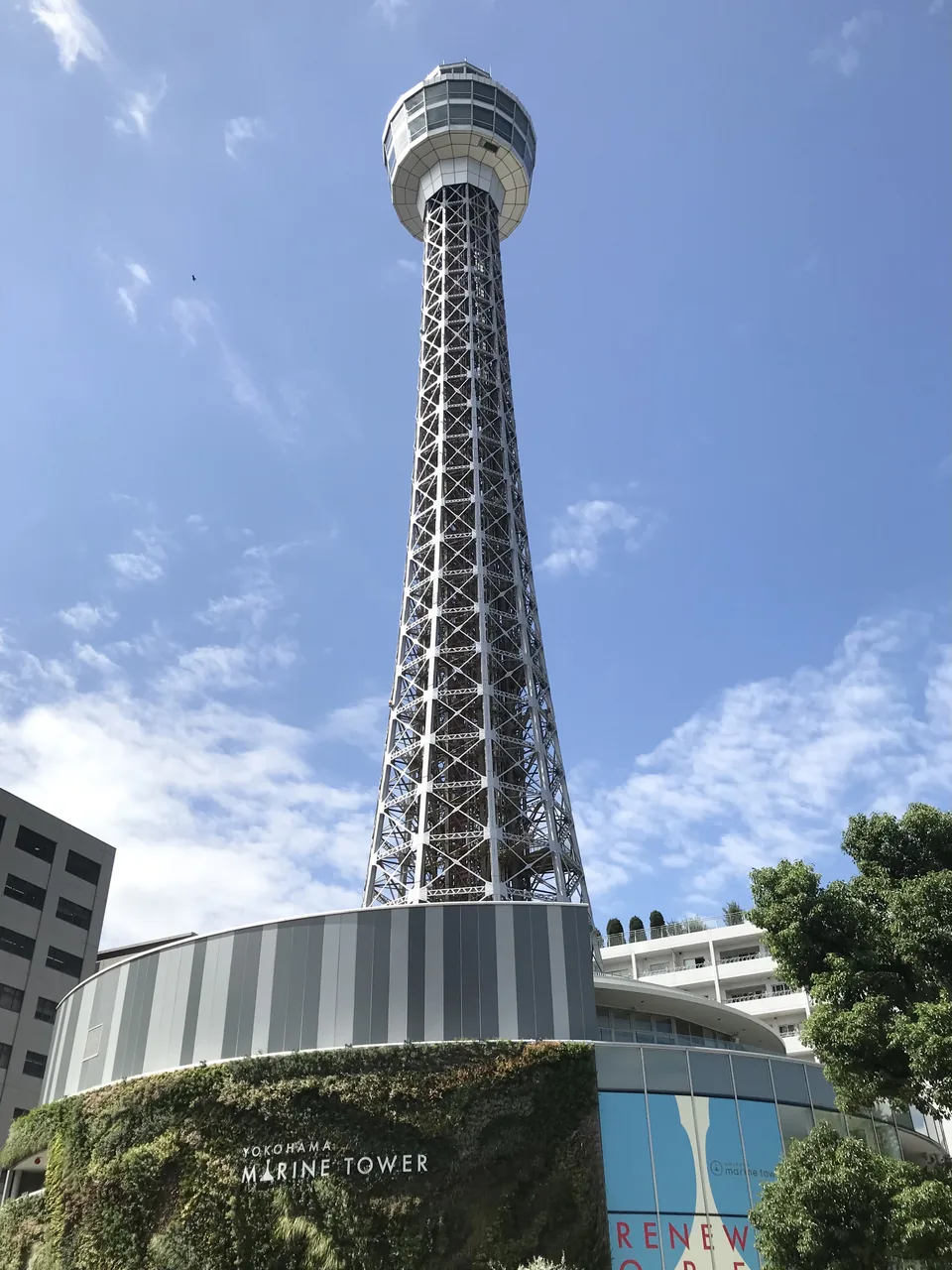
Yokohama Marine Tower costs 1,000 yen for adults on weekdays and 1,200 yen on Saturdays, Sundays and public holidays. Buying online in advance reduces those to 900 and 1,100 yen. Elementary and junior high school students pay 500 yen on weekdays and 600 yen at weekends.
Prices also split by time of day. A day ticket and a night ticket, valid from 18:00, are sold separately, and the night ticket costs 200 yen more.
| Ticket | Category | Weekday | Weekend and holiday |
|---|---|---|---|
| Day, from 10:00 | General, high school and above | 1,000 yen (900 online) | 1,200 yen (1,100 online) |
| Elementary and junior high | 500 yen (400 online) | 600 yen (500 online) | |
| Night, from 18:00 | General, high school and above | 1,200 yen (1,100 online) | 1,400 yen (1,300 online) |
| Elementary and junior high | 700 yen (600 online) | 800 yen (700 online) |
Preschool children enter free.
Summer hours run an hour later
Day tickets cover 10:00 to 17:55 with last entry at 17:30. From June to August this extends to 18:55 with last entry at 18:30.
Night tickets cover 18:00 to 22:00 with last entry at 21:30. From June to August the night session starts at 19:00 instead.
Holiday periods use weekend pricing
During the Obon holiday period the operator applies weekend prices even on weekdays, and publishes a notice each time.
The tower stands directly opposite Yamashita Park, so it pairs naturally with the Hikawa Maru. The 30th floor houses a media art gallery using light and projection.
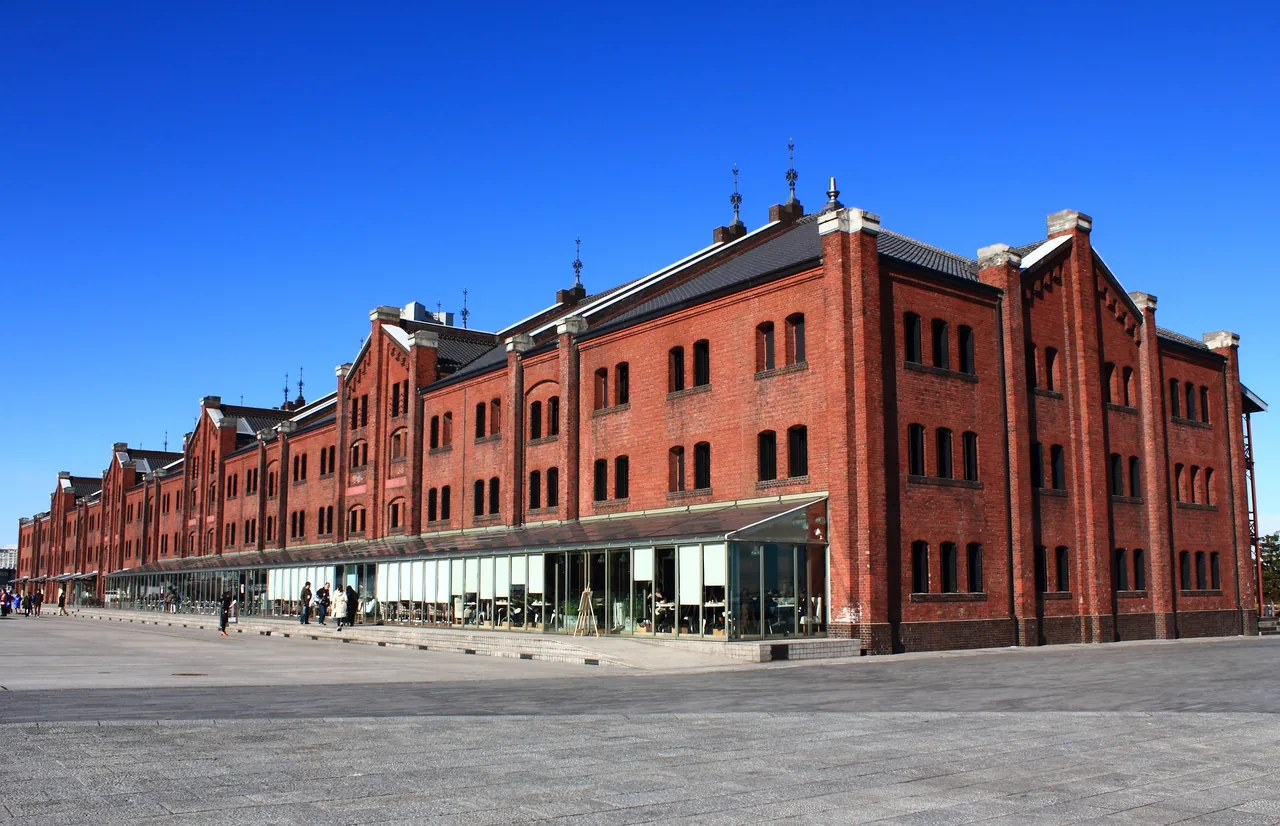
11. The Red Brick Warehouse charges no admission and has no regular closing day
The Yokohama Red Brick Warehouse charges no admission. It has no regular closing day either, so apart from statutory inspection days it opens every day. It is split into Building 1 and Building 2, which keep different hours.
Building 1 runs from 10:00 to 19:00 and Building 2 from 11:00 to 20:00. The one-hour offset means that if you arrive late, Building 2 is still open.
| Building | Hours | Character |
|---|---|---|
| Building 1 | 10:00 to 19:00 | Hall and exhibition space, shops |
| Building 2 | 11:00 to 20:00 | Mainly shops and restaurants |
Events run in the square outside
The open square between the two buildings hosts a different event each season, including beer festivals, flower events and a winter skating rink. Individual events sometimes charge admission.
Entering the buildings and crossing the square remain free at all times. This is also one of the three places to see all three Yokohama towers.
Everything around it is walkable
Osanbashi is about a ten-minute walk from the warehouses, and Unga Park with the Air Cabin terminal is a similar distance in the other direction. The site sits between Minatomirai and Bashamichi stations.
The Akai Kutsu bus stops here, at a stop named after the warehouse itself.
12. Cup Noodles Museum charges admission and workshop fees separately
Admission to the Cup Noodles Museum Yokohama is 500 yen for university students and above, and free for high school students and younger. The workshops inside are not included and are paid for separately. Budgets go wrong when this split is missed.
The most popular workshop, My Cup Noodles Factory, costs 500 yen per cup. That matches the admission price, so two people each making one cup pay 1,000 yen in admission plus 1,000 yen in workshop fees.
| Item | Price |
|---|---|
| Admission, university students and above | 500 yen |
| Admission, high school students and younger | Free |
| My Cup Noodles Factory | 500 yen per cup |
| Chicken Ramen Factory | 600 yen elementary, 1,200 yen junior high and above |
| Cup Noodles Park | 500 yen per 30-minute session |
| Noodles Bazaar | 500 yen per half-size bowl |
It closes on Tuesdays
The regular closing day is Tuesday, moving to the following day when Tuesday is a public holiday. It also closes over the new year period.
Hours run from 10:00 to 18:00 with last admission at 17:00. Allowing for workshop time, arriving before 16:00 is safer.
The workshops work differently from each other
My Cup Noodles Factory involves decorating an empty cup, then choosing a soup base and toppings. You take the finished cup away with you.
Chicken Ramen Factory starts from flour and dough and takes longer, which is reflected in the price. Cup Noodles Park is a physical play area aimed at children.
13. Cosmo World charges no entry fee and sells no unlimited pass
Yokohama Cosmo World charges nothing to enter. Each ride is paid for individually. The operator states on its own website that no free pass or unlimited ride ticket is sold.
The Cosmo Clock 21 ferris wheel is the centrepiece. A ride costs 1,000 yen, with a 500 yen rate for visitors holding a disability certificate. This is the wheel with the clock face that appears in most photographs of the district.
| Item | Detail |
|---|---|
| Entry | Free |
| Cosmo Clock 21 ride | 1,000 yen |
| Unlimited ride pass | Not sold |
| Discount option | Prepaid ticket worth 3,500 yen |
The structure suits short visits
Having no unlimited pass works against anyone planning a full day of rides. It works in favour of anyone who wants the ferris wheel and nothing else, since there is no entry fee to absorb.
For several rides the 3,500 yen prepaid ticket is the discount route. Unused value is not refunded, so count your party and your rides before buying.
The Air Cabin combination reduces the total by 300 yen
As covered earlier, a combined ticket with the Air Cabin exists. The one-way combination is 1,700 yen for adults, which is 300 yen less than buying both separately.
The two sit on opposite sides of the canal, so moving between them takes no time. The wheel is lit after dark.
14. The art museum closes on Thursdays and prices vary by exhibition
Yokohama Museum of Art closes on Thursdays, which is unusual among the city’s attractions. Most others close on Monday or Tuesday. It also closes over the new year period. Hours run from 10:00 to 18:00 with last entry 30 minutes before closing.
There is no fixed admission price. Each exhibition is priced separately and some are free, so check what is running before you go.
| Item | Detail |
|---|---|
| Closing day | Thursday, plus the new year period |
| Hours | 10:00 to 18:00, last entry 17:30 |
| Admission | Varies by exhibition |
| Address | Minatomirai 3-4-1 |
It reopened in two stages after three years of work
Following roughly three years of major refurbishment, the museum reopened on 15 March 2024 as the main venue for the eighth Yokohama Triennale, with only part of the building in use.
The whole building opened on 8 February 2025, together with a commemorative exhibition. The two dates are often confused in secondary sources.
It is a short walk from Minatomirai Station
The museum is within walking distance of Minatomirai Station and close to Landmark Tower. The plaza in front is wide and makes a convenient rest stop.
A free area inside is open without an exhibition ticket.
15. Chinatown has ten gates and each direction has its own colour
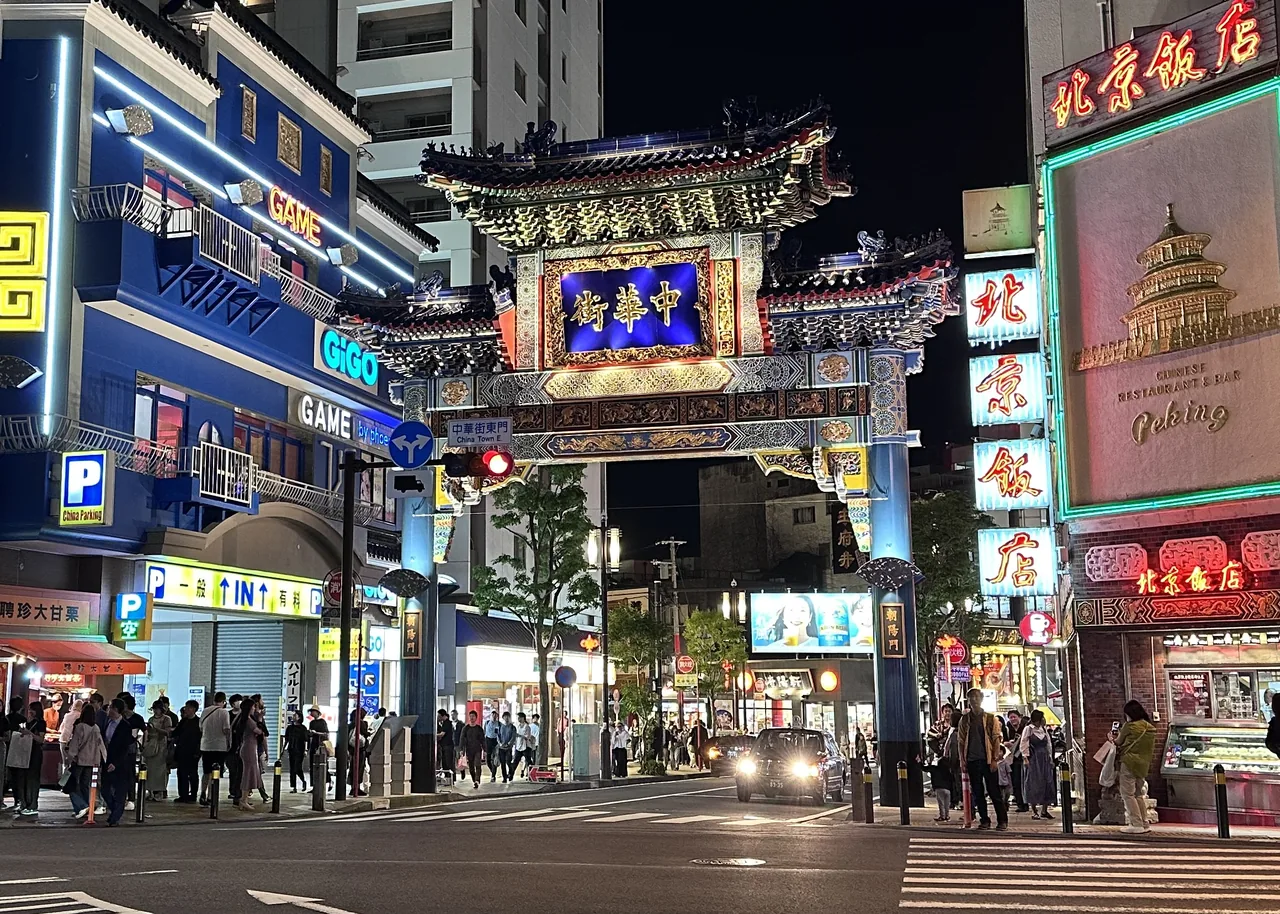
The official Yokohama Chinatown site lists more than 400 shops. Ten ceremonial gates, called pailou, stand across the district. They are not decoration alone: each cardinal direction has an assigned guardian and colour.
The east gate is Choyomon. Its guardian is the azure dragon, its colour is blue, and at 13.5 m high and 12 m wide it is the largest gate in Chinatown. South is Suzakumon in red, west is Enpeimon in white, and north is Genbumon in black.
| Gate | Direction | Guardian | Colour |
|---|---|---|---|
| Choyomon | East | Azure dragon | Blue |
| Suzakumon | South | Vermilion bird | Red |
| Enpeimon | West | White tiger | White |
| Genbumon | North | Black tortoise | Black |
Zenrinmon is the oldest of the ten
Zenrinmon was first built in 1955 and rebuilt into its present form in 1989. The remaining gates are Seiyomon, Tenchomon, Chikyumon and two market-street gates.
The placement and colouring follow feng shui principles. Which gate you enter by changes which street you see first.
Which station to use
Chinatown sits between Motomachi-Chukagai and Nihon-odori stations on the Minatomirai Line. On JR, Ishikawacho is the nearest station.
It is walkable from Yamashita Park and connects to the path up to the Yamate houses. The Akai Kutsu bus also stops here.
16. Kanteibyo opens at 09:00 and never closes for the year
Yokohama Kanteibyo opens from 09:00 to 19:00 and has no annual closing days. The address is 140 Yamashitacho, Naka Ward, inside Chinatown. Hours change over the new year period and at Lunar New Year.
It is the oldest temple of its kind in Japan, dedicated to Guan Yu, who is venerated in Chinese tradition as a deity of commerce.
| Item | Detail |
|---|---|
| Opening hours | 09:00 to 19:00 |
| Closing days | None |
| Address | 140 Yamashitacho, Naka Ward |
| Exceptions | Hours change at new year and Lunar New Year |
Looking from outside and entering the main hall are different
Viewing the building from outside and crossing the forecourt cost nothing. Entering the main hall to pray requires incense, which is charged for.
There is a set procedure. You light the incense sticks and place one in each of the numbered burners in turn. If it is your first visit, watching the person ahead of you is the simplest guide.
Masobyo stands on the same streets
Chinatown also has Masobyo, dedicated to the sea goddess Mazu, which is what one would expect in a port district.
The two are a few minutes apart on foot, so most visitors see both. The colouring and carving draw a steady stream of photographers.
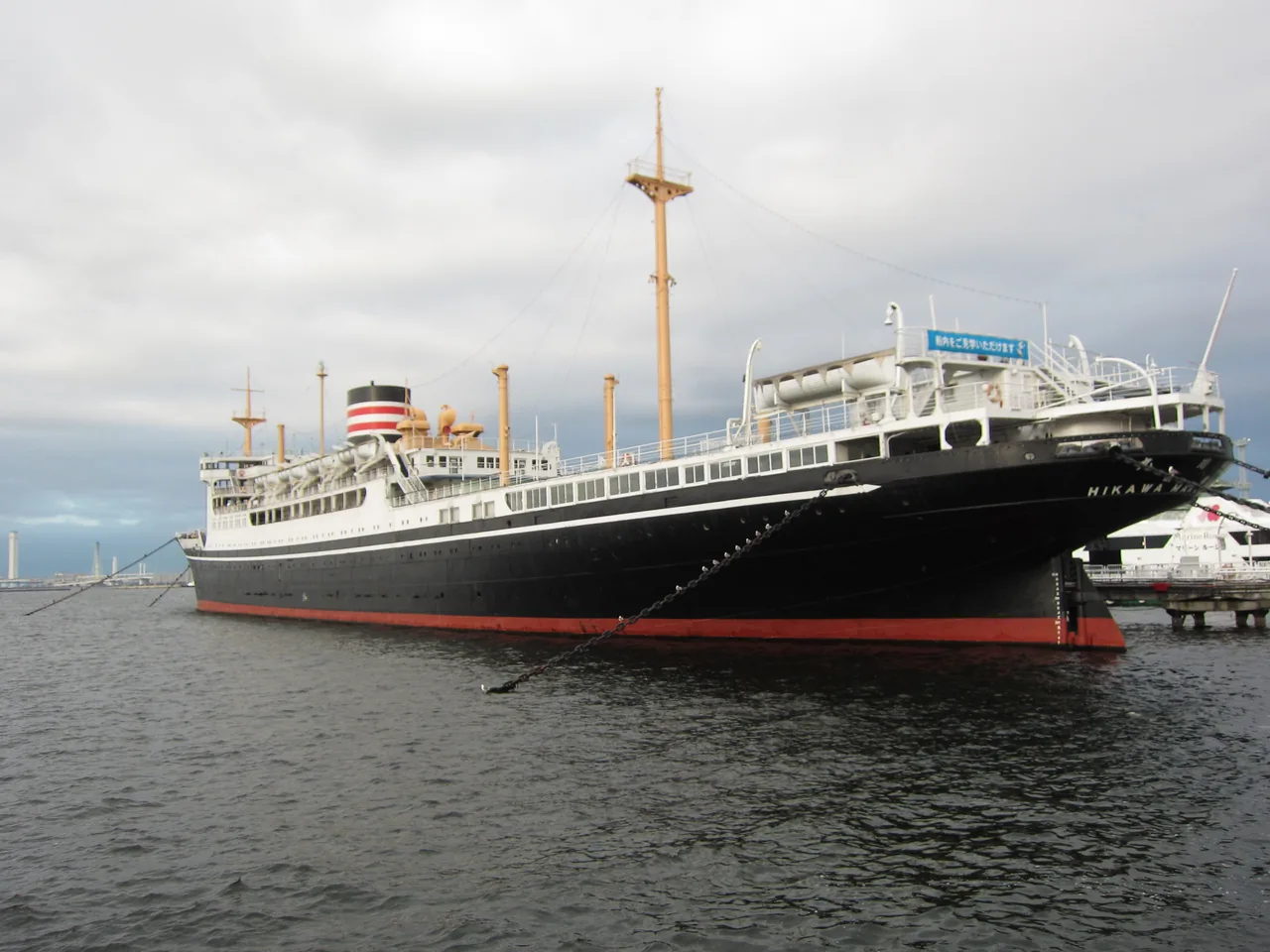
17. The Hikawa Maru at Yamashita Park costs 300 yen
The Hikawa Maru, moored in front of Yamashita Park, costs 300 yen for general admission. Visitors aged 65 and over pay 200 yen, and school students from elementary through high school pay 100 yen. Holders of a disability certificate enter free.
Marine Tower, three minutes away on foot, charges 1,000 yen for adults. The two sit next to each other with more than a threefold price difference.
| Category | Price |
|---|---|
| General | 300 yen |
| 65 and over | 200 yen |
| Elementary, junior high and high school | 100 yen |
| Disability certificate holders | Free |
It closes on Mondays
The closing day is Monday, moving to the next weekday when Monday is a public holiday. Hours run from 10:00 to 17:00 with last entry at 16:30.
Given that the Cup Noodles Museum closes on Tuesday and the art museum on Thursday, fitting all three into one day is not possible in a single week without planning.
The ship was built in 1930
She was built in 1930 and returned to the Seattle route in 1953. She crossed the Pacific 254 times, retired in 1960, and has been moored in front of Yamashita Park since 1961.
Visitors can go inside to see the cabins and the engine room. Yamashita Park itself opened in 1930 and is free to enter.
18. All seven Yamate Western houses are free to enter
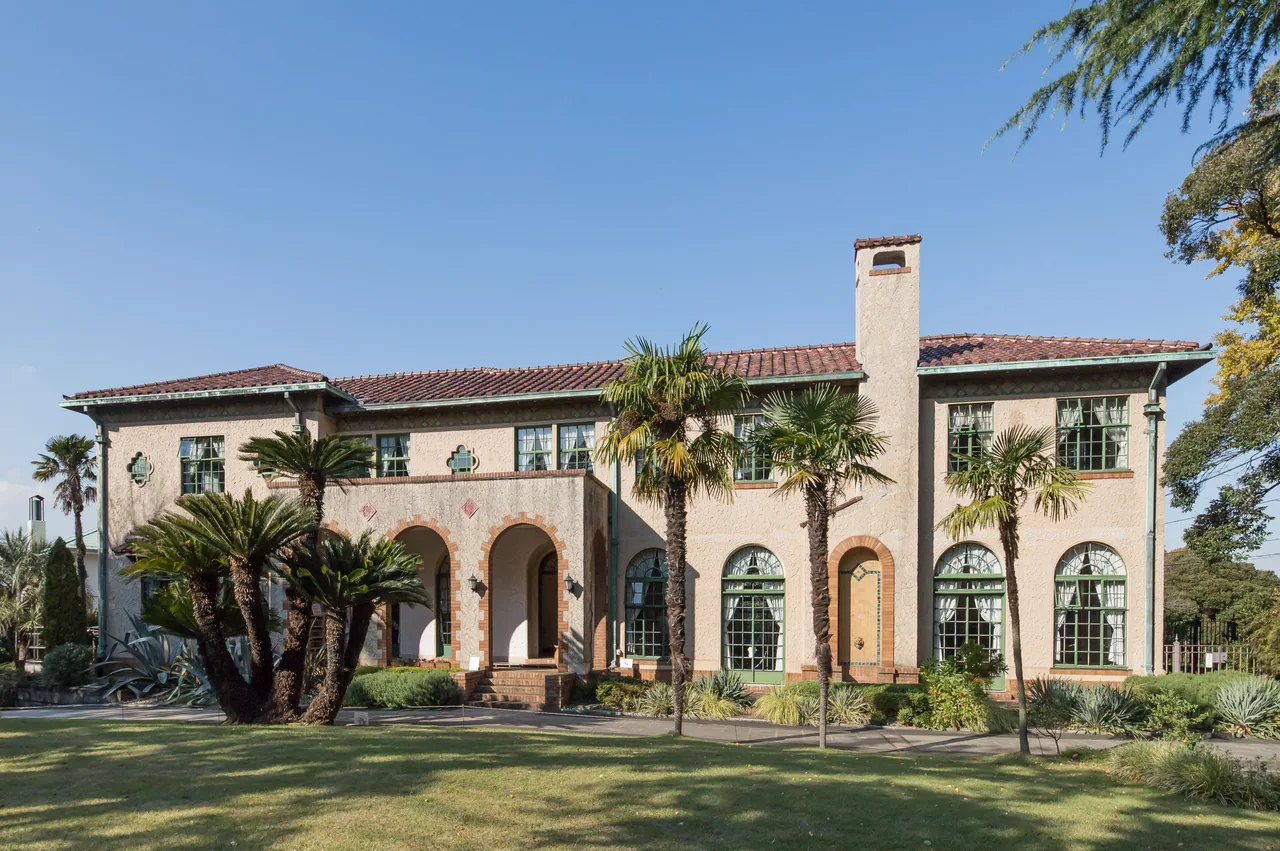
Seven Western houses on the Yamate bluff are managed by the city and open to the public, and all seven are free. All seven open at 09:30 and close at 17:00. Identical hours make the route easy to plan.
After the port opened, foreign residents settled on this hill, and their houses remain. They stand close together, so walking between them is straightforward.
| House | Admission | Hours |
|---|---|---|
| Yamate No. 111 | All free | 09:30 to 17:00 |
| Ehrismann Residence | ||
| Berrick Hall | ||
| Bluff No. 18 | ||
| Yokohama British House | ||
| Yamate No. 234 | ||
| Diplomat’s House |
This is a hill, so plan the climb
Yamate sits on a bluff. Walking up from Chinatown or Motomachi means a gradient. The Akai Kutsu bus stops at Harbour View Park, which allows riding up and walking down.
There are paths up from JR Ishikawacho Station and from the Motomachi-Chukagai side, both about ten minutes on foot.
Some houses have tea rooms
Several of the seven have a tea room attached. Entry stays free and drinks are charged separately.
Seasonal events fill the interiors with flower arrangements. Admission remains free during those as well.
19. The Yamate houses split between the second and fourth Wednesday
The seven Yamate houses do not share a closing day. Four close on the second Wednesday of each month and three close on the fourth Wednesday. Treating them as a single block will send you up the hill for nothing.
When the Wednesday falls on a public holiday, the closure moves to the following day. All seven close from 29 December to 3 January.
| Closing day | Houses |
|---|---|
| Second Wednesday of the month | Yamate No. 111, Ehrismann Residence, Berrick Hall, Bluff No. 18 |
| Fourth Wednesday of the month | Yokohama British House, Yamate No. 234, Diplomat’s House |
| 29 December to 3 January | All seven |
Avoid those two Wednesdays and all seven are open
On any day that is not a Wednesday, all seven are open. If Wednesday is your only option, choose the first or third of the month.
On a second Wednesday three remain open, and on a fourth Wednesday four remain open. There is no day when all of them are shut except the new year period.
Temporary closures happen for repairs
The buildings are old and individual houses close for periods of restoration work. The managing foundation posts notices on each house’s page.
Seeing all seven takes two to three hours, including the walk up and down the hill.
20. Sankeien closes for only six days a year
Sankeien costs 900 yen for high school students and above and 200 yen for elementary and junior high students. Yokohama residents aged 65 and over pay 700 yen. The garden closes only from 26 to 31 December, six days in the year.
It was created by a silk merchant, and historic buildings moved here from across Japan stand within the grounds. It lies in the Honmoku district, away from the central waterfront.
| Category | Individual | Group of 10 or more | Annual pass |
|---|---|---|---|
| Adult, high school and above | 900 yen | 800 yen | 2,500 yen |
| Elementary and junior high | 200 yen | 100 yen | 700 yen |
| Yokohama resident, 65 and over | 700 yen | 600 yen | 2,000 yen |
The annual pass pays off on the third visit
An adult annual pass is 2,500 yen against a 900 yen single entry, so three visits cost 2,700 yen and cross the line. It is worth checking if you return to Yokohama often.
Discount vouchers and certain membership cards reduce adult entry to 800 yen and children to 100 yen. Disability certificate holders and one companion enter free.
Parking is charged separately
Standard car parking costs 1,000 yen for the first two hours and 200 yen per 30 minutes after that, cash only. The parking can exceed the admission.
Hours run from 09:00 to 17:00 with last entry 30 minutes before closing. Tickets can be bought online in advance.
21. Company museums are the second largest category on the official list
Counting the genre tags on Yokohama’s 162 official sights, museums and company museums come second with 49 entries. Only the family tag, with 54, is larger, and food follows with 40.
The Cup Noodles Museum falls into this group, along with the Shin-Yokohama Ramen Museum, the Kirin Brewery Yokohama plant and the Nissan Yokohama plant.
| Genre tag | Sights |
|---|---|
| Family | 54 |
| Museums and company museums | 49 |
| Food | 40 |
| Leisure facilities | 39 |
| Culture and art | 31 |
| Shopping | 28 |
| Parks | 28 |
| Historic buildings | 27 |
| Night views | 12 |
Factory tours require booking
Most company-run factory tours take reservations in advance. Turning up on the day does not always work, so book once your dates are fixed.
Tour lengths are set as well. Around 90 minutes is common, which makes two factory tours in one day tight.
These are useful on wet days
They are indoor, so the weather does not matter. September and October are the wettest months in Yokohama, which makes them worth holding in reserve.
With children, the Cup Noodles Museum and the Ramen Museum are the straightforward choices. For adults, there is the brewery tour.
22. The Kirin brewery tour fee has doubled
The tour fee at the Kirin Brewery Yokohama plant becomes 1,000 yen from 1 October 2026. Tours running until the end of September cost 500 yen. The company published the revision on 7 August 2026.
The tour is for visitors aged 20 and over and takes about 90 minutes. Sessions that allow under-20s to accompany adults exist separately, and the quoted price is per person aged 20 or over.
| Tour date | Fee per person |
|---|---|
| Until the end of September | 500 yen |
| From 1 October | 1,000 yen |
Booking is required and it closes on Mondays
Reservations are made through the booking page on the company website. The plant closes on Mondays, opening when Monday is a public holiday and closing the next weekday instead. It also closes over the new year period.
Temporary closures occur, so check the calendar when booking.
The plant reached its centenary this year
The Kirin Brewery Yokohama plant marked 100 years of operation in 2026, and the company held a centenary event to mark it.
The tour finishes with a tasting, which is why the age limit applies. Anyone driving cannot take part in the tasting.
23. At the Ramen Museum the annual pass costs 50 yen more than one entry
Admission to the Shin-Yokohama Ramen Museum is 450 yen for adults. The digital annual pass costs 500 yen. The difference is 50 yen, so two visits already favour the annual pass.
Elementary and junior high students pay 100 yen, and high school students pay the same 100 yen student rate. Children under six enter free, and disability certificate holders and a companion enter free.
| Category | Price |
|---|---|
| Adult | 450 yen |
| Elementary, junior high and high school | 100 yen |
| Under 6 | Free |
| Digital annual pass | 500 yen |
| Analogue annual pass | 800 yen |
The ramen is paid for separately
Admission covers entry only. Each of the shops charges for its bowls. There are eight shops inside, and they sell smaller portions so that visitors can try more than one.
Each shop represents a different regional style, covering Yamagata, Rishiri, Yokohama, Okinawa, Kumamoto and Hakata among others.
Weekday and weekend hours differ
Weekdays run from 11:00 to 21:00 and weekends and public holidays from 10:30 to 21:00. Last orders are 30 minutes before closing.
The museum closes only on 31 December and 1 January. It is within walking distance of Shin-Yokohama Station, which makes it usable during a shinkansen connection.
24. Hakkeijima Sea Paradise sells five different tickets
Yokohama Hakkeijima Sea Paradise sells five tickets, ranging from 2,800 to 5,900 yen for adults. The choice comes down to whether you want the aquariums only or the rides as well. Some prices changed on 1 August 2026.
The most expensive, the One Day Pass, covers four aquariums plus unlimited rides. For aquariums alone, the Aqua Resorts Pass is 3,500 yen, or 2,400 yen less.
| Ticket | Adult and high school | 65 and over | Elementary and junior high | Child, 4 and over |
|---|---|---|---|---|
| One Day Pass, aquariums and rides | 5,900 yen | 4,300 yen | 4,300 yen | 2,600 yen |
| Aqua Resorts Pass, aquariums only | 3,500 yen | 3,000 yen | 2,200 yen | 1,200 yen |
| Pleasure Land Pass, rides only | 3,500 yen | 3,000 yen | 3,000 yen | 1,800 yen |
| Night Pass, from 16:00 | 3,900 yen | 2,600 yen | 2,600 yen | 1,700 yen |
| Night Aqua Resorts Pass, from 16:00 | 2,800 yen | 2,400 yen | 1,700 yen | 850 yen |
On the One Day Pass, seniors and schoolchildren pay the same
The One Day Pass charges 4,300 yen for visitors aged 65 and over and the same 4,300 yen for elementary and junior high students. The Aqua Resorts Pass splits them at 3,000 and 2,200 yen.
For a group of adults, children and grandparents, the two passes produce noticeably different totals. Work out both before choosing.
The evening tickets are weekend only
The two night tickets are sold only on Saturdays, Sundays, public holidays and designated dates. A weekday evening visit needs a day ticket.
Single-ride tickets are also sold, between 400 and 1,000 yen, so a couple of rides do not require a pass.
The annual pass is 11,800 yen for adults, which the operator describes as the price of two One Day Passes.
25. The Keikyu combination ticket to Hakkeijima saves 1,680 yen
The Yokohama Hakkeijima Sea Paradise Ticket sold by Keikyu costs 3,140 yen for adults from Yokohama Station. Bought separately the same contents come to 4,820 yen. The difference is 1,680 yen.
The set contains a Keikyu return journey, a Seaside Line day pass, the Aqua Resorts Pass and a voucher worth 500 yen for use on the island.
| Bought separately | Price |
|---|---|
| Keikyu return, Yokohama to Kanazawa-hakkei | 640 yen |
| Seaside Line day pass | 680 yen |
| Aqua Resorts Pass | 3,500 yen |
| Total | 4,820 yen |
| Combination ticket from Yokohama | 3,140 yen |
Counting the 500 yen voucher, the gap widens to 2,180 yen.
The price depends on the starting station
| Starting station | Adult | Child |
|---|---|---|
| Shinagawa | 3,550 yen | 2,630 yen |
| Keikyu Kawasaki | 3,250 yen | 2,480 yen |
| Yokohama | 3,140 yen | 2,420 yen |
| Yokosuka-chuo | 3,020 yen | 2,360 yen |
Where it is sold
Ticket machines at Keikyu stations sell it, but not at Sengakuji, the Haneda Airport stations, or Kanazawa-hakkei.
That means it cannot be bought at the airport by anyone heading straight from Haneda to Hakkeijima. Buy it when changing at Yokohama Station instead.
The maths changes if you want the rides
The set includes the Aqua Resorts Pass, which covers the four aquariums only. Rides are paid for on site.
If rides are the point, the One Day Pass at 5,900 yen plus transport is the simpler route. The Seaside Line day pass is 680 yen for adults.
26. Zoorasia lets high school students and younger in free on Saturdays
Admission to Zoorasia, the municipal zoo, is 800 yen for adults. On every Saturday, high school students and younger enter free. On other days high school students pay 300 yen and elementary and junior high students pay 200 yen.
Children below elementary age are always free. Travelling with children, choosing a Saturday changes the total by itself.
| Category | Normal | Saturday |
|---|---|---|
| Adult | 800 yen | 800 yen |
| High school | 300 yen | Free |
| Elementary and junior high | 200 yen | Free |
| Below elementary age | Free | Free |
It closes on Tuesdays
The closing day is Tuesday, moving to the following day when Tuesday is a public holiday. Hours run from 09:30 to 16:30 with last entry at 16:00.
The Cup Noodles Museum also closes on Tuesday, so both drop out of a Tuesday itinerary together.
Summer weekends run into the evening
On Saturdays, Sundays and public holidays in August the zoo runs from 13:00 to 20:00, with last entry at 19:00. The pattern shifts the visit past the heat of the day.
Zoorasia is in the northern part of the city, away from the centre, so allow half a day.
27. Kannai and Bashamichi hold 22 sights, the second highest count
The Kannai, Bashamichi and Isezakicho district holds 22 official sights, second only to Minato Mirai 21. It is less well known by name than Minato Mirai or Chinatown, which is why visitors pass through without stopping.
The district lies between those two, so you cross it anyway when moving from one to the other. It does not need separate time set aside.
| District | Sights | Nearest stations |
|---|---|---|
| Minato Mirai 21 | 38 | Minatomirai, Sakuragicho |
| Kannai, Bashamichi, Isezakicho | 22 | Bashamichi, Nihon-odori, Kannai |
| Chinatown and Yamashita Park | 20 | Motomachi-Chukagai, Nihon-odori |
All three towers line up in front of the prefectural office
One of the three places to see King, Queen and Jack together is directly in front of the Kanagawa Prefectural Government building. The other two are the Red Brick Warehouse and Osanbashi.
All three viewpoints are within walking distance of each other, and visiting all three takes about 30 minutes.
Baseball days fill the area
Yokohama Stadium stands in this district. On match days the area around Kannai and Nihon-odori stations becomes busy.
Chinatown sits next door, so restaurants fill up before and after games. If dinner in Chinatown is the plan, it is worth checking the fixture list.
28. Noge has only seven listed sights and fills up after dark
The Sakuragicho and Noge district holds seven official sights, one of the lower counts among the twelve districts. Counting listed sights is the wrong measure here. The draw is a grid of narrow lanes packed with small bars and restaurants.
Sakuragicho Station separates two very different areas. On one side stand the towers of Minato Mirai, and five minutes away on the other side is Noge.
| Item | Detail |
|---|---|
| Official sights | 7 |
| Nearest stations | Sakuragicho, Hinodecho |
| To the centre of Minato Mirai 21 | 1.18 km straight line |
| Character | Lanes of small restaurants and bars |
Day and night are different visits
Daytime is quiet. Many places are shut, so there is little to see on a walk through. Minato Mirai is the better use of daylight hours.
Places open from early evening. Stopping here on the way back from a night view at Osanbashi fits the timing. Sakuragicho Station serves both the Minatomirai Line and JR, so getting back is simple.
The Air Cabin terminal is here
The Sakuragicho terminal of the Yokohama Air Cabin is in this district, and the Akai Kutsu loop bus also departs from in front of Sakuragicho Station.
Because transport converges here, starting and ending the day in the same place works naturally.
29. Motomachi and Harbour View Park sit on the way up to Yamate
The Motomachi and Yamate district holds 15 official sights. The seven Western houses are counted here, along with the Motomachi shopping street and Harbour View Park. It connects to Chinatown on foot.
From the centre of the Chinatown and Yamashita Park district to the centre of Motomachi and Yamate is 0.88 km in a straight line, the shortest gap between any two districts covered here.
| Place | Price | Character |
|---|---|---|
| Motomachi shopping street | Free | Level shopping street |
| Harbour View Park | Free | Hilltop park facing the port |
| Seven Yamate Western houses | Free | Western residences on the bluff |
Splitting the climb from the descent helps
Motomachi is level ground and Yamate is up on the bluff. The Akai Kutsu bus stops at Harbour View Park, which allows riding up, walking the houses and coming down through Motomachi on foot.
Walking up from Motomachi means taking the gradient. With children or older relatives, the bus is the better choice.
The park looks out over the harbour
Harbour View Park is exactly what its name says, a park on the bluff with a view of the port. Entry is free and there is no time restriction.
Two of the seven Western houses stand inside this park. Combining the park and those houses takes about an hour.
30. Closing days are scattered, so fix the date before the itinerary
Closing days in Yokohama fall on different days of the week from one attraction to the next. Mondays, Tuesdays, Thursdays and specific Wednesdays each take something out. Fixing the date first causes fewer problems than fixing the list of sights first.
The table below gathers the closing days for everything covered in this guide.
| Closes | Attraction |
|---|---|
| Monday | Hikawa Maru, Kirin Brewery Yokohama tour |
| Tuesday | Cup Noodles Museum, Zoorasia |
| Thursday | Yokohama Museum of Art |
| Second Wednesday | Yamate No. 111, Ehrismann Residence, Berrick Hall, Bluff No. 18 |
| Fourth Wednesday | Yokohama British House, Yamate No. 234, Diplomat’s House |
| 26 to 31 December | Sankeien |
| 31 December and 1 January | Shin-Yokohama Ramen Museum |
| 29 December to 3 January | All seven Yamate houses |
| None | Red Brick Warehouse apart from inspection days, Osanbashi rooftop, Kanteibyo |
Tuesday is the worst day
Tuesday removes both the Cup Noodles Museum and Zoorasia. For anyone travelling with children, those are two of the strongest candidates gone at once.
In exchange, all seven Yamate houses are open on a Tuesday, as are the Red Brick Warehouse and Osanbashi.
If the date cannot move
With a fixed arrival date, build the day around what is open. Yokohama has enough free sights that losing one or two does not leave a gap.
The Osanbashi rooftop, the Red Brick Warehouse, Yamashita Park and Chinatown are available on any day of the week.
31. One day covers the centre, two days if you add the south or north
One day is enough for the central area. Adding Hakkeijima in the south or Zoorasia in the north makes it two. That follows from the first section: 62% of the sights fall within 2 km of Sakuragicho Station.
The most common pattern is a day trip from a Tokyo base. Coming from Shibuya there is no change of train.
| Time | What fits |
|---|---|
| Half a day | Minato Mirai alone: Red Brick Warehouse and Cup Noodles Museum |
| One day | Minato Mirai, Chinatown, Yamashita Park and the Osanbashi night view |
| A day and a half | The above plus the Yamate houses and Sankeien |
| Two days | The above plus either Hakkeijima or Zoorasia |
A one-day route by the clock
Start the morning in Minato Mirai. The Red Brick Warehouse and Cup Noodles Museum are both here and within walking distance of each other. Take lunch in Chinatown, then Yamashita Park and the Hikawa Maru in the afternoon.
Head up to Yamate before the light goes, since the houses close at 17:00. Coming back down to the Osanbashi rooftop ends the day on the night view.
With two days, spend one of them outside the centre
Hakkeijima is in the south and Zoorasia in the north, in opposite directions. Putting both into one day leaves only travel time. Other day trips out of Tokyo include Hakone and Kamakura.
Sankeien and the Ramen Museum are also outside the centre, in Honmoku and Shin-Yokohama respectively.
32. A day of free sights costs only the fare
A day spent on free attractions costs a few hundred yen in transport. Adding three or four paid sights brings it to around 3,000 yen. Yokohama has enough free entries that the range is wide.
The figures below assume a day trip from Tokyo starting at Shibuya on the Tokyu line.
| Item | Free-led day | With paid sights |
|---|---|---|
| Return transport from Shibuya | 620 yen | 920 yen with the Minatomirai Pass |
| Moving around the city | 0 yen on foot | Included in the pass |
| Red Brick Warehouse | 0 yen | 0 yen |
| Osanbashi rooftop | 0 yen | 0 yen |
| Yamate Western houses | 0 yen | 0 yen |
| Cup Noodles Museum with one workshop | – | 1,000 yen |
| Hikawa Maru | – | 300 yen |
| Cosmo Clock 21 | – | 1,000 yen |
| Total, meals excluded | 620 yen | 3,220 yen |
Hakkeijima is the single largest line
The One Day Pass at Hakkeijima costs 5,900 yen for adults, more than every other item combined. Including it or not changes the day by more than a factor of two.
For the aquariums alone the Aqua Resorts Pass is 3,500 yen, and the Keikyu combination ticket covers transport too at 3,140 yen.
Chinatown gives the widest range for meals
With more than 400 shops, Chinatown covers everything from a single steamed bun on the street to a full course.
Minato Mirai leans towards restaurants inside shopping centres, which keeps prices in a narrower band.
33. August is the hottest month and the wettest are September and October
On Japan Meteorological Agency normals, August is the warmest month in Yokohama at 27.0 degrees average and 31.0 degrees daytime high. January is the coldest at 6.1 degrees average. The climate is close to Tokyo, so a Tokyo itinerary transfers directly.
Because a lot of the day is spent along the water, wind matters. For long stops at Osanbashi or Yamashita Park in winter, add a layer.
| Month | Average | Daytime high | Night low | Rainfall |
|---|---|---|---|---|
| January | 6.1C | 10.2C | 2.7C | 64.7 mm |
| February | 6.7C | 10.8C | 3.1C | 64.7 mm |
| March | 9.7C | 14.0C | 6.0C | 139.5 mm |
| April | 14.5C | 18.9C | 10.7C | 143.1 mm |
| May | 18.8C | 23.1C | 15.5C | 152.6 mm |
| June | 21.8C | 25.5C | 19.1C | 188.8 mm |
| July | 25.6C | 29.4C | 22.9C | 182.5 mm |
| August | 27.0C | 31.0C | 24.3C | 139.0 mm |
| September | 23.7C | 27.3C | 21.0C | 241.5 mm |
| October | 18.5C | 22.0C | 15.7C | 240.4 mm |
| November | 13.4C | 17.1C | 10.1C | 107.6 mm |
| December | 8.7C | 12.5C | 5.2C | 66.4 mm |
More rain falls in autumn than in the rainy season
September is the wettest month at 241.5 mm and October follows at 240.4 mm. June, the rainy season month, records 188.8 mm, so the two autumn months exceed it. Typhoon season overlaps this period.
Annual rainfall is 1,730.8 mm. Anyone visiting in September or October should keep indoor options in reserve.
January and February are the driest
January and February both record 64.7 mm, and December is close at 66.4 mm, making the three winter months the driest stretch. It is cold but good for walking.
Darkness falls early in winter, which favours night views. The Osanbashi rooftop has no time limit.
34. 2 June is the port opening anniversary and city schools close
Yokohama marks 2 June as the anniversary of the opening of its port, and municipal schools close that day. The school holiday dates from 1959, when the city held its centenary celebration of the port opening.
The Yokohama Port Festival runs around that date. It is a civic event staged along the waterfront.
| Item | Detail |
|---|---|
| Port opening anniversary | 2 June |
| Municipal schools | Closed |
| School holiday began | 1959, port centenary year |
| Port Festival | 1 and 2 June, two days |
The city is busy that day
With schools closed and events running, families fill the waterfront. It is a date to avoid for a quiet visit and a date to target for the events.
The festival ends with a mass choir and a light and sound show. Both take place on the harbour side, so Osanbashi and Yamashita Park are especially crowded.
Summer has its own fireworks
Fireworks are held over the water off Minato Mirai in summer, and in some years Osanbashi sets aside seating for viewing.
Dates change from year to year, so check the notices once your travel dates are set.
35. Yokohama levies no lodging tax
Yokohama has no lodging tax, so there is nothing extra to pay at check-in. That sets it apart from Tokyo, Osaka, Kyoto and Fukuoka, which all levy one.
The city assembly has discussed introducing one, but no ordinance has been enacted. Kanagawa Prefecture has said it will not rush a prefecture-level tax.
| Item | Detail |
|---|---|
| Yokohama city lodging tax | None |
| Kanagawa prefecture lodging tax | None |
| Reason the prefecture gives | The tax base concentrates in Yokohama and Hakone |
| Other reasons | Collection burden on accommodation, overlap with the bathing tax |
Staying in Tokyo adds the Tokyo tax
Visiting Yokohama as a day trip while sleeping in Tokyo means paying the Tokyo metropolitan lodging tax. Staying in Yokohama removes it.
The amount is small per night but accumulates over several. Rates by city are set out in our guide to the Japanese lodging tax.
This may change
The number of Japanese municipalities introducing a lodging tax has been rising, and the discussion in Yokohama continues.
Checking the tax line shown by your accommodation at the time of booking will confirm the position on your dates.
36. Hotels cluster around Yokohama Station, Minato Mirai and Chinatown
Three areas hold most of the accommodation: around Yokohama Station, Minato Mirai, and the Chinatown side. They are different in character. Yokohama Station is for connections, Minato Mirai puts you among the sights, and the Chinatown side suits long evenings on foot.
One thing to note is that the Yokohama Royal Park Hotel inside Landmark Tower has suspended operations and does not appear on booking sites.
| Area | Character | Suits |
|---|---|---|
| Around Yokohama Station | Interchange for several railways, department stores and arcades | Using Yokohama as a base while travelling into Tokyo |
| Minato Mirai | 38 sights in one district, harbour-facing views | Covering the sightseeing on foot |
| Chinatown and Yamashita Park | Restaurants and night views, connects up to Yamate | Long evenings |
| Shin-Yokohama | Shinkansen station, over 6 km from the centre | Leaving by shinkansen the next morning |
Staying in Tokyo and visiting for the day also works
At around 30 minutes direct from Shibuya, Yokohama can be visited without moving hotels. Not shifting luggage is the advantage.
The one constraint is the return after a night view at Osanbashi. The Akai Kutsu bus stops running in the early evening.
Check where Shin-Yokohama actually is
Despite the name, Shin-Yokohama is more than 6 km from the sightseeing centre. Unless the shinkansen is the point, it adds travel time.
If you are leaving for Osaka or Kyoto the next morning, it is the convenient choice. If you decide on a Tokyo base instead, see where to stay in Tokyo.
37. Wet days can be moved indoors
September records 241.5 mm of rain in Yokohama and October 240.4 mm, both above the 188.8 mm of the June rainy season. Autumn visitors should hold indoor options in reserve.
There are plenty. Museums and company museums make up 49 entries on the official list, the second largest genre after family.
| Indoor option | Adult price | Closes |
|---|---|---|
| Cup Noodles Museum | 500 yen | Tuesday |
| Shin-Yokohama Ramen Museum | 450 yen | 31 December and 1 January |
| Yokohama Museum of Art | Varies by exhibition | Thursday |
| Hikawa Maru | 300 yen | Monday |
| Red Brick Warehouse | Free | No regular closing day |
| Landmark Plaza | Free | No regular closing day |
| Kirin Brewery tour | 1,000 yen | Monday |
Minato Mirai connects under cover
Minatomirai Station and the surrounding shopping centres link by indoor walkways, so you can reach Landmark Plaza without going outside.
The Cup Noodles Museum and the art museum are a few minutes away, which makes a full wet day inside Minato Mirai workable.
Chinatown still walks in the rain
With more than 400 shops packed together, moving between awnings in Chinatown is not difficult, and the restaurants are indoors.
The Osanbashi rooftop, Yamashita Park and the hill paths around Yamate are the parts that suffer in rain. Save those for a clear day.
38. With children, the day of the week changes the total
Family is the largest genre tag on Yokohama’s official list, with 54 entries. Several of them price differently depending on the day, which makes the date worth choosing deliberately.
Zoorasia admits high school students and younger free every Saturday. On other days that is 300 yen for high school and 200 yen for elementary and junior high students.
| Attraction | Adult | Children | Note |
|---|---|---|---|
| Cup Noodles Museum | 500 yen | Free to high school age | Workshops extra, closed Tuesday |
| Zoorasia | 800 yen | Free to high school age on Saturdays | Closed Tuesday |
| Hakkeijima One Day Pass | 5,900 yen | 4,300 yen school age, 2,600 yen child | The largest single cost |
| Ramen Museum | 450 yen | 100 yen school age, free under 6 | Ramen charged separately |
| Cosmo World | Free entry | Free entry | Each ride charged |
| Red Brick Warehouse and Yamashita Park | Free | Free | – |
Tuesday removes two of them at once
The Cup Noodles Museum and Zoorasia both close on Tuesday. For families those are two of the strongest options gone on the same day.
If Tuesday is the only date available, Hakkeijima and the Ramen Museum both stay open.
Which stretches suit a pushchair
Minato Mirai and the Yamashita Park area are level with wide pavements and present no difficulty.
Yamate is a bluff with a continuous climb. The Akai Kutsu bus stops at Harbour View Park, which makes the ride up the easier option.
39. Practical notes
One IC card covers most of Yokohama. Suica or Pasmo works on the trains and the buses. The day passes covered earlier are worth buying only when they fit the day.
A few places need cash. The Sankeien car park takes cash only, and some smaller shops in Chinatown do the same.
| Item | Detail |
|---|---|
| IC card | Suica and Pasmo cover trains and buses |
| Cash needed | Sankeien car park, some small shops |
| Coin lockers | At the main stations and larger attractions |
| Lodging tax | None |
| Walking distance | About 5 km for a full central loop |
Choose shoes first
Walking is the main activity here. A full circuit of the centre comes to about 5 km, and Yamate is uphill.
Evenings are breezy on the waterfront even in summer. A light outer layer makes a long stop at Osanbashi comfortable.
What needs booking
The Kirin brewery tour is reservation-only. The Chicken Ramen Factory at the Cup Noodles Museum has limited places.
Everything else can be bought on the day. Marine Tower is 100 yen cheaper bought online in advance. For fares see Japanese IC cards, and for data see Japan eSIM plans.
🎡Things to Do21
🏨Where to Stay2
🚇Getting Around3
🗾Japan trip essentials22
Yokohama travel: frequently asked questions
One day covers the centre. 96 of the 162 sights on the city tourism list sit within 2 km of Sakuragicho Station, so Minato Mirai, the Red Brick Warehouse, Chinatown, Yamashita Park and the Yamate houses all connect on foot. Adding Hakkeijima in the south or Zoorasia in the north takes it to two days.
Not at present. Sky Garden on the 69th floor has suspended operations for major building refurbishment, with reopening planned for 2028 or later. The Yokohama Royal Park Hotel in the same building is also closed. Landmark Plaza, the shopping mall on the lower floors, remains open.
The rooftop of Osanbashi International Passenger Terminal is open 24 hours with no admission charge. The highest point is only 15 m above ground, but the terminal projects into the harbour so Minato Mirai fills the view. A Nihon Keizai Shimbun list of ten free panoramic night views ranked it first.
From Shibuya the Tokyu Toyoko Line runs through onto the Minatomirai Line with no change of train, at 310 yen one way. From Tokyo Station take the JR Tokaido or Keihin-Tohoku line. From Haneda Airport the Keikyu Line takes 27 to 28 minutes and costs 370 yen.
Coming from a Tokyu station, the Tokyu Minatomirai Pass pays off from the second Minatomirai Line ride. It is 920 yen from Shibuya against 620 yen for the Tokyu return alone, and two Minatomirai Line rides would cost 1,020 to 1,080 yen bought separately. If you plan to walk, no pass is needed.
The Red Brick Warehouse, the Osanbashi rooftop, Yamashita Park, all seven Yamate Western houses and entry to Cosmo World are free. Walking Chinatown and viewing Kanteibyo from outside cost nothing. Paid sights are modest too: the Hikawa Maru is 300 yen, the Ramen Museum 450 yen and the Cup Noodles Museum 500 yen.
Tuesday closes the Cup Noodles Museum and Zoorasia. Thursday closes the art museum, and Monday closes the Hikawa Maru and the Kirin brewery tour. Four of the seven Yamate houses close on the second Wednesday of the month and the other three on the fourth, so avoiding those two Wednesdays keeps all seven open.
No. Neither Yokohama city nor Kanagawa Prefecture levies one, so there is nothing extra to pay at check-in. Staying in Tokyo instead brings the Tokyo metropolitan lodging tax into the bill.
No. Shin-Yokohama is 6.48 km from Sakuragicho Station and 4.70 km from Yokohama Station in a straight line. It is the shinkansen stop and shares only the name with the sightseeing area. The Shin-Yokohama Ramen Museum is within walking distance of it, which suits a connection.
The Keikyu combination ticket costs 3,140 yen for adults from Yokohama Station. Bought separately, the Keikyu return at 640 yen, the Seaside Line day pass at 680 yen and the Aqua Resorts Pass at 3,500 yen come to 4,820 yen, a difference of 1,680 yen. Note that the set does not include the rides.