
Shibuya, Tokyo: The Complete Guide to the Scramble Crossing, Shibuya Sky, and Neon Tokyo
Shibuya is the Tokyo most visitors picture before they land — the scramble crossing, a station too tangled to explain in one sentence, and a skyline that keeps rebuilding itself. This guide covers honest Shibuya Sky pricing (plus a cheaper rooftop alternative), why the Hachiko statue is actually a 1948 recreation, the real reason the station trips up even repeat visitors, and the 2024 public drinking ban that changes how an evening here works.
| Shibuya Sky costs about ¥2,700 online before 15:00 (¥3,400 after, or ¥3,000/¥3,700 at the door), and since popular slots — especially sunset — really do sell out, book in advance rather than risk a walk-up. | |
| The Hachiko statue you photograph today is a 1948 recreation by the original sculptor’s son, made after the 1934 original was melted down for WWII scrap metal. | |
| Shibuya Station is one of Tokyo’s most bewildering stations, with 9 train lines crossing 14 platforms across multiple levels — confusion that deepened in March 2013 when the Tokyu Toyoko Line moved underground. | |
| MAGNET by SHIBUYA109’s rooftop is a no-admission alternative to Shibuya Sky, requiring only a drink purchase from about ¥600 for a lower but still excellent view directly over the Crossing. | |
| Shibuya enacted a permanent, year-round public drinking ban in October 2024, enforced 6pm-5am daily around JR Shibuya Station and Miyashita Park, with first-time violators asked to stop rather than fined. | |
| Halloween in Shibuya is now actively restricted rather than celebrated as an open street party, with heavy security, temporary e-scooter suspensions, and crowd-control measures every late October. | |
| Shibuya remains under active redevelopment — Hikarie (2012), Stream (2018), Scramble Square (2019), Miyashita Park (2020), and Sakura Stage (2024) mark a wave expected to wrap up around 2032 — so it will likely look different again in a few years. |
1. Shibuya in brief: Tokyo’s neon youth-culture engine
2. Is Shibuya worth visiting?
3. Getting to Shibuya: the most confusing station in Tokyo, honestly
4. Shibuya Crossing and the Hachiko Statue
5. Shibuya Sky vs. the MAGNET rooftop: comparing the views
6. Center Gai: Shibuya’s loud, neon shopping core
7. Shibuya 109 and Dogenzaka
8. Shibuya Scramble Square, Stream, and the redevelopment wave
9. Miyashita Park
10. Nonbei Yokocho: Drunkard’s Alley, the real survivor
11. Cat Street: Shibuya’s change-of-pace walk
12. Nightlife and the public drinking ban: what’s actually allowed
13. Sample Shibuya itineraries: half-day and full-day plans
14. What to eat in Shibuya
15. Practical essentials: timing, luggage, and connectivity
16. Shibuya vs. the rest of Tokyo: how to fit it into your trip
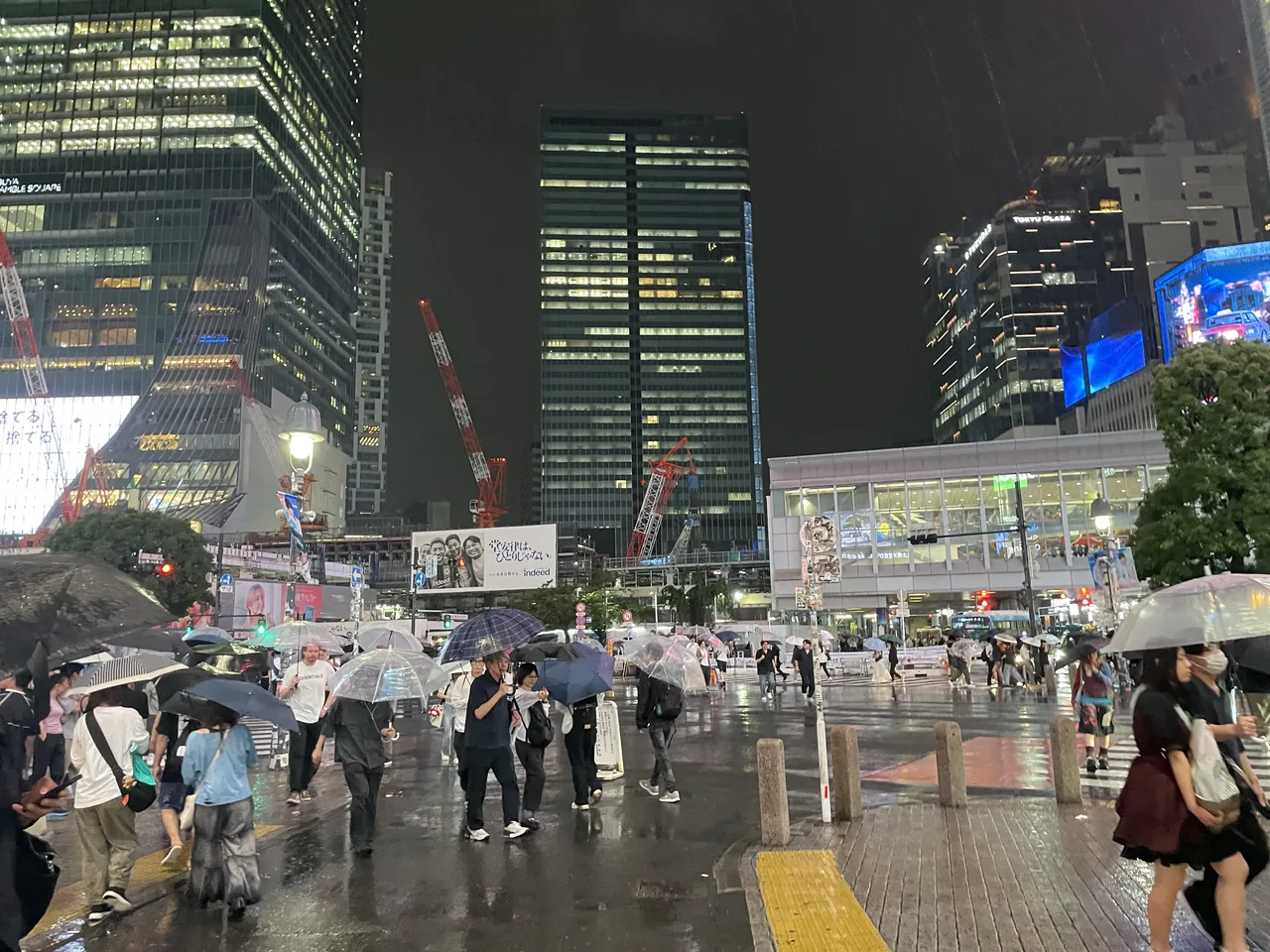
1. Shibuya in brief: Tokyo’s neon youth-culture engine
Shibuya is a ward on Tokyo’s west side built around one of the world’s most photographed intersections, and it has spent the past three decades as the epicenter of Japanese youth fashion, nightlife, and near-constant redevelopment. Where a neighborhood like Asakusa preserves the low-rise, temple-centered old downtown Tokyo grew out of, Shibuya is closer to the opposite pole — the version of the city that keeps tearing itself down and building back taller, brighter, and busier every few years.
The core sits within a compact, walkable ring around Shibuya Station: the Hachiko Statue and Scramble Crossing right outside the station’s Hachiko Exit, Center Gai’s neon shopping lanes a minute beyond that, Shibuya 109 and Dogenzaka climbing the hill to one side, and Shibuya Scramble Square’s rooftop observation deck rising over all of it. Miyashita Park and Shibuya Stream sit a few minutes further out, and Cat Street peels off toward Harajuku and Omotesando for anyone extending the day. Almost everything in this guide is within a 10-15 minute walk of everything else.
Shibuya’s identity as a fashion capital dates to the 1990s and 2000s, when the kogal and gyaru scenes centered on Shibuya 109 defined a look that spread across Japan and, eventually, well past it. That original youth-fashion DNA hasn’t disappeared, but it now shares space with global streetwear, department-store fashion inside Hikarie and PARCO, and a nightlife scene that runs later than almost anywhere else in this guide series.
If you’re mapping out the rest of the city around a Shibuya visit, our Tokyo travel guide covers how a district like this fits into a multi-day plan, and our complete Japan travel guide zooms out to how Tokyo fits into a national itinerary. And if you’ve already spent time in Asakusa, or you’re deciding which to do first, it’s worth knowing upfront that the two neighborhoods aren’t in competition — they’re two different centuries of the same city, sitting a short train ride apart.
Who Shibuya suits best: first-timers chasing the “modern Tokyo” postcard shot, shoppers after streetwear and fast fashion, nightlife-curious travelers, and anyone who likes a district that’s visibly, constantly reinventing itself. It’s a poorer fit for anyone hoping for a quiet, contemplative pace — that’s a short ride away in a neighborhood like Asakusa, not something Shibuya is built to offer.
The name itself is a small clue to the district’s layout. “Shibuya” translates roughly to “astringent valley,” and the area really does sit in a lowland basin, with surrounding hills funneling streets and, historically, rivers down into it. That geography is part of why the district reads the way it does on foot today — Dogenzaka is a hill in the literal sense, several routes truly converge on the low point around the station, and the sense of everything pouring toward one crowded intersection isn’t just a design choice, it’s the terrain doing what terrain does.
2. Is Shibuya worth visiting?
Yes — Shibuya delivers Tokyo’s clearest single dose of the neon, crowded, constantly-rebuilding modern city most people picture before they’ve ever set foot in Japan, and no other district hands you that image quite so efficiently. It isn’t a smaller or quieter stand-in for anywhere else on a Tokyo itinerary; it’s the loudest, most youth-driven neighborhood you’re likely to visit, and that’s the whole appeal.
The caveat: Shibuya is dense, loud, and can feel overwhelming on a first pass, especially around the station and Center Gai on a weekend evening. If you’re picturing a leisurely stroll, that’s not really what the core experience delivers — it’s closer to being swept along by a current of people, which is either exactly what you came for or plainly not your speed. Both reactions are fair.
There’s also a practical case beyond the atmosphere. Shibuya concentrates shopping, a legitimate skyline observation deck, izakaya alleys both old and new, and one of the most recognizable sights in the country into a single walkable core, without the multi-district hopping some Tokyo itineraries end up requiring.
| What you get in Shibuya | What you’re less likely to find here |
|---|---|
| The Scramble Crossing and Hachiko Statue, two of Tokyo’s most photographed sights | A slow, contemplative pace during daylight hours |
| A full 360° rooftop observation deck (Shibuya Sky) plus a cheaper alternative view | Historic temples or shrines as the main draw |
| Youth fashion, streetwear, and department-store shopping | Traditional craft shopping in the Asakusa/Kappabashi sense |
| Nightlife that runs well past midnight, old alleys and new complexes alike | A simple, self-explanatory train station |
Set it beside a neighborhood like Asakusa and the two aren’t really answering the same question. Asakusa is low-rise, free to visit, and centered on a 1,400-year-old temple; Shibuya is vertical, commercial, and rebuilds itself on a rolling basis. Neither is the “better” Tokyo — they’re different layers of the same city, and most travelers get more out of seeing both than out of treating one as a substitute for the other.
One more framing question worth asking: is Shibuya worth it for a second visit, or once you’ve seen the Crossing are you done? Most repeat visitors say the district holds up — the observation deck, the yokocho alleys, Cat Street, and Dogenzaka’s nightlife are each reasons to come back on their own, and the ongoing redevelopment means a return trip a few years later can look strikingly different rather than retreading the same ground.
3. Getting to Shibuya: the most confusing station in Tokyo, honestly
Shibuya Station is, without much exaggeration, one of the most confusing stations in Tokyo — nine different train lines cross through it across 14 platforms, spread over multiple underground and aboveground levels, and the whole thing isn’t contained in a single building the way a first-time visitor might expect. Set your expectations accordingly rather than assuming it will behave like an ordinary transfer.
Much of the modern confusion traces to a specific event: in March 2013, the Tokyu Toyoko Line was relocated deep underground, which lengthened the walk to the JR Yamanote Line platforms and reshuffled passenger flow patterns that longtime Tokyo visitors sometimes still remember differently from an earlier trip. If your last visit predates that, or you’re going off an old guidebook, treat your mental map of the station as out of date.
| What makes it confusing | Detail |
|---|---|
| Line count | 9 different train lines converge here, including JR lines and the Yamanote, plus Tokyo Metro and Tokyu lines |
| Platform count | 14 platforms in total |
| Layout | Split across multiple underground and aboveground levels, not one single building |
| 2013 change | Tokyu Toyoko Line moved deep underground, lengthening transfers to the JR Yamanote Line |
The practical fix is simple: use the Hachiko Exit as your default orientation point. It puts you directly at the Scramble Crossing, closest to Center Gai and Shibuya 109, and it’s the exit most signage — and most other travelers — are also converging on. Give yourself more transfer time here than at a more conventional station, follow current signage rather than relying on memory of a past trip, and expect the layout to keep shifting somewhat as the surrounding redevelopment continues through the rest of the decade.
Coin lockers are available at Shibuya Station for day-trip luggage, useful if Shibuya is a stop partway through a longer day rather than where you’re starting or ending it.
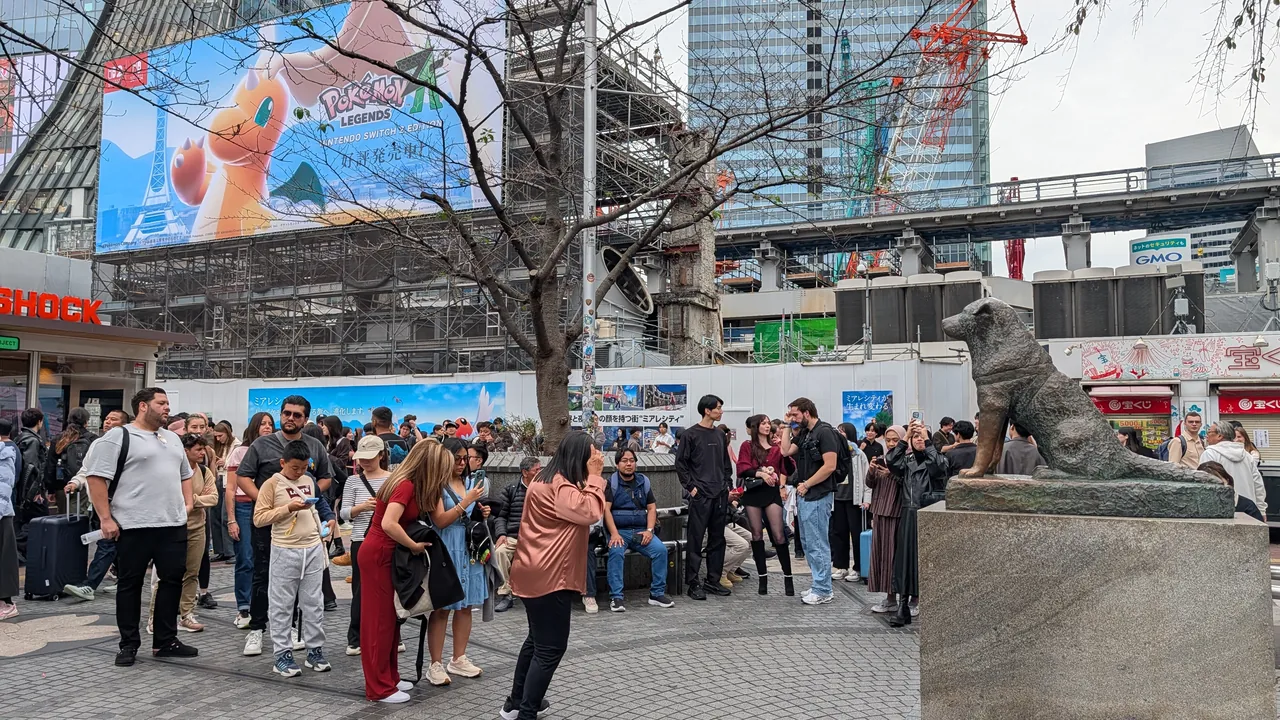
4. Shibuya Crossing and the Hachiko Statue
The Shibuya Scramble CrossingMap outside Shibuya Station’s Hachiko Exit is where several crosswalks release at once and send pedestrians surging across the intersection from every direction simultaneously — widely cited, though not precisely verifiable, as one of the busiest pedestrian crossings in the world. On a busy day, a commonly repeated (and similarly unverifiable, but widely quoted) figure puts foot traffic through the wider station area at up to roughly 500,000 people.
What’s easy to miss is that the Crossing’s status as a must-see global icon is a fairly recent development. It wasn’t always framed as Shibuya’s headline sight; its rise to must-photograph status tracks closely with the 2010s and the spread of social media, where footage of the mass-crossing moment traveled far beyond Tokyo and turned an ordinary traffic intersection into one of the most recognizable images of the city.
The Hachiko StatueMap sits just outside the same exit and draws its own steady crowd at nearly any hour, functioning as one of Tokyo’s most famous meeting spots. Here’s the detail most visitors don’t know: the statue standing there today is a 1948 recreation, not the original. The first Hachiko statue was sculpted by Teru Ando and unveiled in April 1934, with Hachiko himself present at the ceremony — but it was melted down for material during the WWII war effort. The current statue was recreated in August 1948 by Takeshi Ando, the original sculptor’s son, and it’s this postwar recreation that has been the landmark ever since.
Hachiko the dog was a real Akita who lived roughly from 1923 to 1935. His owner, Professor Eizaburo Ueno, died in 1925, and Hachiko kept returning to wait for him at Shibuya Station for around nine to ten years afterward — a story of loyalty that became a quietly moving piece of local history well before it became a statue tourists line up to photograph.
| Photo spot | Cost | Notes |
|---|---|---|
| Street level, in the crowd | Free | The classic shot — you’re part of the crossing, not above it |
| Starbucks inside Shibuya Tsutaya | Cost of a drink | Free elevated view of the crossing; seating isn’t guaranteed and it’s a popular spot |
| Shibuya Sky or the MAGNET rooftop | Paid / drink minimum | Full elevated views — see the next section for the full comparison |
5. Shibuya Sky vs. the MAGNET rooftop: comparing the views
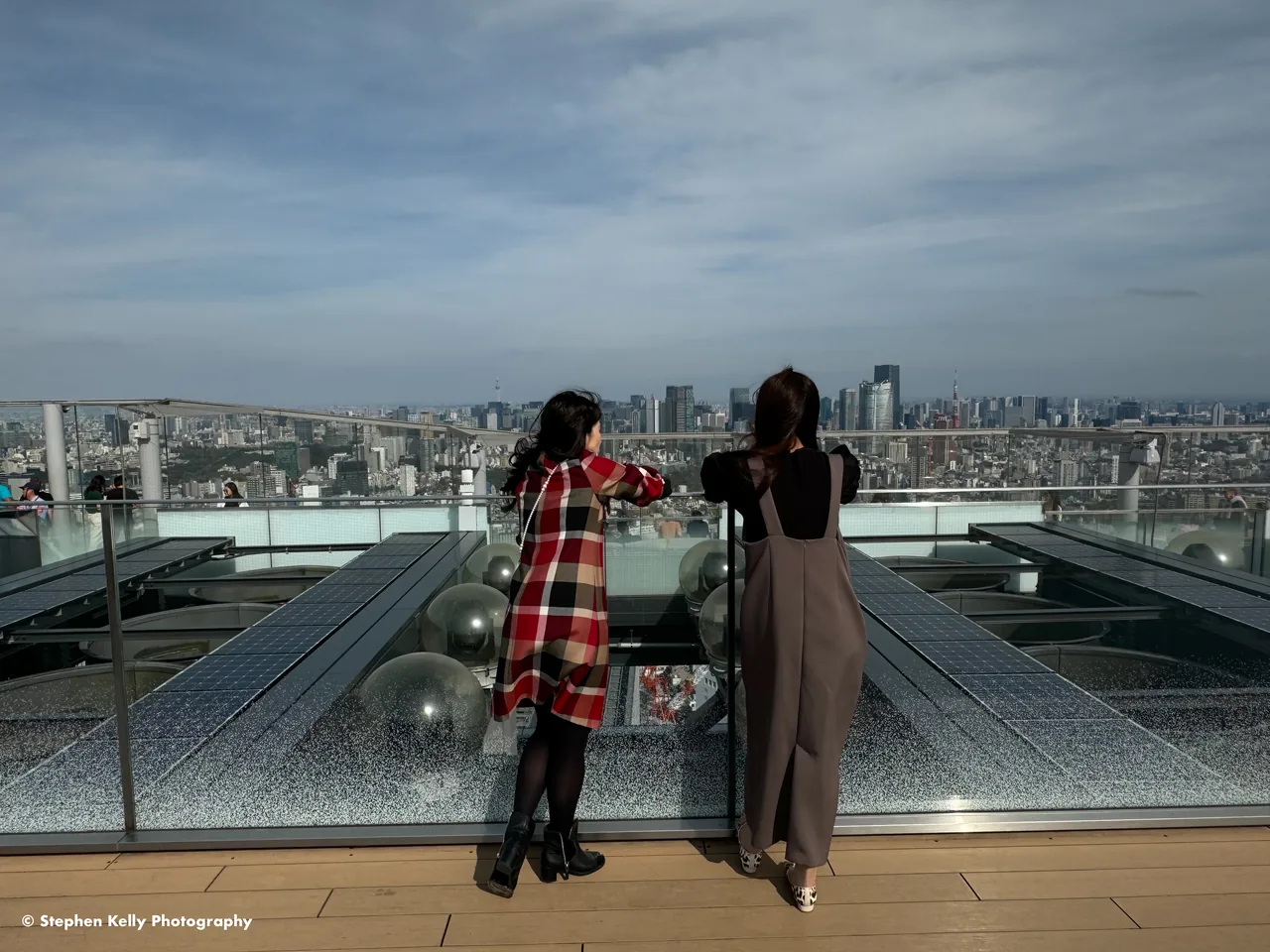
Shibuya Sky, the observation deck atop Shibuya Scramble Square, costs about ¥2,700 for an adult ticket booked online before 15:00 (jumping to ¥3,400 after 15:00; ¥3,000/¥3,700 at the door), runs a full 360° open-air rooftop 230 meters up, and uses timed-entry capacity control that really does sell out — especially around sunset — so book ahead rather than assume you can walk in. A cheaper, lower-vantage alternative sits just up the road at MAGNET by SHIBUYA109, and it’s worth knowing about before committing to the pricier ticket.
| Option | Price | Height/vantage | Hours | Notes |
|---|---|---|---|---|
| Shibuya SkyMap | About ¥2,700/¥3,400 adult online (before/after 15:00), ¥3,000/¥3,700 at the door | 230m, full 360° open-air rooftop | 10:00-22:30 (last admission 21:20) | Timed-entry; book ahead, especially for sunset slots |
| MAGNET by SHIBUYA109 rooftop (MAG’s PARK) | No ticket fee; drink purchase from about ¥600 required | Lower vantage, directly over the Crossing | About 11:00-22:00 | Budget-friendly; best late afternoon into evening |
Full Shibuya Sky pricing tiers: adult about ¥2,700 online before 15:00 / ¥3,400 after, junior and high school students about ¥2,000 online, elementary school children about ¥1,200, ages 3-5 about ¥700, and under-5 free. Hours run 10:00-22:30 with last admission at 21:20. The deck delivers a genuine 360° panorama — Mount Fuji on a clear day, the full sprawl of the city in every direction — making it the premium, full-panorama option on this list.
The timed-entry system deserves to be taken seriously rather than treated as a formality. Popular slots, sunset above all, do sell out in advance, and walk-up availability isn’t guaranteed even outside peak season. If a sunset view matters to your trip, book that specific slot as early as your schedule allows — not the morning of.
MAGNET by SHIBUYA109’s rooftop — officially MAG’s PARK, home to the Crossing View deck and the Rooftop Lounge MAG8 — takes a completely different approach: there’s no admission ticket at all, just a minimum drink purchase from about ¥600. The tradeoff is vantage point, not price: you’re lower down and closer to street level, with a tighter, more direct view straight onto the Crossing rather than Shibuya Sky’s full skyline panorama. Hours run roughly 11:00-22:00, and it’s a legitimately good option from late afternoon into evening, when the crossing lights start to compete with the sky.
Which to choose comes down to what you actually want from the view. Shibuya Sky is the once-in-a-visit splurge for a full 360° panorama with Fuji on a clear day; the MAGNET rooftop is the smarter pick if you specifically want to look down at the Crossing itself, or if the Shibuya Sky slot you wanted is sold out.
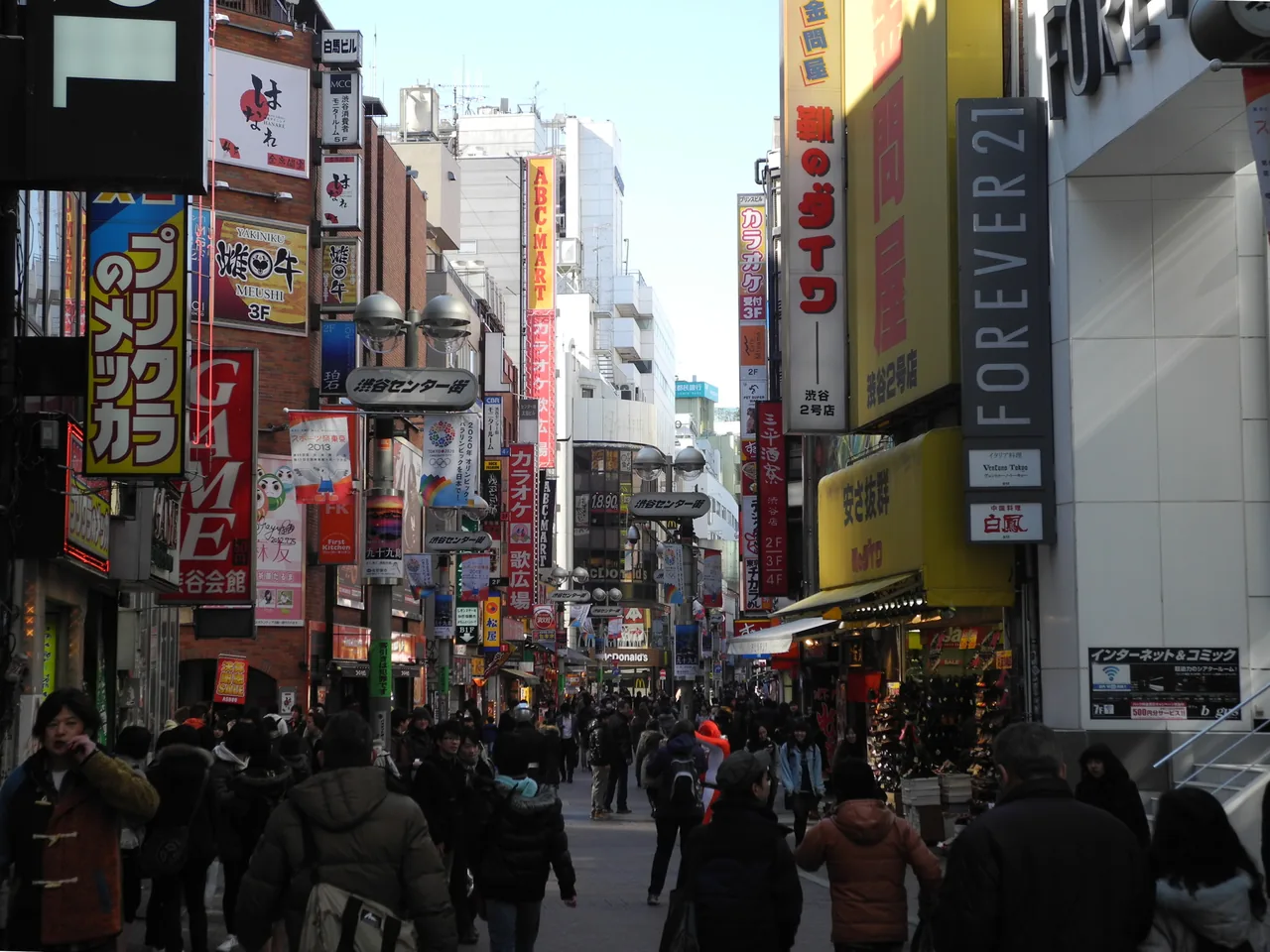
6. Center Gai: Shibuya’s loud, neon shopping core
Center GaiMap — officially Shibuya Center Gai, or Center Shopping Street — is the loud, neon-lit pedestrian lane running from near the Scramble Crossing back into Shibuya’s shopping core, dense with fast fashion, fast food, karaoke boxes, and arcades, and busy from mid-morning until well past midnight. If one single street captures “classic Shibuya,” this is it.
It’s less a single destination than a corridor you walk through and keep noticing new things along the way — a purikura photo booth here, a crepe stand there, a multi-floor karaoke building, an arcade blasting music into the street. The energy is deliberately overstimulating, and that’s the point: this is Shibuya at its most unfiltered, youth-culture-forward self.
| What you’ll find | Examples |
|---|---|
| Fast fashion | Chain streetwear and trend shops aimed at a young, budget-conscious crowd |
| Food | Crepe stands, fast food chains, casual ramen and gyudon counters |
| Entertainment | Karaoke boxes, arcades, purikura photo booths |
| Crowd pattern | Busy from mid-morning; peaks evening through late night, especially weekends |
Center Gai isn’t built for a quiet browse or a considered purchase — it’s closer to a sensory tour of what’s currently trending among Tokyo’s teens and twenty-somethings, refreshed constantly. Treat it as a walk-and-graze experience rather than a shopping list you’re working through, and it delivers exactly what it’s meant to.
7. Shibuya 109 and Dogenzaka
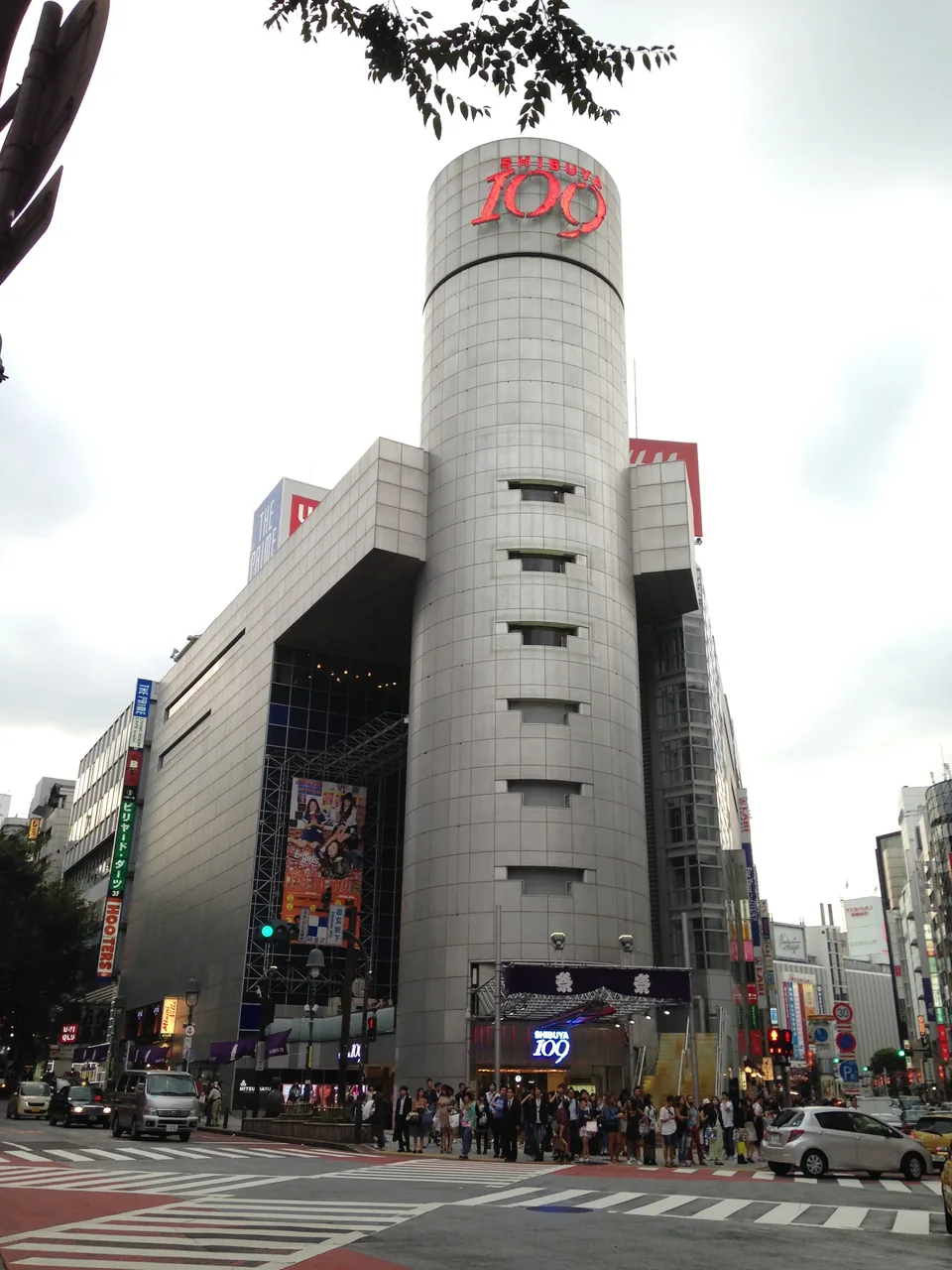
Shibuya 109Map is the cylindrical fashion department store at the base of Dogenzaka that defined Japanese youth fashion trends from the 1990s through the 2000s — the kogal and gyaru scene that put Shibuya on the fashion map — and it still operates today as a broad, trend-forward multi-floor fashion destination. Right beside it, Dogenzaka climbs the hill with a considerably different, more adult mood.
109’s role in Japanese pop culture runs deeper than just being a mall. Its tenant mix through the kogal and gyaru era essentially set what counted as “in” for a generation of young Japanese women, and while the specific trends have shifted several times since, the building has stayed a bellwether for what’s currently popular among Shibuya’s youth-fashion crowd rather than fading into a generic shopping center.
Dogenzaka itself, nicknamed “Love Hotel Hill,” is the road running up beside 109, and it earns the nickname — love hotels line the street alongside nightclubs and live-music venues, making it a distinctly nightlife-and-adult-entertainment-oriented strip compared to Center Gai’s daytime-friendly fast fashion energy just downhill.
| Center Gai | Dogenzaka | |
|---|---|---|
| Mood | Loud, neon, youth-fashion, family- and teen-friendly by day | Adult nightlife — love hotels, clubs, live music |
| Busiest | Day and night alike | Evening into late night |
| What’s there | Fast fashion, food, karaoke, arcades | Love hotels, nightclubs, live-music venues |
Neither street requires much of a detour — Dogenzaka starts right beside Shibuya 109, so seeing both is simply a matter of which direction you walk from the base of the building. Most visitors will find Center Gai the more comfortable daytime wander, saving Dogenzaka’s clubs and venues for an evening plan.
8. Shibuya Scramble Square, Stream, and the redevelopment wave
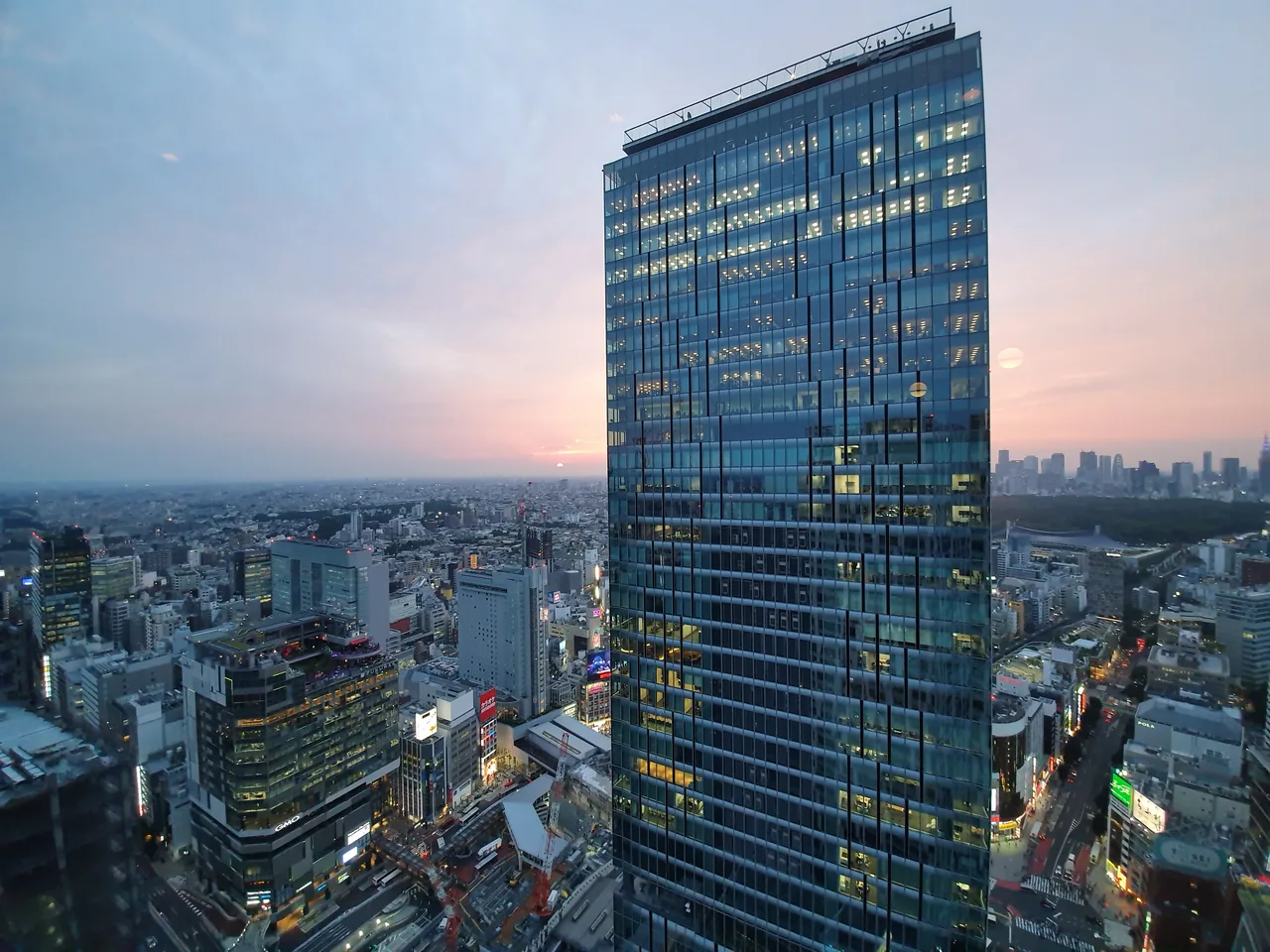
Shibuya has been under near-continuous redevelopment since the early 2010s, and the results — Shibuya Scramble SquareMap, Shibuya Stream, and several more complexes besides — bundle shopping, dining, office space, and, in Scramble Square’s case, the Shibuya Sky observation deck, into a noticeably more polished mood than Center Gai’s scrappier street energy just below. This isn’t a finished skyline; expect Shibuya to keep visibly changing for years yet.
| Complex | Completed | What it is |
|---|---|---|
| Shibuya Hikarie | 2012 | Shopping, theater, and office tower east of the station |
| Shibuya Stream | 2018 | Riverside shopping, dining, and office complex along the Shibuya River |
| Shibuya Scramble Square / Shibuya Sky | 2019 | The tallest tower in the cluster, home to the Shibuya Sky observation deck |
| Miyashita Park | 2020 | Rooftop park atop a shopping and hotel complex |
| Shibuya Sakura Stage | 2024 | The most recent addition to the redevelopment wave |
The wider plan behind all of this is expected to largely wrap up around 2032, with further refinements to public spaces possibly extending a few years past that. In practical terms, Shibuya will likely still show some visible construction or freshly opened space through the rest of the 2020s — don’t be surprised if a section of the district looks different from a photo you saw even a year or two ago.
What these complexes add to a Shibuya visit is a real change of register from the street-level intensity of Center Gai and the Crossing: quieter indoor malls, more considered dining, and — at Scramble Square — the best view in the neighborhood. Shibuya Stream is worth a stroll along its riverside walkway if you want a calmer few minutes without leaving the district.
The scale of this rebuild is unusual even by Tokyo standards, and it’s a joint effort rather than one company’s project — JR East, Tokyu, and Tokyo Metro have all had a hand in different pieces, coordinating station upgrades with the towers rising above them. That’s part of why the timeline stretches so far out: rebuilding a working station this complex without shutting it down means work happens in stages, over years, around a district that never actually stops operating while the construction continues.
9. Miyashita Park
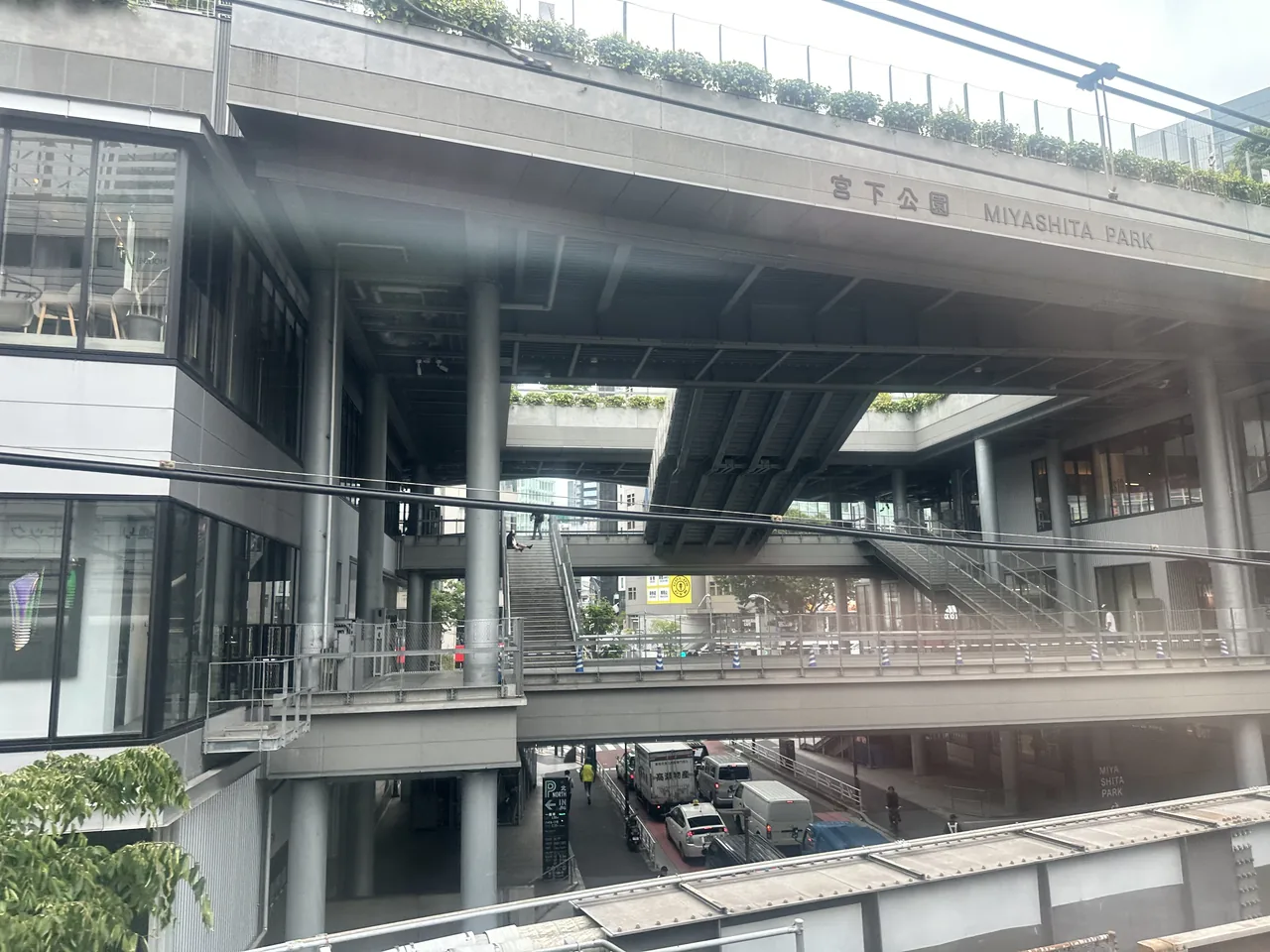
Miyashita ParkMap is a rooftop park sitting atop a 4-story shopping and hotel complex, reopened in its current form in 2020 — not a traditional ground-level city park, which can catch visitors off guard if they’re expecting street-level green space. The rooftop has a skate park and a bouldering wall, both paid use, along with general green space to sit and take a break from the district’s density.
The ground floor of the same complex holds “Shibuya Yokocho,” a compact alley of Japanese izakayas designed to echo the old-school yokocho drinking-alley format found elsewhere in Tokyo — a modern, purpose-built take on the concept, distinct from a truly old alley like Nonbei Yokocho a short walk away.
| Level | What’s there |
|---|---|
| Rooftop | Skate park (paid), bouldering wall (paid), green space |
| Upper floors | Shopping and a hotel |
| Ground floor | Shibuya Yokocho — a modern izakaya alley |
Because it’s elevated and built into a modern complex, Miyashita Park reads more like a well-designed public amenity than a park in the traditional sense — worth a stop if you want a few minutes of green space or you’re curious about the skate scene, but don’t plan a picnic-on-the-grass afternoon around it the way you might at a conventional city park.
10. Nonbei Yokocho: Drunkard’s Alley, the real survivor
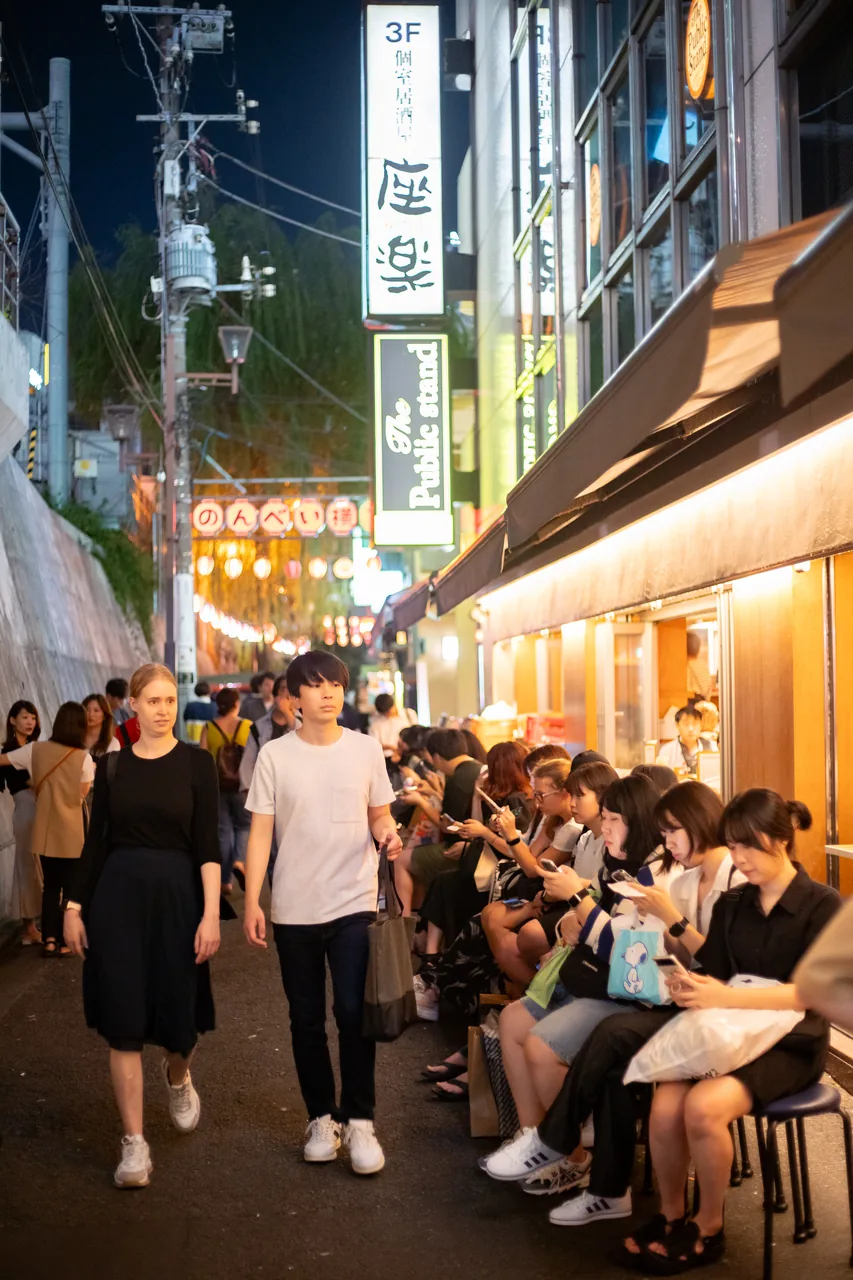
Nonbei YokochoMap — “Drunkard’s Alley” — is a cluster of roughly 38 tiny bars packed across two floors, each seating only about 4 to 8 people, wedged near the Yamanote Line tracks, and it has survived decades of surrounding redevelopment because its bar owners organized long ago and collectively leased their land. It remains protected under a long-term arrangement with JR as of 2026 — a real surviving pocket of old Shibuya standing right beside some of the most modern architecture in Tokyo.
Walking into Nonbei Yokocho from the glass-and-steel towers just outside is a genuine jolt of contrast: narrow alleys barely wide enough for two people to pass, hand-lettered signs, bars so small you’re often within arm’s reach of both the bartender and the next patron. Some are regulars-only in practice, though plenty do welcome newcomers — a polite, low-key approach, plus a willingness to squeeze into a tiny seat, goes a long way here.
| Feature | Detail |
|---|---|
| Bar count | Roughly 38 |
| Layout | Two floors, tiny alleys |
| Typical seating | About 4-8 people per bar |
| Why it survived | Bar owners collectively leased their land; protected under a long-term JR arrangement as of 2026 |
This is Shibuya’s most direct link back to its pre-redevelopment character, and it’s worth building into an evening plan precisely because it isn’t going anywhere despite everything rebuilt around it. Pair it with a walk through the Scramble Square towers beforehand for the full old-versus-new contrast in a single evening.
11. Cat Street: Shibuya’s change-of-pace walk
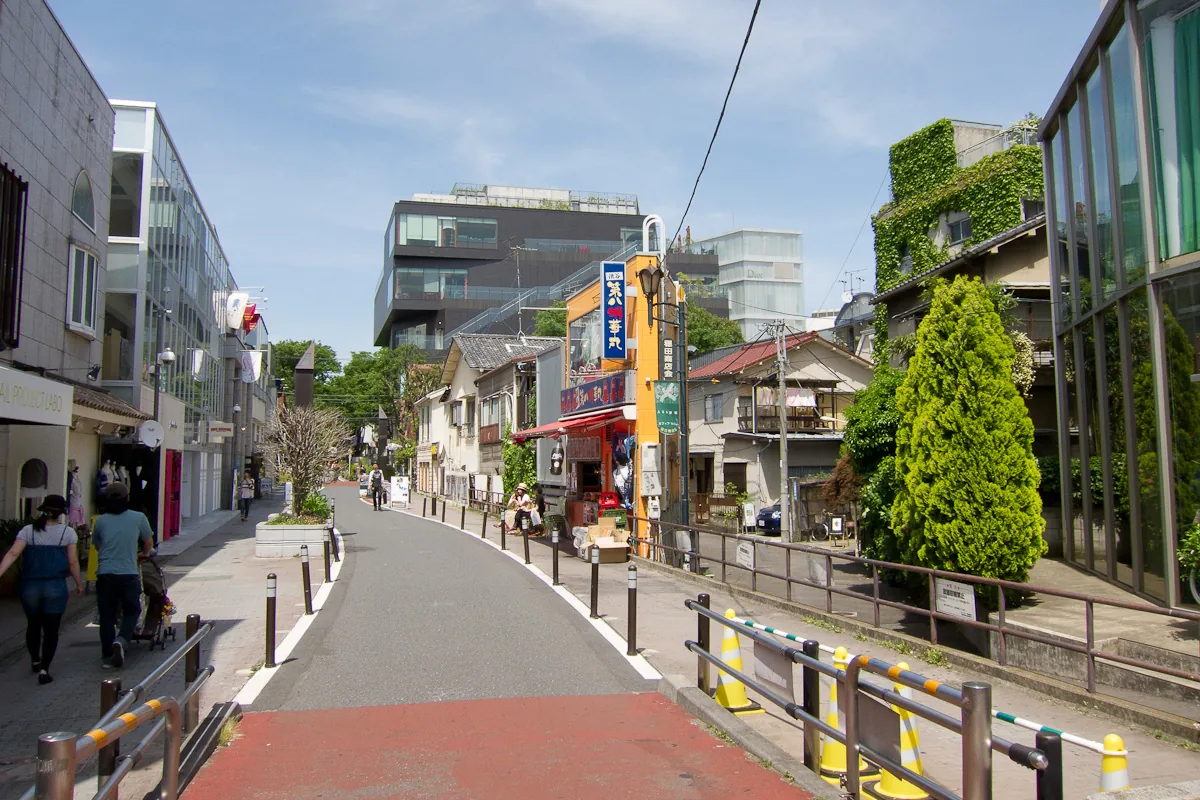
Cat StreetMap is a roughly 1-kilometer pedestrian corridor connecting Shibuya toward Harajuku and Omotesando, lined with indie boutiques, vintage shops, and cafés — and it is deliberately, noticeably quieter than anything else in this guide. If Center Gai is Shibuya turned up to eleven, Cat Street is the volume knob turned most of the way back down.
The street works best as a palate-cleanser rather than a destination in its own right: a good way to walk off the density of Shibuya’s core while still browsing, without the crowd pressure of Center Gai or the Crossing. Vintage clothing, small independent labels, and a steady run of cafés make it an easy, unhurried stretch to wander with no particular plan.
| Center Gai | Cat Street | |
|---|---|---|
| Length/scale | Short, dense pedestrian lane | ~1km corridor |
| Crowd level | Heavy, day and night | Noticeably lighter |
| Shopping style | Fast fashion, chain shops | Indie boutiques, vintage, cafés |
| Best for | Full-sensory Shibuya energy | A calmer walk, especially extending toward Harajuku/Omotesando |
If your day includes both Shibuya and Harajuku or Omotesando, Cat Street is the natural connective walk between them rather than a separate trip — a way to link two neighborhoods without a train ride in between, and a deliberate change of pace worth building into a longer Shibuya day.
Follow Cat Street all the way to the end and it delivers you somewhere with a distinctly different character than anything else in this guide — not just a quieter street, but a shrine, a teenage fashion strip, and a luxury boulevard, all within a few minutes’ walk of one another. Harajuku and Shibuya sit one JR Yamanote Line stop apart, about 2 minutes by train, or a comfortable 15-20 minute walk via Omotesando and Cat Street itself — close enough that it’s worth folding into the same day rather than treating it as a separate trip.
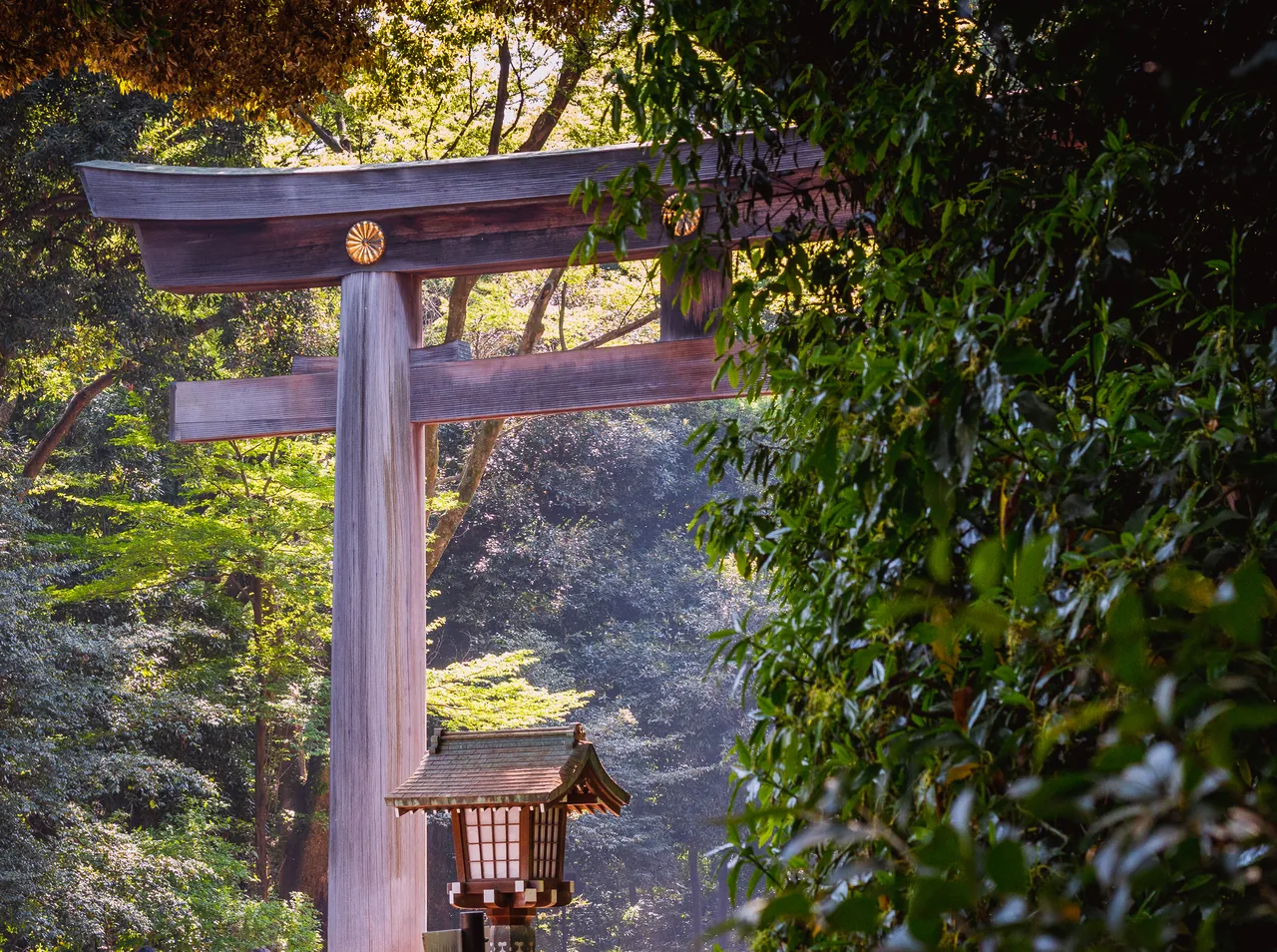
Meiji JinguMap anchors the far end of the walk: a major Shinto shrine built in 1920 and dedicated to Emperor Meiji and Empress Shoken, reached through a long approach under a forested canopy that feels well removed from the city just outside its gates. Gate hours shift with sunrise and sunset across the year, so check the current posted hours rather than assuming a fixed schedule. A visit including the main hall runs roughly 30-40 minutes, and the walk in through the grounds counts as much as the shrine buildings themselves — this isn’t a shrine you photograph from the torii and leave.
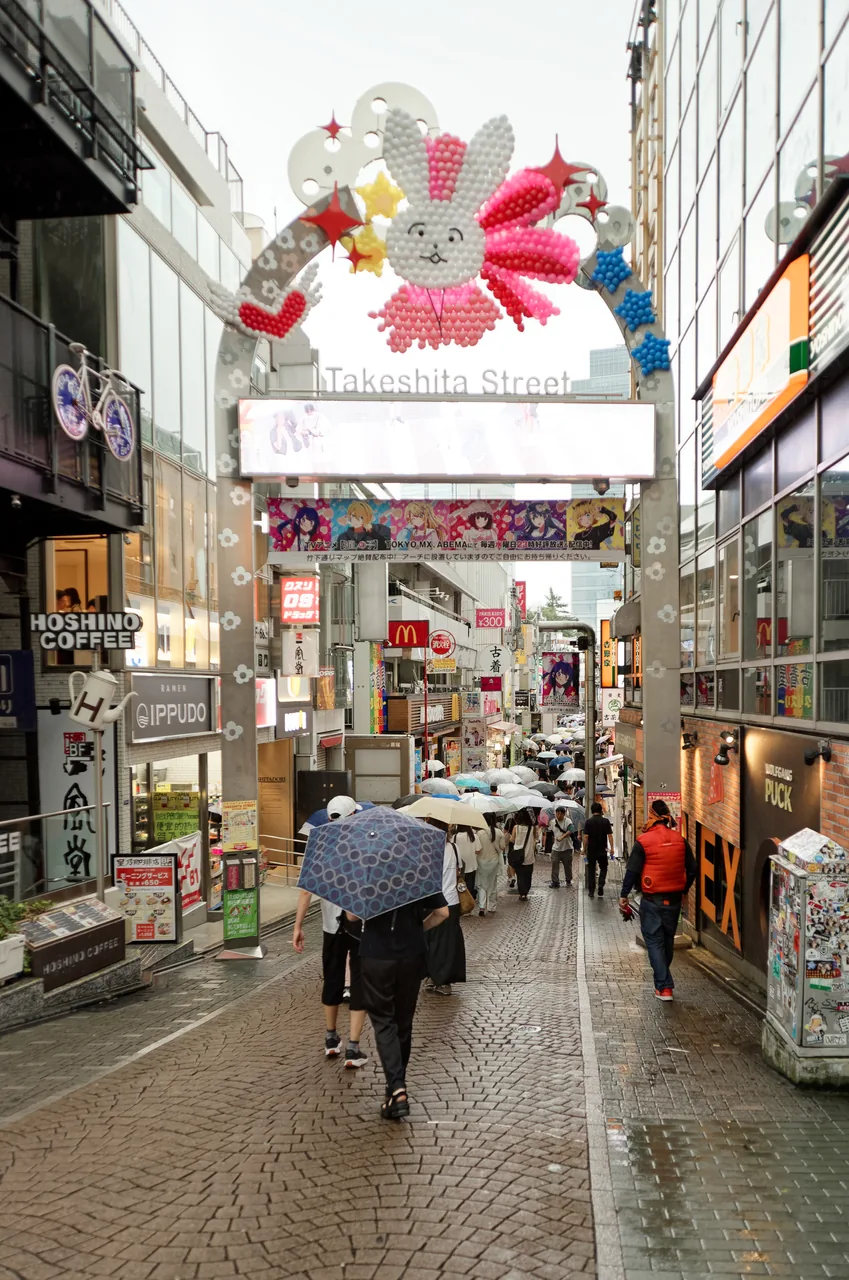
Double back toward the station and Takeshita-doriMap flips the mood entirely: a roughly 350-meter pedestrian street right beside Harajuku Station, packed with crepe stands, cotton candy vendors, bubble tea shops, and youth-fashion boutiques — the polar opposite register from Meiji Shrine’s calm, despite sitting just a few minutes’ walk from it. It’s usually shoulder-to-shoulder by early afternoon, so an earlier visit rewards browsing over shuffling.
Omotesando closes the loop back toward Cat Street and Shibuya: a broad, tree-lined avenue often compared to the Champs-Élysées, lined with flagship luxury boutiques and design-forward architecture from a long list of international names. It’s a third register again — calmer than Takeshita-dori, more polished than Meiji Shrine’s forest hush — and the natural route to walk back down before Cat Street picks up once more.
| Stop | What it is | Time needed | Vibe |
|---|---|---|---|
| Meiji Jingu | Shinto shrine, built 1920, dedicated to Emperor Meiji and Empress Shoken | ~30-40 min including the main hall | Calm, forested, contemplative |
| Takeshita-dori | ~350m pedestrian street beside Harajuku Station | 30-60 min to browse properly | Loud, youth-fashion, crepes and sweets |
| Omotesando | Broad, tree-lined avenue of luxury flagship stores | 20-30 min walking through | Upscale, architectural, calmer than Takeshita-dori |
Budget at least 5-6 hours to do Harajuku and Shibuya together properly — roughly 2-3 hours each — or a full 8 hours if you’re adding Meiji Shrine, a thorough Takeshita-dori browse, and a walk down Omotesando on top of it. Weekday mornings are noticeably calmer than weekend afternoons for both Takeshita-dori and the Crossing alike, so build the quieter version of this combined day in if your schedule allows it.
12. Nightlife and the public drinking ban: what’s actually allowed
Shibuya enacted a permanent, year-round public drinking ban effective from an October 2024 expansion of what had originally been a Halloween-only rule — the ward assembly voted to expand it on June 17, 2024 — and it’s now enforced 6pm to 5am daily in the area around JR Shibuya Station and Miyashita Park. This is a real change for the 2024-2026 period that a lot of older guides won’t reflect, and it matters if you’re planning an evening out.
In practice, a first violation doesn’t come with a fine or citation — police and security staff ask violators to stop rather than issuing an on-the-spot penalty. But the rule is real, actively enforced with a visible security presence, and not something to casually ignore, especially around Halloween, when enforcement steps up considerably.
| Detail | What applies |
|---|---|
| Effective | Year-round, permanent, since an October 2024 expansion (ward vote June 17, 2024) |
| Hours enforced | 6pm-5am daily |
| Area | Around JR Shibuya Station and Miyashita Park |
| First violation | Asked to stop; no fine or citation |
Halloween itself deserves a clear-eyed note: it’s no longer an open, come-one-come-all street celebration the way it briefly was in the mid-to-late 2010s. The ward now actively discourages it, and every late October brings heavy security presence, temporary suspensions of e-scooter services near the station, and visible crowd-control measures. This is Shibuya deliberately winding down years of escalating street disorder, not a still-thriving open party — don’t plan a trip around Shibuya Halloween expecting festival energy; expect a heavily managed, restricted scene instead.
For an actual drink, the two most characterful, compact options are Nonbei Yokocho’s tiny bars and the Shibuya Yokocho izakaya alley inside Miyashita Park — both indoor, both unaffected by the outdoor drinking rule, and both far more atmospheric than standing around with a convenience-store can.
Beyond the two yokocho options, Dogenzaka’s clubs and live-music venues run legitimately late, some past 5am on weekends, and karaoke boxes across Center Gai and near the station typically stay open into the small hours too — indoor venues aren’t touched by the outdoor drinking rule at all. The one logistics detail worth planning around: Tokyo’s trains stop running for the night, generally by around 1am, and don’t restart until roughly 5am, so a late Shibuya night means either budgeting for a taxi back, finding a 24-hour spot to wait it out, or building the last train time into your evening from the start.
13. Sample Shibuya itineraries: half-day and full-day plans
A focused half-day (about 4 hours) covers the Hachiko Statue, the Scramble Crossing, a Center Gai wander, and either Shibuya Sky or the MAGNET rooftop comfortably; a full day (6-8 hours) adds Miyashita Park, a walk down Cat Street toward Harajuku, and an evening return to the Crossing once it’s lit up for dinner in Nonbei Yokocho or Shibuya Yokocho. Both work better when you see the Crossing and Hachiko early, before the crowd fully builds.
Half-day plan (~4 hours)
| Time | What |
|---|---|
| ~10:00-10:30 | Hachiko Statue photos, then the Scramble Crossing itself |
| ~10:30-11:30 | Center Gai wander — shops, snacks, people-watching |
| ~11:30-13:00 | Shibuya Sky (book your slot ahead) or the MAGNET rooftop |
| ~13:00-14:00 | Lunch near the station before heading to your next stop |
Full-day plan (~6-8 hours)
| Time | What |
|---|---|
| ~10:00-13:00 | Hachiko, the Crossing, Center Gai, and Shibuya Sky or the MAGNET rooftop — the half-day plan above |
| ~13:00-14:00 | Lunch near the station |
| ~14:00-15:00 | Shibuya 109 and a walk up Dogenzaka |
| ~15:00-16:00 | Miyashita Park — rooftop green space, skate park/bouldering if it interests you |
| ~16:00-17:30 | Cat Street walk toward Harajuku/Omotesando, or back through Shibuya Stream |
| ~18:00 onward | Return to the Crossing after dark for the lit-up photo, then dinner in Nonbei Yokocho or Shibuya Yokocho |
If Shibuya Sky is sold out for your preferred slot, don’t force it — swap in the MAGNET rooftop and keep the rest of the plan intact; the timing works the same either way.
Passing through with less time to spare? A tight 90-minute version still works if you keep it disciplined rather than trying to compress the full half-day plan.
| Time | What |
|---|---|
| ~0-15 min | Hachiko Statue and the Scramble Crossing — the essential photo |
| ~15-45 min | Quick Center Gai walk-through, grab a crepe or a quick bite |
| ~45-90 min | MAGNET rooftop for the view (faster and more flexible than Shibuya Sky’s timed entry if you haven’t pre-booked) |
The MAGNET rooftop’s no-reservation format makes it the more realistic pick over Shibuya Sky when you’re working with a short, unplanned window, since Shibuya Sky’s timed-entry system isn’t built for a spontaneous 20-minute stop.
14. What to eat in Shibuya
Shibuya’s food scene splits cleanly by time of day: casual, fast, and cheap around Center Gai and the station during the day, and izakaya-driven — old-school in Nonbei Yokocho, newer in Shibuya Yokocho — once evening sets in. Both registers are worth building into a longer visit rather than picking just one.
| Time/place | What’s on offer |
|---|---|
| Center Gai (daytime) | Crepe stands, fast food chains, casual ramen and gyudon counters |
| Redevelopment complexes (Hikarie, Stream, Scramble Square) | Considered restaurant dining, food halls, cafés with a calmer setting |
| Nonbei Yokocho (evening) | Tiny old-school bars, some serving simple grilled or fried izakaya food alongside drinks |
| Shibuya Yokocho, inside Miyashita Park (evening) | A modern izakaya alley — grilled skewers, drinks, a more first-timer-friendly version of the yokocho format |
For a quick daytime bite, Center Gai and the immediate station area cover almost every fast-casual option worth trying — crepes are practically a Shibuya-specific tradition, sold from small storefront stands along the main lanes, worth trying at least once. For a sit-down meal with a bit more polish, the redevelopment complexes hold considerably calmer restaurant floors than the street-level pace outside, useful if you want a break from standing and eating on the move.
Evening changes the register entirely, much as it does in most Tokyo nightlife districts: Nonbei Yokocho’s cramped, characterful little bars versus Shibuya Yokocho’s more spacious, easier-to-walk-into modern izakaya alley. Neither is objectively better — Nonbei rewards a sense of adventure and a willingness to squeeze into somewhere tiny, while Shibuya Yokocho is the more comfortable, first-timer-friendly version of the same old-Tokyo drinking-alley concept.
Worth a mention for anyone who wants a sit-down meal without wandering far: the basement food halls (depachika) underneath Shibuya Hikarie and Shibuya Scramble Square carry a dense concentration of bento boxes, bakery counters, and prepared dishes ranging from everyday to properly upscale — a good option for assembling a meal to eat in a nearby park or hotel room rather than committing to a full restaurant sit-down. Conveyor-belt sushi and standing ramen counters are also easy to find within a few minutes of the station, useful if the goal is simply eating well without spending much time deciding.
15. Practical essentials: timing, luggage, and connectivity
Shibuya works well at almost any hour, but its character changes dramatically between daytime shopping energy, dusk when the Crossing lights up, and late evening when the drinking-alley scene takes over — plan your visit around which version of Shibuya you actually want to see. A little timing awareness goes a long way here.
| Consideration | Detail |
|---|---|
| Best for shopping/Center Gai energy | Daytime, any day of the week |
| Best for the Crossing photo | Dusk into evening, once the neon takes over from daylight |
| Best for Shibuya Sky | Sunset slot, booked well in advance — it sells out |
| Best for nightlife | Late evening, mindful of the outdoor public drinking ban (6pm-5am, around the station and Miyashita Park) |
| Luggage | Coin lockers available at Shibuya Station |
Beyond time of day, it’s worth thinking about time of year too — Shibuya’s crowd levels, event calendar, and comfort (especially around the outdoor Crossing and rooftop decks) shift with the seasons the same way the rest of Tokyo does. Our Japan best time to visit guide covers that broader seasonal picture if you’re still deciding when to plan the trip.
A working data connection matters more in Shibuya than almost anywhere else in this guide series, simply because the station is so hard to navigate on memory alone — checking which of the nine lines and 14 platforms you need, confirming a Shibuya Sky slot, or pulling up gmap directions to a specific Nonbei Yokocho bar all lean on having signal the moment you land. Sort a Japan eSIM before you arrive rather than hunting for station Wi-Fi while also trying to find the right exit.
A prepaid IC card (Suica or Pasmo) is worth having loaded before you tackle Shibuya specifically — with nine lines and 14 platforms to navigate, tapping through without stopping to buy individual paper tickets at each transfer saves real time, and the same card works for vending machines and convenience stores across the district. If you’re carrying luggage through Shibuya mid-trip, note that the station’s elevators and escalators are spread across its various levels rather than clustered in one place, so travelers with mobility needs or heavy bags should build in extra time to locate the right one rather than assuming a quick step-free path between platforms.
Accessibility and luggage storage
Shibuya Station completed a notable accessibility upgrade in 2026: new elevators connecting platforms 1 and 2 to the third-floor central gate began service on May 19, 2026, with cabins sized for wheelchairs, strollers, and large luggage, digital floor and direction displays, and emergency communication buttons. It’s worth flagging on its own, since this guide is otherwise blunt about how confusing the station’s layout can be — this is a real, dateable improvement to a station that badly needed one.
Coin lockers exist across several exits, but crowding varies a lot depending on which one you use. Hachiko Gate’s lockers fill up fastest given how much foot traffic passes that way; Central Gate’s lockers sit past the ticket gate, so you’ll need a valid ticket or IC card balance to reach them; South Gate lockers are split separately across the East and West exits. Lockers inside Shibuya Scramble Square tend to run the least crowded of the bunch, and they sit close to Shibuya Sky and the other tourist-facing spots covered elsewhere in this guide.
| Locker location | What to expect |
|---|---|
| Hachiko Gate | Fills up fastest given the volume of foot traffic passing through |
| Central Gate | Past the ticket gate — you’ll need to be inside the paid area to reach them |
| South Gate (East and West exits) | Separate locker banks, generally less central |
| Shibuya Scramble Square | Tends to run the least crowded; close to Shibuya Sky and other tourist facilities |
For overflow beyond the station’s own lockers, several app- and counter-based storage services operate in the streets around Shibuya — ecbo cloak, for one, lets you reserve storage at partner shops right from your phone — a practical option if the lockers near your preferred exit are full or your bag is an odd shape or size the station lockers won’t take. There’s no need to commit to one brand over another; whichever service has a partner location nearest your exit that day is the sensible pick.
16. Shibuya vs. the rest of Tokyo: how to fit it into your trip
Shibuya is Tokyo’s clearest neon, high-rise, youth-culture neighborhood, set against districts like Asakusa that preserve the city’s older, low-rise character — and the contrast between the two is exactly what makes a Tokyo trip feel complete rather than one-note. Neither neighborhood is competing with the other; they’re showing different eras and different moods of the same city.
| Shibuya | Asakusa | |
|---|---|---|
| Character | High-rise, commercial, neon-and-youth-fashion modern Tokyo | Low-rise, temple-centered, shitamachi old downtown |
| Signature sight | Scramble Crossing, Hachiko Statue, Shibuya Sky | Senso-ji, Kaminarimon, Nakamise-dori |
| Pace | Busy from afternoon well into the night | Busy by day around the temple, quieter after dark except Hoppy Street |
| Time needed | Half a day minimum, a full day for the deeper add-ons | Half a day minimum, a full day for the deeper add-ons |
For most travelers, Shibuya works best as one dedicated half-day or full-day slot within a longer Tokyo stay — paired naturally with Harajuku and Omotesando via Cat Street, or set as a deliberate contrast day against a neighborhood like Asakusa if you’re building a trip that shows both faces of the city. Our Tokyo travel guide covers how to sequence a district like this alongside the rest of the city, and our complete Japan travel guide shows how Tokyo, and Shibuya within it, fits into a wider national itinerary.
The comparison worth making isn’t Shibuya versus Asakusa as a contest — it’s recognizing that a Tokyo trip with only one or the other tells half the story. Glass towers and a scramble crossing twenty minutes by train from a 1,400-year-old temple and a shopping street that’s been selling souvenirs since the 1600s is one of the more striking things about this city, and it’s easy to miss if you only see one side of it.
Practically, the train ride between the two takes well under half an hour on the Ginza Line, which makes a same-day pairing entirely realistic rather than a theoretical itinerary suggestion — Asakusa in the morning while the temple streets are quiet, Shibuya in the evening once the Crossing lights up, is a single day that shows off both ends of what Tokyo actually is.