
Asakusa, Tokyo: The Complete Guide to Senso-ji, Nakamise-dori, and Old Tokyo
Asakusa is Tokyo’s clearest surviving old downtown, centered on Senso-ji, a 1,400-year-old temple that’s free to visit at any point on the grounds. This guide covers which of the four different “Asakusa Station” stops you actually want, honest kimono and rickshaw pricing, the one free rooftop view most visitors miss, and confirmed 2026 dates for the neighborhood’s two biggest festivals.
| Senso-ji is completely free to visit anywhere in the complex, with the outer grounds open 24 hours and the main hall running roughly 6:00-17:00 year-round. | |
| Four different train stations all share the name “Asakusa Station,” but only the Ginza Line and Toei Asakusa Line stops sit near Kaminarimon — the Tsukuba Express station is a 10-minute walk away, so confirm your line before you get off. | |
| Nakamise-dori’s shop roofing was fully rebuilt between June 2024 and March 2025, replacing 80-year-old green tiles with copper for the first time in eight decades. | |
| The best view in the neighborhood is free: the Asakusa Culture Tourist Information Center’s 8th-floor observation deck, directly across from Kaminarimon, overlooks the gate, Nakamise-dori, Senso-ji, the Sumida River, and Tokyo Skytree. | |
| A rickshaw ride is priced per carriage rather than per person, running roughly ¥3,000-4,000 for about 10 minutes up to ¥13,000-20,000 for a full hour. | |
| A 7-story building under construction near Senso-ji is blocking some north-facing views of the five-story pagoda through autumn 2026, so check the sightline in person before assuming a clear shot. | |
| Sanja Matsuri runs May 15-17, 2026, and the Sumida River Fireworks Festival falls on Saturday, July 25, 2026 — the neighborhood’s two biggest annual draws. |
1. Asakusa in brief: Tokyo’s old downtown, still standing
2. Is Asakusa worth visiting?
3. Getting to Asakusa: the four-station trap
4. Kaminarimon Gate and the giant lantern
5. Nakamise-dori: Japan’s most famous temple approach shopping street
6. Senso-ji Temple: always free, and the actual layout
7. The free view almost everyone skips: Asakusa Culture Tourist Information Center
8. Kappabashi Kitchen Town: the different-mood add-on
9. Hanayashiki: Japan’s oldest amusement park
10. Hoppy Street and evening Asakusa
11. Kimono rental and rickshaw rides: honest pricing
12. Asakusa’s year-round festival calendar
13. Sample itineraries: half-day and full-day plans
14. What to eat in Asakusa
15. Practical essentials: timing, luggage, and connectivity
16. Asakusa vs. the rest of Tokyo: how to fit it into your trip
17. Extending the day: Tokyo Skytree, a Sumida River cruise, and Ryogoku
1. Asakusa in brief: Tokyo’s old downtown, still standing
Asakusa is a district in Taito City on Tokyo’s east side, built up along the Sumida River around Senso-ji, the city’s oldest temple — and it’s the clearest surviving example of shitamachi, the low-rise, artisan, festival-heavy “old downtown” character that much of central Tokyo had before the postwar rebuilding boom. Where the west-side districts rebuilt tall and glossy, Asakusa largely rebuilt low, and that difference is still the whole point of visiting.
The core is compact enough to walk in an afternoon: Kaminarimon Gate leads onto Nakamise-dori, a shopping street that runs straight to Hozomon Gate and Senso-ji’s main hall, with the five-story pagoda standing just beside it. Everything in that sequence sits within a few minutes’ walk of the next thing, which is part of why Asakusa works so well as a half-day plan even for travelers with a packed Tokyo itinerary.
Senso-ji’s own history reaches back further than Tokyo does as a city. Temple tradition dates its founding to 645 AD, built around a small Kannon statue that two fishermen brothers are said to have pulled from the Sumida River in 628 AD. A local leader recognized what they’d found and converted his own home into a shrine to house it — a founding story locals still tell, and one that predates Edo Castle, the Tokugawa shogunate, and the entire concept of “Tokyo” by close to a thousand years.
That depth of history is exactly what sets Asakusa apart from the rest of a typical Tokyo trip, and it’s worth building real time into your schedule for it rather than treating it as a two-hour photo stop. If you’re mapping out the wider city first, our Tokyo travel guide covers how a neighborhood like this fits into a multi-day plan, and our complete Japan travel guide zooms out further still, to how Tokyo fits into a national itinerary.
Who Asakusa suits best: first-time visitors who want one concentrated dose of “old Japan” without leaving the city, families (Hanayashiki and the wide temple grounds are easy with kids in tow), photographers chasing morning or evening light, and anyone building a rain-flexible day, since much of the core route is arcaded. It suits less well anyone chasing late-night energy or department-store shopping — those are better found elsewhere in the city, not here.
2. Is Asakusa worth visiting?
Yes — Asakusa is one of the very few places in central Tokyo where you can stand in front of a temple complex older than the city itself, on a street that’s been selling souvenirs to travelers for roughly 300 years, without leaving the subway network. It isn’t a smaller or quieter stand-in for anywhere else in Tokyo; it’s the one neighborhood built around a fundamentally different identity than the rest of the city.
Set it side by side with the districts most first-time visitors already have on their list. Shibuya and Shinjuku are Tokyo at its most modern — scramble crossings, neon, department stores stacked twenty stories high, nightlife that runs past midnight. Asakusa vs. Shibuya isn’t really a fair fight, because they’re not trying to do the same thing: Asakusa is low-rise, temple-centered, and closes down earlier outside of Hoppy Street, trading skyline drama for craft shops, festival culture, and a genuine sense of the city’s older layers still being lived in, not just preserved behind glass.
The caveat: Asakusa’s headline sights draw real crowds, especially Kaminarimon and the stretch of Nakamise-dori closest to it, and especially late morning through mid-afternoon on weekends. If you’re picturing an empty, contemplative temple visit, that’s not the default experience at Senso-ji during peak hours — it’s closer to a busy, festive commercial street leading up to a major religious site, and that’s arguably more true to how the temple has actually functioned for centuries than a hushed, empty version would be.
There’s also a practical case for visiting beyond the atmosphere. Asakusa concentrates an unusual amount of “first Japan trip” value into one small area — a major free temple, a historic shopping street, an amusement park older than most countries’ national anthems, hands-on craft shopping, and two of Tokyo’s biggest annual festivals — without requiring the multi-district hopping that a lot of Tokyo itineraries end up needing. Few other single neighborhoods pack that much variety into a walkable core.
| What you get in Asakusa | What you’re less likely to find here |
|---|---|
| Free major temple with real religious use, not just a tourist backdrop | Late-night nightlife on the scale of Shibuya or Shinjuku |
| Traditional craft shopping (Kappabashi, Nakamise-dori) | High-fashion or flagship department-store shopping |
| Historic street layout and low-rise architecture | Skyline views from within the neighborhood itself (Skytree is a short trip away, not on-site) |
| Festival culture (Sanja Matsuri, Sumida River Fireworks) | A quiet, empty temple experience during daylight hours |
3. Getting to Asakusa: the four-station trap
Four separate train stations are all called “Asakusa Station,” on four different lines — and two of them are not within easy walking distance of the other two. Getting this straight before you travel saves an annoying wrong-exit walk.
| Line | Connects from | Walk to Kaminarimon |
|---|---|---|
| Tokyo Metro Ginza Line | Shibuya, Shimbashi, Ginza, Mitsukoshimae, Akihabara, Ueno | ~1 minute from Exit 1 — the closest option |
| Toei Asakusa Line | Shinagawa, Higashi-Ginza, Oshiage (for Skytree) | Close to the Ginza Line station, same general area |
| Tobu Skytree Line | Tobu limited express services further north, including the Nikko/Kegon direction | Close to the Ginza/Toei cluster |
| Tsukuba Express (TX) | Akihabara, Tsukuba | 10+ minutes — a separate station in its own right; use Exit A1 and walk along Kokusai-dori |
The Ginza Line, Toei Asakusa Line, and Tobu Skytree Line stations all sit close together in the same cluster near Kaminarimon, so if you’re arriving on any of those three, the walk to the gate is short and simple. The Tsukuba Express station is the odd one out — it’s a real, separate building more than ten minutes on foot from the others, and travelers who assume all four “Asakusa” stops are interchangeable sometimes end up on a longer walk than planned, in the wrong direction, before realizing the mistake.
Coin lockers are available at the major stations in the cluster, useful if you’re passing through Asakusa mid-day-trip with luggage rather than starting or ending your day here.
4. Kaminarimon Gate and the giant lantern
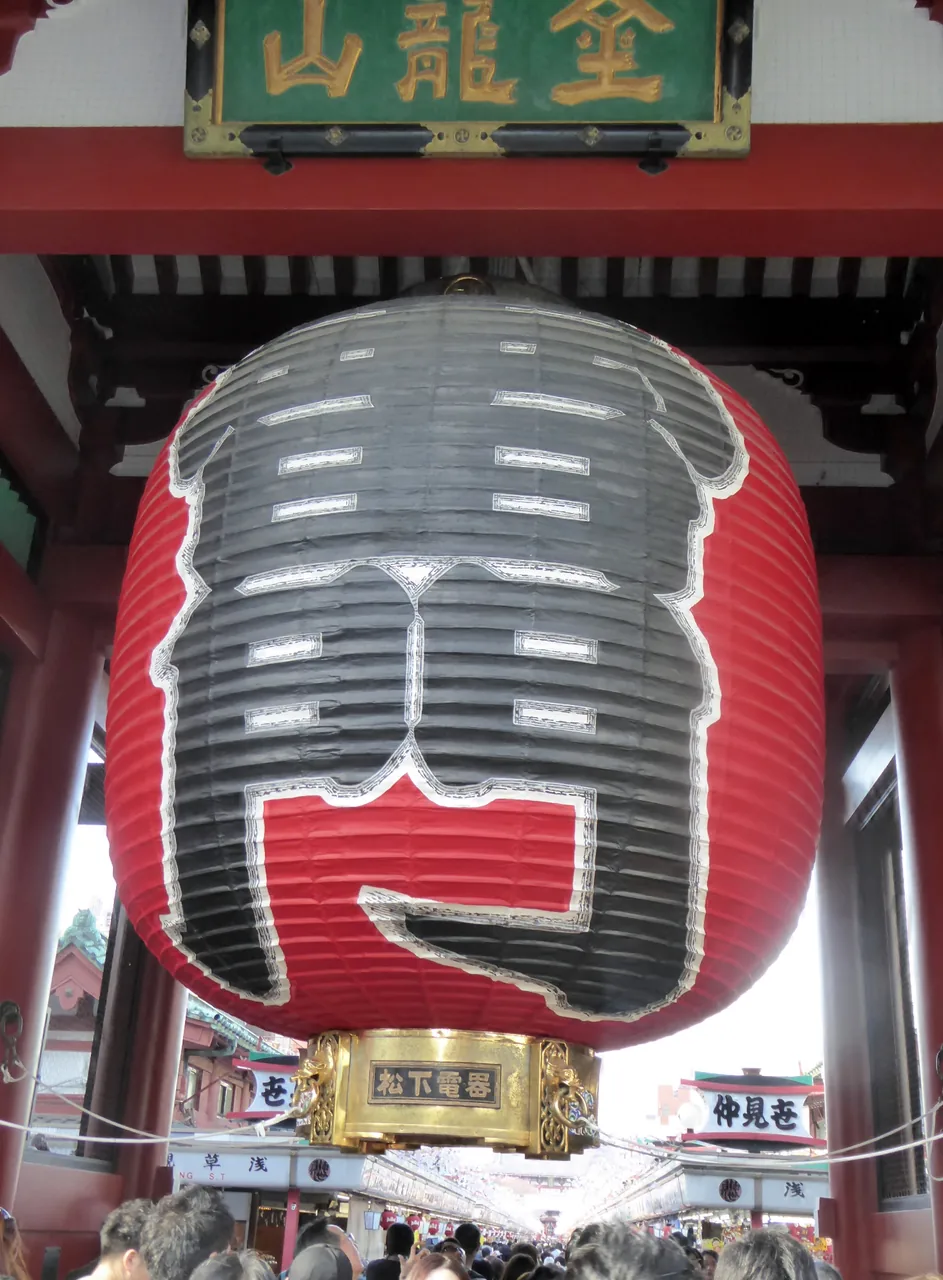
KaminarimonMap — “Thunder Gate” — is Senso-ji’s outer gate and the traditional start of the temple approach, instantly recognizable by the roughly 700kg red paper lantern (chochin) hanging at its center. It’s one of the single most photographed spots in Tokyo, and the crowd around its base rarely thins out completely during daylight hours.
The gate takes its name from the two guardian statues flanking the lantern: Fujin, the wind god, and Raijin, the thunder god, standing watch on either side as protectors of the temple grounds. The giant lantern itself is periodically repainted and refurbished through donated funds — a long-running tradition rather than a one-time installation, so don’t be surprised if the exact finish looks slightly different across years of photos online.
Because it’s the literal entrance to everything else in this guide, Kaminarimon tends to be the most crowded single point in Asakusa — worse on weekends and national holidays, worse still in the hour or two around midday. If a clean photo without a wall of other visitors in frame matters to you, this is the spot where an early start pays off the most (see the free observation deck in Section 7 for an elevated alternative view with far less competition for the shot).
5. Nakamise-dori: Japan’s most famous temple approach shopping street
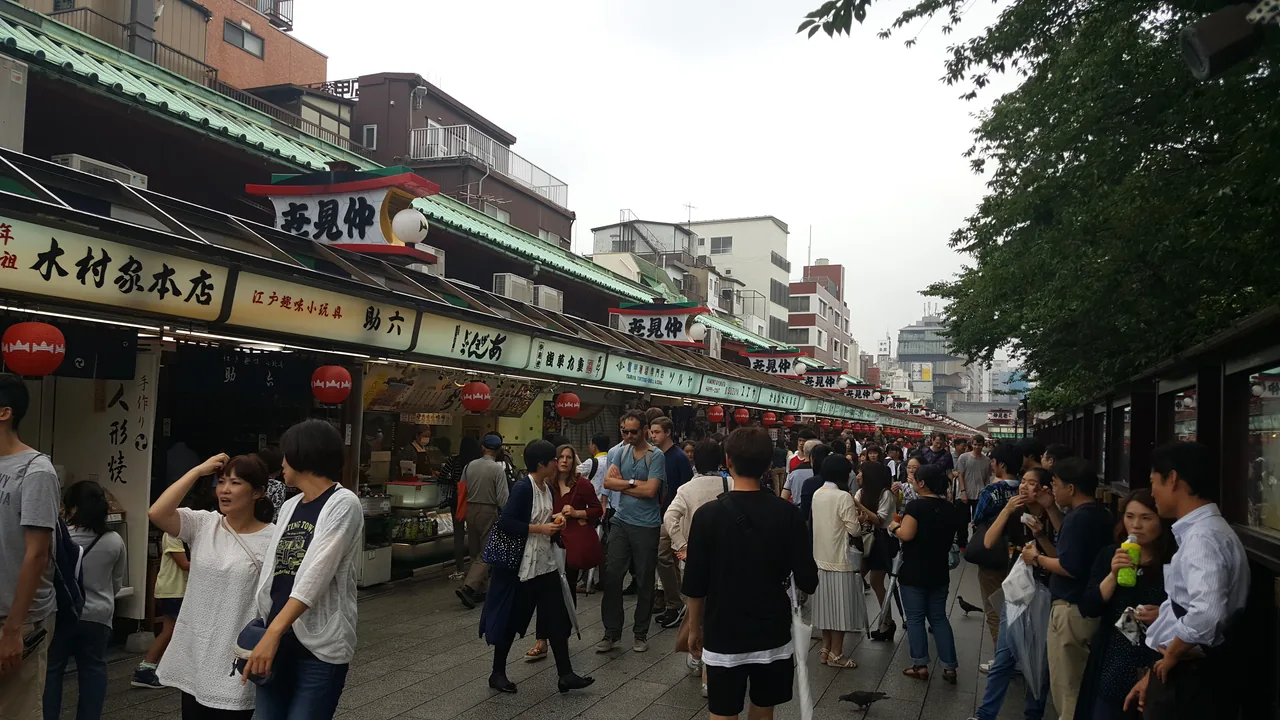
Nakamise-doriMap runs about 250 meters from Kaminarimon straight to Hozomon Gate, lined with roughly 89-90 shops — about 54 on the east side and 35 on the west — selling everything from folding fans and folk toys to street snacks eaten on the walk. It’s the connective tissue between the two gates, and for most visitors, the busiest single stretch of the whole neighborhood.
The street’s commercial roots trace back to the Genroku-Kyoho era, roughly 1688-1735, when local residents were granted the right to run shops here specifically to serve pilgrims heading to Senso-ji. That makes it one of the longest-running shopping traditions in Japan in spirit — though not in physical fabric: the street itself was rebuilt after the 1923 Great Kanto Earthquake and again after WWII bombing, so what you’re walking today is a reconstruction of a much older commercial idea, not the literal Edo-period street.
The most recent physical change is recent enough that it hasn’t fully filtered into older guides yet. Between June 2024 and March 2025, the shop roofing along Nakamise-dori was fully renovated — new copper tiles replacing green ones that had been in place for 80 years, the first change of that kind in eight decades. If you’re looking at older travel photos or blog posts, they’ll almost certainly still show the old green roofline; anyone visiting from 2025 onward sees the copper version instead.
| What to look for | Notes |
|---|---|
| Ningyo-yaki | Small sponge cakes filled with sweet red bean, shaped like pagodas, doves, or other figures |
| Age-manju | Fried sweet buns, eaten hot off the fryer |
| Senbei | Rice crackers, savory rather than sweet — a good palate break between the sugary stalls |
| Imo yokan | Sweet potato jelly; Funawa, a shop established in 1902, is a well-known source |
| Shin-Nakamise | A covered side arcade off the main street — same shopping spirit, noticeably fewer people |
If the main strip feels too packed to enjoy, Shin-Nakamise and the smaller side alleys branching off Nakamise-dori carry a similar mix of shops and food stalls with a fraction of the foot traffic — worth ducking into if you’d rather browse than shuffle forward in a crowd.
Two shops among the dozens crowding the street are worth calling out by name rather than just by snack type. Kimuraya Ningyo-yaki Honpo (人形焼本舗 木村家), marked by a dove-shaped logo near its entrance, is generally credited as the shop that invented ningyo-yaki in the first place — the small doll-shaped sponge cakes sold at nearly every third stall on the street trace back to this Meiji-era shop’s founder, who is said to have shaped the batter into Kaminarimon’s lantern, the five-story pagoda, and other Asakusa landmarks rather than a generic mold. Cakes are baked to order on griddles right at the shopfront, so what you’re buying here was made minutes earlier, not hours. Funawa (舟和), founded in 1902, is the street’s best-known source for imo yokan, a sweet potato version of the more familiar red bean yokan — denser, less sweet, and a good pick for a Nakamise-dori souvenir that isn’t just another anko-filled snack.
| Shop | Known for |
|---|---|
| Kimuraya Ningyo-yaki Honpo (Meiji era) | Widely credited as the originator of ningyo-yaki; cakes baked fresh at the shopfront in shapes tied to Kaminarimon’s lantern and the five-story pagoda; look for the dove-mark logo |
| Funawa (founded 1902) | Imo yokan (sweet potato jelly) alongside standard anko yokan — a less sugary, less common Nakamise-dori souvenir |
6. Senso-ji Temple: always free, and the actual layout
Senso-jiMap charges no admission anywhere in the complex, at any time — the outer grounds are open 24 hours, and the main hall and amulet shops keep seasonal hours of 6:00-17:00 from April through September and 6:30-17:00 from October through March. There is no ticket booth, no gate fee, and no paid inner sanctum anywhere on the grounds; every part of it is free, always.
A surprising number of travel forums and older blog posts still hedge on this, or confuse Senso-ji’s free admission with the paid special exhibitions occasionally held at the adjacent Denboin Garden or during limited-run treasure showings. The temple itself — main hall, pagoda, Hozomon, Asakusa Shrine next door — is free in every ordinary circumstance a visitor will encounter, no exceptions and no fine print.
| Hours | Applies to |
|---|---|
| 24 hours | Outer temple grounds, Kaminarimon, Hozomon, the pagoda exterior |
| 6:00-17:00 (Apr-Sep) | Main hall and amulet shops |
| 6:30-17:00 (Oct-Mar) | Main hall and amulet shops |
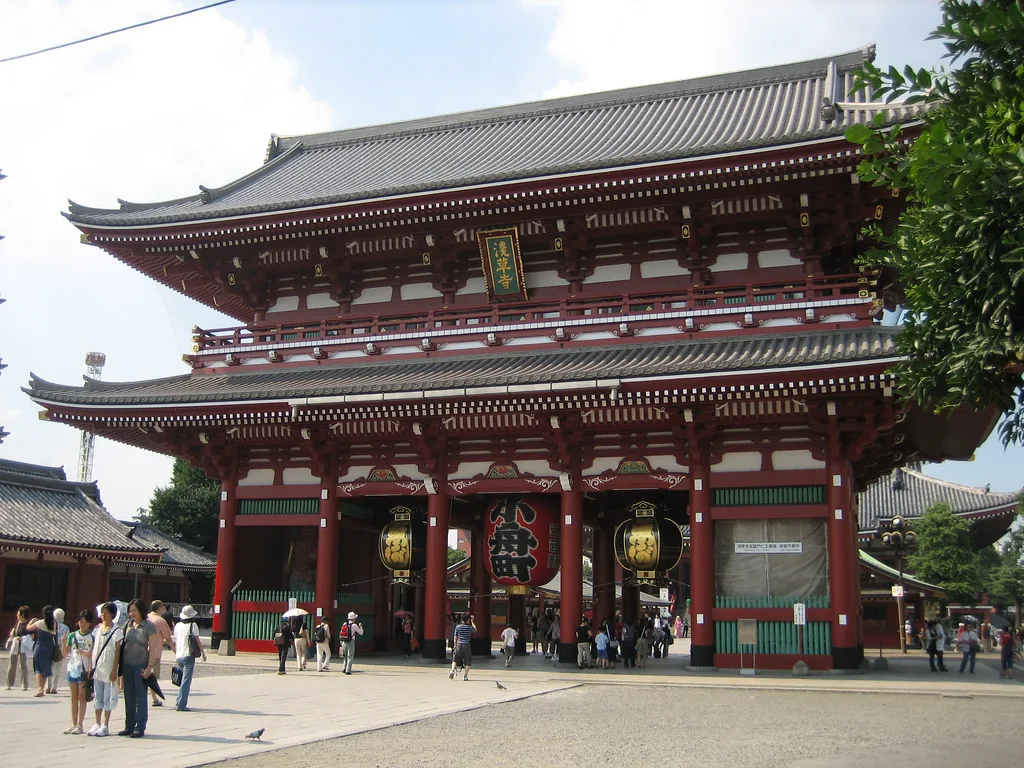
Past Nakamise-dori, HozomonMap is Senso-ji’s inner gate, housing two large Nio guardian statues and a pair of giant straw sandals (waraji) hung on its rear side — a symbolic offering meant to represent the size and strength of the temple’s protective guardians. Just beyond it stands the main hall itself, home to a small Kannon statue that, per temple tradition, has never been publicly displayed; worshippers still come to pray here and to draw omikuji fortune slips, a well-loved Asakusa tradition. One local running joke worth knowing before you draw one: Senso-ji’s omikuji produce a notably high share of “kyo” (bad luck) results compared to other temples — locals treat it as part of the charm rather than something to worry about, so don’t be discouraged if you draw one.
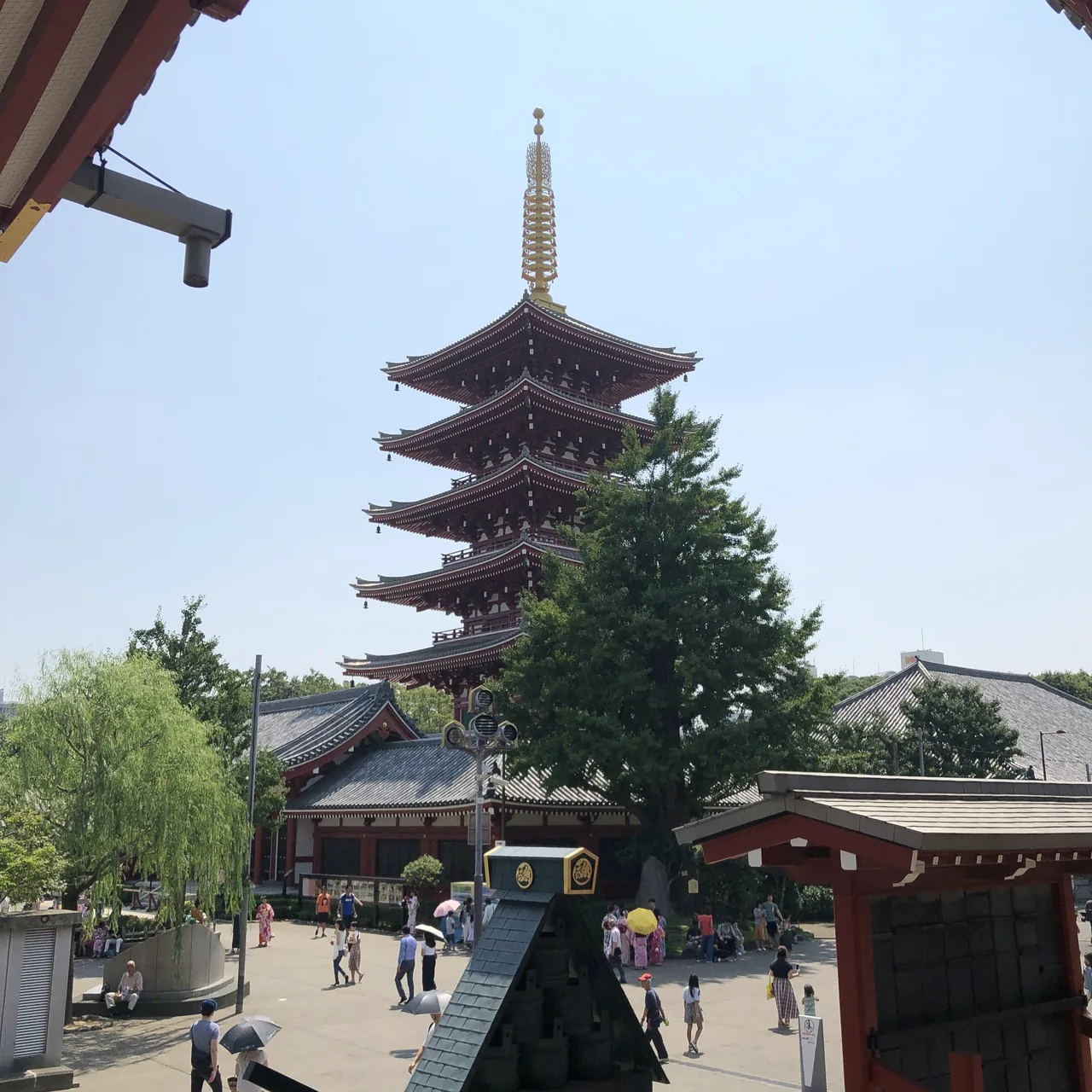
The five-story pagoda stands just beside the main hall, a postwar reconstruction with a concrete core rather than the original wooden structure. One current caveat: Ryokan Asakusa Shigetsu, just north of the pagoda, has reportedly offered a pagoda view from its north-facing rooms for about 30 years since it opened — but a 7-story building now under construction directly north of the ryokan is affecting some of those north-facing views through autumn 2026. It’s a temporary situation, not a permanent change to the skyline, but worth checking in person rather than assuming a clear photo angle from every direction.
Immediately next to Senso-ji stands Asakusa ShrineMap, a separate Shinto shrine known locally as Sanja-sama, dedicated to the three men connected to the temple’s founding legend. It’s a clean example of a Buddhist temple and a Shinto shrine sharing adjacent grounds, which is common across Japan — and it’s also the shrine at the center of Sanja Matsuri, covered in Section 12.
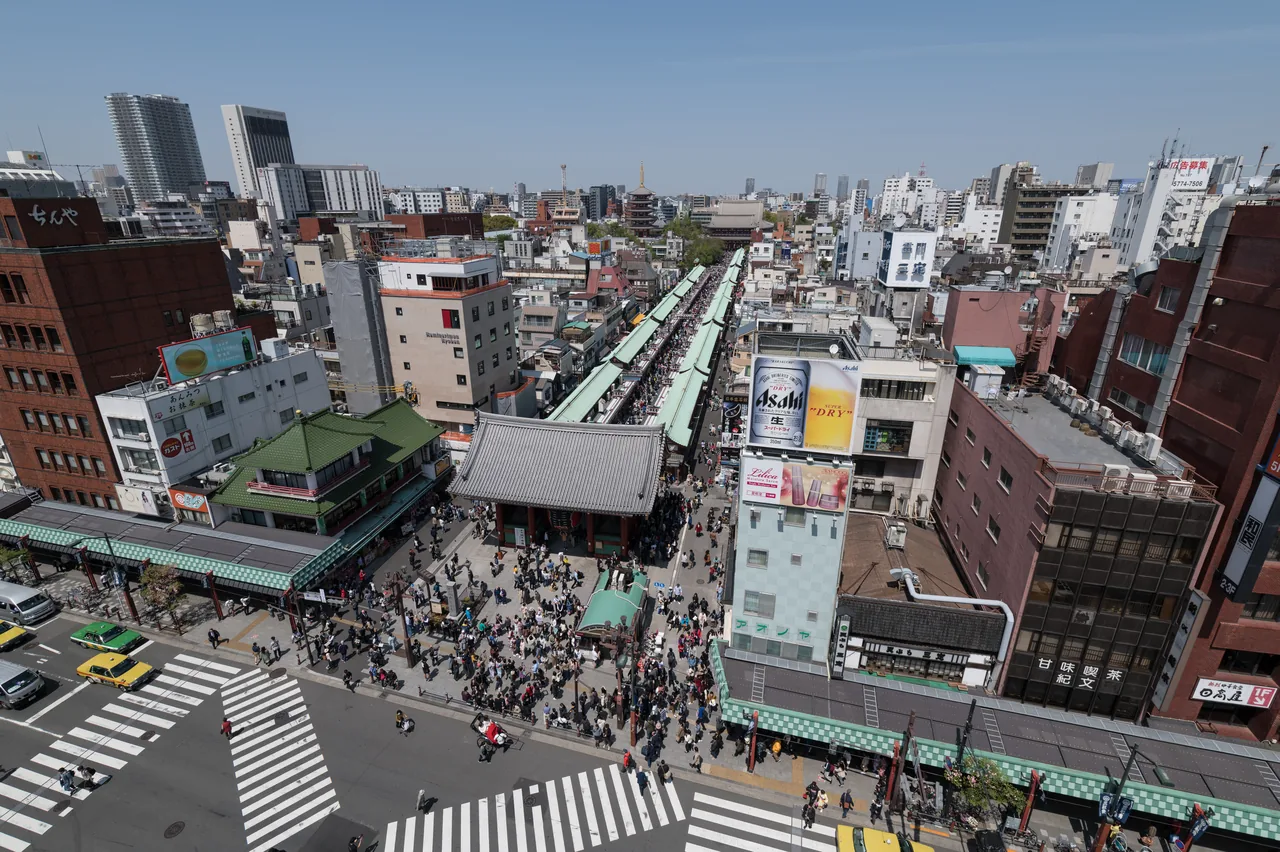
7. The free view almost everyone skips: Asakusa Culture Tourist Information Center
The Asakusa Culture Tourist Information CenterMap, designed by architect Kengo Kuma and standing directly across the street from Kaminarimon, has a free 8th-floor observation deck overlooking the gate, Nakamise-dori, Senso-ji, the Sumida River, Tokyo Skytree, and the Asahi Beer Hall’s golden “Flamme d’Or” sculpture across the river. No admission, no reservation, and — unlike almost everywhere else at ground level in this neighborhood — usually no meaningful crowd.
The building is open roughly 9:00-20:00, with the observation terrace itself staying open until 22:00, and there’s a small café, Miharashi Café, on the same floor for anyone who wants to sit with the view rather than just snap a photo and move on. It’s also a functioning tourist information center in the fuller sense — maps, staff who can answer questions, and restrooms — not just a viewpoint with a fancy name.
Because it faces Kaminarimon and Nakamise-dori head-on, it’s also a smart spot to get oriented before diving into the crowds below — a few minutes up top makes the ground-level layout easier to read once you’re back down in it.
8. Kappabashi Kitchen Town: the different-mood add-on
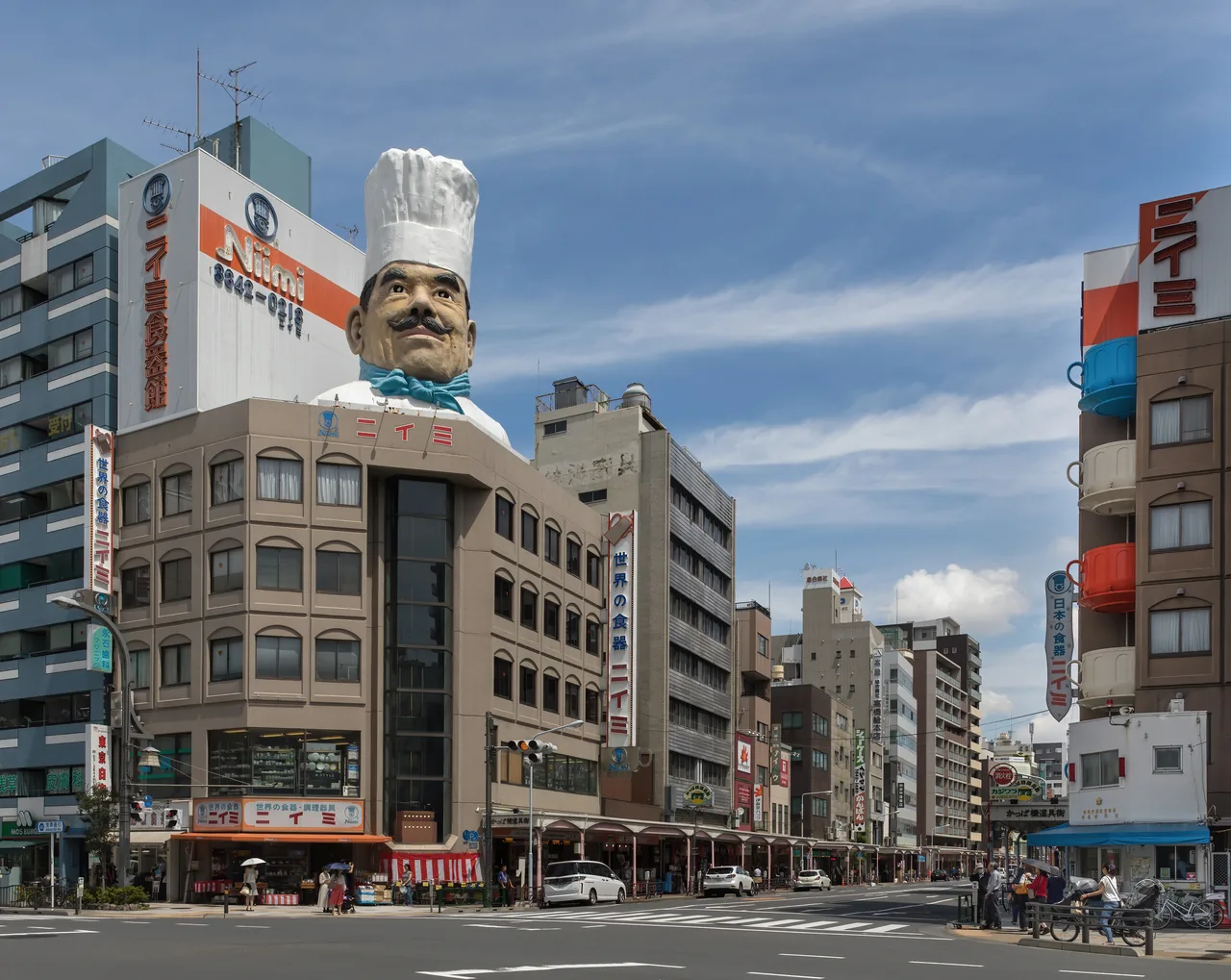
KappabashiMap (Kappabashi-dori, or Kitchen Town) is a roughly 800-meter street with about 170 specialty shops, sitting between Asakusa and Ueno, about a 10-minute walk from Senso-ji — and it’s a markedly different pace from Nakamise, with far fewer tourists and a much more practical, craft-focused feel. If Nakamise is Asakusa’s souvenir street, Kappabashi is its working professional-supply street.
Shops here sell hand-forged Japanese knives, ceramic tableware, bamboo utensils, lacquerware, and professional-grade cookware — the kind of gear actual restaurant kitchens across Tokyo buy from, not tourist-market versions of it. The street is also the source of the famously realistic plastic food replicas (shokuhin sample) seen in restaurant window displays across the country; some shops here let visitors try making their own replica, a hands-on souvenir rather than something bought off a shelf.
| Nakamise-dori | Kappabashi | |
|---|---|---|
| Length | ~250m | ~800m |
| Shop count | ~89-90 | ~170 |
| Focus | Souvenirs, street snacks, temple approach | Professional kitchenware, craft goods, food replicas |
| Crowd level | Heavy, especially midday | Noticeably lighter |
Popular with visiting chefs and serious home cooks as much as with souvenir hunters, Kappabashi is worth the extra ten-minute walk if you want to see a working side of Asakusa that most day-trip itineraries skip entirely.
The street takes its name from a folk legend about a kappa, a mischievous water spirit, said to have helped a local merchant drain the swampy area during Edo-period construction work — a giant chef-head statue near the main intersection has become an informal, much-photographed landmark of the street, even though it has nothing directly to do with the kappa legend itself. Most shops here cater to trade buyers first, which means prices and quality skew toward serious professional equipment rather than souvenir-grade versions — a hand-forged knife bought here is the same kind of tool a working sushi chef would use, not a display piece.
Because the street is aimed at working buyers, hours skew earlier than Nakamise-dori’s tourist rhythm — many shops open by 9 or 10am and close by early evening, with some closing on Sundays. If a specific shop or item is the goal rather than a general browse, an earlier arrival in the day is the safer bet.
9. Hanayashiki: Japan’s oldest amusement park
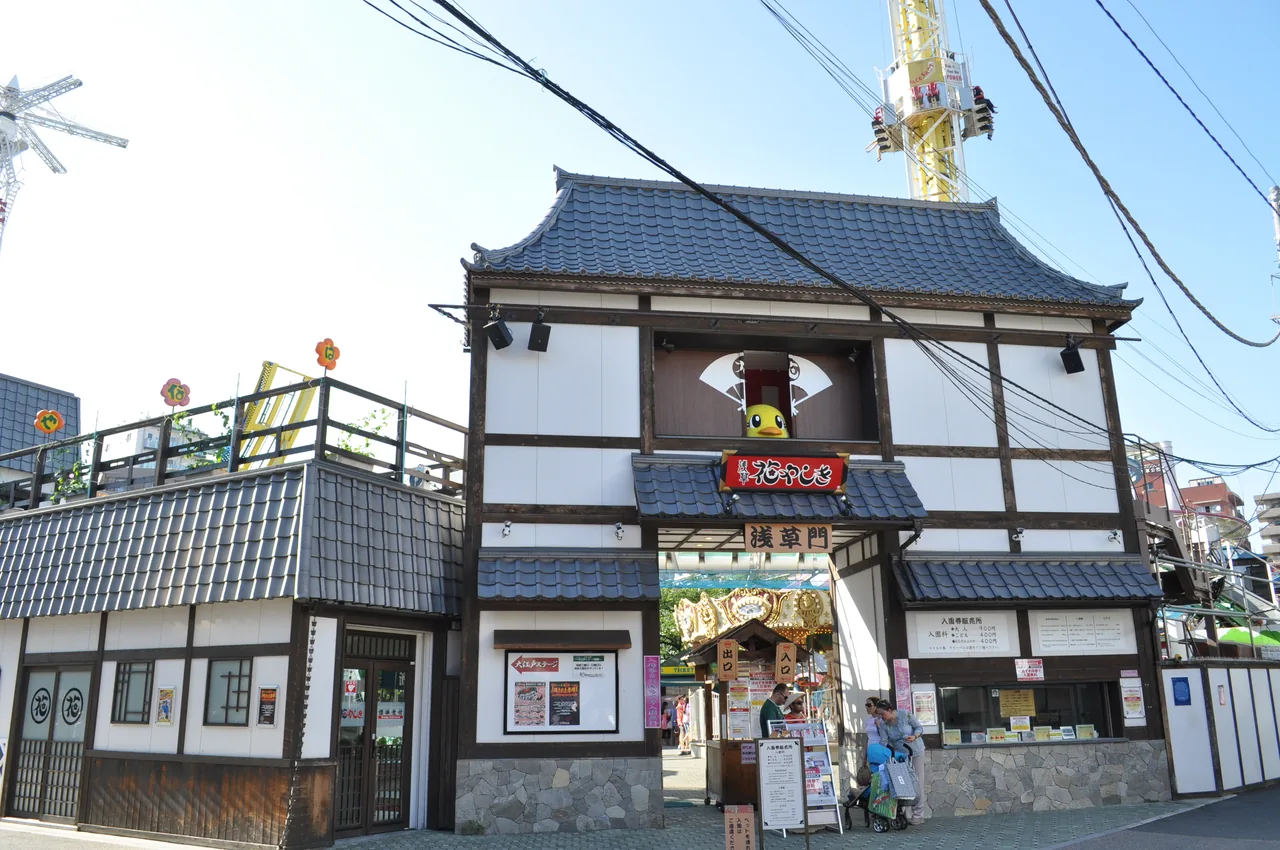
HanayashikiMap, about a 1-minute walk from Senso-ji, opened in 1853 as a flower garden — the name roughly translates to “flower estate” — with amusement rides added later, making it Japan’s oldest still-operating amusement park. Its steel-track roller coaster, built in 1953, is the oldest still-running steel coaster in the country, and its top speed of about 42 km/h is deliberately, charmingly tame by modern standards.
The novelty here isn’t thrill; it’s history. Riding a coaster built in 1953 that’s still turning today is a wholly different experience from anything at a modern theme park, and the small footprint of the whole site means a couple of hours is enough to see and ride most of it. That makes Hanayashiki a good fit for families with younger kids, or for anyone who wants a quirky, low-key break from temple crowds without leaving the neighborhood.
Entrance is a modest ticketed fee well below what a full-size theme park charges, with either pay-per-ride tickets or an all-rides passport available depending on how much of the park you want to cover — check current pricing at the gate, since ticket structures shift periodically.
Beyond the coaster, the park’s ride lineup leans toward gentle, family-friendly attractions rather than anything designed to be frightening — a Ferris wheel with neighborhood views, a haunted house that’s mild enough for most kids, and a scattering of smaller rides built for a slower, more nostalgic pace than a modern amusement park. It’s a legitimately different kind of fun from Tokyo Disneyland or Tokyo DisneySea, closer in spirit to a small-town fairground that happens to have survived, largely intact, since the 1850s.
Because the whole site sits inside a dense, low-rise city block rather than a sprawling suburban campus, Hanayashiki also has a notably compact, almost stacked layout — rides and walkways packed close together, more like a rooftop amusement park than a spread-out theme park. That compactness is part of the charm for adults revisiting a piece of old Tokyo, though families with strollers may find the tighter paths a bit more work to navigate during busy stretches.
10. Hoppy Street and evening Asakusa
Hoppy Street is an izakaya alley of open-air pub tables spilling onto the pavement that only really comes alive from about 3pm onward — treat it as an evening destination, not a daytime one, since much of it sits closed or quiet through the morning and early afternoon. It’s the clearest look at Asakusa’s other identity, the one that shows up after the day-trip crowds thin out.
The street takes its name from “Hoppy,” a low-alcohol beer substitute that became popular after WWII, when real beer was a luxury many working-class households couldn’t easily afford. That postwar, unpretentious, grilling-and-drinking character is still the tone of the street today — a markedly different mood from the temple-and-shopping daytime experience most visitors have a few blocks away.
The Sumida River itself is an easy walk from here, and river cruises — the Tokyo Cruise and Suijo Bus routes — run toward Odaiba and Hamarikyu for travelers who want a different angle on the city, including views of Skytree and the distinctive golden shape atop the Asahi Beer Hall building across the water.
What makes Hoppy Street work is how unpolished it still feels compared to most of central Tokyo’s dining districts. Plastic stools, hand-written menus, grills sitting right at the edge of the table — it’s built for regulars as much as visitors, and part of the appeal is simply sitting down at whichever stall has an open seat rather than researching a reservation in advance. Most places don’t take bookings for casual seating, so arriving a little before the evening rush (around 5 or 6pm) improves your odds of a table without a wait.
Kaminarimon itself is also worth a second look after dark. The gate and lantern are lit at night, and with the daytime crowd thinned out, it’s a strikingly different photograph than the same spot at noon — one of the better reasons to build an evening return into a full-day Asakusa plan rather than treating the neighborhood as strictly a morning stop.
11. Kimono rental and rickshaw rides: honest pricing
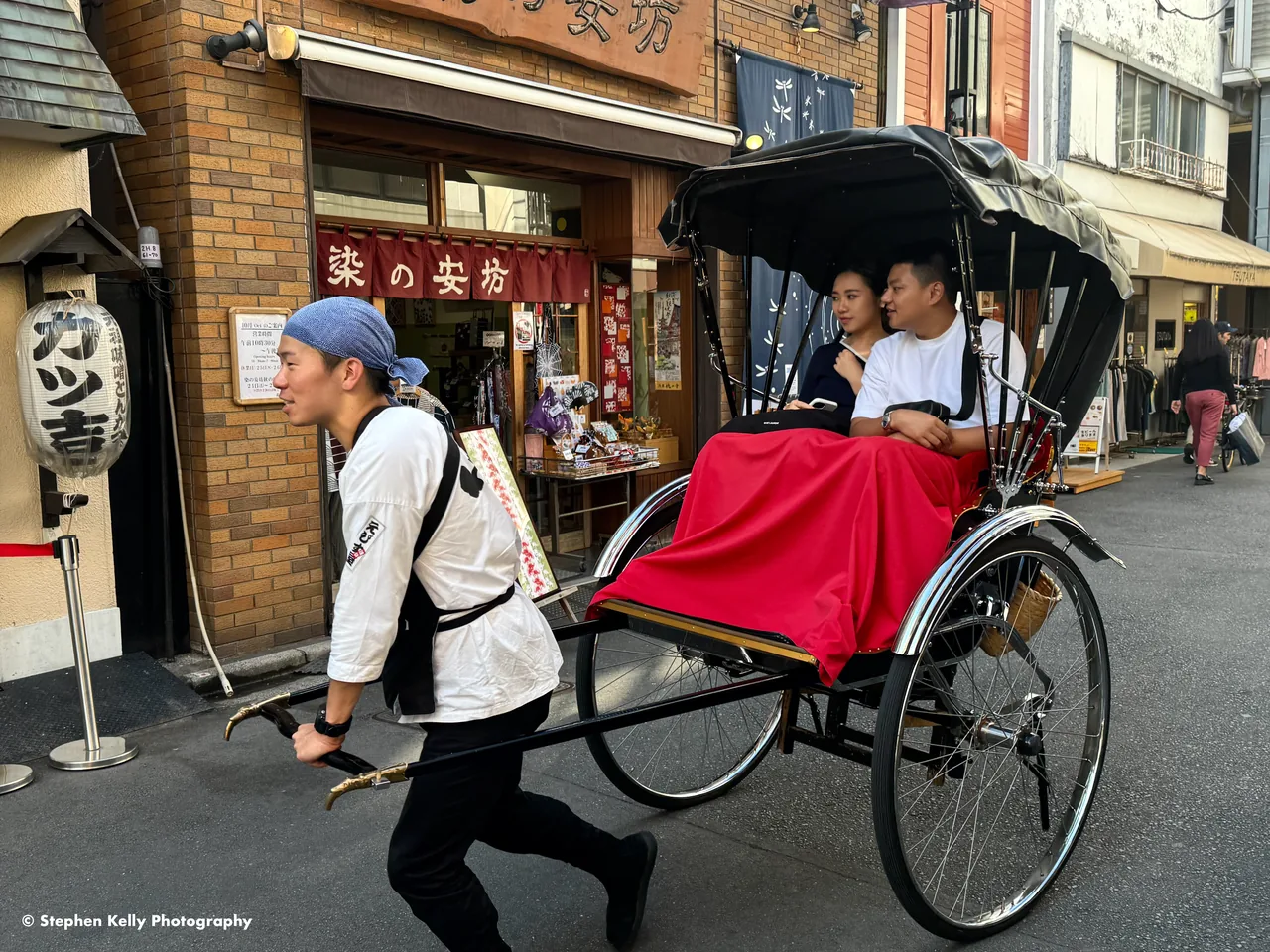
Kimono and yukata rental in Asakusa starts from about ¥2,500 at budget operators, most offering 300+ style options, with full hair styling and accessories usually costing extra — and it’s one of the most popular photo activities in the neighborhood for good reason. Rickshaw (jinrikisha) rides are priced per carriage, not per person, which makes them a reasonable splurge for two people sharing the fare.
| Rickshaw duration | Approx. price (1 person) | Approx. price (2 people) |
|---|---|---|
| ~10 minutes | from about ¥3,000 | from about ¥4,000 |
| ~30 minutes | roughly ¥7,000-10,000 per carriage | |
| ~60 minutes | roughly ¥13,000-20,000 per carriage | |
Because the fare covers the carriage rather than each passenger, a 30-minute ride splits into a fair per-person cost for a couple, even though the sticker total looks steep at first glance. Many rickshaw pullers speak some English and double as informal guides along the route, pointing out details of the streets and gates you’d otherwise walk straight past.
A popular combination: rent a kimono first, then book a short rickshaw ride past Kaminarimon and Nakamise-dori for photos — several shops run bundled packages covering both, and rickshaw pickup is often available directly outside partner kimono rental shops, so there’s not much to sort out on your own.
Timing matters for both. Kimono rental shops tend to be busiest, and slowest to fit and dress customers, in the mid-morning rush right before most visitors head toward Kaminarimon for photos — arriving at opening time, or booking the first available slot online where a shop offers it, cuts the wait considerably. Rickshaw availability follows the opposite pattern: pullers are often easiest to book on the spot during quieter midday stretches on weekdays, and hardest to find without a wait during weekend afternoons and festival dates.
Comfort and practicality matter too, especially in summer. Kimono and yukata are warm to wear on a hot Tokyo afternoon, so many shops offer a lighter yukata option in the summer months alongside the heavier traditional kimono — worth asking about specifically if you’re visiting between June and September. Rickshaw rides, by contrast, are open-air and shaded by the carriage’s canopy, a surprisingly comfortable way to cover ground on a hot day compared to walking the same stretch on foot.
12. Asakusa’s year-round festival calendar
Senso-ji and Asakusa run a full annual cycle of traditional events, not just the two headline dates most visitors already know — a bean-throwing spring ritual in early February, open-air fairs bookending midsummer, and the last big street market of the year in mid-December, on top of Sanja Matsuri and the Sumida River Fireworks Festival. Those two are still the biggest single draws, but the smaller events fill out a fuller picture of a temple that stays active between them rather than going quiet.
| Festival | 2026 dates | What happens |
|---|---|---|
| Setsubun-e | Tue, Feb 3, 2026 | Bean-throwing (mamemaki) ritual marking the start of spring; toshiotoko and invited guests throw beans and lucky charms from a stage near the main hall |
| Sanja Matsuri | Fri-Sun, May 15-17 | Fri: Daigyoretsu costume parade. Sat: roughly 100 neighborhood mikoshi processions. Sun: Grand Parade of the three main portable shrines, starting around 6:00, returning to Asakusa Shrine around 20:00. |
| Hozuki-ichi | Jul 9-10 | Ground cherry / Chinese lantern plant fair; hundreds of stalls sell hozuki plants and wind chimes (furin); tied to Shiman-rokusen-nichi, the belief that visiting Senso-ji on this date carries the merit of 46,000 ordinary days of worship |
| Sumida River Fireworks Festival | Sat, Jul 25 | Roughly 19:00-20:30, about 20,000 fireworks across two launch sites, free riverbank viewing (arrive early) plus paid reserved seating |
| Hagoita-ichi | Dec 17-19 | Battledore fair, roughly 9:00-20:00; stalls sell ornately decorated hagoita paddles, many featuring kabuki actors or celebrities rather than made for actual play — one of Tokyo’s last big open-air markets of the year |
Setsubun-e opens the calendar in early February, Senso-ji’s version of the nationwide mamemaki bean-throwing custom that marks the traditional turn from winter to spring. One detail that sets it apart from Setsubun elsewhere in Japan: most temples and homes shout “oni wa soto, fuku wa uchi” (“demons out, fortune in”) while throwing beans, but Senso-ji’s version drops the “demons out” half entirely. Tradition holds that the temple’s principal deity, Kannon, has already driven every demon from the grounds, so there’s nothing left to chase out — a small but distinctive wrinkle worth knowing if you happen to be in Asakusa in early February.
Sanja Matsuri centers on Asakusa Shrine and draws roughly 1.8 million attendees over the full weekend, making it one of the densest crowds Asakusa sees all year — worth attending for the spectacle of dozens of mikoshi being carried through the streets, but only if you’re prepared for the scale of the crowd that comes with it. If you’re hoping for a quieter Senso-ji visit, this is the weekend to avoid rather than seek out.
Hozuki-ichi arrives in midsummer, timed to Shiman-rokusen-nichi (四万六千日, “46,000 days”) — the belief that a temple visit on July 9-10 is worth roughly 126 years of ordinary worship. Hundreds of stalls across the grounds sell hozuki, the papery orange-husked ground cherry plant, alongside wind chimes (furin) whose ringing has become almost as much a fixture of the fair as the plants themselves. It’s one of Senso-ji’s most distinctive annual events and one of the least covered by competing guides, despite drawing serious local turnout.
The Sumida River Fireworks Festival draws close to one million attendees for roughly 20,000 fireworks launched across two sites along the river — arrive early for a decent riverbank spot if you’re going the free route, since prime viewing areas fill up hours ahead. Like most outdoor fireworks events in Japan, it can be postponed or canceled for weather, so always check the official announcement close to the date rather than assuming the schedule is locked in.
The calendar closes with Hagoita-ichi in mid-December, an open-air market selling hagoita — wooden paddles originally used for the New Year’s hanetsuki game, similar to battledore and shuttlecock — though the ones sold here are collector’s pieces first, decorated with kabuki actor portraits, celebrities, or seasonal motifs rather than built for actual play. Running roughly 9:00-20:00 over three days, it’s one of the last big open-air markets on Tokyo’s calendar each year, effectively Senso-ji’s own send-off before the New Year. Sumida Park, along the river, is also a minor cherry-blossom spot on the same general late-March-to-early-April timing as the rest of the city, if your visit happens to fall in that window.
13. Sample itineraries: half-day and full-day plans
A focused half-day (about 3-4 hours) covers Kaminarimon, Nakamise-dori, Senso-ji, and the free observation deck comfortably; a full day (7-9 hours) adds Kappabashi, Hanayashiki, kimono and rickshaw time, and an evening stretch on Hoppy Street. Both plans work best starting early, before the midday crowd peaks.
Weekday mornings are the single easiest window to work with — the same itinerary on a Saturday or Sunday, or during Sanja Matsuri weekend in mid-May, will run noticeably slower simply from foot traffic, even if every stop stays open the same hours. If your travel dates are flexible at all, a weekday visit makes both plans below easier to follow on schedule.
Half-day plan (~3-4 hours)
| Time | What |
|---|---|
| ~7:30-8:00 | Arrive via the Ginza Line or Toei Asakusa Line cluster; photos at Kaminarimon before the crowd builds |
| ~8:00-8:30 | Walk Nakamise-dori, grab an early snack (ningyo-yaki or age-manju) |
| ~8:30-9:30 | Senso-ji main hall, Hozomon, the pagoda, Asakusa Shrine next door |
| ~9:30-10:00 | Asakusa Culture Tourist Information Center’s free 8th-floor deck for the overview shot |
| ~10:00-11:00 | Loop back through Nakamise-dori as it fills in, or head to the next stop on your Tokyo day |
Full-day plan (~7-9 hours)
| Time | What |
|---|---|
| ~7:30-9:30 | Kaminarimon, Nakamise-dori, Senso-ji, Asakusa Shrine, and the free observation deck — the half-day plan above, done early |
| ~9:30-10:30 | Kimono rental and fitting |
| ~10:30-11:00 | Rickshaw ride past Kaminarimon and Nakamise-dori for photos |
| ~11:30-12:30 | Hanayashiki — a couple of low-key hours on the historic rides |
| ~12:30-13:30 | Lunch near Senso-ji or on the way toward Kappabashi |
| ~13:30-15:00 | Kappabashi Kitchen Town — knives, ceramics, food-replica shops, a quieter pace |
| ~15:00-17:00 | Free time — a river cruise, a return pass through Nakamise, or simply resting before evening |
| ~17:30 onward | Hoppy Street for dinner and drinks as the evening scene kicks in |
14. What to eat in Asakusa
Nakamise-dori itself is the fastest way to eat your way through Asakusa — ningyo-yaki, age-manju, senbei, and imo yokan are all sold along the walk from Kaminarimon to Hozomon — and the surrounding side streets add sit-down options for anyone who wants a proper meal rather than a snack circuit. Both approaches work; they’re just different paces of the same neighborhood.
| Snack | What it is |
|---|---|
| Ningyo-yaki | Small sponge cakes with sweet red bean filling, shaped like pagodas, doves, or lanterns |
| Age-manju | Deep-fried sweet buns, best eaten hot, straight off the fryer |
| Senbei | Savory grilled rice crackers — a good counterpoint to the sweeter stalls |
| Imo yokan | Sweet potato jelly, dense and mildly sweet; Funawa (established 1902) is a well-known source |
Beyond the walking snacks, Asakusa is also home to a handful of tempura and unagi (eel) restaurants that have been operating in the neighborhood for generations, alongside more casual noodle shops and izakayas tucked into the side streets off the main tourist path. If you want a sit-down meal without straying far from Senso-ji, the streets just east and west of Nakamise-dori — away from the most crowded stretch — tend to have shorter lines and a more local mix of customers than the shops directly facing the temple approach.
Evening changes the menu entirely. Hoppy Street’s grilled skewers, fried dishes, and namesake Hoppy drink are a different, heartier register than the daytime snack circuit — worth timing your visit around if a proper dinner and a few drinks matter more to you than an afternoon of temple sightseeing.
| Time of day | Where | What’s on offer |
|---|---|---|
| Morning-afternoon | Nakamise-dori and side alleys | Walking snacks — ningyo-yaki, age-manju, senbei, imo yokan |
| Midday | Streets just off Nakamise-dori | Sit-down tempura, unagi, and noodle restaurants |
| Evening | Hoppy Street | Grilled skewers, fried dishes, Hoppy and other drinks |
If you’re building a full day around Asakusa, it’s worth deliberately splitting the eating across those three windows rather than filling up early — a light Nakamise snack in the morning, a proper sit-down lunch after the temple crowds peak, and Hoppy Street once the evening scene starts, rather than one heavy meal that leaves no room for the rest.
15. Practical essentials: timing, luggage, and connectivity
Asakusa’s temple approach is arcaded and partly covered, making it one of Tokyo’s more rain-tolerant half-day plans even in bad weather — and its best photo windows are early morning (before 9am) or evening, since midday is reliably the most crowded stretch of the day. A little planning around timing does more for the visit than almost anything else.
| Consideration | Detail |
|---|---|
| Best photo timing | Before 9am for a near-empty Kaminarimon and Nakamise-dori, or evening for the illuminated gate and Hoppy Street |
| Worst crowd timing | Late morning through mid-afternoon, worse on weekends and holidays |
| Luggage | Coin lockers available at the major stations in the Ginza/Toei/Tobu cluster |
| Rain plan | Nakamise-dori and the temple approach are arcaded/covered in sections — a workable half-day even in wet weather |
| Nearby extensions | Tokyo Skytree (visible from multiple points, short ride/walk via Oshiage) and Ueno (reached via a walk through Kappabashi) |
Asakusa pairs naturally with a longer Tokyo day rather than standing alone. Skytree is visible from several points in the neighborhood and reachable with a short ride or walk across the river via Oshiage, and Ueno sits at the far end of a walk through Kappabashi — both realistic add-ons if you’ve got more than a half-day free.
Accessibility and luggage storage
Senso-ji’s grounds are wheelchair-friendly in practice, not just on paper — wide, evenly paved pathways run through the whole complex, and an elevator sits to the side of the main hall for wheelchair users, since the hall itself sits above ground level via a short flight of steps. Every entrance and exit at all four “Asakusa Station” stops covered in Section 3 has an elevator too, so the trip in doesn’t require working out an accessible route separately from the temple visit itself.
Accessible toilets are scattered around the neighborhood, but the most reliable option is inside the Asakusa Culture Tourist Information Center directly across from Kaminarimon — the same building with the free 8th-floor observation deck from Section 7. It has at least two wheelchair-accessible stalls and staff who speak English, which makes it a dependable fallback rather than a shop-by-shop search for a working restroom.
For luggage, two separate services cover most situations. The Asakusa Kaminarimon Service Center, run by Sagawa Express, sits right near Kaminarimon and takes anything from full suitcases to small souvenir boxes for temporary storage. Separately, Yamato Transport — the “kuroneko” courier company — runs a luggage counter on the 1st floor of the Ekimise department store, the same building as Tobu Asakusa Station, open roughly 10:00-19:00; storing one piece of luggage for the day runs around ¥500, though confirm the current rate before relying on it, since courier pricing shifts from time to time.
| Need | Where | Detail |
|---|---|---|
| Wheelchair access to Senso-ji | Main hall, side entrance | Elevator beside the main hall; wide paved paths throughout the grounds |
| Accessible station entrances | All four Asakusa Station stops | Elevators at every entrance/exit |
| Accessible toilets | Asakusa Culture Tourist Information Center | At least 2 accessible stalls; English-speaking staff; directly across from Kaminarimon |
| Luggage storage | Asakusa Kaminarimon Service Center (Sagawa Express) | Near Kaminarimon; suitcases to small items |
| Luggage storage / forwarding | Yamato Transport counter, Ekimise 1F | Same building as Tobu Asakusa Station; roughly 10:00-19:00; around ¥500/item/day, confirm current rate |
A working data connection makes the whole visit easier — checking train timing across the four different “Asakusa Station” stops, confirming Senso-ji’s seasonal main-hall hours, and pulling up Google Maps directions between Nakamise-dori and Kappabashi on the fly all lean on having signal the moment you land. Sort a Japan eSIM before you arrive rather than hunting for station Wi-Fi once you’re already navigating four different train lines with the same name.
16. Asakusa vs. the rest of Tokyo: how to fit it into your trip
Asakusa is Tokyo’s clearest shitamachi neighborhood — low-rise, temple-centered, artisan and festival-heavy — set against the glossier, taller, faster-paced west side of the city, and the contrast is exactly what makes it worth a dedicated slot on any Tokyo itinerary rather than a rushed stopover. It isn’t competing with the rest of Tokyo so much as showing a different layer of it.
| Asakusa | Central/west Tokyo (e.g. Shibuya, Shinjuku) | |
|---|---|---|
| Character | Low-rise, temple-centered, shitamachi old downtown | High-rise, commercial, neon-and-skyline modern Tokyo |
| Signature sight | Senso-ji, Kaminarimon, Nakamise-dori | Scramble crossings, department stores, nightlife districts |
| Pace | Busy by day around the temple, quieter after dark except Hoppy Street | Busy from afternoon well into the night |
| Time needed | Half a day minimum, a full day for the deeper add-ons | Varies widely by what you’re chasing |
For most travelers, Asakusa works best as one full or half-day slot within a longer Tokyo stay rather than the whole trip’s anchor neighborhood — a deliberate contrast to whatever modern, high-rise district you’re also spending time in, not a replacement for it. Our Tokyo travel guide covers how to sequence a neighborhood like this alongside the rest of the city, and our complete Japan travel guide shows how Tokyo, and Asakusa within it, fits into a wider national trip.
One more way to think about it: Asakusa vs. Shibuya, or Asakusa vs. Shinjuku, isn’t really about picking a winner. First-time Tokyo visitors often assume the city is uniformly modern until they actually stand in front of Kaminarimon, and that contrast — glass towers twenty minutes away by train, temple incense and 300-year-old shop stalls right here — tends to be one of the more memorable moments of an entire Japan trip, not just an Asakusa day out. Building both into the same itinerary, rather than choosing one over the other, is usually the better plan.
Timing also matters more here than in most neighborhoods. Because Senso-ji, Kaminarimon, and Nakamise-dori are outdoor and largely weather-tolerant, Asakusa slots in well on a day when rain rules out a more exposed part of your Tokyo plan — one more reason to keep it flexible in your schedule rather than locking it to a single fixed day.
Ueno has a guide of its own now: the Ueno travel guide covers which station exit to use, what closes on which day of the week, and the Ameyoko market that runs south from the station.
17. Extending the day: Tokyo Skytree, a Sumida River cruise, and Ryogoku
Asakusa sits close enough to Tokyo Skytree, a Sumida River cruise pier, and the sumo neighborhood of Ryogoku that any one of the three makes a workable half-day extension without a long transit slog. None of them are must-dos on top of a full Asakusa day, but if you’ve got an extra afternoon free, this is where it’s best spent.
Tokyo Skytree
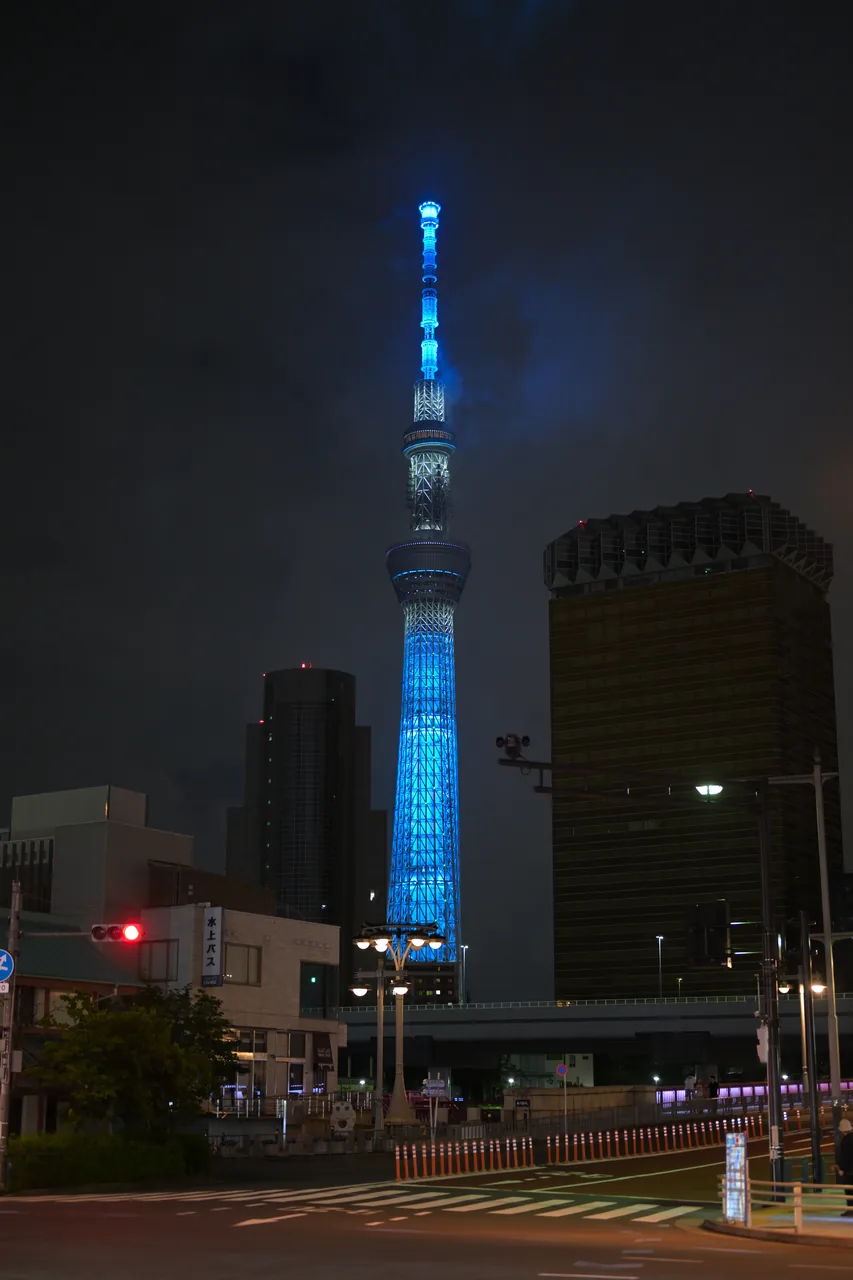
Tokyo SkytreeMap has two observation decks: the Tembo Deck at 350m, and the Tembo Galleria at 450m, which requires a separate or combined ticket on top of Tembo Deck admission. Pricing is dynamic — it varies by date, by whether you book online in advance or buy at the door, and by weekday versus weekend — so treat any figure here as a planning range rather than a fixed price. Tembo Deck-only tickets bought online in advance on a weekday tend to start around ¥1,800-2,100; combo tickets covering both decks run roughly ¥2,700-3,500 depending on the date and tier. Check Skytree’s official price calendar before you go, since it runs on live, date-based pricing rather than one flat rate. Hours generally run around 10:00-21:00, with last entry roughly an hour before close, though specific dates can run later — check the day’s posted hours rather than assuming.
The real reason Skytree earns a full section here, rather than a passing mention, is how easy it is to reach from Asakusa: it’s a short walk, or a single stop on the Tobu Skytree Line to Oshiage (Tokyo Skytree Station), and some Sumida River cruise routes land close to Skytree as well — easy to fold into the same afternoon as the boat ride below rather than choosing one over the other.
Sumida River cruise
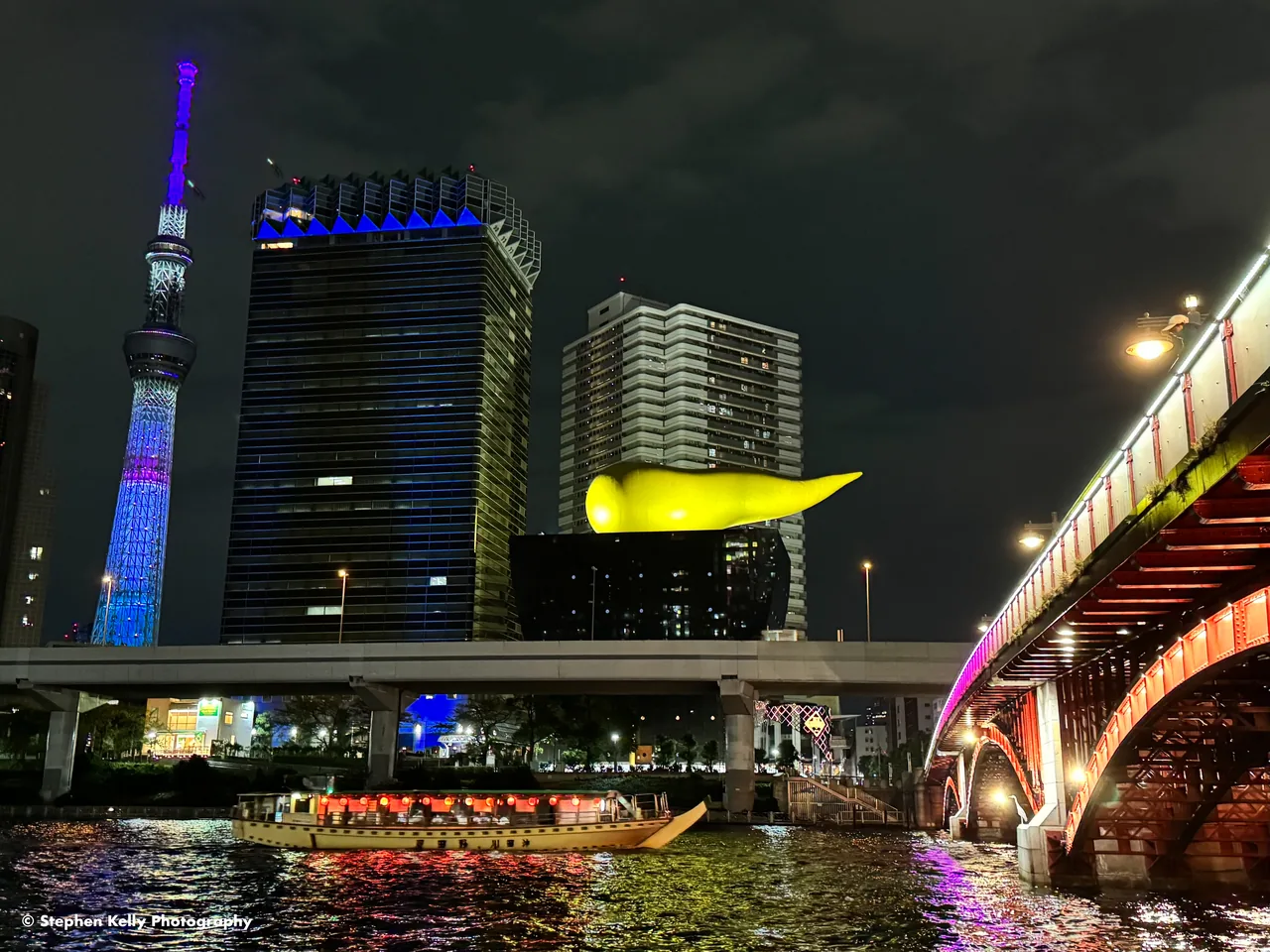
The Tokyo Cruise / Suijo Bus system runs boats from a pier right in Asakusa, near Azuma-bashi bridge, a few minutes’ walk from Kaminarimon. The core Asakusa route runs roughly 15-20 sailings a day, generally between about 9:50 and 19:15, though schedules shift seasonally — check the current timetable rather than planning around a fixed departure. Fares vary by route and boat: shorter hops toward Hamarikyu Gardens or Odaiba run roughly ¥900-1,200, with longer combined routes costing more, and booking a specific sailing online in advance has become the easier way to lock in a seat.
One practical 2026 note worth knowing before you plan around a specific boat: a couple of the line’s more distinctively styled vessels have had service gaps recently — as of early 2026, at least one was pulled from service for maintenance, with a return targeted for around summer 2026. Check the operator’s current boat lineup and schedule before committing to a plan built around one particular vessel; the cruise itself keeps running regardless, just not necessarily on the exact boat you might have seen in photos online. Beyond the logistics, it’s a completely different way to take in the river, Skytree, and the Asakusa skyline than seeing them on foot, and it can drop you near Hamarikyu Gardens, Odaiba, or Skytree depending on the route you pick.
Ryogoku: sumo, history, and a sumo-ring dining hall
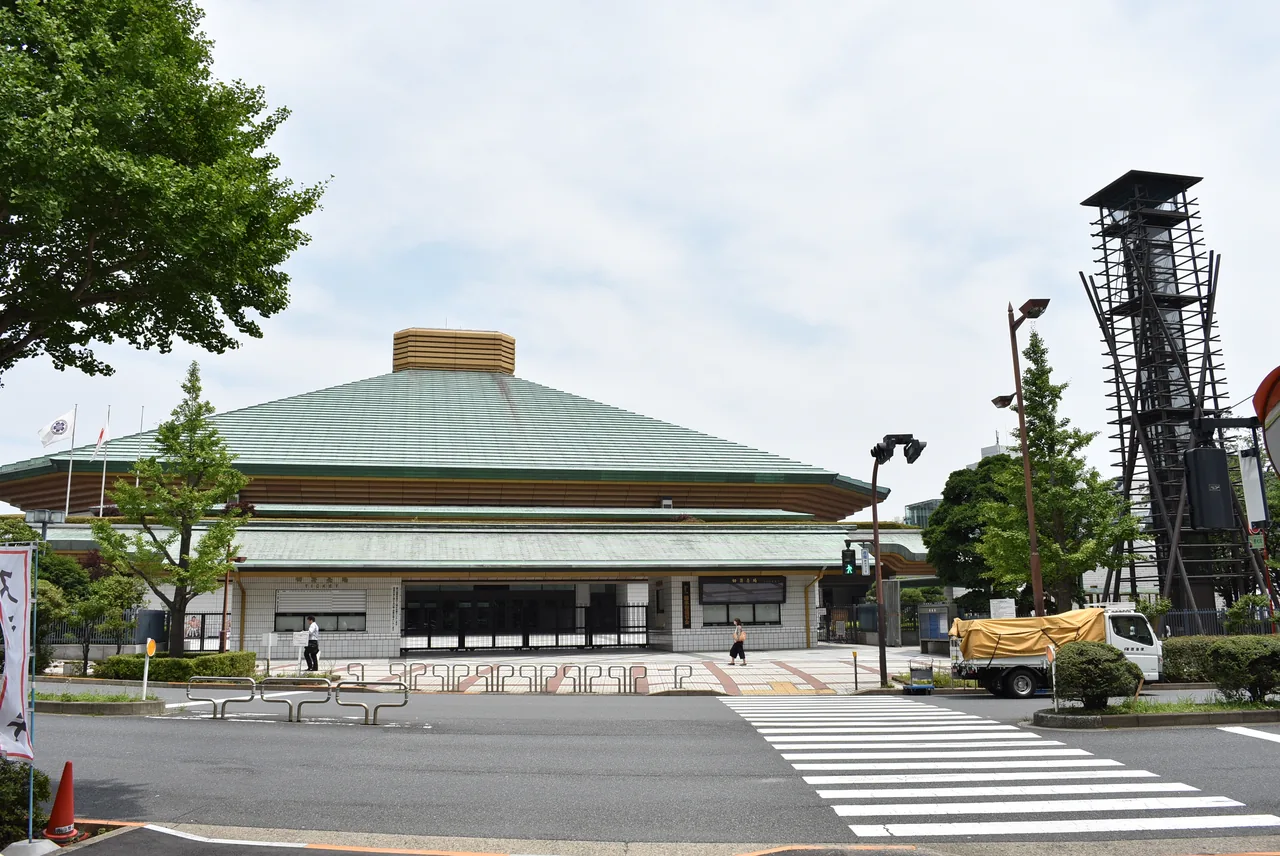
Just across the Sumida River from Asakusa — close enough for roughly a ¥900 taxi ride, or a short train ride — Ryogoku is Tokyo’s sumo neighborhood, built up around Japan’s national sumo stadium. Ryogoku KokugikanMap itself isn’t worth going inside without a tournament ticket, but the small sumo museum near its entrance is normally free to browse and worth a quick look if you’re already in the area.
The bigger draw for most visitors is the Edo-Tokyo MuseumMap, which reopened on March 31, 2026 after a roughly four-year renovation closure — a detail worth flagging, since a fair number of older guides still describe it as shut. It covers about 400 years of Tokyo’s history from the Edo period to today, anchored by large-scale dioramas of old Edo and Tokyo, and the renovated building leans further into interactive, hands-on exhibits than the pre-renovation version did. Budget at least 1.5-2 hours if you’re seeing it properly rather than skimming it.
For lunch, Ryogoku Edo Noren is a small dining hall right at Ryogoku Station with a dozen or so restaurants serving Edo-period-style Tokyo food, built around a full-size sumo ring at its center — a fun, low-effort stop while you’re in the area rather than a destination worth a special trip on its own.
| Extension | Hours | Approx. cost |
|---|---|---|
| Tokyo Skytree (Tembo Deck) | ~10:00-21:00, last entry ~1hr before close (check posted hours) | ~¥1,800-2,100, weekday advance online |
| Tokyo Skytree (combo, both decks) | Same as above | ~¥2,700-3,500 depending on date/tier |
| Sumida River cruise (Asakusa route) | ~9:50-19:15, ~15-20 sailings/day (check current timetable) | ~¥900-1,200 for shorter hops; more for longer combined routes |
| Ryogoku Kokugikan sumo museum | Check current hours; access can be limited outside tournament periods | Normally free to browse |
| Edo-Tokyo Museum | Reopened March 31, 2026 after a ~4-year renovation; check current hours | Budget 1.5-2 hours |
Frame all three as a natural half-day add-on for travelers with a spare afternoon, not a requirement — plenty of visitors will only care about Asakusa and Skytree, and skipping Ryogoku entirely costs nothing. If you do have the extra time, though, it’s a short trip for a genuinely different slice of the city: modern observation-deck views, a slower river-level perspective, and a neighborhood built entirely around sumo and Edo-era history.