
Hakodate Travel Guide: Getting Up the Mountain, Trams, the Morning Market and Goryokaku
Hakodate sits on a neck of land with sea on three sides. It is known for the view from the mountain at its tip, and that mountain is the one thing in town you cannot count on. The ropeway shuts for maintenance in autumn, private cars are barred in the evenings, and the road closes for the winter. Everything below is from the operators and the city.
| Getting there | the Shinkansen stops outside town, not in it. |
|---|---|
| The transfer | the local train beats the bus on price and time. |
| The view | four ways up the mountain, each blocked at some point. |
| Watch out | the combined day pass does not cover the mountain bus. |
| Morning market | opens an hour earlier from May. |
| Tax | a prefectural and a city lodging tax are charged together. |
1. A port city with the sea on three sides
2. When to go, and what is shut when you get there
3. Mt. Hakodate: four ways up, and none of them always work
4. Motomachi: churches at the top of the slope
5. The Bay Area: brick warehouses and the harbour
6. The station end and the morning market
7. Goryokaku: a star-shaped fort and the tower above it
8. Yunokawa: a hot spring quarter five minutes from the airport
9. Onuma and the country beyond the city
10. What to eat in Hakodate
11. Getting around: one tram line does most of it
12. Arriving and leaving: the Shinkansen, the transfer, and the airport
13. Where to stay, and the tax you pay on top
14. How many days is enough
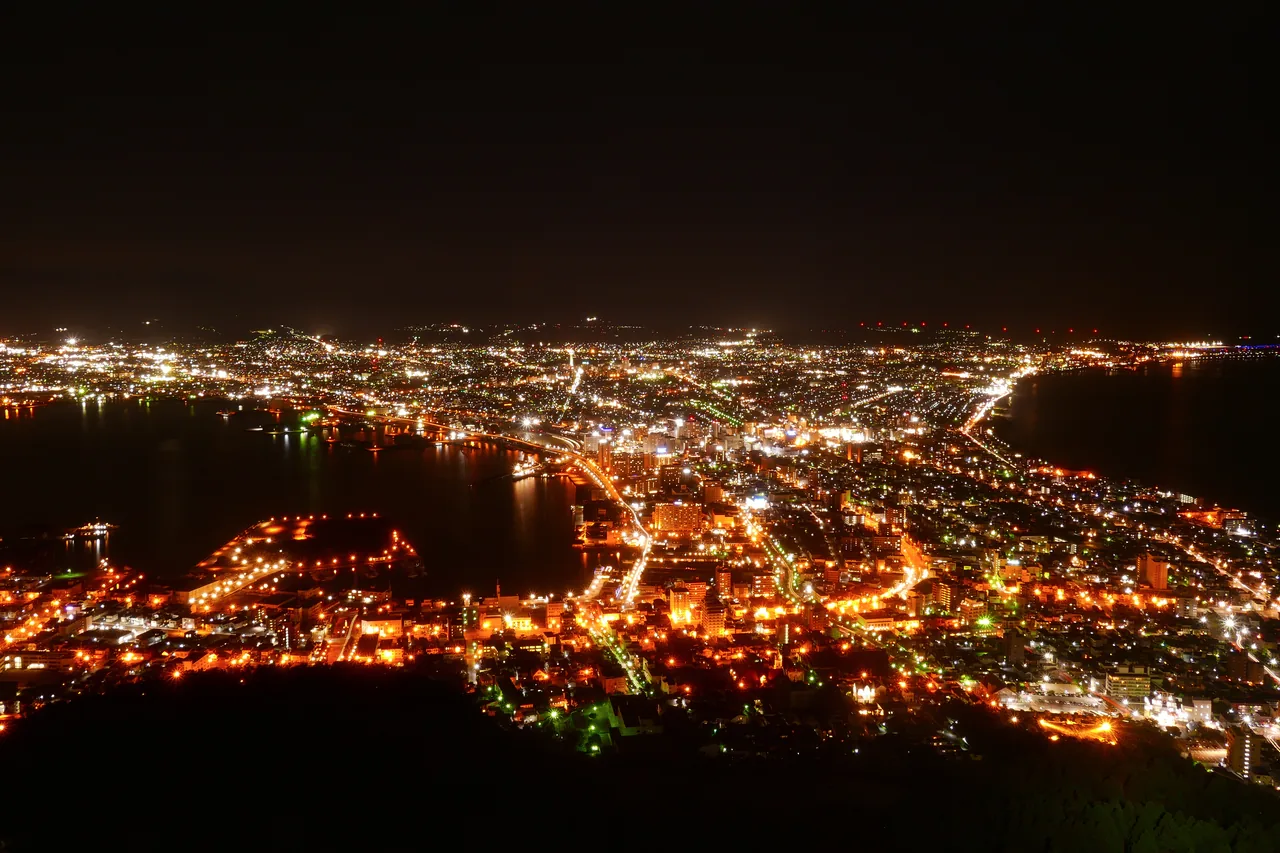
1. A port city with the sea on three sides
Hakodate is at the southern tip of Hokkaido, closer to Tokyo than Sapporo is. The town sits on a narrow neck of land that runs out into the water, which is why you are never far from the sea in any direction. Map
At the end of that neck stands a single mountain. Because the land below it is pinched in from both sides, the view from the top shows two stretches of water at once and a band of streetlights squeezed between them. That shape is the reason the night view here has a reputation that the view from most city towers does not.
The town looks the way it does because of when it opened. Hakodate was one of the first Japanese ports to take foreign ships, and the people who arrived then settled on the slope below the mountain. Their churches, consulates and timber houses are still standing, and that slope is the Motomachi district visitors walk today.
The city divides into five pieces
The city’s own tourism material splits Hakodate into districts, and the division is useful to a visitor because the things you want are not spread evenly. Sights sit in one place, restaurants in another, hotel rooms in a third.
| District | What takes you there |
|---|---|
| Motomachi and the mountain | Slopes, churches, old buildings. The densest part |
| Bay Area | Brick warehouses and the harbour. Good in the evening |
| Station and Daimon | The morning market, restaurants, most of the hotel rooms |
| Goryokaku | The star fort and its tower. Where locals eat |
| Yunokawa | The hot spring quarter, and the airport is minutes away |
The first three connect on foot. Goryokaku and Yunokawa need the tram. One tram line threads all five together, which is why navigating Hakodate takes almost no thought once you have worked out where you are staying.
It is not a smaller Sapporo
The two cities are different in kind, not just size. Sapporo is a grid, and its pull is food and nightlife. Hakodate is older, hillier and built around a harbour, and most of what you do here is outdoors and on foot. There is a lot of uphill in it.
People often try to fit both into one trip. The limited express between them takes three to four hours each way, which is too much to do and undo in a day. The Sapporo end is covered separately in the Sapporo travel guide.
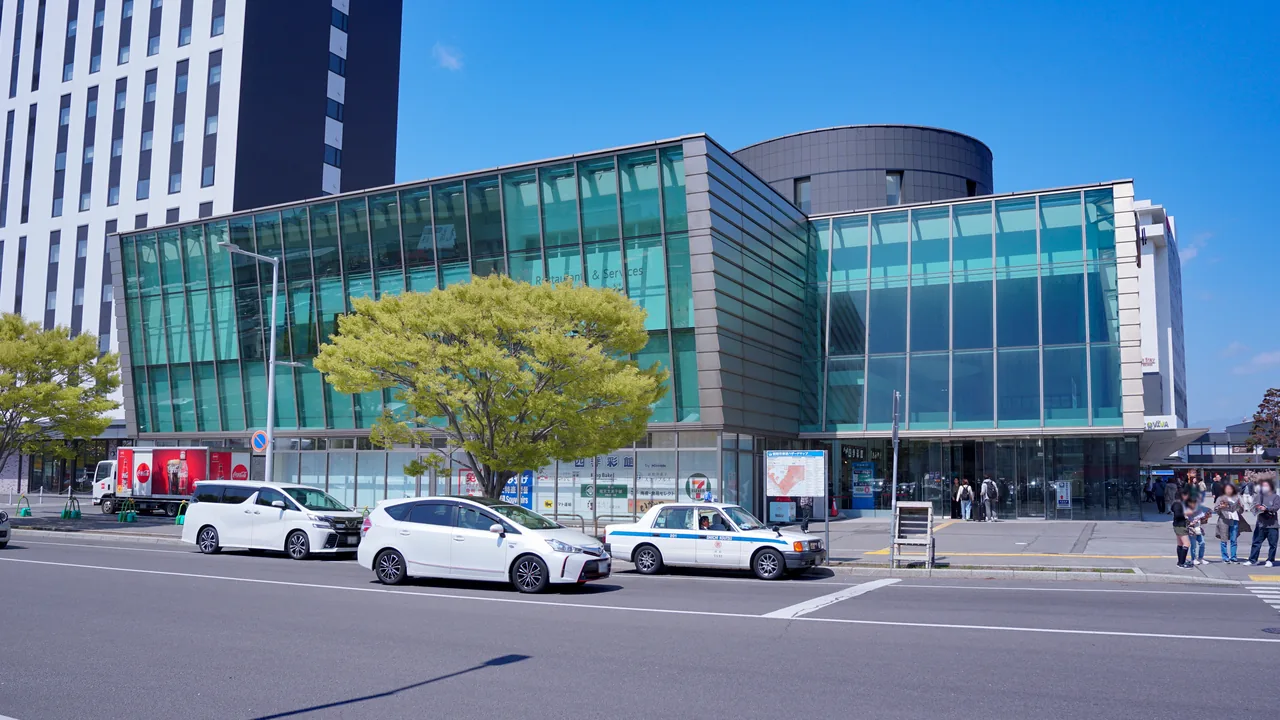
2. When to go, and what is shut when you get there
In Hakodate the first thing to check is not the weather but what is actually open on your dates. Closures here are staggered across the year and the dates do not line up with each other, so it is entirely possible to arrive for the night view and find every way up the mountain blocked.
Taken from the operators’ own notices, the pattern looks like this.
| What | When it stops |
|---|---|
| Mt. Hakodate Ropeway | Roughly twenty days of maintenance in autumn |
| Ropeway shuttle bus | Every service is cancelled whenever the ropeway is down |
| Mountain climbing bus | Ends in early November, returns in spring |
| The mountain road | Closed from early November until mid-April |
| Inside the Orthodox church | Shut from late December to late March |
| Kanemori bay cruise | Nothing runs from November to the end of March |
| Driving to Tachimachi Cape | Blocked in winter |
The short reading is that winter strips things out. What stays is snow on the Motomachi slopes, the hot springs, and far fewer people. Whether that is a fair trade depends entirely on what you came for.
Autumn is the awkward one
The ropeway’s annual inspection lands in the same weeks as the best of the leaves. Worse, the road up the mountain closes for winter almost the day the ropeway comes back. Those two dates sit end to end, so anyone travelling between late October and early November should settle the question of how they are getting up before anything else.
The summit observatory itself stays open through the shutdown. Only the ropeway stops, so the climbing bus and taxis still work. How the leaves move down through Hokkaido is set out in the Japan autumn foliage guide.
Summer and winter are good for opposite reasons
In summer the morning market opens an hour earlier, the harbour boat runs, and the mountain road is open. Hokkaido does not get the heat the main islands do. The cost is crowds, and this is the busiest the city gets.
In winter the hot spring quarter runs an illumination and the brick warehouses sit under snow. Against that, the list above is mostly closed. If you are weighing up a winter trip to Japan generally, Japan in December covers the wider picture.
Season by season, side by side
| Season | In its favour | Against it |
|---|---|---|
| Spring | Cherry trees round the fort, everything running | Blossom week draws crowds |
| Summer | Early market, boats running, road open | Busiest time of the year |
| Autumn | Leaves, and Onuma at its best | Ropeway maintenance and the road closure overlap |
| Winter | Snow, hot springs, illuminations, quiet | The longest closure list |
There is no single right answer. If the night view is the point, spring and summer are the safe bets. If the leaves are, aim for early autumn rather than late. If you want hot springs and empty streets, winter is better than its reputation.
If your dates fall between late October and early November, check the ropeway operator’s notice first. The inspection window shifts a little each year, and when it is on, the connecting shuttle bus stops too, so it is possible to travel to the foot of the mountain for nothing.
3. Mt. Hakodate: four ways up, and none of them always work
The night view is the plan that most often falls apart here. The observatory is open nearly all the time, but the ways of reaching it drop out one by one depending on the month and the hour. Knowing all four in advance means you can pick whichever is running on the day. Map
| Route up | Cost | When it fails |
|---|---|---|
| Ropeway | Return 1,800 yen, child 900 yen | Autumn maintenance |
| Climbing bus | One way 700 yen, child 350 yen | Finishes in early November |
| Own car or rental | Summit parking free | Evening ban, and the winter closure |
| Taxi | Metered | Only while the road is open |
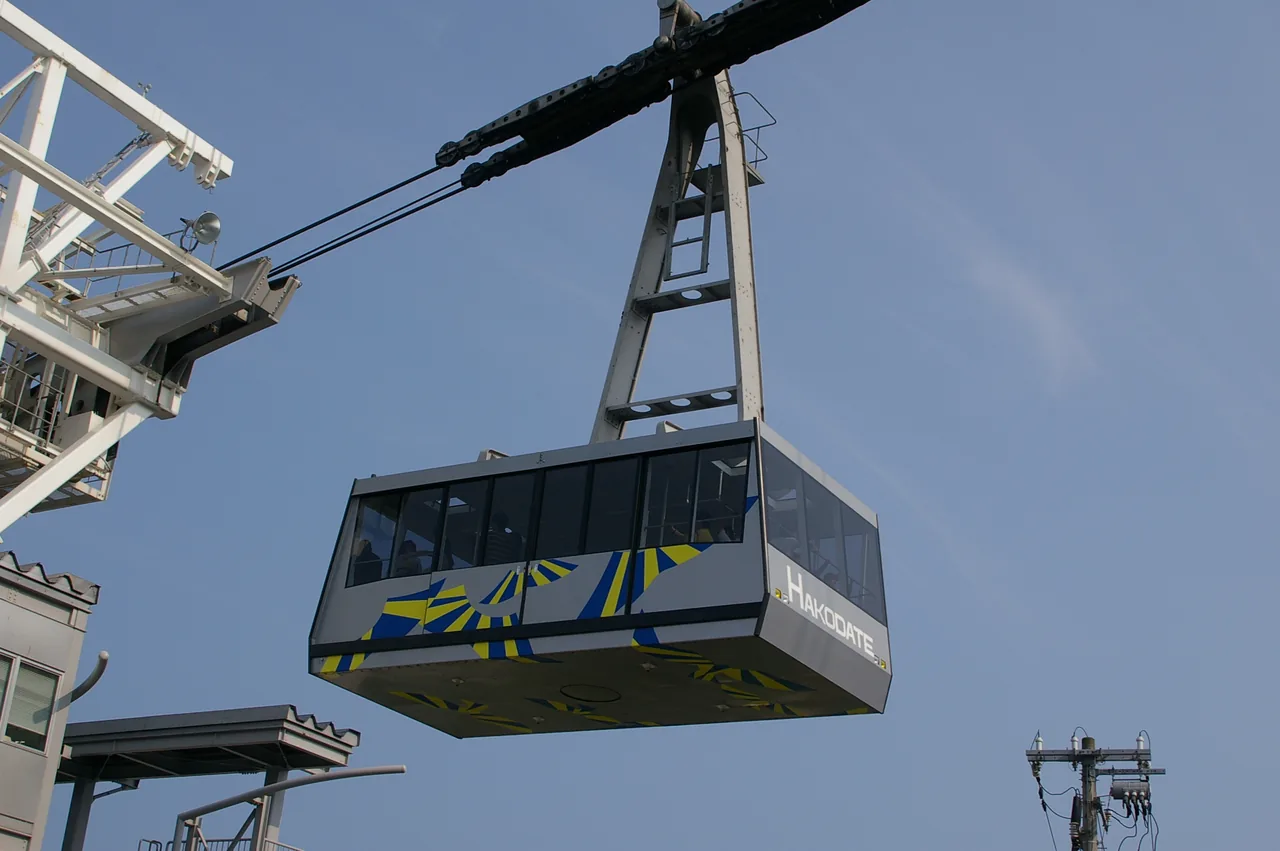
The ropeway is easiest, until it is not
The base station is about ten minutes on foot from the Jujigai tram stop. A return ticket is 1,800 yen. Hours shift with the season: until the end of September it runs to ten at night, and from October it closes at nine, with the last car up leaving roughly half an hour before that. Map
The hour or two after sunset is the crush, and the operator says as much. The city runs a congestion feed that shows how busy several points around the mountain are along with the current ropeway queue, which is worth a look before you set out.
Your day pass does not cover the mountain bus
A bus goes from stand 4 in front of Hakodate Station straight to the summit, taking around thirty minutes for the round trip. Services leaving the station only pick up, so you cannot get off partway, and services coming down only set down, so you cannot get on partway.
One pass does not cover it. The combined tram-and-bus day pass, the one most visitors buy, is not valid on this bus. Hakodate Bus states it plainly. The bus-only Kampas pass and ordinary IC cards do work on it.
People buy the combined pass and then pay again at the door of the mountain bus. If you intend to go up by bus, look at the Hakodate Bus Kampas instead, or simply tap an IC card.
You cannot drive up in the evening
Private cars and rentals are barred from the mountain road for a set window each day: until the end of September from five in the evening until ten at night, and from October from four until nine. During those hours the summit car park is off limits as well, and if you drove up beforehand you are expected to be back down before the ban starts.
So driving up for the night view is not a plan that was ever available. Motorcycles are barred from the road year round. And from early November until mid-April the road is closed to everyone.
Walking up, and where to park
There is a hiking path from the bottom to the summit, and some people walk up and ride down. It is not a route to attempt after dark, and in winter it is not a route for casual visitors at all.
When the evening ban is not in force, summit parking is free. There is paid parking near the ropeway base station, and the Motomachi visitor car park charges 300 yen for the first hour and 150 yen for each half hour after that if you are combining the mountain with the old quarter.
Which answer applies to you
Spring through to early autumn, take the ropeway and think no further. During the maintenance window, use the climbing bus or a taxi. Once the climbing bus has finished for the year, a taxi is what is left, and once the road shuts the ropeway is the only way. Decide this before you plan the evening around it.
4. Motomachi: churches at the top of the slope
Motomachi is the sloping quarter below the mountain and it holds more of what people come to see than any other part of the city. It is also where you will do most of your walking, because the ground rises steadily from the water to the treeline. Map
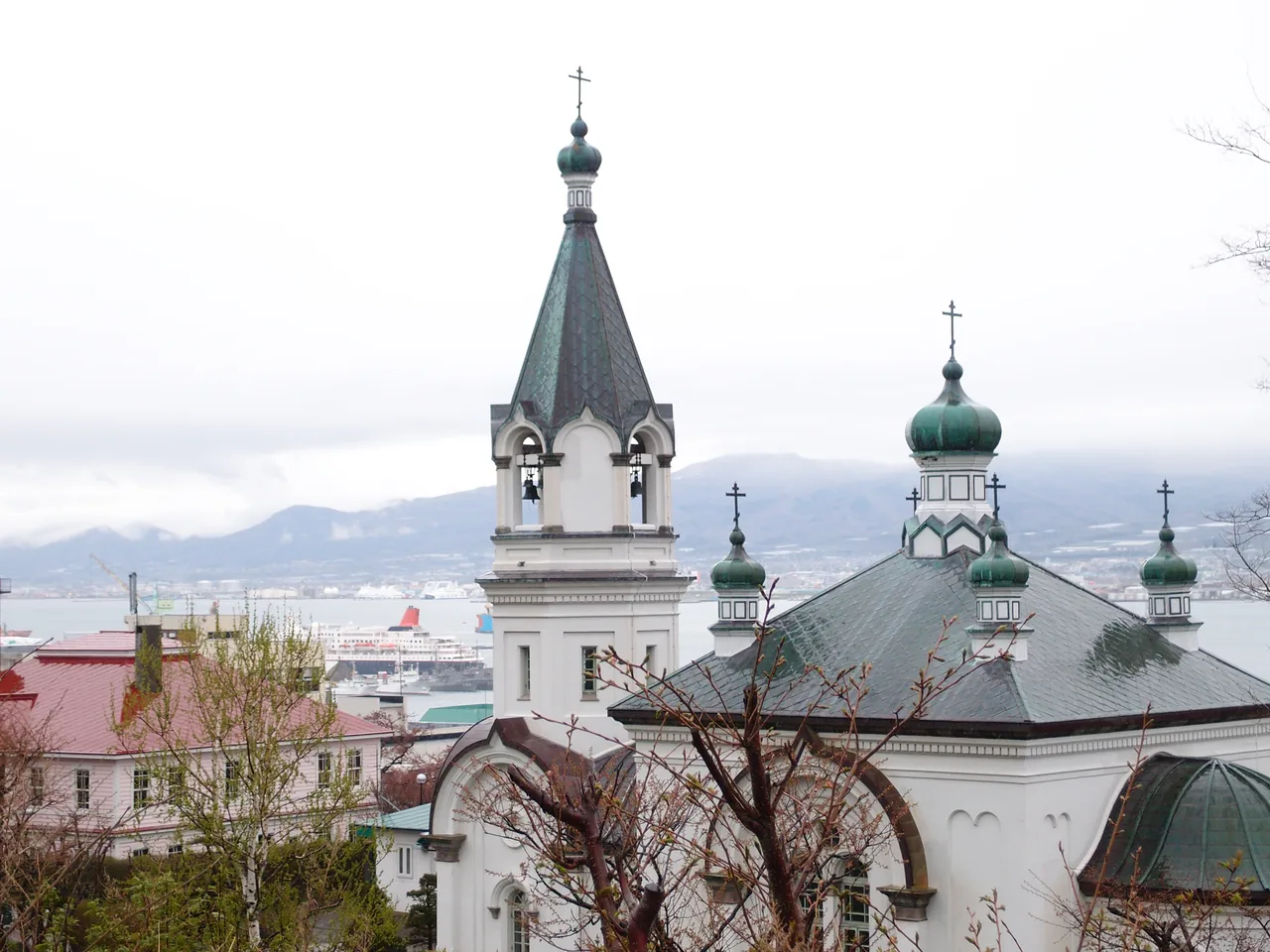
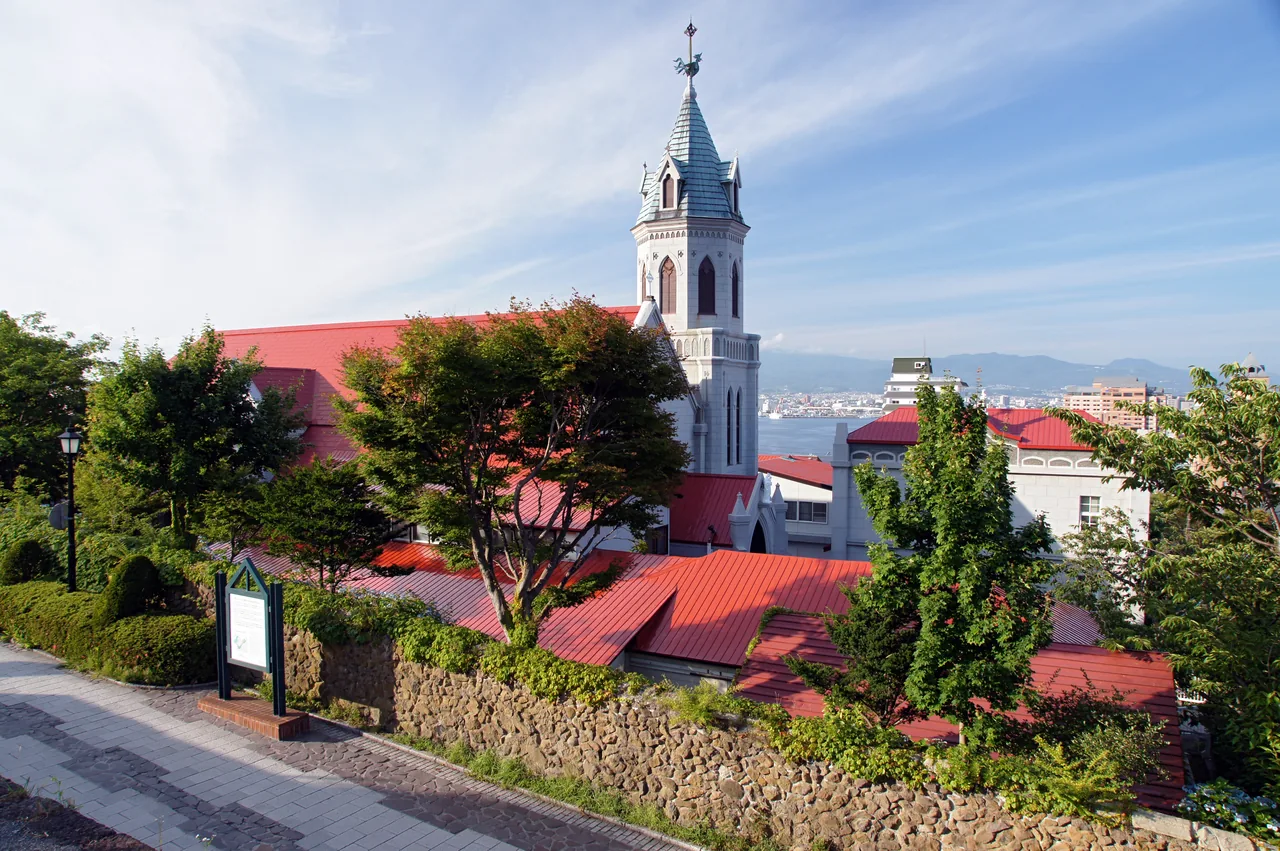
The reason is the port opening described earlier. Consulates, churches and merchants’ houses went up on the slope overlooking the harbour, and enough of them survive that you can walk between a Russian Orthodox church and a Catholic one inside a single block, which is not a common sight in Japan.
Three churches within a short walk
| Place | Hours | Entry |
|---|---|---|
| Russian Orthodox church | Weekdays 10:00 to 17:00, Saturday to 16:00, Sunday afternoons only | 200 yen |
| Catholic Motomachi church | 10:00 to 16:00 | Free |
| Old Public Hall | Later in summer, to 17:00 in winter | 300 yen, students 150 |
| Old British Consulate | To 19:00 from April to October, to 17:00 in winter | 300 yen, students 150 |
The Orthodox church closes its interior from late December until late March. The exterior is there year round, but seeing inside means matching your dates to it. Map
The Catholic church costs nothing but is closed on Sunday mornings, during services, and for several days around the new year. Map
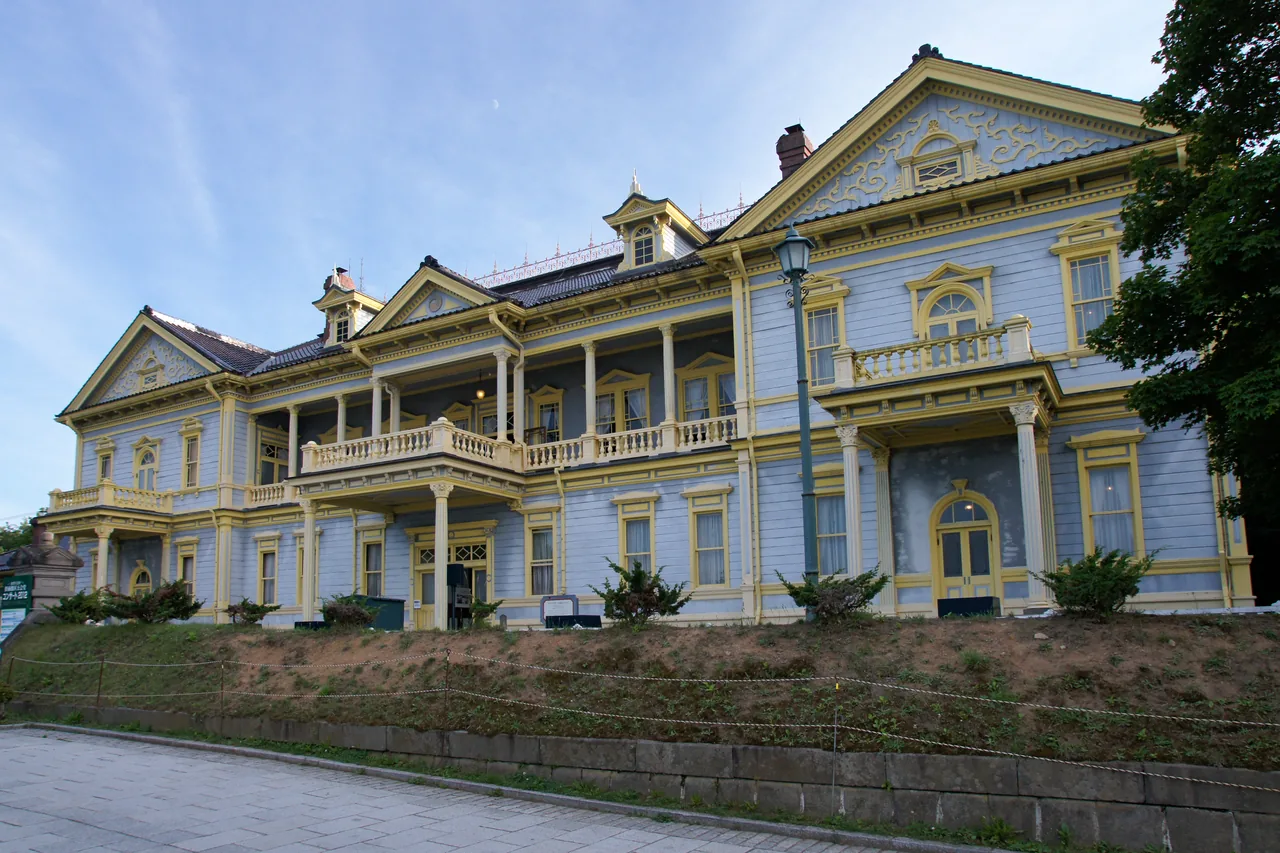
The Public Hall is the yellow and blue one
It stands above Motomachi Park, a timber building painted in two colours that is hard to miss. Inside are the ballroom and reception rooms as they were. Last admission is half an hour before closing. Map
There is a costume room here where you can hire period clothes and walk through the building in them, which is what most of the photographs you have seen were taken in. A combined ticket with the Old British Consulate exists, so ask at the desk if you plan to see both. Map
The slopes themselves are the attraction
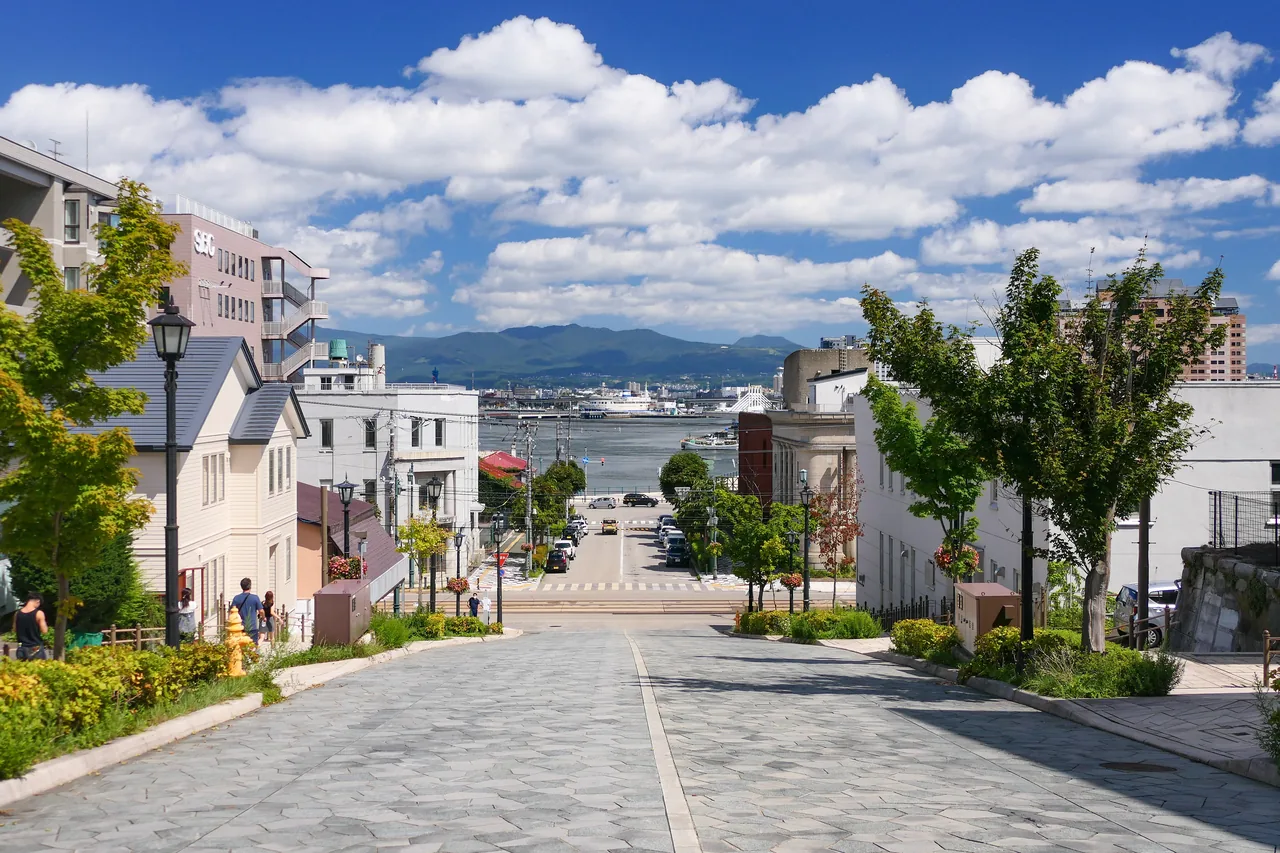
Each lane running down to the water has a name. The best known is Hachiman-zaka, which frames the sea at the bottom of the hill and is lit on both sides in winter. It is a minute on foot from the Suehirocho tram stop. Map
Round the far side of the mountain is Tachimachi Cape, twenty minutes uphill from the Yachigashira tram stop. Entry is free and there is a car park, but cars cannot get through in winter. Map
Walk it in the right order and it is half the effort
How tiring Motomachi is depends almost entirely on where you start. Beginning at the waterfront means climbing the whole way; beginning at the top means the opposite.
The easiest sequence is to take the ropeway up first and walk down afterwards. The base station sits above the old quarter, so you can come down past the Public Hall and the churches to Hachiman-zaka with barely any climbing, and arrive in the Bay Area at the bottom.
Coming by tram, Suehirocho puts you at mid-height, which lets you go up a little and then back down. Either way there is one climb in it somewhere.
Shoes matter here more than anywhere else in the city. Almost everything is on a gradient and a good deal of it is cobbled. Even in summer the up and down wears people out faster than they expect.
5. The Bay Area: brick warehouses and the harbour
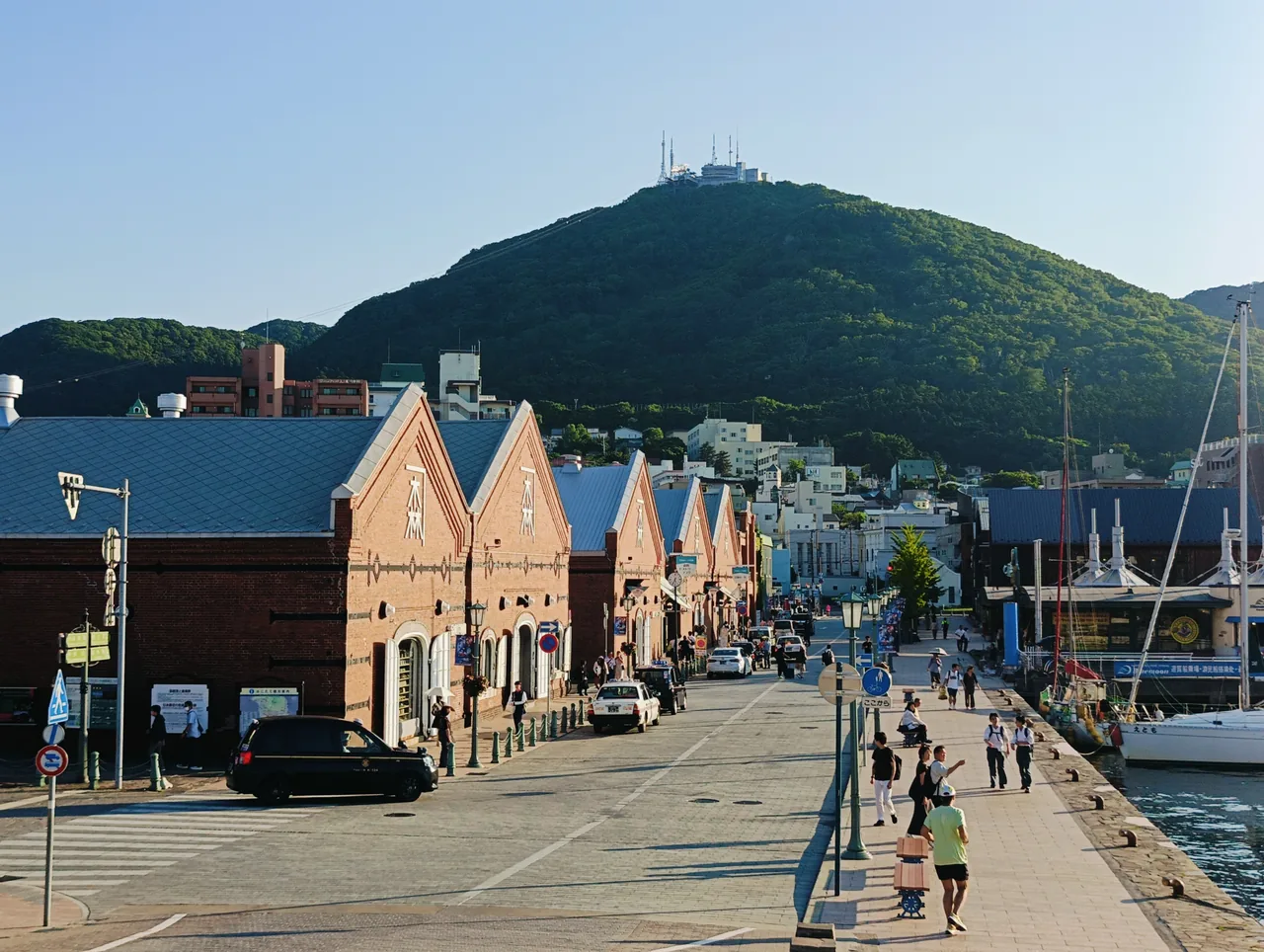
The Bay Area is the waterfront below Motomachi, where the old brick storehouses have been turned into shops and restaurants. It is five minutes on foot from the Jujigai tram stop. Map
The Kanemori warehouses open at half past nine and close at seven, every day of the year, and there is no charge to go in. Inside are shops and places to eat, and a walkway runs along the water between the buildings. Everything is lit after dark, which is when most people come.
The harbour boat only runs half the year
A boat makes a circuit of the harbour from in front of the warehouses. It costs 2,000 yen for adults and 1,000 for children, and it operates from April to the end of October only, with later sailings in midsummer. Nothing runs from November until the end of March.
It takes cash only. Cards are not accepted, which is worth knowing in a country where that is now rare.
A ferry that no longer sails is moored here
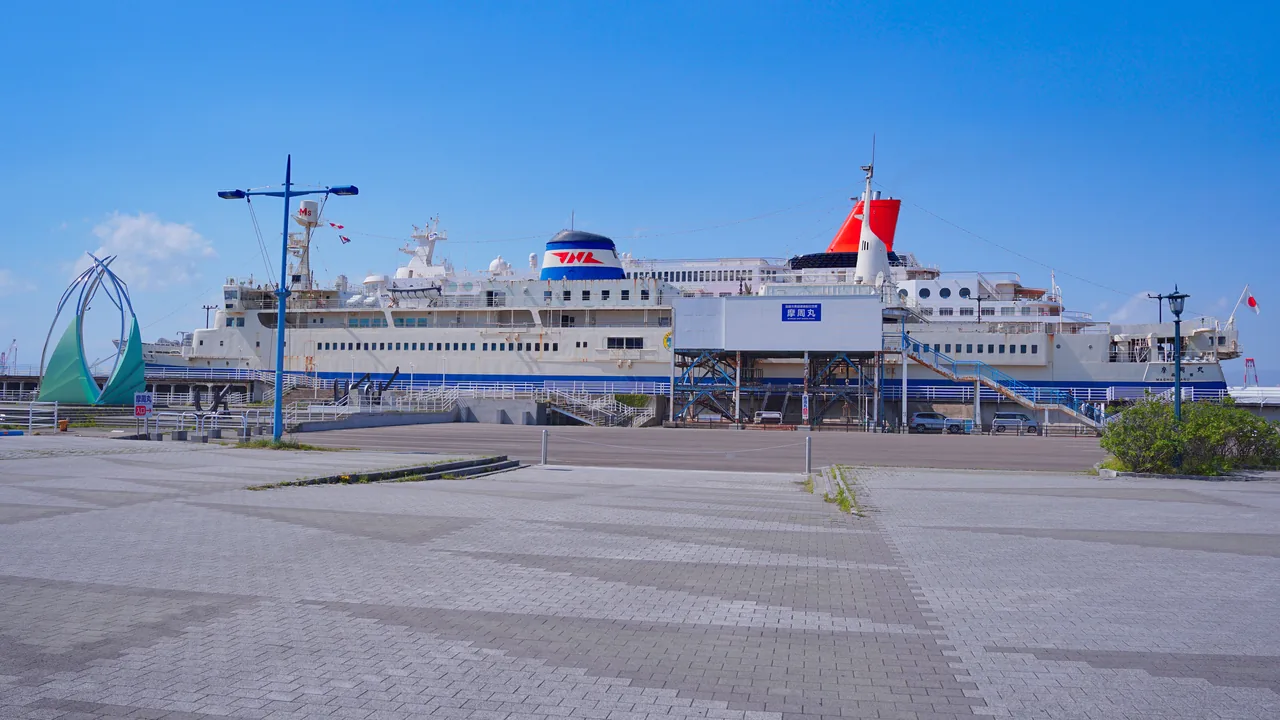
Ships used to cross between Hakodate and Aomori until the undersea tunnel took the traffic. One of the last of them is tied up in the harbour with its interior open to visitors. She is the Mashu Maru, five minutes on foot from the Hakodate Station tram stop. Map
| Season | Hours | Last entry |
|---|---|---|
| April to October | 8:30 to 18:00 | 17:00 |
| November to March | 9:00 to 17:00 | 16:00 |
Adults 500 yen, children and students 250, under school age free. There is no fixed closing day, though she shuts for a few days in spring for survey work. Visitors get two hours of free parking nearby.
There is enough here for a wet afternoon
The warehouses are several separate buildings, each given over to something different: one to shops and souvenirs, one to places to eat, another used as a hall for events. On a cold or wet day this is somewhere to lose an hour or two without planning it.
The car park alongside gives two hours free if you spend more than a thousand yen inside, so keep the receipt if you have driven.
This is the best of the city after dark
Once the lights come on, the warehouses and the water in front of them are the prettiest part of town. Coming down Hachiman-zaka, walking this stretch and then going up the ropeway is a natural order, and the two ends are barely ten minutes apart.
In winter extra illuminations go up here. The wind off the harbour is another matter, and it is noticeably colder on this strip than a few streets inland.
Treat Motomachi and the Bay Area as one block of time. They join on foot and share the same run of tram stops. Walking the slopes in daylight, dropping down here for dinner and going up the mountain afterwards puts them in the right order.
6. The station end and the morning market
The area in front of Hakodate Station holds most of the city’s restaurants and nearly all of its hotel rooms. Nobody comes here for sights, but the morning market is next door, which puts a crowd on the pavement early every day. Map
It opens an hour earlier for most of the year
The market trades every day. The opening hour is the part that changes.
| Months | Opens |
|---|---|
| January to April | 6:00 |
| May to December | 5:00 |
Both close a little after two in the afternoon, and individual stalls vary, so check if there is somewhere specific you want. Arriving at lunchtime means finding half of it packing up. The name is not decorative.
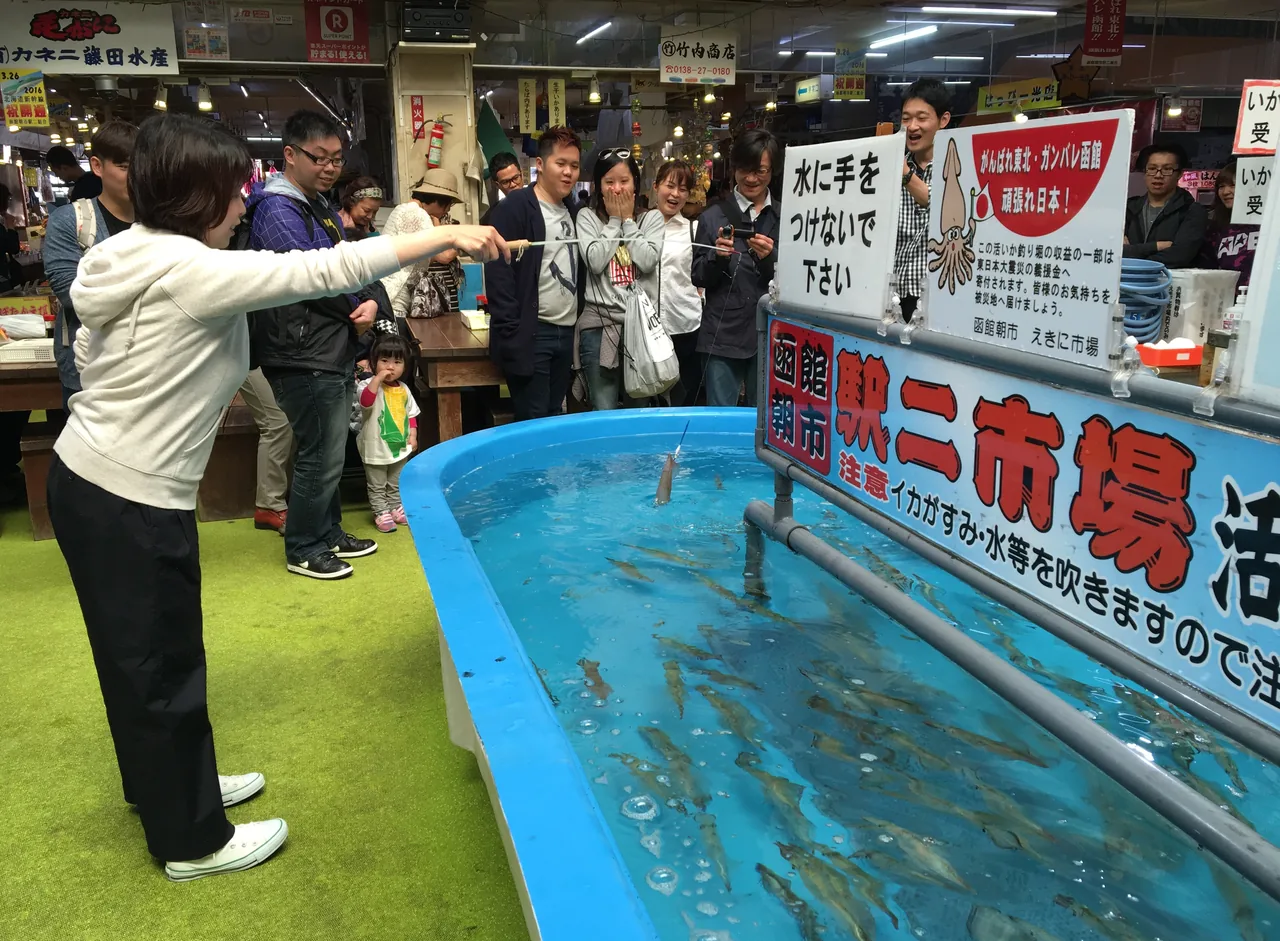
Inside are rows of restaurants serving seafood over rice, and a spot where you catch a squid from a tank and have it prepared in front of you. The traders’ association marks its recommended shops, which is a reasonable way to choose on a first visit.
What people eat here
The standard order is a bowl of rice under sea urchin, salmon roe and crab, usually built from a list of what you want on top. If that is a lot at seven in the morning, there are grilled fish sets and simpler things too.
People also buy to take away: dried squid, kelp, and crab packed for the journey. Whether you can carry any of it home depends on where you are flying to, so check before you commit to a box.
Daimon is the old quarter behind the station
Walk inland from the station and you reach Daimon, quiet now but once the busiest part of Hakodate. In the evening a lane of small bars and counters opens up. The nearest tram stop is Matsukazecho.
This is also where most of the hotel rooms are. The station, the market, the trams and the airport bus are all within a few minutes, which makes it the obvious choice on a first visit.
Go early if catching a squid is the point. Live squid arrive on some days and not others, and when they do arrive they go first thing. The tanks are inside the market rather than on the street.
7. Goryokaku: a star-shaped fort and the tower above it
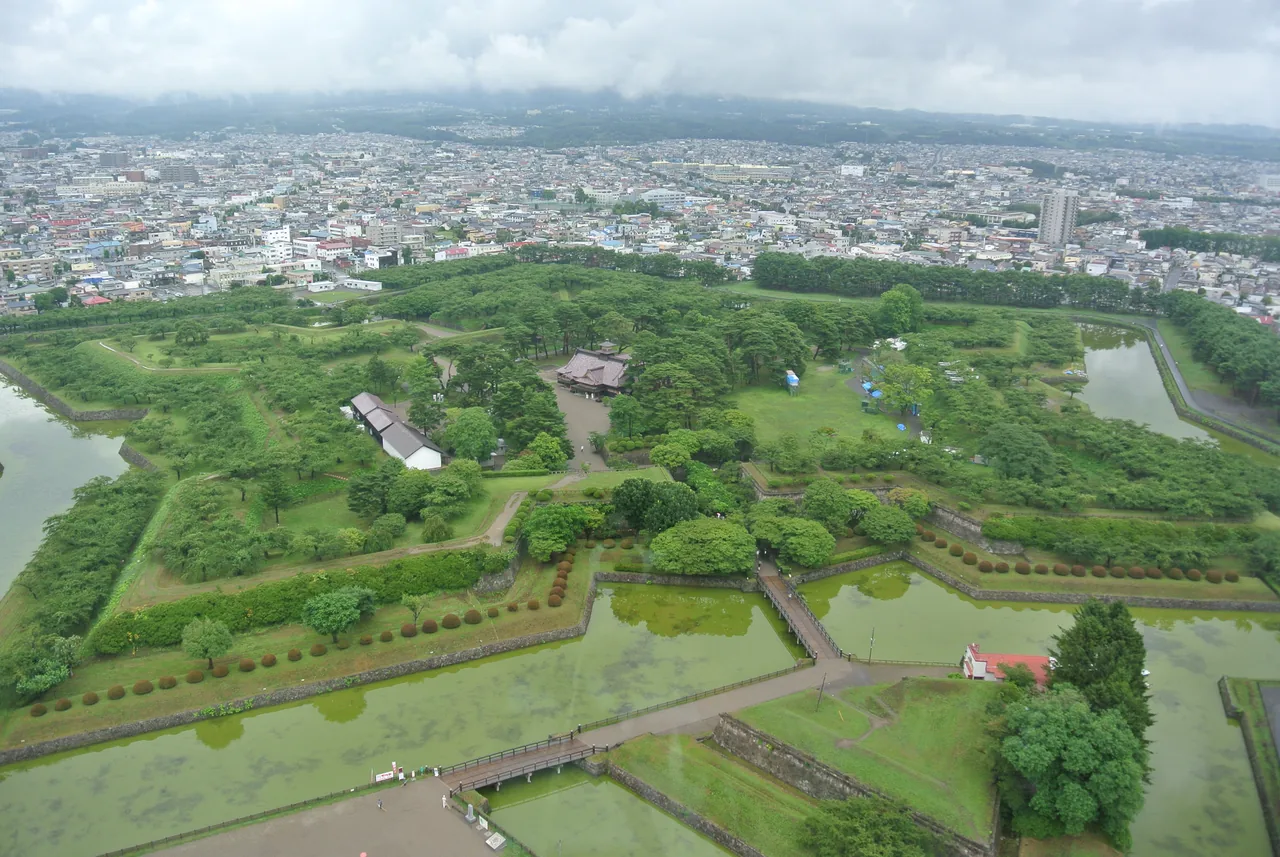
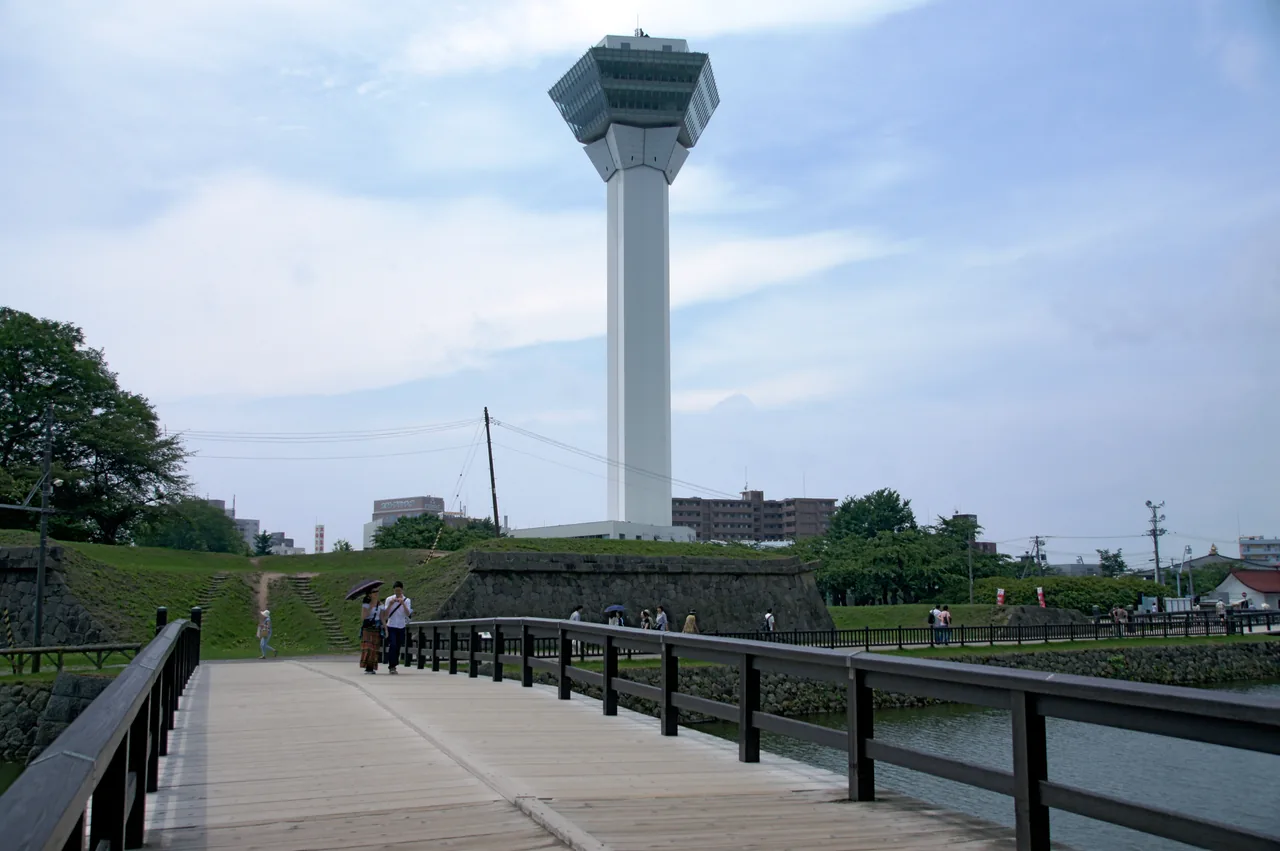
Goryokaku only makes sense from above. At ground level it is a large park with a moat; from the tower next to it the five-pointed outline is obvious. That is why the two are always done together. Map
| Place | Hours | Entry |
|---|---|---|
| Goryokaku Tower | 9:00 to 18:00, tickets to 17:50 | 1,200 yen, secondary 900, primary 600 |
| The park | 5:00 to 19:00 April to October, to 18:00 in winter | Free |
| The magistrate’s office | Inside the park | Separate admission |
The tower is open every day. The park opens before dawn, so a circuit of the moat early in the morning with nobody else about is one of the better things to do here. Map
Do not get off at the station with the same name
There is a JR station called Goryokaku, and it is the wrong one. It sits well away from the fort with poor connections, and the city says so in its own guidance. Take a tram or a bus from Hakodate Station and get off at the Goryokaku-koen-mae stop instead.
From that stop it is about thirteen minutes on foot to the tower and fifteen to the park entrance. The tower has no car park of its own, so drivers use the paid parking nearby.
There is a reconstructed building inside the walls
Goryokaku was built by the shogunate to a western design, the star shape intended to let guns cover every approach. The administrative building at its centre was pulled down and later rebuilt, and that reconstruction is what you can go into today.
The park costs nothing but this building charges separately. Inside are recreated rooms and an account of the fort’s history, and it stands where you will walk past it anyway.
This is where the city actually eats
Goryokaku is used more by people who live in Hakodate than by visitors. The densest run of restaurants in the city is here, along with the department stores and the covered shopping streets. If you want to eat somewhere that is not aimed at tourists, come out this way.
Cherry trees line the moat in spring, opening far later than on the main islands. The timing is set out in the Japan cherry blossom guide.
Two viewpoints that do not overlap
The tower opens at nine and closes at six, with the observation deck cut off ten minutes earlier. In the darker months you can catch dusk from up there; in summer it closes long before sunset, so it is a daytime stop.
This city has two places to look down from, and they show completely different things. The mountain gives you the whole town and both seas. The tower gives you one moat in the shape of a star. Doing both in a day is not repetition.
8. Yunokawa: a hot spring quarter five minutes from the airport
Yunokawa is a hot spring district inside the city limits, and the airport is about five minutes away by car. The local ryokan association calls it the hot spring town closest to an airport in Japan. Map
That makes it unusually easy to use. You can land late and be in the bath the same evening, or soak in the morning and still make a midday flight. The tram runs into the centre, so staying out here and going in during the day works too.
You can bathe without staying
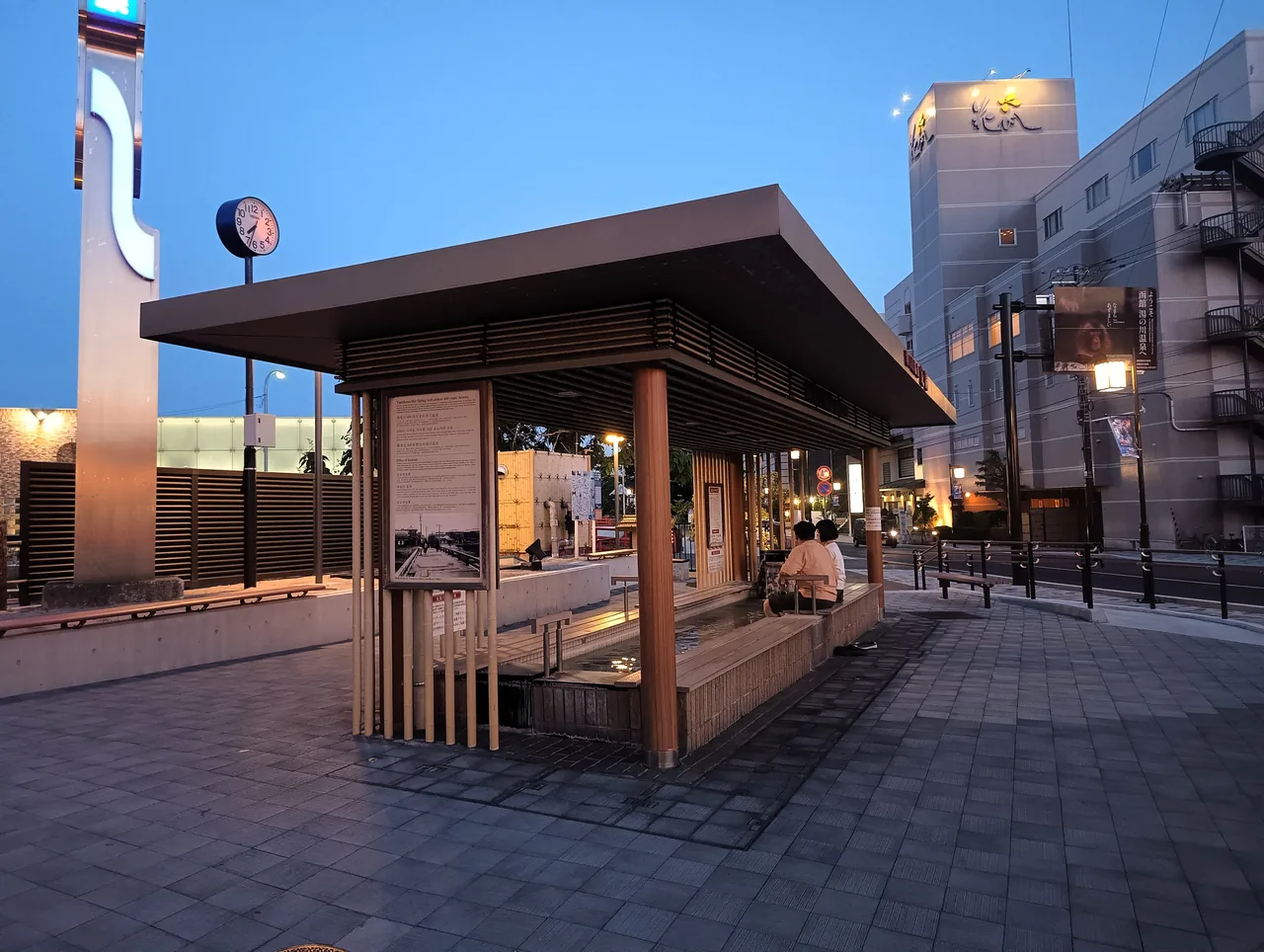
Several places take day visitors for the baths alone, and there is a free foot bath in the middle of the quarter. Even if your room is in town, an evening tram out here and back is straightforward.
If this is your first Japanese hot spring there are a few conventions worth reading first, set out in the onsen and ryokan guide. If you have tattoos, onsen with tattoos covers where that is and is not an issue.
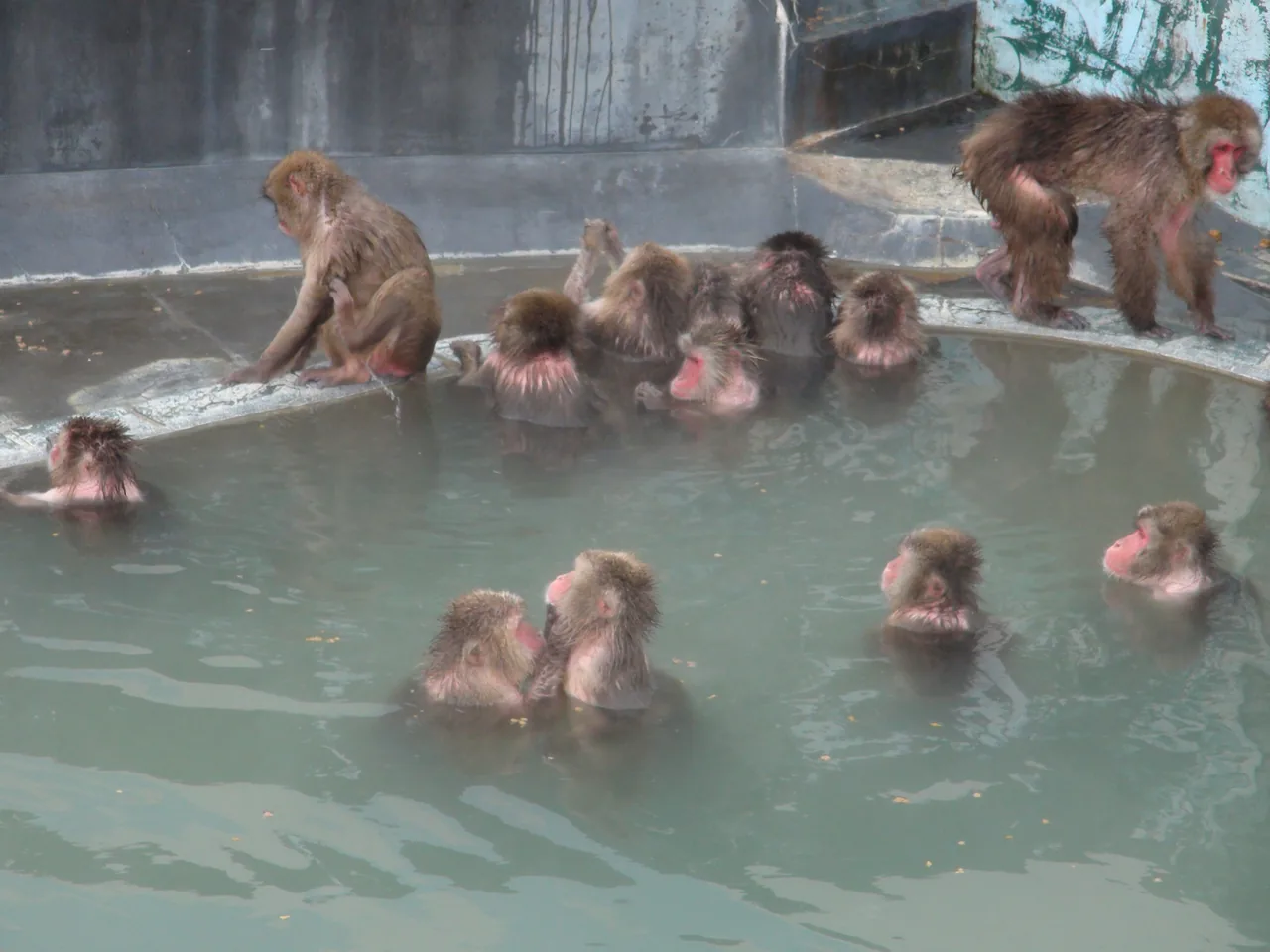
The monkeys that sit in the bath are here
The city runs a botanical garden in Yunokawa, and in the cold months its macaques sit in a hot spring pool of their own. Map
| Season | Hours | Entry |
|---|---|---|
| April to October | 9:30 to 18:00 | 300 yen |
| November to March | 9:30 to 16:30 | Schoolchildren 100 yen |
It closes only from 29 December to 1 January. Parking is free, and Hakodate Bus routes 95 and 96 stop a minute away.
The convent is on this side too
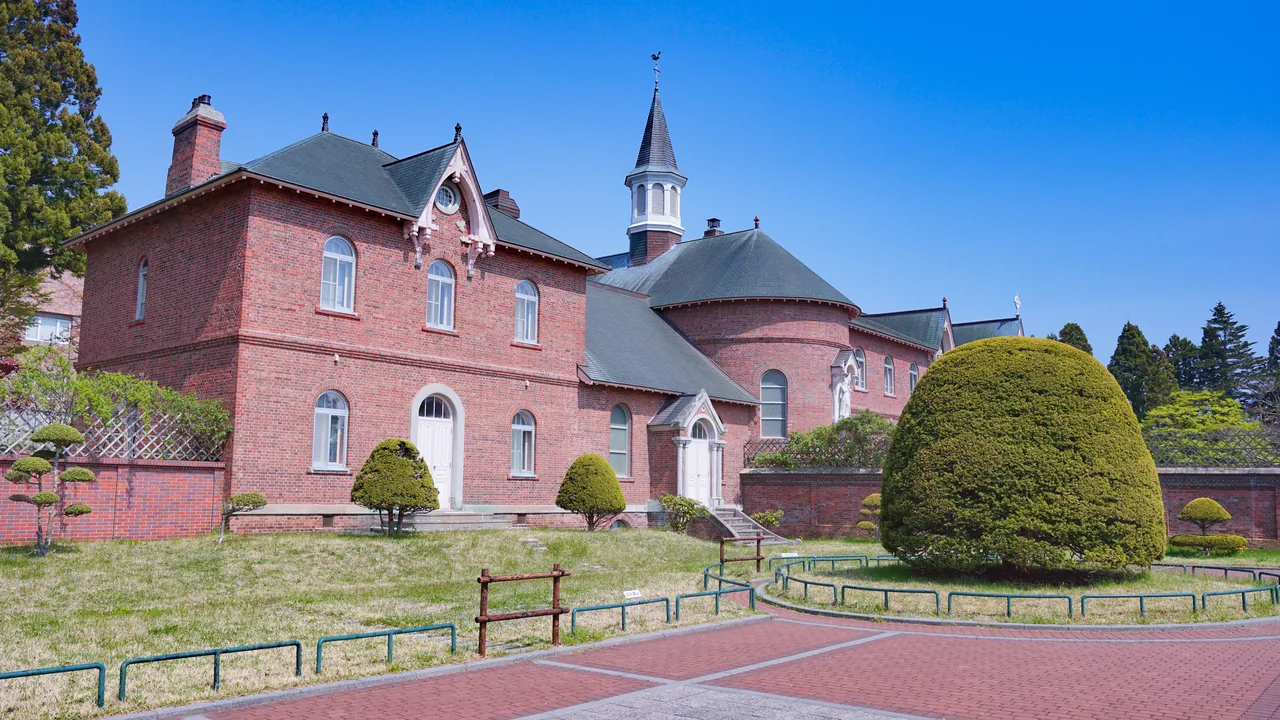
A little beyond Yunokawa, on a rise, is a working convent. The buildings are closed to visitors because the nuns live in them, but the gardens, the small museum and the shop are open and there is no admission charge. Map
Hours move with the season: 8:30 to 16:30 in spring and autumn, until 17:00 in summer, and 9:00 to 16:00 in winter, with a few days closed around the new year. It is nine minutes from the airport by bus, which makes it easy to fit into an arrival or departure day.
The shop sells biscuits made by the community that you will not find elsewhere. There is no parking at the convent itself; a paid car park next door serves it.
Getting out here
Yunokawa is near the end of the tram line. From in front of Hakodate Station the fare is 290 yen, from Jujigai 300 yen. Coming straight from the airport, a Hakodate Bus service takes somewhere in the teens of minutes.
The quarter itself is small enough to walk. Hotels are split between the seafront and the streets behind it, so if a sea view matters, confirm it when you book rather than after.
9. Onuma and the country beyond the city
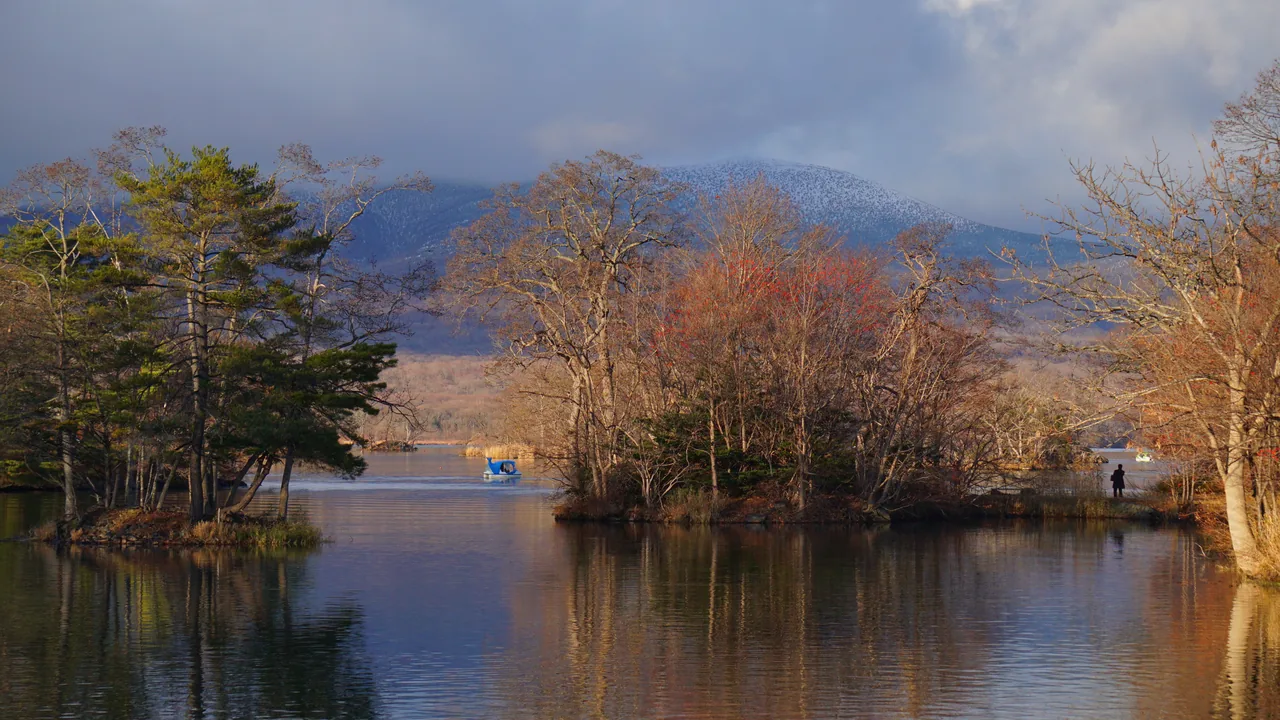
Half an hour out of Hakodate by train there is a lake with a volcano behind it. Onuma is the easiest thing to reach from the city, five minutes on foot from JR Onuma-Koen station. Map
Entry costs nothing. Islands sit in the lake joined to each other by bridges, so several different walking circuits run out over the water. Rowing boats and a sightseeing launch are charged separately. The park never closes, and there is both free and paid parking.
What you do once you are there
The circuits round the shore range from about half an hour to over an hour. The stretches that hop from island to island on footbridges are the reason the walking itself is worth doing rather than merely a way of seeing the view.
By the station there are a handful of shops, and the one people come out for is Numanoya, whose Onuma dango is what the area is known for.
To get out on the water, hire a rowing boat or take the launch. Cycling round the lake is popular in the warmer months and not an option in winter.
It fits neatly into the journey in
Onuma lies between Shin-Hakodate-Hokuto and Hakodate. If you are arriving by Shinkansen you can stop here before going on into the city, or fit it in on the way out. Either works better than making a separate trip of it.
The lake reflects the leaves in autumn and freezes in winter, and the two versions of the place look nothing alike, which is why people who come to Hakodate twice tend to go back to Onuma.
In winter you walk on the lake
Once it freezes properly, people drill through the ice to fish for smelt and walk out on snowshoes. Boats and bicycles are finished for the year by then, and the path from the station is under snow, so this needs proper boots. Winter activity in Hokkaido more broadly is covered in the Japan ski and snowboard guide.
Further out
Down the coast is Matsumae, an old castle town, and in the other direction the volcanic country around Esan. Both are a long way out and much easier with a car; buses exist but run seldom.
On a first visit neither is necessary. The city and Onuma will fill two or three days without difficulty.
Check the return train before you go out. Services between Hakodate and Onuma are not frequent, and it is easy to spend the tail of the afternoon sitting on the platform.
10. What to eat in Hakodate
Squid is what the city is known for. Catching one yourself at the morning market and eating it minutes later is the version everybody photographs, and it turns up on restaurant menus across town. Catches are not what they were, so there are days when it is simply not available.
Breakfast is seafood over rice. The market and the streets around it are lined with places doing it, most of them letting you choose what goes on top. Since the market winds down after two, treating it as lunch is a gamble.
There is a burger chain that exists only here
Lucky Pierrot started in Hakodate and operates only in this corner of Hokkaido. The company says it cooks to order and uses nothing frozen. No two branches are decorated the same way, which is a deliberate policy rather than an accident.
| From | Nearest branch |
|---|---|
| Hakodate Station | Ekimae, two minutes on foot; one minute from the market |
| Goryokaku Tower | Goryokaku-koen-mae, one minute on foot |
| Mt. Hakodate Ropeway | Jujigai Ginza, thirteen minutes on foot |
| Brick warehouses | Bay Area main branch, next door |
| Hakodate Airport | Tokura, five minutes by car |
| Shin-Hakodate-Hokuto | Togeshita, seven minutes by car |
The best-known item is a fried chicken burger in a Chinese-style sauce, and there is curry and fried noodles as well. Portions are generous enough that one is a meal.
The yakitori bento is pork
Hasegawa Store is a convenience chain that began in Hakodate. Its skewers over rice have been made in-store and sold in the same form since 1978, and they are what the company is known for.
The meat on those skewers is not chicken. It is pork. The company explains as much on its own website. Hakodate has used the word this way for a long time and nobody locally finds it odd; it is the everyday food of the city rather than a curiosity. Several branches now take orders from a phone.
Ramen here means salt, not miso
Hokkaido ramen suggests the miso broth of Sapporo to most people. Hakodate is the other tradition: a clear salt broth with thinner noodles, and the difference is immediately obvious if you have eaten both in the same week.
Shops are spread across the city and some open early, so a morning of seafood followed by a bowl of ramen at midday is a common shape for the day.
Where to drink depends on which crowd you want
There are two answers. The lane of small bars behind the station in Daimon is easy for a visitor to walk into, while the Goryokaku end is where people who live here go. The atmospheres are quite different.
Either way the food is seafood. Beyond squid there is sea urchin and salmon roe over rice, and whatever is in season grilled. If tourist-district prices grate, head out to Goryokaku.
Hakodate stops earlier at night than Sapporo does. Fewer places run late. If the plan is the night view followed by dinner, check closing times before you go up rather than after you come down.
11. Getting around: one tram line does most of it
The tram is the answer for almost every journey inside Hakodate. The five districts described earlier sit along the line, so there is very little changing to do. Map
Fares go by distance
| Distance | Adult | Child |
|---|---|---|
| Up to 2 km | 250 yen | 130 yen |
| Up to 4 km | 270 yen | 140 yen |
| Up to 7 km | 290 yen | 150 yen |
| Over 7 km | 300 yen | 150 yen |
In practice: Jujigai to the station is 250 yen, Jujigai to Goryokaku 290, Jujigai to Yunokawa 300. Adult fares start at junior high school age, and children below school age travel free, up to four of them per accompanying adult.
Four rides in a day and the pass pays
| Pass | Adult | What it covers |
|---|---|---|
| Tram one-day | 800 yen | All tram lines |
| Tram and bus one-day | 1,600 yen | Trams and buses, but not the mountain bus |
| Tram and bus two-day | 2,600 yen | The same, for two days |
| Hakodate Bus Kampas | Varies by season | Buses only, mountain bus included |
| Hakodate travel passport | 3,000 yen for one day | Trams, buses, JR and the Isaribi line |
For trams alone the 800 yen ticket is the simple choice. It is a scratch card: you scrape off the year, month and day and show it to the driver as you get off. Scratch any of the three in more than one place and it is void.
The paper version of the combined tram and bus pass has been discontinued. It is now sold only as a phone ticket, bought in an app and shown on screen when you alight. Screenshots are not accepted.
IC cards simply work
Trams and buses both take the nationwide IC cards. If you already carry a Suica or an ICOCA there is nothing to buy. For two or three rides a day that beats a pass. Which card works where is covered in the Japan IC card guide.
Riding the tram
Board at the rear door, taking a numbered ticket or tapping your card, and pay at the front when you get off. Because the fare depends on distance, the system needs to know where you got on. With a day pass you simply show it on the way out.
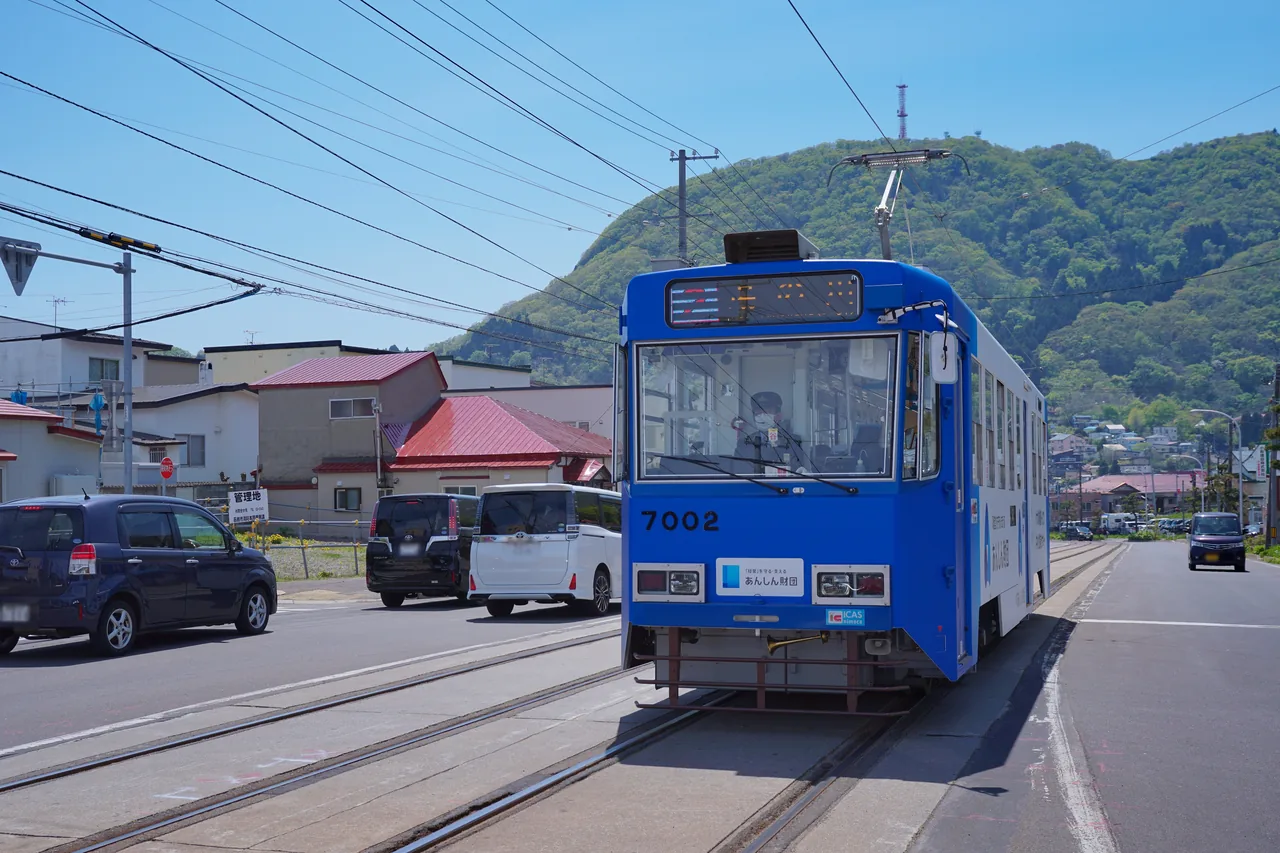
There are two lines, overlapping through the centre. One end is Yunokawa and the other runs elsewhere, so the only time the destination matters is when you are heading for the hot springs. It is displayed on the front of the car.
Buses reach what the tram does not
A few places are off the tram network: the convent, the botanical garden and the summit of Mt. Hakodate. Those need Hakodate Bus, which also takes IC cards.
The bus-only Kampas costs less in winter than in summer, and there is a 24-hour version alongside the one-day. These are sold through a web ticketing site and paid for by card only.
The pass that includes trains and a ferry discount
The Hakodate travel passport bundles trams and buses with JR and the Isaribi railway, at 3,000 yen for a day or 4,500 for two. Showing it takes twenty percent off the fare on the ferry across the strait.
It does not cover the Hokkaido Shinkansen. That is a separate ticket. The pass earns its keep if you are going out to Onuma by train or crossing to Aomori by sea.
Settle whether you are going up the mountain before you buy anything. The exclusion of the climbing bus is the one real trap in the fare system. If the bus is the plan, buy the Kampas rather than the combined pass.
12. Arriving and leaving: the Shinkansen, the transfer, and the airport
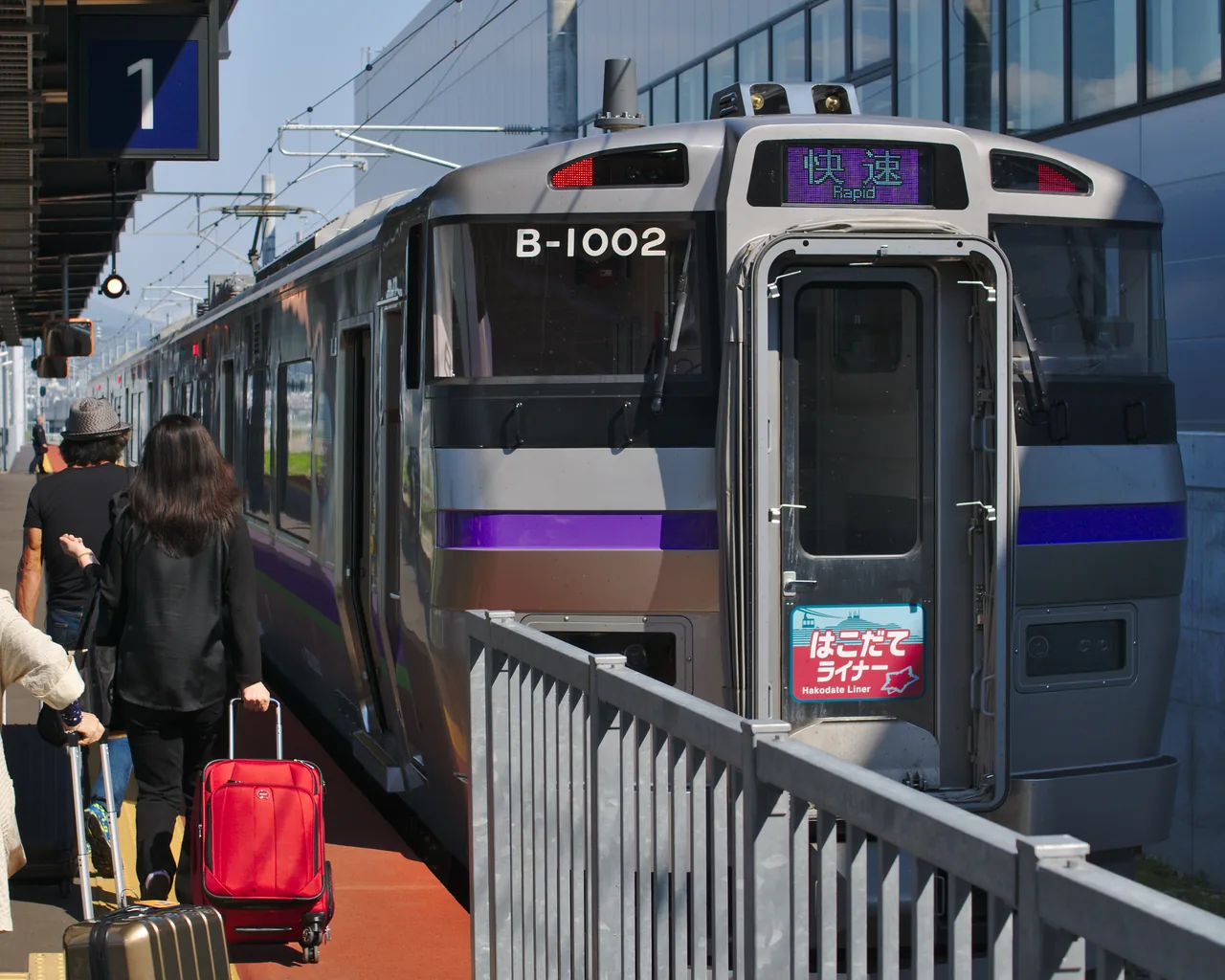
The Shinkansen does not reach Hakodate Station. It terminates at Shin-Hakodate-Hokuto, out of town, and you change there. Tokyo to Shin-Hakodate-Hokuto takes just under four hours at best, and about four and a half to five and a quarter all the way into the city.
At the transfer, the local train wins on both counts
| Option | Time | Fare |
|---|---|---|
| Hakodate Liner | 15 to 22 minutes | 440 yen |
| Hakodate Bus | 53 to 91 minutes | 900 yen |
The train costs half as much and takes a quarter of the time. Rapid and local services together run sixteen times a day in each direction, the rapid stopping only at Goryokaku on the way.
IC cards work on this stretch. Since March 2024 the six stations between Hakodate and Shin-Hakodate-Hokuto have accepted Suica, ICOCA and the rest of the nationwide family. Older guidance still says otherwise, including on the city’s own tourism pages.
If you used a discounted online Shinkansen ticket, you need a separate ticket for this section and an IC card will not do. Buying the Shin-Hakodate-Hokuto to Hakodate ticket at your departure station saves queueing at the transfer.
The limited express from Sapporo
Limited expresses run between Sapporo and Hakodate eleven times a day in each direction and call at Shin-Hakodate-Hokuto, which means you can come north by Shinkansen and carry on to Sapporo without backtracking.
From Shin-Hakodate-Hokuto into the city that express takes about fifteen minutes but charges a limited express supplement of 320 yen even for an unreserved seat, on top of the fare. The Liner does not, so for most people the Liner is the better of the two. Passes and Shinkansen fares are set out in the JR Pass and Shinkansen guide.
From the airport, the cheapest bus is not the slowest
Hakodate Airport is close to town and buses run in from it. Fares and times vary by route in a way that is not intuitive.
| To | Route | Time | Fare |
|---|---|---|---|
| Hakodate Station | 96 | 32 min | 340 yen |
| Hakodate Station | 8 | 25 min | 500 yen |
| Goryokaku Tower | 5 | 23 min | 400 yen |
| Yunokawa Onsen | 96 | 16 min | 280 yen |
| Trappistine Convent | 5 | 9 min | 250 yen |
Route 96, the cheapest into town, is faster than the 500 yen route 5. Price is no guide to speed here, so read the destination and route number before you join a queue. Stands differ by route as well.
International flights, and what is missing
The only scheduled international route into Hakodate at the moment is Taipei, flown by two carriers five days a week each. That is why Taiwanese visitors are a common sight in the city.
The Seoul Incheon service is not currently operating. A Korean carrier opened it in June 2025, the first regular international link to Incheon in thirteen years, and suspended it on 8 June 2026. A winter return has been reported but has not appeared in the airport’s own timetable, so check with the airline rather than assume.
Coming by sea
Ferries cross from Aomori, which is how people bring cars over to Hokkaido. The terminal is outside the centre, about thirty minutes by bus or taxi.
There is rarely a reason to choose the boat over the train, but if you are working your way up through Tohoku it is a real option, and the Hakodate travel passport takes a fifth off the fare.
The airport is small and domestic and international share one building. You are outside within minutes of landing. The flip side is that with so few international flights, whole stretches of the day have very little open airside. Do not plan to spend time there.
13. Where to stay, and the tax you pay on top
The choice is really between the station end and Yunokawa, and the two make for different trips.
| District | Suits you if |
|---|---|
| Station and Daimon | You want the market and the trams at the door, and the most rooms |
| Bay Area and Motomachi | You want to walk to things and be out in the evening |
| Yunokawa | You want the hot spring, and the airport nearby |
| Goryokaku | You want to eat where the city eats |
On a first visit the station end is the sensible default. Over two nights or more, one night in Yunokawa for the bath is a common and good idea.
Two lodging taxes are charged together
Since April 2026 a lodging tax applies in Hakodate. Hokkaido levies one and the city levies another, and they are collected together, so compare the combined figure when you are weighing Hakodate against somewhere else.
| Room rate per person per night | Prefecture and city combined |
|---|---|
| Under 20,000 yen | 200 yen |
| 20,000 to under 50,000 | 400 yen |
| 50,000 to under 100,000 | 1,000 yen |
| 100,000 and above | 2,500 yen |
The rate that decides the band excludes meals and consumption tax but includes service charges, so it is not the total you see at booking. Lodging taxes elsewhere in Japan are collected in the Japan accommodation tax guide.
A hot spring adds a bath tax, which went down
Staying somewhere with a hot spring means a bathing tax as well. When Hakodate brought in the lodging tax it cut the bathing tax rather than leaving it alone, from 150 yen to 100 for an ordinary guest. Under-fifteens do not pay it.
So a night in Yunokawa means both. Neither is large, but both are collected at the desk, so a little cash is useful.
The district changes the shape of your day
Staying by the station makes mornings easy, with the market a few minutes away, but it means one tram ride back after coming down off the mountain at night.
Staying in the Bay Area or Motomachi reverses that. You can walk home from the night view and start an evening stroll at the door, but the market needs a tram, and hauling luggage up a slope is no fun.
Yunokawa is neither. Staying there is about the bath itself and about being near the airport on the first or last night, with sightseeing done by tram.
Worth checking before you book
In winter, snow slows everything down, so proximity to a tram stop matters more than usual. Rooms up the hill have the view and the climb both.
Hot spring inns often quote a rate including dinner and breakfast. Because the tax band is set on the room rate without meals, the figure it is calculated from is not the one on your confirmation. Ask the inn if it matters to you.
14. How many days is enough
Two days covers the main things. The city is compact and strung along one tram line, so working through it a district at a time fits the geography.
If you only have a day
Breakfast at the market, the Motomachi slopes and the Bay Area through the afternoon, and the mountain at dusk fills it. Adding Goryokaku makes it tight. Fix the time you are going up first and arrange the rest around it.
Two days is comfortable
| Day | Plan |
|---|---|
| One | Morning market, Motomachi, Bay Area, the mountain at dusk |
| Two | Goryokaku, Yunokawa for the bath, then the airport |
Putting Yunokawa on the second day makes leaving straightforward, since the bath and the airport are on the same side of town.
Three days reaches the countryside
Add Onuma on the third day, which is a half-day trip by train. If it is winter and the lake is frozen or the city’s closure list has thinned things out, spending that time on Goryokaku and Yunokawa properly is the better trade.
Combined with Sapporo, two nights here before moving on is the usual shape. The journey between them eats half a day on its own. The wider route through Japan is in the Japan travel guide.
Plan around the mountain, not around the map
The single rule that makes a Hakodate itinerary work is to fix when you are going up the mountain and build everything else around it. The view is time-bound and weather-bound, so if you schedule it last it gets pushed.
If cloud spoils the first evening, go again on the second. That is a large part of why people stay two nights. The city’s congestion feed shows conditions around the mountain before you commit to the trip up.
Leave your bags at the station
There is left luggage at Hakodate Station, useful on an arrival day or after checking out. Motomachi in particular is no place to be towing a case.
The same applies going out to Onuma. If you mean to stop there on the way in from the Shinkansen, work out where the bags are going first.
Give winter an extra day. Snow slows walking and delays trams, and on a hill town like this the Motomachi circuit takes noticeably longer than the map suggests.
🎡Things to Do4
🗾Japan trip essentials29
Hakodate questions people actually ask
The hour or two after sunset is the busiest. To avoid it, go up before the light goes and stay for the change rather than arriving into the crush. The city publishes a congestion feed covering several points around the mountain along with the current ropeway queue, which is worth checking before you leave.
Yes. The summit observatory stays open through the maintenance period. The complication is that the connecting shuttle bus is cancelled whenever the ropeway is down, so you need the climbing bus or a taxi. The climbing bus finishes in early November, after which a taxi is the remaining option until the road closes.
No. Private cars and rentals are banned from the mountain road in the evening: until the end of September from 17:00 to 22:00, and from October from 16:00 to 21:00. The summit car park is closed to you during those hours too, and the road shuts entirely from early November to mid-April.
Not the Mt. Hakodate climbing bus. Hakodate Bus lists it as excluded. If you plan to take that bus, buy the bus-only Kampas or just use an IC card. Note also that the paper version of the combined pass has been withdrawn and it is now sold only as a phone ticket.
Change at Shin-Hakodate-Hokuto to the Hakodate Liner, which takes 15 to 22 minutes for 440 yen and runs sixteen times a day each way. The bus over the same ground costs 900 yen and takes about an hour, so the train is the clear choice. IC cards are accepted on this section.
Taipei is the only scheduled international route at present, flown by two carriers five days a week each. The Seoul Incheon service was suspended on 8 June 2026. A winter return has been reported but is not yet in the airport timetable, so check directly with the airline.
Six in the morning from January to April, and five from May to December. Both wind down a little after two in the afternoon, and individual stalls vary. Arriving at lunchtime means finding much of it closing up, so go early.
It has applied since April 2026 and combines a prefectural and a city levy. For a room at under 20,000 yen per person per night the combined figure is 200 yen, rising to 400, 1,000 and 2,500 yen in higher bands. A hot spring stay adds a bathing tax of 100 yen on top.
Not sensibly. The limited express takes three to four hours each way, so a return trip consumes the day. Stay a night in Hakodate instead.
It depends what you came for. The mountain road, the climbing bus, the church interior and the harbour boat all stop. What remains is snow over Motomachi, the hot springs, the Yunokawa illumination and far fewer people. For a hot spring trip winter is arguably the better season; for sightseeing it is the thinner one.