
Karuizawa Travel Guide: What to See, How to Get Around and Where to Stay
Karuizawa is not one town but several, scattered through the forest. There is an outlet mall at the station, an old shopping street a fifteen minute walk north, and a waterfall and a mountain pass that you reach by bus. The transport that links them was built for the people who own summer houses here, not for visitors, which is why getting there is easy and getting around is not.
| Getting there | Just over an hour from Tokyo by Shinkansen. |
|---|---|
| Layout | The sights are spread out along the old highway. |
| New | The Old Mikasa Hotel reopened after five and a half years. |
| Transport | The town buses serve residents, and the local buses take no reservations. |
| Watch out | The Kusatsu bus runs to a seasonal timetable. |
| How long | A day works, a night works much better. |
1. A missionary spent one summer here and the town never went back
2. Kyu-Karuizawa: one shopping street and the quiet behind it
3. The Old Mikasa Hotel has reopened after five and a half years
4. Kumoba Pond takes almost no time to walk around
5. Naka-Karuizawa and Hoshino: shops in the middle of a wood
6. Shiraito Falls is not a river falling
7. At Usui Pass one shop stands in two prefectures
8. Oiwake still looks like a post town
9. The south has a lake, museums and a curling rink
10. The outlet mall keeps different hours every day
11. Outside the town: a lava field and a hot spring resort
12. What to eat in Karuizawa
13. Getting around is the hard part of this trip
14. Getting in from Tokyo, and on towards Nagano
15. When to come
16. How long to stay and where
1. A missionary spent one summer here and the town never went back
Karuizawa sits at the eastern edge of Nagano Prefecture, on the lower slopes of Mount Asama. It sits at around 1,000m, high enough that the air stays cool through August, which is the entire reason anyone came here in the first place. Map
In 1886 an Anglican missionary named Alexander Croft Shaw brought his family up for the summer. He called the place a hospital without a roof. Two years later he built himself a cottage, and that cottage is generally counted as the first summer villa in Karuizawa. Everything the town has been since then follows from it.
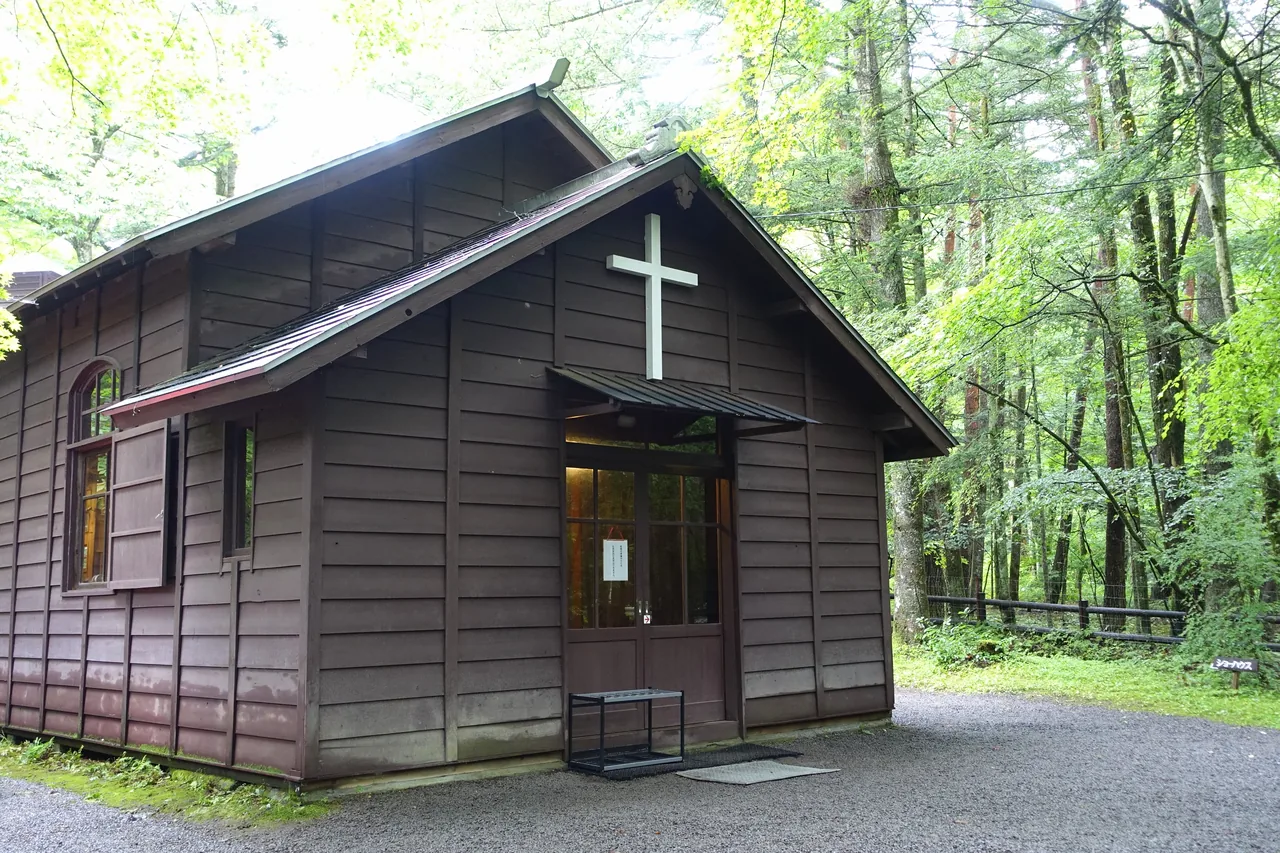
His house is still standing. It sits on the slope behind the old shopping street as the Shaw House Memorial, and you can walk through it for nothing. A man built somewhere to escape the heat, and a hundred and forty years later the town still runs on that idea.
Before the missionaries it was a highway town
People were passing through here long before anyone came for the air. The old Nakasendo, the inland highway between Edo and Kyoto, ran straight through, and there were post towns strung along it where travellers stopped for the night.
Most of the place names you will see are those post towns. Karuizawa was one. Naka-Karuizawa, one stop west, was a separate post town called Kutsukake. Oiwake, further west again, was another. The Shinkansen station, the next station along and the village beyond it were three different towns before they were one.
That is why the sights here do not cluster. They sit in a line, east to west, because the road came first and the town grew along it.
It is still a town of second homes
This matters more than it sounds. Karuizawa is a place people come to spend the summer, and only secondarily a place people visit. The town website has a whole section for villa owners, and the timetables for the town circular buses live inside it. The department that runs those buses is the residents’ affairs office, not tourism.
The bus companies work the same way. The firm that runs the route buses up to the waterfall and across to Kusatsu also manages and sells holiday houses, cuts the grass and clears the leaves. Carrying visitors is one line of business among several.
So the hard part of a Karuizawa trip is not arriving. It is moving around once you have.
Nothing is in one place
This trips up most first-time visitors. You step off the Shinkansen into a large outlet mall and assume that is the centre of town. The old town is a fifteen minute walk north. The forest complex with the shops and the hot spring is a station west. The waterfall and the pass are a bus ride up the mountain.
| Area | Why you would go |
|---|---|
| Station front | Outlet mall, tourist office, bicycle hire |
| Kyu-Karuizawa | Old shopping street, villas, churches. Walkable |
| Mikasa | The Old Mikasa Hotel. Uphill from the old town |
| Naka-Karuizawa and Hoshino | Forest shops, hot spring, two churches |
| Shiraito Falls and Usui Pass | Both up the mountain. Bus or car |
| Shiozawa and Hotchi | Lake, museums, curling rink |
| Oiwake | The surviving post town. Furthest west |
| Outside the town | Onioshidashi and Kusatsu Onsen. Gunma Prefecture |
Only the station front and the old town connect on foot. Everything else takes a bus, a bicycle or a car. On one day you can reasonably do the first three rows. With one night you can add the forest and one mountain destination. Everything on that list needs two nights.
2. Kyu-Karuizawa: one shopping street and the quiet behind it
The old town is a single shopping street. Kyu-Karuizawa Ginza, everyone calls it. You can walk up from the station or take a bus. It runs about 750m, so fifteen minutes covers it end to end, but the shops on it are old. Map
Nakayama no Jam opened in 1905 and says its recipes came from the missionaries. Ogihara Yohoen sells honey and lets you taste it first. The owner grew a beard, people started calling the place the bearded uncle’s shop, and the nickname ended up on the sign. There are bakeries and coffee houses along the street that have been in the same families for generations.
A style of furniture started here
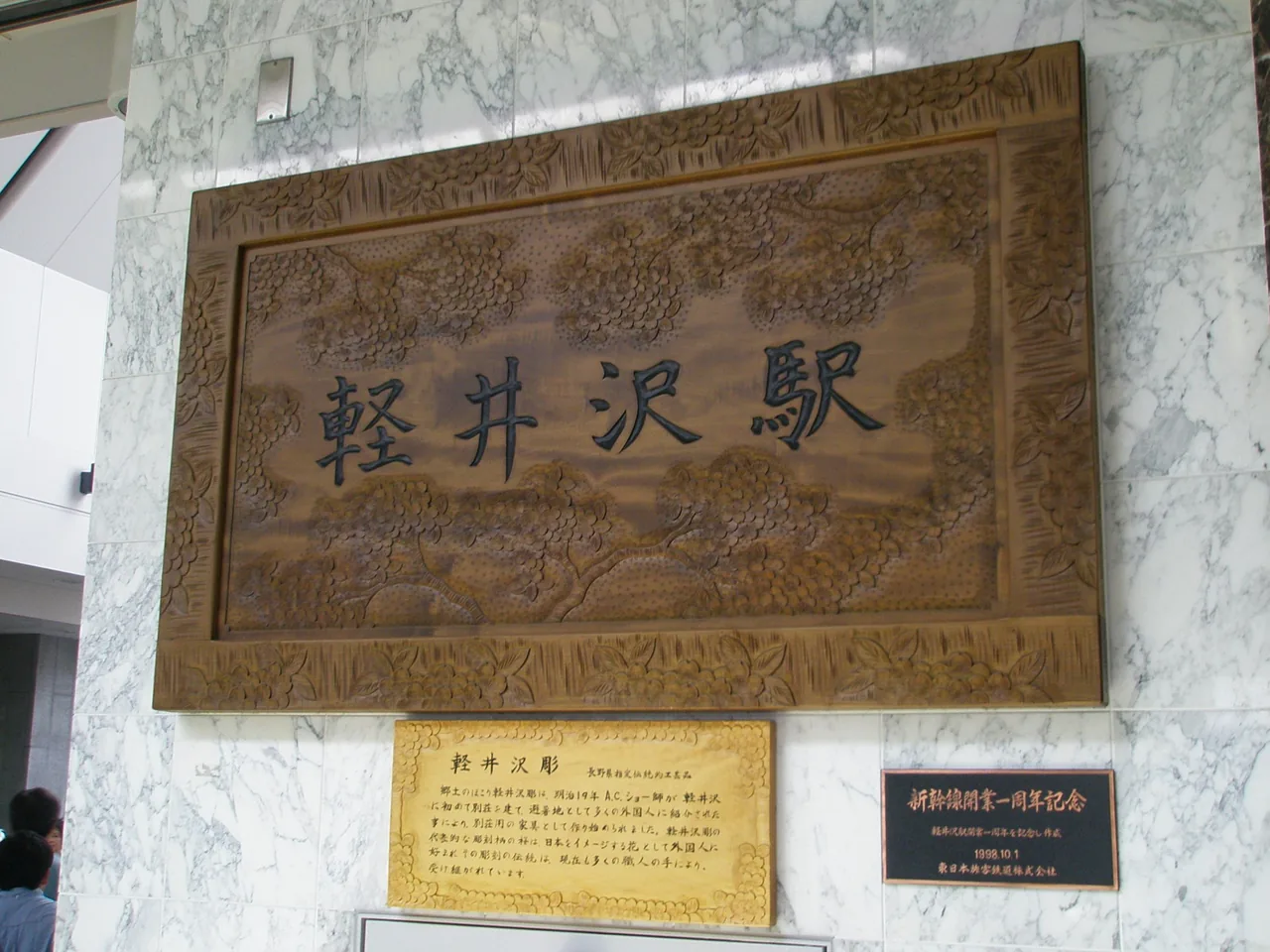
Several shops on this street sell carved wooden furniture called Karuizawa-bori. It exists because of the villas.
In 1892 the first owner of Osakaya Kagu was asked by foreign missionaries and diplomats to carve the furniture going into their summer houses. That is where the style begins, and the shop is still on the same street doing the same work more than a hundred and thirty years later.
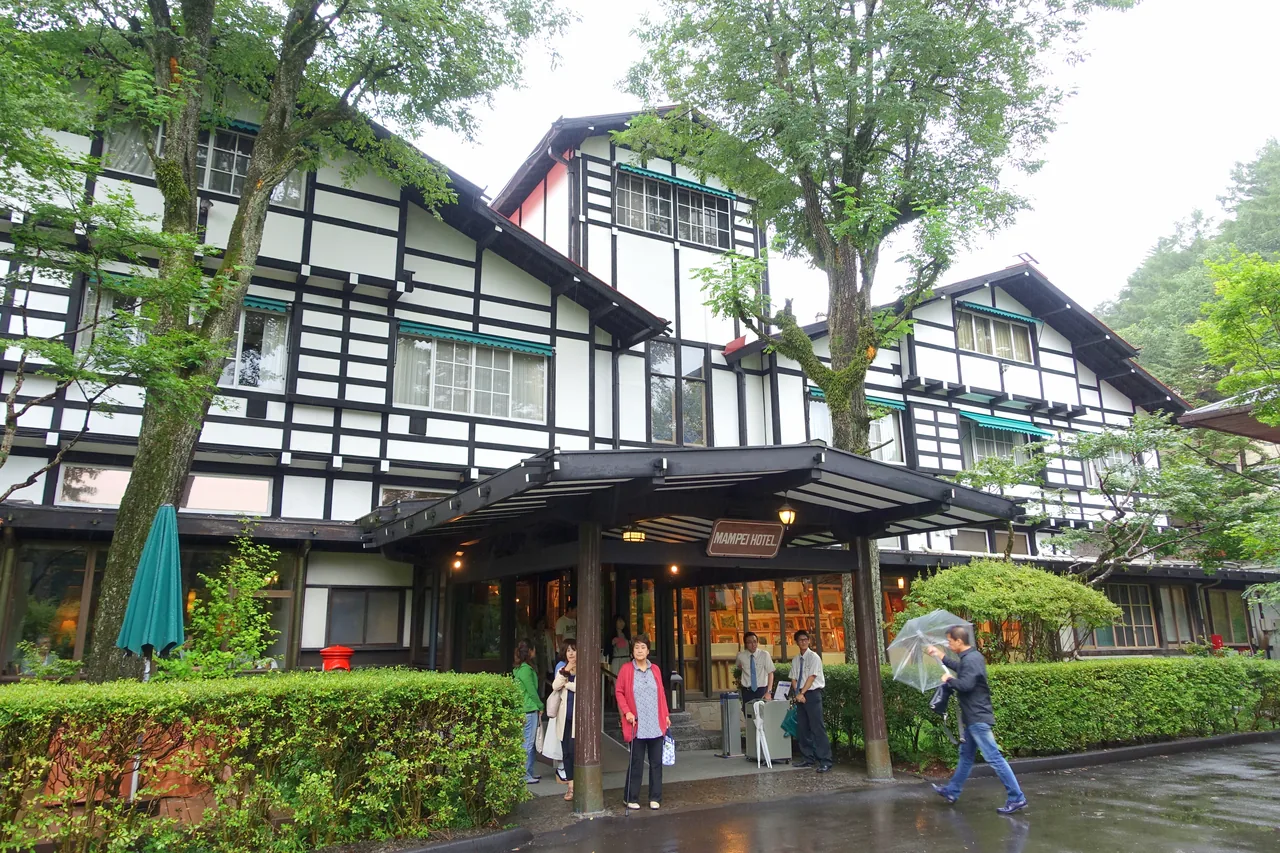
Others followed. Icchodo opened in 1927 and supplied the Old Mikasa Hotel; the furniture in the guest rooms and lobby of the Mampei Hotel is theirs and is still in use. Shibazaki started in 1947 and is on the same street.
Nobody will push you to buy anything. The usual layout is small pieces on the ground floor and a furniture showroom upstairs, so you can walk through and walk out. If you want to see what the villa culture actually produced, this is where it is.
The Mampei Hotel is just off the street
It opened in 1894. The hotel’s own account is that the founder met the missionaries and that was the beginning of it, which puts it a few years after Shaw built his cottage. Plenty of people walk in to look at the building and the garden without staying.
Turn off the shopping street into any side lane and the noise stops. You are among trees with villas set back from the road. That is the real pleasure of this part of town. The shops take half an hour. The back lanes take an hour and explain why people have been coming here for a century.
There are small churches scattered through these lanes, including the chapel that commemorates Shaw, with his house beside it. The people who built villas built churches at the same time.
The tourist office is at the bottom of the street
The Karuizawa Tourist Hall is a wooden building you cannot miss. Nine to five, closed for a few days over new year. Bus timetables here change with the season, so it is worth picking up the paper ones while you are standing in front of them.
Two things about the Shaw House Memorial. It closes on Thursdays, and more importantly, it shuts completely from early November until the end of March. If you come in winter you cannot see it. In high summer it does the opposite and opens daily, an hour later than usual.
| Place | Hours | Closed |
|---|---|---|
| Karuizawa Tourist Hall | 9:00 to 17:00 | 28 Dec to 4 Jan |
| Shaw House Memorial | 9:00 to 17:00 (to 18:00 in Jul to Sep) | Thursdays. Closed early Nov to late Mar |
3. The Old Mikasa Hotel has reopened after five and a half years
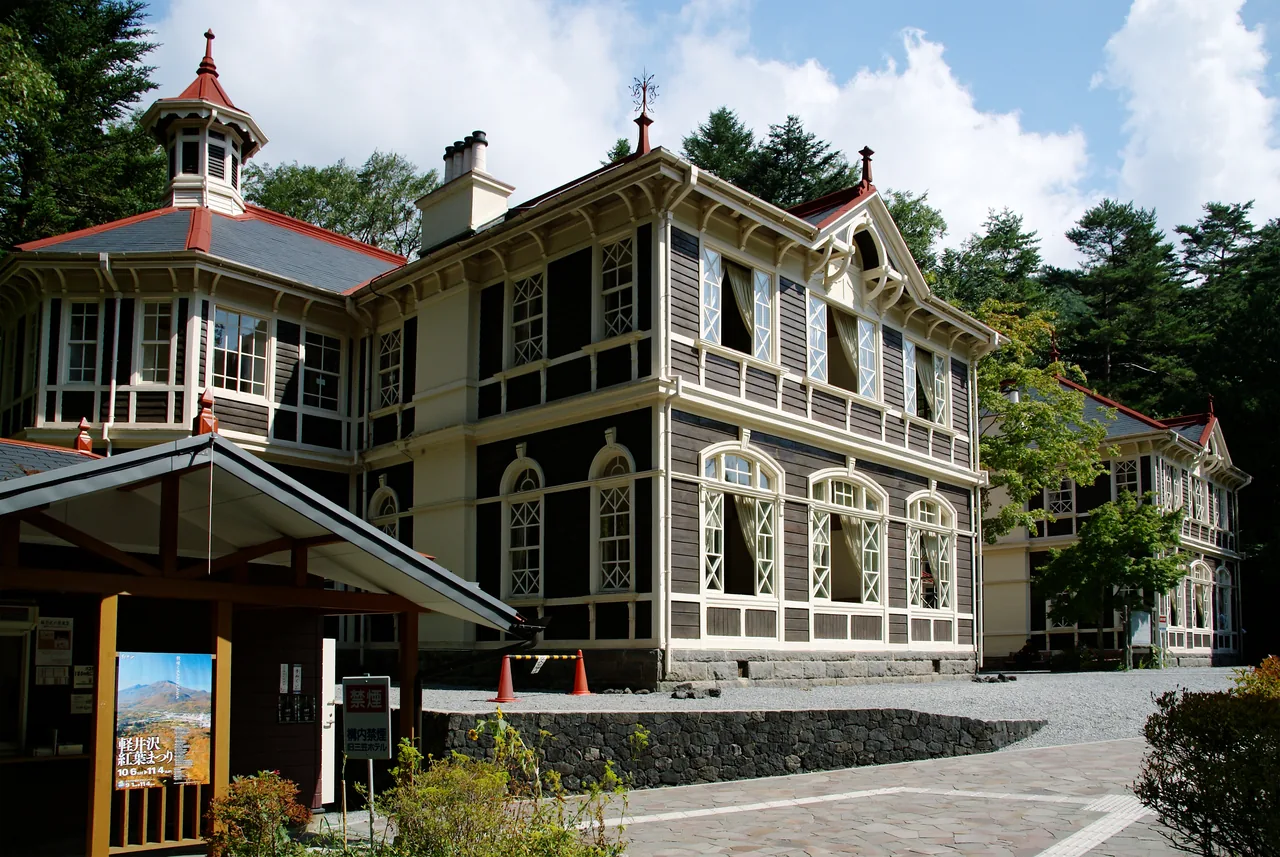
The most recent news in Karuizawa is a very old building. The Old Mikasa Hotel was finished in 1905 and opened in 1906, a wooden hotel built in a fully Western style, designed and constructed entirely by Japanese hands. That last part is why it matters architecturally. It became a National Important Cultural Property in 1980. Map
People used to call it the Rokumeikan of Karuizawa, after the Tokyo hall where Meiji Japan entertained foreigners. Writers, artists and business figures came up from Tokyo and stayed here for the summer. Once it stopped operating as a hotel it was opened up as a museum of that era.
The building had aged badly, so in 2019 the town began major repairs including seismic strengthening. The work took five and a half years and it reopened on 1 October 2025. If you were in Karuizawa at any point in between, you walked past a building site.
It came back different
The displays were rebuilt from scratch. There is now a café, a museum shop, and rooms you can hire. They also added a costume rental, so you can put on period dress and be photographed inside the building. The point was to stop treating it purely as a preserved object and give people a reason to spend an hour there.
The building rewards looking at. An octagonal tower sits on one side only, so the front is deliberately asymmetrical. The brackets holding up the eaves curve. The curtain boxes are carved with cranes and pine. The geometric patterns in the windows still use the original glass.
The fittings were the best available at the time: electric chandeliers, a flush lavatory tiled with English tiles, English carpet. None of that sounds remarkable now. In Japan in 1906 it was.
Check the day before you go
Wednesday is the closing day, with one large exception. Through summer and autumn it opens on Wednesdays too, because that is when the town is busy.
| Item | Detail |
|---|---|
| Hours | 9:00 to 17:00, last entry 16:30 |
| Closed | Wednesdays. Open Wednesdays from 15 July to 31 October |
| New year | 28 December to 3 January |
| Admission | 1,000 yen, 500 yen for primary and junior high |
| Parking | 25 cars. The car park has a different address from the building |
That last line catches people out. Put the building’s address into a satnav and you will not arrive at the car park, which sits on a separate plot. There is a private pay car park next door and the museum gives no discount on it.
If you are coming by bus, note that the museum’s own access page tells you to check with the bus company because services and times change with the season. It is unusual for a site to say that about its own access, and it tells you something about how often the buses here change.
You cannot stay the night. Enough people ask that it is in the official FAQ.
There are rotating exhibitions
Alongside the permanent displays there is a gallery that changes theme, usually around painters or photographs connected to Karuizawa. Come twice and you will see different things on the walls.
The town owns the building and an outside company runs it. That change of operator is why the café and the shop exist.
Getting up there
It is uphill from the old shopping street. Walkable, but a real climb. The bus is easier, and if you drive, use the car park address. The road itself is pleasant, lined with trees and villas, and in summer plenty of people ride up it on hired bicycles.
4. Kumoba Pond takes almost no time to walk around
There is a pond between the station and the old town. Kumoba Pond, sometimes called Swan Lake. It is small, and the path around it is short. Map
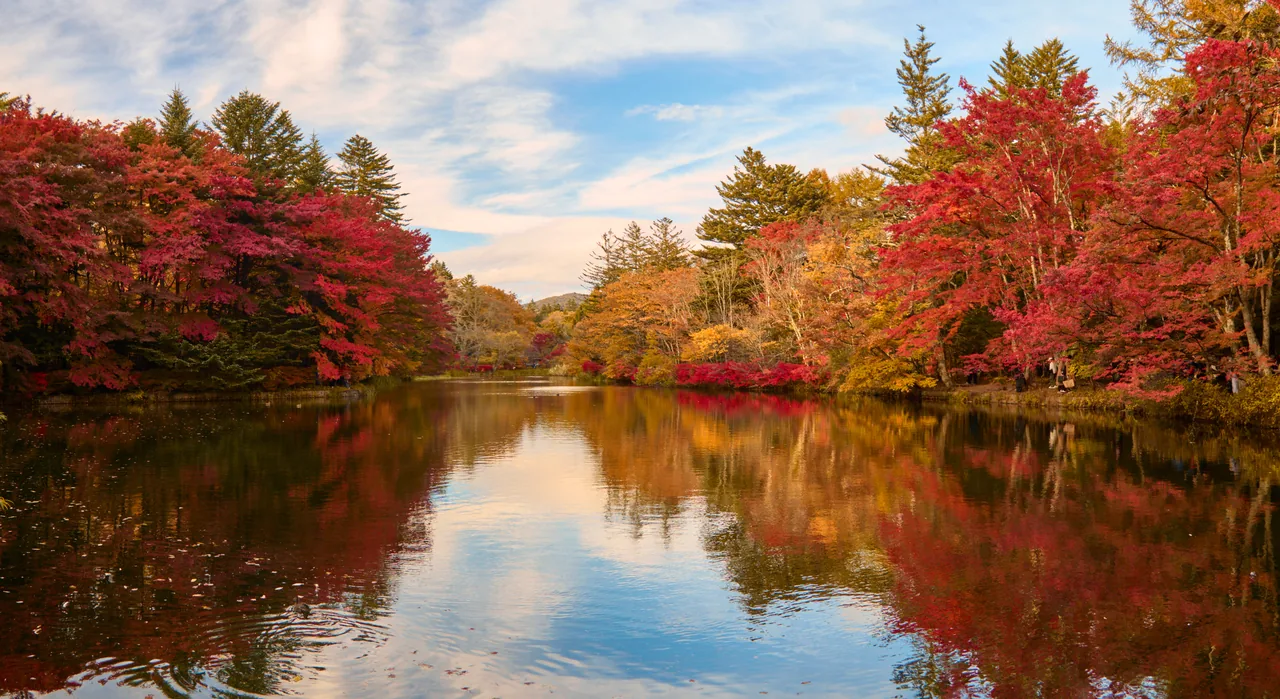
What people come for is the reflection. The water is still enough to hold the trees on the far bank, and it is at its best when the leaves are new and when they turn. A large share of the autumn photographs labelled Karuizawa were taken here.
A walking path runs all the way around, about a kilometre of it, twenty minutes at a stroll. It fits naturally into the walk from the station up to the old shopping street, and plenty of people detour this way rather than going straight up the main road.
Go early if you can
Because it is the reflection you are there for, wind matters. By the middle of the day a breeze usually puts a ripple across the surface. Mornings are generally still, and empty.
On an autumn weekend afternoon the path fills up and you end up walking in single file. Same pond, completely different experience.
Parking is the problem
The tourist association runs a standing notice about parking here, which tells you how bad it gets. The pond is ringed by a narrow residential area with nowhere obvious to leave a car, and on autumn weekends it is worse.
Walk or cycle instead. Hire a bicycle at the station and you can loop the pond and the old street without thinking about it. This is the stretch of Karuizawa where a bicycle genuinely beats the bus: flat, short, and pretty the whole way.
There are small private museums and a couple of long-established coffee houses on the lanes nearby. Karuizawa has a lot of these, tucked into residential streets rather than lined up for visitors.
5. Naka-Karuizawa and Hoshino: shops in the middle of a wood
One stop west of the station is Naka-Karuizawa, and a little further in is the area called Hoshino. It is a cluster of shops, restaurants, a hot spring and two churches, set in the trees. Map
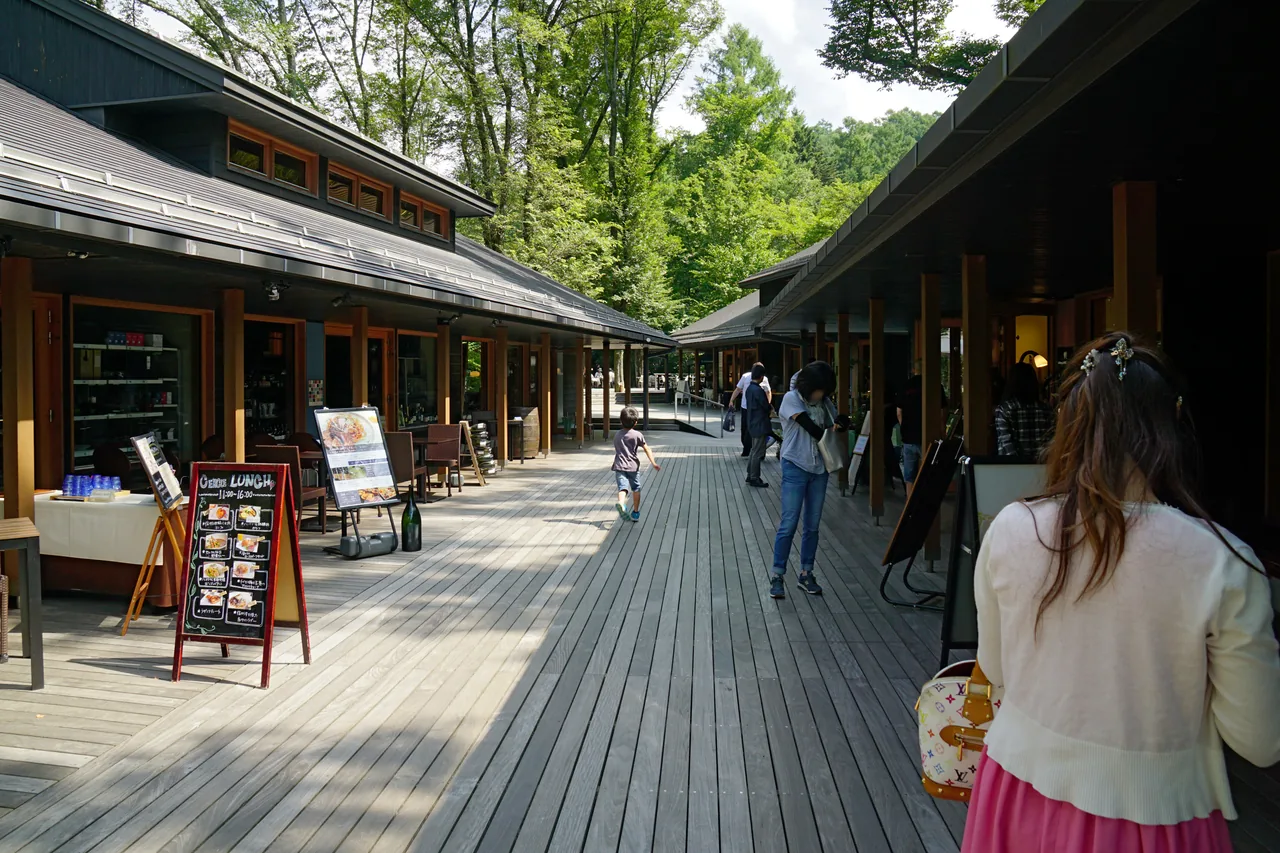
The centre of it is Harunire Terrace, a small street of shops built on wooden decking among elm trees, with the Yukawa river running alongside. The operators describe the concept as everyday Karuizawa, and it does read that way. It feels more like a neighbourhood than a tourist arcade.
The shops are scattered among the trees rather than lined up. Bakery, coffee, a bar, restaurants, homeware. You wander the decking and go into whatever appeals. It is open air, so rain means an umbrella, but in August sitting out there is the whole point.
Next to it is Tombo no Yu, a hot spring open to people who are not staying overnight. Most visitors end up using it. If Japanese bathing customs are new to you, the onsen and ryokan guide covers what to do before you walk in.
That combination is what makes this corner work. Walk in the forest, eat by the river, get in the hot spring, come out. It is the only part of Karuizawa where half a day fills itself without a car.
Two churches that look nothing alike
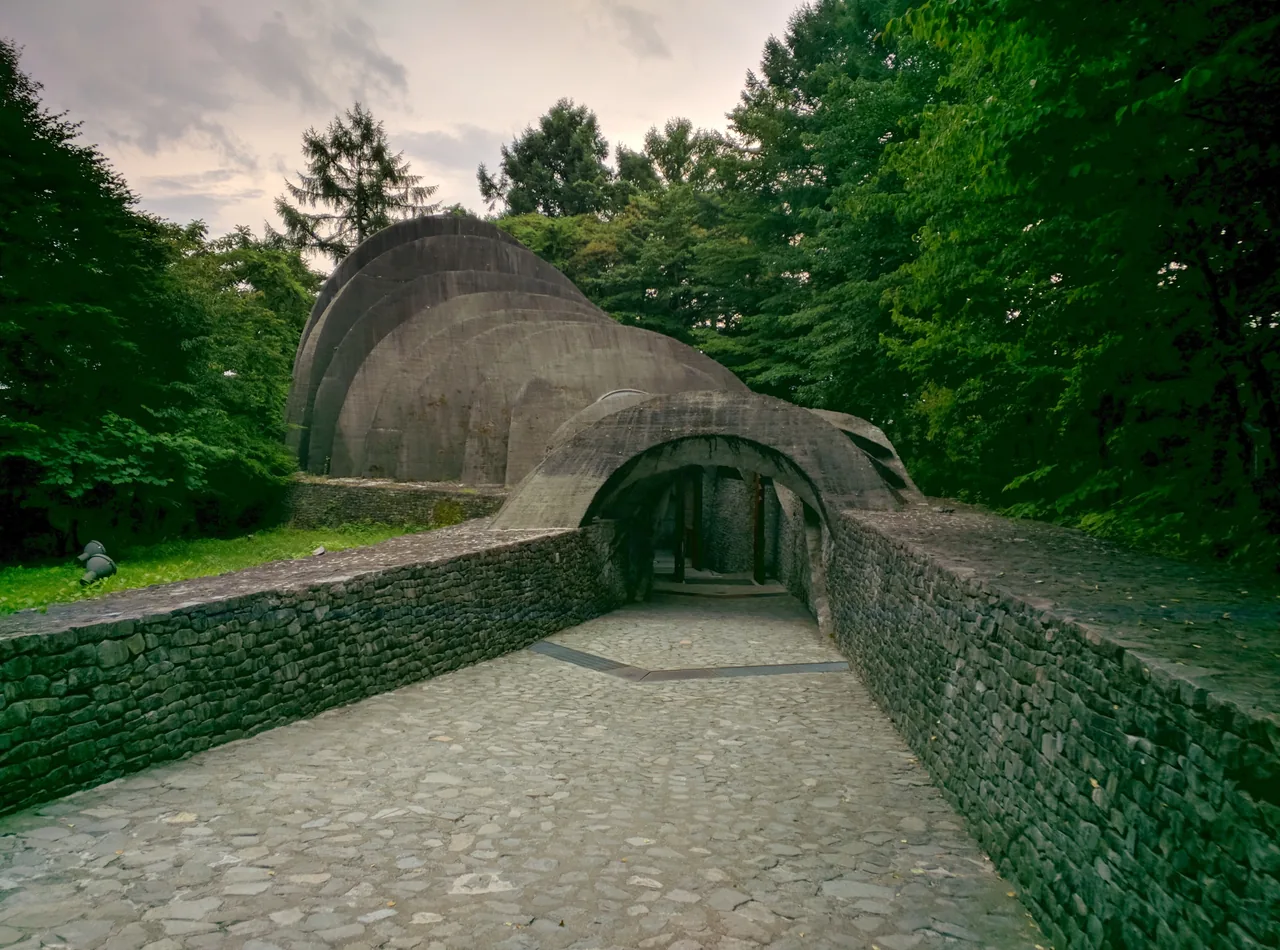
The Stone Church, formally the Uchimura Kanzo Memorial Hall, is a run of arches in stone and glass where the ceiling rises as you go deeper in. It was built to disappear into the slope rather than stand on it.
Karuizawa Kogen Church is the other one, timber-framed, and describes itself as having grown out of a place where people gathered to talk. Both are working wedding venues, so on a day with a ceremony you may not get in. Worth checking before you make the trip.
The Wild Bird Sanctuary adjoins this area, with trails through the woods. You do not need to care about birds to enjoy walking it, and in August it is several degrees cooler than the city. The guide to Japan in August explains why people head for the highlands in that month, and this is the kind of place it means.
The station building has a library in it
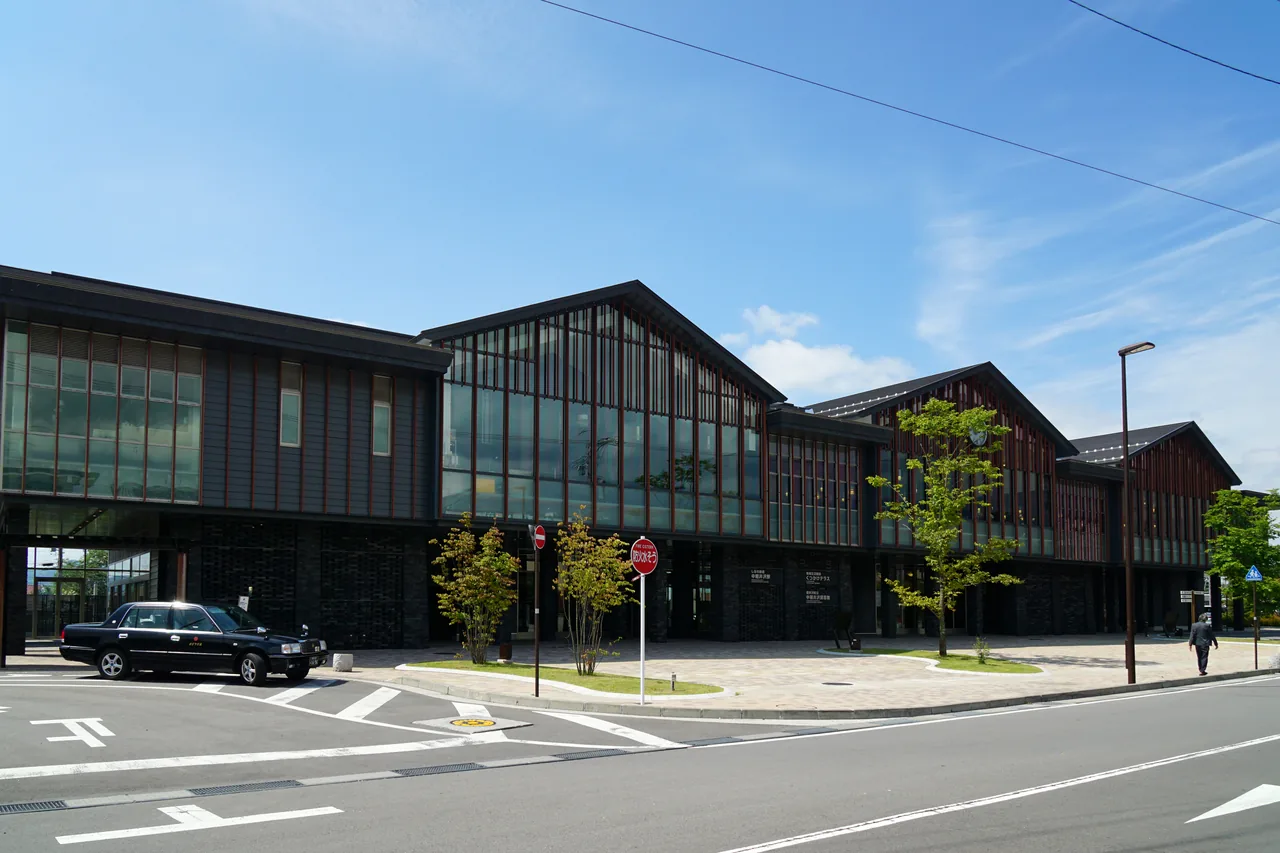
At the north exit of Naka-Karuizawa station the town built a community building called Kutsukake Terrace, named after the old post town this area used to be.
Inside there is a library, space for people trying out a first shop, and a tourist information desk. It was built for residents and the tourist desk was fitted in alongside. The whole character of the town is in that one building.
One practical warning about the desk: it closes for an hour at lunch, from twelve to one. Turn up then and you have wasted the trip. Over new year the hours shrink further.
There is also the Kera Pond skating rink near the station, worth an evening if you are staying in this part of town in winter.
6. Shiraito Falls is not a river falling
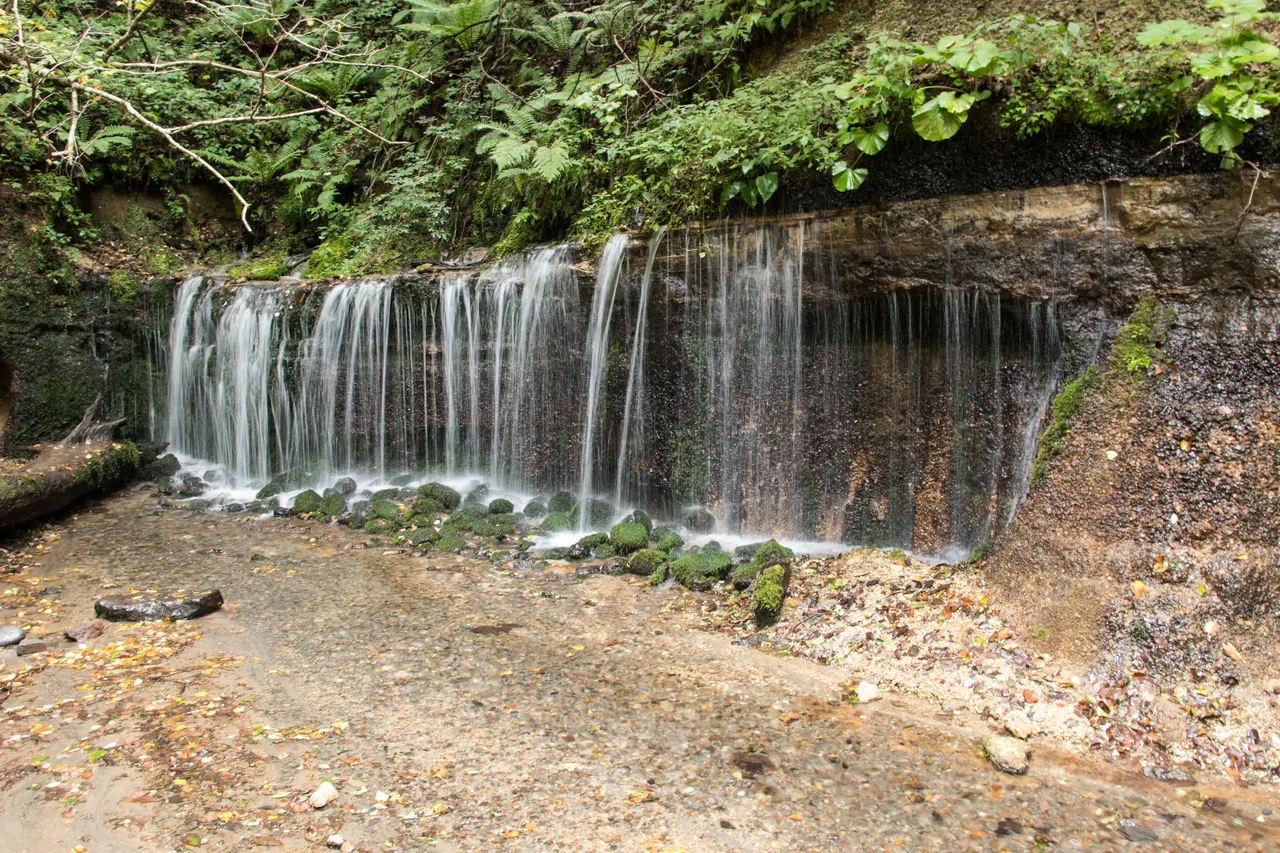
This is the most photographed spot in Karuizawa, and it is made differently from most waterfalls. No river arrives at the top. Map
Groundwater seeps out of the rock face and runs down it in several hundred separate threads spread across the whole width of the cliff. That is where the name comes from: white threads. It is about 3m high and 70m across, the opposite proportion to the waterfall you are picturing.
The water that collects here becomes the Yukawa, the same river that runs past the shops at Harunire Terrace. The stream you sat beside downstream starts at this cliff.
The shop is worth a paragraph
There is one shop at the entrance, the Kusakaru Kotsu Shiraito Falls shop. The thing everyone queues for is salt-grilled iwana, a river fish, and the shop’s own description says that in peak season they cannot grill them fast enough.
They also sell a tofu made with the spring water here, which they describe as theirs alone, plus oyaki dumplings and steamed buns. There is nothing else up here, so you will eat at this one shop or not at all.
A bus company owns the shop
This sounds odd until you know the history. The shop belongs to Kusakaru Kotsu, the company that runs the buses up here.
The firm started out as a small railway running between Karuizawa and Kusatsu. The line closed in the 1960s, the company became a bus operator, and today it also manages holiday homes. The shop at the falls is part of the same sprawl.
There is a practical consequence for you. The bus to the falls and the bus to Kusatsu belong to the same operator, so you check one timetable for both. It also means that when they thin out services, both trips get harder at once.
Getting there depends on the season
The falls are up the mountain and you reach them by bus, and the number of services and their times change through the year. Winter is thinner.
By car you take a toll road, which is well built. On autumn weekends it backs up, because the two busiest times in Karuizawa are summer and the leaves, and the same road serves both.
So Shiraito is a place where you check the bus first and build the day around it. You will not spend long at the falls themselves. Pair it with Usui Pass and call it half a day.
7. At Usui Pass one shop stands in two prefectures
At the eastern edge of the town is the old pass road. The lookout sits at 1,200m, roughly 300m above the town, and from it you can see jagged rock peaks to the east and Mount Asama to the west. It is noticeably cooler up here. Map
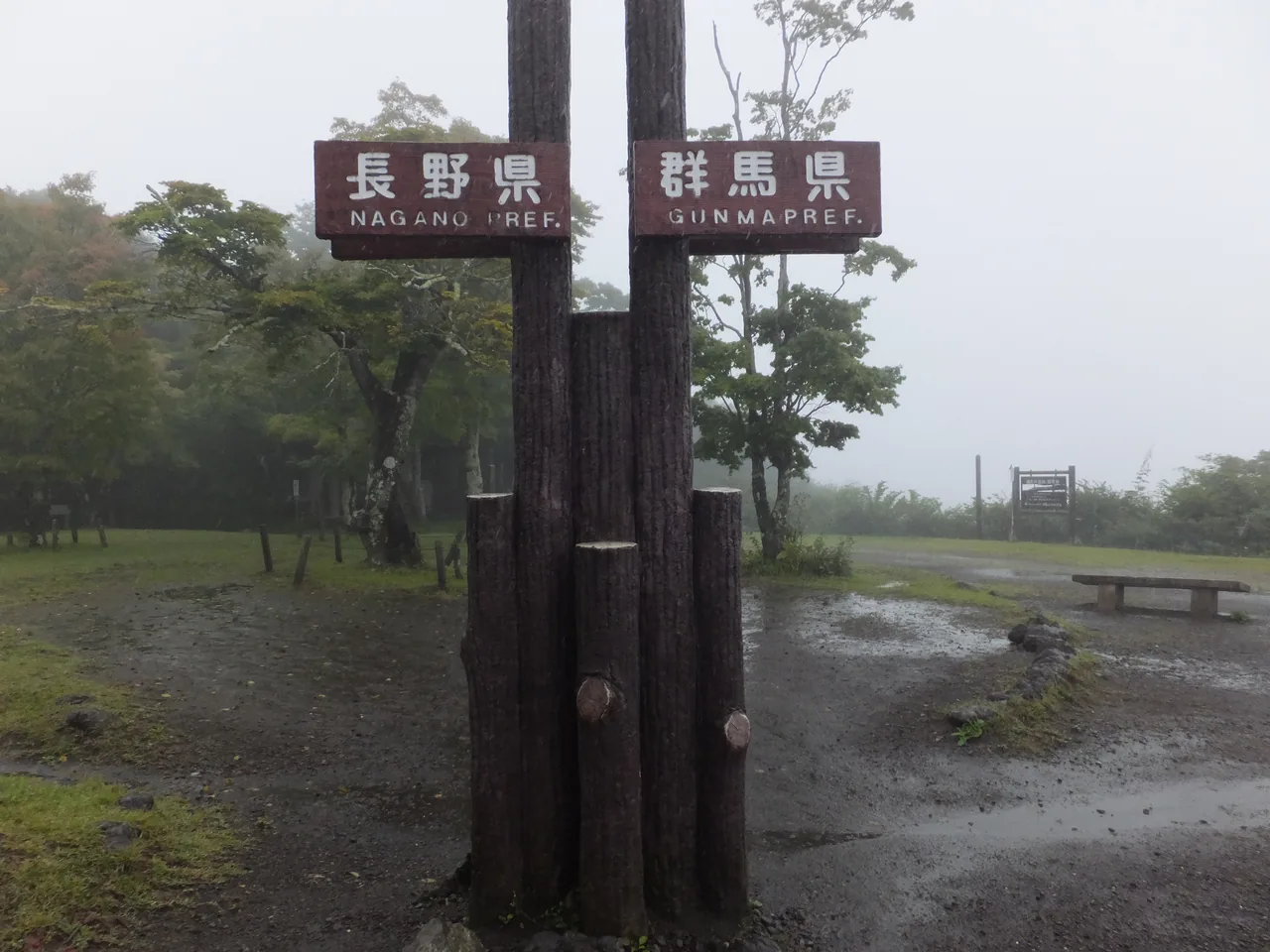
What makes it odd is that the boundary between Nagano and Gunma prefectures runs across the top, and it runs through things rather than around them.
There is a shrine at the summit, Kumano Kotai Jinja, and the line goes through the middle of it, so half the shrine is in one prefecture and half in the other. The rice cake shop next door, Shigenoya, is the same. It has been in business for three hundred and fifty years and the building straddles the boundary, so which prefecture you eat in depends on where you sit.
The shop sells chikara mochi named after the pass, and buckwheat noodles. Almost nobody comes up here and goes back down without eating.
This is where the old highway crossed
The pass is not just a viewpoint. The Nakasendo crossed here, and the post town of Karuizawa sat at the bottom of it. Travellers slept there before making the climb.
Which is why a rice cake shop has lasted three and a half centuries. It fed people going over the pass. The customers arrive by car now, but the job has not changed.
You can walk up
There is a 4km trail from the old town up to the lookout, and if you have the legs it is a good walk. It is uphill the whole way, so allow more time than the distance suggests.
Most people take the bus or drive. As with the falls, services depend on the season and winter is thinner. Snow arrives here before it arrives in the town.
The leaves turn earlier up here than down in the town, because of the height. If you have come for the autumn colour, the pond and the pass will not peak on the same day. The autumn foliage guide explains how the front moves down the country.
What you actually see
East is the Gunma side, all sharp rock. West is Mount Asama, which you can see from the town too but which looks far bigger from up here.
In cloud you see nothing at all. It is high enough to sit inside the weather. Deciding on the morning whether to include the pass is entirely reasonable.
8. Oiwake still looks like a post town
Oiwake is the western end of Karuizawa, a few stops out on the Shinano Railway, and hardly any visitors get this far. Which is the point. Map
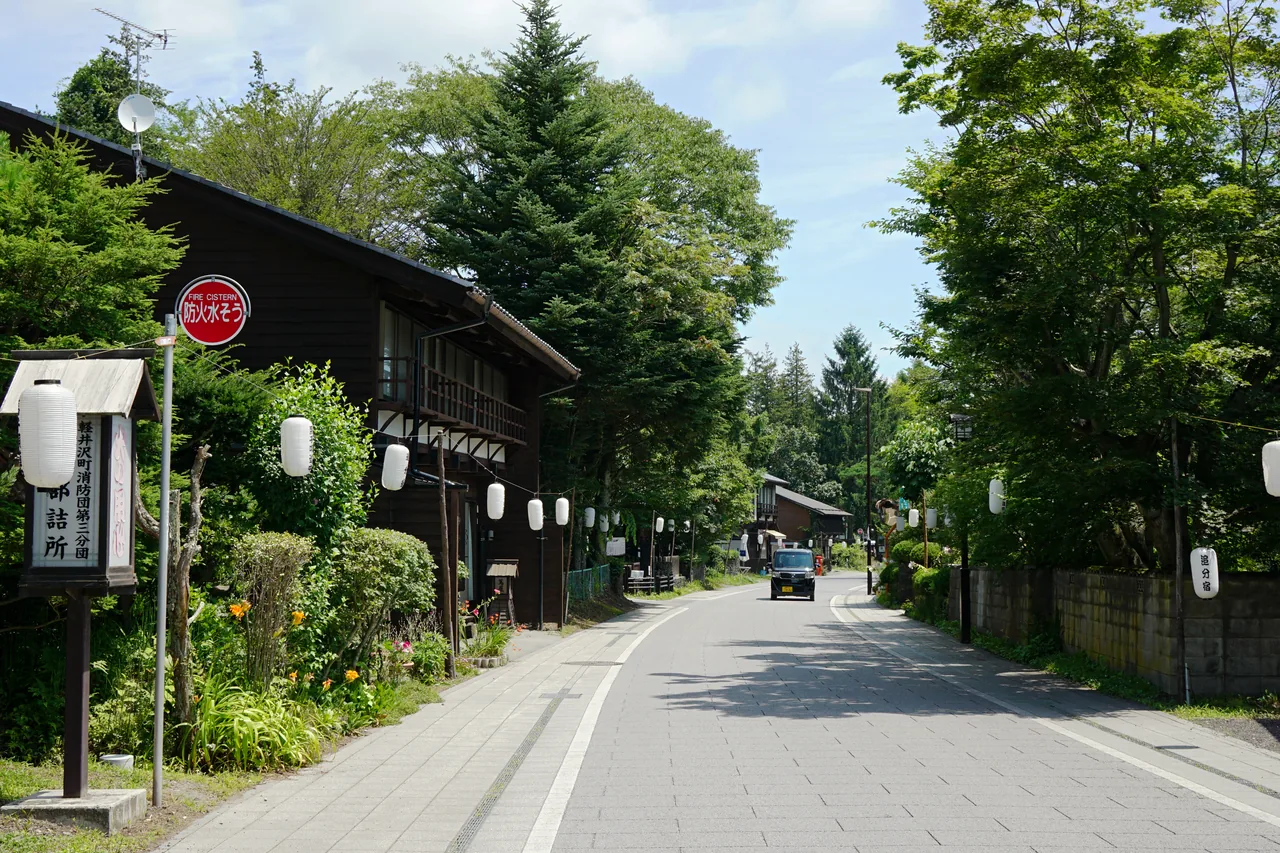
This was a stop on the Nakasendo where travellers spent the night, and the shape of it survives. The road runs where it ran, with old buildings along it. If Kyu-Karuizawa is the missionary and villa story, Oiwake is the two centuries before that.
There is a post town museum
The Oiwake-juku Local Museum stands at the eastern entrance to the village, built to look like an inn from the outside and finished in timber inside. The displays cover the history of the highway, and there is a corner where you can listen to the local folk song that carries the village’s name.
Part of an old teahouse has been reconstructed inside, and there are models showing how a post town was laid out. In summer they run talks and concerts.
The opening pattern matches the Old Mikasa Hotel: closed Wednesdays, open every day through summer and autumn, and open anyway if the Wednesday is a public holiday.
You can walk the whole highway in fifteen minutes
A little further on is the Nakasendo 69 Stations Museum, and this one is a pleasure. It covers all sixty-nine post towns between Nihonbashi in Edo and Sanjo Ohashi in Kyoto, in prints and photographs, and the garden has the entire route laid out as a path. Fifteen minutes and you have walked to Kyoto.
The tourist association’s write-up notes that the curator’s own explanations are good value, which is not something they say about people very often.
Oiwake is also a literary village. Novelists spent their summers here and wrote about it, and the tourist association still serialises one of them on its own website.
| Item | Detail |
|---|---|
| Hours | 9:00 to 17:00, last entry 16:30 |
| Closed | Wednesdays. Open daily 15 July to 31 October |
| New year | 28 December to 4 January |
Check the Shinano Railway times before you set out. Trains are not frequent. Trying to do Oiwake and the old town on the same day makes for a tight day, so if you are staying a night, put Oiwake in the second morning.
9. The south has a lake, museums and a curling rink
South of the station the character changes again. This is Shiozawa and Hotchi, and it is not a walking area. You move between points by car or bus. Map
In the middle is Lake Shiozawa, with Karuizawa Taliesin gathering museums and gardens around it. A short way off, Muse no Mori holds a picture book museum and the Erz toy museum.
This is the wet weather answer
When it rains in Karuizawa your options thin out fast, because the pond, the forest and the pass are all outdoors. The south is where you go instead. The museums are indoors and close enough together to fill a day.
The picture book museum is the one families head for, with the toy museum in the same grounds. If you are travelling without children you can mix it with a walk around the lake gardens.
There is a curling rink
The unexpected one. Karuizawa Ice Park, inside Kazakoshi Park, is a dedicated curling venue built to a standard that can host international competition, and they run taster sessions for people who have never held a stone.
The outdoor facility changes use through the year: ice rink in winter, roller skating and futsal from spring into summer. Turn up in July and it is a different place entirely.
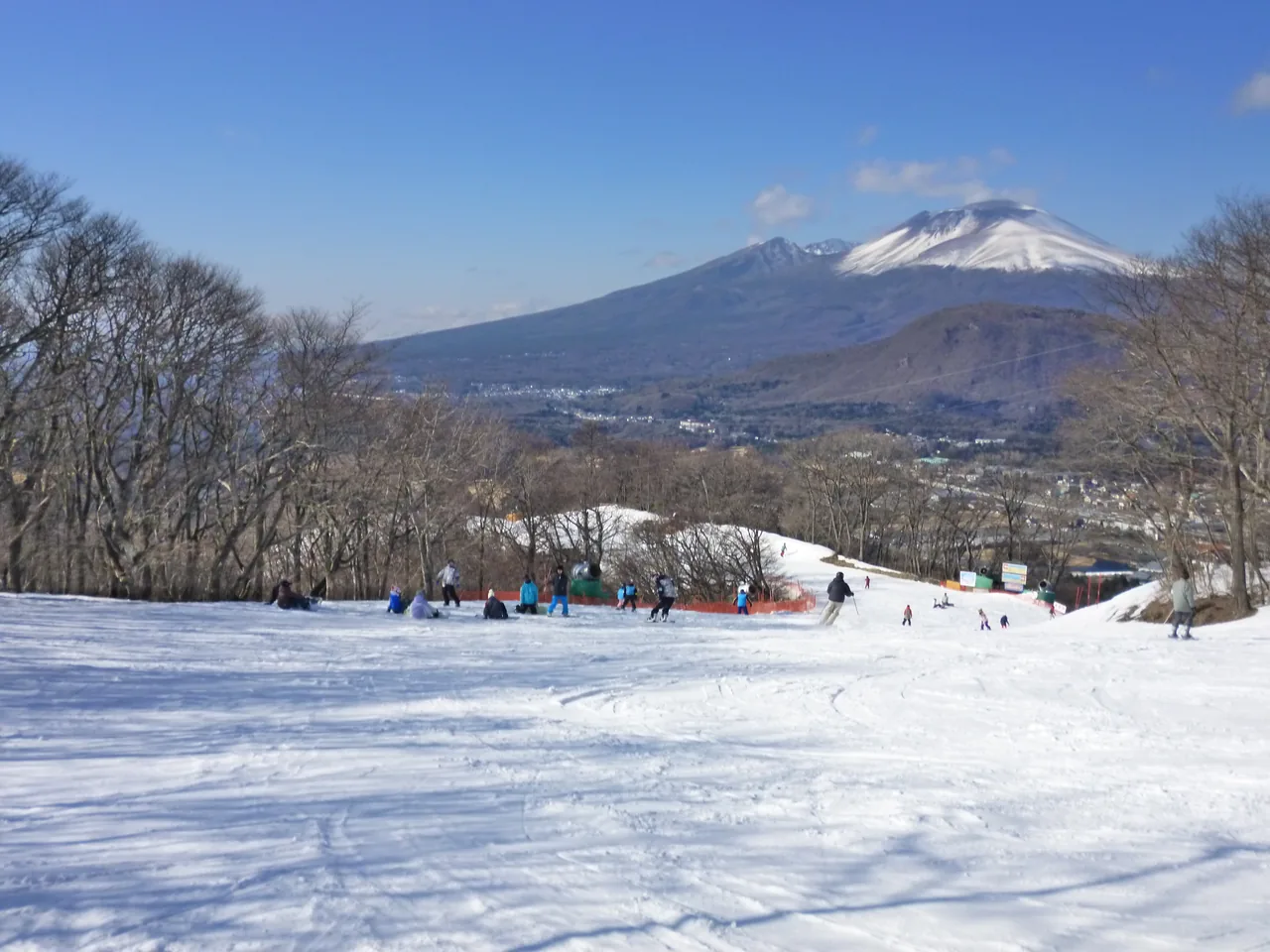
Karuizawa’s winter sports reputation is not an accident. It is high and it is cold, so ice behaves, and facilities went in here early. The ski slope is directly behind the station, close enough to walk from the Shinkansen. If it would be your first time skiing in Japan, start with the skiing and snowboarding guide.
The bus down here is an express
Seibu Bus runs an express to Lake Shiozawa, but the operating days and the days off are announced separately, which is to say it does not run daily. Check before you build a morning around it.
A car helps here more than anywhere else in Karuizawa. The sites are too far apart to walk between and the buses are thin. If you are hiring a car, pair the south with Shiraito Falls and do both in half a day.
10. The outlet mall keeps different hours every day
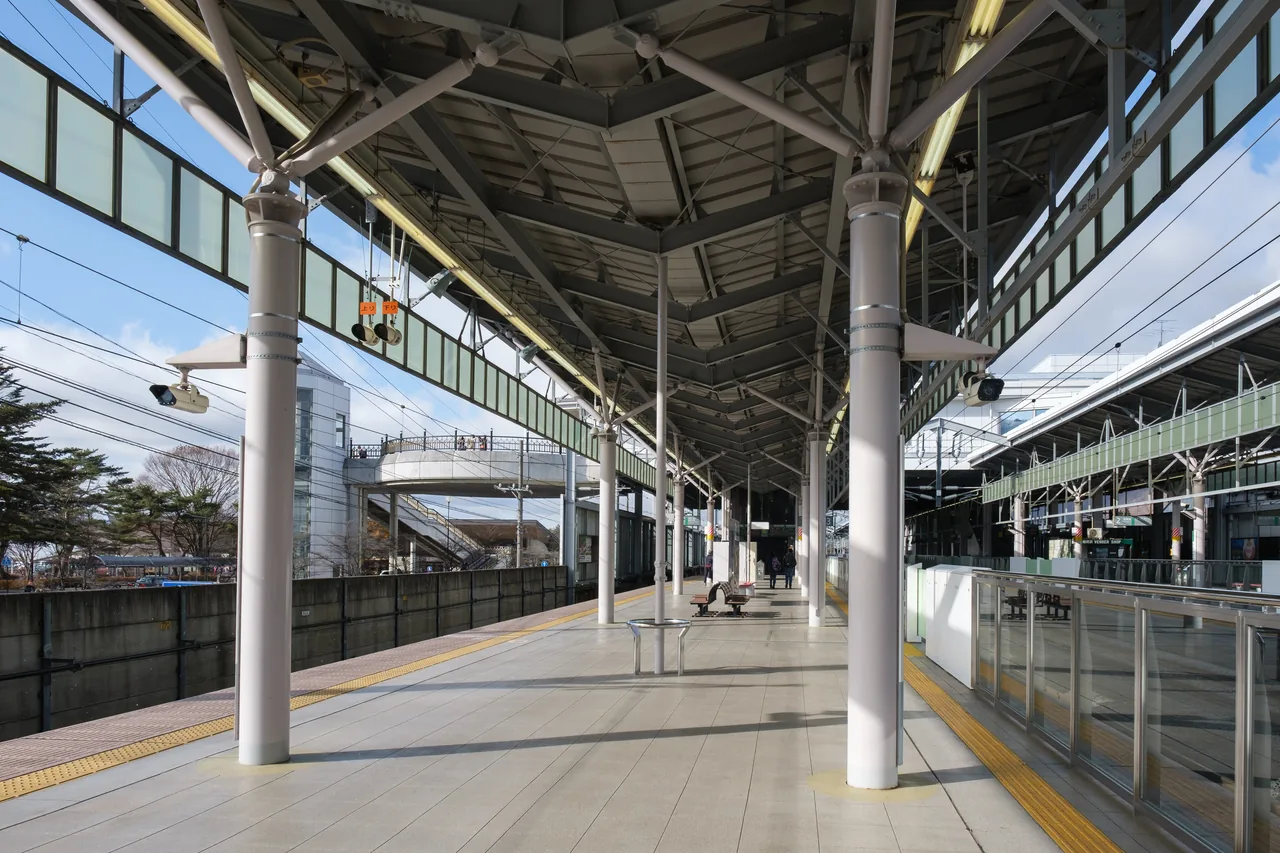
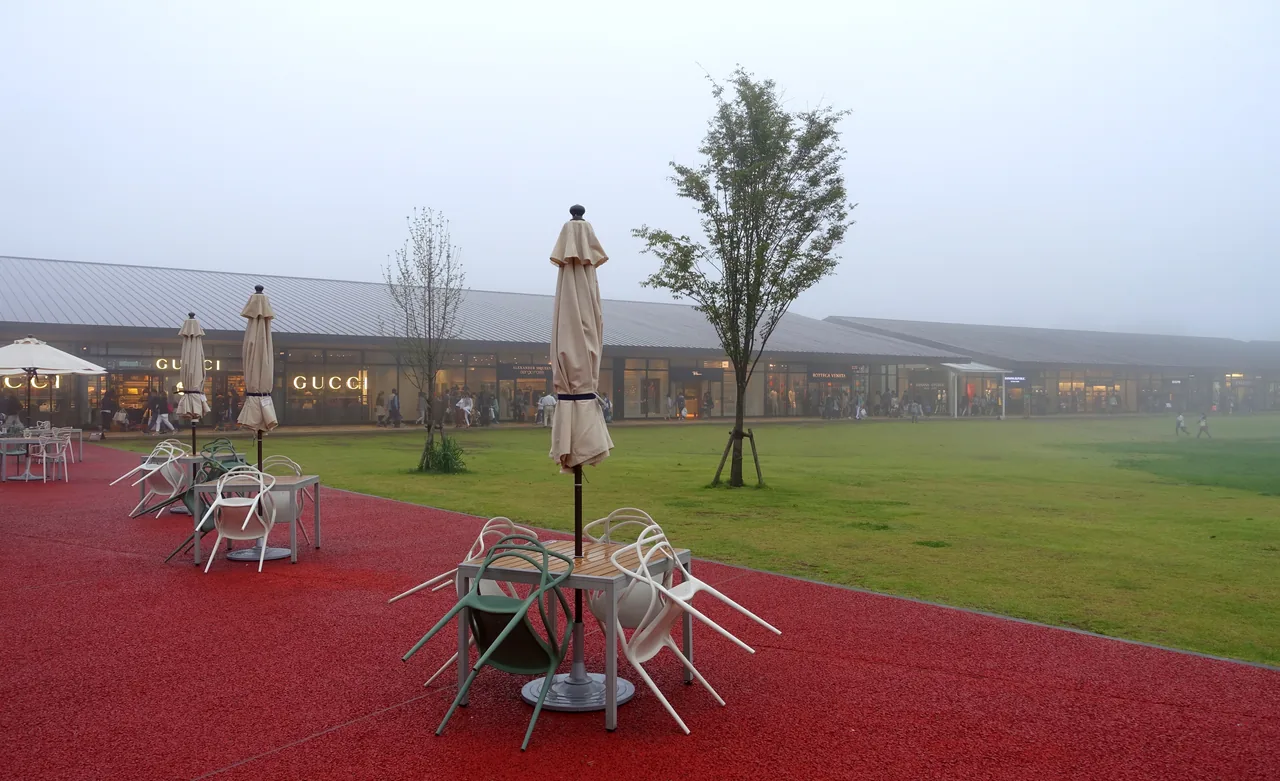
You step off the Shinkansen and you are at the outlet. Karuizawa Prince Shopping Plaza is attached to the station, so you can walk straight in with luggage. Map
It is big. The car parks alone run to seven zones, and the buildings sit around a central lawn with Mount Asama behind them, which is a better view than a shopping centre has any right to.
The buildings are spread out rather than stacked. Clothing sits in one zone and sport in another with grass in between, so if you came for something specific, look at the map first. Wander and you will cross the same lawn twice.
One thing to plan around: the opening hours change day to day. The official site posts today’s hours separately and keeps a calendar of them. Peak and off-peak differ, weekends and weekdays differ. If this is your last stop before an evening Shinkansen, check what time it closes that day.
Where to put it in the day
Go in on arrival and it will eat the day. On a single day trip, do the town first and stop here on the way back. Leave your bags at the station or at the mall.
Staying a night gives you the option of the second morning instead, when it is quieter. If you are carrying large luggage on the Shinkansen, the oversized baggage rules are worth a look, although the Tokyo to Karuizawa run is not one of the lines where you have to reserve a space.
Leave the bags
There are coin lockers inside the mall, 700 yen a day for a large one, 500 for medium and 400 for small. There is also a left luggage desk in the old Karuizawa station building, open nine to seven, 700 yen per item per day.
If you have come for the day with a suitcase, use one of those. This is a town you see by bicycle, and you cannot do that with luggage.
Driving and cycling
Some car park zones connect to each other and some do not. The official site shows how full each zone is in real time, so check it before you set off. On long weekends the approach road itself jams.
There is a bicycle hire outlet, Bigcloud Cycle Base, attached to the station. Walking out of the mall and riding straight up towards the pond and the old street is the smoothest way to start a day here. Leave the suitcase behind first.
There are restaurants inside too, which is useful when you have an awkward hour before a train.
11. Outside the town: a lava field and a hot spring resort
Go north by bus and you cross into Gunma Prefecture. On the way is Onioshidashi Park. Map
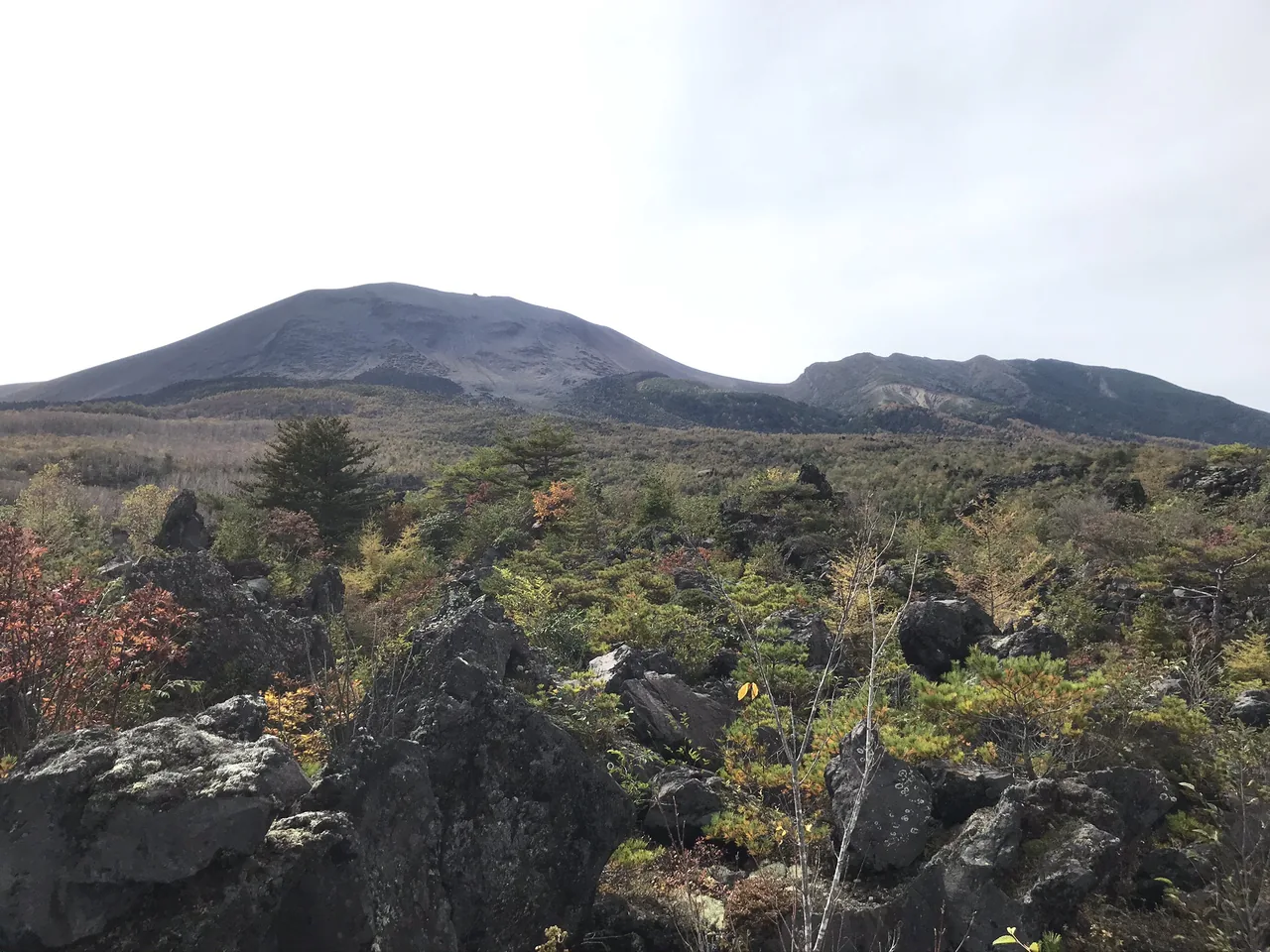
When Mount Asama erupted violently in the Edo period the lava ran down and set, and it is still lying there. Black rock in every direction with paths threaded through it, laid out so you can walk among it. It is the clearest demonstration you will get of what it means to live beside this mountain.
In the middle of the rock field stands Asamayama Kannon-do, a temple to the people killed in that eruption. A red building in a black field, visible from a long way off. In autumn they occasionally light the paths and open it for a few evenings.
Mount Asama looks different from here. From the town it is a shape above the trees. Here it is directly in front of you, and you are standing on what it produced.
It opens year round, eight to five, last entry half past four. The second floor restaurant serves food over lunch only and drinks earlier in the morning.
| Item | Detail |
|---|---|
| Hours | 8:00 to 17:00, last entry 16:30 |
| Admission | 700 yen from junior high, 500 yen primary |
| Restaurant | Weekdays 10:00 to 15:00, weekends and holidays to 16:00 |
Seibu Bus sells a pass covering the return journey and entry, so if that is your plan, ask at the stop rather than buying separately.
You can carry on to Kusatsu Onsen
Buses run from Karuizawa to Kusatsu, 76 minutes on the express. There used to be a railway on this route and it took three and a half hours. Kita-Karuizawa is 39 minutes on the ordinary bus. The line closed in the 1960s and the company that ran it now runs the buses.
One large condition applies. The timetable itself is seasonal. There is a spring to late autumn timetable and when that period ends it changes. If you are planning to cross to Kusatsu in winter, confirm there is a bus that day before you commit to it.
Kusatsu is a completely different sort of place. Karuizawa is forest and villas, Kusatsu is hot water and a hot spring town built around it. Doing both in a day is tight, so if you are going, stay the night there.
12. What to eat in Karuizawa
The food here splits into two. There is what the missionaries left behind and there is what grows on a cool plateau.
What the missionaries left
Jam, honey and bread. Nakayama no Jam has been making jam since 1905, and Sawaya sells jam on the old street and by the station. Ogihara Yohoen will let you taste the honey before you buy it.
These shops do well as gift shops for a reason. They are what people took back to Tokyo at the end of the summer. Visitors buying them now are buying the same thing for the same reason.
The coffee houses are old too. There are long-established places on the old street, and newer ones out at Harunire Terrace. They are different enough that doing both is worth the time.
What grows here
Karuizawa and the country around it stay cool in summer, which suits vegetables. The town’s own website lists highland vegetables as one of its key terms. In summer the farm stands and the restaurants are working with things picked that morning.
Cheese is made locally. Atelier de Fromage makes it in the area and has a shop on the old street. In summer there is berry picking out towards Hotchi.
Things you can only eat where they are
Up the mountain the options narrow to one. At Shiraito Falls it is salt-grilled iwana and the tofu made from the spring water, plus oyaki and steamed buns.
At Usui Pass it is Shigenoya’s rice cakes and soba. Neither place has a second option, which is oddly part of why people remember them.
| Where | What |
|---|---|
| Old shopping street | Jam, honey, bread, old coffee houses |
| Harunire Terrace | Eating by the river in the trees |
| Shiraito Falls | Grilled iwana, spring water tofu |
| Usui Pass | Shigenoya’s rice cakes and soba |
| Anywhere in summer | Highland vegetables, local cheese |
Restaurants queue in peak season, particularly Harunire Terrace and the old street at lunch. Shifting your meal an hour either way solves most of it.
13. Getting around is the hard part of this trip
Arriving is one train. Moving around afterwards is the problem.
There are two kinds of bus here: the circular buses the town runs, and the route buses run by Kusakaru Kotsu and Seibu Bus. They behave differently.
The town buses are for residents
They run as a south and east loop, a north loop and a west route, with Seibu Bus operating the first and Kusakaru Kotsu the second.
Where the town puts the timetables tells you what they are for. They live under the section for villa owners, not under tourism, and the department responsible is residents’ affairs. These are not routes designed to join up the things a visitor wants to see, and in places they do not.
There are transfer tickets, and a live tracker showing where the buses currently are. Services are not frequent enough to just turn up, so keep the tracker open.
The route buses take no reservations
These are the ones to the falls and Kusatsu. The operator states it plainly on its own site: there are no reservations, you board in the order you queued, and if the bus fills you wait for the next one.
That single sentence matters if you are heading back from the falls on a busy weekend, because you may lose a service. Do not build a tight connection to a Shinkansen on the way home. The company says the same thing, telling passengers to leave margin because roads can delay the bus.
One route no longer exists
The old Kyu-Karuizawa shuttle is suspended. Older blog posts and guidebooks still mention it, so do not plan around it. Walk up to the old street or take a normal route bus.
There are not many taxis
The tourist association says so itself: the number of taxis in Karuizawa is limited and in busy periods you will wait. Tourist bodies do not usually volunteer that. The fallback of just getting a taxi does not really work here.
A bicycle is the most useful thing you can hire
There are hire shops at the station and around the old street. The ground is flat and the distances are short, so between the station, Kumoba Pond and the old street a bicycle beats the bus.
It will not get you up the mountain. Shiraito Falls and Usui Pass are a serious climb. Think of it as bicycle in the town, bus or car above it.
| Journey | How |
|---|---|
| Station, pond, old street | Walk or cycle |
| Station to Naka-Karuizawa and Hoshino | One stop by train, or bus |
| Station to Shiraito Falls and Usui Pass | Route bus or car. Seasonal |
| Station to Lake Shiozawa | Express bus. Not every day |
| Station to Onioshidashi and Kusatsu | Route bus. Seasonal timetable |
14. Getting in from Tokyo, and on towards Nagano
From Tokyo it is the Hokuriku Shinkansen, just over an hour from Tokyo Station or Ueno.
The JR TOKYO Wide Pass covers Karuizawa. It runs three consecutive days, so it pays off if you are basing yourself in Tokyo and going out to two or three places, pairing Karuizawa with Nikko or the Fuji area. Which pass works when is set out in the Tokyo transport pass guide.
Highway buses also run. Seibu’s Chikuma line comes from Shinjuku and Ikebukuro, and there are services from Shibuya, Tachikawa and Yokohama, plus overnight buses from Kyoto and Osaka. Cheaper than the Shinkansen and a great deal slower.
Heading west
A separate railway runs west out of Karuizawa. The Shinano Railway, and it is not JR. It takes you to Oiwake, Komoro, Ueda and Nagano.
Remember that it is not JR. If you are travelling on a JR pass, check separately whether this stretch is included, because you may be buying a new ticket at Karuizawa.
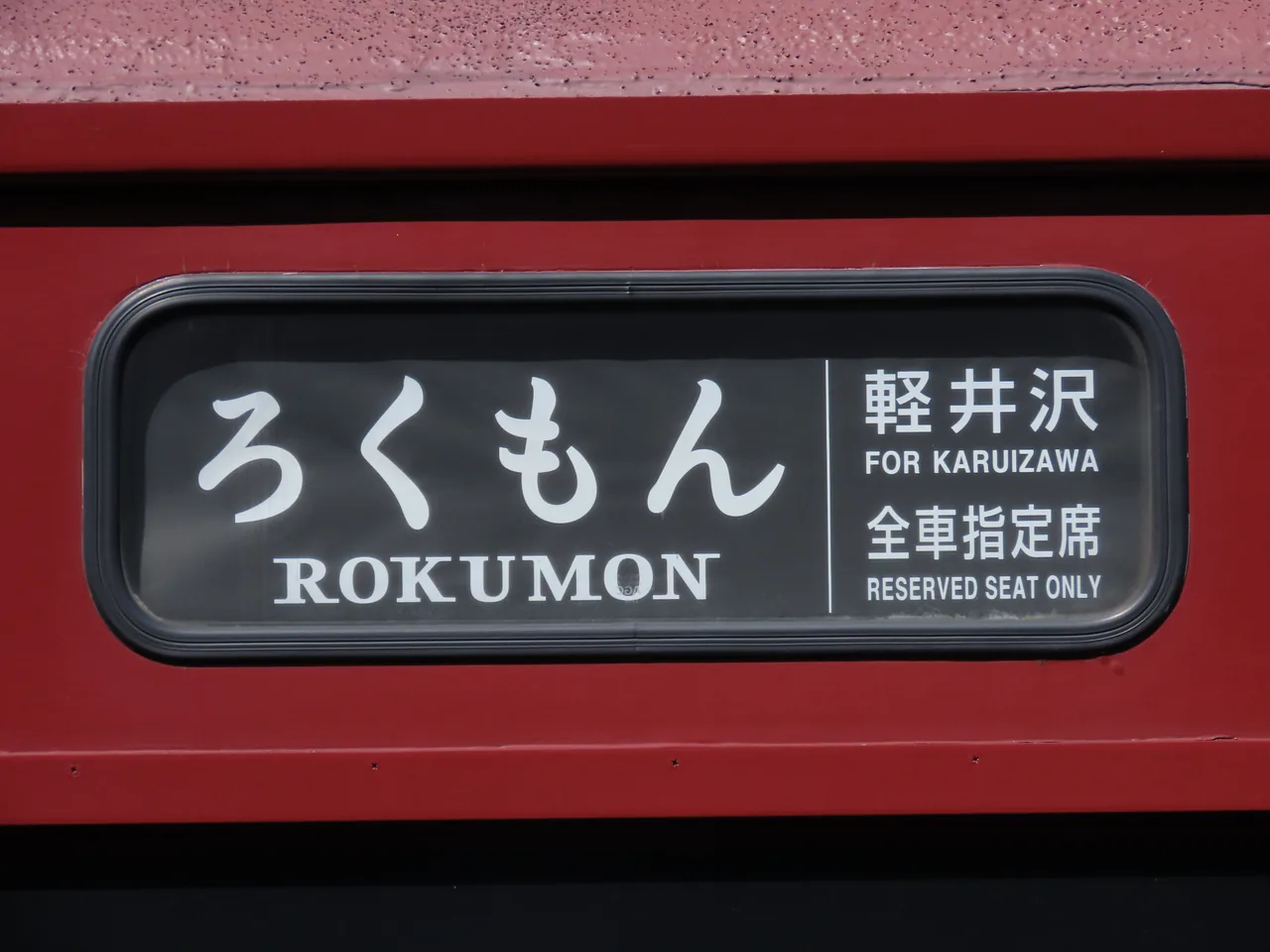
The line has a sightseeing train called Rokumon, where the point is eating on board. Restaurants from around the prefecture provide the courses, rotating, so what you are served depends on when you ride.
The plans change from October 2026. The Western course runs Karuizawa to Nagano and the Japanese course runs Nagano to Karuizawa, with different restaurants cooking on different days of the week. There is also a night run once a month.
If a full meal is more than you want, there is a seat-only plan where you add a reserved seat to an ordinary ticket. You can order a bento separately, but that has to be done by phone several days before you travel.
| From | By | How long |
|---|---|---|
| Tokyo | Hokuriku Shinkansen | Just over an hour |
| Tokyo, Yokohama | Highway bus | Much longer |
| Nagano, Ueda | Shinano Railway | Not a JR line |
| Kusatsu Onsen | Express route bus | 76 minutes |
15. When to come
Karuizawa is a different town in each season. The altitude means the gap with the lowlands is large.
Summer is what the town is for
It was built as a summer retreat and it still works as one. When Tokyo is unbearable this is liveable: forest paths, a river to sit beside. It is also the busiest time and accommodation prices rise accordingly. The guides to July and August in Japan set out what the rest of the country is doing.
Autumn is the most popular
The leaves. People come specifically for the reflection in Kumoba Pond, and it is crowded. Weekends mean traffic and no parking.
One quirk worth knowing: this is a basin, so cold air pools on the floor of it overnight and the colour arrives earlier than the altitude would suggest. The pass turns before the town does. Same place, two different weeks.
Winter is quiet and smaller
Cold enough that ice behaves, so there is skating and curling, and a ski slope behind the station. Far fewer people.
In exchange, things close or thin out: the mountain buses, the Kusatsu buses, the Wednesday opening at the Old Mikasa Hotel. In winter, keep your plans inside the town. The December in Japan guide covers the season nationally.
Spring is quiet with good water
New leaves, and the pond and the forest paths are at their second best. Fewer people than summer. The mountain is still cold and the buses have not fully ramped up.
| Season | Karuizawa then |
|---|---|
| Spring | New leaves, forest paths, few people |
| Summer | The original purpose. Busiest and priciest |
| Autumn | The leaves. Most popular, worst traffic |
| Winter | Ice sports. Mountain buses thin out |
The whole town opens up in summer and autumn
Once you notice it you cannot stop seeing it. The places here all set their calendars the same way. One closing day a week most of the year, then open continuously from mid July to the end of October. The Old Mikasa Hotel does it, the Oiwake museum does it, and the Shaw House goes further and shuts for the whole winter.
The buses follow suit. The Kusatsu timetable is defined as a spring to late autumn period. The mountain services thin out in the cold months.
So Karuizawa is at its fullest in summer and autumn and at its narrowest in winter, when in exchange you get an empty town and things to do on ice.
| What | Changes when |
|---|---|
| Old Mikasa Hotel | Opens Wednesdays in summer and autumn |
| Shaw House Memorial | Closed early November to late March |
| Oiwake-juku Local Museum | Open daily in summer and autumn |
| Kusatsu buses | Timetable runs spring to late autumn |
| Ice Park outdoor rink | Skating in winter, roller skating in summer |
16. How long to stay and where
A day works. Out from Tokyo in the morning, back in the evening, and plenty of people do exactly that. What fits in that day is limited, though.
On a day trip the station front, Kumoba Pond and the old street are comfortable, and adding the Old Mikasa Hotel fills it. Putting the falls and the pass in as well means an early start and checking bus times before you leave.
A night changes things. Walk the town in the first afternoon and take the mountain on the second morning. Ending the day in the forest hot spring and eating nearby is the easiest evening this town offers.
Two itineraries you can use as they are
| When | What |
|---|---|
| Day trip, morning | Hire a bicycle at the station, ride via Kumoba Pond to the old street |
| Day trip, lunch | Eat on the old street, then loop the villa lanes behind it |
| Day trip, afternoon | Old Mikasa Hotel, then the outlet on the way back |
| One night, day one | As above, with the forest hot spring and dinner in the evening |
| One night, day two | Bus to Shiraito Falls and Usui Pass, or out to Oiwake |
If the mountain is in your second day, check the bus times the night before. Return services are sparse, so fix your Shinkansen home first and work backwards.
Where you stay changes the trip
By the station is convenient and the outlet is attached. Kyu-Karuizawa is quiet with good morning walks. The Hoshino area has the hot spring and the restaurants on site, so you never have to leave. The south needs a car.
| Area | Suits |
|---|---|
| By the station | One night and moving on early |
| Kyu-Karuizawa | Walking, and quiet |
| Hoshino | Staying put and using what is on site |
| South | Anyone arriving by car |
Some parts of Japan charge a separate accommodation tax collected at check-in. Which places charge what is collected in the accommodation tax guide.
How it fits a Tokyo trip
Of the day trips listed in the Tokyo travel guide, Karuizawa has a clear identity. Hakone is hot springs, Nikko is temples and waterfalls, Kawaguchiko is Mount Fuji. Karuizawa is forest, old villas and walking, with shopping attached to the station, which none of the others offer.
If you are doing several of these, a three day pass usually pays. The Fuji option is covered in the Mount Fuji day trip guide, and where to base yourself in the city is in where to stay in Tokyo.
🎡Things to Do10
🏨Where to Stay3
🚇Getting Around1
🗾Japan trip essentials27
Karuizawa FAQ
Just over an hour on the Hokuriku Shinkansen from Tokyo Station or Ueno. Highway buses run from Shinjuku and Ikebukuro and take considerably longer.
Yes, within limits. The station area, Kumoba Pond, the old shopping street and the Old Mikasa Hotel make a comfortable day. Adding Shiraito Falls or Usui Pass means an early start and checking the bus timetable first.
Yes, with planning. The town itself is walkable and ideal for a hired bicycle. Anything up the mountain needs a route bus, and those change with the season and take no reservations, so if a bus fills you wait for the next one. Taxis are limited in number and you will queue in busy periods.
Yes. It reopened in October 2025 after five and a half years of restoration, with a new café, a museum shop and a period costume rental. It closes on Wednesdays, except from mid July to the end of October when it opens every day.
You can, but services are reduced. Buses up the mountain run to seasonal timetables. Confirm there is a service on the day before you plan around it.
76 minutes by express route bus. The timetable itself is seasonal, defined from spring to late autumn, so check before travelling in winter. Kusatsu is different enough in character that it is worth a night rather than a detour.
It works well. The south has a picture book museum and a toy museum, and there is curling and skating to try. The forest paths are flat enough for a pushchair. The mountain destinations involve long bus rides and are easier to leave out.
Mid October into early November. The town sits in a basin, so the colour arrives earlier than the altitude suggests, and Usui Pass turns before the town does.
The carved wooden furniture made here. It began in 1892 when Osakaya Kagu was asked by foreign missionaries and diplomats to carve furniture for their summer villas. Osakaya, Icchodo and Shibazaki all still have shops on the old street, and you can look around the upstairs showrooms without buying anything.
They are different trips. Hakone is hot springs, Nikko is temples and waterfalls, Kawaguchiko is Mount Fuji. Karuizawa is forest, old villas and walking, and it is the only one of them with a large outlet mall attached to the station.
Less, honestly. The Shaw House Memorial closes from early November to late March and the mountain and Kusatsu buses thin out or change timetable. In exchange there is skating and curling, a ski slope behind the station, and very few people.