
Shizuoka Travel Guide: Things to Do, Mt Fuji Views, Gunpla and Black Oden
Shizuoka sits almost exactly halfway between Tokyo and Nagoya, about an hour from each, and the fare is the same in both directions. The one thing to know is that Nozomi trains do not stop here. This guide covers getting in from the airport or by train, what is in each of the city’s five districts, where to eat oden and sakura shrimp, and how many days you need.
| Trains | Nozomi does not stop here, so take a Hikari or a Kodama. |
|---|---|
| JR Pass | Your pass cannot use Nozomi anyway, so stopping here adds no fare. |
| Day passes | There are two, one is app-only, and neither covers the airport bus. |
| Free view | Nihondaira Yume Terrace charges nothing and opens late on Saturdays. |
| Kunozan | Five minutes by ropeway, or 1,159 stone steps from the coast. |
| Gunpla | The Bandai museum runs a lottery, so you cannot walk in. |
1. Why people skip Shizuoka, and why you should not
2. Getting to Shizuoka
3. Getting around: two day passes that are easy to mix up
4. The city centre: a castle park and a very large shrine
5. Black oden, and why it looks like that
6. The plastic model capital, and a museum you have to win a place in
7. Toro: a rice farming village from two thousand years ago
8. Nihondaira and Kunozan Toshogu
9. Below the hill: Rodin sculptures and red pandas
10. Shimizu and the Miho pine grove
11. Yui and Satta Pass, where Hiroshige stood
12. Mochimune and Mariko: a harbour and an old post town
13. Okushizu, and the village where wasabi farming began
14. Tea: what is realistic inside the city
15. What to eat, and where
16. When to come: weather and festivals
17. Where to stay
18. How long do you need
19. Mondays close a lot of doors
20. Seeing Mt Fuji from the Shizuoka side
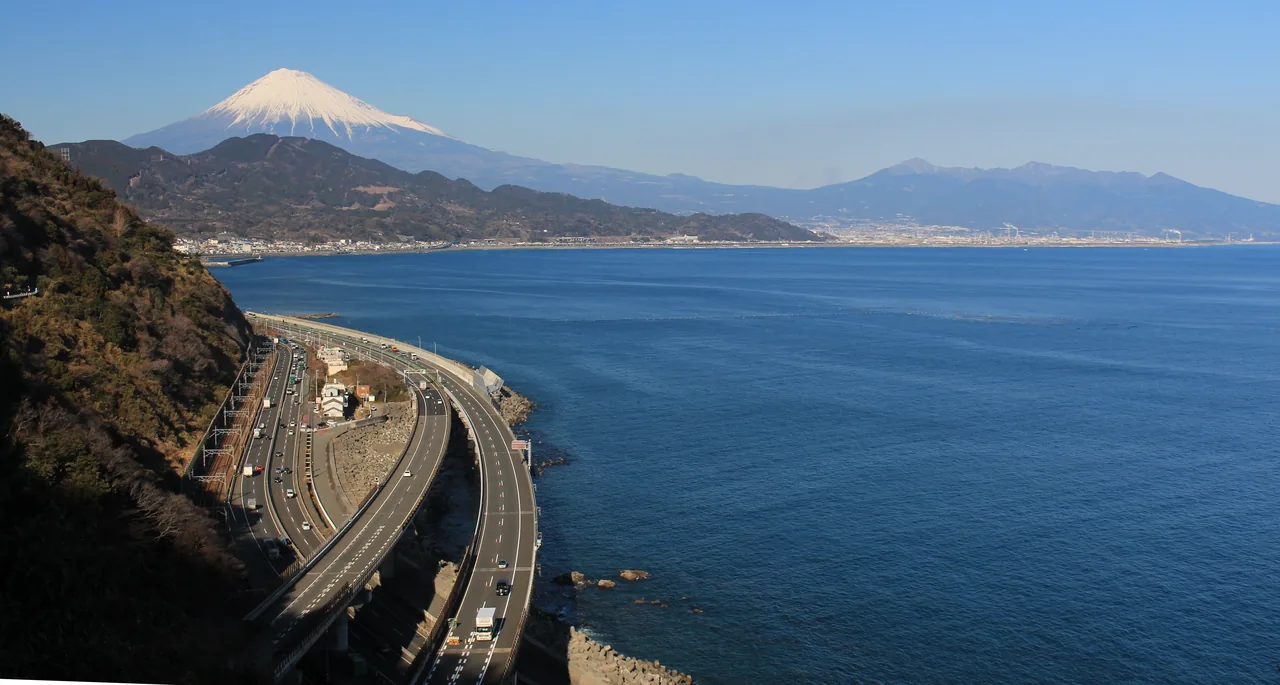
1. Why people skip Shizuoka, and why you should not
Shizuoka is about an hour from Tokyo and about an hour from Nagoya, and the reserved seat costs 6,470 yen either way. It sits in the middle of the busiest rail corridor in Japan, and almost everyone on that corridor goes straight past it. The reason is simple. The fastest trains, the Nozomi, do not stop here. Map
That single fact shapes the whole city. Shizuoka is not crowded. Hotel rates are a fraction of what you pay in Tokyo or Kyoto, and Shizuoka City charges no lodging tax. You can walk into an oden shop on a Friday night and find a seat.
The city runs from the sea up into the mountains. The southern edge faces Suruga Bay, the northern edge climbs toward the Southern Alps, and in between you get a castle park, a fishing harbour, a pine grove on the world heritage list, and a hot spring village at the end of a long bus ride. You cannot see all of it in a day, but everything is within an hour of the station.
If you hold a JR Pass, this is free
The nationwide JR Pass does not cover Nozomi trains. Pass holders already ride Hikari and Kodama, which are exactly the trains that stop in Shizuoka. Breaking your Tokyo to Kyoto run here adds no fare at all, and adds a city most visitors never see. Whether the pass is worth buying at all is worked through in our JR Pass guide.
This also means Shizuoka is one of the easiest day trips out of Tokyo that is not already full of day trippers. You leave after breakfast, you are in the castle park by mid morning, and you are back in Tokyo for dinner.
Five districts, in the order this guide uses them
The city tourism office splits Shizuoka into five areas. The split is genuinely useful for planning, so the sections below follow it.
| District | What is there | From Shizuoka station |
|---|---|---|
| City centre | Castle park, shrine, oden alleys | Walk, or 10 minutes by bus |
| Nihondaira and Kunozan | Viewpoint, shrine, ruins, zoo | About 40 minutes by bus |
| Shimizu and Miho | Pine grove, harbour, sushi alley | 15 minutes by train, then bus |
| Mochimune and Mariko | Whitebait, grated yam set | 10 minutes by train, or 30 by bus |
| Okushizu | Hot spring village, wasabi terraces | 1 hour 40 minutes by bus |
Yui and Satta Pass are also inside the city limits, in the Shimizu ward, but they are far enough east to need their own section.
2. Getting to Shizuoka
Most visitors arrive by Tokaido Shinkansen, and the only thing you need to get right is which train you board. Nozomi runs past without stopping. Hikari stops here roughly once an hour. Kodama stops at every station and therefore always stops here. If you walk onto the platform without checking, you will end up on a Kodama.
That is not a disaster. A Kodama from Tokyo takes about an hour and a half instead of an hour, for the same fare. But if your day is tight, look up the Hikari times before you go.
| From | Train | Time | Reserved seat |
|---|---|---|---|
| Tokyo | Hikari | About 1 hour | 6,470 yen |
| Tokyo | Kodama | About 1 hour 30 minutes | 6,470 yen |
| Nagoya | Hikari | About 1 hour | 6,470 yen |
| Shin-Osaka | Hikari, usually with a change | About 2 hours | Varies |
Coming from the west, pair this with our Nagoya guide. If you are working out where Shizuoka fits between Tokyo and Kyoto, the golden route itinerary lays out the whole line.
Flying in
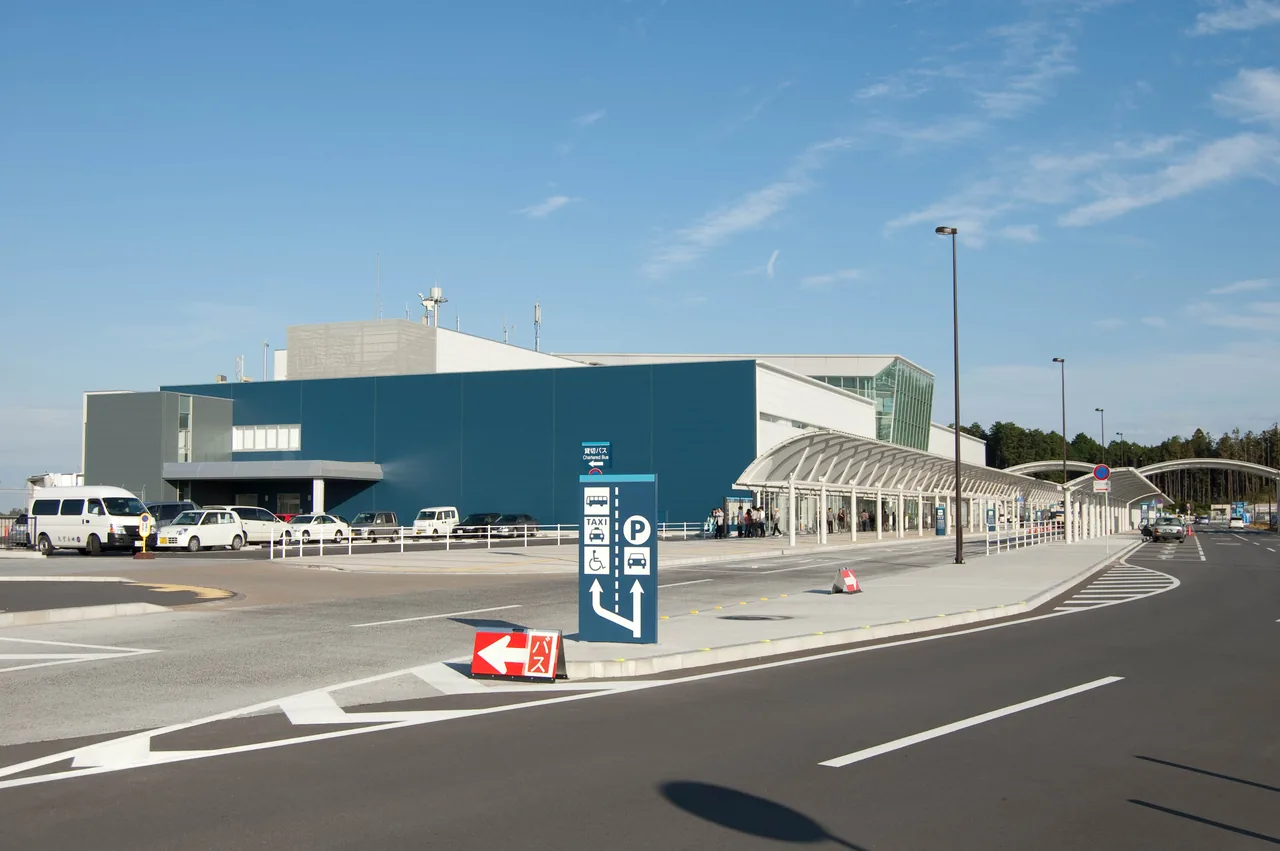
Mount Fuji Shizuoka Airport handles a small number of international routes. Three are running: Seoul twice a day, Busan three times a week, and Hanoi three times a week. Shanghai and Qingdao are both suspended, and there is no direct flight from Taipei or Hong Kong. From Taiwan or Hong Kong you are better off flying into Tokyo or Nagoya and taking the train. Map
The airport bus into the city takes about 50 minutes and costs 1,200 yen for adults. It runs nine times a day, first bus at 10am and last at 8.40pm, and it waits when a flight is late. The airport itself sits in the middle of tea fields with nothing much around it, so do your eating and shopping in town.
The bus over to Kawaguchiko
A highway bus runs from the north exit of Shizuoka station to Kawaguchiko in 2 hours 10 minutes. One way starts at 3,000 yen and a return is 5,400 yen, valid for two days. Every seat is reserved and you have to book, so you cannot just turn up at the stop.
This is the useful link if you want to see Mt Fuji from both sides on one trip, the sea side here and the lake side there. Book the return leg at the same time, because there are only a few departures a day. The lake side is covered in our Kawaguchiko day trip guide.
3. Getting around: two day passes that are easy to mix up
Shizuoka sells two day passes with almost the same name, and only one of them covers trains. The difference is 200 yen, so people grab the cheaper one and then find it does not work on the railway. If you plan to ride the Shizutetsu train at all, buy the more expensive one.
| Pass | Adult | Covers | Sold as |
|---|---|---|---|
| Train and Bus 1-Day Free Pass | 1,600 yen | Shizutetsu trains and buses | Paper ticket, at counters |
| Shizuoka 1-Day Pass | 1,400 yen | Buses only | Digital, app or web only |
Neither one works on the airport bus, and both exclude express and sightseeing buses. Neither is refundable. If you are only making two or three trips, skip both and tap an IC card instead. Getting and topping one up is covered in our IC card guide.
Three days or more, and there is a regional pass
The Mt Fuji Shizuoka Area Tourist Pass Mini costs 6,500 yen for adults and 3,250 yen for children, valid three consecutive days. On JR it covers the Tokaido line between Atami and Toyohashi, the Gotemba line between Numazu and Matsuda, and the Minobu line between Fuji and Shimobe Onsen.
The part worth noticing is that the Suruga Bay ferry is included. The crossing from Shimizu to Toi on the Izu Peninsula is 3,000 yen one way on its own, and the pass covers it. Selected routes from five bus operators, Shizutetsu among them, are in as well.
It does not cover the Shinkansen. It runs on ordinary JR lines, including limited express and rapid services in non-reserved seats. If you are only doing the city, the day passes above are better. If you are crossing to Izu or heading out toward Fuji, this is the one.
Two railways run the same way
Between Shizuoka and Shimizu there are two parallel lines. The JR Tokaido line is faster and costs 240 yen. The Shizutetsu line starts from Shin-Shizuoka station, a short walk from the JR station, and stops at more of the neighbourhoods in between. Use JR if you are heading straight to Shimizu, Shizutetsu if you want somewhere along the way.
Inside the city, buses do most of the work. The castle park is an easy walk from the station, but the shrine and Nihondaira both need a bus. The network is small enough that following a maps app works fine.
Taxis are reasonable for short hops in town. With luggage, or with three or more people, a taxi often beats waiting for a bus.
4. The city centre: a castle park and a very large shrine
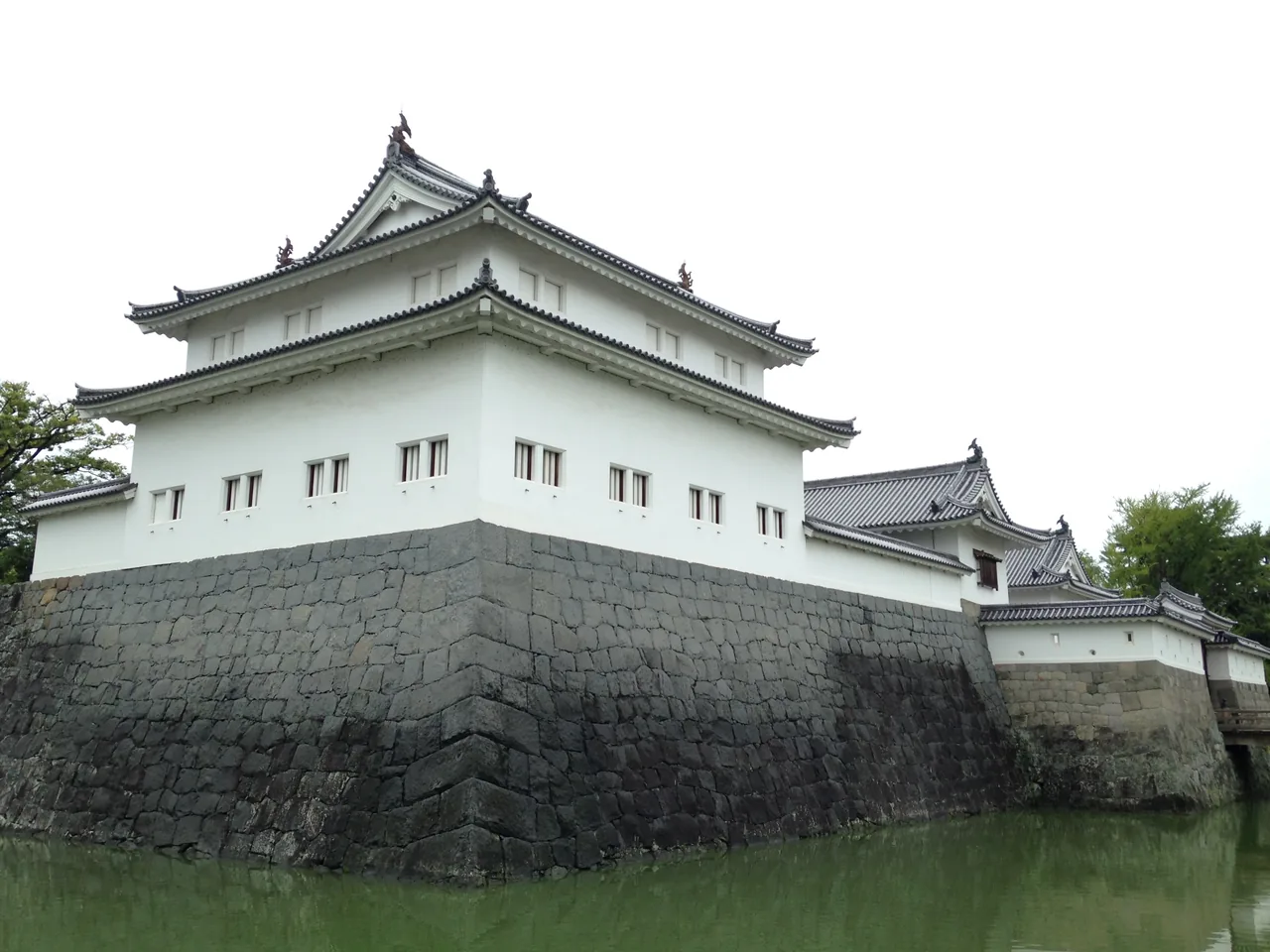
Ten minutes north of the station you reach Sumpu Castle Park, where Tokugawa Ieyasu lived after he retired. There is no keep left. What you get is an excavation site, a reconstructed gate and turrets, and a garden. The park grounds are free, and a combined ticket for the three paid buildings is 360 yen for adults. Map
They close on Mondays, though they stay open when Monday is a public holiday. The garden has water channels and a tea house inside, which makes it a good place to sit for twenty minutes. In spring the whole park fills up with people under about 500 cherry trees. National bloom timing is in our cherry blossom guide.
| Building | Adult | School age |
|---|---|---|
| Combined ticket, all three | 360 yen | 120 yen |
| East Gate and Tatsumi Turret | 200 yen | 50 yen |
| Hitsujisaru Turret | 100 yen | 50 yen |
| Momijiyama Garden | 150 yen | 50 yen |
Shizuoka Sengen Shrine costs nothing and is bigger than you expect
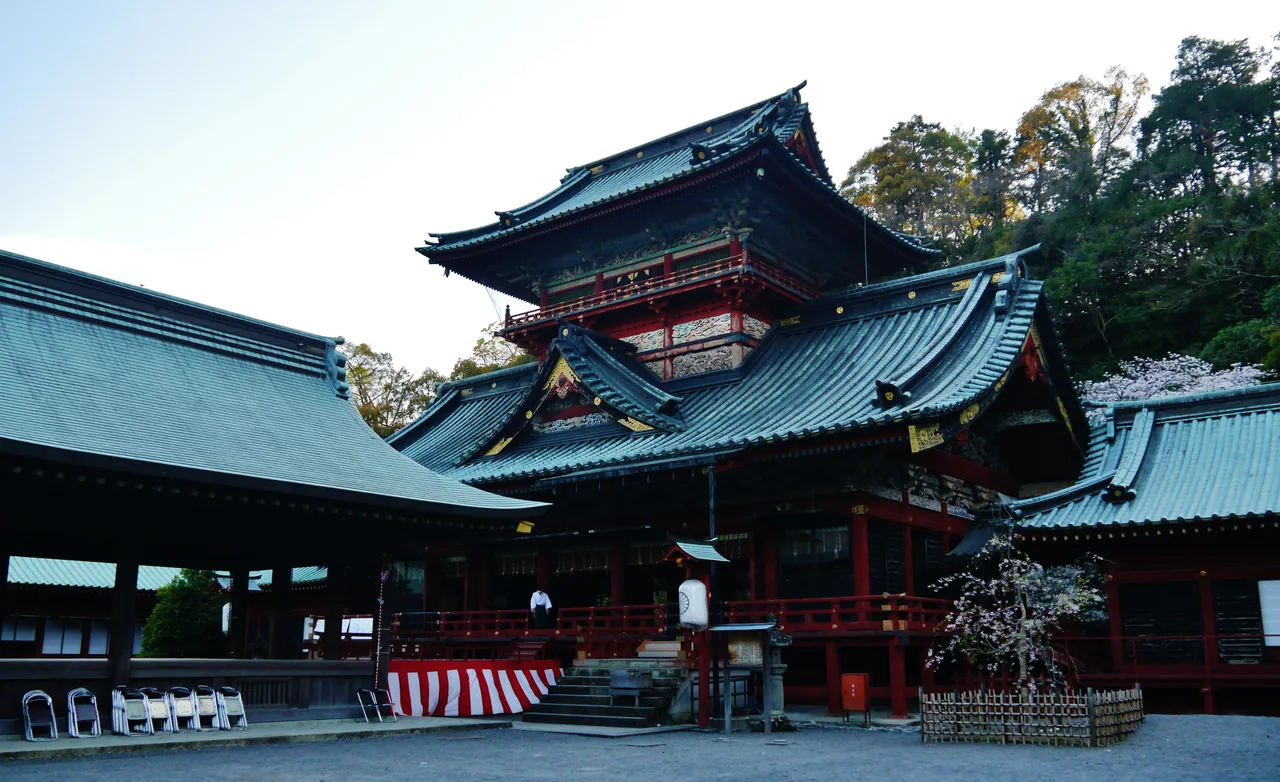
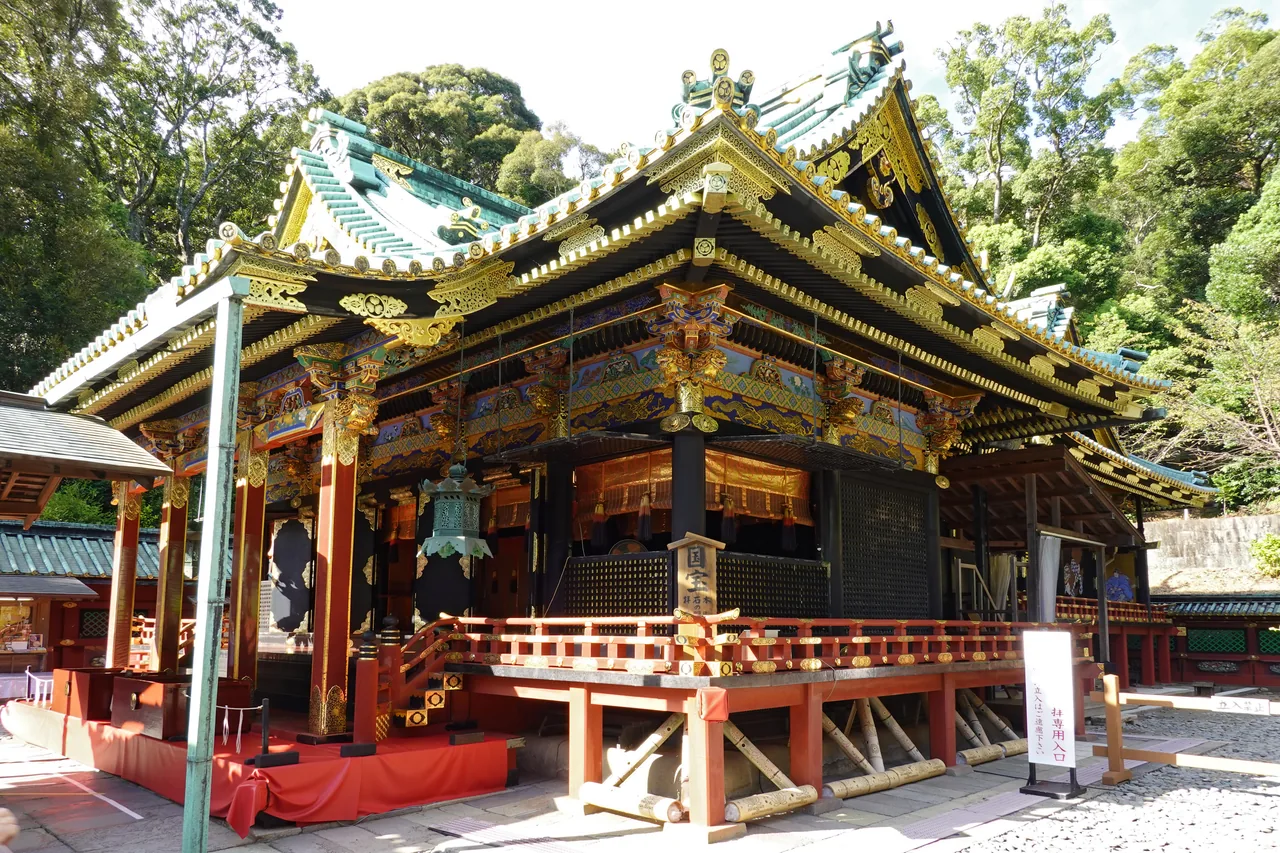
A little further north, three shrines share one large compound. Twenty six of the buildings are nationally designated cultural properties. The main hall stands 25 metres tall, lacquered and painted in strong colours right across the front. Entry is free. Map
Ieyasu came of age here, during the years he was held as a hostage by the Imagawa clan. If you are following the Ieyasu thread through the city, this is where it starts. Behind the compound a hundred stone steps lead up onto a wooded ridge with a walking path along the top.
It is about ten minutes by bus from the station, or a fifteen minute walk from the castle park. Doing both together fills a morning comfortably.
5. Black oden, and why it looks like that
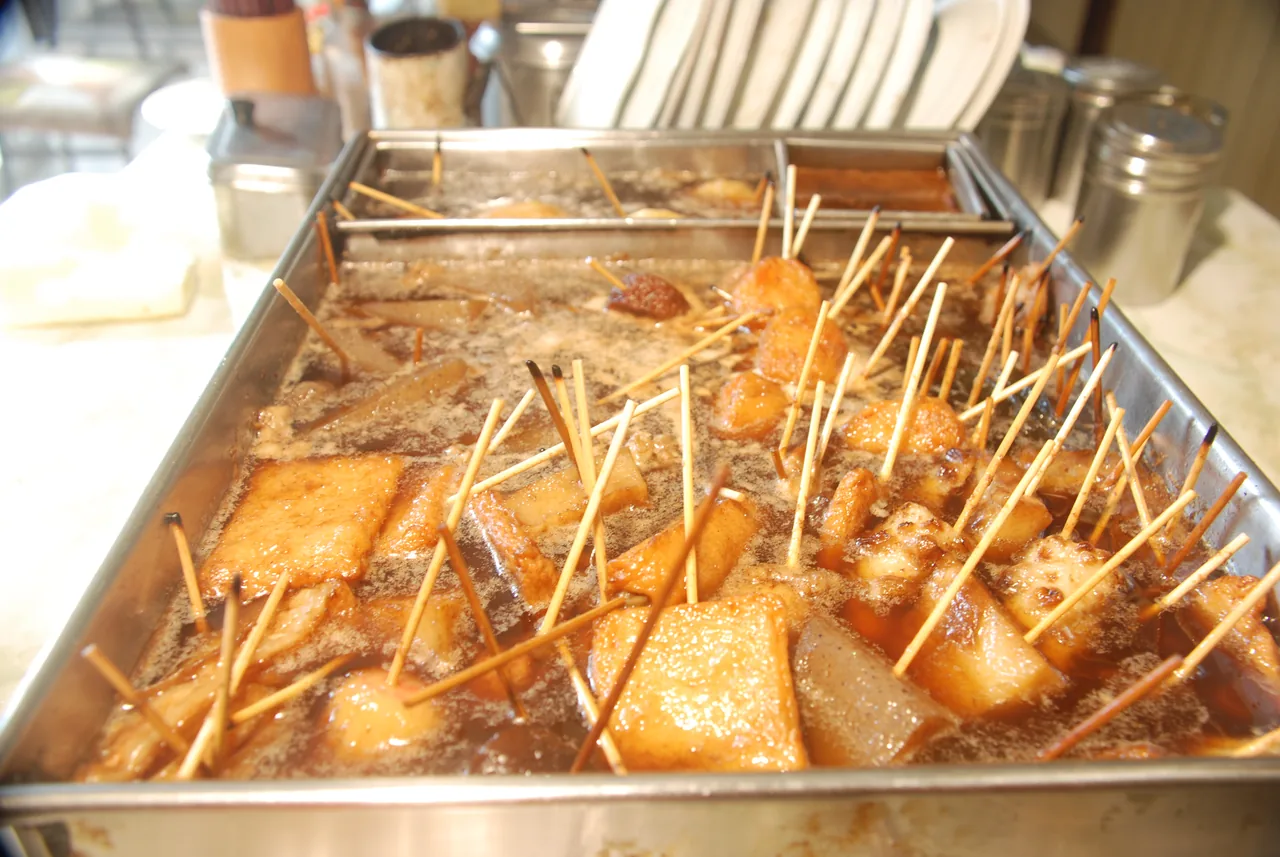
Shizuoka oden comes in a dark, almost black broth, and every piece is on a skewer. It looks far saltier than it tastes. The stock is made from beef tendon with dark soy sauce, and shops keep topping up the same pot rather than starting fresh, so the colour deepens over the years.
There is a way to eat it. You take your skewers, then reach for the shakers on the table. One holds dried seaweed powder, the other holds fish powder ground from dried mackerel and sardines. Without those two, it is just oden. With them, it is Shizuoka oden.
The other local item is kuro hanpen, a grey fish cake made by grinding sardines or horse mackerel whole, bones included. It is firmer than the white version and tastes much more strongly of the sea. Order one first.
The dish spread for practical reasons. It started around a century ago, and after the war it grew popular because it used beef tendon and pork offal that were otherwise being thrown away. Cheap food for filling up has become the thing the city is known for.
Two alleys, side by side
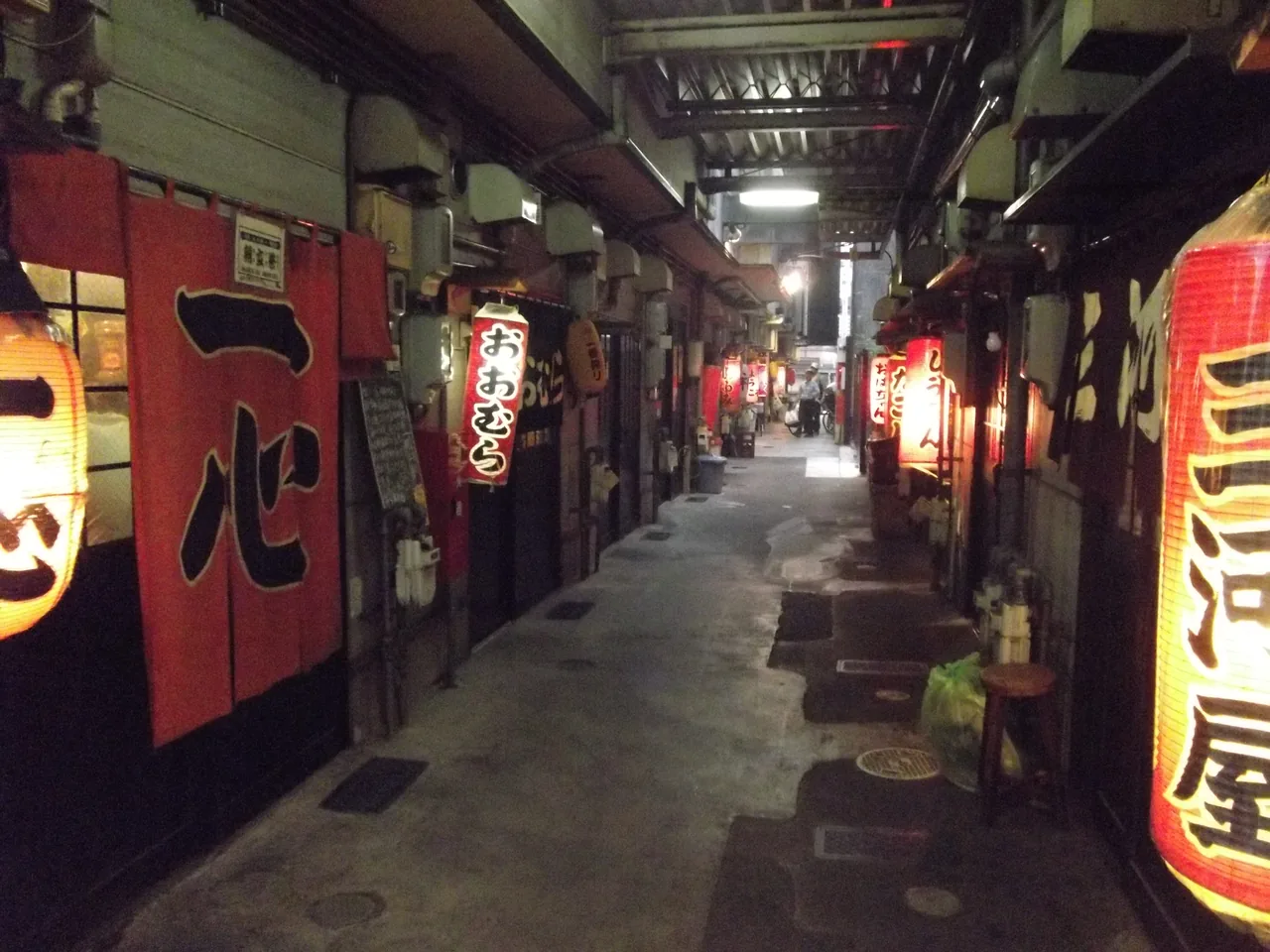
In the city centre, Aoba Yokocho and Aoba Oden Gai sit next to each other. Both are rows of tiny shops, and one of them in Aoba Yokocho has been running for more than seventy five years, still using beef tendon and dark soy and nothing else. Map
Counters seat about ten people, so evenings get tight. Going alone is easier than going in a group. People generally order a few skewers alongside a drink and something else, rather than making a whole meal of it.
Oden was originally sold in sweet shops, and Shizuoka still has a few of those, where children stop in after school and take a skewer or two.
6. The plastic model capital, and a museum you have to win a place in
Most of the plastic models made in Japan come from Shizuoka. Bandai builds Gunpla here, Tamiya is headquartered here, and around ten model makers operate in the same city. If you have ever built a kit, the box almost certainly came from these few square kilometres.
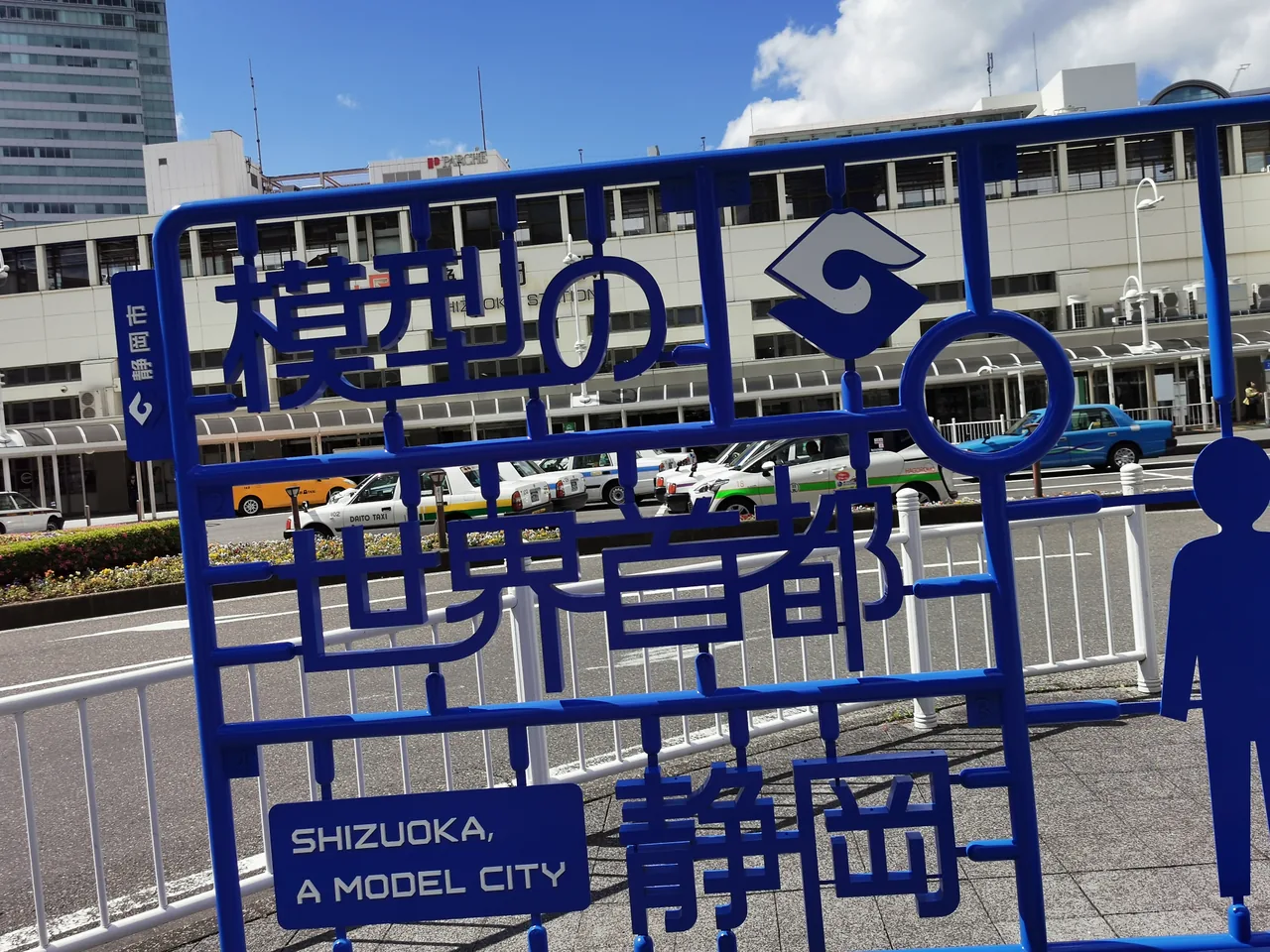
Walk out of the south exit of the station and you will find a giant sprue, a model parts frame blown up to street furniture size. There are fifteen of these around town, and even some phone booths are shaped like them. Finding them is a decent excuse for a walk.
The Bandai museum runs a lottery
Bandai opened a museum inside its factory where you go through the production line and then design a kit yourself. Numbers per session are capped, so it is reservation only, and places are allocated by lottery. Applications open on the first of each month for entry three months later, and results come out two months ahead. Leftover slots are sold first come, first served. Map
You cannot walk in. If this is the reason you are coming to Shizuoka, work out your dates early and apply in the right month. Admission is 2,860 yen for anyone 13 or over and 1,100 yen for children, and a visit runs about 90 minutes.
| Detail | What it is |
|---|---|
| Admission | 2,860 yen age 13 and up, 1,100 yen children, preschoolers free |
| Hours | 9am to 5.30pm, last entry 4pm |
| Closed | Mondays, Tuesdays, public holidays, New Year |
| Booking | Lottery. Apply three months ahead, results two months ahead |
Several travel sites list the closing days wrong. The official site says Mondays and Tuesdays plus public holidays, and that is the one to trust.
The trade show is in May
The Shizuoka Hobby Show runs every May. Model manufacturers use it to launch new kits, and people come from across the country for it. Public days are limited and set separately from the trade days, so check before planning a trip around it.
7. Toro: a rice farming village from two thousand years ago
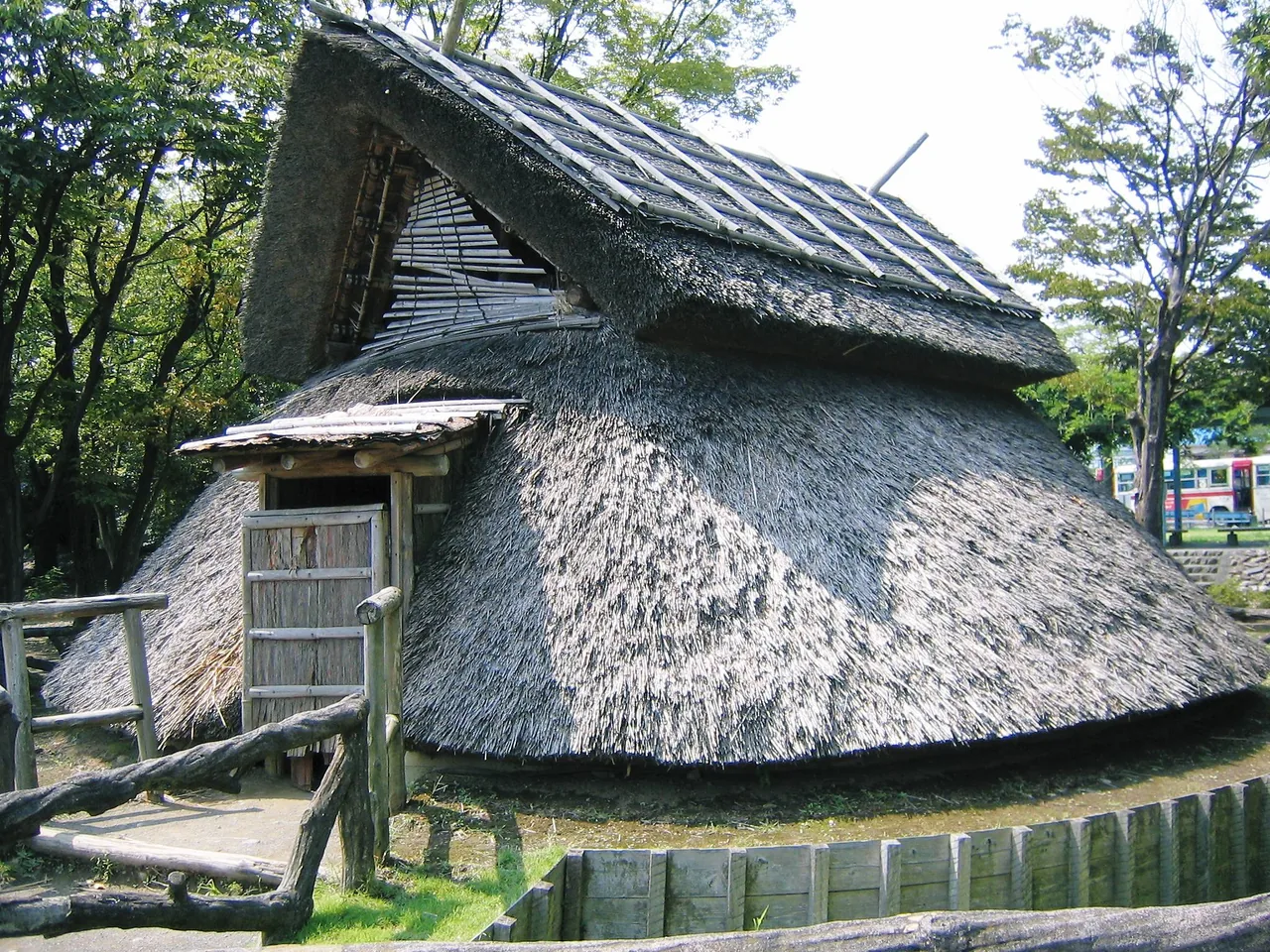
Fifteen minutes by bus from the station, a Yayoi period village has been rebuilt on the spot where it was found. The site turned up during the war, when crews digging foundations for a munitions plant hit wooden remains. Houses and raised storehouses now stand on the original layout. Map
The grounds are free. So is the ground floor of the attached museum and its rooftop terrace, and only the second floor exhibition charges, at 300 yen for adults. The ground floor is set up as a hands on room where you can pick up replicas of the tools, which makes it work well with children.
Closing days take some reading. It shuts on Mondays, moves that closure to the next day when Monday is a holiday, and also closes the day after a public holiday. Check before you go.
There is a wide lawn alongside, and on a clear day people bring lunch. An hour is enough to see everything.
8. Nihondaira and Kunozan Toshogu
Nihondaira is the hill between the city and the sea, and the viewing deck at the top is free. The building is a timber structure with a walkway wrapped around the outside, about 200 metres for a full circuit. Going round it once takes you past Mt Fuji, the Southern Alps, Suruga Bay and the Miho pine grove in turn. Map
The hours change with the day of the week. Sunday to Friday it closes at 5pm, but on Saturdays it stays open until 9pm. If you want the night view, come on a Saturday. The outer walkway is open at any hour. It closes on the second Tuesday of each month.
Two ways down to the shrine
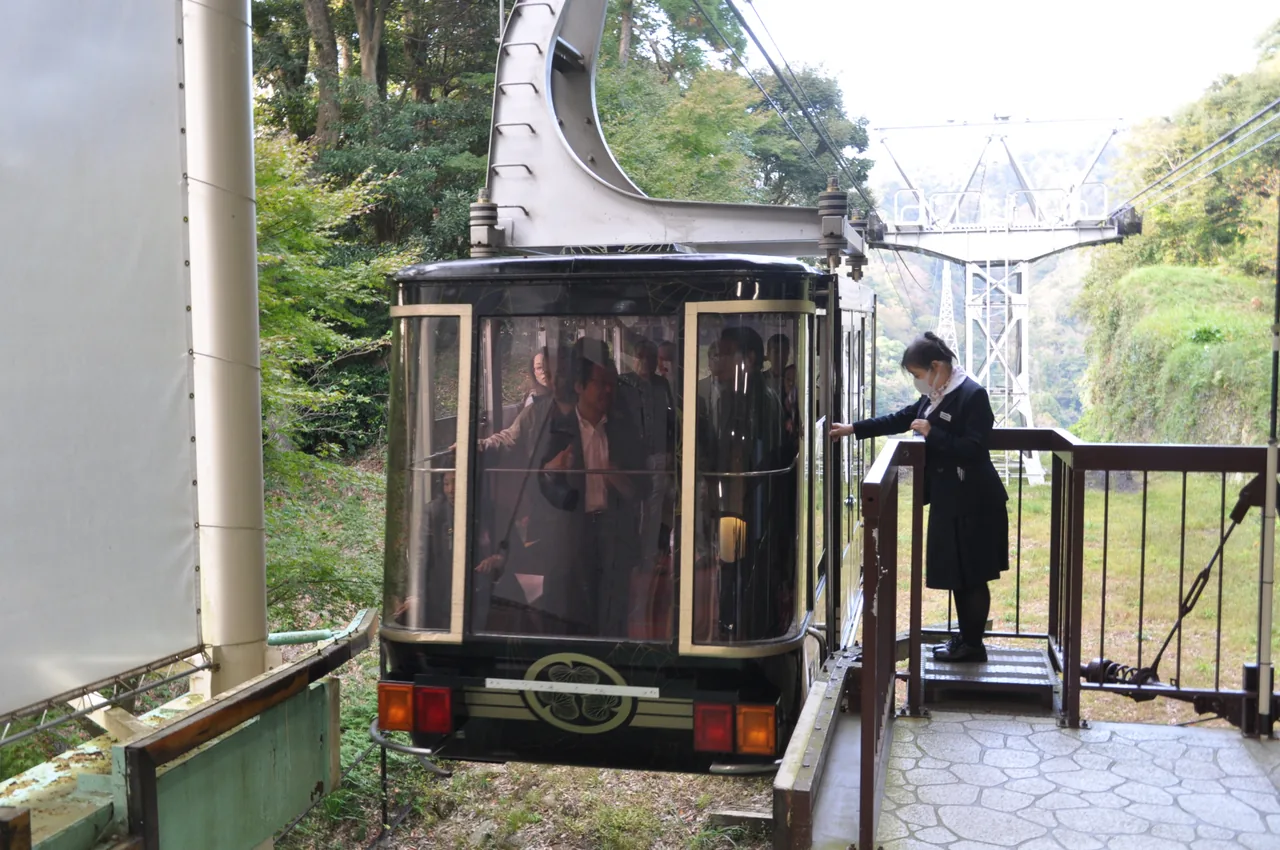
From the top, a ropeway drops you at Kunozan Toshogu in five minutes. This is where Ieyasu was first buried. A return ticket is 1,250 yen, and a combined ticket including shrine entry is 1,950 yen. Map
The other way up is from the coast, on foot. There are 1,159 stone steps and it takes about twenty minutes, with the bay opening up behind you the whole way. If your legs are up to it, climb the steps and take the ropeway down. Cars cannot drive up to the shrine at all.
One thing to check before you plan around it. The ropeway shuts for about three weeks every few years for equipment replacement, usually in winter. The stone steps still work during the closure, so the shrine stays reachable, but confirm the ropeway is running before you count on it.
| Ticket | Adult | Child |
|---|---|---|
| Ropeway one way | 700 yen | 350 yen |
| Ropeway return | 1,250 yen | 630 yen |
| Return plus shrine entry | 1,950 yen | See operator |
The coast road below is one long strawberry farm
Along the shore beneath Kunozan, greenhouses run for kilometres. Growers stack stone into terraces on the slope and plant between them, which is why these are called stone wall strawberries. The stone holds heat and the slope faces the sun, so the fruit comes out large. The method has been used here for roughly 130 years. Map
Picking runs from late December to early May. You pay for 30 minutes and eat as much as you like, and the price moves with the season, highest in winter and dropping sharply in mid April.
Farms open 10am to 3pm on weekdays and 9am to 4pm at weekends and on public holidays. The road runs right past the bottom of the Kunozan steps, so it slots into the same trip.
9. Below the hill: Rodin sculptures and red pandas
The road up to Nihondaira passes an art museum and a zoo, both on the same bus route as the viewpoint. They work well either side of going up the hill, and they are the obvious fallback when the weather turns.
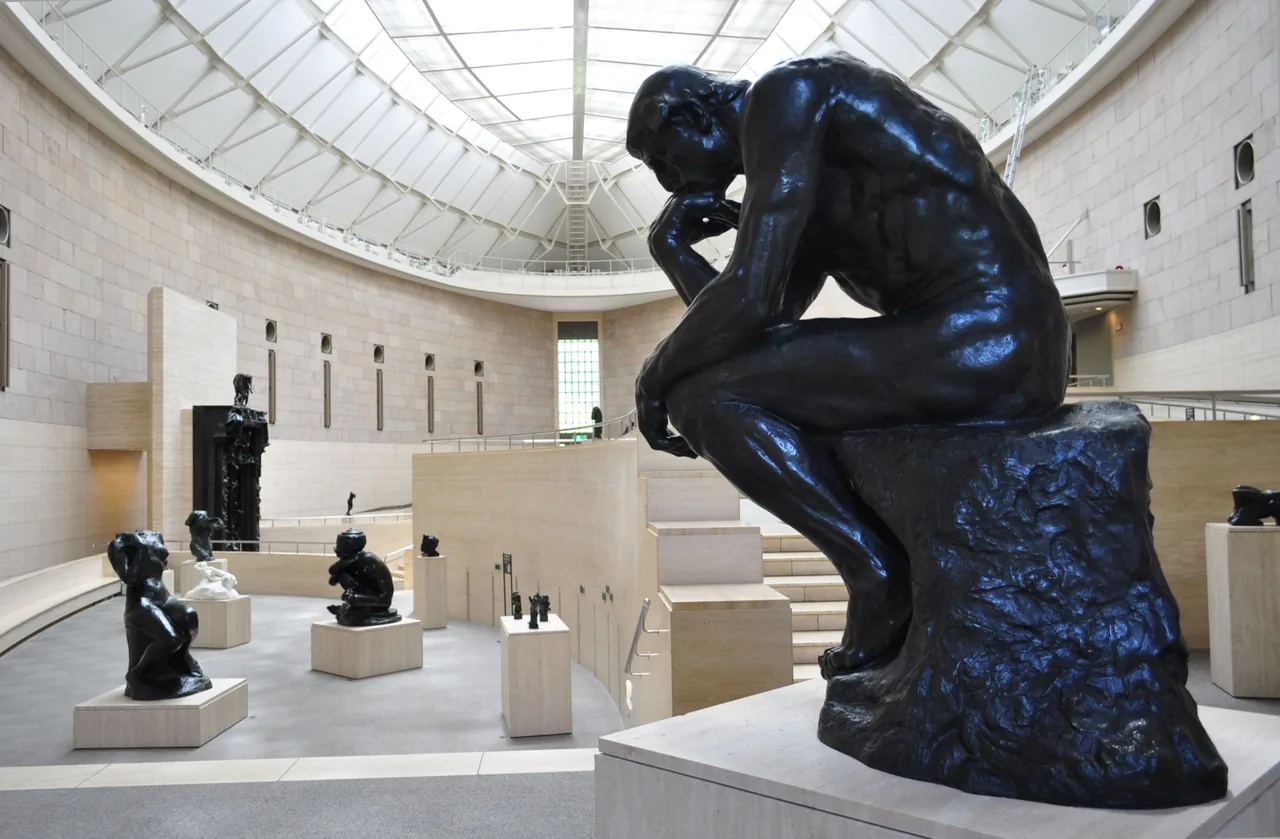
The Shizuoka Prefectural Museum of Art is best known for its Rodin wing, which holds 32 Rodin sculptures including a cast of The Gates of Hell. The collection exhibition is 300 yen for adults, and free for students and anyone 70 or over. It opens at 10am and closes at 5.30pm, and shuts on Mondays. Map
Special exhibitions are priced separately. If you are coming for the sculpture, the collection ticket is all you need. The building sits in woodland, so the approach alone is worth the walk.
The zoo is known for its red pandas
Nihondaira Zoo keeps several red pandas and is well known in Japan for them. The enclosure lets the animals move freely between inside and out, so you usually get a close look. Adults pay 620 yen, school age children 150 yen, and preschoolers go free. Map
It opens at 9am and closes at 4.30pm with last entry at 4pm. Mondays are closed, moving to the next weekday when Monday is a holiday. With children, do the zoo in the morning and the viewpoint after lunch.
All three sit on the same hillside, which is enough for a full day if you want one. Buses are not frequent, so note the return times.
10. Shimizu and the Miho pine grove
Miho no Matsubara is a long strip of pines along the shore, and it is part of the Mt Fuji world heritage listing. The listing is not only about the mountain. It covers the places from which the mountain was worshipped and painted, and this is one of them. The composition you see in old prints is still there. Map
There is a catch in getting here. On weekdays you take a bus from Shimizu station for 25 minutes and then walk another 15. On Saturdays, Sundays and public holidays a stop opens right by the grove, five minutes on foot. Coming at the weekend cuts a lot of walking.
A taxi is about 20 minutes and runs 2,500 to 3,000 yen. There is also a boat from the east side of Shimizu station that crosses in about 20 minutes, which on a clear day is the nicest way to arrive, with the harbour and the mountain both in view.
At the entrance there is a visitor centre explaining why the grove is on the heritage list and how it was painted. Twenty minutes in there changes how the pines look when you walk out onto the sand.
A sushi alley in the harbour complex
Shimizu harbour has a waterfront complex with ten sushi restaurants inside it, open from 11am to 8pm and an hour later in summer, seven days a week. Map
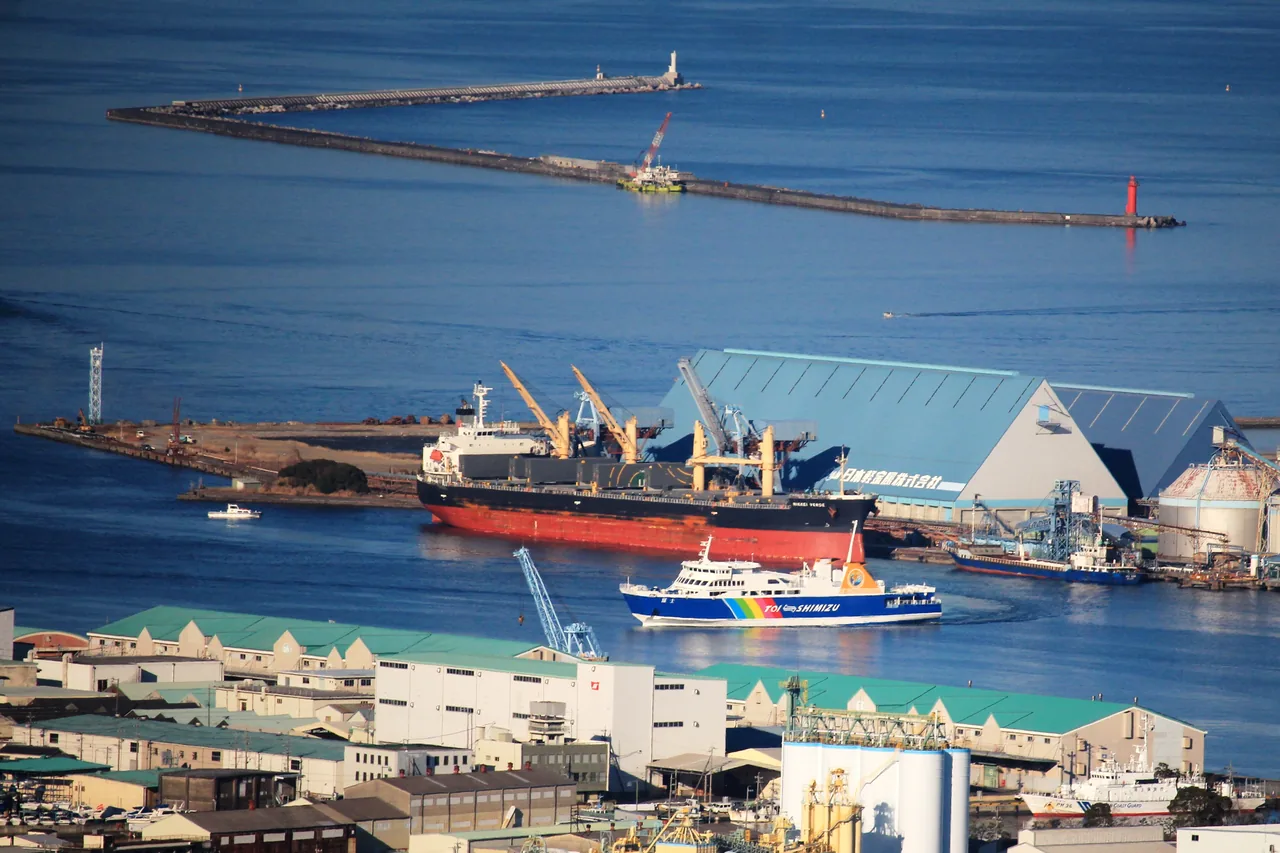
There is a reason to eat tuna here specifically. Shimizu is the largest frozen tuna port in Japan, handling something close to half the national total. Ultra low temperature freezing plants and processors sit around the harbour, so cuts are thicker than the price suggests.
Canned tuna also started here, first trialled by the prefectural fisheries station in 1929 and then produced commercially by a Shimizu company. That is why the souvenir shelves are full of tuna products.
Getting here is easy. Free shuttle buses run from both JR Shimizu station and Shin-Shimizu station, every day from around 9am until late evening, so there is no timetable to plan around.
A ferry across the bay to Izu
From Shimizu harbour, a ferry crosses Suruga Bay to Toi on the western side of the Izu Peninsula. It takes 90 minutes and costs 3,000 yen for adults, with elementary school children free, three sailings a day each way, and it carries cars. Map
The route has an oddity worth knowing. Although it is open water, it is officially designated as a prefectural road, numbered 223 because those digits read as “Fuji-san” in Japanese. Mid crossing, the mountain sits straight ahead of the bow.
Driving round to Izu by land takes far longer. If Izu is on your itinerary, this is both the fastest and the best looking way to get there.
11. Yui and Satta Pass, where Hiroshige stood
Yui is a small fishing town at the eastern edge of the city, and the ridge behind it is Satta Pass. Hiroshige drew this view for his Tokaido series, and it still lines up. Mt Fuji sits dead centre, with the bay, the railway and the expressway stacked below it. Map
You walk up from JR Yui station. It is under four kilometres to the viewpoint and takes about 50 minutes. The first part is paved and easy, then the road pitches up sharply once you are past the houses. Wear proper shoes.
The city runs a live camera at the viewpoint. Check the feed before you set off and you will know whether the mountain is out, which saves a wasted climb.
Sakura shrimp, two short seasons a year
Yui is the sakura shrimp town. These are caught in only two places in the world, Suruga Bay and the waters off Taiwan, which makes this effectively the only place you can eat them raw straight off the boat.
The timing is fixed. The spring season runs from late March to early June, the autumn season from late October to late December, and the fleet stays in port the rest of the year to let stocks recover. Come outside those windows and you will be eating them boiled or dried instead.
During the season, yards around Yui and Kanbara are covered with shrimp laid out to dry in the sun, which turns the ground pink for a few weeks.
The Hiroshige museum is closed right now
Yui also has a museum devoted to Hiroshige’s Tokaido prints, but it is shut for a long renovation running into spring 2027. Do not build a day around it. Normally it charges 520 yen for adults and closes on Mondays.
12. Mochimune and Mariko: a harbour and an old post town
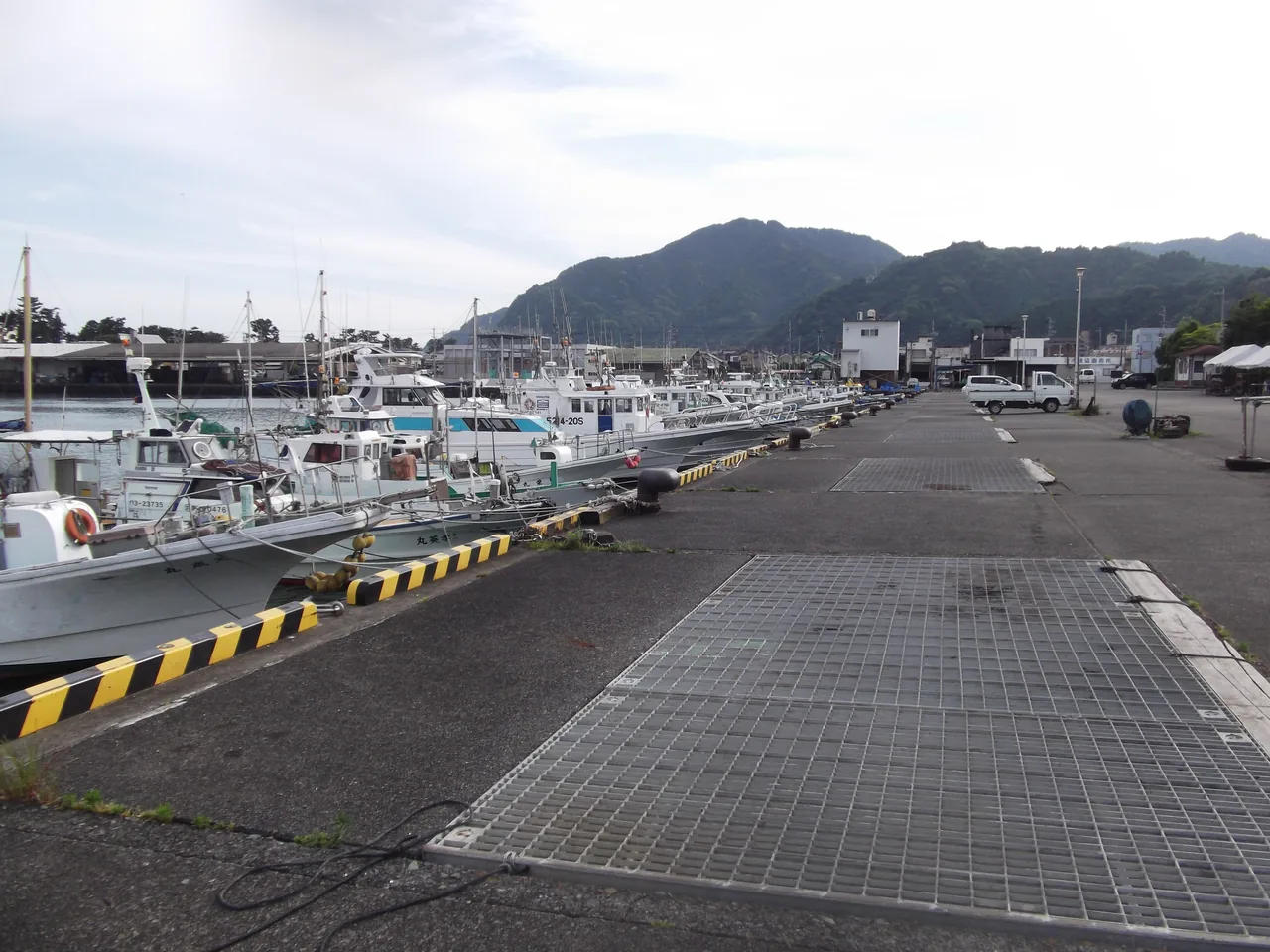
Mochimune is a working fishing harbour ten minutes by train from Shizuoka station. It is not a sight so much as a place to eat. The fishing co-operative runs a canteen at the harbour serving bowls of whitebait landed that morning. Map
The opening window is narrow. It runs from 11am to 2pm and closes when it rains, because the boats do not go out. The whitebait season runs from mid March to mid January, with no fishing on Sundays and public holidays, and during the closed season the canteen also shuts on Thursdays. Pick your day carefully.
There is a day use hot spring inside the harbour area and a row of restaurants built into renovated old buildings. Eat, bathe, watch the boats, and you have filled half a day.
The same dish for four hundred years
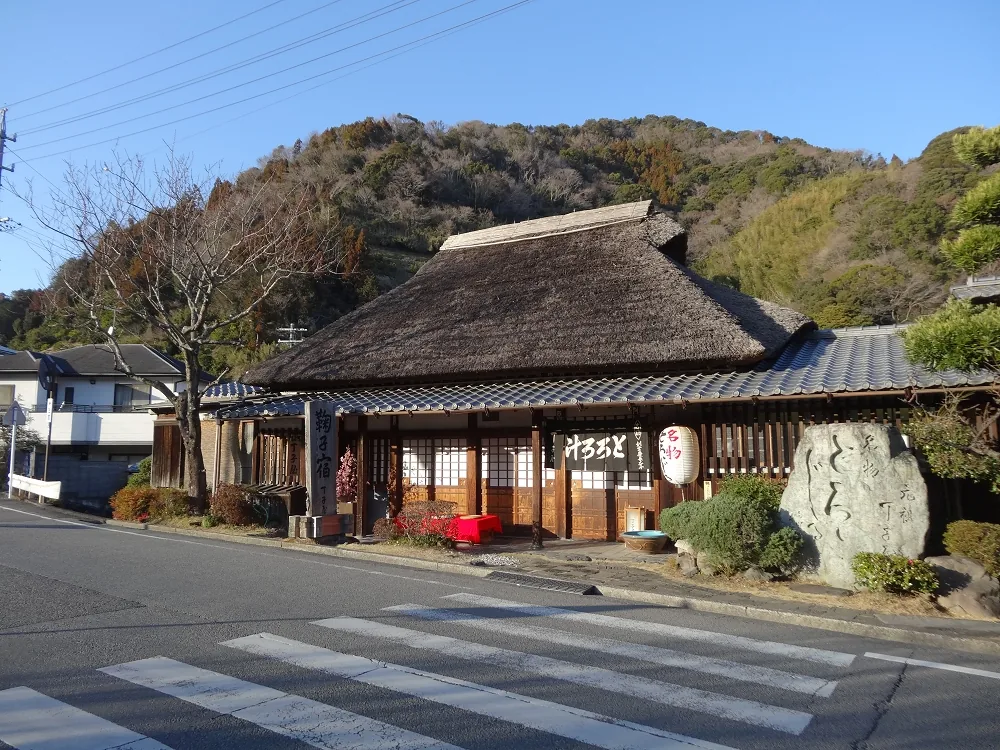
Mariko was a post town on the old Tokaido road, and one shop there has been open since 1596. It still sells what it sold then, a set meal of grated wild yam loosened with white miso and tuna stock, poured over barley rice. Map
The thatched roof is a registered cultural property. Mariko is one of very few post towns where the scene Hiroshige drew is still recognisable, so it is worth pulling up the print and comparing.
The dish turns up in literature too. Basho wrote a haiku about the grated yam at Mariko, and it appears in the Edo period comic novel Tokaidochu Hizakurige. The shop began as a tea house, serving yam to travellers only in the months when it was in season.
It is about 30 minutes by bus from the station. Too far for a quick lunch on its own, but it pairs naturally with Nihondaira or Mochimune.
13. Okushizu, and the village where wasabi farming began
The northern end of the city is mountains, and there is a hot spring village at the top of the valley. Umegashima is reached from stand 9 at the north side of Shizuoka station, on a bus that follows the Abe river upstream for 1 hour 40 minutes. The fare is 1,630 yen one way. Map
There are only three to five buses a day. If you are going up and back in a day, check the return time before you leave, because missing the last one leaves you stuck.
The village is small, a handful of inns and a day use bath. What it offers is quiet, and in autumn the valley colours up. Bathing etiquette and tattoo rules are covered in our onsen guide.
Wasabi was first farmed here
In the same valley is a hamlet called Utogi, where wasabi was first cultivated rather than gathered wild. Around 1600, villagers moved wild plants to a spring and grew them deliberately. That is the earliest record of wasabi farming anywhere. Map
Ieyasu, living out his last years at Sumpu Castle, was given some of it, liked it enough that a local story says he banned taking the plants out of the village. The castle in town and this hamlet in the mountains are part of the same thread.
The growing method was recognised as a Globally Important Agricultural Heritage System in 2018. Terraces of stacked stone let spring water run through the beds, and the fields still look the same today. Walking the valley, you see them stepping up the stream.
It is a long way out for a short trip. If you have only a day or two in Shizuoka, leave this for a return visit.
14. Tea: what is realistic inside the city
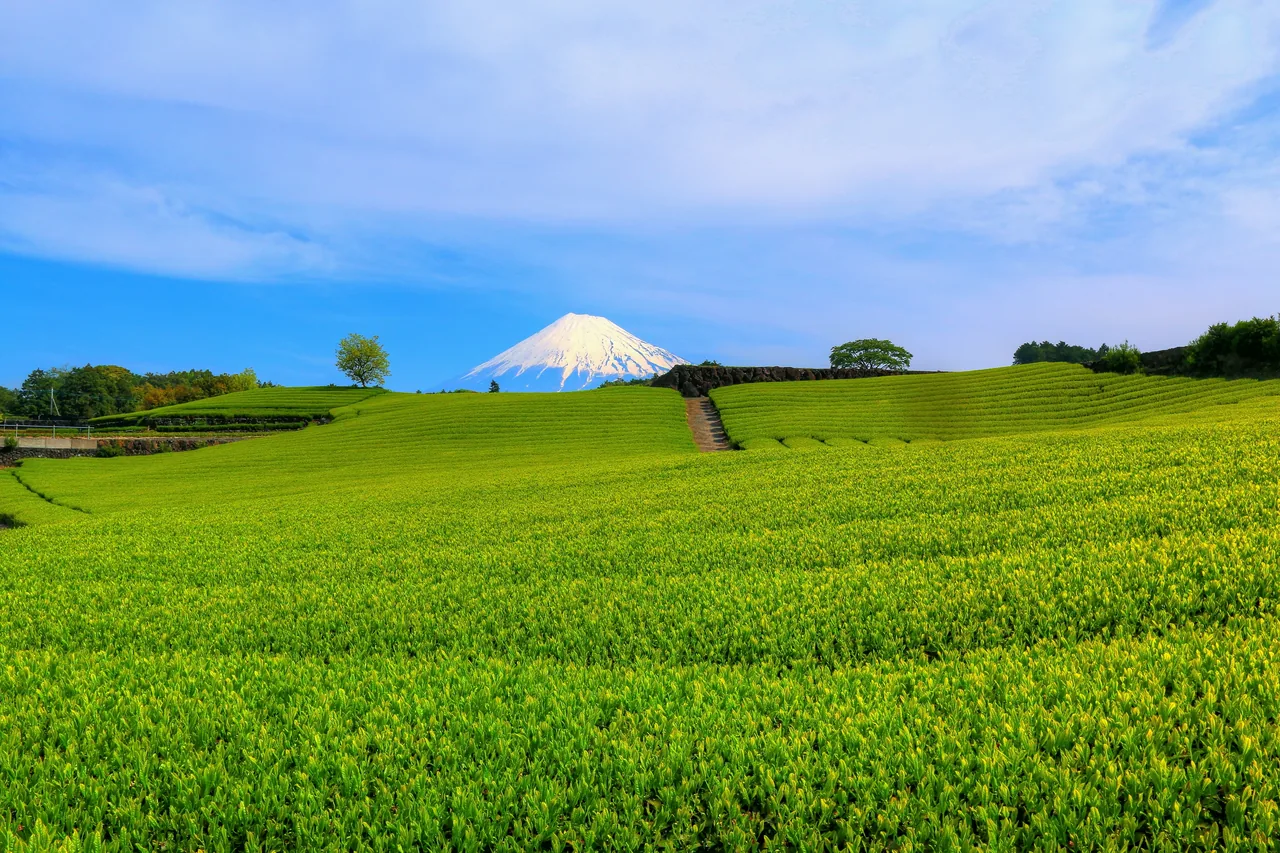
Shizuoka is the tea name everyone knows, but the wide tea fields are mostly outside the city limits. If you are staying in town, drinking it properly is the realistic version, and there are plenty of shops around the station that brew it well rather than just selling leaves.
What a good shop will do is serve the same leaves twice at different water temperatures, so you taste how much the brewing changes it. That is more interesting than a photo of a hillside, and it takes twenty minutes.
If you do want the fields, set aside a day and head west. About 40 minutes out by train there is a museum built around tea, with picking, hand rolling and stone grinding sessions, plus a Japanese garden and tea room. Entry is 500 yen and it closes on Tuesdays. Sessions cost extra.
Tea also shows up in the food. Green tea soba, tea flavoured sweets and matcha ice cream are everywhere, and the airport sits in the middle of tea country, so the last shop you pass on the way out is a tea shop.
15. What to eat, and where
Shizuoka’s food is spread across the districts rather than gathered in one place. Oden is in the centre, tuna is at the harbour, whitebait is at the fishing port, sakura shrimp is out east. You have to build it into the route rather than plan a food day. The table below keeps the trips from overlapping.
| Dish | Where | Worth knowing |
|---|---|---|
| Black oden | City centre alleys | Evenings get crowded |
| Tuna and sushi | Shimizu harbour | Daytime, closes 8pm |
| Whitebait bowl | Mochimune harbour | Until 2pm, shut when it rains |
| Sakura shrimp | Yui | Raw only in spring and autumn |
| Grated yam set | Mariko | Mostly lunch |
| Green tea | City centre tea shops | Fields are outside the city |
For taking home, tea and dried sakura shrimp are the two safe choices, and both are sold inside the station. Tuna products are the third, given where they are processed.
One practical point. Several of these places keep short hours and close on weather rather than on a schedule, so treat the food plan as flexible and keep a fallback in the city centre, which is open latest.
16. When to come: weather and festivals
Winter is the best time to visit Shizuoka, which is not true of most of Japan. Snow is rare, daytime temperatures let you walk around in one layer, and the air is clear enough that Mt Fuji is out most days. December is the driest month of the year here.
Summer is the opposite. July is the wettest month, it is humid, and the mountain can stay hidden for days at a time. If you come in summer, plan around the harbour and the sea rather than the views.
Spring and autumn are both easy. Cherry blossom is best in the castle park and on the ridge behind the shrine, and autumn colour comes to the mountain end of the city. Month by month timing for the whole country is in our best time to visit guide.
Spring brings a procession
The Shizuoka Festival runs over three days at the start of April. The centrepiece re-enacts a story about Ieyasu taking his retainers out to view the cherry blossom. An opening ceremony is held at the castle’s east gate, the procession moves through the streets, and on the second day it continues up to the Sengen Shrine.
It lands in the same week as peak bloom in the castle park, so the two go together. If you want both, aim for early April and book a room early.
Summer fireworks and an autumn street festival
A fireworks display is held on a Saturday evening in mid July on the banks of the Abe river, running from 7.30pm to 9pm. It began in 1953 as a memorial for the war dead and is the largest display in the city. In late July or early August, Shimizu holds its harbour festival over three days, ending with fireworks over the water.
The biggest event is in autumn. A street performance festival takes over the castle park and the city centre for four days from late October into early November, with performers from around the world. Rooms fill fast that week.
| When | Event | Where |
|---|---|---|
| Early April | Shizuoka Festival, blossom procession | Castle park and city centre |
| May | Shizuoka Hobby Show | Convention centre |
| Mid July | Abe River fireworks | Abe river banks |
| Late July to early August | Shimizu harbour festival | Shimizu port |
| Late October to early November | Street performance festival | Castle park area |
Dates shift slightly year to year. If your trip lands near any of these, book accommodation first and work out the rest afterwards.
17. Where to stay
Staying near Shizuoka station is the simple answer and usually the right one. Business hotels cluster around the station, every bus and train starts there, and the city is small enough that moving further out gains you nothing.
Rates are noticeably lower than Tokyo or Kyoto for the same grade of room. Shizuoka City charges no lodging tax either, which is unusual now that many cities have introduced one. Atami, over on the Izu side, does collect one. Our lodging tax guide lists which cities charge what.
Shimizu is the alternative if you want somewhere quieter. It is close to the harbour and empties out in the evening, but you need a train to get back into the centre, so it only makes sense if your plans are centred on that side.
There are almost no hot spring inns in the city itself. For that you either go up to Umegashima or cross to Izu. If you are only doing Shizuoka city, use a day bath instead and stay near the station.
18. How long do you need
One day covers the core of Shizuoka, and a few hours covers the centre. Adding Shimizu and Yui pushes it past a day. Below are routes that fit without rushing.
A few hours between trains
Walk to the castle park, eat oden in one of the alleys, find a couple of the giant model sprues on the way back. Three hours. This works well as a stop on a Tokyo to Kyoto run, especially with a pass.
One day
Go up to Nihondaira in the morning, take the ropeway down to the shrine, then cross to Shimizu for sushi at the harbour and the pine grove in the afternoon. Back in the centre for oden. That is a lot of bus and train, so buy the day pass.
Two days
Day one as above. On day two head east to Yui, climb Satta Pass for the view, come down for sakura shrimp, then use the afternoon for the Toro ruins or the shrine.
Three days
With a third day you can leave the city. Fujinomiya for a closer look at the mountain, west for the tea fields, or the bus across to Kawaguchiko. The ferry to Izu is also an option, and you do not have to come back, since you can carry on and stay over there.
| Time | How far you get |
|---|---|
| Half a day | City centre only |
| One day | Centre, Nihondaira, Shimizu |
| Two days | Adds Yui and Satta Pass |
| Three days | Out of the city |
If it rains, reorder
Shizuoka leans on views and coastline, so rain takes a lot off the table. Switch to the art museum and zoo below Nihondaira, the indoor complex at Shimizu harbour, and the Toro museum. Drop the fishing port entirely, since the canteen closes when the boats stay in.
When the weather is borderline, check the Satta Pass camera first. Walking fifty minutes uphill to find the mountain hidden in cloud is a poor use of a morning.
19. Mondays close a lot of doors
Check the day of the week before you plan a Shizuoka itinerary. The main indoor sights nearly all close on Mondays: the three paid buildings in the castle park, the Toro museum, the prefectural art museum, the zoo, and the Hiroshige museum out at Yui. Arrive on a Monday and your list shrinks fast.
When Monday is a public holiday the rules diverge. The castle park buildings open as normal. The Toro museum and the zoo open and then close the following weekday instead. The Toro museum also closes the day after any public holiday, which is easy to miss.
Tuesdays catch a few as well. The Bandai museum closes Mondays and Tuesdays together, the Nihondaira viewing deck closes on the second Tuesday of the month, and the Mt Fuji heritage centre over in Fujinomiya closes on the third Tuesday.
What is still open on a Monday
Plenty. The Sengen Shrine is always open and free. Miho no Matsubara and Satta Pass are outdoors and do not care what day it is. The sushi alley and the manga attraction at Shimizu harbour run seven days a week, and the oden alleys open in the evening.
| Closed | Which places |
|---|---|
| Mondays | Castle park buildings, Toro museum, art museum, zoo |
| Mondays and Tuesdays | Bandai model museum |
| Second Tuesday | Nihondaira Yume Terrace |
| Never | Shimizu sushi alley, manga attraction, Sengen Shrine |
The harbour canteen goes by weather rather than weekday. No boats means no lunch, so check the forecast the morning you plan to go.
20. Seeing Mt Fuji from the Shizuoka side
There are three ways to see the mountain from here, and they give you three different pictures. You can look at it from across the city, go up to a viewpoint, or travel out to the foot of it.
For the easy version, Nihondaira Yume Terrace is free and reachable by bus. For the mountain with sea and pines in the same frame, go to Miho no Matsubara. For the composition from the old prints, with the bay and the railway stacked underneath, walk up Satta Pass.
What you will not get here is the lake and reflection shot. That is the northern side, in Yamanashi, and it is a different landscape rather than a better one. Our Kawaguchiko guide covers that side, and you can reach it by bus from Shizuoka station.
Going out to the base
To stand at the foot of the mountain you leave the city. On the western slope there is a large shrine, a waterfall and a heritage exhibition centre grouped together. The waterfall is free to visit with open walking paths. The centre explains why the mountain was listed and charges 500 yen for adults, opening 9am to 5pm and an hour later in July and August, closed on the third Tuesday of each month.
Getting there means a train and a bus, so allow half a day. This is also the Shizuoka side trailhead if you intend to climb, though climbing has its own season, fees and booking rules, all set out in our Mt Fuji climbing guide.
For where Shizuoka sits in a wider Japan itinerary, start from our Japan travel guide.