Tokyo has two airports, and the best way into the city depends on which one you land at — and where you’re staying. Here’s the Skyliner, Keikyu, Monorail and limousine bus, sorted by time, cost and destination.
Narita is far from the city (60–90 min); Haneda is close (20–30 min). Budget airlines usually fly into Narita; many full-service flights use Haneda.
From Narita, fast
the Keisei Skyliner reaches Nippori in 36 minutes (¥2,580 at the station, ¥2,310 online). With a JR Pass, take the N’EX straight to Tokyo, Shibuya or Shinjuku.
From Haneda
for Shinagawa and Asakusa take the Keikyu Line (Shinagawa in 13 min, ¥330); for the Tokyo Station side take the Monorail (Hamamatsucho in 20 min, ¥520).
Lots of luggage or a family? The limousine bus drops you near your hotel with no transfers (from ¥1,400 at Haneda).
First thing on arrival
grab a Suica (IC card) so you can tap through gates instead of buying tickets each time.
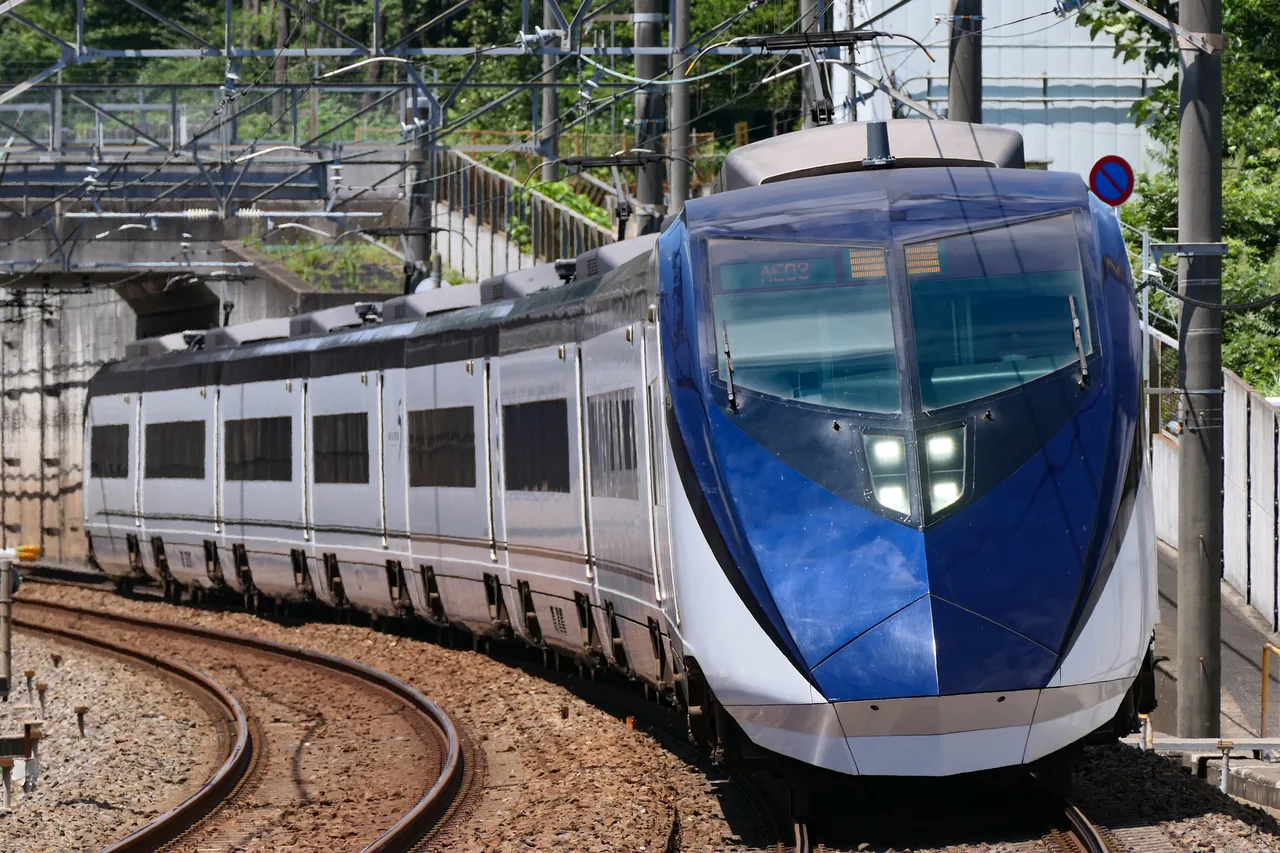
The Keisei Skyliner is the fastest train from Narita into central Tokyo. Photo: MaedaAkihiko, CC BY-SA 4.0, via Wikimedia Commons.
1. First: is it Narita or Haneda?
Flights to Tokyo split between two airports, and this decides everything about your transfer. Look at your ticket and check which airport you’re landing at before anything else.
Airport
To the city
Typically used by
Narita (NRT)
Far · 60–90 min
Most budget airlines · some full-service
Haneda (HND)
Close · 20–30 min
Many full-service carriers · some budget
Narita isn’t actually in Tokyo — it’s out in neighbouring Chiba, which is why it takes a while to reach the centre. Haneda is inside Tokyo and much closer. Same destination, completely different journey depending on where you land.
💡 Check the airport code on your ticket or airline app: NRT = Narita, HND = Haneda. Confirm your departure airport on the way home too — some itineraries fly in to one and out of the other.
2. At a glance (time, cost, where it goes)
Here’s every option in one table to save you the headache. The details follow below.
Airport
Option
Time · cost
Best for
Narita
Keisei Skyliner
Nippori 36 min · ¥2,580 (¥2,310 online)
Speed to Ueno / Nippori / Yamanote side
Narita Express (N’EX)
Tokyo Stn ~65 min · ¥3,070
JR Pass holders · direct to Shinjuku/Shibuya
Keisei Access Express
~75–90 min · about ¥1,300
Cheapest · time to spare
Haneda
Keikyu Line
Shinagawa 13 min · ¥330
Shinagawa · Asakusa · Yokohama
Tokyo Monorail
Hamamatsucho 20 min · ¥520
Tokyo Station side · JR Pass
Limousine Bus
40–55 min · from ¥1,400
Hotel drop-off · luggage · families
You can already see the shape of it: Narita means Skyliner, Haneda means Keikyu as the safe defaults. And whichever airport you’re at, a limousine bus is often the answer if you’ve got heavy bags or a group.
3. Narita → Tokyo: the Skyliner (fastest)
This is the cleanest fast option from Narita. The Keisei Skyliner is a dedicated express that barely stops, reaching Nippori in 36 minutes and Ueno in about 41.
Cost: ¥2,580 at the ticket window. Buy online ahead and it’s ¥2,310 (sites like Klook and KKday sell the ticket too).
Where you transfer: at Nippori, change to the JR Yamanote Line to reach anywhere in Tokyo. Stay on to Ueno for metro and Shinkansen connections.
Seats: all reserved, so you sit down with your suitcase stowed — there’s room for big bags.
💡 Staying near Tokyo Station, Shinjuku or Shibuya? You’ll take the Skyliner to Nippori/Ueno, then hop a couple of stops on the Yamanote — still quick overall. If your hotel is around Ueno, Asakusa or Nippori, the Skyliner is almost perfect.
If you have a JR Pass, this is the top pick. The Narita Express (N’EX) is run by JR, so it’s free with the pass — and it runs direct, no transfers, to Tokyo Station, Shinagawa, Shibuya and Shinjuku.
Cost: ¥3,070 to Tokyo Station (all reserved seats), free with a JR Pass.
Time: about 1 hour 5 minutes to Tokyo Station. Slower than the Skyliner, but no changing trains.
The win: never wrestling a suitcase through a transfer. Especially handy if you’re staying in Shinjuku or Shibuya.
⚠️ Without a JR Pass, and if you just want speed into the centre, the N’EX is pricier and slower than the Skyliner — take the Skyliner instead. The N’EX really pays off when it’s free on your pass, or going direct to Shinjuku/Shibuya. Not sure a pass is worth it? See our JR Pass guide.
🎟️ A discount even without a JR Pass: the N’EX TOKYO Round Trip Ticket. Short-stay visitors who show a foreign passport can buy a Narita–Tokyo round trip for ¥5,200 (¥2,600 for children). It’s valid for the round trip within 14 days — about ¥2,600 each way — and it shines if you’re heading straight to Shinjuku or Shibuya with no transfers.
Happy to take a bit longer to spend the least? The Access Express on the Narita Sky Access Line (or the limited express on the Keisei Main Line) skips the separate liner ticket — you just pay the basic fare.
Cost: around ¥1,300 to Ueno/central Tokyo — roughly half the Skyliner.
Time: 75–90 minutes; it stops at more stations.
Seats: a regular commuter train, so no reserved seat. If it’s busy you may stand with your bag.
💡 Great if you travel light or you’re counting every yen. But if your luggage is bulky or you’re tired, paying ~¥1,000 more to sit down on the Skyliner is well worth it.
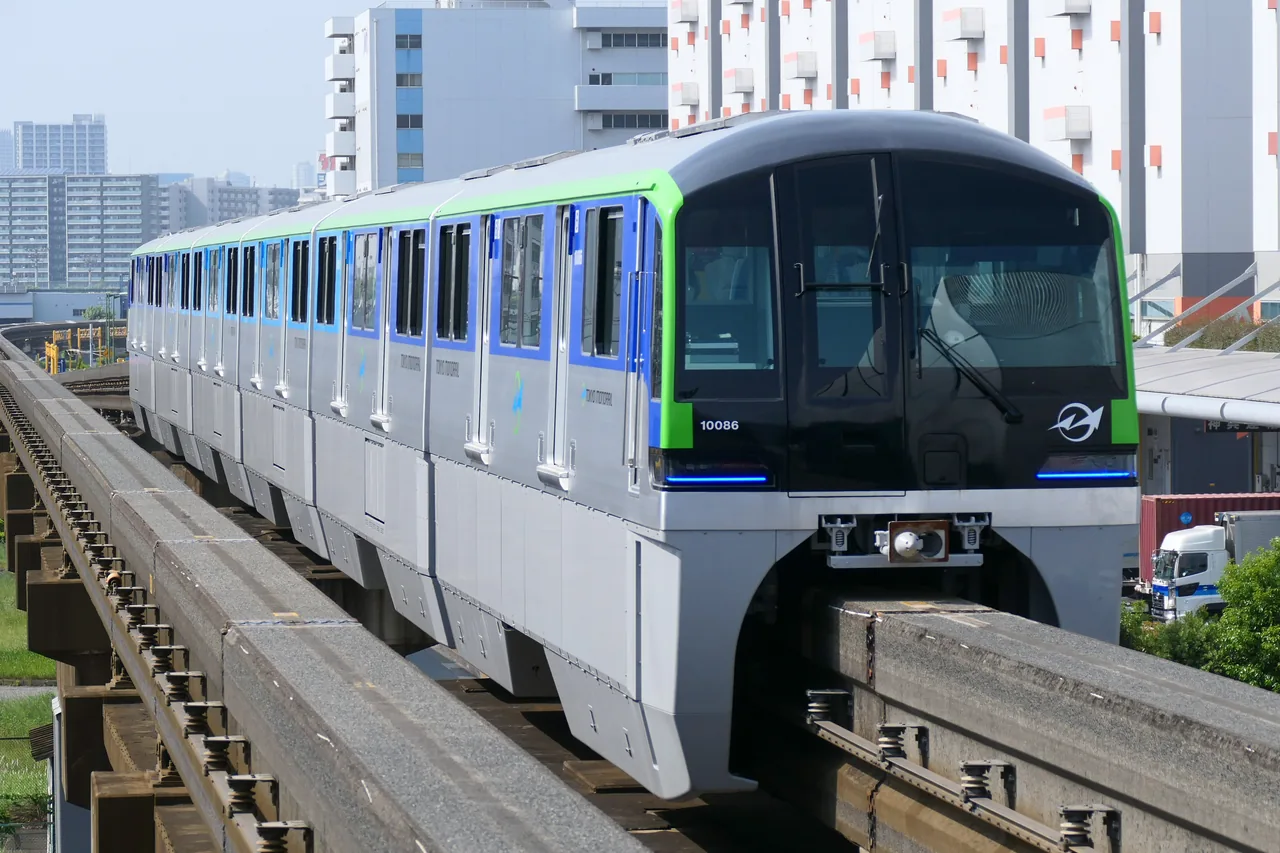
Haneda sits close to the city, so the Monorail or Keikyu gets you in quickly. Photo: MaedaAkihiko, CC BY-SA 4.0, via Wikimedia Commons.
6. Narita → Tokyo: limousine bus & taxi
Heavy bags, a group, or no appetite for transfers? Look at the Airport Limousine Bus. It runs direct, no changes, to major hotels and hubs like Shinjuku, Tokyo Station and Shibuya.
Cost & time: around ¥3,000 to the centre, 1.5–2 hours depending on traffic. The driver loads your suitcase into the hold.
Why: sit down, one ride, no stairs or transfers with a big bag. If a route stops at your hotel, it’s unbeatable.
Taxi: Narita is far, so a taxi is very expensive (¥20,000+). Not recommended.
⚠️ Buses can fall well behind the trains in heavy traffic. If you’re tight on time or it’s rush hour, the train is the safe bet. It comes down to this: bus for luggage and comfort, train for speed.
💡 Best budget option: the TYO-NRT bus. Heading for Tokyo Station or Ginza? Buy an Airport Bus TYO-NRT ticket at the airport bus counter — ¥1,500 one way (¥750 for children), about 70–80 minutes, no transfers, right to Tokyo Station. It’s seat-on-arrival with no reservations, so just queue up (late-night and early-morning runs are ¥3,000).
7. Haneda → Tokyo: the Keikyu Line (fast to Shinagawa)
Haneda is close to the centre, so anything gets you in fast. The Keikyu Line is the quickest and cheapest — Shinagawa in 11–13 minutes for ¥330.
The win: Shinagawa connects straight to the JR Yamanote Line and the Shinkansen. The Keikyu also runs through onto the Asakusa Line, so Shimbashi and Asakusa are transfer-free, and it’s handy for Yokohama too.
Cost: about ¥330 — just tap your Suica and go.
Heads up: some trains from the same platform head a different way. Just check the train is heading toward Shinagawa / the Asakusa Line (not toward Yokohama). The Keikyu has no Shinjuku service — for Shinjuku, change to the JR Yamanote Line at Shinagawa.
💡 If you’re staying around Shinagawa, Shimbashi, Asakusa, Ginza or Yokohama, the Keikyu is almost always the answer — fast, cheap, few transfers.
8. Haneda → Tokyo: the Tokyo Monorail
The other popular line is the Tokyo Monorail. It runs along Tokyo Bay with nice views, reaching Hamamatsucho in about 20 minutes for ¥520.
The win: at Hamamatsucho you change to the JR Yamanote Line, which is convenient for Tokyo Station and the Shinjuku side. Great for JR Pass holders too: the Tokyo Monorail is fully covered by the nationwide Japan Rail Pass, so the whole ride is free with a pass.
Cost: about ¥520 — again, just tap your Suica.
The vibe: bay and runway views on the way in and out — a nice touch on your first and last day.
💡 Keikyu vs Monorail comes down to your final stop: Keikyu for Shinagawa and Asakusa, Monorail for the Tokyo Station / Hamamatsucho side. Both are fast, so don’t overthink it.
🎫 Weekend tip: the Monorail & Yamanote Line Discount Ticket (¥590). Landing at Haneda on a Saturday, Sunday or holiday? It takes you by Monorail to Hamamatsucho and then lets you get off at any JR Yamanote Line station (Tokyo, Shinjuku, Ikebukuro, Shibuya and more) at no extra charge. Sold for same-day use only.
9. Haneda → Tokyo: limousine bus, taxi & late nights
Haneda also has limousine buses to major hotels and hubs — handy with heavy bags or a group.
Limousine bus: around ¥1,400 to central hotels, 40–55 minutes. If a route stops at your hotel, no transfers at all.
Taxi: Haneda is close enough that a taxi is reasonable (¥6,000–8,000 to the centre). With 3–4 people, the per-person cost can rival the bus.
Late arrivals: trains and the monorail stop around midnight. After that you’ll need a late-night bus (roughly double fare) or a taxi — check the last departure in advance.
⚠️ If your flight lands late, public transport may already have stopped. Arriving after 23:00? Check the last train times, and budget for a late-night bus or taxi — or plan a night near the airport. A quick check beforehand saves the panic.
🚐 Landing after the last train? A booked car meets you at arrivals whatever time it isSee on Klook →See on KKday →See on Trip.com →Affiliate link — we may earn a commission at no extra cost to you.
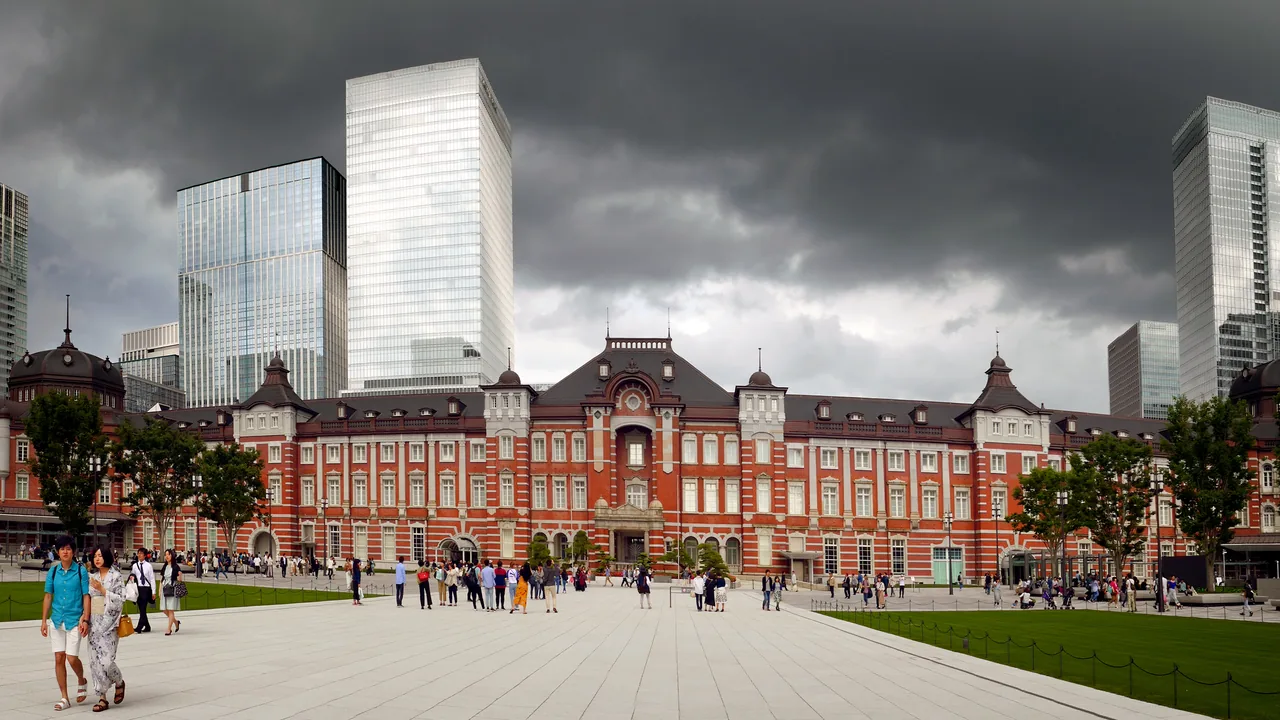
Which station you want comes down to where you’re staying. Photo: Bernard Spragg. NZ, public domain, via Wikimedia Commons.
🌙 Landing after midnight changes all of this, because the last train leaves at 00:10 and the last night bus at 02:20. Times and options are in the late-night arrival guide.
10. Pick by where you’re staying
In the end, ‘what should I take’ is mostly decided by where your hotel is. Here it is by neighbourhood.
Staying around
From Narita
From Haneda
Ueno · Asakusa · Nippori
Skyliner
Keikyu (through to Asakusa Line)
Tokyo Station · Ginza
N’EX, or Skyliner + transfer
Monorail or Keikyu
Shinjuku · Shibuya
N’EX direct
Monorail + Yamanote
Shinagawa · Yokohama
N’EX
Keikyu direct
Lots of luggage · family · hotel door
Limousine bus
Limousine bus or taxi
Find your hotel’s row and you have your answer. If in doubt, remember: Narita = Skyliner (or N’EX with a JR Pass), Haneda = Keikyu (or Monorail for the Tokyo Station side).
11. Do these first on arrival (Suica, tickets, bags)
Before you set off for the city, sorting these three makes your first day smooth.
Get a Suica (IC card) first: the Keikyu, Monorail and metro all work by tapping an IC card — no puzzling over fare maps or buying tickets each time. Physical Suica sales are back to normal as of 2025, so you can grab one at the airport or any major station; on an iPhone you can add a mobile Suica via Apple Pay instantly, and there’s now a “Welcome Suica Mobile” app to set one up before you even land → IC cards (Suica & ICOCA) explained.
Reserve seats ahead: the Skyliner and N’EX are reserved-seat trains, so buying online means no queue on arrival (and the Skyliner is cheaper that way).
Or send your bags: if your suitcase is huge, you can have it delivered (takkyubin) from the airport to your hotel and travel light — usually next-day arrival.
💡 You’ll want data the moment you land — for maps, train times and finding your hotel. Install an eSIM beforehand and you’re connected as you step off the plane. For the whole trip plan, see the complete Japan travel guide.
Keisei bundles the Skyliner with the Tokyo Subway Ticket, and the real saving is smaller than the advertised one. The figures are in the Tokyo transport passes guide.
On the Narita Express the round-trip visitor ticket saves the most on the Yokohama run, where the gap reaches 3,760 yen. The figures are in the Yokohama travel guide.
12. Quick picks by situation
Narita, want speed
Skyliner. Buy online (¥2,310) for the discount. Transfer at Nippori or Ueno.
Have a JR Pass
Narita: N’EX direct to Shinjuku/Shibuya. Haneda: Monorail + Yamanote to the Tokyo Station side.
Landing at Haneda
Keikyu for Shinagawa/Asakusa, Monorail for the Tokyo Station side. Both about 20 min.
Heavy bags · family · late
Limousine bus to the hotel. Landing late? Check last trains and night-bus times first.
💡 Entering Japan for the first time? Our Japan visa & entry guide walks through the 90-day visa-free rules, Visit Japan Web and the 2026 changes: the ¥3,000 departure tax and the new tax-free system.
Q. What’s the best way from Narita to central Tokyo?
For speed, the Keisei Skyliner — 36 minutes to Nippori, ¥2,580 at the station (¥2,310 online), then transfer to JR at Nippori or Ueno. With a JR Pass, take the Narita Express (N’EX) direct to Tokyo, Shinjuku or Shibuya with no transfer. The cheapest is the Keisei Access Express (about ¥1,300), but it takes longer.
Q. How long does it take from Narita to Tokyo?
It depends on the option. The Skyliner is 36 minutes to Nippori and about 41 to Ueno; the N’EX is about 1 hour 5 minutes to Tokyo Station; the Access Express is 75–90 minutes; the limousine bus is 1.5–2 hours depending on traffic. Narita is far out, so leave yourself plenty of time.
Q. How do I get from Haneda to central Tokyo?
It’s very close. The Keikyu Line reaches Shinagawa in 11–13 minutes for ¥330; the Tokyo Monorail reaches Hamamatsucho in about 20 minutes for ¥520. Take the Keikyu for the Shinagawa/Asakusa side and the Monorail for the Tokyo Station side. With heavy bags, the limousine bus (from ¥1,400) goes to hotel doors.
Q. Skyliner or Narita Express (N’EX) — which is better?
Without a JR Pass and just wanting speed into the city, the Skyliner is cheaper and faster (36 min to Nippori). With a JR Pass, or to go direct to Shinjuku/Shibuya without transfers, the N’EX wins. So: ‘Ueno/Asakusa side + speed’ favours the Skyliner; ‘JR Pass or direct to Shinjuku/Shibuya’ favours the N’EX.
Q. Can I use a JR Pass for the airport train?
The Narita Express (N’EX) is JR, so it’s free with a JR Pass. The Skyliner (Keisei) and Keikyu are not JR, so the pass doesn’t cover them. The Tokyo Monorail from Haneda is covered by the nationwide JR Pass, so it’s free with a pass — and you simply continue on JR from Hamamatsucho. Whether a pass suits you is covered in our JR Pass guide.
Q. Do I need to buy airport train tickets in advance?
For reserved-seat trains like the Skyliner and N’EX, buying online ahead is worth it — no queue, and the Skyliner is cheaper (¥2,310). The Keikyu, Monorail and Access Express aren’t reserved, so just tap your Suica and board.
Q. What’s easiest if I have a lot of luggage?
The limousine bus, with no transfers — the driver stows your suitcase and drops you at major hotels and hubs. If you take a train, the reserved-seat Skyliner and N’EX have room for big bags. For really heavy luggage, you can also have it delivered (takkyubin) from the airport to your hotel and travel hands-free.
Q. Can I still reach the city if I land late at night?
Trains and the monorail stop around midnight. After that you’ll need a late-night limousine bus (roughly double fare) or a taxi. If you arrive after 23:00, check the last departures, budget for late-night transport, or consider a night near the airport.
Q. Should I fly into Narita or Haneda?
If you can choose, Haneda is closer and more convenient (20–30 min). But budget airlines often fly into Narita and can be cheaper, so weigh the airfare against the transfer. Even from Narita, the Skyliner gets you in quickly.
Q. How much is a taxi from the Tokyo airports?
From Haneda it’s reasonable at ¥6,000–8,000 to the centre, so it can work for a group of 3–4. From Narita it’s over ¥20,000 because of the distance — not recommended. From Narita, the train or limousine bus is far more sensible.
Q. Can I get a Suica (IC card) right on arrival?
Yes. Physical Suica sales resumed in full in March 2025, so you can buy one at the Narita or Haneda airport station or information desk. On an iPhone you can add a mobile Suica via Apple Pay in seconds, and the new ‘Welcome Suica Mobile’ app lets you set one up before you arrive. Tapping an IC card for the Keikyu, Monorail and metro saves you fussing with tickets — it’s the first thing worth sorting.
Q. Where do I catch the limousine bus and how do I buy a ticket?
At the bus stops just outside the arrivals floor. Buy at the airport bus counter or a vending machine, choosing your destination (hotel or hub). Just check which route stops at your hotel. The driver loads your luggage into the hold before you board.