
Climbing Mount Fuji in 2026: The Honest, No-Nonsense Guide (New Rules, Real Difficulty, and When to Just View It Instead)
Fuji is gorgeous from a distance and gruelling up close. Here’s exactly what the 2026 season demands — the ¥4,000 fee, the booking-only gate, the two-day climb — and how to decide whether you should lace up or just bring a camera.
| It’s a real endurance hike | 3,776 m, no technical climbing, but long, cold, and thin-aired — roughly 30–40% of climbers feel some altitude sickness. |
|---|---|
| Summer only | the Yoshida and Subashiri trails open July 1 – Sept 10, 2026; Fujinomiya and Gotemba open July 10 – Sept 10. |
| New 2026 rules | a ¥4,000 fee on all four trails, a mandatory online reservation with a QR wristband, and a gate that’s shut from 2pm to 3am to anyone without a hut booking. |
| Do it over two days | climb to a hut on day one, sleep, then summit before dawn for the sunrise. Bullet-climbing through the night is now effectively banned. |
| Yoshida is the beginner default | easiest access from Tokyo, the most huts, the most facilities — though it caps out at 4,000 climbers a day. |
| Or skip the climb entirely | Chureito Pagoda, Lake Kawaguchiko, Hakone and Oshino Hakkai hand you the famous postcard view with none of the suffering. |
1. Should you actually climb Mount Fuji?
2. Quick facts at a glance
3. The 2026 rules you must know
4. The four trails, compared
5. When in the season to climb
6. How to get to the 5th Station
7. The classic two-day climb, step by step
8. Mountain huts: where you’ll sleep
9. Altitude sickness and staying safe
10. What to pack
11. Reaching the summit
12. The descent
13. What it costs
14. Guided tour versus doing it yourself
15. Prefer the view? Seeing Fuji without climbing
16. Practical tips
17. Is it worth it? Who should and shouldn’t climb
1. Should you actually climb Mount Fuji?
Here’s the honest answer most guides bury: for a lot of travellers, the smart move is not to climb Mount Fuji at all. There’s an old Japanese saying that a wise person climbs Fuji once and only a fool climbs it twice — and after a single ascent, plenty of people understand exactly why.
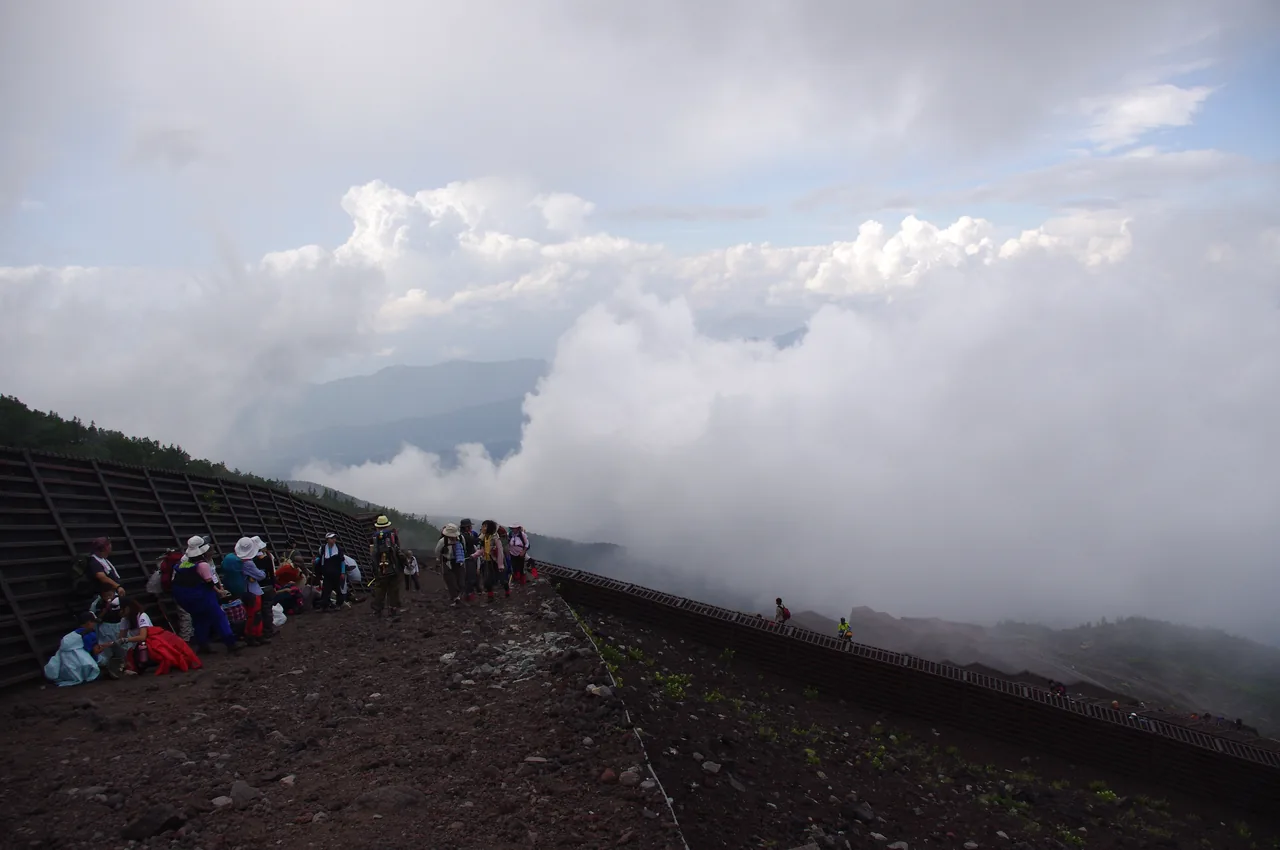
Mount Fuji Map is Japan’s highest peak at 3,776 m, an active volcano, a UNESCO World Heritage site, and the national symbol you’ve seen on a thousand postcards. It is also a serious endurance hike. You don’t need ropes, ice axes or any technical skill — but you do need to walk uphill for five to ten hours in thin air, then pick your way back down on loose volcanic gravel, often in cold, wind and weather that turns in minutes. Around 30–40% of climbers feel some degree of altitude sickness.
So who is it actually for? Reasonably fit people who want the experience of standing on the roof of Japan and watching the sun rise over a sea of clouds. If that’s you, this guide will get you up and down safely. But if you mostly want the iconic view of Fuji — the perfect cone, the reflection in a lake, the pagoda framing the peak — there’s a cruel irony to know about: the summer climbing season is the worst viewing season, and the summit spends much of it buried in cloud. In that case, skip ahead to the “prefer the view?” section below; you’ll have a far better day.
New to the country and still figuring out the bigger picture? Start with our complete Japan travel guide, then come back here once you’ve decided Fuji is on your list.
2. Quick facts at a glance
| Height | 3,776 m (Kengamine is the true summit) |
|---|---|
| 2026 season | Yoshida & Subashiri: July 1 – Sept 10 · Fujinomiya & Gotemba: July 10 – Sept 10 |
| Entry fee | ¥4,000 per person, all four trails (new for 2026) |
| Trails | Yoshida (default), Subashiri, Gotemba, Fujinomiya |
| Who it’s for | Reasonably fit hikers; no technical skill, but real endurance + altitude |
| Time | About 5–7 h up, 3–5 h down on Yoshida; the classic plan is two days with a hut overnight |
| Rough cost | ~¥20,000–40,000 solo (fee, hut, transport, oxygen, toilets); ¥30,000–60,000 on a guided tour |
| Best timing | Early July or late August / early September; avoid Obon and weekends |
Season slots, hut beds and reserved bus seats all sell out on summer weekends, so this is a climb you book ahead of time rather than wing on arrival.
3. The 2026 rules you must know
Fuji’s rules were tightened hard, and 2026 is the first full season they apply to every trail. Get them wrong and you can be turned away at the gate, so read this section twice.
For the Yoshida route, you book through the official Yamanashi site (fujisan-climb.jp); the reservation window runs May 8 – Sept 10, 2026. You’ll receive a QR-code wristband, which you scan at a permanent gate at the Fuji Subaru Line 5th Station Map to pass. That 2pm–3am closure exists to stamp out “bullet climbing” (弾丸登山) — racing straight through the night with no rest, the single biggest cause of hypothermia and altitude-sickness rescues.
| Entry fee | ¥4,000 per person, every trail (Yoshida was ¥2,000 in 2025) |
|---|---|
| Booking | Online reservation + pre-payment; QR wristband scanned at the 5th-Station gate |
| Gate hours | Closed 2:00pm–3:00am without a hut booking |
| Yoshida cap | 4,000 climbers per day |
| Gear check | Mandatory at the Yoshida trailhead — proper shoes, rain gear and warm clothing, or you’re turned back |
On the Shizuoka side (Subashiri, Gotemba, Fujinomiya) you can still register same-day at the 5th stations, but expect 20–30-minute queues in peak weeks. Booking ahead is simply smoother — and on Yoshida, it’s the only way you’ll get up the mountain after 2pm.
4. The four trails, compared
Fuji has four official routes, and they are not interchangeable. They start at different altitudes, take wildly different amounts of time, and suit very different climbers.
| Trail | Side | 5th-station altitude | Ascent time | Huts | Best for |
|---|---|---|---|---|---|
| Yoshida | Yamanashi | 2,300 m | ~5–7 h | 10+ (most) | First-timers; easiest Tokyo access |
| Subashiri | Shizuoka | 2,000 m | ~5–8 h | Several | Quieter, forested start; sand descent |
| Gotemba | Shizuoka | 1,400 m | ~7–10 h | Few | Fit, experienced hikers only |
| Fujinomiya | Shizuoka | 2,400 m | ~4–7 h | Several | Shortest but steepest; closest to the true summit |
Yoshida is the default for almost everyone, and especially for first-timers out of Tokyo. It carries about 60% of all climbers, has the most mountain huts and facilities, separate paths for going up and coming down, and the simplest transport from the city — its trailhead is the same Fuji Subaru Line 5th Station mentioned above. It also carries the 4,000-per-day cap, so book early.
Subashiri starts in cool forest at the Subashiri trail 5th station Map, stays quiet until it merges with the Yoshida route near the top (where it abruptly gets crowded), and is famous for the “sunabashiri” sand run on the way down.
Gotemba begins lowest of all at the Gotemba trail 5th station Map, which makes it the longest, hardest route with the fewest huts — strictly for strong, experienced hikers, though its giant “Osunabashiri” descent is a thrill.
Fujinomiya starts highest at the Fujinomiya trail 5th station Map, so it’s the shortest climb but also the steepest, and a single path serves both directions (so it gets congested). It’s the closest route to Kengamine, the true 3,776 m high point.
5. When in the season to climb
The window is short, and where you land inside it matters more than people expect. For the smoothest day, aim for early July, just after opening, or late August into early September, when the crowds thin out considerably.
What to avoid: Obon in mid-August, the single most crowded stretch of the year, and weekends throughout the season, when huts fill and the trail bunches up. The rainy season usually lifts in early July, but typhoons are possible right through August and September, so watch the forecast and build a buffer day into your plan in case you need to wait for a clear window.
For the wider picture of Japan’s seasons and how Fuji fits into them, see our guide to the best time to visit Japan.
6. How to get to the 5th Station
Almost everyone climbing Yoshida sets off from the Fuji Subaru Line 5th Station, and there are two sensible ways to reach it from Tokyo.
| Option | Time | Cost (one way) |
|---|---|---|
| Direct highway bus (Shinjuku → 5th Station) | ~2.5 h | ~¥4,800 |
| Train to Kawaguchiko + bus to 5th Station | ~3–3.5 h total | ~¥2,000 (bus leg ~¥2,000) |
| Private car | Restricted in season (park-and-ride + shuttle) | Shuttle fee |
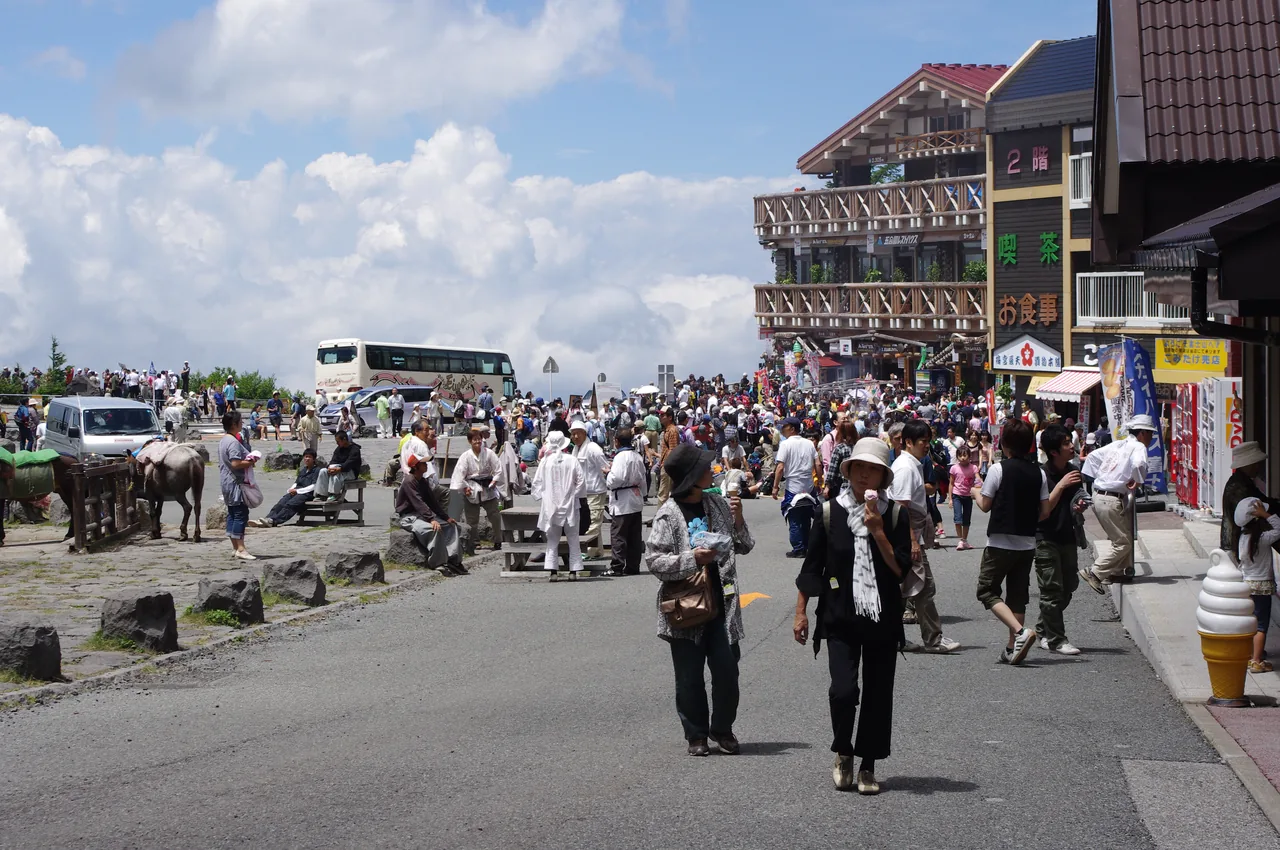
The easiest option is the seasonal direct highway bus from the Shinjuku Expressway Bus Terminal Map, which runs roughly four to six times a day and takes about 2.5 hours — reserve a seat, because they do sell out. The alternative is the train from Shinjuku via Otsuki and the Fujikyu Railway to Kawaguchiko Station Map, then a bus up to the 5th Station (about 50 minutes, ~¥2,000, hourly in season). Private cars are restricted during the climbing season, so if you drive you’ll use a park-and-ride and shuttle.
If you’re folding Fuji into a wider rail trip around the country, it’s worth working out whether a rail pass pays off for you — our JR Pass and shinkansen guide breaks down the maths (note that the Fujikyu line and the highway buses aren’t JR, so the pass doesn’t cover them).
7. The classic two-day climb, step by step
The right way to climb Fuji is over two days, with a night’s sleep in a mountain hut in the middle. It isn’t just more comfortable — it’s how you avoid getting sick, and since 2026 it’s effectively the only legal way to reach the summit for sunrise.
Day 1: Arrive at the 5th Station and don’t rush off. Rest and let your body adjust to the altitude for 30–60 minutes first. Then climb to a hut at the 7th or 8th station, about 5–6 hours at a steady pace. Eat, hydrate and sleep early.
Day 2: Set off in the dark, usually well before dawn, and climb the final stretch to reach the summit in time for goraiko (御来光) — the sunrise breaking over the clouds, around 4:30–5:00am in summer. Once you’ve soaked it in, you start back down.
“Bullet climbing” — going straight up through the night without sleeping at a hut — is now blocked by the 2pm–3am gate and strongly discouraged. It’s cold, exhausting, and the top reason climbers need rescuing. Don’t do it.
8. Mountain huts: where you’ll sleep
The mountain huts are the backbone of a sensible Fuji climb. They let you rest, acclimatize properly, and time your final push for sunrise — and as of 2026, a hut booking is literally what gets you through the gate after 2pm.
Expect to pay ¥8,000–15,000 per person, usually with dinner and breakfast included. In return you get a cramped patch of shared bunk space, often shoulder-to-shoulder with strangers — comfort is not the point here; survival and acclimatization are. Toilets cost ¥200–300 in cash (and are open to non-guests too).
9. Altitude sickness and staying safe
Altitude sickness (AMS) is the thing most likely to ruin your climb, and it hits 30–40% of climbers to some degree — headache, nausea, dizziness, fatigue. The good news: with the right approach it’s largely preventable.
To head it off: ascend slowly, take 30–60 minutes to acclimatize at the 5th Station before you start, drink water constantly, and sleep at a hut to give your body time to adjust. Portable oxygen cans (¥1,000–1,500 at the 5th stations and huts) offer limited, temporary relief at best.
Beyond altitude, respect the mountain itself: it’s cold and windy even in midsummer, the weather flips fast, the sun above the clouds is fierce, and some sections carry falling-rock hazards. Follow posted closures and staff guidance without arguing — they’re in place because someone got hurt before you.
10. What to pack
On Yoshida, your gear is checked at the trailhead, and under-prepared climbers are turned back. So this list isn’t a suggestion — at least the first few items are mandatory.
| Hiking boots | Proper boots with ankle support and grip (mandatory check) |
|---|---|
| Rain gear | Full waterproof jacket AND trousers — weather flips fast (mandatory) |
| Warm layers | Fleece or down; the summit can be sub-zero (mandatory) |
| Headlamp | Hands-free, essential for the pre-dawn climb |
| Water & food | 1.5–2 L of water plus high-energy snacks |
| Sun & cold | Gloves, warm hat, sun hat, sunglasses, strong sunscreen (UV is intense above the clouds) |
| Gaiters | Keep volcanic grit out of your boots on the descent |
| Cash | Including ¥100 coins for huts and toilets |
| Rubbish bag | There are no bins on the mountain — you carry everything out |
| Extras | Small first-aid kit (blisters), optional oxygen can; layer up and avoid cotton |
11. Reaching the summit
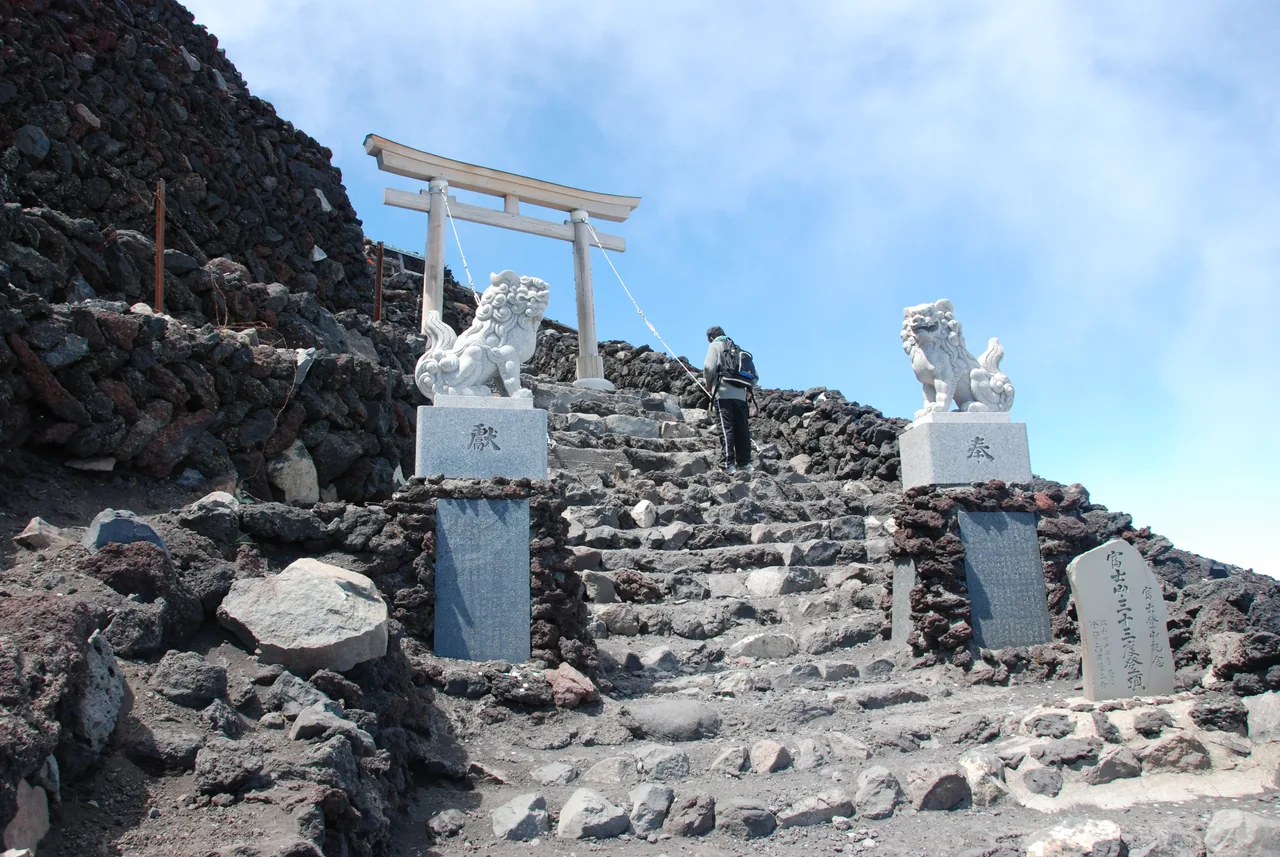
You’ll know you’re close when the air thins and the huts cluster together. At the top, a torii gate and stone komainu lion-dogs greet you, along with the Sengen and Kusushi shrines and — in summer — even a working summit post office where you can mail a postcard from 3,776 m.
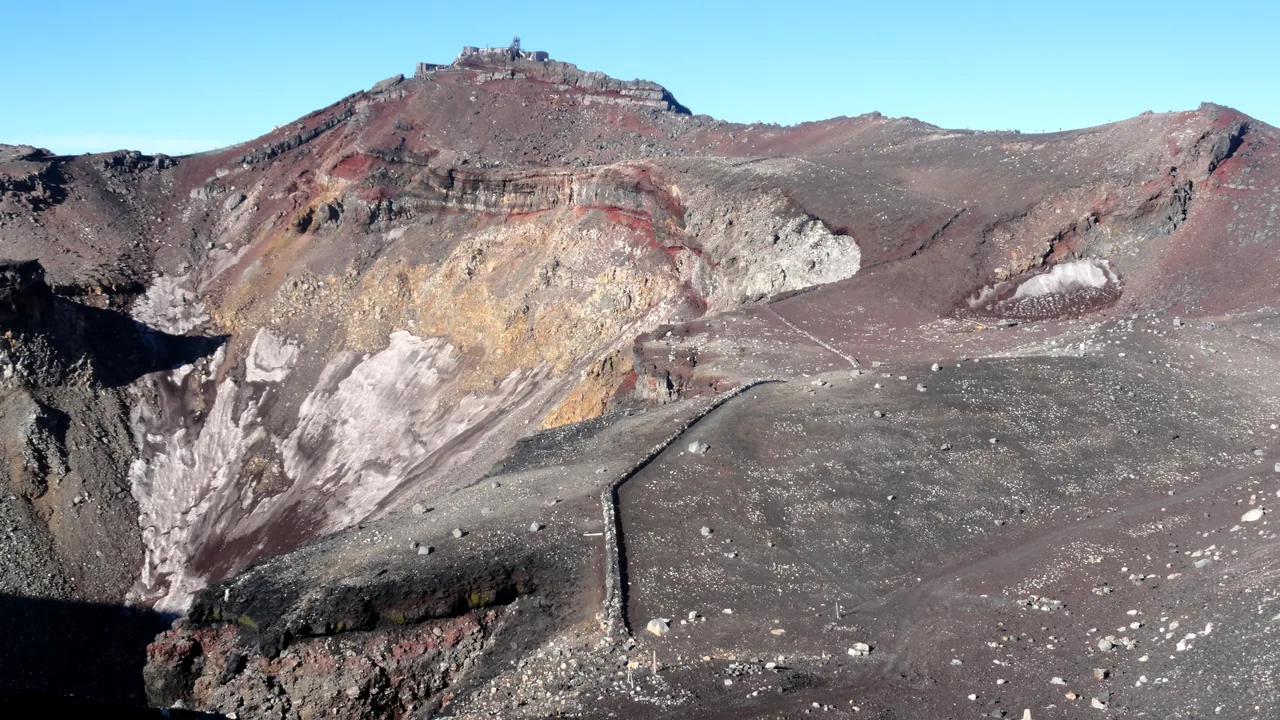
The Mount Fuji summit Map is the rim of a volcanic crater, and if your legs have anything left you can walk the full loop around it — the Ohachi-meguri (お鉢巡り), about 90 minutes — which carries you to Kengamine, the true high point at 3,776 m.
Be ready for the cold: temperatures hover near or below 0°C even in midsummer, the wind bites, and the sun above the clouds is blinding. The weather can turn in minutes, so don’t linger longer than you’re dressed for. And remember you’re standing in a sacred place — treat the summit shrines with respect, keep your voice down, and carry every scrap of rubbish back down with you. A quick read of our Japan etiquette guide covers the shrine basics and the leave-no-trace expectations that very much apply up here.
12. The descent
People underestimate the way down, and it’s often where the real suffering starts. On Yoshida you take a separate descent trail, a long series of zigzags across loose volcanic gravel that’s punishing on the knees and easy to slip on. This is exactly why gaiters and trekking poles earn their place in your pack.
On Subashiri and Gotemba, the descent throws in the famous sand runs — the “sunabashiri” and the bigger “Osunabashiri” — where you half-jog down soft volcanic scree in great loping strides. It’s genuinely fun, but it fills your boots with grit (gaiters again) and is hard on the legs. Whatever route you take, go down slower than you think you need to; most twisted ankles happen when tired climbers rush the descent.
13. What it costs
Fuji isn’t an expensive mountain by world standards, but the costs add up once you factor in the new fee, a hut and transport. Here’s a realistic per-person tally.
| Entry fee | ¥4,000 |
|---|---|
| Mountain hut (with meals) | ¥8,000–15,000 |
| Transport from Tokyo | ~¥4,800 each way by Shinjuku bus (or ~¥2,000 Kawaguchiko ↔ 5th Station) |
| Gear rental (if needed) | ¥10,000–15,000 |
| Oxygen can | ¥1,000–1,500 |
| Toilets | ¥200–300 each use |
| Guided 2-day tour (all-in) | ¥30,000–60,000 |
Notice how much of this is cash-only: huts, toilets, oxygen and snacks on the mountain don’t take cards, and there are no ATMs up there. Carry enough yen, including ¥100 coins. If you’re unsure how cash and cards split across Japan, our Japan money guide will sort you out before you head up.
14. Guided tour versus doing it yourself
You absolutely can climb Fuji independently — booking your own permit, hut, bus and gear — and plenty of people do. But a guided two-day tour from Tokyo, typically ¥30,000–60,000 all-in (transport, hut, meals and a guide), makes real sense in a few cases.
Consider a tour if you’re a first-timer nervous about the altitude and pacing, if you’re solo and want company on the dark pre-dawn push, or if you simply don’t fancy wrestling with the reservation system, the hut booking and the seasonal bus timetable in a language you can’t read. The premium buys you logistics, safety and someone who’s done it dozens of times. Confident hikers who enjoy planning will save money going it alone — both are valid.
15. Prefer the view? Seeing Fuji without climbing
For most travellers, this is honestly the better call. The climb is hard, restricted, summer-only — and here’s the kicker: the climbing season is the worst viewing season. Fuji shows its perfect cone best in the clear, cold months, while the summer summit is often wrapped in cloud just when you’re allowed up there. If you came for the iconic view, go get the view.
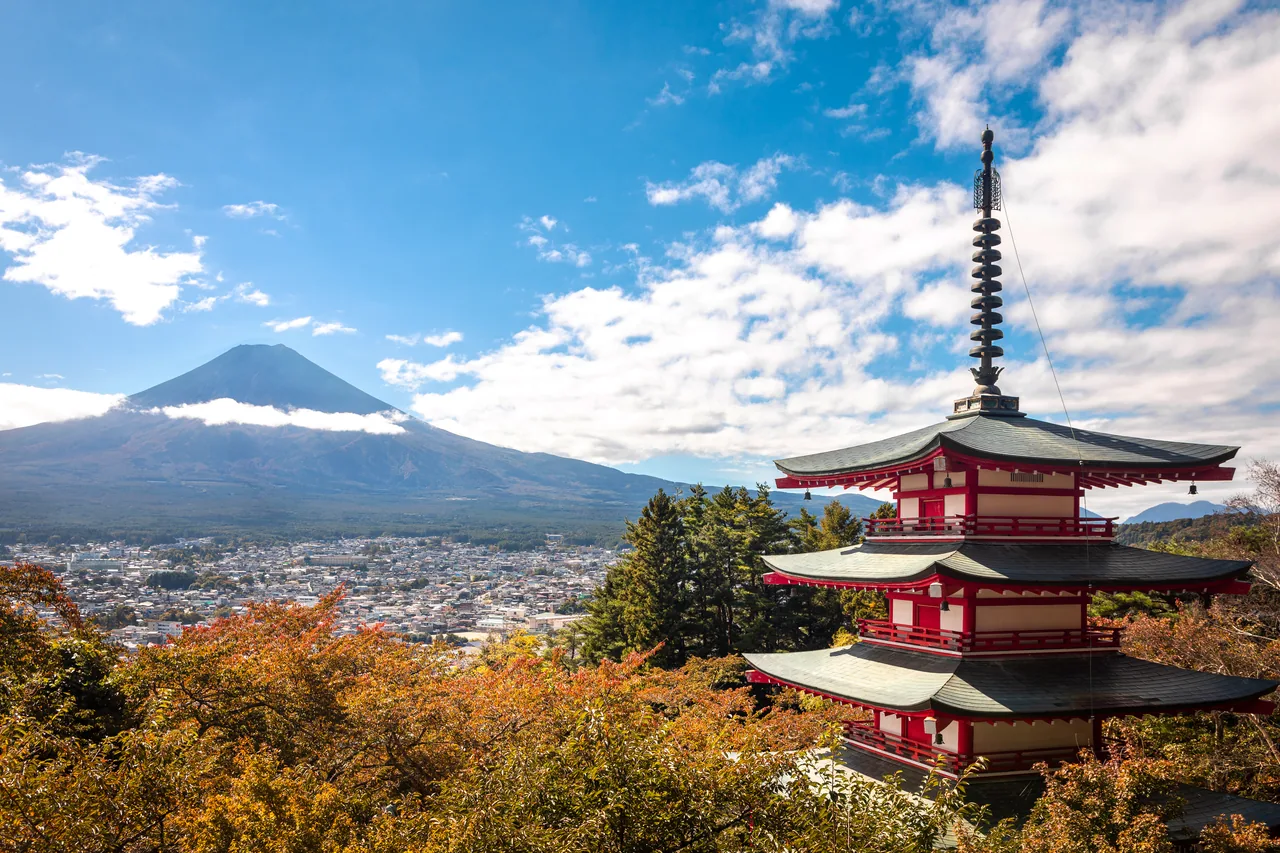
Chureito Pagoda Map in Fujiyoshida is the shot you’ve seen everywhere — a five-storey pagoda framed perfectly with Fuji behind it. It’s about 400 steps up, stunning on a clear morning, and unforgettable in cherry-blossom season or autumn colour.
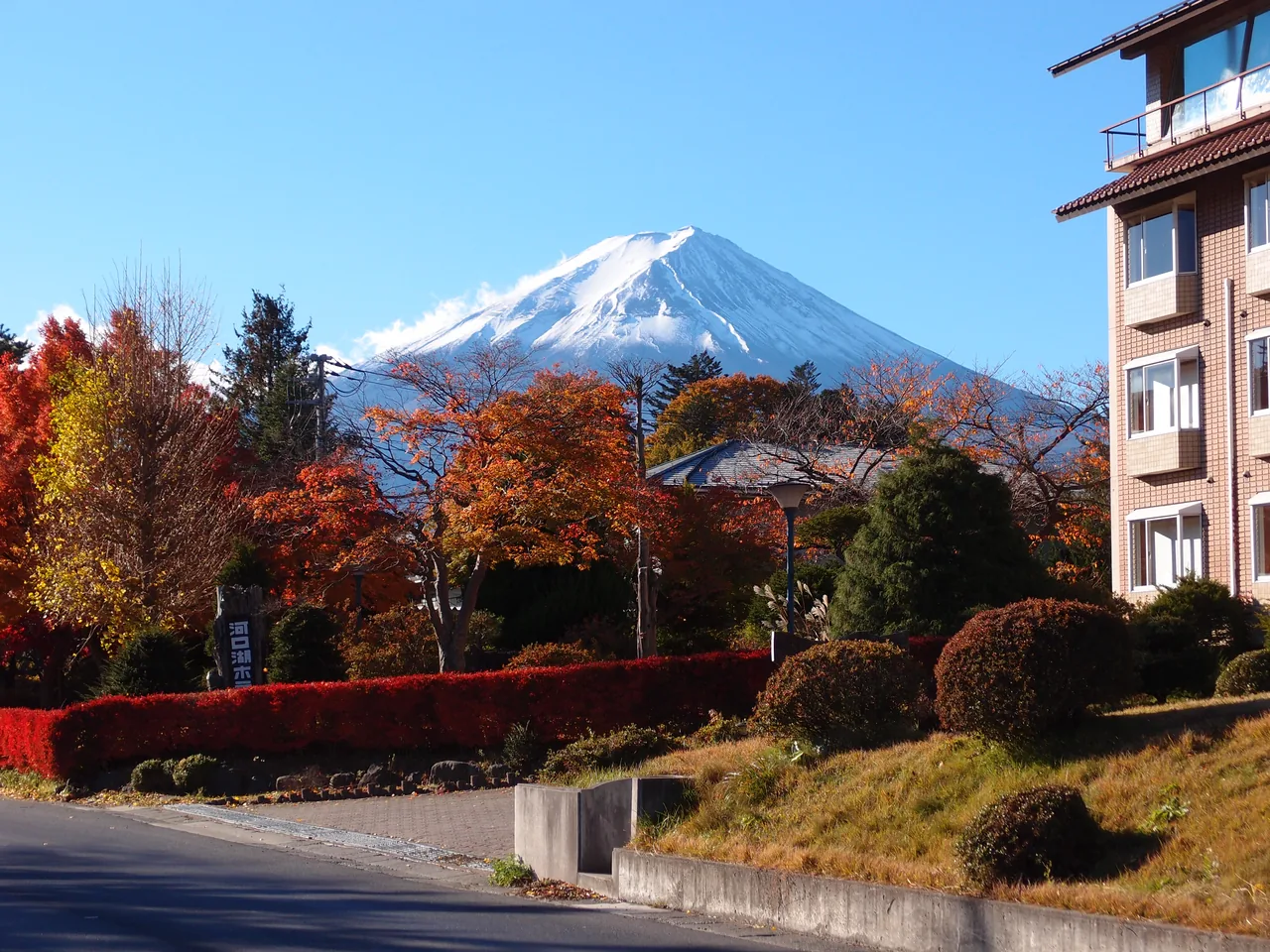
Lake Kawaguchiko Map, the most accessible of the Fuji Five Lakes, gives you that classic mirror reflection of the mountain, plus a ropeway, onsen and an easy day trip from Tokyo. Hakone Map pairs Fuji views with a Lake Ashi cruise, a ropeway over a steaming volcanic valley, hot springs and museums — a brilliant rainy-season alternative. And Oshino Hakkai Map offers crystal-clear, spring-fed ponds with Fuji rising behind them.
Whichever you choose, go early: visibility is best on clear, cold mornings (roughly 6–8am), and clouds build as the day warms up. Our best-time-to-visit guide has the month-by-month detail on when Fuji is most likely to be out.
16. Practical tips
A handful of small things that make a real difference on the mountain.
Cash is king. Huts, toilets, oxygen and snacks are all cash-only, and there are no ATMs above the 5th Station — bring plenty of yen and a stash of ¥100 coins. (Again, the money guide covers the wider picture.)
Data and signal. Mobile coverage on Fuji is patchy and drops out in places, but at the 5th Station and many huts you’ll want a connection to check the forecast, confirm your booking QR and message anyone waiting below. Sort a Japan eSIM before you travel so you land already connected.
For options and setup, see our Japan eSIM and data guide.
Finally: there are no bins anywhere on Fuji, so carry every piece of rubbish back down. Layer your clothing so you can adjust as you climb, and avoid cotton, which stays cold and clammy once you sweat.
17. Is it worth it? Who should and shouldn’t climb
There’s no single answer — it comes down entirely to what you want out of the day. Find yourself below.
The fit adventurer
You love long hikes, you’re reasonably fit, and you want the experience itself — the dark climb, the cold, the sunrise above the clouds. Yes, go. Prepare properly and you’ll have a story for life.
Nervous but keen
You’re not a hardcore hiker but you really want to do it. Doable — book a two-day plan with a hut, pace yourself slowly, and consider a guided tour to take the logistics off your plate.
Families & tight schedules
Small children, a packed itinerary, or only one possible weather day? Reconsider. Fuji punishes rushed attempts and rigid schedules. The view options below are far kinder.
Photo-only
You mainly want that perfect picture of the mountain? Don’t climb — you can’t see Fuji while you’re standing on it, and summer summits are often cloudy. Head to Chureito or Kawaguchiko instead.
The bottom line: Fuji is an endurance, cold and altitude challenge, not a casual day out. Respect it, prepare for it, and it rewards you — or skip it without guilt and enjoy the world’s most beautiful mountain from the perfect distance. Either way, our full Japan travel guide will help you build the rest of your trip around it.