
Sapporo Snow Festival: 2027 Dates, the Three Sites, and How It Gets Built
The 77th runs 4 to 11 February 2027, eight days, and all three sites are free. Each site shows something completely different and the crowds do not fall where you would expect, so we went through the organisers’ own published figures.
| Dates | 4 to 11 February 2027, eight days, with all three sites running concurrently. |
|---|---|
| Cost | Every site is free, with charges only on a few individual attractions. |
| The sites | Odori has the snow sculptures, Tsudome is for play, Susukino is ice. |
| Crowds | Odori drew 1.93 million last time, concentrated on the clear Saturday. |
| Overlap | Taiwan’s 2027 New Year holiday covers seven of the festival’s eight days. |
1. Dates, sites and what they cost
2. The three sites are three different events
3. What sits in each block at Odori
4. Which days and hours are quieter
5. A month of work behind one sculpture
6. Why cleared street snow is never used
7. Why the ice is carved at night, and what has collapsed
8. The parts residents build themselves
9. How cold it gets and what to bring
10. Getting to each site
11. The week the rooms disappear
12. What happens afterwards, and how it got here
1. Dates, sites and what they cost
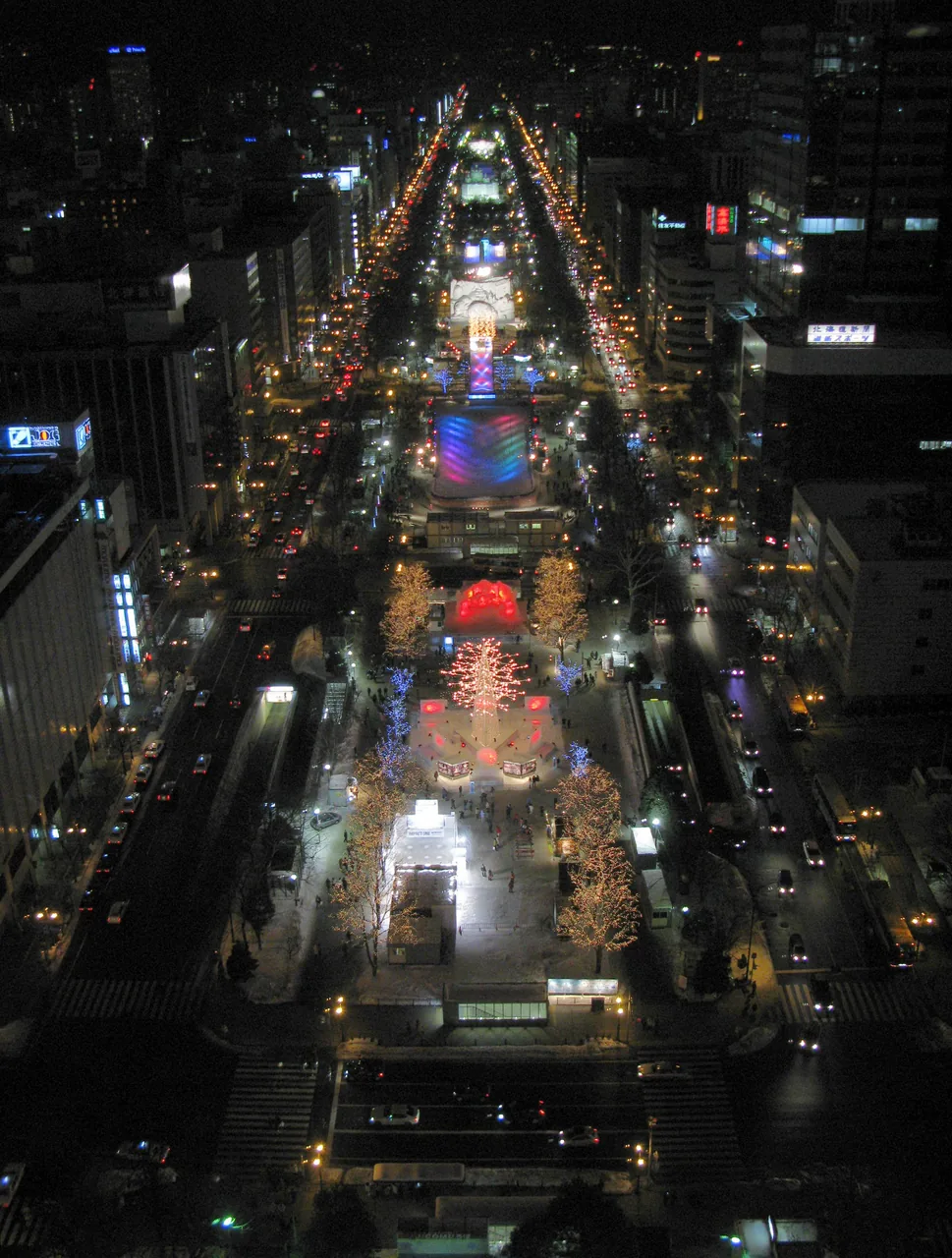
The 77th Sapporo Snow Festival runs from Thursday 4 February to Thursday 11 February 2027, a public holiday, across eight days. Odori, Tsudome and Susukino all run for the same period and none of them charges admission.
| Item | Detail |
|---|---|
| Dates | 4 to 11 February 2027, eight days |
| Odori site | Odori Park, blocks West 1 to West 11, about 1.1km end to end |
| Tsudome site | The Sapporo Community Dome, known as Tsudome |
| Susukino site | Ekimae-dori between South 4 and South 6 |
| Admission | Free at all three. Only the Odori block 3 skating rink and some Tsudome attractions charge |
| Follow-on event | Sapporo Snow Sports Park 2027, 12 to 14 February |
Eight days sounds brief until you learn that preparation starts the previous September. And once the festival closes, the sculptures are demolished the following morning. That timetable is what determines when you should turn up.
It has not always run eight days. The first edition lasted a single day, then two, then four, and in 1987 two more were added to make seven. Otaru, 30 to 50 minutes away by train, holds its Snow Light Path at the same time of year, and the two usually overlap for several days: see our Otaru travel guide.
2. The three sites are three different events
They share a name, but what you see, when they open and how you get there all differ. With only one day available, the choice matters more than the itinerary.
| Item | Odori | Tsudome | Susukino |
|---|---|---|---|
| What is there | Large and citizen snow sculptures | Slides and play attractions | Ice sculptures |
| Hours | A park, so any time | 10:00 to 16:00 | A street, so any time |
| Lit until | 22:00 | Not applicable | 23:00, and 22:00 on the final day |
| Getting there | Straight out of Odori subway station | Shuttle from Sakaemachi, or 15 minutes on foot | Straight out of Susukino station |
| Suits | Everyone | Families with children | Evening plans |
The Susukino site is formally called Susukino Ice World. The pieces are carved from ice rather than snow, and 60 of them lined the street last time. It sits in the middle of the densest restaurant district in the city, which makes it a natural stop after dinner.
Tsudome is somewhere you play
This site is built for getting into the snow rather than looking at it. The organisers’ report on the last edition notes that weekends and holidays brought families, while weekdays brought primary school and kindergarten groups along with overseas visitors.
| Point | Detail |
|---|---|
| Clothing | A hat and gloves are required to use the attractions |
| Parking | No public car park, and no drop-off point either |
| Tube slider | Numbered tickets are issued on busy weekends and holidays |
| Smoking | The whole site is non-smoking with no smoking area |
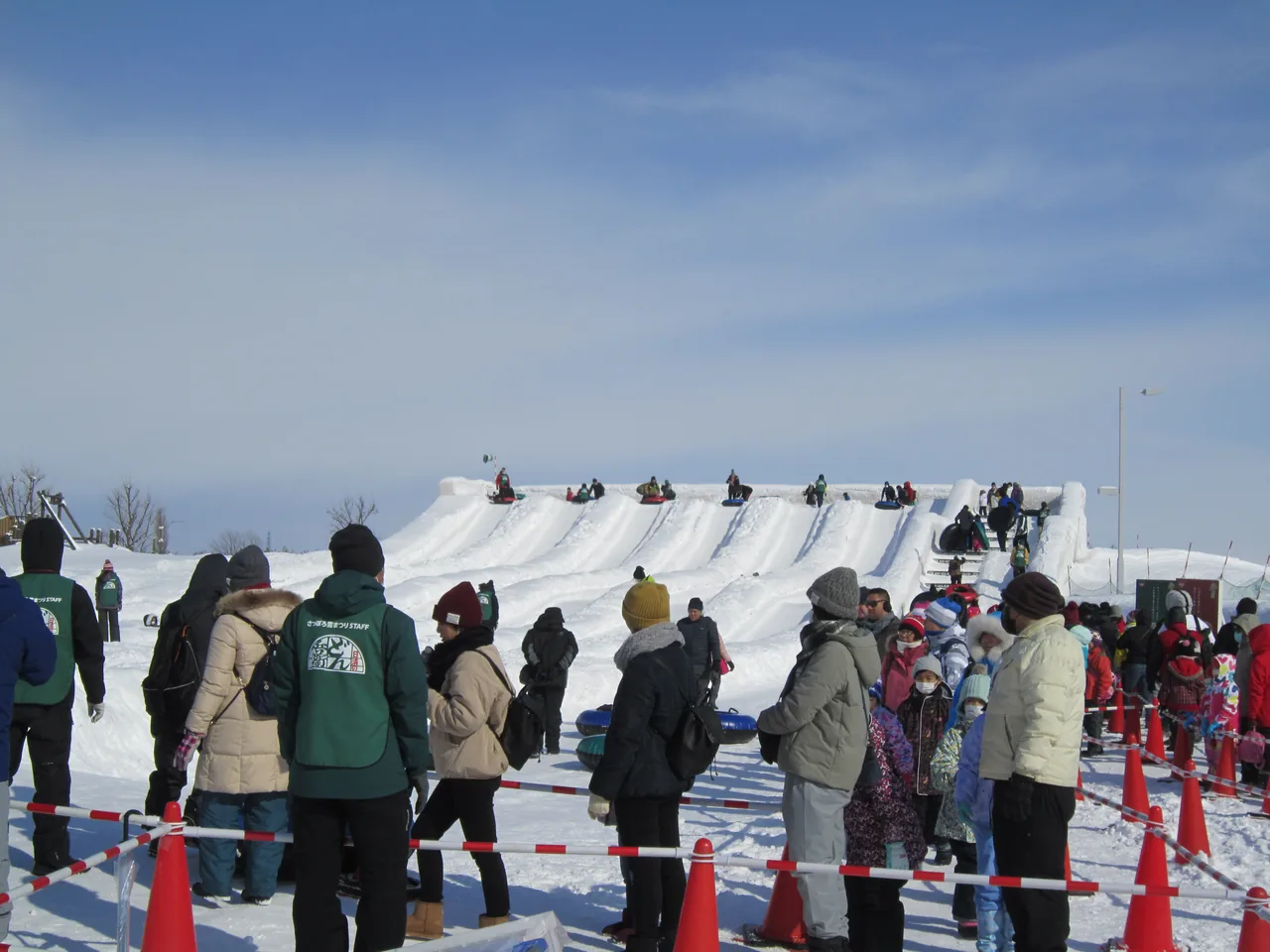
Tube slider tickets go out at 10:00 (1,500 of them), 12:00 (500) and 14:00 (500). For the first round each day the first 300 people simply queue, and numbered tickets start from the 301st. They are valid on the day of issue only.
| What is at Tsudome | Detail |
|---|---|
| Tube slider | Riding an inflatable tube down a slope. Ages four and up, one rider at a time |
| Family tube slider | Takes two riders, no age limit, with under-fives riding alongside an adult |
| Sledging slope | Bring your own sledge or borrow one on site |
| Snow maze | A walk-through maze built from snow walls |
| Snow play areas | Two of them. One lends equipment free, the other is open snowfield with nothing built on it |
| Indoors | A large slide, inflatable play equipment, food stalls and a warm rest area |
The separate indoor hall means bad weather does not end the day with young children. The organisers do ask visitors to use the outdoor toilets where possible, as the ones inside the arena get heavily congested.
Susukino closes its street on a schedule
The Susukino site is a working road, so traffic is only stopped during set hours to let people walk out among the sculptures. Outside those hours you view them from the pavement.
| Last edition | Street closed to traffic |
|---|---|
| Weekdays | 15:00 to 23:00 |
| Saturday and Sunday | 10:00 to 23:00 |
| Final day | 10:00 to 22:00 |
3. What sits in each block at Odori
The Odori site stretches about 1.1km from West 1 to West 11, and each block has an assigned role. The layout for the 77th was published by the organisers in July 2026.
| Block | What goes there in 2027 |
|---|---|
| West 1 | Winter attractions and similar |
| West 2 | Sapporo International Art Festival 2027 |
| West 3 | Small sculptures and similar |
| West 4 | Large snow sculpture |
| West 5 | Large snow sculpture |
| West 6 | Medium and small sculptures |
| West 7 | Large snow sculpture |
| West 8 | Large snow sculpture |
| West 9 | Medium and small sculptures |
| West 10 | Large snow sculpture |
| West 11 | International Snow Sculpture Contest and similar |
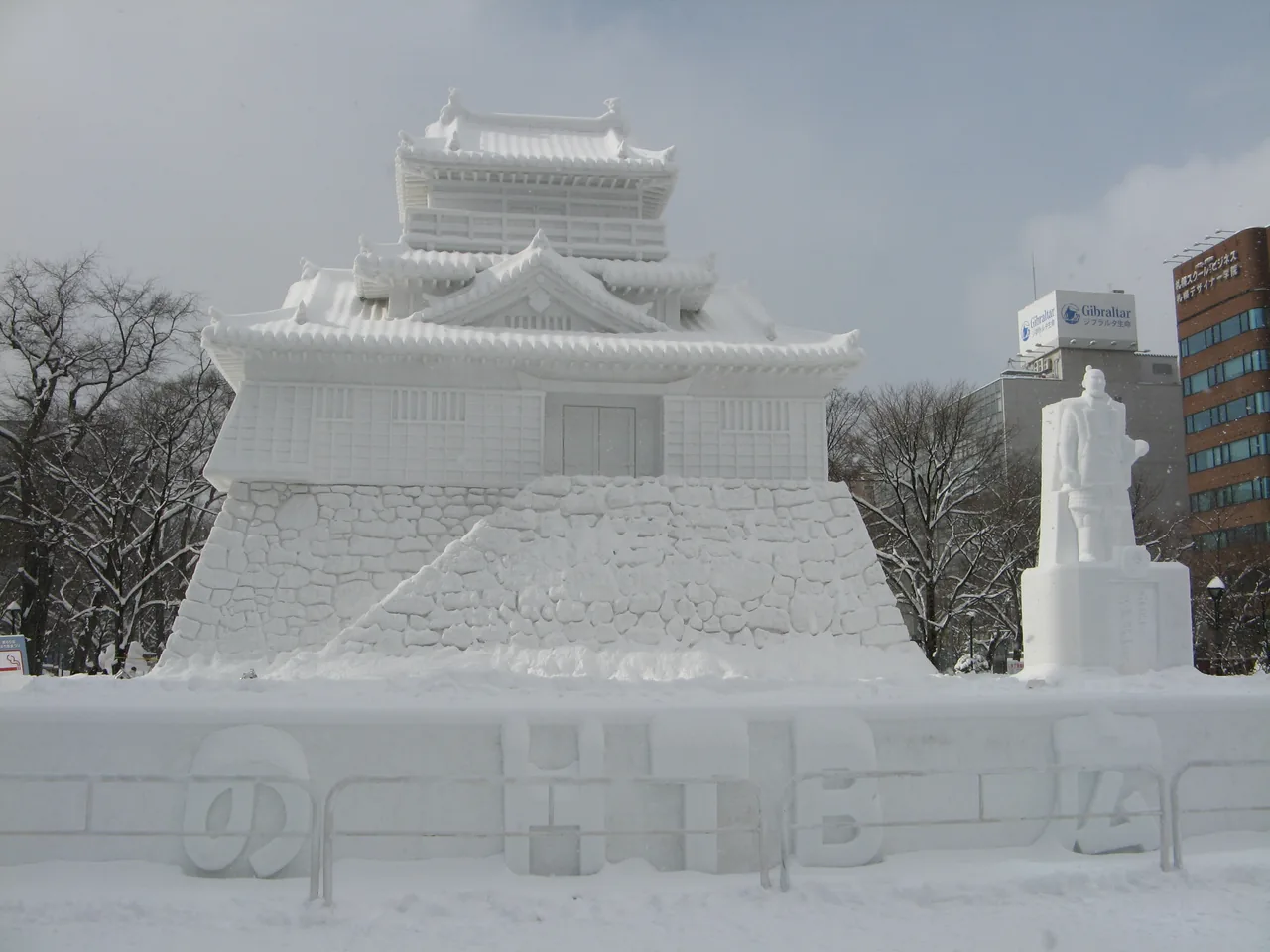
The five large sculptures land in blocks 4, 5, 7, 8 and 10. Rather than walking the full kilometre in one push, plan the route around those five blocks and take the rest as you pass them.
What was actually installed last time
| Category | 76th edition |
|---|---|
| Odori snow sculptures | 135 |
| Tsudome snow sculptures | 14 |
| Susukino ice sculptures | 60 |
| Citizen snow sculptures | 79 across blocks 2 and 9 |
Citizen sculptures are made by resident groups, with a public vote attached. The leading teams earn a place in the following year’s festival. Unlike the large sculptures, this section tracks whatever was popular that year.
The contest in block 11
The last edition was the 50th contest, with ten teams from around the world. Finland, competing for the 30th time, took first place for only the second time since 1988. Indonesia came second and Mongolia third.
4. Which days and hours are quieter
The organisers publish a day-by-day account of how the last edition went. Heavy snow on the Friday and the Sunday held attendance down, while the Saturday stayed clear all day and drew the heaviest crowds of the week.
| Site | 76th edition | Against previous |
|---|---|---|
| Odori | 1,926,000 | 108.8% |
| Tsudome | 613,000 | 110.0% |
| Odori and Tsudome combined | 2,539,000 | 109.1% |
| Susukino | 1,378,000 | 135% |
Susukino cut its footprint to two thirds of the previous year and still saw attendance rise 35 percent. More people in less space, on a street that was never wide to begin with.
The hour changes what you see
| Time | What it is like |
|---|---|
| Morning | Sculpture detail reads most clearly. Tsudome opens at 10:00 |
| Afternoon | Numbers build. Susukino closes its street to traffic, with the start time varying by day |
| After 17:30 | Last time, projection mapping ran on the large sculptures in blocks 5 and 8 |
| 22:00 | Odori goes dark |
| 23:00 | Susukino goes dark, an hour earlier on the final day |
Seeing both day and night means walking Odori twice. The same sculpture reads differently once the lights come up, and projection mapping only runs on specific blocks.
The first half and the second half show different things
The international contest in block 11 is not finished when the gates open. Going by the last edition’s schedule, the contest itself ran from 2 to 7 February, with carving taking place from the 3rd to the 6th.
| Last edition’s contest schedule | Detail |
|---|---|
| 2 to 7 February | The contest period, starting two days before the festival |
| 3 to 6 February | Carving |
| 4 to 6 February | The public can watch the teams at work |
| 7 February, 11:00 | Prize ceremony, held at Odori block 10 |
So arriving in the first three days puts you in front of teams still cutting snow. Seeing all ten finished pieces side by side means coming after the ceremony, which falls in the second half of the festival.
| When you come | What you get |
|---|---|
| First half | Large sculptures complete; block 11 contest still being carved |
| Second half | Finished contest pieces as well, but with more people |
| Before opening day | Susukino only, with ice carving visible in progress |
5. A month of work behind one sculpture
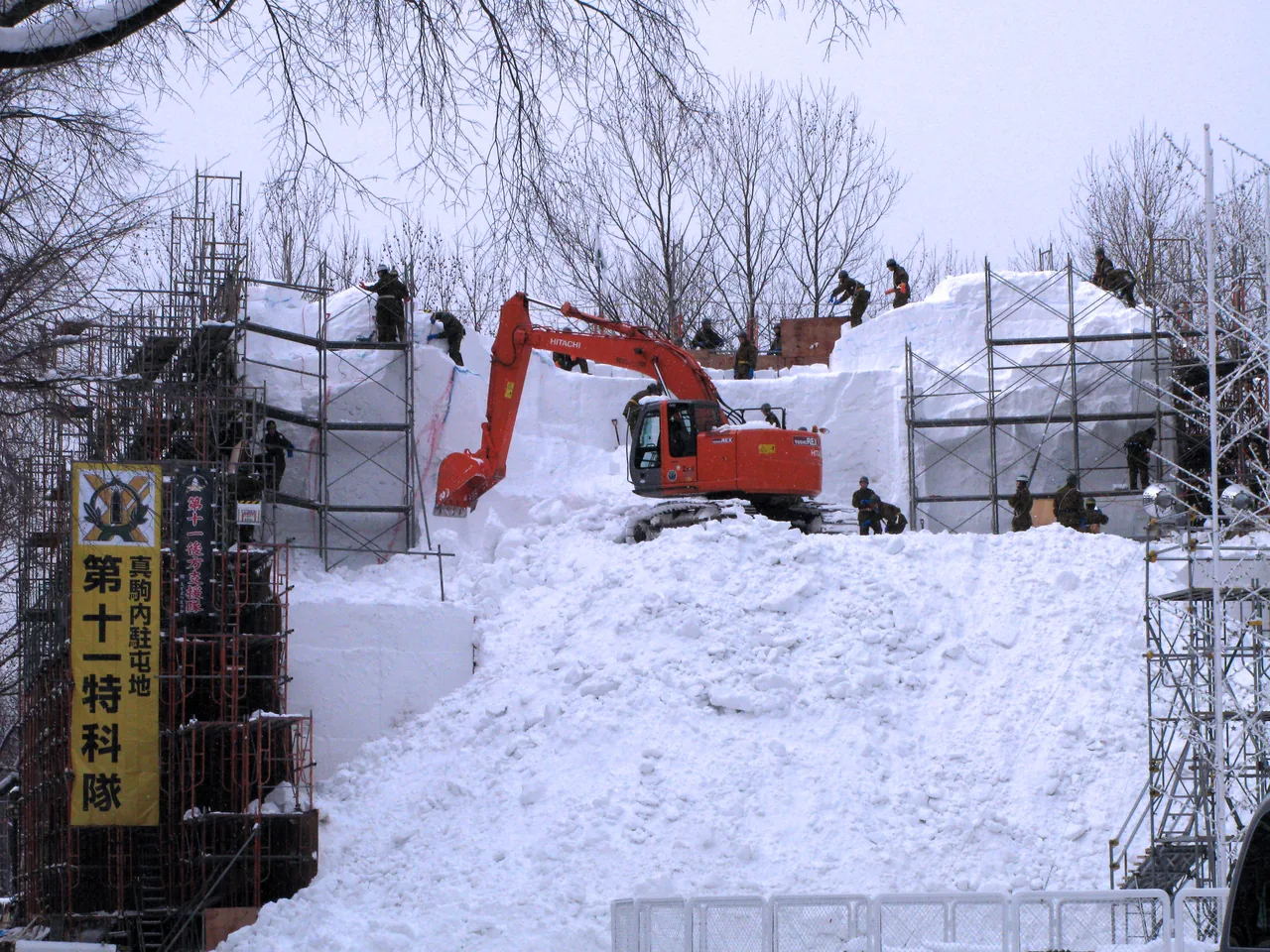
A large snow sculpture stands four to five storeys high, and one of them alone takes around 600 truckloads of snow. Across the whole festival the figure is roughly 3,000 ten-tonne loads.
| Purpose | Snow required |
|---|---|
| Around 200 snow and ice sculptures | About 1,600 ten-tonne loads |
| The Tsudome slides and attractions | About 1,400 ten-tonne loads |
| Total | About 3,000 ten-tonne loads |
The schedule is fixed
| When | What happens |
|---|---|
| Around September | Research, design, model-making and materials |
| Late December | Frames go up at the Odori site |
| 7 January | The snow transport ceremony, followed by about two weeks of hauling |
| Early January | Snow is packed into the frames and compacted |
| Mid January | Frames come off and rough carving begins |
| Just before opening | Detail carving, finishing, then the scaffolding comes down |
Packing, settling, carving and finishing take about a month. Carving does not follow packing directly. There is a separate resting stage while the snow bonds and stabilises.
Where the snow comes from
It is hauled in from the city and its outskirts. The main collection points are Satoland, Moerenuma Park, Takino Cemetery, the Hoheikyo Dam and Futomi in Tobetsu. In years when snow has been short, crews have gone as far as the Shiribeshi and Sorachi districts to find it.
Who builds it
| Who | Responsible for |
|---|---|
| The JGSDF festival support unit and the large sculpture committee | The large snow sculptures |
| Civic organisations, volunteers and resident groups | Medium, small and citizen sculptures |
| International contest teams | The block 11 entries |
The Self-Defense Forces first took part in 1955, the sixth edition, with a ten-metre statue of the Virgin Mary at Odori West 4. From the 23rd edition in 1972 a formal cooperation agreement has covered snow transport and the construction of the large sculptures.
Members of the public have been able to join the large sculpture builds since the 38th edition in 1987, when a thousand people took part over the season. Families who have moved to Sapporo from elsewhere and international students now make up a growing share.
Moerenuma Park MapMap Satoland MapMap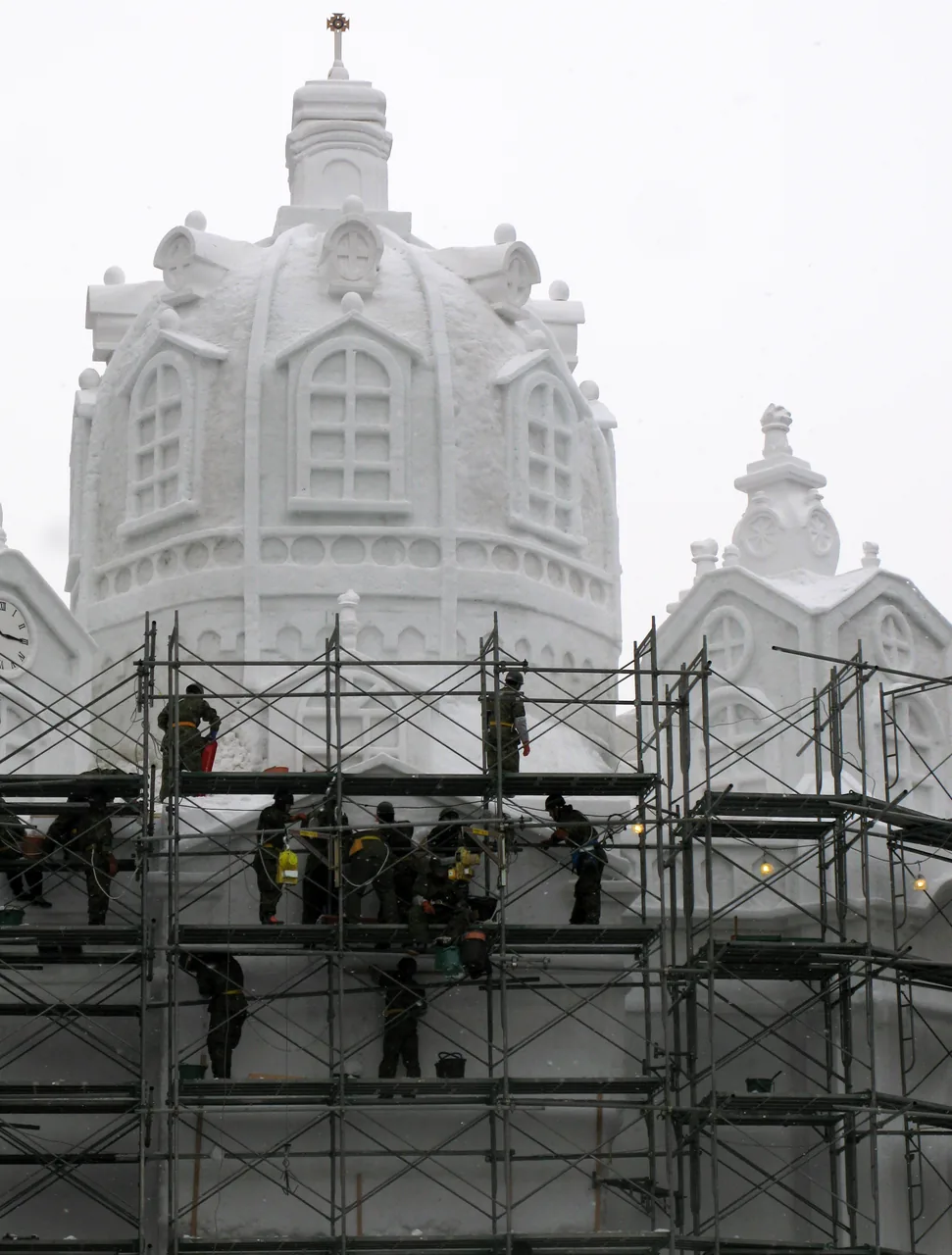
6. Why cleared street snow is never used
Sapporo spends the winter piling up cleared snow in heaps, and none of it goes into the sculptures. Clean snow is trucked in from designated sites instead, for one reason: safety.
The organisers cite their source. It is an experimental observation recorded in a study of snow mechanics compiled by the 11th Artillery Regiment of the JGSDF 11th Division.
| Material | Under sunlight |
|---|---|
| A column of snow containing impurities | Hollowed out throughout, keeping only its outer form, then collapsed |
| Pure snow | Barely melted at all |
Cleared snow carries soil, grit and whatever has been spread on the roads. Those impurities absorb heat and melt the mass from the inside, so a structure can look sound while its interior empties out. At four to five storeys, that is not a cosmetic problem.
Which is where the 3,000 truckloads comes from. However much snow sits nearby, none of it qualifies, so all of it has to be hauled from approved collection sites.
7. Why the ice is carved at night, and what has collapsed
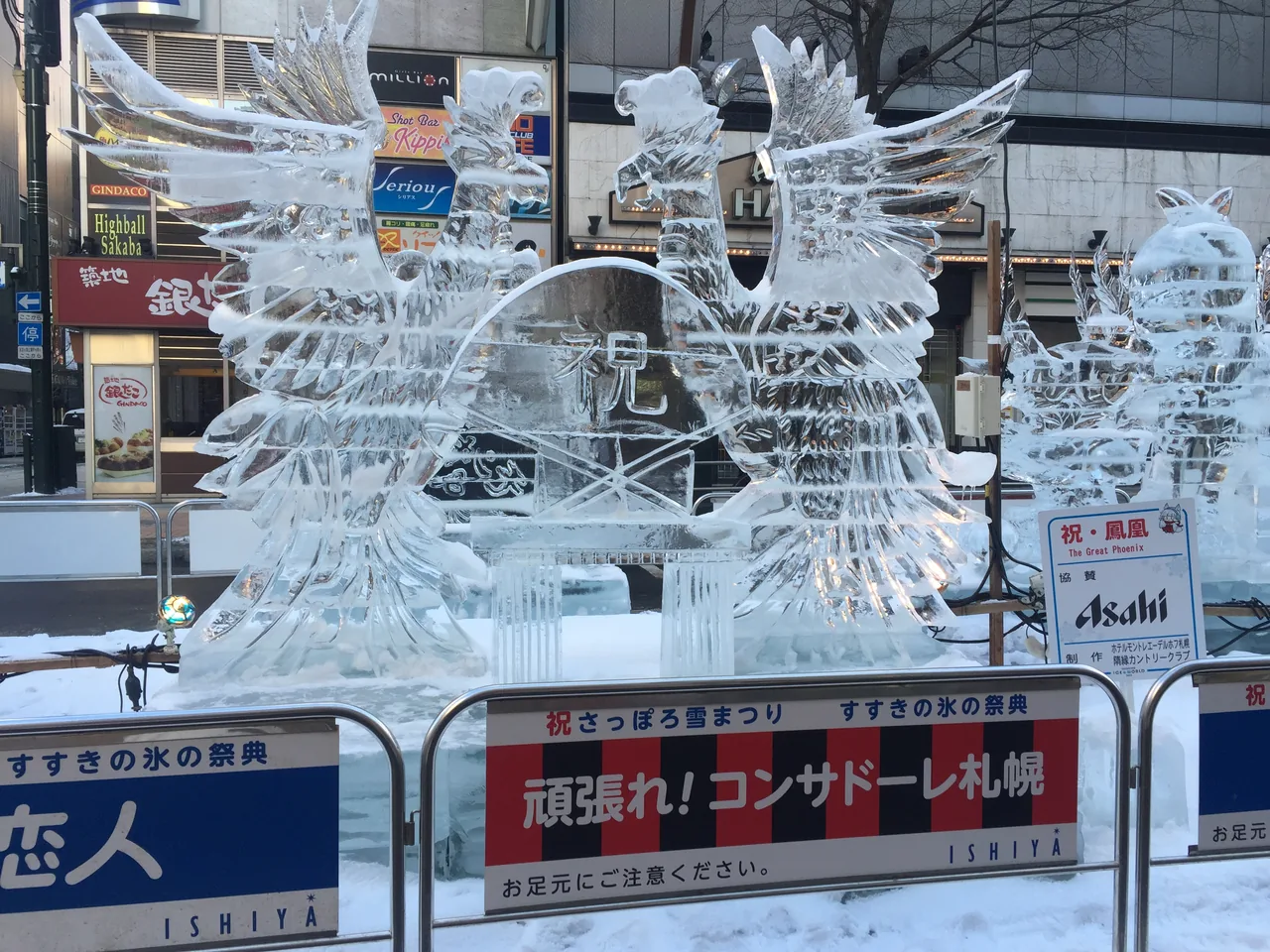
The Susukino ice sculptures are carved by chefs. Around 200 of them, drawn from the chefs’ association and the Hokkaido ice sculpture society, work through three consecutive nights.
The night shift is not for atmosphere. The work goes better once the temperature drops below minus 10, and when it rises the carvers use dry ice to cool the blocks as they go.
| Item | Detail |
|---|---|
| People involved | Around 200 chefs and carvers |
| Time taken | Three full days |
| When they work | Consecutive nights |
| Working temperature | Below minus 10 |
| If it warms up | Dry ice is used to cool the blocks |
Pieces have gone over
A gust brought an ice sculpture down during the 45th edition. The 46th responded with specific measures.
| Measure | Detail |
|---|---|
| Plinths | Lowered centre of gravity, with sculptures fixed firmly to the base |
| Viewing distance | Widened from 50cm to 90cm |
| Inspection | Society members check and clear the pieces daily |
| Road surface | Sand spread as conditions require |
On the night of 10 February during that 46th edition, warm air did bring a sculpture down. The widened distance held, no visitors were affected, and the festival closed with no injuries.
8. The parts residents build themselves
What the Self-Defense Forces and the sculpture committee handle is five large works. The remaining hundred-plus pieces come from resident groups, students and volunteers. Of the 135 sculptures at Odori last time, 79 were citizen-built.
| Who | Builds | Where |
|---|---|---|
| Resident groups | 79 citizen snow sculptures | Odori blocks 2 and 9 |
| High school art club students | The snow object contest | Tsudome outdoor site |
| Professional sculptors | Five works at the snow art plaza | Odori block 6 |
| Resident volunteers | Large sculpture builds, site announcements, lost-child calls | All sites |
| Foreign language volunteers | Guiding overseas visitors around the site | Odori information points |
Citizen sculptures are allocated by ballot
Teams apply during an open call each November and places are drawn automatically. Those selected attend a technical workshop covering carving and, specifically, how to stop a sculpture collapsing. They also model their planned piece in clay before touching snow.
A public vote runs during the festival. The last edition was the tenth, held over four days across blocks 2 and 9, and the top three teams earn a place in the following year.
The high school section is built in a single day
On opening day at Tsudome, art club students build sculptures and are judged on the spot. Last time they worked from 08:00 to 14:30 with the public able to watch the whole process.
| Item | Last edition |
|---|---|
| Build window | 08:00 to 14:30 on opening day |
| Piece dimensions | 3m deep, 3m wide, 2.5m high |
| Entries | 12 |
| Who competes | Art clubs from the Ishikari branch of the Hokkaido high school cultural federation |
Visitors can work on the large sculptures
Public participation in the large sculpture builds opened at the 38th edition in 1987, when a thousand people took part across the season. Volunteers now work under the direction of the build teams, and the organisers report growing numbers of families who have relocated to Sapporo and international students.
Running costs now depend partly on donations
The last edition began collecting donations on site, taken by scanning a QR code with a phone, at five points.
| Collection point | Location |
|---|---|
| Odori block 3 | Smile Link Sapporo and the decarbonisation zone rest area, two points |
| Odori block 6 | Temporary tourist information point |
| Tsudome | Indoor information desk |
| JR Sapporo | Hokkaido Sapporo tourist information centre, west concourse |
The money goes towards securing snow, running the sites and training the next generation of builders. It is the kind of arrangement a festival ends up needing when it charges nothing at the gate and still has to move 3,000 truckloads of snow.
9. How cold it gets and what to bring
February in Sapporo averages minus 2.7, with daily lows averaging minus 6.2. The temperature is rarely the thing that ruins the day, though. The pavement is.
| Measure | February average |
|---|---|
| Mean temperature | Minus 2.7 |
| Daily low | Minus 6.2 |
| Deepest snow cover | 95cm, the highest of the year |
| Days with snowfall | 25.3 |
Those are Japan Meteorological Agency figures for the Sapporo station covering 1991 to 2020. Late January into early February is the coldest stretch of the year, and the festival sits in the middle of it.
Footwear decides the day
Roads freeze often enough that anything without a deep-cut winter sole will slide. The organisers lead their own advice with this point rather than with coats.
| Item | Detail |
|---|---|
| Slip-on grips | Fitted over your own shoes, around ¥1,000 each |
| Where to buy | The official shop at Odori, nearby convenience stores, JR and subway station kiosks |
| Walking poles | Lent free of charge at the official shop |
| Layers | A shirt and jumper layered, with a proper overcoat or padded jacket on top |
| Thin coats | The organisers state outright that these are likely to leave you cold |
| Also needed | Hat, ear covers, gloves |
Leave the luggage behind
If you are heading to a site straight from the airport, there are staffed left-luggage counters: one inside Odori station on basement level 1 near the west Tozai Line gates, and one inside the tourist information centre in the west concourse at JR Sapporo. It is ¥1,000 per item regardless of size, and everything has to be collected the same day.
Phone batteries drain fast in the cold. Below freezing, a screen left on for long stretches can shut the handset down while charge remains, so keep a power bank in an inside pocket where it stays warm.
10. Getting to each site
Odori and Susukino are directly above subway stations. Tsudome is the one that needs planning. Odori and Susukino are a single stop apart and an easy walk in between.
| Site | Access |
|---|---|
| Odori | Odori station on the Namboku, Tozai and Toho lines, straight up from the platform |
| Susukino | Susukino station on the Namboku line, straight up from the platform |
| Tsudome | Sakaemachi on the Toho line, then a shuttle bus or a 15-minute walk |
Fitting all three into one day means putting Tsudome in the middle of it, because it closes at 16:00. Odori and Susukino stay open into the night, so they take the evening.
Getting back to the airport
| From | To New Chitose |
|---|---|
| Odori Park | About 1 hour 10 minutes by bus |
| Sapporo Station | About 1 hour by JR |
| Tsudome | Sakaemachi to Sapporo Station, then change to JR |
Paying for the subway and buses works as described in our Suica and ICOCA guide.
Odori Station MapMap Sapporo Station MapMap New Chitose Airport MapMap11. The week the rooms disappear
Taiwan’s 2027 New Year holiday runs from 4 to 10 February, covering seven of the festival’s eight days. Taiwan has direct flights into Sapporo, and this particular holiday runs a full seven days.
| Item | 2027 |
|---|---|
| Snow Festival | 4 to 11 February |
| Taiwan New Year holiday | 4 to 10 February, seven days |
| New Year’s Eve | 5 February |
| Overlap | Seven of the eight days |
Add the 1.93 million who came through Odori alone last time. Rooms go before flights do in this window, so once your dates are set, book accommodation first and fit the flights around it.
Where you stay changes how the days work
The Odori site runs straight through the middle of town, so a hotel inside the underground walkway network gets you close to the site without going outside. Sapporo Station, Odori and Susukino are all connected below ground.
The character of each district, along with the lodging tax, is set out in our Sapporo accommodation guide, including how the festival week changes the calculation.
12. What happens afterwards, and how it got here
The morning after the festival closes, the sculptures are demolished. The reason is collapse risk. Heavy machinery moves in and eight days of work becomes a heap of snow.
The organisers acknowledge that visitors arriving just after the festival are often disappointed to find those heaps. Odori Park has to return to being a public space by spring, so crews also haul snow out to speed up the thaw.
There is something to follow it, though. Sapporo Snow Sports Park 2027 runs from 12 to 14 February, three days, starting the day after the festival ends. Room rates have come back down by then, which makes extending the trip an option worth pricing.
It started on a snow dump
The first edition was a single day, 18 February 1950. The site was the block 7 plaza on Odori where residents dumped their cleared snow, and students from three high schools and two middle schools built six sculptures there. Alongside them ran square dancing, a singing contest and a dog race on a course laid out along the pavement.
Fifty thousand people turned up that day. Sapporo’s population at the time was 313,000.
| Edition and year | What happened | Length |
|---|---|---|
| 1st, 1950 | Students built six sculptures. 50,000 visitors | One day |
| 2nd, 1951 | Adopted as an official annual city event | Two days |
| 4th, 1953 | The first 15-metre sculpture, built by a thousand people over the season | Two days |
| 5th, 1954 | A severe blizzard buried and tilted the sculptures | Four days |
| 6th, 1955 | The Self-Defense Forces joined, with a ten-metre statue of the Virgin Mary | Two days |
| 10th, 1959 | 2,500 people on the builds, first television and newspaper coverage. 550,000 visitors | Not recorded |
| 16th, 1965 | Makomanai became an official second site. 2.97 million visitors | Not recorded |
| 23rd, 1972 | The Sapporo Winter Olympics. A 25-metre sculpture, still the largest built | Not recorded |
| 25th, 1974 | The oil crisis left fuel short, so 800 oil drums were packed inside sculptures | Not recorded |
| 25th, 1974 | The International Snow Sculpture Contest began with six teams | Not recorded |
| 34th, 1983 | The Susukino site was added | Not recorded |
| 1987 | Two days added, bringing the festival to seven | Seven days |
| 43rd, 1992 | 366 snow and ice sculptures, the most ever | Not recorded |
| 60th, 2009 | Tsudome became the second site | Not recorded |
Those first six sculptures were built from snow the students gathered nearby. The festival now hauls in 3,000 truckloads from across the city and its outskirts.
The name and the theme
In Japanese the festival’s name uses a character only for the word snow and hiragana for the rest, chosen because most of those involved wanted something simple and familiar to residents. The first edition was run as an experiment with no guarantee of a second, which is why no edition number was attached to it at the time.
A headline theme was first set for the 18th edition in 1967, built around the coming Sapporo Olympics and the Osaka World Expo. Themes changed annually after that until the 29th edition in 1978 settled on a permanent one, which is still in use today.
Where the contest came from
It began at the 25th edition in 1974 at Odori West 2, with six teams: Canada, France, South Korea, South Vietnam, the United States and Japan. Thirty-seven countries and territories have competed since.
| Region | Teams over the years |
|---|---|
| Asia | 14 |
| Europe | 11 |
| North America | 7 |
| Oceania | 3 |
| South America | 2 |
Finland, who won the last edition, were competing for the 30th time. Portland, one of Sapporo’s sister cities, fields a team, as does Daejeon in South Korea.
If skiing is also on the itinerary, see our Japan ski and snowboard guide. If the month is still open, the best time to visit Japan compares the options.