
Japan at New Year: What Closes From 29 December to 3 January, and What Fills Up
Christmas is an ordinary working day here. New Year is the holiday, and its dates are fixed in law rather than set each year. Here is what shuts, what stays open, and which four days are worth keeping off your rail itinerary.
| Government offices | Closed 29 December to 3 January under a statute, every year. |
|---|---|
| Banks | Branch counters close from 31 December to 3 January. |
| Department stores | Almost all shut on 1 January and reopen on the 2nd or 3rd. |
| Where the crowds are | Meiji Jingu draws roughly 3.1 million visitors over three days. |
| Rail peaks | Outbound 28 to 30 December, return 3 to 4 January. |
1. Christmas is a working day. New Year is the holiday
2. Where the country goes instead
3. Which day you go changes everything
4. Department stores now close on 1 January
5. The four days to keep off your rail itinerary
6. Reserved seats go on sale one month ahead, at 10:00
7. New Year’s Eve
8. Only six lines run through that night
9. Things that have to be arranged in autumn
10. Watching the first sunrise
11. What to eat when the restaurants are shut
12. What stays open
13. Money, and why you will want more cash
14. The country comes back on 4 January
15. Whether this is the right week for your trip
1. Christmas is a working day. New Year is the holiday
Japan decorates enthusiastically for Christmas and then goes to work on 25 December. The holiday that empties offices, closes shops and moves millions of people across the country is New Year, and its dates come from legislation rather than custom.
| Who | Closed | Basis |
|---|---|---|
| Government offices and public bodies | 29 December to 3 January | Act on Holidays of Administrative Organs |
| Bank counters | 31 December to 3 January | Banking Act Enforcement Order |
| Public holidays proper | 1 January only | Act on National Holidays |
Only one of those six days is a public holiday. The rest are closures written into separate statutes, which is why the country pauses far longer than the holiday calendar suggests. For a visitor this is useful: the dates do not move, so a trip planned a year ahead runs into exactly the same pattern.
The two-day gap between the government and banking closures is worth noticing. Offices shut from the 29th while many bank branches trade until the 30th, so a currency exchange counter open on 30 December is following the rule rather than breaking it.
2. Where the country goes instead
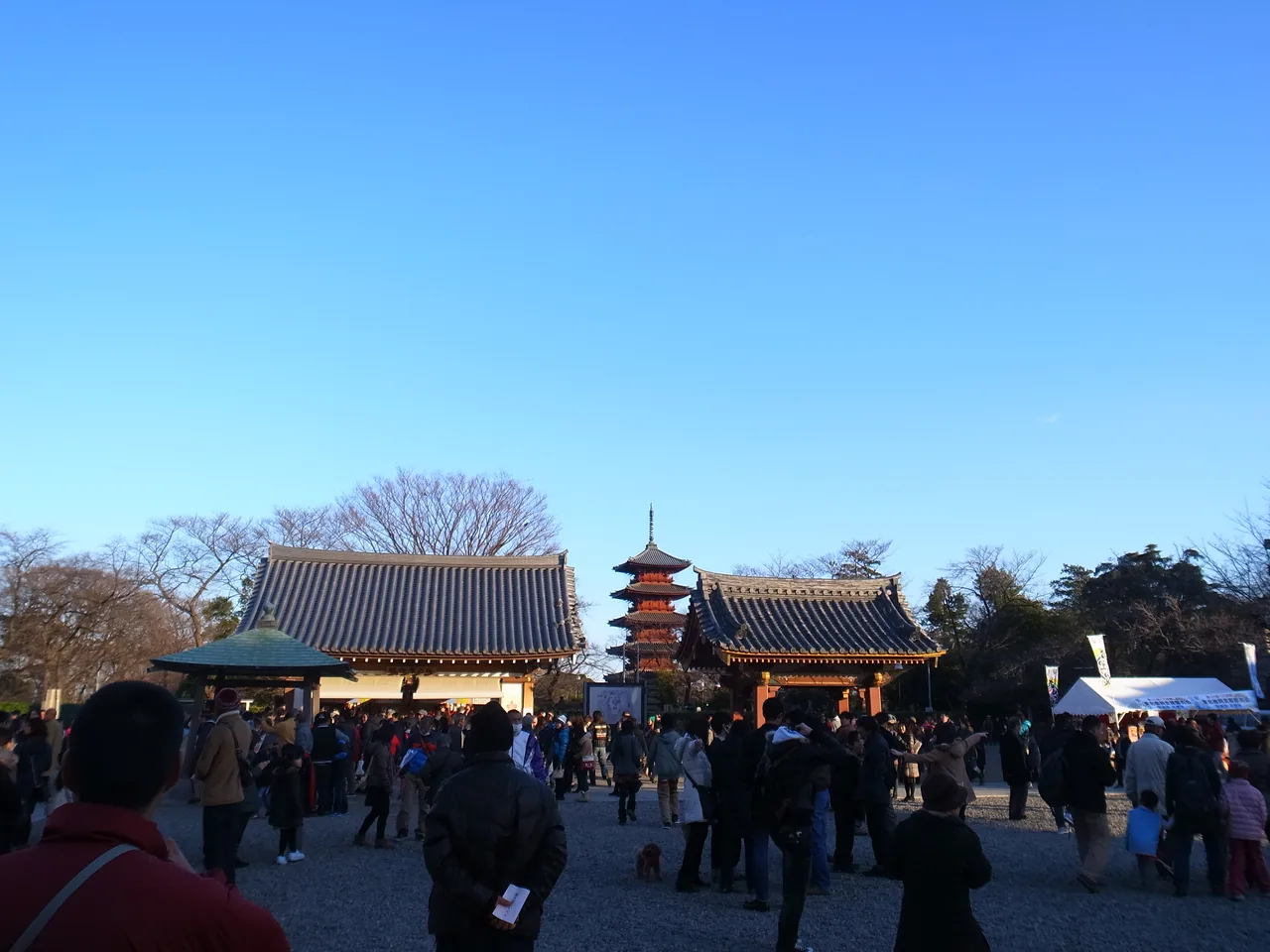
While offices empty, shrines and temples take the largest crowds of their year. The visit is called hatsumode, the first prayer of the new year, and the scale has no equivalent in any other season.
| Site | Location | Visitors over three days |
|---|---|---|
| Meiji Jingu | Shibuya, Tokyo | about 3.1 million |
| Naritasan Shinshoji | Narita, Chiba | about 3.05 million |
| Kawasaki Daishi Heikenji | Kawasaki, Kanagawa | about 3 million |
| Sensoji | Asakusa, Tokyo | about 2.83 million |
| Fushimi Inari Taisha | Kyoto | about 2.7 million |
These are counts published by the sites themselves, taken in different years by different methods, so they indicate scale rather than rank. Three million over three days is a million a day through a single approach road, and queues of an hour or more are routine.
When the queues are shortest
The peak runs from about 23:00 on 31 December to 02:00 on 1 January, and again through the afternoon of 1 January. Early morning on the 2nd or 3rd at the same shrine is a completely different experience. Nothing requires the visit to happen on the first day.
Smaller neighbourhood shrines are the other option. The ritual, the omikuji fortune slips and the atmosphere are the same; only the queue changes.
3. Which day you go changes everything
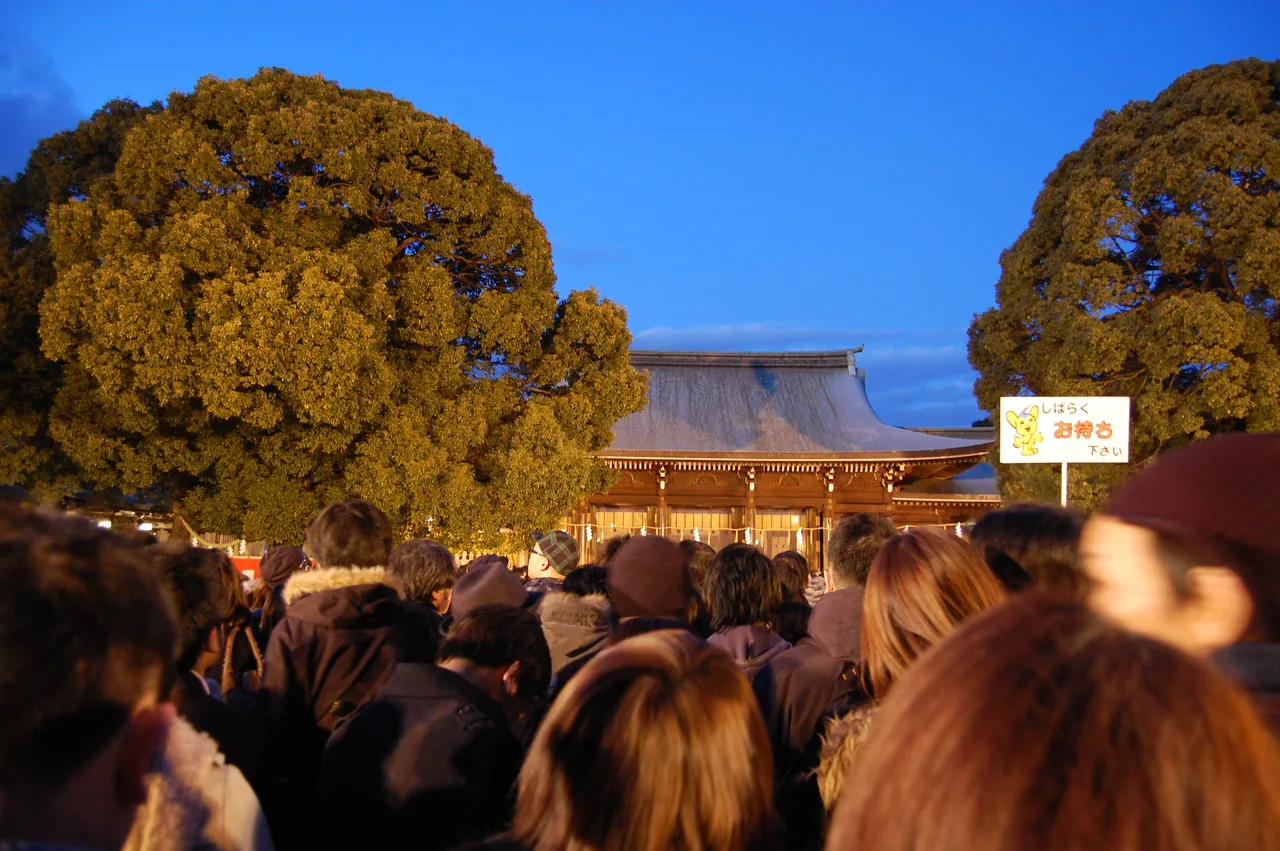
The same shrine at dawn on 1 January and at ten in the morning on the 5th are two different places. The crowd is concentrated into three days and falls away sharply afterwards, so moving the date is the whole lever.
| When | What it is like |
|---|---|
| Night of 31 December into the 1st | The peak. Queues to get into the grounds at all |
| Daytime, 1 January | Second busiest |
| 2 and 3 January | Still heavy, but the queue is shorter |
| 4 January onwards | Close to an ordinary day |
You have until 7 January
Nothing requires the first shrine visit to happen within three days. The period called matsunouchi runs to 7 January and a visit inside it still counts as the year’s first; some regions extend that to the 15th.
So if avoiding crowds matters, 4 to 7 January is the sweet spot. The stalls and decorations are still up and the people have gone, which also makes it the better window for photographs.
Big shrines come with road closures
Around the busiest shrines, traffic is restricted and streets are made one-way for the three days. Arriving by taxi frequently does not work, and even the walk from the station is routed differently from normal.
Rail goes the other way and adds capacity: several lines run extra services for these days, so the train is the reliable approach to a major shrine.
4. Department stores now close on 1 January
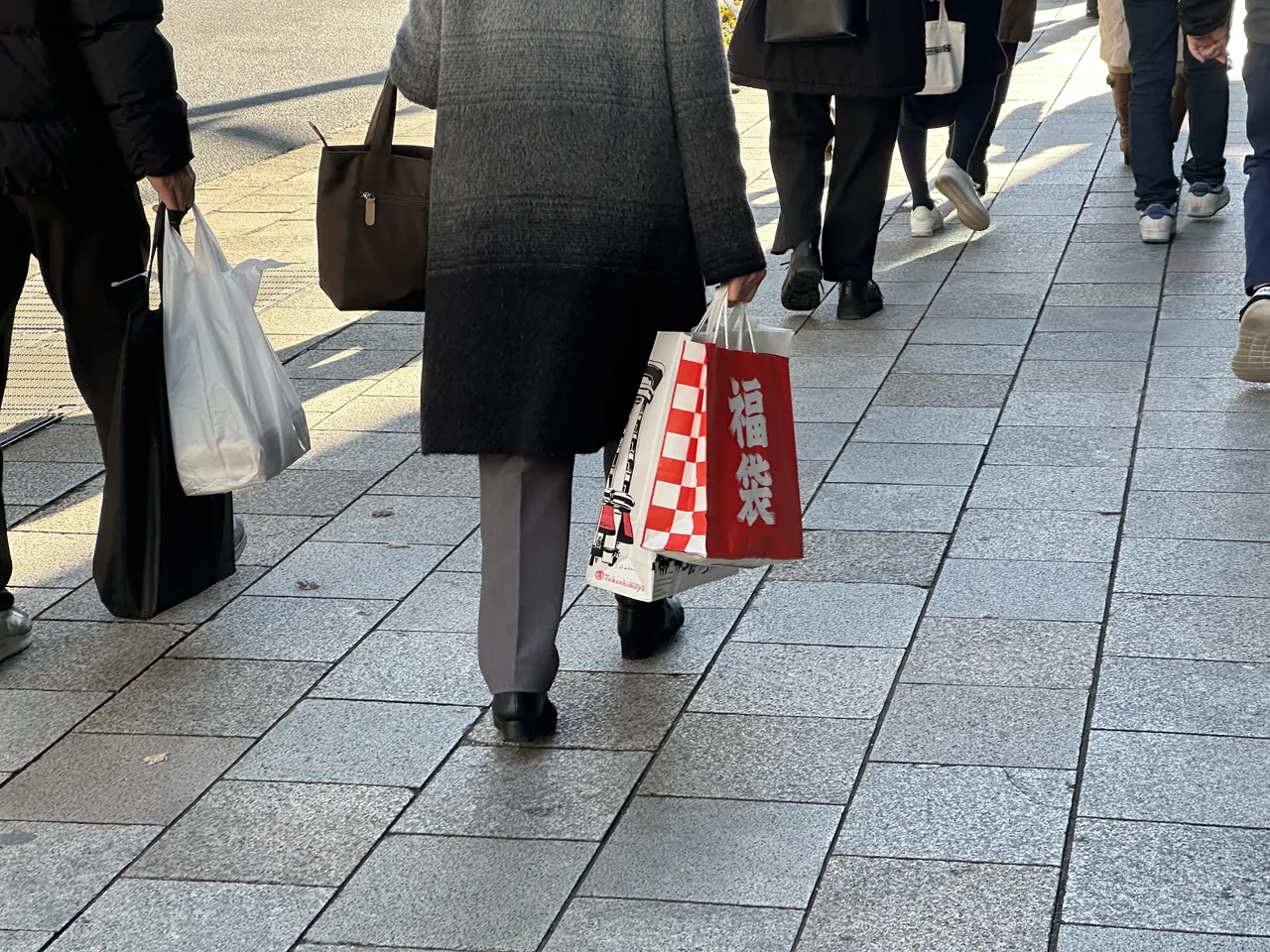
Arriving at a department store on New Year’s Day for the fukubukuro lucky bags no longer works. The major chains have moved to closing on the 1st, and several have pushed their first trading day back further.
| Chain | First trading day |
|---|---|
| Mitsukoshi Isetan | 2 January |
| Daimaru Matsuzakaya | 3 January |
| Takashimaya | 3 January |
| Sogo and Seibu | All stores closed on 1 January |
The direction of travel is one way. Opening on 1 January used to be a competitive move; closing is now the norm, and Daimaru Matsuzakaya and Takashimaya have added another day on top. Staff working conditions are the stated reason, and nothing suggests a reversal.
The itinerary consequence is concrete. A trip that lands on 31 December and departs on 2 January contains less than half a day of department store shopping. If the lucky bags matter to you, add a night or shift the trip to start after 3 January.
5. The four days to keep off your rail itinerary
The outbound rush from Tokyo runs 28 to 30 December and the return rush runs 3 to 4 January. Avoid those four dates and the same journey feels like a different railway.
| Dates | Direction | Conditions |
|---|---|---|
| 28 to 30 December | Tokyo outbound | Heaviest of the period |
| 31 December to 2 January | Both | Comparatively manageable |
| 3 to 4 January | Inbound to Tokyo | Heaviest of the period |
Recorded conditions give the scale. On days when the Tokaido Shinkansen runs Nozomi services as all-reserved, trains have been close to full by mid-afternoon, and unreserved occupancy on the Hokuriku Shinkansen has reached 120 percent. At 120 percent every seat is taken and passengers are standing in the aisle for the duration.
There is a second constraint if you are travelling with a large case. Anything over 160cm across three sides cannot be taken into an unreserved car and needs one of the seats with a baggage space, of which a Nozomi has 57. Those are among the first seats to go over New Year.
6. Reserved seats go on sale one month ahead, at 10:00
JR reserved seats open for sale at 10:00 exactly one month before the travel date. Over New Year some trains are decided in that minute, which makes when you buy a bigger question than what you pay.
| Travelling on | Seats released |
|---|---|
| 29 December | 29 November, 10:00 |
| 31 December | 30 November, 10:00 |
| 2 January | 2 December, 10:00 |
| 3 January | 3 December, 10:00 |
The pressure is directional: outbound from Tokyo on 29 and 30 December, back towards it on 2 and 3 January. If your itinerary needs one of those, be somewhere you can act at 10:00 a month earlier.
Buying without queueing
JR East’s Ekinet runs an advance-application step. From 14:00 on the same weekday one week before the release, until 09:54 on the release morning, you can lodge a request; everything lodged is processed together at 10:00 and you are told the outcome.
It removes both the queue at the counter and the need to be refreshing a page at ten. It does not guarantee anything: if more applications land than there are seats, some come back empty.
If the reservation does not come through
Trains with unreserved cars will still carry you, but standing is the realistic outcome in this week. Two and a half hours upright between Tokyo and Osaka is a normal New Year story rather than an unlucky one.
Shifting the date is more effective than shifting the train. Moving to 28 December or 4 January turns the same journey back into an ordinary one.
7. New Year’s Eve
The evening of 31 December is the centre of the whole period. Temples ring their bells, shrine queues form, and countdown events run in parallel across the cities.
| Event | What happens | Timing |
|---|---|---|
| Joya no kane | Temple bells rung 108 times; some temples let visitors take a turn | Around midnight |
| Hatsumode queue | Major shrines have their longest queues at midnight | 23:00 to 02:00 |
| Toshikoshi soba | Buckwheat noodles eaten on the last evening of the year | Evening |
| Countdown events | Theme parks and parts of the city centres | Around midnight |
Check the overnight train arrangements before you commit
Some lines run through the night at New Year, but which ones is decided by each operator and changes from year to year. In a recent season JR East ran overnight services on six Tokyo-area lines, with the Yamanote Line running roughly every 10 to 25 minutes between about 01:00 and 05:00, while Tokyo Metro ran no overnight service at all and used its Saturday and holiday timetable from 30 December to 3 January.
The practical implication is that the subway may be shut while JR is running. Choosing accommodation within walking distance of a JR station makes the whole evening easier to plan.
8. Only six lines run through that night
Trains do run all night in Tokyo on 31 December, but only on six lines. JR East puts on overnight service for that one night in the capital area, and nothing else does.
| Line | Running | Interval |
|---|---|---|
| Yamanote | 01:00 to around 05:00 | About 10 to 25 minutes |
| Keihin-Tohoku and Negishi | 01:00 to around 04:00 | About 15 to 70 minutes |
| Chuo and Sobu, local | 00:20 to around 04:40 | About 15 to 120 minutes |
| Chuo Rapid | 00:50 to around 04:30 | About 40 to 120 minutes |
| Yokosuka | 01:00 to around 05:00 | About 80 minutes |
Tokyo Metro does not
This is the part that gets reported wrongly. Tokyo Metro runs no overnight service on any line and does not push its last trains later either. An itinerary built on the subway does not survive that night.
From 30 December to 3 January the metro also runs its Saturday and holiday timetable across all five days, so a plan calculated from weekday times will be out.
Some of those intervals are two hours
Overnight service is not normal service. The Chuo Rapid stretches to 120 minutes between trains, which turns a missed connection into a two-hour wait on a cold platform.
Only the Yamanote stays anywhere near its usual rhythm at 10 to 25 minutes. If you intend to move around Tokyo that night, building the evening along the Yamanote loop is the version that works.
9. Things that have to be arranged in autumn
A few things in this period cannot be bought on arrival and have to be applied for months ahead. By the time you are in Japan looking into them, they are finished.
| What | When it happens |
|---|---|
| Tokyo Disney Resort on New Year’s Eve | Lottery application in autumn |
| Shinkansen reserved seats | 10:00, one month before travel |
| Popular ryokan | Bookings open from summer |
| Department store fukubukuro | Online pre-sales from autumn |
Disney uses a different ticket that night
Tokyo Disney Resort stays open through the night from 31 December into 1 January, and an ordinary park ticket does not admit you. A separate passport covers that window, and it is allocated by lottery.
Applications open in autumn. Fireworks at midnight and park-hopping between the two parks in the small hours make it heavily oversubscribed, so if this is the trip you are picturing, it needs checking before the flights.
Without a winning application you can still go from the afternoon of 1 January on a normal ticket. That is also one of the busiest days of the year there.
Fukubukuro moved online first
The lucky bags sold on the first trading day are no longer only a queue-before-dawn affair. Department stores and brands open online pre-sales from autumn, and the desirable ones finish at that stage.
Stock still appears in store, with a thinner range. If a specific brand is the point, look up that brand’s online schedule before you leave rather than after you land.
10. Watching the first sunrise
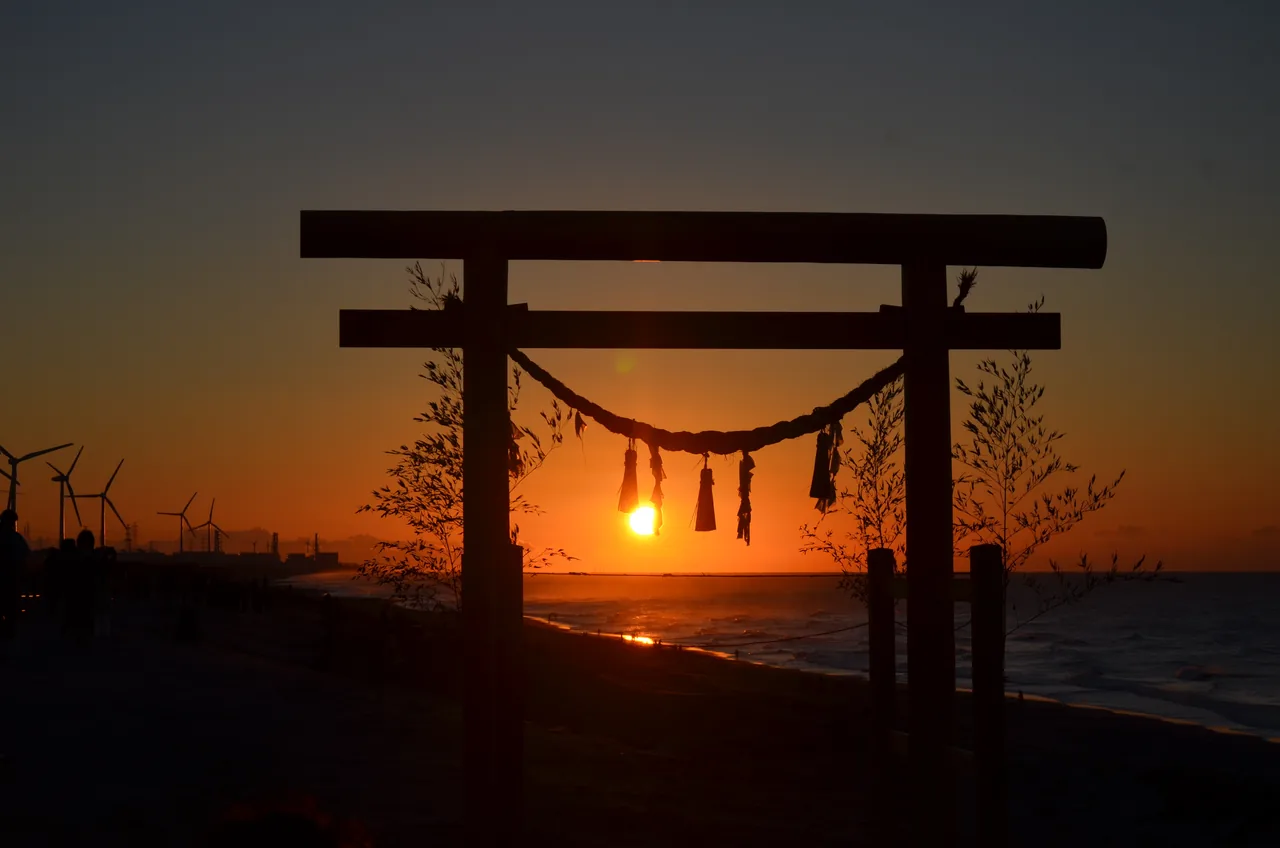
The first sunrise of the year has its own name in Japanese and a substantial following. In Tokyo the sun comes up at around 06:50.
Three kinds of place attract crowds: anywhere with an eastern sea view, high observation decks, and mountain summits. Observatories often open early on this one morning, usually by advance reservation and at a separate price.
| Type of spot | What to expect |
|---|---|
| East-facing coast | The sun clearing the horizon over open water |
| City observation decks | Early opening, generally reservation only |
| Summits and viewpoints | Weather-dependent and cold before dawn |
| Aircraft and boats | Special charters operate |
Weather is a matter of probability. The Pacific side of Japan has clear skies far more often in early January, while the Sea of Japan side is frequently overcast or snowing. If the sunrise is the point of the trip, being on the Pacific side improves the odds substantially.
11. What to eat when the restaurants are shut
Food is where visitors get caught out in this week. Independent restaurants close, chains cut their hours on some days, and what to eat becomes a harder question than where to go.
| When | What | Where |
|---|---|---|
| 31 December | Toshikoshi soba | Soba shops, convenience stores, supermarkets |
| 1 to 3 January | Osechi and zoni | At home, so hard for a visitor to reach |
| Throughout | Ordinary food | Convenience stores, family restaurants, hotels |
Soba shops fill up on the 31st
Buckwheat noodles on the last night of the year are a fixed custom, so queues form from the early evening. Well-known shops start queueing in the afternoon and simply stop when the dough runs out.
If you would rather not queue, the convenience store is the answer. Every branch stocks toshikoshi soba on 31 December, and supermarkets discount theirs later in the evening.
Osechi is difficult to reach as a visitor
The lacquered boxes eaten over the first three days are home food, and restaurants rarely sell them. Department stores and supermarkets take orders from autumn and hand them over at the end of December, which is a system built for residents rather than travellers.
Staying at a ryokan changes that. Some serve osechi and zoni as the New Year breakfast, which makes an overnight stay the simplest way to eat any of this at all.
Three things you can rely on
Convenience stores stay open. Some branches drop out of 24-hour operation for a few days, but they do not close.
Family restaurants and the gyudon chains largely open too. So do hotel breakfast rooms and in-house restaurants, because they have guests to feed. Choosing a room with breakfast included settles one meal a day for the whole trip.
12. What stays open
The country does not shut down completely, and most of what a visitor uses daily keeps running.
| Category | Status |
|---|---|
| Convenience stores | Generally open as normal |
| Chain restaurants and family restaurants | Mostly open |
| Theme parks | Open year round, with New Year programming |
| Shrines and temples | Their busiest period of the year |
| Supermarkets and drugstores | Varies by chain, with 1 January closures increasing |
| Independent shops and restaurants | Many closed |
| Museums and galleries | Year-end closures are common |
Supermarkets and drugstores deserve a closer look. Trading through New Year used to be standard and closures on 1 January are now spreading, with branches of the same chain making different decisions. Anything you actually need, such as regular medication or food for young children, is worth buying by 30 December.
Independent ramen shops and izakaya close in large numbers. If a specific restaurant is on your list, check its New Year hours directly and keep a chain restaurant or a department store food hall as the fallback.
13. Money, and why you will want more cash
Bank counters close by law, not by custom. The Banking Act’s enforcement order lists Sundays, public holidays and Saturdays alongside 31 December to 3 January as days on which banks do not open, so across those four days no branch counter in the country is staffed.
Bank counters closing from 31 December to 3 January is the constraint that catches people out. Currency exchange desks located inside bank branches close with them.
| Method | Over New Year |
|---|---|
| Bank counters | Closed 31 December to 3 January |
| Convenience store ATMs | Generally available |
| Airport exchange counters | Many operate |
| Card payments | Normal wherever a business is trading |
This is also a period that runs on cash more than usual. Shrine offerings, omikuji fortune slips and hamaya arrows are cash only almost everywhere, as are the food stalls that appear along the approaches. None of it is expensive, but coins and small notes are genuinely useful.
Accommodation is at its annual peak
New Year concentrates domestic Japanese travel demand into one week, and room rates sit at the top of the annual range. Onsen ryokan rise more sharply than city hotels, and some impose a minimum stay across the period. Higher rates can also push a stay into a higher accommodation tax band.
14. The country comes back on 4 January
Because the closures are fixed by statute, so is the reopening. An itinerary that starts on 4 January is barely touched by anything on this page.
| What | Back open |
|---|---|
| Government offices and city halls | 4 January |
| Bank counters | 4 January |
| Department stores | 2 or 3 January |
| Weekday rail timetable | 4 January |
| Independent shops and restaurants | Any time from 4 January |
If 4 January lands on a Saturday or Sunday, offices and banks slide to the next working day instead. Anything administrative you need done while travelling has to be planned around that.
Independent places are the unpredictable part
Chains publish their dates. The small restaurant and the family shop do not, and they range from opening on the 4th to staying shut until the 7th, when the New Year period traditionally ends.
Which is why aiming at a specific restaurant is the wrong way to plan this week. Choose the neighbourhood rather than the address, and eat at whatever has its lights on.
The week after is unusually quiet
The crowds stop on 3 January and the following week is among the emptiest of the year. The shrine crowds have gone and domestic travellers are home, so the same sights are a different experience entirely.
If what you want is Japan in winter rather than Japan at New Year, departing on 4 January is the best-value version of this whole period. Flights and rooms come down from that date too.
15. Whether this is the right week for your trip
New Year is the most distinctive week to be in Japan and also the most awkward. Which of those dominates depends entirely on what you came for.
| If your trip is about | Verdict |
|---|---|
| Hatsumode and New Year customs | This is the only week they exist |
| Skiing or onsen | Works well, at the highest rates of the year |
| Theme parks | Open, with the longest queues of the year |
| Department stores and shopping streets | Better after 3 January |
| Museums and galleries | Widely closed; choose another week |
| Several cities by shinkansen | Avoid 28 to 30 December and 3 to 4 January |
| Keeping costs down | Mid-January is far better on every count |
The strongest shape for a New Year trip is arriving on 30 or 31 December and leaving on or after 4 January. You land after the outbound rush, leave after the return rush, see both New Year’s Eve and New Year’s Day, and the department stores are open by the 3rd.