
Centrair Airport to Nagoya: The Simple Version
Chubu Centrair sits on an island out in Ise Bay, but getting into Nagoya is refreshingly easy — one Meitetsu train, about 28 minutes. Here’s the μ-SKY, the cheaper trains, buses and taxis, sorted by time, cost and which station you actually want.
| Fastest | the Meitetsu μ-SKY limited express — Centrair to Meitetsu Nagoya in 28 minutes for ¥1,430, every seat reserved, one departure every 30 minutes. |
|---|---|
| Cheapest | any ordinary train on the same line — ¥980, no reserved-seat surcharge, roughly 35–50 minutes. Same tracks, just a few more stops and no guaranteed seat. |
| Where to get off | Meitetsu Nagoya for the main station and Shinkansen; Kanayama for the subway and JR Chuo Line; Jingu-mae for Atsuta Shrine. |
| Bus & taxi | the airport bus reaches Sakae and Fushimi in about 55 min for ¥2,000 (there’s no direct Nagoya Station bus anymore); a taxi runs roughly ¥15,000–20,000. For the city, the train wins almost every time. |
| First on arrival | tap in with any IC card (Suica, ICOCA, manaca) — but for the μ-SKY you also buy a separate μ-ticket (¥450). |
1. At a glance: every way from Centrair to Nagoya
2. The μ-SKY: fastest, and worth it
3. Save ¥450: the ordinary trains
4. Which station: Meitetsu Nagoya, Kanayama or Jingu-mae
5. Bus, taxi and private pickup
6. Best route by where you’re staying
7. Do these first on arrival: IC card, data, luggage
8. Late-night landings and LCC Terminal 2
9. Going back: Nagoya to Centrair
10. Centrair as a hub: domestic flights and onward trips
11. Onward from Nagoya: Kyoto, Osaka, Takayama and beyond
12. The airport itself is worth time
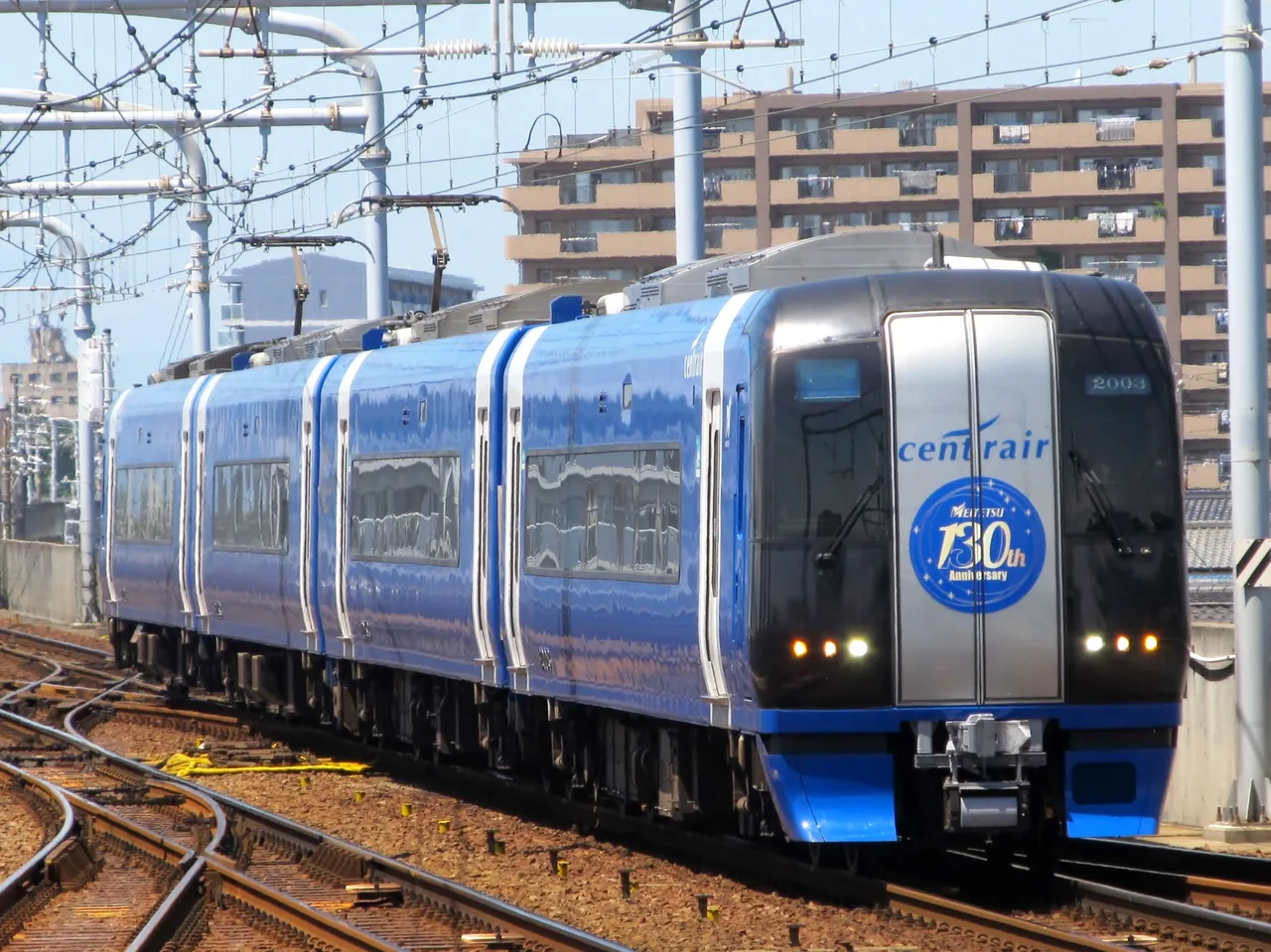
1. At a glance: every way from Centrair to Nagoya
Centrair (its official name is Chubu Centrair International Airport, airport code NGO) is Nagoya’s international gateway, built on a reclaimed island in Ise Bay. Despite the offshore address, one Meitetsu line runs straight from under the terminal to the city, so the whole decision is simpler than it looks.
Here’s every option in one table. The rest of the guide is just the detail.
| Option | Time to Meitetsu Nagoya | Cost | Best for |
|---|---|---|---|
| μ-SKY limited express | 28 min | ¥1,430 (reserved) | Speed, a guaranteed seat, room for luggage |
| Limited express / rapid (general car) | ~35–40 min | ¥980 | Saving ¥450 with only a few more minutes |
| Express (急行) | ~48–50 min | ¥980 | The cheapest, if you’re in no hurry |
| Airport bus | ~55 min (to Sakae/Fushimi) | ¥2,000 | Staying right by Sakae, or lots of bags |
| Taxi / private transfer | ~50 min | ~¥15,000–20,000 + tolls | Late arrivals, groups, door to door |
Read that and the shape is already clear: the train is the answer, and it’s really only a question of whether you pay ¥450 extra for a reserved seat on the μ-SKY or save it on an ordinary train. Everything below fills in the details.
Trains also start early and run late: the first departures from Centrair are before 6 AM and service continues toward midnight, so unless you land very late you’ll rarely wait long. (The μ-SKY thins out earlier in the evening than the ordinary trains — worth checking if you’re on a late flight.)
2. The μ-SKY: fastest, and worth it
The μ-SKY (written μSKY, pronounced “mew-sky”) is Meitetsu’s dedicated airport express. It barely stops, and it’s the one to take if you value your time on arrival — Meitetsu Nagoya in 28 minutes, with only Jingu-mae and Kanayama in between.
- Cost: ¥1,430 total — that’s the ¥980 base fare plus a ¥450 μ-ticket (the reserved-seat surcharge).
- Seats: every carriage is a reserved “μ-seat”, so you always sit down, with proper space for a suitcase. No scramble, no standing with your bags.
- Frequency: one departs about every 30 minutes through the day, straight from the platform beside Terminal 1.
There are three easy ways to get the μ-ticket:
- The touchscreen machines on the platform at Centrair — quickest; choose your train and pay by cash or card.
- The staffed ticket counter by the platform, if you’d rather ask a person.
- Meitetsu’s ticketless service (app or web), which lets you reserve from a month ahead — most useful for the trip back.
For the base fare you can now simply tap an IC card — the μ-SKY accepts contactless — but the reserved μ-seat still needs that separate ¥450 μ-ticket.
3. Save ¥450: the ordinary trains
Here’s the part most guides skip: the μ-SKY is not the only fast train. The same line runs regular limited express (特急), rapid express (快速急行) and express (急行) services, and their ordinary carriages cost just the ¥980 base fare — no μ-ticket needed.
- A general-car limited express reaches Meitetsu Nagoya in about 35–40 minutes for ¥980 — roughly ten minutes slower than the μ-SKY, and ¥450 cheaper.
- An express (急行) makes more stops and takes around 48–50 minutes, but it’s the same ¥980 and runs often.
- You board these like any commuter train, so if it’s busy you might stand — that’s the real trade-off versus a guaranteed μ-seat.
The honest verdict: if you’re travelling light or watching every yen, an ordinary train is genuinely fine. If you’ve got a big suitcase, a tired family, or you just want the trip over with, pay the ¥450 and take the μ-SKY.
4. Which station: Meitetsu Nagoya, Kanayama or Jingu-mae
Every airport train stops at the same three useful stations on the way into the city. Getting off at the right one saves you a pointless transfer, so match it to where you’re staying.
| Get off at | Time from Centrair | Connects to | Handy for |
|---|---|---|---|
| Meitetsu Nagoya | ~28 min (μ-SKY) | JR (Shinkansen), Kintetsu, subway, Aonami Line | Nagoya Station hotels, Shinkansen transfers, most of the city |
| Kanayama | ~24 min (μ-SKY) | JR Chuo/Tokaido Lines, subway Meijo & Meiko Lines | Hotels around Kanayama, the south and east side, Osu |
| Jingu-mae | ~22 min (μ-SKY) | Atsuta Shrine, walk to JR Atsuta | Atsuta Shrine, staying nearby |
For most visitors the answer is Meitetsu Nagoya: it sits directly under the JR Central Towers, connected to Nagoya Station, the Shinkansen and the subway, so you can reach almost anywhere from there. Kanayama is the quiet secret — it’s a smaller, calmer interchange, and if your hotel is near it or on the subway’s Meijo Line, getting off there is faster and less chaotic than fighting through Nagoya Station.
5. Bus, taxi and private pickup
The train is so good that buses and taxis are niche choices here — but there are cases where they make sense.
- Airport bus: Meitetsu runs a limousine bus from Centrair to Sakae and Fushimi in about 55 minutes for ¥2,000. Note the big change most old guides miss — it no longer runs directly to Nagoya Station. So it only really pays off if you’re staying right around Sakae.
- Taxi: a metered taxi runs roughly ¥15,000–20,000 plus expressway tolls and about 50 minutes to central Nagoya, with a 20% surcharge between 22:00 and 05:00 — expensive for one or two, but splittable across a group of four. Booking a fixed-fare airport taxi ahead is cheaper: around ¥9,400–15,500 to central Nagoya depending on the ward, plus tolls.
- Private transfer: a pre-booked driver meets you at arrivals with your name on a board and takes you straight to the hotel — the easy call with heavy bags, small kids, or a late landing.
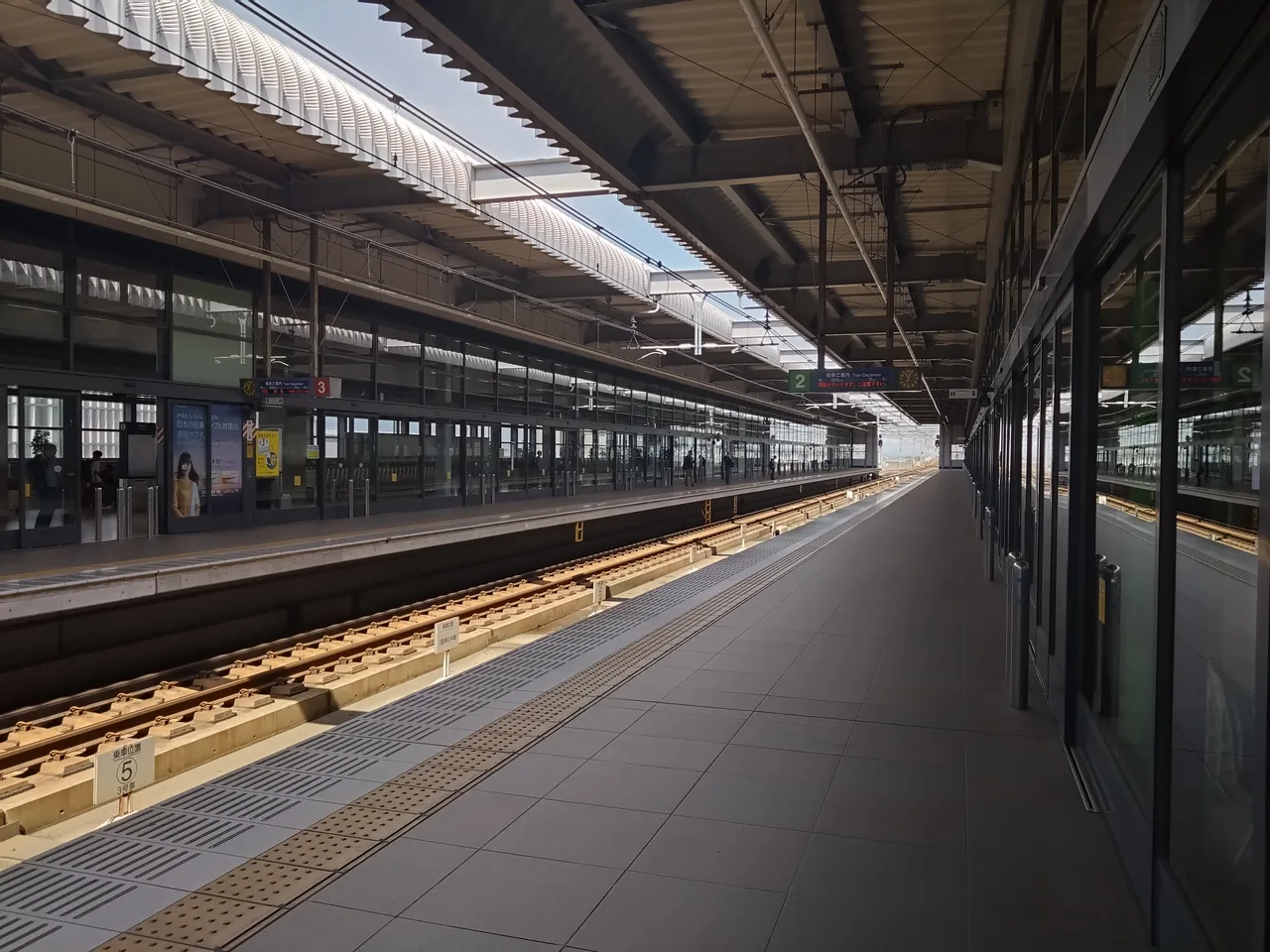
6. Best route by where you’re staying
In the end, “what should I take” mostly comes down to where your hotel is. Find your area and you’ve got your answer.
| Staying around | Do this |
|---|---|
| Nagoya Station (Meieki) | μ-SKY or any train to Meitetsu Nagoya — you’re basically there |
| Sakae | Train to Kanayama or Meitetsu Nagoya, then subway one or two stops (or the airport bus if you’re right by Sakae) |
| Kanayama | Get off at Kanayama — don’t ride on to Nagoya |
| Osu / Kamimaezu | Train to Kanayama, change to the subway Meijo Line |
| LEGOLAND / Kinjo-futo | Train to Kanayama, change to the Aonami Line to Kinjo-futo |
| Straight to Takayama / Kyoto / Ise | Ride to Meitetsu Nagoya, walk to JR/Kintetsu, and carry straight on |
Not sure which neighbourhood suits your trip in the first place? Our Nagoya travel guide breaks down where to stay and what each area is like.
7. Do these first on arrival: IC card, data, luggage
Before you head for the platform, three quick things make your first day in Japan run smoothly.
- Sort an IC card: Suica, ICOCA and the local manaca all work across Meitetsu, the subway and buses — tap in and out instead of buying a ticket each time. Any of them is fine here; on an iPhone you can add a mobile Suica in seconds. Full details in our our Suica & ICOCA guide.
- Get connected: you’ll want maps and train times the moment you land, and Nagoya Station’s five rail operators are much easier with a phone in hand. An eSIM set up before you fly means data the instant you switch your phone on — see our our Japan eSIM guide.
- Send your bags — or stash them: the Yamato (takkyubin) counters in the arrivals hall forward a suitcase to your hotel, with same-day delivery available to many hotels around Nagoya Station, Sakae and Nishiki if you drop it off early enough (otherwise next day). Want to keep them close instead? Coin lockers from ¥300 and staffed left-luggage desks are in the Access Plaza and both terminals.
8. Late-night landings and LCC Terminal 2
Plenty of flights into Centrair — especially low-cost carriers from around Asia — arrive in the evening or later, so it’s worth knowing how late you can still get out.
- Last trains: Meitetsu runs into roughly midnight, but the last μ-SKY leaves earlier than the last ordinary train. If your flight lands after about 22:30, check the final departures before you clear customs.
- If you miss the train: your options are a taxi (with the 22:00–05:00 night surcharge) or simply staying at the airport — there’s a hotel connected to the terminal, and the runway-view onsen (below) is open late.
- Terminal 2 = LCC: budget airlines (Jetstar, Peach, and many Asian carriers) use Terminal 2. It’s a short covered walk or a free shuttle to Terminal 1 and the train station, so allow a few extra minutes if you land there.
9. Going back: Nagoya to Centrair
The return trip is the same line in reverse, but a few things are worth planning so you’re not rushing with a suitcase.
- From Meitetsu Nagoya, the μ-SKY runs straight to the airport in 28 minutes. Reserve your μ-ticket in advance (up to a month ahead) if you want a guaranteed seat at a set time — handy on a check-in deadline.
- Give yourself buffer: aim to reach the airport at least two hours before an international flight, three if you’re checking bags at a busy time.
- Departures are smooth: for international flights, Centrair’s biometric “Face Express” lets you move through several checkpoints by face alone once you’ve registered — one reason the airport handles peak departures well.
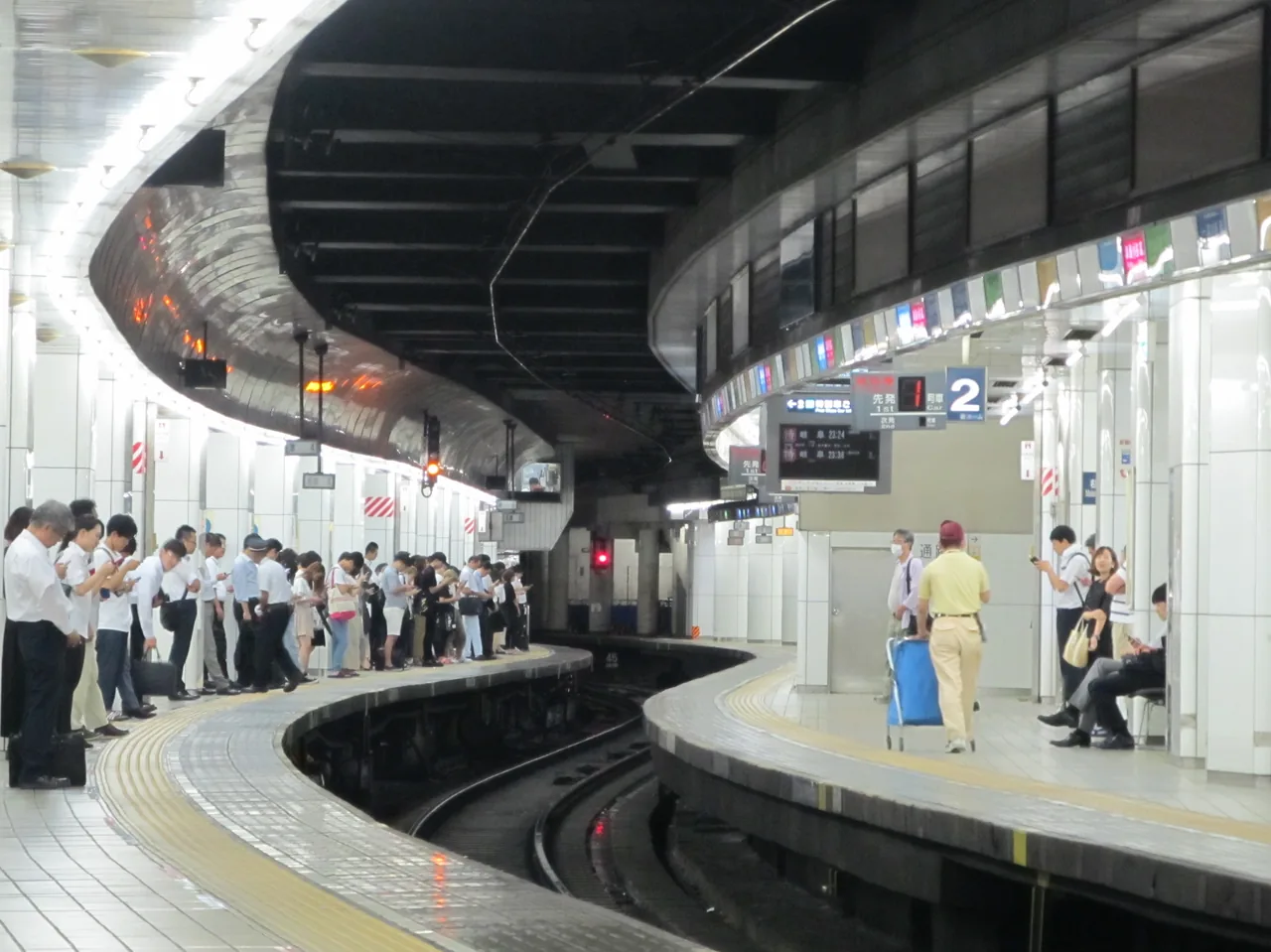
- For the airport, use the south-bound platform.
- On the overhead board, the colour framing each destination matches a coloured spot painted on the platform floor — stand on the colour for the train you want. Nothing on-site explains this, so now you know.
- Board anything clearly marked 中部国際空港 (Centrair); the μ-SKY is signed separately for its reserved cars.
10. Centrair as a hub: domestic flights and onward trips
Centrair isn’t only an international gateway — it’s a genuine hub, which changes how you might use it.
- Domestic flights: ANA, JAL and low-cost carriers link Centrair with Sapporo (New Chitose), Sendai, Fukuoka, Naha (Okinawa), Kagoshima and more. If you’re pairing Nagoya with, say, Hokkaido or Okinawa, flying via Centrair is often quicker than backtracking through Tokyo.
- Straight onward from Nagoya: once you reach Meitetsu Nagoya, the Shinkansen and express lines fan out to Kyoto, Osaka, Takayama, Kanazawa and Ise-Shima. Some travellers land at Centrair and go directly on — Nagoya’s whole appeal is how central it is.
- Base here, day-trip out: Nagoya makes an excellent base precisely because of these connections. Takayama and the thatched farmhouses of Shirakawa-go are a classic day out.
For the full picture of what to see and how to use Nagoya as a base, read our complete Nagoya travel guide, and for the bigger trip our our complete Japan travel guide.
11. Onward from Nagoya: Kyoto, Osaka, Takayama and beyond
Because Nagoya sits on the Tokaido Shinkansen and Meitetsu Nagoya is a two-minute walk from the JR and Kintetsu lines, plenty of travellers land at Centrair and press straight on. Here’s roughly how far the main onward destinations are once you reach Nagoya Station.
| Onward to | By | Rough time from Nagoya |
|---|---|---|
| Kyoto | Tokaido Shinkansen | ~35 min |
| Shin-Osaka | Tokaido Shinkansen | ~50 min |
| Tokyo | Tokaido Shinkansen (Nozomi) | ~1 hr 40 min |
| Takayama | Limited Express Hida | ~2 hr 30 min |
| Ise (Ujiyamada) | Kintetsu Limited Express | ~1 hr 20 min |
| Kanazawa | Ltd Exp Shirasagi + Hokuriku Shinkansen | ~3 hr |
So Centrair is a workable back door into the whole of central Japan, not just Nagoya. If you’re basing in Nagoya and day-tripping instead, Takayama and Shirakawa-go are the classic pair — and the easiest way to do both in a day is a guided tour with the transport handled.
12. The airport itself is worth time
Here’s the pleasant surprise: Centrair is one of the few airports where arriving early — or getting stuck late — is genuinely enjoyable. Terminal 1’s fourth floor is a whole Edo-styled shopping street, and the highlights are unusual for an airport.
Sky Deck
A 300-metre observation deck running right along the runway — one of the closest plane-spotting views in Japan, and free.
Flight of Dreams
An indoor park built around a real Boeing 787 Dreamliner, with a flight simulator and Seattle-themed dining.
Sola Spa “Fu-no-Yu”
A proper hot-spring bath with views over the runway and Ise Bay — perfect before an early flight or after a late one.
With the airport transfer sorted, your first-day essentials are an IC card and mobile data. Then carry on with our Nagoya travel guide for everything to see and do.