
Japan Customs Rules: Prohibited Items and Duty-Free Limits
The things that actually get stopped at the counter are a short list. Alcohol, tobacco and perfume quantities, how the 200,000 yen limit is counted, meat and fruit, medicine limits, cash, pets and what happens on the way home.
| Alcohol and tobacco | three bottles and 200 cigarettes come in tax free. |
|---|---|
| Goods limit | everything else is counted to 200,000 yen of overseas value. |
| Meat | jerky, sausage and meat buns need a government certificate you will not have. |
| Penalty | undeclared meat carries a fine of up to 3 million yen. |
| Plants | fruit and vegetables need a certificate and inspection. |
| Cash | anything over 1 million yen equivalent has to be declared. |
1. What actually gets a bag opened
2. Three bottles, 200 cigarettes, two ounces of perfume
3. How the 200,000 yen limit is counted
4. Heated tobacco is counted in packs, not sticks
5. Anything with meat in it needs a certificate you will not have
6. Why the fine is 3 million yen
7. Instant noodles, dumplings and tins: read the ingredients
8. Dairy and eggs are treated differently
9. Fruit, vegetables and seeds, and the soil on your boots
10. Medicines: one month, two months, or 24 units
11. Cannabis products are refused even where you bought them legally
12. Vaping: the device and the liquid are in different categories
13. Ivory, reptile leather and traditional medicine ingredients
14. Counterfeits are confiscated when they arrive by post
15. Cash over 1 million yen has to be declared
16. Bringing a dog or cat takes about seven months
17. Posting and shipping follow the same rules
18. What the walk through the hall actually looks like
19. On the way home, check the other end
20. The whole thing, by situation
1. What actually gets a bag opened
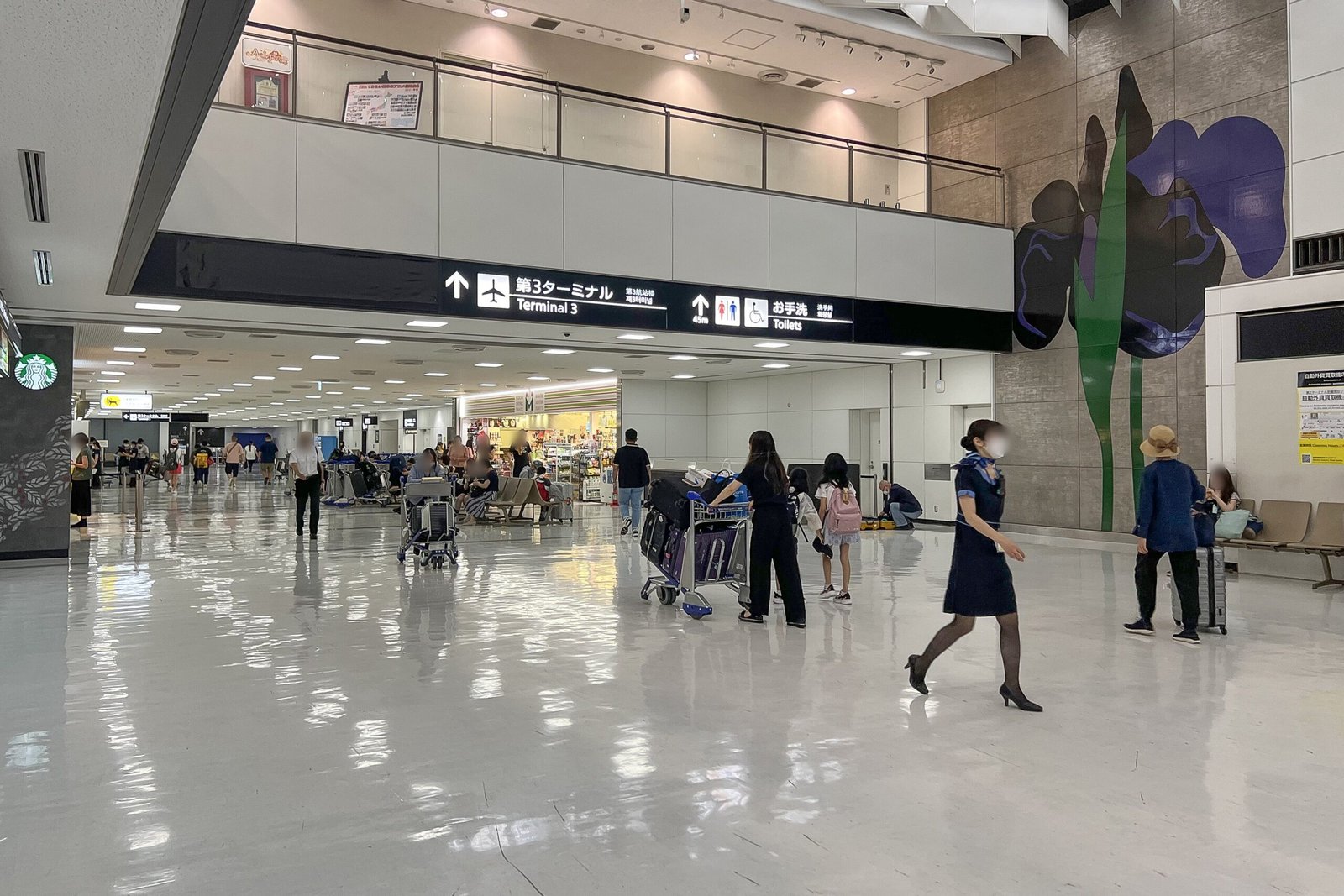
Bags get opened in Japan over tobacco and alcohol above the allowance, food containing meat, fruit and vegetables, and medicine above the quantity limit. Everything else is rare enough that you can plan around this short list and be finished.
| Item | Limit | If you go over |
|---|---|---|
| Alcohol | 3 bottles at 760ml each | Tax on the excess |
| Cigarettes | 200 sticks | Tax on the excess |
| Perfume | 2 fluid ounces (about 56ml) | Tax on the excess |
| Other goods | 200,000 yen of overseas value | Tax on the excess |
| Food containing meat | Zero without a certificate | Fine up to 3 million yen |
| Fruit, vegetables, seeds | Depends on the item | Fine up to 3 million yen |
| Medicines | One or two months’ supply | Not cleared |
| Cash | 1 million yen equivalent | Declaration form |
A tax problem and a penalty problem are not the same thing
Alcohol, tobacco and shopping are tax questions. Go over the allowance and you pay duty on the excess and walk out. Declare it and an officer works out the amount on the spot.
Meat and fruit are not tax questions. No quantity is small enough to be ignored, nothing you can pay makes them admissible, and failing to declare them is what turns a snack into a criminal penalty.
Three agencies are looking at three different things
Customs looks at duty and prohibited goods. Animal quarantine looks at meat, eggs and animal products. Plant quarantine looks at fruit, vegetables and seeds. All three have counters inside the customs hall.
If you are carrying meat or produce, you visit the quarantine counters before you join the customs queue. Doing it in the other order is how declared items end up recorded as undeclared.
The decision is easier at home than at the airport
Sorting this out while you pack takes a couple of minutes. Food, medicine, alcohol and anything expensive are the four piles worth checking.
Gifts you were handed and never opened are the usual problem. Open the box and read the ingredients before it goes in the case.
Being sold in a duty-free shop says nothing about whether the destination will let it in. Japan’s own quarantine service answers this question directly: goods bought duty free are refused like anything else if they lack a certificate.
2. Three bottles, 200 cigarettes, two ounces of perfume
Per adult, Japan lets in three bottles of alcohol, 200 cigarettes and two fluid ounces of perfume without duty. A separate 200,000 yen allowance covers everything else you bought.
| Item | Quantity | How it is counted |
|---|---|---|
| Alcohol | 3 bottles | 760ml counts as one bottle |
| Cigarettes | 200 | One carton is 200 |
| Heated tobacco | 10 packs | One pack treated as 20 cigarettes |
| Cigars | 50 | |
| Other tobacco | 250g | Loose leaf and similar |
| Perfume | 2 fl oz | One ounce is about 28ml |
Bottle size does not matter, volume does
With 760ml counted as one bottle, three bottles is roughly 2.28 litres. Three 700ml bottles of whisky are three bottles. One 1.8 litre bottle counts as more than two.
Beer counts as alcohol on the same scale. Five 500ml cans is 2.5 litres and already over. If you are bringing drink as a gift, add up the volume rather than counting containers.
Two ounces of perfume is a small bottle
One ounce is about 28ml, so the allowance is roughly 56ml. A single 100ml bottle is over the line on its own.
What counts here is perfume as the tariff schedule defines it. Eau de toilette sold as a cosmetic water, lotions and similar products fall into the 200,000 yen goods allowance instead.
Age changes the allowance completely
Travellers under 20 have no alcohol or tobacco allowance at all. You cannot borrow a minor’s share to raise the family total.
Children under six only get an allowance for things recognised as theirs, such as their own toys. Putting the family shopping under an infant’s name does not work.
The allowance is per person, and so is the scrutiny
Two adults travelling together have six bottles between them. That part is straightforward.
What is not straightforward is putting all six in one suitcase. The case is treated as that person’s baggage, so split it if you want the arithmetic to speak for itself.
Over-quantity alcohol and tobacco are a paperwork problem if you declare them and a much larger problem if you do not. The declaration takes a few minutes and the duty is the whole of it.
3. How the 200,000 yen limit is counted
Everything other than alcohol, tobacco and perfume is added up at what you paid abroad, and the first 200,000 yen is free of duty. Two of the rules inside that calculation work in your favour and one does not.
Lines totalling 10,000 yen or less drop out
If one item line adds up to 10,000 yen or less overseas, it is not counted towards the 200,000 at all. Japan Customs uses three neckties at 3,000 yen each as its worked example, and all three are free.
This is why bags full of snacks and cosmetics almost never trigger duty. The allowance becomes real when a single line is expensive: a watch, a bag, a camera.
A single item over 200,000 yen is taxed in full
This is the part travellers get wrong. Buy one bag at 250,000 yen and duty is not charged on the 50,000 above the line. It is charged on the whole 250,000, and Japan Customs spells that out with the same example.
When several separate items push the total over instead, customs picks which ones to exempt in the way that leaves you paying the least, then taxes the remainder.
Unaccompanied baggage and the exchange rate
Anything shipped separately is counted together with what you carry. Splitting a purchase across a suitcase and a parcel does not create a second allowance.
The conversion rate is not the rate on your arrival day. Customs publishes the average rate for the week before last relative to your entry week, and that is the figure used. In a volatile month the number will not match the rate on your banking app.
A worked example
Say you buy ten boxes of sweets at 3,000 yen, one cosmetic at 8,000 yen and a watch at 180,000 yen. The sweets add up to 30,000 and count. The cosmetic is under 10,000 and drops out.
That leaves 210,000 yen against a 200,000 limit. Customs exempts the watch and charges duty on part of the sweets, because that produces the smaller bill.
Rice has its own rule. Up to 100kg a year is duty free if you file a notification confirmed by the regional agricultural office. It is also a plant quarantine item, so it needs a phytosanitary certificate as well.
4. Heated tobacco is counted in packs, not sticks
Each type of tobacco has its own unit. Cigarettes are counted in sticks, heated tobacco in packs. One pack is treated as the equivalent of 20 cigarettes.
| Product | Duty-free quantity |
|---|---|
| IQOS | 200 sticks |
| glo | 200 sticks |
| with | 50 units |
The same ten packs mean different numbers
Japan Customs publishes brand examples. IQOS and glo work out to 200 sticks, while with comes to 50. The rule is the same ten packs in each case; what differs is how many sticks a pack holds.
If you buy by the carton, check the pack count before you pay rather than after you land.
Mixing types caps you at 250 grams
Carrying cigarettes and heated tobacco together puts you under a combined 250 gram ceiling. You do not get the full allowance for each type at once.
One type is simpler to explain and simpler to count. A single carton of cigarettes needs no arithmetic at all.
Check the rule for wherever you fly next
Several destinations treat heated tobacco differently from cigarettes, and some only admit products approved by their own health authority. Taiwan, for one, refuses heated tobacco products bought abroad that have not been through its approval process.
Japan’s own limit is the one above. What happens to the same carton on your way home depends on where home is.
5. Anything with meat in it needs a certificate you will not have
Meat is the single most common reason a bag gets held. Products from cattle, pigs and poultry need a certificate issued by the exporting country’s government, in any form, cooked or raw. Retail products almost never carry one.
| Category | What it covers |
|---|---|
| Animals covered | Cattle, pigs, goats, sheep, deer and other cloven-hoofed animals; horses; chickens, ducks, turkeys, quail and other poultry; dogs; rabbits; bees |
| Products covered | Meat and organs, eggs including shells, bone, fat, blood, hide, hair, feathers, horn, hooves |
| Processed examples | Jerky, ham, sausage, bacon, meat buns |
| Not covered | Finished goods such as leather bags and wool sweaters, honey, dried fish |
Cooked, vacuum packed and duty free all get the same answer
Japan’s Animal Quarantine Service publishes the three obvious follow-up questions with the same answer to each. Vacuum packed makes no difference, heat treatment makes no difference, and buying it in a duty-free shop makes no difference.
The fourth question is whether a personal quantity is acceptable. It is not. Souvenirs and personal consumption are named specifically and refused.
A few countries do sell certified products
Australia and New Zealand, among others, have products packaged for Japan with the certificate attached. The certificate has to carry both the wording and the approval mark to count.
The United States sits on the other side of the line. Beef products including jerky sold in the US, and this covers Hawaii, Guam and Saipan, remain suspended, as do Canadian ones.
Opening the package before inspection voids it
Even an admissible product becomes inadmissible if the packaging is opened before quarantine sees it. Half a portion eaten on the plane and carried off is exactly this case.
Bring it to the counter in its original wrapping with the ingredient panel visible. The check takes a minute when the label can be read.
Airline meals count too
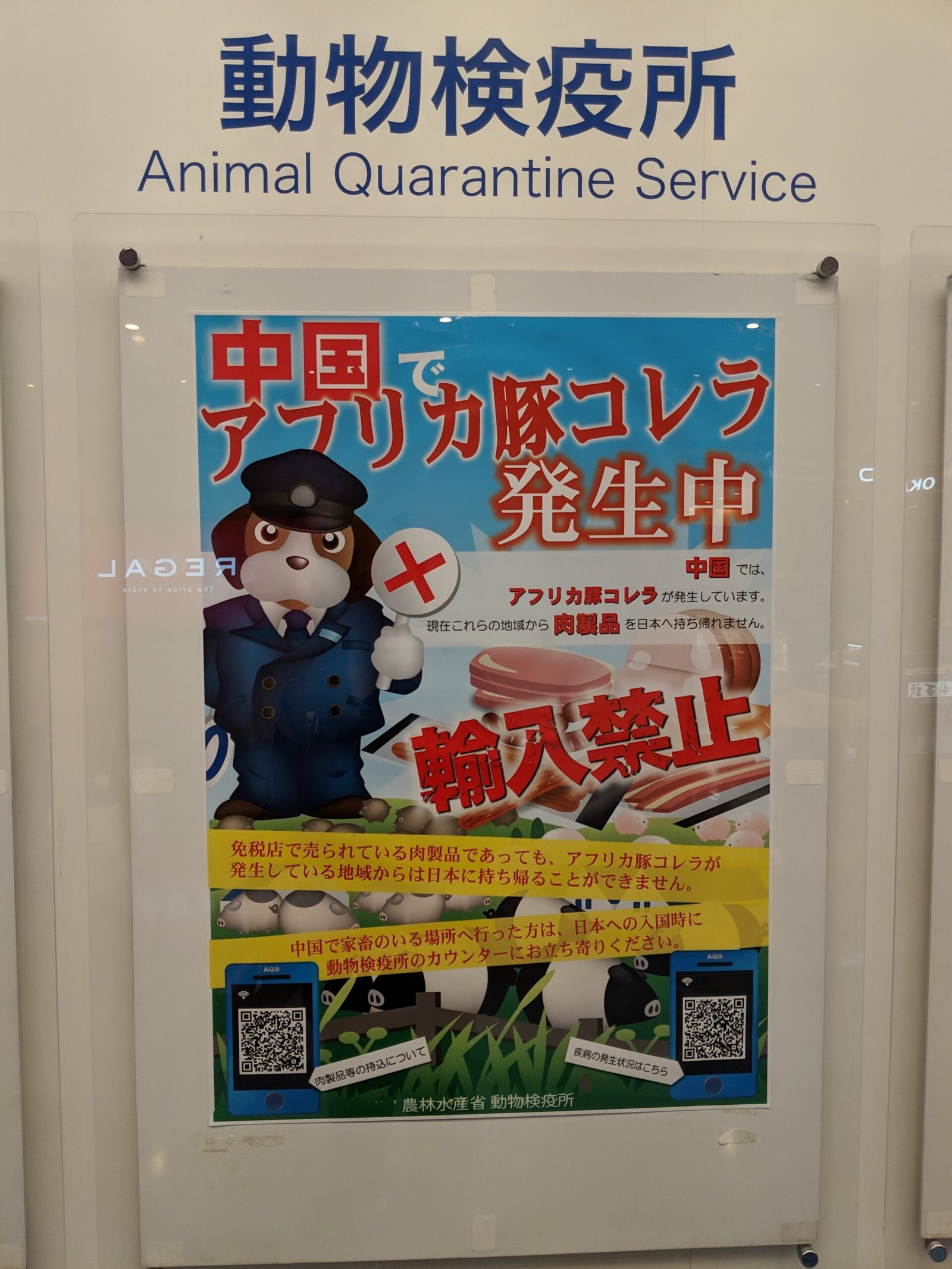
The Ministry of Agriculture states that meat products from countries with African swine fever are prohibited, in-flight meals included. The sandwich handed out before landing is covered by that sentence.
The reasoning is not theoretical. Outbreaks in previously clean countries have been traced to galley waste from aircraft and ships being fed to pigs, which is why Japan inspects how that waste is handled.
Some origins are blocked before the certificate question arises
Countries and regions with foot and mouth disease, African swine fever or highly pathogenic avian influenza are suspended by product type. The lists are maintained per animal species and change as outbreaks occur.
So the order of questions is origin first, certificate second. A certificate does not help if the origin is suspended.
Animal teeth become quarantine items on 1 January 2027. Worth knowing if you buy carved bone or tooth ornaments.
6. Why the fine is 3 million yen
Undeclared meat products carry a fine of up to 3 million yen or up to three years’ imprisonment for an individual, and up to 50 million yen for a company. That is heavy for a travel rule, and there is a specific reason for it.
It tripled in 2020
The Act on Domestic Animal Infectious Diseases Control was amended and the ceiling went from 1 million to 3 million yen on 1 July 2020. A year before that, in April 2019, enforcement changed so that voluntarily abandoning the item at the counter no longer settles the matter.
The quarantine service states plainly that travellers have been arrested over this. Saying you did not know and leaving the package behind is not the outcome it once was.
There are detector dogs at the airports
Japanese airports and seaports work dogs trained to find meat products in luggage. A dog sitting down next to your case is what leads to it being opened.
Once you are being inspected, your passport and boarding pass details are recorded, which takes time. Build a margin into a tight connection.
Japan has never had African swine fever
Japan has no recorded outbreak. Taiwan confirmed its first case in October 2025, which left Japan as the only country in East Asia without one.
The disease does not infect humans, and there is no vaccine and no treatment. It spreads when pigs eat contaminated pork products, which makes traveller luggage the route the border controls are built around. Classical swine fever, which is present in Japan, is a different disease.
Declaring carries no penalty
The penalty attaches to undeclared goods found in a bag. Anything you present at the quarantine counter is either admitted or surrendered on the spot, and that is the end of it.
When you cannot tell, declaring is always the cheaper move. There is no version of this where declaring makes you worse off.
Meat is the only category where a small amount is not a smaller problem. Alcohol and shopping can be settled with money; this cannot.
7. Instant noodles, dumplings and tins: read the ingredients
Harder than meat itself is food with a little meat in it. Soup sachets, dumplings, bento boxes and tinned food are where the judgement calls are.
- Turn the package over and read the ingredients for anything derived from cattle, pigs or poultry.
- If there is a meat ingredient, ask whether a certificate is attached. If not, it stays behind.
- When you cannot tell, leave it out. A souvenir is not worth a penalty case.
- If it is already in your bag on arrival, go to the quarantine counter first. Declared items are refused at worst, never fined.
Fish is outside the system
Dried fish and fish cakes without meat are not animal quarantine items. Officers may still want to read the ingredient panel, so keep the packaging intact.
Some fish cake products do include meat. The label settles it in a few seconds.
Meat buns are named in the rules
The quarantine service lists meat buns explicitly among its processed examples. Being fully cooked changes nothing.
The same applies to a boxed meal bought airside for the flight. Finish it before you land and there is nothing to decide.
Stocks, broths and seasoning powders
Concentrated bone or chicken stock and seasoning powders containing meat extract are animal products by ingredient. Being a powder or a liquid does not move them out of the category.
Products made from kelp or dried sardines are not covered. What the product is made from is the whole test.
8. Dairy and eggs are treated differently
Cheese and butter carried by hand fall outside animal quarantine. Eggs, including the shells, do not. The distinction is written into the rules rather than left to the officer.
| Item | Hand carried |
|---|---|
| Cheese, butter and other dairy | Outside animal quarantine |
| Eggs, shells included | Covered |
| Honey | Outside |
| Bees | Covered |
| Leather bags, wool garments | Outside |
The dairy exemption is specifically for hand baggage
The quarantine service lists dairy as a covered product and then excludes hand-carried items in parentheses. Cheese in your bag is fine; cheese in a shipment or a parcel is a different question.
Dairy that also contains meat follows the meat rules. A cheese product with ham in it is a meat product.
Finished leather and wool are fine
Hides and hair are covered as raw materials, but finished goods are not. Leather bags and wool sweaters appear in the guidance as the examples.
Crocodile and snake skin are a separate matter entirely. Those are restricted by the endangered species convention rather than by quarantine, and the section further down covers them.
Honey yes, bees no
Bees are a covered species while honey is explicitly excluded. The guidance separates the two in the same line.
Products sold with a piece of comb still in them can go either way, so ask at the counter rather than guessing.
9. Fruit, vegetables and seeds, and the soil on your boots
Plant quarantine works from country-by-country lists. Fruit, vegetables, grain, pulses, cut flowers, seeds and seedlings need a phytosanitary certificate from the exporting government plus inspection on arrival.
The certificate is the reason this rarely works
A phytosanitary certificate is issued by a government agency, not by the shop. Fruit bought at a supermarket does not come with one and cannot get one retroactively.
In practice, then, an item marked as needing a certificate is an item you leave behind. Several countries also have outright bans on specific fruit regardless of paperwork, and the lists differ per country of departure.
Soil is banned from everywhere
Soil cannot be brought in from any country or region, and neither can plants with soil attached. Japan’s plant protection stations ask travellers to clean golf clubs and boot soles before departure rather than at the counter.
The penalty is up to three years’ imprisonment or a fine of up to 3 million yen, the same ceiling as the meat rules.
Japan issues no import permit for plants
Exporting agencies sometimes ask for a Japanese import permit before they will issue a certificate. Japan operates no such permit system, so there is nothing to obtain.
If something genuinely has to travel, the plant protection station is the only place that can answer before you fly. For a souvenir it is faster to choose a different item.
Dried and processed plant products still count
Dried beans, seeds, seedlings and bulbs are all quarantine items, and several categories are marked as requiring a prior enquiry because the conditions vary by species.
Dried flowers and dried spices sit in the same enquiry-first group. Drying something does not move it out of the system.
Soil is caught as a condition rather than as a product. After hiking or a round of golf, the mud in the tread is the thing quarantine is looking for.
10. Medicines: one month, two months, or 24 units
Medicines for personal use come in under three ceilings depending on type. Inside those limits nothing is required of you. Above them you need paperwork obtained before you fly.
| Category | Limit |
|---|---|
| External-use products (ointments, eye drops) | 24 units per item at standard size |
| Prescription drugs, poisonous and deleterious drugs | One month’s supply at the stated dosage |
| Other medicines and quasi-drugs | Two months’ supply at the stated dosage |
| Cosmetics | 24 units per item at standard size |
| Disposable contact lenses | Two months’ supply |
| Home-use medical devices | One set, minimum unit |
Twenty-four means twenty-four across brands
The health ministry uses lipstick as its example: brand and shade do not create separate lines, so 24 is the total for the item type.
Soap, shampoo, toothpaste, hair dye and bath additives fall into the quasi-drug and cosmetic categories too. If you are buying gifts in volume, count by item type.
Prescription drugs stop at a month
This is the line that matters on a long trip. Prescription drugs and anything classed as poisonous or deleterious are capped at one month, while general medicines run to two.
Going above that requires an import confirmation from a regional health bureau, obtained in advance. Without it the excess is not cleared, whatever the reason for carrying it.
Some drugs are blocked regardless of quantity
Medicines that are dangerous to self-administer, and products marketed abroad for cognitive enhancement, cannot be imported by a private individual at any quantity unless a doctor’s prescription can be confirmed.
Travellers carrying their own treatment for use during their stay are excluded from that restriction. Bringing a copy of the prescription makes the conversation short.
Pack medicine where you can reach it
Checked bags go astray, so daily medication belongs in your cabin bag. It is also easier to produce if you are asked.
Keep tablets in the original packaging. Loose pills in a pill organiser are hard to identify and hard to count against a monthly dose.
A document showing the drug name and daily dose lets an officer convert your box count into months on the spot. Without it, the count is all there is to go on.
11. Cannabis products are refused even where you bought them legally
Products made from cannabis are treated as narcotics in Japan when the residual THC exceeds the limit set for that product category. At that point they cannot be imported at all.
The test is the residual level
Japan sets residual limits by product category in a cabinet order. Above the limit, the product falls under the Narcotics and Psychotropics Control Act.
Bringing one in for medical treatment requires permission from the Minister of Health, Labour and Welfare. It is not a process a tourist completes at the airport.
Legality where you bought it is not a factor
Gummies, oils and drinks sold openly to visitors in other countries frequently contain these compounds. Where they were bought does not enter into Japan’s assessment.
If the ingredient list has names you do not recognise, leave the product at home. This is not a category where an explanation at the counter helps.
The penalties are in a different class
Importing cannabis carries up to ten years’ imprisonment or a fine of up to 30 million yen, and both can be imposed together. Japan amended the governing legislation in December 2024.
Seeds have their own procedure. Depending on whether they have been treated to prevent germination, you need either a permit or a confirmation document from the regional health bureau, plus a plant quarantine certificate.
12. Vaping: the device and the liquid are in different categories
Nicotine-containing e-liquid is regulated as a medicine in Japan. That puts it under the personal-import medicine limits rather than the tobacco allowance.
Two different rulebooks
Heated tobacco sticks are counted in the tobacco allowance at ten packs. Nicotine liquid is not tobacco for this purpose, so the medicine quantity rules apply instead.
Japan does not sell nicotine-containing e-liquid domestically. Plan on the assumption that you cannot restock once you arrive.
Batteries are an airline rule, not a customs rule
Vaping devices and power banks cannot travel in checked baggage under airline safety rules. This catches people at check-in rather than at customs.
Carry them in the cabin with the device switched off and there is nothing further to do.
Check the rule for your return leg
Several countries cap nicotine liquid separately from tobacco, and a few refuse it outright. Korea, for example, allows 20ml of nicotine solution below one per cent concentration.
The Japanese limit governs your arrival. The limit at home governs what you can take back.
13. Ivory, reptile leather and traditional medicine ingredients
Goods made from species listed under the endangered species convention are stopped at the border. The rules cover taxidermy, fur coats, reptile leather goods and carved ivory, not just live animals and plants.
Ivory splits on the date it was acquired
Japan’s Ministry of Economy, Trade and Industry singles ivory out. Pieces acquired after the convention took effect for that species cannot be imported or exported at all.
The cut-off is 1 July 1975 for Asian elephant and 26 February 1976 for African elephant. Even a genuine antique acquired before those dates still needs METI import approval before it can come into Japan.
Three steps, in order
A regulated item needs a CITES export permit from the country you are travelling in, then METI import approval or prior confirmation, then a customs declaration. The export permit has to be obtained before the goods leave that country.
If the paperwork is incomplete on arrival, the options are returning the goods to the exporting country or surrendering ownership.
Personal effects have an exemption
Clothing, documents and cosmetics for personal use, tools of your trade, household goods for a move, and souvenirs bought during the trip are exempt from the approval and permit procedures when the type and quantity fall inside the personal-effects rules. The scope differs by category of goods.
The practical version is to ask the shop what the item is made from before paying. A shop that cannot answer is a reason to buy elsewhere.
Over 180 states are party to CITES, so the piece that cleared one border can be seized at the next. Souvenir shops in tourist areas are where most of these purchases happen.
14. Counterfeits are confiscated when they arrive by post
Goods infringing a trademark or design right are prohibited imports. Since 1 October 2022, that applies to shipments sent by an overseas business even when the buyer is a private individual.
What changed was the mail-order route
Before the amendment, goods for personal use fell outside the restriction. Now goods dispatched by an overseas business to someone in Japan are inside it, and customs confiscates them.
Japan Customs warns that ordering through a domestic-looking website is no protection, because the parcel may still ship directly from abroad. Refunds are a matter for the seller. Customs does not handle them.
Penalties attach to commercial importers
Where the importer has no commercial purpose, the goods are seized without a penalty. Commercial importers face up to ten years’ imprisonment or a fine of up to 10 million yen, and both may be imposed.
The product range is wider than handbags. Clothing, shoes and phone cases carry brand marks and appear in seizure statistics for the same reason.
The rest of the prohibited list
The same article of the Customs Act covers narcotics and stimulants, firearms and explosives, chemical weapons precursors, listed pathogens, counterfeit currency and securities, material harmful to public safety or morals, and child pornography.
None of these are quantity questions. They are refused outright, and several carry criminal penalties well beyond confiscation.
15. Cash over 1 million yen has to be declared
Cash, cheques, promissory notes and securities are added together, and anything over 1 million yen equivalent needs a declaration form. Declaring costs nothing; it is a report, not a tax.
| What counts | Threshold |
|---|---|
| Cash, cheques including travellers cheques, promissory notes, securities | Combined total over 1 million yen equivalent |
| Gold bullion | Over 1kg at 90 per cent purity or higher |
It is the combined figure that matters
Yen, foreign currency and travellers cheques are summed. Splitting the same money across instruments to keep each below the line does not work, because there is only one line.
On arrival you declare in the customs inspection hall. On departure it is the customs office before check-in if the money is going into hold baggage, or the counter before the departure inspection area if you are carrying it.
Your home country has its own threshold
Most countries set a separate reporting threshold, commonly around 10,000 US dollars or its equivalent. The currency and the number differ from Japan’s.
If you are moving a meaningful sum, check both ends before you fly rather than at the counter.
Splitting the payment method is simpler
Where the amount is only close to the threshold, spreading it across cards removes the question entirely. How much cash Japan actually requires is covered in the guide to cash and cards in Japan.
Filing the form is easy. Being found with an undeclared sum is not.
16. Bringing a dog or cat takes about seven months
Dogs and cats are quarantine animals. Unless you are coming from one of the designated rabies-free regions, the process runs to seven steps and includes a wait of at least 180 days.
- Implant an ISO-standard microchip. This has to happen before the rabies vaccinations.
- Give at least two rabies vaccinations. The first must be at 91 days of age or older, the second at least 30 days after the first.
- Draw blood after the second vaccination for an antibody test. The result must be 0.5 IU/ml or higher and is valid for two years from the draw.
- Wait at least 180 days counted from the blood draw date.
- File advance notification with the quarantine service at the arrival airport at least 40 days before arrival.
- Have a clinical examination within ten days of departure.
- Obtain the exporting government’s certificate and present the animal for inspection on arrival.
Vaccine type is prescribed
Inactivated and recombinant vaccines are accepted. Live vaccines are not, and rabies RNA vaccines used in some countries are not recognised as valid treatment for entry to Japan.
Vaccinations given before the microchip is implanted are void as a rule. Getting the order wrong means starting the sequence again.
With everything in place you leave the same day
When the treatments and documents are complete, the arrival inspection is finished within 12 hours and the animal is released. Anything missing means detention at the quarantine facility.
Dogs may only enter through certain airports and seaports, so confirm the arrival point before booking flights.
Notifications filed later than 40 days before arrival are not accepted as a rule. After filing, moving the arrival date earlier or adding animals is likewise not permitted.
17. Posting and shipping follow the same rules
Sending things instead of carrying them changes nothing about quarantine or prohibited goods. If anything it is stricter, because you are not there to declare and explain.
Parcels are inspected on arrival
Plants sent from abroad are inspected at the post office or by the plant protection station when they reach Japan. Meat products sent by post are covered by animal quarantine in the same way as luggage.
If the sender did not meet the conditions, the item does not come in. The recipient cannot fix it with paperwork afterwards.
The counterfeit rule is written for this route
Trademark and design infringing goods sent by an overseas business are confiscated even for personal use. That is precisely the shipping scenario, not the suitcase scenario.
Ordering through a site that looks domestic makes no difference if the parcel ships from overseas.
The duty-free allowance is shared with your luggage
Unaccompanied baggage sent during your trip is counted together with what you carry against the 200,000 yen limit. Splitting a purchase does not double the allowance.
Declare unaccompanied baggage when you enter, otherwise clearing it later becomes complicated.
Livestock products and plants are quarantine items on the return leg too. If it cannot go in the suitcase, posting it is not a workaround.
18. What the walk through the hall actually looks like
From the baggage belt to the exit, the order is fixed. What changes is whether you have anything to declare.
- Clear immigration and collect your bags from the belt.
- If you have meat or eggs, go to the animal quarantine counter inside the customs hall.
- If you have fruit, vegetables or seeds, go to the plant quarantine counter before customs inspection.
- If alcohol, tobacco or shopping exceeds the allowance, declare it at customs.
- If you are carrying more than 1 million yen equivalent, submit the cash declaration at the same time.
- With nothing to declare, complete the customs declaration and walk out.
Registering in advance saves the paper form
Japan lets you complete the customs declaration online in advance and pass through with a QR code. The registration steps are set out in the Japan visa and entry guide.
Paper forms still work. The shorter queue is usually the electronic one.
Budget time for the inspection itself
A quarantine check adds anywhere from a few minutes to a quarter of an hour. If you are inspected, recording passport and boarding pass details is part of the process.
Leave margin if you have a domestic connection or a fixed airport bus.
When a bag gets opened
A dog reacting, or a declaration that does not match what is in the case, leads to the bag being opened there and then. Repacking is part of the time cost.
The declaration form asks directly whether you are carrying meat products, animals or plants. Answering accurately is what keeps the rest short.
Shipping luggage onward is separate
Sending cases from the airport to a hotel, and what size of suitcase can travel on a shinkansen, are covered in the shinkansen luggage rules.
Both happen after customs, so the two processes never overlap.
Which terminal the counters are in
The quarantine counters are inside whichever terminal you land at. Narita takes international arrivals at all three terminals, Haneda handles them at Terminal 3, and Kansai splits them between Terminals 1 and 2.
Narita International AirportMap Haneda Airport Terminal 3Map Kansai International AirportMapThe order is the same at every one of them: collect your bags, pass the quarantine counters, then customs.
The quarantine counters sit inside the customs queue, and doubling back once you have cleared is difficult. If you are carrying food, say so as you walk in.
19. On the way home, check the other end
Japan’s rules govern your arrival. What you can take out is governed by wherever you are going. The limits differ enough that assuming they match is how people get caught.
Allowances vary more than people expect
Duty-free allowances range widely: Taiwan raised its personal allowance to NT$35,000 in June 2024, Korea works from a US$800 figure, and Hong Kong allows one litre of spirits and just 19 cigarettes.
Tobacco is where the gaps are widest. A carton that is exactly the Japanese allowance is several times the Hong Kong allowance.
Meat is restricted in both directions
Several destinations impose heavy penalties on undeclared meat products arriving from abroad, with African swine fever the driver in Asia. Taiwan starts at NT$200,000 for a first offence and Korea at 1 million won, rising with repeat offences.
Wagyu, pork products and anything with meat filling fall into this category. Vacuum packing and vacuum-sealed gift boxes make no difference.
What to check before you shop
Three numbers cover most cases: your duty-free value allowance, your tobacco allowance, and whether meat and dairy can enter at all. Your national customs website states all three.
Keep receipts for anything substantial. Declaring is quick when you can show what was paid.
Clearing Japanese customs on the way in tells you nothing about the way out. The souvenir that entered Japan legally may be the one that is seized at home.
20. The whole thing, by situation
Reduced to what is worth checking while you pack.
| If you are | Then |
|---|---|
| Buying alcohol as gifts | Count three bottles at 760ml each |
| Buying tobacco by the carton | 200 cigarettes, or ten packs of heated tobacco |
| Buying a bag or a watch | A single item over 200,000 yen is taxed in full |
| Packing food | Anything with meat in it stays behind |
| Packing fruit | Needs a government certificate, so leave it |
| Carrying daily medication | Prescription drugs cap at one month |
| Carrying cash | Over 1 million yen equivalent needs the form |
| Travelling with a dog or cat | Start about seven months ahead |
Only one item needs lead time
Everything else is settled while packing. Medicine is the exception, because an import confirmation has to be obtained before departure.
Meat and produce are not paperwork problems. They are decisions to leave something out.
When in doubt, declare
Nobody is penalised for declaring. Inadmissible items are surrendered at the counter and the matter ends there.
Undeclared items found during inspection are what produce the large numbers quoted throughout this guide.
What to read next
Immigration and the customs declaration registration are covered step by step in the Japan visa and entry guide. The shift from in-store tax exemption to airport refunds is in the tax-free shopping guide.
The departure tax collected on your ticket is in the departure tax guide, and how much cash to carry is in the cash and cards guide. If you are planning the whole trip, the Japan travel guide is the place to start.
🎡Things to Do5
🏨Where to Stay2
🚇Getting Around4
🧭Travel Tips13
Japan customs rules: frequently asked questions
Three bottles, with 760ml counted as one bottle, which works out to roughly 2.28 litres. Above that you declare it and pay duty on the excess, and it still comes in.
Yes. A carton is 200 cigarettes, which is exactly the allowance. Heated tobacco is ten packs, and mixing types caps you at 250 grams in total.
No. Japan’s Animal Quarantine Service answers this question directly: goods bought duty free are still refused if the origin is suspended or the certificate is missing.
If the ingredients include anything from cattle, pigs or poultry, it is a quarantine item. Check the panel on the back and leave it out if meat appears.
No. Beef products sold in the US, including Hawaii, Guam and Saipan, and in Canada remain suspended from import.
It is either admitted or surrendered at the counter, and that is the end of it. Penalties apply to undeclared items found in a bag.
Only with a phytosanitary certificate from the exporting government plus inspection on arrival, and several fruits are banned outright depending on the country you fly from. Supermarket fruit does not come with a certificate.
Green, black and Chinese tea pass without inspection. Unroasted green coffee beans need an inspection on arrival.
One month’s supply at the stated dosage. Other medicines run to two months. Above that you need an import confirmation from a regional health bureau, obtained before you travel.
Twenty-four units per item at standard size, counted across brands and shades rather than separately for each.
When several items push the total over, customs exempts the combination that leaves you paying least and taxes the rest. But a single item over 200,000 yen is taxed on its full value.
Only if the residual THC is within the limit set for that product category. Above it, the product is a narcotic under Japanese law and cannot be imported, regardless of where it was bought legally.
More than 1 million yen equivalent, counting cash, cheques, promissory notes and securities together. Gold bullion has its own threshold of 1kg at 90 per cent purity.
Goods sent by an overseas business that infringe a trademark or design right are confiscated even for personal use. Customs does not handle refunds; that is between you and the seller.
Yes, but the process takes about seven months: microchip, two rabies vaccinations, an antibody test at 0.5 IU/ml or higher, a 180-day wait, advance notification 40 days before arrival, and a pre-export examination.
Both are covered by the endangered species convention. Ivory acquired after the convention date for that species cannot be imported at all, and older pieces still need import approval. Ask the shop what the item is made from before buying.