
Hiroshima Travel Guide: A Half-Day City and What to Do With the Rest
Everything you came to Hiroshima for sits inside one walkable triangle between two rivers, and you can see it in half a day. That makes the real question what you do with the hours that are left: Miyajima, Kure, Iwakuni. Your answer also changes which ticket is worth buying, and if you hold a rail pass the answer changes again.
| City centre | the Peace Memorial Park sights all sit within walking distance of each other, so half a day is enough. |
|---|---|
| Rail pass | it covers the sightseeing loop bus and the JR ferry to Miyajima, shown to the driver. |
| Trams | one flat fare of ¥240 anywhere on the network, boarding on the second floor at Hiroshima Station. |
| Miyajima | 27 minutes by JR plus a 10-minute ferry, and the tide decides what you see. |
| Closed now | the castle keep has shut, and the hall at the summit of Mt Misen burned down. |
| Lodging tax | Hiroshima Prefecture charges ¥200 per person per night from ¥6,000 before tax. |
1. The city centre takes half a day
2. Getting to Hiroshima
3. Your rail pass covers more here than you expect
4. The tram platform is on the second floor of the station
5. Tram fares and whether the day pass pays
6. Six rivers and a delta
7. Getting your bearings downtown
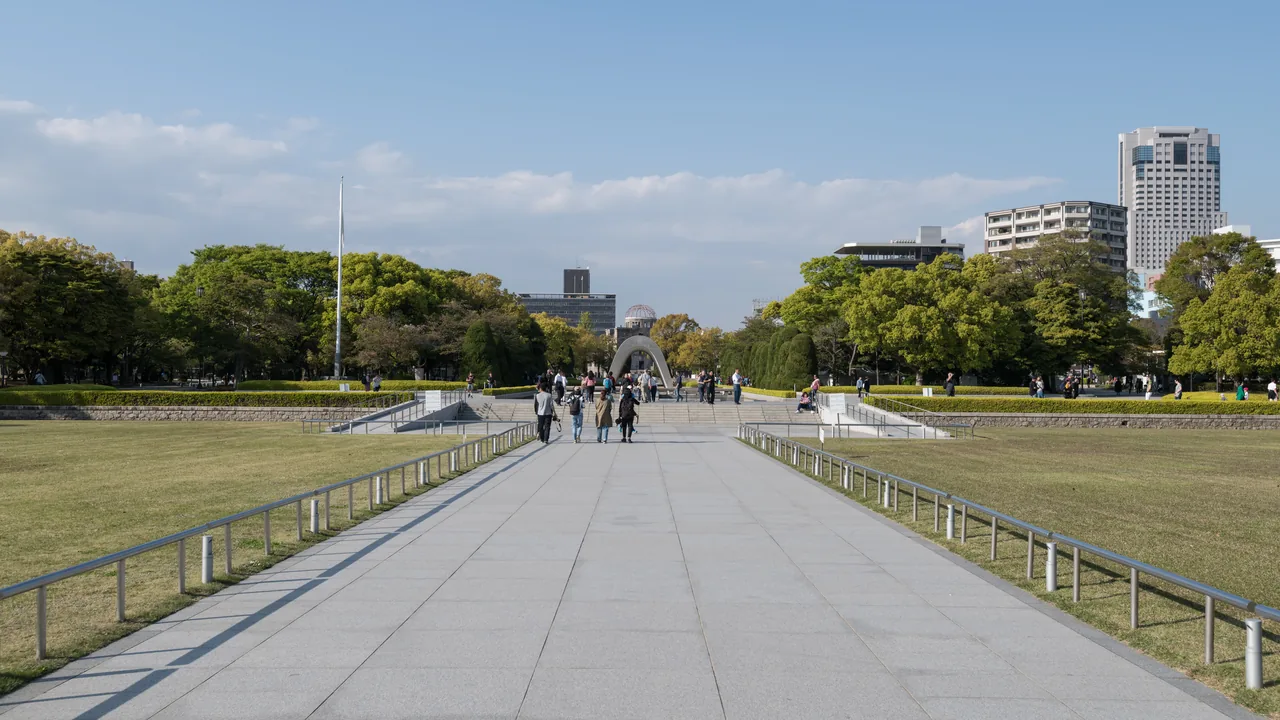
8. What is in the Peace Memorial Park
9. What the A-Bomb Dome used to be
10. The Peace Memorial Museum: ¥200, and allow more time than you think
11. How to approach the museum
12. The Korean memorial in the park
13. The trams that ran again three days later
14. Hiroshima Castle is closed to visitors
15. Shukkeien and the Mazda Museum
16. What to eat
17. What to take home
18. Evenings in Hiroshima
19. Where to stay
20. On Miyajima, the tide decides
21. Why the shrine was built over the sea
22. Three boats to Miyajima
23. What to see on the island
24. What to do with the leftover time
25. What older guides still get wrong
26. When to go
27. One day, hour by hour
28. What a day costs
29. Rain, and travelling with children
30. Practical notes
1. The city centre takes half a day
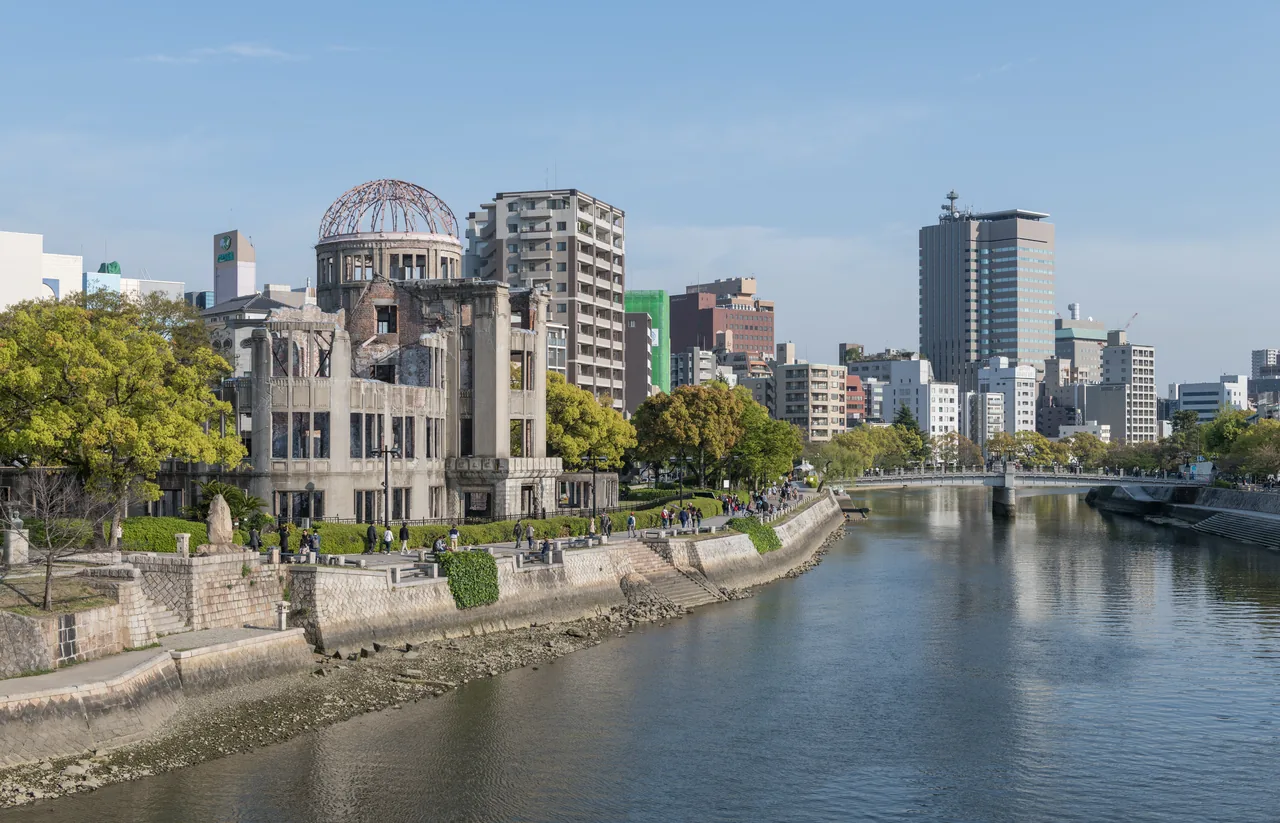
Hiroshima does not spread out the way Tokyo or Kyoto do. The A-Bomb Dome, the Peace Memorial Museum, the National Peace Memorial Hall and the monuments all stand inside one triangle of land between two rivers, and you can walk between them in minutes.
So the planning question here is not what else to see downtown. It is what to do with the rest of your time, and on a one-night stay that single decision shapes almost the whole visit.
| Time you have | What fits |
|---|---|
| Half a day | Park, Dome and the museum, then back to the station |
| One day | Park in the morning, Miyajima all afternoon |
| One night | Add Kure or Iwakuni on the second day |
| Two nights | Add a night on Miyajima itself, or go as far as Onomichi |
The half day got shorter
The castle keep used to fill a slot downtown. It has closed, and you can no longer go inside, which is covered further down.
That leaves you more time rather than less. Spend it inside the museum, where visitors differ enormously in how long they stay, or give the whole afternoon to Miyajima.
How to read this guide
Start with getting here and the ticket maths, because a rail pass changes almost every number that follows. Then plan the park and Miyajima separately, and only at the end decide where the leftover hours go.
Buy your transport ticket last. Which one saves you money depends entirely on where you decide to go.
2. Getting to Hiroshima
Most visitors arrive by shinkansen, and Hiroshima is the point where a Japan Rail Pass usually starts paying for itself. A Tokyo, Kyoto and Osaka loop rarely justifies the pass. Coming this far west often does.
| From | Time by shinkansen |
|---|---|
| Shin-Osaka | about 1 hour 25 minutes |
| Kyoto | a little under 2 hours |
| Tokyo | about 4 hours |
| Hakata (Fukuoka) | about 1 hour |
From Tokyo the flight and the train come out close enough that either works. From Kyoto or Osaka the train wins outright, because you land in the middle of the city rather than an hour outside it.
Flying in
Hiroshima Airport sits well outside the city and has no rail link, so the limousine bus is effectively the only way in. It runs to the shinkansen side of Hiroshima Station in about 50 minutes for ¥1,500, half that for children.
The airport handles a modest set of international routes, including Seoul, Taipei, Hong Kong, Shanghai and Hanoi. If you are coming from further afield you will almost certainly connect through Kansai, Haneda or Fukuoka instead.
Where Hiroshima fits in a longer trip
The natural slot is after Kyoto and before Fukuoka, or as an out-and-back from Osaka. Two nights lets you give Miyajima a proper afternoon instead of rushing the last ferry.
One night works if you accept that the second day belongs to one place only, either Kure or Iwakuni, not both.
3. Your rail pass covers more here than you expect
A Japan Rail Pass gets you onto the sightseeing loop bus and the ferry to Miyajima, not just the shinkansen. Between them, those two cover most of the moving you will do in Hiroshima.
The loop bus
A tourist loop bus starts and ends at the shinkansen exit of Hiroshima Station, and every route on it passes the castle, the A-Bomb Dome and the Peace Memorial Park. One circuit takes about 50 minutes.
| Adult | Child | |
|---|---|---|
| Single ride | ¥240 | ¥120 |
| Day pass | ¥600 | ¥300 |
| Rail pass holders | show the pass to the driver | |
Both the nationwide Japan Rail Pass and JR-West passes are accepted, though JR-West passes only qualify if they are valid inside Hiroshima Prefecture. Buses run from 9am to 6pm, 42 services a day, every 10 to 15 minutes.
The ferry to Miyajima
One of the two ferries across to Miyajima is run by JR, so a rail pass covers that crossing too. It does not cover the ¥100 visitor tax, which you pay separately on the way over.
Put together, a pass holder can reach the Peace Memorial Park and cross to Miyajima without buying a single local ticket.
If you do not have a pass
Nothing here is expensive. The loop bus is ¥240 a ride, the same as a tram, and the ferry is ¥200. The tram day pass discussed below is the one calculation worth doing.
4. The tram platform is on the second floor of the station
Trams now run straight into the second floor of the Hiroshima Station building on an elevated track. You no longer go down to a stop in the forecourt, so older directions will send you to the wrong place.
A new 1.1km section opened between Hiroshima Station, Inarimachi and Hijiyamashita, lifting the line up to meet the station. A shopping complex wraps around the platform.
Four minutes faster
The change cut about four minutes off the run from the station to Hatchobori and Kamiyacho. That sounds small until you make the trip three or four times in a day.
A new loop line was also added and runs during daytime hours, aimed at visitors. Lines 1, 2, 5 and 6 serve Hiroshima Station, and only line 2 goes to Miyajimaguchi.
Hiroshima StationMap Hiroden MiyajimaguchiMap
The express only runs at rush hour
Line 2 gained a service that skips stops, but there are just two of them on weekday mornings, so no visitor will realistically ride one.
Daytime trams stop everywhere, which is why the journey times below are the ones that apply to you.
Two sides to the station
Hiroshima Station has a shinkansen side and a south side. Trams and the airport bus use the south side, the shinkansen platforms sit opposite, and the sightseeing loop bus leaves from the shinkansen side.
It is an easy place to lose ten minutes with luggage. Work out which exit you want before you start walking.
5. Tram fares and whether the day pass pays
Every tram ride costs ¥240 for adults and ¥120 for children, no matter how far you go. The old zone system, where the Miyajima line cost more than city routes, has gone.
That flat fare matters more than it sounds, because it means you can ride all the way out to Miyajimaguchi for ¥240.
Tram or JR to Miyajimaguchi
| Hiroshima Station to Miyajimaguchi | Fare | Time |
|---|---|---|
| JR Sanyo Line | ¥420 (child ¥210) | 27 minutes |
| Tram, line 2 | ¥240 (child ¥120) | about 70 minutes |
You are trading 40 minutes for ¥180. On a day that also includes the island, those 40 minutes are worth more than the coins.
With a rail pass the question disappears, because the JR run is already paid for.
The day pass is closer than it looks
The tram and ferry day ticket costs ¥1,000. It covers the whole tram network plus the Matsudai ferry to Miyajima, and the ¥100 visitor tax is included.
Priced separately, though, that same trip comes to ¥980: ¥480 for the tram both ways, ¥400 for the ferry, ¥100 tax.
| If your day looks like this | Paying separately | Day pass |
|---|---|---|
| Miyajima and straight back | ¥980 | ¥1,000, so ¥20 worse |
| Plus two tram rides downtown | ¥1,460 | ¥1,000, clearly better |
| Plus the ropeway | ¥2,980 | ¥2,500, clearly better |
Showing the pass drops the Miyajima ropeway from ¥2,000 to ¥1,500 return, and children from ¥1,000 to ¥750. That discount is what tips the maths.
A tram-only day ticket exists at ¥700. It excludes the ferry and earns you no ropeway discount.
Or just tap a card
National IC cards work on the trams and the ferries. If you are not going to ride enough to justify ¥1,000, tapping is simpler.
6. Six rivers and a delta
The city sits on a delta built up by silt from the Ota River, with six rivers running through the built-up area. Water covers roughly 13% of the surface of the central district.
The name comes from the same place. Around 400 years ago Mori Terumoto gave the name Hiroshima to five villages at the mouth of the Ota and built his castle there.
Which is why you keep crossing bridges
The Peace Memorial Park occupies a triangle of land where the river splits, so water sits on both sides of you as you walk through it.
The A-Bomb Dome stands just across one bridge. Seen from the far bank it reads as a whole building, and from directly beneath it you can see how the brickwork survived. Cross over and look from both.
Good walking
Paths follow the riverbanks, and the distance from the Peace Memorial Park to the main shopping streets is comfortable on foot. You can spend a day downtown without using transport at all.
The boat that runs to Miyajima from beside the A-Bomb Dome works for the same reason. The rivers connect to the sea, so it never has to change to a road.
The riverbanks work at night too
The paths are lit, so walking back from the park towards the restaurants after dark is straightforward rather than a trek.
On summer evenings the banks fill up with people sitting out. It is one of the few things here that feels like a local habit rather than a sight.
7. Getting your bearings downtown
There are only three places downtown you will actually use, and they are a few tram stops apart. All of them are walkable from each other if you have the time.
| Area | What is there |
|---|---|
| Peace Memorial Park | A-Bomb Dome, museum, memorial hall, the monuments |
| Kamiyacho and Hatchobori | Department stores, covered arcades, most of the restaurants |
| Hiroshima Station | Shinkansen, airport bus, loop bus, the station complex |
| Castle and Shukkeien | Castle grounds, moat, the garden and the art museum |
The shopping streets are covered
A long roofed arcade runs from Kamiyacho towards the river, which makes it the obvious place to be when the weather turns.
The okonomiyaki building is in the same area, close enough to the Peace Memorial Park to walk there for lunch without planning a journey around it.
The castle sits on the other side
Hiroshima Castle and Shukkeien are a little north of the park. You can walk, but if your schedule is tight a tram makes more sense.
The two are next to each other, so seeing both takes only about an hour including the walk between them.
Distances are short
The park to the arcades is roughly fifteen minutes on foot along the river. The station is further out and is the one leg most people ride rather than walk.
If you are staying downtown you can go a full day without using transport at all, which is unusual for a Japanese city of this size.
8. What is in the Peace Memorial Park
The park is the whole triangle of land, and it is free to walk through. Only the museum charges admission.
| How much you see | Allow |
|---|---|
| Park and the Dome | 40 minutes to an hour |
| Plus the museum | 2 to 3 hours |
| Plus the National Peace Memorial Hall | 3 hours or more |
The museum is where visitors differ most. Some leave after an hour, others stay for three. A tight schedule tends to come apart here rather than anywhere else.
There are far more monuments than you will notice
Hiroshima holds 209 monuments related to the bombing across the city. Walking through the park without knowing what you are passing, you will register only a handful.
Reading up on a few before you go changes what the same walk gives you. The Korean memorial has its own section below.
The Children’s Peace Monument
Roughly in the middle of the park stands a monument hung with paper cranes, folded and sent by schools and kept in glass cases that are changed as they fill.
If you are travelling with children this is a better place to start the conversation than the museum entrance.
A-Bomb DomeMap Peace Memorial MuseumMap Peace Memorial ParkMap
The National Peace Memorial Hall is free
It stands beside the museum and charges nothing. Opening is 8.30am to 6pm from March to November, to 7pm in August and 8pm on 5 and 6 August, and to 5pm from December to February.
Most visitors do the museum and turn back. The two are a minute apart and belong together.
9. What the A-Bomb Dome used to be
It was built in 1915 as the Hiroshima Prefectural Commercial Exhibition Hall, designed by the Czech architect Jan Letzel, and later renamed the Prefectural Industrial Promotion Hall.
The building was brick, three storeys, with a five-storey stairwell at the centre of the front elevation and an oval dome on top. That dome is what still stands.
160 metres from the hypocentre
The bomb detonated about 160 metres away on 6 August 1945, which puts this building among the closest structures of any kind.
It survived at that range because the blast came down almost vertically onto it. Pressure from the side would have pushed the walls over. Pressure from above left them standing.
A World Heritage Site since 1996
UNESCO inscribed the Dome in December 1996, at the committee meeting held in Mexico.
Itsukushima Shrine on Miyajima was inscribed in the same month. Hiroshima’s two World Heritage Sites arrived together, which is why the boat that links them is called the World Heritage Sea Route.
Seeing it
You cannot go inside. Walking the full circuit takes about ten minutes.
It is floodlit after dark, and the impression at night is different enough to be worth a second visit if your schedule allows.
10. The Peace Memorial Museum: ¥200, and allow more time than you think
Admission is ¥200 for adults and ¥100 for high school students, and free for junior high school age and under. The cost is trivial. The time is not.
Opening hours change through the year
| Period | Open |
|---|---|
| March to July, September to November | 7.30am to 7pm |
| August | 7.30am to 8pm, and to 9pm on 5 and 6 August |
| December to February | 7.30am to 6pm |
A 7.30am opening is unusually early for a Japanese museum and it is the single most useful fact for planning your day. Arrive when the doors open and you can finish the park before lunch and give the whole afternoon to Miyajima.
Booking is sometimes required
The extended early slots need an online reservation, and during the busiest periods the museum runs on timed entry for a set number of days.
Check before you go rather than after you arrive. It closes on 30 and 31 December and for a short period in mid-February.
Going in the early morning
Beyond the practical advantage, the first hour is by far the quietest. The exhibition is difficult to take in while queueing behind a school group.
If you only have one window and it falls in the afternoon, allow more time rather than less. The rooms slow you down.
What the ¥200 covers
Admission is to the permanent exhibition. Special exhibitions are held separately and are usually included, but check at the counter if one is running.
Audio guides are rented at the entrance in several languages, and they add roughly half an hour to a visit.
11. How to approach the museum
Visitors often arrive unsure how to behave, and there is no ceremony to get right. People walk through quietly, read, and leave. That is all that is expected.
What it asks of you
The permanent exhibition is direct. It shows personal belongings, photographs and testimony rather than statistics, and it is arranged so that you meet individuals before you meet numbers.
Most people find one particular room harder than the rest. If you need to stop, there are benches and the exit route is signposted throughout.
Children
Entry is free for junior high school age and under, but the material is heavy and there is no age at which it becomes automatically appropriate.
Starting outside at the Children’s Peace Monument gives younger visitors a way in. Keep your schedule loose so you can leave when you need to rather than when the plan says.
Language
Captions and the main displays are in English throughout, and audio guides are available in several languages. You will not be guessing at what you are looking at.
Afterwards
Give yourself somewhere to go next that is not another exhibition. The riverbank walk outside, or the short crossing to the Dome, works better than heading straight back to the station.
Plenty of visitors find they want an hour of nothing in particular. Build it into the day rather than discovering it too late.
12. The Korean memorial in the park
A memorial to Korean victims of the bombing stands inside the Peace Memorial Park. Its history is part of what it commemorates.
According to Hiroshima City, the monument honours approximately 20,000 Korean victims. Its inscription records that about 10,000 Koreans were living in Hiroshima during the war as soldiers, civilian workers and students.
It stood outside the park for nearly thirty years
The memorial was erected on 10 April 1970, but not where it is now. Its original site was at the western end of a bridge, outside the park boundary.
From the 1980s that placement was criticised as discriminatory. The mayor approved relocation in December 1998, work began in May 1999, and the monument was moved to its present position on 21 July 1999. Around 300 people attended, including the mayors of Hiroshima and of Daegu, its sister city.
An annual ceremony on 5 August
A memorial service is held here every year on 5 August, the day before the anniversary of the bombing.
If you are in Hiroshima in that first week of August the whole city runs differently, the museum extends its hours, and accommodation is booked out well in advance.
Finding it
It stands in the northern part of the park, on the side nearer the Dome, and it is numbered on the park maps.
You will pass it naturally walking from the museum across to the Dome.
13. The trams that ran again three days later
Of Hiroshima Electric Railway’s 123 streetcars, 108 were damaged on 6 August 1945, and 185 of its staff were killed. Three days later, on 9 August, trams were running again on part of the network.
Full service between Obe and Hiroshima Station was restored by 11 October that year, in a city that had otherwise stopped functioning.
Two of those trams are still in service
Cars 651 and 652 of the 650 series survived the bombing and still run in ordinary service today, carrying passengers rather than sitting in a museum.
Car 653 has been returned to its wartime livery and runs on charter during the summer. Car 654 is at the transport museum, where the interior is opened up roughly once a month.
Riding one
651 and 652 are usually rostered on lines 1, 3, 5 and 7 during the morning peak. No timetable is published, so you cannot reliably plan to catch one.
If you are on a tram in the morning, glance at the car number. They are noticeably smaller and older-looking than everything else on the network.
Missing them is no great loss. Riding any tram in this city is a continuation of what happened in those three days.
Seeing one without riding
Car 654 sits at the city transport museum, which opens the interior roughly once a month, so it is the one you can look round properly.
Car 653 appears in its wartime livery during the summer on charter runs, which are announced rather than scheduled.
14. Hiroshima Castle is closed to visitors
The castle keep has shut. Deteriorating concrete and ageing systems ended public access on safety grounds, so if you were planning to pay and climb it, you cannot.
The keep you can see is a 1958 reconstruction in reinforced concrete. The original was destroyed in 1945.
The grounds are still open
There is no demolition plan, so the exterior remains, and you can still walk the grounds and the moat.
The collection is moving to a new history museum being built within the castle precinct. A timber reconstruction of the keep is under consideration, but completion is estimated at 2049 at the earliest, at a cost put at 19.5 billion yen.
You can skip it
This is part of why the city centre is now a half day rather than a full one. The castle used to occupy a slot and no longer does.
Twenty minutes covers a walk round the grounds. Give the time you save to the museum or the island instead.
Hiroshima CastleMap ShukkeienMap
If you want to go anyway
The circuit round the moat is a pleasant walk, and the keep photographs best from the far bank of it. There is a shrine inside the precinct as well.
It also sits next to Shukkeien, so pairing the two means neither is a detour.
15. Shukkeien and the Mazda Museum
If you have an hour or two spare downtown, these are the two candidates, and they have nothing in common.
Shukkeien
A classical garden, ¥350 for adults and ¥150 for university students, and free for everyone from elementary through high school.
Open 9am to 6pm from mid-March to mid-September and to 5pm the rest of the year, with last entry 30 minutes before closing. It shuts only for three days at the end of December.
It sits beside the castle, with the prefectural art museum next door, so the three combine without any travel between them.
The Mazda Museum closes at weekends
A factory tour and museum at the company’s headquarters, and admission is free. Two conditions come attached.
First, it is reservation-only, so you cannot turn up. Second, and more importantly, it is closed on Saturdays and Sundays, along with company holidays.
If your Hiroshima days fall on a weekend, take it off the list entirely. Plenty of guides mention that it is free without mentioning that most visitors cannot go.
Book online, and make any changes or cancellations at least two days ahead.
If you can only fit one
Take Shukkeien. The prefectural art museum is next door if the weather turns, and the whole cluster sits beside the castle.
The Mazda Museum needs the better part of half a day once you count the travel out and back, which rarely survives contact with a one-night stay.
16. What to eat
Okonomiyaki, oysters and anago meshi are the three, and the oysters come with a number attached that explains why.
Hiroshima produces 62.7% of Japan’s oysters
The prefecture is the country’s largest producer by a wide margin. Of a national total of 29,846 tonnes, 18,708 tonnes come from Hiroshima, which is 62.7%, more than six times the output of Okayama in second place.
That is why oyster restaurants are everywhere here and why prices are lower than you would expect. The harvest runs from October to March, and the shellfish are at their best from December to February.
Come in summer and you are outside that window. If oysters are the reason you are here, come in winter.
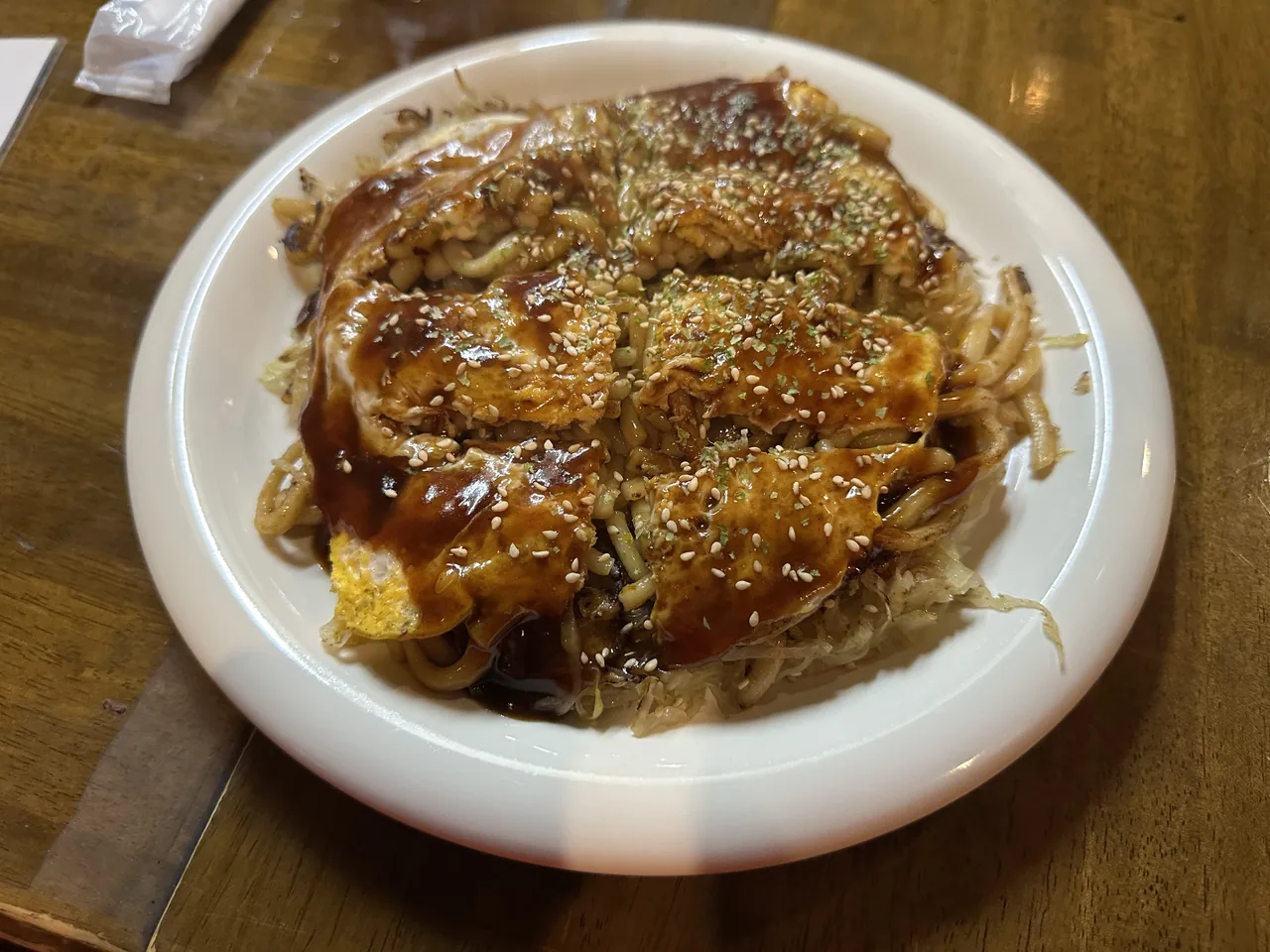
Okonomiyaki, Hiroshima style
The ingredients are layered rather than mixed. A thin crepe goes down first, then a mound of cabbage, and noodles are griddled separately and slid underneath.
A building downtown houses a stack of small okonomiyaki restaurants on several floors, which makes it the easiest place to start. Take whichever counter has a seat.
You eat at the griddle as it comes off, so a solo meal is completely normal here. Prices sit at the low end.
Anago meshi
Grilled conger eel over rice, which originated near the Miyajima ferry pier, so it fits naturally into the day you cross to the island. It is sold as a boxed meal as well as in restaurants.
Expect to pay more than for okonomiyaki or a bowl of oysters. It is a step up in price.
Momiji manju
Maple-leaf shaped cakes that started on Miyajima, filled with sweet bean paste and now many other things, and often sold deep-fried and hot.
Several shops on the island griddle them in front of you, which is the best way to eat them. Boxed versions for taking home are sold at the station.
17. What to take home
The thing worth buying in Hiroshima is brushes, and not in a souvenir-shop sense. The largest brush-producing town in Japan is inside this prefecture.
Kumano makes over 80% of Japan’s brushes
The town of Kumano in Hiroshima Prefecture has been making brushes since the end of the Edo period and now leads the country in calligraphy brushes, artists’ brushes and cosmetic brushes alike, with a national share of more than 80%.
Kumano brushes were designated a national traditional craft in 1975, the first from Hiroshima Prefecture to receive that status. Around 100 brush-related businesses operate in the town, roughly 2,500 people work in the trade, and calligraphy brush output alone runs to about 15 million a year.
The cosmetic brushes are what carry the name abroad, and they are sold in department stores downtown and at Hiroshima Station. The town itself has a dedicated facility where you can watch brushes being made and try it yourself.
Prices run from very ordinary to genuinely expensive depending on the hair and the maker. If you are buying as a gift, the station counters carry boxed sets in the middle of that range.
Momiji manju
The maple-leaf cakes that started on Miyajima, sold hot off the griddle at several shops on the island. Fillings now go well beyond sweet bean paste, and the deep-fried version is worth trying.
Boxed versions for travelling are on sale at Hiroshima Station and in department stores. The texture differs noticeably from the freshly griddled ones, so eat one on the island before deciding how many to buy.
Oyster products
Fresh oysters will not survive the journey home. Oyster soy sauce, oyster paste and oil-packed oysters all keep, and the station sells every one of them.
Customs rules on food vary by country, so check what you are allowed to bring home before you load up.
Where to buy
The souvenir floor at Hiroshima Station is the simplest option, with the widest range in one place, and it works as a final stop before the shinkansen or the airport bus.
Prices on Miyajima are broadly similar. The one thing you can only get there is a momiji manju straight off the iron.
18. Evenings in Hiroshima
The evening happens downtown, not in the park. Once it gets dark the Peace Memorial Park area empties out and there is very little open nearby.
The Dome after dark
The A-Bomb Dome is floodlit at night and reads completely differently from how it does in daylight. If you have the evening free it is worth walking back.
The park is open and the riverside paths are pleasant, but eat downtown first and come over afterwards rather than the other way round.
Where the restaurants are
The concentration is between Kamiyacho and Hatchobori, which is also where most of the okonomiyaki places sit and where things stay open latest.
Around Hiroshima Station it is quiet in the evening. If you are staying there, plan on taking a tram back into the centre to eat.
Staying on Miyajima changes the evening completely
Overnight guests get the shrine approach after the day visitors have gone, and the great torii is lit after dark.
In return, shops and restaurants on the island close early. Book dinner at your accommodation rather than assuming you will find something open.
Know the last ferry
Boats from Miyajimaguchi run until after 10pm, so staying on the island and coming into the city to eat is perfectly workable.
Miss the last one, though, and there is no alternative at all. Note the time of the sailing you intend to take before you leave the island.
19. Where to stay
Four areas, and because trams cost a flat ¥240 the difference in travel cost between them is negligible. What differs is what is outside the door.
| Area | Suits | Price level |
|---|---|---|
| Hiroshima Station | Moving on by shinkansen the next morning | Mid |
| Hatchobori and Kamiyacho | Eating out and walking back | Mid to high |
| Near the Peace Memorial Park | Walking the park early before crowds | Mid |
| Miyajima island | The island once the day trippers leave | High |
Choosing
For a single night before moving on, the station area saves you dragging luggage across the city. For an evening out, the downtown areas are better placed.
Staying near the park suits anyone who wants to be there at 7.30am when the museum opens, which is the best hour of the day to be inside it.
The island ties you to ferry times
Staying on Miyajima means the island after the crowds have gone, though rates run clearly above the mainland and your movements are set by the boats.
Ferries run until late evening, so going into the city for dinner and coming back is possible. Miss the last one and there is no alternative.
Lodging tax
Hiroshima Prefecture levies a lodging tax. Nothing is charged below ¥6,000 per person per night before tax, and ¥200 applies at or above that. It is collected separately from the room rate.
Because it is prefectural rather than municipal, it applies on Miyajima as well. It took effect for stays from 1 April 2026.
20. On Miyajima, the tide decides
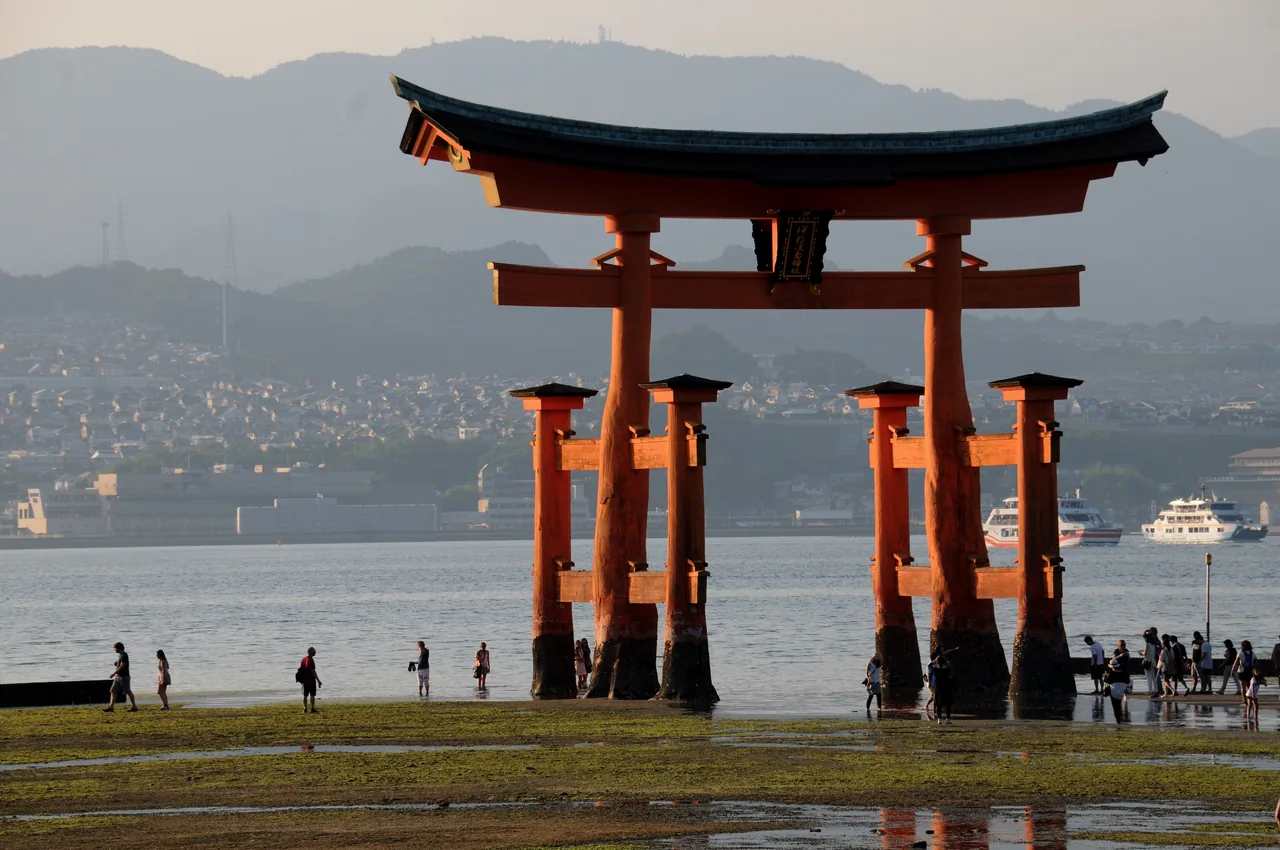
Whether you see the great torii standing in water or walk out to its base is set by the tide, and it is not a choice between them. On most days you can see both a few hours apart.
| Tide level | What you get |
|---|---|
| 100cm or below | You can walk out to the torii |
| 250cm or above | The shrine and torii appear to float |
The Miyajima tourist association publishes a year-round table. Put in your date and look for the hours that cross those two levels.
Which is why you should stay a while
The water takes hours to go out and come back. Spend an afternoon on the island and you will usually catch both states.
Allow ninety minutes and you get whichever one happened to be running. If Miyajima matters to you, clear the whole afternoon.
Walking out
The exposed seabed is wet and slippery, so expect your shoes to get dirty and leave the smart ones behind.
The water comes back faster than people expect. Check the times and give yourself a margin.
The boats follow the tide too
Some daytime JR ferry departures swing past the front of the torii, and whether they run that way depends on the water level.
The boat from beside the A-Bomb Dome travels along the river, so cancellations are common around the biggest tides. Too high and it cannot pass under the bridges, too low and it grounds.
21. Why the shrine was built over the sea
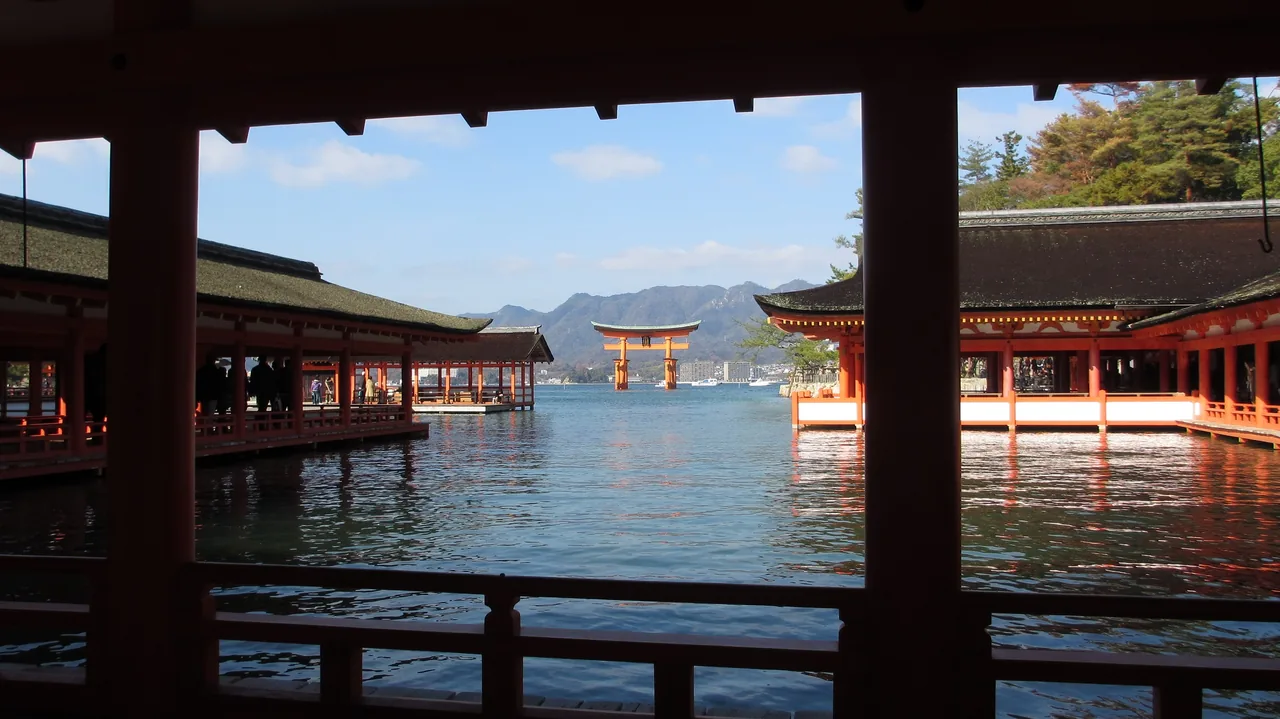
The island itself was regarded as sacred, so rather than build on it, they pushed the buildings out over the water.
Itsukushima Shrine was inscribed as a World Heritage Site on 7 December 1996. The citation rests on the buildings over the sea and the mountain behind them reading as a single composition.
Rebuilt to the same design after fire
Fire caused serious damage in the 13th century and the buildings were rebuilt faithfully, which is why Heian and Kamakura period architecture survives here.
The floor sits low enough to take water at high tide, and the boards are laid with gaps between them so that incoming water pushes up through rather than lifting the deck.
The torii simply stands under its own weight
The great torii is not fixed into the seabed. It holds its position by its own weight, with stones packed into the upper structure to load it down.
At low water you can walk up and see how the legs simply sit on the bed. It is only visible in the hours when the tide is out.
An island treated as a deity
Because the island was sacred, a long list of prohibitions applied here historically. Very little of that affects visitors now, beyond keeping your voice down inside the shrine.
Knowing that the mountain and the shrine were originally one act of worship changes what the ropeway trip means.
22. Three boats to Miyajima
Two ferries leave from Miyajimaguchi, and one boat goes direct from beside the A-Bomb Dome. Fares range from ¥200 to ¥2,400, a spread of more than ten times.
| Boat | From | One way | Time | Note |
|---|---|---|---|---|
| JR ferry | Miyajimaguchi | ¥200 | about 10 min | Covered by a rail pass |
| Matsudai Kisen | Miyajimaguchi | ¥200 | about 10 min | Included in the tram day pass |
| World Heritage Sea Route | By the A-Bomb Dome | ¥2,400 | about 45 min | No changes |
Children pay ¥100 on the first two and ¥1,200 on the direct boat. Returns are ¥400 and ¥4,400 respectively.
The ¥100 visitor tax is separate
Whichever boat you take, a ¥100 Miyajima visitor tax is added. It is charged once, on the way to the island, and not on the way back.
Tap an IC card at the gate and the fare and the tax come off together. A rail pass covers the JR crossing but never the tax.
An annual version costs ¥500, which is irrelevant unless you live nearby.
Which to take
Rail pass holders take the JR ferry. Tram day pass holders take Matsudai. With neither, the fare and the crossing time are identical, so take whichever is leaving.
The direct boat costs more than ten times as much and earns it only by removing the changes. With luggage or small children it is a reasonable trade. Reserve by the evening before.
The Miyajimaguchi ferries run from 5am until after 10pm at 15-minute intervals through the day. The direct boat runs a much shorter window, roughly 8.30am to 5.10pm.
23. What to see on the island
The shrine, Senjokaku, Daisho-in and the ropeway will fill half a day. It is about ten minutes on foot from the ferry pier to the shrine.
| Site | Admission | Hours |
|---|---|---|
| Itsukushima Shrine | ¥300 adult, ¥200 high school, ¥100 elementary and junior high | From 6.30am, closing varies by season |
| Shrine treasure hall | ¥300 adult, ¥200 high school, ¥100 elementary and junior high | 8am to 5pm |
| Senjokaku | ¥100 adult, ¥50 elementary and junior high | 8.30am to 4.30pm |
| Daisho-in | Free | 8am to 5pm |
| Miyajima Aquarium | ¥1,420 adult, ¥710 elementary and junior high | 9am to 5pm, last entry 4pm |
Senjokaku costs ¥100 and almost nobody goes
A large unfinished wooden hall on the rise beside the shrine, begun in 1587 and big enough to lay 857 tatami mats, which is where the name comes from.
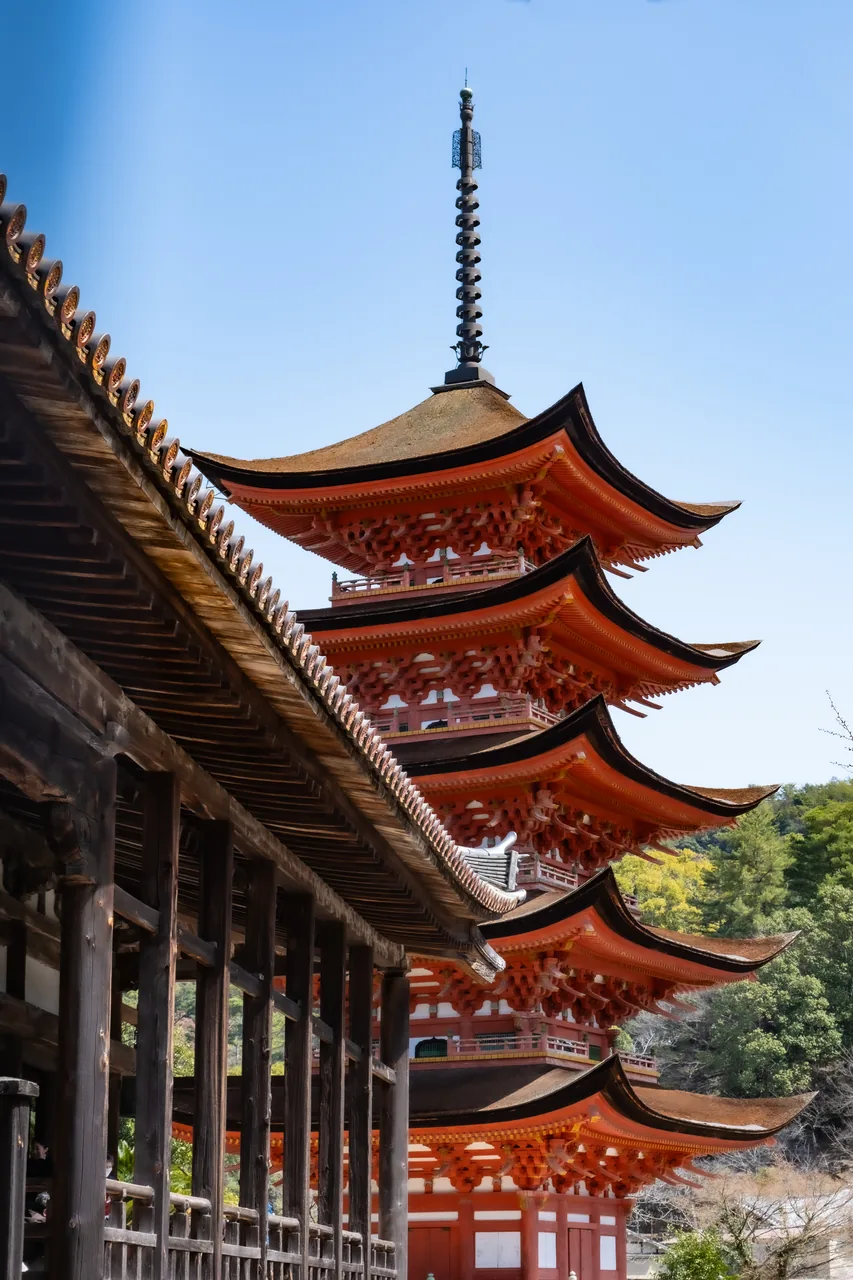
You can sit on the open floor and look down towards the sea, and the five-storey pagoda stands right next to it. For ¥100 it is the best value on the island.
The aquarium shuts for the winter
Miyajima Aquarium is closed from 1 December to 31 March. If you are bringing children in winter, plan around it.
That closure overlaps exactly with the best oyster months. A winter visit to the island is better planned around eating.
The ropeway and Mt Misen
The ropeway climbs towards the island’s highest point. Return is ¥2,000 and one way ¥1,100, half price for children, dropping to ¥1,500 return with a tram day pass.
Ascending services run 9am to 4pm and the last car down is 4.30pm. A free shuttle bus runs from near the shrine to the lower station.
The cabins were replaced recently. They are the fourth generation since the line opened in 1959, and the two cars are named for the sky and the sea.
From the top station it is still a walk to the summit, close to an hour there and back. Check the last descent before you set off.
The hall at the summit has gone
Reikado, the hall at the top of Mt Misen, burned down completely, taking nearby trees with it. Whether it will be rebuilt has not been decided.
The flame it housed, said to have burned for more than a thousand years, was carried to safety by priests. That same flame is connected to the one in the Peace Memorial Park, which ties the island to the city.
The mountain itself is open. Access restrictions were lifted the day after the fire and the ropeway resumed the same day. What you find at the summit simply differs from older descriptions.
Deer
Deer roam freely. Feeding them is not allowed, and they will take paper, maps and tickets out of your hands, so keep hold of anything loose.
They will put their heads into an open bag. Watch food in particular.
Itsukushima ShrineMap Miyajima RopewayMap Daisho-inMap
24. What to do with the leftover time
Kure, Iwakuni and Onomichi are the candidates, all reached by JR from Hiroshima Station. They differ enough in cost and time that the choice usually makes itself.
| Destination | JR one way | Time | On arrival | Needs |
|---|---|---|---|---|
| Miyajimaguchi | ¥420 | 27 min | Ferry ¥200, tax ¥100, shrine ¥300 | Half day to overnight |
| Kure | ¥510 | 33 min | Yamato Museum ¥1,000 | Half day |
| Iwakuni | ¥770 | 49 min | Combined ticket ¥1,550 | Half day |
| Onomichi | ¥6,090 | about 1 hour | Bicycle hire extra | Overnight |
Kure
A naval shipbuilding city with a museum built around a very large battleship. It reopened after a long closure for refurbishment, and admission is ¥1,000 for adults, ¥300 for high school students and ¥200 for elementary and junior high.
Open 9am to 6pm with last entry at 5.30pm, and closed on Tuesdays, though it stays open through the spring holidays, the summer break and the new year period.
Anything telling you it is closed for renovation is out of date.
Next door there is a separate museum built around a real decommissioned submarine, and entry is free. You go inside the hull and can use the periscope, which makes it a strong option with children.
It also closes on Tuesdays. Turn up in Kure on a Tuesday and both are shut, which removes most of the reason to be there. Check the day first.
Iwakuni
A five-arch wooden bridge with a castle on the hill above it. Crossing the bridge alone costs ¥500 for adults and ¥250 for elementary school children.
A combined ticket covering the bridge, the ropeway and the castle is ¥1,550 for adults and ¥700 for children. You cannot upgrade a bridge ticket later, so decide at the booth.
These are the rates from 1 September 2026. Before that the bridge was ¥310 and the combined ticket ¥970, which is what most search results still show.
Onomichi is not a half day
It is about an hour by shinkansen, but the fare is ¥6,090 each way, so ¥12,180 return puts it in a different bracket from the other two.
What people go for is the Shimanami Kaido cycle route, which runs about 70km to Imabari and normally takes a day or two. Half a day does not get you started.
That is not a reason to skip it. It is a reason to give it its own day rather than treating it as an afternoon out from Hiroshima.
Your choice changes your ticket
The tram day pass is only useful in the Miyajima direction. Kure, Iwakuni and Onomichi are all JR, so the pass has no bearing on them.
Decide the destination first and the ticket second. With a rail pass all three are already covered and there is nothing to calculate.
25. What older guides still get wrong
An unusual amount has changed here within the last year or so. Several things you will read elsewhere no longer describe what you will find.
| Commonly written | Actually |
|---|---|
| Pay to enter Hiroshima Castle keep | The keep is closed. Exterior and grounds only |
| See the eternal flame at the summit of Mt Misen | The hall burned down |
| Trams are ¥220 in the city, more on the Miyajima line | One flat fare of ¥240 everywhere |
| Catch the tram in the station forecourt | The platform is on the second floor of the station building |
| The Yamato Museum in Kure is closed | It reopened after refurbishment |
| Miyajima Aquarium is open year round | Closed December to March |
One price rises imminently
The Kintaikyo bridge at Iwakuni goes from ¥310 to ¥500, and the combined ticket from ¥970 to ¥1,550, from 1 September 2026.
Almost every figure currently in circulation is the old one. Budget with the new numbers.
And a tax that did not used to exist
The prefectural lodging tax applies to stays from 1 April 2026, so anything written before that does not mention it.
It is collected at the property rather than at booking, which is why the amount you are quoted online and the amount you hand over can differ.
Why so much changed at once
A station rebuild, a new tram alignment, a museum refurbishment and a run of price revisions all landed inside about eighteen months.
That is unusual, and it means the failure rate of older articles about Hiroshima is higher than for most Japanese cities. Check the date on anything quoting a price.
26. When to go
Winter for oysters, spring and autumn for walking. Miyajima’s autumn colour is the single biggest draw in the region.
Winter
Oysters peak from December to February. Against that, the Miyajima aquarium is shut from December to March and the short days cut down the usable hours on the island.
Itsukushima Shrine also closes at 5pm in December. Arrive late in the afternoon and you may not get in.
Spring and autumn
Autumn on Miyajima draws the heaviest crowds of the year, and ropeway queues get long. Go up early in the day.
Cherry blossom season fills the island and the castle grounds together. Book accommodation well ahead for both.
Summer
The museum stays open until 8pm in August and visitor numbers are at their highest, with timed entry in force on some days.
It gets genuinely hot here. If you intend to climb on Miyajima, use the morning.
The first week of August
The Korean memorial ceremony falls on 5 August and the main peace memorial ceremony on 6 August. The city is entirely different during those days.
Room rates climb steeply and availability disappears early. Plan months ahead if you want to be here then.
27. One day, hour by hour
Using the museum’s 7.30am opening is what makes a single day comfortable rather than rushed. Finish the centre in the morning, give the whole afternoon to the island.
| Time | Where |
|---|---|
| 7.30am | Peace Memorial Museum, as the doors open |
| 9.30am | National Peace Memorial Hall and the monuments |
| 10.30am | A-Bomb Dome, from the far bank and from beneath |
| 11.30am | Walk downtown for okonomiyaki |
| 1pm | Tram or JR to Miyajimaguchi, ferry across |
| 2pm | Shrine, Senjokaku, Daisho-in |
| 3.30pm | Ropeway, last ascent 4pm |
| 6pm | Back to the mainland |
Why this order
Going into the museum first means seeing it at its quietest. Push it later and the overrun pushes into your island time instead.
The ropeway sets the other end of the day, with the last ascent at 4pm and the last descent at 4.30pm. Reach the island late and the mountain is gone.
Adjusting for the tide
If the water is high in the afternoon, run the day exactly as above and you get the floating torii.
If it goes out in the afternoon you get the walk instead. To catch both, either stay longer on the island or flip the order and do Miyajima first.
If you only have half a day
Leave your bags at the station, take the loop bus or a tram to the Dome, and allow around three hours for the park and the Dome including travel.
Add the museum and you need about five. With a fixed shinkansen booking, that difference decides whether you go in.
28. What a day costs
Admission prices here are low. The museum is ¥200, the shrine ¥300, the garden ¥350, so seeing a lot of things adds up to very little.
| Day | Transport | Admissions | Total |
|---|---|---|---|
| City only, museum and garden | ¥480 | ¥550 | about ¥1,030 |
| City and Miyajima, tram day pass | ¥1,000 | ¥500 | about ¥1,500 |
| Same, adding the ropeway | ¥2,500 | ¥500 | about ¥3,000 |
| Kure return with the museum | ¥1,020 | ¥1,000 | about ¥2,020 |
Food and accommodation are on top. On transport and entry alone, most days here come in under ¥3,000.
Where the money actually goes
The direct boat from the Peace Memorial Park to Miyajima is the outlier at ¥4,400 return, more than everything else on a normal day put together.
The Iwakuni combined ticket at ¥1,550 is the other one. Crossing the bridge alone is ¥500.
With a rail pass
The pass covers the loop bus, the JR run to Miyajimaguchi, the JR ferry, and Kure, Iwakuni and Onomichi. Your entire spend becomes admissions plus the ¥100 island tax.
That is the strongest argument for timing your pass to cover the Hiroshima leg rather than starting it a day later.
With children
The museum is free for junior high age and under, the garden is free through high school, and tram fares are ¥120. Children add very little.
The aquarium is the exception at ¥1,420 and ¥710, and it is shut in winter anyway.
29. Rain, and travelling with children
Rain hurts Miyajima more than anywhere else here, because the island is almost entirely an outdoor day and walking out on the seabed stops being appealing.
A wet day
Shift the day into the city. The museum and the National Peace Memorial Hall are indoors and completely unaffected.
The downtown shopping streets are covered arcades, so you can walk and eat without getting wet, and the okonomiyaki building sits in the same area.
If you must go to the island, the shrine itself is roofed and still works. The ropeway, though, suspends operation in some weather.
Children
Costs are low, with free museum entry for junior high age and under and free garden entry through high school.
The museum content is heavy and there is no age at which that changes. Watch how it is going and keep the schedule loose enough to leave early.
Starting outside at the Children’s Peace Monument, with the paper cranes, gives younger children something to hold onto before they go in.
On the island with children
The deer are a hit, but feeding is not allowed and they will take maps, tickets and snacks straight out of small hands.
The aquarium is the obvious child-friendly stop and it closes from December to March, so check the calendar before you build a day around it.
30. Practical notes
Carry a little cash and tap an IC card for everything else. Trams and ferries both take national IC cards.
Money
Tram fares, ferry fares and the island visitor tax all come off an IC card, and the gate deducts fare and tax together.
Smaller restaurants, okonomiyaki counters included, are often cash only. Keep around ¥10,000 on you.
Luggage
Miyajima has slopes and steps, so a large case is a burden. Use the lockers at Hiroshima Station or Miyajimaguchi.
Unless you are staying on the island overnight, leave the bags behind.
Shoes
If you intend to walk out at low tide or climb on Mt Misen, wear something you do not mind getting wet and that grips.
The island is mostly flat near the shrine, but Daisho-in and the ropeway station both involve steps.
Connectivity
You will want to check tide tables and ferry times during the day, which is difficult on printed information alone.
IC cards
Any of the national IC cards works throughout Hiroshima. There is no need to buy a local one.
Opening hours to watch
Three times end the day here: the last ropeway descent at 4.30pm, the shrine closing between 5pm and 6pm depending on the season, and the aquarium last entry at 4pm.
Everything else runs later than you will need. Build the island half of the day backwards from those three.