Japan Typhoon Season: When It Is and How to Travel Around It
Most trips sail through untouched. Here’s the honest picture, plus exactly what to do if a storm does line up with your dates.
| Don’t cancel a mainland trip over typhoon fear. Most visits are never affected, and even when a storm does hit, it usually snarls a single area for only a day or two — not your whole holiday. | |
| Season | roughly May–November, with the real action July–October. August spawns the most storms; September does the most damage. |
|---|---|
| Warning | you almost always get two to three days’ notice. Watch the JMA English site and Windy from a few days out, and install the free official Safety tips app. |
| The move | flexibility, not fear. Book refundable rooms and flights, leave buffer days, and buy travel insurance early — before any storm is named. |
| Highest risk | Okinawa, Kyushu and Shikoku. Tokyo, Kyoto and Osaka see far less day-to-day disruption. |
| The JR Pass trap | once activated, it is never extended or refunded for a typhoon — even if every train stops. Don’t activate it on a day a storm is forecast to shut the network. |
| If one hits | stay indoors till it fully passes, expect a 12–24h transport backlog after, and watch for landslides and flooding once the wind drops. |
1. Should you worry? The honest answer
2. When is typhoon season in Japan?
3. Reading a typhoon: intensity, size and the number that confuses everyone
4. Warnings and the five evacuation levels
5. How to track a storm: apps and a simple routine
6. 計画運休: how Japan’s planned train shutdowns work
7. What shuts down, and in what order
8. Flights: waivers, refunds and the JAL/ANA vs LCC split
9. Trains and the JR Pass trap
10. Travel insurance, done right
11. Before you go: the flexibility playbook + a prep checklist
12. During a typhoon: stay put, and where to spend the day
13. After it passes: backlog and the hazards that linger
14. Okinawa and the southern islands
15. Region-by-region verdict
16. A quick glossary of Japanese typhoon words
1. Should you worry? The honest answer
No — and you shouldn’t cancel a mainland trip over it. Typhoons sound dramatic, and a genuinely big one is, but the everyday reality for a traveller is far tamer than the word suggests. Any single storm passes over a given place in roughly one to two days, then services start coming back. The odds that one wrecks your entire trip are low.
There’s an upside, too. Late summer and early autumn bring softer, shoulder-ish pricing and thinner crowds (the Obon week in mid-August aside). Plenty of people travel Japan happily through the exact months everyone frets about, and never see more than a grey afternoon.
It also helps to know that Japan has built one of the most organised storm-response systems on earth — pre-announced train shutdowns, a five-level alert ladder, airline waivers, a free multilingual disaster app. That machinery exists because of a handful of genuinely bad storms, but for a normal visitor it mostly means you get told what’s happening, in advance, with time to react.
2. When is typhoon season in Japan?
Practically speaking, May through November — but the bulk of the activity is July to October. Storms can spin up outside that window, yet the ones that actually affect travellers cluster in those four months.
Two months matter most, and they’re not the same month. August produces the most typhoons — it’s the peak formation month — while September does the most damage. That’s when the akisame zensen (秋雨前線), an autumn rain front, lingers over Japan and feeds a passing typhoon with extra moisture, turning it into torrential rain. On top of that, September increasingly brings senjō kōsuitai (線状降水帯) — stalled “linear rainbands” that dump enormous rain totals on one strip of land for hours. So August is the busy month and September is the dangerous one.
In an average year (JMA’s 1991–2020 normals), roughly 25 typhoons form in the northwest Pacific, about 12 come near Japan, and around 3 make landfall on the main islands. Okinawa, out in the south, sees far more approach it — about seven or eight a year. Monthly formation averages peak in August (about 5.7), then September (about 5.0) and October (about 3.4).
What about 2026 specifically? Seasonal outlooks (from Weathernews) forecast an above-normal year — on the order of 28 storms forming and 14 approaching Japan — and the Japan Weather Association flagged (mid-June 2026) a risk of stronger, more-developed typhoons in the autumn. Read those as projections, not certainties; they nudge you toward building in flexibility rather than toward panic.
| Region | Higher-risk months | What it means for you |
|---|---|---|
| Okinawa & southern islands | June–October (peak Aug–Sep) | Hit earliest and most often; risk ramps up from June. Plan real buffer days. |
| Kyushu & Shikoku | July–October | Frequent landfalls on the way in from the southwest; add buffer days. |
| Honshu (Tokyo, Osaka, Kyoto) | August–October | Fewer direct hits, less day-to-day disruption; keep bookings flexible. |
If you want the month-by-month view, our guides to Japan in August and Japan in September go deeper on weather, crowds and what’s on.
3. Reading a typhoon: intensity, size and the number that confuses everyone
Japanese forecasts grade a storm two separate ways — how strong it is and how big it is — and once you can read both, the local coverage suddenly makes sense. A forecast like “大型で非常に強い台風” is just those two dials combined: a very large, very strong storm.
First, a name-and-number note. Each typhoon gets a sequential number for the calendar year — 台風10号 (taifū 10-gō) means “Typhoon No. 10,” the tenth to form that year — and the same storm also carries an international name like Jangmi or Sinlaku. Japanese rail and airline notices lean on the number; international news uses the name. One storm, two labels.
Intensity (強さ) is graded by maximum sustained wind, using three named tiers above the baseline. A system only counts as a typhoon once winds reach 17.2 m/s (about 62 km/h); below that it’s a tropical depression.
| Intensity class | 10-min sustained wind | Rough km/h |
|---|---|---|
| (no adjective — just 台風) | 17.2 to under 33 m/s | ~62–119 |
| 強い (Strong) | 33 to under 44 m/s | ~119–158 |
| 非常に強い (Very strong) | 44 to under 54 m/s | ~158–194 |
| 猛烈な (Violent) | 54 m/s and above | ~194+ |
Size (大きさ) is graded by how far out the strong-wind zone reaches — the radius of winds of at least 15 m/s (the kyōfūiki, 強風域).
| Size class | Strong-wind radius | Why it matters |
|---|---|---|
| 大型 (Large) | 500 to under 800 km | Disruption spreads hundreds of km beyond the centre. |
| 超大型 (Very large) | 800 km and above | Multi-day, multi-region impact — not just the landfall point. |
Two wind zones get named in forecasts: the 強風域 (winds ≥15 m/s) and the fiercer 暴風域 (bōfūiki, winds ≥25 m/s). On the ground, about 15 m/s makes walking hard and umbrellas useless; around 25 m/s you can be blown off your feet, and trains and flights are commonly suspended.
4. Warnings and the five evacuation levels
Two systems run side by side: weather alerts (how bad the weather will get) and a five-level “warning level” ladder (what you should physically do). Learn the ladder and you’ll always know your next move.
The weather-alert tiers escalate like this:
- Advisory (注意報, chūihō) — a disaster may occur; stay aware.
- Warning (警報, keihō) — a serious disaster may occur. Includes specific flavours like 暴風警報 (violent wind), 大雨警報 (heavy rain), 高潮警報 (storm surge) and 波浪警報 (high waves). Take it seriously.
- Emergency Warning (特別警報, tokubetsu keihō) — reserved for once-in-decades, extreme severity. If you ever see this, follow local instructions immediately.
Running alongside is the five-level 警戒レベル (keikai reberu) ladder, which pairs each stage with a concrete action. This is the one to memorise:
| Level | Name / trigger | What a traveller does |
|---|---|---|
| 1 | Raise awareness (早期注意情報) | Just monitor the forecast. |
| 2 | Check your plan (注意報 / Kikikuru yellow) | Note your hotel’s location, the nearest shelter, and safe routes. |
| 3 | Elderly evacuate (高齢者等避難 / warning / Kikikuru red) | Elderly, disabled and families with small kids leave now; everyone else gets ready. |
| 4 | Evacuation order (避難指示 / Kikikuru purple) | Everyone leaves danger areas immediately. |
| 5 | Emergency safety measures (緊急安全確保 / emergency warning / Kikikuru black) | Safe evacuation may no longer be possible — protect your life where you are (higher floor, away from slopes and rivers). |
Three things to know. First, the levels can jump — a storm can go from 3 to 5 without pausing at 4, so don’t wait for a tidy countdown. Second, “Kikikuru” is JMA’s real-time colour hazard map (危険度分布); when your area turns purple or black, act. Third, if a paper sign or old leaflet mentions 避難勧告 (evacuation advisory), ignore the term — it was abolished in May 2021, and 避難指示 is now the single Level-4 order. (You may also start seeing a newer “Danger Warning” tier JMA is phasing in; the stable 1–5 ladder above is still the backbone.)
5. How to track a storm: apps and a simple routine
You don’t need to be a meteorologist — you need one visual tracker, one official warning source, and one push-alert app, plus a three-step routine. Set these up before you fly and a storm becomes something you watch calmly rather than get ambushed by.
The channels worth having, in English:
- JMA English — the official source for warnings and tracks. Its multilingual cyclone page shows the storm’s forecast path.
- Windy (app + web) — the best visual tool for watching the cone approach; intuitive and oddly calming.
- “Safety tips” app — the official multilingual disaster app from the Japan Tourism Agency, in 15 languages including English. It pushes earthquake, tsunami and weather warnings, and includes an evacuation flowchart and phrase cards. Install this one.
- Yahoo! Japan 防災速報 (Bousai) — excellent push alerts for rain, evacuation info and J-Alert relays, though mostly in Japanese.
- NHK World-Japan — English disaster news (app and site) when you want a human explaining what’s happening.
- J-Alert — Japan’s national instant-warning system fires emergency messages straight to your phone via cell broadcast, even with no app installed, as long as alerts are enabled.
- JNTO “Japan Safe Travel Information” (and X account @JapanSafeTravel) — disaster updates in around 15 languages.
For getting online the moment you land — which is how you’ll actually read all of this — an eSIM beats hunting for airport Wi-Fi while a forecast shifts by the hour.
• ~3 days out: start glancing at JMA and Windy. Is anything heading your way?
• ~1 day out: check your specific flights and trains, read the operator status pages, and shop for a little supplies kit.
• Day of: stay in, keep alerts on, and follow instructions. That’s it.
6. 計画運休: how Japan’s planned train shutdowns work
When a storm is coming, Japanese railways don’t fail randomly — they pre-announce a coordinated shutdown called keikaku unkyū (計画運休), a planned suspension, and they tell you well before it happens. It exists to keep passengers safe and to avoid stranding trains between stations.
The timing is fairly predictable. Following the standard model (used by MLIT and operators like Tokyo Metro), you’ll typically see:
- ~48 hours out: a “possibility of planned suspension” notice — a heads-up that it might happen.
- ~24 hours out (the day or night before): the confirmed specifics — which lines, from what time.
- Storm day: the suspension takes effect.
Where to check live status, in English (bookmark the ones matching your route):
| Operator | English status |
|---|---|
| JR East (Tokyo/Tohoku) | traininfo.jreast.co.jp/train_info/e/ + the JR East app |
| JR Central (Tokaido Shinkansen) | global.jr-central.co.jp/en/shinkansenqr/ + X @JRC_Shinkan_en (posts when delays ≥10 min are expected) |
| JR West (Kansai/Hiroshima) | global.trafficinfo.westjr.co.jp/en/ + X @jrwest_info_eng |
| Tokyo Metro | tokyometro.jp/lang_en/ |
| Any operator (aggregators) | railwayinfo.jp/en/ and the NAVITIME Japan Travel app |
The Tōkaidō Shinkansen (Tokyo–Nagoya–Osaka) deserves a special mention: it’s especially rain-sensitive, with strict rainfall limits at trackside gauges (notably in mountainous Shizuoka), so it can halt for heavy sustained rain before the strong wind even arrives. Exact numbers aren’t officially published, but the practical lesson holds — don’t assume the bullet train is bulletproof in a downpour.
And a point people miss: resumption is inspection-gated, not clock-based. Once a storm clears, JR runs test and inspection trains to check the tracks before carrying passengers again. If the storm passes early, service can return the same day; if it was suspended overnight, expect it back the next morning. There’s no fixed “X hours later” figure — watch the operator’s page rather than guessing.
7. What shuts down, and in what order
Things don’t stop all at once — they wind down in a reliable sequence, from boats first to bullet trains last. Knowing the order tells you what to sort out first when a storm is a day or two away.
| Order | What stops | Rough trigger / timing |
|---|---|---|
| 1 | Ferries & inter-island boats | First to go — a gale warning, waves around 2–3 m, wind ~15–20 m/s. |
| 2 | Flights | Cancellations typically announced ~24h ahead, especially in Okinawa and at regional airports. |
| 3 | Local buses, trams, monorail | From first service on the storm day (e.g. Okinawa’s Yui Rail monorail). |
| 4 | Trains, Shinkansen, private lines | Planned suspension (計画運休) on the storm day. |
Big theme parks react too. Tokyo Disney Resort and Universal Studios Japan have both closed entirely or cut hours for approaching typhoons, often announcing an early close the day before. If a park day lands on a forecast storm day, check the official site the night before.
Here’s how a storm day tends to unfold on the ground:
- Night before: rail confirms its planned suspension; theme parks announce closures or shortened hours; you finalise any rebooking.
- Morning of: flights start cancelling, ferries are already stopped, and buses and trains wind down toward the suspension.
- Through the day: the storm passes — usually a day or two over any single area.
- After: services resume within hours, but flights and trains carry a 12–24h+ backlog as everyone rebooks at once.
To see this in the real world: on 1 June 2026, Typhoon No. 6 passed close to Okinawa (about 90 km south-southwest of Naha, ~975 hPa, winds near 30 m/s). Naha Airport’s terminal closed for the entire day (reopening 6:00 the next morning), roughly 405 flights were cancelled across Okinawa’s airports — Miyako and Ishigaki fully suspended — and the Yui Rail monorail ran zero service all day. A later twin-typhoon spell on 26 June 2026 cancelled 137 flights at Naha in a single day. That’s the sequence above, playing out exactly.
8. Flights: waivers, refunds and the JAL/ANA vs LCC split
The two big carriers protect you before a storm even lands; budget airlines make you wait for the official cancellation. Knowing which camp you’re in tells you exactly when to act.
Both JAL and ANA issue a proactive “weather waiver” a day or two ahead when a typhoon is projected to hit a major airport. That lets you either rebook to a nearby alternate flight fee-free, or take a full refund — and crucially you can do it before the flight is officially cancelled. ANA states this openly on its site (change or refund even before a delay or cancellation is confirmed); JAL surfaces the same protection through per-event travel alerts.
| JAL & ANA (full-service) | LCCs (Peach, Jetstar, Skymark, Solaseed…) | |
|---|---|---|
| Proactive waiver before cancellation? | Yes — 1–2 days ahead | No — generally wait for official cancellation |
| Fee-free rebooking? | Yes, onto a nearby alternate flight | Usually not — refund only |
| Refund option? | Yes, full refund | Refund of the fare only, if the flight is cancelled |
| Hotel / meals covered? | Case by case via the carrier / insurance | No |
A real example: during Typhoon Jangmi (No. 6) in early June 2026, about 900 flights were cancelled and roughly 90,000 passengers affected — and both ANA and JAL waived change fees. That’s the system working as intended.
With an LCC (Peach, Jetstar Japan, Skymark, Solaseed, Spring Japan, StarFlyer), expect the stricter version: they generally refund only the fare if the flight is officially cancelled, won’t rebook you onto another flight, and won’t cover a hotel — and the exact outcome depends on your fare tier. If you’re flying budget in typhoon season, paying up for a flexible fare is worth it.
9. Trains and the JR Pass trap
Ordinary JR refunds after a typhoon are generous — but the Japan Rail Pass has a catch that catches out thousands of visitors every year. Get this one straight before you activate anything.
First, the good news. If a reserved JR train (a Shinkansen seat, for instance) is officially cancelled or suspended by a typhoon, you get a full refund with no penalty, at any major JR station, claimable for up to a year. Reserved seats on trains that are running are free to re-book too. So a normal ticket-holder is well protected.
Practically, that means watching the forecast against your pass start date. If a big storm is due on the day you planned to activate, just shift your activation by a day and spend the storm day doing something local and indoor — you lose nothing, versus burning a pass day on trains that never run.
10. Travel insurance, done right
Comprehensive travel insurance is the real backstop against a typhoon — but only if you buy it before a storm is on the horizon. The timing is the whole ballgame.
A good policy can cover trip delay, interruption and cancellation, plus the extra hotel and meal costs a storm forces on you. But here’s the rule every insurer applies: a typhoon only counts as an unforeseen event if it wasn’t already forecast or foreseeable when you bought the cover. The moment a storm is named or forecast, it’s “foreseeable,” and cancellation cover for that storm no longer applies. So buying insurance after you see a typhoon on the map is too late for that storm.
How the benefits actually pay out:
- Trip delay typically kicks in after a set delay threshold (often around five to six hours) and reimburses meals, lodging and local transport up to a cap.
- Trip interruption reimburses unused prepaid costs and the extra cost of getting home.
- CFAR (“Cancel For Any Reason”) is the only way to keep flexibility once a storm is already named — it usually refunds 50–75% and generally must be added within about 14–21 days of your first deposit (verify the window with your insurer).
A comprehensive policy can cover trip delays, missed connections and the extra hotel nights a typhoon forces on you — but only if you buy before a storm is forecast. Sort it out early.
11. Before you go: the flexibility playbook + a prep checklist
Almost everything that saves your trip during a typhoon is decided before you leave home — and none of it is expensive or complicated. It’s mostly about leaving yourself room to move.
The flexibility playbook:
- Watch the forecast from two to three days out once you’re in season, and keep your itinerary loose enough to shuffle a day.
- Book refundable or free-cancellation rooms, and flexible flights. The few dollars over the non-refundable rate is the cheapest insurance you’ll buy all trip.
- Choose a hotel over a short-let for at-risk dates — staff who know what’s happening, backup power, and someone to ask when the trains stop.
- Leave buffer days, especially around flights and any island connection (see the Okinawa section).
- Buy travel insurance early, before any storm is named.
The prep checklist — do this once a storm is a day or two out:
- Water and food. Japan’s own guidance is 3 litres of water per person per day (three days ≈ 9 L). You won’t need a week’s worth as a tourist, but a couple of bottles and some snacks per person is smart — locals clear konbini and supermarket shelves 24–48 hours before a storm, and bread, instant ramen and bottled water vanish first. Stock up early.
- Charge everything, and carry a power bank. Outages happen; your phone is your lifeline.
- Cash. ATMs and card readers can fail in a power cut — keep some yen on hand.
- Offline maps — with a caveat. ⚠️ Offline maps are unreliable in Japan — offline routing, especially public-transport directions, often won’t work, and Google Maps’ offline coverage here is limited. Download a dedicated offline map app (such as Maps.me) plus your transit apps before you travel, and keep enough data to look up routes live.
- Install the “Safety tips” app (free, 15 languages) and make sure your phone’s emergency alerts (J-Alert) are switched on.
Stay connected. Your phone is how you’ll track the storm, read rail notices and rebook — so make sure your data works the moment you land. Our Japan eSIM & data guide covers getting online instantly, which genuinely matters when a forecast is moving by the hour.
You’ll track the storm, read rail notices and rebook on your phone — so keep your data working from the moment you land. Compare Airalo’s Japan eSIMs by size and price.
12. During a typhoon: stay put, and where to spend the day
The single best thing to do in a typhoon is nothing — stay indoors until it has fully passed. The dangerous moment for tourists is heading out “just to see,” into flying debris and sudden gusts, when transport has stopped anyway. Wait it out. The good news: Japan is world-class at indoor days, so a storm day can be a genuinely good one.
Here’s a city-by-city shortlist of solid, mostly-indoor options. A few flagged spots have outdoor sections to skip in a storm.
Tokyo
- Maxell Aqua Park Shinagawa — indoor aquarium with light shows, right by Shinagawa Station.
- Sumida Aquarium — inside the Tokyo Solamachi mall at Skytree.
- teamLab Planets (Toyosu) — immersive digital art, indoors (some gentle water-wading), and teamLab Borderless, now at Azabudai Hills (it moved there in 2024 — it is not in Odaiba any more).
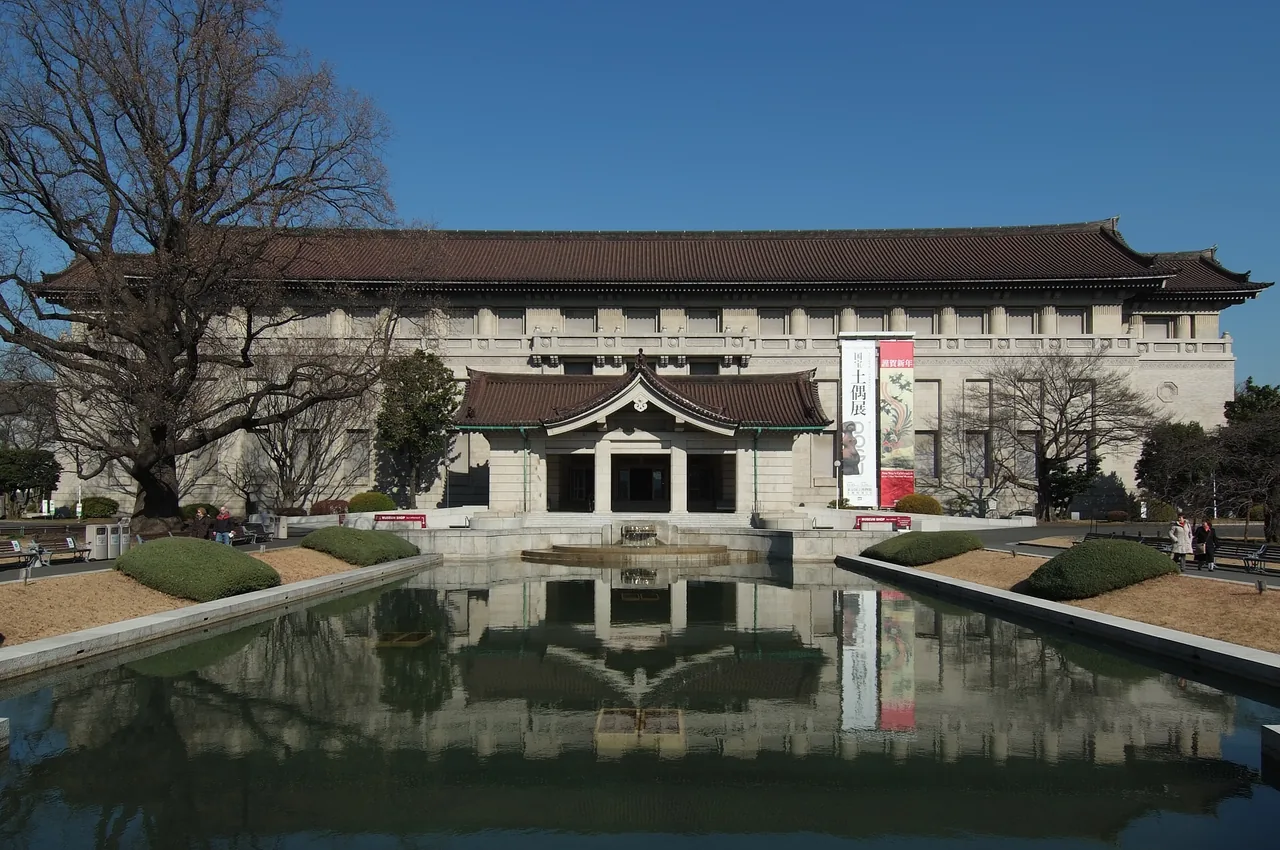
- Tokyo National Museum (Ueno) — Japan’s great national collection; closed Mondays.
- Sunshine City (Ikebukuro) — an enclosed complex with malls, an aquarium and a planetarium; and the Cup Noodles Museum Yokohama (about 30 minutes out; closed Tuesdays) is a fun interactive pick.
- Tokyo Station Yaesu underground arcade for eating and shopping without stepping outside; Thermae-Yu onsen in Shinjuku (⚠️ indoor baths are fine — the outdoor rotenburo is exposed).
Osaka
- Osaka Aquarium Kaiyukan — whale sharks, entirely indoors.
- Osaka Science Museum (Nakanoshima) — planetarium and hands-on exhibits, indoors; closed Mondays.
- Spa World (Shinsekai) — a huge indoor onsen complex, open 24 hours.
- Kids Plaza Osaka for families; the 715 m Namba Walk underground arcade and Namba City for weatherproof wandering; Tennoji Mio and the Abeno Harukas department store (⚠️ skip the open-air Harukas 300 observatory).
Kyoto
- Kyoto Railway Museum (Umekoji) — indoors; closed Wednesdays.
- Kyoto Aquarium (Umekoji Park) — mostly indoor.
- JR Kyoto Isetan inside Kyoto Station and Takashimaya Kyoto for enclosed shopping and dining; Nishiki Market (⚠️ a covered arcade — fine for rain, but not sealed against strong wind); the Kyoto National Museum (⚠️ open only during exhibition periods, so check a show is on).
Okinawa
- Okinawa Churaumi Aquarium (Ocean Expo Park, north) — the aquarium building is indoors (⚠️ the wider park’s attractions are outdoor).
- DMM Kariyushi Aquarium (inside the iias Toyosaki mall near Naha) — core is indoor (⚠️ some petting/forest zones are semi-open).
- Okinawa Prefectural Museum & Art Museum (Naha, Omoromachi) — indoors.
- AEON Mall Okinawa Rycom (the biggest mall, with a cinema and a Pokémon Center) and San-A Naha Main Place for a full indoor day.
Aquariums, museums and indoor attractions are the perfect storm-day plan. Check tickets and skip-the-line options on Klook.
13. After it passes: backlog and the hazards that linger
Once the wind drops, don’t expect everything back to normal instantly — plan for a lag, and stay alert to the dangers a storm leaves behind.
Transport resumes gradually. Trains and buses often return within hours, but flights and rail typically carry a 12–24 hour (sometimes longer) backlog as everyone rebooks at once. If your flight was cancelled, get into the rebooking queue early — online if you can — rather than turning up at the airport hopeful.
For most city travellers the “after” is mild — a slightly delayed train, a rebooked flight, streets that dry fast. It’s rural, riverside and mountain routes where you’ll want to stay cautious a little longer, and where checking the Kikikuru hazard map before you set out really pays off.
14. Okinawa and the southern islands
Okinawa is Japan’s typhoon front line — hit earliest and most often — so it needs the most planning of anywhere in the country. Around seven or eight typhoons approach Okinawa Prefecture each year (against roughly three landfalls on the main islands), with a season running June to October and a peak in August–September.
The real risk out here isn’t the storm itself so much as getting stranded, because the islands live and die by boats and planes. Isolation stacks up in a set order — and fast craft always cancel first and resume last, with go/no-go usually decided each morning around 8:00.
- Kerama Islands (from Naha): to Zamami/Aka, the Zamami Village boats — the fast Queen Zamami cancels before the slower Ferry Zamami (rough thresholds ~2.5 m waves / 15 m/s wind). To Tokashiki, the Tokashiki Village boats — the fast Marine Liner Tokashiki (cancels above ~3 m waves) before the Ferry Tokashiki (above ~4 m).
- Yaeyama (Ishigaki ↔ Taketomi / Iriomote): Yaeyama Kanko Ferry and Anei Kanko (Anei posts its status by about 6:00–7:00).
- Miyako’s Irabu, Ikema and Kurima are bridge-connected (the Irabu Bridge is 3,540 m long), so they carry far less ferry-isolation risk than the Kerama or Yaeyama islands.
After the boats, flights cancel (roughly 24 hours ahead, resuming within hours after the storm), and the Okinawa Urban Monorail (Yui Rail) suspends in strong wind. As the June 2026 example showed, a single close pass can shut Naha Airport and the monorail for a whole day and cancel hundreds of flights — so a storm can leave you stuck an extra day or two, longer if the flight backlog is bad.
None of this is a reason to skip Okinawa in summer — it’s spectacular, and plenty of trips run without a hitch. Just go in with flexible bookings, insurance bought early, and real slack in the schedule. Our full Okinawa travel guide covers the islands, seasons and how to string them together.
15. Region-by-region verdict
Go — everywhere — and simply scale your flexibility to the risk. There’s no part of Japan you should strike off your list over typhoons; there are only places that want a little more slack in the plan.
| Where you’re headed | Verdict |
|---|---|
| Tokyo, Kyoto, Osaka | Low daily disruption. Go — just keep bookings flexible. |
| Kyushu & Shikoku | Higher risk on the storm track in from the southwest. Go, but add buffer days. |
| Okinawa & southern islands | Highest risk of getting stuck. Go, with real buffer days and insurance. |
The reasoning is simple. Most trips are never touched by a typhoon at all, and the ones that are usually lose a day or two rather than the holiday. Against that, you get quieter sights and gentler pricing through late summer and early autumn. Cancelling a Tokyo–Kyoto–Osaka trip out of typhoon fear means giving up a great trip to avoid a risk that, day to day, is fairly small.
Why does Japan have all this machinery — planned suspensions, a five-level ladder, a national alert system — if the risk is so manageable? Because of the rare worst cases, and it’s worth knowing them precisely so the everyday calm makes sense. Typhoon Jebi (September 2018) drove a runaway tanker into the only bridge to Kansai International Airport, shutting it for about two weeks with ~8,000 people evacuated by ferry and bus. Typhoon Faxai (September 2019) stranded more than 13,000 travellers at Narita when rail and road were cut, and knocked out power to hundreds of thousands of Chiba households. Typhoon Hagibis (October 2019) saw around 1,600 flights cancelled and forced three Rugby World Cup matches to be scrapped. Those are the extremes — the reason the system was built — and a normal traveller almost never sees anything close. The infrastructure exists precisely so your bad day is a rebooked flight, not a headline.
So the honest bottom line: don’t cancel — prepare. Refundable bookings, a couple of buffer days, insurance bought early, and a habit of checking the forecast a few days out. Do that and typhoon season becomes a manageable footnote rather than a reason to stay home. When you’re ready to build the rest of the trip, start with our complete Japan travel guide.
16. A quick glossary of Japanese typhoon words
You’ll see these on station boards, weather apps and news tickers — here’s what each one means at a glance. Skim it once and the local coverage stops looking like a wall of kanji.
| Japanese | Romaji | Meaning |
|---|---|---|
| 台風 | taifū | Typhoon (winds ≥17.2 m/s) |
| 台風〇号 | taifū N-gō | The year’s Nth storm (Japan uses the number) |
| 計画運休 | keikaku unkyū | Planned suspension (pre-announced shutdown) |
| 運休 | unkyū | Suspension (service stopped) |
| 遅延 | chien | Delay |
| 特別警報 | tokubetsu keihō | Emergency warning (once-in-decades) |
| 警報 | keihō | Warning (serious disaster may occur) |
| 注意報 | chūihō | Advisory (caution) |
| 避難指示 | hinan shiji | Evacuation order (Level 4 — everyone leaves) |
| 緊急安全確保 | kinkyū anzen kakuho | Emergency safety measures (Level 5) |
| 暴風 | bōfū | Violent wind |
| 暴風域 | bōfūiki | Zone of winds ≥25 m/s |
| 強風域 | kyōfūiki | Zone of winds ≥15 m/s |
| 大雨 | ōame | Heavy rain |
| 高潮 | takashio | Storm surge |
| 秋雨前線 | akisame zensen | Autumn rain front (feeds September storms) |
| 線状降水帯 | senjō kōsuitai | Linear rainband (prolonged torrential rain) |
That’s the full toolkit. Between this glossary, the Safety tips app and a habit of glancing at the forecast, you’re better prepared for a Japanese typhoon than most locals were a generation ago — and far more likely to spend the season enjoying quiet temples than watching the wind.