
Japan in November: Autumn Foliage, Regional Weather and the Best Dates to Go
The city foliage peak, crisp blue-sky weather, night illuminations, crab season and exactly when to book.
| Weather | Crisp, dry and sunny, with Tokyo around 17°C by day early in the month falling to roughly 14°C by late November. Mornings, evenings and the north are cold. |
|---|---|
| Autumn leaves | This is when the cities peak. Kyoto, Tokyo, Osaka and Nikko hit their reds in November while the mountains and the north have already finished. |
| The catch | Kyoto is at its busiest and most expensive of the entire year in late November, and the days are short, with sunset near 16:30. |
| Best value | Early November (roughly the 1st to the 10th, skipping the long weekend around the 3rd) is cheaper, calmer and still beautiful. |
| Book early | Foliage season is Japan’s domestic peak, so Kyoto rooms and key trains sell out weeks to months ahead. |
1. Is November a good time to visit Japan?
2. November weather in Japan, city by city
3. Why November in Japan feels so good
4. Autumn foliage in November: now the cities turn red
5. Autumn illuminations at night
6. Mount Fuji in November
7. The November crowd calendar and the best dates
8. November festivals and events
9. Late-autumn flavours and crab season
10. Onsen and autumn leaves
11. The north and the first snow
12. Okinawa and the south in November
13. What to pack for Japan in November
14. Japan in November, region by region
15. Crowds, prices and the best dates in November
16. Pick your November by what you want
17. November quick checklist
18. What to read next
1. Is November a good time to visit Japan?
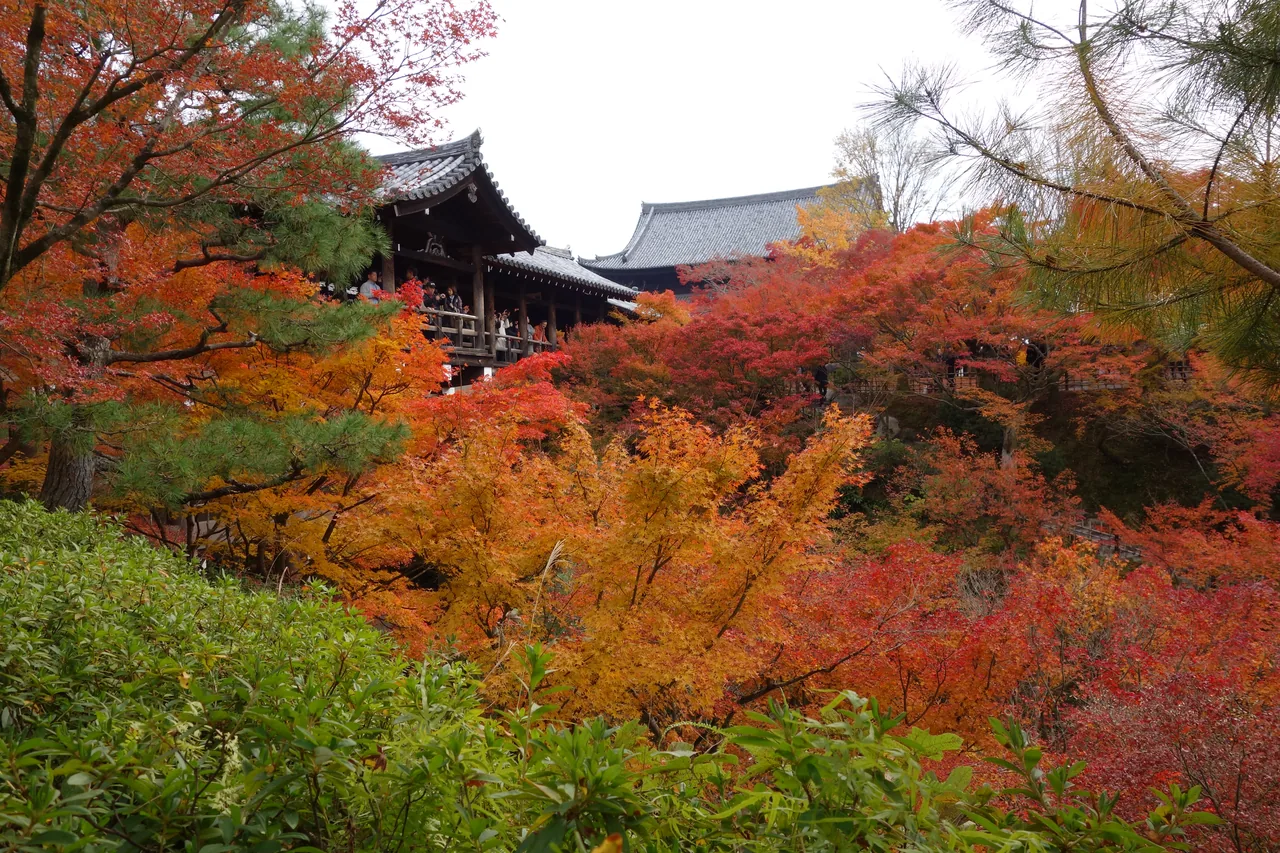
Yes. November is one of the best months of the year to visit Japan, because it combines the country’s headline autumn-leaf season in the cities with the same crisp, dry, sunny weather that makes October so good. If you came to see Japan in its red-and-gold autumn coat, November is the month built for it: the maples of Kyoto, Tokyo, Osaka and Nikko reach their peak now, the typhoon season is effectively over, and the skies are some of the clearest of the year.
There are three honest caveats. First, it is noticeably colder than October, especially in the mornings, the evenings and anywhere in the north. Second, late November is when Kyoto is at its most crowded and most expensive of the entire year, because the foliage peak collides with Japan’s own travel demand. Third, the days are short: in Tokyo the sun sets around 16:30 to 16:48, so you have less daylight than you might expect.
If you are weighing it against the month before, our guide to Japan in October covers the earlier, mountain-and-highland half of the autumn, and our best time to visit Japan guide puts November in the context of the whole year.
2. November weather in Japan, city by city
November weather in Japan is cool, dry and bright, and it cools steadily as the month goes on. In Tokyo, early November runs about 17 to 18°C by day and 11 to 12°C in the evening, while by the end of the month it has slipped to roughly 14 to 15°C by day and 7 to 8°C after dark. Kyoto and Osaka follow the same downward path, with inland Kyoto nights running a little colder.
Here are the November monthly normals from the Japan Meteorological Agency for seven cities, so you can see the spread from the cold north to the mild south.
| City | Avg high °C | Avg low °C | Monthly rain mm |
|---|---|---|---|
| Tokyo | 16.7 | 8.8 | 96.3 |
| Kyoto | about 15.6 | about 7.8 | about 79 |
| Osaka | 17.8 | 10.2 | 72.5 |
| Nagoya | 17.3 | 8.6 | 79.1 |
| Fukuoka | 18.2 | 10.6 | 91.4 |
| Sapporo | 8.7 | 1.6 | 113.8 |
| Naha (Okinawa) | 25.0 | 20.4 | 119.1 |
Source: Japan Meteorological Agency 1991 to 2020 normals. Kyoto is not in the JMA English summary table, so its figures are close approximations and shown as “about”.
Grouped by region, the picture is simple: the north (Hokkaido and the mountains) is sliding into early winter, central Japan from Tokyo down to Kyoto and Osaka is cool and pleasant, and the far south around Okinawa stays mild and warm.
3. Why November in Japan feels so good
November feels good because the weather is dry, crisp, stable and sunny, with the typhoon season effectively behind you. Tokyo sees rain on only around eight days in the month, humidity is low, and clear blue skies are common, which is exactly the kind of weather that makes maple leaves glow and distant mountains stand out sharply.
Together with October, November is about as good as Japanese weather gets, with one honest difference: it is colder. Daytime is comfortable in a jacket, but mornings and evenings have a real chill, and the north is genuinely cold. Typhoons are not impossible this late, but they are rare, so your odds of stable conditions are high.
The other defining feature is short days. Sunset falls from around 16:48 early in the month to about 16:30 by the end, with roughly ten hours of daylight. That sounds like a drawback, but it shapes the rhythm of a good November trip: maple-viewing outdoors in the bright afternoon, then the evening illuminations that are one of the month’s signature pleasures.
4. Autumn foliage in November: now the cities turn red
November is the month the cities and lowlands peak, which makes it the headline foliage month for most first-time visitors. The rule of thumb is simple: in November the urban temples and low-elevation spots reach their best, while the mountains and the far north have already finished their show in October. If you are chasing maples around Kyoto, Tokyo or Osaka, this is your window.
Here is where and roughly when to look, using typical peak timing. Because foliage shifts by days to a couple of weeks each year, treat these as windows rather than promises.
| Spot | Area | Typical November peak | Note |
|---|---|---|---|
| Tofuku-jiMap | Kyoto | Late Nov to early Dec | A sea of maples from the Tsutenkyo bridge |
| Eikando (Zenrin-ji) | Kyoto | Late Nov | Kyoto’s most famous illuminated temple |
| ArashiyamaMap | Kyoto | Mid to late Nov | Lowland, so a touch earlier |
| Kyoto overall | Kyoto | Late Nov to early Dec | Higher Kurama and Ohara run 1 to 2 weeks earlier |
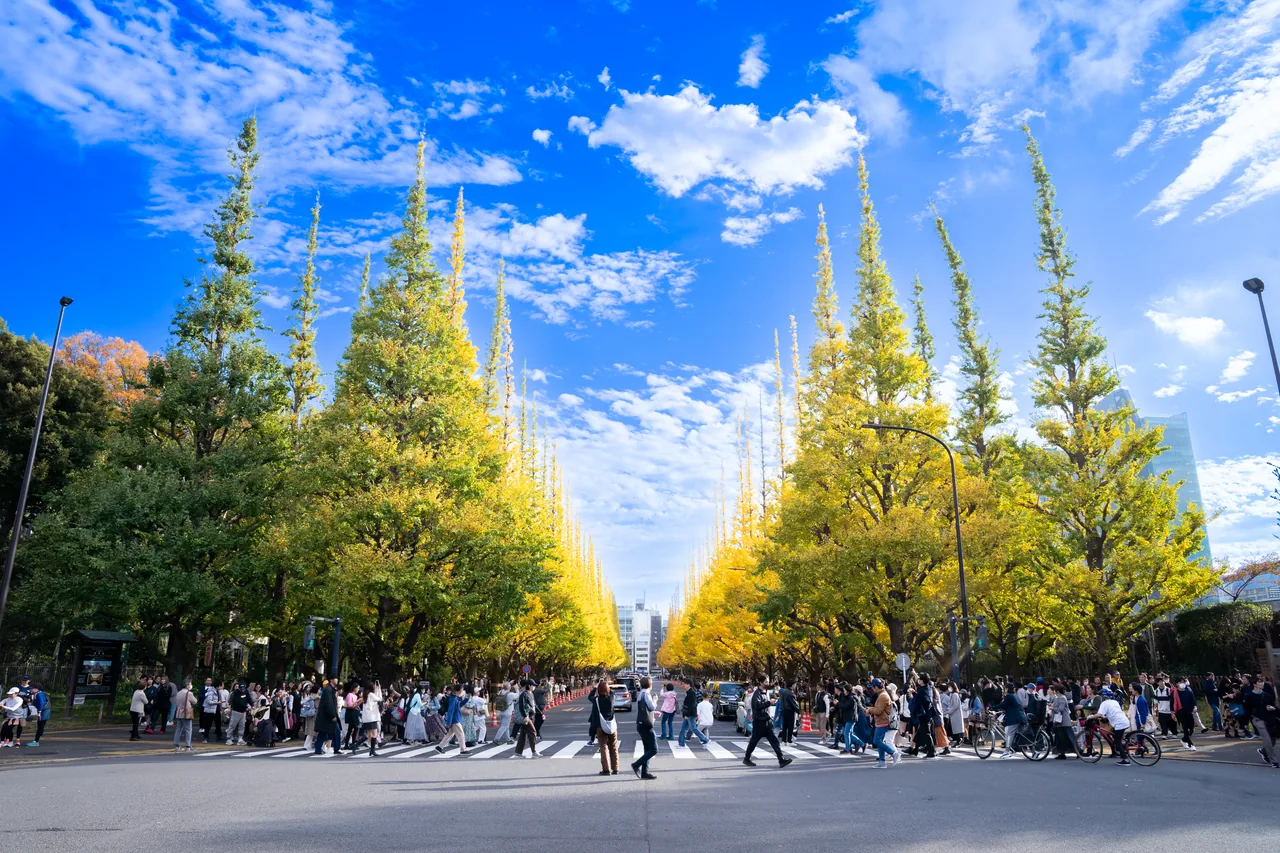
| Meiji Jingu GaienMap ginkgo avenue | Tokyo | Late Nov to early Dec | A 300m tunnel of golden ginkgo |
| Rikugien | Tokyo | Late Nov to early Dec | Famous for its illumination |
| Mount TakaoMap | West Tokyo | Mid to late Nov | Turns earlier than the city centre |
| Nikko town (Toshogu) | Nikko | Early to mid Nov | The town itself; the Irohazaka slopes finish in late October |
| Minoo ParkMap (Minoo Falls) | Osaka | Mid to late Nov | A 2.8km maple-lined stream walk |
| Osaka Castle / Katsuoji | Osaka | Late Nov to early Dec | City-centre spots, among the latest |
| Kawaguchiko Momiji Corridor | Yamanashi | Mid Nov (around the 10th to 20th) | Maples with Mount Fuji behind, plus a momiji festival |
| Itsukushima Shrine MiyajimaMap (Momijidani) | Hiroshima | Mid to late Nov | Maples beside the great torii |
| Kamakura | Kanagawa | Late Nov to early Dec | The latest to turn in the Kanto region |
| Koyasan | Wakayama | Early Nov (unusually early) | 2 to 3 weeks ahead of Kyoto, with evening light-ups |
Always check a live forecast before you lock in dates. Recent warming has pushed peaks a little later, and the 2026 outlook runs roughly 3 to 5 days behind the five-year average, so the official forecast may not be out when you plan. Good live sources include the japan-guide koyo (autumn colour) report, plus tenki.jp and n-kishou.
5. Autumn illuminations at night
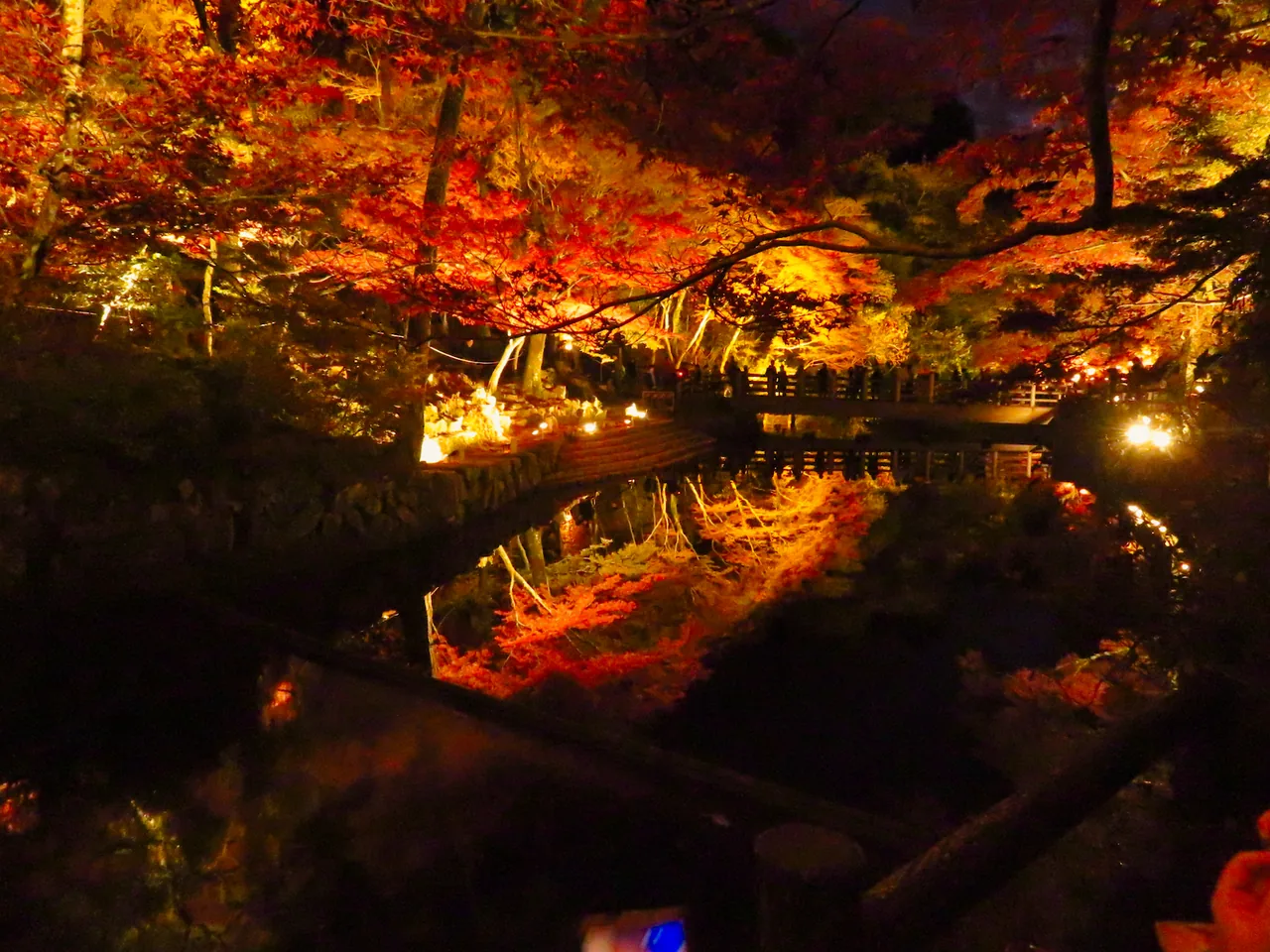
One of November’s special pleasures is the night illumination, when temples and gardens light up their maples after dark. Because the days are so short, the evening light-up (raito-appu) becomes a whole second half to the day, and a handful of places do it spectacularly.
In Kyoto, the headline temples include Eikando Eikando TempleMap (roughly Nov 11 to Dec 10), Kiyomizu-deraMap (around Nov 22 to Dec 7, with last entry near 21:00) and Kodaiji (around Nov 23 to Dec 7), famous for its reflecting pond. Tofuku-ji and Rurikoin also open for limited evening viewing late in the month.
In Tokyo, Rikugien garden lights up (around Nov 28 to Dec 9, until about 20:30, with a wall projection) and the Meiji Jingu Gaien ginkgo avenue glows from roughly Nov 15 to Dec 1. Out in the countryside, KorankeiMap in Aichi lights its valley nightly during its festival (until about 21:00), and Kawaguchiko stays lit until around 21:30.
6. Mount Fuji in November
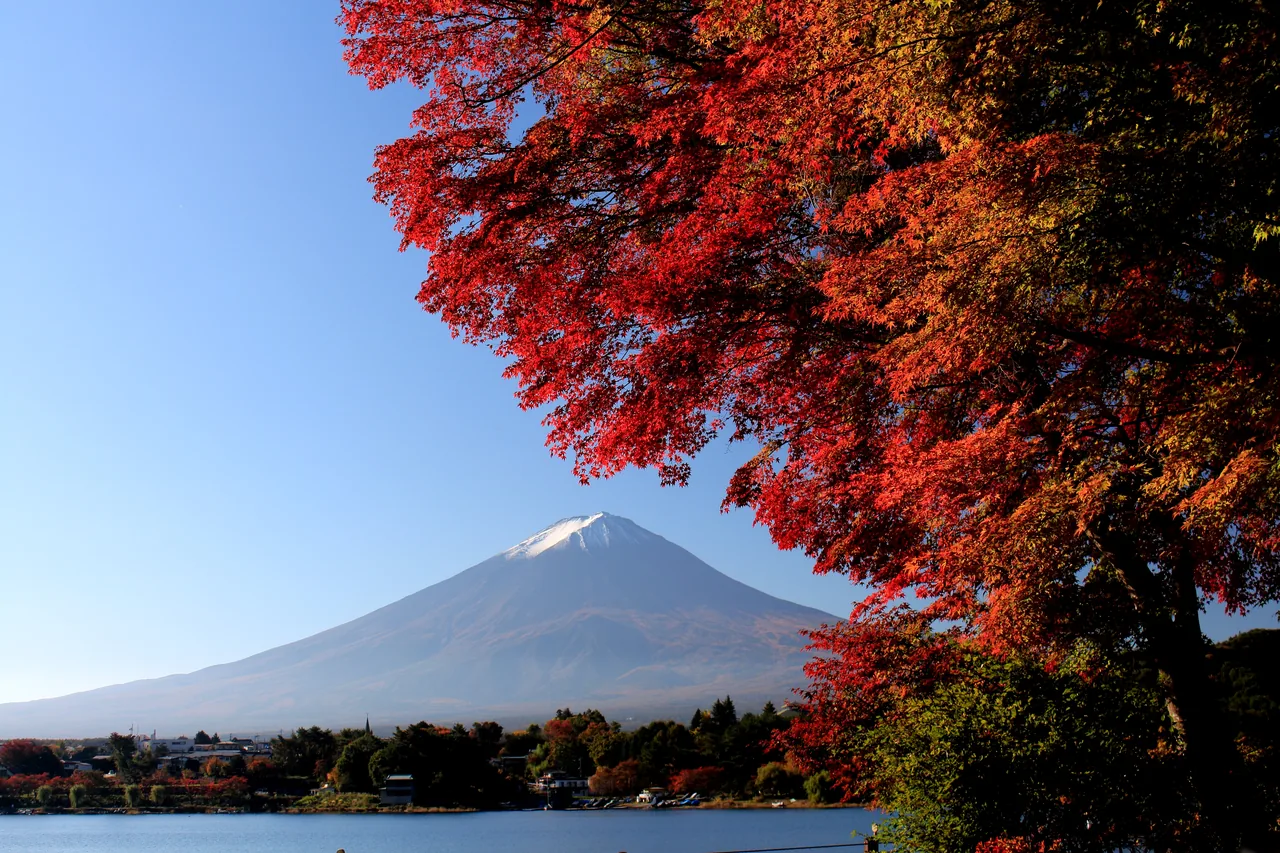
November is the best month to see Mount Fuji, with the mountain reliably snow-capped and the air at its clearest. In 130 years of records, Fuji has always had its snowcap by November, and the average first snowcap is around October 2. One honest exception: 2024 was the latest on record, with the first snowcap not declared until November 7, so an early-month visit in an unusual year could in theory catch a bare peak.
You cannot climb it now. The official climbing season ends on September 10, so November is for viewing only, not summiting. For when and how the climb actually works, see our guide to Mount Fuji climbing and the official Fuji climbing site.
For the classic combination of a snow-capped Fuji framed by red maples, head to the Fuji Five Lakes around mid-November, when the Kawaguchiko Momiji Corridor peaks. The Mount Fuji Yoshida 5th StationMap is the headline viewpoint area. If you want to do this as an easy outing from the capital, our Mount Fuji day trip from Tokyo guide lays out the options.
7. The November crowd calendar and the best dates
November is foliage high season, which makes it the busiest and priciest stretch of the autumn, and nowhere more so than Kyoto in the second half of the month. Two public holidays concentrate domestic travel and are worth planning around.
Culture Day falls on November 3, and because it falls early in the month, many people take a day or two off to make a long weekend running roughly October 31 to November 3 (many museums are free). Labour Thanksgiving Day falls on November 23, creating a three-day weekend from November 21 to 23. That second long weekend is the biggest domestic travel surge of the month and lands right on Kyoto’s foliage peak, so it brings the heaviest crowds and the highest prices of all.
| Dates | What’s happening | Crowd level |
|---|---|---|
| Nov 1 to 10 (skip the 3rd) | Leaves turning, weather lovely | Best value |
| Oct 31 to Nov 3 | Culture Day long weekend | Busy |
| Mid November | Foliage ramping up | Building |
| Nov 21 to 23 | Labour Thanksgiving weekend + Kyoto peak | Peak, most expensive |
| Late Nov | Kyoto foliage peak | Very high |
The smart move is early November (the 1st to the 10th, avoiding the long weekend around the 3rd), on weekdays, and at spots outside central Kyoto. Whatever dates you choose, book early: foliage season is Japan’s domestic peak and Kyoto rooms can sell out months ahead. See our money, cash and cards guide to budget for the higher season too.
8. November festivals and events
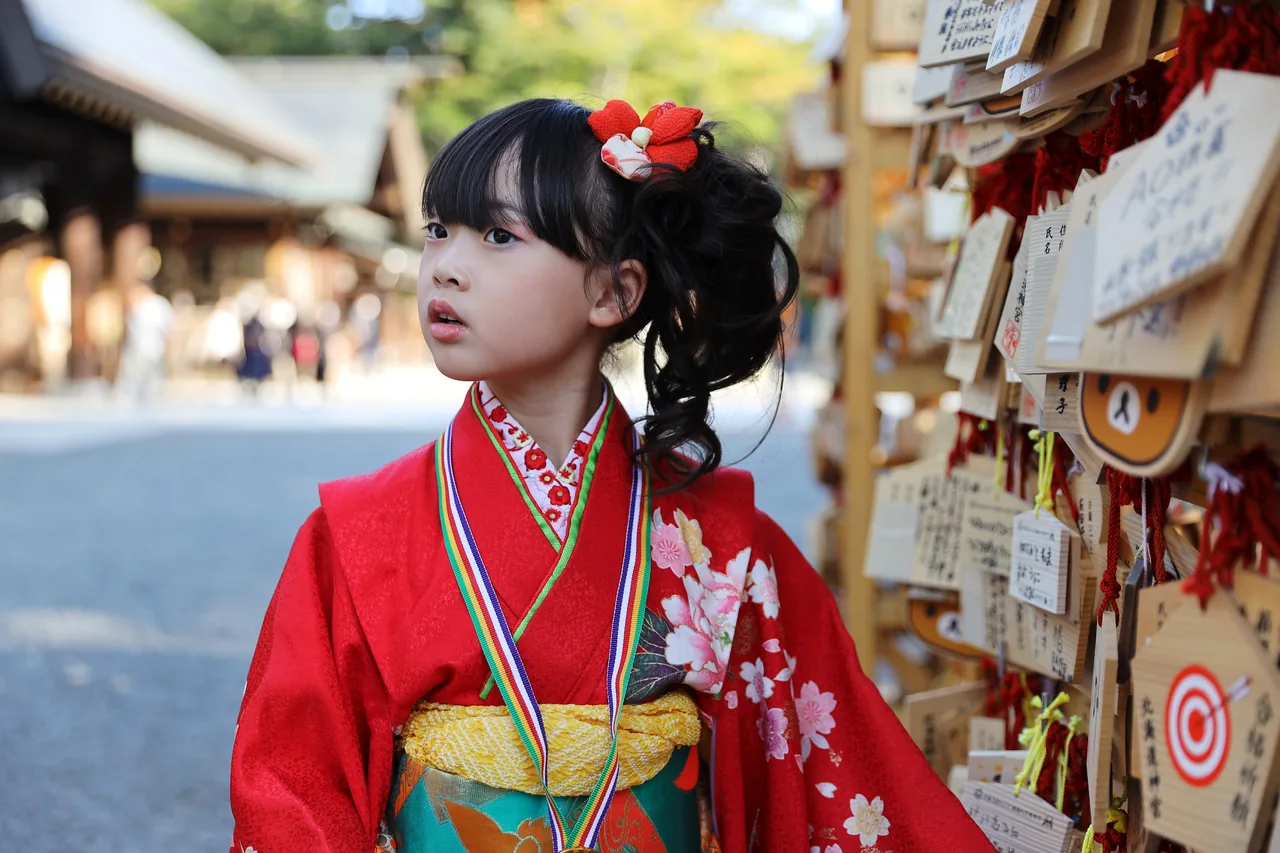
November’s calendar is full, from family shrine visits to giant float festivals. The best-known is Shichi-Go-San on November 15, when children aged three, five and seven are dressed in kimono and taken to shrines such as Meiji Shrine TokyoMap and Heian Jingu. It is not a public holiday, but shrines are lively on the 15th and the surrounding weekend.
In Tokyo, Tori-no-ichi fairs sell ornate kumade (lucky bamboo rakes) at Otori shrines, falling on November 7 and 19 in 2026 (two fairs this year, no third). The Meiji Jingu Gaien ginkgo avenue also hosts a festival with food stalls under the golden trees from around mid-November.
Karatsu Kunchi
In Saga, Kyushu, November 2 to 4 (main day the 3rd). Fourteen huge hikiyama floats parade through town in this UNESCO-listed festival. KaratsuMap
Hakone Daimyo Gyoretsu
On November 3, a roughly 6km recreation of an Edo-era feudal lord’s procession winds through the hot-spring town. Hakone-Yumoto StationMap
Chrysanthemum shows
Through early to mid November, shrines such as Yushima Tenjin in Tokyo display prize chrysanthemums, a quiet seasonal favourite.
If you plan to visit shrines during Shichi-Go-San or a festival, a quick read of our Japan etiquette and manners guide will help you do it respectfully.
9. Late-autumn flavours and crab season
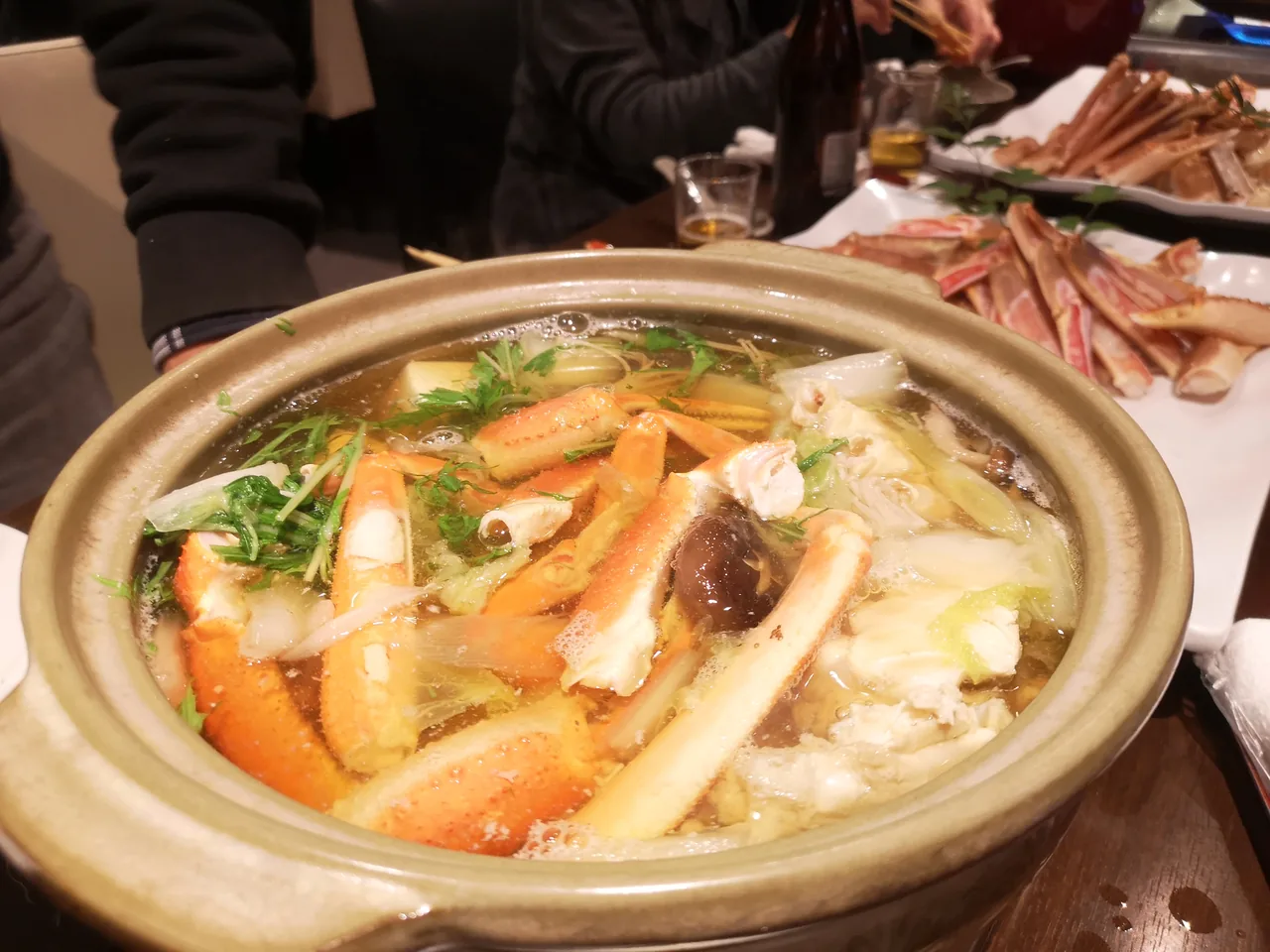
November opens Japan’s crab season, and that alone is reason enough for some travellers to come. The snow crab (zuwaigani) season opens on November 6, with the prized male crabs landed from then through to spring. Along the Sea of Japan coast this means matsuba crab, often enjoyed as a crab-and-onsen feast at places like Kinosaki Onsen.
It is also the heart of shokuyoku no aki, the autumn appetite. Oysters come into season, and it is prime time for oden and nabe (hotpot) simmering away on cold evenings. Look out for hiyaoroshi, the autumn-matured sake, and shin-soba made from the year’s new buckwheat. The markets fill with persimmon (kaki), the first mikan oranges, roasted sweet potato (yaki-imo) and ginkgo nuts.
Pair it with maple-viewing and a hot spring and you have the quintessential November day. For how to pay for crab dinners and market snacks without surprises, see our money, cash and cards guide.
10. Onsen and autumn leaves
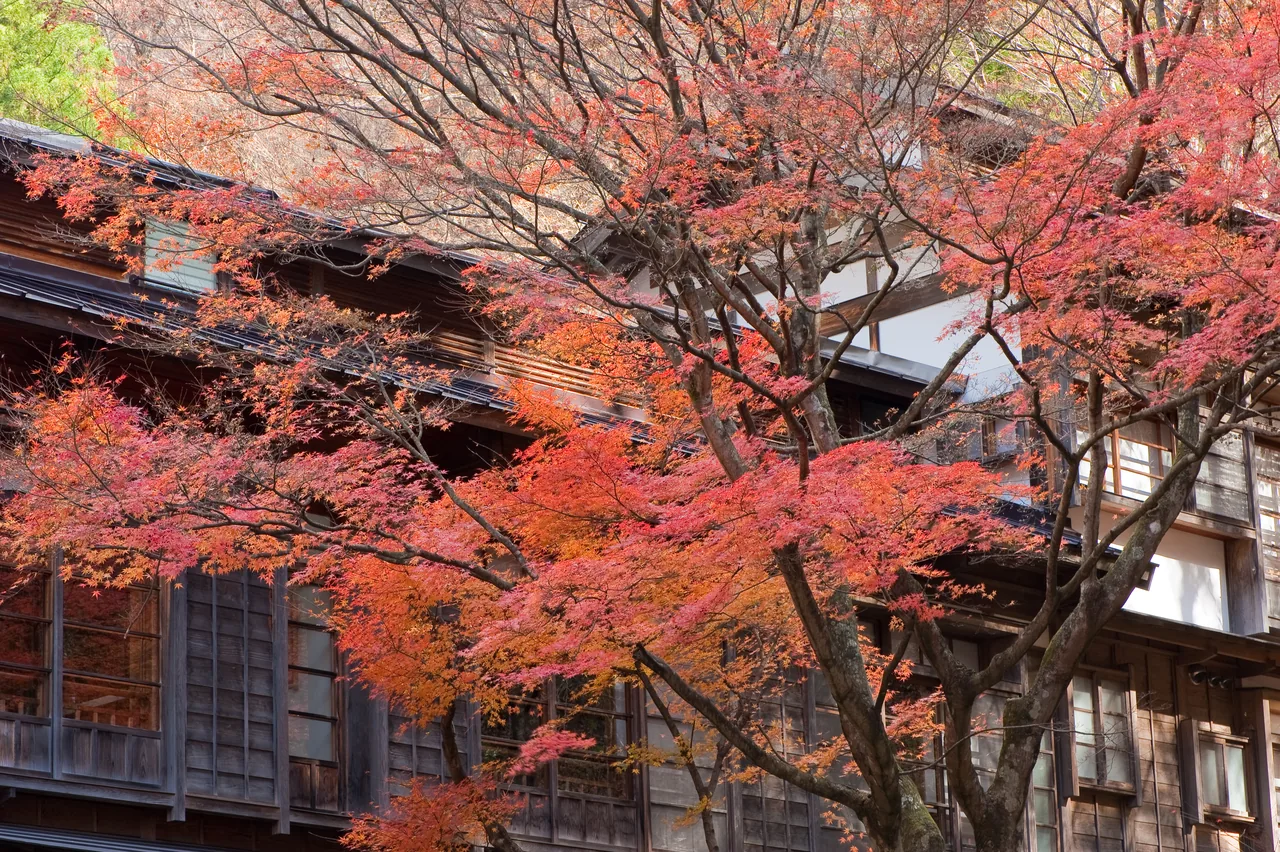
The classic November pairing is momijigari (maple-hunting) followed by an onsen, and in November you can finally do it in the cities as well as the mountains, because the urban maples are peaking now too. As the weather turns colder, hot-spring season really ramps up, and soaking outdoors surrounded by red leaves is one of the season’s great experiences.
A ryokan stay built around foliage and an onsen is the natural way to do it. Hot-spring towns near the maples, such as Kinosaki OnsenMap (which doubles as crab country in November), or the lowland onsen of Hakone for those who missed the mountain peaks, make easy bases. Because this is the busiest season, popular dates at the best ryokan fill up early, so reserve ahead.
11. The north and the first snow
In the north, November brings the first snow and a turn toward real winter. Sapporo’s first snowfall typically arrives in late October, around the 28th, and although it does not usually settle into lasting snow until early December, by the end of the month Hokkaido is firmly into early winter. The mountains of Tohoku and the Japan Alps see their first snow too.
That also means the north’s autumn leaves are already done; the foliage headline has moved south to the cities. For travellers, the upside is a ski-season teaser, with the first resorts beginning to think about opening as the snow builds in the mountains.
12. Okinawa and the south in November
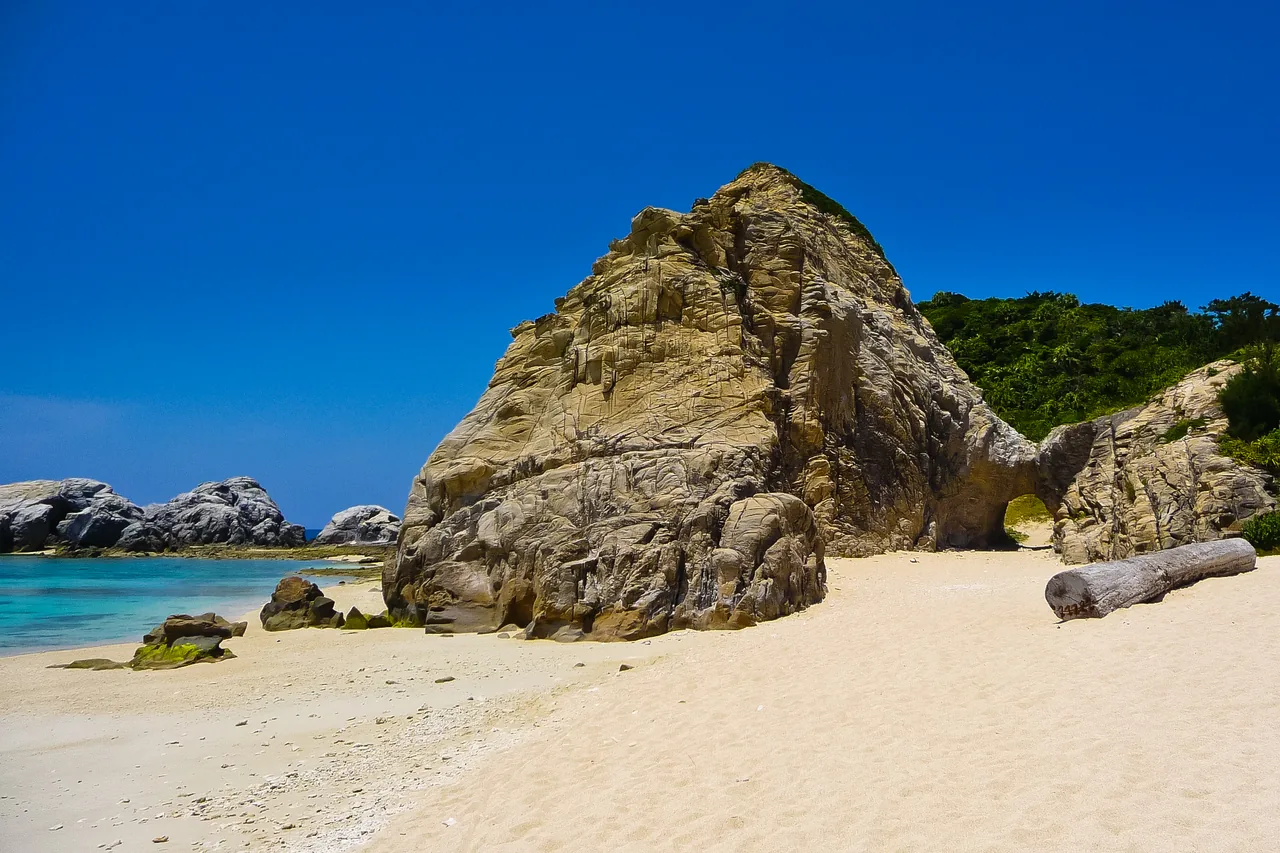
Okinawa stays mild in November, making the south Japan’s last warm escape of the year. Daytime highs hover around 25°C and the sea is still about 25°C, so while the main beach-swimming season is winding down, conditions remain pleasant for being on and around the water.
It is a strong month for diving and snorkelling, including whale-shark encounters, and the clear offshore islands such as the Kerama IslandsMap are a highlight. There is no autumn foliage this far south, so come for warmth and water rather than maples.
13. What to pack for Japan in November
Pack for two different temperatures, because November cools sharply across the month. In early November a light jacket or sweater is fine for the middle of the day in the cities, but by late November you will want a proper coat (a wool coat or a packable down jacket) for cold mornings, evenings and standing around at the illuminations. Layering is the key.
If you are heading north, into the mountains, or travelling late in the month, add thermals, a thicker sweater, and gloves, a scarf and a hat for the early-winter chill.
14. Japan in November, region by region
Where you go in November depends on whether you are chasing the city foliage peak, a particular festival, or simply mild weather. Here is the whole country at a glance.
| Region | Temps & weather | Foliage (Nov) | Key festival or event | Best for |
|---|---|---|---|---|
| Hokkaido (Sapporo) | Day 8.7°C, morning 1.6°C, first snow in late October, early winter by late Nov | Finished, entering winter | First snow, onsen, snow crab | Early-winter onsen and crab feasts |
| Tohoku (Sendai, Aomori) | Chilly, first snow in the mountains | Lowland leaves early to mid Nov (mountains done) | Crab and onsen | Early foliage plus hot springs |
| Kanto (Tokyo, Yokohama) | 17 to 18°C early, 14 to 15°C late, dry and clear, sunset 16:30 | City peak late: Meiji Jingu Gaien ginkgo, Rikugien, Mount Takao | Shichi-Go-San (15th), Tori-no-ichi (7th & 19th), Culture Day | City foliage and illuminations |
| Chubu & Alps (Nagoya, Nagano, Yamanashi) | Pleasant on the plains, cold in the highlands | Korankei (mid to late), Kawaguchiko (mid), snow-capped Fuji | Korankei illuminations | Foliage spots plus Mount Fuji |
| Kansai (Kyoto, Osaka, Kobe) | Kyoto day about 15.6°C, morning about 7.8°C | Kyoto peak (late Nov to early Dec): Tofuku-ji, Eikando, Arashiyama; Osaka Minoo, Katsuoji | Kyoto temple illuminations (Eikando, Kiyomizu, Kodaiji) | The year’s highlight: Kyoto foliage and light-ups |
| Chugoku & Shikoku (Hiroshima, Takamatsu) | Mild and pleasant | Miyajima Momijidani (mid to late) | Miyajima maples and oysters | Miyajima foliage plus oysters |
| Kyushu (Fukuoka, Nagasaki, Saga) | Mild, highs in the 18°C range | Lowland leaves mid to late | Karatsu Kunchi (Nov 2 to 4) | Mild weather plus Karatsu Kunchi |
| Okinawa (Naha) | Still mild, day 25°C, sea 25°C | None | Whale sharks and diving | The last warm escape |
A few highlights to anchor a plan:
- Kyoto and Osaka are the November centrepiece for foliage and night illuminations.
- Tokyo pairs late-month city colour with the golden ginkgo avenues and easy day trips.
- Miyajima combines maples by the torii with oyster season.
- Okinawa is the one place to chase warmth and water rather than leaves.
If you are linking several regions, a rail pass can pay off; see our JR Pass and shinkansen guide to work out whether it saves you money.
If you’re routing between Kyoto, Tokyo and the foliage spots, compare the JR Pass and the regional passes. They often beat buying at the station window.
15. Crowds, prices and the best dates in November
For the best balance of value and beauty, aim for early November on weekdays. The first ten days of the month (skipping the long weekend around the 3rd) are noticeably cheaper and calmer than the second half, while many lowland spots are already turning, so you still get autumn colour without the peak premium.
The two pressure points are the long weekends, October 31 to November 3 around Culture Day and November 21 to 23 around Labour Thanksgiving, with the latter coinciding with Kyoto’s foliage peak for the busiest, most expensive moment of the month. Late November in Kyoto generally means the highest prices and the longest lines of the autumn.
16. Pick your November by what you want
🍁 Kyoto and city foliage
Go for the late-November peak at Tofuku-ji, Eikando and Arashiyama. Book months ahead and travel on weekdays where you can.
🏮 Night illuminations
Build your evenings around lit-up temples and gardens: Eikando and Kiyomizu in Kyoto, Rikugien and the Meiji Jingu Gaien ginkgo in Tokyo, Korankei in Aichi.
🦀 Food, onsen and crab
Time it after November 6 for snow-crab season, then pair maple-viewing with a hot-spring ryokan at somewhere like Kinosaki Onsen.
🍂 A quieter early November
Travel in the first ten days for lovely weather, turning leaves and far smaller crowds and prices than the late-month peak.
For the bigger picture and how to thread these together into a full itinerary, start with our complete Japan travel guide.
17. November quick checklist
- ☑️ Time the cities for foliage: Kyoto, Tokyo and Osaka peak in late November.
- ☑️ Plan your evenings around the night illuminations; the days are short.
- ☑️ Pack a proper coat and layers, more for the north and late in the month.
- ☑️ Eat the season: snow crab opens November 6, plus oysters, nabe and new sake.
- ☑️ Plan around the long weekends of Oct 31 to Nov 3 and Nov 21 to 23.
- ☑️ Book early; foliage season is Japan’s domestic travel peak.
- ☑️ Come to see Mount Fuji snow-capped, but remember you cannot climb it now.
Coming a little earlier or unsure of the timing? Compare with Japan in October and our best time to visit Japan guide.
18. What to read next
Japan in December
The month after this one: winter illuminations, the cheapest three weeks of the year and the New Year shutdown. Read the December guide →
Japan in October
The earlier, mountain-and-highland half of the autumn. Read the October guide ->
Best time to visit Japan
Every month compared, season by season. See the year at a glance ->
JR Pass & shinkansen
Whether a rail pass saves you money this trip. Read the JR Pass guide ->
Japan eSIM & data
Stay connected to check live foliage forecasts. Sort out your data ->
Money, cash & cards
How to pay across a busier, pricier season. Read the money guide ->
Complete Japan travel guide
Our master guide to planning the whole trip. Start here ->