
Fukuoka Food Guide: What to Eat in Hakata, Dish by Dish
Fukuoka is one of Japan’s greatest eating cities, and this is the definitive answer to what to eat here — the ramen, the hotpots, the cod roe, the street-stall classics, and the local dishes most visitors miss.
| The big five | Tonkotsu ramen, motsunabe, mizutaki, mentaiko, and the Nakasu yatai food stalls — if you eat only five things here, eat these. |
|---|---|
| Ramen move | Order your bowl barikata (extra-firm noodles), then shout kaedama for a fresh noodle refill before the first batch runs out. |
| Local secrets | Gomasaba (sesame mackerel sashimi), iron-pan gyoza, soft Hakata udon, yaki ramen, and okiuto — the dishes the guidebooks skip. |
| Two hotpots | Motsunabe is an offal pot in soy or miso; mizutaki is a chicken pot you drink broth-first. Both are best in colder months. |
| Yatai rules | Open after dark, cash only, no toilets, shared seating — order at least one drink and one dish per stall and don’t linger. |
| Where to eat | Hakata Station for convenience, Nakasu for yatai, Tenjin and Daimyo for izakaya, Nagahama for the ramen that started it all. |
| Souvenirs | Mentaiko needs refrigeration and care on a plane; menbei crackers and Torimon cakes travel at room temperature. |
1. Fukuoka is Japan’s great eating city — start here
2. Tonkotsu ramen, properly understood
3. Motsunabe: the offal hotpot Fukuoka made famous
4. Mizutaki: the chicken hotpot you drink first
5. Mentaiko: Hakata’s spicy cod roe, on everything
6. The Hakata locals: gomasaba, iron-pan gyoza, udon, yaki ramen, okiuto
7. The yatai: how to do Fukuoka’s street stalls right
8. Where to eat, area by area
9. Edible souvenirs: mentaiko, menbei, Torimon, and Hiyoko
10. Practical tips for eating in Fukuoka
1. Fukuoka is Japan’s great eating city — start here
If you take one thing from this guide, take this: Fukuoka rewards a food-first trip more than almost any city in Japan, and the five dishes to build your eating around are tonkotsu ramen, motsunabe, mizutaki, mentaiko, and a night at the yatai street stalls. Everything else here is a bonus on top of an already excellent meal.
Three things came together to make this a food town. First, the sea: Fukuoka sits on the Genkai-nada (玄界灘), the rich strait between Kyushu and the Korean Peninsula, which lands mackerel, squid, and sea bream fresh enough to eat raw the same day. Second, the pork: Kyushu is Japan’s heartland of tonkotsu (豚骨, pork-bone) cooking, and the milky ramen born here spread to the rest of the country. Third, the stalls: Fukuoka kept its yatai (屋台, open-air food carts) alive when most Japanese cities lost theirs, and they still line the river after dark.
The payoff is a city with one of the highest restaurant densities in Japan and a genuinely local table — dishes that were invented here and are still eaten here every day, not just performed for tourists. This guide goes dish by dish: what each thing is, why Fukuoka in particular, how to order and eat it properly, and which part of town to look for it. For how many days to give the city, how to get around, and the day trips, see the Fukuoka travel guide.
| Don’t leave without eating | What it is |
|---|---|
| Tonkotsu ramen | Milky pork-bone broth with thin, straight noodles — the dish Fukuoka gave the world |
| Motsunabe | Beef-offal hotpot mounded with cabbage and garlic chives, in soy or miso broth |
| Mizutaki | A refined chicken hotpot you drink broth-first, then dip in ponzu |
| Mentaiko | Spicy marinated cod roe — Hakata’s signature, on rice and in everything else |
| Yatai food | Ramen, yaki ramen, oden, and grilled skewers at a riverside counter after dark |
| Local plates | Gomasaba, iron-pan gyoza, Hakata udon, yaki ramen, okiuto |
Hakata Station food hallsMap Nakasu riverside Map
A quick naming note that trips up first-timers: this is Fukuoka the city, but the central district, the main station, and much of the food culture carry the older name Hakata. So you’ll see “Hakata ramen” and “Hakata udon” for dishes eaten all over Fukuoka. The two words point at the same table.
2. Tonkotsu ramen, properly understood
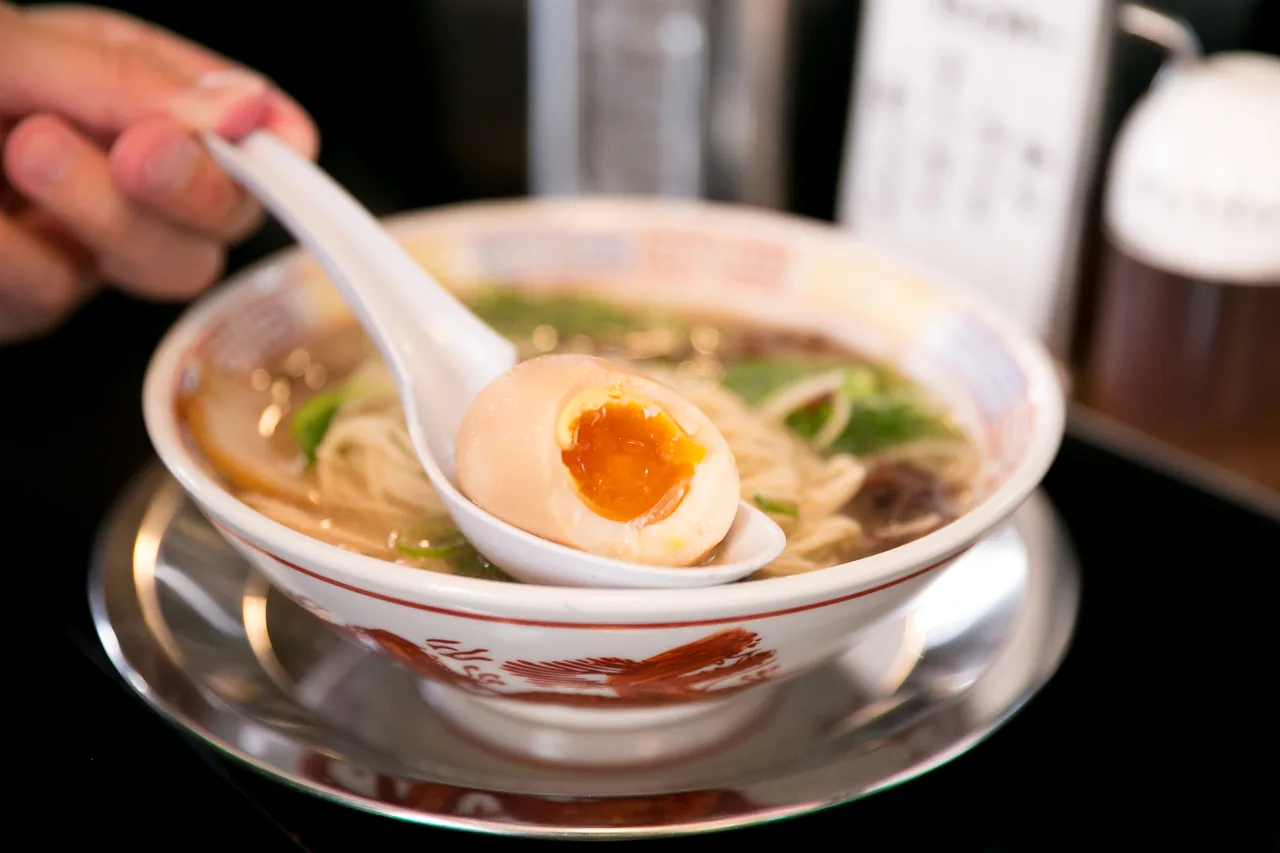
Fukuoka is the birthplace of tonkotsu ramen, and the local style is specific: a milky, pork-bone broth boiled until it turns opaque, poured over unusually thin, straight noodles that cook in seconds — which is exactly why the noodle-refill system exists. Understanding that one design choice explains almost everything about how you order here.
The broth is made by boiling pork bones hard for hours until the collagen breaks down and the liquid goes creamy white and faintly sweet. Around it, the classic Hakata bowl keeps things minimal: a few slices of pork, spring onion, maybe a sliver of wood-ear mushroom, and not much else. The noodles are the signature — very thin and straight rather than wavy, so they carry the broth well but soften fast in the heat.
Why so thin, and why the refill? The style traces to the Nagahama (長浜) district beside the old Hakata fish market, where in the early 1950s the yatai serving auction workers needed to feed people fast. Thin noodles cook almost instantly, so a bowl could hit the counter in moments. Because those noodles also go soft quickly, the stalls served a smaller portion of noodles and let you add more — the origin of kaedama (替え玉), an extra ball of noodles dropped into your remaining broth. Nagahama, the ramen’s birthplace Map
Nagahama fish market Map
Here is how the refill actually works at the counter. Eat your noodles while they’re firm, and before they run out, call “kaedama” to the cook — often there’s a button or a slip of paper, but the shout is traditional. A fresh portion arrives in seconds for a small extra charge, and you eat it in the broth you already have. If the broth has gone weak by then, ask for kaeshi or tare (the concentrated seasoning base) to top it back up.
When you order, most Hakata counters ask how firm you want the noodles. This isn’t a gimmick — softer noodles soak up more broth and go limp sooner, firmer ones stay springy. The scale runs from soft to almost raw, and locals lean firm.
| Say this | Firmness | Who it’s for |
|---|---|---|
| yawa (やわ) | Soft, fully cooked | If you like a tender, broth-soaked noodle |
| futsu (futsū / 普通) | Normal | The safe default if you’re unsure |
| kata (かた) | Firm | A little bite, still fully cooked through |
| barikata (バリカタ) | Very firm — the local favorite | Springy noodles that survive a whole bowl and a kaedama |
| harigane / nama (針金 / 生) | Extra-hard / almost raw | Regulars and speed-eaters; try once you know you like firm |
The tabletop is the other half of the ritual. Hakata ramen arrives fairly plain because you’re expected to season it yourself as you go. Reach for the jars and season a few sips in, not all at once, so you can taste what each one does.
| On the table | What it is | How to use it |
|---|---|---|
| beni-shoga (紅生姜) | Bright-red pickled ginger | A pinch cuts the richness of the broth; add gradually |
| Toasted sesame | White sesame seeds in a grinder | Grind a little over the top for nutty aroma |
| karashi-takana (辛子高菜) | Spicy pickled mustard greens | A small spoonful adds heat and crunch; it’s potent, so go easy |
| kaeshi / tare (かえし / タレ) | Concentrated seasoning base | Add after a kaedama if the broth has thinned out |
Two names you’ll see used loosely: Hakata style tends to mean the richer, thicker city bowl, while Nagahama style refers to the fish-market original with the thinnest noodles and the kaedama-and-firmness culture. In practice the line has blurred and most shops borrow from both, so don’t overthink the label — order barikata, get a kaedama, and you’re eating it the local way.
3. Motsunabe: the offal hotpot Fukuoka made famous
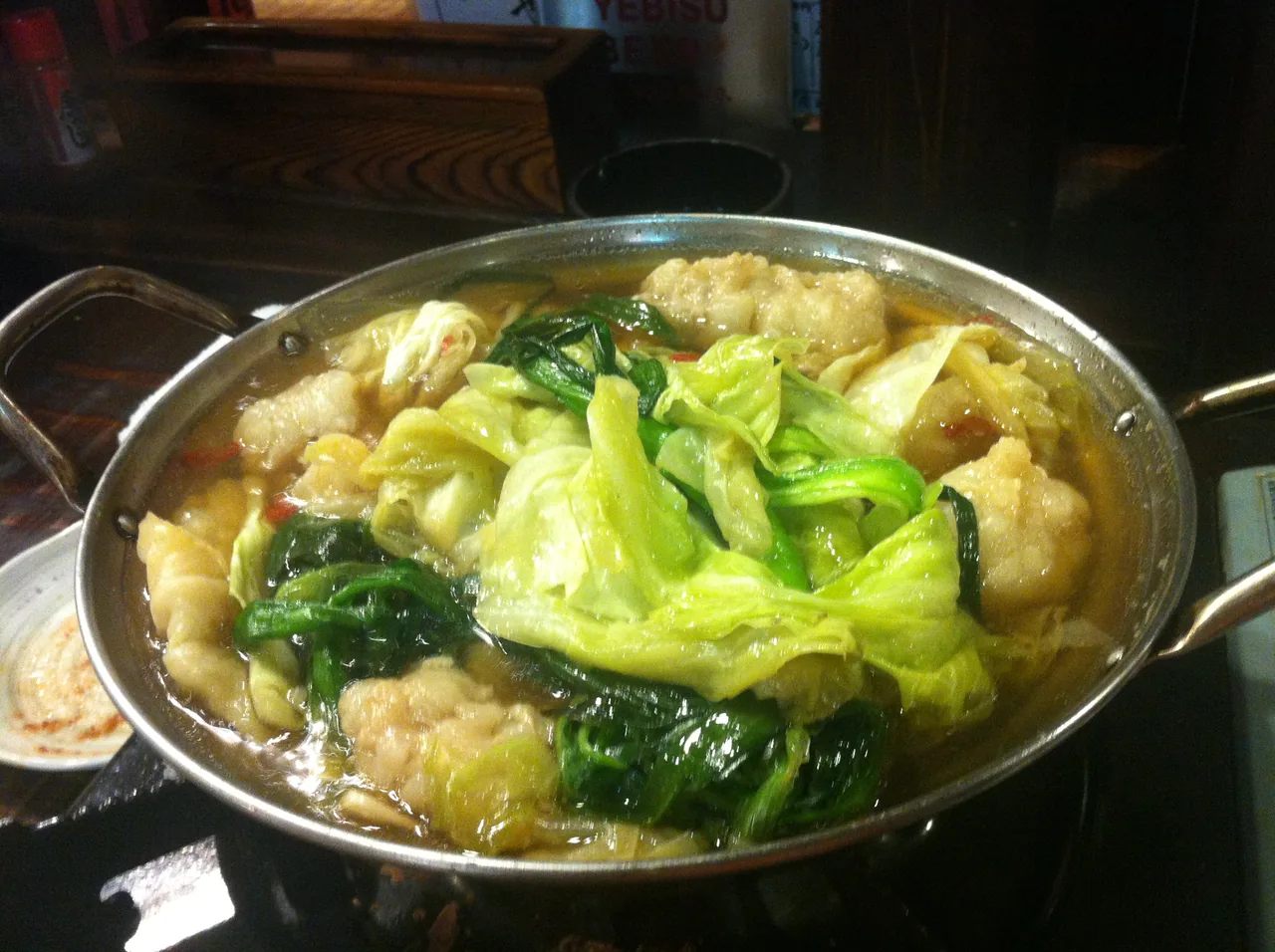
Motsunabe (もつ鍋) is a beef-offal hotpot simmered at your table — tripe and other cuts under a mountain of cabbage and garlic chives, in a broth you choose as either soy or miso, and it’s one of Fukuoka’s defining winter dishes. It sounds intense and eats surprisingly clean and comforting.
The base is beef motsu (もつ, offal), most often tripe, which is well-prepared so it comes out tender and rich rather than gamey. Over it goes a heap of shredded cabbage and nira (韮, garlic chives), plenty of sliced garlic, and a scattering of red chili. As the pot bubbles, the fat from the offal and the sweetness from the vegetables melt into the broth, and it keeps getting better the longer it goes.
Your first decision is the broth. This is the choice the waiter will ask about, and both are traditional here.
| Broth | Character | Good pick if… |
|---|---|---|
| shoyu (醤油, soy) | Clearer, savory, garlic-forward — often considered the classic Hakata base | You want the offal and garlic to lead |
| miso (味噌) | Deeper, sweeter, and a touch heavier | You like a richer, mellower pot |
How to eat it. The pot comes to the table raw or barely started and is cooked in front of you, so let it come up to a proper simmer before diving in. Eat the vegetables and offal as they cook, topping the pot up in rounds rather than dumping everything in at once, so nothing overcooks. The garlic chives are meant to keep a little bite.
That finish, the shime (締め, the closer), is non-negotiable local practice. When the pot is nearly empty, you order either champon noodles (ちゃんぽん, thick wheat noodles) or a scoop of rice with egg to make zosui (雑炊, rice porridge), and cook it in the remaining broth. It turns the last of the pot into a second, richer course, and skipping it means leaving the best flavor in the pan.
Motsunabe went from a local working-class dish to a nationwide boom in the 1990s, but Fukuoka remains its home, and it’s at its best here from autumn into winter. It’s a shared, sit-down meal — count on a table of two or more — and popular restaurants around Nakasu, Tenjin, and Daimyo fill up, so a reservation helps on weekends. Haruyoshi hotpot restaurants Map
4. Mizutaki: the chicken hotpot you drink first
Mizutaki (水炊き) is Hakata’s refined chicken hotpot — chicken simmered on the bone until the broth turns milky and rich — and the whole point is a specific eating order that starts by drinking the broth on its own before you touch the ponzu. Get the order right and it’s one of the most quietly luxurious meals in the city.
Where motsunabe is rustic and garlicky, mizutaki is delicate. Chicken, often bone-in, is cooked slowly in water until the collagen enriches the liquid into a pale, savory soup. The pot arrives with the broth already developed, plus more chicken and vegetables — cabbage or Chinese cabbage, tofu, mushrooms, and garlic chives — to cook as you go. It’s a dish with a formal streak, often eaten at dedicated specialist restaurants, and reservations are common.
The eating order matters, and it goes like this:
| Step | What to do |
|---|---|
| 1. Broth first | Ladle some clear broth into a cup, season lightly with salt and chopped spring onion, and drink it on its own to taste what the chicken made |
| 2. Then the pot | Cook and eat the chicken and vegetables, dipping each piece in ponzu (ポン酢, citrus-soy sauce) with grated daikon and chili |
| 3. Finish with zosui | Add rice and egg to the remaining broth to make zosui (雑炊, rice porridge) as the closing course |
The reason for the sequence is that the broth is the star, and it tastes purest before the ponzu and vegetables change it. Drinking it first is how you appreciate the base the kitchen spent hours building; only then do you move to the dipped, brighter flavors of the pot; and the zosui at the end sweeps up everything that’s left. Some restaurants will guide you through these steps, but knowing them means you won’t accidentally drown the broth in ponzu before you’ve tasted it.
Like motsunabe, mizutaki shines in cooler weather, and it’s a communal dish built for a table rather than a solo meal. If you’re traveling alone and want to try it, look for restaurants that offer single-portion or lunch sets rather than the full shared pot.
5. Mentaiko: Hakata’s spicy cod roe, on everything
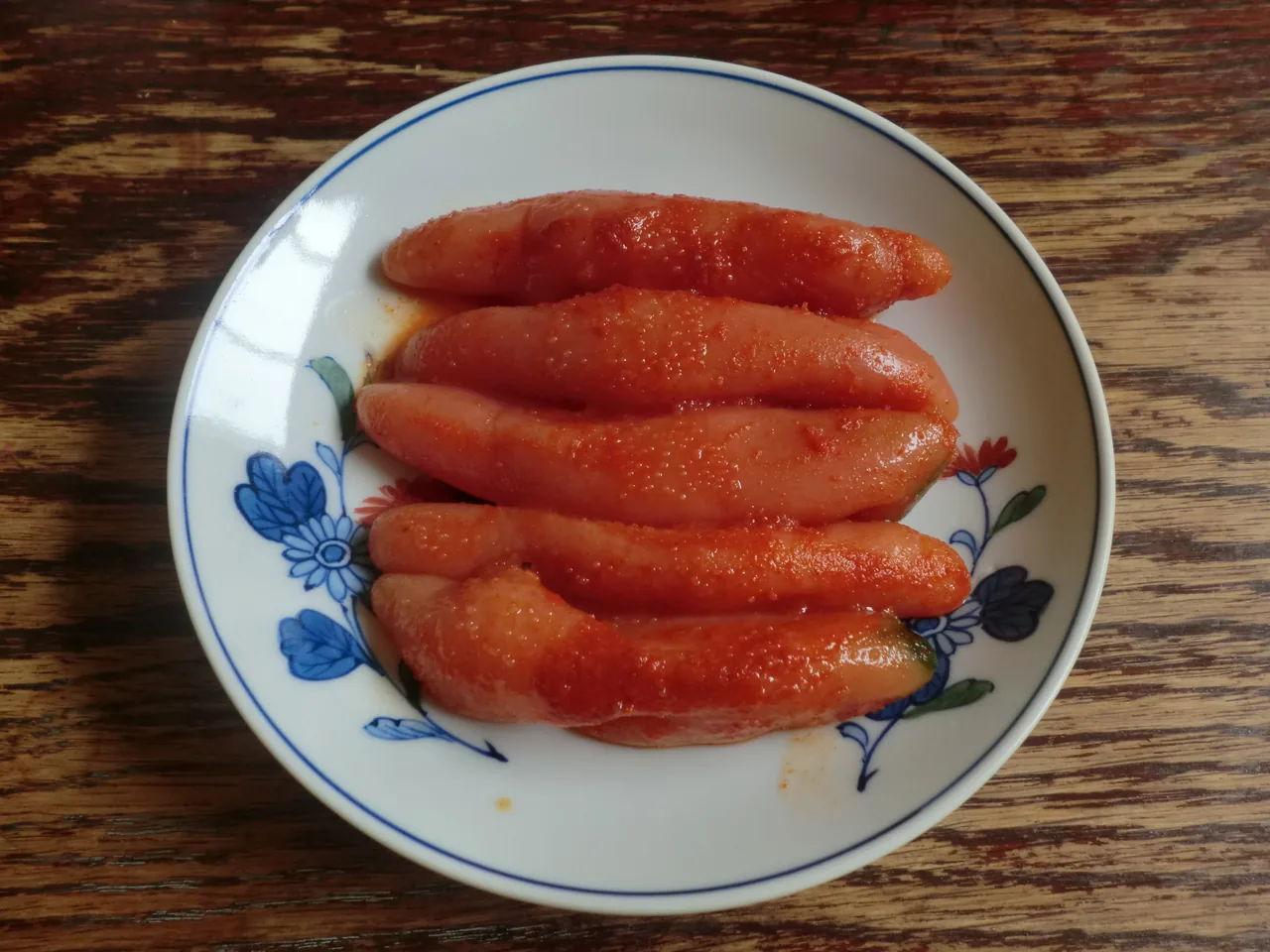
Mentaiko (明太子) is spicy marinated cod roe, and it’s so tied to Fukuoka that locals treat it less as a side dish and more as a seasoning — on rice, in pasta, folded into omelets, spread on bread, and packed into suitcases as the city’s number-one edible souvenir. Once you notice it, you’ll see it everywhere here.
The roe is the egg sac of pollock, cured in a chili-and-seasoning marinade until it’s savory, salty, and gently spicy, with a soft popping texture. It arrives in Fukuoka’s story in 1949, when the founder of a Hakata shop called Fukuya (ふくや) reworked a spicy salted-roe dish he had eaten in Busan into a version tuned to local tastes and began selling it. That Hakata reinterpretation is what became the mentaiko now eaten across Japan. This connects directly to the Busan link many travelers arrive on — see the Busan–Fukuoka ferry arrival guide if that’s your route in.
How to eat it. The purest way is the simplest: a lobe of mentaiko on a bowl of hot white rice, or dropped into ochazuke (お茶漬け, rice with tea or dashi poured over). From there it becomes a building block, and trying it in two or three forms is part of the fun.
Because it works as a flavor base, Fukuoka’s kitchens use mentaiko the way another region might use miso or butter — a little goes into a lot. That’s why a short trip is the perfect time to taste the range: have it plain on rice at one meal, in pasta at another, and on toast at a cafe, and you’ll understand why the city is so attached to it.
| Form | What it is |
|---|---|
| Mentaiko on rice | The classic — the roe’s saltiness against plain hot rice |
| Mentaiko pasta | Tossed with spaghetti and butter; a Japanese comfort-food staple born from this roe |
| Mentai dashimaki | Folded into a rolled dashi omelet |
| Mentaiko toast / baguette | Whipped with butter and grilled on bread — a modern Fukuoka bakery favorite |
| Grilled mentaiko | Lightly charred, which mellows the salt and firms the texture |
6. The Hakata locals: gomasaba, iron-pan gyoza, udon, yaki ramen, okiuto
Beyond the famous five, Fukuoka has a layer of everyday local dishes that most visitors walk straight past — and they’re where you eat like a resident: sesame mackerel sashimi, sizzling iron-pan gyoza, deliberately soft udon, wok-fried yaki ramen, and a seaweed jelly older than any of them. These are the plates that turn a good food trip into a memorable one.
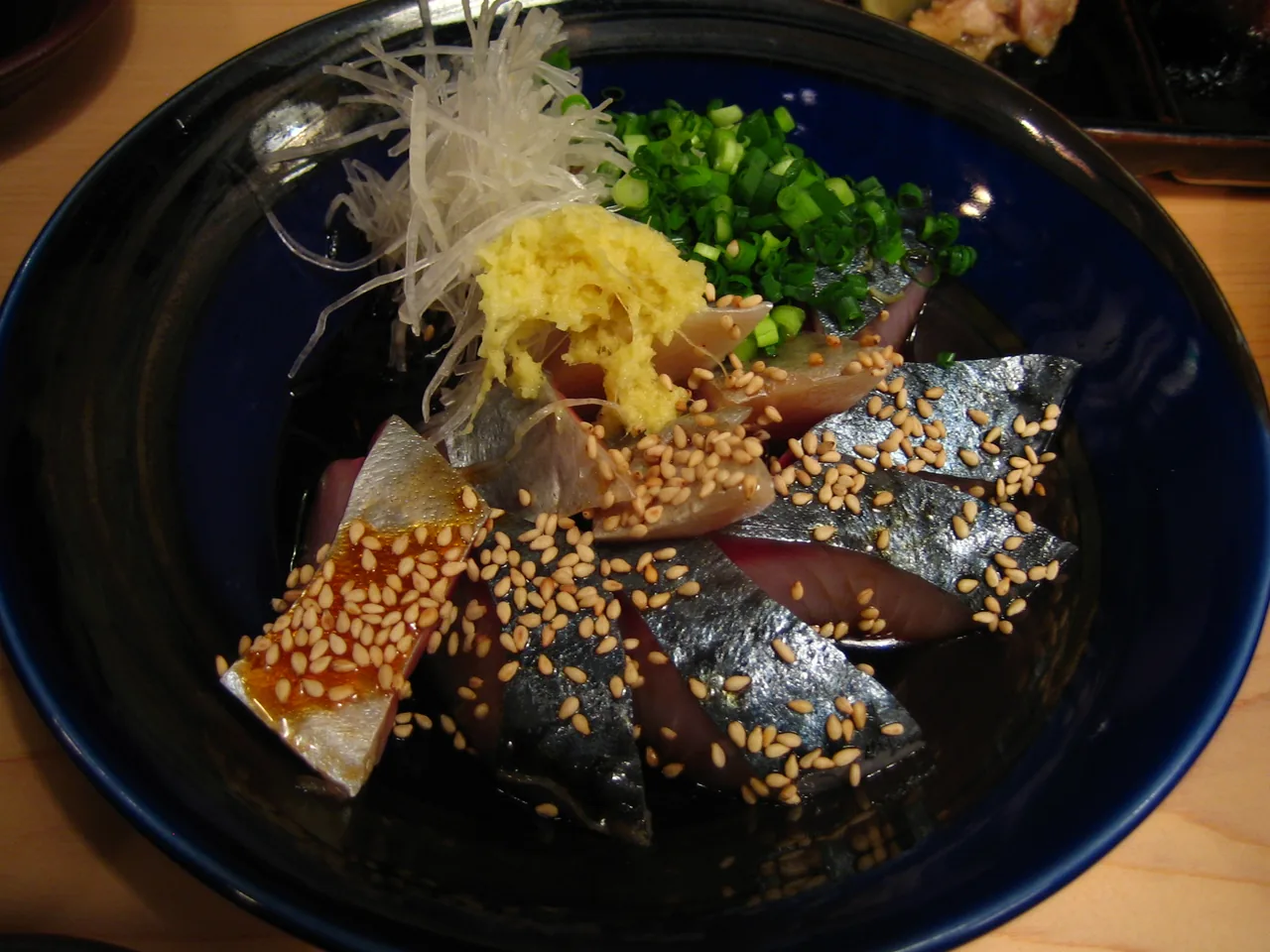
Gomasaba (ごまさば) is raw mackerel — yes, raw — dressed in a sesame-and-soy marinade with spring onion. It’s possible because the Genkai-nada mackerel lands fresh enough to eat as sashimi, which is rare elsewhere in Japan, where mackerel is usually cured or cooked. It’s the archetypal Fukuoka izakaya starter: rich, nutty, and made for a cold drink. Locals often finish the last few pieces over rice with hot tea or dashi poured on top, turning it into ochazuke.
Iron-pan gyoza (鉄鍋餃子, tetsunabe gyoza) are Hakata-style dumplings served still sizzling in the small cast-iron pan they were fried in. The Hakata version is small and thin-skinned — bite-sized, so you eat a lot of them — and they’re a beer snack ordered by the plate for the table, then another plate, then another. The pan keeps the bottoms crisp right to the last one.
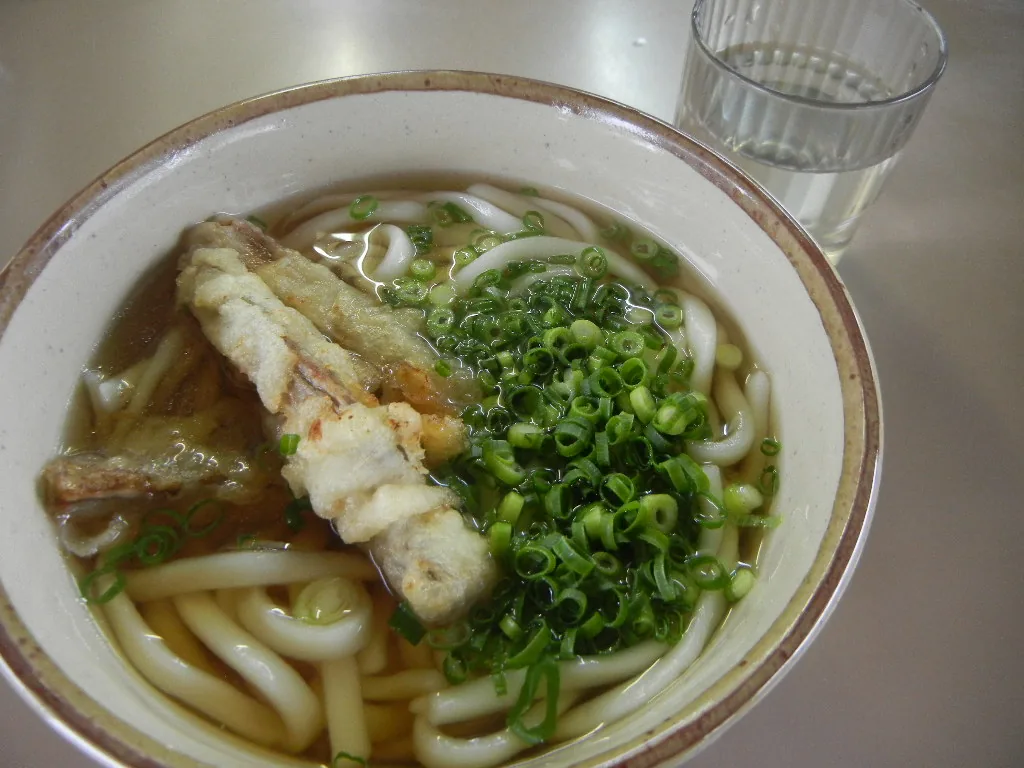
Hakata udon (うどん) is a point of local pride and a surprise to anyone expecting the chewy Sanuki style. Here the thick wheat noodles are cooked soft and gentle on purpose, meant to be almost slurped, with the broth doing the work. The reason Hakata cares so much is history: Jotenji (承天寺), a temple in Hakata, is traditionally credited as the place where udon, soba, and manju were first introduced to Japan, by the monk Enni in 1241. The classic local toppings are gobo-ten (ごぼう天, fried burdock root) and maru-ten (丸天, a round fried fish cake). Udon here is the everyday meal ramen gets mistaken for — cheaper, gentler, and eaten far more often by locals. Jotenji, cradle of Japanese noodles Map
Yaki ramen (焼きラーメン) is stir-fried ramen — noodles wok-fried rather than served in soup — and it was born at a Tenjin yatai (Kogane-chan, around 1968) as a way to use tonkotsu flavor without a bowl of broth. It’s a yatai specialty above all, so it belongs on your street-stall order rather than in a sit-down shop. Okiuto (おきうと) is the deep cut: a firm jelly set from seaweed (a kind of agar-weed), sliced into ribbons and eaten cold with soy sauce and bonito flakes. It’s an old Hakata breakfast side, plain and cooling, and it’s the kind of thing that marks you as someone who ordered past the tourist menu.
| Dish | What it is | Where to order it |
|---|---|---|
| Gomasaba | Sesame-marinated raw mackerel | Izakaya, as a starter |
| Iron-pan gyoza | Small crisp dumplings in a hot cast-iron pan | Izakaya and gyoza specialists; also at yatai |
| Hakata udon | Soft thick noodles with gobo-ten or maru-ten | Udon shops and standing counters, all day |
| Yaki ramen | Wok-fried tonkotsu-flavored noodles | Yatai stalls, especially Nakasu |
| Okiuto | Cold seaweed jelly with soy and bonito | Traditional shops and some izakaya; a morning side |
You won’t fit all of these into one trip alongside the famous five, and you don’t need to. Pick two or three — gomasaba and iron-pan gyoza make an easy izakaya evening, a bowl of Hakata udon makes a cheap lunch, and yaki ramen slots into your yatai night — and you’ll have eaten well beyond the standard checklist.
7. The yatai: how to do Fukuoka’s street stalls right
The yatai (屋台) — open-air food carts with a canvas roof and a handful of counter seats — are Fukuoka’s signature nightlife, and they run on a set of unwritten rules that are worth knowing before you sit down: cash only, no toilets, shared seating, and a one-drink-one-dish minimum. Go in prepared and it’s one of the best evenings in Japan.
Fukuoka is one of the last Japanese cities where the yatai tradition is still genuinely alive, with dozens of stalls setting up each night. They’re small — a griddle or a pot, a counter, and stools for maybe seven or eight people under a plastic sheet against the weather. The appeal is the atmosphere as much as the food: elbow to elbow with strangers, the cook an arm’s length away, the river or the neon behind you.
| Where | Character |
|---|---|
| Nakasu (中洲) | The famous riverside row — the most scenic and the most tourist-facing, lit up along the water |
| Tenjin (天神) | Scattered through the downtown streets; a more local, everyday mix |
| Nagahama (長浜) | By the old fish market — the ramen heartland, plainer and less touristy |
Nakasu yatai row Map Tenjin yatai Map
When they open. Yatai are a night thing. Most set up around dusk, roughly 6 p.m., and run late into the night; there’s nothing to see at these spots during the day. They also depend on the weather — many won’t open in rain — so keep the plan flexible and have a backup for a wet evening.
The etiquette is simple once you know it, and following it is how you’re a welcome guest rather than a nuisance at a tiny stall with limited seats.
| Rule | Why |
|---|---|
| Order at least one drink and one dish | Seats are scarce; a stall can’t survive people taking a stool just to look around |
| Don’t linger too long | Turnover matters when others are waiting outside — eat, drink, move on |
| Expect to share the counter | Communal seating is normal; you’ll sit shoulder to shoulder with strangers |
| Go to the toilet first | Yatai have no restrooms; use one before you sit down |
| Bring cash | Most stalls are cash only — cards and IC cards usually won’t work |
What to order. Each stall has its specialty — some are ramen carts, some do oden (おでん, simmered fish cakes and vegetables in dashi), some grill yakitori (焼き鳥, chicken skewers) and motsuyaki (もつ焼き, grilled offal skewers), some sizzle iron-pan gyoza, and a Tenjin yatai is where yaki ramen was born. Peek at what the cook is making and what neighbors are eating, then order a drink, one signature dish, and maybe a skewer or two. To pay, the traditional signal is crossing your index fingers into an X to ask for the bill.
For the wider “how to behave in Japan” basics — shoes, chopsticks, tipping, and the like — see the Japan etiquette guide. The yatai rules above are the Fukuoka-specific layer on top of those.
8. Where to eat, area by area
Fukuoka’s food clusters into a few districts with distinct personalities — Hakata Station for convenience, Nakasu for the yatai and nightlife, Tenjin and Daimyo for izakaya and cafes, and Nagahama for ramen at the source — so where you eat depends on what you’re in the mood for and the time of day. None is more than a short subway ride from the others.
| Area | Best for | When |
|---|---|---|
| Hakata Station area (博多駅) | Ramen halls and restaurant floors right by the trains — easy on arrival or a layover | Any time; great for a first or last meal |
| Nakasu (中洲) | The riverside yatai and the night scene | Evening into late night |
| Tenjin, Daimyo & Imaizumi | Izakaya, stylish restaurants, cafes, and bakeries — the young, buzzy heart of the city | Lunch, dinner, drinks |
| Nagahama (長浜) | Tonkotsu ramen where the style began, by the fish market | Late night and early morning ramen |
Around Hakata Station is the low-effort choice, and a good one. The station building holds restaurant floors and a dedicated ramen zone where several famous shops sit side by side, so you can compare bowls without leaving the building — ideal right after you arrive, before you check in, or on the way out of town. It’s also the most reliable place for a late meal if you land at an awkward hour. Hakata Deitos ramen street Map
Canal City ramen stadium Map
Nakasu, on the sandbar between two rivers, is the entertainment quarter and the home of the postcard yatai row. It comes alive after dark, and it’s where a first-timer usually has their yatai night. Tenjin, one subway stop over, is the downtown, and just behind it the back streets of Daimyo and Imaizumi hold the city’s densest run of izakaya, modern bistros, coffee shops, and mentaiko bakeries — this is where locals go out to eat, and where gomasaba and iron-pan gyoza are easy to find. Daimyo dining and cafes Map
Imaizumi restaurants Map
Nagahama, over by the wholesale fish market, is the pilgrimage for ramen purists — the district that gave the thin-noodle, kaedama style its name, best experienced late at night or, in true fish-market fashion, first thing in the morning. It’s plainer and less polished than Nakasu, which is precisely the point.
Where you base yourself shapes how you eat, since the food is one of the main reasons to pick a neighborhood. For the full where-to-stay breakdown of Hakata versus Tenjin versus Nakasu, see the Fukuoka travel guide.
9. Edible souvenirs: mentaiko, menbei, Torimon, and Hiyoko
Fukuoka is one of Japan’s best cities for edible souvenirs, and the single most useful thing to know is which ones need refrigeration and which travel at room temperature — mentaiko must stay cold, while menbei crackers and Torimon cakes ride happily in a suitcase. Sort your list by that one distinction and packing gets easy.
| Souvenir | What it is | Keeps at |
|---|---|---|
| Mentaiko (明太子) | Spicy cod roe from makers like Fukuya, Shimamoto, and Kaho — the flagship gift | Refrigerated; care needed on planes |
| Menbei (めんべい) | Savory crackers made with mentaiko — from Yamaguchi (Fukutaro) | Room temperature |
| Hakata Torimon (博多通りもん) | Soft Western-style cakes with white bean paste, by Meigetsudo — a Fukuoka staple | Room temperature |
| Hiyoko (名菓ひよ子) | Chick-shaped bean-paste manju | Room temperature |
| Niwaka senbei (二◯加煎餅) | Crackers shaped like the Hakata Niwaka comic mask | Room temperature |
Mentaiko is the prestige gift and the one people most want to carry home, but it’s also the one that needs planning. Buy it last, keep it chilled, and confirm your airline’s rules and your destination’s import limits before you commit — the roe is perishable and can be restricted. The souvenir counters at Hakata Station and Fukuoka Airport sell it packed for travel, which is the easiest place to grab it on the way out. Fukuoka Airport souvenir shops Map
If you’d rather not deal with a cold chain, menbei is the smart move — flat, savory crackers flavored with mentaiko that keep at room temperature and come in boxes of individually wrapped pairs, perfect for handing round an office or a family. Hakata Torimon, a soft, milky cake filled with white bean paste, is the other room-temperature crowd-pleaser and one of the city’s best-selling confections.
Round it out with Niwaka senbei, crackers shaped like the mask from Hakata’s traditional Niwaka comic performances — as much a keepsake as a snack. Between the chilled roe and the shelf-stable boxes, you can cover every recipient: mentaiko for the serious food lover, menbei and Torimon for everyone else, and a Hiyoko or a Niwaka mask for the story.
10. Practical tips for eating in Fukuoka
A few habits make eating here smoother: carry cash for the stalls, reserve the sit-down hotpots, know that solo dining is easy at counters, and flag any allergies or dietary needs clearly, since some signature dishes are built on pork, fish, or shellfish. None of it is hard, but a little prep means you never miss a meal you wanted.
Cash. Fukuoka is increasingly card-friendly for restaurants, department-store food halls, and convenience stores, but the parts you’ll most want to try often aren’t: the yatai are cash only, and some small ramen counters and older shops still prefer it. Carry a modest amount of yen for the fun, informal end of the food scene. The full picture on cash versus cards is in the Japan money and cash guide.
Reservations. Casual food — ramen, udon, yatai, most izakaya — needs no booking; you queue or grab a stool. The exceptions are the sit-down hotpots. Good mizutaki restaurants in particular book out, and popular motsunabe places fill on weekend evenings, so reserve those a day or two ahead if you have a specific spot or a larger group in mind.
| Meal type | Booking |
|---|---|
| Ramen, udon, yatai | No reservation — walk up or queue |
| Izakaya (gomasaba, gyoza) | Usually fine to walk in; book for larger groups on weekends |
| Motsunabe | Reserve for weekend dinners and groups |
| Mizutaki | Reserve ahead — the best specialists fill up |
Eating solo. Fukuoka is one of the easiest cities in Japan to eat well alone. Ramen and udon are counter meals designed for one, and yatai seating is naturally single-friendly. The hotpots are the harder solo ask, since motsunabe and mizutaki are built for a shared pot — but look for lunch sets or single-portion menus, which some restaurants offer specifically for one diner.
That last point is worth acting on early. Getting an eSIM running before you arrive means maps, menu translation, and restaurant reviews all work the moment you land — most useful in exactly the first hour when you’re hungry and finding your feet. The setup and plan options are in the Japan eSIM guide.
Pull it together and Fukuoka rewards a simple plan: build your days around the five essentials, add two or three of the local plates, give one evening to the yatai, and keep some cash and a data connection on hand. For everything beyond the food — how many days, getting around, and the day trips — head back to the Fukuoka travel guide, and for the national planning frame, the complete Japan travel guide ties it all together.