
Japan Etiquette: The Manners Travellers Actually Need to Know
Forget memorising a hundred rules. Get one idea, plus a handful of things that genuinely trip up visitors, and you’ll be fine.
| The one rule | don’t be a nuisance to the people around you. Almost every Japanese custom comes back to this. Get that, and you can reason your way through situations no list ever mentions. |
|---|---|
| Don’t tip | ever. Not in restaurants, taxis, or hotels. Leaving money behind causes confusion, not gratitude. The price you see is the price you pay. |
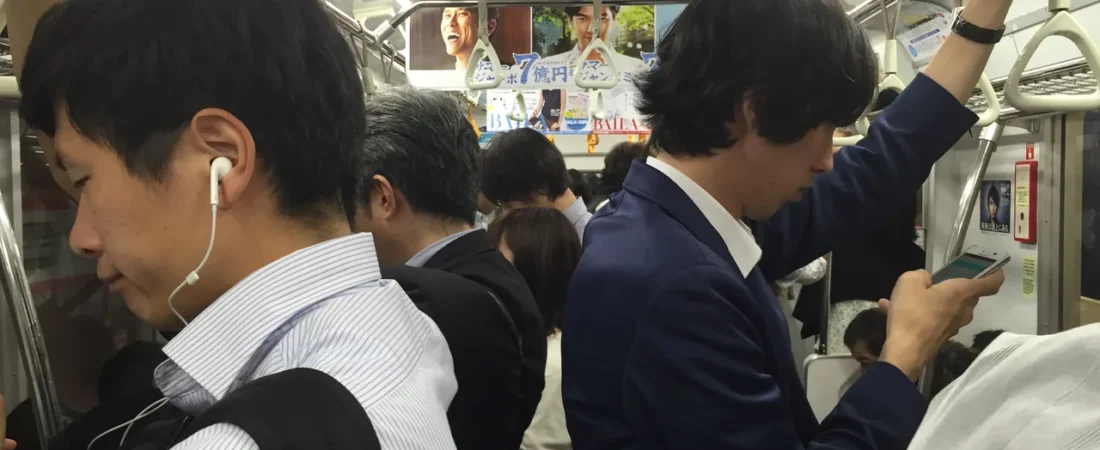
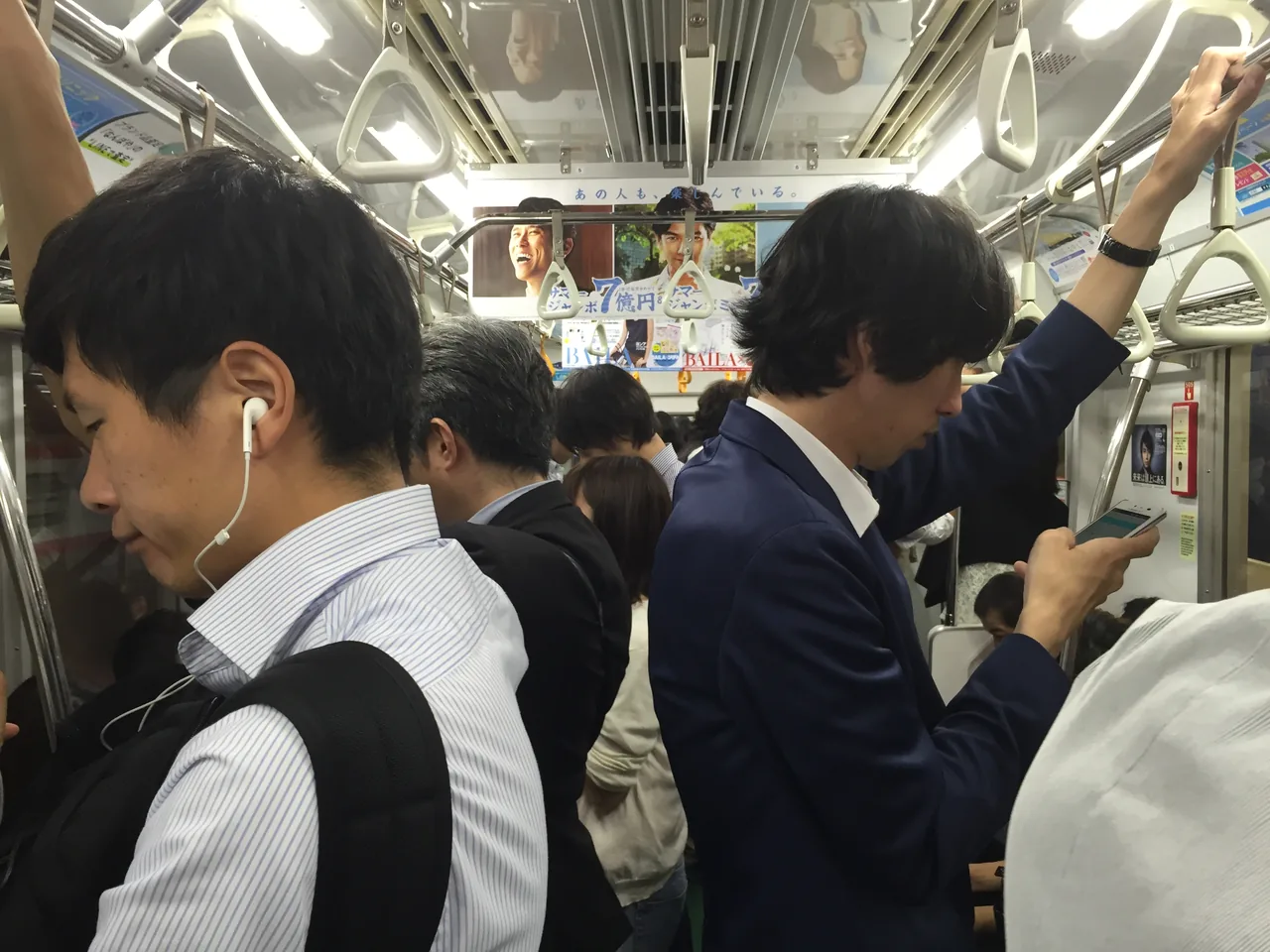
| Trains are quiet | phone on silent, no calls, keep your voice down. It’s the single thing visitors get pulled up on most. |
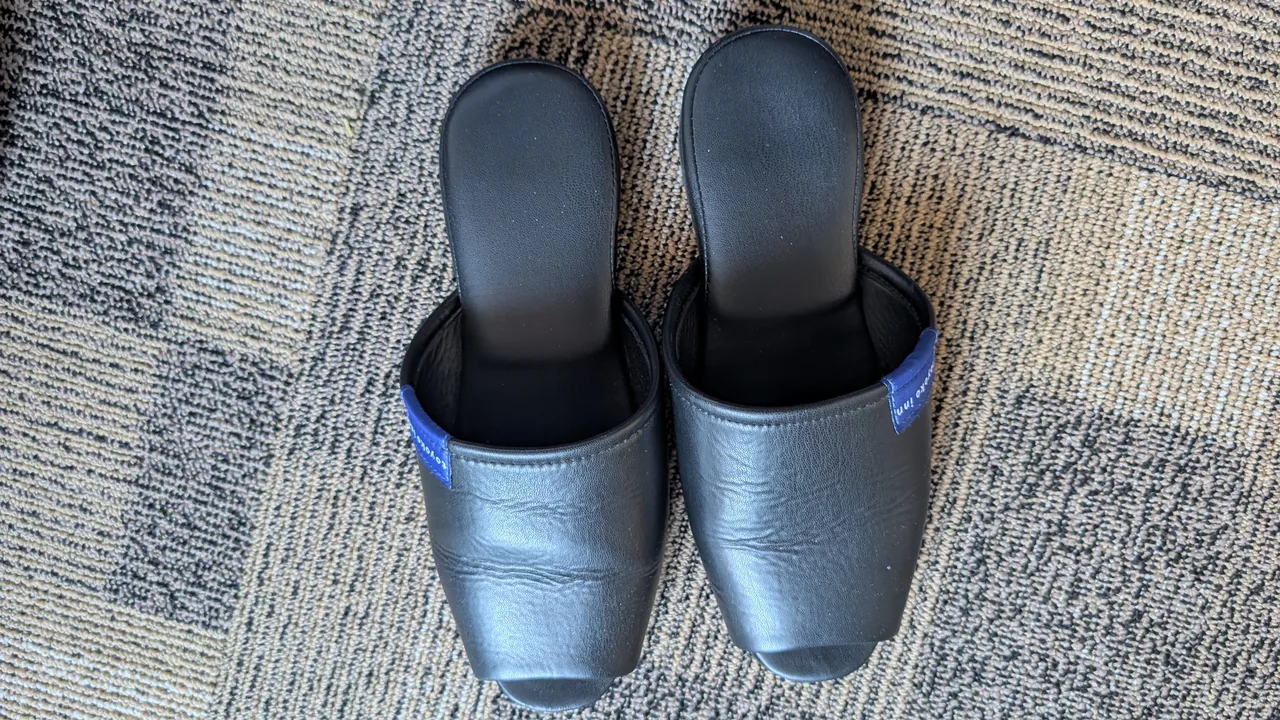
| Shoes come off | in homes, ryokan, some restaurants, and temples. Watch for a step-up and a shelf of slippers — that’s your cue. |
| Carry your rubbish | public bins barely exist, but the streets are spotless. Pocket it and bin it later. And don’t eat while walking. |
| You won’t get it all right, and that’s fine. Locals don’t expect perfection from visitors. A bit of awareness and a genuine effort go a very long way. | |
1. One idea that explains nearly everything
2. Money: please don’t tip
3. On trains: keep it quiet
4. Shoes off — and how to tell
5. Eating and drinking
6. Hot springs (onsen) without the panic
7. Temples and shrines
8. Rubbish, smoking, and the small stuff
9. Photos, crowds, and the new rules
10. Quick do / don’t recap
1. One idea that explains nearly everything
Before any specific rule, here’s the thing that ties them all together. In Japan there’s a concept called meiwaku — roughly, causing trouble or being a nuisance to other people. The whole social code is built around not making life harder for those around you.
That’s it. That’s the master key. Why is the train silent? Because your phone call is your business, not the carriage’s. Why do you carry your own rubbish? Because dumping it makes it someone else’s problem. Why the quiet queueing and the careful shoe-removing? Same root every time.
So you don’t actually need to memorise a hundred rules. When you hit a situation this guide didn’t cover, just ask yourself: “Is what I’m about to do going to bother anyone?” Nine times out of ten that question gives you the right answer, and it’s the same instinct locals are using.
2. Money: please don’t tip
This is the one that genuinely rewires the brain for a lot of visitors, so let’s be blunt: there is no tipping in Japan. Not at restaurants, not in taxis, not for the hotel porter, not anywhere. Good service is simply the standard, not something you pay extra for.
Leaving cash on the table doesn’t read as generous — it reads as confusing. Staff may chase you down the street to return the money you “forgot.” If you genuinely want to express thanks, a warm “gochisousama deshita” (roughly “thank you for the meal”) on the way out means far more than coins ever would.
| Situation | What to do |
|---|---|
| Restaurant bill | Pay the exact amount. Often you take the check to a register by the door rather than paying at the table. |
| Taxi | Pay the meter. Doors open automatically — don’t grab the handle. No tip. |
| Hotel / ryokan | No tipping. Service is built into the price. |
| Paying anywhere | Look for the small tray by the register. Put your cash or card on the tray, not into the person’s hand. |
One more money habit worth knowing: Japan was famously a cash country, and cash still rules at small shops, shrines, and some old-school restaurants. But it’s gone increasingly cashless — tap-to-pay and IC cards now work almost everywhere in cities. The easy move is to carry a bit of cash and a tap card. Our Suica & ICOCA guide walks through the card that covers trains, convenience stores, and vending machines in one tap.
3. On trains: keep it quiet
If there’s one place visitors stand out for the wrong reasons, it’s the train. Japanese trains are remarkably quiet, even when jammed full at rush hour. The rules aren’t posted to nag you — they’re just how everyone shares a small space without friction.
- Phone on silent (“manner mode”), and don’t take calls. Texting and scrolling are fine; talking on the phone is a clear no. If your phone rings, decline it and message back later.
- Talk quietly, or not at all. Chatting with a friend is okay if you keep it low. A loud group conversation will earn you some very pointed silence.
- Priority seats are for those who need them — elderly, pregnant, disabled, or travelling with small kids. If one of them boards, give up the seat. Some people switch their phone off entirely near these seats.
- Queue and let people off first. There are marks on the platform showing where doors open. Line up, stand aside, let everyone out, then board.
- No eating on local commuter trains. (Long-distance shinkansen and limited expresses are the exception — a bento and a beer there is a tradition, not a faux pas.)
4. Shoes off — and how to tell
Shoes come off more often than first-timers expect, and walking indoors in your outdoor shoes is a real faux pas. The good news is the signal is always the same and easy to spot.
Look for a step-up. When the floor rises by a few centimetres — at the entrance of a home, a traditional inn (ryokan), some restaurants, temples, and changing rooms — that little ledge (the genkan) is the line between “shoes on” and “shoes off.” You’ll usually see shoes pointing outward and a shelf or cubby of slippers waiting. That’s your cue.
- Take your shoes off before stepping up, not after. Step out of them onto the higher floor, then turn them to point back toward the door if you like (locals do this).
- Slippers are for floors, not tatami. On tatami mat rooms, slip the slippers off and go in socks.
- There are special toilet slippers in many homes and ryokan — a separate pair waiting just inside the bathroom door. Swap into them, and (everyone forgets this once) swap back out when you leave. Shuffling back to dinner in the toilet slippers is the classic rookie moment.
5. Eating and drinking
Japanese food culture is relaxed and welcoming — you don’t need to be precious about it. There are really just a few things to know, and most of them are about chopsticks.
| Do | Don’t |
|---|---|
| Say itadakimasu before eating, gochisousama after | Stick chopsticks upright in rice — it echoes a funeral rite |
| Lift small rice and miso bowls to your mouth | Pass food chopstick-to-chopstick with someone else (also a funeral echo) |
| Slurp your ramen and soba — it’s normal, even appreciated | Wave chopsticks around or use them to point or spear food |
| Pour drinks for your companions, not yourself | Walk down the street eating or drinking |
Those two chopstick taboos — standing them upright in rice, and passing food tip-to-tip — are the ones to actually remember, because both mirror funeral customs and land as genuinely unlucky. Everything else is minor.
The “no eating while walking” point surprises people. It’s not a law, but it’s frowned on, and you’ll notice locals stepping to the side to finish a snack near the shop they bought it from. Street-food areas are the relaxed exception — just don’t wander off down the train platform with a dripping skewer.
6. Hot springs (onsen) without the panic
A communal naked bath sounds intimidating if you’ve never done it, but the etiquette is simple once and it’s the same everywhere. Here’s the whole thing.
- Wash before you get in. There’s a row of seated showers with stools. Sit, scrub thoroughly, rinse off every bit of soap. The bath itself is for soaking in clean — never for washing.
- No swimsuits. Onsen are done fully nude. It feels like a big deal for about ninety seconds, then you realise nobody is looking at anybody.
- The little towel doesn’t go in the water. Use it to wash and for modesty walking around; fold it and rest it on your head or the edge while you soak.
- Tie up long hair so it’s off the water, and keep the noise down — this is a place to relax.
7. Temples and shrines
Temples (Buddhist) and shrines (Shinto) are working places of worship, not just photo spots — but visiting respectfully is easy and the rituals are genuinely nice to take part in.
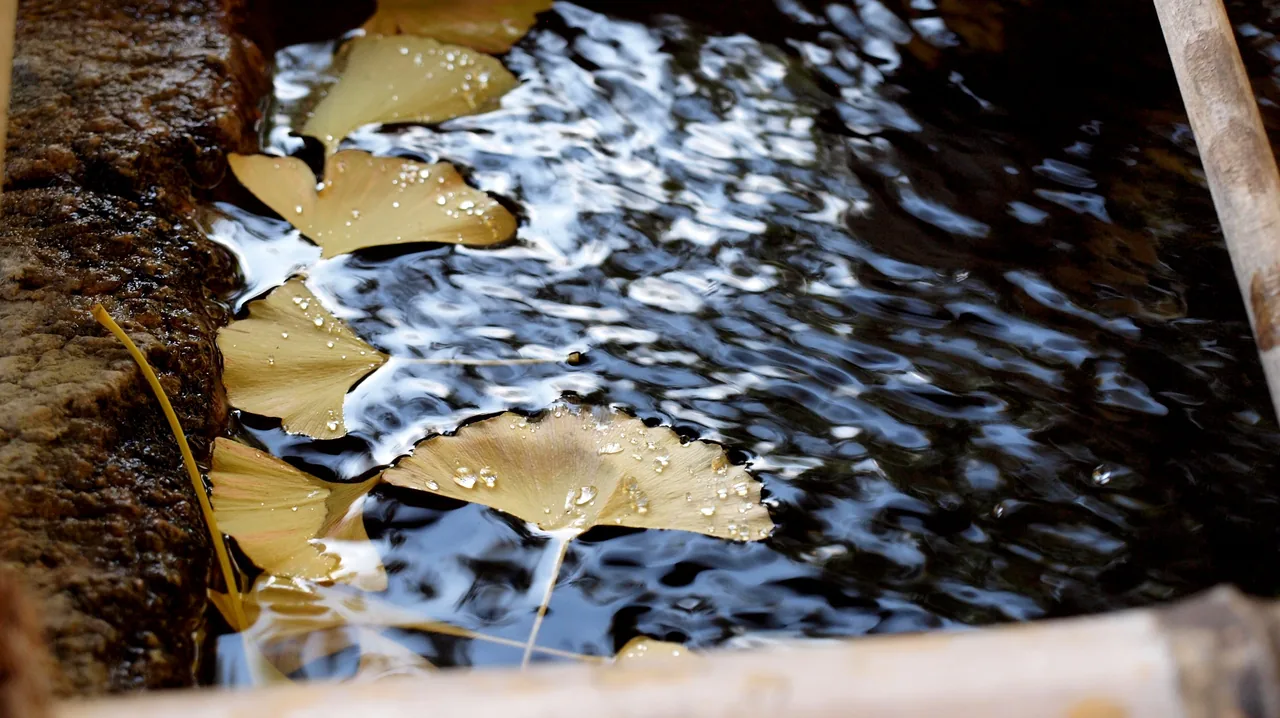
- At a shrine, purify first. At the water pavilion (temizuya) near the entrance, take the ladle in your right hand, rinse your left, swap and rinse your right, then tip a little into a cupped hand to rinse your mouth (don’t drink from the ladle). Let the rest run down the handle.
- To pray at a shrine: toss a coin in the box, bow twice, clap twice, make your wish, bow once more. At a Buddhist temple you don’t clap — just a quiet bow.
- The torii gate is a threshold. A small bow as you pass through is a nice touch, and locals tend to keep to the sides rather than walking straight up the centre, which is considered the path of the gods.
- Check before you photograph. Many main halls and inner sanctuaries ask for no photos — there’ll be a sign. Outdoors is usually fine.
8. Rubbish, smoking, and the small stuff
A cluster of little things that surprise visitors, all flowing from the same don’t-be-a-bother idea:
- Bins are scarce; carry your trash. You’ll wonder how the streets stay so clean with no public bins — the answer is everyone pockets their rubbish and bins it at home, a convenience store, or by a vending machine. Carry a small bag for the day’s wrappers.
- Smoking is the reverse of what you might expect. You generally can’t smoke walking down the street (some areas fine you for it), but you can smoke in designated smoking rooms and at marked spots. Look for the smoking area rather than lighting up on the move.
- Blowing your nose in public is considered a bit gross — sniff and step away to a bathroom instead. Wearing a mask when you’ve got a cold, on the other hand, is thoughtful and totally normal.
- Pointing at people, and beckoning palm-up, can feel rude; locals gesture with an open hand. Minor, but now you know.
9. Photos, crowds, and the new rules
As visitor numbers have surged, a handful of places have brought in real restrictions — and breaking them now carries fines, not just frowns. The headline one:
Beyond Gion, a few simple habits keep you on the right side of things everywhere:
- Ask before photographing people, especially staff, performers, and anyone in traditional dress.
- Stay on the paths and out of private doorways and residential lanes, even when the shot looks perfect.
- Don’t block the way for the photo — step aside so you’re not stopping the flow of people behind you.
- Respect “no photo” signs in shops, restaurants, and shrine inner halls without arguing the point.
None of this is hard. It’s the same meiwaku idea from the very top: the place you’re visiting is someone else’s home and workplace. Treat it that way and you’ll be welcome anywhere.
10. Quick do / don’t recap
Everything above, boiled down to a card you can glance at before you go:
Always do
Carry your rubbish · keep quiet on trains · take shoes off at the step-up · wash before the onsen · pay onto the tray · queue properly.
Never do
Tip · take phone calls on the train · stick chopsticks upright in rice · eat while walking · photograph geisha without asking · wear shoes past the genkan.
Don’t sweat it
Slurping noodles · not speaking Japanese · the occasional honest mistake · being unsure and asking. Effort is what people notice.
Got the manners sorted? The next thing to plan is the trip itself — where to go, how long, and what it’ll cost. Start with our complete Japan travel guide for 2026.