Japan Visa Guide 2026: Do You Need One, and What to Do Before You Fly
For most Western travellers Japan is visa-free — but there are still a few boxes to tick. Here’s exactly what your passport gets you, plus Visit Japan Web, immigration, and the new rules landing in 2026.
- Most likely: no visa. US, Canada, Australia, the EU and dozens more get up to 90 days visa-free for tourism. A handful (UK, Germany, Ireland, Switzerland, Austria, Mexico) get up to 6 months.
- You still register online. Fill in Visit Japan Web before you land for fast-track immigration and customs QR codes — not strictly required, but it saves real time at the airport.
- Tourism only. Visa-free entry covers sightseeing, family visits and unpaid meetings. No paid work — taking a local job needs the correct visa, arranged in advance.
- Bring: a passport valid for your stay, and proof of onward travel (a return or onward ticket). That’s genuinely all most people are asked for.
- Coming up: a departure tax rise to ¥3,000 (July 2026), a tax-free overhaul (Nov 2026), and JESTA pre-screening for visa-free visitors (from FY2028).
1. Do you actually need a visa?
2. How long can you stay? (it’s not always 90 days)
3. What you’re allowed to do — and what you’re not
4. Visit Japan Web: do this before you fly
5. At the airport: what immigration actually asks
6. Money matters at the border: taxes that affect you
7. Overstaying — and why you really don’t want to
8. On the horizon: JESTA pre-screening
9. Quick checklist before you go
1. Do you actually need a visa?
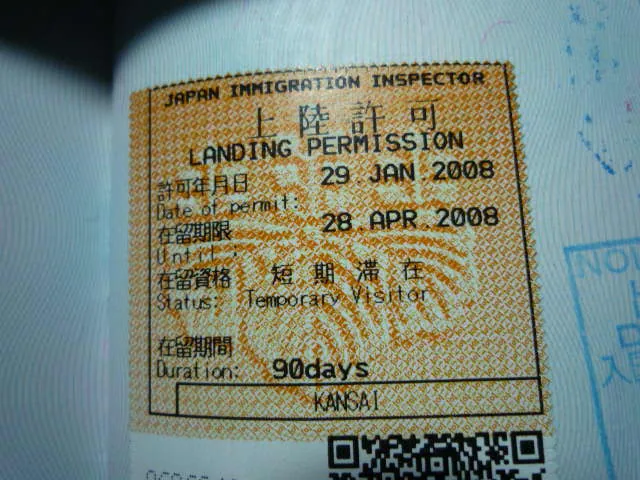
Here’s the good news first: if you hold a passport from the US, Canada, Australia, New Zealand, the UK, or almost any EU country, you do not need to arrange a visa before a holiday in Japan. Japan has visa-exemption agreements with around 70 countries and regions, and you simply get a tourist entry stamp on arrival.
What trips people up is assuming “visa-free” means “nothing to do.” It doesn’t. There’s a short pre-flight checklist, some rules about what you’re allowed to do once you’re in, and a couple of changes arriving in 2026. None of it is hard — but knowing it now means a smoother arrival and no nasty surprises.
2. How long can you stay? (it’s not always 90 days)
Most visa-free nationalities get up to 90 days for a “Short-Term Stay.” But a few passports get longer, and a few get less, so check your own line in the table.
| Your passport | Visa-free stay |
|---|---|
| USA, Canada, Australia, New Zealand, most of the EU, South Korea, Singapore, Taiwan… | Up to 90 days |
| UK, Germany, Ireland, Switzerland, Austria, Liechtenstein, Mexico | Up to 6 months* |
| Brunei, Qatar (UAE) | Up to 30 days |
| Thailand, Indonesia (with registered e-passport) | Up to 15 days |
*The 6-month figure is a bit of a trap. You’re admitted for 90 days at entry and must apply for an extension at an immigration office to use the rest — it isn’t granted automatically at the border. For a normal holiday, plan around 90 days as the practical ceiling.
3. What you’re allowed to do — and what you’re not
A “Short-Term Stay” entry sounds broad, but its scope is specific. It’s worth being clear, because the line matters.
✅ Allowed
Sightseeing and holidays, visiting friends and family, short business meetings and conferences, sports or cultural events — anything that isn’t paid local work.
❌ Not allowed
Any paid employment or “remunerated activity” in Japan, taking a local job, or studying long-term. These need the correct visa, arranged in advance.
4. Visit Japan Web: do this before you fly
Visit Japan Web is the government’s online portal for immigration and customs. You enter your details once, before departure, and it generates QR codes you scan at the airport instead of filling out paper landing and customs cards on the plane. It’s not legally mandatory, but every regular visitor should use it — the time saved at a busy arrivals hall is real.
What you’ll do
- Create an account at the official Visit Japan Web site (do this a few days out, not in the boarding queue).
- Register your trip and each traveller, including children on the same booking.
- Enter passport and flight details, your address in Japan (your first hotel is fine), and answer the standard health/customs questions.
- Save your QR codes — one for immigration, one for customs. Screenshot them so you’re not hunting for signal at the gate.

5. At the airport: what immigration actually asks
Japanese immigration is efficient and rarely dramatic, but arrivals halls at Narita, Haneda and Kansai can back up when several long-haul flights land together. Here’s what to have ready.
- Your passport, valid for the duration of your stay. Japan doesn’t demand the “six months beyond departure” rule some countries do, but six months of validity is the safe habit.
- Your Visit Japan Web QR codes (or the paper forms if you didn’t register).
- Proof of onward travel. Officers can ask to see a return or onward ticket as evidence you intend to leave. It’s not always checked, but have the e-ticket handy.
- Fingerprints and a photo are taken at the counter — standard for almost all foreign visitors.
Expect a couple of routine questions: how long you’re staying, where, and why. Answer plainly — “ten days, holiday, staying in Tokyo and Kyoto” is exactly the kind of reply they want.
6. Money matters at the border: taxes that affect you
Two fee changes in 2026 are worth knowing, even though neither involves a visa.
Departure tax triples (July 2026)
Japan’s “International Tourist Tax” — the so-called sayonara tax — rises from ¥1,000 to ¥3,000 per person from July 2026. You won’t queue to pay it; it’s bundled into your airfare or ferry ticket automatically. Just don’t be surprised to see a slightly higher ticket price.
Tax-free shopping changes (November 2026)
From 1 November 2026, Japan switches from instant tax-free pricing at the till to a “pay first, refund at the airport” model. You’ll pay the full tax-inclusive price in the shop and claim the 10% consumption tax back at your departure airport (you must leave within 90 days of purchase). The upside: the old hassles — sealed “consumables” bags, the daily spend cap, splitting goods into categories — go away. Keep your receipts and your passport for the airport counter.
7. Overstaying — and why you really don’t want to
Japan takes visa conditions seriously, and an overstay is not treated as a minor slip. Even a single day past your permitted period counts as illegal overstay and can lead to detention, a fine, deportation, and a re-entry ban of several years. There’s no casual amnesty.
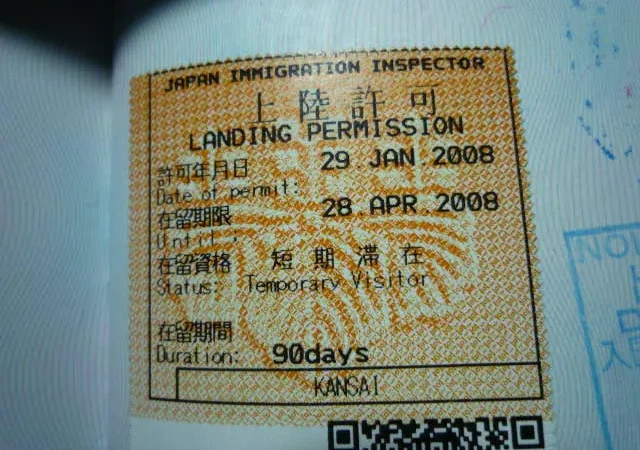
- Know your exact stamp date. The period you’re admitted for is printed on the entry sticker — read it; don’t assume it’s always 90 days.
- Build in a buffer. Don’t book a flight out on the very last permitted day; delays happen.
- If something goes wrong (illness, a cancelled flight), contact a regional immigration office before your period expires to discuss your options.
8. On the horizon: JESTA pre-screening
One change isn’t here yet but is worth filing away. Japan is introducing JESTA (Japan Electronic System for Travel Authorization), a pre-flight online clearance that visa-free travellers will need to complete before boarding — similar to the US ESTA or Europe’s ETIAS.
- When: planned for fiscal year 2028 (April 2028 onward). It is not in force in 2026 — you don’t need it for a trip now.
- Who: travellers from the ~70 visa-exempt countries. People who already need a visa will keep using the visa or eVISA route.
- Cost: officials have signalled roughly ¥2,000–3,000 per person.
9. Quick checklist before you go
Pin this. For a standard visa-free holiday in 2026, you’re ready when you can tick all of these:
- ☑️ Passport valid for your whole stay (six months’ validity is the safe margin).
- ☑️ Confirmed your nationality is visa-free and you know your day limit.
- ☑️ Registered on Visit Japan Web and saved/screenshotted the QR codes.
- ☑️ Onward or return ticket booked and accessible offline.
- ☑️ First night’s accommodation address noted for the entry form.
- ☑️ Travel insurance sorted (Japan’s healthcare is excellent but not free to visitors).
That covers entry. For everything that comes next — when to go, trains, money, where to base yourself and a first-trip route — start with our full Japan travel guide for 2026.